
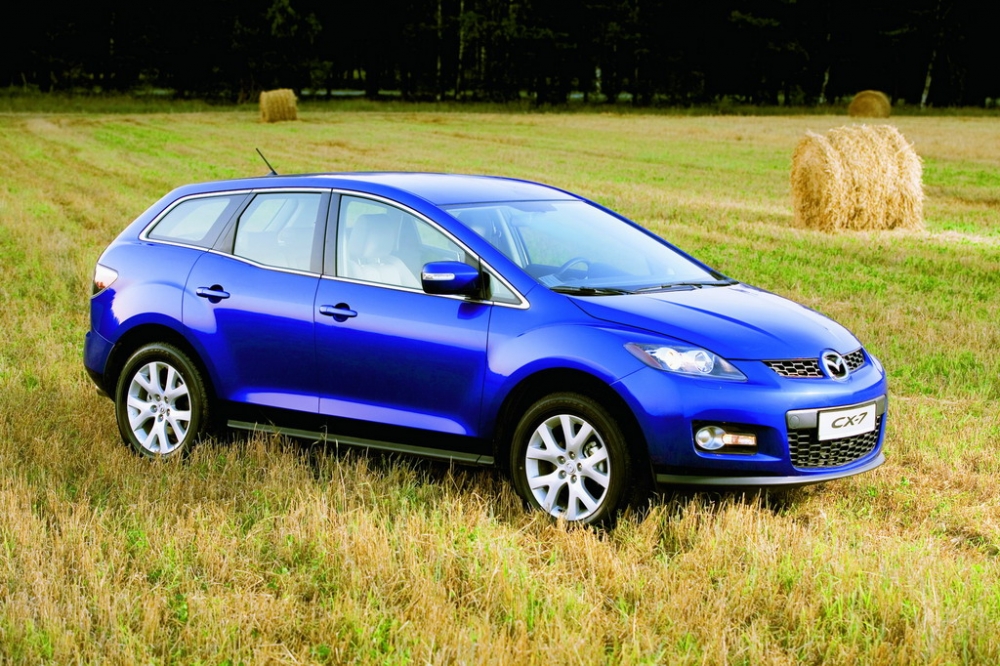
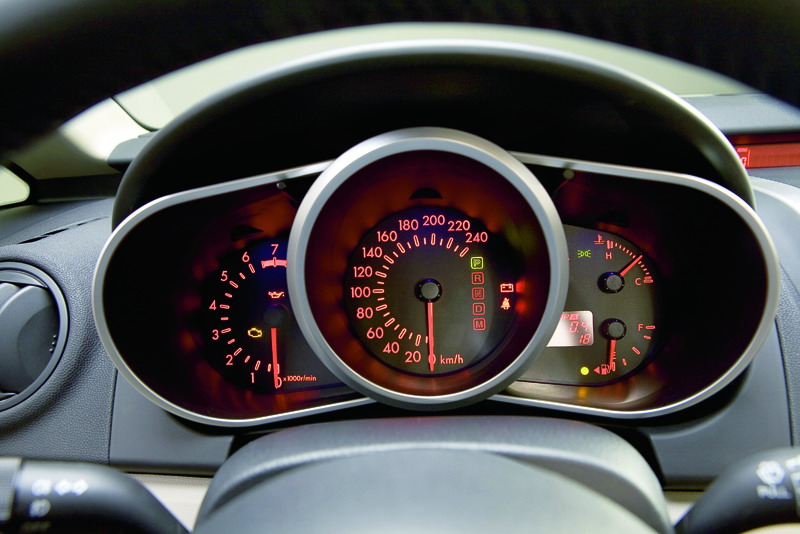
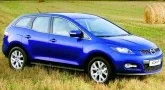
 We made the trip to Yaroslavl in luxurious six-seat "jets." Near the Ring Premier Hotel, seven fresh, not-yet-broken-in CX-7s in different colors were already waiting. The interior immediately sets a sporty mood – largely thanks to the steering wheel, similar to the one installed on the Mazda MX-5 (though larger), and the neat instrument panel with recesses and dials whose needles point downward. The plastic and trim could be better, but the assembly and overall design don't disappoint. We made the trip to Yaroslavl in luxurious six-seat "jets." Near the Ring Premier Hotel, seven fresh, not-yet-broken-in CX-7s in different colors were already waiting. The interior immediately sets a sporty mood – largely thanks to the steering wheel, similar to the one installed on the Mazda MX-5 (though larger), and the neat instrument panel with recesses and dials whose needles point downward. The plastic and trim could be better, but the assembly and overall design don't disappoint. |
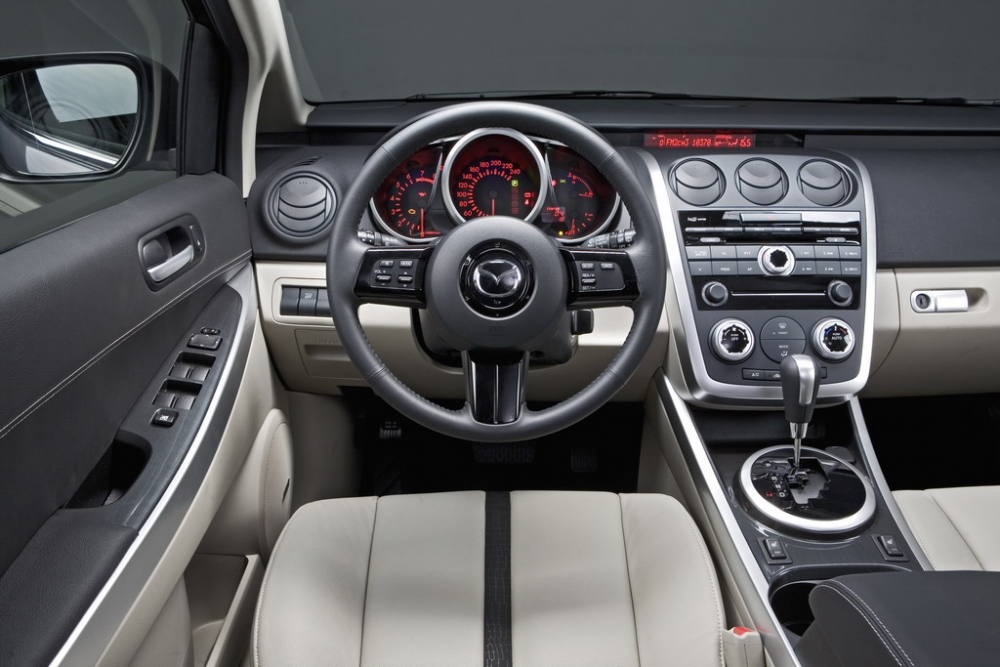 When you get into the car, you feel that you sit quite low for a crossover – that's a plus, as you better sense what the car is doing. The leather-trimmed seats hold you in place more or less, but personally I would have liked more pronounced lateral support, especially on the lower part of the seat. The key card rests quietly in your pocket, and the engine starts by turning a plastic handle where the ignition switch would be. Ahead of us lies a 260-kilometer route: Uglich, Rostov Veliky, and a return to Yaroslavl. When you get into the car, you feel that you sit quite low for a crossover – that's a plus, as you better sense what the car is doing. The leather-trimmed seats hold you in place more or less, but personally I would have liked more pronounced lateral support, especially on the lower part of the seat. The key card rests quietly in your pocket, and the engine starts by turning a plastic handle where the ignition switch would be. Ahead of us lies a 260-kilometer route: Uglich, Rostov Veliky, and a return to Yaroslavl. |
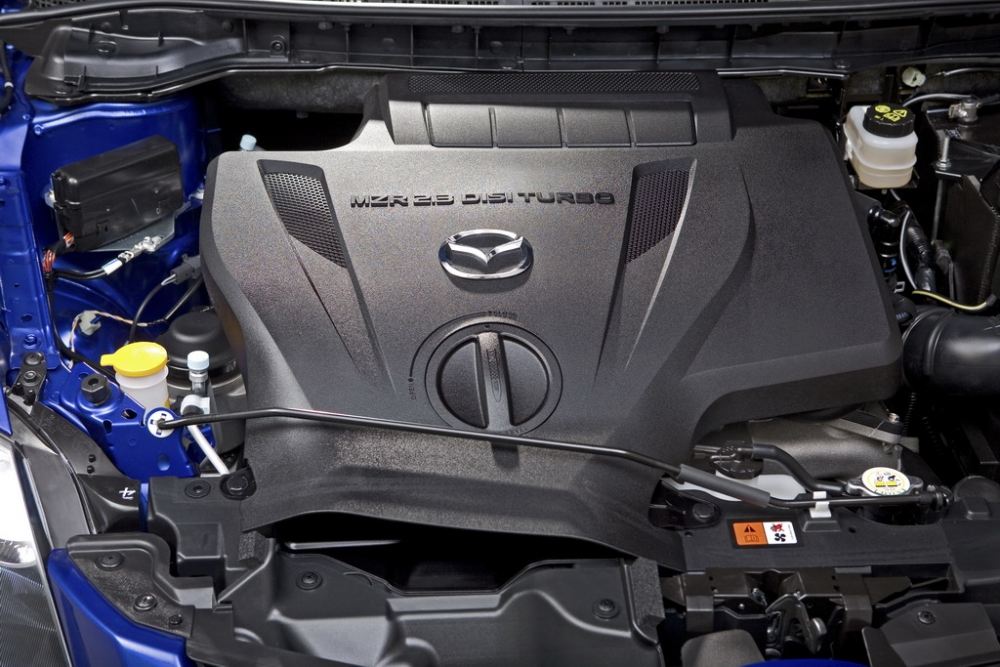 I already mentioned that for Russia, the turbo engine on the CX-7 was slightly detuned. The culprit is the automatic transmission, since a manual won't be offered here. But even I, a die-hard fan of the "stick," wasn't disappointed. The new Mazda "automatic" works beyond all praise: it quickly and accurately selects the right gear. The only thing that bothers me is a slight pause when you sharply press the gas. At the same time, the transmission's operation is almost imperceptible; you can tell it shifted only by the tachometer needle and the engine sound. I already mentioned that for Russia, the turbo engine on the CX-7 was slightly detuned. The culprit is the automatic transmission, since a manual won't be offered here. But even I, a die-hard fan of the "stick," wasn't disappointed. The new Mazda "automatic" works beyond all praise: it quickly and accurately selects the right gear. The only thing that bothers me is a slight pause when you sharply press the gas. At the same time, the transmission's operation is almost imperceptible; you can tell it shifted only by the tachometer needle and the engine sound. |
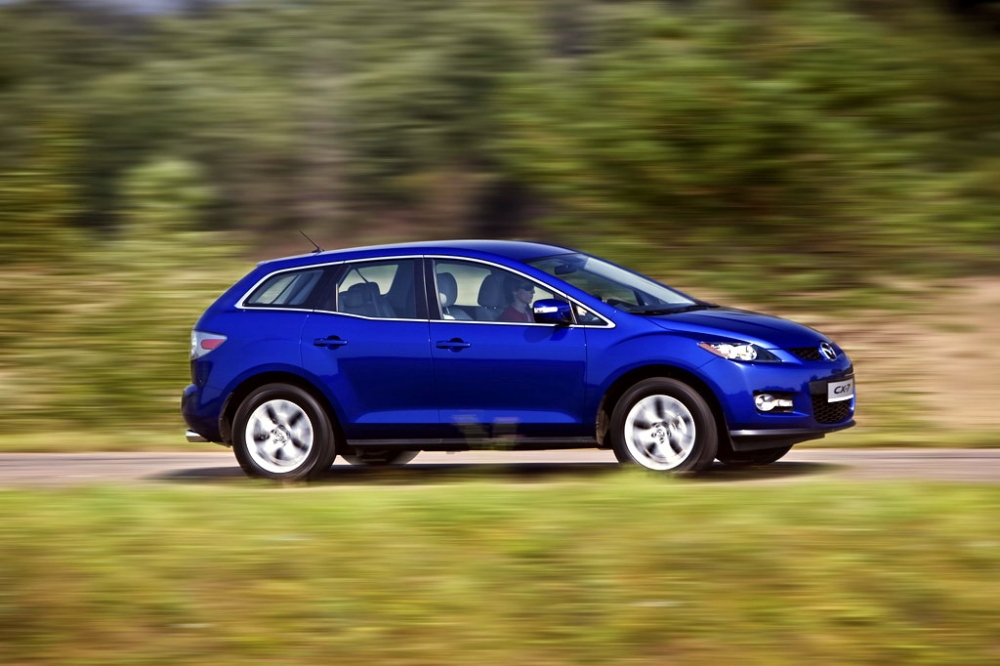 There's also a manual mode. Fourth gear here is direct – it's on this gear that the CX-7 accelerates to its "limited" 180 km/h. The top two gears are for economy, but they also allow fairly brisk acceleration. The 180 km/h limit seems overly strict – even at such speed, the crossover goes perfectly straight on medium-quality roads, as if on rails. The suspension is a bit stiff and honestly transmits all road irregularities. But this isn't annoying; on the contrary, it pleases with its composure and resilience. The only thing I didn't like was that on road "waves" you have to grip the overly sharp steering wheel more firmly. There's also a manual mode. Fourth gear here is direct – it's on this gear that the CX-7 accelerates to its "limited" 180 km/h. The top two gears are for economy, but they also allow fairly brisk acceleration. The 180 km/h limit seems overly strict – even at such speed, the crossover goes perfectly straight on medium-quality roads, as if on rails. The suspension is a bit stiff and honestly transmits all road irregularities. But this isn't annoying; on the contrary, it pleases with its composure and resilience. The only thing I didn't like was that on road "waves" you have to grip the overly sharp steering wheel more firmly. |
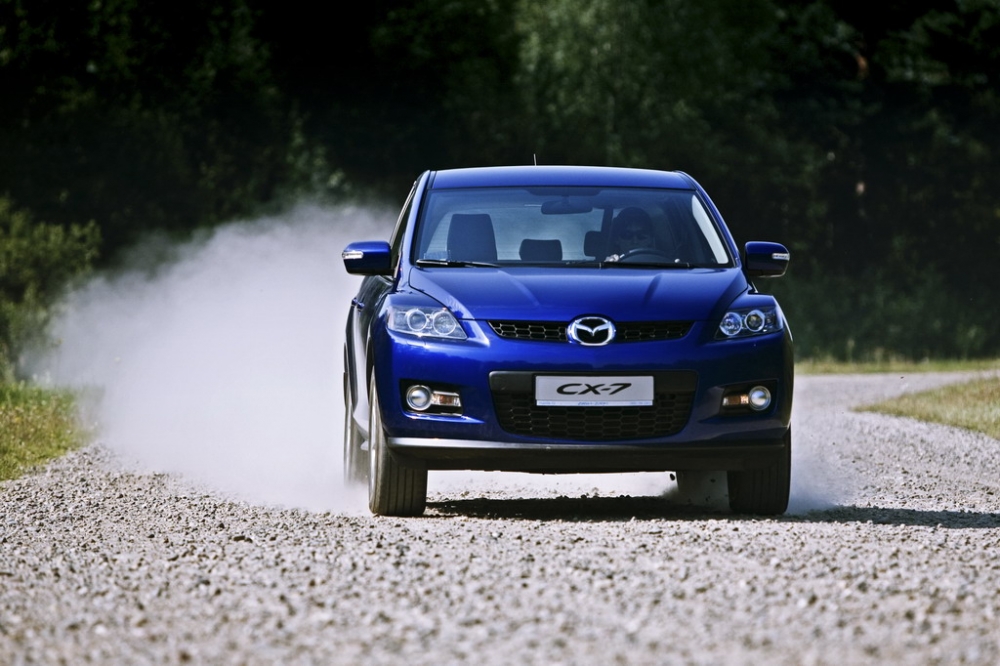 In corners, the CX-7 surprised again – it handles almost like a sedan! Body roll is barely noticeable, and even on broken roads the car confidently holds its line. If you push it to the limit, then when you lift off the gas and turn the wheel more, the car starts to oversteer – we wanted a bit of "spice," but it turned out to be too much. Perhaps that's why ESP can't be turned off here. The car's appetite was simply shocking. Over the first 100 kilometers, we burned almost half of the 70-liter tank! Of course, we drove fast, enjoying the dynamics, but 28.6 liters per 100 km is too much. We drove the rest of the way more calmly, appreciating the joys of cruise control on the half-empty roads near Yaroslavl. In the end, we managed to reduce consumption to 21 liters. But that's still a lot. Maybe after the break-in period it will get better – in tests in France, European versions were satisfied with about 18 liters per 100 km. In corners, the CX-7 surprised again – it handles almost like a sedan! Body roll is barely noticeable, and even on broken roads the car confidently holds its line. If you push it to the limit, then when you lift off the gas and turn the wheel more, the car starts to oversteer – we wanted a bit of "spice," but it turned out to be too much. Perhaps that's why ESP can't be turned off here. The car's appetite was simply shocking. Over the first 100 kilometers, we burned almost half of the 70-liter tank! Of course, we drove fast, enjoying the dynamics, but 28.6 liters per 100 km is too much. We drove the rest of the way more calmly, appreciating the joys of cruise control on the half-empty roads near Yaroslavl. In the end, we managed to reduce consumption to 21 liters. But that's still a lot. Maybe after the break-in period it will get better – in tests in France, European versions were satisfied with about 18 liters per 100 km. |
 I liked the car – it's beautiful, powerful, and handles excellently. It's also big with a high seating position, which is popular here. And of course, the price. The CX-7 in Touring trim costs about $45,000. The closest competitor is the Nissan Murano: it has a bigger engine, but similar power characteristics. And the dimensions are roughly the same. But for the Murano, they ask $10,000 more. It's no wonder there's a queue of several months for the CX-7. For Mazda, this is, however, a familiar picture. I liked the car – it's beautiful, powerful, and handles excellently. It's also big with a high seating position, which is popular here. And of course, the price. The CX-7 in Touring trim costs about $45,000. The closest competitor is the Nissan Murano: it has a bigger engine, but similar power characteristics. And the dimensions are roughly the same. But for the Murano, they ask $10,000 more. It's no wonder there's a queue of several months for the CX-7. For Mazda, this is, however, a familiar picture. |
 PRICES AND TRIM LEVELS PRICES AND TRIM LEVELS In Russia, the Mazda CX-7 is available only with the 2.3 DISI Turbo engine and a 6-speed automatic. There are two trim levels: Touring and Sport. Prices are 1,141,000 and 1,239,000 rubles, respectively. |
 |
Own repertoire
European version of Mazda CX-7, presented in Spain, was liked by our editor-in-chief. The Russian variant has the engine detuned to 238 hp, and the gearbox is automatic, but even in this form CX-7 pleased us. The driving presentation of the car took place on the roads of the Yaroslavl region.
Test drive photos
Comments
No comments yet. Say the first word.