
 When creating the CX-7 crossover, Mazda's engineers set themselves the task of giving the car a bright personality and style that would set it apart from its rivals.Comments (4)
The European premiere of the Mazda CX-7 urban crossover took place in the summer of 2007. However, by that time the model could not be called truly fresh: its debut in the States took place back in early 2006, and it was based on the Crossport concept shown at the Detroit auto show. In Japan, sales started in December 2006.
It is worth noting that initially Mazda did not plan to bring the CX-7 to the European market at all. The company was forced to reconsider its views by the rapid growth of the crossover segment in Russia — it jumped by 95% in a year. This is what prompted the brand's management to decide to adapt the model for the Russian market.
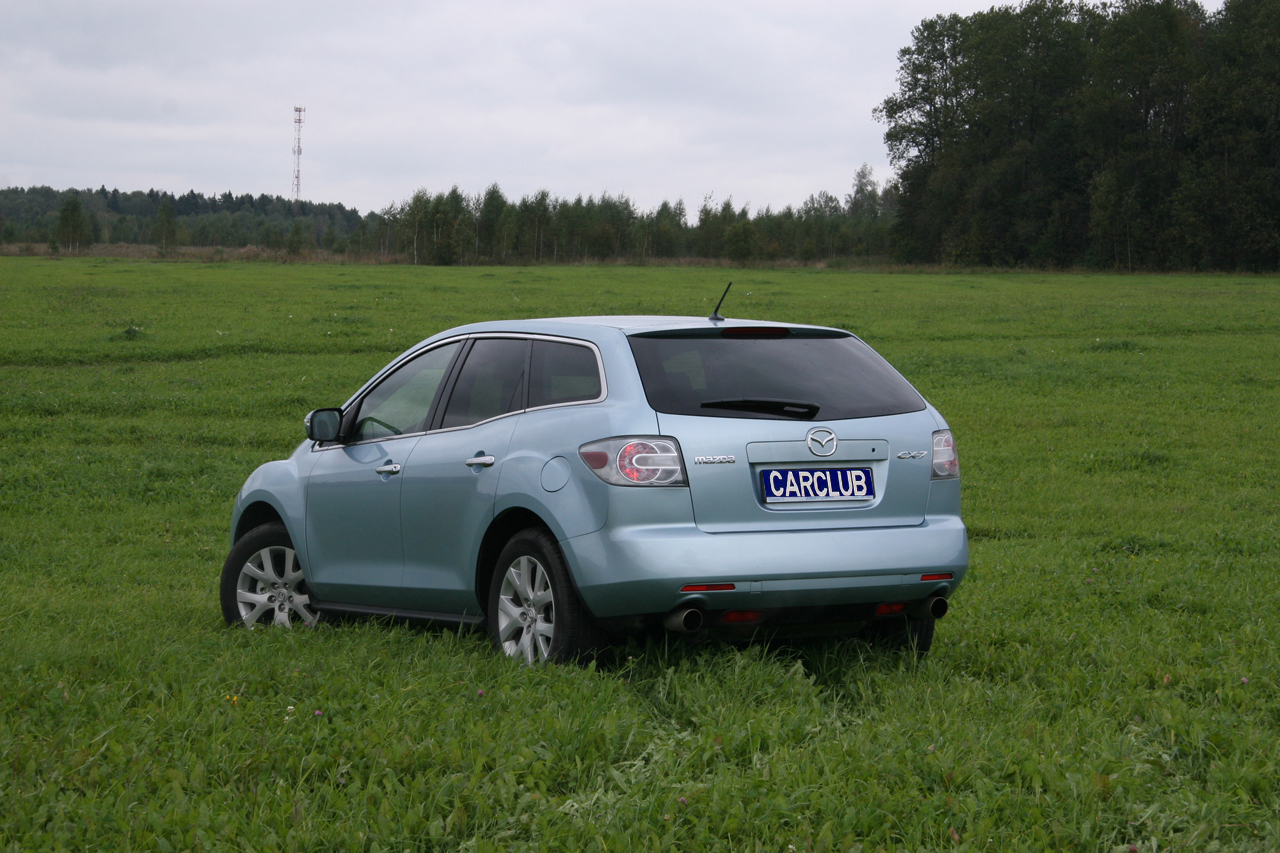 |
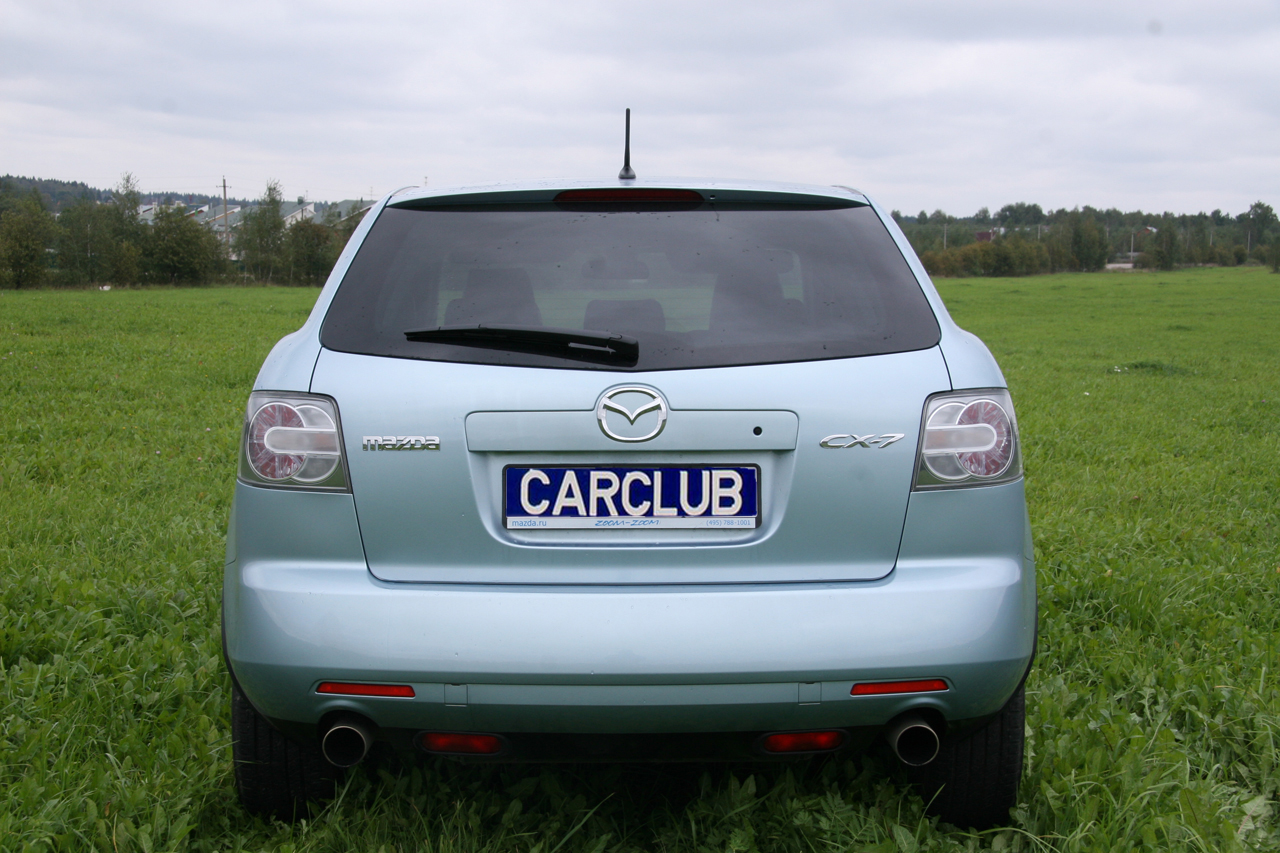
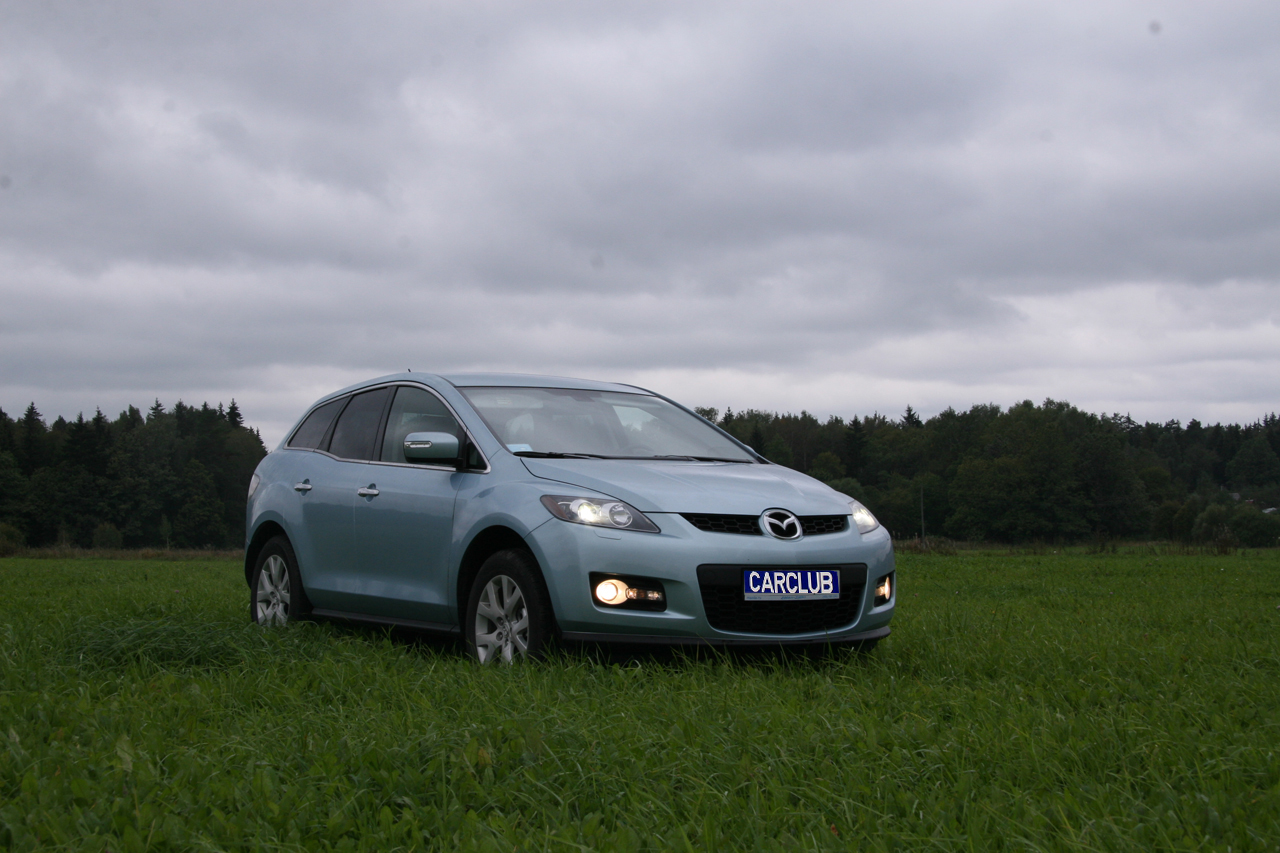
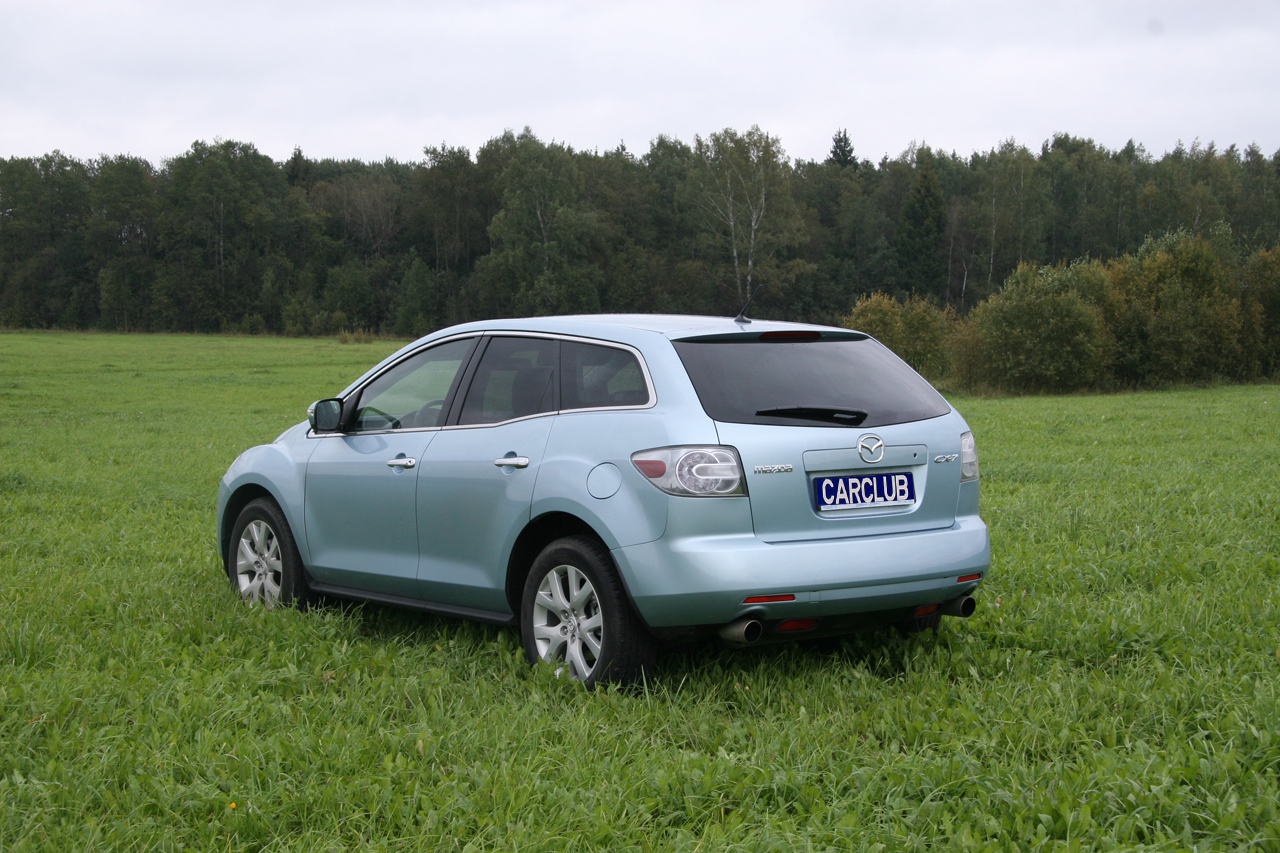
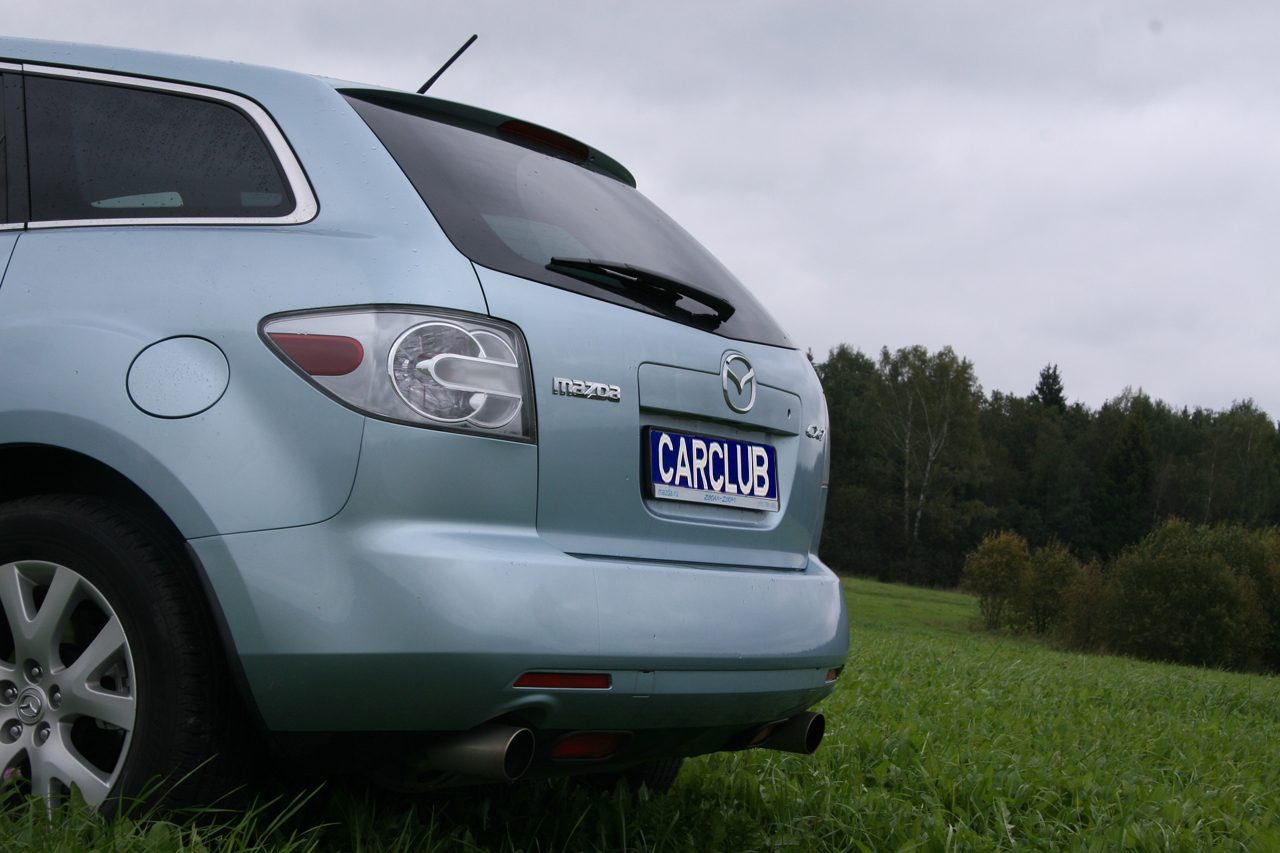
| Two exhaust pipes and original optics complete the dynamic look of the Mazda CX-7 |
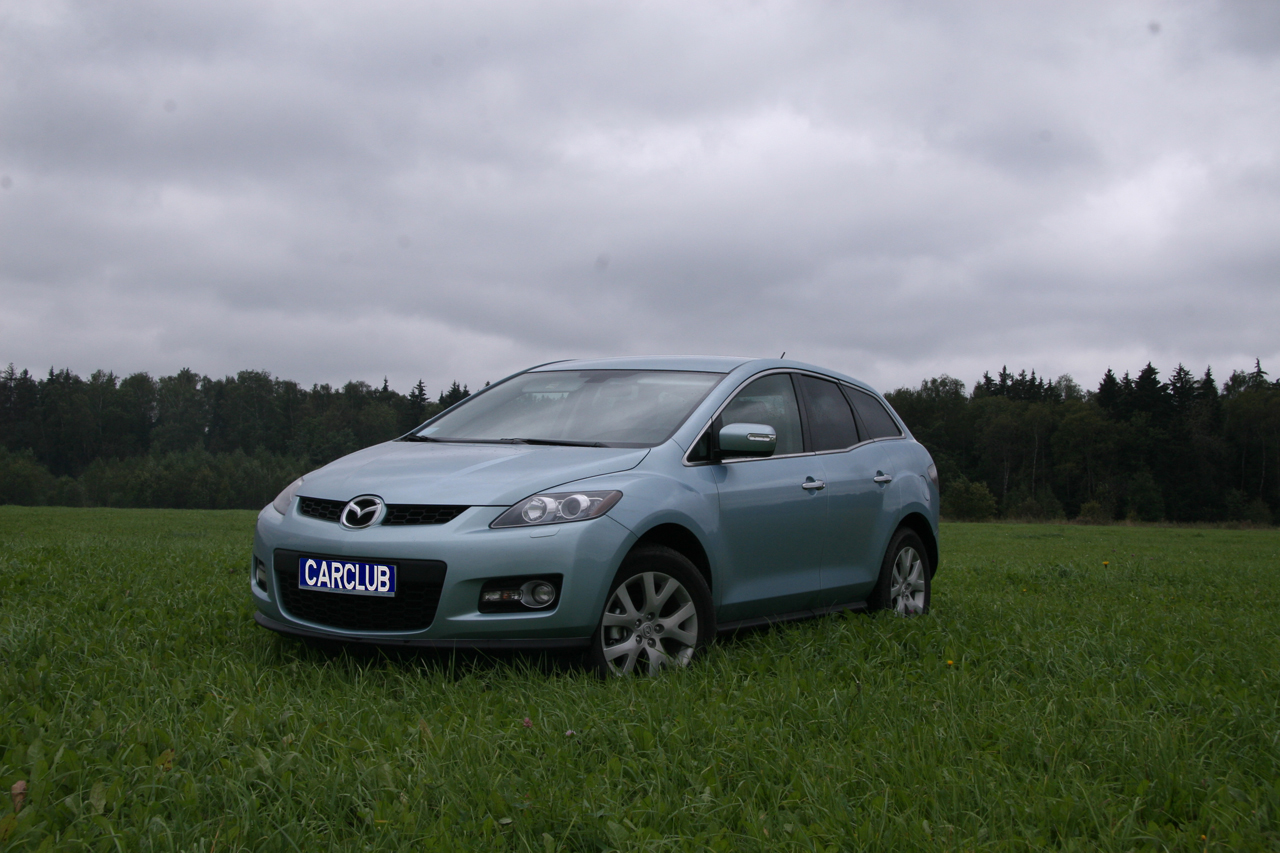 |
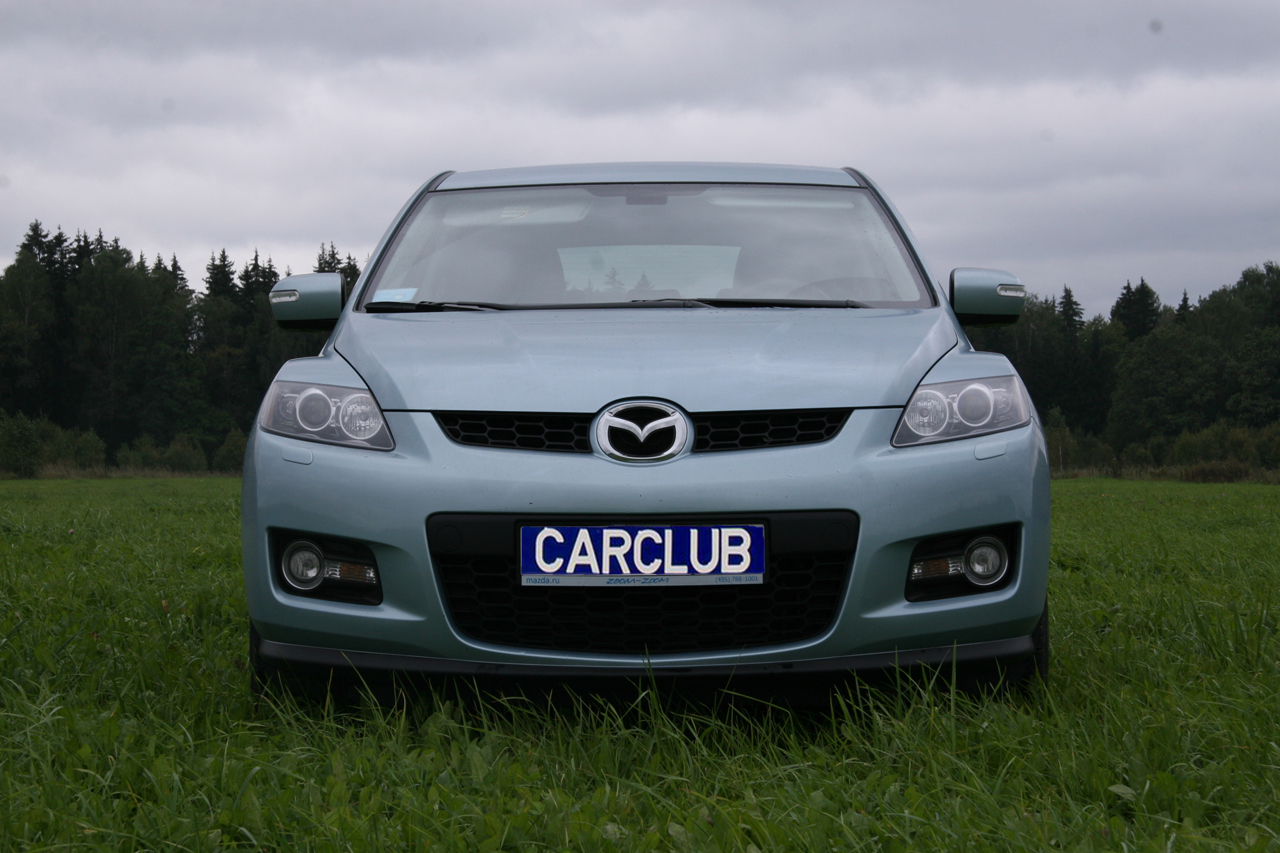
| Zoom-zoom is unmistakably recognizable here |
So, the main goal of the model's creators is a car that would stand out with individuality and style against the background of competitors. In addition, the CX-7 tried to combine the features of an SUV and a sporty dynamic car. Simply put, it was necessary to make a car with increased ground clearance, all-wheel drive, and car-like handling with a sporty accent. As a result, the European version received technical content largely unified with the "charged" MPS models. Under its hood is a 2.3-liter MZR turbo engine with 260 hp with direct injection and an intercooler, like on the "hot" Mazda3 MPS. It works in tandem with a six-speed manual. Peak output is 380 Nm at 3,000 rpm, and maximum power is achieved at 5,500 rpm. Such a CX-7 accelerates to 100 km/h in 8 seconds, top speed is 210 km/h.
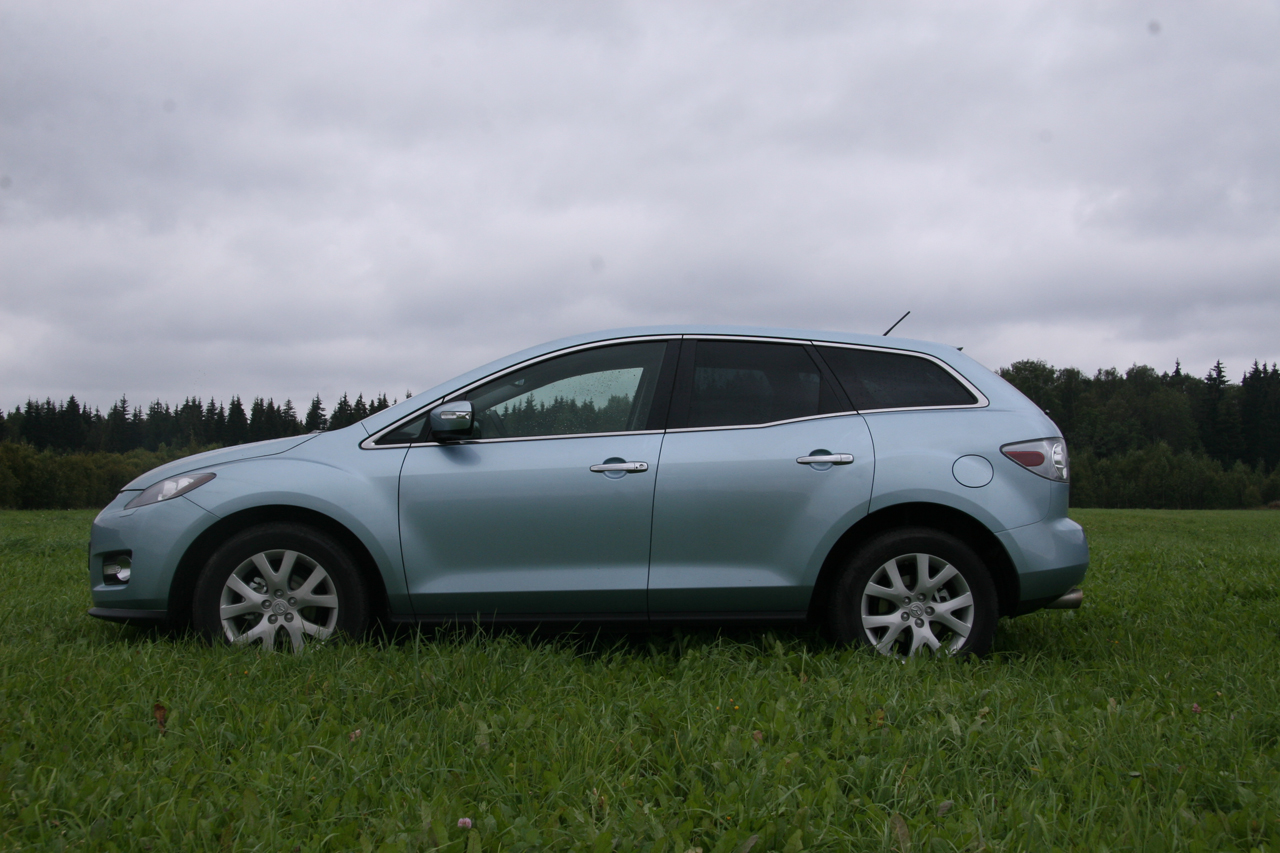 |
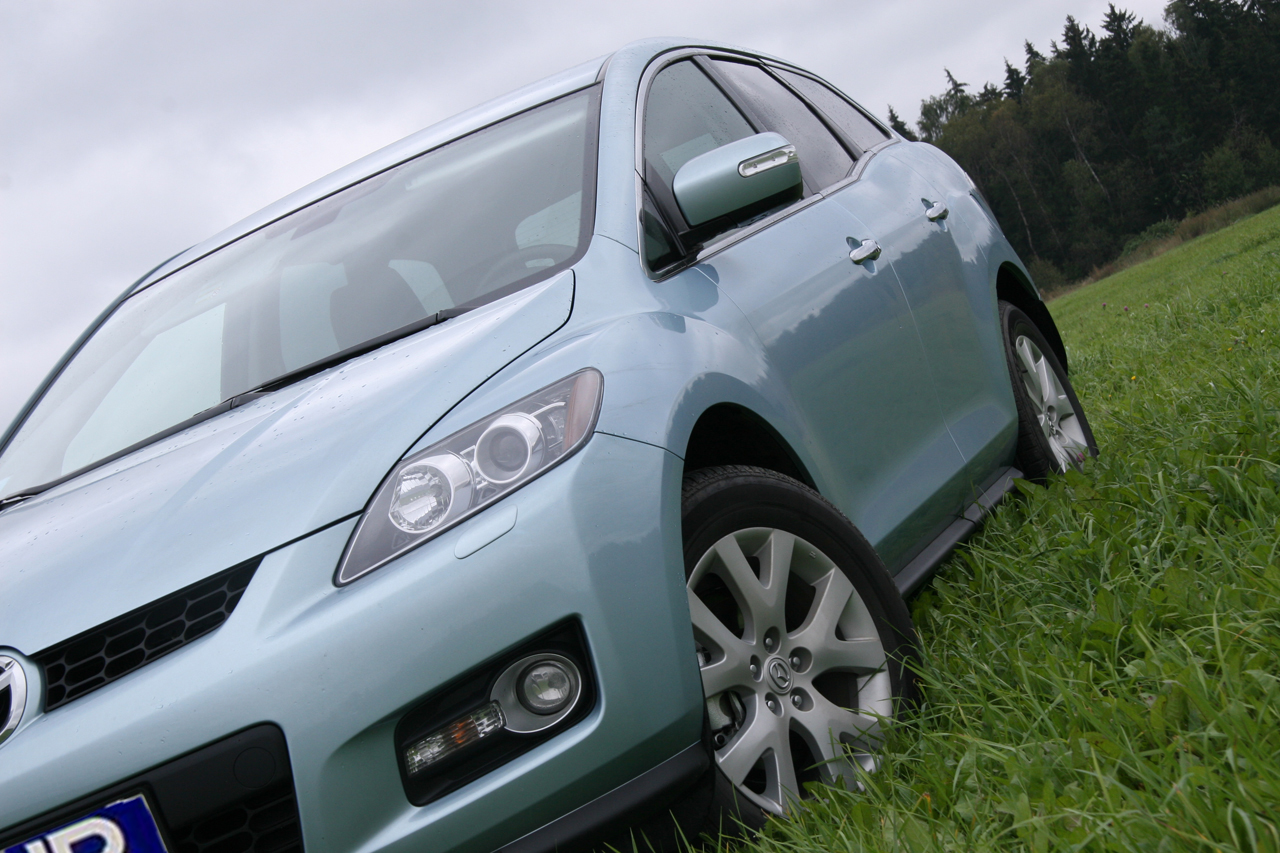
| Pronounced wheel arches and a raked front pillar give the silhouette swiftness |
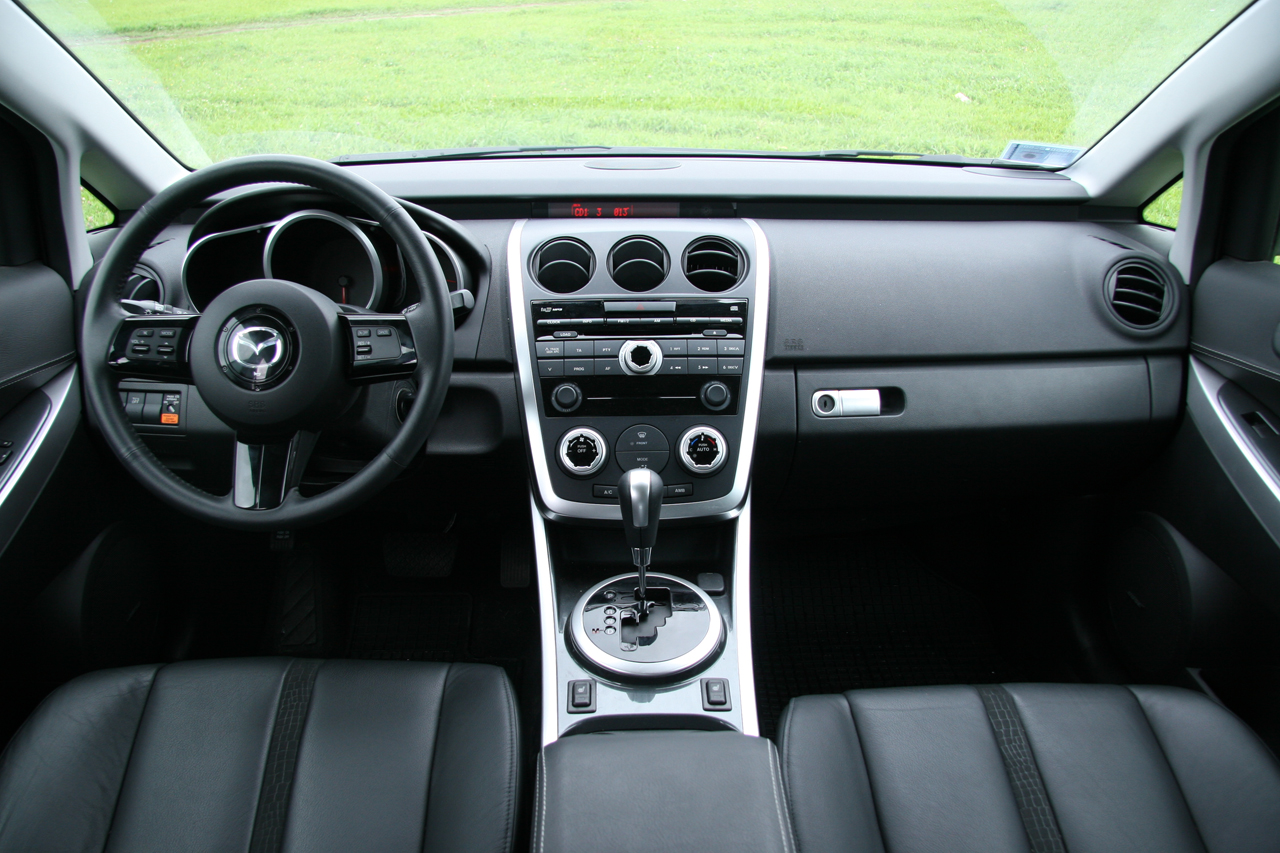 |
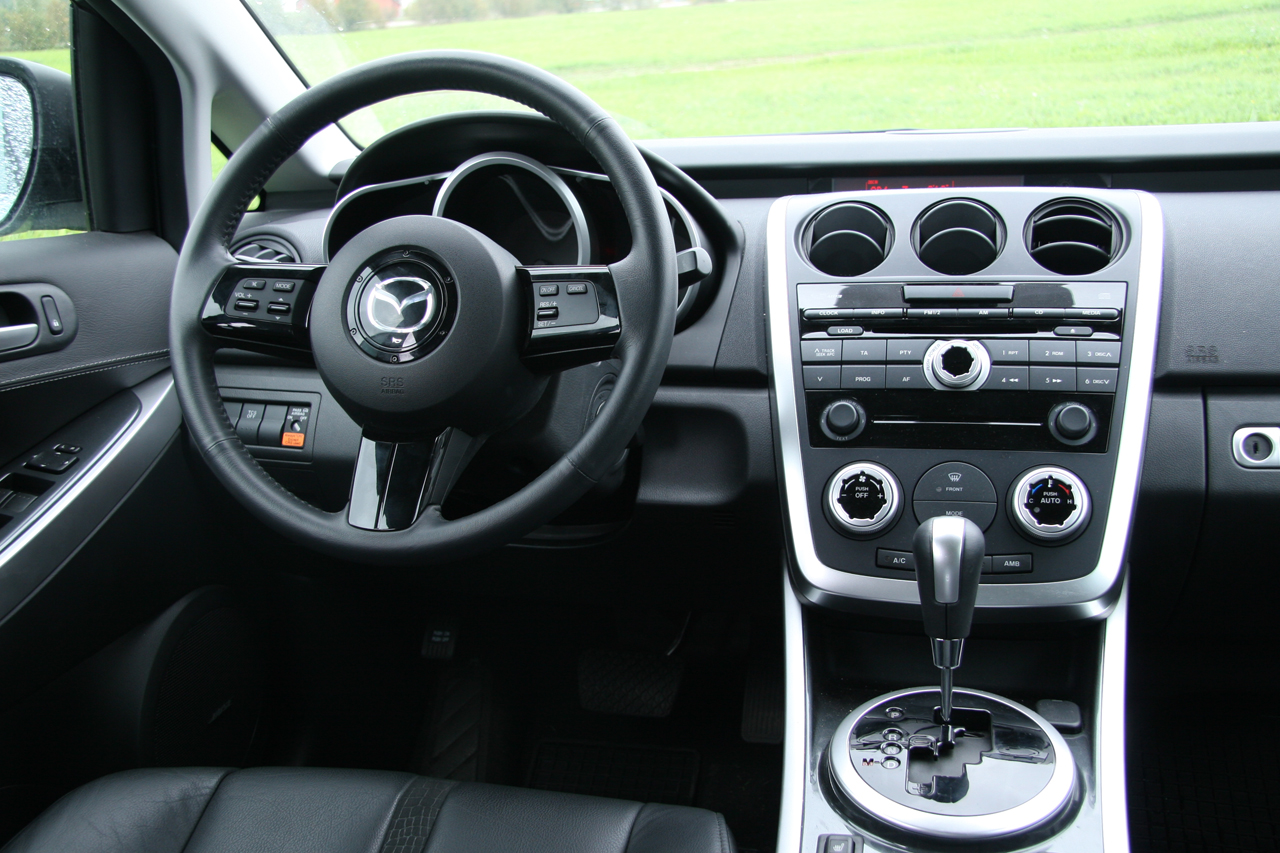
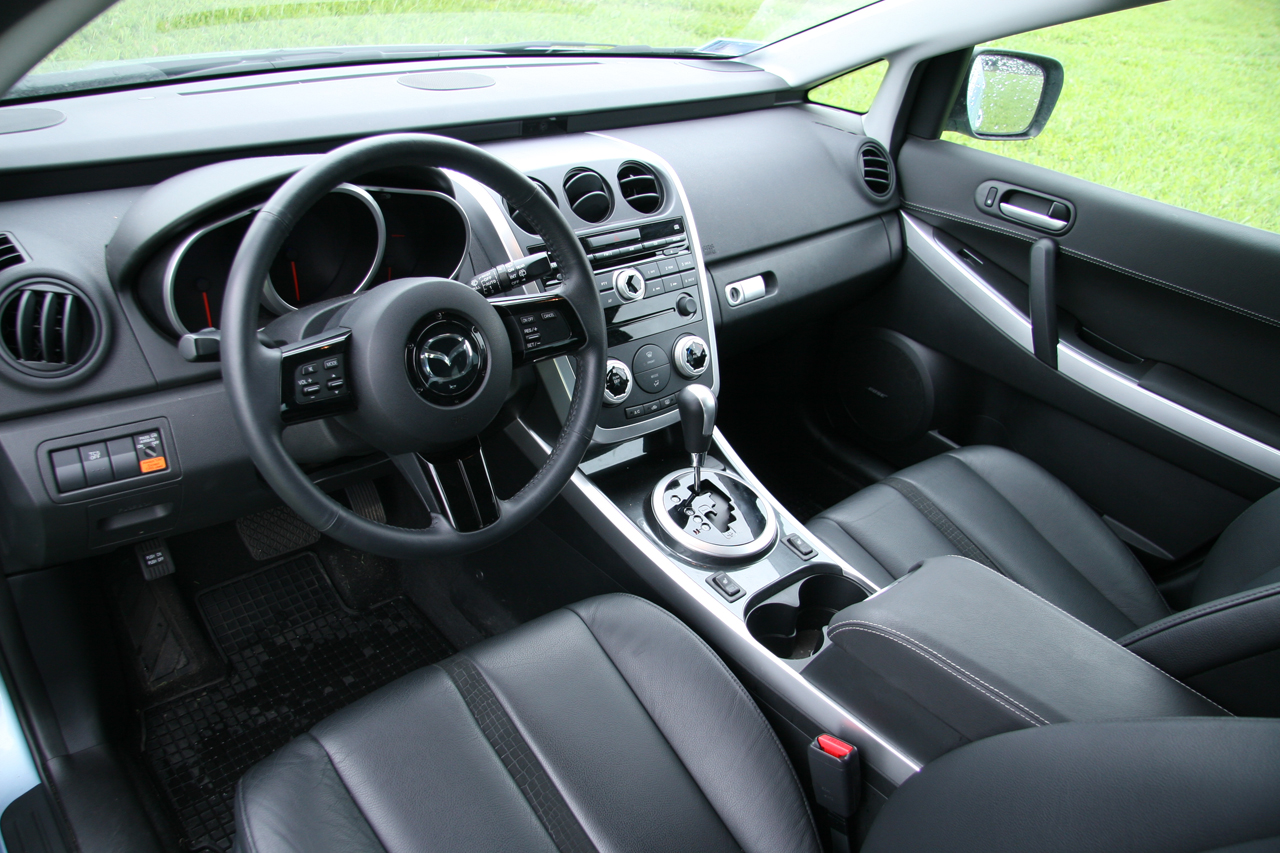
| Ergonomics and design are top-notch, however the quality of trim materials leaves much to be desired |
The Russian version of the crossover received design differences. The main one is a detuned engine producing 238 hp. Torque decreased to 350 Nm, and its peak shifted to 2,500 rpm. Top speed dropped to 180 km/h, acceleration to 100 km/h — 8.3 seconds. The reason for such changes is the adaptation of the 2.3-liter turbo engine to 95-octane gasoline and Euro-3 environmental standards.
Because of these changes, the CX-7 lost its former zest during acceleration — acceleration became smoother and more sedate. With the "Russian" engine settings, the Japanese crossover feels more restrained. If the European version is designed for a young, enthusiastic driver who values powerful acceleration and driving through corners, then the Russian owner of the CX-7 seems to be a more solid and balanced person. He appreciates high power and sporty handling, but in reality rarely uses the full potential of the car.
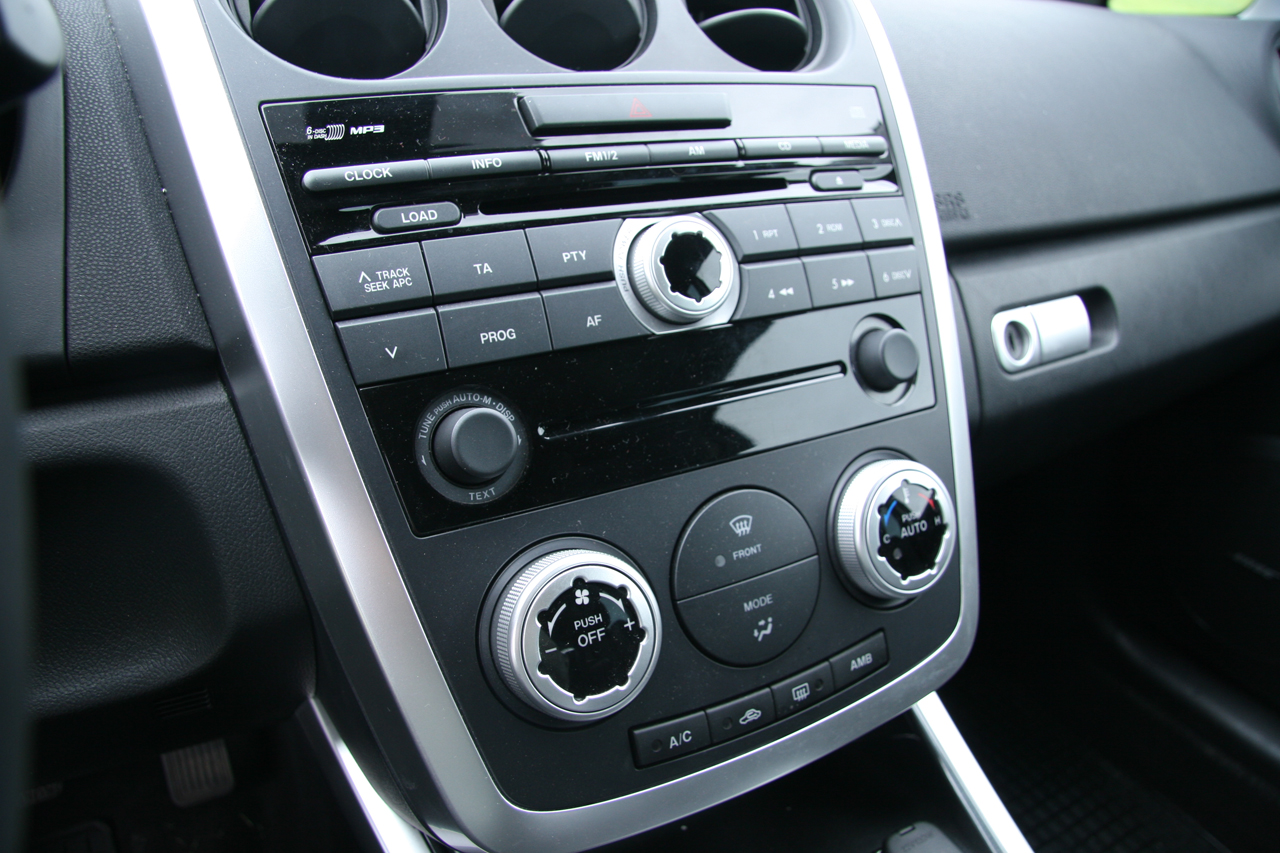 |
| The Bose audio system demonstrates powerful sound |
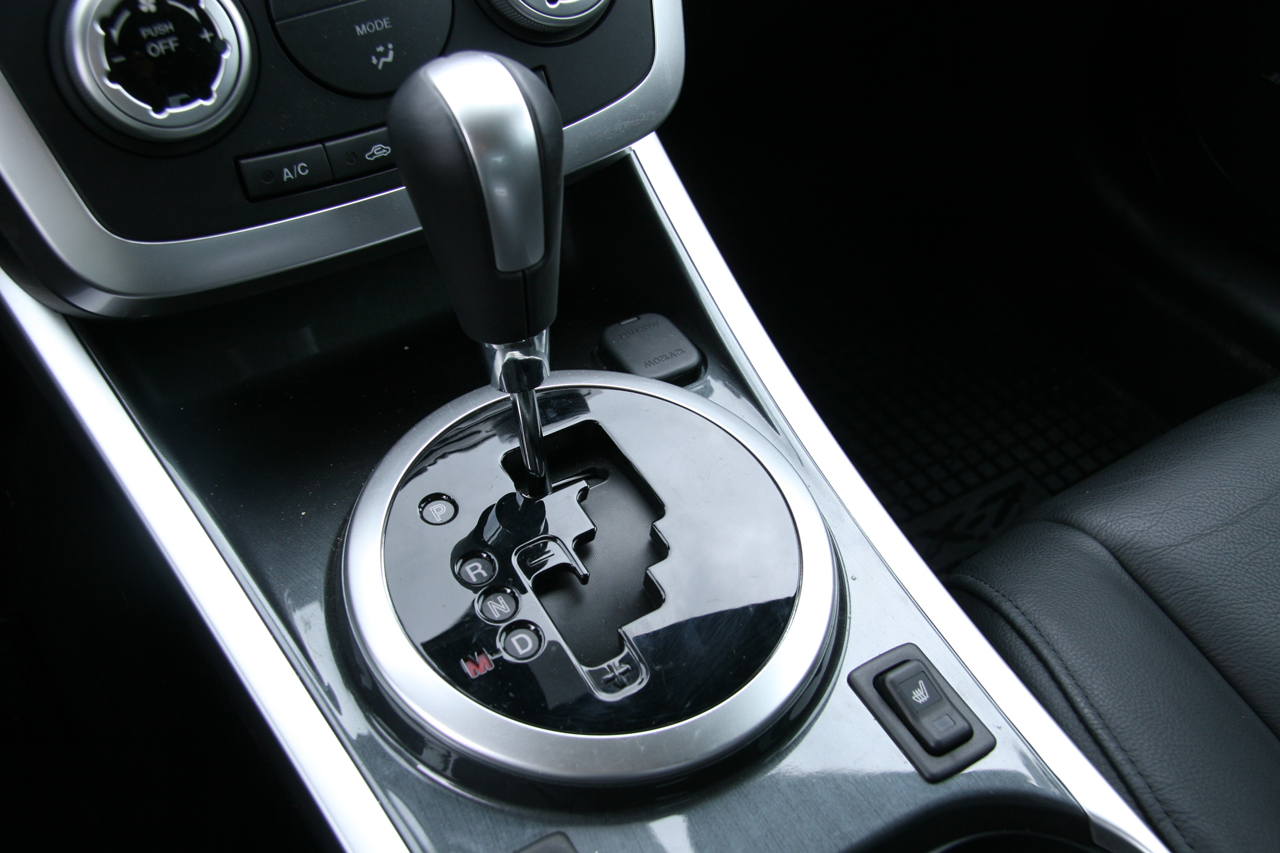 |
| When downshifting, the 6-speed transmission is somewhat thoughtful |
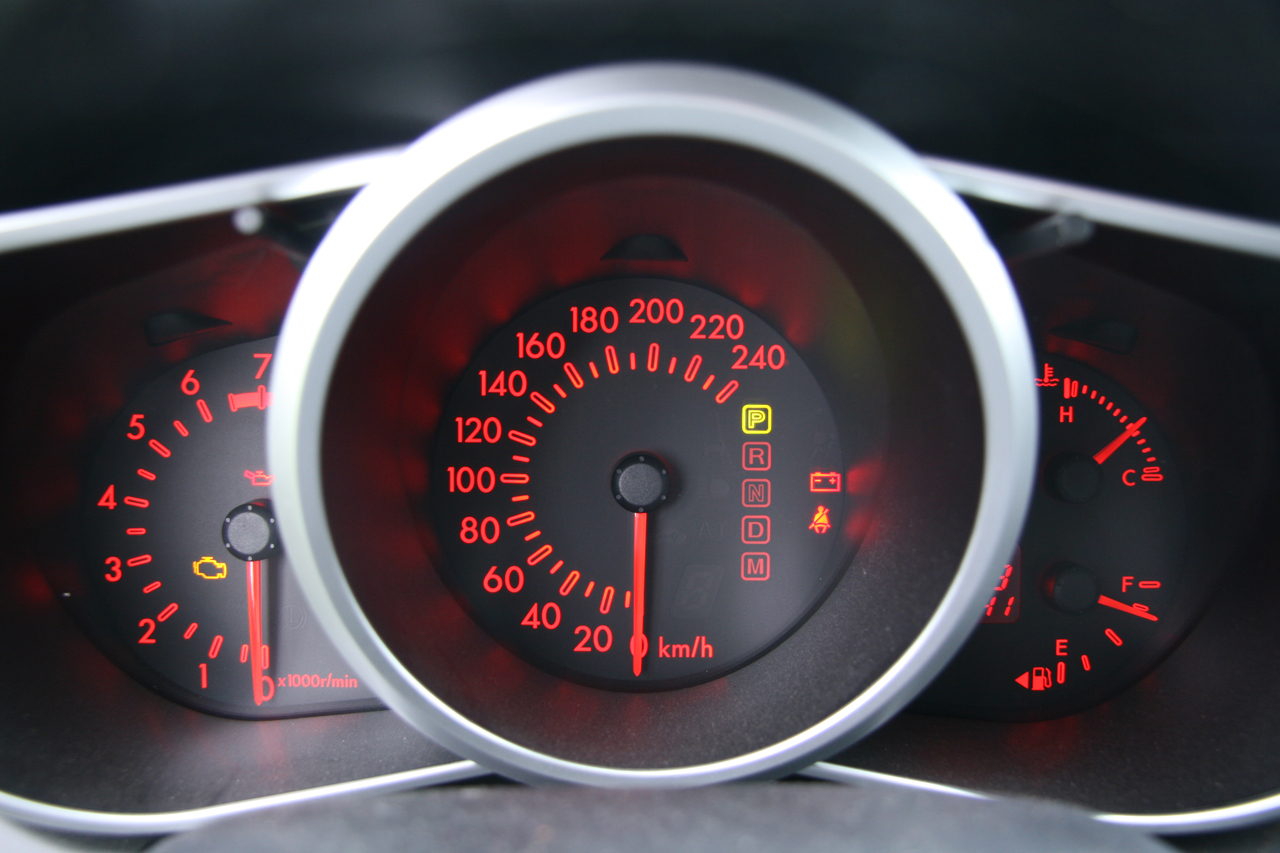 |
| The instrument panel with aggressive amber backlighting is distinguished by good readability |
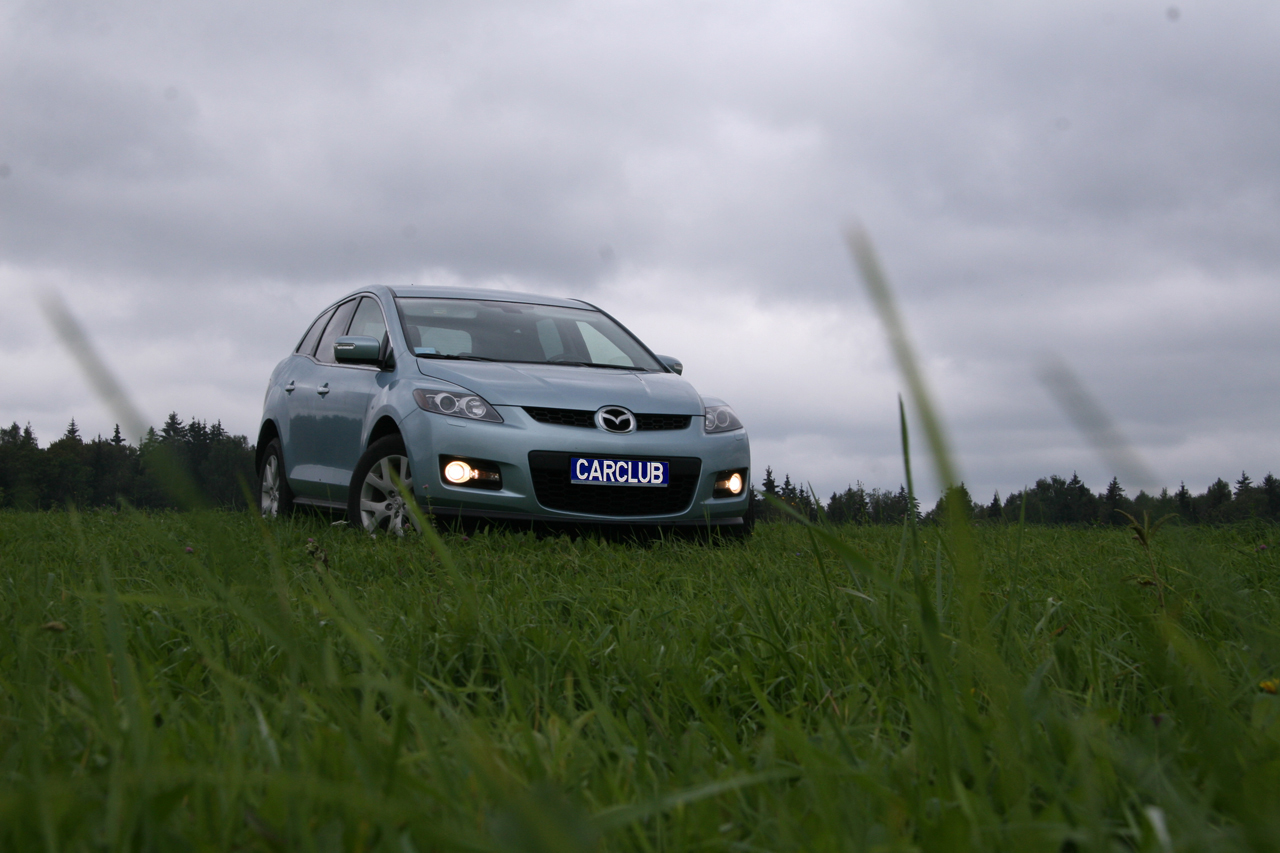
The exterior of the Mazda CX-7 is in the spirit of the entire model range — the signature Zoom-zoom is read unmistakably. Swift body lines, a massive air intake in the front bumper, and slanted head optics reveal the crossover's wayward character. Expressive wheel arches and a strongly raked front pillar add dynamics to the silhouette, and two exhaust pipes with original optics are the final touch in this image.
Inside, sporty notes characteristic of the entire Mazda lineup are also easily recognizable. Comfortable front seats with pronounced lateral support securely hold occupants. In the top trim, the driver's seat has electric adjustment and manual lumbar support adjustment. The convenient steering wheel in the style of the Mazda RX-8 sport coupe carries audio system and cruise control buttons. The model's overseas origin is reminded by the absence of longitudinal steering column adjustment — a tall driver finds it difficult to get comfortable behind the wheel. The instrument panel with amber backlighting pleases with good readability. The top Sport trim includes a decent Bose audio system with a CD changer, MP3 support, and 9 speakers. However, the pleasant impression of the ergonomics and interior design was spoiled by the mediocre quality of trim materials. Apart from leather inserts on the door cards, everything else is hard plastic.
 |
 |
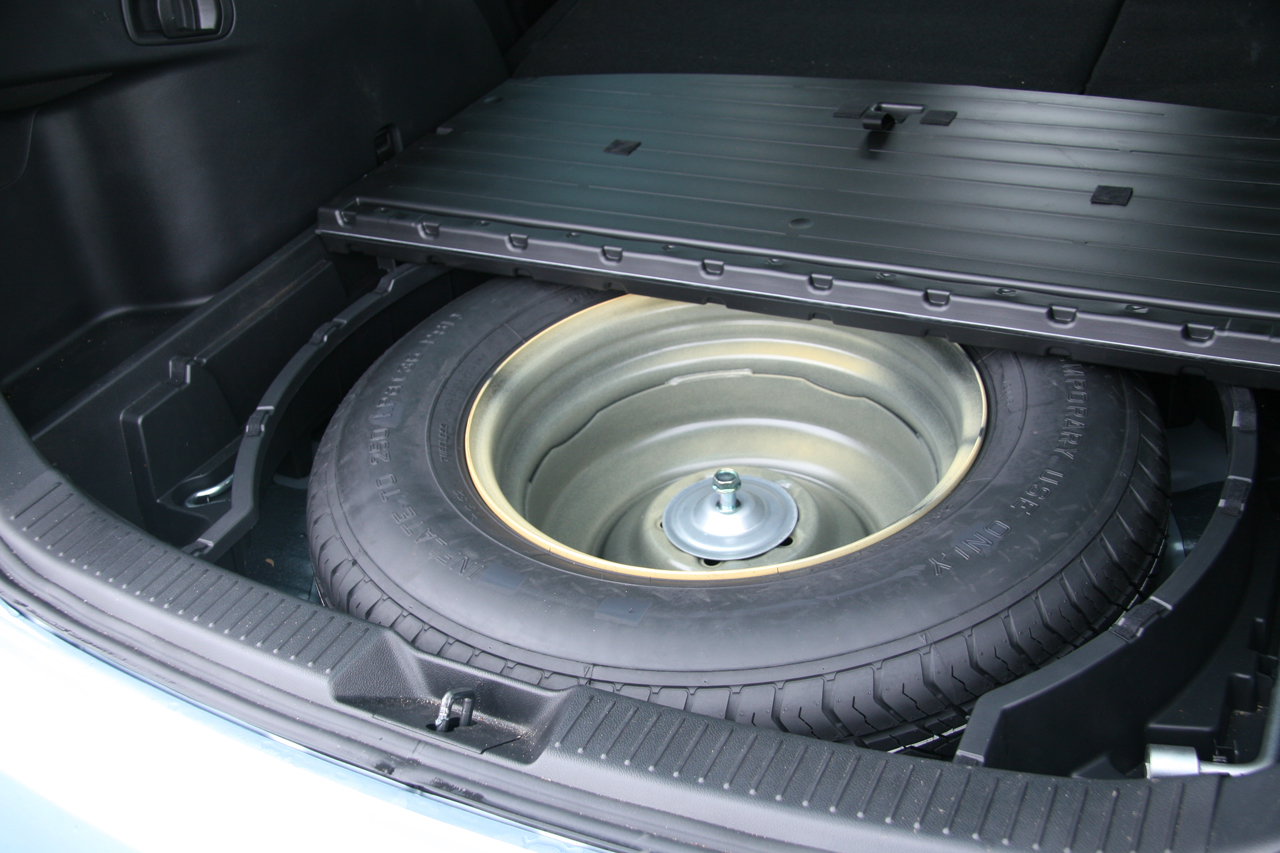
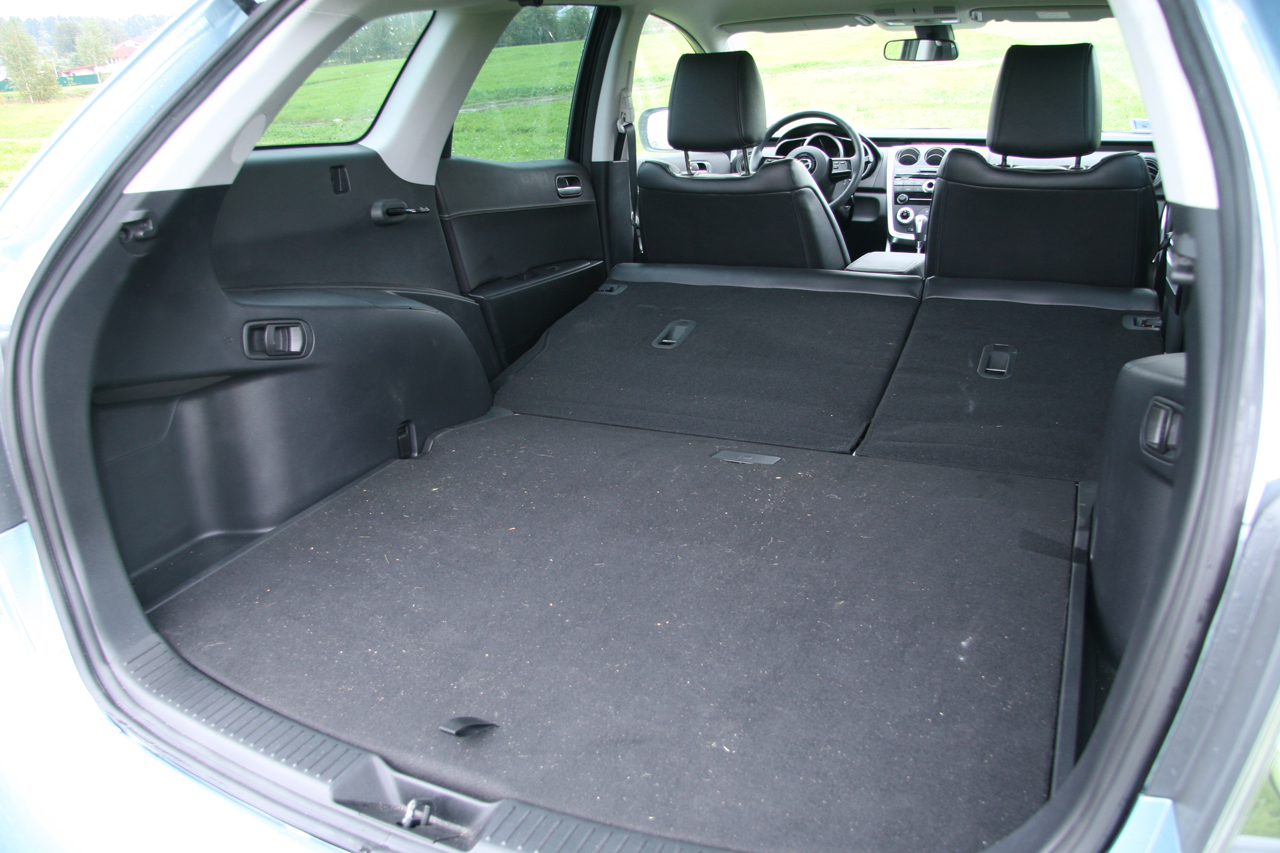
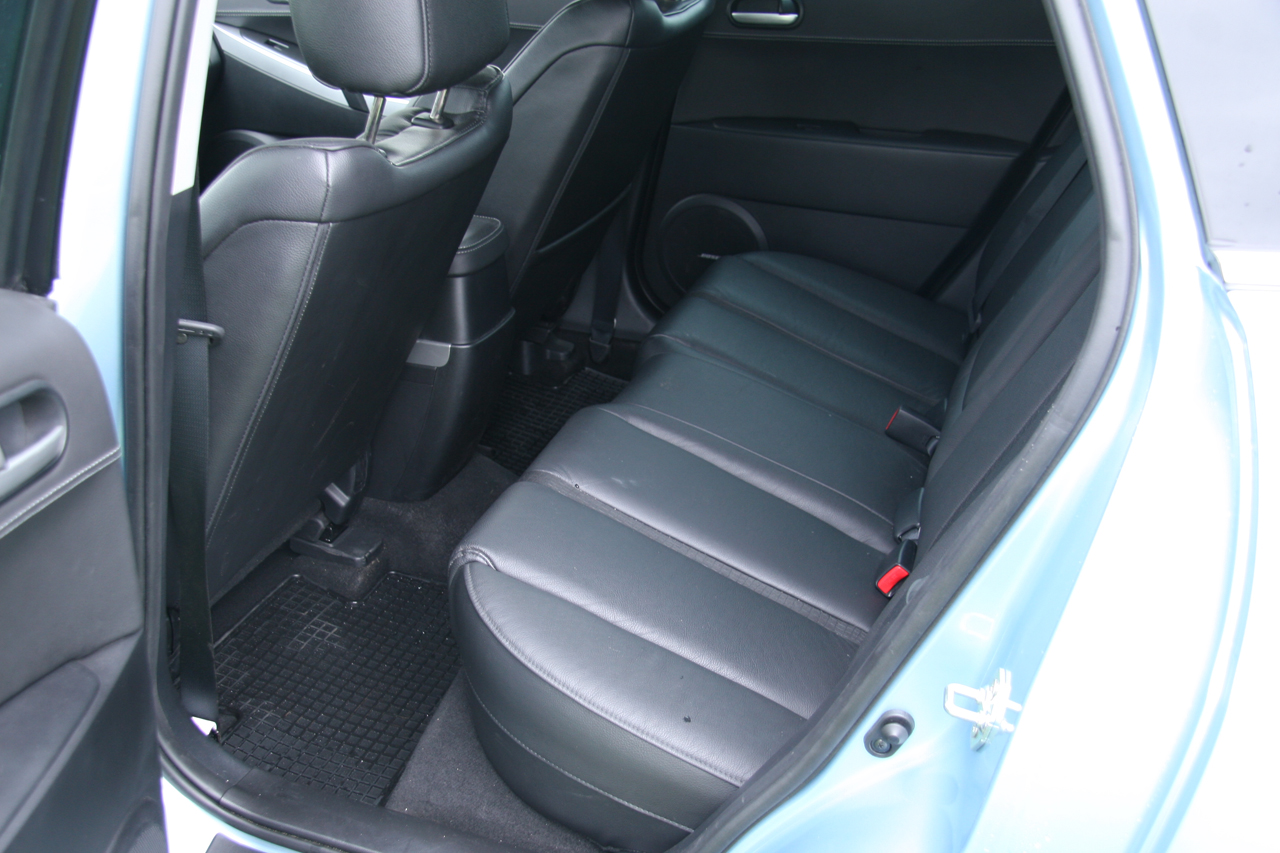
Rear passengers in the CX-7 have to put up with the role of middlemen: riding two is acceptable, three is already cramped. The trunk volume is only 400 liters, which is 55 liters less than the European version. The difference is explained by the presence of a full-size spare tire under the floor of the luggage compartment.
The front suspension with MacPherson struts and the rear multi-link provide good handling on smooth surfaces. On a straight line, the CX-7 holds confidently, without requiring extra steering corrections. In corners, everything is also clear: informative steering and clearly road-oriented suspension settings make the crossover's behavior predictable. At the same time, handling has not lost its sporty component — on a winding road, the CX-7 can give battle to many passenger cars.
 |
As soon as smooth asphalt gives way to a broken road, the CX-7 begins to get nervous, and passengers are noticeably shaken.
All-wheel drive is arranged so that traction between the front and rear axles is redistributed depending on what is happening under the wheels — from 100/0 to 50/50. It is clear that calling the CX-7 a real SUV is hard, but in its class of crossovers it feels quite confident. Driving onto a curb or getting out of a snow-covered parking lot is not a problem for it.
 |
| Depending on the road situation, the torque distribution between axles can vary from 100/0 to 50/50 |
 |
| In the Russian market, Mazda CX-7 is offered in two trims: Touring and Sport |
The automatic shifts smoothly and without jerks. But if you need to quickly drop a couple of gears down, the gearbox noticeably hesitates. The same story when pulling away: you sharply press the gas — and only after a couple of seconds the car starts moving. During this time, competitors manage to get ahead by several meters. The "European" version of the CX-7 with a manual transmission behaves much more responsively in such situations. Because of the automatic transmission, the appetite has also grown: even if you drive as carefully as possible, without sharp accelerations and traffic jams, the fuel consumption still did not drop below 13.5 liters per hundred.
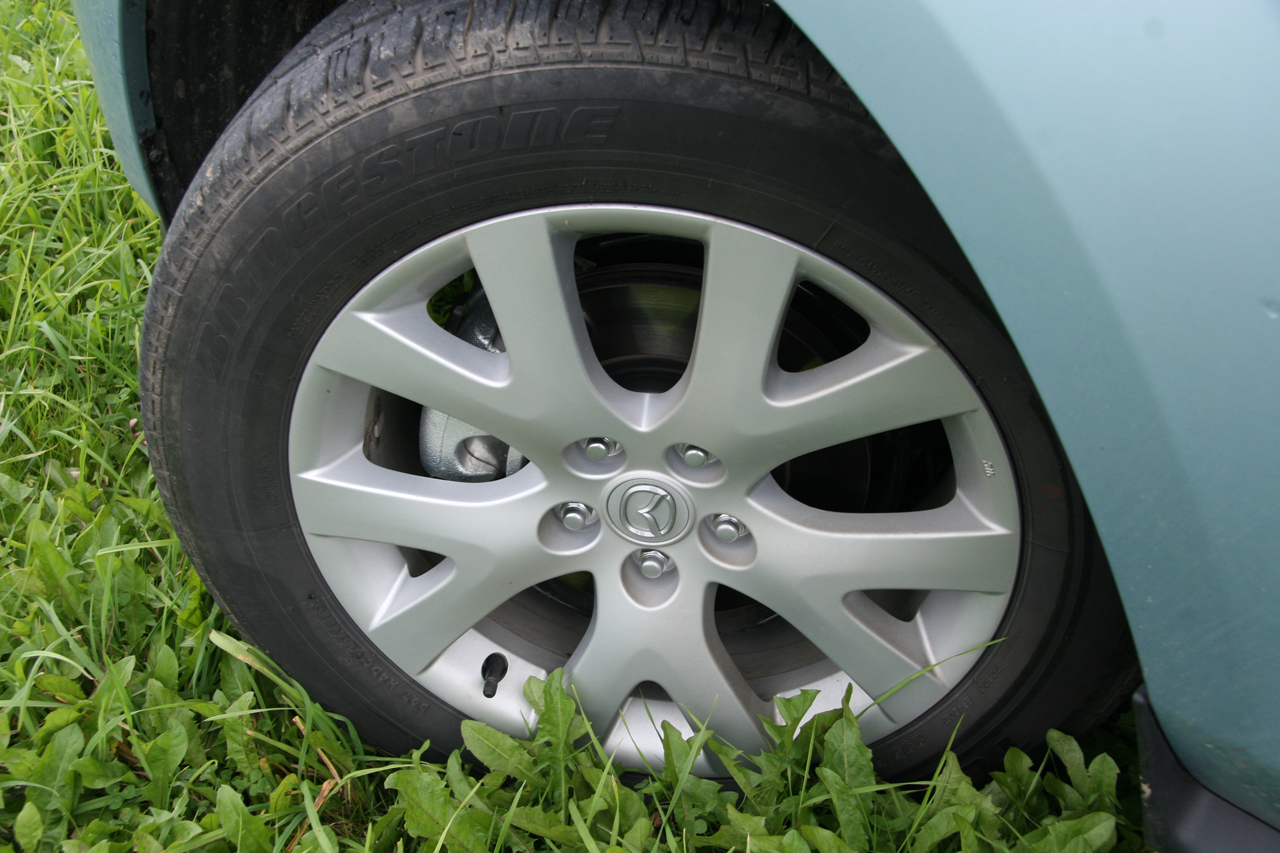
Now about prices and trim levels. In Russia, the CX-7 is sold in two versions — Touring and Sport. Already in the base Touring there is a full electric package, fabric interior, six airbags, heated front seats, cruise control, ABS with brake force distribution system, stability control, 18-inch alloy wheels, and a four-speaker audio system. They ask for such a car 1,162,000 rubles. The Sport version, which costs 1,260,000 rubles, additionally offers xenon headlights, power-adjustable driver's seat, leather interior trim, Bose audio system, rain sensor, and fog lights.
 |
 |
And in what does the CX-7 outperform rivals, and in what does it lose to them? As always, Mazda's priority is a striking appearance, and the crossover we tested once again confirmed this. Moreover, with similar equipment, similar dimensions, and a comparable price, the CX-7 has serious advantages: a powerful engine, sporty suspension, and a modern six-speed gearbox. True, there is also a downside: the only available engine — the 238-horsepower — is unlikely to interest those who need a car just for daily trips from point A to point B, and such people are the majority among potential buyers.
Ruslan Galimov
 |
 |
 |
 |
 |