
Alexander DIVAKOV, Pavel KARIN, photos by Stepan SHUMAKHER
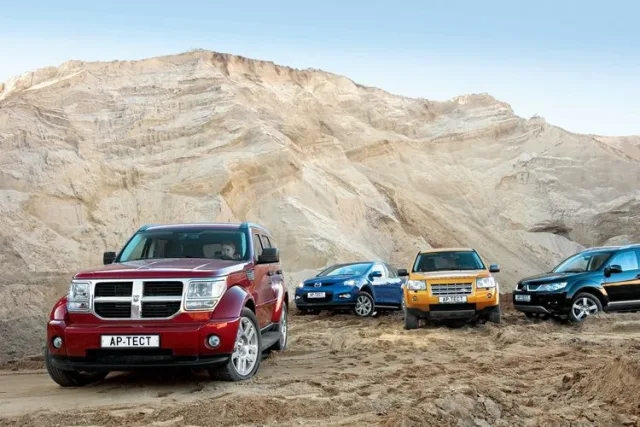
The courageous Dodge Nitro, the refined Mazda CX-7, the respectable Land Rover Freelander, and the pragmatic Mitsubishi Outlander XL. A remarkably dissimilar quartet! The Freelander aims for the top league, while the Mazda CX-7 and the fresh Outlander XL settle for a position slightly below. The Dodge Nitro, however, pretends to be a seasoned off-roader — it has a solid rear axle and a front end that engages manually.
What does each have to offer? What defines "premium" — and which of these four would not falter on a muddy dirt road?
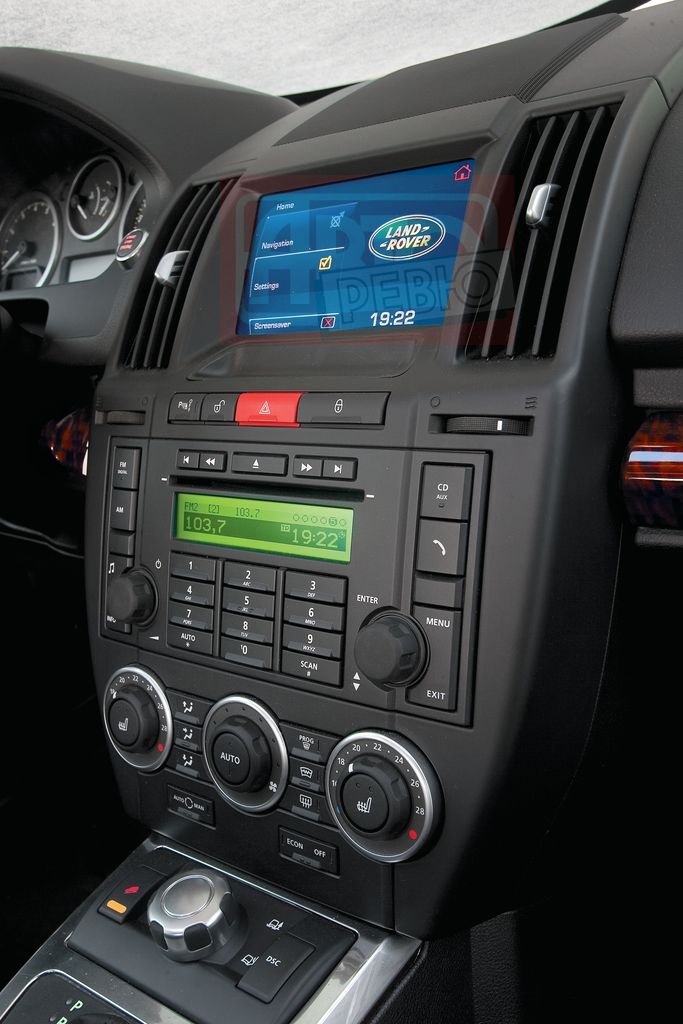
Breed is always visible. Look at the new Freelander — is there even a shadow of doubt about its noble origins? Isn't the kinship with the older "Ranges" evident in every line? And inside, the feeling of dealing with an expensive item doesn't leave you, although some cheaper plastic appears here and there. The solid front panel, the leather driver's seat with a folding armrest — soft but with an excellent profile. The steering wheel adjusts both for reach and tilt. You sit high, off-road style, and very comfortably. Moreover, as in all "Land Rovers," the car's "dimensions" are perfectly felt through the hood. And the climate control is dual-zone, whereas the other three have a standard single-zone system.
Premium? By all external signs — yes.
The fresh Mitsubishi Outlander XL. It also looks decent! The light interior, like the new Lancer's, looks modern. You sit comfortably, but the seats still yield to the Freelander's: the side bolsters are spaced too freely, the backrest is sunken in the lumbar area, and there's no lumbar adjustment. Also, you can't set the backrest vertically — the tilt range is limited.
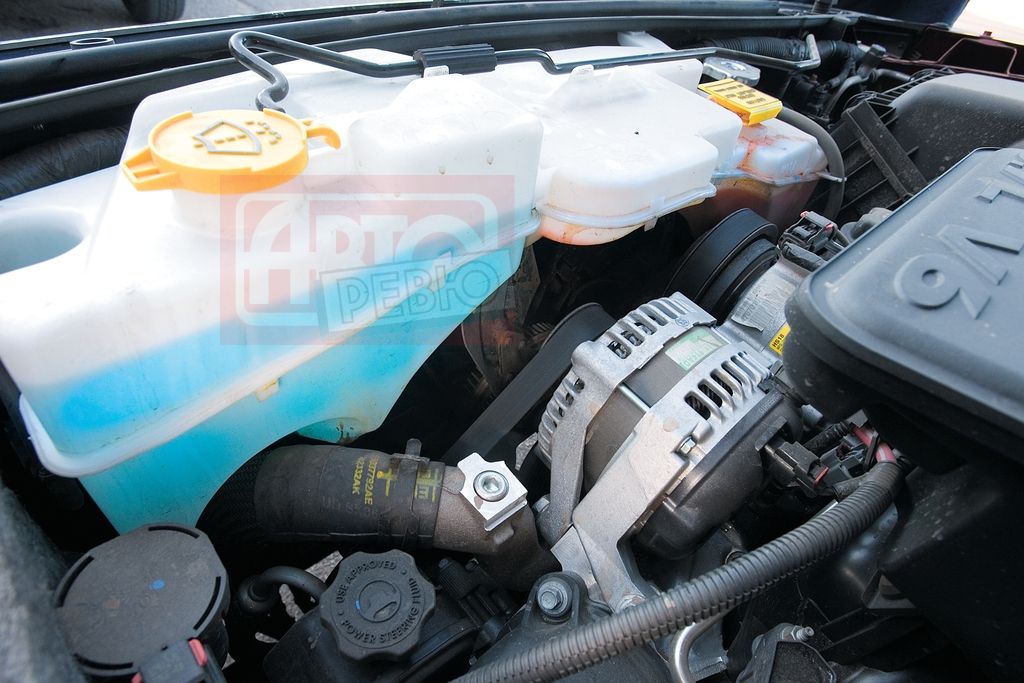 | 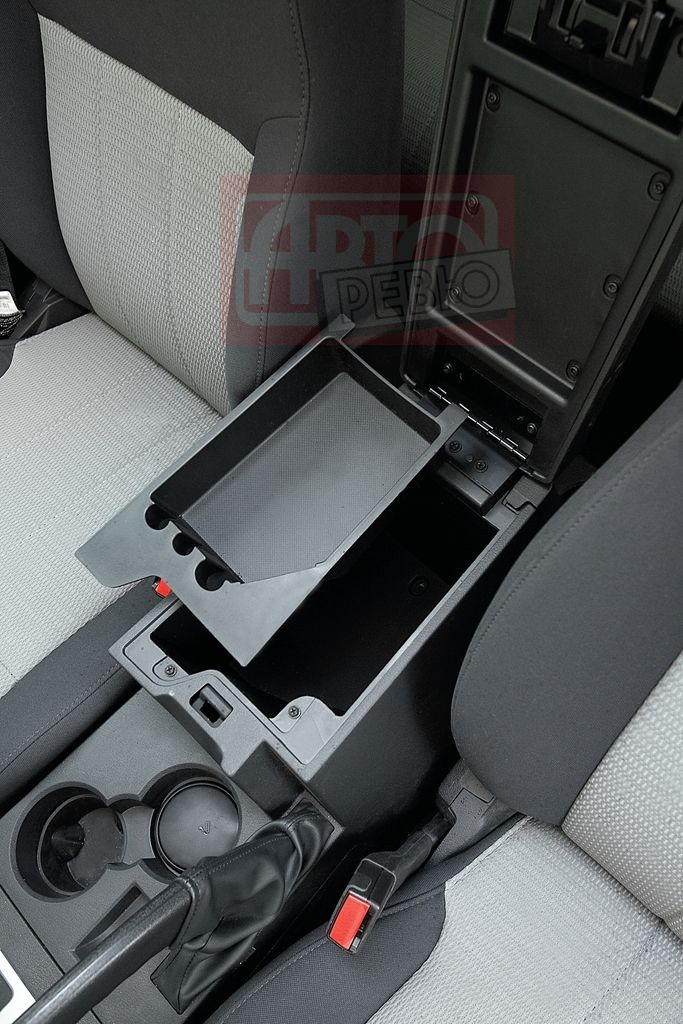 | 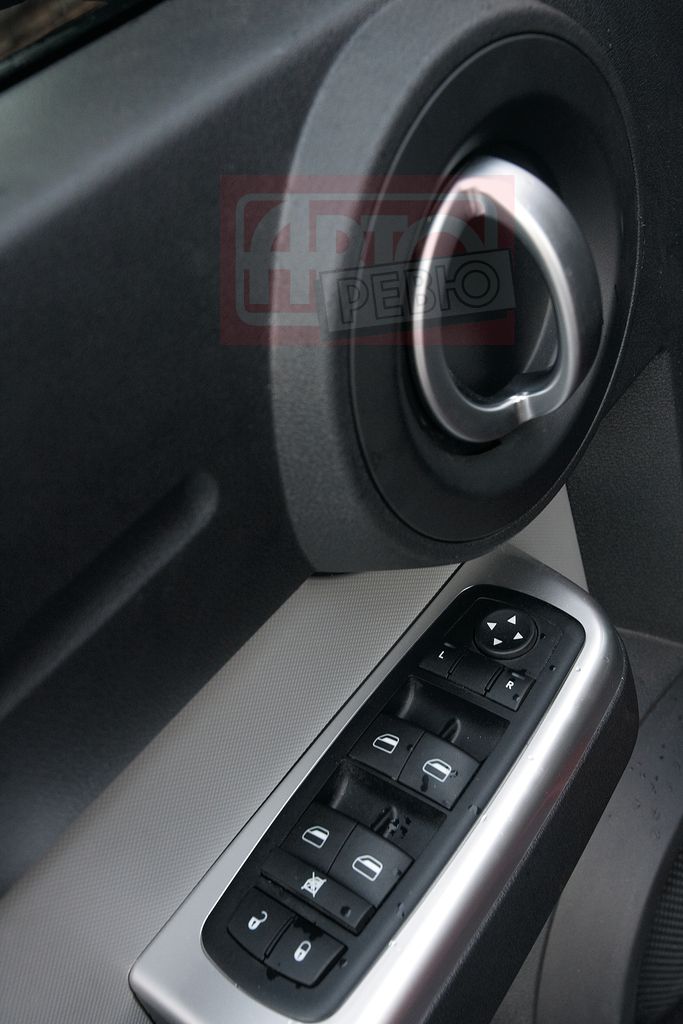 |
| Under the Nitro's hood, the fan shroud serves as reservoirs for washer and coolant fluids, and the impeller itself is steel! | The box partition has no hinges — it simply lifts out | The curved door handle rings are original; power windows and mirrors are standard equipment |
The Mazda CX-7 also loses a bit to the Land Rover. Not in design — its Japanese, light, sporty, and not at all aggressive appearance is also one hundred percent recognizable. The light interior is elegant: instruments with bright red backlighting and vertically "sleeping" needles, an abundance of round shapes in the front panel design. However, the small display far away, right under the windshield cut, is covered by a glare-prone glass, and in sunny weather its readings are illegible. The seating position here is the lowest, but still not fully "car-like." The seats are good with optimal firmness and "friction" upholstery, but lack side support and adjustable lumbar support.
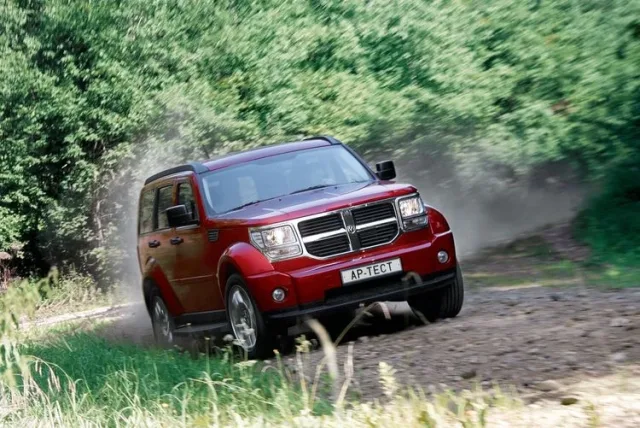
And finally, the Dodge Nitro. This one stands apart. Chopped in an old-fashioned way, without a single nail! You can almost see an American cowboy hewing the front bumper's jaw with an axe, splitting the faux radiator grille into four, and finally, inside, driving the blade up to the handle into the central tunnel — now it's the parking brake lever.
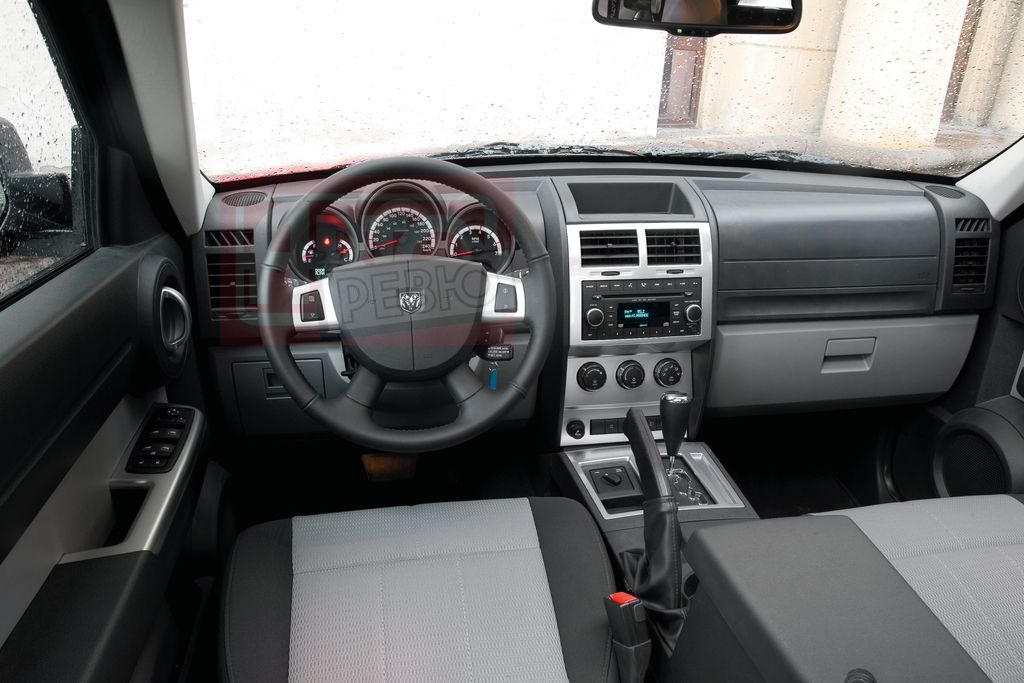 | 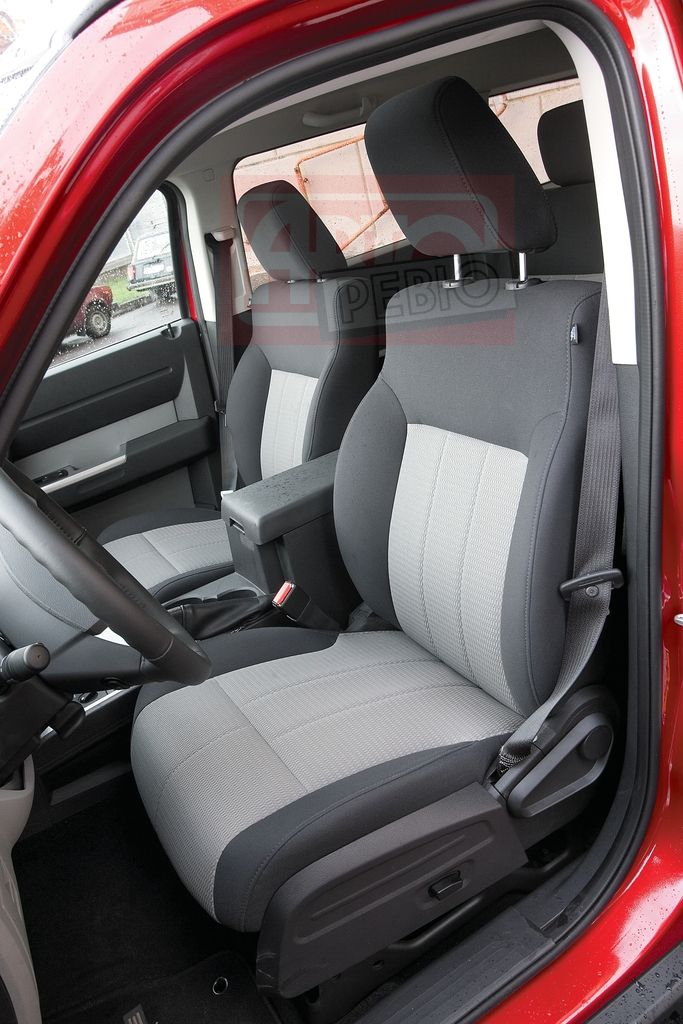 |
| The Nitro's chopped interior forms are embodied in hard plastic. On the central tunnel — the "axe handle" of the parking brake | The seats are flat, and the side bolsters are spaced too wide |
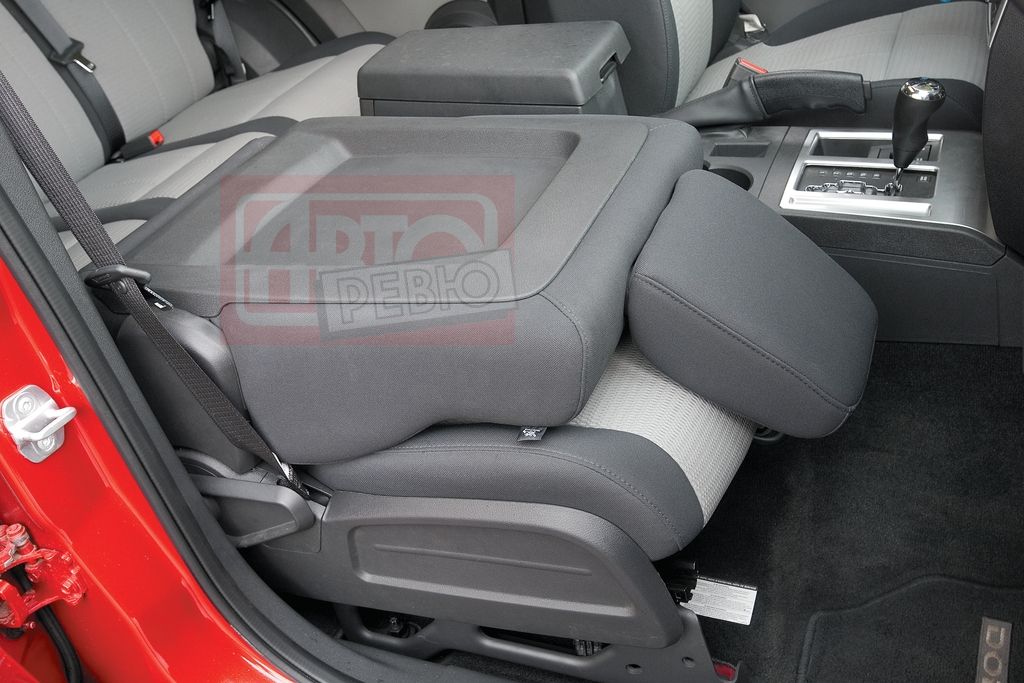 | 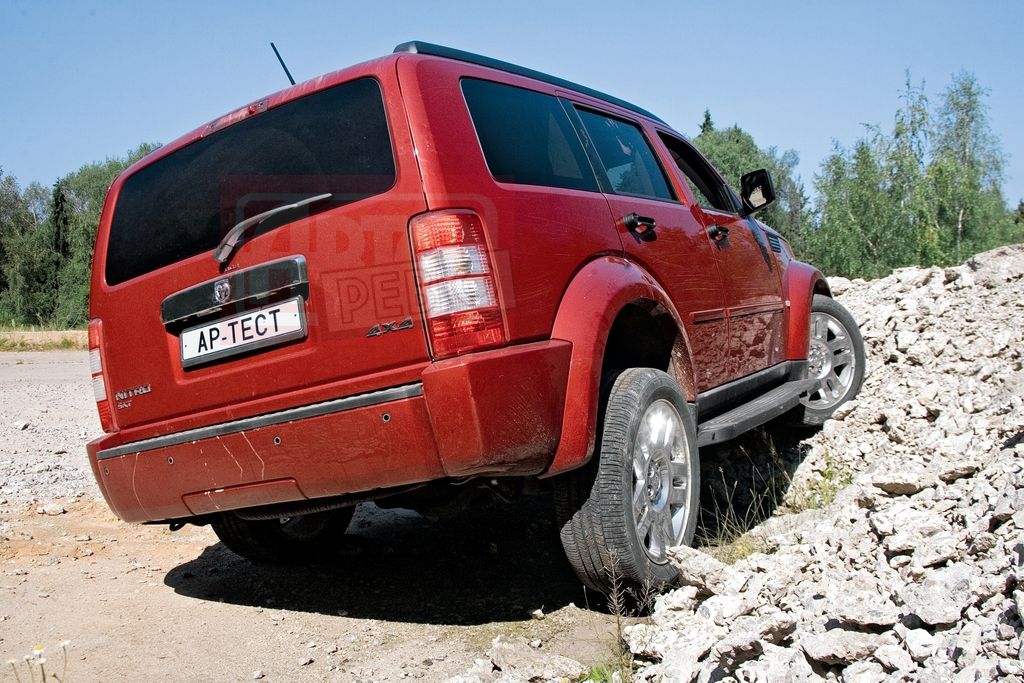 |
| With a light movement of the hand, the front passenger seat turns into an elegant table | The Dodge Nitro can boast impressive suspension travel, but it cannot fight diagonal wheel hanging |
But the plastic in the cabin, alas, is also rough — hard and resonant. The partition in the armrest box lacks hinges — it's simply inserted: you won't find that even in Chinese cars. Despite the numerous adjustments of the driver's seat (even the cushion angle changes), you can't get comfortable: the backrest presses on the shoulders, lumbar support is insufficient, and the side bolsters are spaced too wide. Additionally, the pedal cluster is shifted left, there's no footrest for the left foot, and the steering wheel, like in Japanese cars, adjusts only for height.
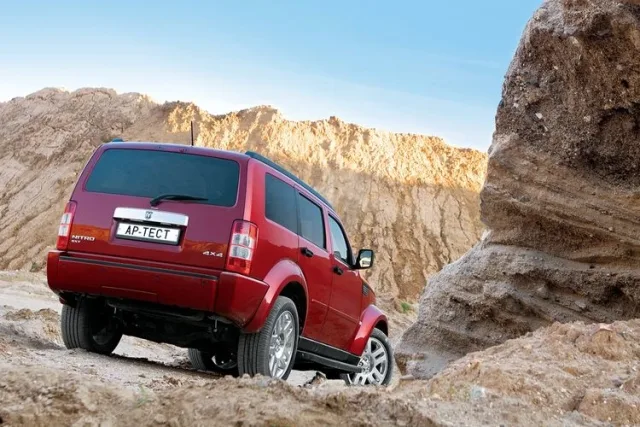
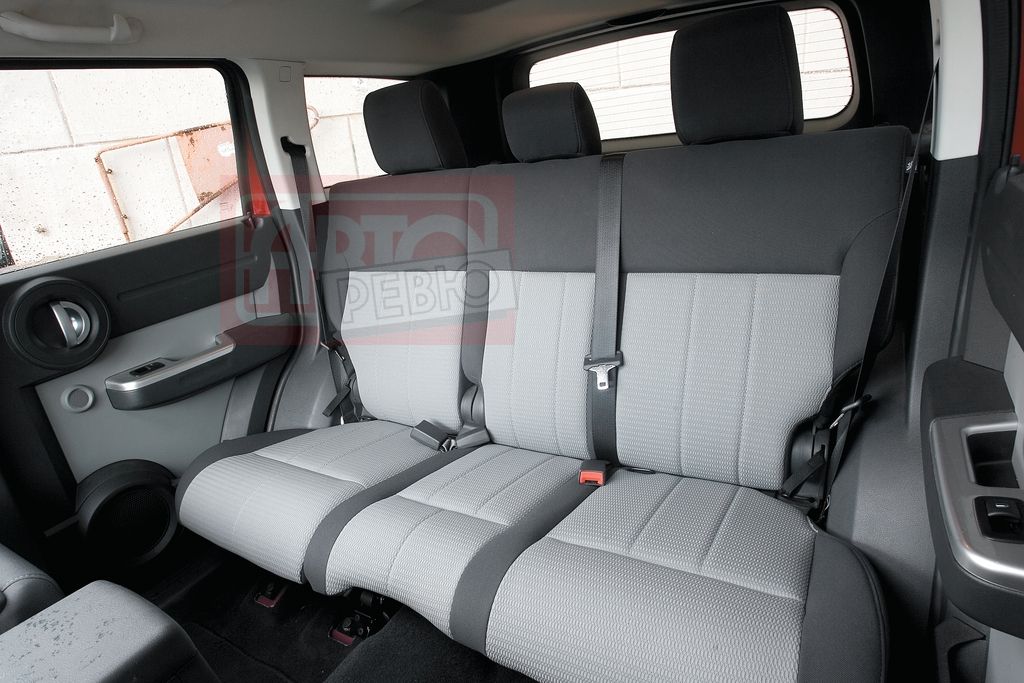
Maybe the Dodge is more spacious in the back? Alas. First, the Nitro's impressive dimensions are an optical illusion: in reality, it's only 84 mm longer than the Freelander. Getting in the back is inconvenient — the small door opening angle and the wide running board get in the way. The seat is flat, the cushion with a hard transverse bolster is low, and the backrest, adjustable for angle, has excessive lumbar support. Moreover, the uneven floor with wide protrusions leaves the middle passenger with the unenviable role of a poor relative.
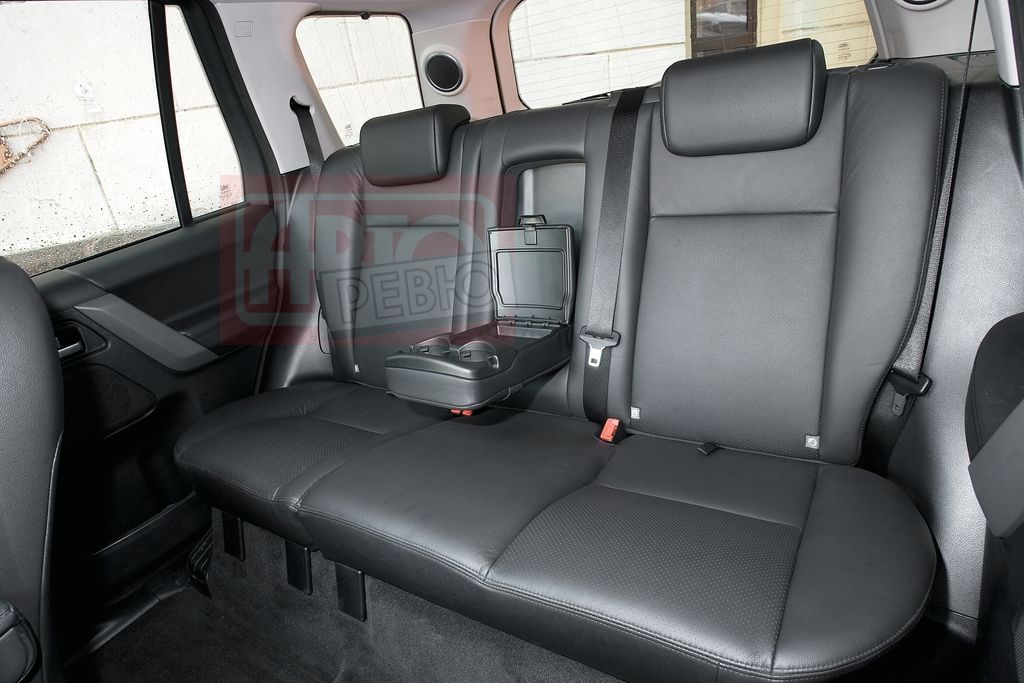
However, the Land Rover's rear is also not known for hospitality. The door opening is narrow, the seat imposes an upright posture, shins tend to press against the hard frames of the front seats, and three is cramped. But the Freelander is still preferable to the Nitro.
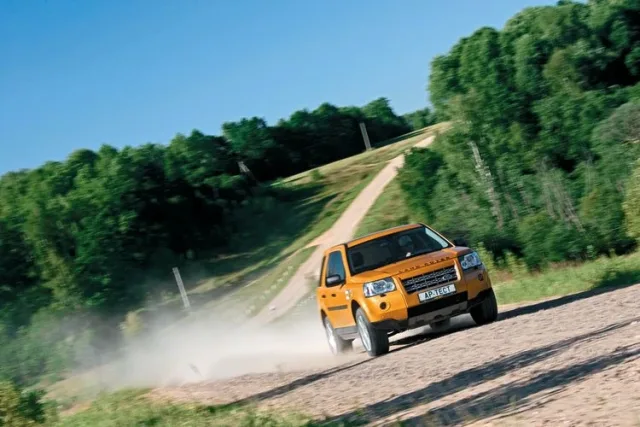
On country roads, the new Freelander is very good — as on asphalt: energy-intensive suspension, smooth reactions, and a firm grip on the trajectory
And the leaders in rear-seat comfort are the "Japanese." While in the Mazda there's still a lack of foot space, and three passengers press shoulders against each other, the Outlander is perfectly suited for a comfortable journey on the rear sofa. Truly XL!
By the way, do you remember that the new Outlander has already won one comparative test by Autoreview (see AR No. 6, 2007)? Well, this time too, the Mitsubishi's acceleration is in order — under the furious roar of the 220-horsepower three-liter "six," the Outlander XL reaches a hundred in just 9.2 seconds, leaving the trio of competitors behind. The "automatic" shifts quickly, with slight jerks, and you can control it without taking your hands off the wheel. True, after a series of accelerations on the dynamometer road, the gearbox suddenly stopped obeying the paddle shifter commands, but after a pause, the status quo was restored by itself.
| Dodge Nitro | Land Rover Freelander |
 |  |
| Mazda CX-7 | Mitsubishi Outlander XL |
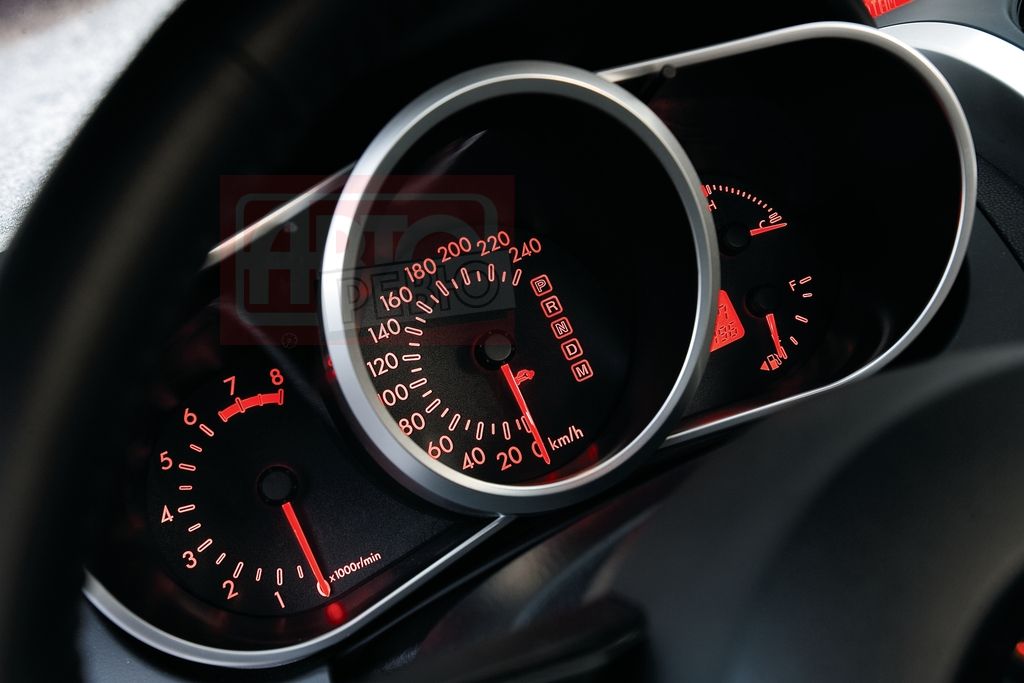 | 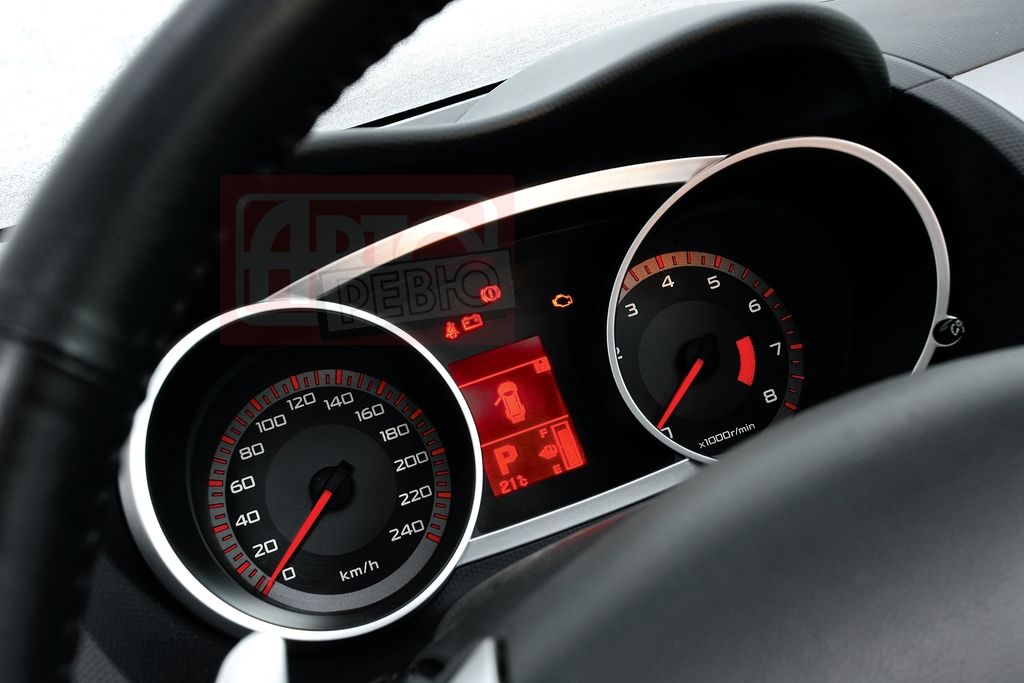 |
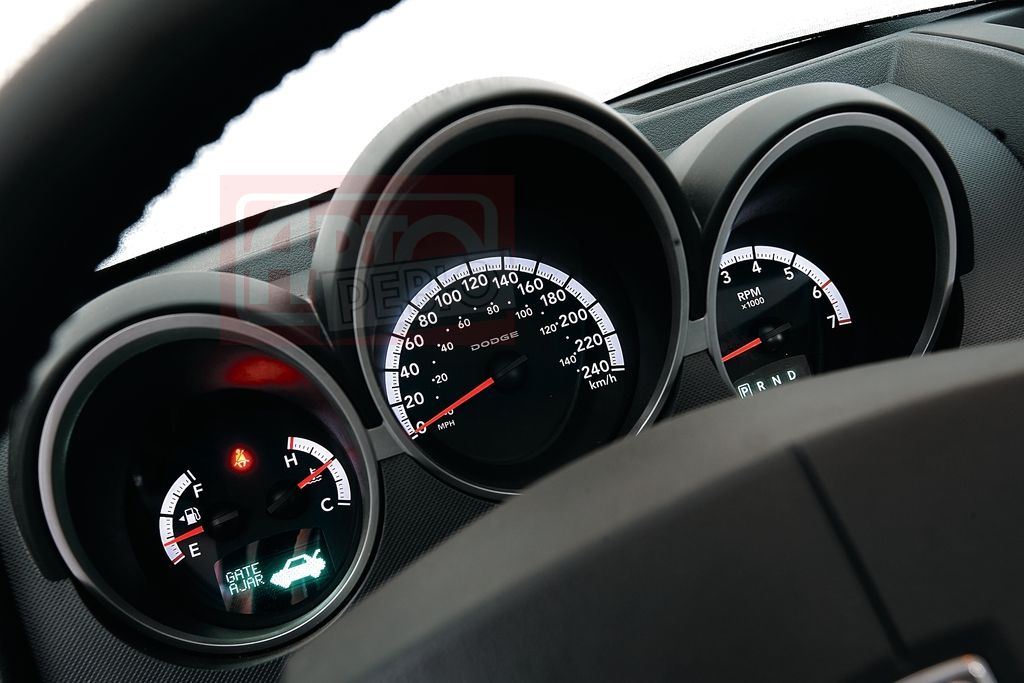
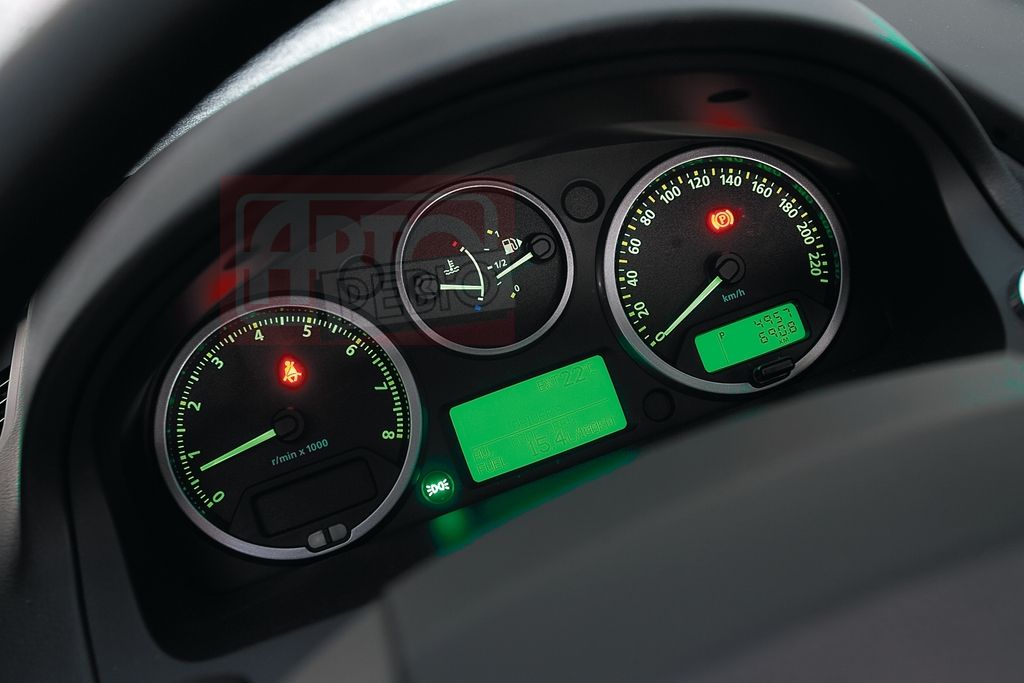
| The most informative instruments are in the Dodge and Mitsubishi. The Freelander's dials are digitized too finely, and the Mazda's speedometer is overloaded with large tick marks. But only the CX-7 has optitronic instruments | |
The Mazda CX-7 with the 2.3 DISI turbo engine from the MPS models, detuned to "only" 238 hp, is also brisk — it reaches a hundred in 9.5 seconds. The six-speed "automatic" works smoother — jerks are felt only when shifting down several gears at once. And in elasticity, that is, in acceleration time on a fixed gear, the Mazda is simply out of competition — the torquey turbo engine gives it almost a twofold advantage over the others!
The Freelander (3.2 L, 233 hp) is slower than the "Japanese," but 10.2 seconds to a hundred is also not bad. And the six-speed "automatic" pleases with smooth shifts. The manual mode allows automatic upshifts and downshifts but allows more active engine braking.
| Dodge Nitro | Land Rover Freelander |
 | 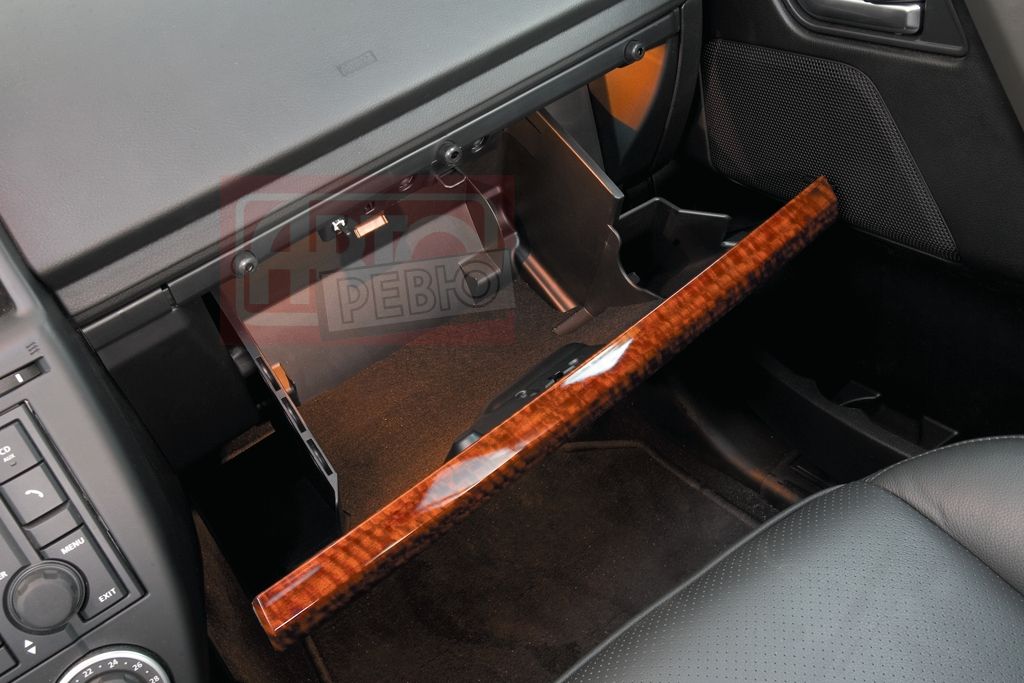 |
| Mazda CX-7 | Mitsubishi Outlander XL |
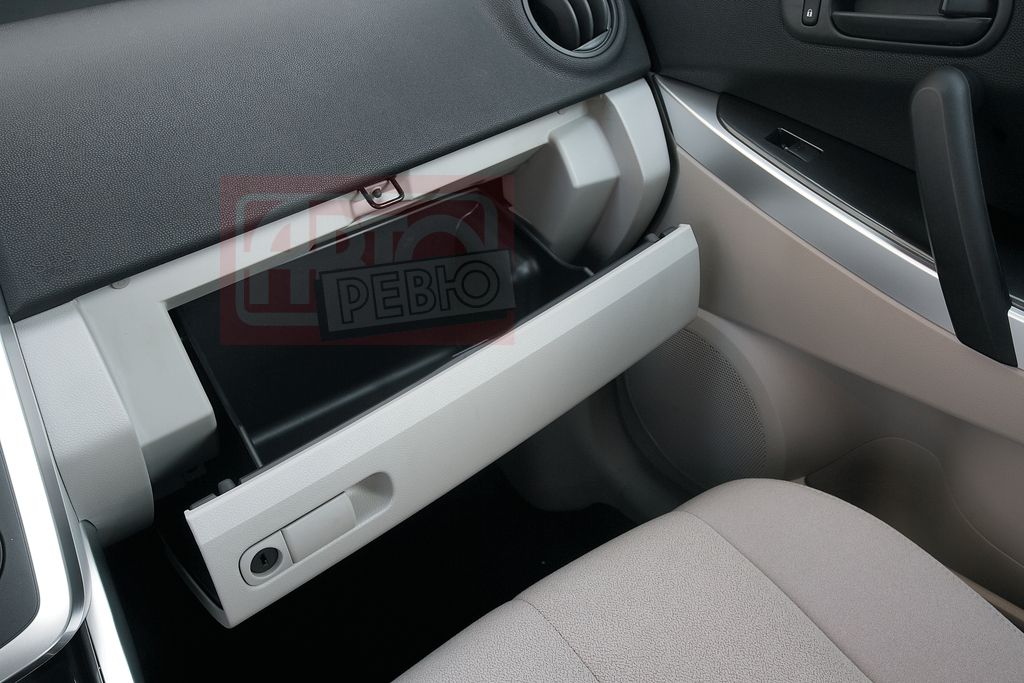 | 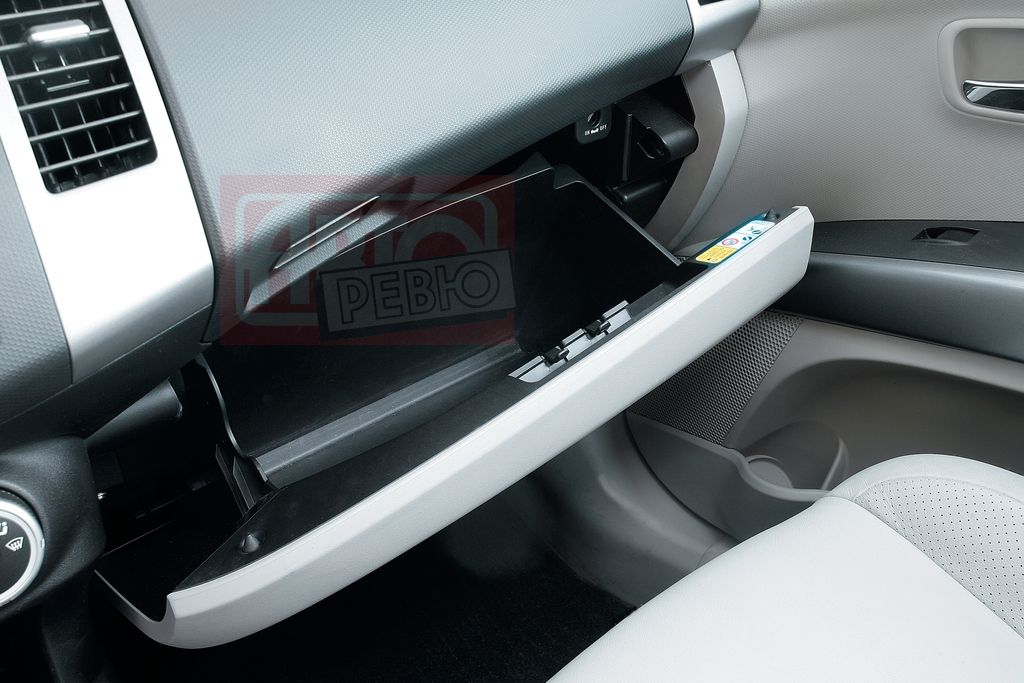 |
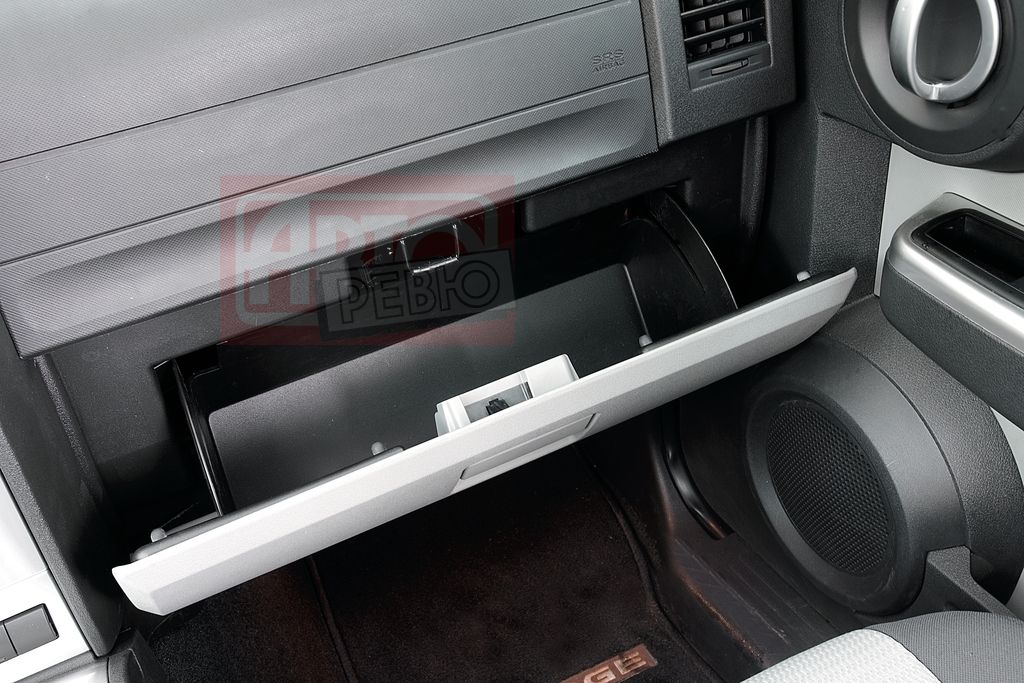
| Glove boxes in Dodge and Mazda are shorter but wider, while in Land Rover they are longer and narrower. Mitsubishi stands out: there are two of them, and the upper one is even cooled | |
The Nitro starts not like a sports car, but rather like an ocean liner — sedately, without jerks. The gas pedal is muted, the ancient four-speed automatic works measuredly: it shifts down softly, but up — with a noticeable jolt, as if stumbling on a step. At the same time, acceleration to 100 km/h for the Dodge takes 10.7 seconds, which is only half a second worse than the Freelander. What is much more unpleasant is something else: the braking distance of the Nitro is the longest in the test — 45.4 meters from 100 km/h. Even in normal mode, the brake pedal "sinks", the car noticeably dives, and when the ABS activates, it almost does not respond to steering wheel turns.
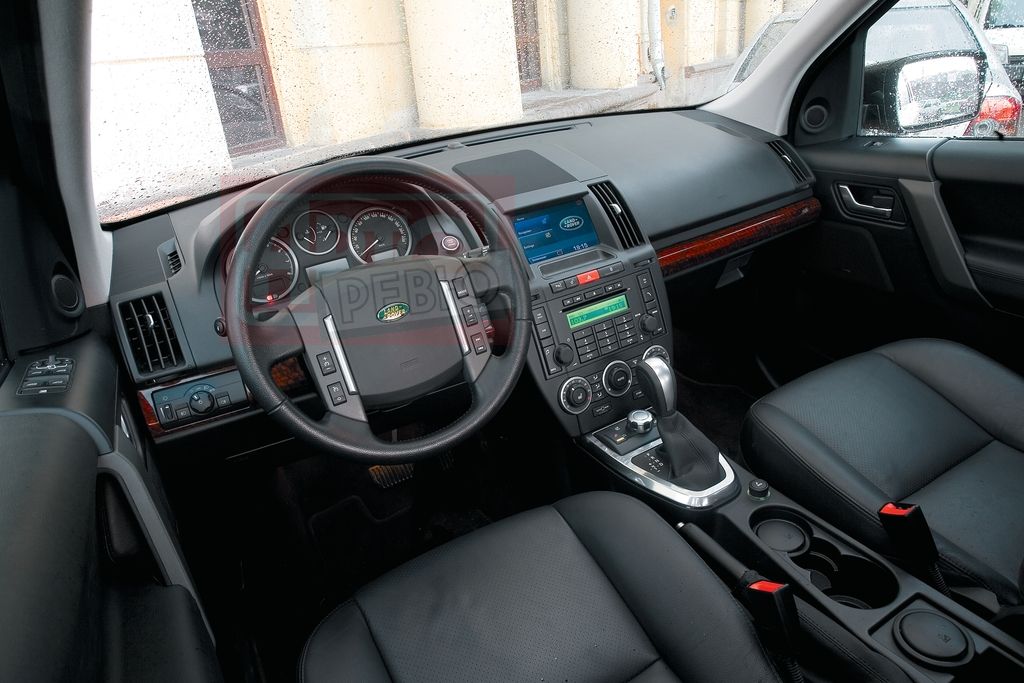 | 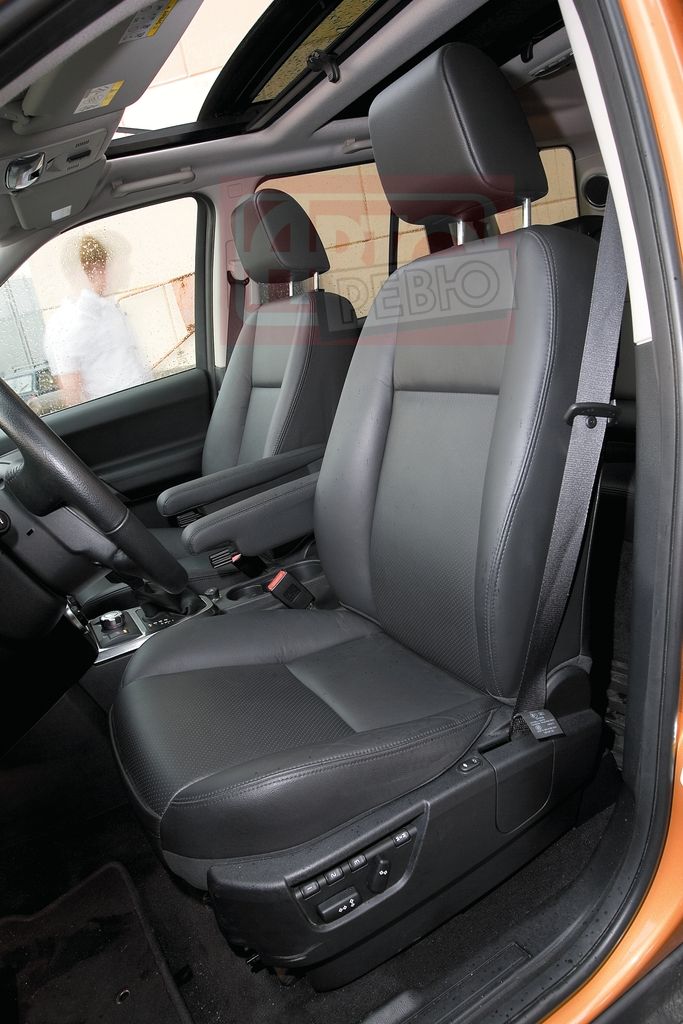 | |
| Inside, the Freelander is as aristocratic as outside | The seats are soft but comfortable, with large adjustment ranges | The Freelander now has push-button start |
Compare with the Mazda CX-7: it stops from 100 km/h in 41.9 meters, the brake pedal is informative, and during emergency braking with ABS, the car obediently follows the steering wheel. Both "Lenders" also brake noticeably better than the Nitro. True, the Land Rover is the only one of the quartet that starts to yaw and jerkily responds to steering wheel rotation during "full" braking.
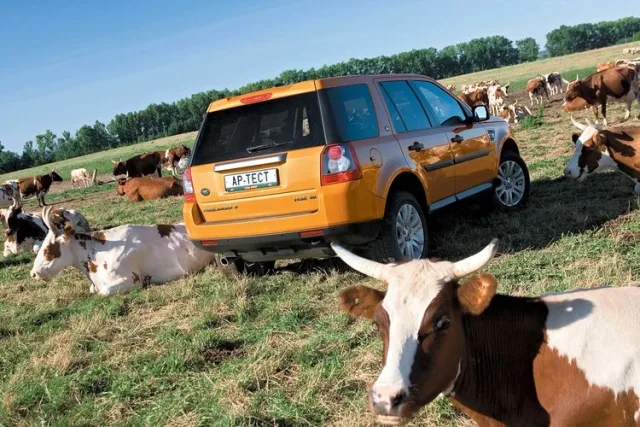
And what about the handling of the Dodge Nitro? It is a nightmare. On a flat high-speed straight, the "American" still holds, only slightly wandering within the lane. But as soon as you hit a hard pothole — and the Nitro shifts even on a straight. In corners, the situation is worse: on gentle bumps, the car "jumps" along the arc — first the nose goes to the outside of the turn, then the rear. The Dodge has to be literally dragged into sharp bends by force. Rolls, delays, understeer, the need to turn the steering wheel at huge angles — a full set of unpleasant sensations.
You get into the Mitsubishi — and immediately feel: this is a driver's car! Rolls are small, reactions are fast, sensitivity is optimal. The chassis is spirited. At the limit, the Outlander XL smoothly "sweeps its tail", and you control it perfectly with throttle. Beautiful! However, from this song, you want to throw out a whole verse: on hard bumps in a corner, the steering wheel kicks so hard that you want to stop and walk. Therefore, in handling, the Mitsubishi gets only slightly more than the Dodge: 55 points against 50.
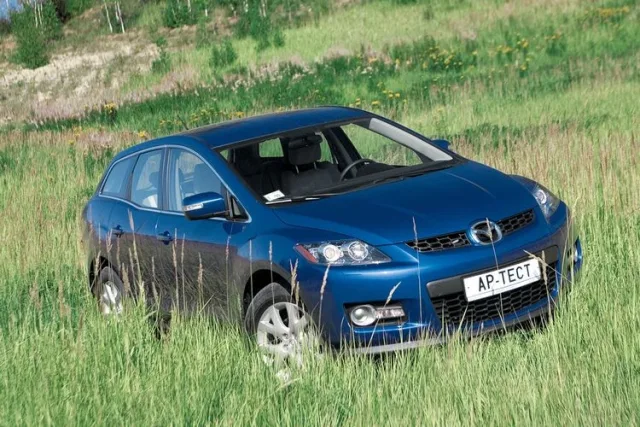
The leaders are Land Rover and Mazda. Moreover, they are completely different. The Freelander noticeably rolls and pushes at the corner entry, while the CX-7 flies in without hesitation. But once on the arc, both firmly hold the trajectory even on bumps. I would like the reactive action on the "Englishman's" steering wheel to be more informative, and the Mazda's steering wheel to be slightly more isolated from road imperfections.
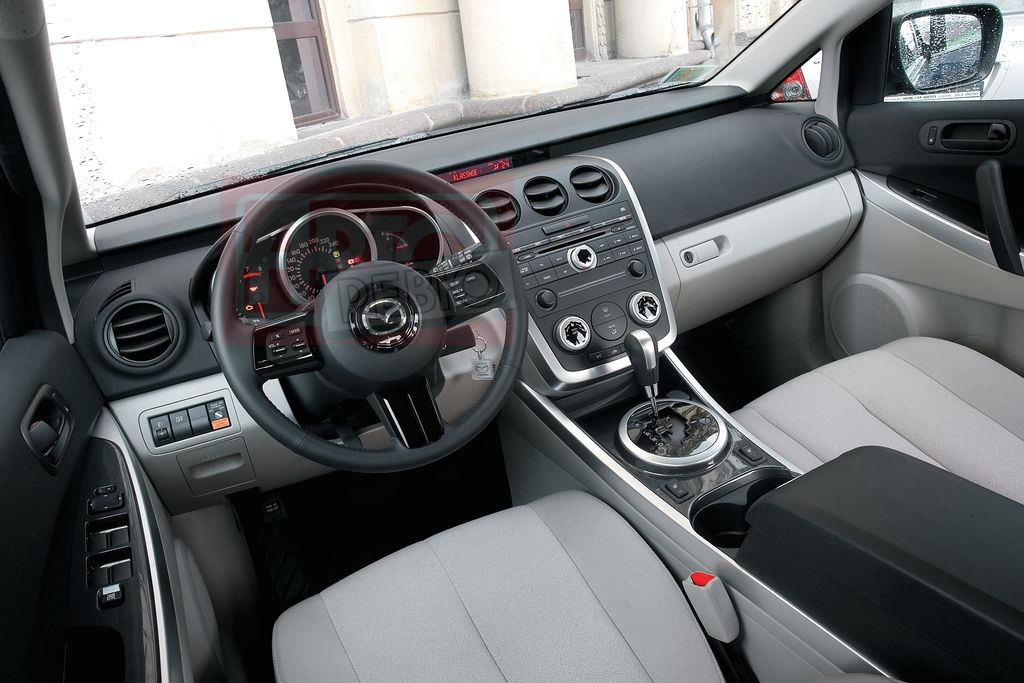 | 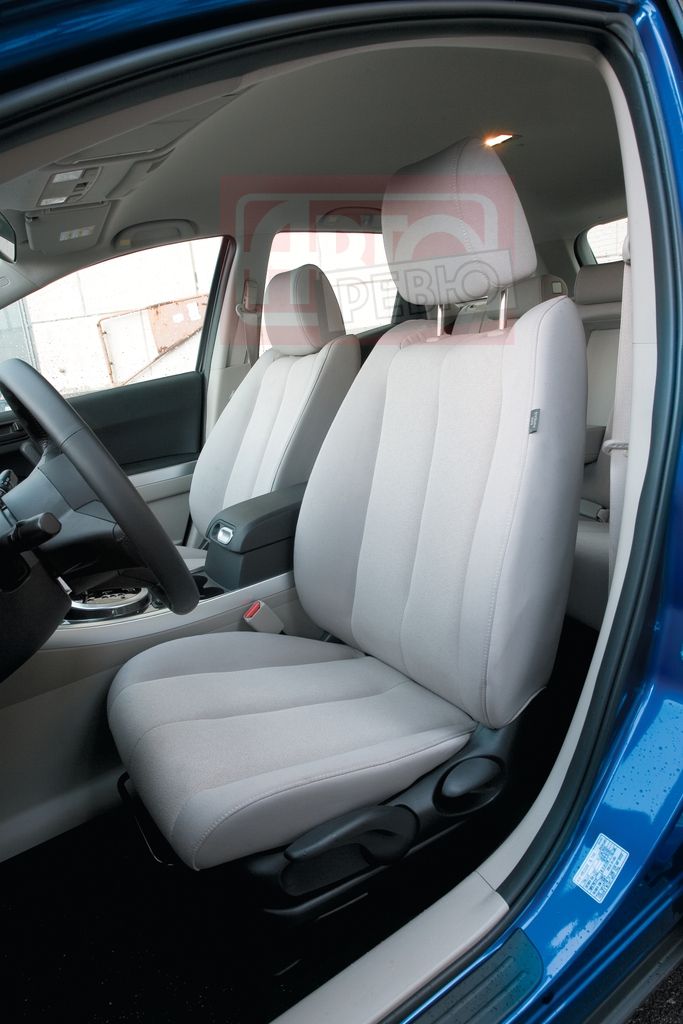 | |
| The two-tone interior of the Mazda is in the Alfa style | The hard seat of the CX-7 has a low seating position and, alas, weak lateral support | On a sunny day, this display is almost unreadable |
On dirt roads, Mazda and Land Rover also turned out to be the best. The "Englishman" is at home here: on a straight, it stands impeccably, and responds to sharp steering movements with smooth slides. And the ride comfort is simply excellent: the Freelander does not sway, literally glides over the dirt road, as if under the wheels there are none of those sharp stones that scatter to the roadsides.
The Mazda CX-7 is stiffer — on small and medium bumps, the body vibrates more. But large potholes are swallowed excellently by the suspension, thanks to its energy intensity. And how willingly the Mazda goes into rear-axle slides even from a smooth steering wheel turn! It is a pleasure, and absolutely safe — the DSC stability control system will stop the slide.
| Dodge Nitro | Land Rover Freelander |
 |  |
| Mazda CX-7 | Mitsubishi Outlander XL |
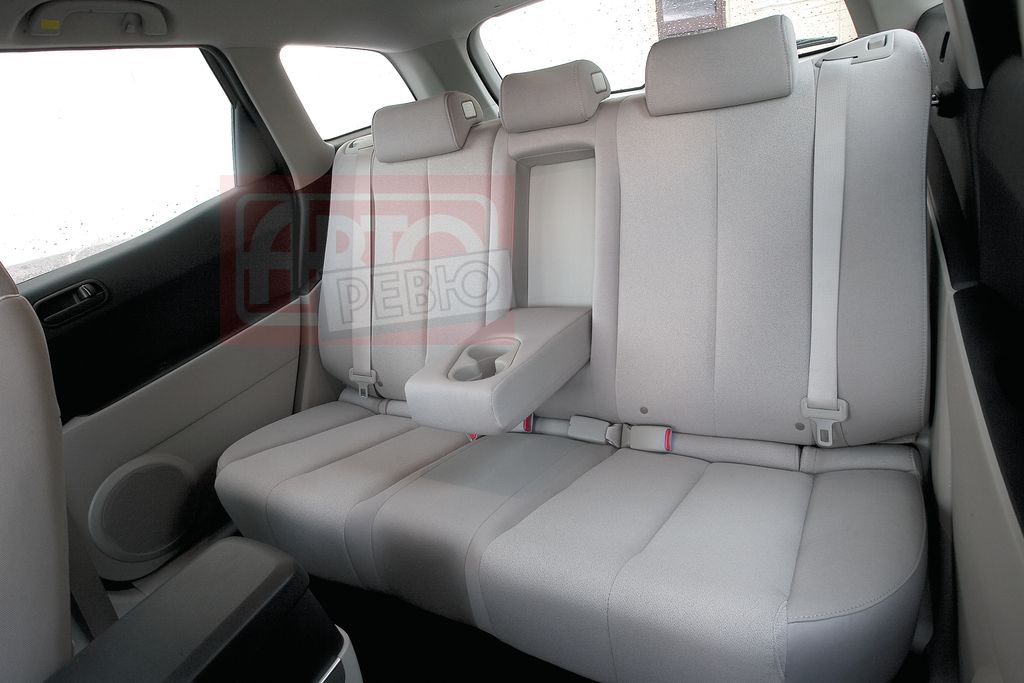 | 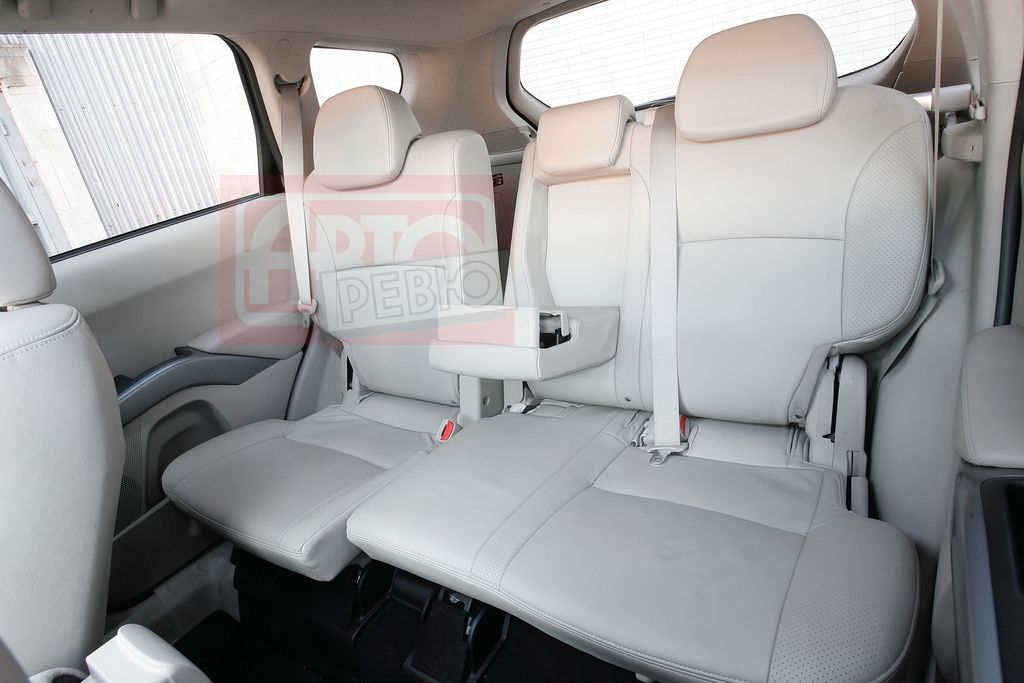 |
| In terms of rear seat comfort, the Outlander XL is unrivaled: convenient entry and exit, hospitable seats (even for three) and wide transformation possibilities. In the Mazda, the middle passenger is less comfortable and there is less footroom. In the Land Rover, the shins of rear passengers press against the front seats, and it is cramped for three. In the Nitro, the rear is spacious but uncomfortable: the cushion is too low, the backrest, although adjustable in angle, is too convex, and the uneven floor with protrusions interferes with the legs of the middle passenger | |
It is only a pity that hard potholes "hit" the Mazda's steering wheel. But they cannot be compared with the blows that come to the Mitsubishi's steering wheel. What a pounding! At the same time, the Outlander XL is similar to the Mazda in ride smoothness, but on large bumps it reacts harder and rolls more from side to side, following the road profile.
Some readers have already accused us of anti-Americanism, but... On dirt, the Dodge "floats" on a straight, shifts on hard potholes under the crackling of brakes, which are strangled by the stability control system. And the suspension, although it swallows small bumps, rocks the Nitro on potholes like a baby stroller. Even from a small joint on asphalt, the hood trembles like jelly on a plate. And on a dirt road, vibrations of unsprung masses and body shuddering become simply unbearable! Stones knock on the bottom so loudly, as if they are flying into the cabin.
| Dodge Nitro | Land Rover Freelander |
 |  |
| Mazda CX-7 | Mitsubishi Outlander XL |
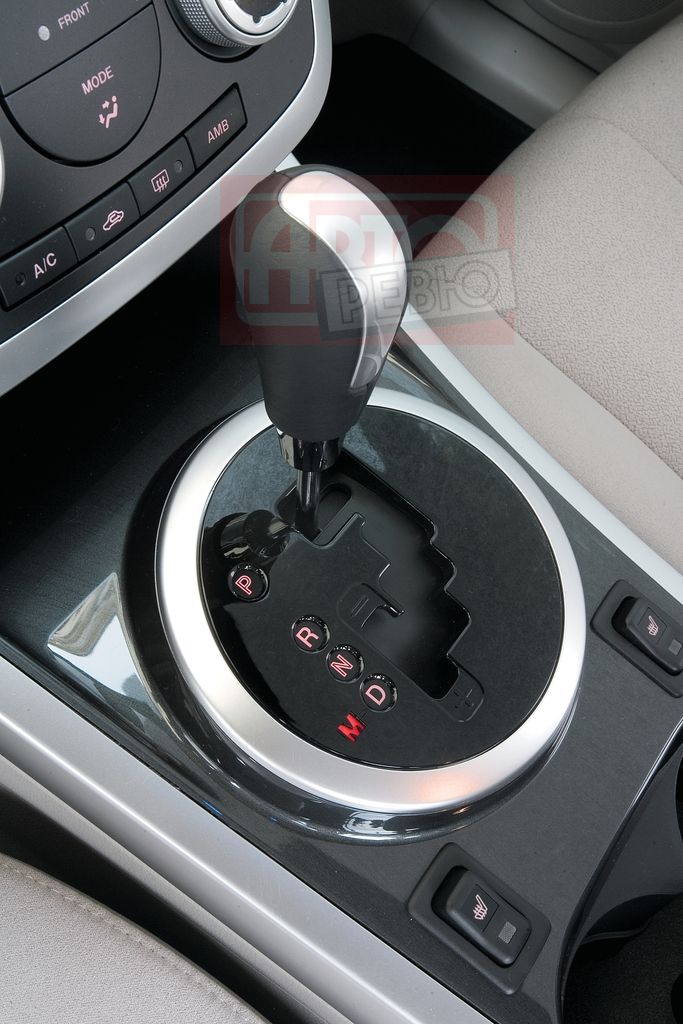 | 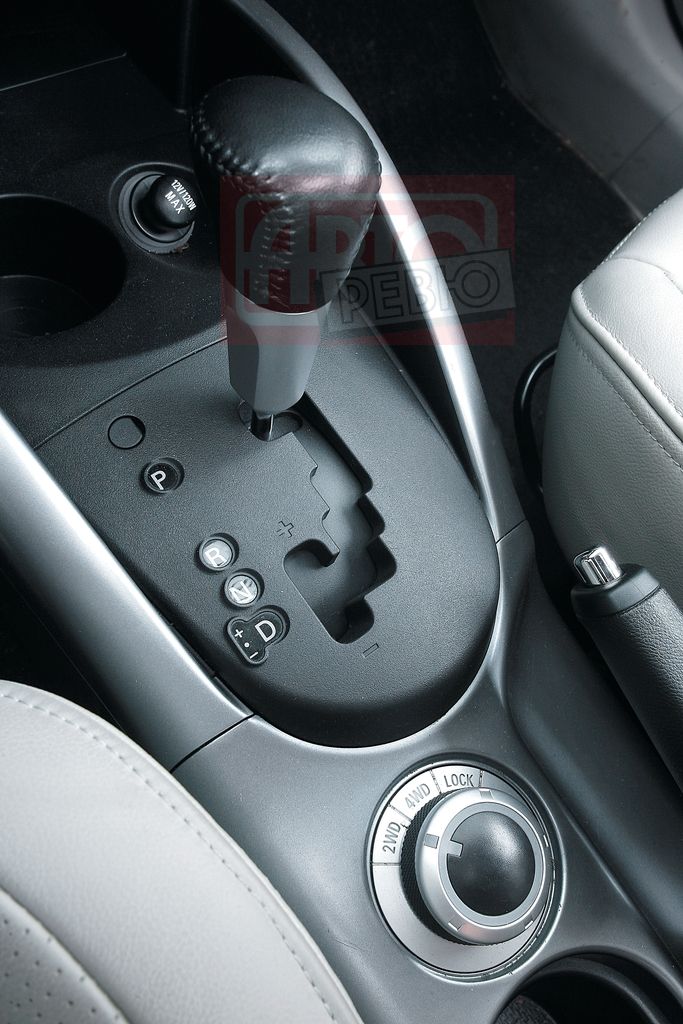 |
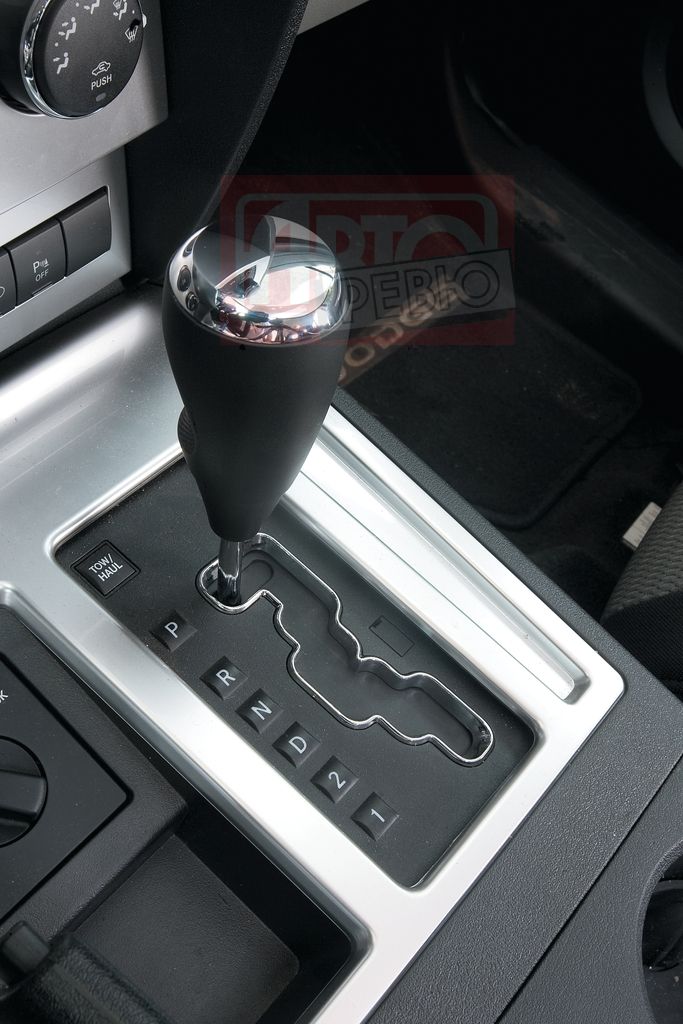
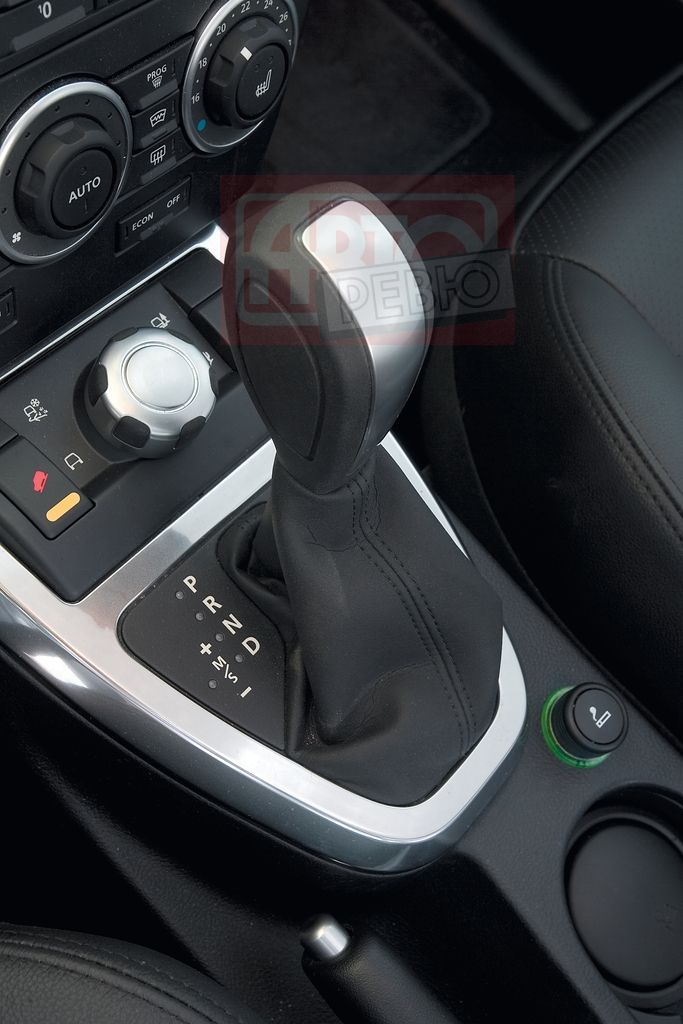
| The four-speed "automatic" of the Nitro works harsher than the others and is the only one without a manual mode. The Freelander's transmission does not hold gears in "manual" mode, while the Mazda and Mitsubishi "automatics" have an honest manual mode | |
The Dodge is generally noisy — tires hum, wind is audible, and the old Chrysler "six" accelerates the car with a guttural truck-like "grunt". However, the Outlander is not quieter — tires and wind are heard even more distinctly. But the Land Rover and Mazda are noticeably better, especially the Freelander: the Volvo inline "six" sounds confident and reliable. It is a pity that the voice of the CX-7's turbo engine lacks character.
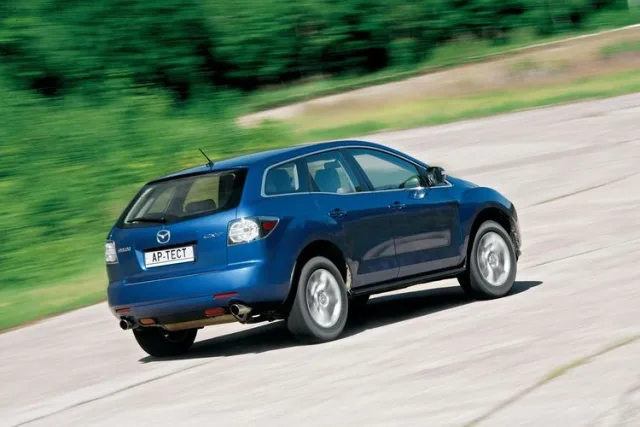
Mazda CX-7 — the most "driver-oriented" crossover in the quartet: fast, precise reactions, minimal rolls, spirited slides on dirt, and good ride comfort
And finally, off-road. It is clear that all four are crossovers, that is, cars with only slightly increased off-road capability. All are shod with "highway" tires, and all have wheel slip control simulated by electronics. And yet…
When it comes to off-road, Land Rover feels right at home. The British have vast experience in off-roading, and it shows in every detail — even the damped accelerator pedal and the "light" steering wheel on rough terrain allow you to drive without unnecessary strain. The Freelander easily handles diagonal wheel articulation, and the proprietary Terrain Response system here, unlike in more senior models, doesn't interfere but helps: it only controls the rear-drive coupling, accelerator response, and stability and automatic transmission settings. For instance, in "Mud" mode, responses to accelerator pedal presses are softened, and the hill descent control engages.
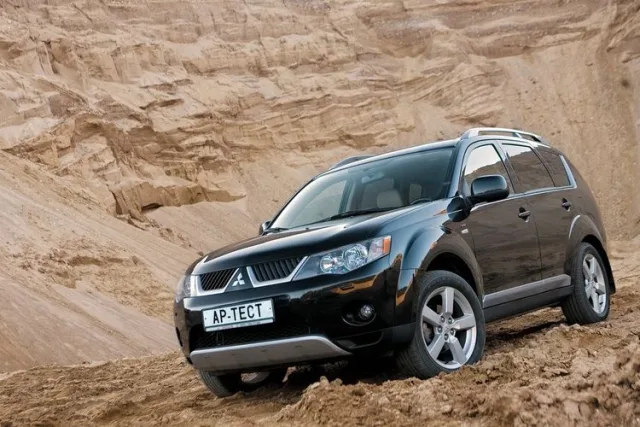
Mazda also pleasantly surprised on the dirt road. Of course, you shouldn't recklessly attack obstacles like in the Land Rover, but on the slope specially prepared for testing diagonal articulation, the CX-7 climbed almost as high as the Freelander. The main difference in behavior: the Land Rover overcame everything smoothly and without pauses, while the Mazda, with a wheel hanging in the air, hesitated for a second, braked the spinning wheels, and only then continued the climb. However, the Mazda still fears diagonal articulation: the electronics don't always brake the unloaded wheels actively enough. And the sensitive accelerator and informative steering, which are so good on asphalt, rather hinder off-road.
| Dodge Nitro | Land Rover Freelander |
 |  |
| Mazda CX-7 | Mitsubishi Outlander XL |
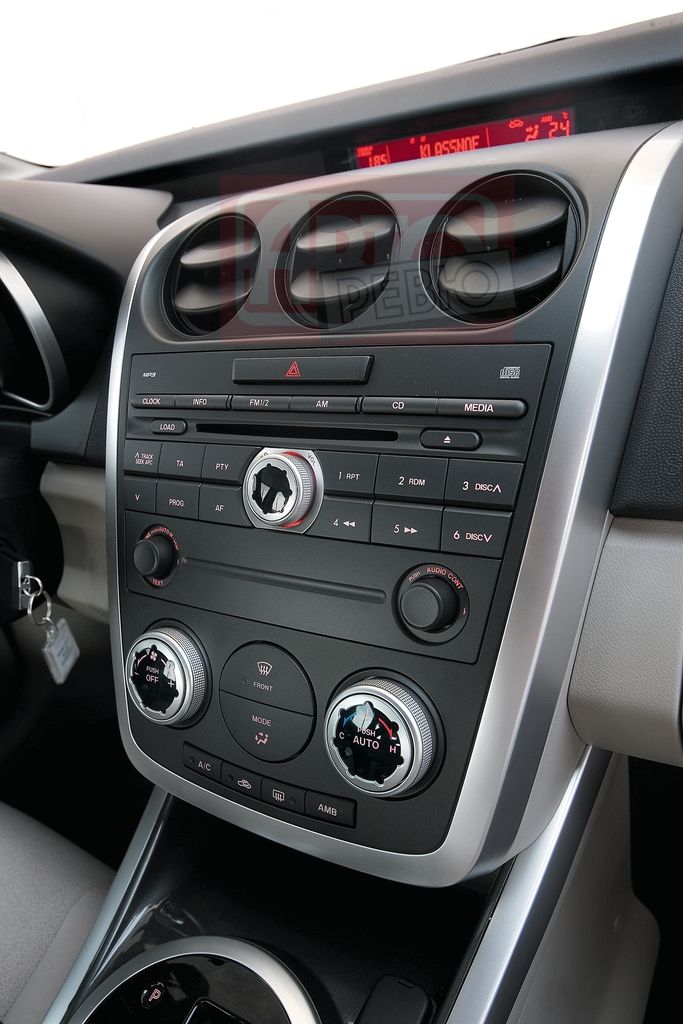 | 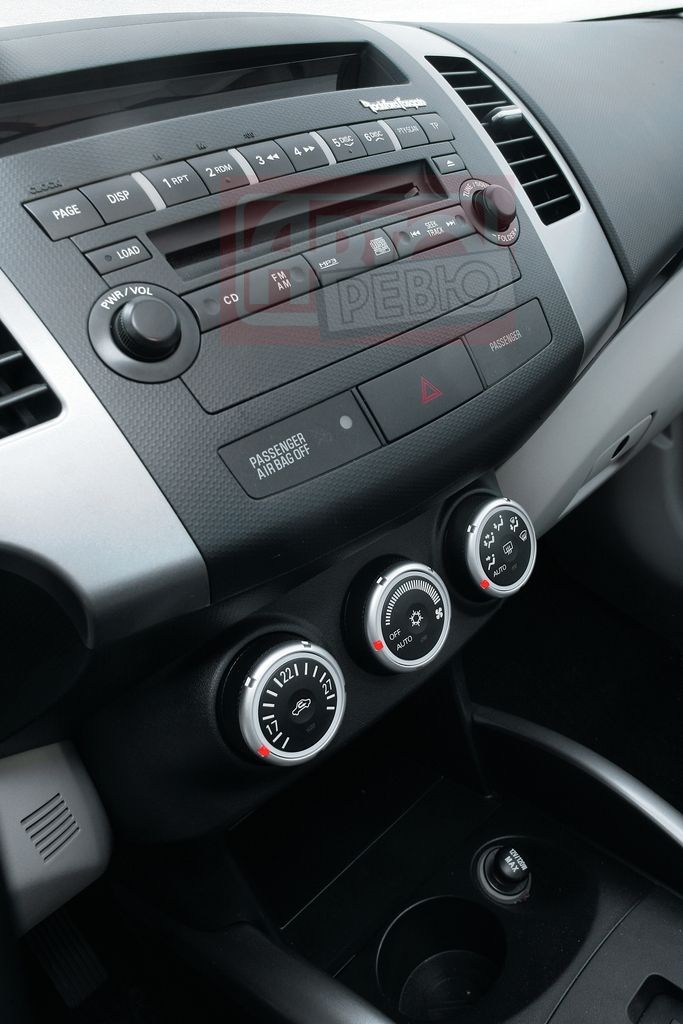 |
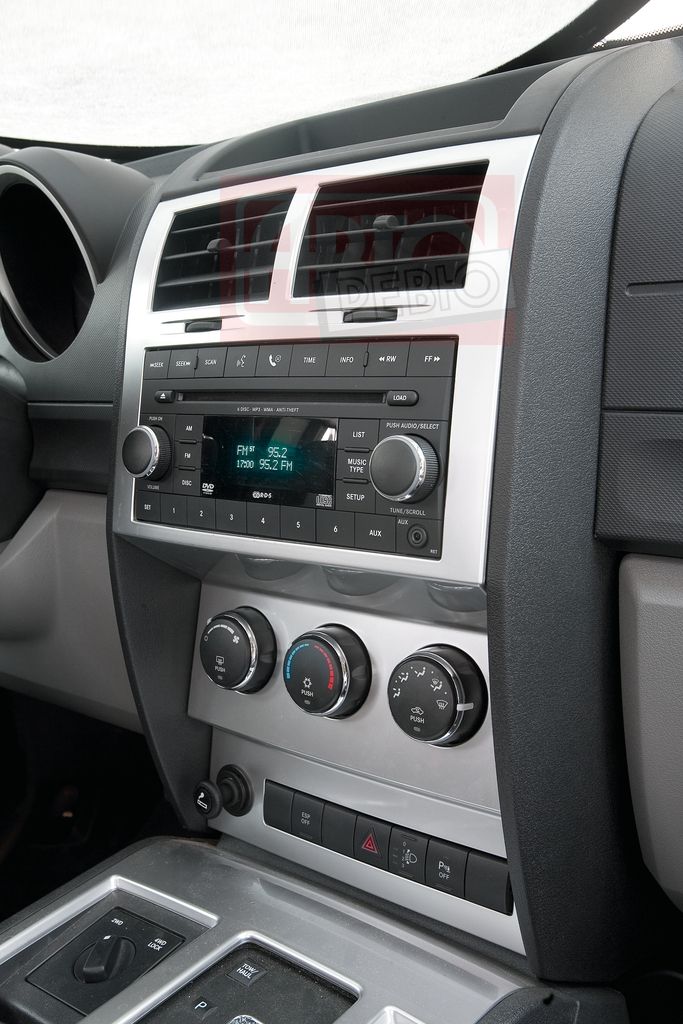
| Climate control is most conveniently arranged in the Mitsubishi. In the Land Rover, the climate knobs are positioned a bit low, but only it has dual-zone climate control. In the Mazda, temperature and fan speed are also set with rotating dials, but airflow direction is selected by multiple presses of a single button. In the Nitro, you have to set the desired temperature manually — there's no climate control at all | |
The Dodge Nitro performed even more modestly in the mud than the attractive Mazda. It seems to have a rigid front axle and a solid rear axle — but little use. Where competitors passed without stopping, the Nitro, like a bulldozer, scraped the ground with its front bumper and caught the soil with the rear axle differential. Diagonal articulation is also beyond the Dodge: the wheels spin, the brakes squeal, but the car stays put.
The worst was the Mitsubishi: the electromagnetic coupling overheated on the first hill, and the rear drive simply shut off. Even the forced coupling lock didn't help — in 4WD Lock mode, it's still allowed to slip. Diagonal articulation is also too much for such a car. The picture of off-road helplessness is completed by an overly sharp accelerator, noticeable kicks to the steering wheel, and a spare tire hanging low under the rear bumper.
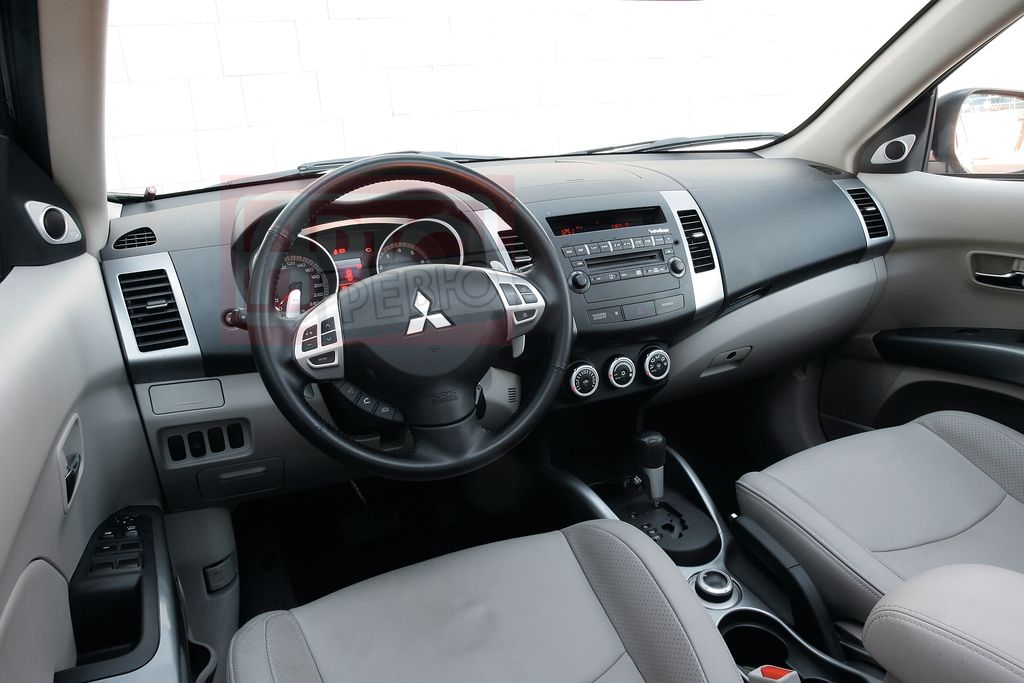 | 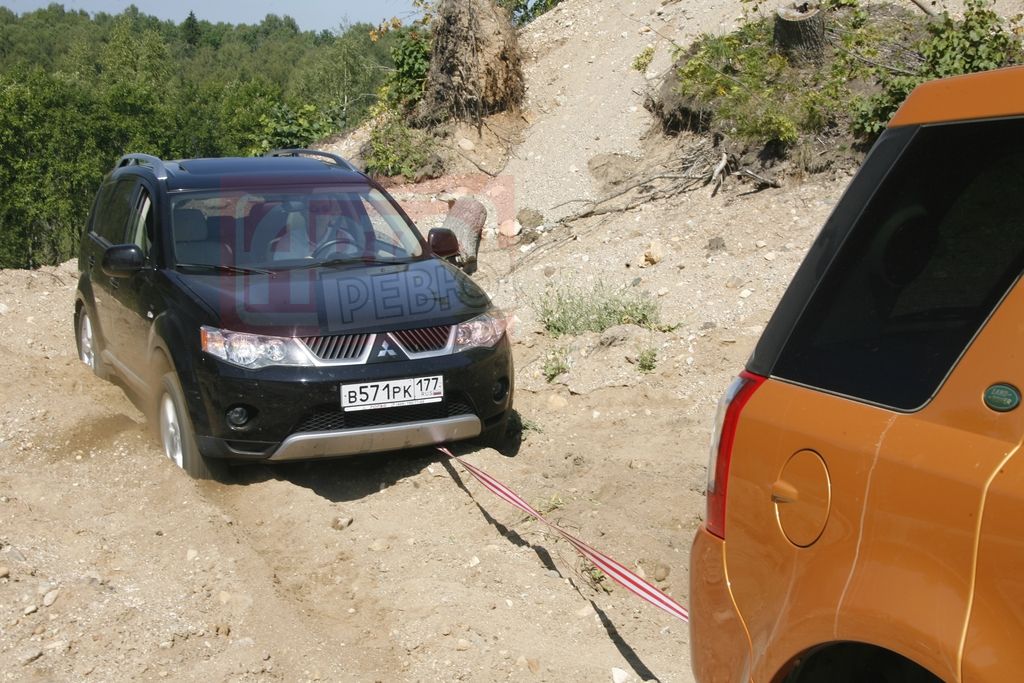 | 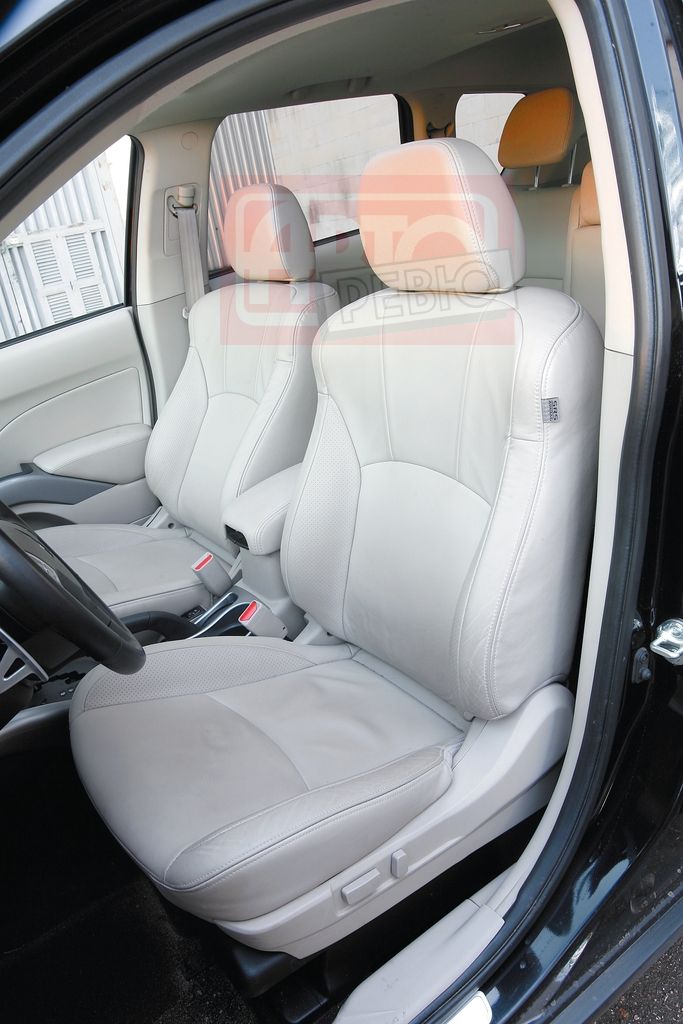 |
| The Mitsubishi's interior looks solid and neat, but the dark top of the dashboard doesn't match the light interior | The Outlander XL gave up quickly off-road, overheating the rear-wheel coupling. The best off-roader of the test — the Freelander — came to the rescue | The seats aren't very comfortable — the backrest is "sunken" in the lumbar area, and lateral support is lacking |
Yes, against the "Koreans," the Outlander XL looked good — the Chevrolet Captiva and Hyundai Santa Fe yielded to it without much resistance six months ago. But the Mazda CX-7 and especially the Freelander proved to be much more serious rivals. However, the Mitsubishi has a price advantage: the three-liter Outlander XL costs from $41,200 to $46,920, which seems quite reasonable.
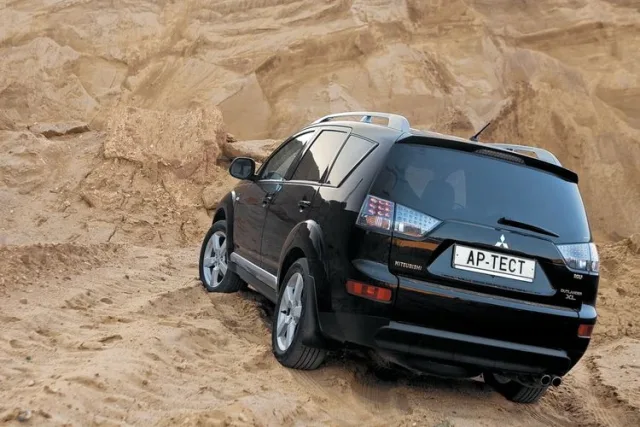
The Mazda CX-7 is the most "driver-oriented" crossover in our group, with an energy-intensive suspension and a cozy cabin. In similar trim, it costs slightly more than the Mitsubishi, but $44,400 for the Touring version and $48,210 for the top Sport are quite justified prices.
As for the Dodge Nitro, its price from $42,900 to over $50,000 raises questions: for this money, there's no climate control, no rain sensors, and also no permanent all-wheel drive and no independent rear suspension. But we know: love for American cars is irrational. Just look at the Nitro's chiseled body — and it no longer matters that the rear is cramped, the start is leisurely, and the suspension noticeably knocks on bumps…
| Dodge Nitro | Land Rover Freelander |
 |  |
| Mazda CX-7 | Mitsubishi Outlander XL |
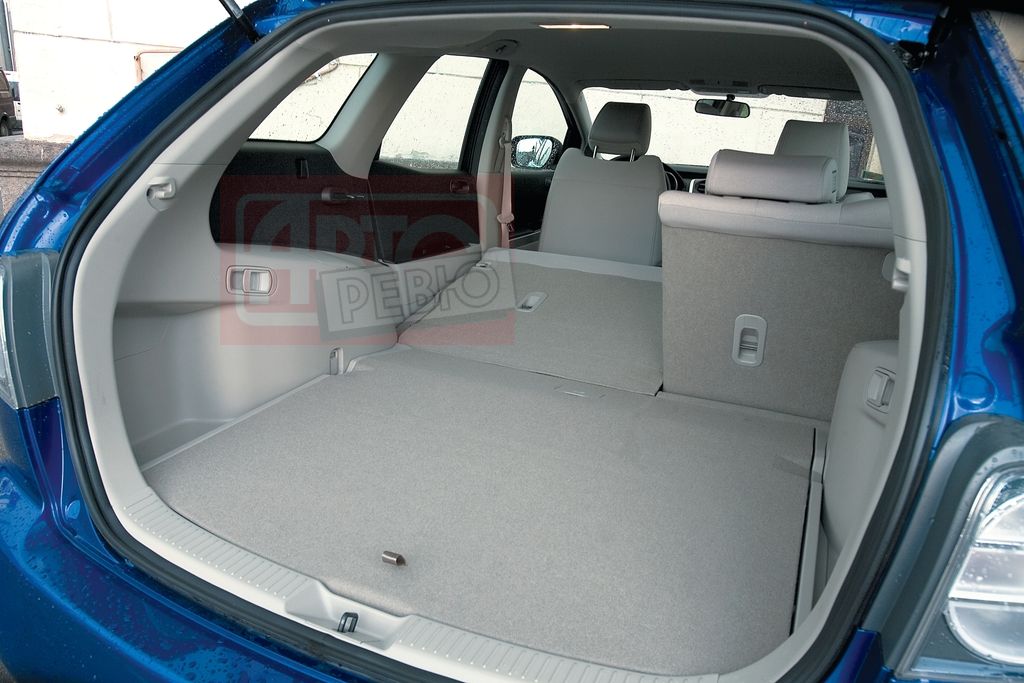 | 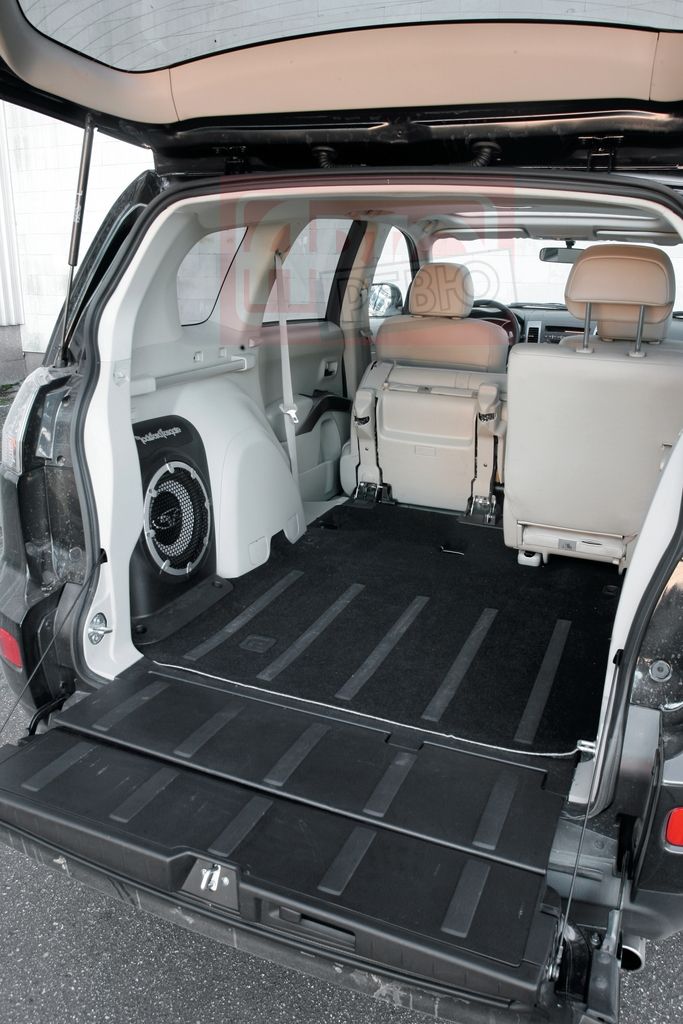 |
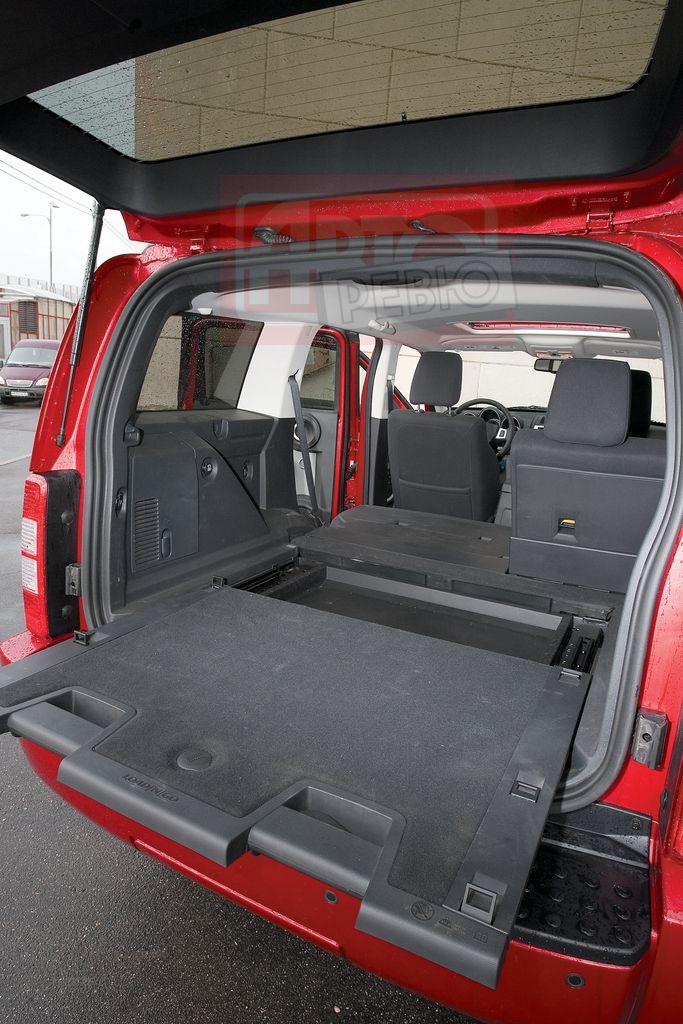
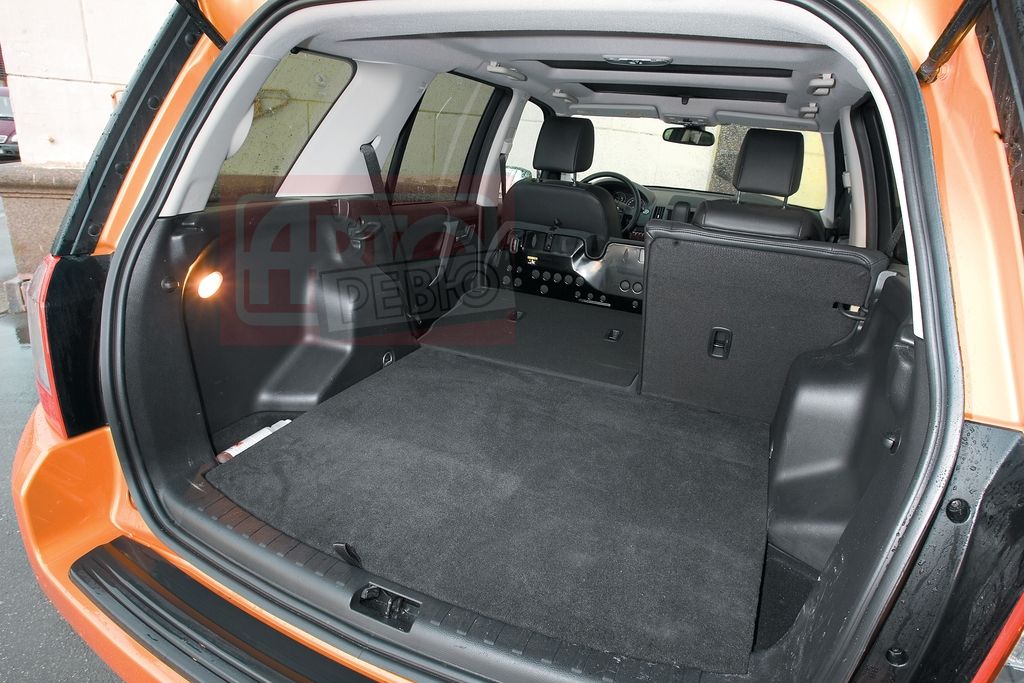
| The Mitsubishi's trunk isn't the most spacious (541 L), but thanks to the lowest loading height (565 mm) and the fold-down tailgate, it's the easiest to load. If the rear seats are occupied, the Mazda holds the most (850 L), and the Dodge the least (389 L). But if you fold the rear seats, the Nitro's cargo area is unrivaled: 1,994 L! The Dodge's "rubber" trunk with a convenient sliding shelf is spoiled by the huge loading height (855 mm) and the small opening angle of the tailgate | |
Meanwhile, the new Land Rover Freelander with the 2.2 TD4 turbodiesel (160 hp) and manual transmission is available from $38,000. And for $57,200, you can get the six-cylinder Freelander 3.2 HSE with an automatic and rich equipment. This is the winner of our test, which surpassed everyone in ergonomics, handling, ride comfort, and off-road capability… That's what true premium is, isn't it?
Before this test, we asked visitors of www.autoreview.ru to answer the question: "Which car from the participants of the next Autoreview test would you prefer?"
The votes were distributed as follows:
Dodge Nitro - 5.12%
Land Rover Freelander - 25.57%
Mazda CX-7 - 41.98%
Mitsubishi Outlander XL - 27.33%
A total of 8,708 people voted
| Expert assessments by Autoreview | |||||
| Parameters assessed | Cars | ||||
| Max. score | Dodge Nitro | Land Rover Freelander | Mazda CX-7 | Mitsubishi Outlander XL | |
| Design | 160 | 140 | 150 | 140 | 140 |
| Exterior | 80 | 75 | 75 | 70 | 70 |
| Interior | 80 | 65 | 75 | 70 | 70 |
| Ergonomics | 160 | 125 | 145 | 130 | 135 |
| Driver's workplace | 80 | 60 | 70 | 65 | 65 |
| Visibility | 80 | 65 | 75 | 65 | 70 |
| Dynamics | 330 | 235 | 275 | 275 | 255 |
| Acceleration dynamics | 80 | 55 | 60 | 65 | 65 |
| Braking dynamics | 100 | 80 | 85 | 90 | 90 |
| Handling | 80 | 50 | 65 | 65 | 55 |
| Off-road capability | 70 | 50 | 65 | 55 | 45 |
| Ride comfort | 180 | 115 | 140 | 135 | 125 |
| Ride smoothness, vibration protection | 70 | 45 | 55 | 55 | 50 |
| Acoustic comfort | 60 | 40 | 45 | 45 | 40 |
| Climate control | 50 | 30 | 40 | 35 | 35 |
| Interior comfort | 170 | 130 | 125 | 140 | 145 |
| Passenger seats | 70 | 50 | 55 | 60 | 60 |
| Trunk | 60 | 45 | 40 | 45 | 50 |
| Interior transformation | 40 | 35 | 30 | 35 | 35 |
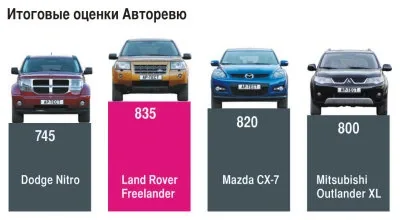
| Total score | 1000 | 745 | 835 | 820 | 800 |
| Speedometer reading accuracy | ||||||||
| Cars | Speedometer readings, km/h | |||||||
| 40 | 60 | 80 | 100 | 120 | 140 | 160 | 180 | |
| True speed, km/h | ||||||||
| Dodge Nitro | 40 | 60 | 80 | 100 | 120 | 140 | 160 | 180 |
| Land Rover Freelander | 39 | 58 | 78 | 97 | 115 | 135 | 154 | 174 |
| Mazda CX-7 | 40 | 59 | 78 | 97 | 117 | 137 | 156 | 175 |
| Mitsubishi Outlander XL | 39 | 59 | 78 | 98 | 117 | 137 | 156 | 175 |
| Some Autoreview measurement results | |||||
| Parameters | Cars | ||||
| Dodge Nitro | Land Rover Freelander | Mazda CX-7 | Mitsubishi Outlander XL | ||
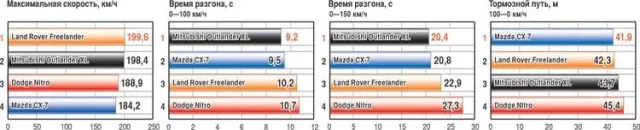
| Maximum speed, km/h | 188.9 | 199.6 | 184.2 | 198.4 | |
| Acceleration time, s | 0-50 km/h | 3.3 | 3.4 | 3.4 | 3.1 |
| 0-100 km/h | 10.7 | 10.2 | 9.5 | 9.2 | |
| 0-150 km/h | 27.3 | 22.9 | 20.8 | 20.4 | |
| over 400 m | 17.4 | 17.3 | 16.8 | 16.7 | |
| over 1000 m | 32.3 | 31.5 | 30.6 | 30.5 | |
| 60-100 km/h (III) | - | - | 5.3 | 6.8 | |
| 60-100 km/h (IV) | - | - | 6.5 | 10.1 | |
| 80-120 km/h (V) | - | - | 9.0 | 17.6 | |
| 80-120 km/h (VI) | - | - | 10.0 | 23.0 | |
| 60-100 km/h (D) | 7.4 | 5.8 | 5.8 | 6.0 | |
| 80-120 km/h (D) | 8.3 | 7.5 | 6.8 | 7.7 | |
| Coast-down, m | from 50 km/h | 575 | 626 | 525 | 643 |
| 130-80 km/h | 954 | 1002 | 939 | 990 | |
| 160-80 km/h | 1419 | 1502 | 1442 | 1492 | |
| Braking from 100 km/h | distance, m | 45.4 | 42.3 | 41.9 | 43.7 |
| deceleration, m/s² | 8.5 | 9.1 | 9.2 | 8.8 | |
| Braking from 150 km/h | distance, m | 104.2 | 95.7 | 97.7 | 96.6 |
| deceleration, m/s² | 8.3 | 9.1 | 8.9 | 9.0 | |

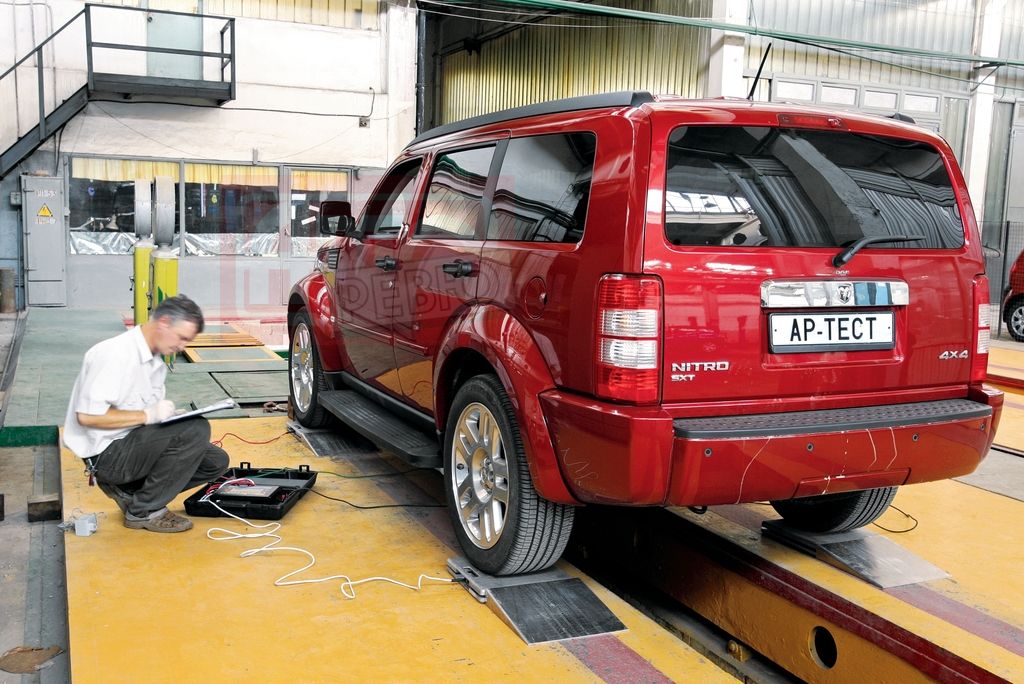 | Dodge Nitro is the heaviest car in the test: 1995 kg. And the lightest is Mitsubishi Outlander XL: 1729 kg |
| Equipment of cars participating in the test | ||||
| Option | Models | |||
| Dodge Nitro | Land Rover Freelander | Mazda CX-7 | Mitsubishi Outlander XL | |
| Price of base version, RUB/$ | 1102500/42900 | 1340000/52140 | 1141000/44400 | 1058330/41180 |
| Front airbags | + | + | + | + |
| Front side airbags | – | + | + | + |
| Driver knee airbag | – | + | – | – |
| Curtain airbags | + | + | + | + |
| Anti-lock braking system (ABS) | + | + | + | + |
| Traction control system | + | + | + | + |
| Electronic stability control | + | + | + | + |
| Power steering | + | + | + | + |
| Automatic transmission | + | +* | +* | +* |
| Automatic transmission shift paddles on steering column | – | – | – | + |
| Multi-function steering wheel | O | + | + | + |
| All-wheel drive | + | + | + | + |
| Height-adjustable steering column | + | + | + | + |
| Reach-adjustable steering column | – | + | – | – |
| Leather-wrapped steering wheel | O | O | + | + |
| Heated windshield | – | O | – | – |
| Power-adjustable front seats | O** | + | – | O*** |
| Driver seat memory | – | O | – | – |
| Heated front seats | – | O | + | + |
| Auto-dimming rearview mirror | O | + | – | – |
| Built-in phone | – | O | – | – |
| Central locking with remote control | + | + | + | + |
| Security alarm | + | + | + | – |
| Air conditioning | + | + | + | + |
| Single-zone climate control | – | – | + | + |
| Dual-zone climate control | – | + | – | – |
| Power-adjustable and heated exterior mirrors | + | + | + | + |
| Power-folding exterior mirrors | – | O | – | + |
| Electric windows | + | + | + | + |
| Split-folding rear seat | + | + | + | + |
| Rear seat backrest angle adjustment | + | – | – | + |
| Rear seat fore-aft adjustment | – | – | – | + |
| Rear armrest | – | + | + | + |
| CD audio system | + | + | + | + |
| CD changer | O | O | + | + |
| Push-button engine start | – | + | – | – |
| Light sensor | – | + | – | + |
| Rain sensor | – | + | – | – |
| Tire pressure monitoring | + | – | – | – |
| On-board computer | + | + | + | + |
| Cruise control | O | + | + | O |
| Electric sunroof | O | O | – | O |
| Front parking sensors | – | + | – | – |
| Rear parking sensors | O | + | – | – |
| Recessed rear head restraints | – | + | + | – |
| Leather upholstery | – | O | – | O |
| Wood trim | – | O | – | – |
| Sliding cargo platform | O | – | – | – |
| Remote trunk release | – | + | – | – |
| Remote fuel filler door lock | – | – | + | + |
| Bi-xenon headlights | – | O | – | + |
| Fog lights | O | + | – | + |
| Headlight washers | – | + | + | + |
| Alloy wheels | O | O | + | + |
| Full-size spare tire | O | O | + | + |
| Metal engine underbody protection | – | + | – | – |
| Metallic paint | O | O | + | – |
| Price of tested car, RUB/$ | 1364645/53100 | 1663507/64730 | 1141000/44400 | 1205732/46920 |
| * With manual shift capability | ||||
| ** Only for driver's seat: height and fore-aft | ||||
| *** Only for driver's seat | ||||
| (+) Included in base equipment | ||||
| (–) Not included in base equipment | ||||
| (O) Additional equipment installed on test cars | ||||
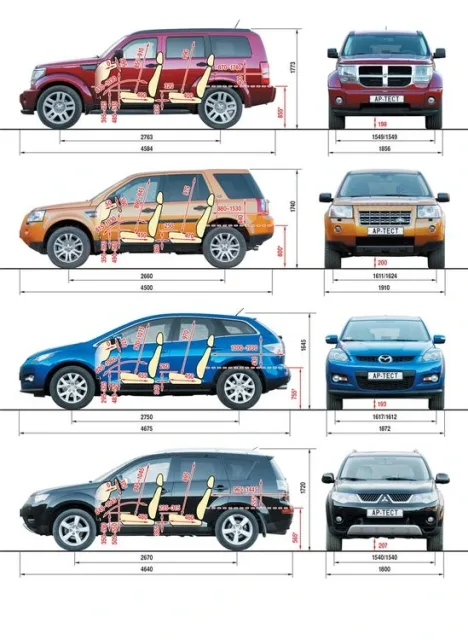
In black — manufacturer data, in red — results of Avtoreview measurements
* Loading height
| Passport data | ||||
| Parameters | Vehicles | |||
| Dodge Nitro | Land Rover Freelander | Mazda CX-7 | Mitsubishi Outlander XL | |
| Body type | 5-door wagon | 5-door wagon | 5-door wagon | 5-door wagon |
| Number of seats | 5 | 5 | 5 | 5 |
| Trunk volume, l | 389—1994* | 755—1670* | 850—1640* | 541—1691* |
| Curb weight, kg | 1875 | 1770 | 1802 | 1665 |
| Gross weight, kg | 2540 | 2505 | 2270 | 2350 |
| Engine | petrol, with distributed injection | petrol, with distributed injection | petrol, with direct injection and turbocharging | petrol, with distributed injection |
| Location | front, longitudinal | front, transverse | front, transverse | front, transverse |
| Number and arrangement of cylinders | 6, V-shaped | 6, in-line | 4, in-line | 6, V-shaped |
| Displacement, cm³ | 3701 | 3192 | 2261 | 2998 |
| Cylinder bore/piston stroke, mm | 93.0/90.8 | 84.0/96.0 | 87.5/94.0 | 87.6/82.9 |
| Compression ratio | 9.7:1 | 10.8:1 | 9.5:1 | 9.5:1 |
| Number of valves | 12 | 24 | 16 | 24 |
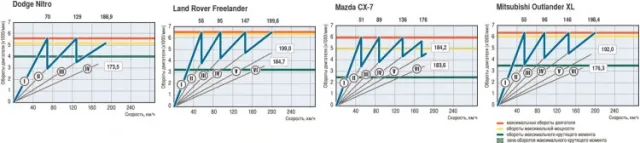
| Max power, hp/kW/rpm | 205/151/5200 | 233/171/6300 | 238/174/5000 | 220/162/6250 |
| Max torque, Nm/rpm | 314/4000 | 317/3200 | 350/2500 | 276/4000 |
| Transmission | automatic, 4-speed | automatic, 6-speed | automatic, 6-speed | automatic, 6-speed |
| Gear ratios | ||||
| I | 2.84 | 4.15 | 4.15 | 4.20 |
| II | 1.57 | 2.37 | 2.37 | 2.41 |
| III | 1.00 | 1.56 | 1.56 | 1.58 |
| IV | 0.69 | 1.16 | 1.15 | 1.16 |
| V | — | 0.86 | 0.86 | 0.86 |
| VI | — | 0.69 | 0.69 | 0.69 |
| reverse | 2.21 | 3.39 | 3.39 | 3.46 |
| final drive | 3.73 | 3.75 | 3.75 | 3.57 |
| Drive | all-wheel, with pluggable drive to front wheels | all-wheel, with multi-disc clutch in rear wheel drive | all-wheel, with multi-disc clutch in rear wheel drive | all-wheel, with multi-disc clutch in rear wheel drive |
| Front suspension | independent, spring, double-wishbone | independent, spring, McPherson | independent, spring, McPherson | independent, spring, McPherson |
| Rear suspension | dependent, spring, with Panhard rod | independent, spring, McPherson | independent, spring, multi-link | independent, spring, multi-link |
| Front brakes | disc, ventilated | disc, ventilated | disc, ventilated | disc, ventilated |
| Rear brakes | disc | disc, ventilated | disc, ventilated | disc |
| Tires | 235/65 R17 | 215/75 R16 | 235/60 R18 | 225/55 R18 |
| Maximum speed, km/h | 190 | 200 | 181 | 200 |
| Acceleration time 0—100 km/h, s | 10.3 | 8.9 | 8.3 | 9.7 |
| Fuel consumption, l/100 km | ||||
| urban cycle | 17.5 | 15.8 | 15.3 | 15.1 |
| extra-urban cycle | 9.0 | 8.6 | 9.3 | 8.0 |
| combined cycle | 12.1 | 11.2 | 11.5 | 10.6 |
| Fuel tank capacity, l | 74 | 70 | 69 | 60 |
| Fuel | petrol AI-92 | petrol AI-95 | petrol AI-95 | petrol AI-92 |
| * With folded rear seats | ||||
"Moose test"
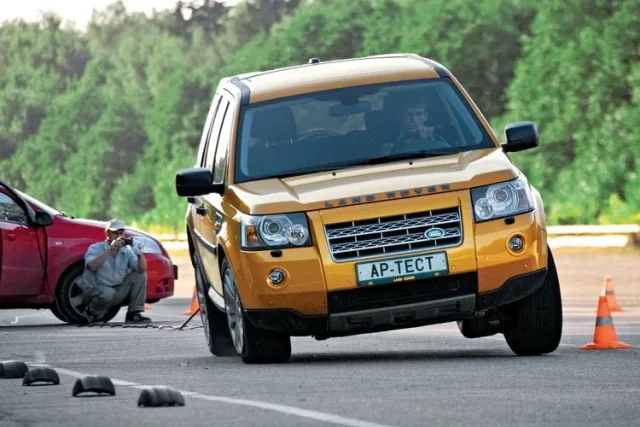
Freelander noticeably leans in the "moose test", the rear axle goes into a slide, but the steering doesn't prevent leveling the car, and stabilization is always ready
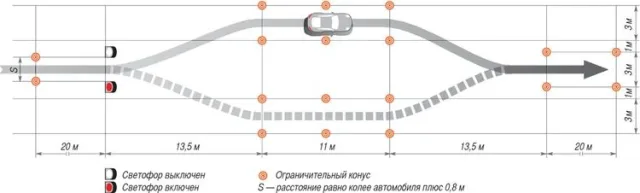
As always, the tests that simulate avoiding a suddenly appearing obstacle were conducted in two stages. First, five drivers, who had already familiarized themselves with the crossovers in normal road situations, tried to avoid the "moose" in one go. After that, an expert determined the maximum speed at which this maneuver is possible through a series of runs. For crossovers, we reduced the initial speed of "one-time" attempts from 65 to 60 km/h. Let me remind you: the exercise also includes an element of surprise — traffic lights that indicate which side to avoid the obstacle from.
The best result in terms of maximum speed was shown by the Mazda CX-7 — 78.0 km/h. Its chassis is excellently tuned, and the electronics delicately correct the pilot's errors, only slightly straightening the trajectory. The main difficulty the tester faced was a sharp increase in steering effort during rapid rotation. This is what prevented three out of five volunteers from completing the task.
The Land Rover Freelander yielded to the tester at a speed of 75.9 km/h, but further acceleration was hindered by rear axle oversteer. The expert praised the stabilization and the absence of jerks in steering effort. Three "one-time" drivers lacked feedback, and strong body rolls also interfered.
The Mitsubishi Outlander XL passed the corridor at a speed of 74.9 km/h. As in the Mazda, a sudden and sharp increase in effort during active steering prevented faster passage. A tendency to oversteer was also noted, although stabilization successfully suppresses it. Nevertheless, keeping the car precisely on the given trajectory was not easy. Three out of five drivers failed the task, citing weak feedback and stepped steering effort.
The Dodge Nitro presented two surprises. The first was unpleasant: even a modest 71.6 km/h maximum speed was achieved with great difficulty. The car almost doesn't feel the steering (to enter the third corridor, the wheel had to be turned with hand-over-hand movements), and this is compounded by a stepped increase in effort. Stabilization works roughly. The pleasant surprise was that three ordinary drivers, although noticing all these shortcomings, cleanly performed the maneuver.
| Maximum speed of "moose test", km/h | |
| Vehicles | Speed |
| Dodge Nitro | 71.6 |
| Land Rover Freelander | 75.9 |
| Mazda CX-7 | 78.0 |
| Mitsubishi Outlander XL | 74.9 |
| "Moose test" on first attempt at speed 60 km/h* | |
| Vehicles | Maneuver completed |
| Dodge Nitro | 3 drivers out of 5 |
| Land Rover Freelander | 2 drivers out of 5 |
| Mazda CX-7 | 2 drivers out of 5 |
| Mitsubishi Outlander XL | 2 drivers out of 5 |
| * 5 drivers participated in the tests | |
Light output
Night photography of cars from one point helps assess how well the headlights work. In our case, the Land Rover and Mitsubishi are equipped with bi-xenon, while the Dodge and Mazda have regular halogen. The best low beam is from xenon: a pedestrian standing on the roadside 80 meters away is clearly visible. The Mazda's halogen illuminates the pedestrian slightly weaker, while the Dodge shines right under its nose — a person might not be noticed. High beam is decent in all cars, but xenon is especially good.
During photo shooting, only the driver was in the cars; xenon headlight levelers are automatic, halogen ones are manual, in the zero position
| Dodge Nitro | |
| Land Rover Freelander | |
| Mazda CX-7 | |
| Mitsubishi Outlander XL | |
| Low beam. Pedestrian stands on the roadside 80 meters from the car | High beam. Pedestrian stands in the center 160 meters from the car |
Visibility
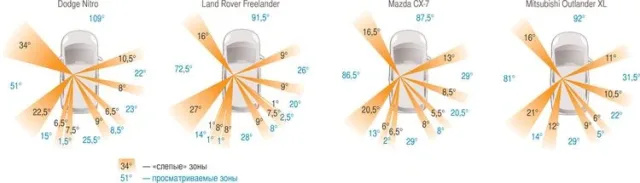
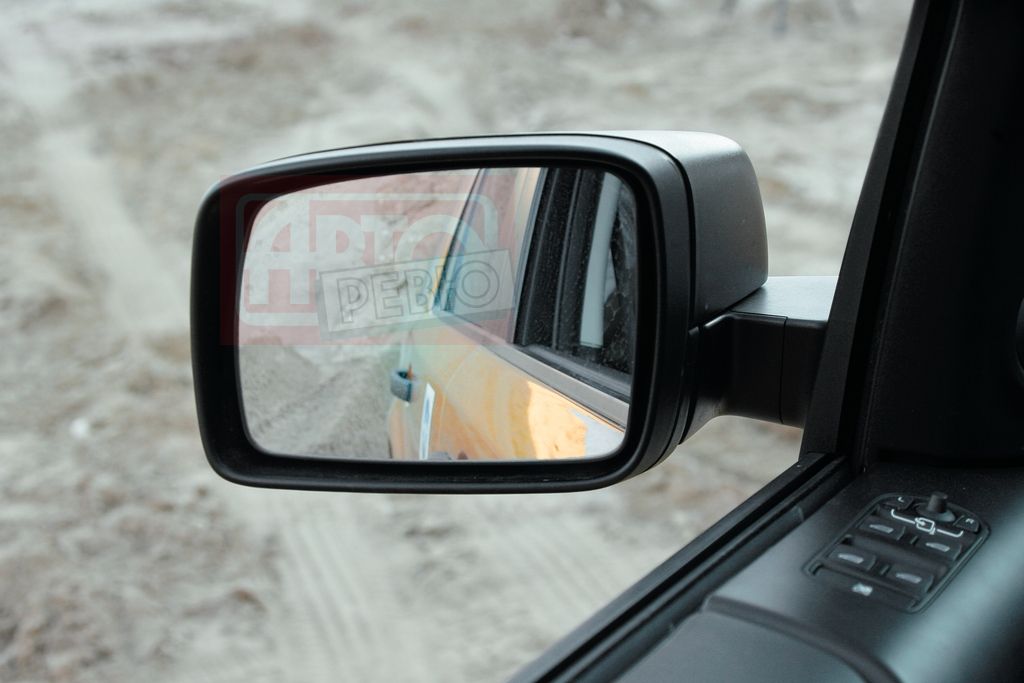
When you look at cars from the driver's seat, you immediately notice that visibility differs for all of them. The Freelander is perfectly fine in this regard: the front pillars hardly obstruct the view, and the mirrors are very convenient. In the Outlander XL, despite the unusual shape of the mirrors, everything is also clearly visible. But in the CX-7, the massive front pillars get in the way, and the left wiper leaves an uncleaned strip about seven to eight centimeters wide near the pillar. The situation with the Nitro is peculiar: a closely positioned pillar constantly looms before the driver's eyes, and the mirrors, significantly shifted rearward, are not very convenient.
| Dodge Nitro | Land Rover Freelander |
 | 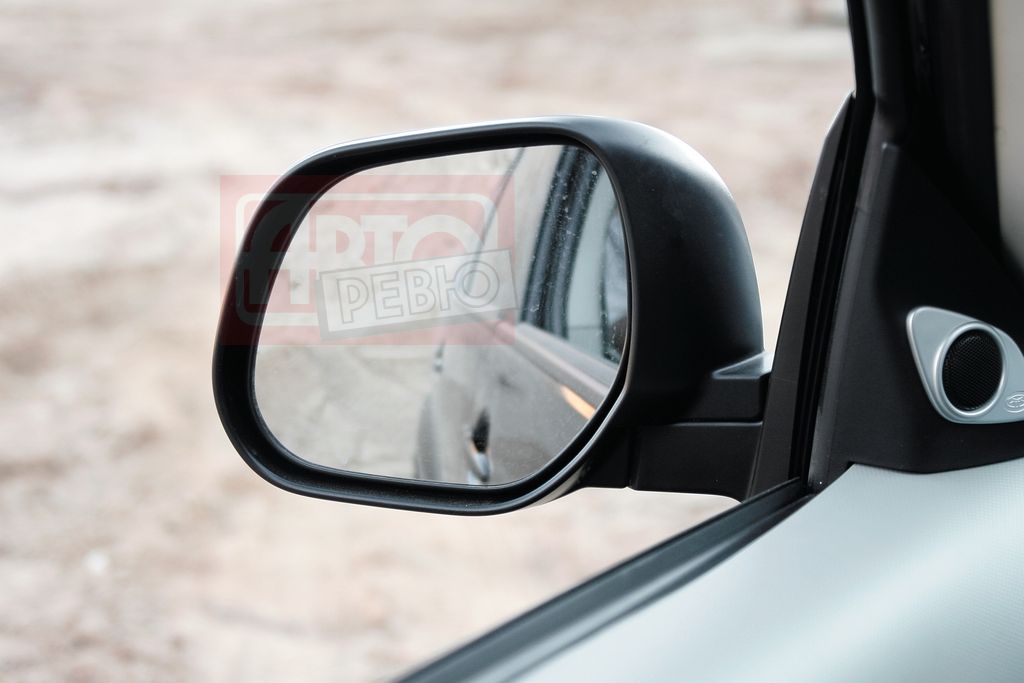 |
| Mazda CX-7 | Mitsubishi Outlander XL |
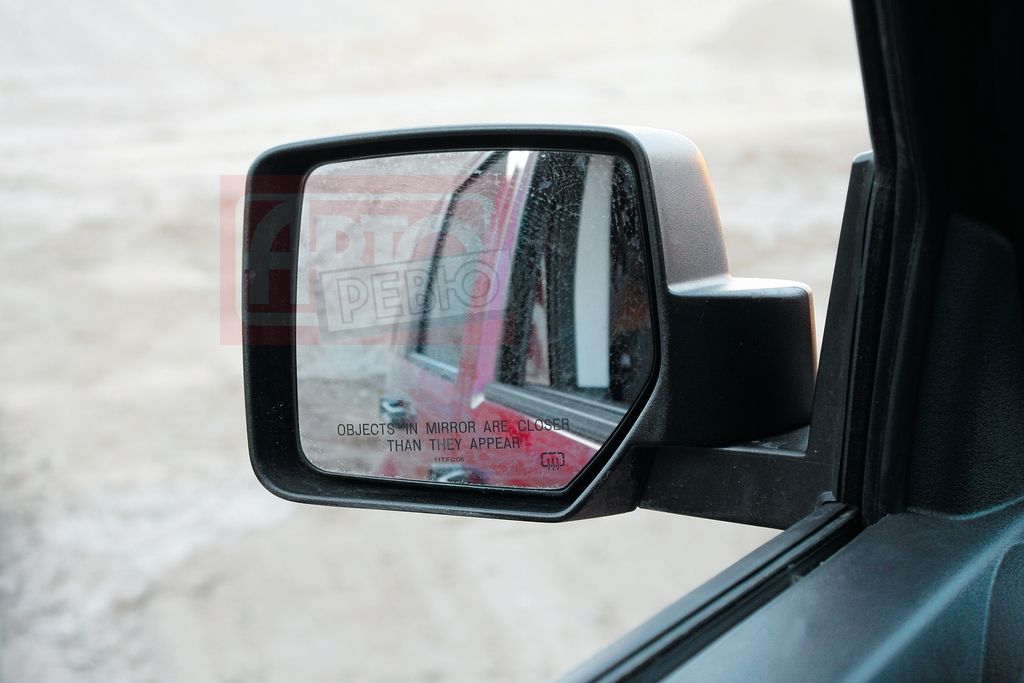 | 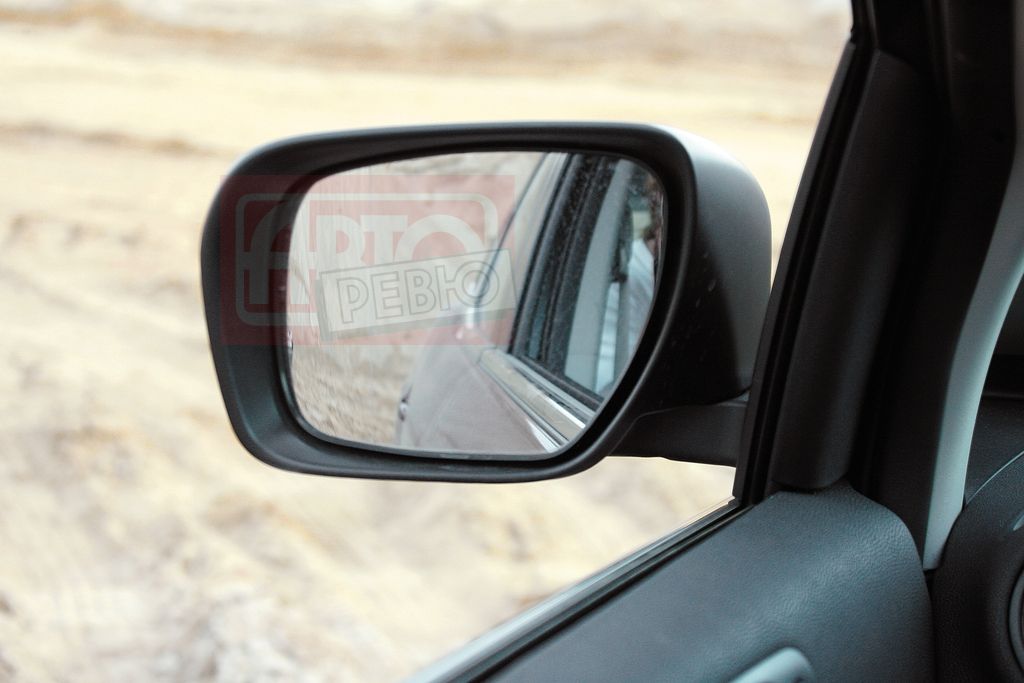 |
| Vehicle | Total viewing angle, deg. | Total angle of "blind" zones, deg. |
| Dodge Nitro | 255.5 | 104.5 |
| Land Rover Freelander | 264.5 | 95.5 |
| Mazda CX-7 | 275.5 | 84.5 |
| Mitsubishi Outlander XL | 274.5 | 85.5 |
Puncture
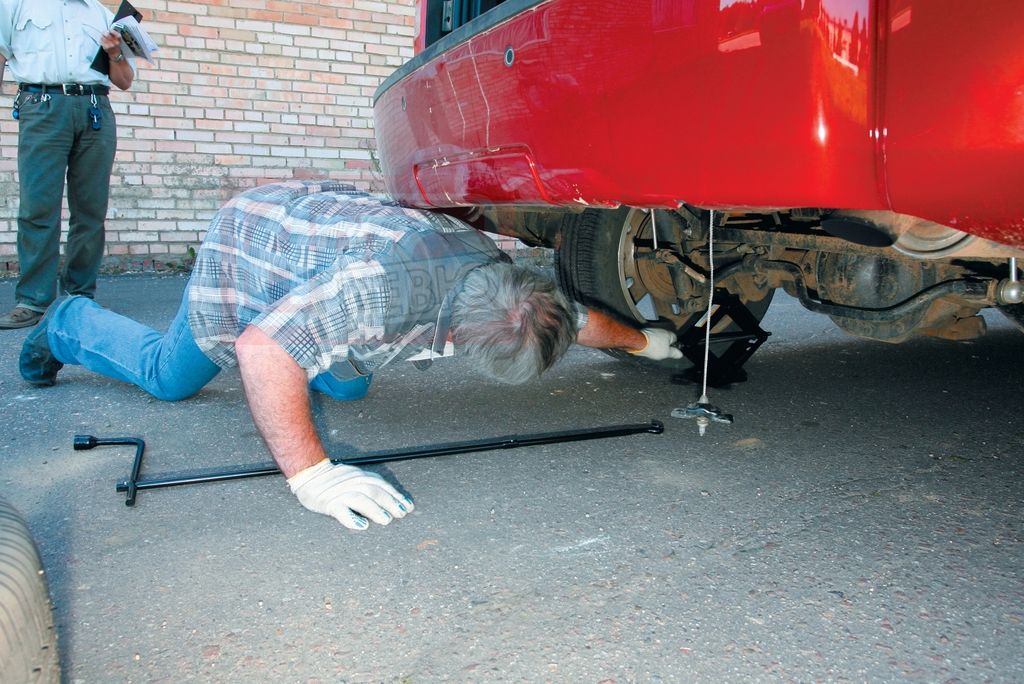 |
| You can only jack up the rear wheel of the Nitro with the standard jack by placing it under the axle — for this you have to kneel and crawl under the underbody |
Few people think about where the spare tire is when choosing a new car. Yet this determines how much time you will spend at the roadside. We decided to test this in practice and performed a pit stop four times, measuring how long it takes to replace the rear wheel.
The longest time with the spare tire was with the Nitro — 2 minutes 47 seconds. The wheel itself, hanging under the underbody, lowered easily, but detaching the cable took some effort: squatting down, you had to thread it between the chrome spokes with both hands. With the Outlander XL, this operation took almost half the time (1'27''), although there you had to lower the spare tire with a key with the tailgate side open. But with the CX-7 and Freelander, the spare tires are hidden in niches in the trunk — 1'08'' and 0'45'' respectively. However, with the Mazda, you had to hold the unsecured shelf with one hand, while with the Land Rover, the shelf is fixed on a hook in the raised position.
Next — the jack and lifting the car. Here the Dodge let us down. The jack itself and the composite wrench were found immediately, but lifting the car by the side member did not work — there was not enough travel. While we figured out to look at the instructions, we lost three minutes. It turned out that the jack needs to be placed under the axle, and for this we had to almost lie on the asphalt. In the Freelander, the jack along with tools and the "security key" lies right in the center of the spare tire niche — take it and work. The Mazda made us wipe the rear bumper with our jeans: the jack there is secured between the spare tire and the rear seat. And the fastest to lift was the Mitsubishi.
There were no problems with reassembly, except that the CX-7 again made us fiddle with the shelf and dirty our pants on the bumper.
Result: the fastest pit stop was with the Land Rover — everything is at hand and convenient, but pulling the heavy wheel out of the niche requires strength. With the Dodge and Mitsubishi, changing the wheel is physically easier, but you have to crawl around and get dirty. The Mazda is a compromise option: you have to strain (the temporary spare, although lighter than a full wheel, is still heavy) and get your clothes dirty.
| Rear wheel change time, s | ||||
| Actions | Vehicles | |||
| Dodge Nitro | Land Rover Freelander | Mazda CX-7 | Mitsubishi Outlander XL | |
| Removing the spare tire | 167 | 45 | 68 | 87 |
| Installing the jack and lifting the vehicle | 171/80* | 155 | 120 | 47 |
| Lowering the vehicle and stowing the tools | 243 | 150 | 271 | 237 |
| Total | 581/490* | 350 | 459 | 371 |
| * Time lost due to incorrect jack placement under the side member/time spent on jacking the vehicle by the axle | ||||
Safe?
The most modest set of safety systems in our quartet is in the Dodge Nitro: ABS, stability control, four airbags (front and curtain), belts with pretensioners and force limiters. The Mitsubishi and Mazda are additionally equipped with side airbags for front passengers, and the Freelander also has a driver's knee airbag. Isofix anchors for child seats are present in all.
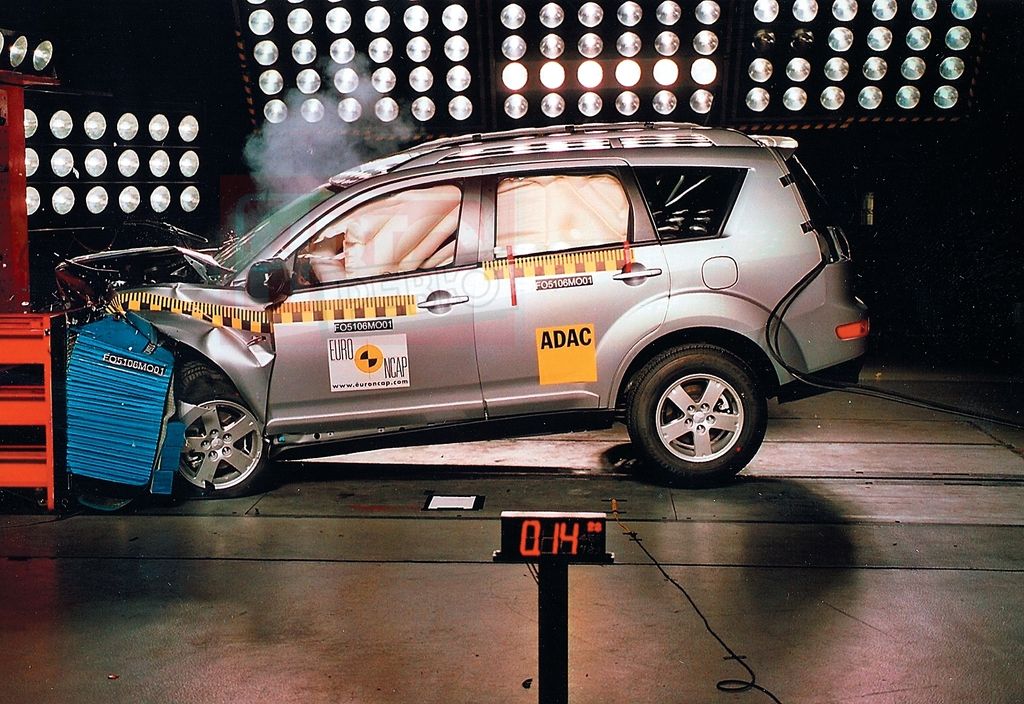 | 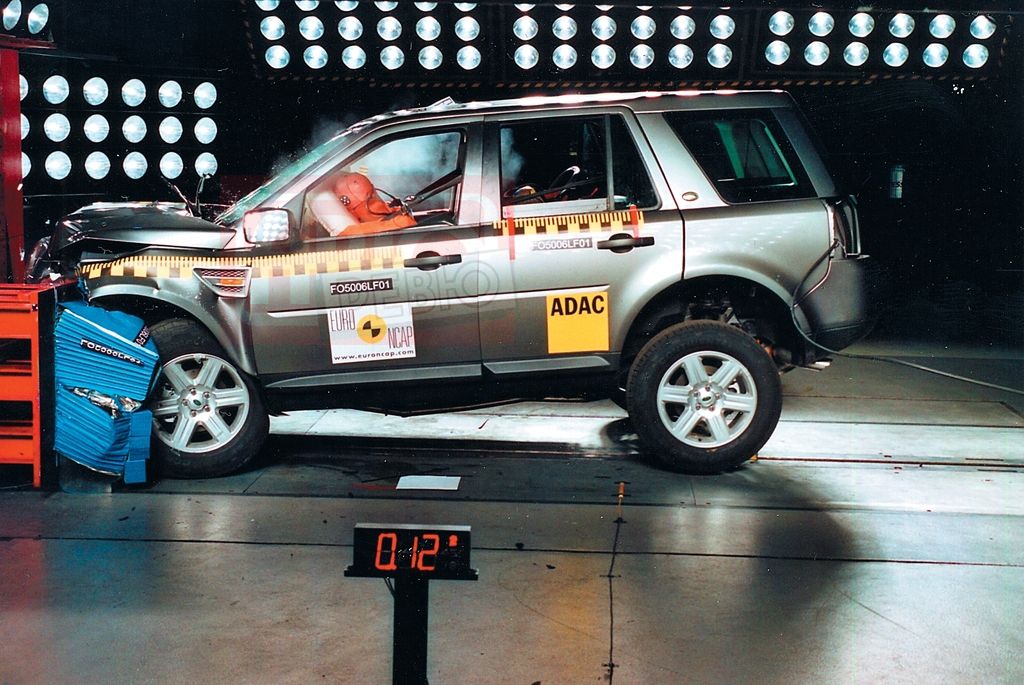 |
| Mitsubishi Outlander XL | Land Rover Freelander |
According to the EuroNCAP methodology, only two cars were tested. The Freelander received "excellent" — the knee airbag and the steering wheel, which "pulls" toward the panel in a frontal impact, helped. Child protection — four stars out of five, but pedestrian protection — only one out of four.
The Outlander XL earned four stars. It fell short of the maximum rating due to the potentially hazardous front panel, steering column, and center console. However, the side crash tests are excellent. But child safety is average: in a frontal impact, both dummies received increased chest loads. Pedestrian protection is also average.
The Dodge Nitro and Mazda CX-7 were tested according to the American NHTSA rules. For frontal and side impacts, both received five stars. But the rollover resistance of the Nitro is rated only three stars out of five, while the CX-7 has four.
| Mitsubishi Outlander XL* | ★★★★ |
| Overall rating | 32 points |
| Frontal crash test | 12 (75%) |
| Side crash tests | 18 (100%) |
| SBR** | 2 |
| Child passenger protection | 35 (71%) |
| Pedestrian protection | 17 (47%) |
| Curb weight | 1655 kg |
| * Tests conducted according to EuroNCAP methodology | |
| ** SBR — presence of seat belt reminder | |
| Land Rover Freelander* | ★★★★★ |
| Overall rating | 35 points |
| Frontal crash test | 15 (94%) |
| Side crash tests | 18 (100%) |
| SBR** | 2 |
| Child passenger protection | 40 (82%) |
| Pedestrian protection | 7 (19%) |
| Curb weight | 1820 kg |
| * Tests conducted according to EuroNCAP methodology | |
| ** SBR — presence of seat belt reminder | |
| Dodge Nitro* | ★★★★★ |
| Driver protection in frontal impact | 5 stars |
| Passenger protection in frontal impact | 5 stars |
| Driver protection in side impact | 5 stars |
| Rear passenger protection in side impact | 5 stars |
| Rollover rating | 3 stars |
| Curb weight | 1939 kg |
| * Tests conducted according to NHTSA methodology | |
| Mazda CX-7* | ★★★★★ |
| Driver protection in frontal impact | 5 stars |
| Passenger protection in frontal impact | 5 stars |
| Driver protection in side impact | 5 stars |
| Rear passenger protection in side impact | 5 stars |
| Rollover rating | 4 stars |
| Curb weight | 1776 kg |
| * Tests conducted according to NHTSA methodology | |
Driving force
In all three crossovers — Land Rover Freelander, Mazda CX-7, and Mitsubishi Outlander XL — all-wheel drive works on a similar principle: in normal modes, torque goes to the front axle, and the rear axle engages automatically if the front wheels start to slip. The differences lie in the mechanism for transferring power to the rear. Mazda and Mitsubishi use electronically controlled multi-plate clutches: on command from the computer, an electromagnet compresses a pack of friction plates operating in oil. However, the CX-7's transmission has only one algorithm, where the electronics constantly vary the degree of clutch compression, while the Outlander XL is a bit more complex. In automatic Multi-Select 4WD mode, up to 40% of torque goes to the rear wheels, in 4WD Lock mode — up to 60%, but even then the electronics continue to adjust the lock. In both cases, the stability control system acts as the inter-wheel locks, braking the spinning wheels.
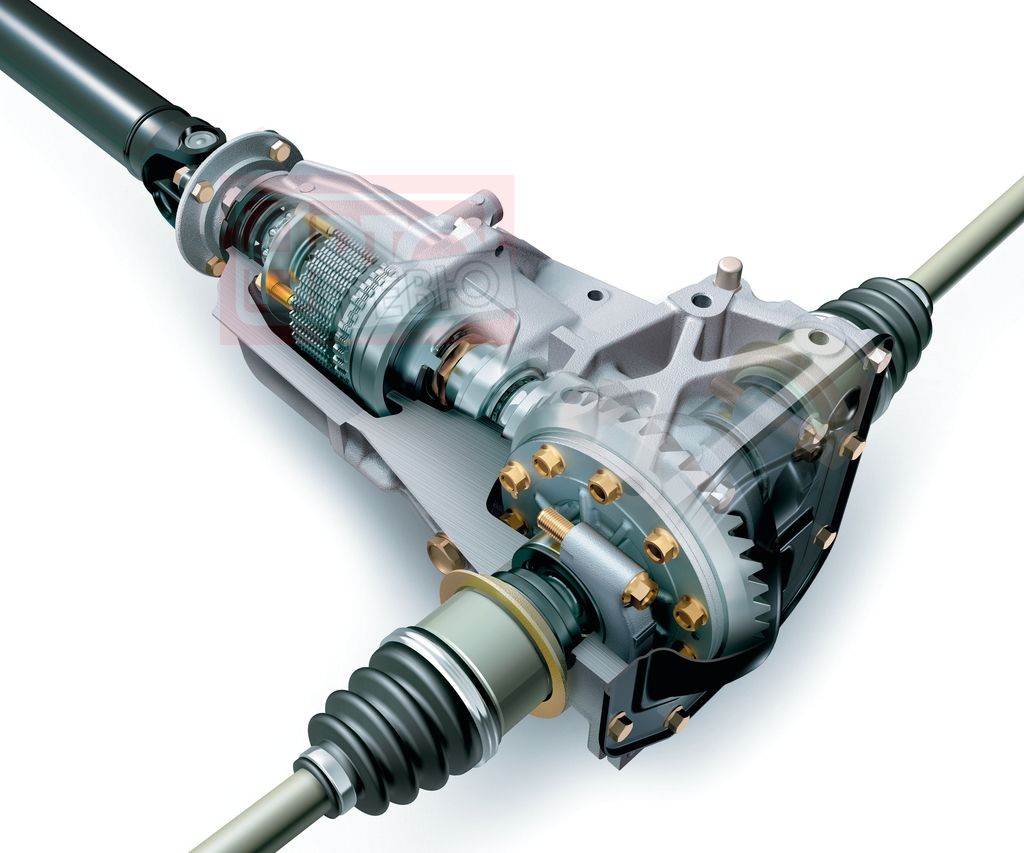 | The Mazda CX-7 computer controls the rear-drive multi-plate clutch by analyzing the rotation speed of each wheel, engine load, ABS data, and the stability control system. Based on this, the required degree of locking is selected. |
The Freelander uses a Haldex clutch, where the friction plate pack is compressed hydraulically at the slightest difference in speed between the input and output shafts. In normal driving, no more than 5% of torque goes to the rear axle, but during launch or wheelspin, the clutch can lock completely. The stability control system, working in conjunction with the proprietary Terrain Response system, simulates differential locks when necessary.
| Dodge Nitro | Land Rover Freelander | Mitsubishi Outlander XL |
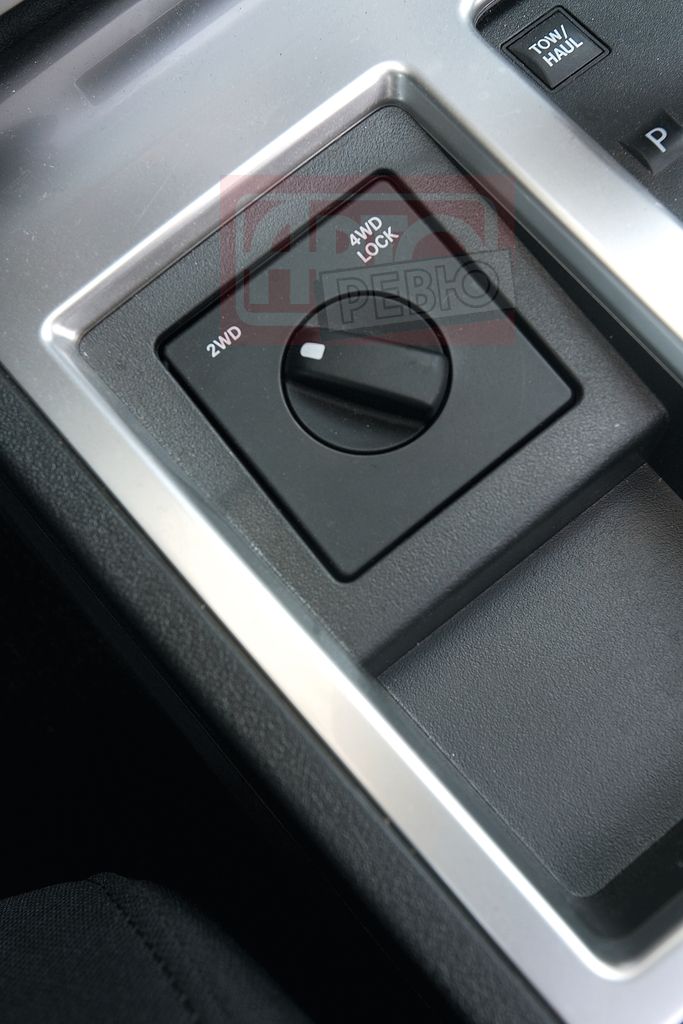 | 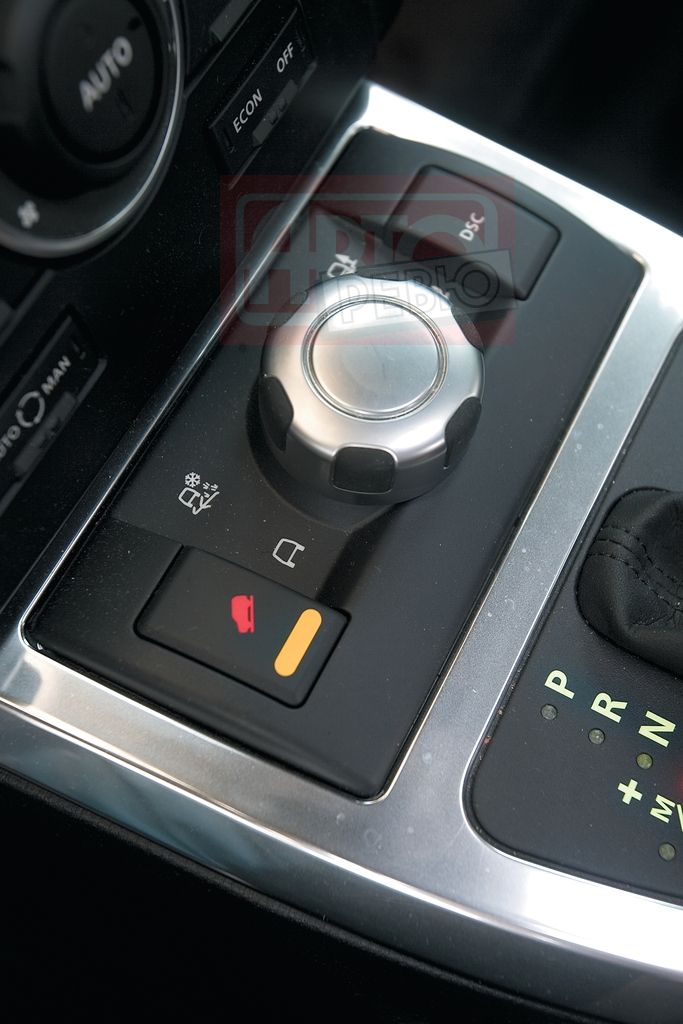 | 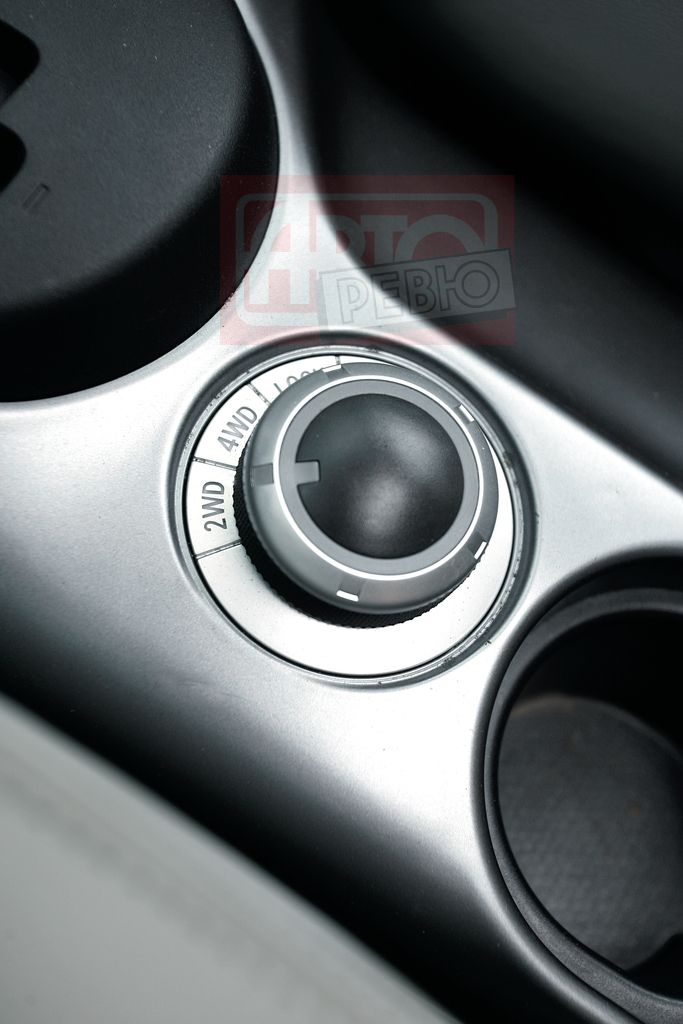 |
The Dodge Nitro is simpler: rear-wheel drive is permanent, and the front axle engages rigidly, without a differential. As with the others, the stability control system handles inter-wheel locking functions.
What's the price?
The base Mitsubishi Outlander XL in Inform trim has a four-cylinder engine (2.4 L, 170 hp) and a manual transmission. Such a car (six airbags, climate control, CD/MP3 stereo, heated front seats) costs 892,170 rubles ($34,710*). The Invite version with a CVT is 45,560 rubles ($1,770*) more expensive. Prices for the Outlander XL with a V6 (3.0 L, 220 hp) and six-speed automatic start at 1,058,330 rubles ($41,180*) for the Intense trim, which already includes power-adjustable and heated mirrors, as well as a light sensor. Leather in the Instyle version costs an additional 93,800 rubles ($3,650*), and the top-of-the-line Inspire with sunroof, xenon headlights, and a Rockford audio system with CD changer will set you back 1,205,730 rubles ($46,920*). Expect a wait of up to three months for delivery.
Warranty — 3 years or 100,000 km. Mitsubishi dealer network — 92 points in 63 Russian cities.
The Dodge Nitro in the base SE version is equipped with a V6 3.7 (205 hp) and a four-speed automatic. Standard features include four airbags, air conditioning, CD stereo, and power-adjustable mirrors. The price is 1,102,500 rubles ($42,900*), which is 44,170 rubles ($1,720*) more than the base Outlander XL V6, which also has climate control, while the Nitro doesn't even offer it as an option. A package with heated mirrors, alloy wheels, rear parking sensors, and a CD changer costs 170,000 rubles ($6,610*). The top SXT version features body-colored bumpers and fender flares, plus a power-adjustable driver's seat. The price is 1,274,000 rubles ($49,570*). A similar Nitro with a turbodiesel (2.8 L, 177 hp) and five-speed automatic is slightly cheaper — 1,267,000 rubles ($49,300*). Leather will cost 52,500 rubles ($2,040*), and a sunroof — 38,500 rubles ($1,500*). Delivery takes about a month.
Warranty — 2 years with no mileage limit. Dodge dealers — 21 in 11 Russian cities.
The Mazda CX-7 is available in Russia with only one engine — a turbocharged gasoline four-cylinder (2.3 L, 238 hp) and a six-speed automatic. Even the base Touring trim includes six airbags, climate control, CD stereo, heated front seats, and power-adjustable, heated mirrors. Such a crossover costs 1,141,000 rubles ($44,400*) — 82,670 rubles ($3,220*) more than the comparable Mitsubishi. The Sport version for 1,239,000 rubles ($48,210*) adds leather, power-adjustable driver's seat, rain sensor, CD changer, and xenon headlights. There's only one option — a sunroof for 26,000 rubles ($1,010*). The waiting list for the CX-7 has stretched to seven months.
Warranty — 3 years or 100,000 km. Mazda dealers — 27 in 17 Russian cities.
The Land Rover Freelander in the base E trim is available only with a four-cylinder turbodiesel (2.2 L, 160 hp) and a manual transmission. Equipment: seven airbags, air conditioning, CD stereo, power-adjustable, heated mirrors. The price is 970,000 rubles ($37,740*). The gasoline V6 3.2 L (233 hp) with a six-speed automatic appears in the SE version for 1,340,000 rubles ($52,140*). This is more expensive than the top trims of competitors, but the equipment is more modest — climate control, light and rain sensors, front and rear parking sensors. However, it does have Terrain Response. The top HSE adds leather with wood inserts, power-adjustable front seats, bi-xenon headlights, and a CD changer. The price is 1,470,000 rubles ($57,200*). The turbodiesel Freelander in SE and HSE trims costs 1,140,000 rubles ($44,360*) and 1,260,000 rubles ($49,030*), respectively. Delivery takes about three months.
Warranty — 3 years or 100,000 km. Land Rover dealers — 27 in 17 Russian cities.
* At an exchange rate of $1 = 25.7 rubles.
| Cost of scheduled maintenance with consumables and parts* | |||||
| Scheduled service | Vehicles | ||||
| Dodge Nitro | Land Rover Freelander | Mazda CX-7 | Mitsubishi Outlander XL | ||
| Cost per standard hour | 70 | 109 | 58 | 65 | |
| Mileage, km | 10,000 | 253 | — | — | — |
| 12,000 | — | 272 | — | — | |
| 15,000 | — | — | 286 | 217 | |
| 20,000 | 253 | — | — | — | |
| 24,000 | — | 584 | — | — | |
| 30,000 | 298 | — | 381 | 416 | |
| 36,000 | — | 272 | — | — | |
| 40,000 | 253 | — | — | — | |
| 45,000 | — | — | 342 | 217 | |
| 48,000 | — | 584 | — | — | |
| 50,000 | 253 | — | — | — | |
| 60,000 | 298 | 272 | 429 | 428 | |
| 70,000 | 253 | — | — | — | |
| 72,000 | — | 584 | — | — | |
| 75,000 | — | — | 442 | 217 | |
| 80,000 | 253 | — | — | — | |
| 84,000 | — | 272 | — | — | |
| 90,000 | 298 | — | 434 | 1,360 | |
| 96,000 | — | 584 | — | — | |
| Total | 2,412 | 3,424 | 2,314 | 2,855 | |
| * Prices are in US dollars | |||||
What else?
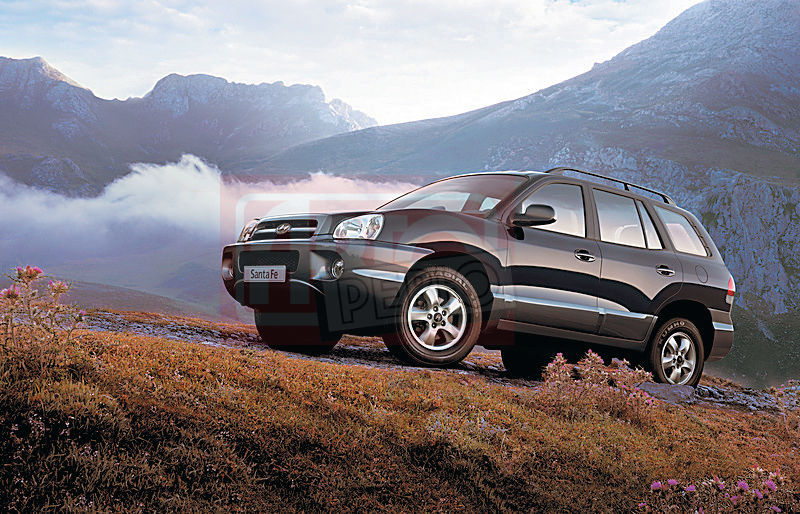
When it comes to the most affordable mid-size crossovers with a V6 on the Russian market, the Hyundai Santa Fe Classic from the previous generation, assembled in Taganrog, holds the palm. For the version with a 2.7-liter engine producing 173 hp and a four-speed automatic, they ask 779,900 rubles ($30,350*). All-wheel drive here is permanent, and the center differential can be locked via a viscous coupling. A detailed review is in AR No. 23, 2001.
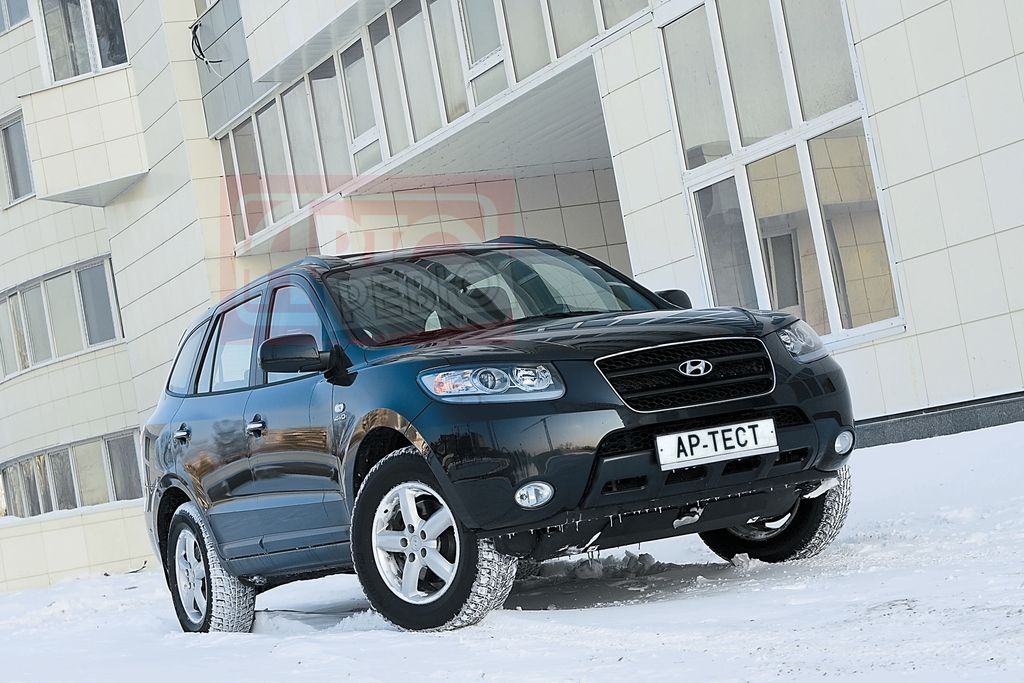
The second-generation Hyundai Santa Fe with the same 2.7 L displacement but now 189 hp, paired with a four-speed automatic, is priced at 1,077,900 rubles ($41,940*). The rear wheels here are engaged via a clutch that can be forcibly locked. Details are in AR No. 6, 2007.
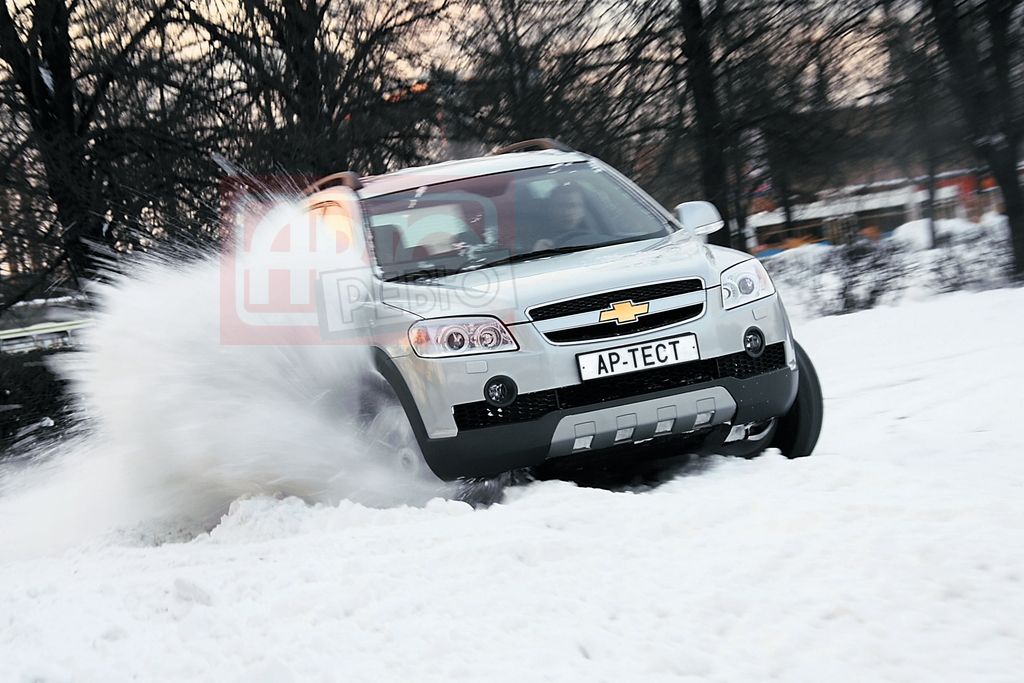
The Chevrolet Captiva with a V6 3.2 (230 hp) and five-speed automatic in the base trim costs 1,028,400 rubles ($40,020*). Drive is implemented via an electromagnetic clutch that engages the rear axle automatically — without the possibility of rigid locking. A third row of seats is available for an additional fee. About this — in AR No. 6, 2007.
 |  |
| Hyundai Santa Fe Classic | Kia Sorento |
 |  |
| Chevrolet Captiva | Jeep Grand Cherokee |
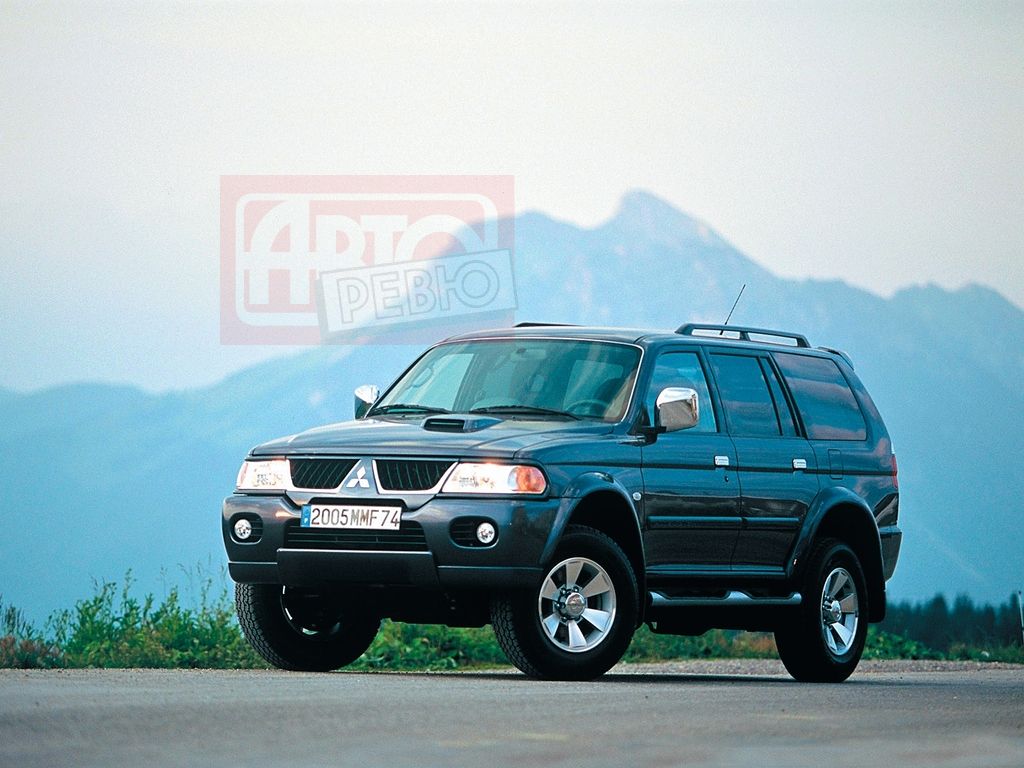
In the same price segment, there are also more substantial SUVs. Mitsubishi Pajero Sport — a body-on-frame vehicle with a three-liter V6 producing 170 hp and a four-speed automatic — will cost 977,930 rubles ($38,050*). Rear-wheel drive, front axle engages rigidly, there is a two-speed transfer case. Options include a self-locking rear differential. Interested? Read AR No. 3, 2000.
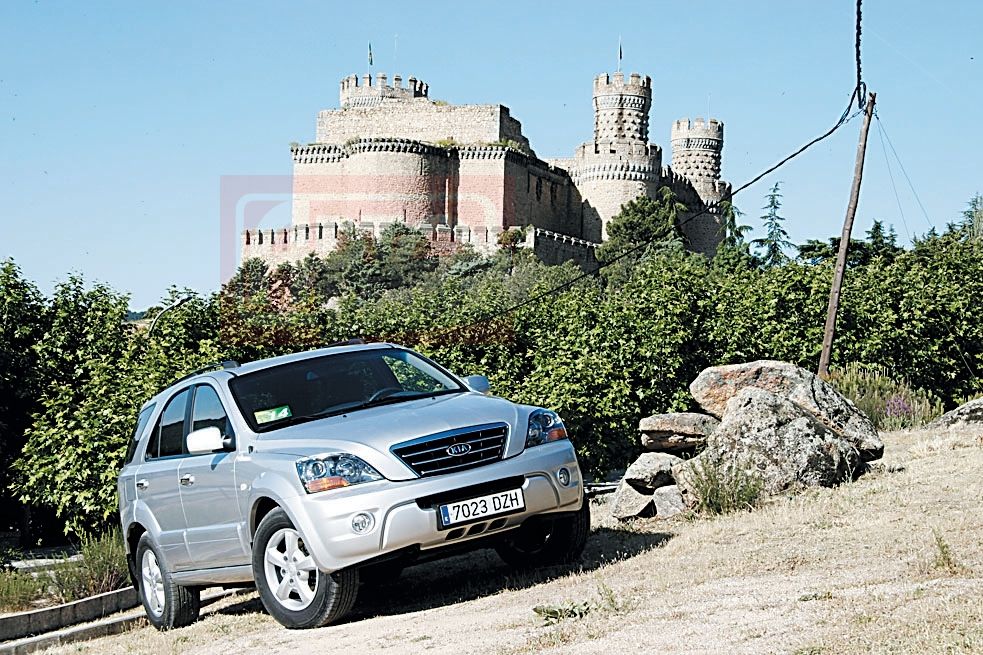
Kia Sorento, produced in Izhevsk, with a V6 3.3 engine (241 hp) and automatic transmission is sold for 1,099,990 rubles ($42,800*). In normal driving, it is a rear-wheel-drive vehicle, and the front axle engages automatically via an electronically controlled clutch. It can be locked manually, also engaging low range. Details — in AR No. 6, 2006 and AR No. 11, 2006.
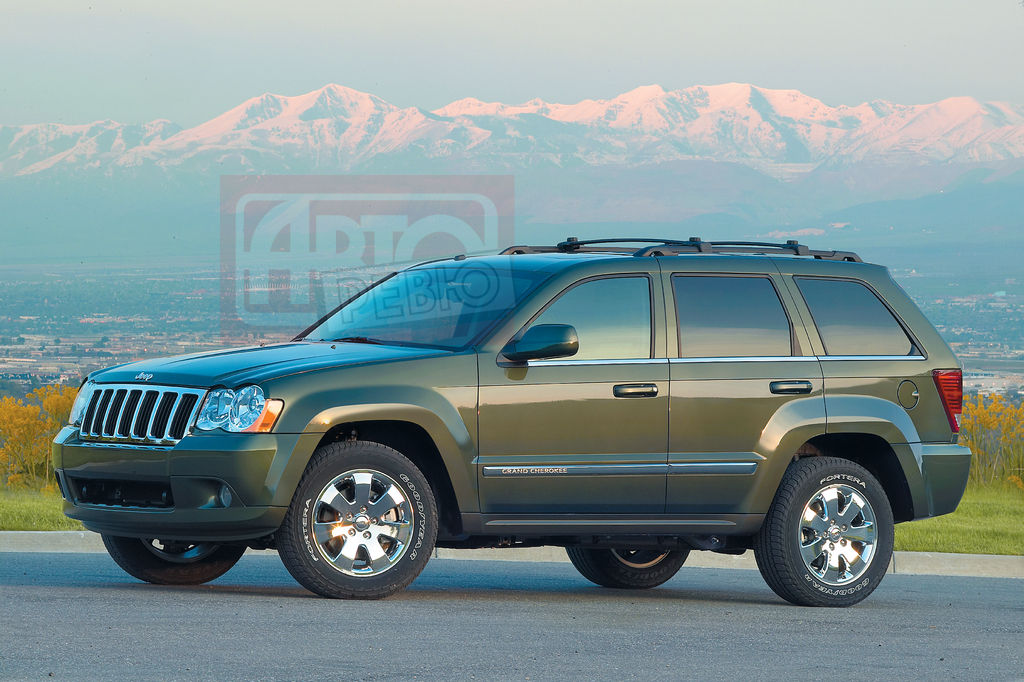
For 1,130,500 rubles ($43,990*) you can still find the "bug-eyed" Jeep Cherokee of the previous generation (3.7 L, 204 hp), but the new model has already been announced and should appear here next year. The more spacious Jeep Grand Cherokee with the same engine and a more modern five-speed automatic transmission costs 1,382,500 rubles ($53,790*). In addition to permanent all-wheel drive, an option with three self-locking differentials is offered. All details — in AR No. 1, 2006.
 |  |
| Hyundai Santa Fe | Ford Explorer |
 |  |
| Mitsubishi Pajero Sport | SsangYong Rexton II |
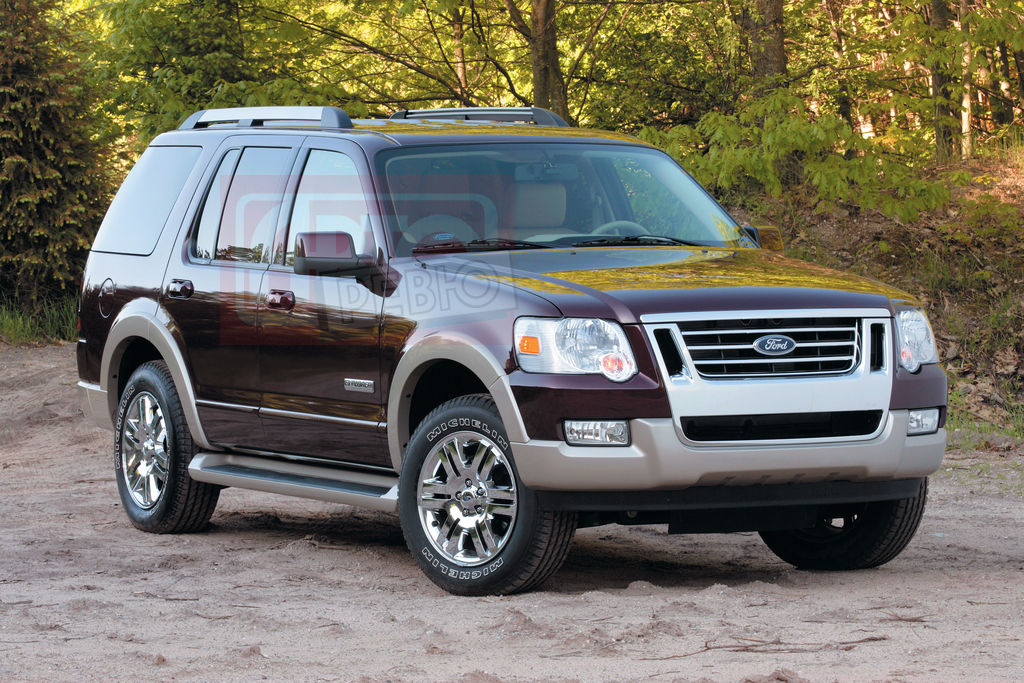
Ford Explorer of the 2005 model year starts at 1,268,000 rubles ($49,340*) — this is the base version with a V6 4.0 (213 hp) and a five-speed automatic transmission. The almost five-meter "American" can boast permanent rear-wheel drive, a front axle that engages both automatically and manually, as well as a reduction gear.
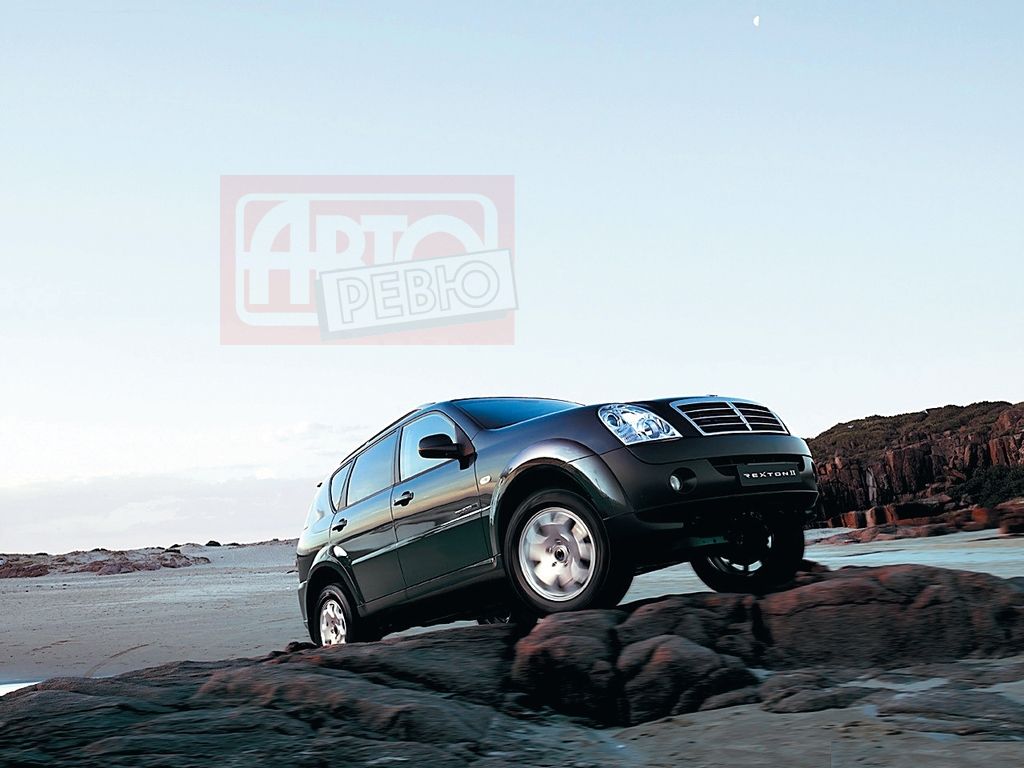
The recently updated SsangYong Rexton II with an inline six-cylinder 3.2 L (220 hp) and automatic transmission is priced at 1,280,000 rubles ($49,810*). The all-wheel-drive transmission scheme here is the same as in the Ford Explorer.
* At the exchange rate of $1 = 25.7 rubles.