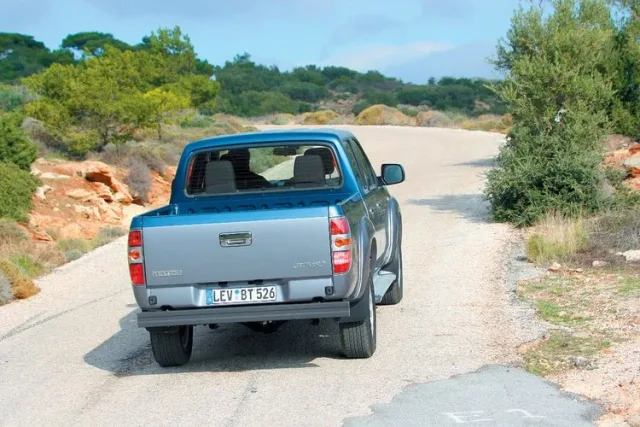
In Russia, a pickup truck is something more than just a work vehicle. Or, on the contrary, something less... Their cargo beds have never seen farm manure, firewood for a village stove, or crates of tomatoes for the market. Instead, almost every such vehicle has served as a podium for showing off an ATV or motorcycle near a nightclub and as a means of transport for a picnic outing. This trend is not unique to our country: cargo-passenger four-wheel-drive vehicles are increasingly becoming "sport-utility." The new Mazda BT-50 pickup is another example of this evolution. I drove it along the Greek coast of the Aegean Sea.
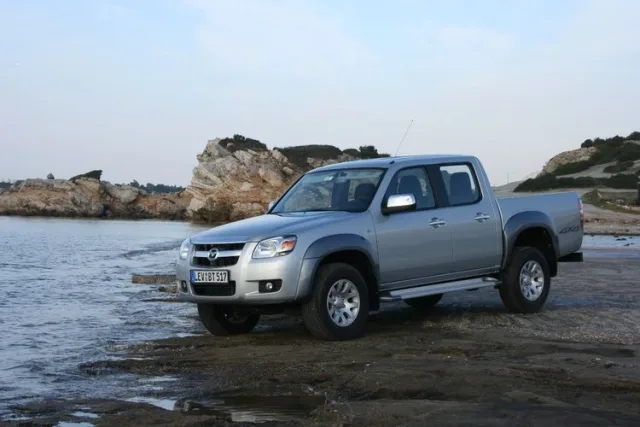
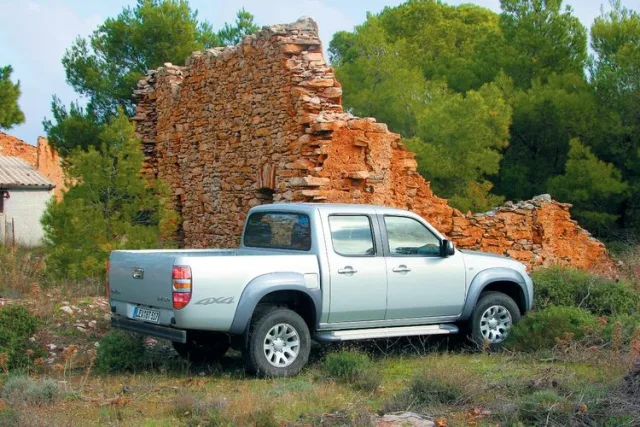
The Mazda BT-50 originates from Thailand, where cargo-passenger models of all leading Japanese brands are assembled, and where the predecessor of the "fifty" — the Mazda B-2500 — was also made. The continuity is obvious: as before, the new model is offered in three variants that differ in the number of seats and the size of the cargo platform. The two-seat workhorse Regular Cab with the longest (2280 mm) platform is intended for agricultural markets, and it can be either four-wheel drive or rear-wheel drive. Next comes the "one-and-a-half" Freestyle with a 1753 mm platform and a four-seat cabin, which can be accessed through an additional rear-hinged door. Finally, there is the Double Cab version — a five-seat vehicle with four full-size doors and a cargo platform 1530 mm long. These are the vehicles that will go to Russia.

Instructors ordered us to drive through the pool simulating a ford in first low gear without touching the accelerator pedal. I was taught to overcome such obstacles differently
How does "our" Double Cab differ from its predecessor? Judging by the proportions, the designers clearly didn't starve the vehicle. The cheekbones of the front bumper have become rounder, the headlights with multi-element reflectors have lost their oriental squint, and there is more chrome on the one-piece radiator grille. The technical specifications also confirm that the pickup has matured: the body has grown 70 mm in length, the door opening has widened by 30 mm, and the side height has increased by 60 mm. And if you look under the vehicle... The design hasn't fundamentally changed. It's still the same ladder frame, independent front suspension on wishbones with torsion bars, a solid rear axle on leaf springs, and a solid ground clearance of 240 mm. However, a careful eye will notice gas-filled shock absorbers with an increased rod, lengthened (by 120 mm) leaf springs, and ventilated front brake discs with more powerful calipers. As a result, the payload capacity has increased by 175 kg.
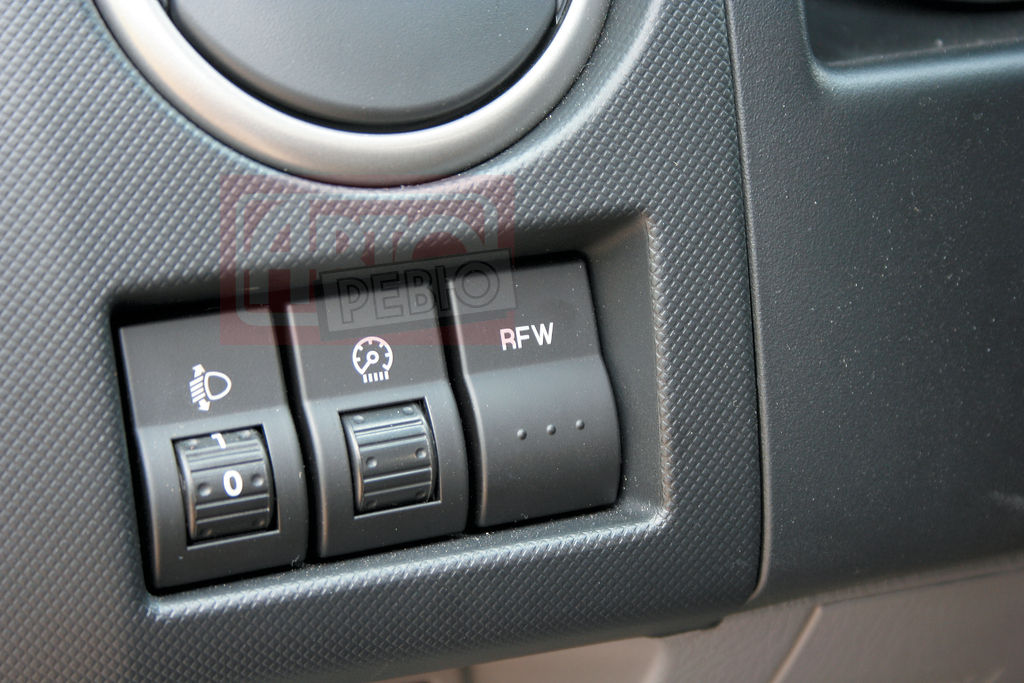 | 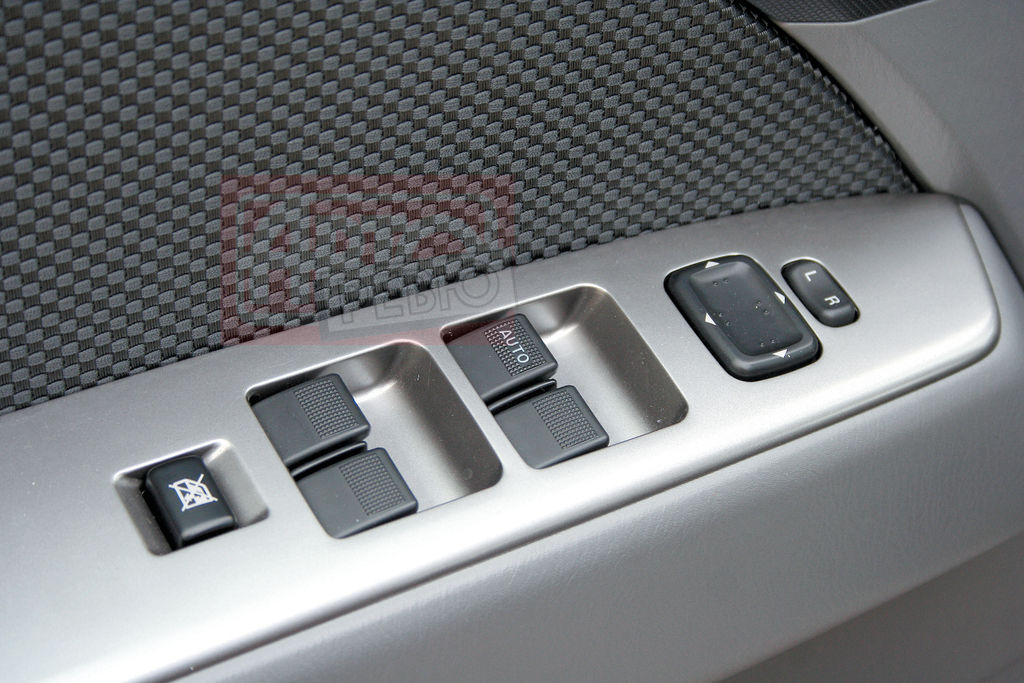 |
| When driving in rear-wheel drive mode, the RFW button can disconnect the front half-shafts and save a little fuel | All four power windows are electric. But Auto mode is only provided for the driver's window |
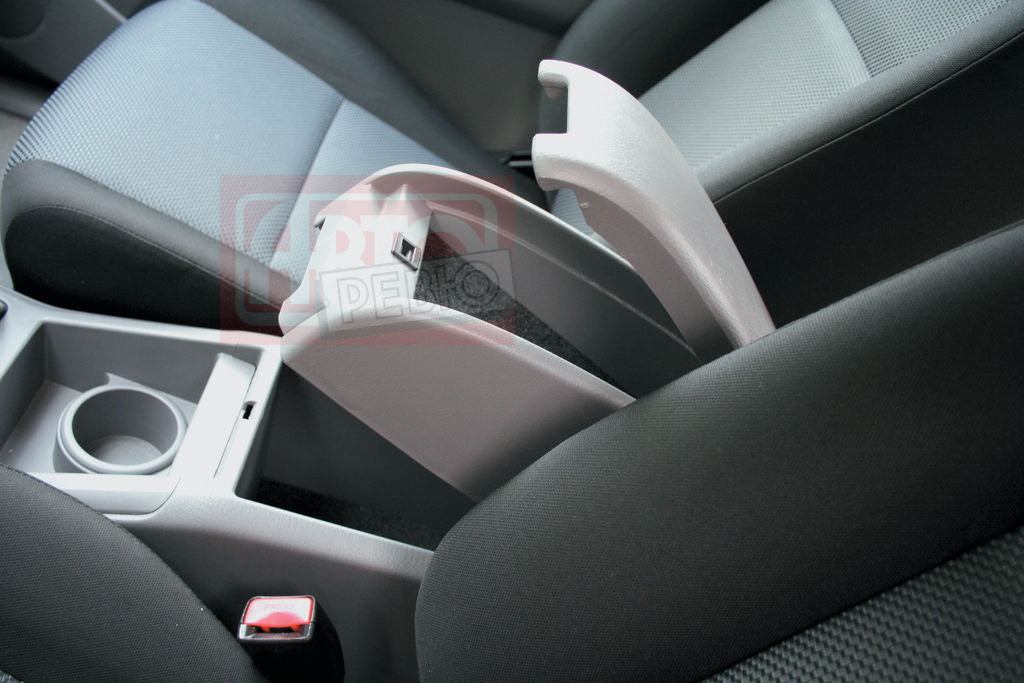 | 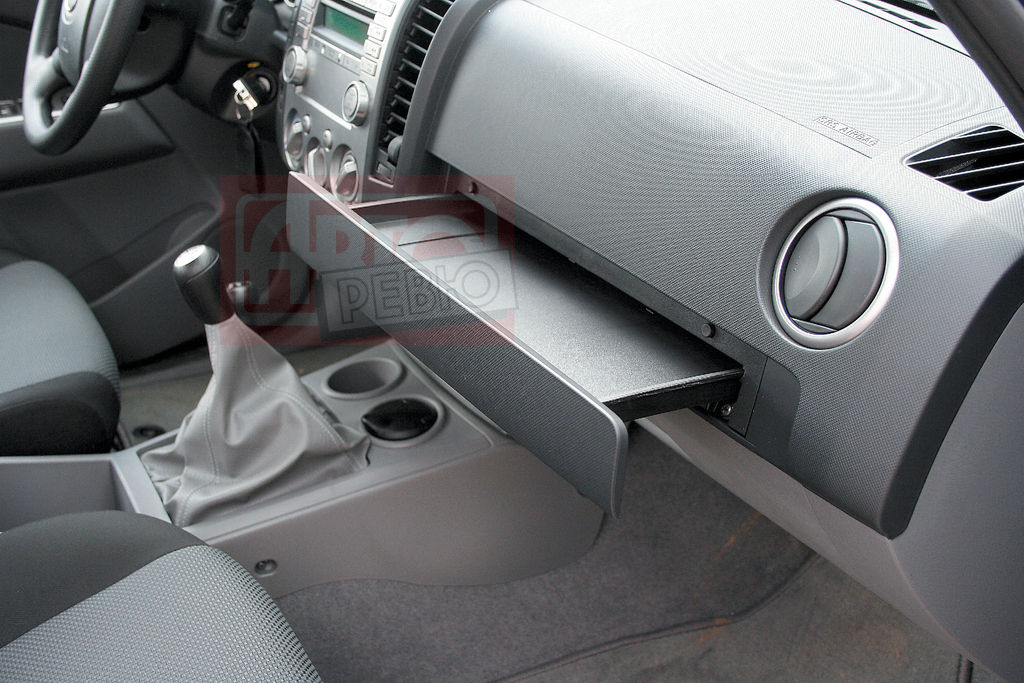 |
| Two-tier plastic armrest box. It wasn't on previous pickups | If you press your finger slightly above the glove box, a "baking sheet" like this will come out from the depths of the front panel |
But the changes in the interior "weigh" even more! There is no trace of the former simplicity of the cabin: designers, ergonomists, and marketers have tried to bring the pickup's interior up to the level of modern passenger cars, and as soon as you sit behind the wheel, you realize they succeeded. The front seats were comfortable before (see AR No. 24, 2004), but now they are almost an orthopedic standard. The back is held well, the elastic polyurethane foam evenly accepts the body, and you find the correct seating position on the first try. The upper seat belt anchor point is now also adjustable.
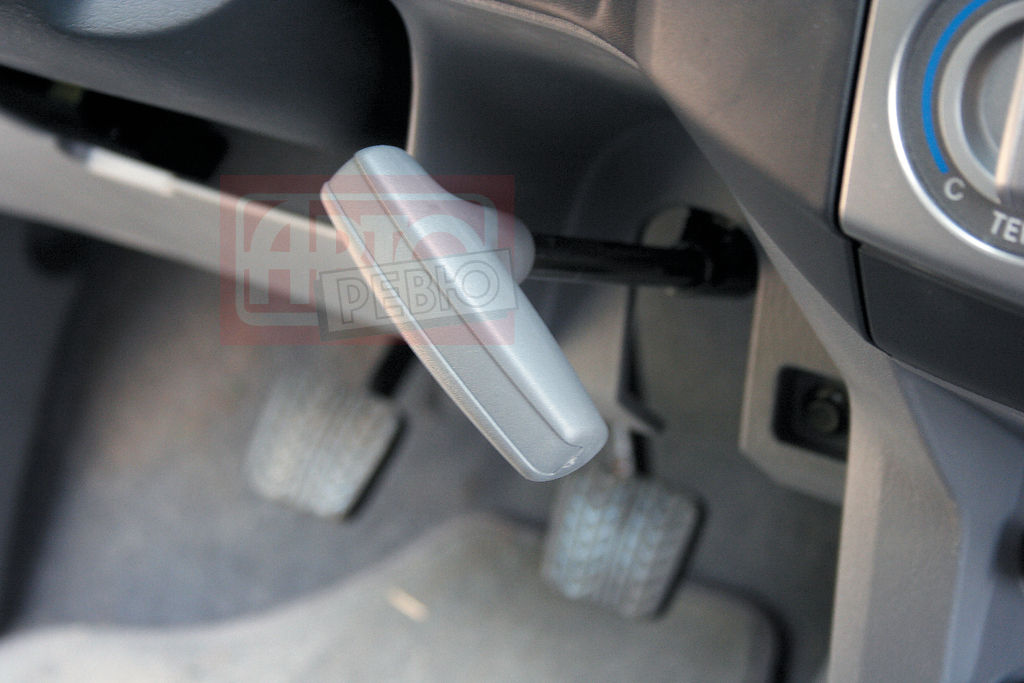 | 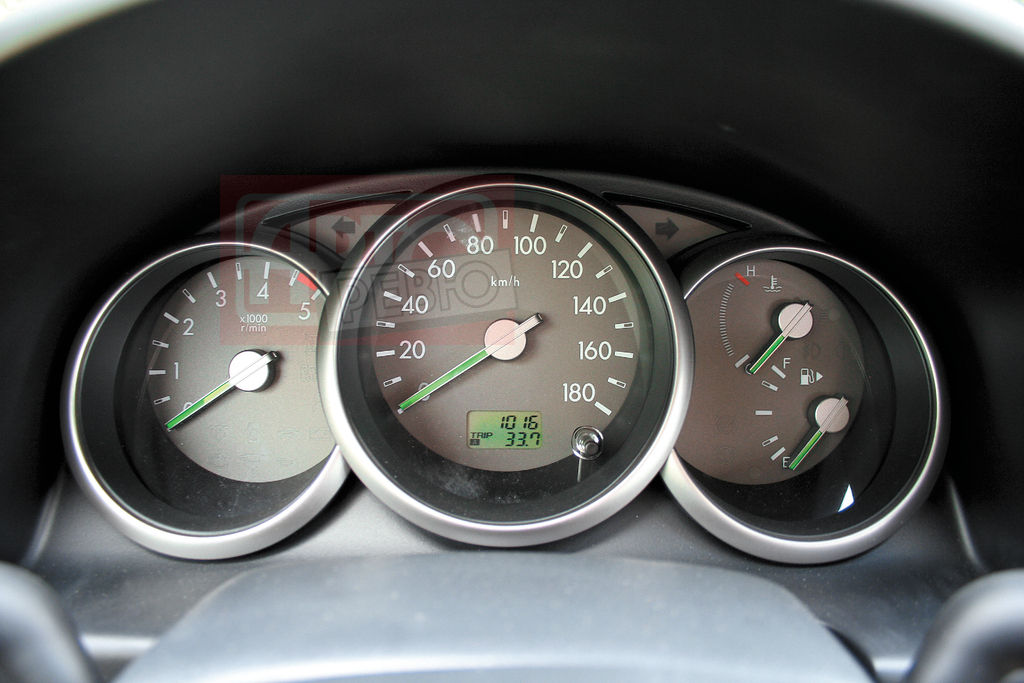 | 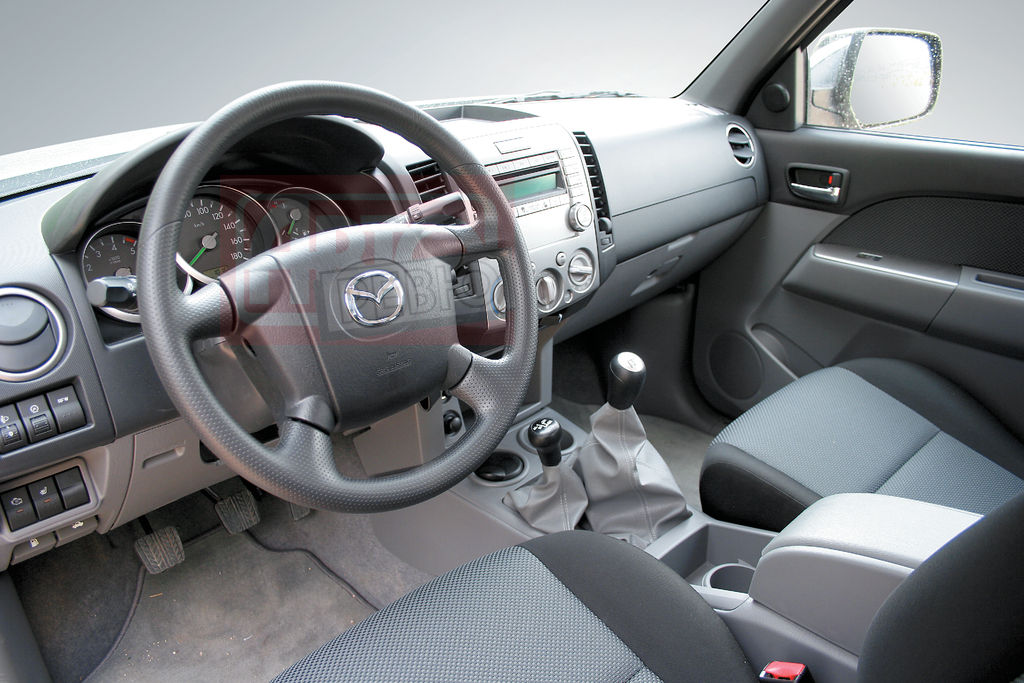 |
| Another Mazda feature — the "handbrake" in the form of a golf club | The instrument cluster has become stricter and more "thoroughbred." The only disappointment is the lack of a trip computer | The front panel on the new car has been completely redesigned. And well redesigned. High quality |
No one today will be surprised by glove boxes, pull-out drawers, pockets, removable ashtrays, and armrest boxes with a double bottom. But the pull-out tray in front of the passenger is a feature! It can hold up to 10 kg and is perfect for a laptop, navigator, or atlas. And in a parking lot, you can even cut sausage on it! The climate control unit, which previously spoiled the look of the old car, now looks great against the "silver" of the central console, next to the main attraction of the interior — a luxurious audio system with a six-disc changer, MP3 support, and automatic volume adjustment depending on speed. It sounds good (by the way, there are four speakers), and most importantly, you can listen to music while driving because the acoustics in the cabin have become radically better. Where did the engineers find "reserves of silence"? Partly in the cooling system, which has a quieter fan with an asymmetric blade pitch. A little more due to the enlarged inlet opening of the air filter. Plus insulating plates between the doors and front fenders, as well as additional sound-absorbing material in the cabin. The changed shape of the front pillars and outer seals made the oncoming air flow less "talkative," and the dual torsional vibration damper reduced the noise of the transmission gears. But the main contribution to acoustic comfort was made by the common rail turbodiesel, which doesn't annoy with a tractor-like rumble at idle or a bassy howl when revving. In total, the "creators of silence" managed to reduce noise by 6.5 dB!
By the way, the power unit of the new pickup (factory designation — MZR-CD) was developed specifically for the BT-50. With a displacement of 2.5 liters, it produces 143 hp and develops a torque of 330 Nm with a peak at 1800 rpm. The design is in the spirit of the times: four-valve gas distribution, variable geometry turbocharger, intercooler, balancing shafts, exhaust gas recirculation system, and Euro 4 environmental certificate. It is noteworthy that the Japanese consider it quite acceptable to operate the MZR-CD on our diesel fuel. And that's pleasing: the engine, in my opinion, turned out to be successful. Sufficient power, smooth torque, a convenient torque characteristic in the low and medium rpm range, and no pronounced turbo lag. Unfortunately, the new pickup doesn't have a trip computer, but according to estimates, it turned out to be economical: after a two-hundred-kilometer run, the fuel gauge needle dropped only a quarter of the scale (and the tank holds 70 liters).
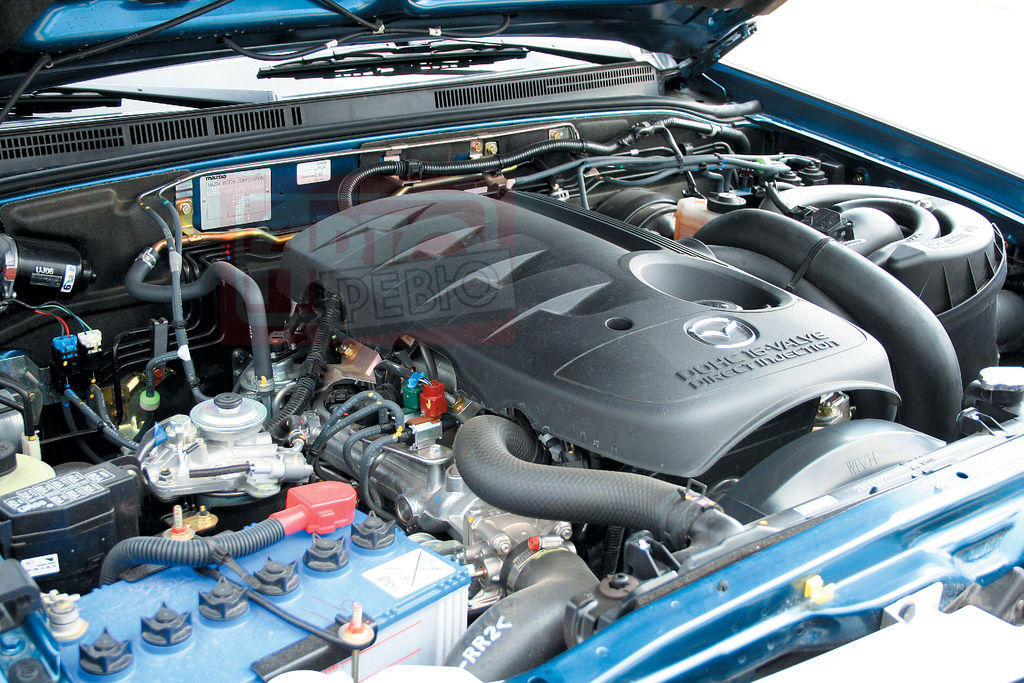 | |
| Previously, Mazda B-series pickups were equipped with a diesel engine with twelve-valve gas distribution. Now it's a sixteen-valve engine with direct injection and two balancing shafts | |
In the vehicle's behavior — whether on a high-speed straight or in corners — there is nothing frightening. Nothing particularly pleasing either, though. After all, there are torsion bars in the front and a solid axle with leaf springs in the rear. But you have to understand that only such a "architecture" of the chassis can provide the required cargo-passenger qualities.
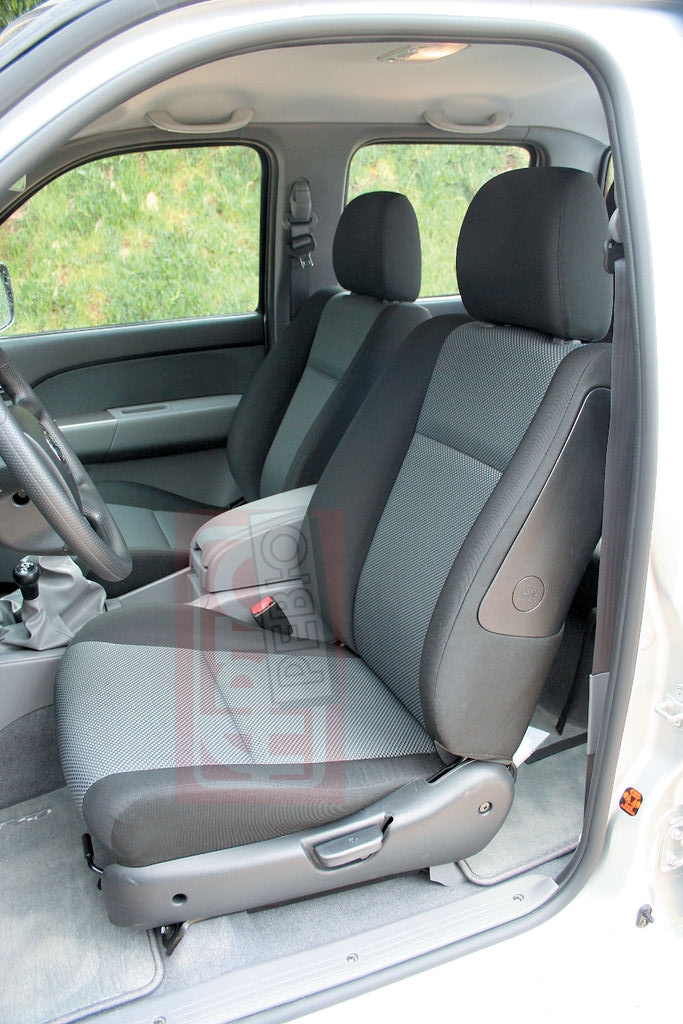 | 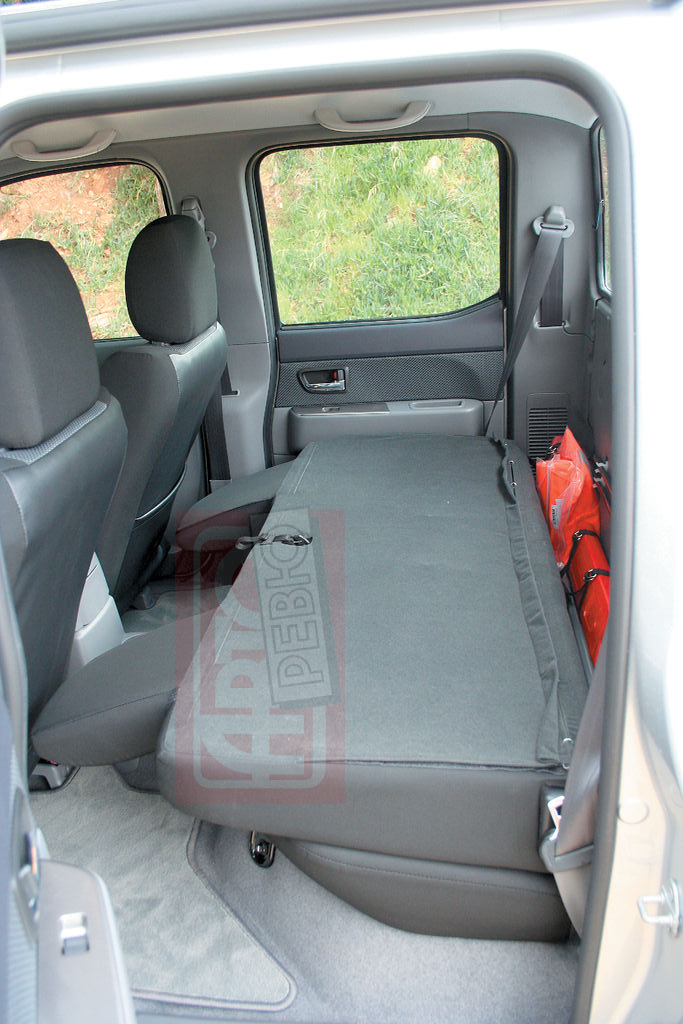 | 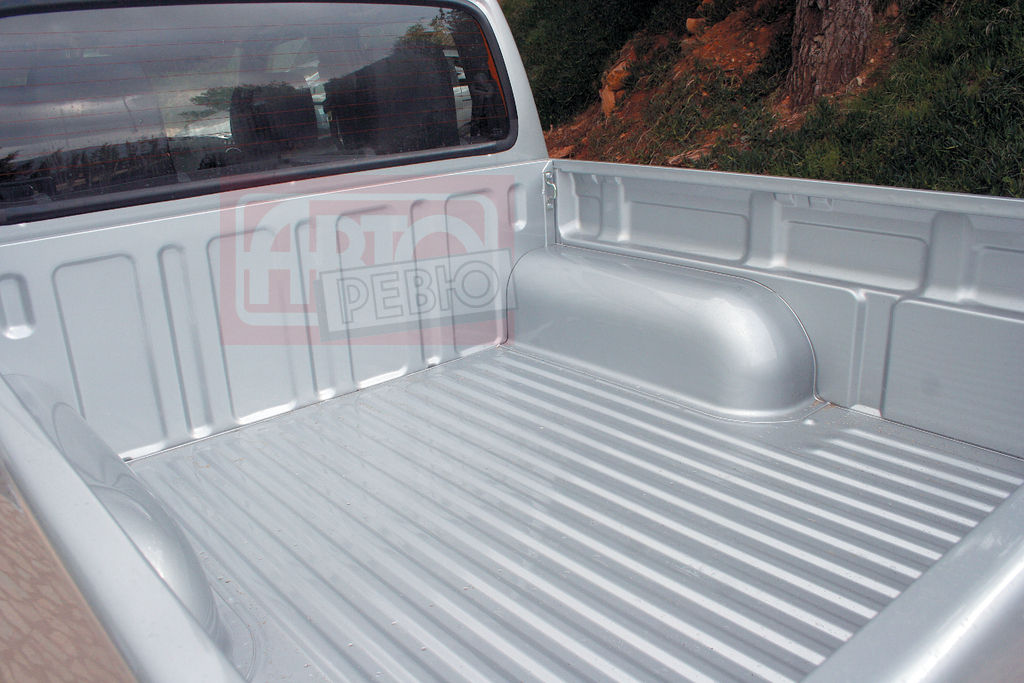 |
| The seats of the new pickup are simply an orthopedic masterpiece! | Another way to increase the volume of the cargo compartment | To prevent chips on the body from becoming centers of corrosion, all exterior panels are coated with organic resins applied by the cathodic electrodeposition method. The platform floor has a slight rearward slope and is equipped with grooves for water drainage |
It is noteworthy that Mazda is among the few manufacturers of all-wheel-drive pickups that deliberately sacrifice off-road capability for stability on asphalt. The rear axle still features a self-locking differential rather than a free 'inter-wheel' unit with forced locking. When, in a turn, one of the rear wheels lifts due to short-travel leaf springs, the self-lock blocks the 'drain' of torque through the unloaded wheel, and the vehicle behaves noticeably more stably under power. On serious off-road terrain, honestly, it is of little use, but the margin of cross-country capability is still sufficient. I brake, switch the transfer case to '4H' mode (how much more familiar the classic lever is compared to rotating knobs!) — and two indicators light up on the dashboard. The letters RFW (Remote Free Wheel) indicate that the front half-shafts are engaged, and a special pictogram confirms that power is being delivered to the front axle.
On the sandy section, the BT-50 briskly moves in high gear, confidently tackles ledges, and forgives stops in places where stopping, generally speaking, was not advisable. The low range with a reduction of more than double turns the pickup into a wheeled tractor: even at idle, it persistently crawls uphill as long as the tires can grip the ground, and on descents it brakes just as effectively with the engine. If you stop on hard surface and move the lever to '2H', the front axle disengages, but the RFW indicator continues to glow: the half-shafts remain coupled to the driveshaft. Why is such 'quasi-full' drive needed? So that the driver can quickly engage the front end on the move (with closed half-shafts this is permissible up to 100 km/h) and, without stopping, overcome a difficult section. Rolled out onto asphalt? Then, with a button under the left hand, you disengage the front drive kinematics — and remove excess load from the transmission.
| Front suspension on triangular transverse arms with torsion bars as elastic elements | Semi-elliptical leaf springs at the rear are lengthened by 120 mm. The final drive, as before, has a self-locking differential |
The off-road route prepared for us in Greece turned out to be typical 'club' off-roading: carefully measured crests, calibrated fords, and deliberately safe slopes. Driving with an instructor felt more like a first driving school lesson. But even in such hothouse conditions, it became obvious: in terms of traction, geometric, and support cross-country capability, the BT-50 is unlikely to yield to its competitors. And who are they, by the way? Mazda considers the Nissan Navara pickup (see AR No.12, 2005 and No.17, 2006) as the main rival on the Russian market — the first and for a long time the only representative of the Sport Utility Truck (SUT) class in Europe. Strictly speaking, an equal fight won't happen here, since the Navara is a different segment, but there is no doubt that the 'fifty' will grab its share of the market. At least, Russian fans of 'sport trucks' will now have a choice: pay $36,800 for a Navara in base version or $30,300 for a Mazda BT-50 in 'gift' trim — with chrome, alloy wheels, air conditioning, CD changer, and ABS. Yes, compared to the Nissan, there is slightly less 'car' here and slightly more modest comfort, but the price is much more pleasant. And what about the Mitsubishi L-200, Toyota HiLux, or Ford Ranger? Updated versions of these vehicles have also moved away from their former utility — and as soon as they appear, we will definitely conduct a comparative test. I am sure it will be interesting. After all, today's pickups are a completely different story.
| Specifications | |
| Parameters | Vehicle |
| Mazda BT-50 Double Cab | |
| Body type | cargo-passenger pickup |
| Number of doors/seats | 4/5 |
| Turning diameter, m | 13.6 |
| Fuel tank capacity, l | 70 |
| Curb weight, kg | 1855 |
| Payload, kg | 1175 |
| Engine | common rail turbodiesel |
| Number and arrangement of cylinders | 4, in-line |
| Displacement, cm³ | 2499 |
| Compression ratio | 18.0:1 |
| Maximum power, hp/rpm | 143/3500 |
| Maximum torque, Nm/rpm | 330/1800 |
| Front suspension | independent, torsion bar, |
| on transverse triangular arms | |
| Rear suspension | dependent, leaf spring |
| Front brakes | disc, ventilated |
| Rear brakes | drum |
| Transmission | manual, five-speed |
| Maximum speed, km/h | 158 |
| Acceleration time 0—100 km/h, s | 12.5 |
| Fuel consumption, l/100 km | |
| urban cycle | 10.9 |
| combined cycle | 7.8 |
| Off-road indicators | |
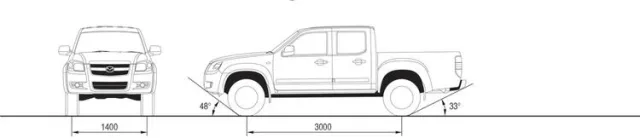
| approach angle, deg. | 48 |
| departure angle, deg. | 33 |
| ramp angle, deg. | 22 |
| Ground clearance, mm | 240 |
TRIM LEVELS AND PRICES
On the Russian market, the Mazda BT-50 will be offered in four trims. The base Double Cab is priced at $23,490 and includes two airbags and a rear self-locking differential. The Comfort version for $25,490 additionally gets air conditioning and 16-inch alloy wheels. For $27,690, Comfort+ is offered with chrome decor, side steps, fender flares, and a CD player. The top Luxury modification for $30,300 is equipped with a full power package (power windows, power mirrors, heated seats), a six-disc CD changer, four airbags, as well as ABS and EBD systems. Sales start in March 2007.
TWIN BROTHERS
The update of the European version of the Ford Ranger, which is essentially a clone of the previous-generation Mazda B-series pickups, is scheduled for the second half of 2007. Whether it will remain in the utility segment or also step towards 'sport-utility' vehicles is still unclear. Current European Rangers are equipped with turbodiesels producing 109 hp and carry up to 1000 kg of cargo.