
 Comments
 It's time to lay on the table the trump cards that I have been carefully hiding all this time. For twelve months now, I have been driving my scarlet Mazda6 — a model that now belongs to the previous generation. I'll say it straight: I'm crazy about my car! Every time I sink into the signature Mazda seat and take the neat three-spoke steering wheel in my hands, a wave of positive emotions washes over me.
 But everything comes to an end: my favorite has gone to a well-deserved rest, remaining unattainable for those who still doubt its attractiveness. And in its place, a brand new Mazda6 has stepped in.
One brief glance is enough to realize — this is a completely different car. If you, having opened this material, expect dry facts and an impartial analysis of the new "six", then you'd better look for other reviews. For me, this test is too personal a story. Every line, every detail of the new "six" touches a nerve. Can it really turn out to be better than my fiery-red beauty?
When I bought my "six" a year ago, I knew perfectly well about the upcoming generational change, but I still deliberately chose the previous version. It charmed me with its design and character back in 2002, when it first appeared on the Russian market. There were rumors that the second generation would be built on the Ford Mondeo platform, which meant the legendary double-wishbone front suspension would sink into oblivion. Fortunately, the Japanese did not allow such blasphemy: the foundation of the new Mazda6 became the previous platform, though the wheelbase grew by 50 mm. The overall length increased by 65 mm, and a bolder design with massive wheel arches turned the "six" into almost a business sedan, which can already be placed on par with the Toyota Camry.
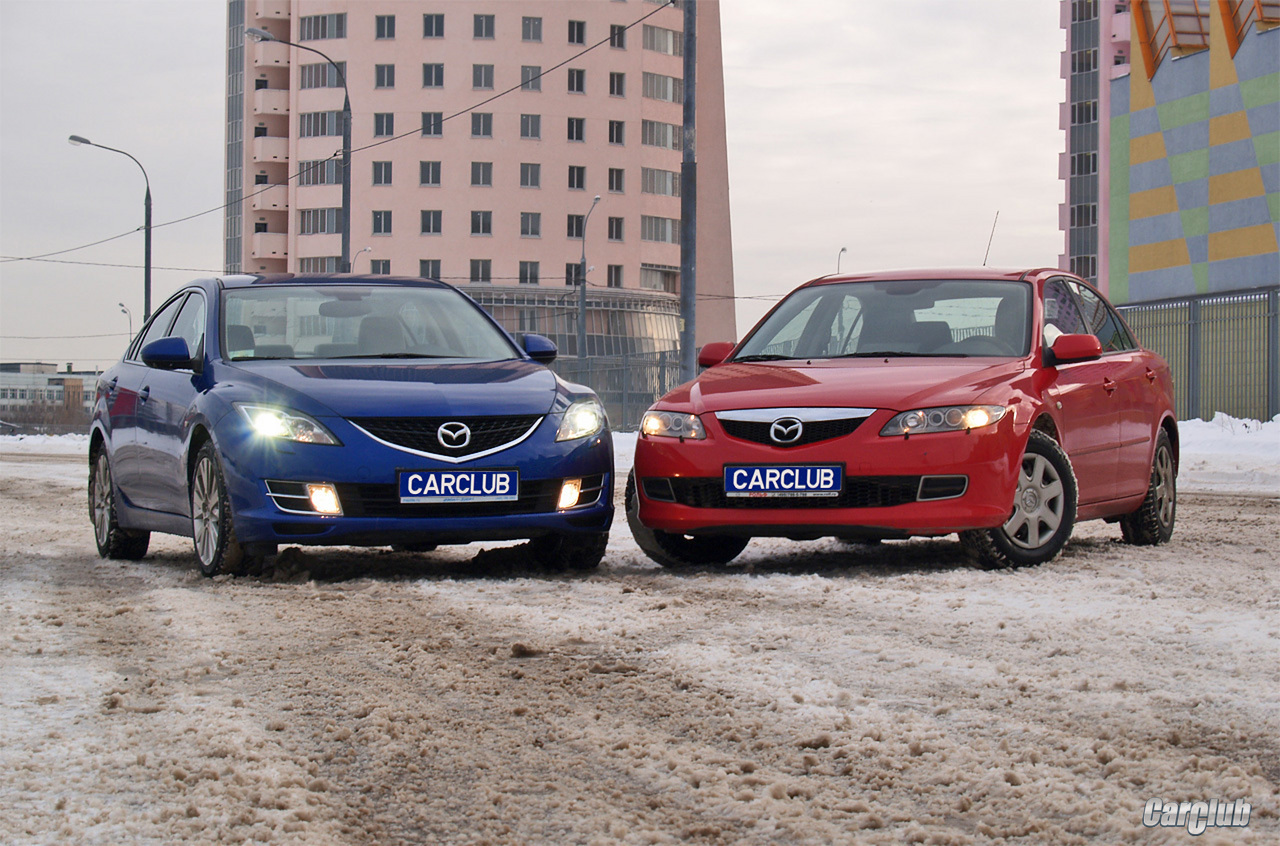
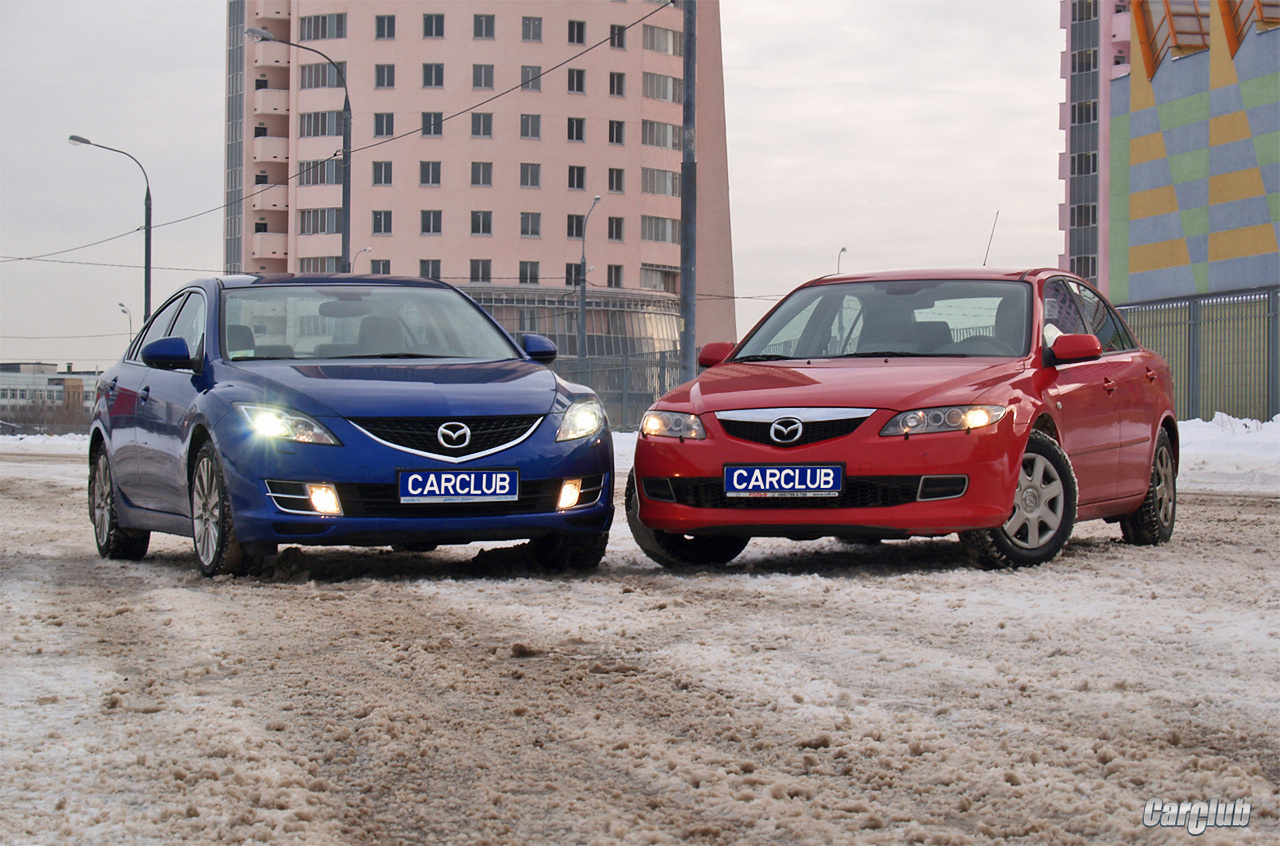
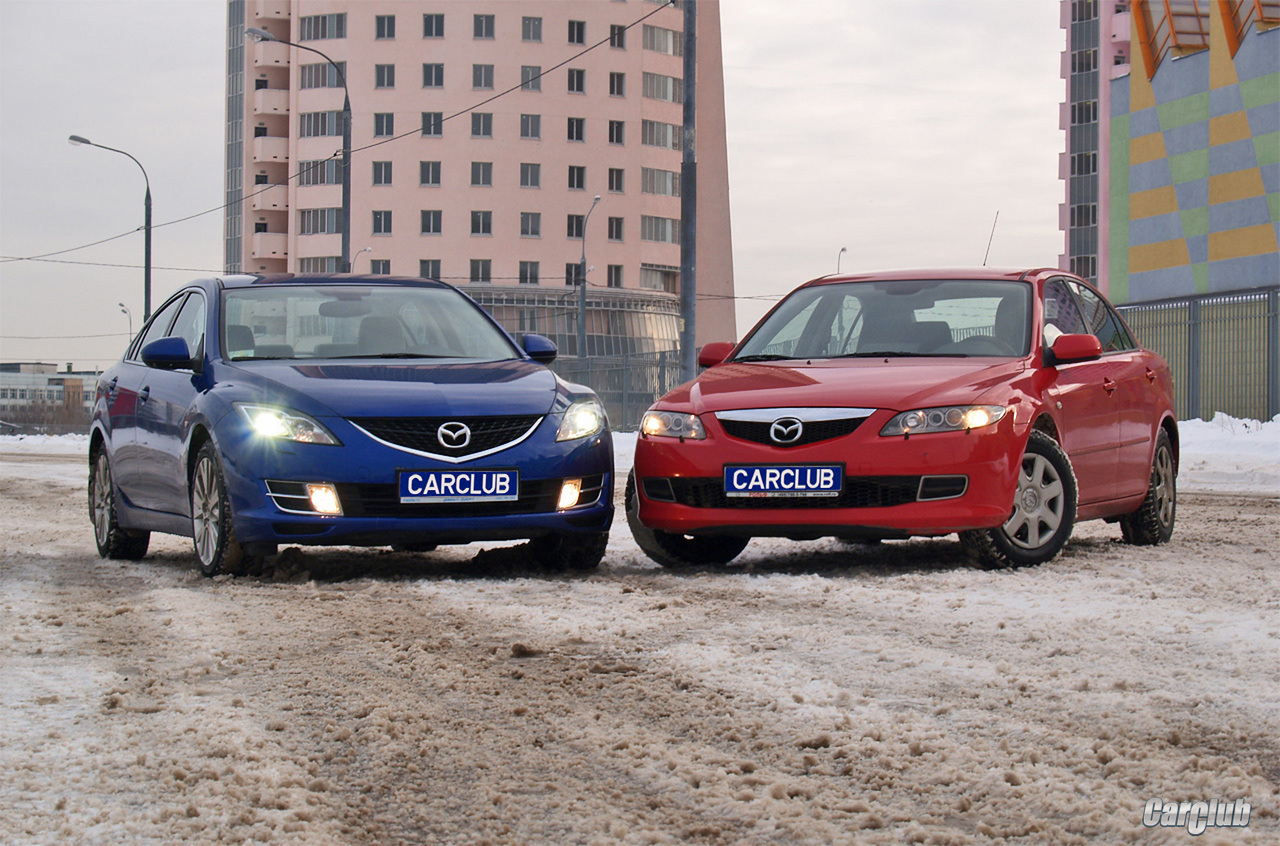
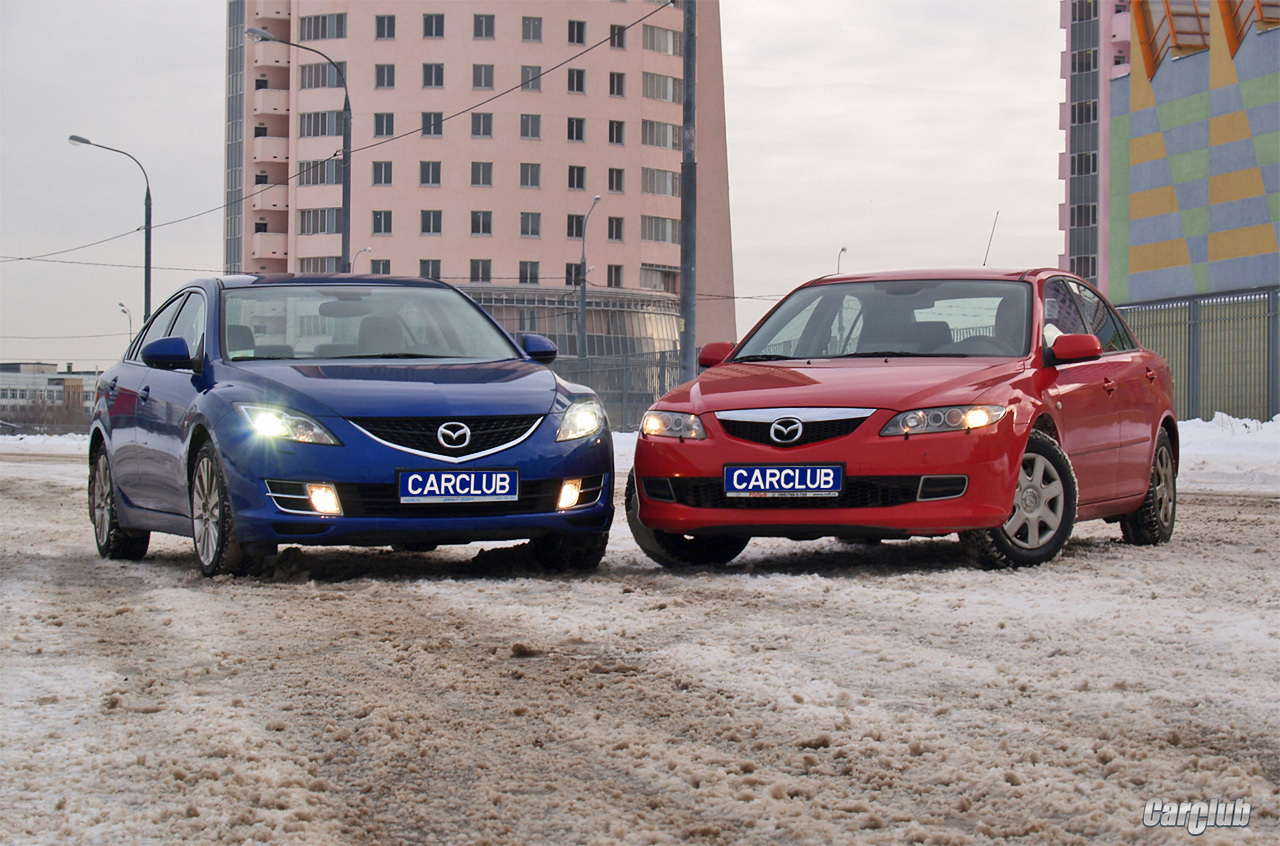
We decided to take the unbeaten path and arrange a face-to-face meeting between the new Mazda6 and its predecessor. Believe it or not, but everything inside me clenches: can you compare a beloved girlfriend with another, even if very sweet and young? It turns out, in the world of cars, this is possible. Paired with my "six" with a 1.5-liter engine and manual gearbox in the Turing trim, we took a new Mazda6 with exactly the same characteristics.
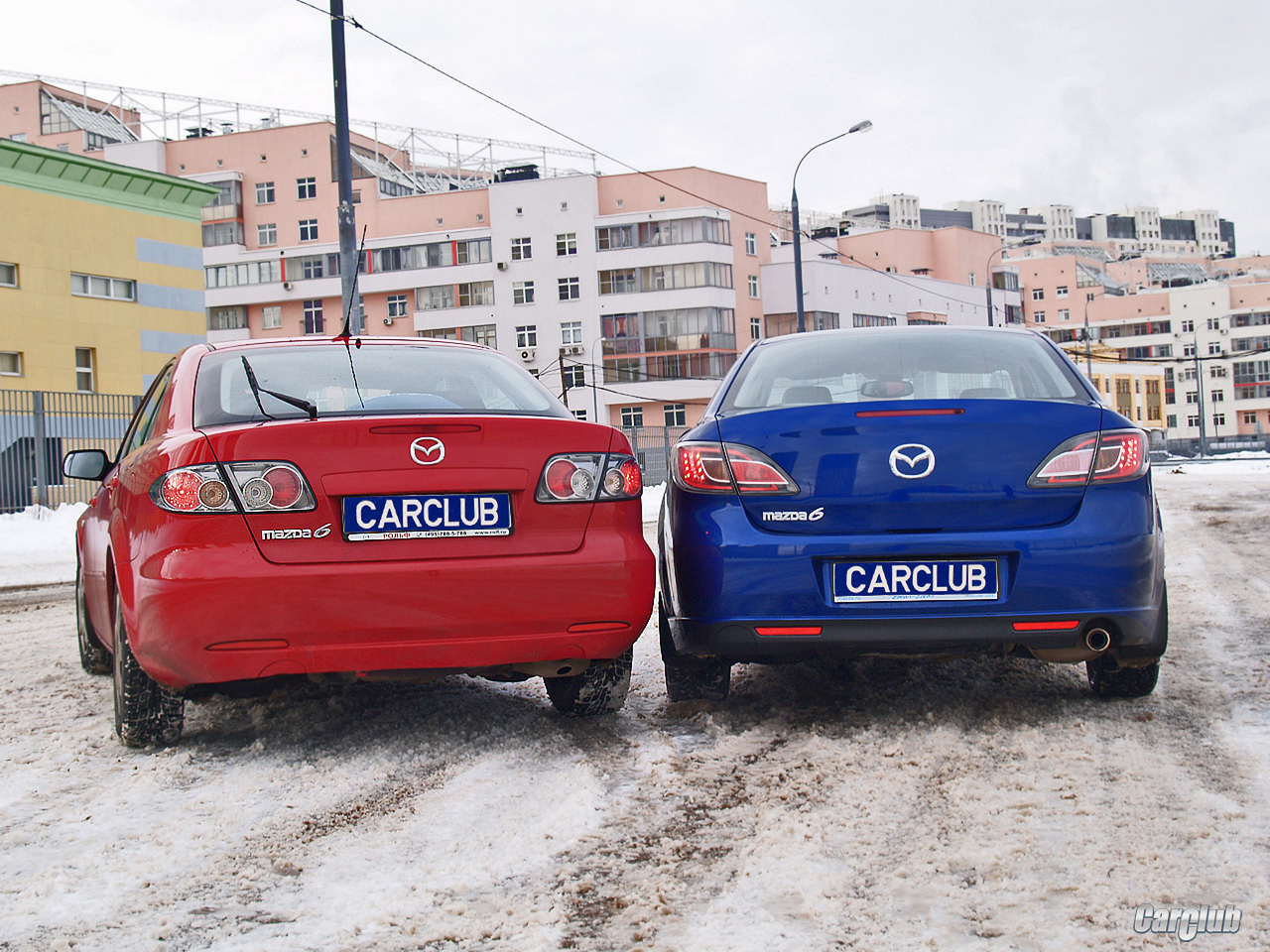

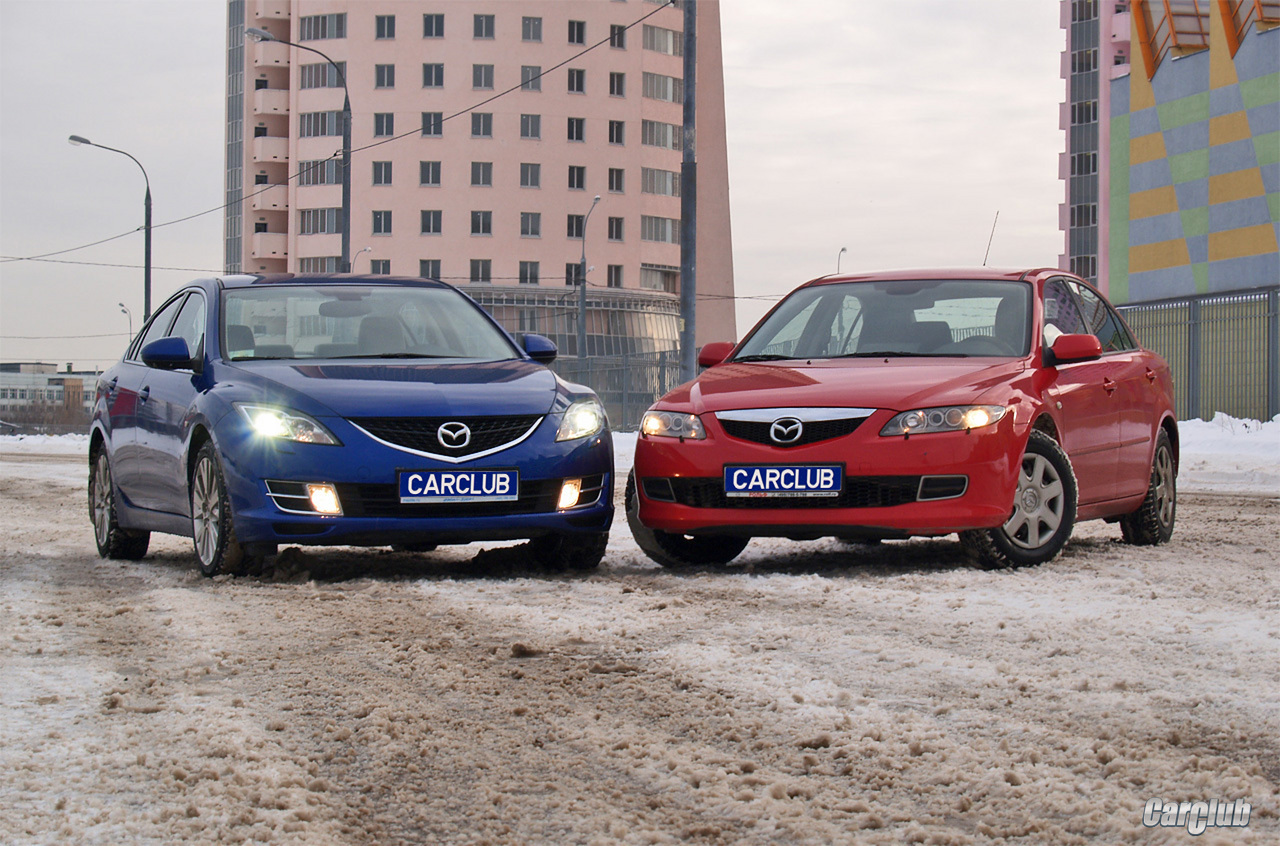
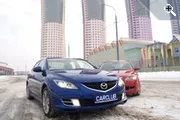
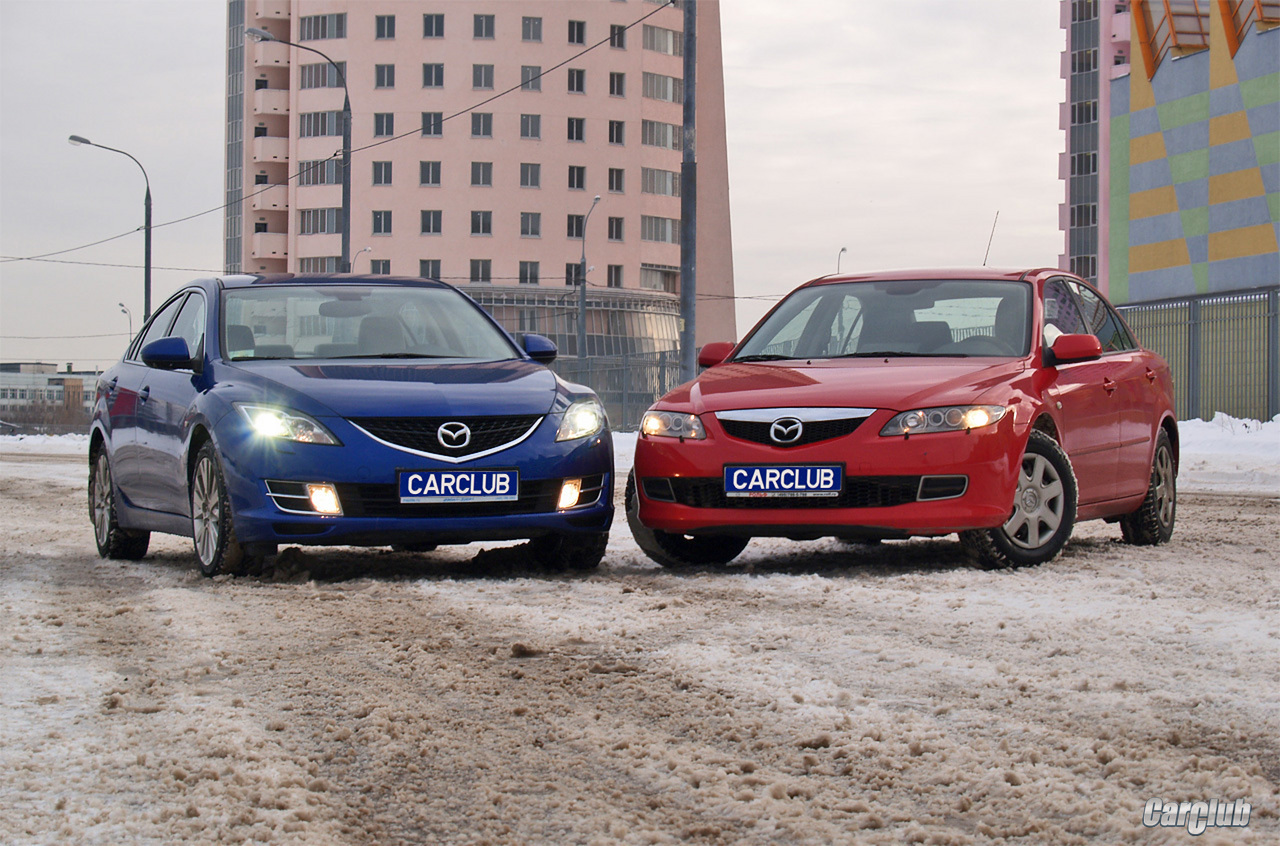
I'll leave the assessment of the appearance to you. As is known, there's no accounting for taste. Personally, I prefer the bright red: it has swiftness and sporting fervor. And let the old "six" often be reproached for its resemblance to the Alfa Romeo. In essence, that's how it was — "Mazda" played the role of "Alfa" for those who hadn't yet saved up for the Italian diva or feared her capricious nature. The new "six" is a completely different matter. She has matured and no longer looks back at anyone. She has acquired her own character, and she proudly carries the large pendant emblem in the deep cutout of the radiator grille.
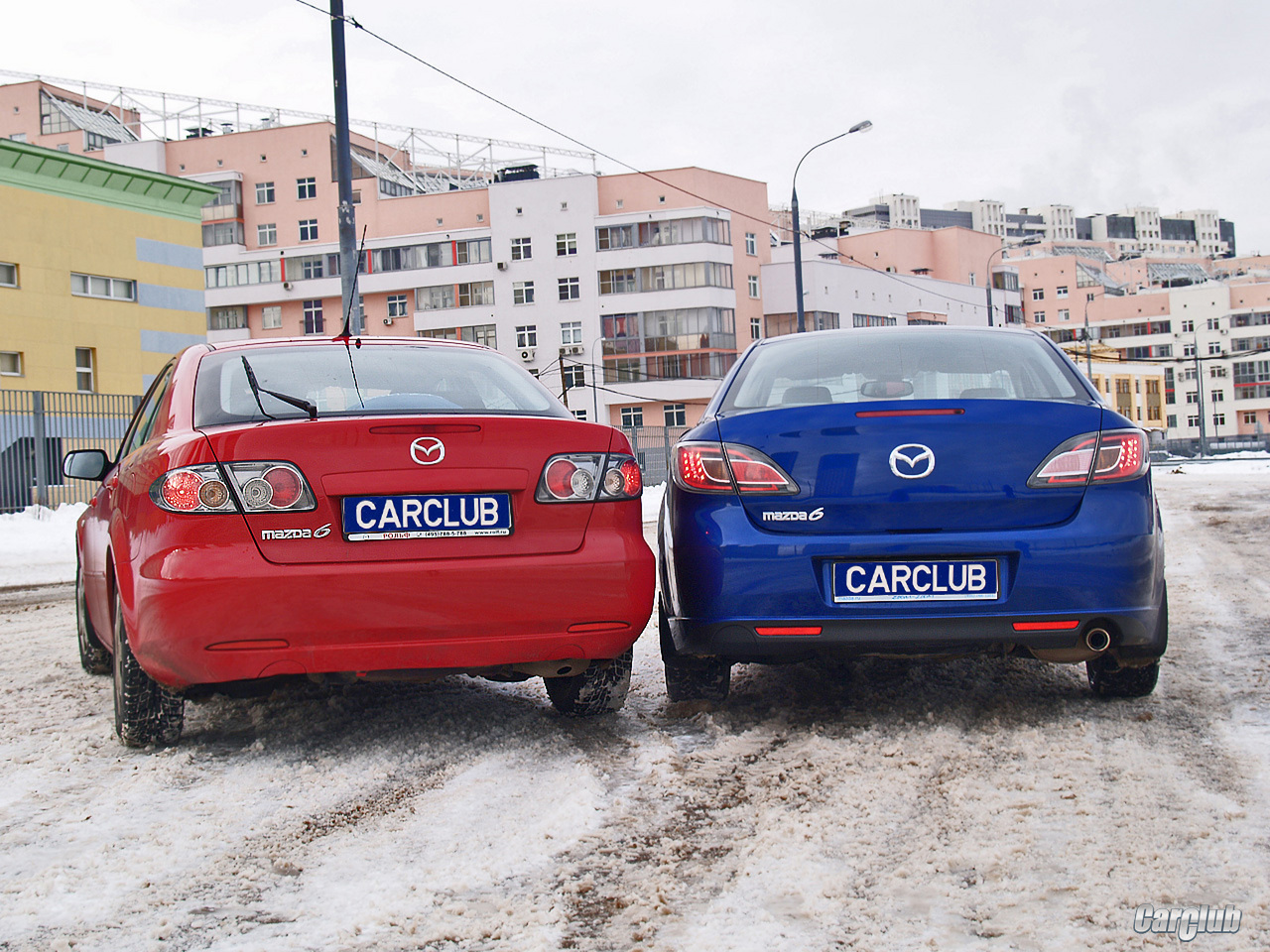
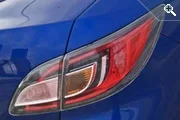
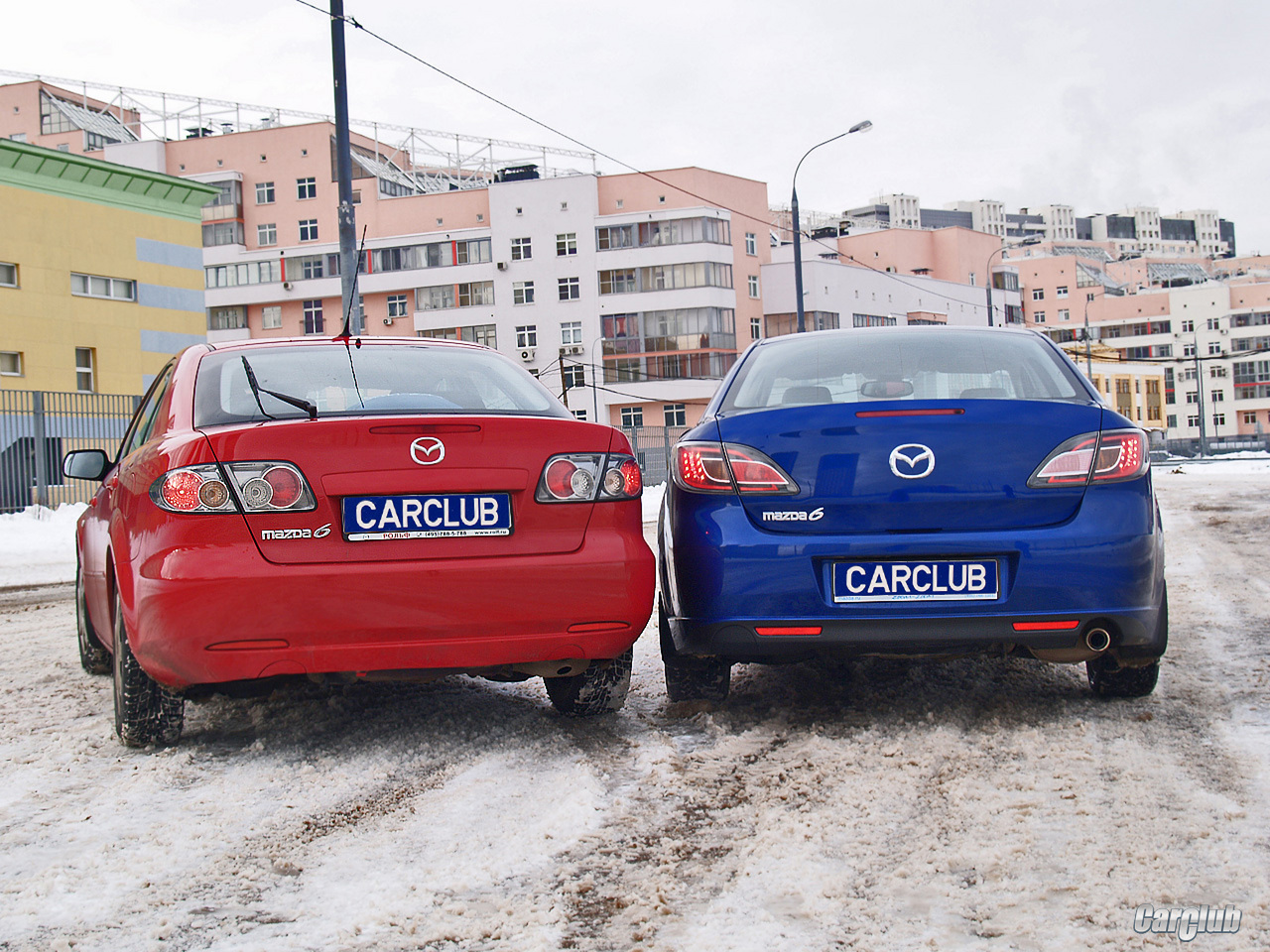
The squinted headlights with four deflectors have been replaced by even more futuristic optics, generously decorated with diodes. The rear lights have acquired simply incredible contours — continuity can be discerned in them, but only distantly. In the front part, kinship with the Lexus GS can be traced, which once again confirms: Mazda has become more Japanese and distinctive.

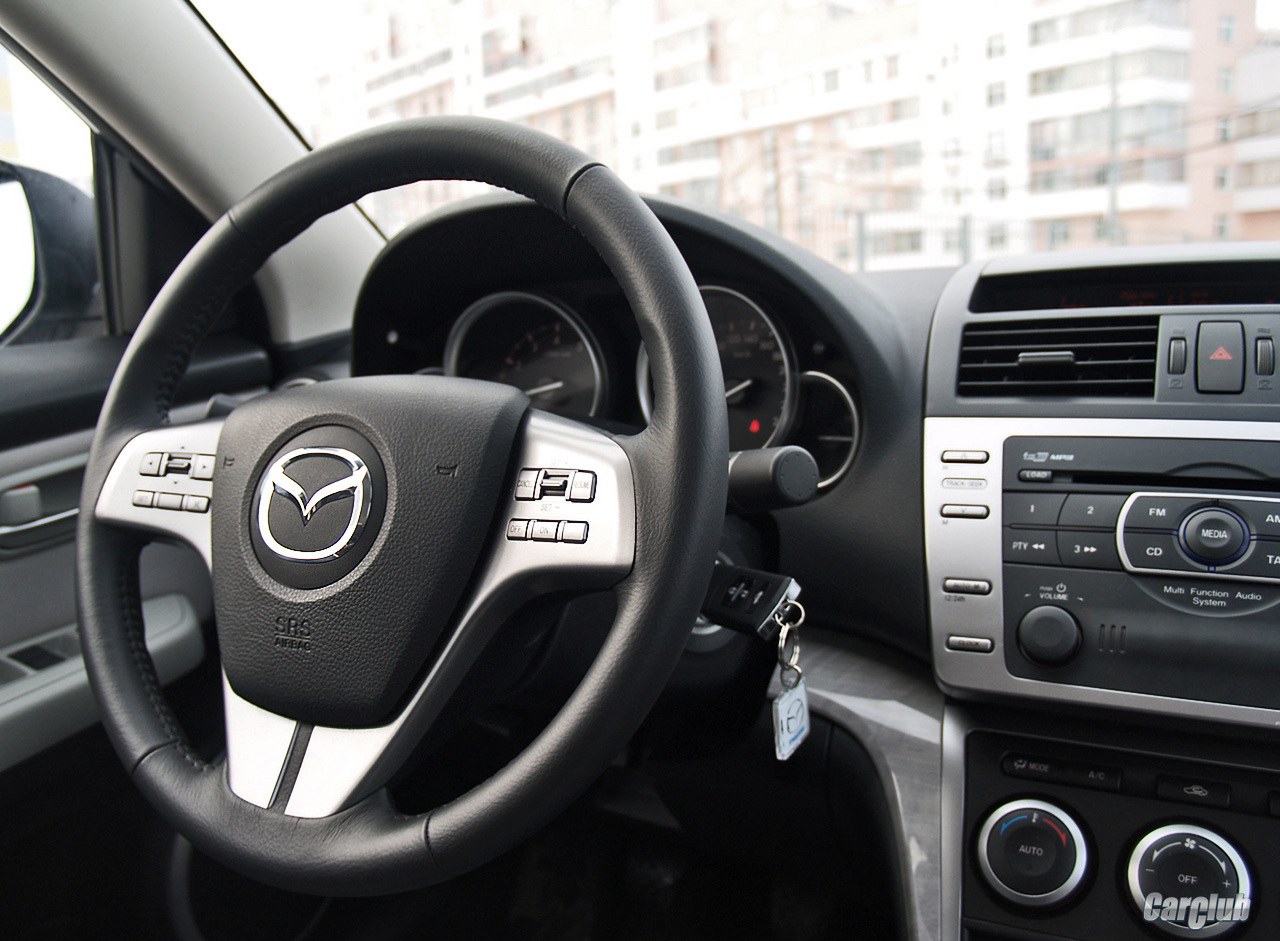
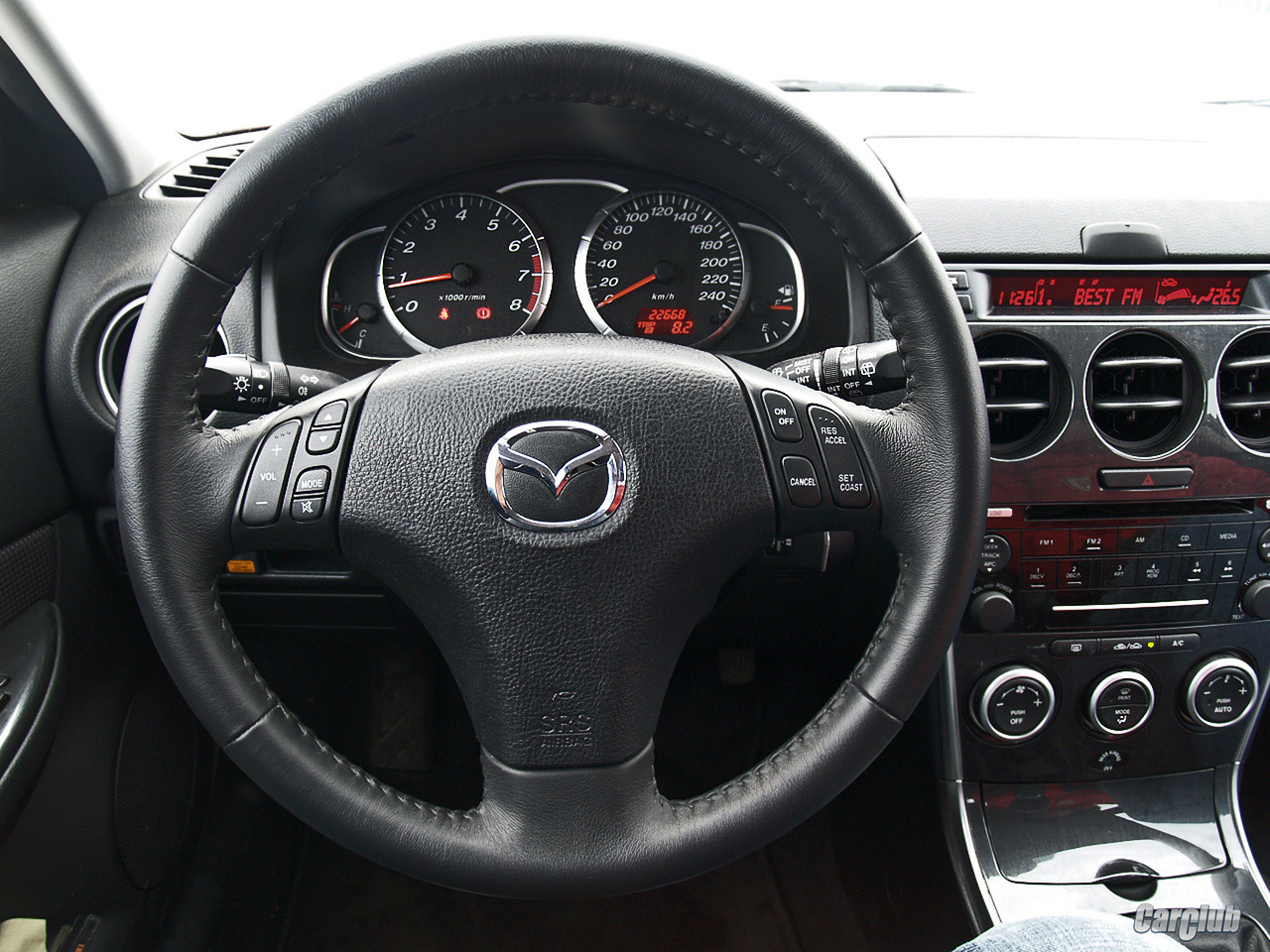
I open the door to the cabin — and again freeze in surprise. The new "six" has been completely transformed. The steering wheel is still three-spoke, but the shape has become more intricate. The instruments have decreased in size and hidden in separate wells — it turned out more traditional, though not as spectacular. The signature arrows, reminiscent of lightsabers from "Star Wars," are a thing of the past. In pursuit of economy, the designers left the handbrake to the right of the central tunnel. Because of this, if you keep your hand on the armrest, it inevitably covers the cup holders, and to put the car on the handbrake, you'll have to come into contact with the passenger's thigh. I hope there will always be a girl sitting next to me...
But on the central console, a more advanced audio system with MP3 support, dual-zone climate control, and two-stage heated seats have appeared. These are the options I constantly lacked in the old "six", and the fact that the Japanese corrected these minor shortcomings is great news.
In the back, it has become noticeably more spacious in length, but there was enough width before. The trunk, it seems, has also grown. Of course, comparing a sedan with a hatchback is not entirely correct, but 504 liters of useful volume speak for themselves. I can't even imagine how much luggage is needed to fill such a compartment, but I know for sure: four winter 17-inch wheels fit there without problems. The only difference from the old "six" is this: now you open the trunk lid not with a button above the license plate, which was more or less protected from dirt, but with a key near the central brake light, which is almost always dirty. The only saving grace is that the button is duplicated on the key fob. However, when lifting the trunk lid of the new "six," the driver is still doomed to get dirty.


Enough theory — time to hit the road. The previous Mazda6 for me is the benchmark of handling among front-wheel-drive family cars: informative steering, a slight tendency to oversteer, which can be compensated by the switchable stability system if desired, and quite decent ride smoothness.
The new "six" in motion turned out to be very similar. The effort on the pedals and the travel of the gearshift lever are one-to-one. But the steering now has an electric power steering instead of the previous hydraulic one. This allowed a slight reduction in fuel consumption and made the steering wheel friendlier to the driver. In the parking lot, it turns literally with one finger, and with increasing speed, it fills with reactive effort. But even at speed, it is lighter than on the old car. However, this is not at all confusing thanks to the 17-inch wheels, whereas on my "six" in a similar trim, 15-inch wheels are installed.
In corners, both cars behave almost identically, the differences are only in details, which are explained by different wheels and the new power steering. Laying turns on the Mazda6 is still a sheer pleasure. If the front wheels have slightly broken off the trajectory — just release the gas, and the car obediently screws into the turn.

But the ride smoothness has suffered somewhat. On small irregularities and joints, everything remains the same, but if you miss a "sleeping policeman," noticeable jolts are transmitted to the body — these are not suspension breakdowns, but rather a consequence of larger discs.
«Did it become better or worse?» — an impatient reader will ask. If we weigh all the pros and cons, I am ready to admit: the new Mazda6 is indeed better. Not radically, not in everything, but it has become even more driver-oriented. The interior is more thoughtfully designed, and the cabin is more spacious. Even the suspension, perhaps, now pleases more. And as for the exterior... However, there is nothing to argue about here: the old "sixes" have already been sold out at dealers, so there is no choice anyway. Simply Mazda has stepped to the next stage of evolution. This is not the dizzying breakthrough the Japanese made in 2002, but a measured, thoughtful step up the ladder of automotive progress. At the same time, Mazda has managed to maintain a balance between affordability and a claim to a higher class. What other competitor will offer for 699,000 rubles (about 28,000 dollars) a stylish modern car that boldly aims at the business class?
Personally, I am in no hurry to part with my current beauty. I still like it, and that's that. We'll live with it for another couple of years, and then we'll see how things go. Perhaps I will "mature" to switching to the new "six." If I move out of the city, I will take the CX-7 without hesitation. And if I completely lose my mind, then hold me back — I'll buy the crazy Mazda3 MPS!
Text: Leonid Pavlov