
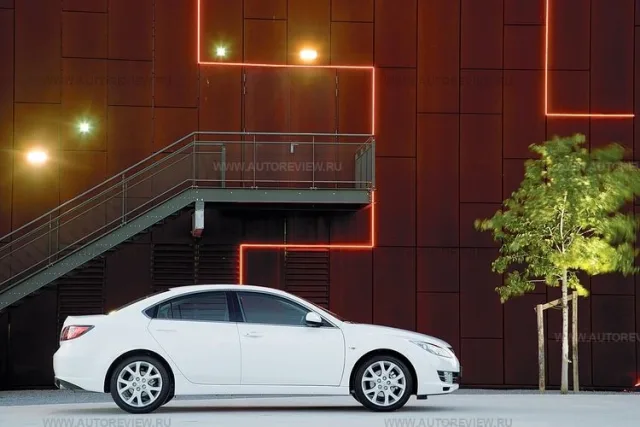
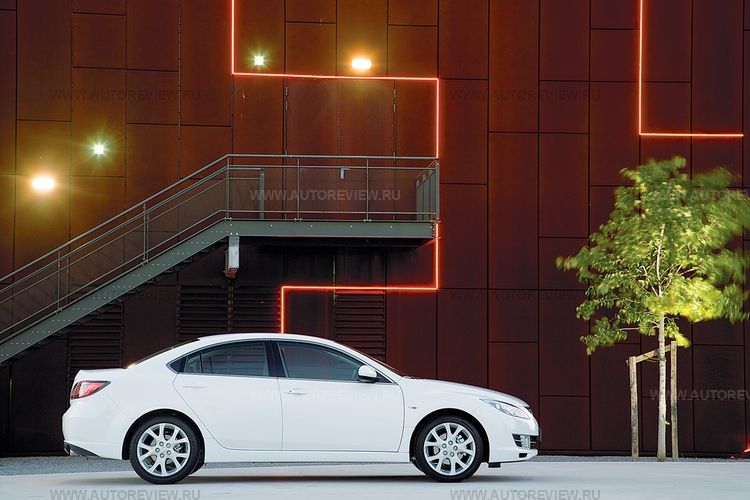
Mykhailo PETROVSKYI Photos by the author and Mazda
The word "kizuna" sounds sour, although it should charge with energy. After all, the two sweeping hieroglyphs that make up this concept mean emotional connection. And it is about the connection with the magnificent Mazda 6. And the sour aftertaste appears because I never really got to merge with the new sedan: in the vicinity of Budapest, the organizers offered only a short tasting. For several hours I listened to stories about the new model, but spent only a few minutes behind the wheel. We definitely became closer, but that was only enough for five other hieroglyphs. Those very ones that can overshadow kizuna.
Chief designer of the Mazda 6 project, Yoichi Sato, runs his palm along the elegant body panel:
— Notice how the swell of the wheel arch dissolves at the edge of the fender. Here the concept of Yugen is embodied: a smooth transition between elements, as in Japanese watercolor painting. And the sharp curved edge itself references a sword — this is the visualization of the principle of Rin, which unites strength and serenity. Look closely at the meticulous detailing, say, the headlights or taillights — in them is my interpretation of Seichi, the principle of scrupulousness and impeccable execution. For the new Mazda 6, I sought to find a form in which the Japanese essence would be unmistakably recognizable — this is exactly what the previous generation car lacked. And in my opinion, such a form can only be achieved in one correct way — by reflecting the national character in the design.
Sato took charge of the "six" in 2004: by that time, Toyota and Nissan were already actively searching for their J-factor roots, synthesizing Japanese DNA in design studios around the world. Sato, however, preferred to seek something Japanese within himself:
— Foreigners can certainly help with the form, but instilling the Japanese spirit in them is extremely difficult. I move from spirit to form — this order is not practiced in other companies. Remember at least the Nissan concept car (Nissan Jikoo, see AR No. 21, 2003 — author's note), built on traditional motifs?
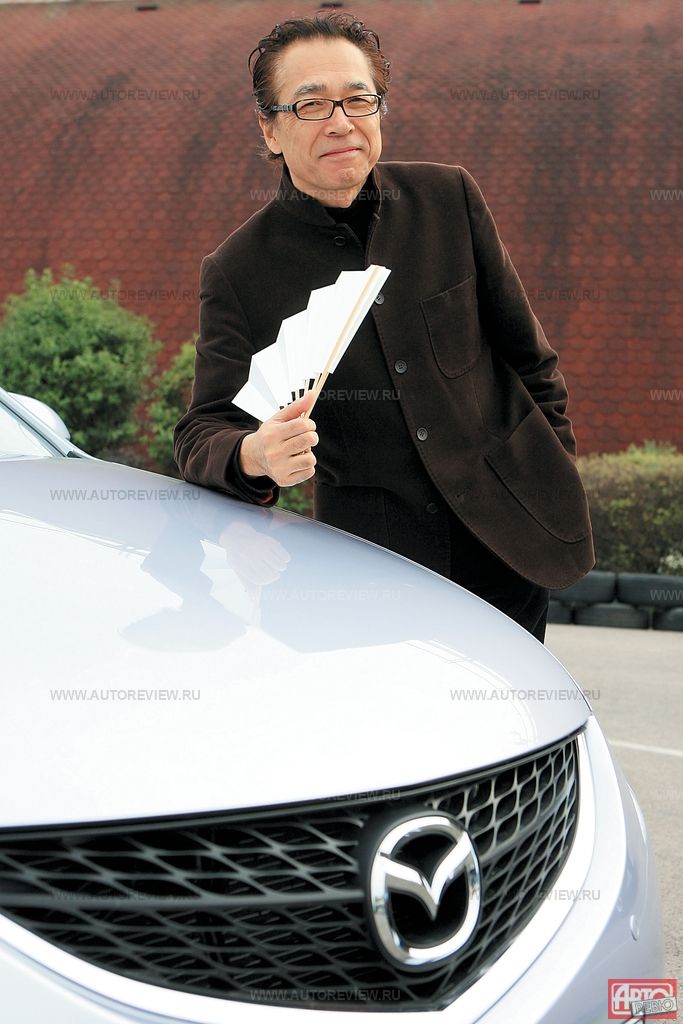 | 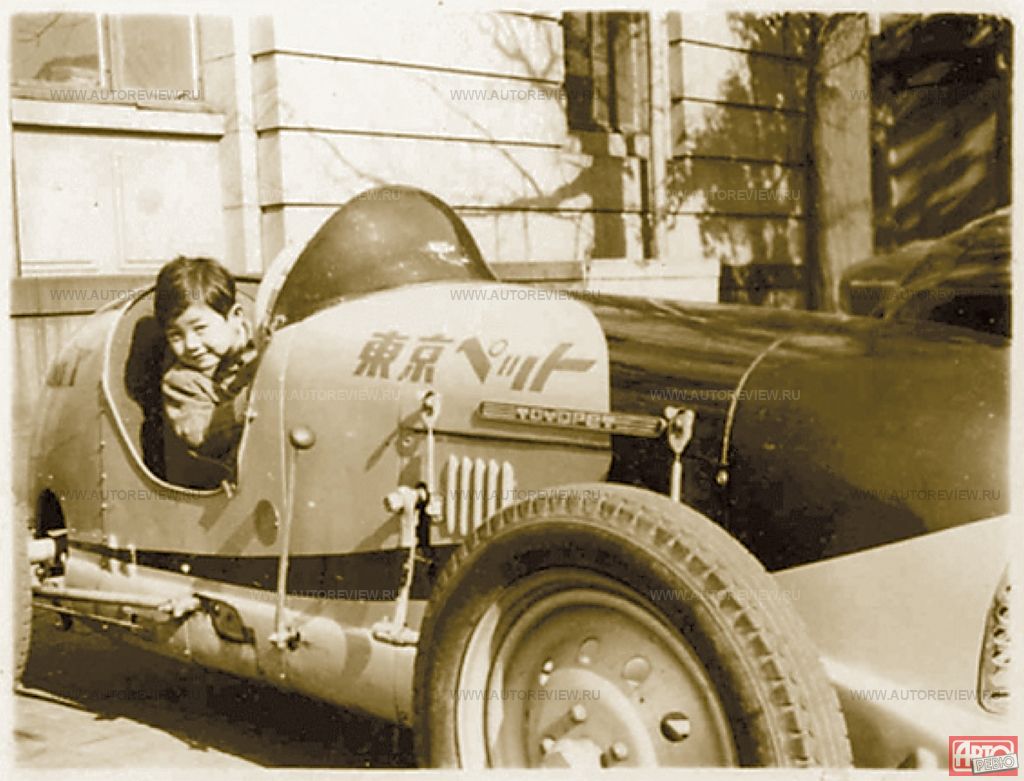 | |
| Yoichi Sato's portfolio includes not only mass models like the Mazda 626/Capella and 323/Familla, but also such iconic Mazda cars as the MX-5 roadster of the first two generations and the rotary coupe RX-7. In 1984, Sato-san founded Mazda's Tokyo design studio, and in 1992, a studio in Yokohama. Since the late nineties, he has been a forward-looker: his concept cars defined the appearance of the RX-8, CX-7, and the third-generation MX-5. And it all started in 1953, when four-year-old Yoichi first found himself in the cockpit of a racing car | In a traditional Japanese fan, from Yoichi Sato's point of view, there are also all three key components of Mazda design | |
In my opinion, this is too straightforward an approach. It's the simplest but deceptive method to convince a foreigner that they are looking at a Japanese thing. The form must be filled. You think the new Mazda 6 is the embodiment of the concept of "japanesness" (if such a word existed in English, it could be translated as "Japaneseness" — author's note). But we are only beginning to create this "Japaneseness," and the new Mazda 6 is just the first step. The Germans and Italians needed a hundred years to develop their own style. We are still at the beginning of the path...
It seems the Japanese are captives of their own consumer attitude towards culture. Absorbing and borrowing the best from other peoples, Japan becomes richer but loses its own face. Whether it ever had one is a separate question, but it is incredibly difficult to discern the real Japan under numerous masks and layers of makeup. It is much easier to exploit well-known images: samurai, origami, anime...
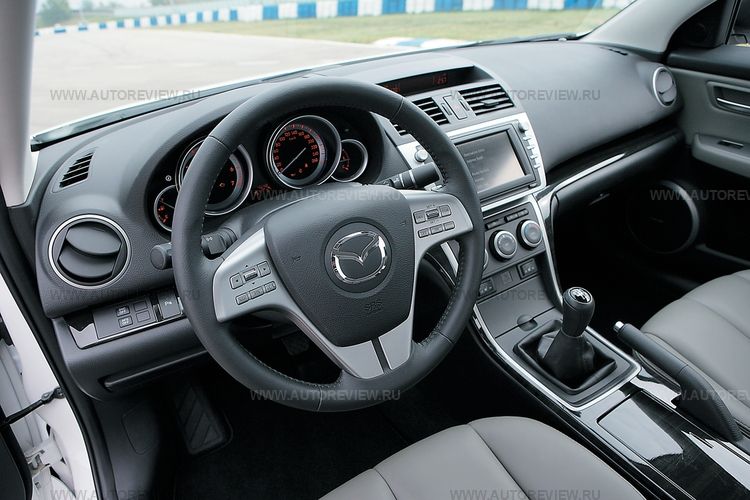
The interior has become more ergonomic, neater, and more modern, but inside the Mazda 6 is much more conservative than outside
However, is it only Japanese design that is currently experiencing an identity crisis? Soon the Germans will also start searching for some D-factor, and the Italians for an I-factor.
Sato's deep approach makes me wary, and here's why. No matter how fascinating Yugen, Rin, and Seichi sound, they are currently just components of the zoom-zoom philosophy. And the "zoom-zoom" philosophy, forgive me, is an artificial, marketing construct.
But the new Mazda 6 literally exudes zoom-zoom! A bright car. Having retained its family traits, grown up, matured, it has not lost its visual lightness. And — yes, Sato-san — it is unmistakably Japanese.
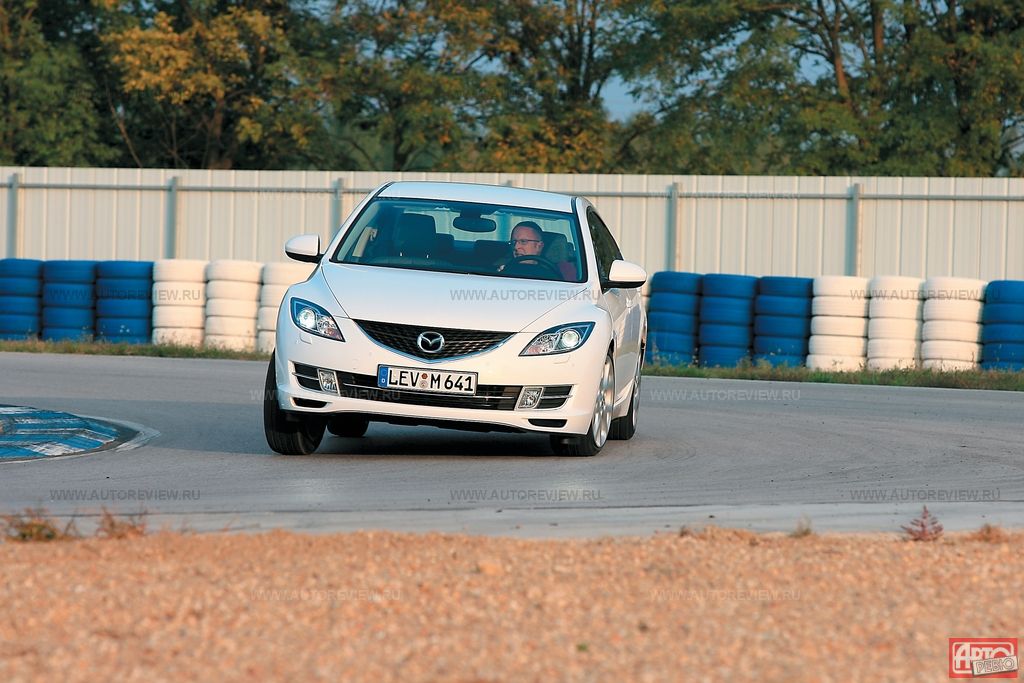 | 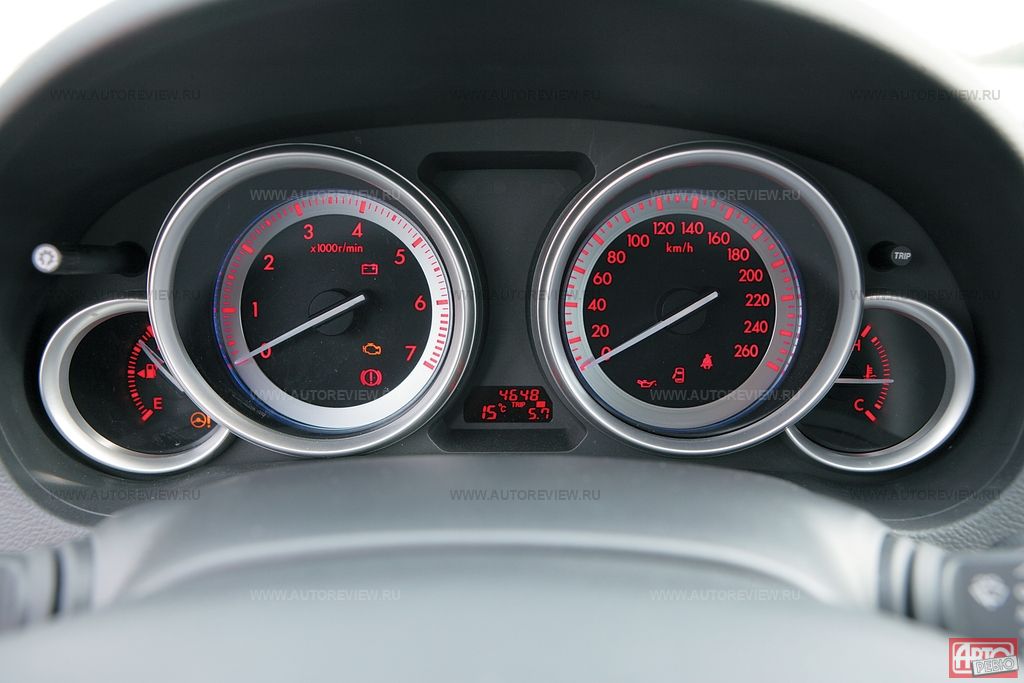 | 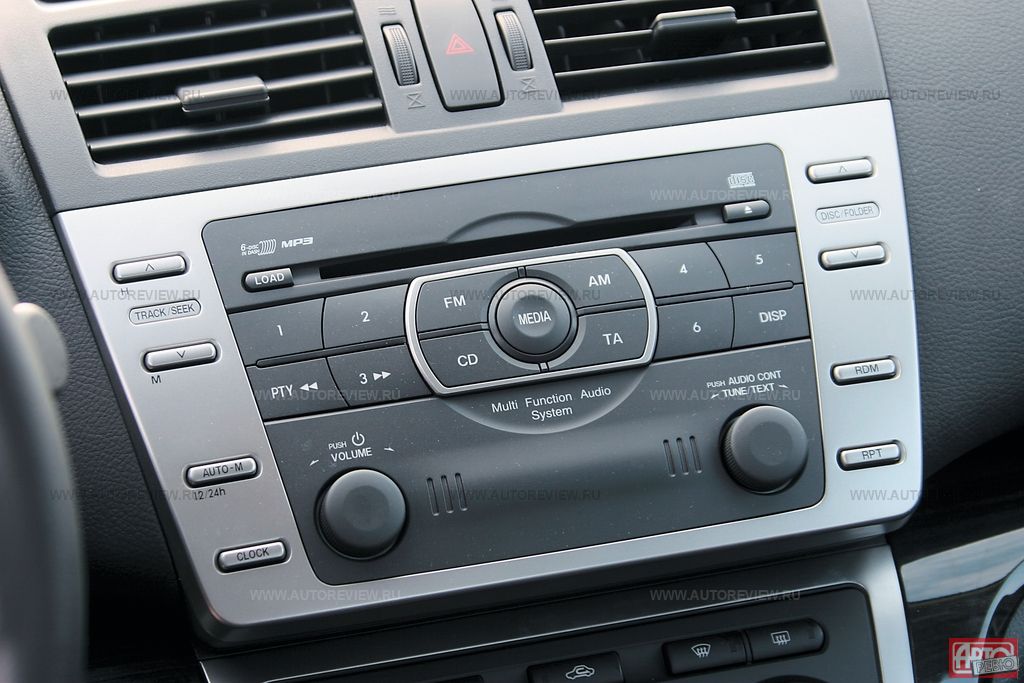 |
| An understandable, essentially linear car. And kizuna can be interpreted as mutual understanding | The "optitron" scales are a privilege of expensive versions. But even in such a bright execution, the instrument panel does not qualify as a decoration | On Russian Mazdas there will be no navigation; instead, an MP3 radio with a CD-changer. The circles diverging from the center remind of the RX-8 coupe |
The interior no longer evokes such enthusiasm. The main thing inside is one hundred percent continuity. It's like an apartment after cosmetic repairs: the furniture and wallpaper are new, but the feeling of space is the same. And the "furniture" seems only modernized: sharpened a few corners, laid a new shelf along the front panel, inlaid with "aluminum-look" inserts, covered with better plastic, but the stamp of the same factory.
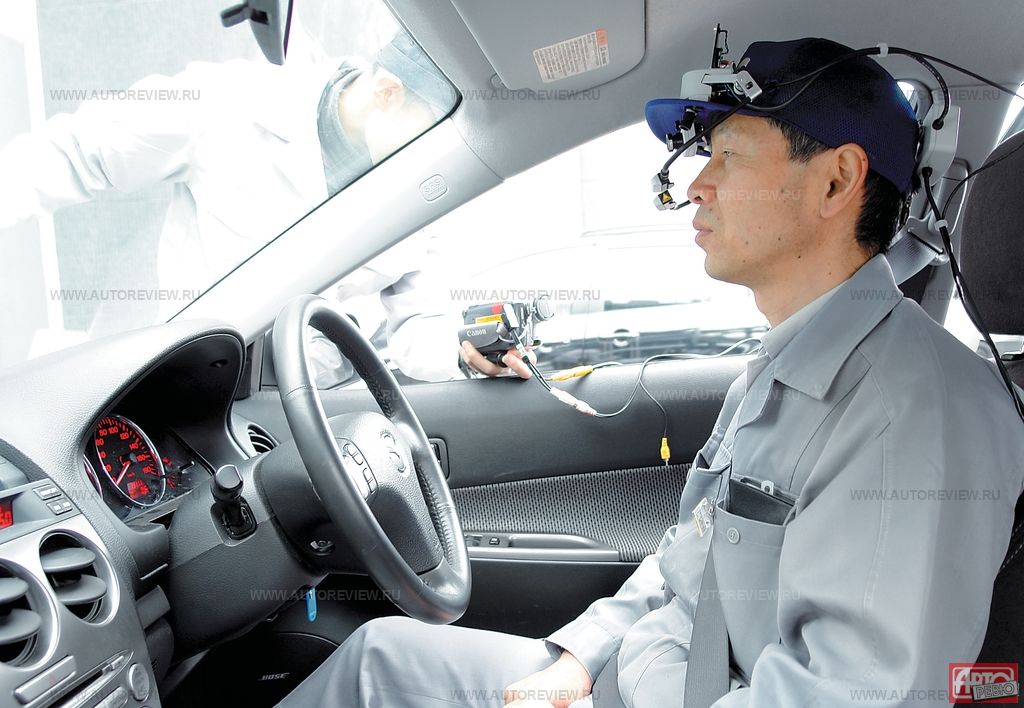 | ||
| CF-Net is Mazda's own development: these few buttons on the steering wheel keep all service electronics under control. On the display familiar to "Mazda owners" in the center of the front panel is the usual set of information. With the difference that the climate control indication and trip computer readings have swapped places. In the center is temporary silence of the radio airwaves. While testing CF-Net, the Japanese measured driver reaction time and the number of extra "glances" when working with the system and compared the data with the results of the "i-Drive." They assure that with iDrive the driver is distracted more | ||
Since the layout of the engine compartment, which determines the organization of the front part of the cabin, has practically not changed, the owner of the previous "six" will immediately feel at home. Literally: the position of the hip line, or the H-point, which sets the seating position, remains the same. But the location of the main controls has changed: the steering wheel is set a couple of degrees closer to vertical, and the gear lever is raised by 32 mm and moved 22 mm closer to the driver. It has become more convenient, but the feeling of sportiness is blurred by the seat that has grown wider. In familiar places are the climate control unit, seat heating buttons, the main information display — even the instruments seem familiar.
Although Sato-san showed where Yugen lives in the cabin and where Rin is, I only spotted Seichi, and even then only in terms of attention to detail. And the build quality of pre-production cars is a bit lacking. But they are pre-production, after all.
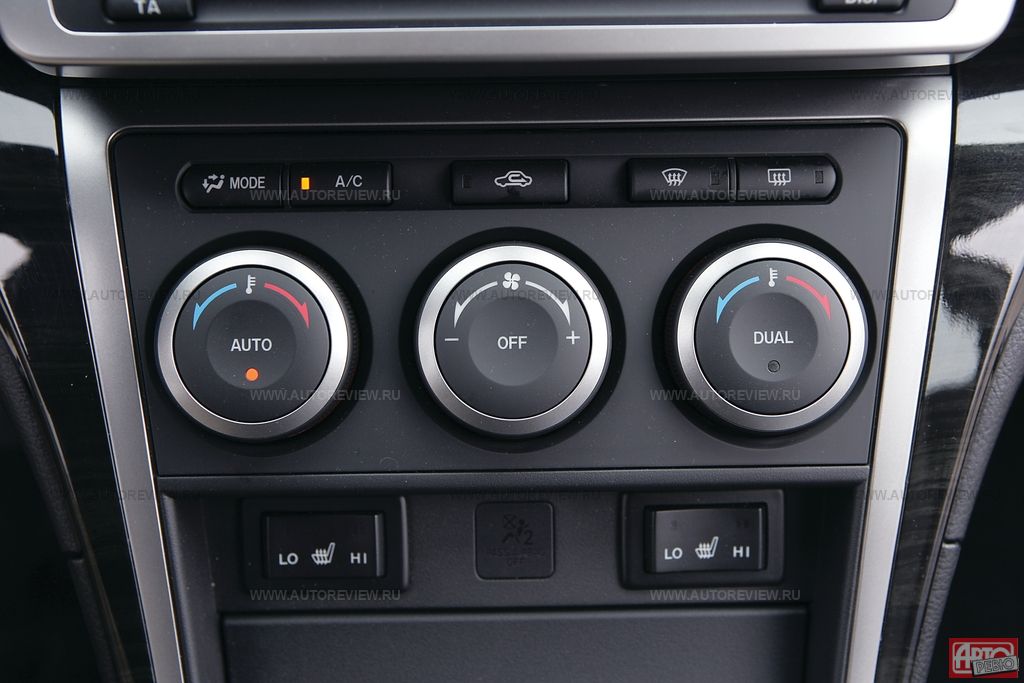 | 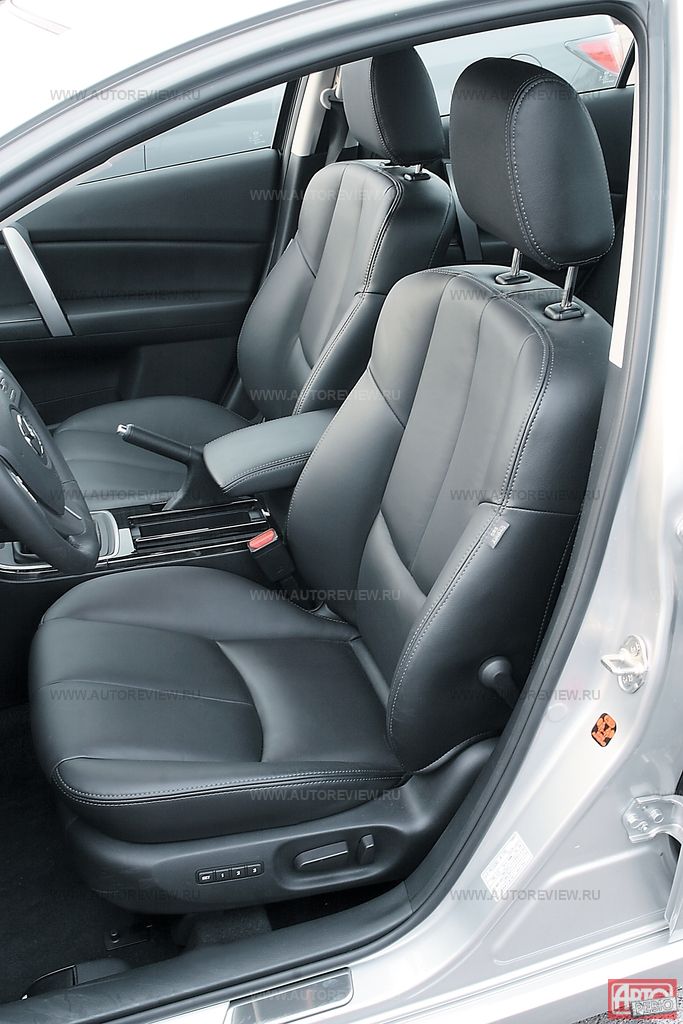 | |
| Climate control is dual-zone, and "in the base" is air conditioning | Judging by the seats, the target audience of the Mazda 6 has started eating better. Mazda's Seichi specialists assure that the leather processing has improved — they somehow forgot about friction properties. In a rear impact, front passengers are protected by active headrests | |
The main detail, the pearl of the Mazda interior, is called CF-Net, or Cross-functional network — their answer to Ford's HMI. But if the Human Machine Interface in the Mondeo turns out to be a pretty toy, then Mazda's CF-Net system is a model of functionality. Without taking my hands off the wheel, I can control the on-board computer, navigation, audio system, and even climate control! And the information, as before, is displayed on a narrow monochrome display in the center of the front panel. Even though on the Mondeo this idea is implemented more colorfully, the HMI is more difficult to use. In my opinion, it is the introduction of the CF-Net system, despite the simplicity of its execution, that is comparable in significance to the appearance of BMW's iDrive system.
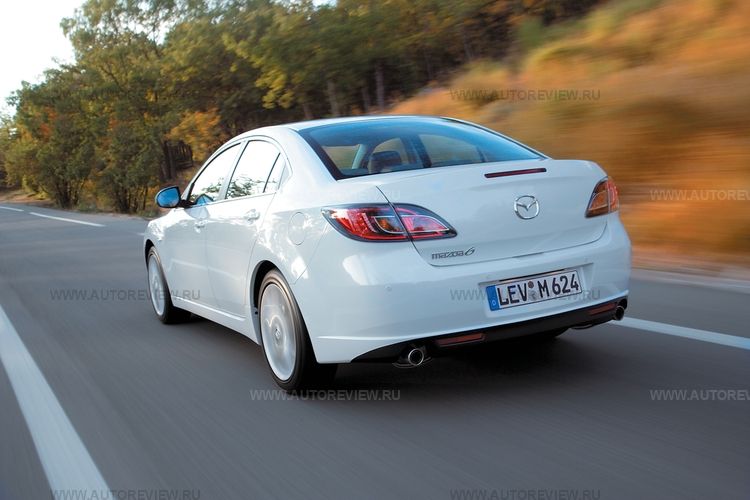
The new Mazda 6 is 65 mm longer than its predecessor, 15 mm wider, and only 5 mm taller. Fortunately, no one tried to make it look visually larger than it actually is.
In the Mazda's cabin, an unusual detail was found: when starting the car, it seems to greet the driver, sequentially illuminating the key backlighting on the front panel — first at the climate control, then at the instruments. This is akin to a Japanese greeting gesture with a bow. During the day, this illumination is hard to see, although, according to the creators' intention, it is from this that the very kizuna should originate.
Kizuna for the new "six" is like jinba ittai for the MX-5 roadster. It's about the unity of person and car. But unlike the sports car, which is compared to a horse, here the Japanese talk about a "connection similar to human relationships." In practice, this means it's easier to find a common language with the sedan. It doesn't need to be tamed — it's ready for dialogue from the first second. The engine starts either with a key or a button, as is now customary. But until you press the gas, it's impossible to tell if the engine is running at all — the engineers refined the exhaust and soundproofed the compartment so well that the result is impressive.
| The first step to kizuna is the greeting illumination, gently guiding the driver's gaze from the side buttons to the instruments | |
We only got sedans, but in three petrol versions: Mazda 6 1.8 (120 hp), Mazda 6 2.0 (147 hp), and the flagship version with the new MZR 2.5 engine producing 170 hp. The 2.0-liter turbodiesel with 140 hp has not yet been adapted to the new body, and it's not worth waiting for it in Russia either.
The situation is familiar: 1.8 is for calm driving, 2.0 is the golden mean, 2.5 is for those who want more. Although the new sedan has become even lighter than before, versions with the younger engines have lost a bit in dynamics: for the sake of ecology and economy, the gearbox ratios have been made "longer." But we couldn't evaluate the new synchronizers on the higher gears — the small Hungarian Euro-ring track was marked with cones for second gear, which in the Mazda almost reaches 100 km/h. On the short straights, you could engage third, but more for the pleasure of the precise gearshift lever operation.
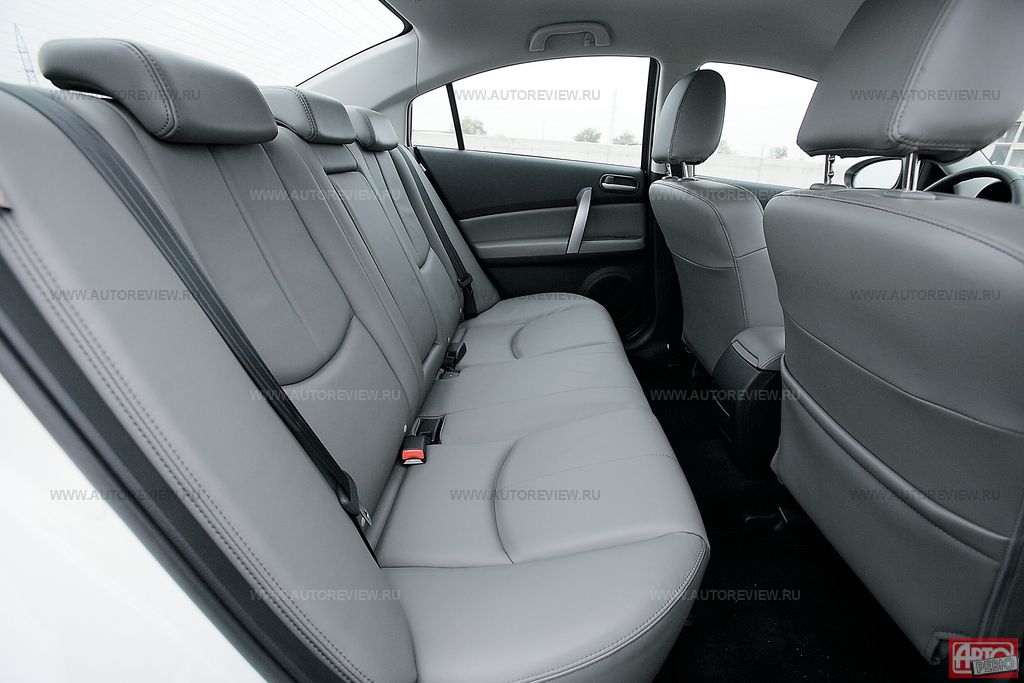 | 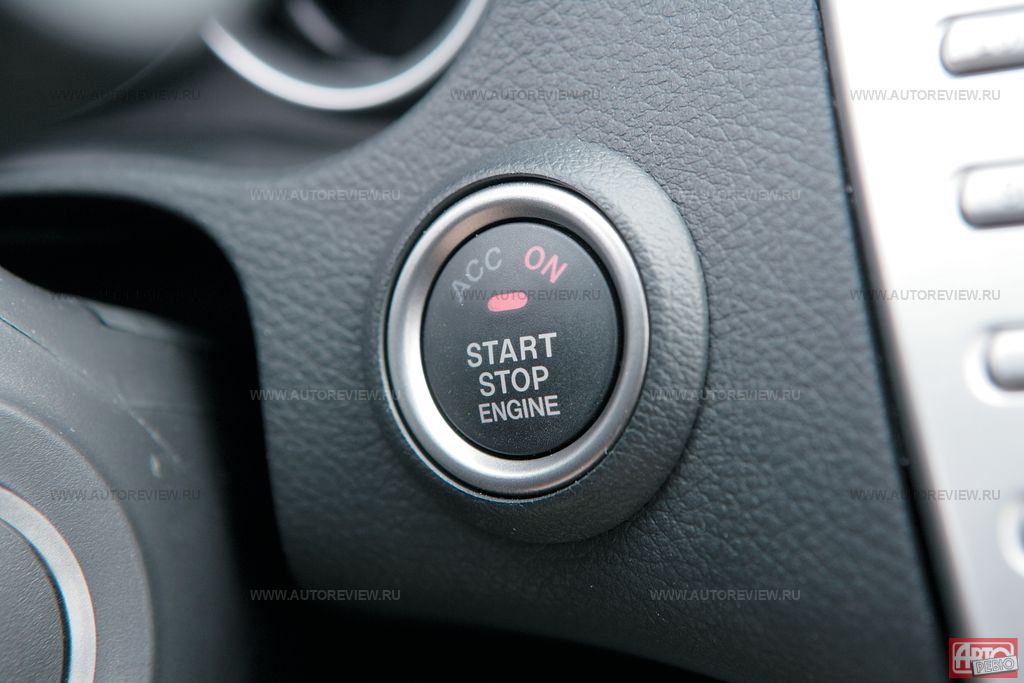 | 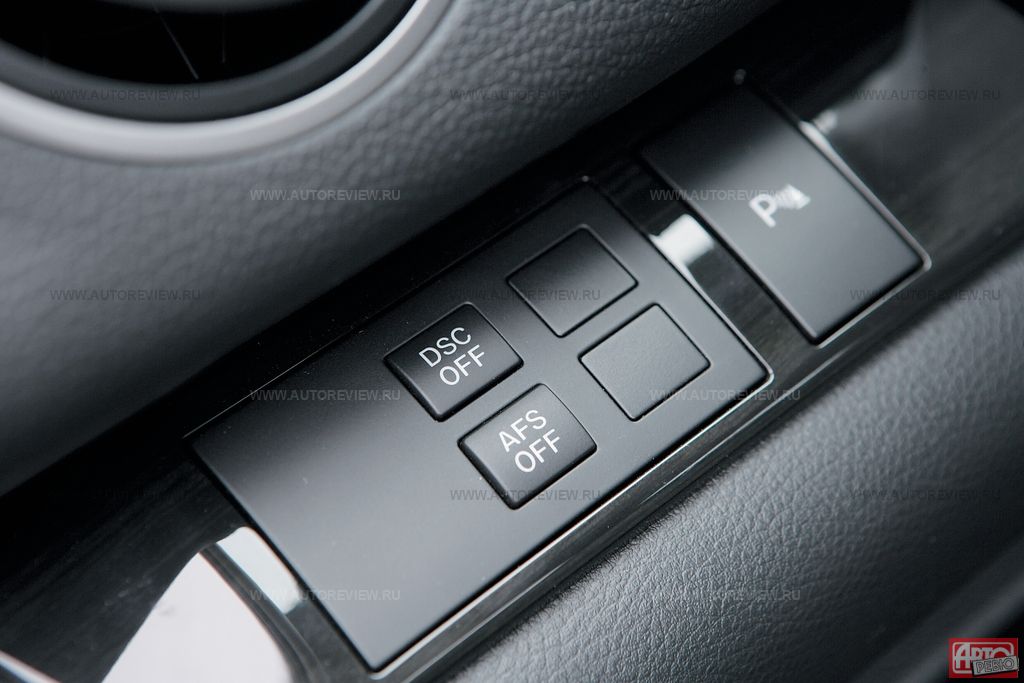 |
| The wheelbase has grown by 50 mm — rear passengers will appreciate this | Now the Mazda 6 is available with a keyless entry system with a push-button starter, like Toyota and Lexus. And the ignition lock on the column is covered with a careless plug | The DSC stability system is installed on all versions. The AFS OFF button disables the additional cornering lights |
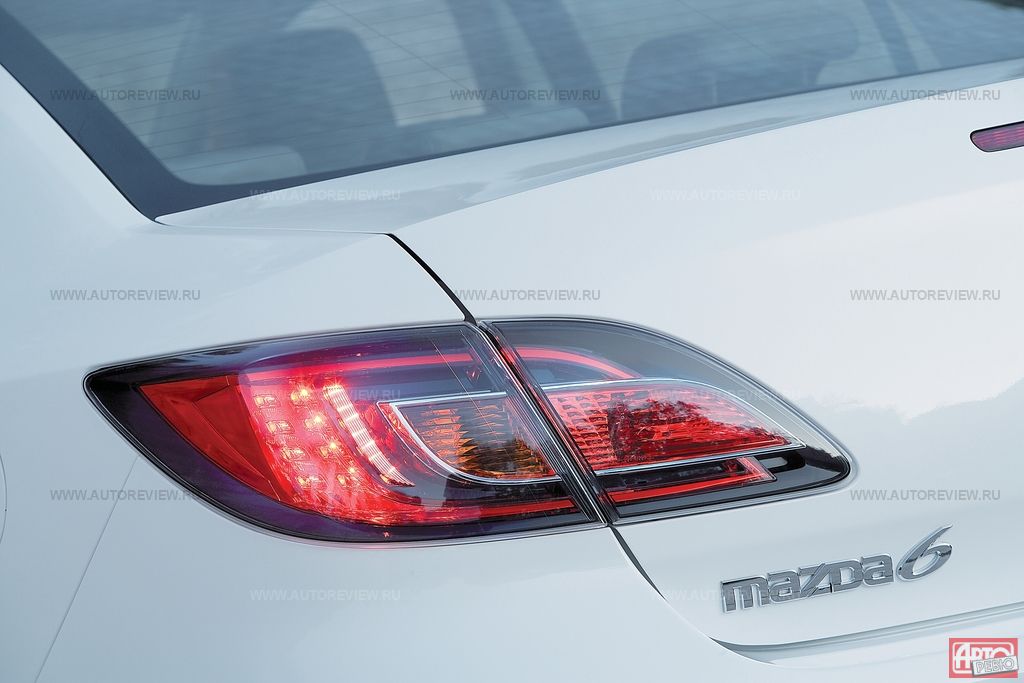 | ||
| Mr. Sato, when creating the headlights, was inspired by sunglasses | The LEDs in the taillights gave designers freedom — the optics turned out to be exceptionally beautiful |
I don't know how real kizuna feels, but on the winding race track, a few seconds were enough for me to get comfortable. The electric power steering — a development of what's in the RX-8 — immediately became a source of information about the road for me. In the first corner, the sedan obediently tightens the line when lifting off the gas, in the next — it does the same from the steering wheel. The third is taken with constant throttle, but the slow combination — already with a slight drift. Full throttle, then hard braking with slight course oscillations. On the second lap, I'm already driving as I want! The seat is slippery, the body roll is deep, but the responses to all actions are precise. The Japanese describe the character of the "six" in two words: precision and linearity. The sedan is precise, but the main thing is precisely linearity. Everything is linear: acceleration without jerks, the effort on the steering wheel grows as the wheel turns, the engine sound in the cabin is a bit monotonous, slides develop smoothly. Body roll and behavior depending on tires also fall into this row. The most lively is the sedan on 16-inch wheels, but the wider and stiffer the rubber, the more boring the Mazda becomes.
Alas, the ideal track conditions don't allow conclusions about real driving. We'll have to wait for full tests. They also didn't reveal all the details of the "six's" launch on the Russian market. It's known that there will be four trim levels: Direct, Touring, Sport, and Luxury, with stability control and alloy wheels already in the base. For the 2.0-liter engine, you can order a five-speed automatic and the Sport trim with bi-xenon and 18-inch wheels. The benchmarks are: $25,000 for the Mazda 6 1.8 Direct and $34,000 for the 2.5 Luxury version with leather. That's only $1,000 more than the previous model. The top version with an automatic was decided not to be brought in, and there are no official plans for all-wheel-drive modifications either. Although engineers hint that all-wheel drive for the "six" will appear.
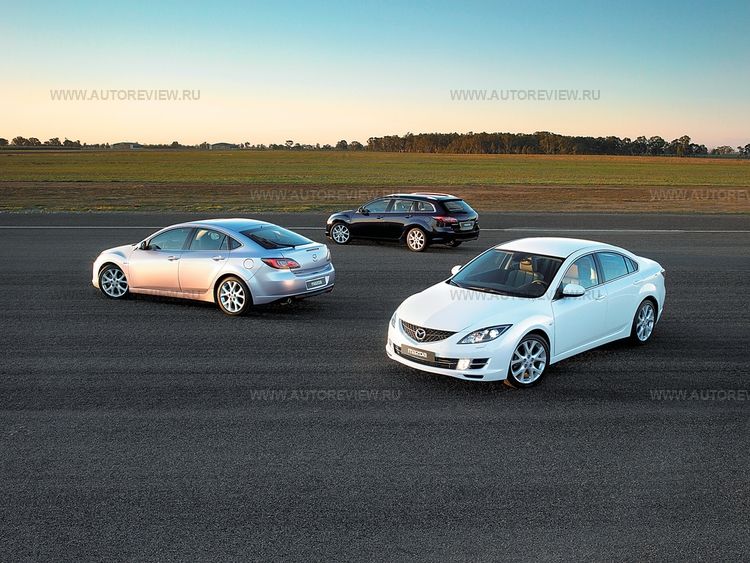
The Mazda 6 sedan will be released in Russia at the end of November, while the hatchback and wagon will only come next year. By the way, Yoichi Sato considers the wagon his best work in this project
And even if there's no all-wheel drive — no problem! With such looks, the new Mazda 6 will live happily without it, and even without kizuna. Of course, I believe that for the Japanese, this concept is important. But let them think: Mazda's design spirit is growing faster than the driver spirit. The previous "six" looked in accordance with its character — now the appearance is ahead. No matter how the Mazda 6 drives on ordinary roads, I'll be drawn to get out and admire it from the outside. If earlier I doubted the importance of design, now all doubts have disappeared. And if it weren't for the looks, the story about the new sedan would fit into one phrase: "Like the old Mazda 6, only better."
But Yoichi Sato made it all more complicated...
 | External speed characteristics of the MZR 2.3 and MZR 2.5 engines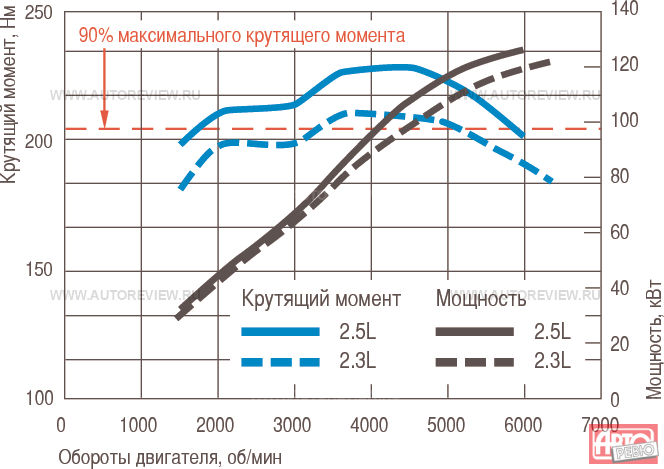 |
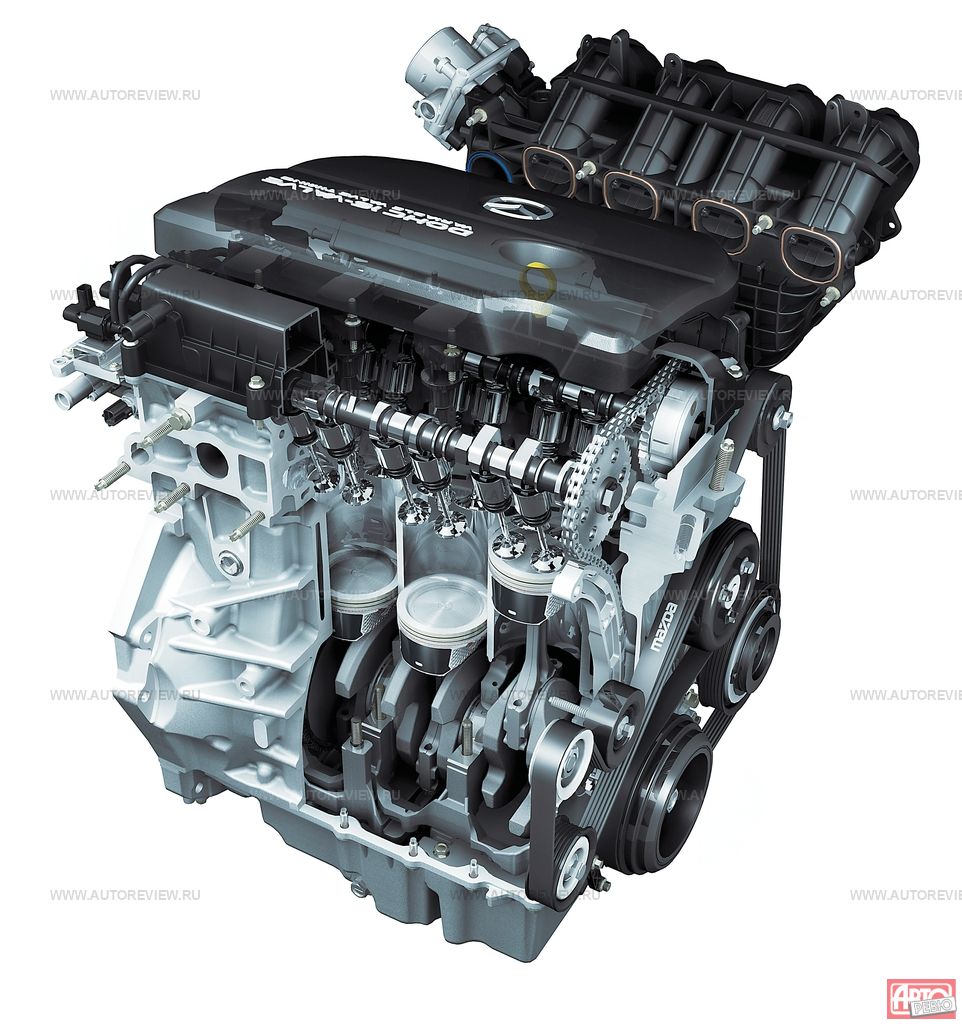
| The new MZR 2.5 is the previous 2.3 "four" with increased cylinder diameter, longer piston stroke, and refined intake and valve timing. Power increased by only 4 hp, torque by 19 Nm, but fuel consumption dropped by 6.9% | |
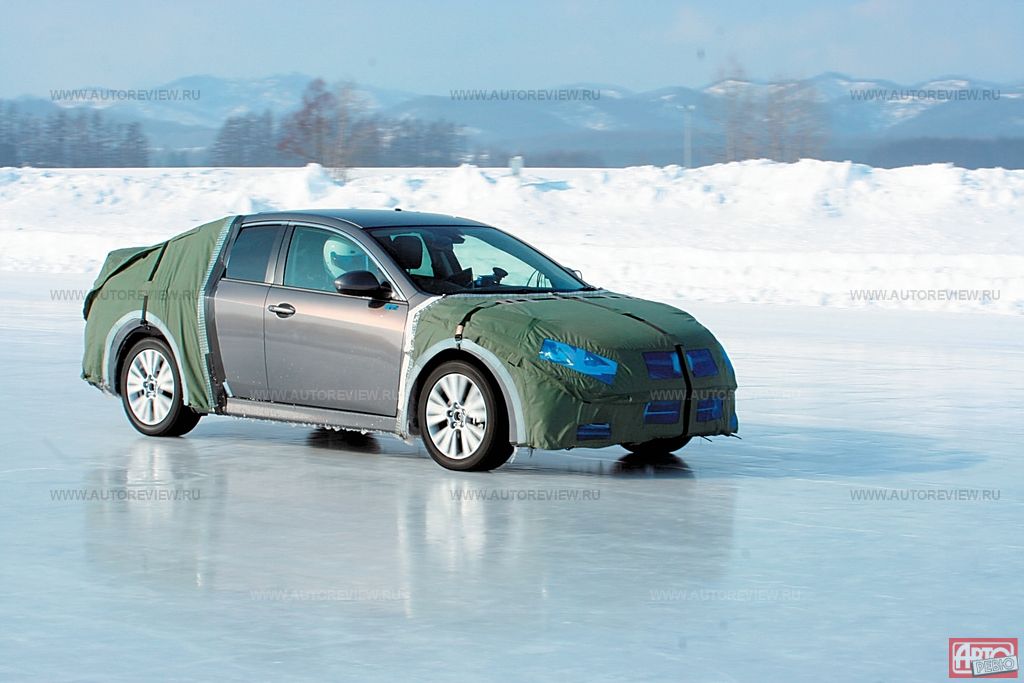 | |
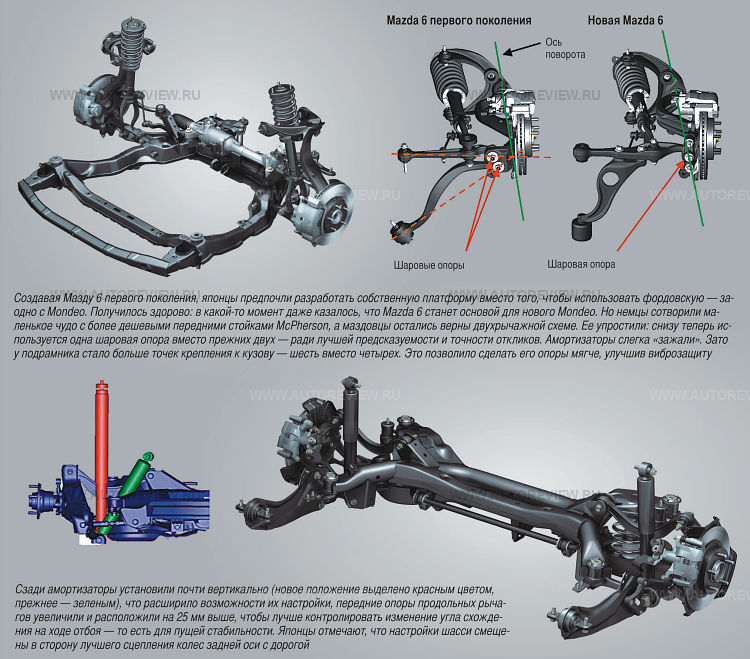
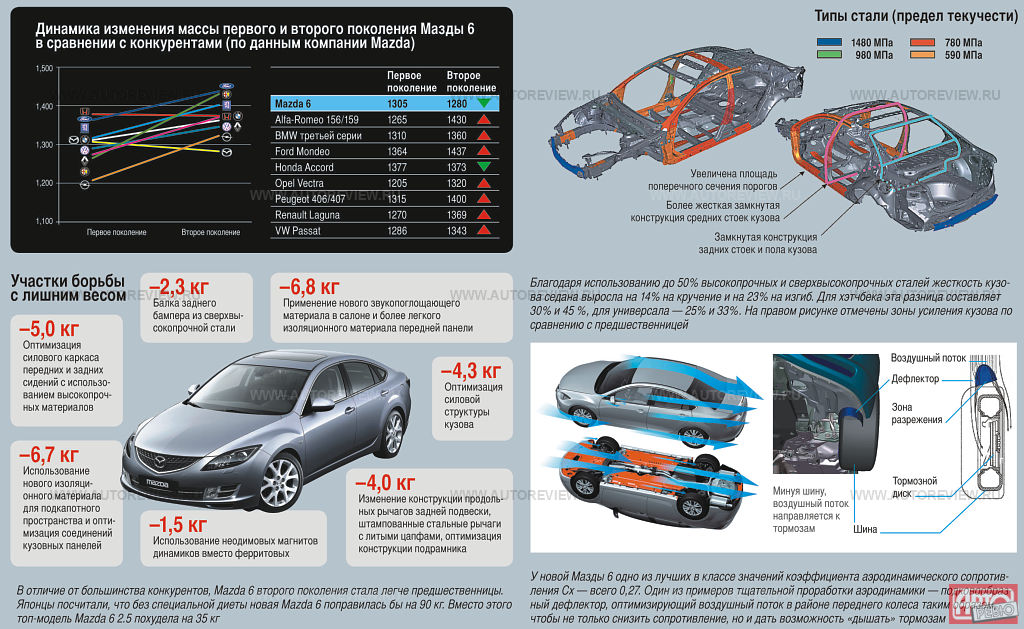
| The electro-hydraulic power steering was replaced with an electric one, like on the RX-8. But even more advanced: to reduce friction, a brushless motor was installed. It is not on the shaft, but in the steering gear housing — for better vibration protection and feedback. This solution saves 2% fuel, and the steering has become "sharper": the gear ratio changed from 16.1 to 15.4 | In addition to computer simulations, Mazda engineers built 127 prototypes — a huge number by industry standards. And, oddly enough for a brand with a sporty image, the new "six" was not refined at the Nürburgring. After spies filmed the new Mazda 2 there, management banned taking the "six" to the Nordschleife. The entire extreme program was run at the home Miyoshi proving ground, and European road tests were conducted mainly at night |