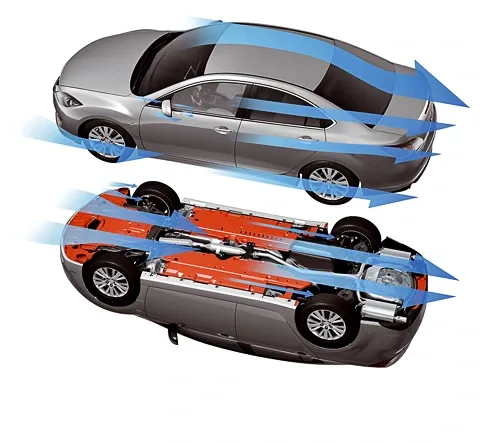
For this I must thank not only a lucky coincidence, but also the car itself. And a special thanks goes to Hajime Matsumura, the lead engineer responsible for tuning the chassis and steering. The Mazda6 performed flawlessly, a solid five out of five. For that, many thanks.
After this incident, I was finally convinced: to seriously compare the driving qualities of cars, you need to do so without regard to their class or purpose. If only because, had I been behind the wheel of another car then, I might have had to experience not active, but passive safety. So we will continue to approach such comparisons with equal rigor, even when it comes to seemingly quite ordinary mid-size cars.
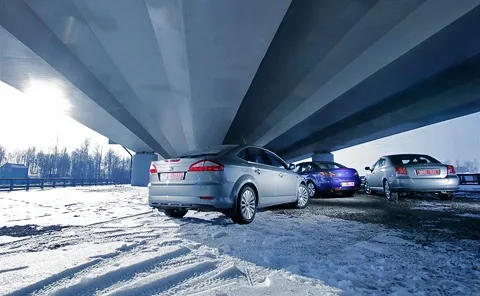
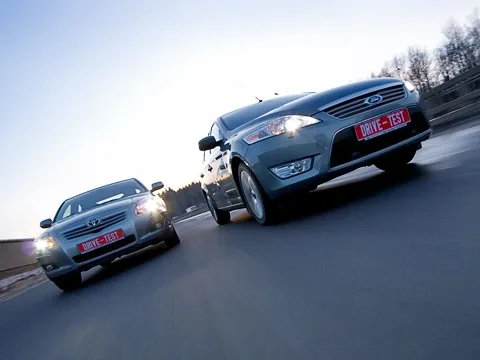
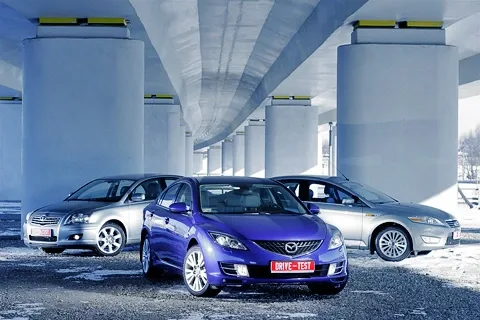
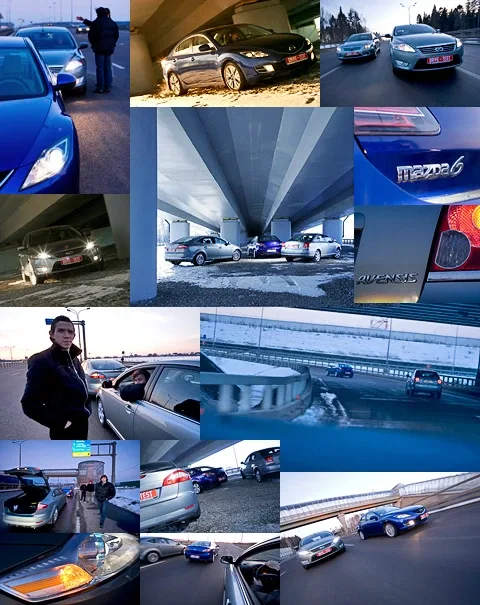
So, meet the participants: Ford Mondeo, Mazda6, and Toyota Avensis. The main character of today's test is the new Mazda6, which, despite its freshness, has already become a bestseller. The Ford Mondeo is its cousin, and we are especially interested in what engineers have put into each of them — after all, the related brands did not unify everything, but went their separate ways. And we simply could not ignore the Toyota Avensis. Even though the car is aging, it doesn't stop it from setting sales records every year and remaining the leader of the D segment.
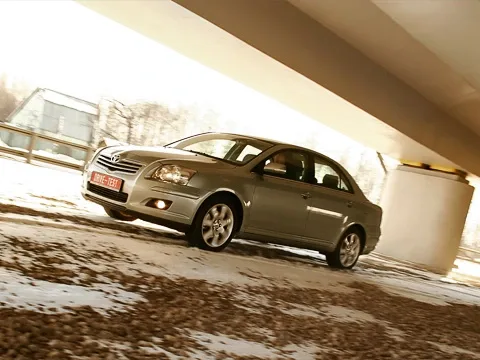
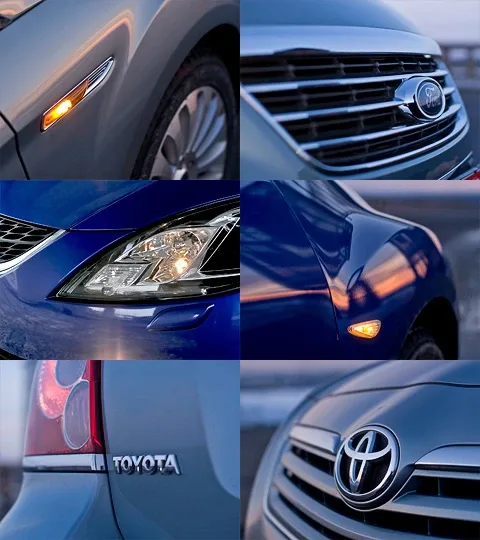
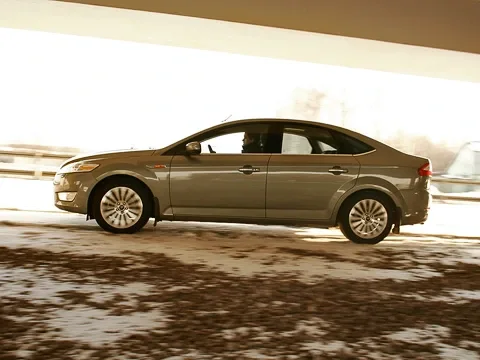
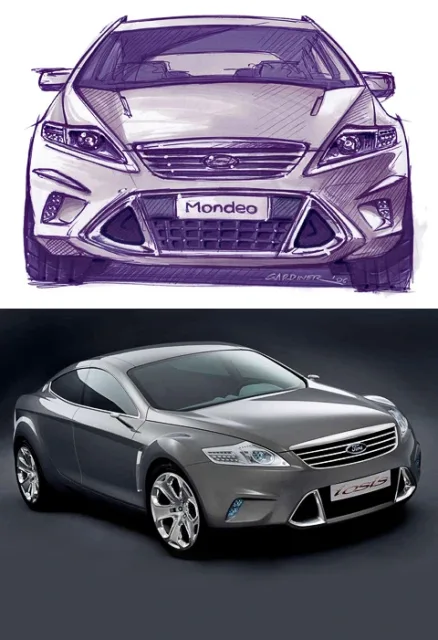
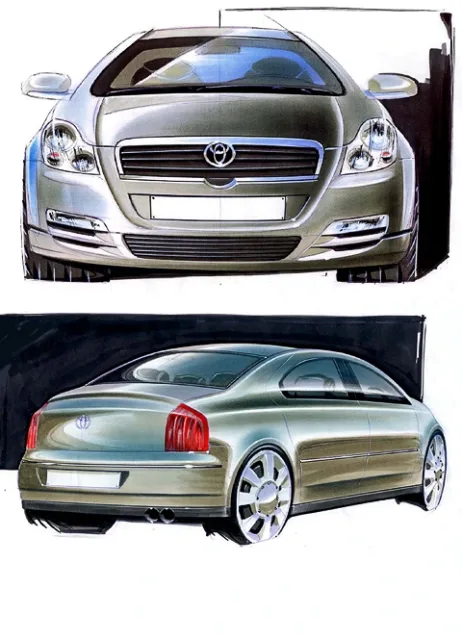
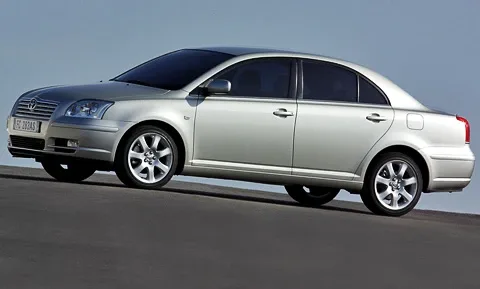
The Mondeo makes its presence known first — with its huge air intake and emphasized "kinetic" design. But, sorry, buddy, for all your originality, you're still an acquired taste. The Avensis, although it looks more interesting than its predecessor, is frankly lost next to the Ford. If there are still debates about the new Mondeo's appearance, then regarding the Avensis's design, no debates have even arisen! You look at the car — and there's nothing to fault. The image may not be the brightest, but it's cohesive and harmonious.
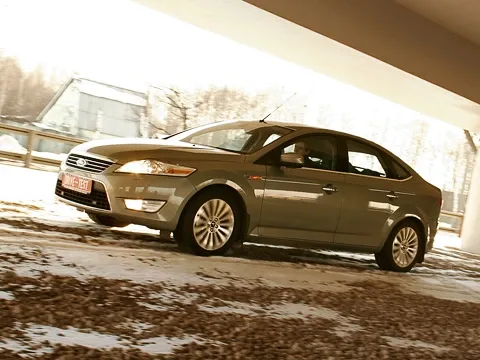
The "kinetic" Ford is a real breakthrough in design compared to the previous politically correct Mondeo. It can either be liked or disliked — no one will be indifferent to it. And whether that's good or bad, we'll find out from sales statistics.
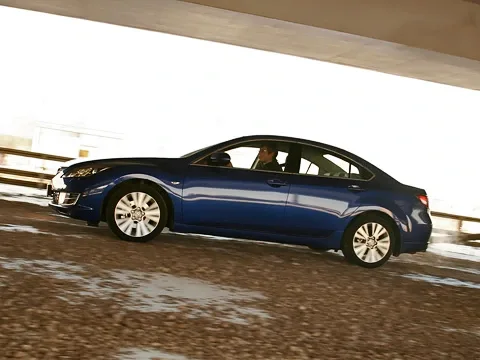
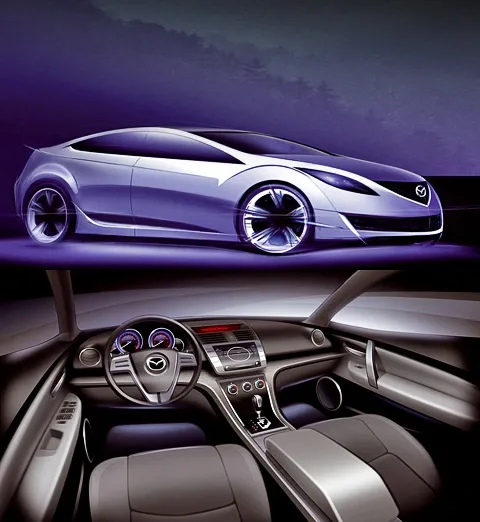
But as soon as the Mazda pulls up, the Ford and Toyota can only nervously smoke on the sidelines, trying to maintain their dignity. No passerby will pay them any attention, not even their own owners! The "Six" in a rich bright blue color captures glances instantly and for a long time. And here's what's surprising: despite a very small difference in dimensions compared to the Mondeo, it looks much more compact and fit. A real athlete and beauty!
However, professional sports are contraindicated for all three of them — at most fitness, aerobics, and morning jogs. We took the cars in some of the most popular versions — with two-liter engines and automatic transmissions. Although the Ford distinguished itself here too: under its hood is a 2.3-liter gasoline engine. But this is not our whim — it's just that the Mondeo with an automatic transmission is only offered with a 2.3-liter gasoline engine or a diesel. And it's also a hatchback, not a sedan. But we'll survive that.
Despite the Mondeo having almost three hundred "cubes" more, I still changed my habits and immediately got into the Mazda. And right away I regretted it — I got the Touring trim. How could anyone choose such an unfortunate fabric for the interior? It not only gets dirty quickly, but also feels not very pleasant to the touch. And the plastic insert "like marble" evokes memories of Soviet smoky soap dishes and the interiors of department stores from those times... Klyopach, at the European presentation of the "Six," rode in the Sport version — none of that was there!
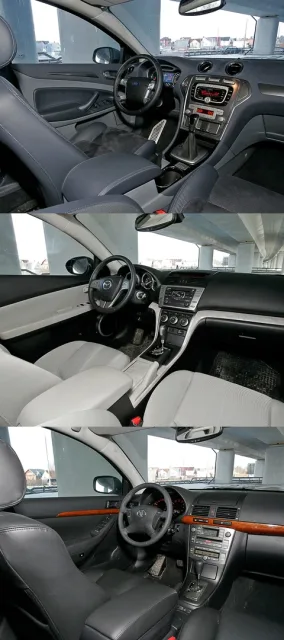
In the Mondeo, almost any driver will sit comfortably — the adjustment ranges are huge. The Mazda6 is practically not far behind the Ford in this regard, except that the seat adjustments in the Touring trim are mechanical. And the Avensis can be scolded for its high and upright seating position — tall drivers will be unhappy. But at least the front passenger has an electric seat.
The design of the "two-story" front panel pleases the eye, and the instruments with perfectly readable scales cause no complaints. But the predominantly hard plastic and those very seat heating buttons do not allow the interior to look more expensive than it actually is.
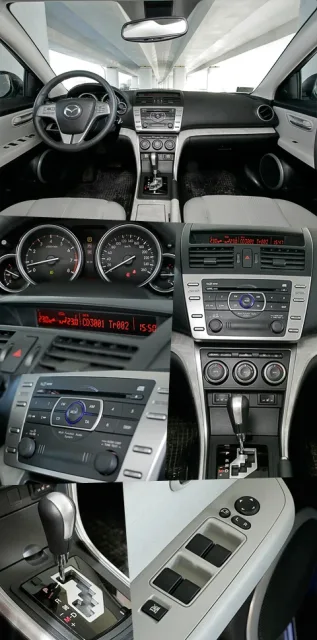
The interior is not the strongest side of the Mazda6 in the Touring trim. At least in terms of the chosen trim materials. But otherwise, everything in the "Six" is wonderful — excellent mirrors and steering column stalks save you from worries during maneuvers, and the door handles are not only beautiful but also convenient. In addition, the Mazda's armrest has a 12-volt outlet and a line-in for the audio system, and the door pockets are molded to fit a standard tin can.
But there are no complaints about ergonomics. The seating position is very low and successful, and the adjustment ranges are enough for everyone. And the "Six" also has an interesting function called CF-Net (Cross Functional-Network) — you can control the climate and music without taking your hands off the wheel. True, for this you have to take your eyes off the road and look at the small display crowning the center console. The solution is debatable, but overall convenient.
The Avensis interior, after the light and "airy" cabin of the Mazda, resembles the reception room of the head of a serious state institution. The epitome of calm and solidity — black plastic of the front panel, black leather seats with electric drives, and so on. A bit old-fashioned, very restrained and official. But there's no hint of "Soviet" — the plastic is pleasant, the buttons are quite neat, and even the "wood" inserts look decent.
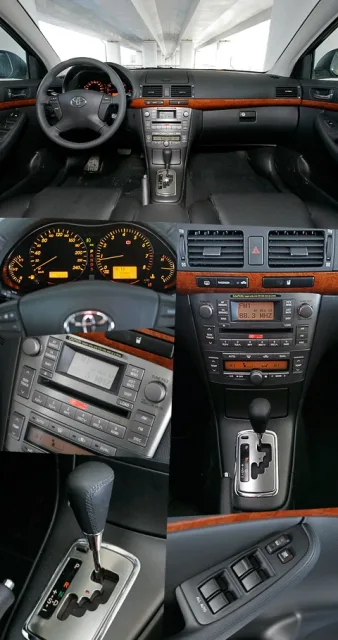
The Avensis interior not only looks the most old-fashioned — it is the oldest. But, to Toyota's credit, there are no complaints about quality, and it's also well-equipped — at the driver's and front passenger's disposal are mirrors with lighting, a lighting unit with three lamps, a quite spacious "two-story" armrest box, and a convenient compartment above the center console. But the mix of materials — black plastic of the front panel, a silver insert in the center, and pseudo-wood — might not appeal to everyone.
Despite the abundance of black, the Toyota's interior does not evoke melancholy — inside, a calming atmosphere prevails. The instruments with soft lighting and large numbers do not strain the eyes at night, and the large and convenient climate control buttons prevent confusion. The only complaint might be the inconvenient and "blind" mirror adjustment block.
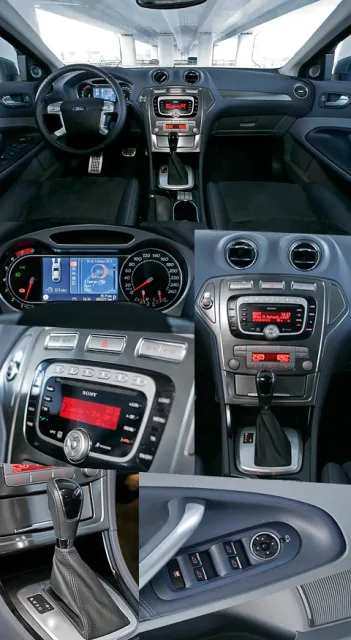
The Mondeo's cabin is perhaps the most original in this trio. This applies not only to the design but also to the materials used. And some will definitely not like those notorious "shiny bits," which are not made very well in places. Smokers, meanwhile, will complain about the inconvenient ashtray. But in terms of overall quality, the Ford surpasses both the Mazda and the Toyota. A pleasant impression is made by the power window block on the driver's door, the lighting control in the front of the cabin, spot lighting, and the large armrest box. But the Ford folks get a note for the glove box and the ignition switch cover.
But ergonomics in the Avensis are far from ideal. Tall drivers might not like it — there's not enough range in the seat height adjustment. And the mutual arrangement of the steering wheel, pedals, and gear lever is far from perfect.
Moving into the Mondeo, you feel like you're in a mobile phone store. The front panel of an unusual color is generously diluted with "shiny bits" — a debatable but modern solution. And the center console would look fitting even in a starship. The familiar instrument cluster has been usurped by a large color display of the Convers+ interface, pushing the speedometer and tachometer to the periphery. The interface, it must be said, is quite convenient, but it doesn't shine with a variety of functions — after all, in Europe, a navigation system is also "hung" on it, but we don't have it.
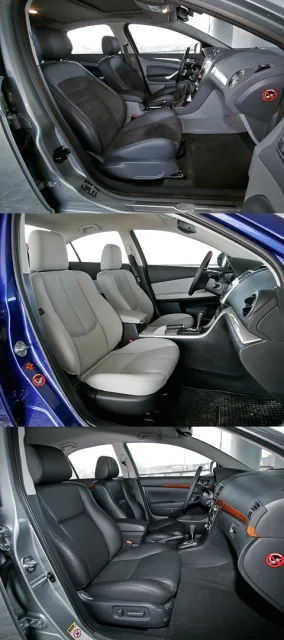
The front seats in all three cars are quite comfortable. But the grippy Alcantara in the Mondeo holds better in corners, and the Ford seats even have memory for four positions. The Avensis hugs almost as well, and it also has headrests adjustable in two planes. But the Mazda6 offers an almost flat cushion, which doesn't fit at all with such a lively character and excellent handling.
And what seats the Mondeo has! Electric drive and "memory" — at the driver's disposal, and they are upholstered not in some inexpressive "rag," but in leather and grippy Alcantara. Absolutely any driver will be able to get comfortable behind the wheel — the adjustment ranges are huge. Although drivers with a solid build may complain about the overly firm embrace of the side support.
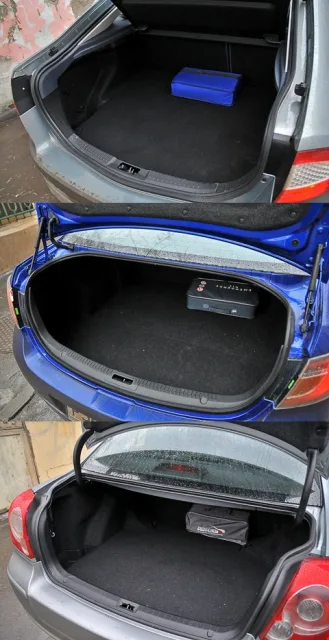
The Ford Mondeo's trunk is among the leaders! Which, however, is not surprising — after all, it's a hatchback. Not only is the loading height low, but there are also seven convenient compartments in the "underground," two niches on the sides, as well as loops and hooks for securing cargo. And the spare tire is full-size. The Toyota also has niches, hooks, and loops, but the underfloor lacks separate containers, and instead of a "full-size" spare, there's a donut. And the most losing trunk is the Mazda's. There are only two compartments under the floor, and the lid is inconvenient both to open and close. The opening is also narrower than the Avensis and Mondeo.
Special mention also deserves the little things that make the Mondeo more pleasant in daily use: the power window control unit is assembled solidly, and the door handles cause no complaints. But there was a fly in the ointment. The glove box is small and looks frankly cheap, which somewhat spoils the overall impression. It's also strange to see a plug in place of the ignition switch, since starting is done with a separate button.
However, all these little things are forgotten as soon as you get behind the wheel of the Mondeo — you no longer want to leave it. That's why it's the first to go the distance. Interesting fact: the 2.3-liter engine under its hood is not a Ford development at all, but a Mazda one. Such an engine was installed on the previous generation of the "six." But if the Japanese increased the volume to 2.5 liters and raised power for the new car, the Germans did otherwise — they retuned it to a calmer manner.
And it must be admitted, the 161-horsepower "four" is now in no hurry to please with brisk acceleration. It's noticeably "throttled" for the sake of economy and ecology. Revs build up slowly, accompanied by a monotonous hum. A well-tuned six-speed automatic partially saves the situation. But if you leave the grumbling aside, the Mondeo will still outpace both the Toyota and the Mazda when starting from a standstill. True, not by much.
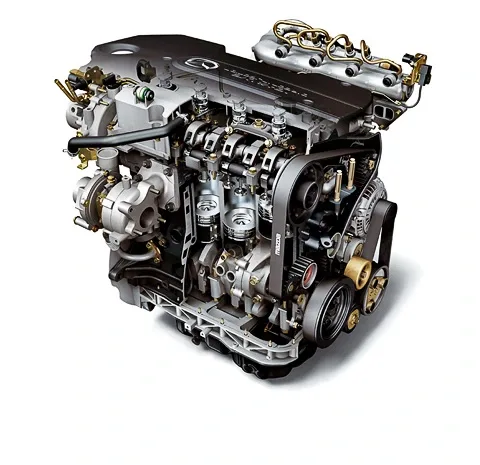
But Mazda is no slouch either! Yes, under its hood is the same familiar two-liter "four" with 147 horses. But how it sounds and revs, how lively it responds to the gas! It's heaven and earth compared to the emphatically calm Mondeo. At the same time, the Mazda only slightly yields to it in acceleration from a standstill, and then even catches up. The "automatic" here is five-speed, which is one step less than the Ford's, but it works even better. Combined with the spirited engine, it just provokes active driving.
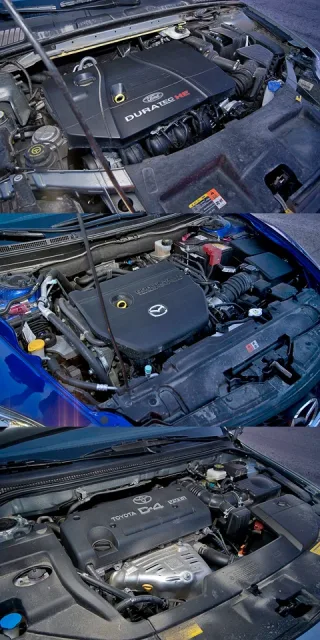
New engines, by and large, none of the competitors can boast. Under the Mondeo's hood works a Mazda 2.3-liter engine, the Mazda6's "two-liter" moved from the previous generation, and the Avensis also sports a two-liter D4 since 2003.
Toyota with its 147-horsepower engine and four-speed automatic looks like an outsider on paper. But that's not quite the case. The gearbox confidently manages the few gears, and the Avensis engine is not as "strangled" as the Mondeo's. Even though the gray sedan yields to rivals when starting from a standstill, you wouldn't call it sluggish.
On the move, the Avensis is also good. It drives calmly and confidently, aided by a large steering wheel with low sensitivity. This doesn't lend itself to aggressive driving, but it's not needed — pleasure can be had from a measured pace. Especially since the Toyota has good noise and vibration insulation, and a fairly soft suspension, which, however, allows "rocking on waves." But overall, for most drivers, this is what you need! And if something goes wrong, the non-switchable stability control system will unceremoniously intervene. The only "snag" is the brakes: in traffic jams it's hard to avoid unpleasant nose dives, and the pedal travel is noticeably too long.
Against the background of the Avensis, the Ford weighing a good 1555 kg is already perceived as a "lighter." The large hatchback holds its line excellently and delights the driver with an informative steering wheel. And if you overdo the speed, it smoothly slides off with the "nose" outward. Then the stability control system reminds of itself, which is trained to counteract drifts. The brakes also deserve praise — the drive is perfectly tuned. In normal modes, the Mondeo is just a good guy. The suspension perfectly handles bumps, the car doesn't get nervous in ruts, doesn't veer off course on potholes, and doesn't rock. Moreover, the Mondeo has the best noise insulation in the trio.
So if you see a person getting out of a Mondeo satisfied, know — he's not pretending. But only not if he previously drove a Mazda6! Then, while the Ford gets five points for handling, the Japanese sedan fully justifies its "name" and deserves all six!
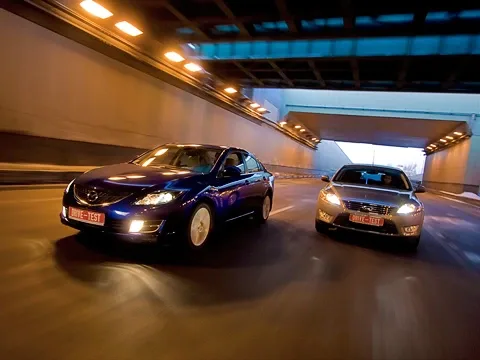
Interestingly, with less displacement and power, the Mazda's engine allows it to drive almost as well as the Mondeo. It's all about the lower weight and more spirited character.
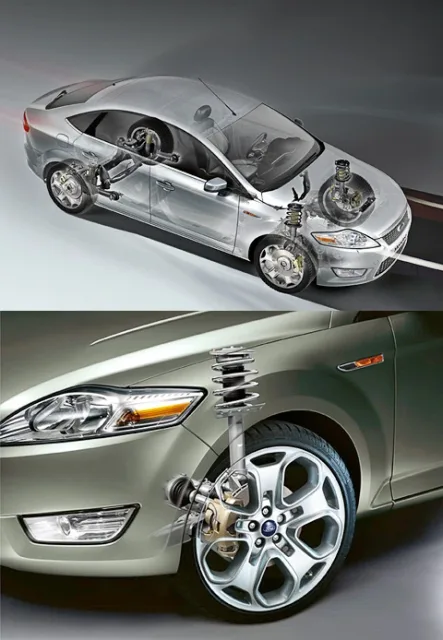
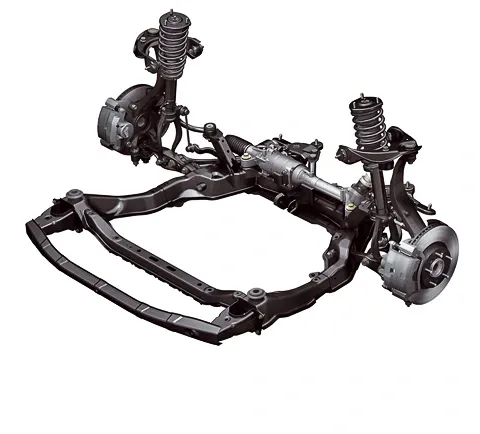
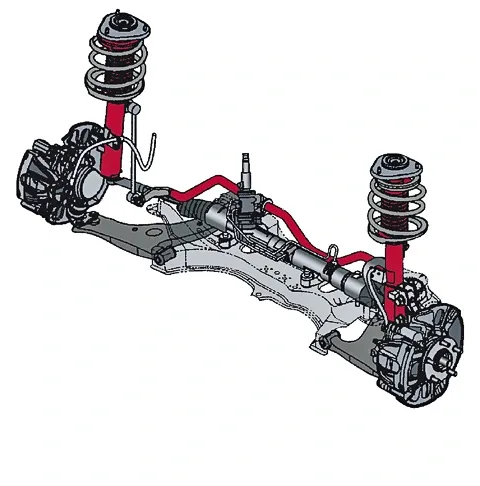
This is felt immediately. You enter a corner — and you feel the car with your fingertips. The Mazda6 instantly, without delay, follows the steering wheel, almost doesn't lean, and grips the asphalt excellently, and at the "limit" slides off the trajectory with all four wheels. And when you release the gas, it willingly screws into the corner. Brilliant! It feels like the Mazda6 is at least twice as light and smaller than the Mondeo — so responsive it is in motion. And indeed, this is the merit not only of the "double wishbone" front suspension, which provides more precise control, but also of the 160 kilograms less mass. And the wheelbase is even 13 centimeters shorter!
But this medal has a flip side. The Mazda6 is the stiffest and the noisiest. It doesn't really like ruts and bumps on turns. And although there is nothing criminal in its behavior even on bad roads, there is little pleasant in such driving not only for passengers but also for the driver.
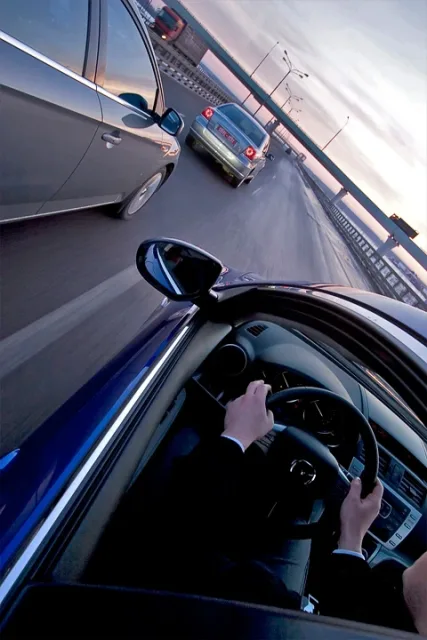
While the Avensis is ahead, but not for long — the Mondeo and Mazda will easily deal with the Toyota sedan.
By the way, about passengers. Here the Mazda6 is also not a favorite. There's enough room for six legs in the back, and three won't complain for a couple of hours. But the middle passenger will be the first to start shouting over the hum of the Nokian Hakkapeliitta studded tires. Despite the smallest central tunnel in the trio — there's not much width, and the ceiling is low. So it's better not to take a fifth person on a trip at all — just fold down the comfortable central armrest.
In the Toyota, passengers are better off, but not by much. As in the Mazda, it's cramped for three in the back. There's room for legs, but width-wise it's already a bit tight. And a "giant" is better seated in front, otherwise his head will "tune" the ceiling. As a consolation — pockets in the doors and front seats, as well as a quite decent lighting unit. But in the Toyota it's softer and quieter, and this partly compensates for the crampedness.
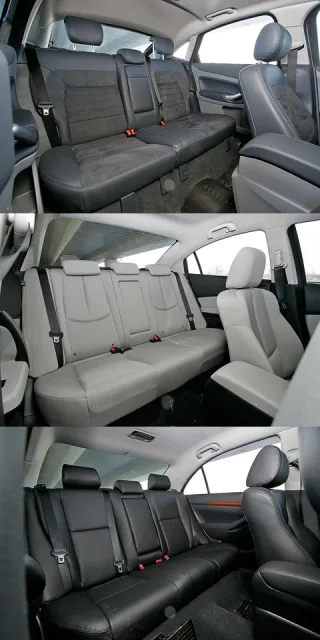
In all three cars, rear passengers are provided with lighting, an ashtray, and a folding armrest with two cup holders. But the Mazda has no compartments for small items in the doors and no 12-volt outlet, and there's less space than in the Mondeo, despite the smallest central tunnel. The Avensis also won't please three occupants with seat width, and the tunnel is a bit bigger, but there's a sunshade on the window, and there are two pockets on the front seats. Well, the leader is the Mondeo. And this concerns not only noticeably more space — only it has rear ventilation deflectors, and on order you can also install seat heating. True, there's a drawback — a tall passenger will undoubtedly note that he's almost propping up the ceiling. Although this problem is expressed to varying degrees in both the Toyota and the Mazda.
But where you definitely can't kick passengers out is the Mondeo. There won't be any dissatisfied ones. There's a ton of space in it! There's enough room both in width, for legs, and for the head. By the way, for rear passengers there are also separate air deflectors for the climate system. And on order, heating can also be installed. Chic!
There's nothing surprising about this. After all, the Mondeo's wheelbase is not only significantly larger than the Mazda's and Avensis's. It's larger than the Camry's! And it's noticeably wider. Calling the Mondeo a mid-size car is like calling King Kong a monkey. And against this background, ride comfort is perceived as something taken for granted. It's quieter here than competitors, and on the highway it glides softer.
By the way, despite such dimensions, maneuvering the Mondeo is not difficult at all. The side mirrors provide good visibility, and front and rear parking sensors will help when parking, although the view through the interior mirror could be better. However, the mirrors in all three are good. And the Mazda and Toyota park easily and without any "assistants" — the dimensions are felt perfectly.
In Moscow traffic jams, it's most convenient to move on the Mazda. And it's not just about its agility — the car literally attracts glances! While we were stuck in a traffic jam, a Peugeot 407 braked next to us, the driver of which carefully examined the "six," and a little later the owner of a Corolla did the same. Indeed, a striking appearance! It's only a pity that in a year or two these Mazdas will flood the roads and stop arousing such interest. But the Avensis and Mondeo no longer surprise anyone, so in a traffic jam you can calmly examine their details.
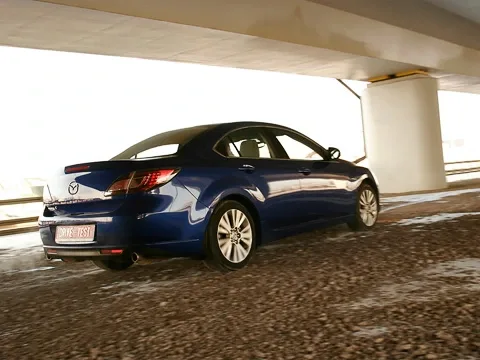
The design of the previous Mazda6, which replaced the modest 626, caused a lot of admiration at the time. The new "six" has outshone it too — it's simply a beauty!
The Mondeo will please its owner the most — it's a truly well-thought-out car! The climate control works perfectly here, although it's far from Volkswagen's Climatronic. But, unlike its Japanese rivals, you don't have to constantly adjust the temperature, and it works quite neatly.
We had to "bathe" plenty in muddy "baths" on Moscow roads. None of the three cars liked this activity. Headlights, windows, and mirrors quickly get covered with a murky film, and we have to, getting our feet dirty on the sills and hands on the hood, pour the most valuable winter product of the capital — "antifreeze".
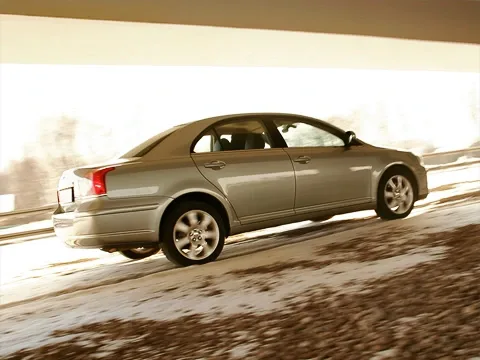
The Toyota Avensis looks quite modest against its rivals. But you can't deny its harmonious appearance.
You'll have to top up the washer fluid least often on the Toyota — it has a separate button for the headlights. Mazda has also heeded the criticism: in the new generation of the "six", the xenon "eyes" are washed much less often than on the "threes". But getting your hands dirty on the Mazda is almost impossible to avoid — such are the design features of the trunk. The Mondeo doesn't stand out in this regard.
But in the dark, it stands out noticeably — thanks to the powerful xenon light. The "chandelier" illuminates the road so well that rivals literally fade in the beams of its headlights.
And it's not just about the headlights. The Mondeo is practically the undisputed leader of this test, even without considering its advantage of a more powerful engine. It handles excellently and at the same time pleases with comfort, is well-equipped, and very spacious. What more could you want? Perhaps a more affordable price. But even the high cost of the test Mondeo ($43,050), which, by the way, is also explained by its stunning equipment, doesn't prevent it from taking first place.
There will be no fight for "silver" today. You can't say the Mazda6 is clearly better than the Toyota Avensis, and vice versa. They are too different. The buyer of the "six" will choose bright design and equally bright emotions behind the wheel, which will outweigh even all the trump cards of the Mondeo. And the Avensis owner will prefer comfort and tranquility. So we won't compare sour with cold. Better to rejoice together again — the automotive world, no matter what skeptics say, is damn diverse. Even in such a "non-diverse" D-class.
Technical specifications
| Specifications | Ford Mondeo 2.3 | Mazda6 2.0 | Toyota Avensis |
| Body |
| Number of doors/seats | 5/5 | 4/5 | 4/5 |
| Length, mm | 4778 | 4755 | 4645 |
| Width, mm | 1886 | 1795 | 1760 |
| Height, mm | 1500 | 1440 | 1480 |
| Wheelbase, mm | 2850 | 2725 | 2700 |
| Curb weight, kg | 1555 | 1395 | 1410 |
| Gross weight, kg | 2165 | 1935 | 1895 |
| Trunk volume, l | 486/1390 | 519/n.a. | 520 |
| Engine |
| Type | Petrol, with distributed injection | Petrol, with distributed injection | Petrol, with direct injection |
| Location | Front, transverse | Front, transverse | Front, transverse |
| Number and arrangement of cylinders | 4, in-line | 4, in-line | 4, in-line |
| Number of valves | 16 | 16 | 16 |
| Displacement, cm3 | 2261 | 1999 | 1998 |
| Max. power, hp/rpm-1 | 161/6500 | 147/6500 | 147/5700 |
| Max. torque, Nm/rpm-1 | 208/4000 | 184/4000 | 196/4000 |
| Transmission |
| Gearbox | Automatic, six-speed | Automatic, five-speed | Automatic, four-speed |
| Drive | Front | Front | Front |
| Chassis |
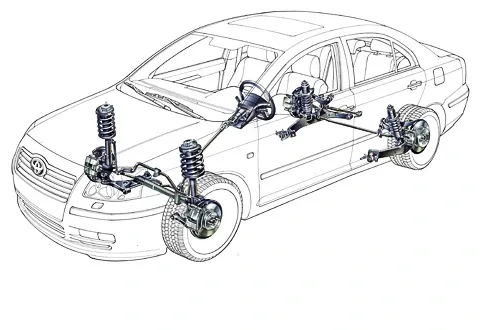
| Front suspension | Independent, McPherson | Independent, double wishbone | Independent, McPherson |
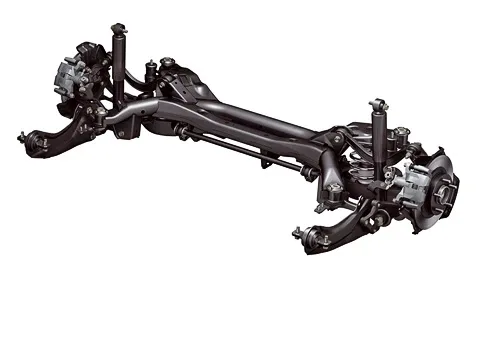
| Rear suspension | Independent, multi-link | Independent, multi-link | Independent, double wishbone |
| Front brakes | Ventilated disc | Ventilated disc | Ventilated disc |
| Rear brakes | Disc | Disc | Disc |
| Wheels | 225/50 R17 | 205/50 R17 | 205/50 R17 |
| Performance characteristics |
| Maximum speed, km/h | 207 | 204 | 205 |
| Acceleration time from 0 to 100 km/h, s | 10.5 | 10.8 | 11.1 |
| Fuel consumption, l/100 km |
| Urban cycle | 13.8 | 11.1 | 12.8 |
| Extra-urban cycle | 6.7 | 5.7 | 7.2 |
| Combined cycle | 9.3 | 7.7 | 9.2 |
| Emission standard | Euro-4 | Euro-4 | Euro-4 |
| Fuel tank capacity, l | 70 | 64 | 60 |
| Fuel | AI-95 | AI-95 | AI-95 |
Equipment of tested cars
| Equipment | Ford Mondeo Titanium X | Mazda6 Touring | Toyota Avensis Lux |
| ABS | + | + | + |
| Stability control | + | + | + |
| On-board computer | + | + | + |
| Dual-zone climate control | + | + | + |
| Power-adjustable and heated side mirrors | + | + | + |
| Power-folding mirrors | + | + | + |
| Front, side airbags and inflatable "curtains" | + | + | + |
| Driver's knee airbag | + | - | + |
| Stereo system with CD/MP3 player and 6-CD changer | O | + | + |
| 4 electric windows | + | + | + |
| Driver's seat with electric adjustment | O | - | + |
| Front passenger seat with electric adjustment | - | - | + |
| Leather-wrapped gearshift knob and steering wheel | + | + | + |
| Heated front seats | + | + | + |
| Heated windshield and washer nozzles | + | - | - |
| Central rear armrest | + | + | + |
| Folding rear seat back | + | + | + |
| 17-inch alloy wheels | + | + | + |
| Xenon headlights with washer | O | O | + |
| Rain and light sensors | + | + | + |
| Cruise control | - | + | + |
| Auto-dimming rearview mirror | + | + | + |
| Leather seat upholstery | - | - | + |
| Combined seat upholstery (leather + alcantara) | + | - | - |
| Keyless entry and engine start system | O | - | - |
| Power sunroof | O | - | - |
| Side mirrors with "memory" | O | - | - |
| Front and rear parking sensors | O | - | - |
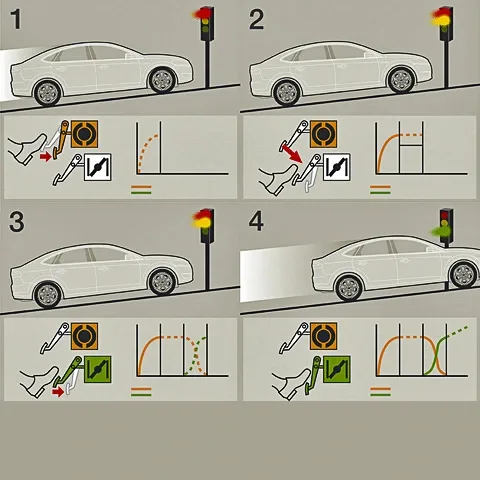
| Hill-start assist | O | - | - |
| Sony 6 CD MP3 stereo | O | - | - |
| Security alarm with volume sensors | O | - | - |
| Tire pressure monitoring | O | - | - |
| Metallic paint | O | O | O |
| Price of car with standard equipment | 921,000 rubles ($37,454) | 798,000 rubles ($32,452) | 876,500 rubles ($35,645) |
| Price of tested car | 1,058,600 rubles ($43,050) | 823,000 rubles ($33,469) | 887,000 rubles ($36,072) |
Legend: + — included in base equipment; - — not available; o — option installed on the tested car.
Technology
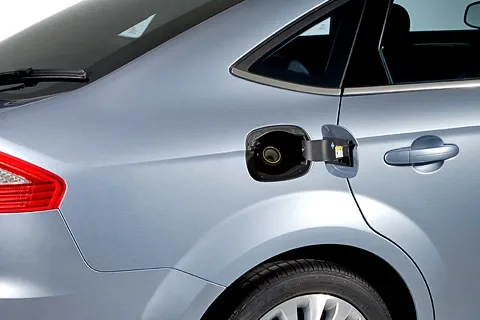
Mondeo is the first production Ford to get a "smart" fuel filler neck. It has no cap, and the diameter is chosen so that you can't mix up the nozzles — petrol and diesel — the "wrong" one simply won't fit.
Safety
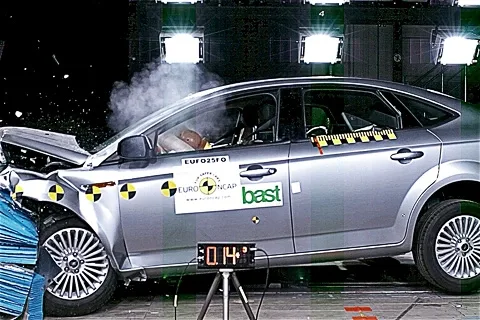
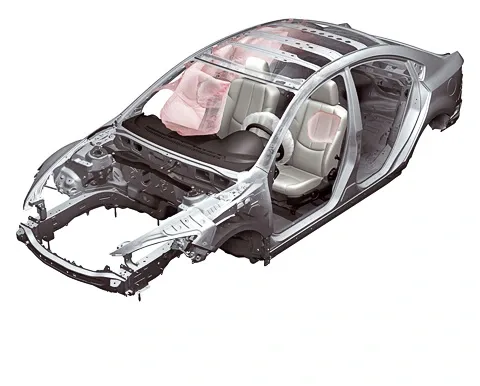
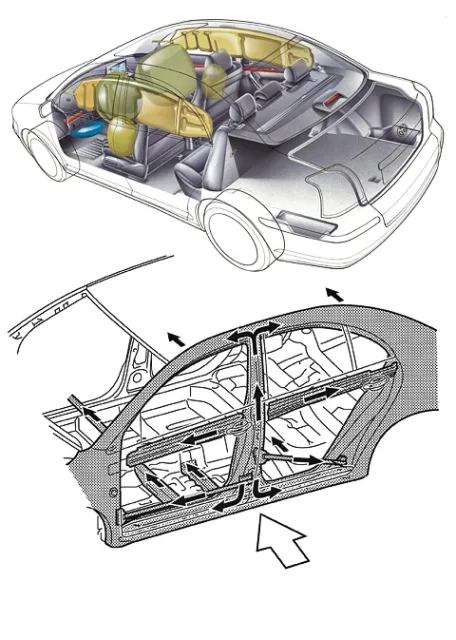
Ford Mondeo received five stars (35 points) under the Euro NCAP methodology and rightly ranks among the safest cars in its class. In addition, for child protection in the cabin, the Mondeo received four stars, and for pedestrian safety — two.
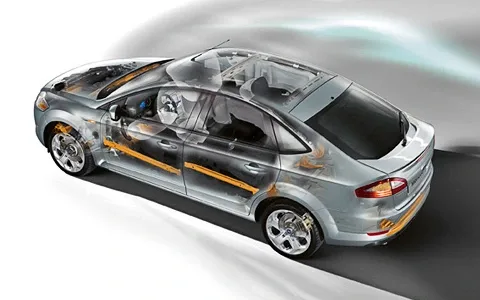
The good result in the Euro NCAP crash test is not only due to the strong and rigid body structure of the Ford Mondeo. Even the base equipment includes seven airbags, including driver's knee protection.
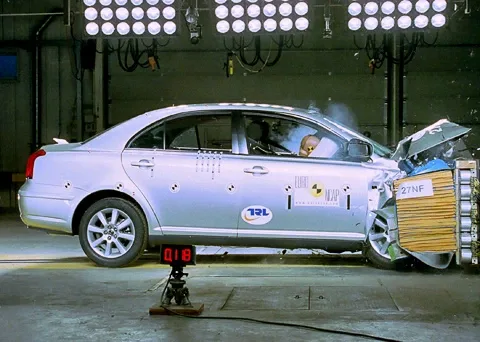
Toyota Avensis brilliantly passed the Euro NCAP test, earning five stars and scoring only 1 point less than the new Mondeo. But it treats pedestrians far less kindly than its passengers, receiving only one star for the test "impact".
Design
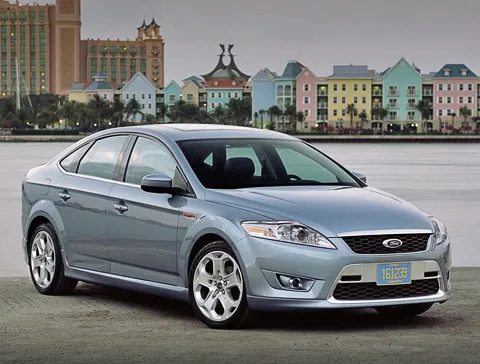
Shortly before production began, the pre-production version of the Ford Mondeo was shown to the public. By the way, Daniel Craig, who played James Bond in the film "Casino Royale", got to ride in one.
History
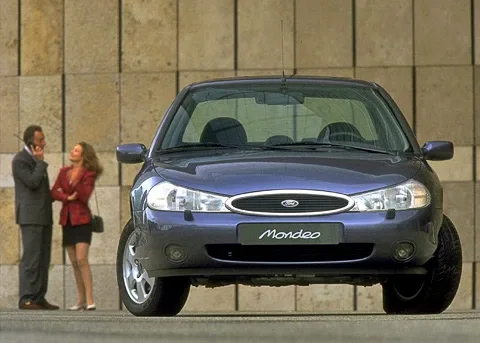
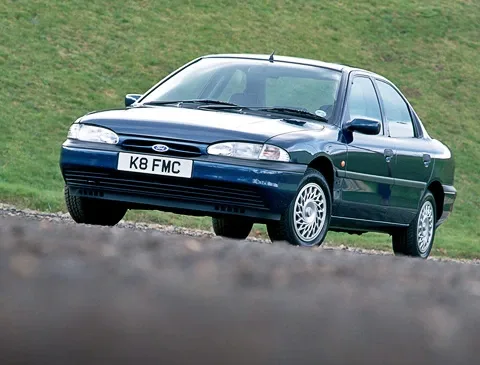
Ford took into account criticism about the weak headlights in the Mondeo and its bland design, and in October 1996 presented a heavily revised car. The exterior was certainly controversial, but after the facelift, the Mondeo gained two "hot" versions, the ST24 and ST200, with a 2.5-liter V6 in different states of tune.
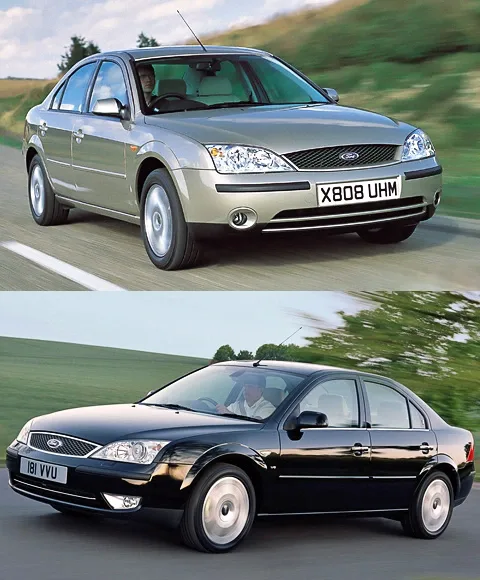
The completely new second-generation Ford Mondeo debuted in October 2000 and, before it was discontinued, underwent two minor "facelifts" (in the photo below) — in 2003 and 2005. In addition, for the first time, the Mondeo received a direct-injection engine with a displacement of 1.8 liters and a three-liter V6 producing 204 or 226 (ST version) horsepower.
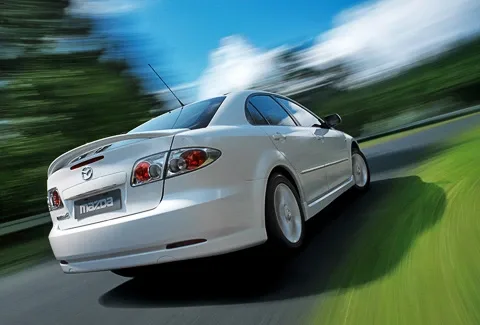
The Mazda6 replaced the very popular 626 in 2002. The "six" was offered in three body styles — sedan, hatchback, and wagon. It was powered by four-cylinder engines (from 1.8 to 2.3 liters), but for the US market, a V6 version with Ford's three-liter Duratec was also offered. The "hot" all-wheel-drive Mazda6 MPS with a turbocharged 2.3-liter engine was dedicated to daredevils. By the way, the car almost won the prestigious "European Car of the Year 2003" award, but was beaten by the Renault Megane by just 20 points.
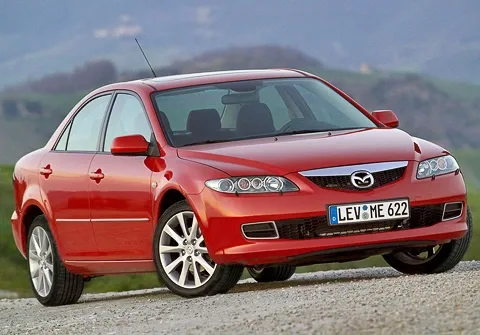
In 2005, the "six" underwent a light facelift — the design of the alloy wheels and bumpers was changed, sound insulation was improved, and an extra gear was added to the automatic transmission.
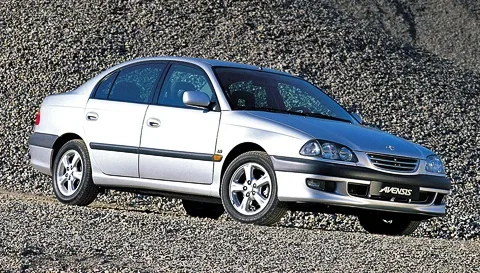
The Toyota Avensis replaced the Carina E at the end of 1997. Production continued at the factory in the UK, and buyers were offered three body types — sedan, hatchback, and wagon.
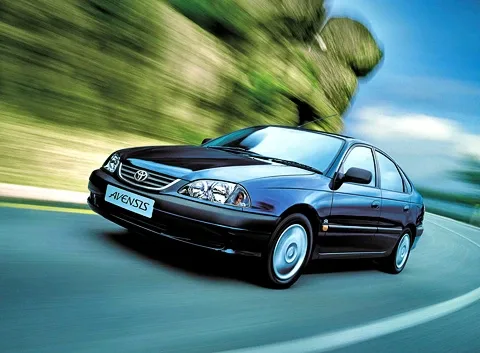
In 2000, the Avensis was updated. Instead of the previous two-liter unit, a new one appeared: the same displacement, but output increased from 128 to 150 hp. The front headlights became "clear", without ribbing.