
For Europe, the arrival of a station wagon is almost an epoch-making event. It's enough to look at the sales statistics of the previous generation: the sedan accounted for just over a quarter of the volume, while the main revenue came from the station wagon and hatchback — 40 and 34 percent, respectively.
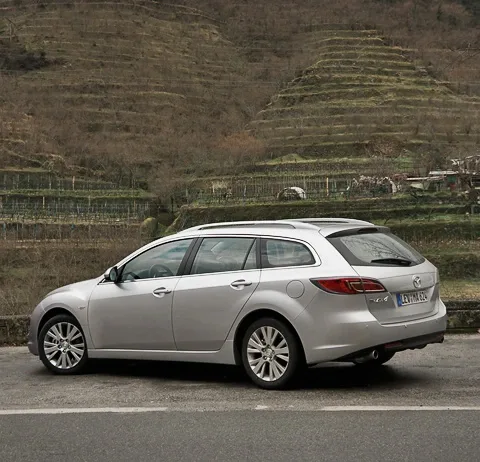
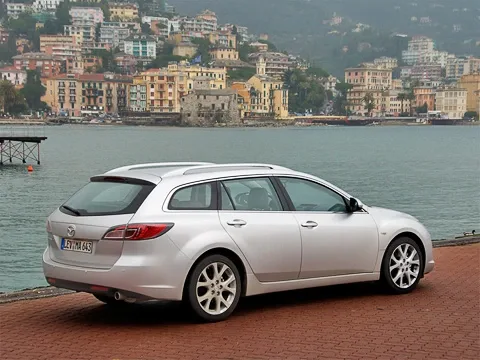
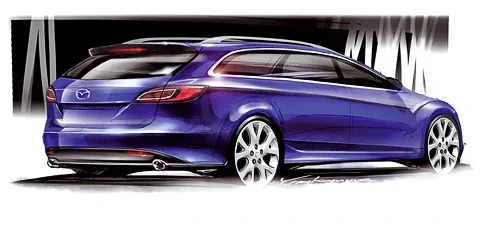
Our situation is also shifting from a standstill. Sedan fans are still in the majority, but opponents of this layout are gaining weight. And with the debut of the Mazda6 station wagon, their ranks will definitely grow. How can you resist such looks! Personally, it overshadowed both the sedan and the hatchback. The previous "six" in station wagon form was still hard to call a "wagon," but the current one could get you punched in the face for such a comparison. The hatchback, in my opinion, fell short: Mazda's press releases describe it as "more sporty and dynamic," but in reality, it looks somewhat heavy. If not for its practicality, I would have chosen the sedan without hesitation.
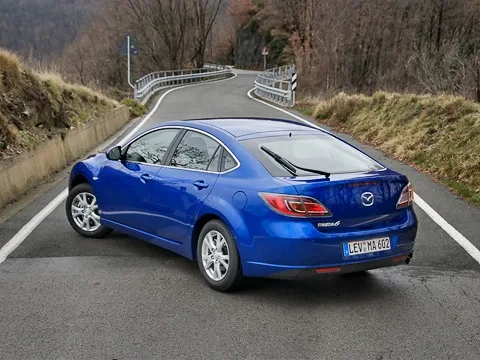
Tastes can be debated endlessly, but aerodynamics is an exact science. Both new models cut through the air excellently: the station wagon has a drag coefficient of 0.28, the hatchback 0.27, exactly the same as the sedan. The bodies have also become noticeably stiffer in torsion.
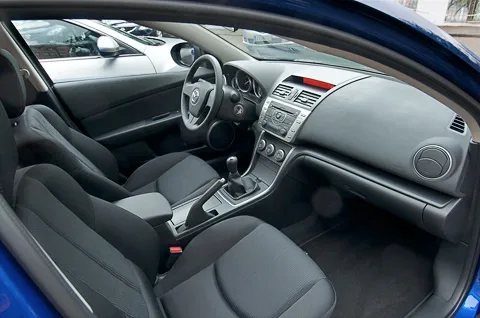
In design and interior trim — zero differences from the sedan.
The engineers are proud not only of the exterior — they say practicality is also in perfect order. They don't blush about the trunk volume or loading convenience. It's a pity that, unlike European competitors like the Opel Vectra or Renault Megane, the Japanese didn't lengthen the wheelbase specifically for the station wagon. It's the same as the sedan and hatchback, so rear passengers didn't get more space.
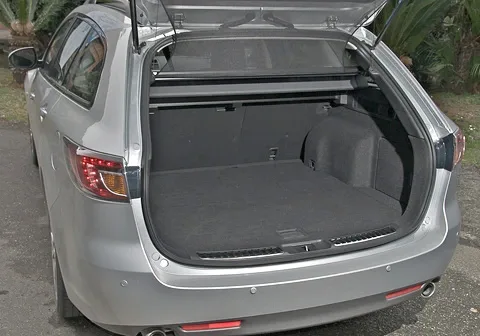
There are no additional compartments in the spacious (519–1751 L) trunk, but there is a lever to help fold the second-row seats. The rising cargo cover can be stowed in a compartment under the floor.
The most curious detail of the station wagon is that very cargo cover. The Japanese know how to fuss over such trifles! You open the tailgate, and the translucent cover rises by itself via a clever mechanism. "Why make two extra movements?" asks Ryuichi Umeshita, Mazda6 program director. "Hatchbacks don't need it, sedans don't need it, but station wagons somehow always did." The Japanese spent three whole years thinking about how to make it "unnecessary." They considered various options, even a servo drive, but ultimately settled on simple and reliable mechanics.
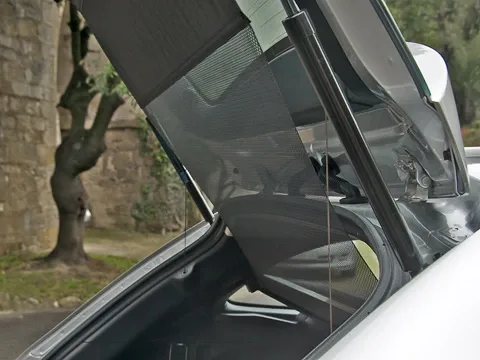
The electric motor did find a use — but only in the hatchback. Mazda installed a soft-close for the fifth door there. It's already included in the base trim, and for "sixes" with other body styles, it can't be ordered for any money.
What's a pity is something else: the trunks are spacious but completely unorganized. No nets, no side pockets, and you can't hide much under the floor either. And as for well-thought-out space organization systems, there's no talk of that. I once had a large station wagon with the same "bare" trunk — without nets or hooks. The larger the volume, the more fun the cargo flies around in it. Especially when driving at a fast pace. And the Mazda6 just loves fast driving — we've already written about that in a comparative test.
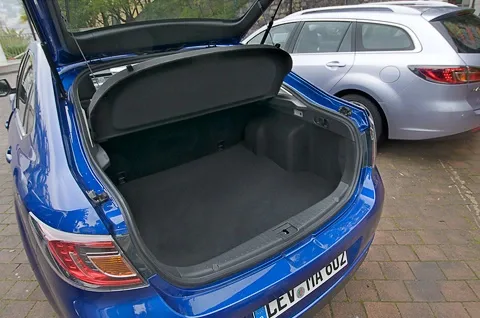
The large trunk opening of the hatchback is, of course, much more convenient than the sedan's. The volume (510 L) is only 9 liters less, and folding the rear seats increases it to 1702. The soft-close saves you from having to slam the heavy fifth door.
So, we have a full set of body styles and modifications. But something is missing, right, Umeshita-san? "Alas, I must disappoint you: there will be no MPS version in this generation. Nor all-wheel drive. Our priority now is fuel efficiency and clean emissions." As blasphemous as it may sound to nature and oil corporations, it's still a pity that the "six" won't get extra kilograms from all-wheel drive and a thirsty engine. Yeah, sure, we believe that the entire Mazda board suddenly saw the light and realized: they lived wrong before, time to atone for sins. I think it's much more mundane — all-wheel drive just isn't particularly needed in Europe. Where can you find a proper winter there? Except in a couple of countries where Mazda6 sales are measured in four-digit numbers annually.
After all, an all-wheel-drive Mazda6 of the new generation already exists in Japan (where it's called Atenza). With a 2.5-liter engine. But neither Europe nor Russia will see it. However, adaptive cruise control and a system for monitoring space behind the car may eventually appear in the Old World.
And MPS… I really want to believe that Ryuichi Umeshita just didn't want to reveal all his cards at once. After all, as people from the Mazda representative office told me, a request came from Japan roughly like this: "Guys, if we do make an MPS, which body style would it be?" We're waiting.
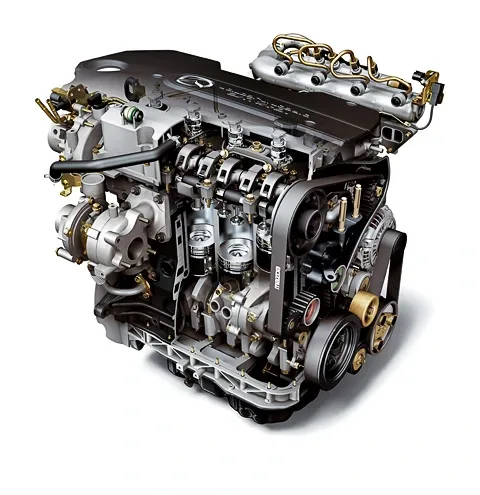
Europe is getting the diesel for now. Mazda claims that the "six" with such an engine is one of the most economical and environmentally friendly in its class. Perhaps that's true. But it doesn't drive well: lots of vibrations, a narrow working range, and you constantly have to fiddle with the six-speed manual gearshift (which, fortunately, deserves only praise). Even the 1.8-liter gasoline unit sometimes seemed more convenient.
So let's not cry over the fact that Mazda doesn't plan to bring the diesel "six" to Russia. They did promise to think about it in a couple of years — like, anything could happen… But the CX-7 with the new 2.2-liter diesel will definitely be here. But also not before a year.
So it turns out — for now, we have what we have. The hatchback is available in Russia with any gasoline engines, gearboxes, and trims, except Luxury. Prices range from 668 thousand rubles for a simple 1.8-liter Direct on a manual to 880 thousand for the Sport version with a 2-liter engine and automatic. The trim with the 2.5-liter engine, by the way, will cost even a bit less — 867 thousand.
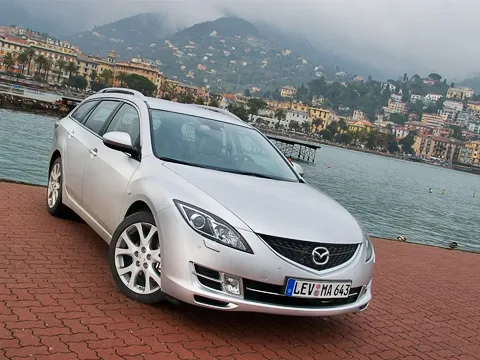
The station wagon is offered only with the two "younger" engines and in two initial trims, Direct and Touring. Dealers will reluctantly part with them for sums from 738 to 837 thousand rubles. However, the appearance of new versions won't change the balance of power in our market — people will continue to buy mostly sedans. Slightly less often — hatchbacks and station wagons. And of course — they'll argue hoarsely, figuring out who made the only right choice.
Technical specifications
| Parameters | Hatchback | Wagon |
|---|---|---|
| Body | ||
| Number of doors/seats | 5/5 | |
| Length, mm | 4735 | 4755 |
| Width, mm | 1795/1998 | |
| Height, mm | 1440 | 1490 |
| Curb weight, kg | 1530 | 1545 |
| Gross weight, kg | 2075 | 2110 |
| Trunk volume, l | 510–1702 | 519–1751 |
| Engine | ||
| Type | Diesel, turbocharged | |
| Location | Front, transverse | |
| Number and arrangement of cylinders | 4, in-line | |
| Number of valves | 16 | |
| Displacement, cm3 | 1998 | |
| Max power, hp/rpm | 140/3500 | |
| Max torque, Nm/rpm | 330/1500 | |
| Transmission | ||
| Gearbox | Manual, six-speed | |
| Drive | Front | |
| Chassis | ||
| Front suspension | Independent, double wishbone | |
| Rear suspension | Independent, multi-link | |
| Front brakes | Disc, ventilated | |
| Rear brakes | Disc | |
| Ground clearance, mm | 165 | |
| Performance characteristics | ||
| Maximum speed, km/h | 201 | 198 |
| Acceleration time from 0 to 100 km/h, s | 10.7 | 10.9 |
| Fuel consumption, l/100 km | ||
| urban cycle | 6.7 | 6.8 |
| extra-urban cycle | 5 | 5 |
| combined cycle | 5.6 | 5.7 |
| Emission standard | Euro-4 | |
| Fuel tank capacity, l | 64 | |
| Fuel | Diesel | |
Technology
Design
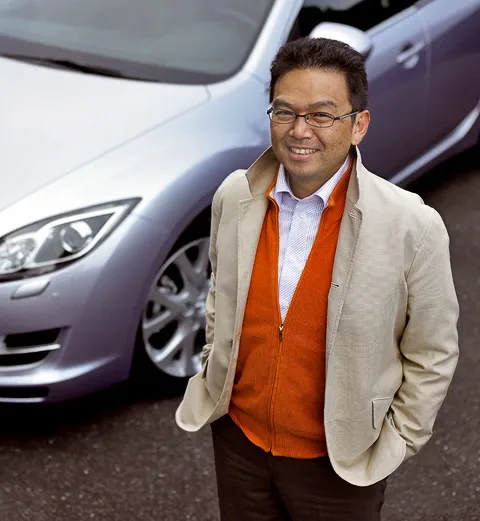
Ryuichi Umesita — program director of Mazda6. He lives in Detroit, and journalists who cannot pronounce his name are invited to call him Rick. Rick is especially proud that he managed to make the CF-Net system in the Mazda6.
Behind the scenes
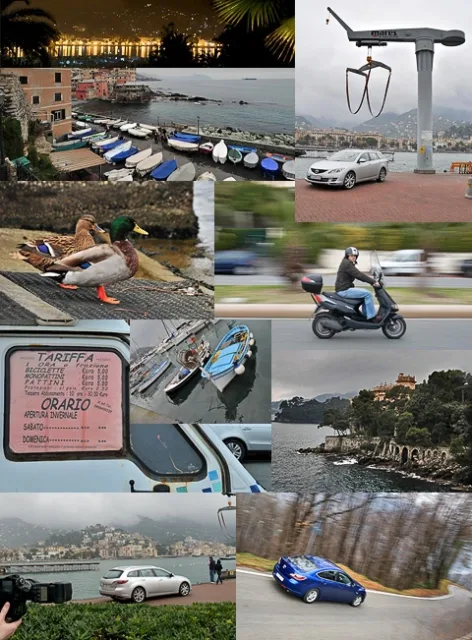
To demonstrate all the capabilities of the Mazda6 hatchback and wagon to the press, it was decided to hold the event in Genoa. Here, on the Mediterranean coast, this small off-site test took place. It must be said that the mountain roads, which abound in this place, the "six" loves very much. But some journalists — not so much. After an hour of driving with endless turns and significant elevation changes, the roadsides were clogged with cars, whose drivers and passengers got out to "get some air." And not only that.