
Alexander DIVAKOV, Oleg RASTEGAEV, photos by Stepan SHUMAKHER
The first Mazda 3 MPS with a 260-horsepower 2.3 DISI Turbo engine reached Russia just in time for the start of snowfall. "What timing," we lamented, preparing its rivals for a comparative test: the Opel Astra OPC with 240 hp and the Ford Focus ST with 225 hp. Had the Mazda arrived a couple of weeks earlier, we could have tested it without restrictions — with full track measurements and summer tires.
But winter suddenly retreated: the ice began to melt. Was it afraid of the "hot" hatches? In the end, the measurements did take place — likely the final ones this season.
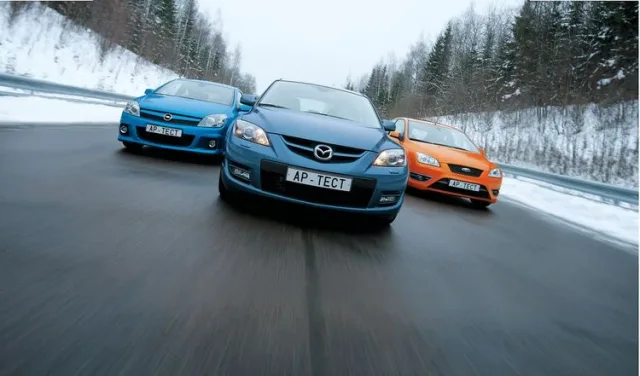
True, there was a snag — "mixed tires." At the test site, it turned out that the Ford and Opel were shod with winter friction tires, which in itself is not a problem. But the Mazda 3 MPS briskly clicked on asphalt with studs from fresh Nokian Hakkapeliitta 5. And with such a furious engine, the front end spins not only in first gear, but also in second and even third! A couple of hours of active testing with constant wheelspin and slides (and how could we avoid them?) — and all the studs would be left on the road.
So we decided to choose the lesser of two evils: the Mazda got summer wheels, while the Ford and Opel stayed on winter "Velcro."
 |
 |
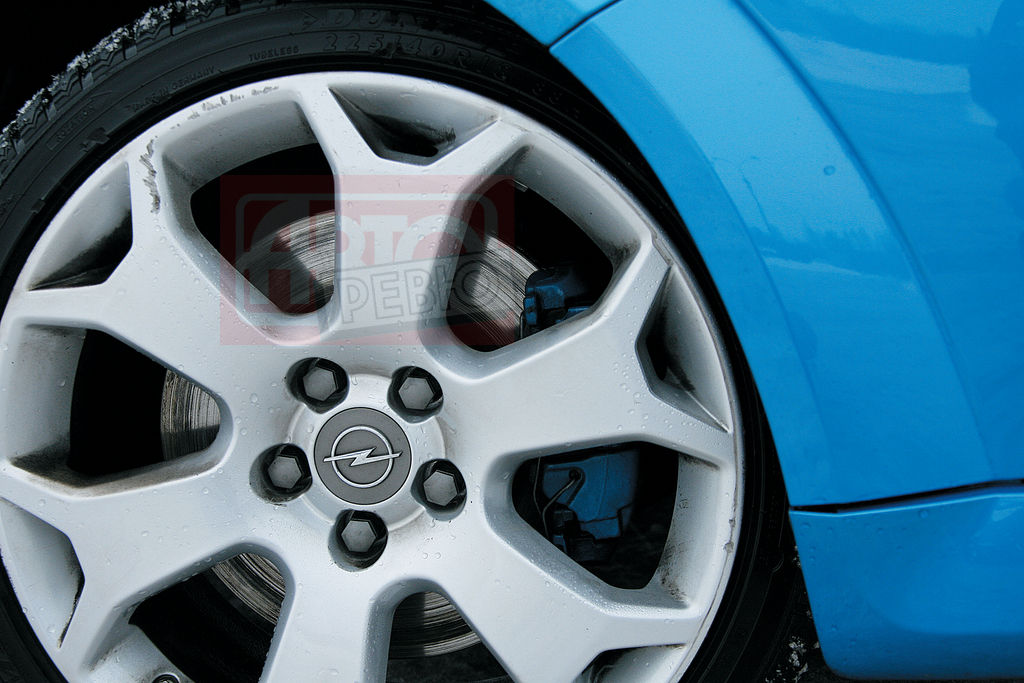 |
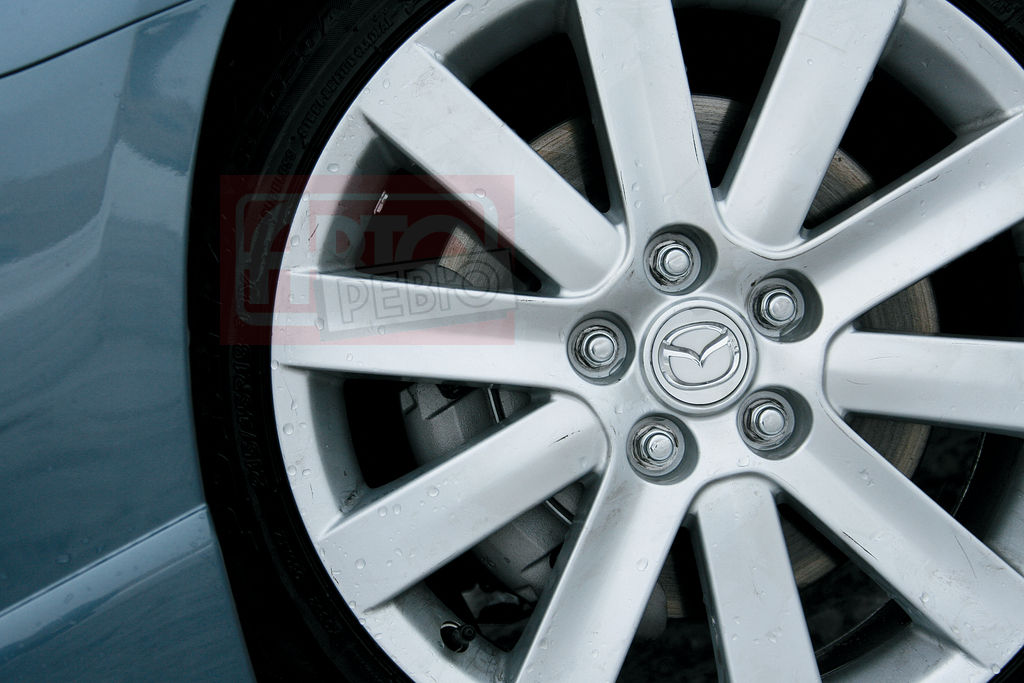
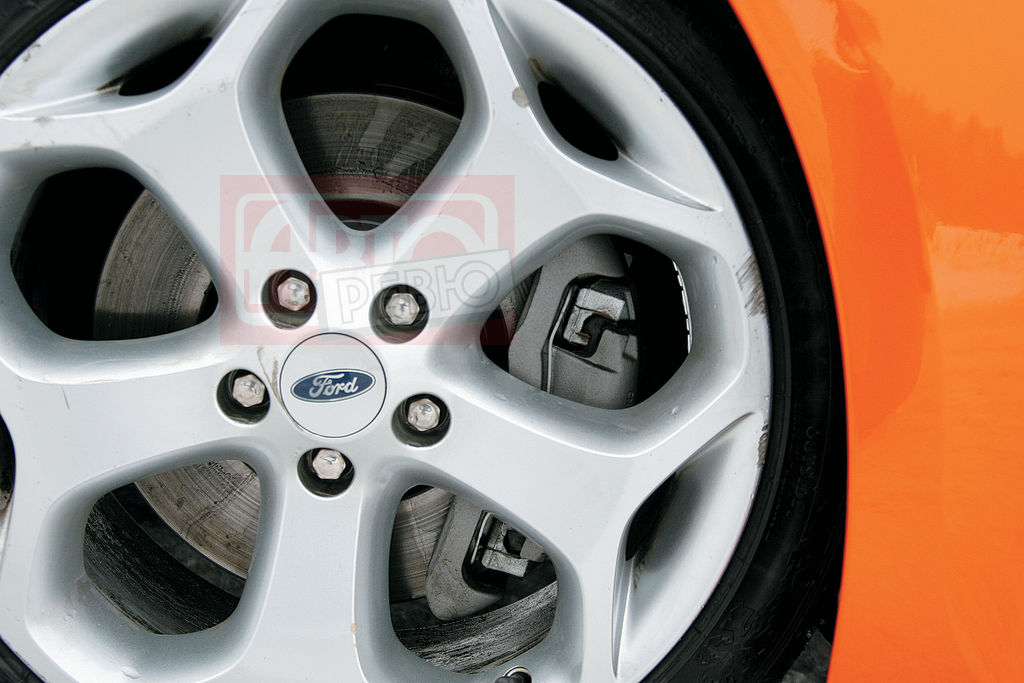
| All three cars are equipped with 18-inch wheels and ventilated brake discs with a diameter of 320 mm | ||
Even on summer tires, the Mazda spins under power no less. If you thoughtlessly rev the engine to 6000 rpm and drop the clutch, you can simply stay in place, enveloped in clouds of tire smoke. Therefore, when starting dynamic measurements, we repeatedly reduce the "launch" revs. Wheelspin disappears, acceleration becomes faster... And here is the result: you need to release the clutch at no more than 2500–3000 rpm. The hundred is reached in 6.8 seconds, and the Mazda covers a kilometer from a standstill in 26.6 seconds. It falls short of the supercar threshold of 25 seconds, but only by a little...
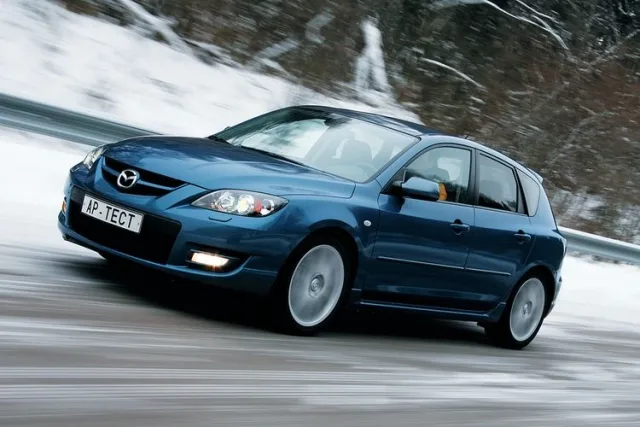
The Mazda 3 MPS surprised with stability at high speed, precise and smooth reactions
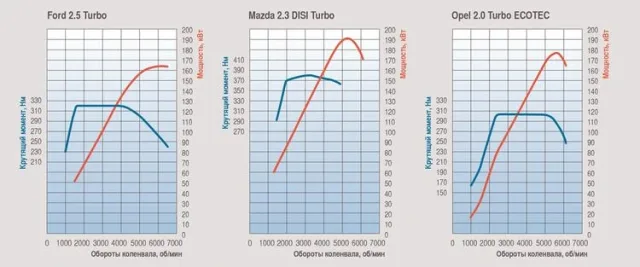
The engine is simply explosive! You press the gas to the floor — and after a short pause while the turbo builds pressure, the Mazda presses occupants into their seats. Moreover, the pickup at 2000 rpm does not mean there is a dip before it. No, the Japanese unit is responsive: it pulls calmly from low revs, allowing easy starts from traffic lights. Even in second gear.
 |
 |
|
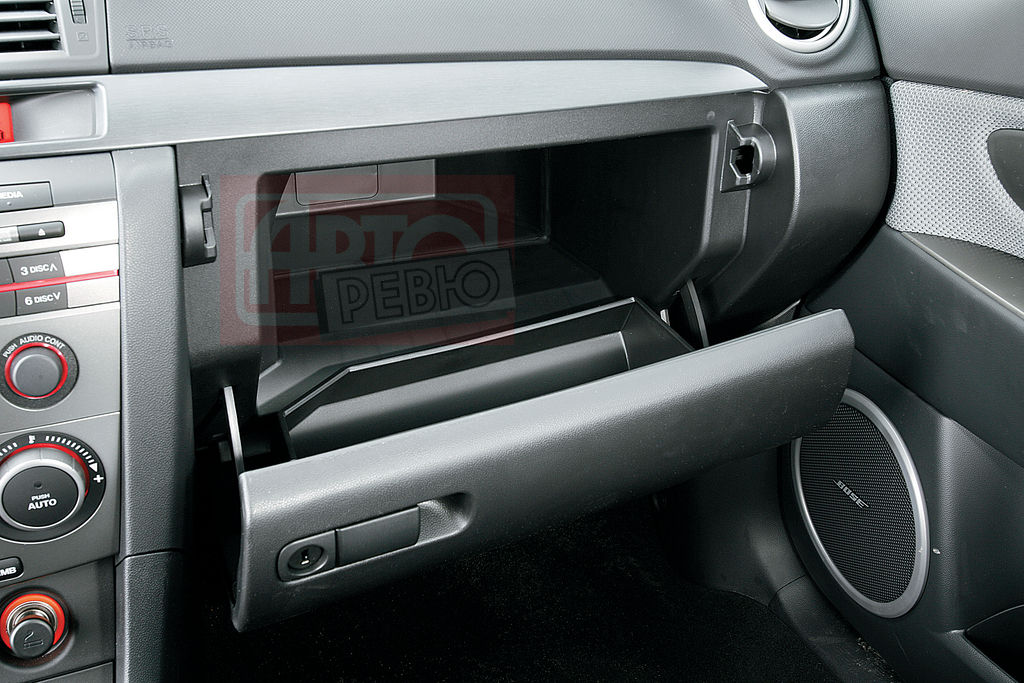
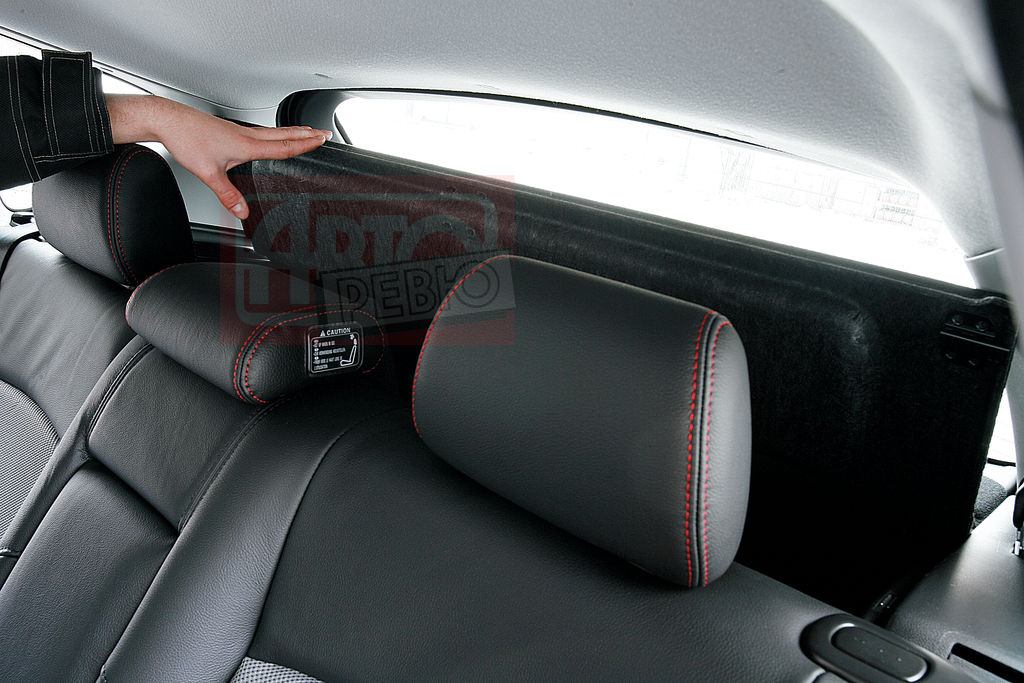
| Mazda ensures that rear passengers are also buckled up | Such a spacious "glove box" is rare for a Japanese car |
The folding shelf section opens access to the trunk from the rear seat. Very convenient! |
 |
 |
|
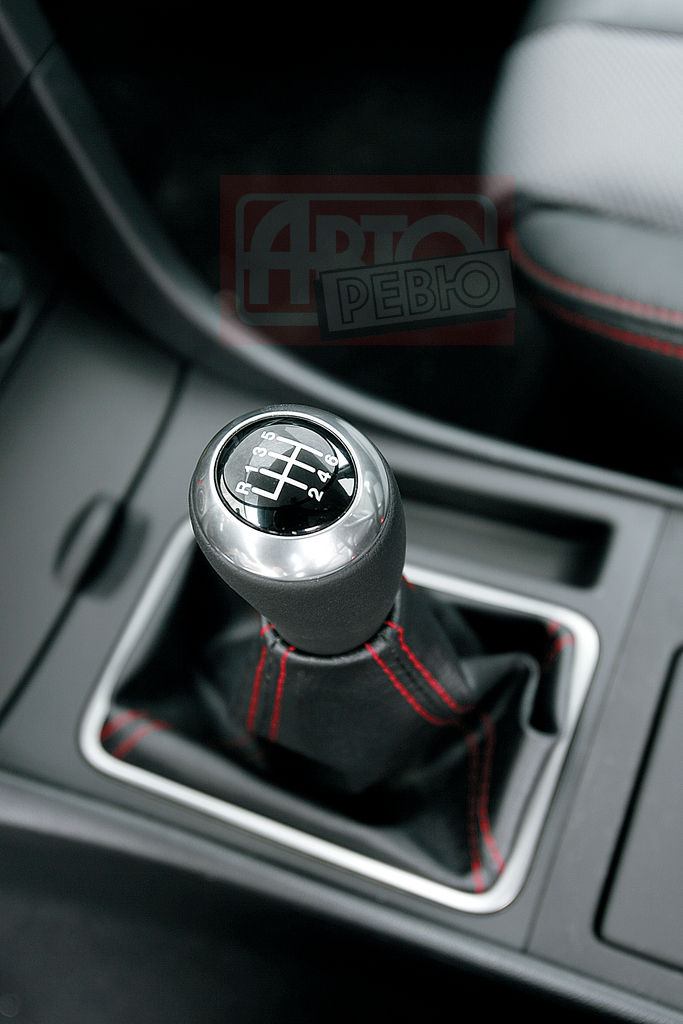
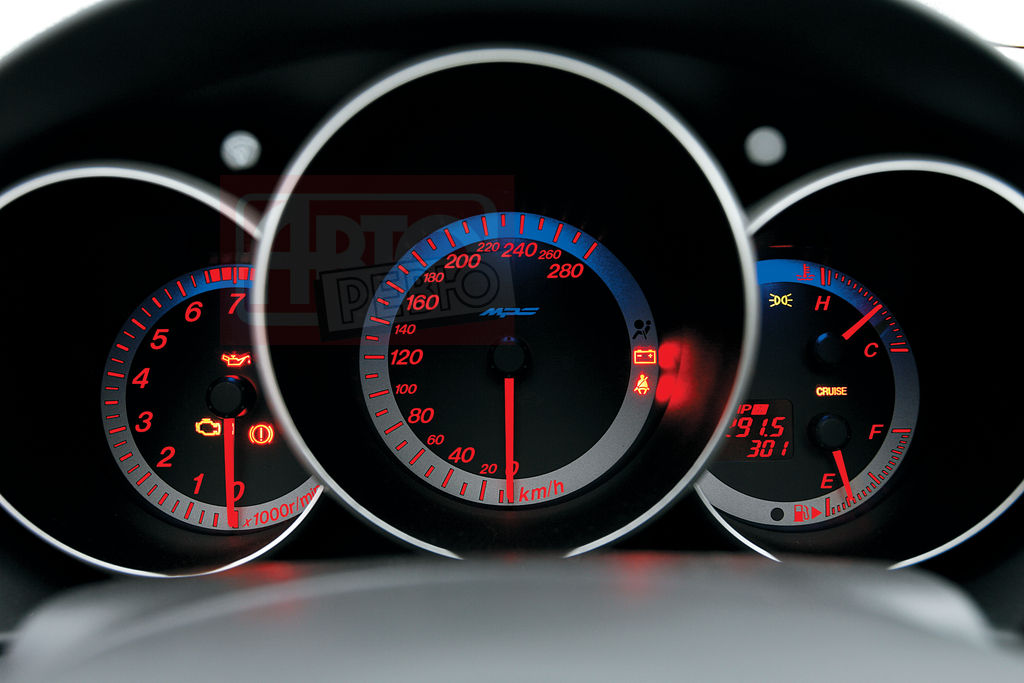
| Quick gear changes are hindered by "stiff" synchronizers | The speedometer of the MPS version is marked up to 280 km/h, although it won't go faster than 250 km/h... |
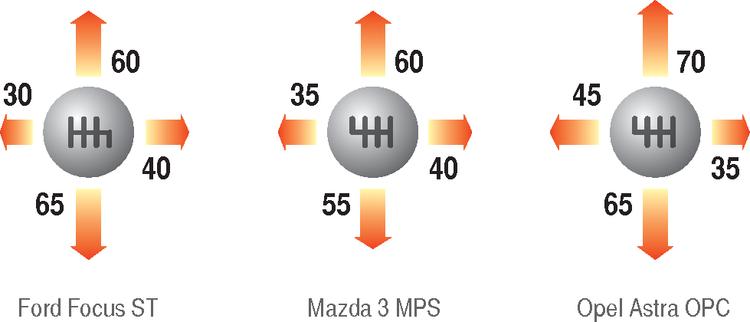
It's a pity that the gearbox drive is a bit stiff: during quick shifts, you have to push through the synchronizers. And the DSC stability system, enabled by default, suppresses wheelspin too aggressively during full-throttle acceleration — because of this, the Mazda loses about a second when reaching the hundred.
 |
 |
 |
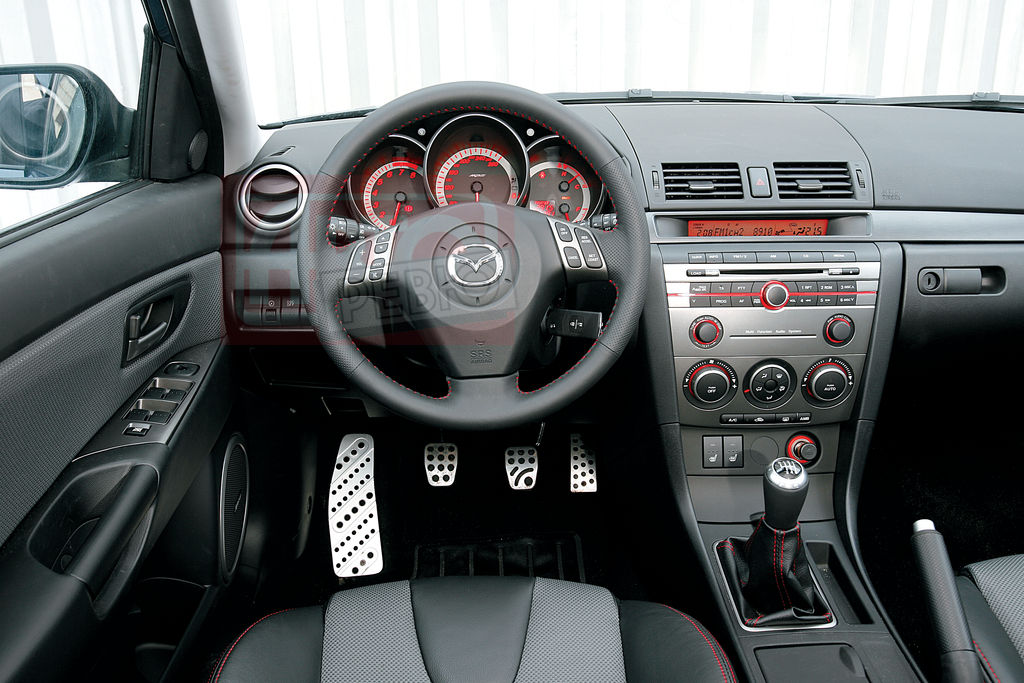
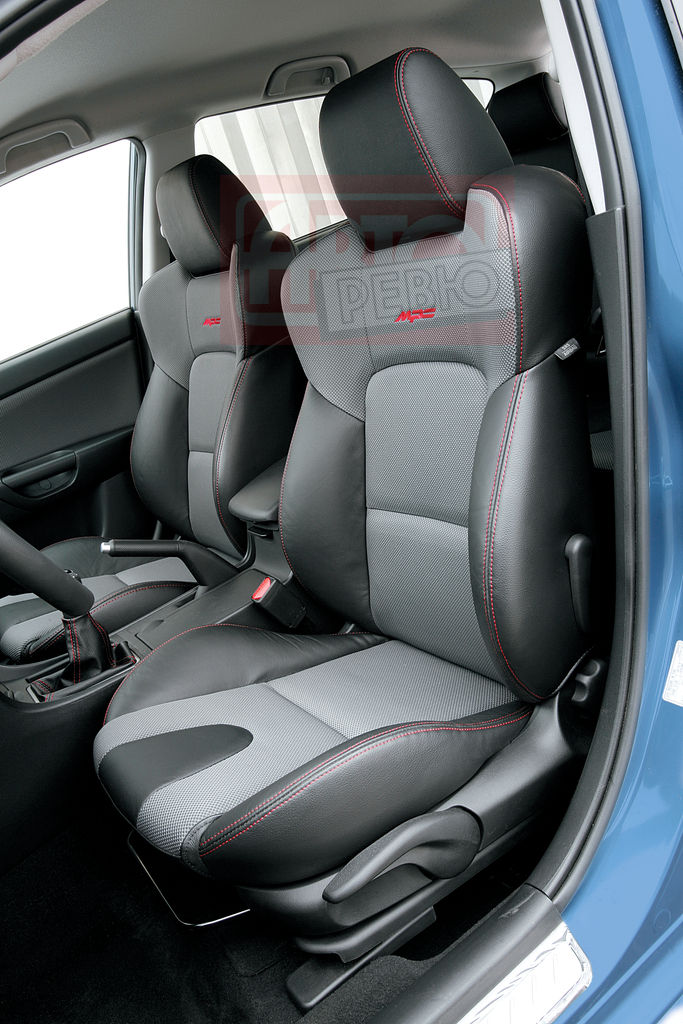
| The Mazda 3 MPS sports pedal covers and modified seats | The front seat accommodates drivers of different builds |
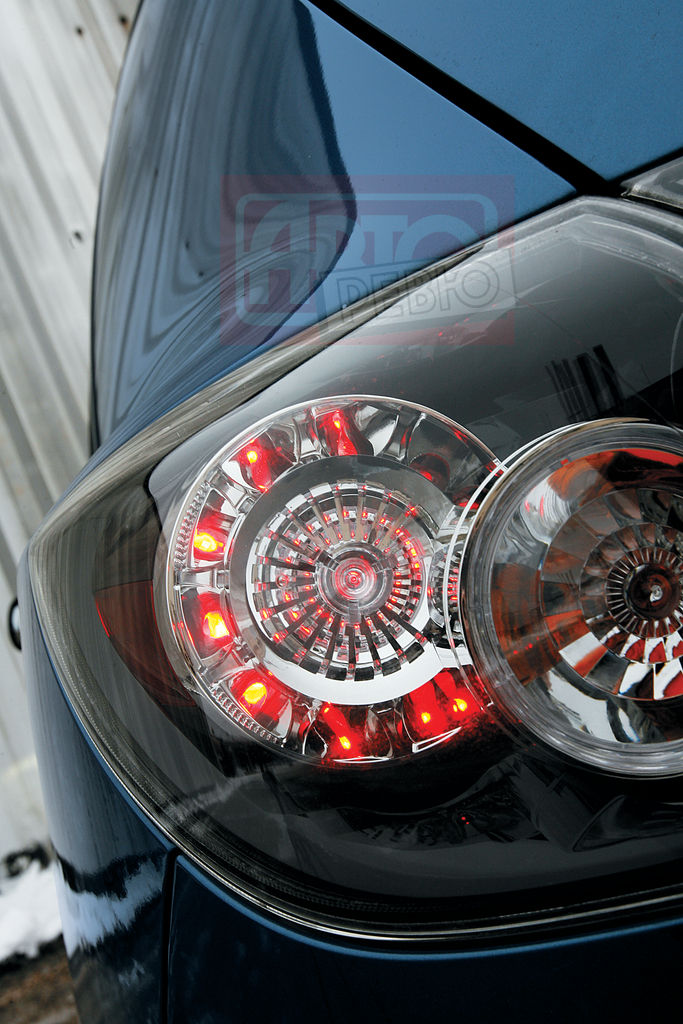
LED taillights look impressive not only at night |
But the Opel Astra OPC with electronics on accelerates even better than without — no matter how our experts tried to outsmart the Opel's traction control, they couldn't. The traction control is tuned impeccably: at launch, it holds revs in the peak torque zone and doesn't let the tachometer needle drop below 3000 rpm. At the same time, the Astra in its most "angry" OPC version is only half a second behind the Mazda in the 0-100 km/h sprint — magnificent dynamics!
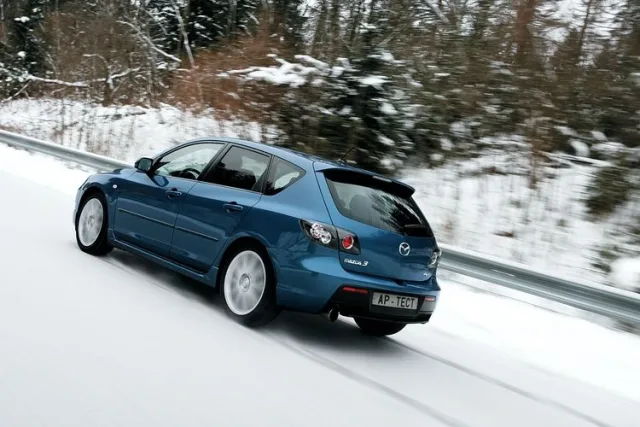
Externally, the Mazda 3 MPS is almost indistinguishable from the regular "three"
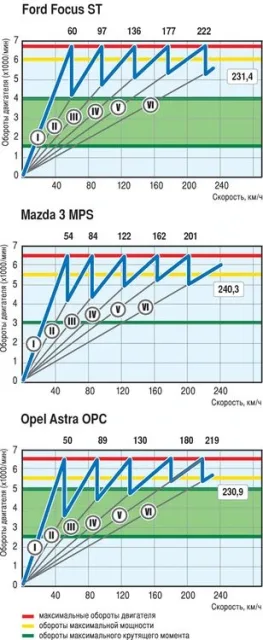
However, the Astra does not deliver the same emotional surge when the turbo kicks in as the Mazda does. The engine revs to the same 7000 rpm, and the gear ratios are similar: by speedometer, second gear works up to 100 km/h, third up to 140 km/h, fourth up to 200 km/h. But the turbo acceleration feels softer. And gear changes are more "civilian" — the lever has too long a throw for a sporty 240-horsepower car.
The Ford Focus ST — that's the one where gear changes are perfect. But the power deficit is obvious: in the 0-100 km/h sprint, the Opel is half a second faster than the Ford, and the Mazda is a full second faster. However, the powerful Focus with the Volvo-sourced turbo "five" under the hood responds cat-like softly to changes in throttle input: no explosive accelerations, but the torquey engine and "correct" pedal efforts allow you to crawl in traffic jams calmly. On the other two cars, the clutch pedals are stiffer and require more careful handling at the moment of launch.
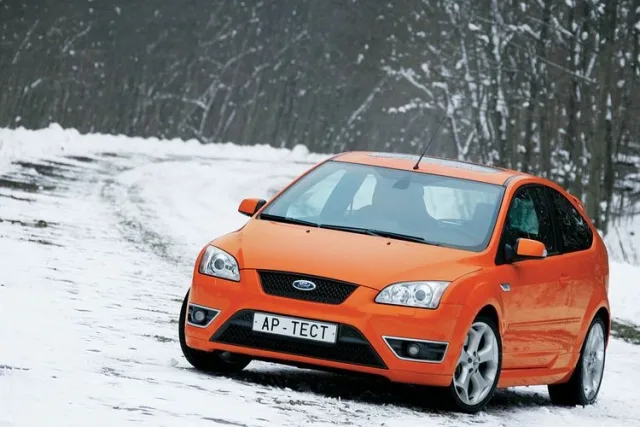
The Focus ST stands out with its predatory "mouth" of a large air intake and a 15 mm reduced ground clearance
Now let's return to the "mixed tires." Did the Mazda gain such an advantage in dynamics thanks to summer tires? We compared the measurement results of the Ford and Opel with the figures from the summer test of "hot" hatches (where there was also a Focus ST) and data obtained by our colleagues from Autosport magazine about a month ago. Everything matches: on winter non-studded tires, the Focus ST and Astra OPC accelerate no slower than on summer tires. So the Mazda's victory in the "Acceleration" category is beyond doubt.
However, during emergency braking, tires play a more significant role, so the Mazda stopped two meters earlier than the Focus from 100 km/h, and its advantage over the Astra reached five meters. But we did not give extra points to the Mazda's brakes — it's possible that on summer tires, the Opel would stop just as well. In terms of braking control, both the Opel and Ford are good: deceleration behind the wheel of these cars can be dosed very precisely. But the Mazda... Rarely do you find a car where the braking process brings so much pleasure — thanks to the super-informative brake pedal.
 |
 |
|
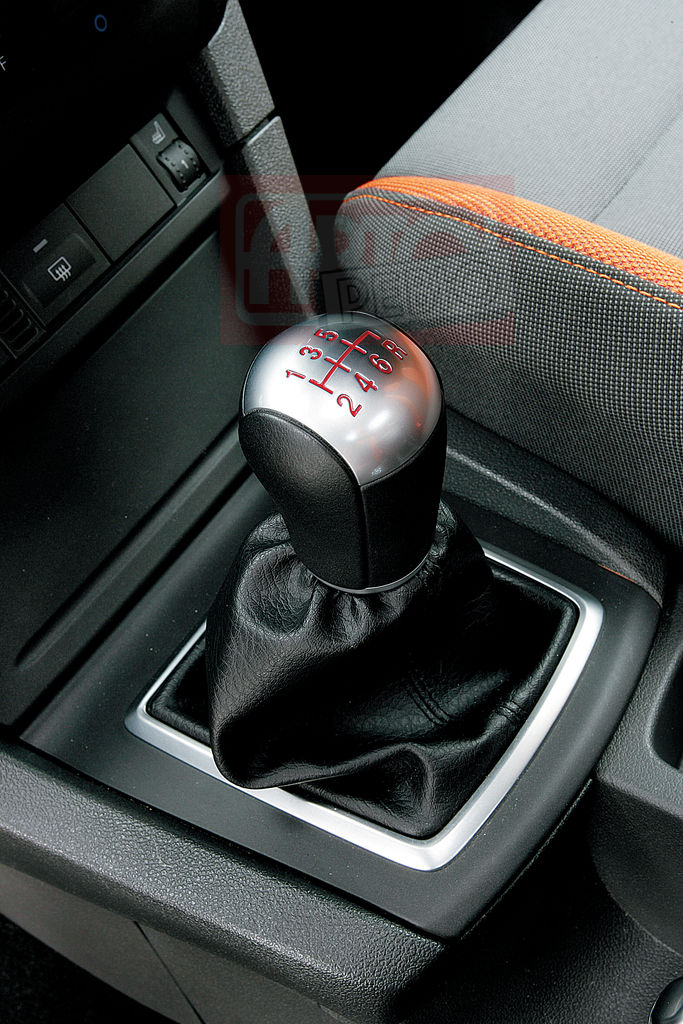
| The Ford's instruments are the most informative. And the onboard computer speaks Russian | Shifting gears is a pleasure |
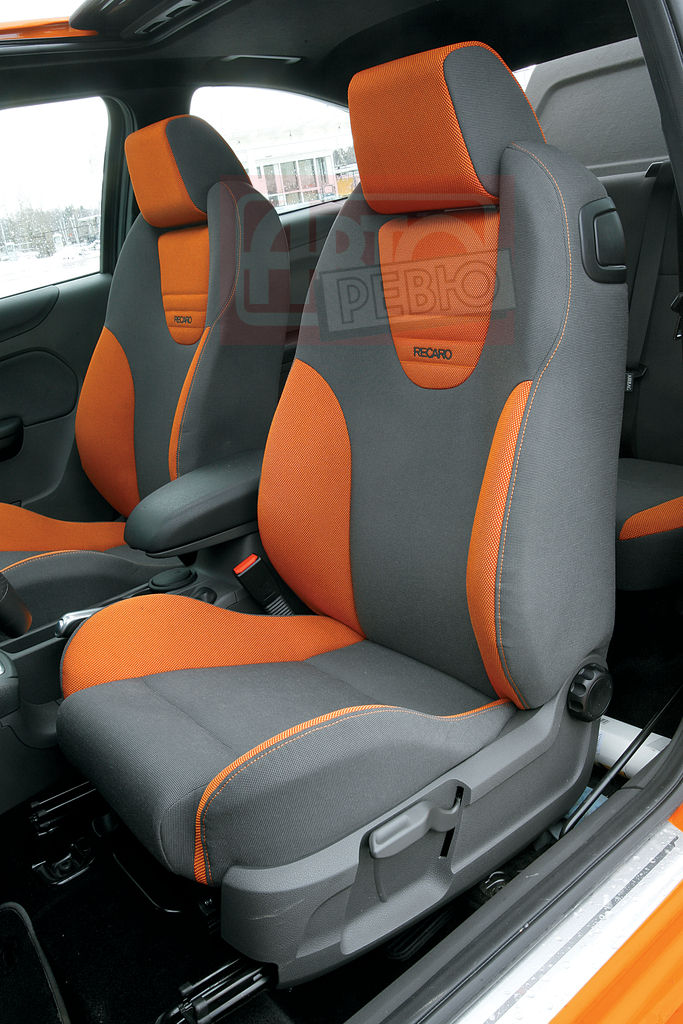
Recaro seats — stylish and comfortable |
In fact, the Mazda 3 MPS is driving pleasure in every way!
The chassis is excellent. At high speeds over 200 km/h, the Mazda driver can calmly take their hands off the wheel — and it will, as if on autopilot, dash straight ahead. Lane changes, overtaking — all done with ease: even at such speeds, the Mazda responds to steering inputs precisely but not sharply. And although the steering wheel is "heavy" in parking modes, on the move, the well-calibrated hydraulic power steering allows you to feel all the nuances of front-wheel grip. By the way, the regular Mazda 3 has either electric or electro-hydraulic power steering, but the MPS version has uncompromising "hydraulics." Plus a reinforced body, 60% increased suspension angular stiffness, and a limited-slip differential!
The DSC stabilization system disable button is, of course, present here. We press it and don't regret it at all: in a极限 corner, the Mazda obediently follows the steering wheel, demonstrating slight understeer, and when you lift off the throttle, it neatly goes into a slide. The steering is precise, reliable, and comfortable. Perhaps even too "civilian" for a car with such character.
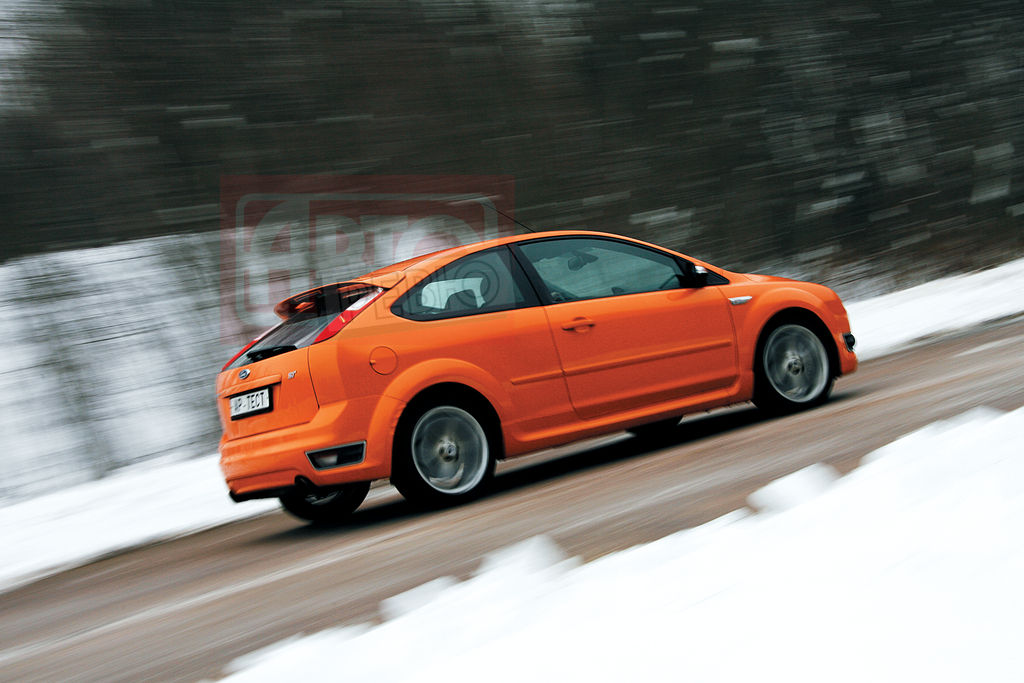 | 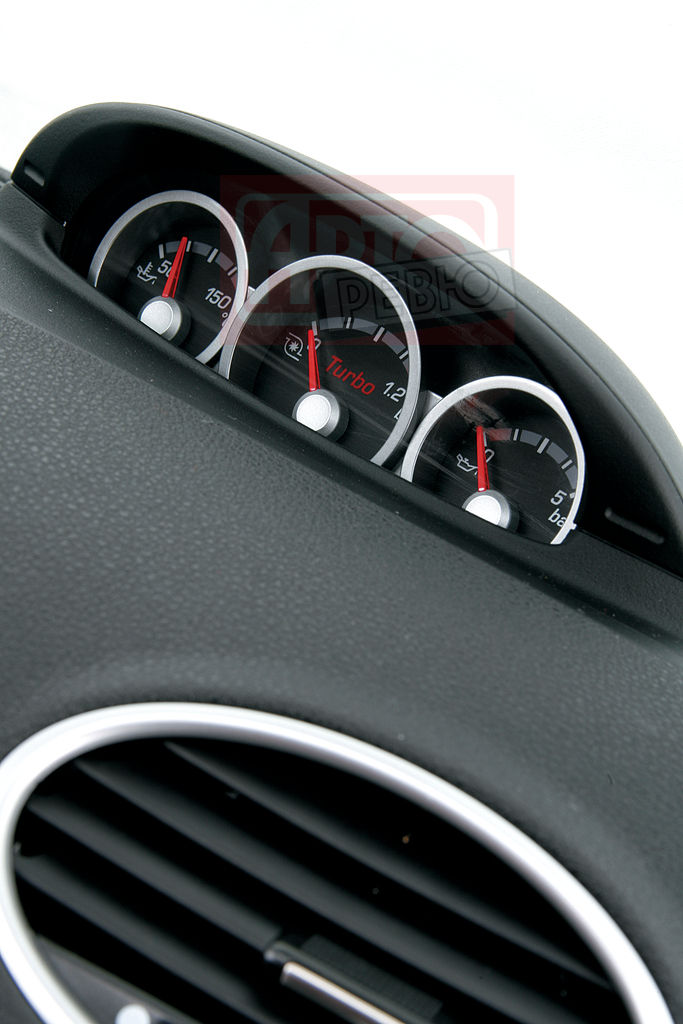 | 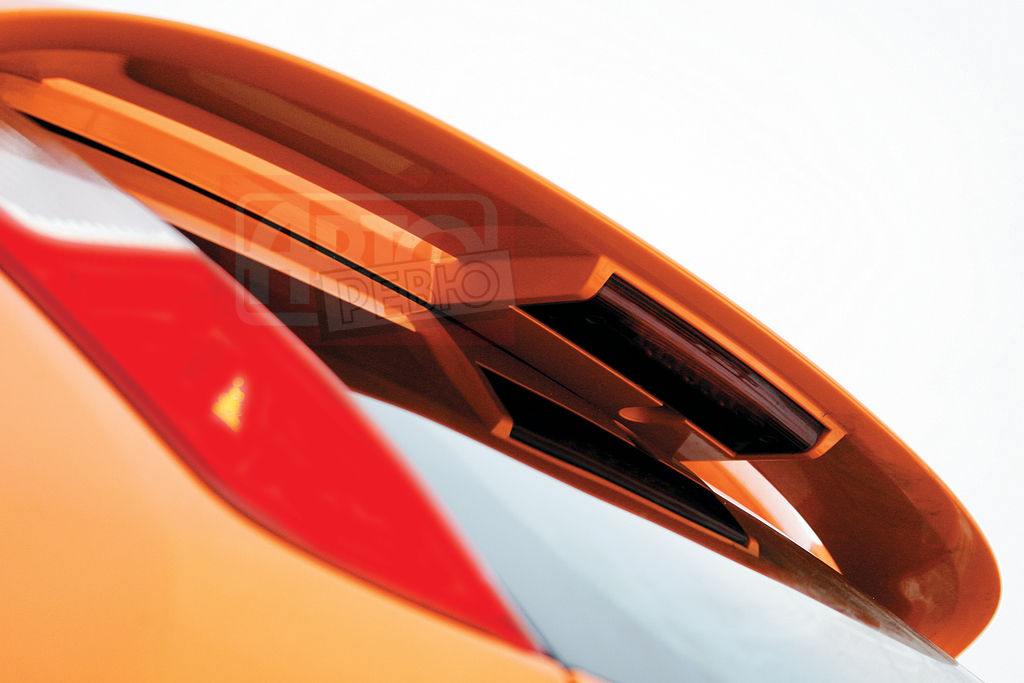 |
| Focus ST is fast and soft, but wanders significantly under acceleration | The ST version's additional gauges allow monitoring oil temperature and pressure, as well as boost pressure | The spoiler reduces lift at high speeds |
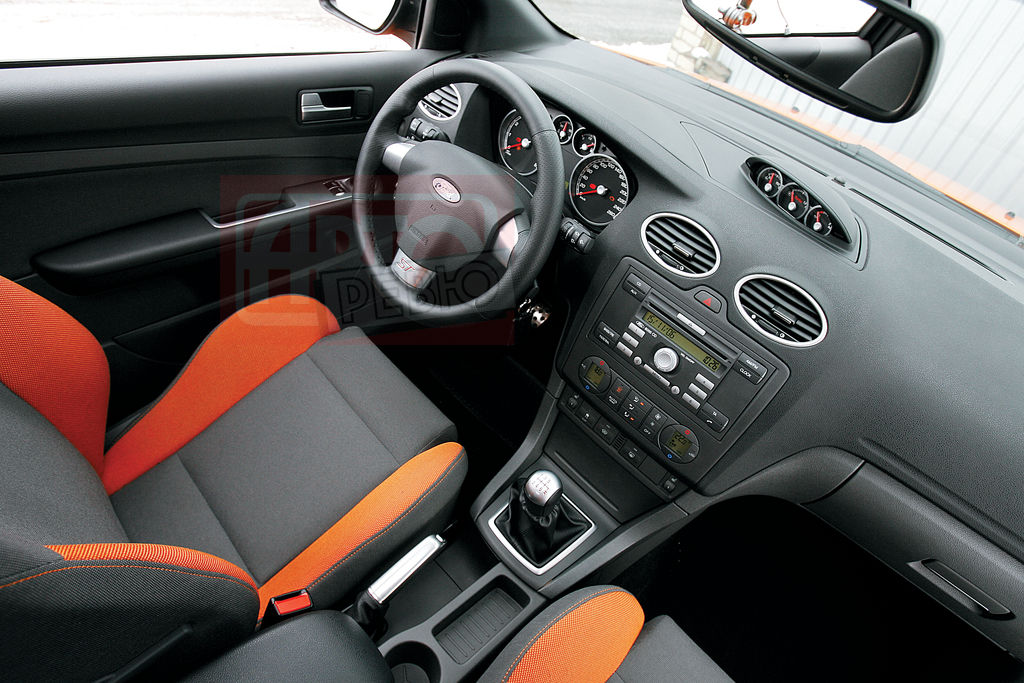 | 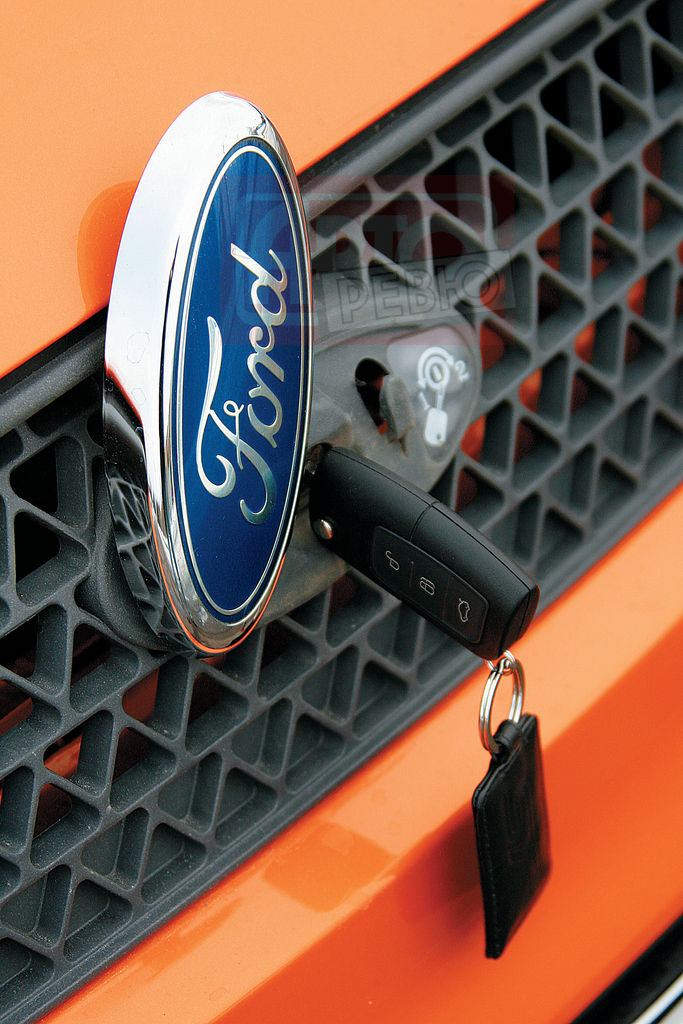 | |
| Dual-zone climate control, heated windshield, and 5-stage heated front seats — all standard equipment for the ST version | The hood is opened with a key — like on regular Focuses | The bright Focus could easily have done without these distinguishing marks |
The Opel with the OPC badge is also the most "extreme" version of the Astra. The suspension was tuned on the Nürburgring Nordschleife, and in its reactions, the car resembles a race car. Very stiff suspension, almost complete absence of body roll, "sharp" steering... At high speed on the highway, you can dart from lane to lane like in a go-kart. But the Opel is not too eager to enter sharp corners, especially on wet asphalt. No, this car's element is high-speed autobahns with gentle curves and perfectly smooth surfaces. On asphalt waves, the Astra OPC starts to "jump" off its trajectory, and the dynamic corridor noticeably widens. The Sport button, which makes the suspension even stiffer and the accelerator pedal more sensitive, is better left unpressed: the Astra starts bouncing over bumps like a ball. Although on the Nürburgring itself, Sport mode probably allows improving lap times by a few seconds.
The Ford is a completely different matter! It enters sharp corners very willingly, responds softly to steering inputs, easily settles into an arc, demonstrating almost neutral handling. But during sharp alternating maneuvers, the Focus ST noticeably rolls, and the precision of its reactions decreases. And at high speed, the car wanders on the road no less than the Astra. A small wave or uneven surface — and the car is pulled to the side. And what the Ford does under power... Even at 60 km/h, when pulling out to overtake, you need to be ready to catch the car as it starts darting across the entire width of the oncoming lane — from the shoulder to the center line!
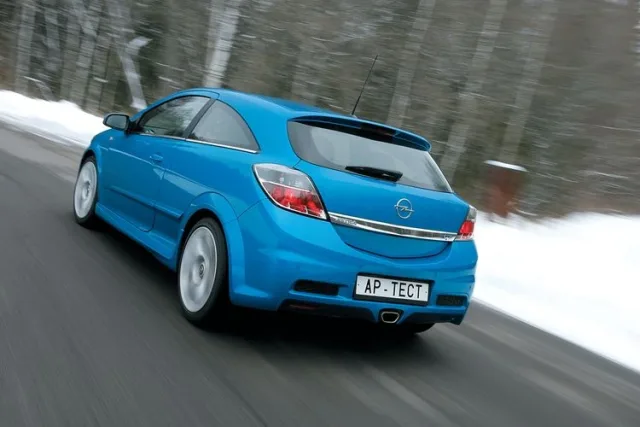
Astra OPC: the centrally located exhaust pipe is a source of snake-like hissing during acceleration
A familiar picture: in the previous test (see AR No. 10, 2006), we also noted the low directional stability of the "hot" Focus. And, alas, changing tires did not smooth out this feature — the cause should be sought in the mismatch between the front suspension kinematics and steering.
By the way, sometimes similar pulls to the side under power are demonstrated by front-wheel-drive cars with a self-locking differential. But the Focus ST doesn't have one. The Mazda does — and it accelerates noticeably more smoothly, even on roads with longitudinal and "diagonal" ruts.
But in terms of comfort, the Focus ST is beyond competition!
The ride smoothness of the "hot" version is little inferior to the standard Focus: the suspension with stiffer springs (30% stiffer compared to regular Focuses) copes excellently with asphalt waves and damps disturbances from small bumps well. The more spirited Mazda passes asphalt joints harder and rolls more from side to side, following the road profile. But the Opel Astra OPC is a veritable "stool" even in its default "soft" suspension mode. At low speeds, occupants could sing Zemfira's song to the road: "I remember all your cracks, yeah-yeah." The suspension reacts to large bumps with hard impacts. And if you switch the electronically controlled dampers to Sport mode, passengers can book an appointment with the dentist — to reinsert fillings that fell out from vibration. However, many tuning enthusiasts like such unmotivated stiffness...
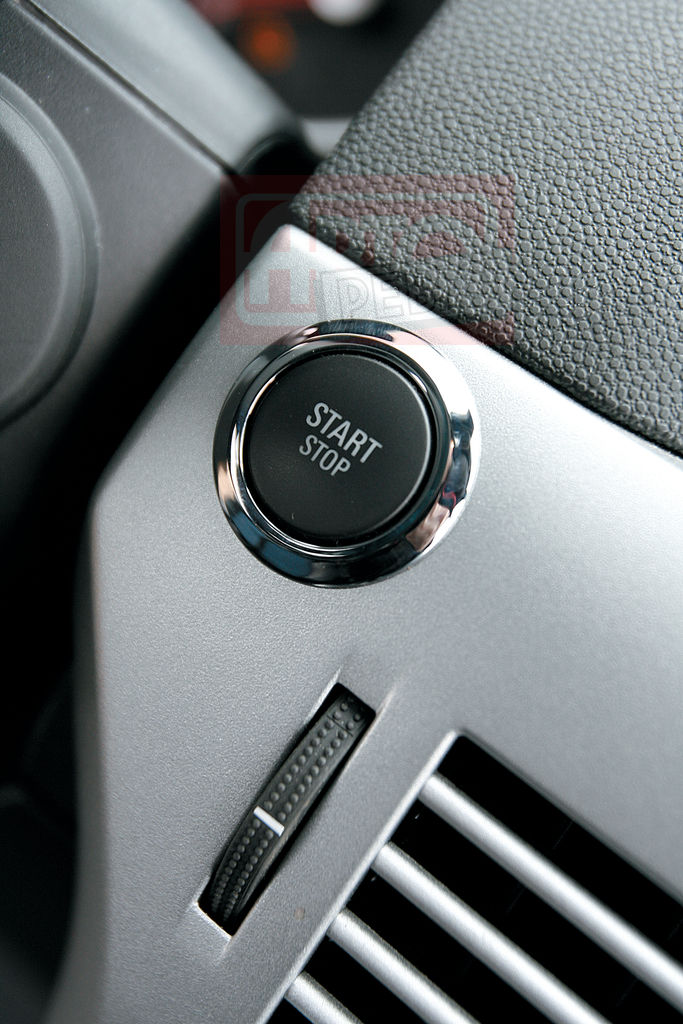 | 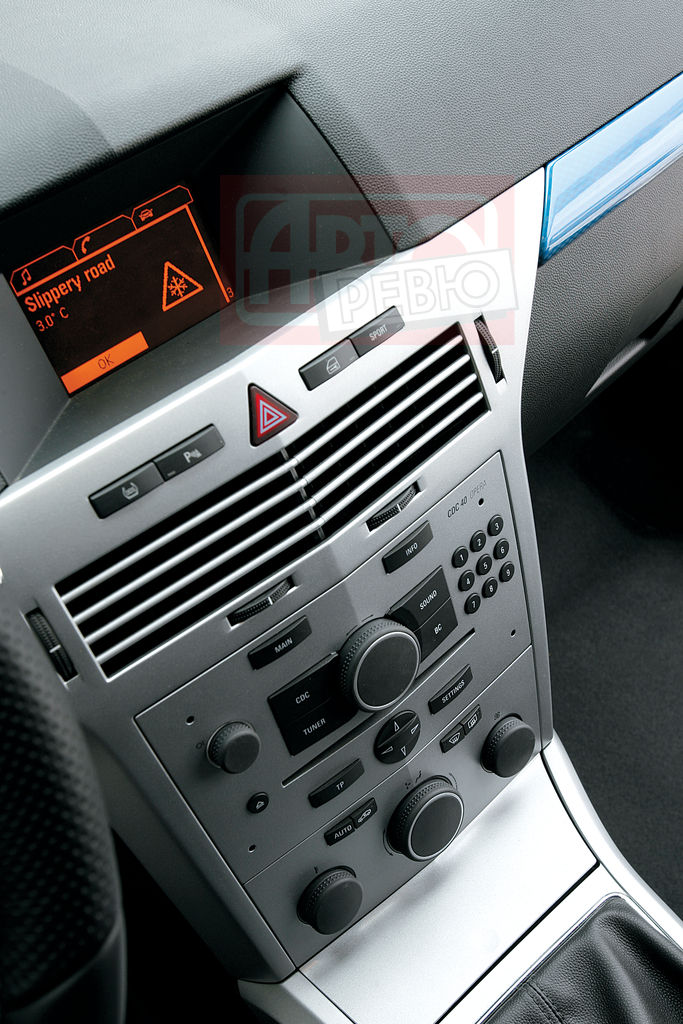 | 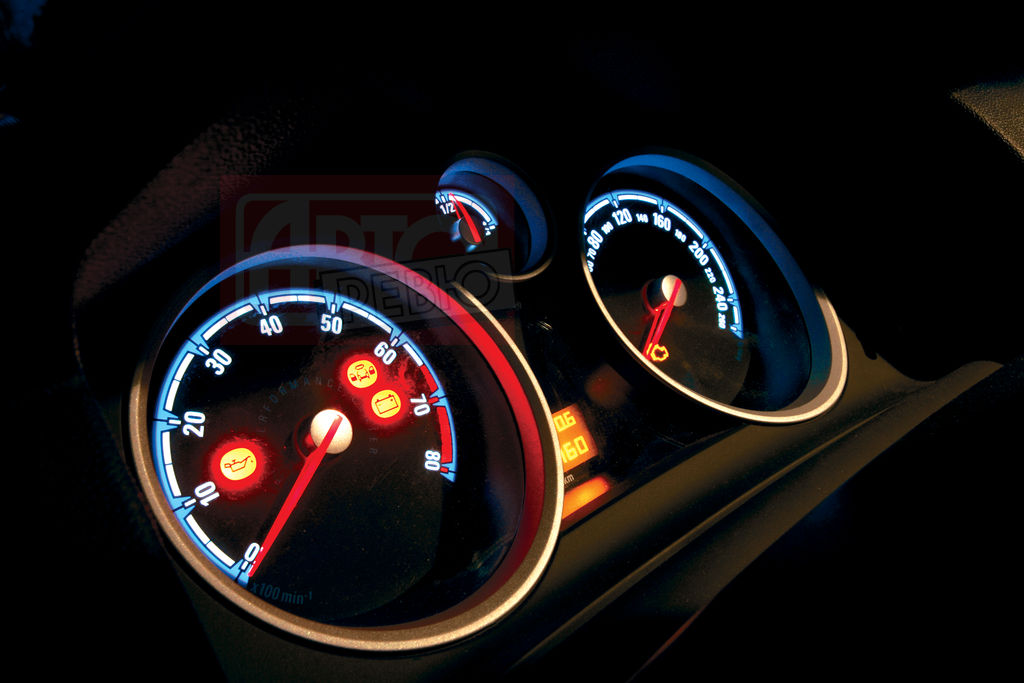 |
| You can open the doors and start the Astra OPC's engine without removing the transponder key from your pocket | The Sport button on the Astra's center console switches the suspension to stiff mode and increases accelerator pedal sensitivity. If you hold the button for three seconds, you can disable the stabilization system | The instruments are somewhat plain, half the numbers on the speedometer are too small |
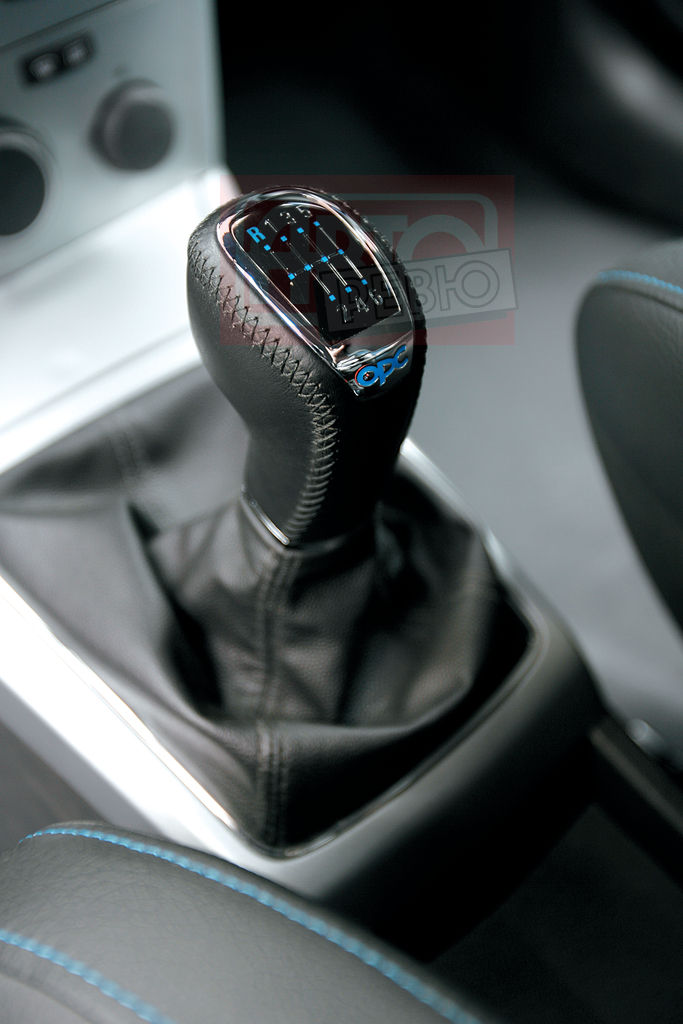 | 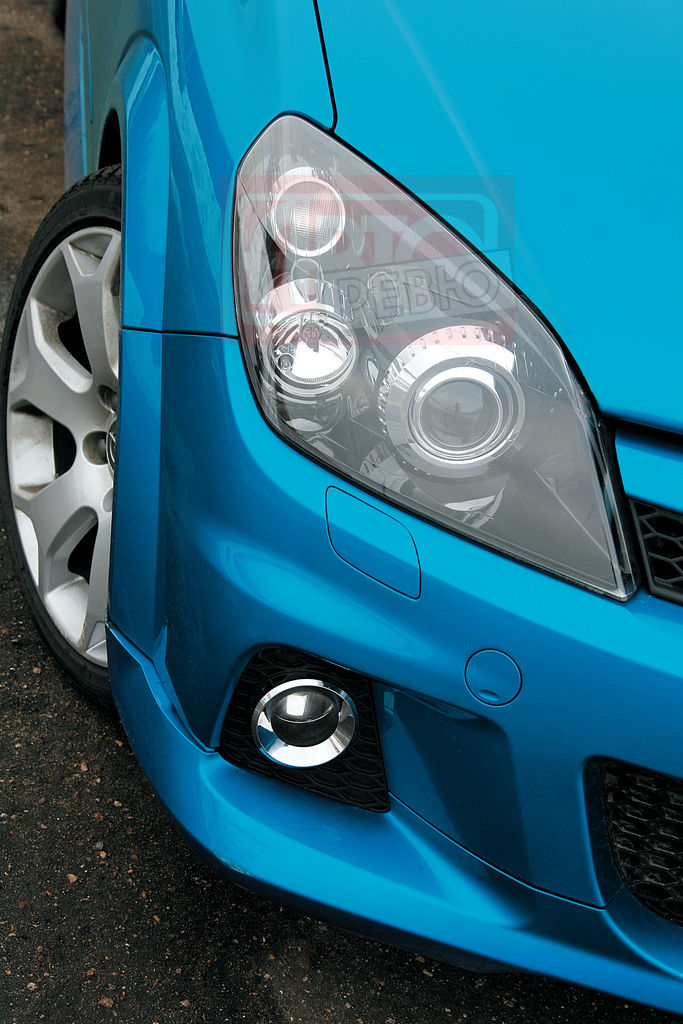 | |
| The lever travel is large for a sports car | Swivel bi-xenon headlights are optional equipment |
The quietest again is the Ford Focus — in the cabin, only a unobtrusive baritone from the engine is heard, and only after 4000 rpm. And its voice is pleasant — thanks to a special membrane that voices air vibrations in the intake tract. And during intense acceleration at gearshift moments, pops are heard in the muffler — the mixture clearly burns out in the exhaust system, like in serious race cars.
If the sounds produced by the Ford evoke positive emotions, the Mazda, on the contrary, irritates with a squealing howl from the engine. Oh, if only it had the same resonator on the intake as the Focus... But worse is something else: the Mazda traditionally suffers from poor body sound insulation, and when driving on a dirty road, sand and small pebbles drum loudly on the wheel arches and sills.
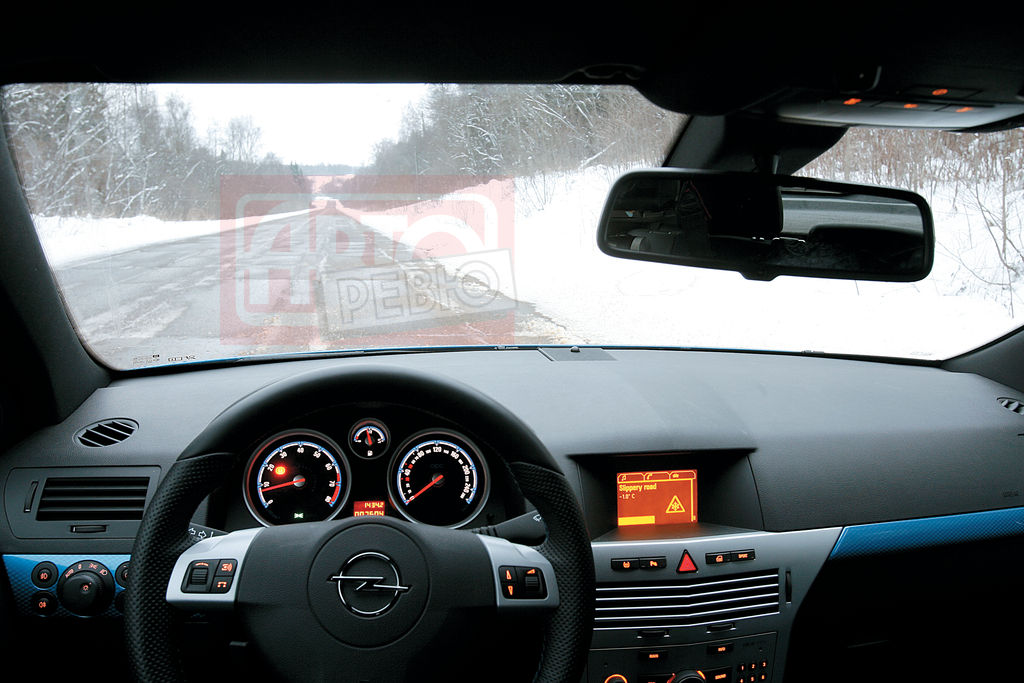 | 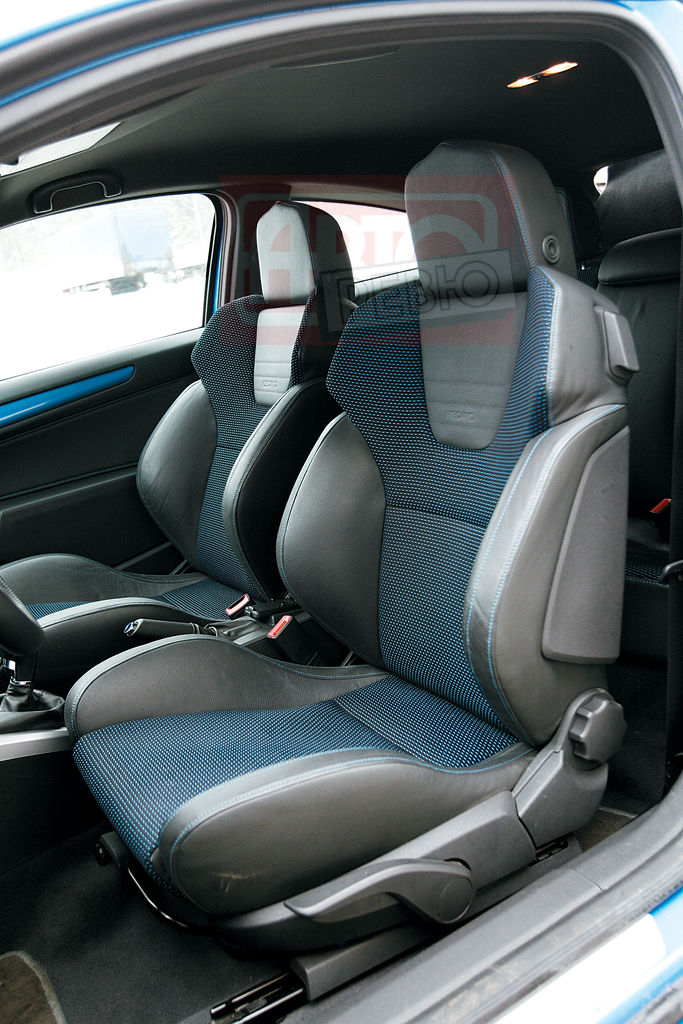 | 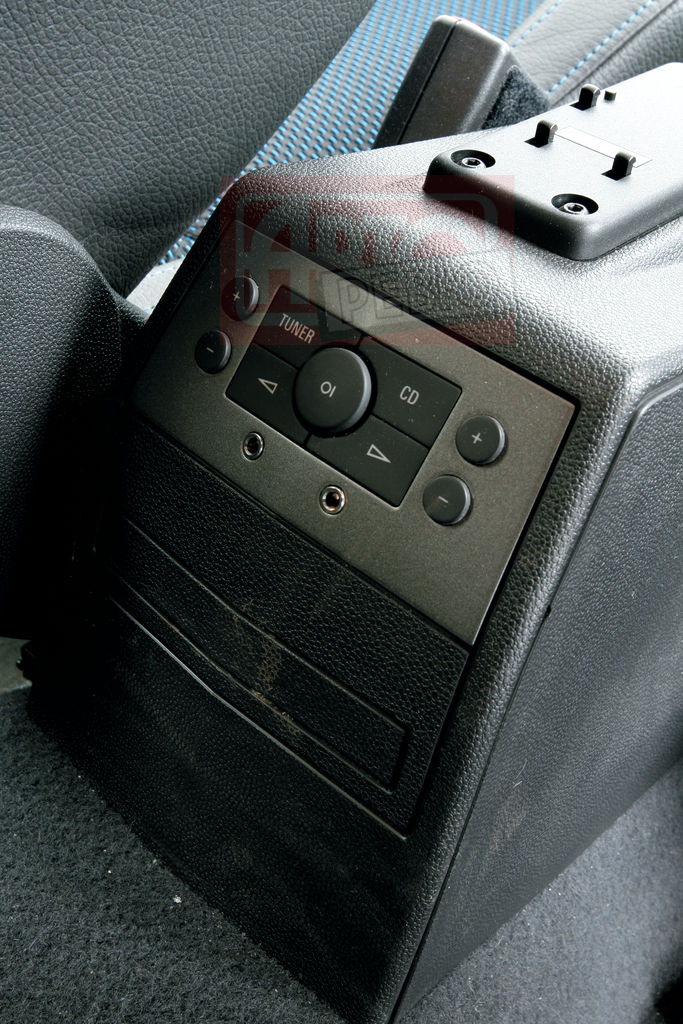 |
| The rain and light sensor block, as well as the low-mounted mirror, impair visibility | Opel's sports seats are not designed for large drivers | Rear passengers have their own control unit for the "music" |
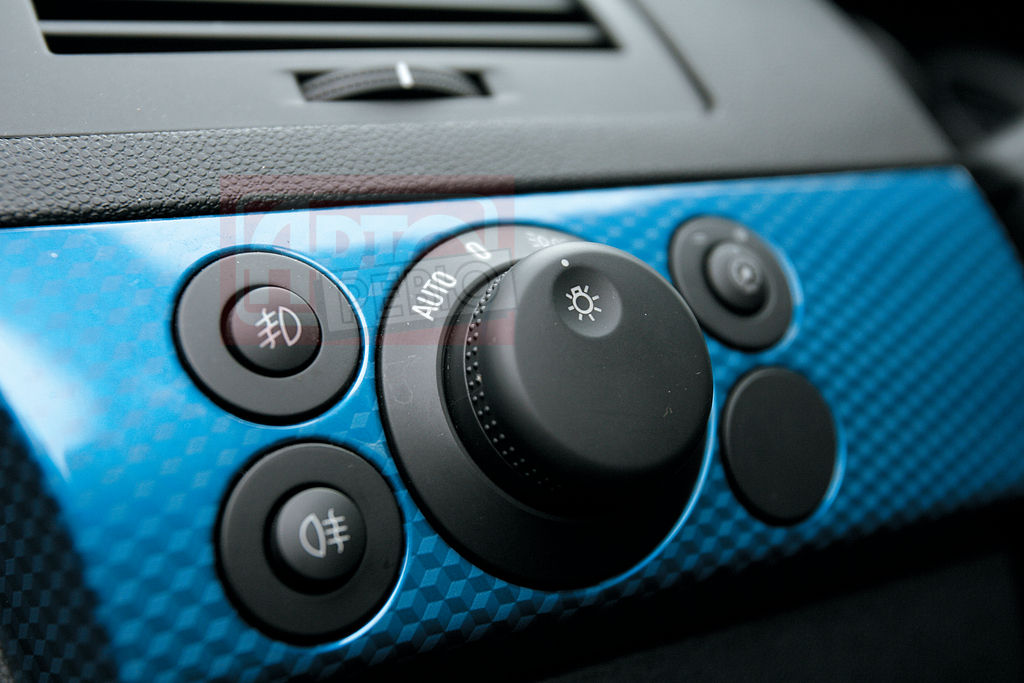 | ||
| The monitoring system informs the driver about tire pressure increase as they warm up | To the left of the steering wheel is a convenient light control unit |
The Opel's sound insulation is better, but... A low-frequency hum from the engine penetrates the cabin constantly, and after 3000 rpm it literally presses on the ears. During intense acceleration, some hissing mixes with the engine rumble — as if the wheels are spinning on wet asphalt. It turns out this is the exhaust gases hissing — apparently, the exhaust backpressure on the Astra could be lower.
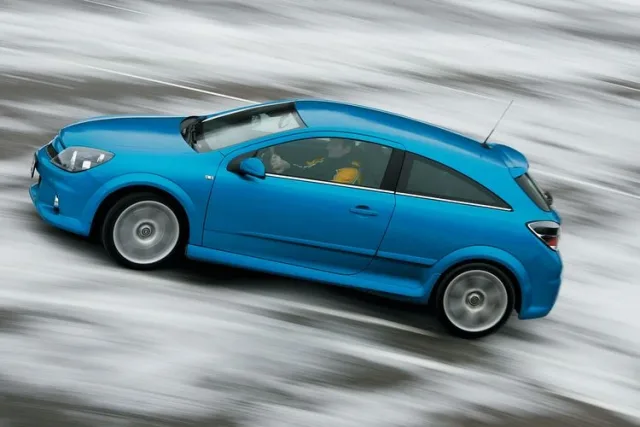
Astra OPC with the stabilization system disabled is not the easiest car to handle: sharp breakaways into slides require quick and precise steering corrections
And how about practicality in our trio? The interiors of the "hot" cars are sportier, and drivers get not only aesthetic but also practical benefits — sitting in tight seats with good lateral support and sufficient adjustment ranges is a pleasure. But if in the Mazda and Ford the seats are quite wide, in the Astra they are narrow "racing" buckets. Perfect for slim drivers, but cramped for larger people. And what about the Astra's awful visibility? Reversing is difficult due to the narrow opening of the third door glass and small exterior mirrors. And the low-mounted interior mirror plus the large light and rain sensor block (standard equipment for the OPC version) block the view through the right half of the windshield.
As for the rear passengers, in the Opel they get the worst deal: the ceiling presses down, getting in and out is uncomfortable, the central tunnel is high, and the side windows are narrow. There are no grab handles above the doors — during active driving, passengers can only grab at thin air. But in the Mazda and Ford, the rear is noticeably more spacious and sitting is more comfortable. Moreover, the Mazda is a five-door, and the Focus ST is also available in a five-door version. But the Astra OPC is exclusively a three-door. However, it looks striking!
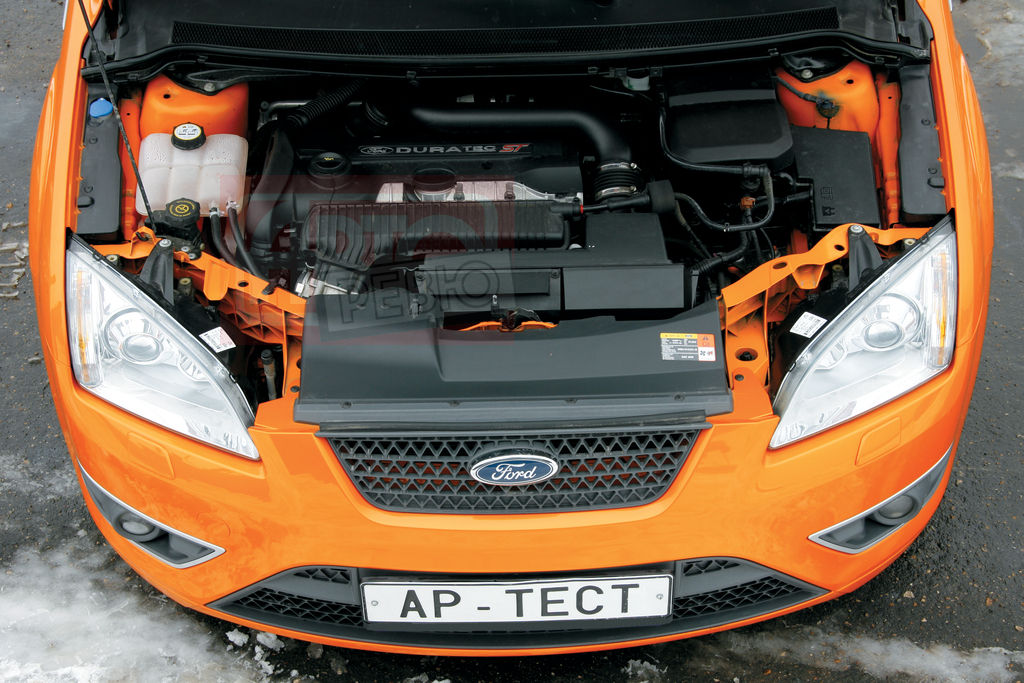 | 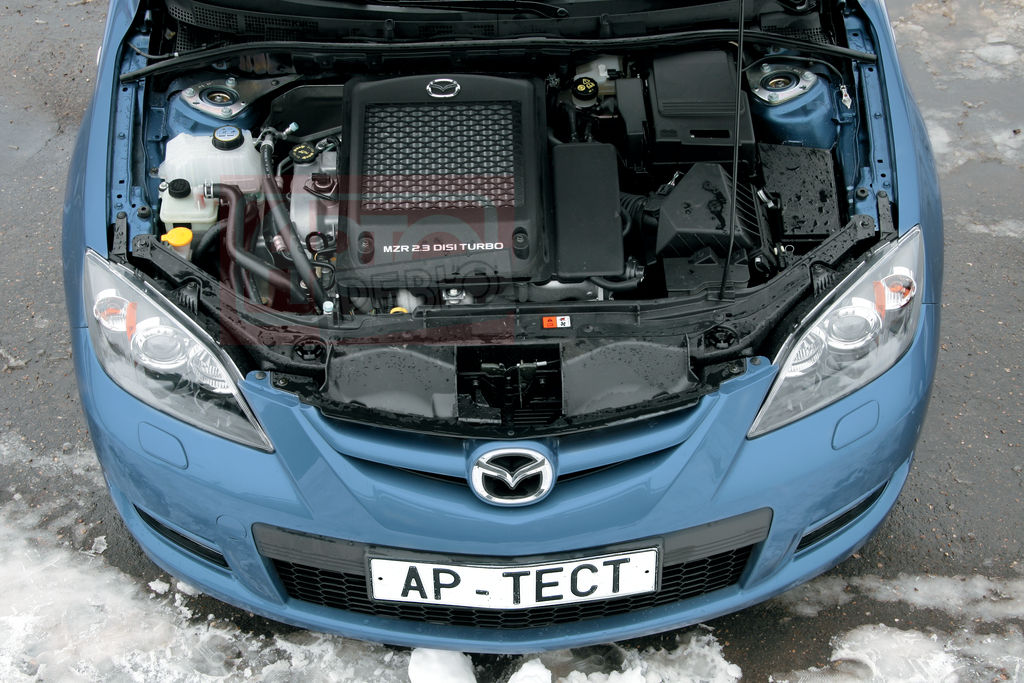 | 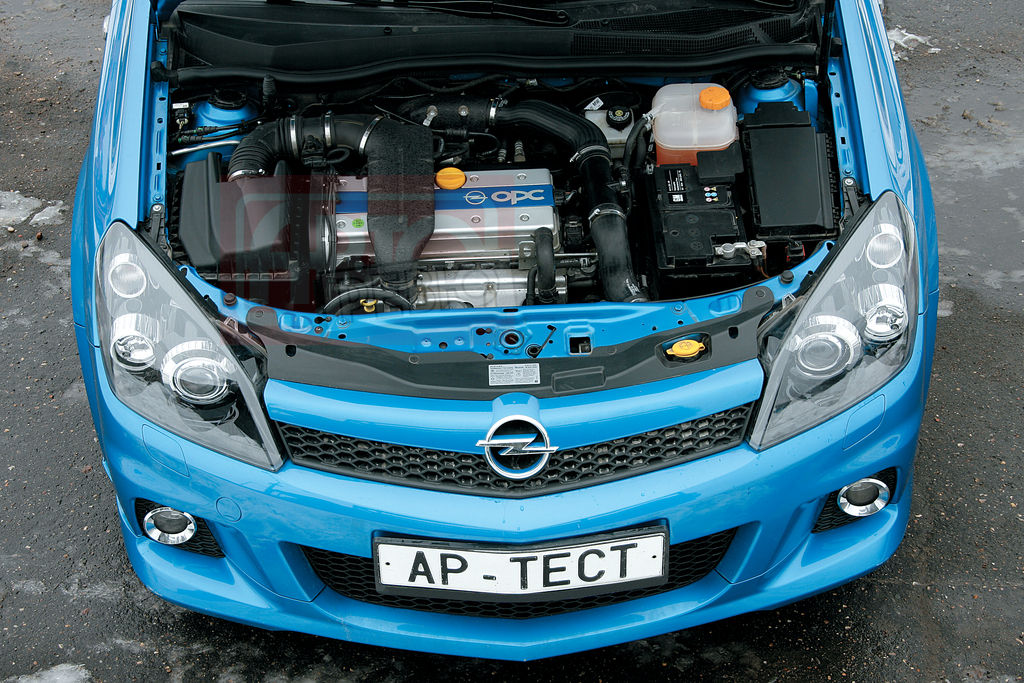 |
| Under the hood of the "hot" Focus is a Volvo-sourced five-cylinder turbo engine with a displacement of 2.5 liters, a lightweight flywheel, and an upgraded control program. Maximum boost pressure is 1.1 bar | The 2.3 DISI Turbo engine (260 hp) with direct fuel injection is borrowed from the Mazda 6 MPS. Maximum boost pressure is 1.15 bar, and the intercooler is located above the engine | The OPC version gets a boosted 2.0-liter turbo engine producing 240 hp (on GTC versions it delivers 170 or 200 hp). It has an increased intercooler volume and a modified turbine geometry with an operating pressure of 1.2 bar. To make the engine rev more freely, it was stripped of its balance shafts |
Another drawback of the Astra is the trunk with a narrow opening that is inconvenient to use. In addition, under the floor, instead of a spare wheel, there are only a compressor and sealant, whereas the Mazda and Ford have space-saver spare wheels in the trunk.
If you tally up all the expert scores, the leaders are the Mazda 3 MPS and Ford Focus ST. But in character, these are completely different cars.
| Ford Focus ST | Mazda 3 MPS | Opel Astra OPC |
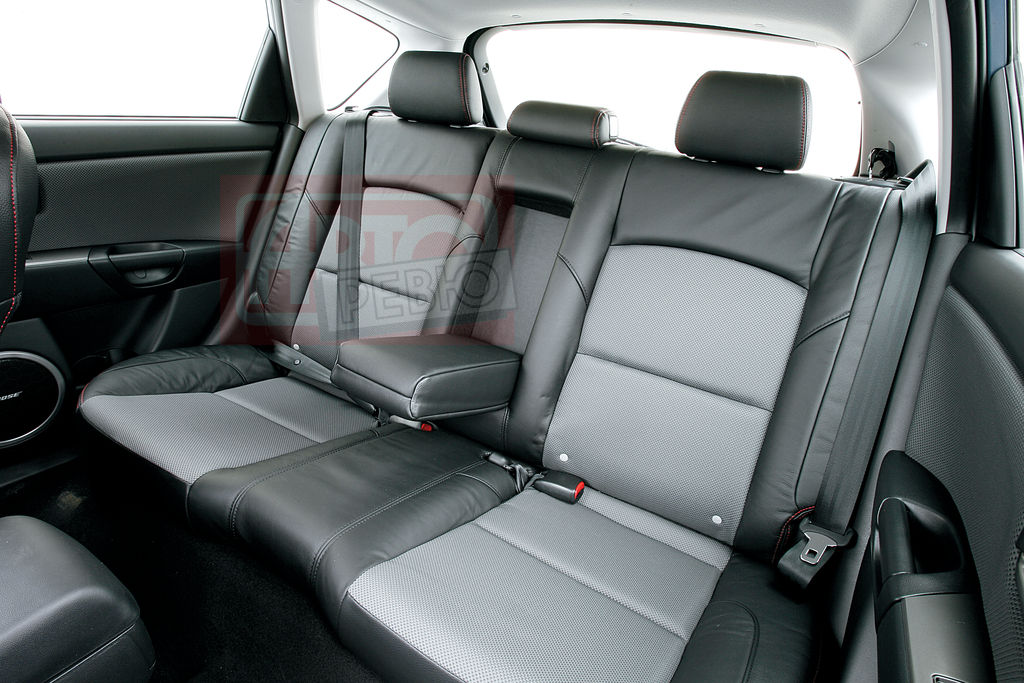 | 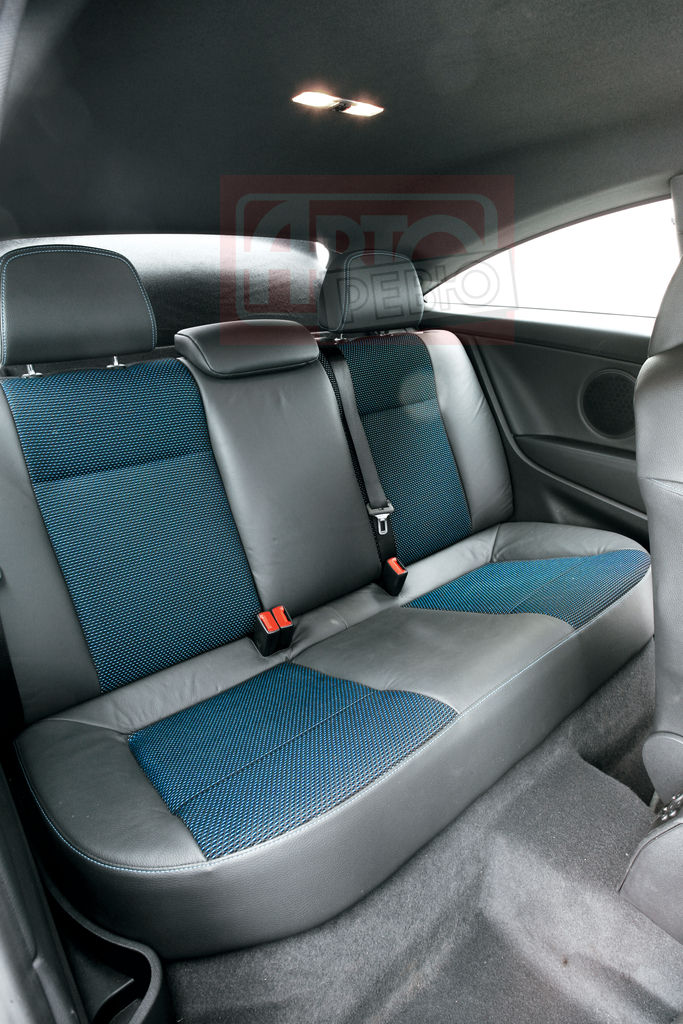 | |
| The Mazda's rear seats are the most comfortable, and it even has a fold-down armrest. The Ford has the same amount of rear space, but "personal" doors come at an extra cost ($1000). In the Opel, the rear is cramped and gloomy — the roof is low and the windows are small. And you can't order a five-door OPC version | ||
If the Mazda 3 MPS wins with its truly "hot" engine and precise handling, the Focus ST is the most comfortable and versatile of the three. You can drive it calmly around the city, enjoying the quiet cabin and a ride smoothness that's good for such a car. Or you can "let it rip." And then the ice under the wheels melts as if it were spring...
| Ford Focus ST | Mazda 3 MPS | Opel Astra OPC |
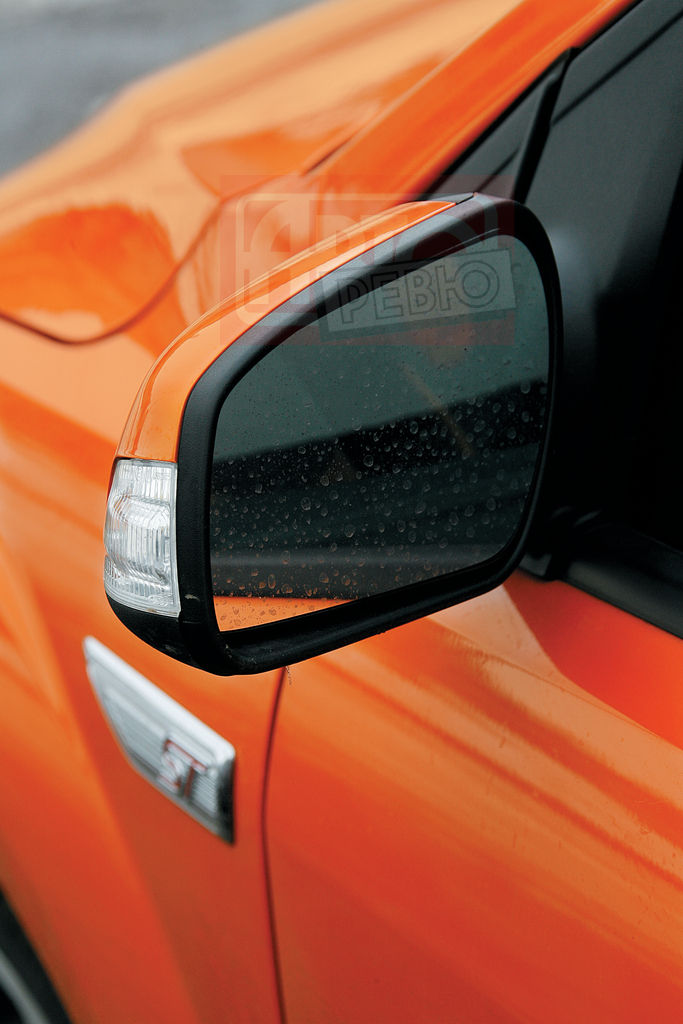 | 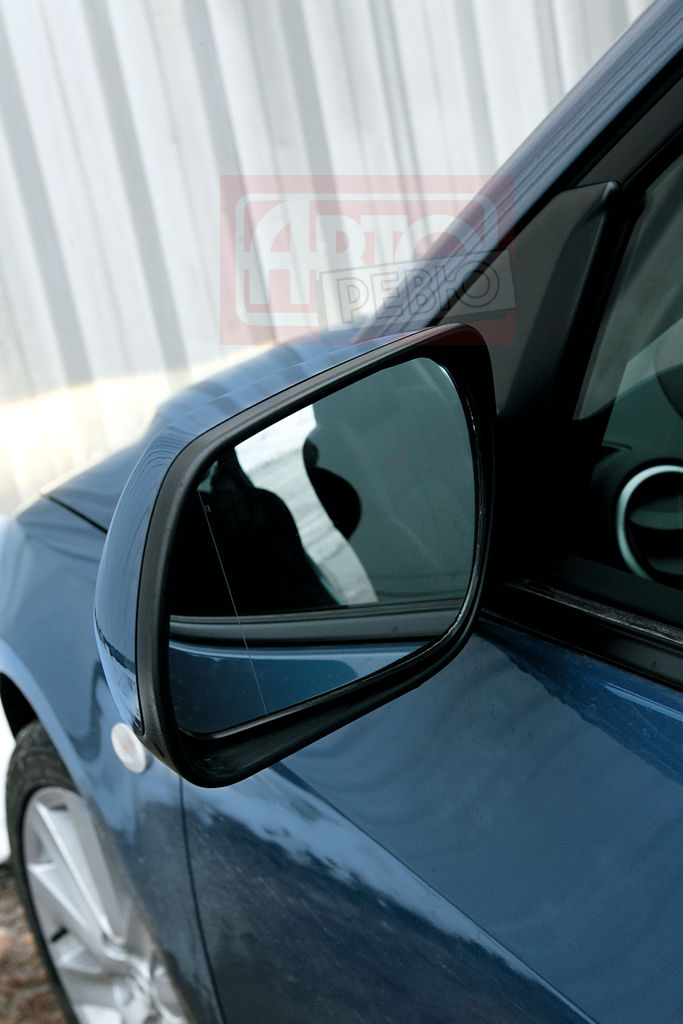 | 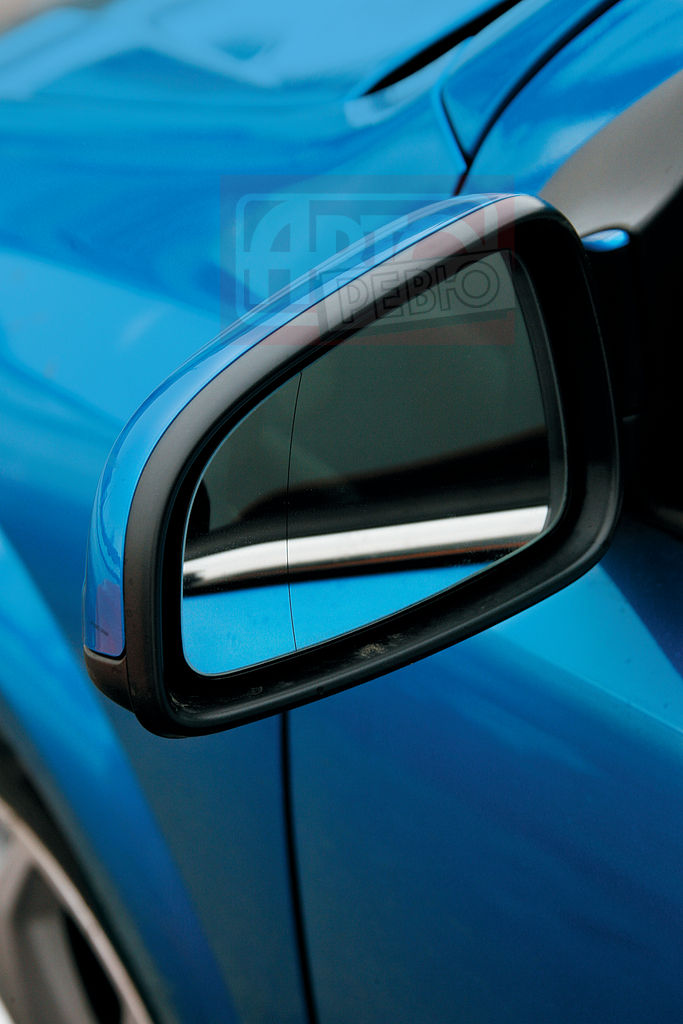 |
| The Mazda's large mirrors, unlike the Opel's narrow ones, provide excellent visibility | ||
The Astra OPC loses primarily in comfort — in all its forms. But that's precisely why the Opel is the most uncompromising car in its class. A growling engine, stiff suspension, narrow sport seats... And in acceleration, the Astra OPC will yield to the Mazda, but only if the driver of the Japanese car disables the stability control and launches "properly," from 3000 rpm.
| Ford Focus ST | Mazda 3 MPS | Opel Astra OPC |
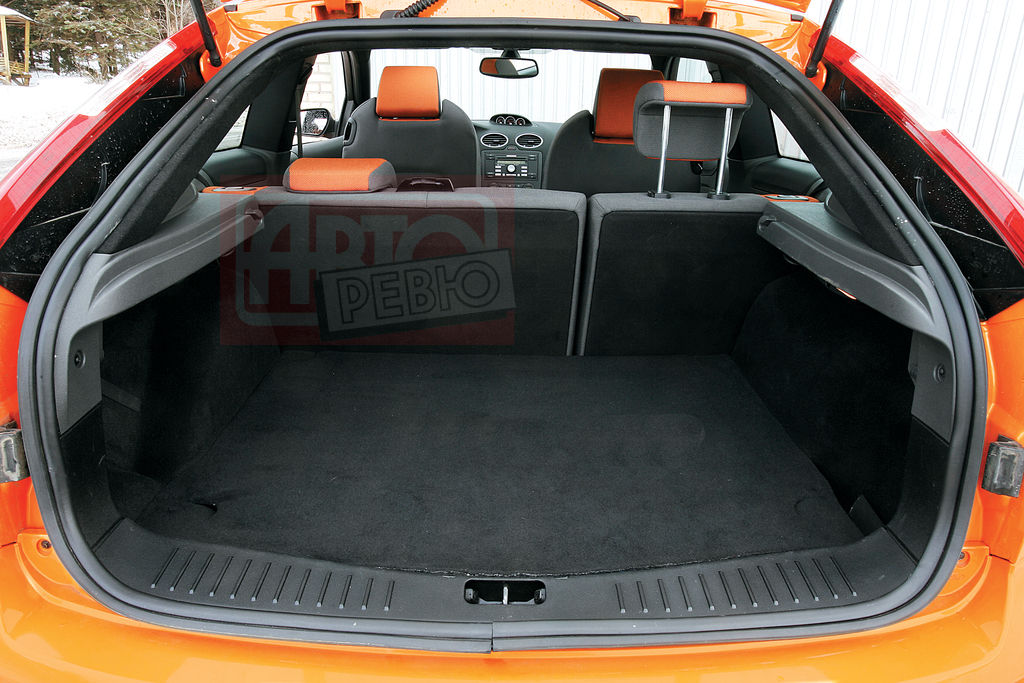 | 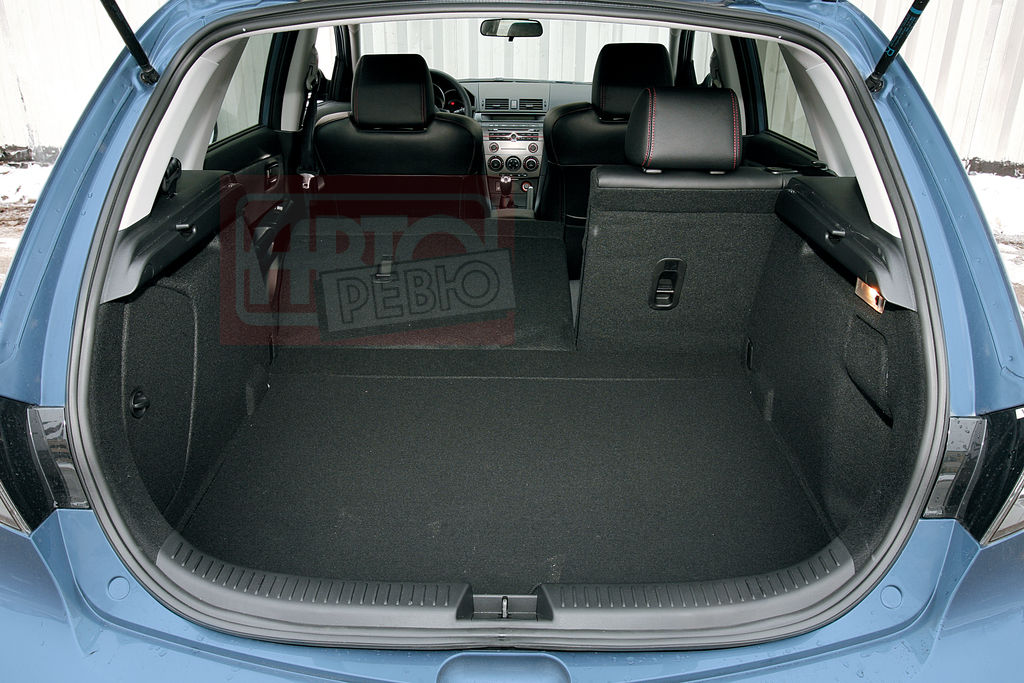 | 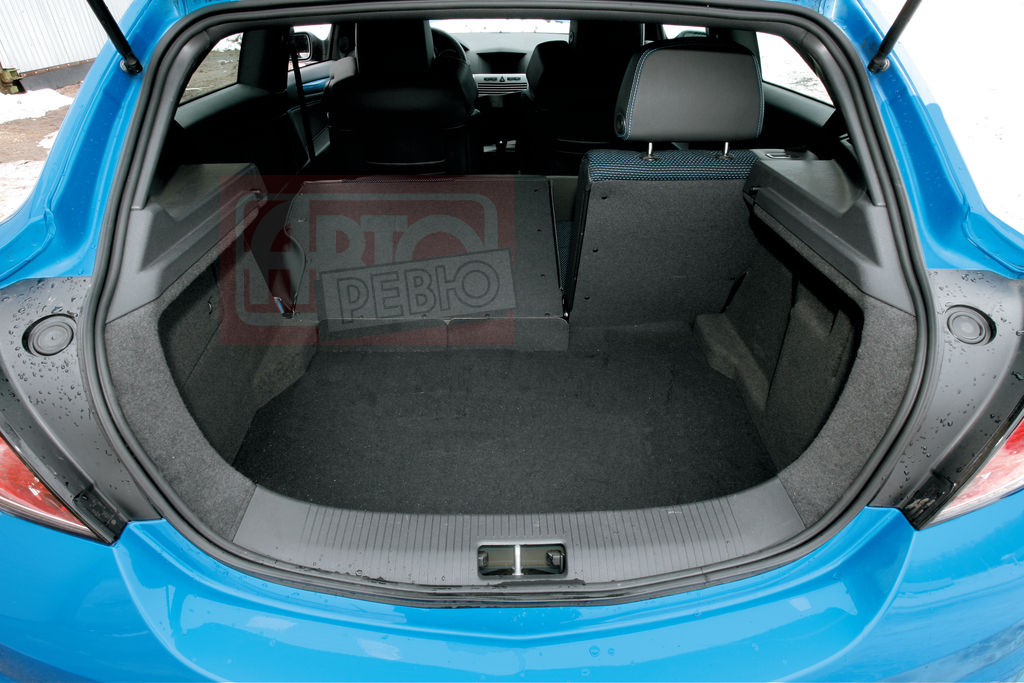 |
| The trunks of the Mazda and Ford are equally convenient. The Opel loses out due to its narrow opening | ||
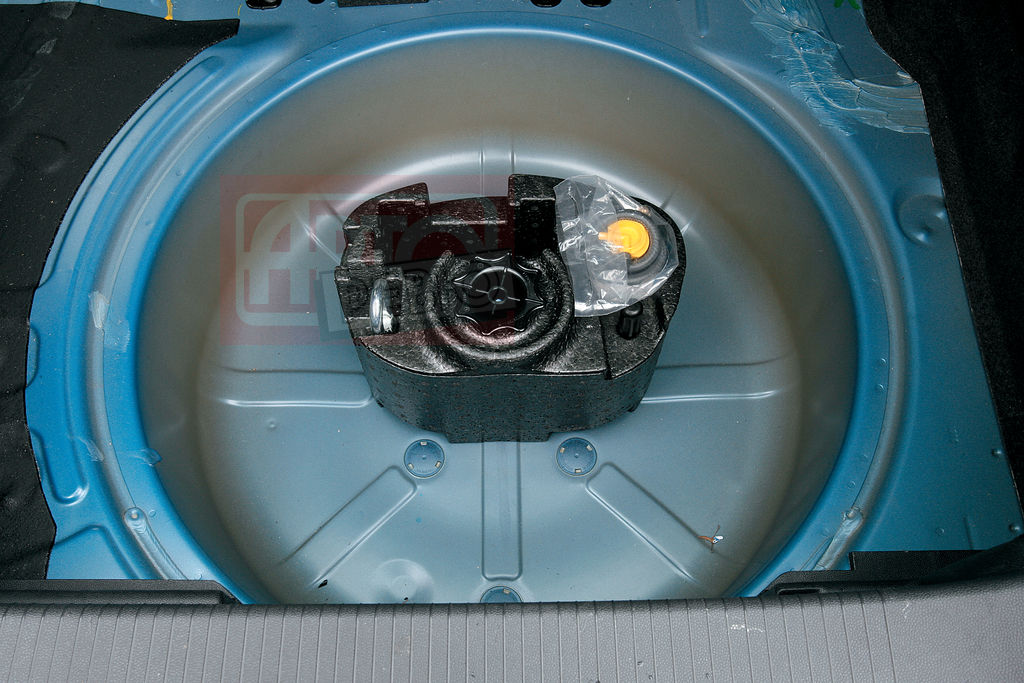 | Ford and Mazda are equipped with space-saver spare wheels, while the Opel only has sealant and a compressor | |
Has the ice broken?
Not long ago, "hot" hatches were a rarity on the roads. For example, over several years of sales of the previous-generation Focus ST, only... 10 cars were sold. But this year everything changed. From April, when sales of the new Focus ST started, through October inclusive, 114 cars have been sold — 87 of them three-doors.
Ford Focus ST (2.5 L, 225 hp) in base trim with a three-door body costs $30,450. The five-door version is $1,000 more expensive. Standard equipment includes six airbags, power mirrors with heating, air conditioning, a leather steering wheel, and a stability control system. An additional package with a CD player with six speakers and climate control costs $800. Xenon headlights cost $980, and a leather interior costs $2,300. "Hot" Focuses are brought from Germany, and you'll have to wait four months for an order.
Warranty — 2 years or 100,000 km. Ford cars are sold by 121 dealers in 78 Russian cities.
Mazda 3 MPS (2.3 L, 260 hp) costs a bit more — $31,800. But even in the "base" it has climate control, a CD player with six speakers, xenon, six airbags, a stability control system, power mirrors with heating, and a leather interior. The version with cruise control, a CD changer, and seven Bose speakers costs $32,990. The body is only a five-door hatchback. You'll have to wait six to seven months for an order.
The Mazda 3 MPS will go on sale in December, but the quota allocated for Russia this year has already been sold out — all 30 cars. For next year, 150 cars are planned to be sold.
Warranty — 3 years or 100,000 km. Mazda cars are sold by 21 dealers in 14 Russian cities.
Prices for the Opel Astra OPC (2.0 L, 240 hp) start at $31,330. In the "base," the three-door hatchback has air conditioning, a stability control system, four airbags, a CD player, and power mirrors with heating. There are many options: xenon headlights — $700, climate control — $450, leather interior — $2,100, cruise control — $320, side curtain airbags — $850. Delivery time is three months.
The first production cars will appear only at the end of the year, but dealers are already ordering 15 cars a month. That is, next year they plan to sell 180 such hatches.
Warranty — 2 years without mileage limit. Opel cars are sold by 59 dealers in 31 Russian cities.
| Expert ratings from Autoreview | ||||
| Parameters assessed | Max score | Cars | ||
| Ford Focus ST | Mazda 3 MPS | Opel Astra OPC | ||
| Design | 180 | 145 | 140 | 145 |
| Exterior | 90 | 75 | 70 | 75 |
| Interior | 90 | 70 | 70 | 70 |
| Ergonomics | 180 | 160 | 160 | 140 |
| Driver's seat | 90 | 80 | 80 | 75 |
| Visibility | 90 | 80 | 80 | 65 |
| Dynamics | 300 | 250 | 265 | 255 |
| Acceleration dynamics | 100 | 85 | 90 | 85 |
| Braking dynamics | 100 | 85 | 85 | 85 |
| Handling | 100 | 80 | 90 | 85 |
| Ride comfort | 190 | 140 | 125 | 110 |
| Ride smoothness, vibration protection | 80 | 55 | 50 | 40 |
| Acoustic comfort | 60 | 45 | 40 | 35 |
| Climate control | 50 | 40 | 35 | 35 |
| Cabin comfort | 150 | 95 | 100 | 85 |
| Rear seats | 70 | 45 | 50 | 40 |
| Trunk | 60 | 40 | 40 | 35 |
| Cabin transformation | 20 | 10 | 10 | 10 |
| Total score | 1000 | 790 | 790 | 735 |
Final ratings from Autoreview
Pre-test survey
Before these tests began, we asked visitors to www.autoreview.ru to choose a favorite among the participants. Here's how readers' votes were distributed:
Mazda 3 MPS 51.59%
Ford Focus ST 24.95%
Opel Astra OPC 23.46%
A total of 6,145 people took part in the survey
Gear lever travel, mm (Autoreview measurement data)
External speed characteristics of engines
Acceleration graphs
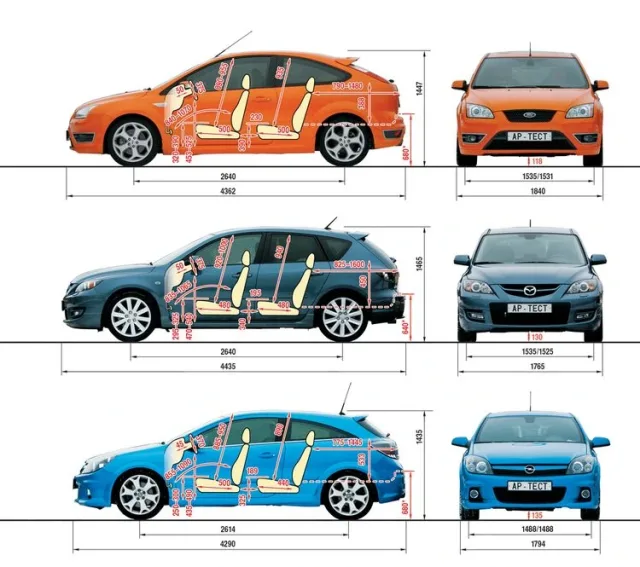
Autoreview measurement results


| Specifications | |||
| Parameters | Cars | ||
| Ford Focus ST | Mazda 3 MPS | Opel Astra OPC | |
| Body type | 3-door hatchback | 5-door hatchback | 3-door hatchback |
| Number of seats | 5 | 5 | 5 |
| Drag coefficient | 0.30 | 0.31 | 0.34 |
| Trunk volume, l | 362—1245 | 290—1229 | 340—1070 |
| Curb weight, kg | 1317 | 1485 | 1393 |
| Gross weight, kg | 1860 | 1910 | 1860 |
| Engine | petrol, with distributed fuel injection and turbocharging | petrol, with direct fuel injection and turbocharging | petrol, with distributed fuel injection and turbocharging |
| Location | front, transverse | front, transverse | front, transverse |
| Number and arrangement of cylinders | 5, in-line | 4, in-line | 4, in-line |
| Displacement, cm³ | 2522 | 2261 | 1998 |
| Cylinder bore/piston stroke, mm | 83.0/93.2 | 87.5/94.0 | 86.0/86.0 |
| Compression ratio | 9.0:1 | 9.5:1 | 8.8:1 |
| Number of valves | 20 | 16 | 16 |
| Max. power, hp/kW/rpm | 225/165/6000 | 260/191/5500 | 240/177/5600 |
| Max. torque, Nm/rpm | 320/1600—4000 | 380/3000 | 320/2400—5000 |
| Gearbox | manual, 6-speed | manual, 6-speed | manual, 6-speed |
| Gear ratios | |||
| I | 3.39 | 3.54 | 3.82 |
| II | 2.05 | 2.24 | 2.16 |
| III | 1.43 | 1.54 | 1.48 |
| IV | 1.09 | 1.17 | 1.07 |
| V | 0.87 | 1.09 | 0.88 |
| VI | 0.7 | 0.85 | 0.74 |
| reverse | 3.23 | 3.83 | 3.55 |
| final drive | 4.00 | 3.94/3.35* | 3.83 |
| Drive | front | front | front |
| Front suspension | independent, coil spring, McPherson | ||
| Rear suspension | independent, coil spring, multi-link | semi-independent, coil spring | |
| Front brakes/disc diameter, mm | disc, ventilated/320 | disc, ventilated/320 | disc, ventilated/321 |
| Rear brakes/disc diameter, mm | disc/280 | disc/280 | disc/278 |
| Tires | 225/40 R18 | 215/45 R18 | 225/40 R18 |
| Maximum speed, km/h | 241 | 250** | 244 |
| Acceleration time 0—100 km/h, s | 6.8 | 6.1 | 6.4 |
| Fuel consumption, | |||
| l/100 km | |||
| urban cycle | 13.8 | 13.5 | 13.0 |
| extra-urban cycle | 6.8 | 7.5 | 7.0 |
| combined cycle | 9.3 | 9.7 | 9.2 |
| Fuel tank capacity, l | 55 | 55 | 52 |
| Fuel | petrol AI-95—98 | petrol AI-98 | petrol AI-95—98 |
| * For I, II, III and IV gears/for V and VI gears ** Electronically limited | |||
| Some Autoreview measurement results | ||||
| Parameters | Cars | |||
| Ford Focus ST | Mazda 3 MPS | Opel Astra OPC | ||
| Maximum speed, km/h | 231.4 | 240.3 | 230.9 | |
| Acceleration time, s | 0—50 km/h | 2.6 | 3.1 | 2.81 |
| 0—100 km/h | 7.8/8.4* | 6.8/7.7* | 7.5/7.4* | |
| 0—150 km/h | 16.1 | 12.9 | 14.3 | |
| 0—200 km/h | 33.7 | 26.0 | 29.5 | |
| over 400 m | 15.5 | 14.7 | 15.2 | |
| over 1000 m | 28.1 | 26.6 | 27.4 | |
| 60—100 km/h (III) | 4.0 | 3.5 | 3.7 | |
| 60—100 km/h (IV) | 5.0 | 4.4 | 5.6 | |
| 80—120 km/h (V) | 6.8 | 6.3 | 6.8 | |
| 80—120 km/h (VI) | 9.0 | 8.8 | 8.2 | |
| Coast-down, m | from 50 km/h | 633 | 587 | 633 |
| 130—80 km/h | 945 | 830 | 884 | |
| 160—80 km/h | 1370 | 1279 | 1335 | |
| Braking from 100 km/h | distance, m | 42.1 | 40.0 | 45.0 |
| deceleration, m/s² | 9.2 | 9.6 | 8.6 | |
| * Without ESP/with ESP | ||||
| Equipment of the comparison test participants | |||
| Options | Models | ||
| Ford Focus ST | Mazda 3 MPS | Opel Astra OPC | |
| Base version price, $ | 30450 | 31800 | 31330 |
| Front airbags | + | + | + |
| Side airbags front | + | + | + |
| Curtain airbags | + | + | O |
| Anti-lock braking system | + | + | + |
| Traction control system | + | + | + |
| Stability control | + | + | + |
| Electronically controlled adaptive suspension | – | – | O |
| Power steering | + | + | + |
| Multifunction steering wheel | –* | + | + |
| Adjustable steering column | + | + | + |
| Leather-wrapped steering wheel | + | + | + |
| Heated windshield | O | – | – |
| Heated front seats | O | + | – |
| Auto-dimming rearview mirror | + | – | + |
| Central locking (remote) | + | + | + |
| Air conditioning | + | + | + |
| Single-zone climate control | – | + | + |
| Dual-zone climate control | + | – | – |
| Power mirrors with heating | + | + | + |
| Power folding mirrors | – | – | + |
| Power windows | + | + | + |
| Split-folding rear seat | + | + | + |
| Rear armrest | – | + | – |
| Audio system with CD | O | O | O |
| CD changer | – | O | O |
| Engine start button | – | – | + |
| Light sensor | + | + | O |
| Rain sensor | + | + | + |
| Tire pressure monitoring | – | – | O |
| On-board computer | + | + | + |
| Cruise control | – | O | O |
| Power sunroof | O | – | – |
| Rear parking sensors | – | – | O |
| Folding rear headrests | + | – | – |
| Leather interior | – | +** | +** |
| Remote fuel filler door release | – | + | – |
| Xenon low beam | O | + | O |
| Fog lights | + | + | + |
| Headlight washers | O | + | O |
| Alloy wheels | + | + | + |
| Space-saver spare tire | + | + | –*** |
| Metal engine protection | – | – | – |
| Metallic paint | O | O | + |
| Test car price, $ | 34260 | 33390 | 35245 |
| * Remote control on steering column ** Leather/fabric *** Compressor and repair kit | |||
| (+) In base version (–) Not in base | |||
| (O) Options on test cars | |||
| Speedometer error | |||||||||
| Models | Gauge readings, km/h | ||||||||
| 40 | 60 | 80 | 100 | 120 | 140 | 160 | 180 | 200 | |
| Actual speed, km/h | |||||||||
| Ford Focus ST | 38 | 58 | 78 | 98 | 118 | 138 | 158 | 178 | 198 |
| Mazda 3 MPS | 37 | 54 | 73 | 91 | 109 | 128 | 146 | 164 | 182 |
| Opel Astra OPC | 38 | 57 | 77 | 95 | 115 | 135 | 155 | 174 | 193 |
| Approximate prices for original spare parts at Moscow dealers* | |||
| Parts | Models | ||
| Ford Focus ST | Mazda 3 MPS | Opel Astra OPC | |
| Oil filter | 15 | 12 | 5 |
| Fuel filter | n/a** | n/a | 16 |
| Air filter | 22 | 37 | 13 |
| Spark plug | 20 | 20 | 8 |
| Front brake pads | 95 | 218 | 113 |
| Rear brake pads | 94 | 140 | 19 |
| Front shock absorber | 500 | 168 | 169 |
| Rear shock absorber | 500 | 155 | 79 |
| Clutch disc | 420 | 198 | 375 |
| Front headlight | 191 | 930 | 204 |
| Rear light | 97 | 445 | 138 |
| Front fender | 212 | 100 | 134 |
| Front bumper | 323 | 482 | 409 |
| Hood | 399 | 319 | 337 |
| Windshield | 763 | 461 | 288 |
| * Prices in US dollars | |||
| ** N/a — no data | |||
| Costs of scheduled maintenance with materials and parts* | |||
| Scheduled service | Models | ||
| Ford Focus ST | Mazda 3 MPS | Opel Astra OPC | |
| Standard hour | 46 | 49 | 42 |
| Mileage, km | |||
| 2000 | — | — | 97 |
| 15000 | — | 218 | 180 |
| 20000 | 120** | — | — |
| 30000 | — | 246 | 342 |
| 40000 | 120** | — | — |
| 45000 | — | 247 | 180 |
| 60000 | 120** | 251 | 342 |
| 75000 | — | 387 | 180 |
| 80000 | 120** | — | — |
| 90000 | — | 320 | 342 |
| Total | 480** | 1669 | 1663 |
| * Prices in US dollars | |||
| ** Base cost | |||
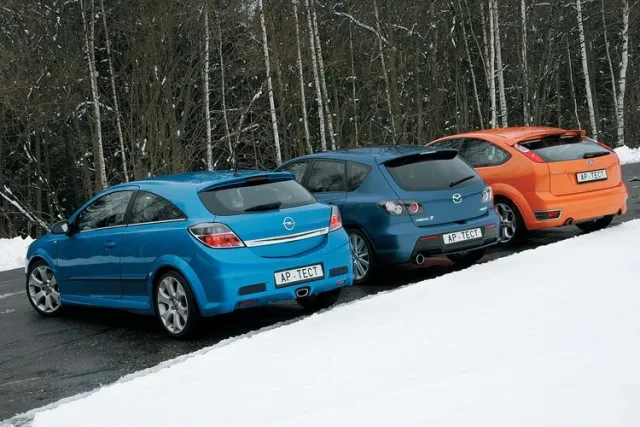
The Mazda (center) has the best visibility thanks to the slight rake and large rear window area