
 Most residents of Europe and the USA have rather superficial ideas about Japanese culture. Sushi, samurai — that's understandable, but everything else for the average European or American is a dark forest. At the same time, it is on these continents, not counting Japan itself, that the bulk of Mazda3 cars are sold. It is clear that buyers choose the "three" not at all because of exotic Japanese words. It's just that the car drives well, looks attractive, and its price is adequate. Most residents of Europe and the USA have rather superficial ideas about Japanese culture. Sushi, samurai — that's understandable, but everything else for the average European or American is a dark forest. At the same time, it is on these continents, not counting Japan itself, that the bulk of Mazda3 cars are sold. It is clear that buyers choose the "three" not at all because of exotic Japanese words. It's just that the car drives well, looks attractive, and its price is adequate. |
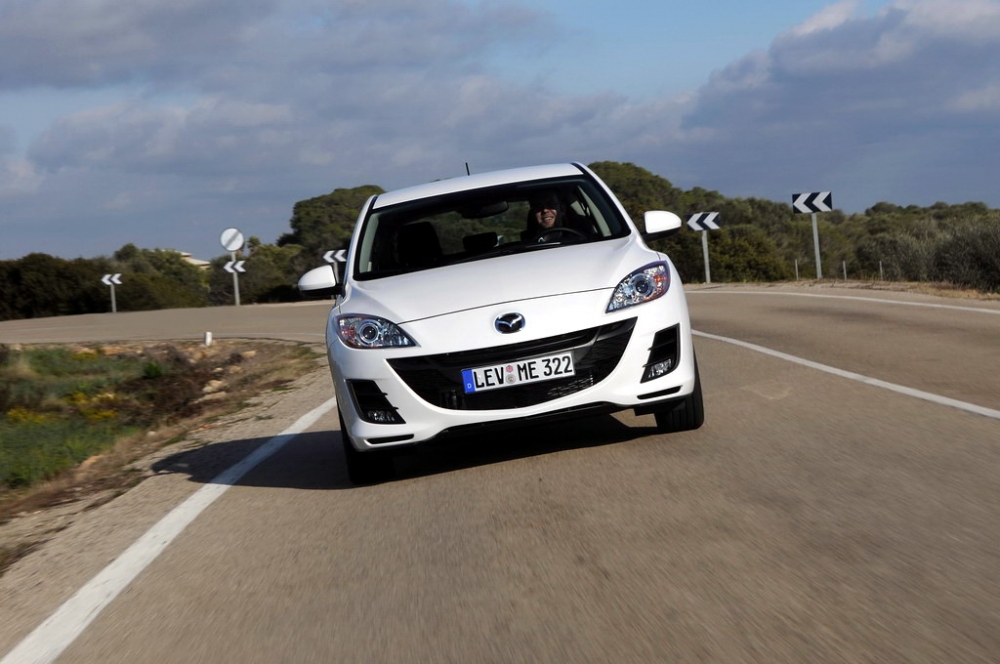 It seems to me that the Japanese understand this perfectly. At the short presentation of the new Mazda3, no one remembered the "riders" anymore. And the notorious J-factor, by which a Japanese car could be unmistakably recognized in traffic, no longer worries them either. It smoothly turns into a W-factor — that is, a world one. Increasingly, Mazda representatives mentioned such iconic European models as the Golf, and even aimed at premium — the Audi A3 and BMW 1 Series. Mazda is clearly looking up to the Europeans. And who else? But you can't live on philosophy alone. You need to offer the buyer something original, with excellent handling, and at the same time with a claim to premium quality. It seems to me that the Japanese understand this perfectly. At the short presentation of the new Mazda3, no one remembered the "riders" anymore. And the notorious J-factor, by which a Japanese car could be unmistakably recognized in traffic, no longer worries them either. It smoothly turns into a W-factor — that is, a world one. Increasingly, Mazda representatives mentioned such iconic European models as the Golf, and even aimed at premium — the Audi A3 and BMW 1 Series. Mazda is clearly looking up to the Europeans. And who else? But you can't live on philosophy alone. You need to offer the buyer something original, with excellent handling, and at the same time with a claim to premium quality. |
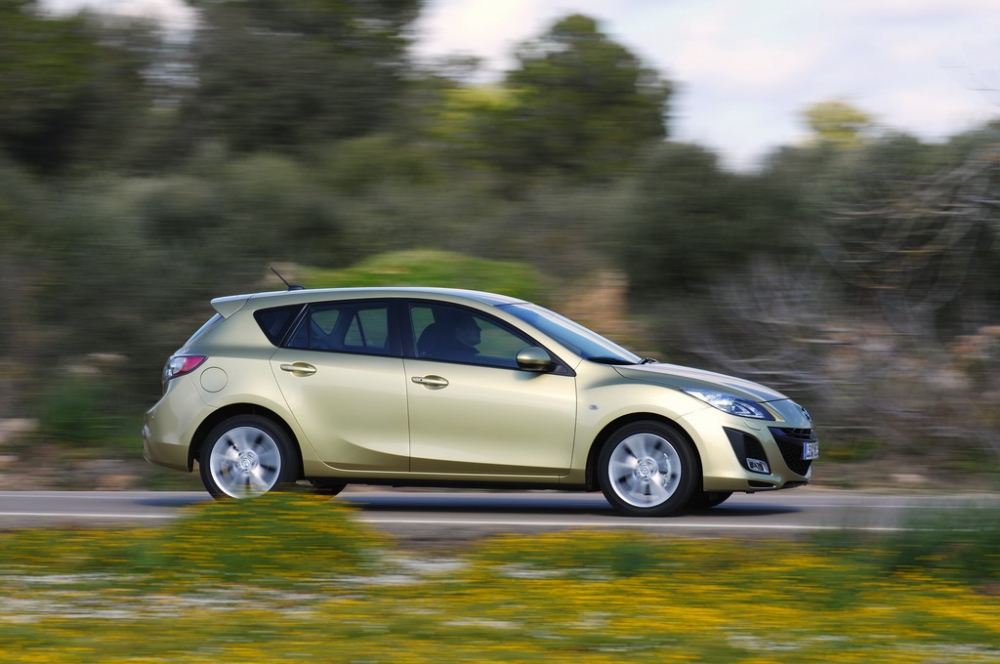 The previous "three" had problems, perhaps, only with this very premium quality. This was especially felt in the cabin: hard plastic, a dim monochrome display, poor sound insulation. Owners, however, turned a blind eye to this — but the previous Mazda3 gave such sharp and precise reactions that many European classmates could envy! And outwardly, the "Japanese woman" favorably differed from competitors. But if you set yourself the example of the Golf or A3, this is clearly not enough. You need a holistic car, correct in all respects. The previous "three" had problems, perhaps, only with this very premium quality. This was especially felt in the cabin: hard plastic, a dim monochrome display, poor sound insulation. Owners, however, turned a blind eye to this — but the previous Mazda3 gave such sharp and precise reactions that many European classmates could envy! And outwardly, the "Japanese woman" favorably differed from competitors. But if you set yourself the example of the Golf or A3, this is clearly not enough. You need a holistic car, correct in all respects. |
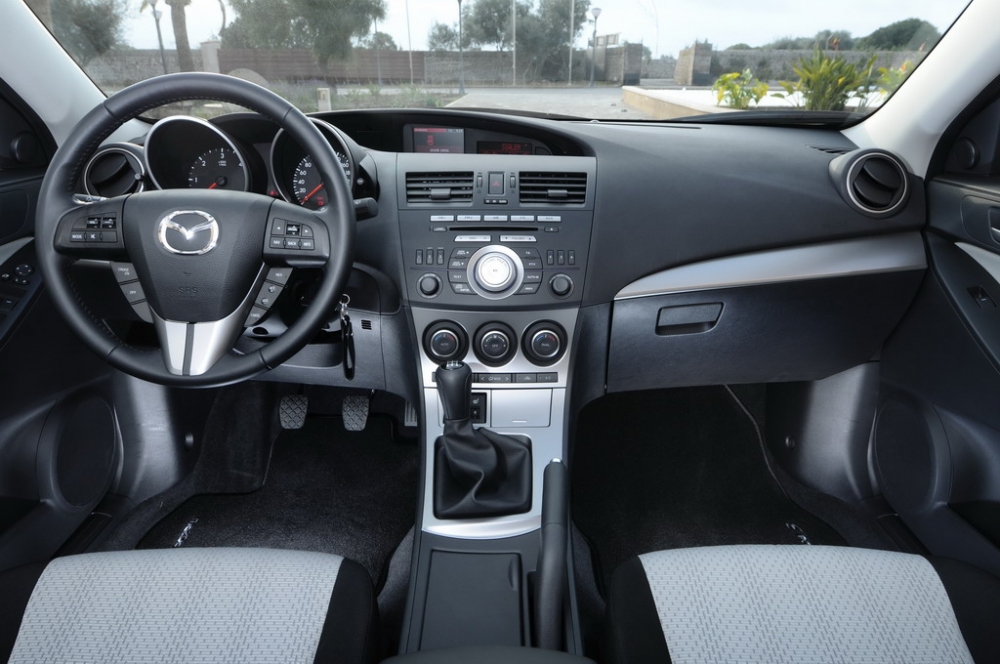
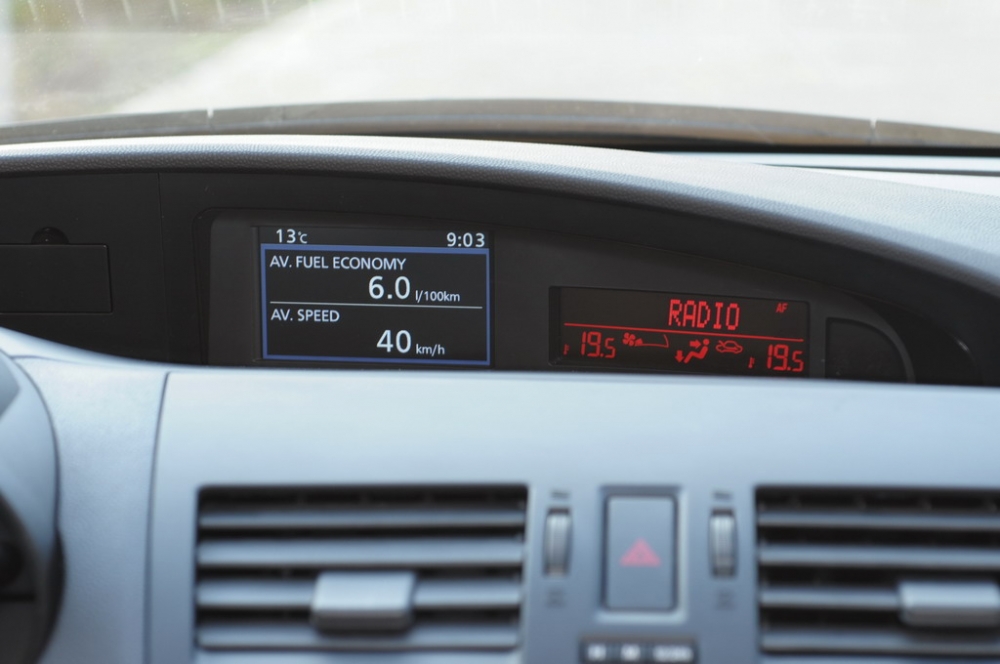
 Therefore, it is not surprising that the interior had to be given enormous attention. A serious step forward has been made. New high-quality materials, a soft top of the front panel, a color screen, ubiquitous lighting, a multifunctional steering wheel with navigation control buttons, which was already very convenient before. The central console smoothly flows out of the space between the front seats and bends in the shape of the letter S, and at the very top there is a visor hiding as many as two screens (in rich trim levels) — for the onboard computer and navigation. The seats, which were already very comfortable despite their simplicity, have become even better. Therefore, it is not surprising that the interior had to be given enormous attention. A serious step forward has been made. New high-quality materials, a soft top of the front panel, a color screen, ubiquitous lighting, a multifunctional steering wheel with navigation control buttons, which was already very convenient before. The central console smoothly flows out of the space between the front seats and bends in the shape of the letter S, and at the very top there is a visor hiding as many as two screens (in rich trim levels) — for the onboard computer and navigation. The seats, which were already very comfortable despite their simplicity, have become even better. |
 The cushion and backrest have been lengthened, and now the seat perfectly fixes the shoulders. The gear lever of the manual transmission has been raised higher and moved closer to the driver. Even the silver inserts, which often look cheap in the interiors of many cars, do not cause complaints here. The joints and gaps of the panels are impeccable, although we were honestly warned — the cars are pre-production, so don't judge too strictly. But the main feature of the new "three's" interior manifested itself already in motion. Finally, the engineers worked properly on sound insulation. At the presentation, the Japanese showed diagrams in which the Mazda3 overwhelmingly defeated European premium in terms of noise level. They exaggerated, of course. But compared to the previous model, the difference is colossal. The cushion and backrest have been lengthened, and now the seat perfectly fixes the shoulders. The gear lever of the manual transmission has been raised higher and moved closer to the driver. Even the silver inserts, which often look cheap in the interiors of many cars, do not cause complaints here. The joints and gaps of the panels are impeccable, although we were honestly warned — the cars are pre-production, so don't judge too strictly. But the main feature of the new "three's" interior manifested itself already in motion. Finally, the engineers worked properly on sound insulation. At the presentation, the Japanese showed diagrams in which the Mazda3 overwhelmingly defeated European premium in terms of noise level. They exaggerated, of course. But compared to the previous model, the difference is colossal. |
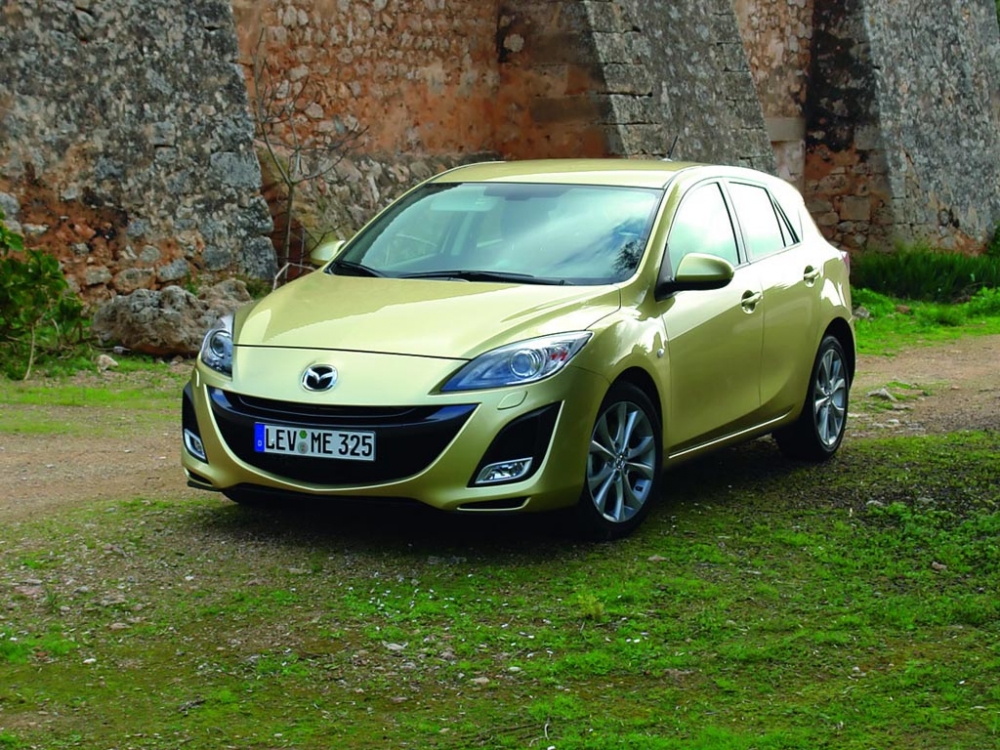
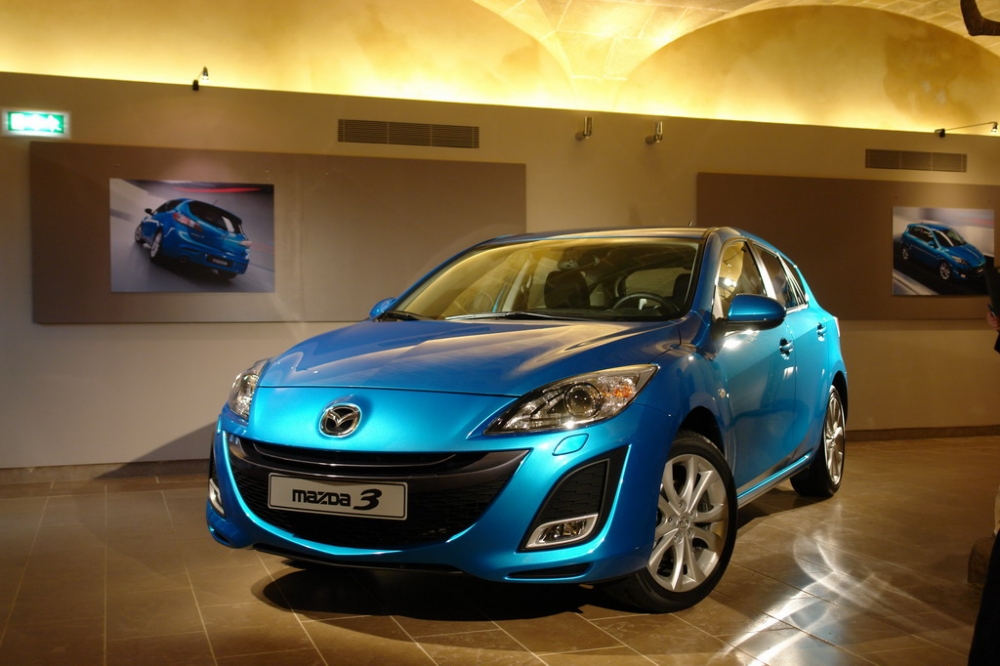
 The main idea of the exterior is centripetality. According to the designers' plan, all lines and edges should converge to the center of the front part of the body, more precisely, to a point above the huge pentagonal radiator grille. If you look closely, that's how it is. The headlights with funny triangles inside (in the Sport version), and the hood stampings continuing the front pillars, and a barely noticeable longitudinal rib in the center all converge here. It creates the impression that all the power of the car is concentrated in the front emblem. The main idea of the exterior is centripetality. According to the designers' plan, all lines and edges should converge to the center of the front part of the body, more precisely, to a point above the huge pentagonal radiator grille. If you look closely, that's how it is. The headlights with funny triangles inside (in the Sport version), and the hood stampings continuing the front pillars, and a barely noticeable longitudinal rib in the center all converge here. It creates the impression that all the power of the car is concentrated in the front emblem. |
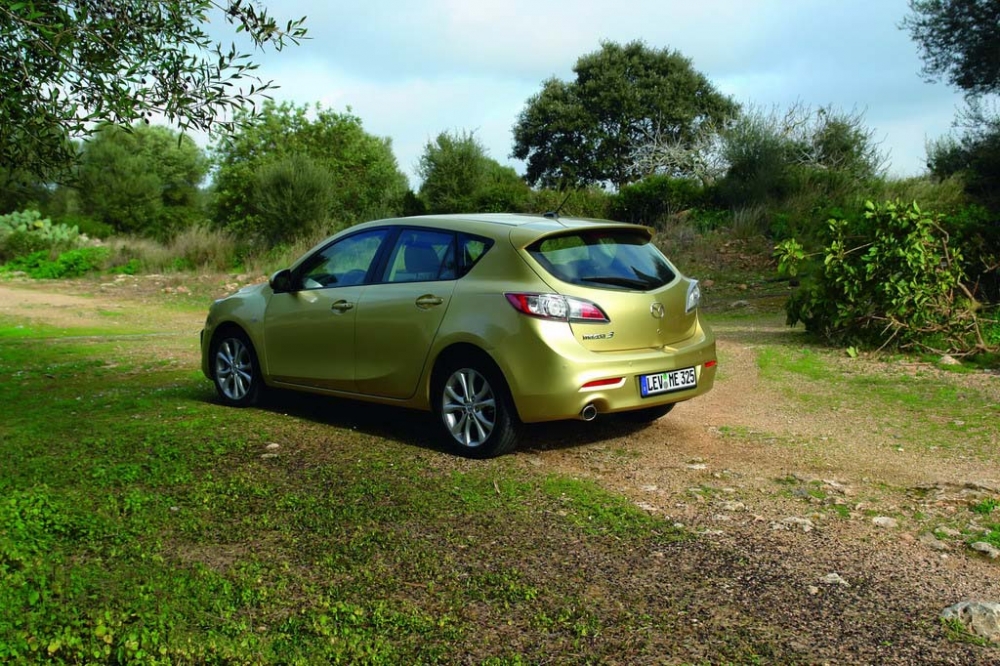
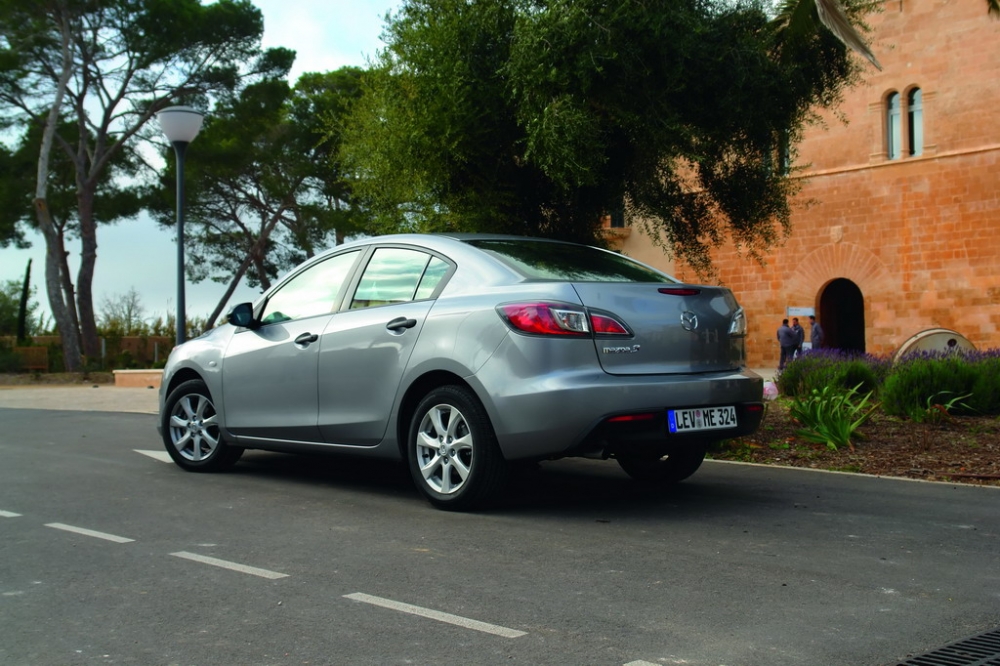
 But even without all these centripetal explanations, the Mazda3 is good. Dynamic, fit. True, the wheel arches seemed to me a bit overinflated. But this nuance is compensated by two nice strokes on the sides and rear lights that flow around very appetizing hips. By the way, these lights differ depending on the trim level. In Touring they are simpler, while in Sport they shine with stylish LED circles. I remember during the test drive of the previous model at the Dmitrovsky test site, we could not get enough of the Mazda's driving manners. Clarity and intelligibility in everything, instant responses. It was the simplest modification with a manual transmission and a 1.6 engine. How can one not remember that very Kizuna here? The feeling of unity was indeed present. At the presentation, we were allowed to drive only a couple of dozen kilometers on different modifications. Therefore, it is too early to make final conclusions, but some things are clear already now. But even without all these centripetal explanations, the Mazda3 is good. Dynamic, fit. True, the wheel arches seemed to me a bit overinflated. But this nuance is compensated by two nice strokes on the sides and rear lights that flow around very appetizing hips. By the way, these lights differ depending on the trim level. In Touring they are simpler, while in Sport they shine with stylish LED circles. I remember during the test drive of the previous model at the Dmitrovsky test site, we could not get enough of the Mazda's driving manners. Clarity and intelligibility in everything, instant responses. It was the simplest modification with a manual transmission and a 1.6 engine. How can one not remember that very Kizuna here? The feeling of unity was indeed present. At the presentation, we were allowed to drive only a couple of dozen kilometers on different modifications. Therefore, it is too early to make final conclusions, but some things are clear already now. |
 News for lovers of automatic transmission, who are the majority: the new five-speed "automatic" is offered only for cars with a two-liter engine (for 1.6 l, the old four-speed is available). Although this "box" is more modern and has one more gear, its operation cannot be called ideal. Shifts have become smoother, but the unit thinks for a long time even in sport mode. It steals seconds from acceleration. And it steals a lot. According to subjective feelings, the car with a manual gearbox and a 1.6-liter engine turned out to be more spirited. The second and, probably, main thing is that the Mazda3 has become more mature. Life in Europe and America has taught it to be hypocritical. Previously, the direct, open, and sporty appearance fully corresponded to the drive. And now... No, I don't want to say that the "three" is no longer a driver's car. But somehow everything has smoothed out, calmed down. News for lovers of automatic transmission, who are the majority: the new five-speed "automatic" is offered only for cars with a two-liter engine (for 1.6 l, the old four-speed is available). Although this "box" is more modern and has one more gear, its operation cannot be called ideal. Shifts have become smoother, but the unit thinks for a long time even in sport mode. It steals seconds from acceleration. And it steals a lot. According to subjective feelings, the car with a manual gearbox and a 1.6-liter engine turned out to be more spirited. The second and, probably, main thing is that the Mazda3 has become more mature. Life in Europe and America has taught it to be hypocritical. Previously, the direct, open, and sporty appearance fully corresponded to the drive. And now... No, I don't want to say that the "three" is no longer a driver's car. But somehow everything has smoothed out, calmed down. |
 Apparently, this is a natural process — the higher the positioning of the car, the more civilized its manners. Or maybe the influence of America is felt here. But the fact remains — the horse does not always understand the rider the first time. Although, I assure you, if you haven't managed to try the first-generation "matryoshka" before, the new one will seem magnificent. The steering wheel is precise and informative, but the old one was more transparent. The suspension allows you to lay such turns that the neighbor already hysterically grabs all sorts of handles, but in the previous Mazda there was more sport, and in this one more reliability. Stability is at a height, but the feeling does not leave that there is a slight delay between your action and the reaction of the Mazda3. But the operation of the manual gearbox is still without complaints. The only thing that fell out of the overall picture was the brakes. The pedal seemed a bit "rubbery", with insufficient feedback. Especially on the two-liter car, which has larger diameter brake discs. Apparently, this is a natural process — the higher the positioning of the car, the more civilized its manners. Or maybe the influence of America is felt here. But the fact remains — the horse does not always understand the rider the first time. Although, I assure you, if you haven't managed to try the first-generation "matryoshka" before, the new one will seem magnificent. The steering wheel is precise and informative, but the old one was more transparent. The suspension allows you to lay such turns that the neighbor already hysterically grabs all sorts of handles, but in the previous Mazda there was more sport, and in this one more reliability. Stability is at a height, but the feeling does not leave that there is a slight delay between your action and the reaction of the Mazda3. But the operation of the manual gearbox is still without complaints. The only thing that fell out of the overall picture was the brakes. The pedal seemed a bit "rubbery", with insufficient feedback. Especially on the two-liter car, which has larger diameter brake discs. |
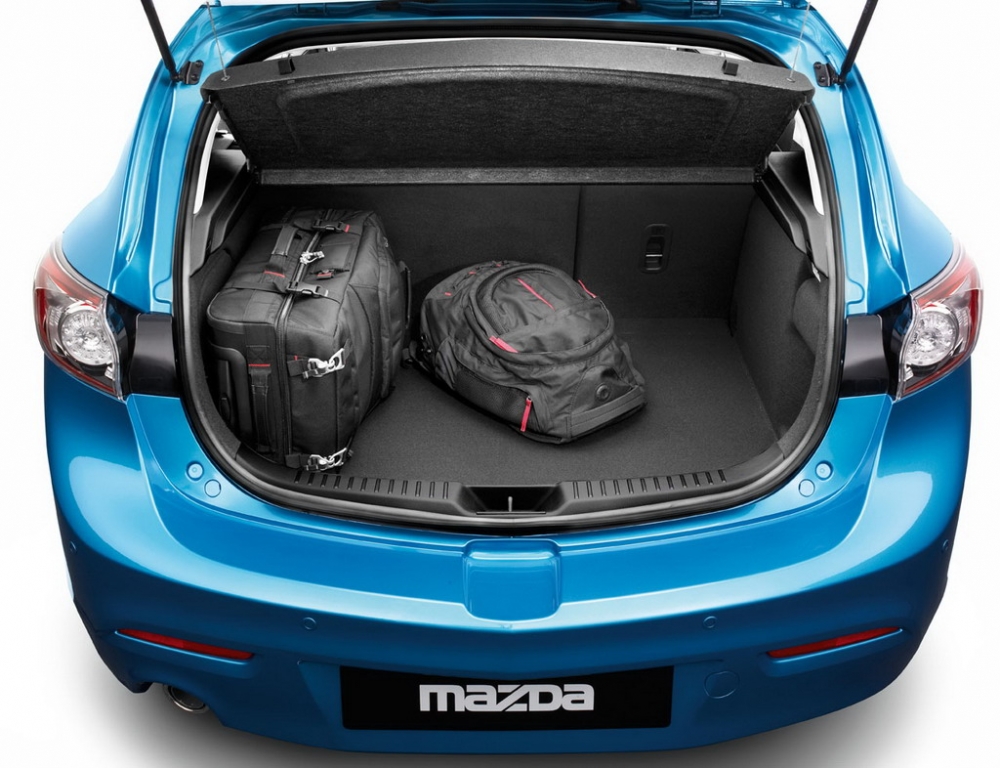 But there are reserves. And this was shown by the top version for Europe with a 2.2-liter turbodiesel — 185 hp and 400 Nm. Despite the fact that diesel cars will again be unavailable for Russia, I could not resist the temptation and cut a couple of laps on this beast. The re-tuned suspension and steering, a six-speed "manual" with short throws, and of course the engine do their job. Fast, stiff, even a bit nervous against the background of the laid-back colleagues. It is for those like me who always lack sportiness. By the way, they say that the two-liter gasoline modification with a manual gearbox will be similar to it in settings. And in the fall, the most power-equipped version MPS will appear. So there is a choice. You can decide for yourself what is better for you — with Kizuna or without... But there are reserves. And this was shown by the top version for Europe with a 2.2-liter turbodiesel — 185 hp and 400 Nm. Despite the fact that diesel cars will again be unavailable for Russia, I could not resist the temptation and cut a couple of laps on this beast. The re-tuned suspension and steering, a six-speed "manual" with short throws, and of course the engine do their job. Fast, stiff, even a bit nervous against the background of the laid-back colleagues. It is for those like me who always lack sportiness. By the way, they say that the two-liter gasoline modification with a manual gearbox will be similar to it in settings. And in the fall, the most power-equipped version MPS will appear. So there is a choice. You can decide for yourself what is better for you — with Kizuna or without... |
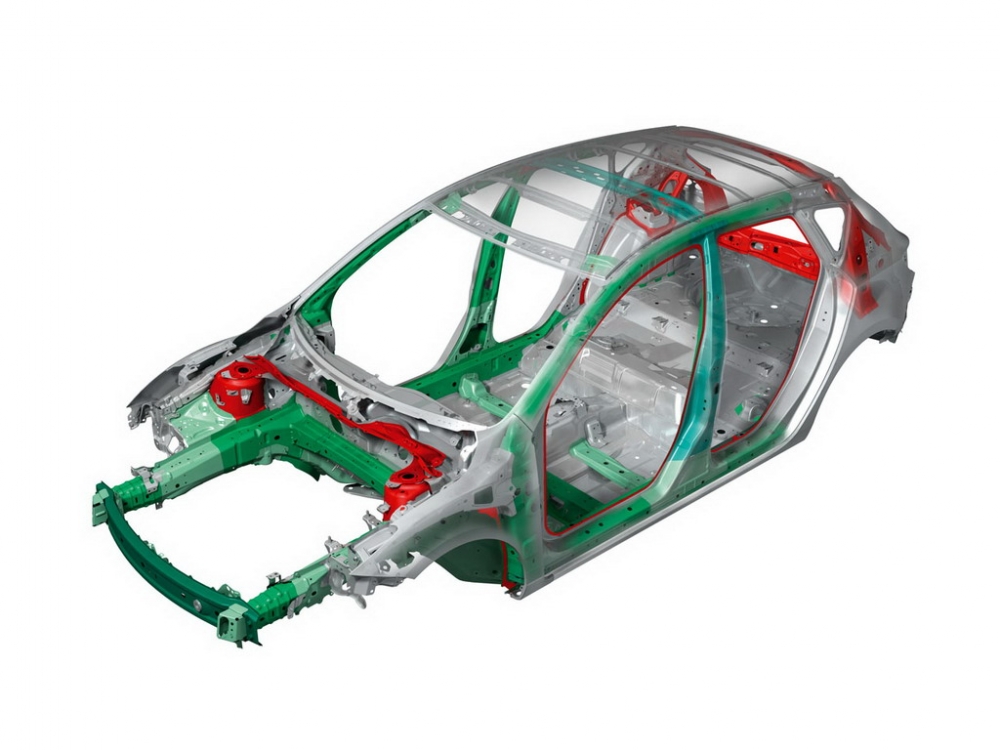 FOR YOUR INFORMATION FOR YOUR INFORMATIONBody and aerodynamics Body and aerodynamics Thanks to the use of high-strength steel grades and an increase in the number of welding points, the body has become noticeably stiffer. At the same time, the engineers managed to keep the weight of the car at the level of its predecessor. The door openings received a smoother bending radius, and an additional amplifier appeared between the middle pillar and the roof. The front strut cups are now connected by a kind of spacer. In the five-door version, the rear door opening has a closed contour, and an additional brace is welded between the pillars. Aerodynamics were not overlooked either — the new Mazda3 has the best in class. The drag coefficient for the hatchback is 0.30, for the sedan — 0.28. The front bumper with air intakes competently concentrates the pressure of the oncoming flow, reducing drag and distributing it evenly across the body. At high speed, a special flap neutralizes the resistance created by the fan. The special shape of the front pillars and the updated design of the rear lights prevent the formation of turbulence. Under the floor, air flows are also optimized — for this purpose, deflectors are used in front of the front wheels and in the rear bumper area. Powertrains and transmissions The range of petrol engines remains the same — 1.6 and 2.0 liters. Both 16-valve engines are equipped with the S-VT variable valve timing system. The younger unit additionally received camshafts with separate lobes for low revs. The two-liter engine for the first time uses the FAPAIS system, which reduces the air temperature at the intake. The output of the 1.6-liter engine is 105 hp and 145 Nm, the two-liter — 150 hp and 187 Nm. There are two gearboxes — five-speed manual and automatic. As before, turbodiesels are not available for Russia, of which there are now three: 1.6 l (109 hp, 240 Nm) and 2.2 l (150–185 hp, 360–400 Nm). The most powerful diesel is combined with a six-speed manual transmission and has different chassis and steering settings. Chassis and steering The suspension layout has not undergone fundamental changes — McPherson struts at the front, multi-link at the rear. However, the front subframe has become stronger, the stabilizer mounts are spaced 20 mm apart, the arms are made thicker, and the silent blocks are stiffer. At the rear, a new cross member has appeared, also increasing rigidity. The shock absorbers, as in the previous model, are monotube. The creators clearly gravitate towards more sporty settings, which we have already noticed more than once. All versions of the Mazda3 are now equipped with an electro-hydraulic power steering EHPAS, which contributes to fuel economy. An additional support point for the steering mechanism reduced vibrations and increased rigidity. The small deviations from course typical of Mazda when driving in a straight line have become less noticeable thanks to softer steering drive bushings. Model history The first "three" appeared in 2003 and immediately became a hit. Over five years, more than two million hatchbacks and sedans were sold worldwide, with 30 thousand of them bought in Russia last year — more than in Japan itself. The cars were equipped with petrol engines 1.6–2.0 l (105–150 hp) and a five-speed manual or four-speed automatic. The previous generation is still sold in Base, Touring and Sport trims. During its career, the Mazda3 has collected about 90 automotive awards. |
With or without kizuna?
Apparently, Mazda owners have gotten tired of playing with Kizuna, Yugens, Saichi, and Rins. After all, the rest of the world is far from Japanese philosophy. If you ask a hundred Mazda owners what Kizuna is, it would be good if at least one knows what it's about.
Test drive photos
Comments
No comments yet. Say the first word.