
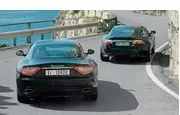
The atmosphere on the square in front of the garages at the Vairano test track is tense to the limit. Everyone is waiting for the answer to one question: which of the two rivals will set the best lap time – the Jaguar XKR-S or the Maserati GranTurismo S. Both drivers are already behind the wheel, the cars are poised at the start. They have low roofs, elongated hoods, under which serious power is hidden. If you combine the forces of both, you get 16 cylinders and 856 horsepower.
HISTORY AND PASSION
At such moments, you involuntarily recall the rich past of these brands: long-standing traditions, racing triumphs, emotions. Just think – Jaguar was already equipping its race cars with disc brakes in the fifties, and the trident of Maserati flashed on European tracks back in 1930, 17 years before Ferrari appeared! It is from this angle that we look at the XKR-S and GranTurismo S. The letter S in the names of both models is a clear hint: this is the pinnacle of the sporting spirit of two great brands.
The XKR-S is a special car. It is a limited series: only 200 units for all of Europe. Each car comes with a "hard" package and strictly in one color – Ultimate Black metallic. The equipment is as complete as possible, and there is simply no option for individual orders.
With Maserati, the situation is the opposite. This is a car that simply needs to be given individuality – both unusual shades and exclusive trim materials are available.
The character of each rival is emphasized by aerodynamic body kits, spoilers, 20-inch wheels, painted brake calipers, and interior design.
PURELY ENGLISH
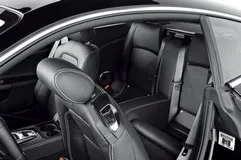
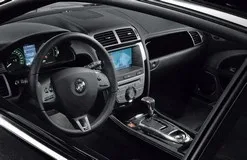
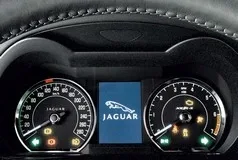
Inside the British car, the abundance of black leather with contrasting stitching immediately catches the eye. An exquisite atmosphere reigns inside, high-tech all around. The ceiling, which, along with the pillars, is trimmed with expensive material, is especially impressive. There is enough space in the front, but the rear row is purely symbolic: you could put a bag there, but it's cramped for children. However, the trunk is quite real, with a huge lid. You sit very low in the XKR-S – almost on the asphalt. Even despite the many adjustments, the large exterior mirror still blocks the driver's view, increasing the blind spot behind the pillar. The instrument panel with two large dials does not look sporty. The speedometer is marked up to 280 km/h – it is at this mark that the electronics limit the maximum speed of the XKR-S.
While you study the interior, your hand reaches for the red start button. A light press – and the V-shaped "eight" with a volume of 4.2 liters wakes up. The engine's voice is thick, confident, like a person who, without raising his tone, is able to subjugate those around him.
The Jaguar pulls away very easily, which is especially surprising given its solid length of 4.8 meters. Sound insulation is top-notch: only a slight rustle of huge tires is heard. The engine, well known to us from other Jaguar models, purrs softly. But it's worth provoking it... When the tachometer needle approaches 6500, the voice of the power unit changes – the "active" exhaust system comes into play.
While you calmly cruise at 2000–3000 rpm, you feel almost like a celestial being. But when you sharply press the gas, you get a rough idea of what a fighter pilot feels during ejection. This is not acceleration, but a real shot: thanks to the mechanical supercharger, already at 2500 rpm the engine delivers such torque that goosebumps run down your skin. An airplane! And this comparison is not accidental, because the body of the British predator is made of aluminum.
416 horsepower is claimed, and it seems the potential could be even greater. The six-speed automatic shifts quickly and accurately, but for truly aggressive driving, its capabilities begin to run out quite soon.
The car handles even better than the excellent XKR we tested in March 2007. The explanation is simple: the ground clearance was reduced by 10 mm, the springs, stabilizers, and shock absorbers were updated. The CATS suspension control electronics are configured in a new way. The result is impressive: you can forget about body roll.
In corners, the car behaves surprisingly eagerly – the steering has become even sharper, but has not lost its informativeness. The brakes work noticeably better than on the regular XKR.
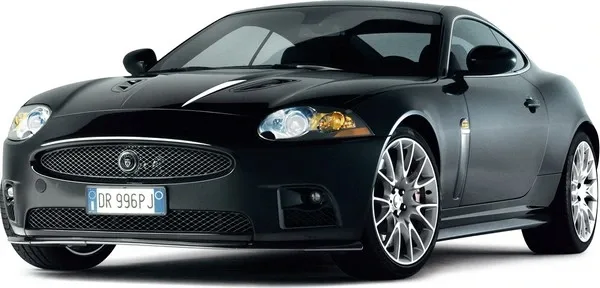
Jaguar XKR-S
4196 cm3
416 hp
V8 (90° bank)
€120,000 (in Europe)
Max speed – 280.0 km/h
0-100 km/h – 5.4 s
0-200 km/h – 19.3 s
70-120 km/h in D – 4.6 s
STYLE SIGNS Jaguar reserves the rear seats only for bags; even children won't fit there. The speedometer on the "adjusted" instrument cluster from the XKR is marked up to 280 km/h
 |
 | ||||
 | |||||
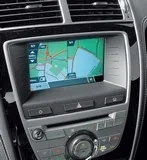 |
LIKES There is much to like in the English coupe, but especially the ease of working with the touchscreen display. This is, of course, not such a novelty, but for a sports car it's an important solution: with a simple touch you can easily flip through screens. Safety, of course, does not suffer. | |||
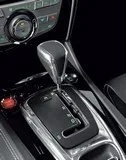 |
DISLIKES Finding any flaw in the Jaguar turned out to be not so easy. Still, we note: this ultra-sporty version does not provide a Sport mode. But I would like to have the opportunity to choose a sharper algorithm, make the gearbox work more actively, and sharpen the response to the gas pedal. |
HOW IS IT IN ITALIAN?
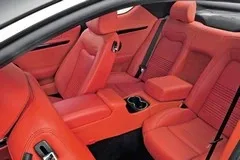
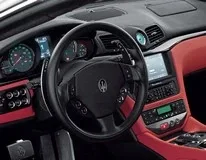
The Maserati GranTurismo S is a very bright car, capable of catering to the owner's ego. The interior is spacious, the materials are expensive, the build quality is excellent. The atmosphere is warm, a bit retro in style, though not without stylistic flaws. Some details, for example, clearly lack "nobility."
The volume of the V-shaped "eight" was increased to 4.7 liters, while power grew to 440 hp – as on the Alfa 8C. The six-speed gearbox with electric shift drive is installed on the rear axle, the brakes are special, and the suspension is also tuned in a special way.
Looking at the dimensions, such a car is hard to classify as a driver's car. After all, it was created for straight-line blasts, wasn't it? Not quite. The engineers managed to optimize the load distribution across the axles, they re-tuned the suspension, which is on double wishbones. All this, together with the engine and gearbox, made the GranTurismo S a real sports car. The steering is also well done, although on a straight line you still feel a slight imprecision.
Hats off, gentlemen. Let's give the engine its due, even not for the real speed maximum of 295.1 km/h and the ability to accelerate to a hundred in 4.9 s (the Jaguar's figures are 280 km/h and 5.4 s, respectively). The main advantage of this engine is that it is... universal! It will make even the most depressed driver shine, and its rolling roar in Sport mode is awe-inspiring. The sound pierces through you, as if you were standing on the stage of an opera house next to a great tenor.
You simply marvel at how generously the V-shaped "eight" delivers a stormy flow of torque from the "bottom." And when the tachometer needle reaches 5000, it's as if you are transported to another dimension: that's where the drive is! We spin further – 7000, and even 7600! What thoughts, what assessments are there?! The engine is simply devilish!
In city traffic, the "eight" gloomily rumbles at speeds slightly above idle, but if needed, it will turn the GranTurismo into a ball of lightning.
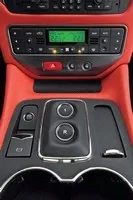
To not waste power in vain, a gearbox with electric shift drive was used. The "automatic" was removed from the tunnel, and two "paddles" appeared under the steering wheel, large enough to easily maintain constant contact with them in corners.
The gearbox works not as fast as on a Ferrari, but for the GranTurismo S it's just right. In Auto Normal mode, it does everything on its own, leaving the option to select a gear manually.
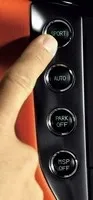
If you press the Sport button, the shifting process noticeably livens up. The culmination is the MC-Shift mode. It is activated when the gearbox is in "sport" with manual shifting, the engine is warmed up, the rpm exceeds 5000, and the gas pedal is pressed more than 80%... Shift time is 100 milliseconds. Incredibly fast!
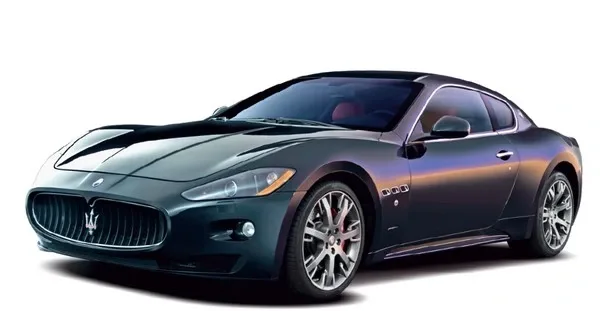
Maserati GranTurismo S
4691 cm3
440 hp
V8 (90° bank)
from $204,863 (1,638,900 UAH)
Max speed – 295.1 km/h
0-100 km/h – 4.9 s
0-200 km/h – 16.3 s
Acceleration from 70 to 120 km/h in sixth gear takes the Maserati 10.8 seconds.
ITALIAN CHARM
The GranTurismo S will comfortably accommodate four passengers. On the center tunnel, you won't find an automatic transmission selector – instead, massive paddle shifters are located behind the steering wheel, responsible for shifting the robotic transmission.
LIKED
The roar of the Maserati's V8 can make anyone tremble. Press the Sport button on the console – and the pneumatic flaps near the rear mufflers open, giving the world a true symphony! This low, rich sound is audible even in neighboring cars. And that's great – such music is a sin not to share.
DIDN'T LIKE
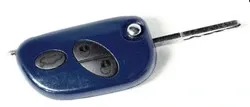
A classic oversight. Expensive materials and advanced technology all around, but you get an ordinary ignition key – exactly the same as in a budget city hatchback. A touch of exclusivity here would clearly not hurt.
SPECIAL DISCS
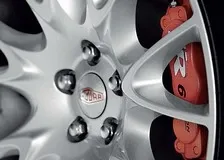
In terms of braking systems, both brands – Jaguar and Maserati – offer the most effective and innovative solutions. The British car, for instance, is equipped with Alcon R brakes – the most powerful system the British have ever installed on production models. The front discs have a diameter of 400 mm – that's why there's no space-saver spare tire in the trunk; it simply wouldn't physically fit. The rear discs are 350 mm. Monoblock calipers are cast from light alloy: six-piston in front, four-piston in the rear.
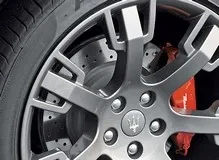
Maserati, in turn, relies on Brembo brakes. The front discs of the GranTurismo S are made using Dual-Cast technology: the working surface that rubs against the pads is cast iron, while the central part is aluminum. The front calipers are six-piston. The rear discs are 330x28 mm, and their calipers have four pistons each.
Jaguar XKR-S
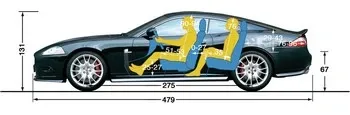
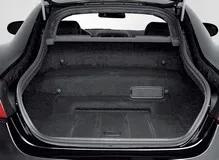
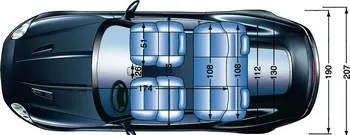
The trunk is convenient, the trim is neat, and a double floor is provided. The main plus is that the lid starts right from the edge of the roof. Useful volume is 275 liters. The rear seat backs cannot be folded down.
Technical specifications provided by the manufacturer
Jaguar XKR-S 4.2 V8 S/C
- Engine: longitudinally mounted at the front, V8 (90° bank angle), cylinder bore – 86.0 mm, piston stroke – 90.3 mm, displacement – 4196 cm³, compression ratio – 9.1:1, power – 416 hp (306 kW) at 6250 rpm, torque – 560 Nm at 4000 rpm, specific power – 99.0 hp/l, cylinder block, crankshaft bearings and heads of light alloy, 4 valves per cylinder, 2 camshafts per head, timing drive by chain, distributed electronic injection, mechanical supercharger, intercooler.
- Transmission: rear-wheel drive, six-speed automatic with electronic control.
- Tires: front 255/35 ZR 20 97Y, rims 9.0J; rear 295/30 ZR 20 101Y, rims 10.5J; tire repair kit.
- Body: coupe, 3 doors, 4 seats, Cx – 0.34, unibody, aluminum.
- Suspension: front – independent, double wishbone, with coil springs and anti-roll bar; rear – independent, double wishbone, with coil springs and anti-roll bar; hydraulic shock absorbers with electronic stiffness adjustment.
- Brakes: ventilated disc brakes, ABS, dynamic stability control.
- Steering: rack and pinion with power assist.
- Dimensions and weight: wheelbase – 2752 mm, front track – 1560 mm, rear track – 1608 mm, length – 4791 mm, width – 1892 mm, height – 1312 mm, curb weight – 1665 kg, gross weight – 2080 kg, trunk – 300 l, fuel tank – 70.6 l.
- Place of production: Castle Bromwich (England).
Maserati GranTurismo
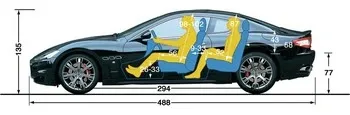
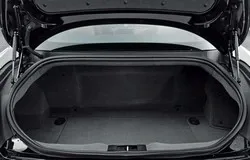
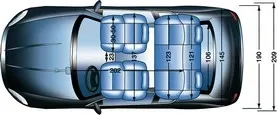
The car's dimensions are solid, but it seems that engineers deliberately sacrificed the trunk for cabin space. The loading threshold is too high, although the shape of the compartment is correct. Volume – 247 liters. The trim is decent, but the details could use more work.
Technical specifications provided by the manufacturer
Maserati GranTurismo 4.7 V8 S
- Engine: longitudinally mounted at the front, V8 (90° bank angle), cylinder bore – 94.0 mm, piston stroke – 84.5 mm, displacement – 4691 cm³, compression ratio – 11.25:1, power – 440 hp (323 kW) at 7000 rpm, torque – 490 Nm at 4750 rpm, specific power – 93.6 hp/l, cylinder block, crankshaft bearings and heads of light alloy, 4 valves per cylinder, 2 camshafts per head, timing drive by chain, distributed direct injection Bosch.
- Transmission: rear-wheel drive, twin-disc dry clutch with hydraulic drive, 6-speed manual with electric gearshift drive, self-locking differential.
- Tires: front 245/35 ZR 20 95Y, rims 8.5J; rear 285/35 ZR 20 100Y; tire repair kit.
- Body: coupe, 2 doors, 4 seats, Cx – 0.33, unibody, steel.
- Suspension: front – independent, double wishbone, with coil springs; rear – independent, double wishbone, with coil springs; constant-rate shock absorbers (optional – electronically controlled suspension).
- Brakes: ventilated disc brakes, perforated discs, ABS, dynamic stability control.
- Steering: rack and pinion with power assist.
- Dimensions and weight: wheelbase – 2942 mm, front track – 1586 mm, rear track – 1590 mm, length – 4881 mm, width – 1915 mm, height – 1353 mm, curb weight – 1880 kg, gross weight – 2180 kg, trunk – 260 l, fuel tank – 86 l.
- Place of production: Modena (Italy).