
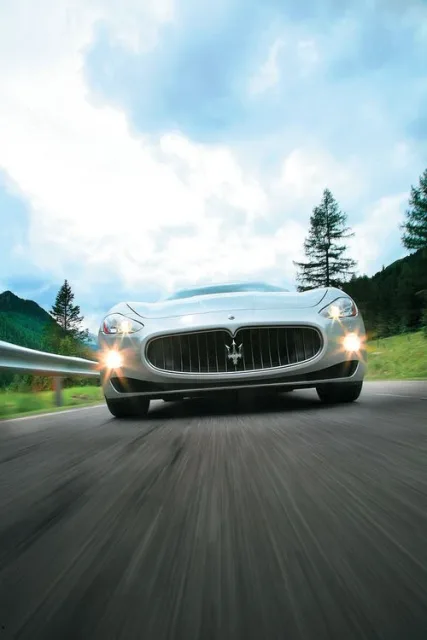
What a nation these Italians are! Even here, in northern Italy, where Austrians once ruled and almost every second person speaks German, southern hospitality reigns instead of Teutonic pedantry. You drive, say, not some battered Fiat, but a brand-new Maserati GranTurismo — and in every little village you are greeted with genuine delight, without a drop of envy:
— Nuovo Maserati? Bella macchina! Perfetto!
And I, in response, through the lowered window, blurt out my entire meager stock of Italian:
— Ciao! Grazie, signor!
The car I have, needless to say, is bella — a beauty. But as for "perfetto" — complete flawlessness — I haven't decided yet.
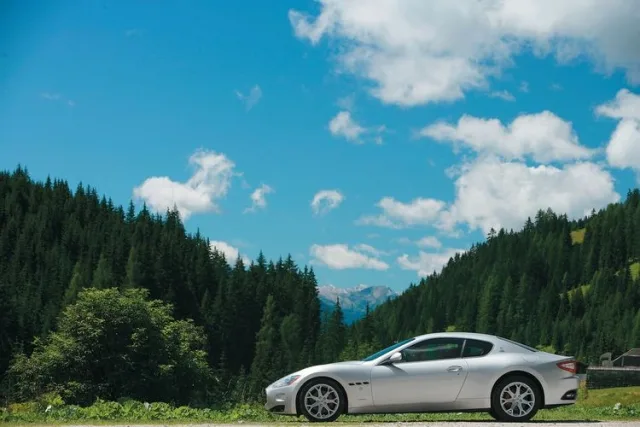
To be honest, I lowered the window not only to practice my Italian. I was listening to music — the music of the engine. This is no longer that piercing, choking scream with which the Maserati Coupe started up. Now it's a rich, deep rumble. I downshift, add gas... What a luxurious, lordly "cut-off"!
And close the window — the engine's voice is heard in the cabin only during active driving; in calm modes it almost disappears, allowing you to talk to a passenger in a low voice up to 160 km/h. Sound insulation is excellent!
The panels are silent, the upholstery is silent, the glove box lid is silent — no creaks, no "crickets." Somehow even un-Italian... I got out, stopped, slapped the doors and the trunk lid. The sound, maybe, is not like that of expensive Germans, but it doesn't hurt the ear. And you don't need to slam it hard: give it a light push — and it closes by itself. Now that's progress!
I remember how about twelve years ago I visited the Maserati factory in Modena and was simply shocked at how the cars were assembled. The doors of the Maserati Ghibli closed every other time, and the trunk lid scratched the body with sharp edges down to bare metal — and this on a brand-new car! Not to mention other flaws that caught the eye and those that were hidden.
Now Maserati is emerging from a prolonged crisis that lasted almost twenty years. And the first quarter of this year, for the first time since 1993, when the brand came under the wing of Fiat Auto, brought profit. The main role in saving the brand was played by the Quattroporte sedan, which appeared three years ago and opened new markets for Maserati. And it is on the basis of the Quattroporte that the GranTurismo coupe is built.
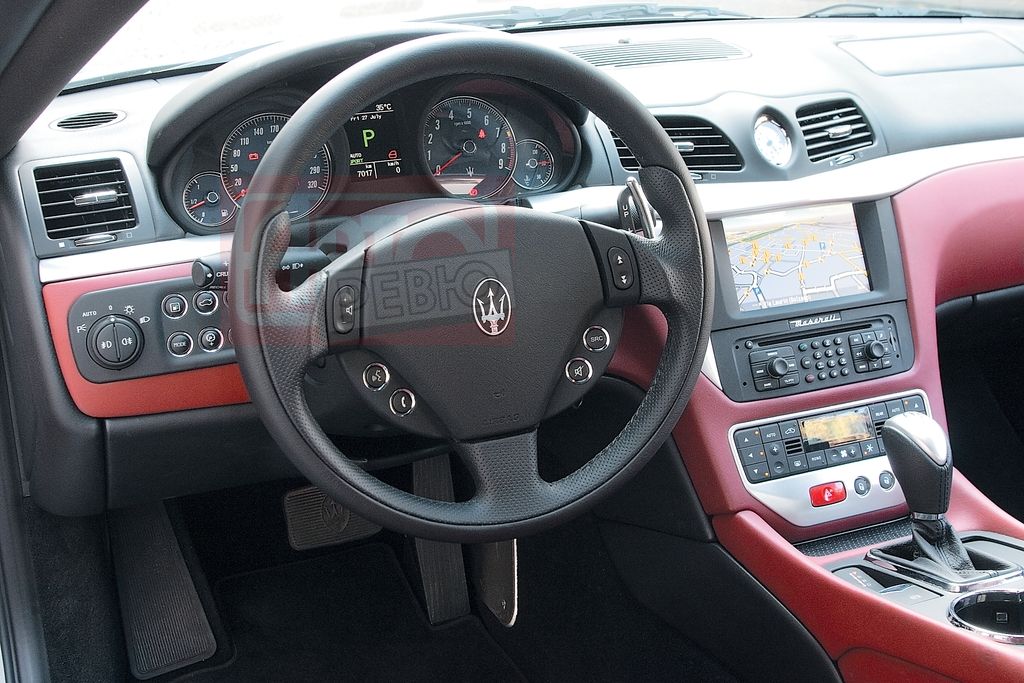 | 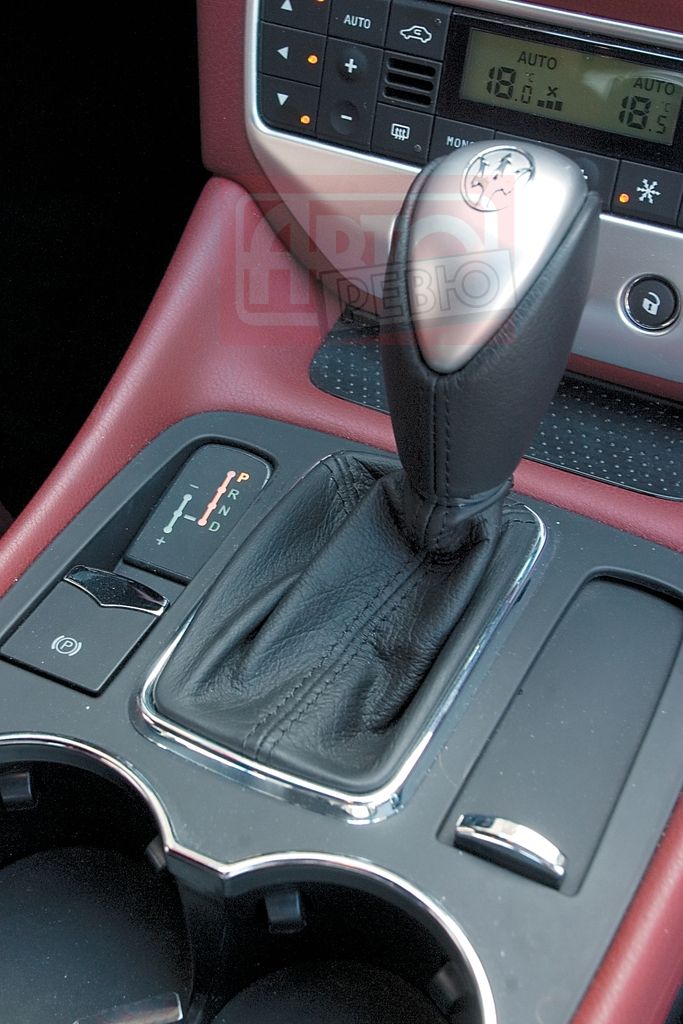 | 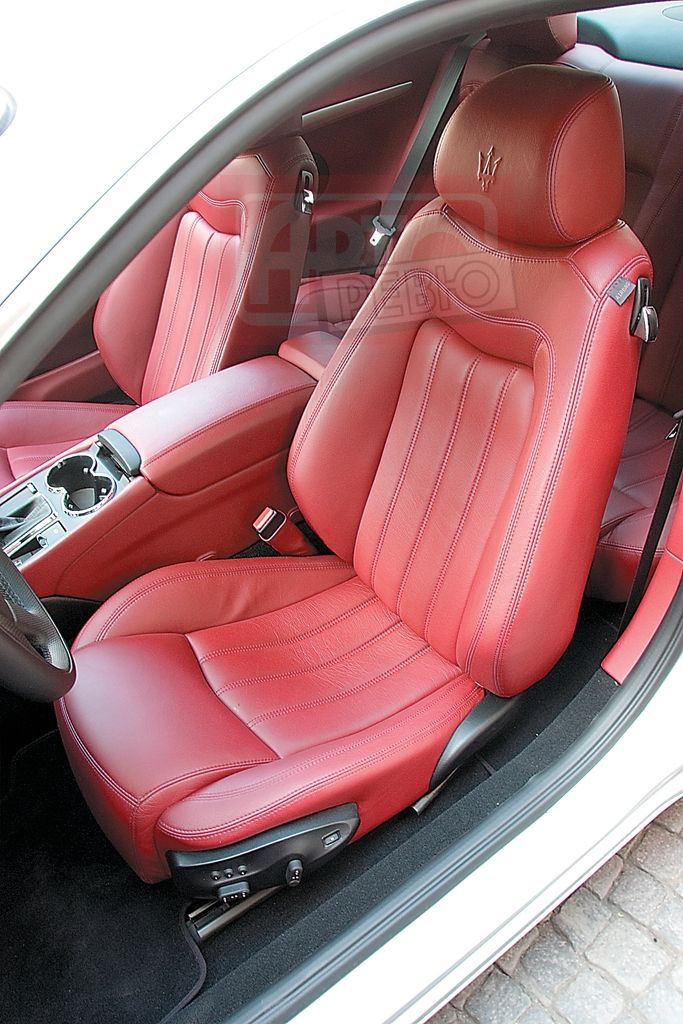 |
| If the designers were tasked with making an interior in the spirit of Mercedes, then they deserve an award. Smooth lines, many small buttons on the center console. The steering wheel with electric drive is from the Quattroporte sedan. The only "sporty" detail is the floor-mounted gas pedal | Move the lever to the left — and the "automatic" switches to sport mode. In manual mode, the lever needs to be pushed forward ("–") or backward ("+"). To the left of the lever is the electric parking brake button | The front seats offer a very low seating position, but their profile is not ideal. There are no "specific" adjustments (like side support or a sliding cushion). The range of longitudinal movement is such that I moved back all the way |
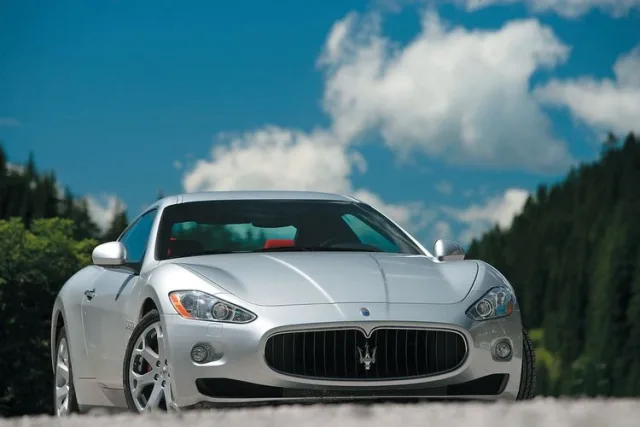
The "mechanics" almost completely migrated from the sedan, so it took only a year and a half to develop the coupe. Designers from the Pininfarina studio were taken on as co-authors, although for many years ItalDesign made bodies for Maserati. And it turned out great! You can applaud the designers for just one oval radiator grille with concave bars! And what a pity that from behind the wheel you can only see the left front fender and part of the hood — what shapes there are!
Bella macchina! Perfetto!
But look at the "macchina" from behind. It feels like the customer didn't pay the designers on time — and they abandoned the work halfway. Where did these inexpressive lights come from? Why such a faceless cutout in the rear bumper? Strange.
The interior is laconic, and the hint of sport here is very restrained. Three-spoke steering wheel? The same one is on the Quattroporte sedan. Bucket front seats? There are better "buckets," and there are minimal electric adjustments here. For example, the lumbar support roller moves in the backrest only up and down, and the amount of support itself cannot be changed. And the engine is started not by a button, but by turning a regular key with a folding blade.
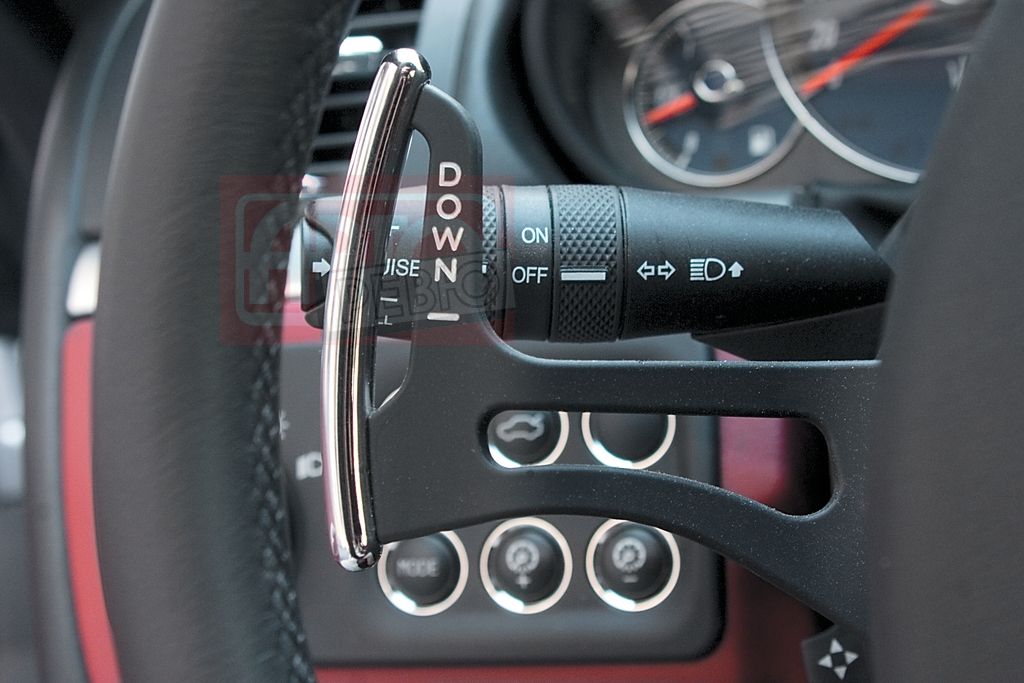 | |
| The instruments are "ordinary," and their layout strongly resembles Audi. It's good that they chose a black background for the information display in the center, rather than the eye-cutting red, as on many German cars | You can shift gears using elegant paddle shifters. On the reverse side, the chrome brackets are covered with a pleasant velvety material — fingers don't slip |
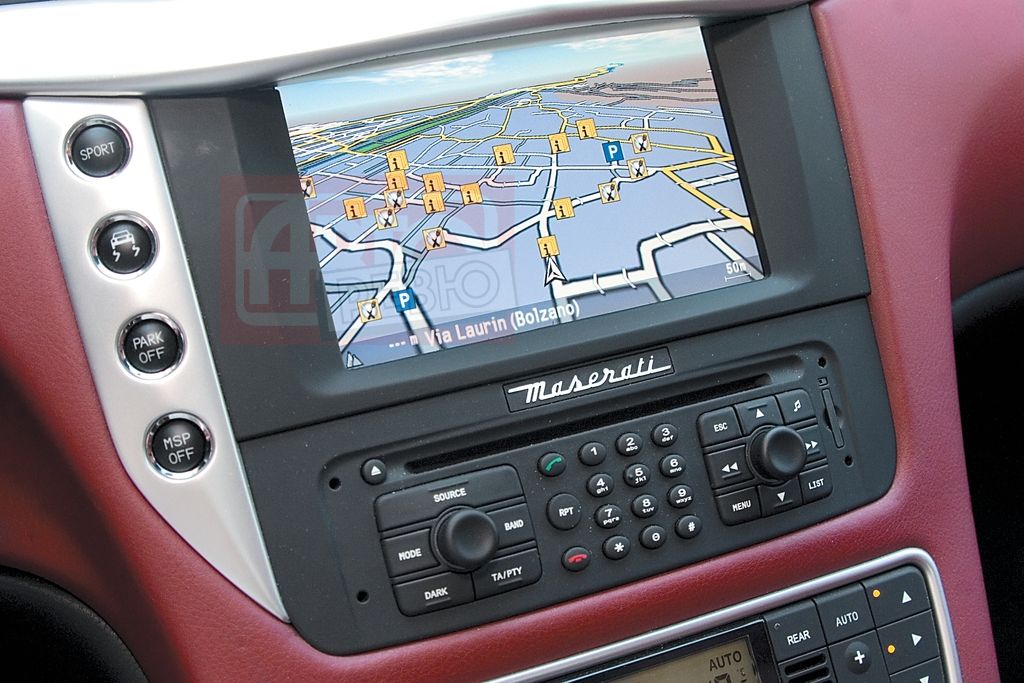 | 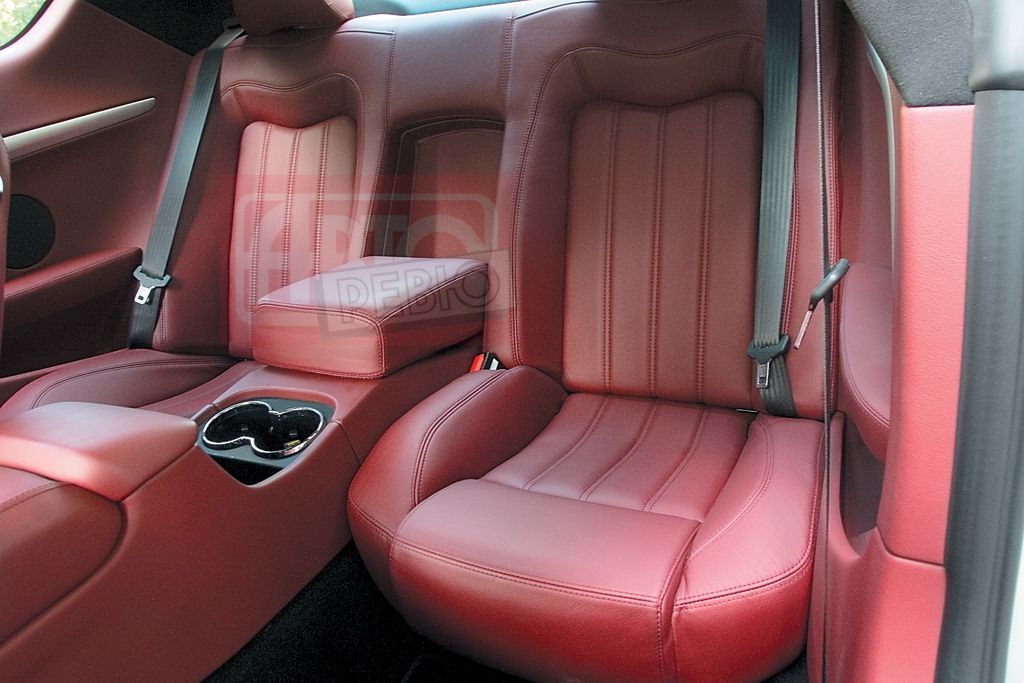 |
| The navigation system (the same one installed on PSA concern cars) pleased with a large display, clear operation, and decent graphics | Between the rear seats is a high central tunnel. People of average height are quite comfortable in these seats, but provided that the front seats are not moved all the way back |
But here there is already a "sense of quality." It's clear that the Italians have revised their approach to working with component suppliers. And only the oval-pointed clock — the distinguishing mark of all Maseratis — upset me. Just a clock. Why not put the same elegant and gilded ones, as, for example, on the Ghibli coupe? Did they show inaccurate time and require winding?
And why did the cut of the rubber seal of the trunk opening turn out to be not exactly in the center, opposite the lock, but shifted to the left? A trifle, but on a car for 150 thousand euros it is clearly inappropriate.
The platform borrowed from the Quattroporte was somewhat changed. The wheelbase was shortened by 125 mm, the rear overhang became a bit shorter, and the two-door body itself became 30% stiffer. Thanks to the power unit shifted back, the weight distribution along the axes turned out to be almost ideal — 49:51. Which cannot be said about the weight itself: 1880 kg! Compare: the BMW 650i is lighter by 165 kg, the Jaguar XKR by 225 kg, the Porsche 911 by almost half a ton! Nothing surprising: here the body is completely steel. Of course, it would be a sin to call the 400-horsepower V8 engine weak, but "at the output" — albeit fast, albeit confident, but just acceleration. Which, by the way, did not stop me from drying out the 86-liter tank in 200 kilometers... But, if you believe the passport data, the Maserati GranTurismo accelerates to 100 km/h in just 5.2 seconds. I don't believe it! Because 5.2 seconds is very fast! That's how the Porsche 911 with a manual gearbox accelerates. The Evo IX and Impreza WRX hit the first hundred a second later, and with each gear change you feel like you're being whacked on the back with a bag of sand.
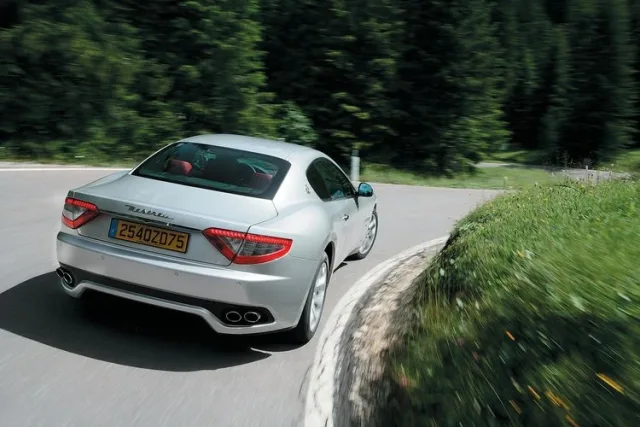
And in the GT — no impacts, silence and peace. Even with the stability control system turned off, the coupe accelerates extremely smoothly, without wheelspin. However, a self-locking differential saves from possible wheelspin to a large extent: during acceleration it locks at 25%, and during engine braking — at 45%, which should prevent an early skid when lifting off the gas in a corner.
But where is there a turn here where you can safely reach the limit of grip of the wide tires on the hot asphalt? On the serpentines that, like boiled spaghetti, are scattered across the mountains around Bolzano? But for an hour now I've been crawling in a dense stream of vacationers heading from Germany and Austria to the warm seas of Italy. No fun allowed.
In this jerky mode, the six-speed "automatic" borrowed from the Quattroporte pleased me. Smooth shifts, small delays when shifting down — and no jerks characteristic of the proprietary Cambiocorsa robotic gearbox.
The same ZF "automatic" is installed on the Jaguar XKR, Aston Martin DB9, and BMW 335i. But the settings of the control electronics are different for all cars. For example, on BMW the gearbox is distinguished by faster and "harder" shifts. And on Maserati, the "automatic" does everything softer.
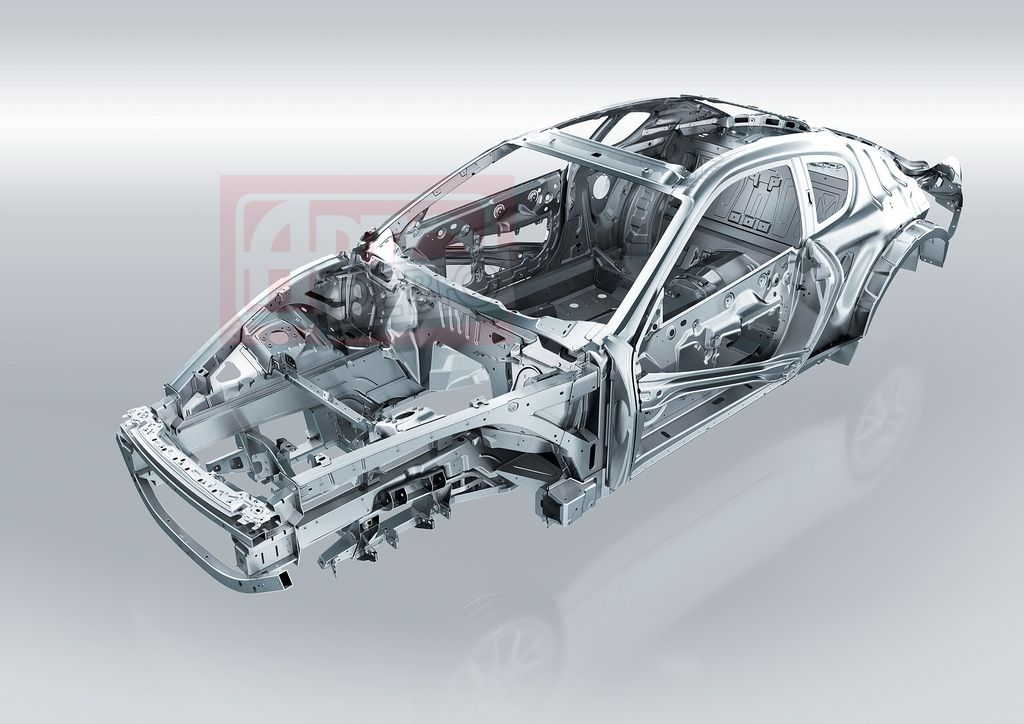 | |
| Swivel bi-xenon headlights can deflect the light beam by up to 15 degrees. Among modern options are Isofix child seat anchors in the rear. The base equipment includes six airbags, including side curtain airbags. The car comes standard on 19-inch wheels (245/40 front, 285/40 rear), with 20-inch wheels with 245/35 and 285/35 tires available as an option. | The GranTurismo is based on the shortened rear-wheel-drive M139 platform, familiar from the Quattroporte sedan. The wheelbase was reduced by 125 mm, and the rear overhang by 66 mm. The body is 30 percent stiffer in torsion than the sedan's. |
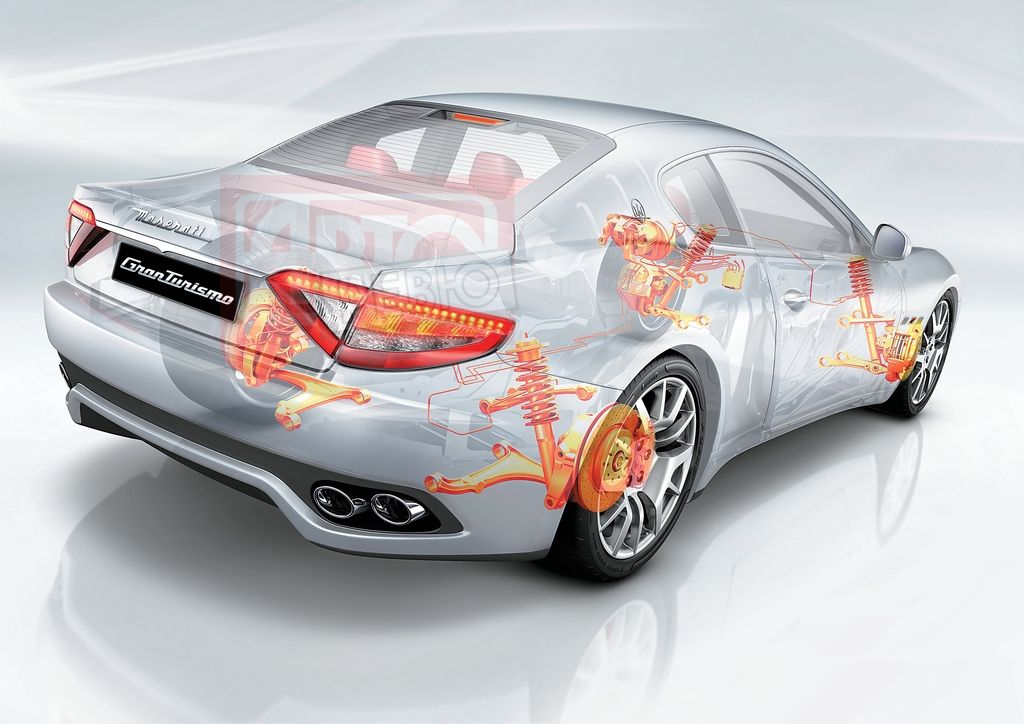 | |
| The suspension layout — front and rear double wishbones with aluminum arms — remains unchanged. However, the stiffness of components, from springs to bushings, has been recalculated. Adjustable Skyhook dampers are offered as an option. | The transmission is the same as in the Quattroporte. The six-speed ZF automatic is mounted directly with the engine (in Maseratis with robotic gearboxes, the transaxle layout is used — the gearbox is integrated with the final drive). The powertrain is shifted rearward, giving a weight distribution of 49:51. The gearbox holds revs up to 7200 rpm. Upshifts take just over half a second and are very smooth, without any loss of thrust. In sport mode, the gearbox shifts 40 percent faster. |
The suspension with active Skyhook dampers works softly. Joints in the asphalt and small potholes seem to disappear under the wheels. There is no hint of looseness or pitching. The only thing is that the car noticeably rolls in corners.
If you switch to sport mode, the suspension becomes stiffer. At the same time, the automatic becomes "sportier," and the engine responds more eagerly to the gas pedal. A bit more interesting, but even then the GranTurismo does not turn into a true sports car.
The full character of the Maserati is revealed only on the autobahn. Reactions are restrained and precise, and sound insulation is excellent. Like in a Mercedes. Only after 150 km/h does the steering lose a bit of feedback — you have to correct the trajectory.
The car is solid, confident in handling, and, most importantly, very beautiful. Bella macchina. And the driving character? What is Maserati's main market now? Right, the USA! More than half of the cars go to North America. And tastes there are well known. However, Europe is changing in the same direction.
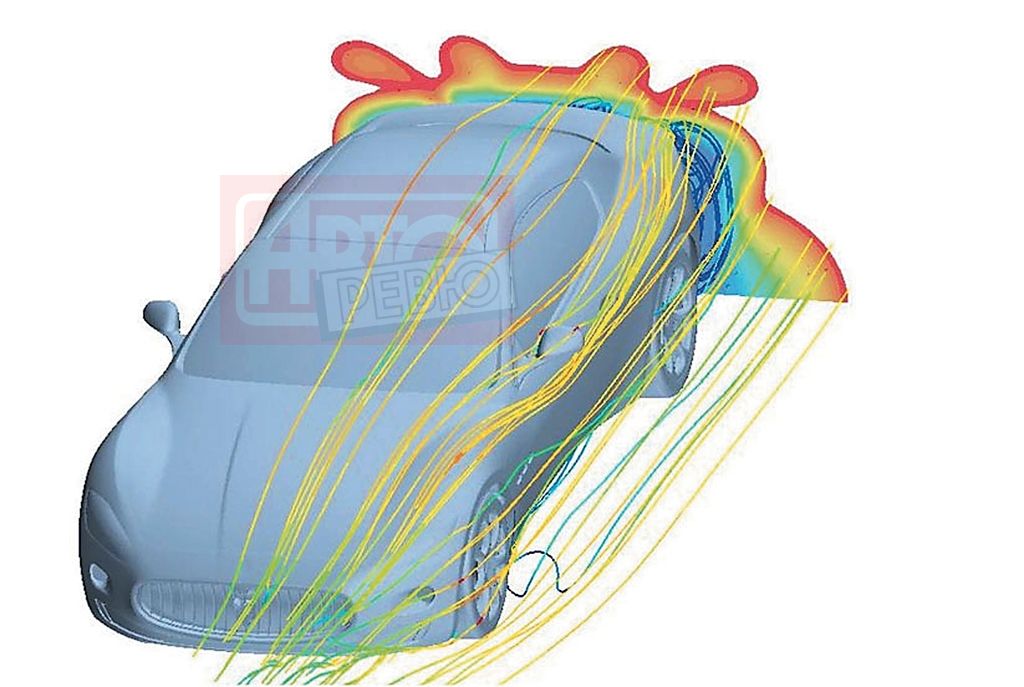 | ||
| The V8 4.2 came to the coupe from the Quattroporte. The engineers only recalibrated the electronics: peak power is now 405 hp at 7100 rpm, torque is 460 Nm at 4750 rpm. In Sport mode, the engine responds noticeably more eagerly to the throttle. | The aerodynamic drag coefficient Cx is 0.33. Far from a record, but quite respectable for a car with a rearward cabin, a special front end, flared arches, and wide wheels. | All four wheels are braked by four-piston calipers and ventilated discs with a diameter of 330 mm. The claimed braking distance from 100 km/h on dry asphalt is no more than 35 meters. |
Chief engineer Paul Fickers said:
— We can make anything: a two-seater, a more powerful version, or one with a manual. But would such cars sell? We need to sell, and as many as possible. We already have 1800 orders for the GranTurismo, and about 85 percent of buyers are those who have never owned a Maserati before. So we are on the right track.
It seems so. And it is important that this right track does not cross with Ferrari's course — otherwise, internal competition will begin. Those who want something angrier and sharper should take a Ferrari. Those who need something calmer, more comfortable, and more "bourgeois" — a Maserati. For example, the GranTurismo. Bella macchina!
Although, perhaps in a year a more powerful version will appear — with a V8 4.7 producing 450 hp. But is it worth waiting? And the price will likely be higher than the 150 thousand euros they ask in Russia for the current GranTurismo.
| Specifications | ||
| Parameters | Vehicle | |
| Maserati GranTurismo | ||
| Dimensions | length, mm | 4881 |
| width, mm | 1847 | |
| height, mm | 1353 | |
| wheelbase, mm | 2942 | |
| track front/rear, mm | 1586/1590 | |
| Engine | petrol, with multipoint fuel injection | |
| Location | front, longitudinal | |
| Number and arrangement of cylinders | V8 | |
| Displacement, cm³ | 4244 | |
| Bore/stroke, mm | 92.0/79.8 | |
| Compression ratio | 11.0:1 | |
| Number of valves | 32 | |
| Maximum power, hp/rpm | 405/7100 | |
| Maximum torque, Nm/rpm | 460/4750 | |
| Drive | rear-wheel drive | |
| Transmission | automatic, 6-speed (ZF 6HP26) | |
| Gear ratios | I | 4.17 |
| II | 2.34 | |
| III | 1.52 | |
| IV | 1.14 | |
| V | 0.87 | |
| VI | 0.69 | |
| reverse | 3.40 | |
| final drive | 3.73 | |
| Front suspension | independent, coil spring, double wishbone | |
| Rear suspension | independent, coil spring, double wishbone | |
| Front brakes | ventilated and perforated discs, diameter 330 mm | |
| Rear brakes | ventilated and perforated discs, diameter 330 mm | |
| Tires | front | 245/40 R19 |
| rear | 285/40 R19 | |
| Minimum turning diameter, m | 10.7 | |
| Curb weight, kg | 1880 | |
| Gross weight, kg | 2250 | |
| Trunk volume, l | 260 | |
| Maximum speed, km/h | 285 | |
| Acceleration 0—100 km/h, s | 5.2 | |
| Fuel consumption, EU, l/100 km | urban cycle | 21.6 |
| extra-urban cycle | 10.5 | |
| combined cycle | 14.3 | |
| Fuel tank capacity, l | 86 | |
GranTurismo and its potential competitors*
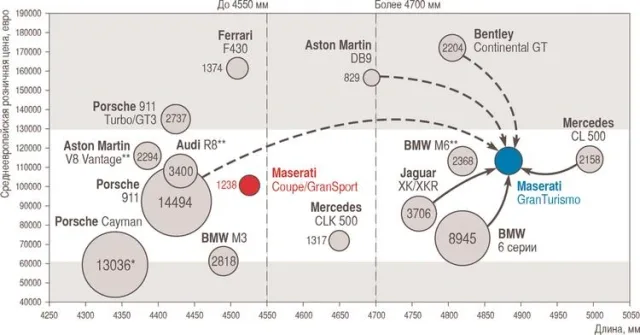
* Sales volumes for 2006 in seven key markets (USA, Italy, Germany, Switzerland, France, Japan, Australia)
** Forecast
The diagram shows how Maserati marketers see the GranTurismo's place among competitors. The horizontal axis is the length of cars in millimeters, the vertical axis is the approximate price in Europe. The circles are sales of each model in 2006 in seven key Maserati markets (in order of importance: USA, Italy, Germany, Switzerland, France, Japan, Australia).
The picture is as follows. The GranTurismo is one of the largest four-seat coupes on the market. Sales are expected to be modest — about two thousand cars (hence the small circle). Maserati considers the Mercedes CL, Jaguar XK, and BMW 6 Series as main rivals: large four-seat coupes in the mid-price range. Solid arrows point from them to the GranTurismo. They also do not rule out customers migrating from the Bentley Continental GT, Aston Martin DB9, and Porsche 911 — these are dashed arrows.
Interesting, but nothing more. In Russia, prices are different: for a base GranTurismo, the dealer asks about 150 thousand euros. And for this year, a quota of 18 cars has been allocated — all already assigned to clients.
| GranTurismo and its main competitors (factory data) | ||||
| Parameters | Cars | |||
| Maserati GranTurismo | BMW 650i (automatic) | Jaguar XKR | Mercedes CL 500 | |
| Dimensions | ||||
| length, mm | 4881 | 4820 | 4791 | 5065 |
| height, mm | 1847 | 1855 | 1892 | 1871 |
| width, mm | 1353 | 1373 | 1322 | 1419 |
| wheelbase, mm | 2942 | 2780 | 2752 | 2955 |
| Engine | V8 4.2 | V8 4.8 | V8 4.2K | V8 5.5 |
| Max power, hp/rpm | 405/7100 | 367/6300 | 420/6250 | 388/6000 |
| Max torque Nm/rpm | 460/4750 | 490/3400 | 560/4000 | 530/2800 |
| Curb weight, kg | 1880 | 1715 | 1655 | 1920 |
| Weight distribution front/rear, % | 49/51 | 50/50 | 54/46 | 52/48 |
| Top speed, km/h | 285 | 250 | 250 | 250 |
| Acceleration 0-100 km/h, s | 5.2 | 5.5 | 5.2 | 5.4 |
| Fuel consumption, l/100 km | ||||
| urban cycle | 21.6 | 17.2 | 19.1 | 18.1 |
| combined cycle | 14.3 | 11.7 | 12.3 | 12.1 |
Looking back
The history of Maserati began in 1914, and for the first three decades the company was exclusively engaged in building racing cars. The first prototype of a car for ordinary roads was shown at the Geneva Motor Show exactly six decades ago, in the spring of 1947. That was the A6 1500 Gran Turismo: a two-door body on the A6 chassis was created by the Pininfarina studio. It was then that chrome decorative slits behind the front wheels first appeared on this car, which can still be seen on the GranTurismo today. There were also retractable headlights and a plexiglass roof... But a less daring version with the same name went into production - only 58 such cars were built, and all of them were sold to wealthy connoisseurs.
Truly mass production of "civilian" models started only in 1957, when the four-seat coupe Maserati 3500 GT appeared. Over seven years, 1983 units were assembled, and the owners of these stylish two-doors were mostly the cream of society - from Prince Rainier III of Monaco to Alberto Sordi and Anthony Quinn.
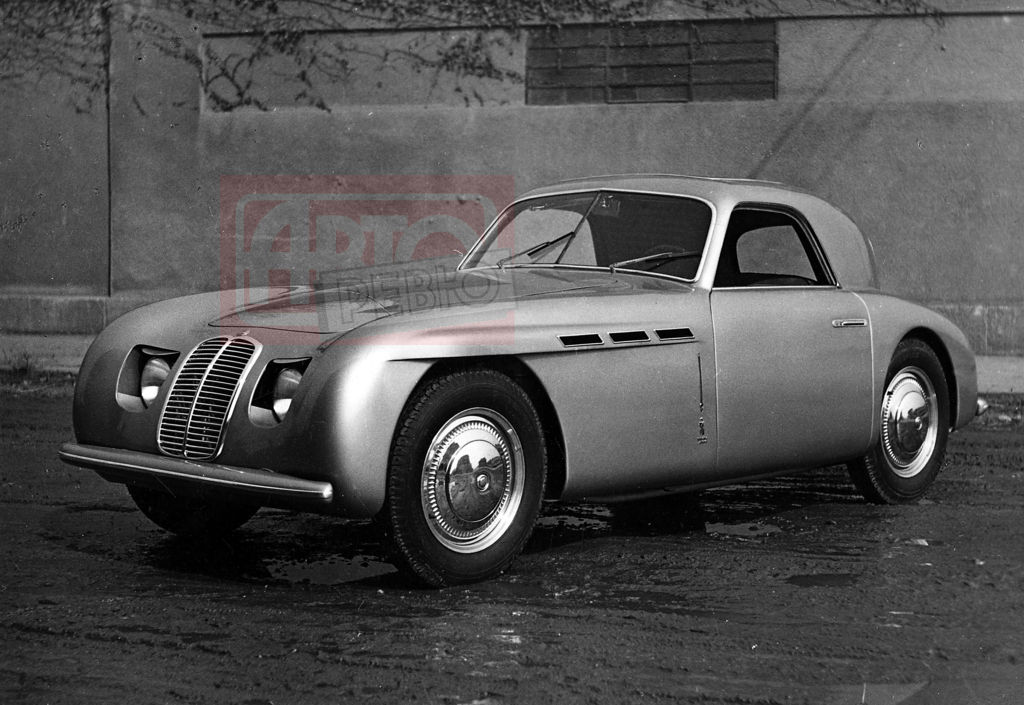 | 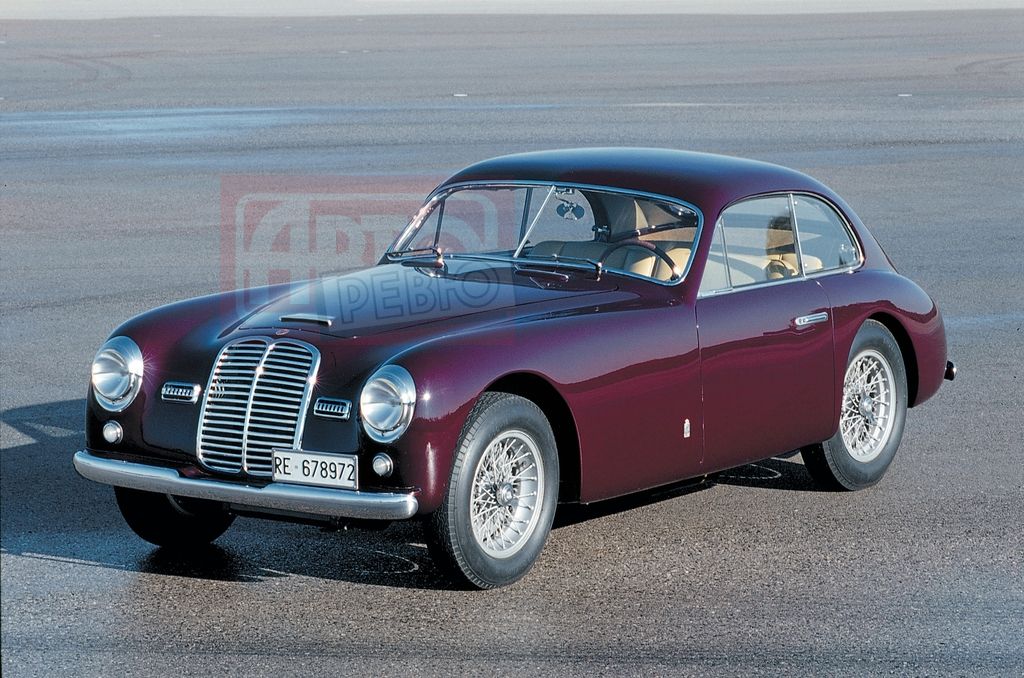 | |
| Maserati A6 1500 Gran Turismo prototype, 1947 | Production Maserati A6 1500 Gran Turismo, 1948 | Maserati 3500 GT, 1957 |
Later, various studios worked on bodies for Maserati - Pininfarina, Touring, Bertone, Frua, Vignale, Monterosa, Ghia... Over time, Giorgetto Giugiaro became the chief designer: it was his ItalDesign workshop that gave the world such masterpieces as the Maserati Bora and Maserati Merak. And in 1998, Giugiaro created a more restrained but commercially successful Maserati 3200 GT, which with minimal changes is still produced under the name Maserati Coupe.
Now everything has returned to its original position: after 60 years, Maserati is again working with Pininfarina. It will be interesting to see who takes on the next model?