
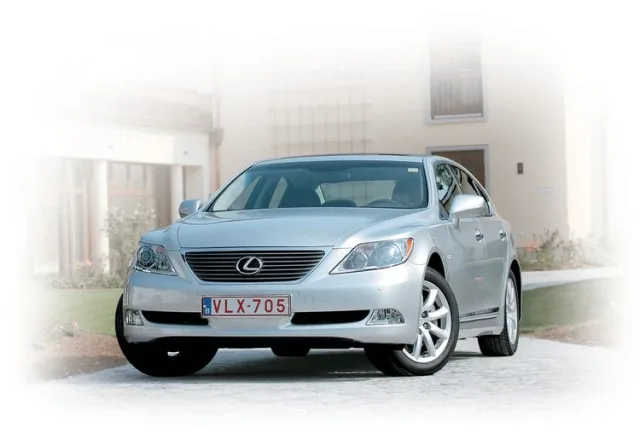
We have already written about the Lexus LS 460 sedan earlier (see AR No. 15, 2006). But then my colleague Leonid Golovanov tested a pre-production example on the mountain serpentines of Austria. Now I got a fully production car, the roads of the French Riviera, and a special site where I could check the operation of advanced electronics.
And in addition, thanks to an acquaintance, I got my hands on a VGRS system reducer...
— Hi! Did you bring a voice recorder? — bearded Michl Koch patted me on the shoulder.
We met last spring at the presentation of the Ford S-MAX minivan — then Koch was the technical press attaché at Ford, and Nikita Gudkov from Autosport magazine and I spent hours bombarding him with questions. "You've already written a whole book!" — Michl complained then... Now he heads the public relations department at Toyota Motor Europe, but his passion for technology remains.
— Look what I have! — Koch took a part the size of a hockey puck from the stand and handed it to me.
This "puck" turned out to be the key element of the VGRS (Variable Gear Ratio Steering) active steering system, known from the Lexus GS and LX models. What an elegant technical solution! BMW's similar Active Steering unit from ZF resembles a conventional electric power steering in size and design, but the Japanese version is about five times more compact!
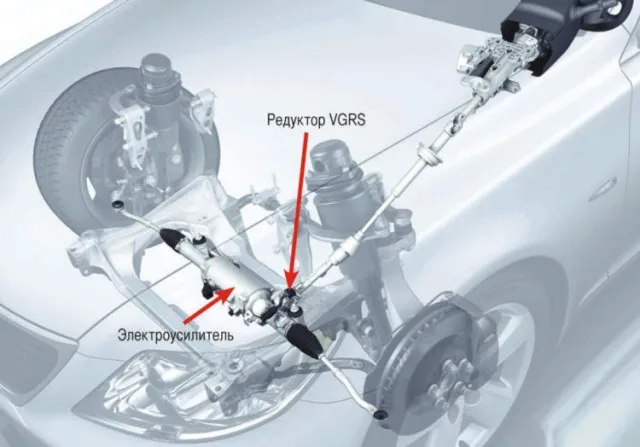
Steering mechanism with VGRS: the electric motor is located directly in the rack, and a wave gear is built into the shaft, smoothly changing the gear ratio
And while you figure out the principle of operation, you can go crazy. A flexible (!) gear ring is mounted on the elliptical central "puck" with a planetary mechanism, on which, in turn, two gear wheels are placed. You take the structure, put it on your finger, rotate the inner ring — and the outer halves start rotating relative to each other!
In the car, the "double-sided" gear is connected to the steering shaft, and the electric motor shaft passes through the core of the "puck". The faster the electric motor spins, the faster the second outer "half" rotates, transmitting force to the rack. This is how VGRS changes the steering gear ratio. When parking, the steering wheel makes 2.5 turns from lock to lock, and with increasing speed, the gear ratio smoothly increases — up to 3.6 turns.
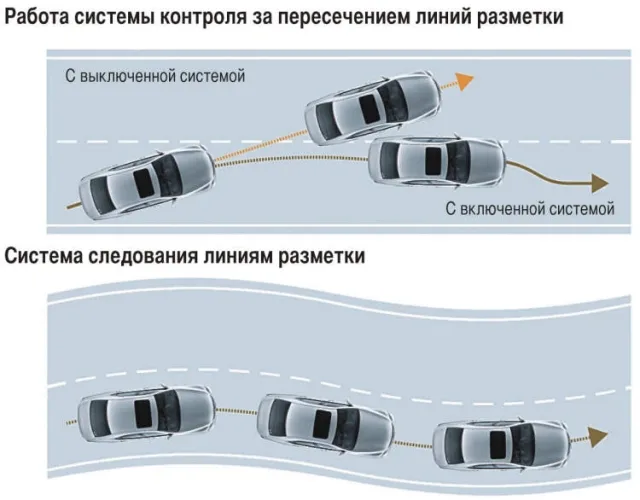
The LKA (Lane-Keeping Assist) system is designed to keep the car in its lane. But in practice, it sometimes needs help itself
In essence, this clever unit is a two-wave gear transmission. Its core is called a wave generator (deformation wave generator). The outer rings rotate relative to each other due to a different number of teeth: one wheel has the same number of teeth as the wave generator ring, while the other has two more (according to the number of waves). For one full revolution of the wave generator, the flexible wheel shifts relative to the rigid one by two teeth in the opposite direction. In our case — 100 and 102 teeth, respectively. The gear ratio is 50:1.
Interestingly, in developing VGRS, Toyota again virtuously used someone else's patent: the wave transmission was invented in 1955 by American Walton Musser. And already in 1962, such a transmission was used on an artificial Earth satellite...
VGRS is tuned so that its intervention is almost unnoticeable. I remember expert Oleg Rastegaev complained about the variable steering sensitivity of the Lexus GS 450h "hybrid": on winding roads, he constantly had to correct the steering (see AR No. 11, 2006). But the LS 460 behaves differently: on turns, your hands feel a pleasant heaviness (on production cars, the steering has become slightly heavier), and the change in sensitivity occurs imperceptibly.
| A demonstrative rear impact — a "log" crashes into the rear bumper of the Lexus LS, and the driver feels how the "smart" headrest extends in advance toward the back of the head | |
| If the rear-view radar predicts a collision, the servomechanisms of the front headrests extend the cushions close to the head — up to 60 mm, depending on data from the electrostatic head position sensor | |
Therefore, the Lexus LS 460 handles easily and simply — almost without an electronic "aftertaste". Although there is a huge amount of electronics in the car!
If, for example, you misjudge the speed when entering a corner, VGRS, following commands from the VDIM (Vehicle Dynamic Integrated Management) stabilization system, will correct understeer or oversteer by independently turning the front wheels by up to three degrees. When avoiding a sudden obstacle, the steering becomes "sharper", and the electronically controlled shock absorbers of the air suspension "tighten" so that the car reacts faster to steering input. By the way, the shock absorbers are made by Kayaba. In the piston of each shock absorber, there is a disc that is rotated by an electric motor (through a rod inside a rod) and changes the valve flow area, taking one of three positions — Sport, Normal, or Comfort.
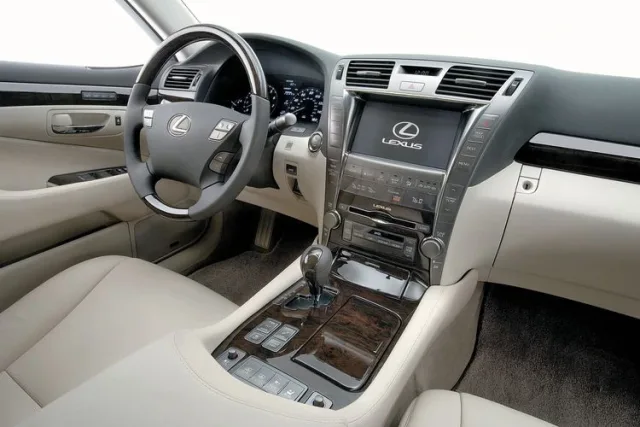
The interior is a bit plain, but beautiful and functional. The interactive screen with buttons around it is HMI, Human Machine Interface. Next to the "automatic" selector are buttons for air suspension modes (including ride height increase), transmission, stability control system, rear window shade control, and seat "climate"
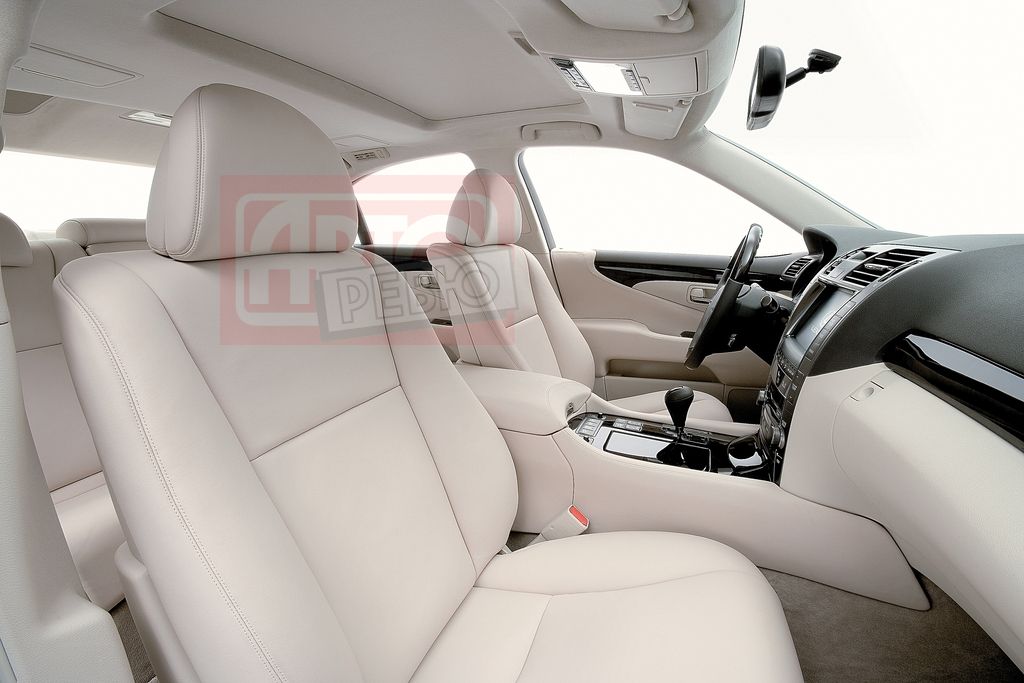 | |
| Very hospitable seats | Spacious in the back, but surprisingly little room for feet |
And the LKA system, Lane-Keeping Assist, activated by a button on the steering wheel? It monitors lane markings via video cameras and helps the driver stay in the lane. A good thing, but... At the slightest shift within the lane, LKA begins to resist, returning the car to the center.
Okay, Lexus LS, since you're so smart — steer yourself!
I take my hands off — the Hands free detected indicator lights up on the instrument panel. However, the Lexus failed to stay in the lane and began to dart from the left marking to the right and back — with increasing amplitude. Complete chaos! On the fourth or fifth oscillation, the LKA electronics couldn't take it and, beeping, turned off — the car at full speed was carried toward the dividing barrier. Then I couldn't take it either — I grabbed the steering wheel.
We should more carefully select the feedback loop parameters for LKA, more carefully...
I didn't test the camera with infrared sensors on the steering column that monitors the driver's head. It should raise an alarm if the Lexus LS is approaching an obstacle and the driver is looking away. In this case, the electronics first warns, then brakes with a deceleration of no more than 0.7 g, having previously tightened the seat belts.
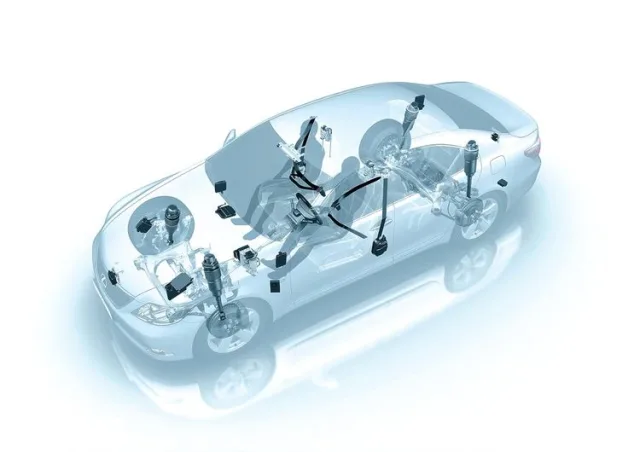
In the event of a threat of an accident, on computer command, the seat belts tighten, the shock absorbers "tighten", and steering sensitivity is optimized
But after the unsuccessful experience with LKA, it was scary to aim the Lexus at a wall while looking away. However, I managed to test the operation of the "smart" headrests of the Pre-Crash Safety system at the test site.
The Lexus LS 460 is calmly standing on an asphalt area — and suddenly a massive "log" flies into it from behind! This is a test — the "log" is suspended on a special frame that is accelerated by a Lexus RX crossover. The most interesting thing is that I am sitting behind the wheel at that moment. And at the moment of impact, my head does not throw back, but rests against the headrest. When the "log" was flying toward the stationary car, the rear-view radar detected it — and the electronics extended the headrest insert forward based on signals from the built-in electrostatic distance sensor to the back of the head.
| Two infrared video cameras can "see" a person even in the dark from 25 meters | This is how the PCS, Pre-Crash Safety System, works if the front and rear view radars detect a dangerous obstacle |
You might say, so what. Mercedes has Neck-Pro headrests that also extend in a rear impact, not to mention the Swedish SAHR, Saab Active Head Restrains, system that appeared back in 1997. But if Neck-Pro is essentially pre-compressed springs that "fire" the cushion a fixed distance and only after impact, then in the Lexus LS 460 the headrests are "smarter": they activate before impact based on radar signals. And the distance sensor to the back of the head is a truly unique thing!
Here it is, Japanese high-tech...
Another electronic novelty is the auto-parker. A similar system already exists in the updated Volkswagen Touran, but the Japanese sedan can do more: it handles not only parallel but also perpendicular parking. Moreover, the driver can use a finger on the central screen to indicate how deep to park — for example, to stop half a meter closer to the curb than others.
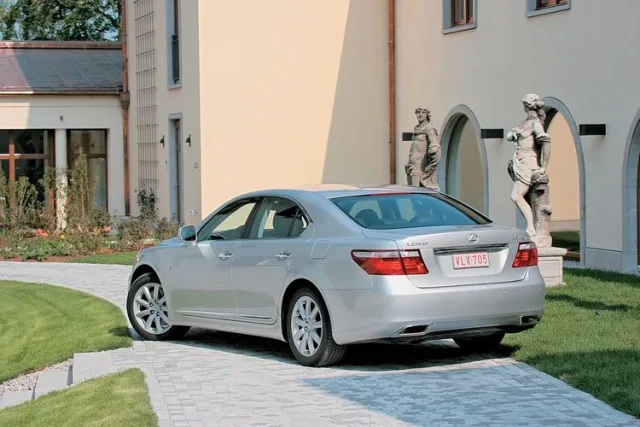
But, as is often the case with “Russian” Lexus models, due to local legislative nuances, cars for our market are missing some options. There is no adaptive cruise control, no driver attention camera, no rear-view camera, and no automatic parking. A pity!
However, for the first time for Lexus, LS buyers will be able to order options individually rather than in packages. Sunroof, heated steering wheel, rear ottoman seat, or Mark Levinson audio system — all of these are now available “a la carte.” Judging by preliminary orders, the most popular will be the long-wheelbase LS 460L, accounting for about 70% of requests. Next year, they plan to sell more than a thousand LS sedans in Russia. Prices start from $112,700 for the base LS 460 and go up to $150,100 for the 122 mm longer LS 460L in top trim.
 |
 |
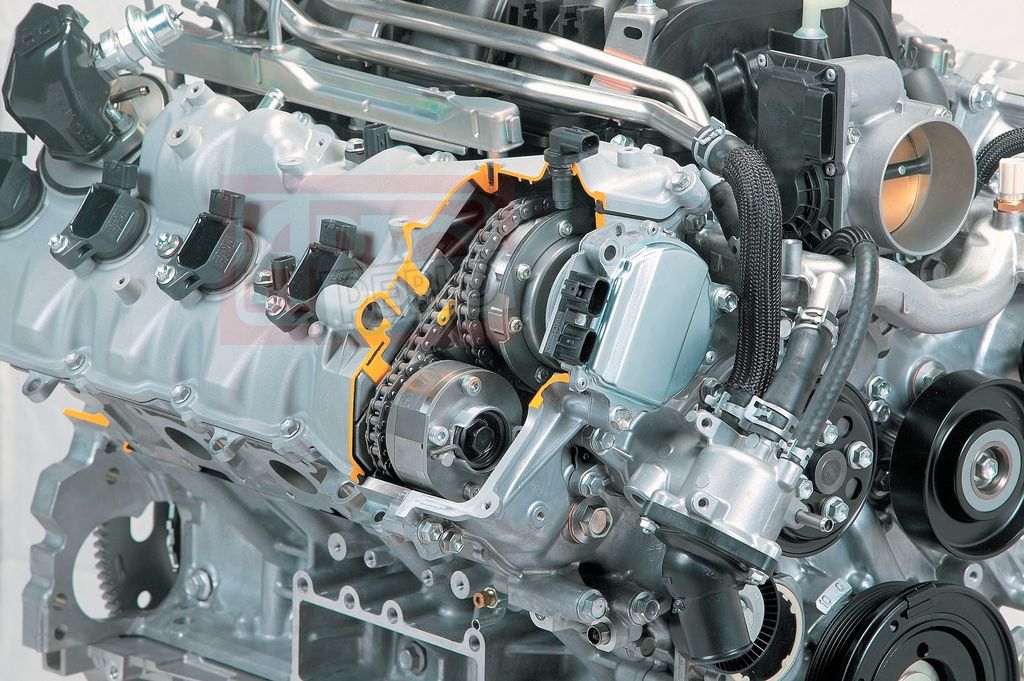
| The new V8 uses combined injection — both into the intake manifold and directly into the cylinders. This allows more precise fuel metering and adds 7.5% power across the entire rev range. For the first time in the world, the phase shifters of all four camshafts (in the center) are driven by electric motors: unlike hydraulics, they work even at speeds below 1000 rpm and on a cold engine | At the final stage of refining production cars, engineers had to increase the stiffness of the upper shock absorber mounts to reduce vibrations from unsprung masses |
We didn't get to drive the long-wheelbase version this time. But the “regular” LS 460 is a delight on the road. The engine with innovative dual injection pulls briskly. The eight-speed automatic shifts smoothly and quickly enough, especially in sport mode. Wouldn't a CVT have been simpler?
— Not yet, there's no CVT that could handle the torque of our V8, — the Japanese engineers reply.
It's curious what will happen in five years: a nine-speed gearbox or a “powerful” CVT?
— By then, most of our cars will be hybrids, and the traditional transmission will simply no longer be needed, — the Japanese counter…
The chassis is tuned excellently — both handling and ride comfort are top-notch. True, on broken roads, vibrations from unsprung masses make themselves known. The Japanese admit: combating them was one of the hardest tasks when tuning the air suspension. Therefore, compared to pre-production samples, the shock absorber mounts on production LS 460s have become stiffer.
And at night, another drawback surfaced — the “too low” low beam of the xenon headlights. Judging by our past tests, this is a trademark feature of Toyota and Lexus. Just recall the RAV4 (AR No. 23, 2006) and the GS sedan (AR No. 21, 2006), which lost to rivals in “close combat” of optics. What's the reason?
— We did it so as not to blind oncoming drivers, — the Japanese explain. — Our light meets all regulations.
That sounds unconvincing: competitors also use “legal” headlights and don't blind anyone, but they shine noticeably better. It's gratifying that the Japanese asked us to send them our illumination zone photos from comparative tests and promised to look into it. Kaizen, the philosophy of constant improvement, should work! Just as it worked when refining the amazing VGRS reducer. The “magic” gear washer in the LS has become 40% more compact than in the GS with the same system.
So what awaits us from Lexus in the next generations?