
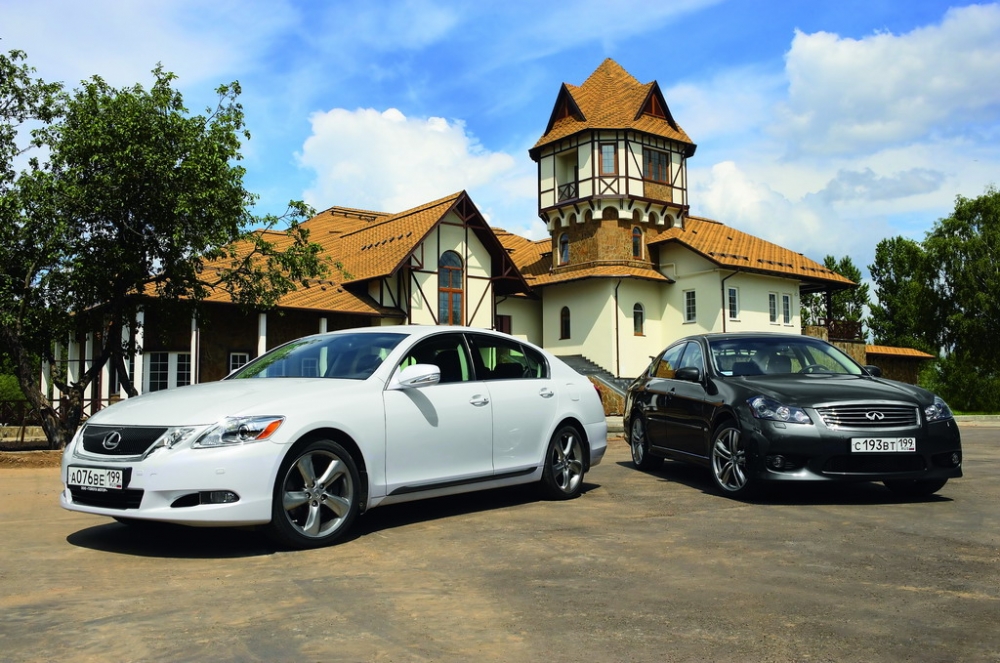
 The duelists were preparing for a fight from the moment of birth. They appeared at about the same time, and not so long ago both underwent a facelift. Their appearance after the rejuvenation procedure changed slightly – just enough to differ from the original version while preserving the original look. New bumpers, retouched lighting... A standard set. Yes, it got better. The duelists were preparing for a fight from the moment of birth. They appeared at about the same time, and not so long ago both underwent a facelift. Their appearance after the rejuvenation procedure changed slightly – just enough to differ from the original version while preserving the original look. New bumpers, retouched lighting... A standard set. Yes, it got better. |
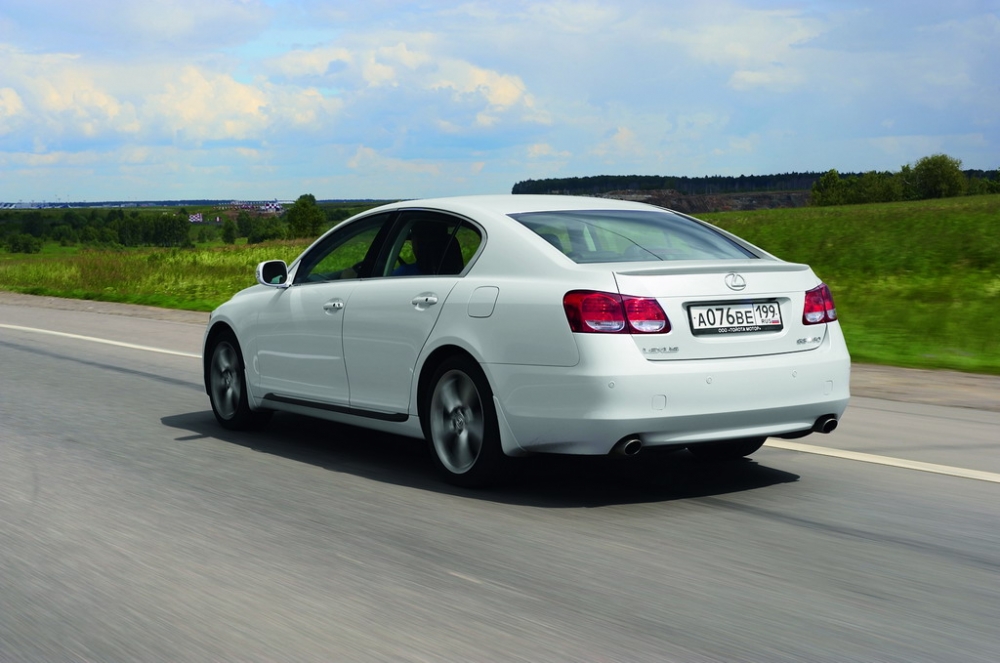
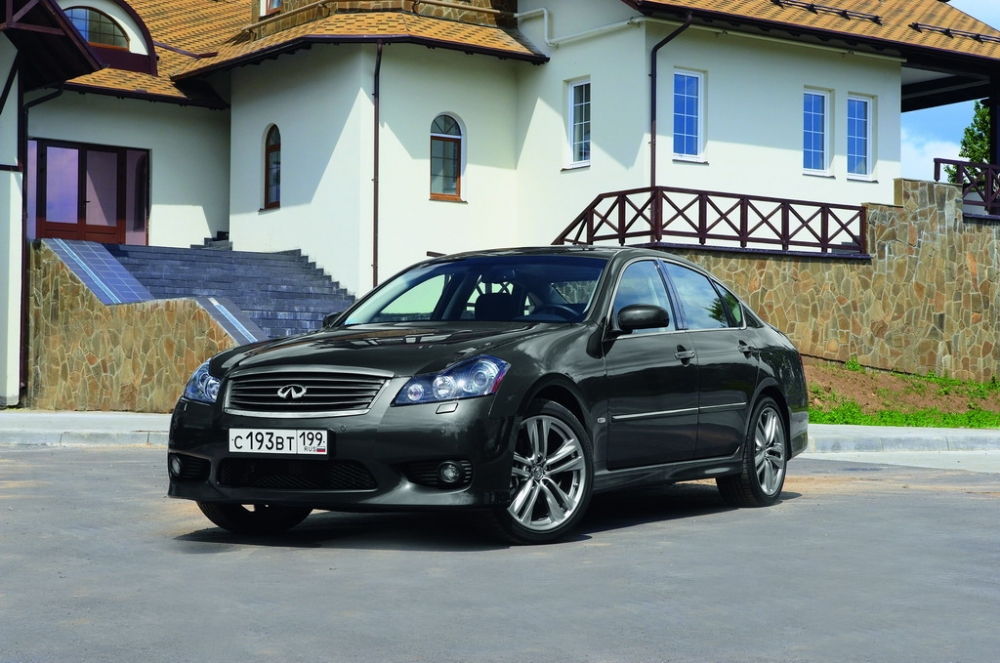
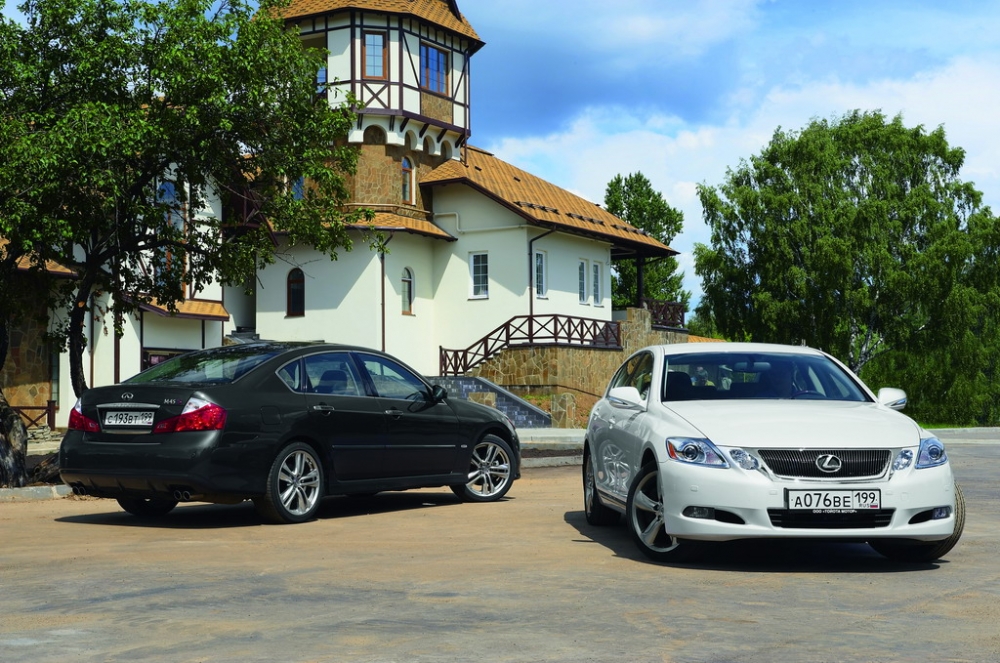
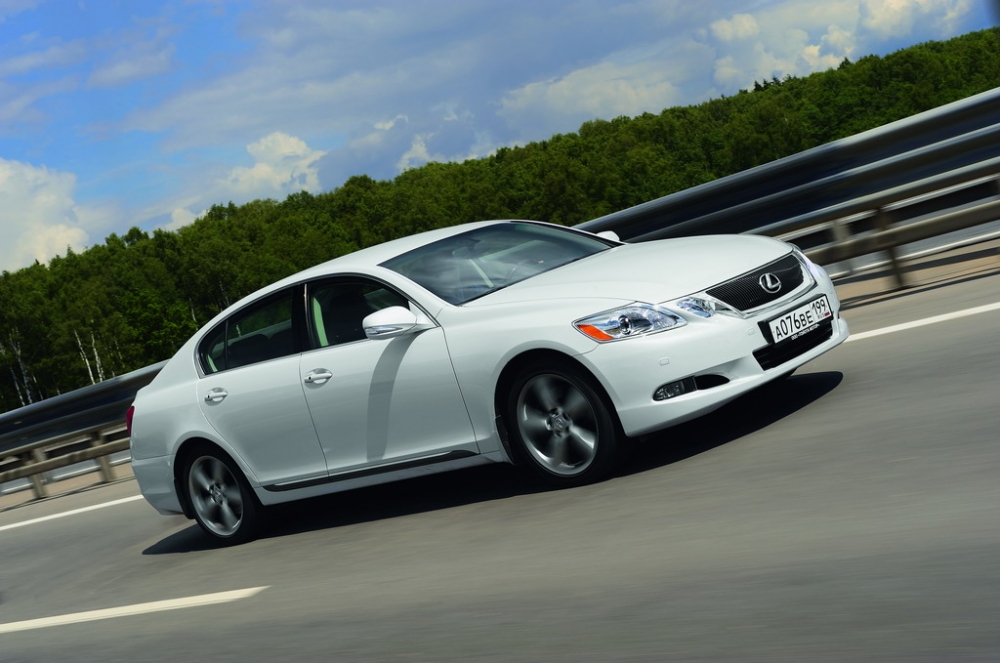 In the dispute over the title of "most beautiful," we could not give preference to anyone. The Infiniti has an assertive appearance, the car is large, the design is sweeping. That the Japanese went all out when drawing the "M" can be understood by looking at the rear – the giant headlights with round LED elements inside have become the model's calling card and well illustrate the design approach in general. The Lexus is refined. Proportional silhouette, sloping roof, short trunk. And even the fact that the GS has wheels an inch smaller does not make it less stately – the 19-inch Infiniti wheels in certain angles look small in the monstrous arches of the sedan... Also, in the exterior design of the Lexus, slightly better build quality and attention to detail are visible. This car looks finished. In the dispute over the title of "most beautiful," we could not give preference to anyone. The Infiniti has an assertive appearance, the car is large, the design is sweeping. That the Japanese went all out when drawing the "M" can be understood by looking at the rear – the giant headlights with round LED elements inside have become the model's calling card and well illustrate the design approach in general. The Lexus is refined. Proportional silhouette, sloping roof, short trunk. And even the fact that the GS has wheels an inch smaller does not make it less stately – the 19-inch Infiniti wheels in certain angles look small in the monstrous arches of the sedan... Also, in the exterior design of the Lexus, slightly better build quality and attention to detail are visible. This car looks finished. |
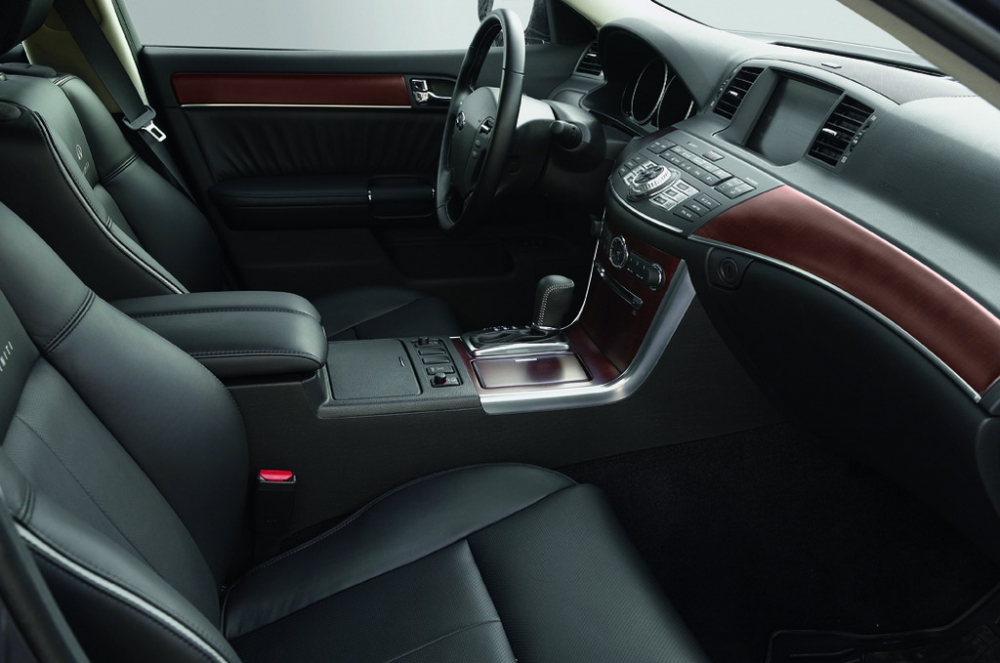
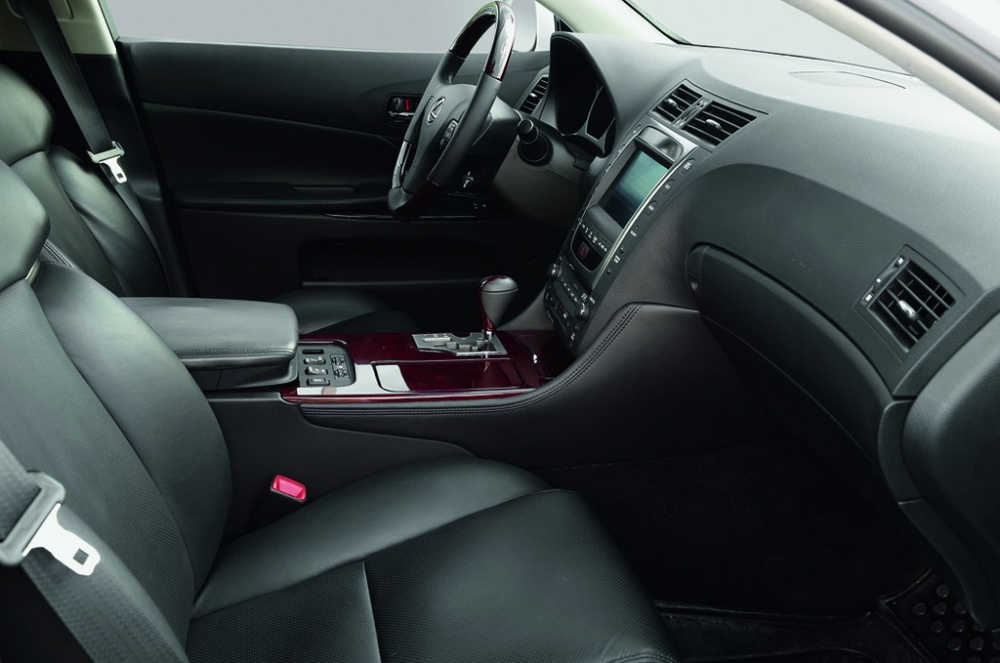
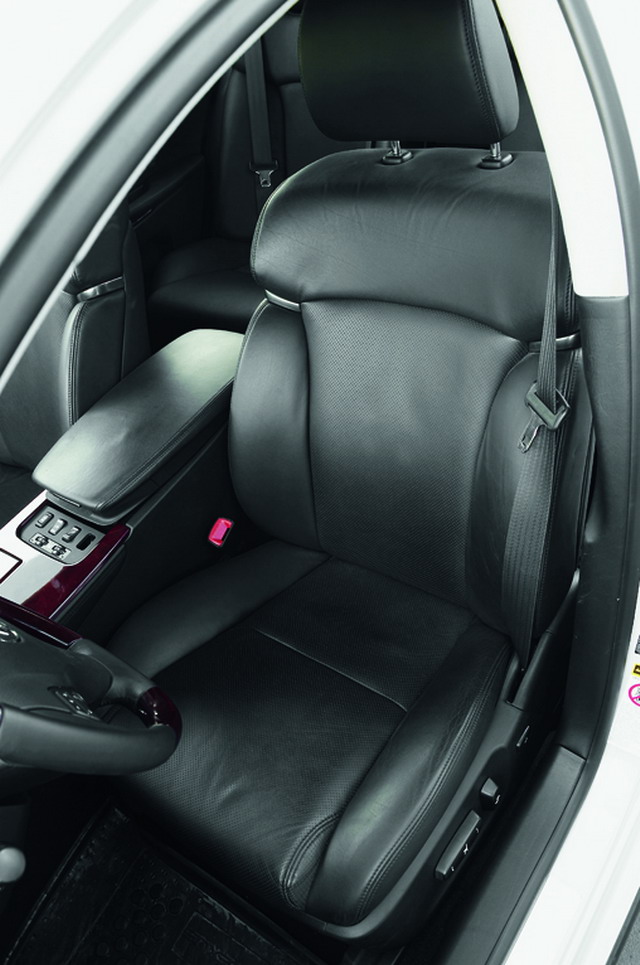
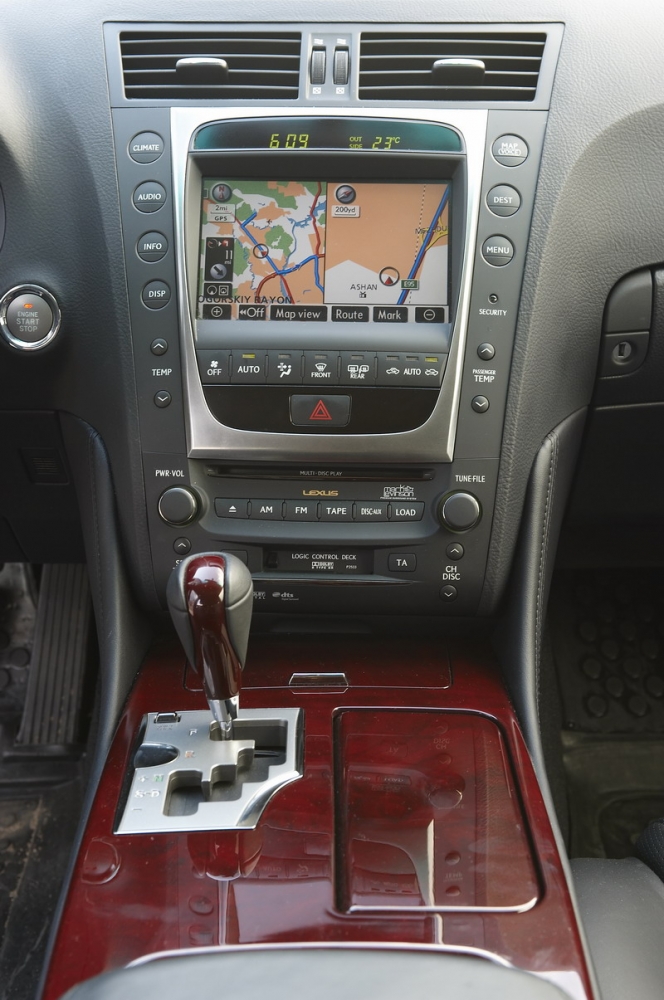
 In the GS cabin, a tall driver will be a bit cramped. The seating position is low, the roof hangs overhead. Good thing there's no sunroof. I recall the pre-facelift test GS had a sunroof. Back then I had to adopt a bobsledder's pose. The seating position in the GS, like its exterior, appeals to sport. You sit almost like in a coupe. But how beautiful it is here! Design, materials, build quality – the L-finesse concept, it seems, turned out not to be a purely marketing gimmick but actually working – the exquisite interior has become even more impeccable. And even the "electronics"-type clock in the central console, and the cassette player for that grandfather in the States, manage to look appropriate here. In the GS cabin, a tall driver will be a bit cramped. The seating position is low, the roof hangs overhead. Good thing there's no sunroof. I recall the pre-facelift test GS had a sunroof. Back then I had to adopt a bobsledder's pose. The seating position in the GS, like its exterior, appeals to sport. You sit almost like in a coupe. But how beautiful it is here! Design, materials, build quality – the L-finesse concept, it seems, turned out not to be a purely marketing gimmick but actually working – the exquisite interior has become even more impeccable. And even the "electronics"-type clock in the central console, and the cassette player for that grandfather in the States, manage to look appropriate here. |
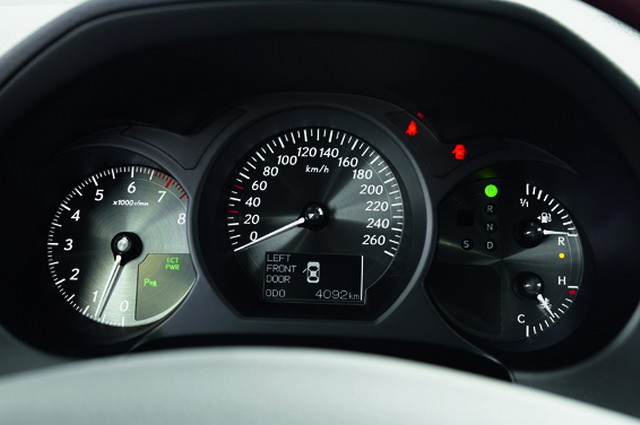
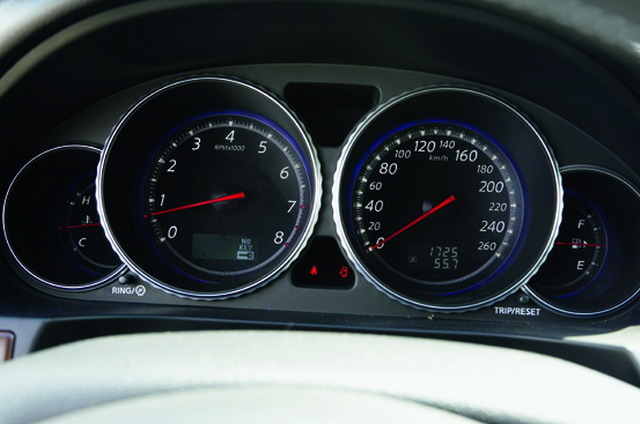
 The polished metal instrument dials again delight, and the door trim with a wave pattern seems a brilliant design find. Attention to detail disarms – the buttons press precisely and pleasantly, there are no elements in the cabin that would look modest against the general splendor, like a Soviet tourist in Las Vegas. Heavy doors isolate from street noise, and the engine at idle can neither be felt nor heard. The polished metal instrument dials again delight, and the door trim with a wave pattern seems a brilliant design find. Attention to detail disarms – the buttons press precisely and pleasantly, there are no elements in the cabin that would look modest against the general splendor, like a Soviet tourist in Las Vegas. Heavy doors isolate from street noise, and the engine at idle can neither be felt nor heard. |
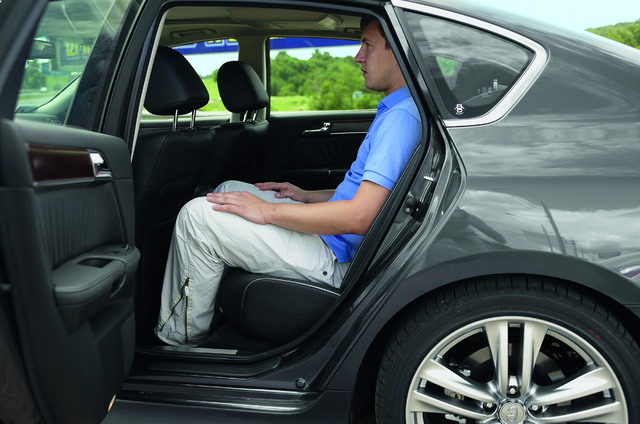
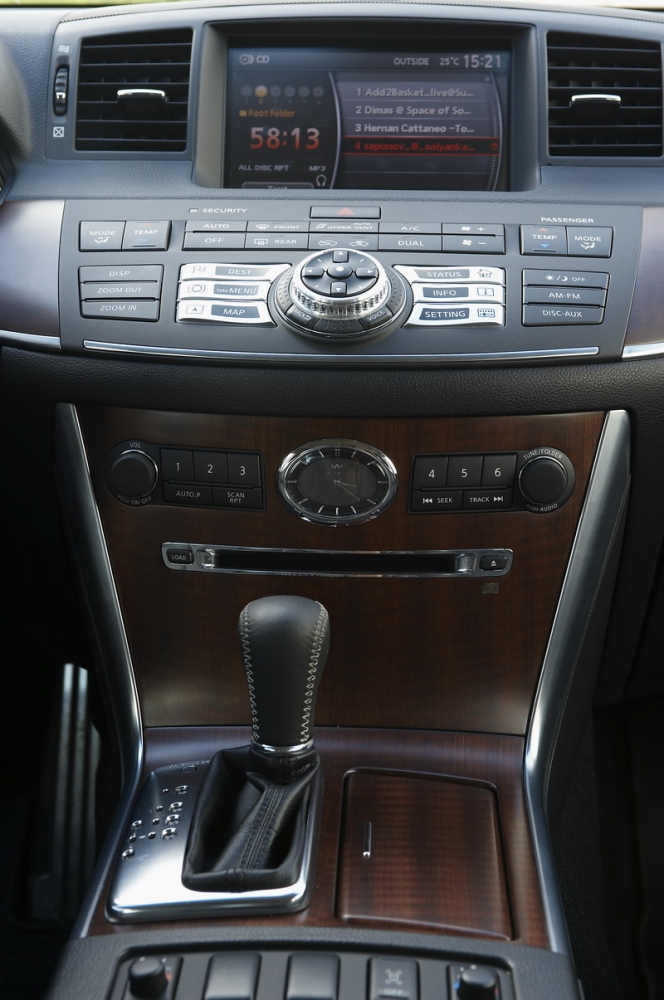
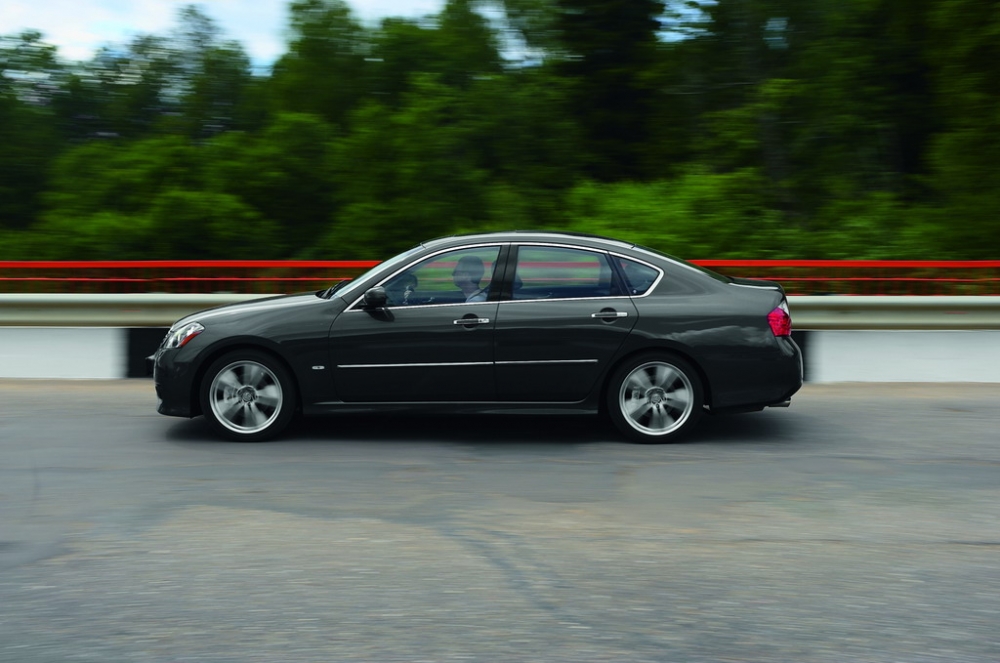 Inside the Infiniti is simpler. The plastic is not as expensive, the build is not as high-quality, and there are some cheap details. The doors are even made in some SUV style, with a simple horizontal handle. But how spacious it is here! The roof is high above the head (and there's also a sunroof), the glazing area is larger, and therefore visibility is better. Since we're talking about the business class, it would be useful to ride in the second row of seats. In the Infiniti, even a tall person will sit without problems. The wide door opens almost at a right angle, the seating position is higher, the wheelbase is 5 cm longer. Sitting is comfortable. However, in our sport version there was no adjustable rear seat cushion. It's clear, it's time to get back behind the wheel. This is a driver's car. But first, we need to sit in the back of the Lexus. Inside the Infiniti is simpler. The plastic is not as expensive, the build is not as high-quality, and there are some cheap details. The doors are even made in some SUV style, with a simple horizontal handle. But how spacious it is here! The roof is high above the head (and there's also a sunroof), the glazing area is larger, and therefore visibility is better. Since we're talking about the business class, it would be useful to ride in the second row of seats. In the Infiniti, even a tall person will sit without problems. The wide door opens almost at a right angle, the seating position is higher, the wheelbase is 5 cm longer. Sitting is comfortable. However, in our sport version there was no adjustable rear seat cushion. It's clear, it's time to get back behind the wheel. This is a driver's car. But first, we need to sit in the back of the Lexus. |
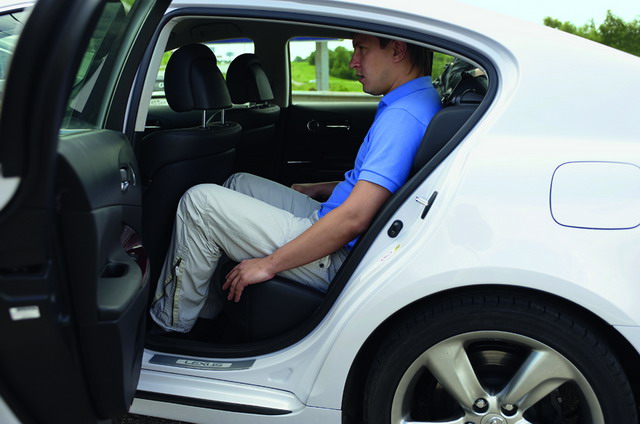
 Here everything is the opposite – the door is smaller, the roof is lower, and extra centimeters for the legs were taken away without ceremony. With my almost 190 cm, it was not very comfortable. Although... If you move the passenger seat forward, slide down a bit, and adopt a relaxed pose, it won't be so bad. Still, the advantage in interior space is clearly on the Infiniti's side. The Lexus can partially compensate with better ride smoothness – the "M" quite thoroughly repeats the road profile. The GS loves speed! How could it be otherwise – with a nearly five-liter V8 engine? The shock absorbers are in sport mode, traction control is off, and I begin to "conquer" the night expanses of the city. The engine wakes up after three and a half thousand rpm. In the sense that it becomes fierce and starts a beautiful song in a gentle baritone, which has the audacity to break through the sound insulation. However, I think it's not that it broke through, but that the engineers allowed it. If they had their way, the driver wouldn't hear the engine sound at all. Here everything is the opposite – the door is smaller, the roof is lower, and extra centimeters for the legs were taken away without ceremony. With my almost 190 cm, it was not very comfortable. Although... If you move the passenger seat forward, slide down a bit, and adopt a relaxed pose, it won't be so bad. Still, the advantage in interior space is clearly on the Infiniti's side. The Lexus can partially compensate with better ride smoothness – the "M" quite thoroughly repeats the road profile. The GS loves speed! How could it be otherwise – with a nearly five-liter V8 engine? The shock absorbers are in sport mode, traction control is off, and I begin to "conquer" the night expanses of the city. The engine wakes up after three and a half thousand rpm. In the sense that it becomes fierce and starts a beautiful song in a gentle baritone, which has the audacity to break through the sound insulation. However, I think it's not that it broke through, but that the engineers allowed it. If they had their way, the driver wouldn't hear the engine sound at all. |
 The pearl-white sedan accelerates as if it got a kick in the rear from Hancock. The gentle sweeping turns of the Third Ring Road, the GS takes like a super-fast monorail train. Oh, if only we could remove all the few cars from here and send all traffic police officers on early vacation. I think most of the highway could be flown at near top speed. But until that magically happens, we have to change lanes and alternate delightful accelerations with decent decelerations. And here the GS behaves less confidently. Perhaps someone before us "burned" the brake pads – on multi-liter monsters like this, it's easy to do out of inexperience. Be that as it may, the GS brakes lacked transparency. I had to press the pedal hard, and deceleration adequate to the press was not observed. The pearl-white sedan accelerates as if it got a kick in the rear from Hancock. The gentle sweeping turns of the Third Ring Road, the GS takes like a super-fast monorail train. Oh, if only we could remove all the few cars from here and send all traffic police officers on early vacation. I think most of the highway could be flown at near top speed. But until that magically happens, we have to change lanes and alternate delightful accelerations with decent decelerations. And here the GS behaves less confidently. Perhaps someone before us "burned" the brake pads – on multi-liter monsters like this, it's easy to do out of inexperience. Be that as it may, the GS brakes lacked transparency. I had to press the pedal hard, and deceleration adequate to the press was not observed. |
 Later I had the chance to test the GS on winding roads in the Moscow suburbs. And here the sedan did not demonstrate sportiness. The steering is equipped with too vague feedback to fully feel the car. In tight hairpins, the Lexus was frankly lost – it drifted nose-out, no matter how you aimed it inside. And it tormented with the brakes. But as soon as you eased off the speed, left the limit modes, and just drove dynamically, the car immediately became friendlier. At the same time, the white sedan holds the road excellently, rolls minimally, and when working the steering wheel at small angles, it delivers pleasure with quick reactions. It is good on wide, high-speed roads, but on complex sequences of sharp turns, it strongly asks the driver to slow down. By the way, also due to the lack of decent lateral support of the seats. Later I had the chance to test the GS on winding roads in the Moscow suburbs. And here the sedan did not demonstrate sportiness. The steering is equipped with too vague feedback to fully feel the car. In tight hairpins, the Lexus was frankly lost – it drifted nose-out, no matter how you aimed it inside. And it tormented with the brakes. But as soon as you eased off the speed, left the limit modes, and just drove dynamically, the car immediately became friendlier. At the same time, the white sedan holds the road excellently, rolls minimally, and when working the steering wheel at small angles, it delivers pleasure with quick reactions. It is good on wide, high-speed roads, but on complex sequences of sharp turns, it strongly asks the driver to slow down. By the way, also due to the lack of decent lateral support of the seats. |
 Perhaps we would not have paid such close attention to the GS's somewhat sluggishness if it were in a solo test. But when there's an Infiniti M45 S nearby, opponents have a hard time! And how could it be otherwise, if this is a specially prepared "M" with rear-wheel steering? I recall the same pre-facelift car confidently beat the Volvo S80 V8 AWD in our comparative test (MOTOR, No. 12, 2006). Today's opponent is no weaker, but that didn't stop the Infiniti from making us fall in love with it again. Perhaps we would not have paid such close attention to the GS's somewhat sluggishness if it were in a solo test. But when there's an Infiniti M45 S nearby, opponents have a hard time! And how could it be otherwise, if this is a specially prepared "M" with rear-wheel steering? I recall the same pre-facelift car confidently beat the Volvo S80 V8 AWD in our comparative test (MOTOR, No. 12, 2006). Today's opponent is no weaker, but that didn't stop the Infiniti from making us fall in love with it again. |
 In static, the M45 S looks more massive and heavier than the GS 460. And indeed, it exceeds the rival in curb weight, but as soon as you get behind the wheel of this car and drive even not a kilometer, but at least a hundred meters, the roles of the cars change in the driver's eyes. The almost five-meter "M" seems nimble, agile, and obedient, while the Lexus seems to get fat and heavier before your eyes. Pressing the gas pedal is followed by a lightning-fast engine response, accompanied by a vigorous metallic voice. The steering wheel is light enough but equipped with transparent feedback. I feel the position of the front wheels both at very large angles and at small ones. Under the juicy roar of the tuned exhaust, the car moves forward, and although in terms of acceleration figures to 100 km/h the "M" loses to the Lexus, in terms of the pleasure the process delivers, it leaves it behind. In static, the M45 S looks more massive and heavier than the GS 460. And indeed, it exceeds the rival in curb weight, but as soon as you get behind the wheel of this car and drive even not a kilometer, but at least a hundred meters, the roles of the cars change in the driver's eyes. The almost five-meter "M" seems nimble, agile, and obedient, while the Lexus seems to get fat and heavier before your eyes. Pressing the gas pedal is followed by a lightning-fast engine response, accompanied by a vigorous metallic voice. The steering wheel is light enough but equipped with transparent feedback. I feel the position of the front wheels both at very large angles and at small ones. Under the juicy roar of the tuned exhaust, the car moves forward, and although in terms of acceleration figures to 100 km/h the "M" loses to the Lexus, in terms of the pleasure the process delivers, it leaves it behind. |
 By the way, the loss in dynamics is not only in the specs – up to 100 km/h in a head-to-head, the Lexus arrives first and brings the competitor about a car length. And further, it doesn't let itself be caught up. The Toyota folks made their car lighter – by as much as 153 kg, and with almost equal engine power, this probably played a decisive role. In general, driving calmly in the big Infiniti will be absolutely impossible for a hot-tempered driver. You constantly want to spur it on. And you can completely turn off the stability system, staying alone with almost 350 "horses" and rear-wheel drive. This is done by simply pressing a round button at the bottom of the front panel. And the GS will not provide its driver with such joy – its comprehensive guardian nicknamed VDIM (which not only brakes, cuts fuel, and distributes braking forces to the wheels, but also steers) cannot be turned off. In the Lexus, you are only allowed to indulge in lulling traction control to sleep. By the way, the loss in dynamics is not only in the specs – up to 100 km/h in a head-to-head, the Lexus arrives first and brings the competitor about a car length. And further, it doesn't let itself be caught up. The Toyota folks made their car lighter – by as much as 153 kg, and with almost equal engine power, this probably played a decisive role. In general, driving calmly in the big Infiniti will be absolutely impossible for a hot-tempered driver. You constantly want to spur it on. And you can completely turn off the stability system, staying alone with almost 350 "horses" and rear-wheel drive. This is done by simply pressing a round button at the bottom of the front panel. And the GS will not provide its driver with such joy – its comprehensive guardian nicknamed VDIM (which not only brakes, cuts fuel, and distributes braking forces to the wheels, but also steers) cannot be turned off. In the Lexus, you are only allowed to indulge in lulling traction control to sleep. |
 In general, the Infiniti's responsiveness can be partly explained by the fact that it is structurally simpler than the Lexus. Of the systems that help the driver control the car, there is only one – the rear wheels, which turn at an angle of up to one degree. And the GS has variable-ratio steering and active shock absorbers. Moreover, the power steering is electric. But why is the feedback so synthetic and viscous, what prevented the company's engineers from tuning it differently? Most likely, the ideology – this is not a special sport series, but the top version of a business-class sedan with a V8. From sport, there's dynamics, and everything else is for life. True, in order not to be a stranger at this celebration of existence, it would be good not to be born a basketball player. Those guys should head straight for the LS. In general, the Infiniti's responsiveness can be partly explained by the fact that it is structurally simpler than the Lexus. Of the systems that help the driver control the car, there is only one – the rear wheels, which turn at an angle of up to one degree. And the GS has variable-ratio steering and active shock absorbers. Moreover, the power steering is electric. But why is the feedback so synthetic and viscous, what prevented the company's engineers from tuning it differently? Most likely, the ideology – this is not a special sport series, but the top version of a business-class sedan with a V8. From sport, there's dynamics, and everything else is for life. True, in order not to be a stranger at this celebration of existence, it would be good not to be born a basketball player. Those guys should head straight for the LS. |
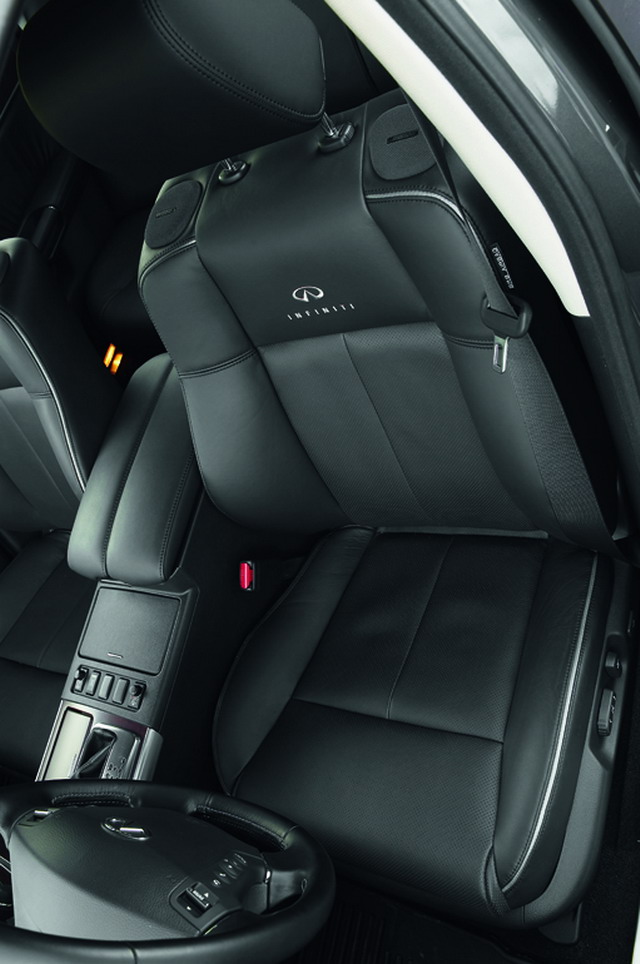 So who came out first from this duel? The point count gives the overall advantage to the Infiniti, and primarily this is a consequence of the fact that under our test conditions, the problem of handling and interior dimensions was most acute. Both cars are magnificent representatives of their class. And it must be said, they have come close to the Germans, and the Lexus in terms of interior refinement and build quality has long been their equal. The Infiniti can easily argue with anyone, including BMW, in handling. And it's still unclear who would win. Such an obedient car with such dimensions and mass is a rare stroke of luck. Well, the Lexus is primarily comfort, which is clothed in a dynamic and swift form. So who came out first from this duel? The point count gives the overall advantage to the Infiniti, and primarily this is a consequence of the fact that under our test conditions, the problem of handling and interior dimensions was most acute. Both cars are magnificent representatives of their class. And it must be said, they have come close to the Germans, and the Lexus in terms of interior refinement and build quality has long been their equal. The Infiniti can easily argue with anyone, including BMW, in handling. And it's still unclear who would win. Such an obedient car with such dimensions and mass is a rare stroke of luck. Well, the Lexus is primarily comfort, which is clothed in a dynamic and swift form. |
 |
 |
 |
Seems different
Rear-wheel drive, powerful V8s under the hood, Japanese origin aimed at the American market. It was hard to imagine before the start of this test that these cars, similar in many parameters, would in fact turn out to be so different...

Test drive photos
Comments
No comments yet. Say the first word.