

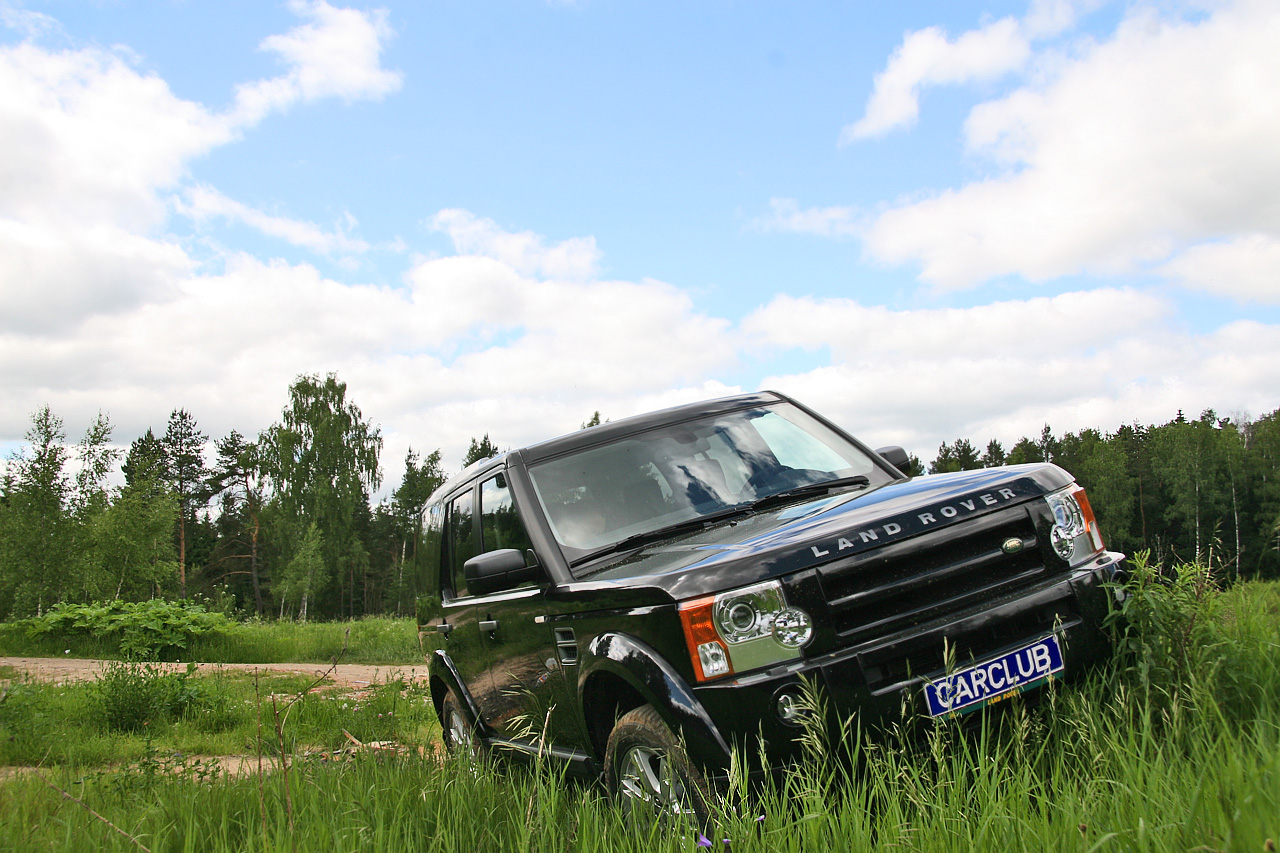
 Disco is recognizable at first glance: chiseled cubic shapes, expressive optics and a tall profile unmistakably distinguish the Land Rover Discovery from the general flow.Comments (5)
Land Rover — for the British heart, this name means a great deal. Although the recent owner of the legendary English brand was American Ford, and now it is Indian Tata, the brand continues to be associated with the aristocratic spirit of Britain and a glorious history. Thanks to its rugged exterior and serious driving qualities, Land Rover still confidently holds its position on the Russian market.
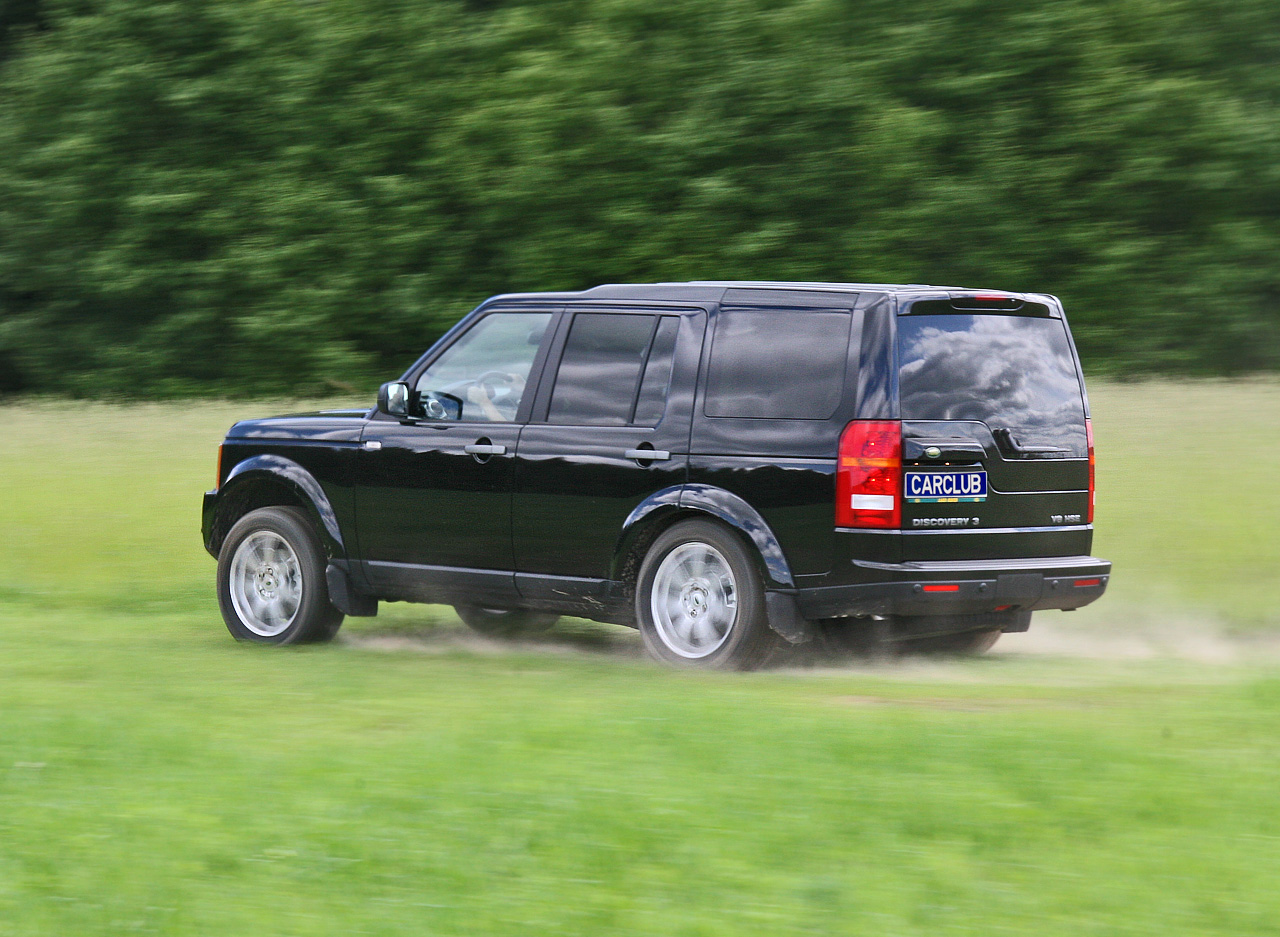 |
| On the highway, the Disco delights with exceptional smoothness, and together with excellent sound insulation, this makes the SUV an ideal companion for a long journey: joints and minor surface defects are nothing to it, and more serious potholes are handled by the suspension with plenty of travel. On dirt roads, the Land Rover rides just as comfortably as on asphalt. The fully independent suspension works to its full potential. During lane changes, the stability system instantly intervenes, cutting fuel supply and braking the necessary wheel. |
Respectable Range Rover and Range Rover Sport are the choice of wealthy people: these cars rarely leave the asphalt, their main task is to emphasize the owner's status, although their potential is much broader. Land Rover Freelander is aimed at a different audience. Being more affordable than competitors, this crossover has several trump cards, the main one being off-road capabilities unavailable to European rivals. Defender is a true master of off-road: perhaps only it can compete with our "UAZ" and "Niva" in harsh conditions. But on asphalt, the strengths of Land Rover Defender turn into weaknesses.
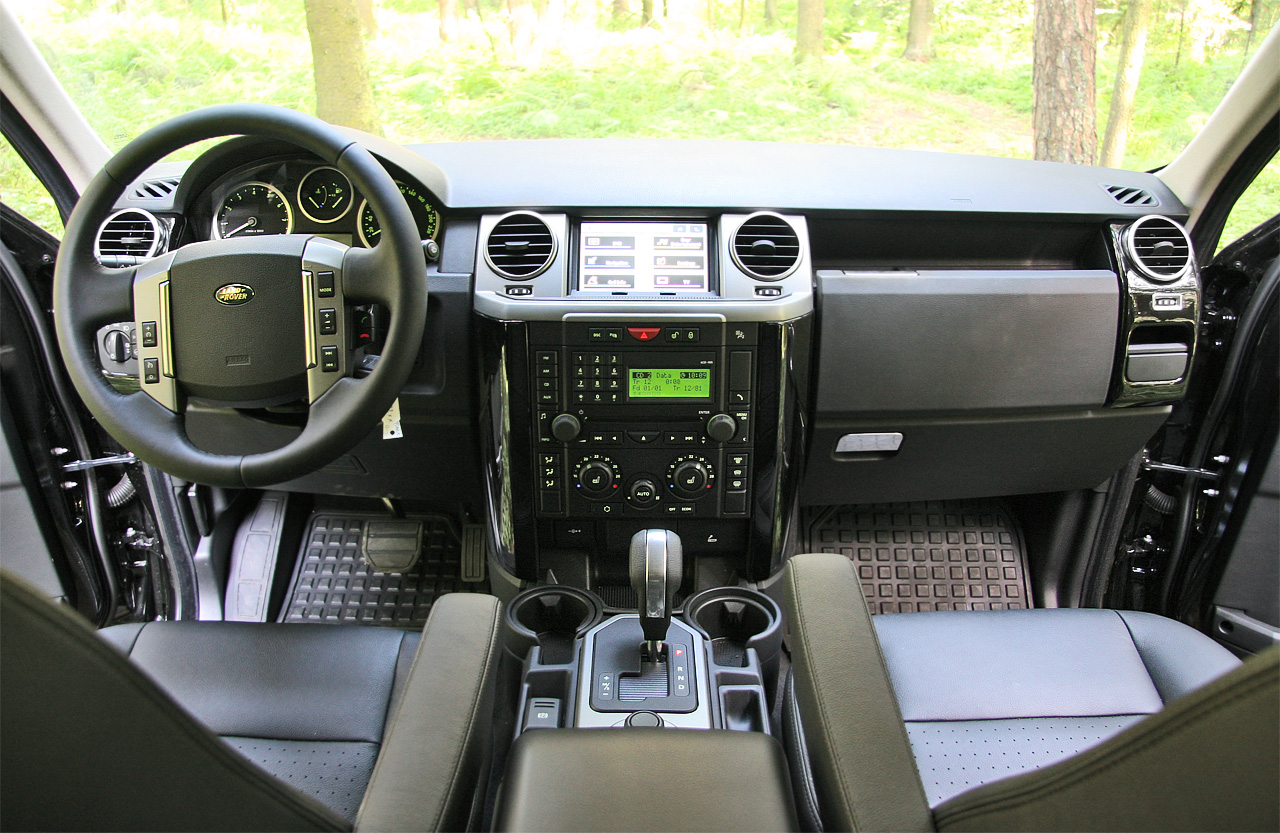 |
| In the interior, the "cubic" theme continues in the design of the center console and door panels. The plastic is hard everywhere, but without complaints about quality, and visually — it's a feast for the eyes! Climate control is adjusted with three convenient "knobs" with a pleasant rubberized surface. |
But today we are talking about another Land Rover model — Discovery 3. This car occupies the "equator" of the British brand's model line, incorporating the advantages of all the above-mentioned vehicles.
 |
| An alternative to the gasoline monster is a 2.7-liter diesel with 190 hp. Of course, 190 hp is a bit little for 2.5 tons of mass, but 445 Nm at 1900 rpm give the Land Rover Discovery quite decent dynamics. |
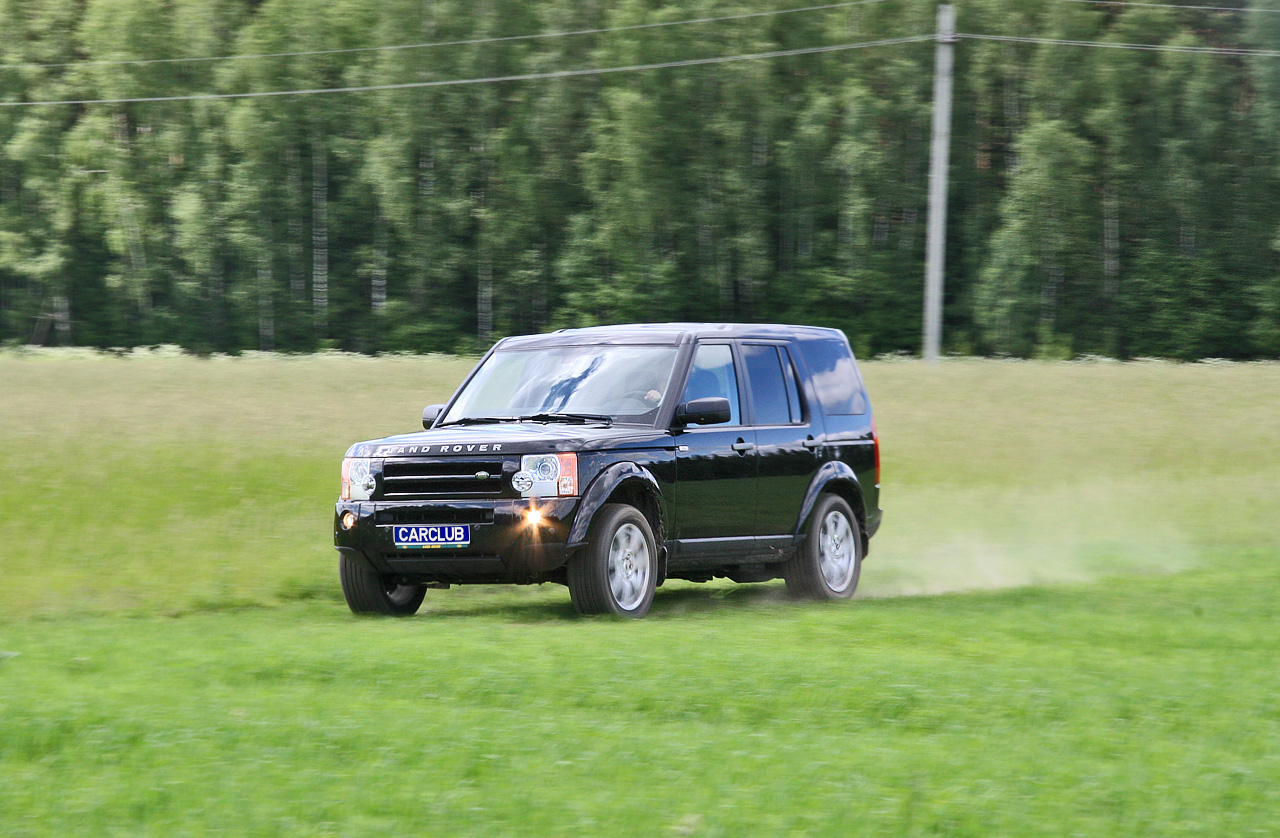
The exterior of the Disco cannot be confused: angular cubic proportions, stylish headlights and a tall body unmistakably distinguish the Land Rover Discovery from the flow of cars. And the unpainted plastic trim on the bumpers and wheel arches hints that this car is not afraid to get dirty in the mud.
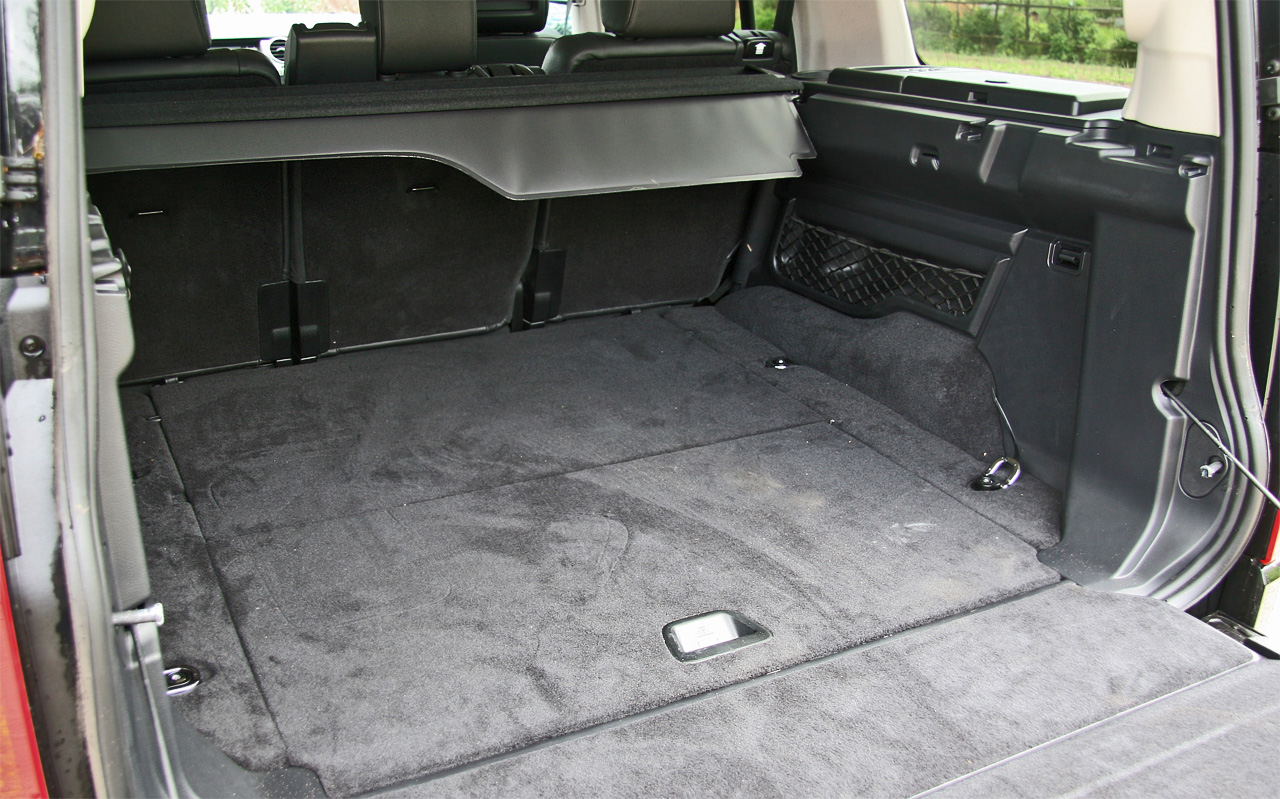 |
| The Discovery's trunk is simply huge — a full 1260 liters of useful volume. If you fold the rear row, the "Disco" turns into a real little truck capable of carrying a refrigerator or a wardrobe. And under the trunk floor, two more seats are hidden, though then only 280 liters remain for luggage. |
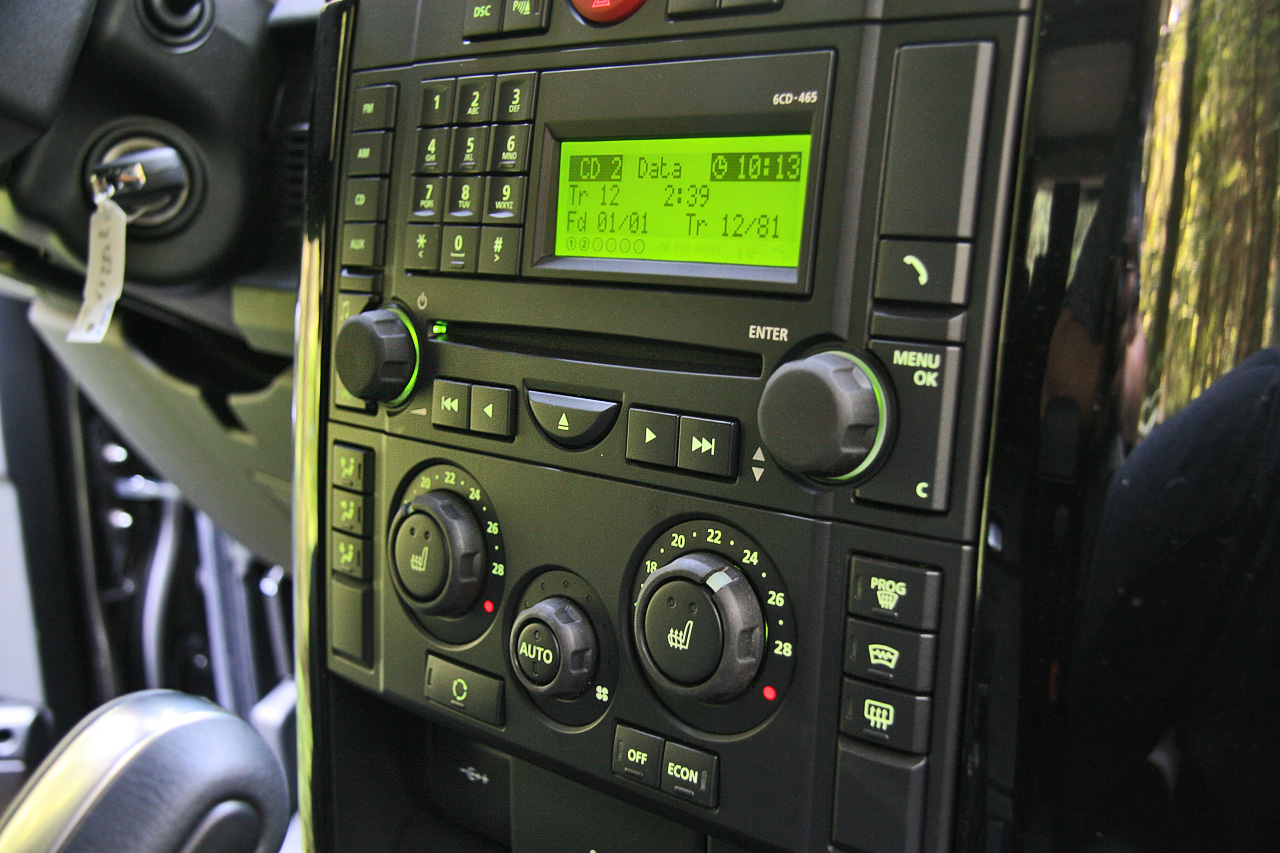
The interior continues the "cubic" style — the same geometry in the center console and door cards. The plastic is hard but solid, and in appearance — just beautiful! Climate is controlled with three convenient knobs with a rubberized coating. The front seats are comfortable, the profile is successful, there is a huge range of adjustments, but lateral support is clearly lacking. The instrument panel looks old-fashioned with fine markings and does not please with informativeness, and you have to reach for the window buttons. Otherwise, the ergonomics are impeccable: the pedals are in place, the chunky steering wheel feels pleasant in the hands, and an easy seating position is easy to find. Thin pillars and large exterior mirrors provide the Disco with excellent visibility.
 |
| The rugged appearance and impressive driving characteristics still allow Land Rover to maintain a high sales bar in Russia. |
In the back, three tall passengers can easily fit. The high roof, almost vertical backrest and virtually absent central tunnel allow efficient use of space. The Discovery's trunk is huge — 1260 liters of useful volume. And with the rear row folded, the "Disco" becomes a small truck, on which it is not shameful to transport a refrigerator or a wardrobe.
 |
| The Disco's trump card is the air suspension, which raises ground clearance to 240 mm. Short overhangs give the "Briton" decent geometric off-road capability. In addition, the Land Rover has a self-locking center differential, rear wheel lock and low range. But you won't be able to figure out all this on your own — the Terrain Response system is responsible for control, which only asks you to select the surface type. |
For the test, we got a gasoline Land Rover Discovery with a powerful V8 of 4.4 liters and an output of 300 hp, paired with a 6-speed automatic. The engine produces 427 Nm of torque at 4000 rpm. The claimed acceleration to "hundred" in 8.6 seconds is fully confirmed by the Disco.
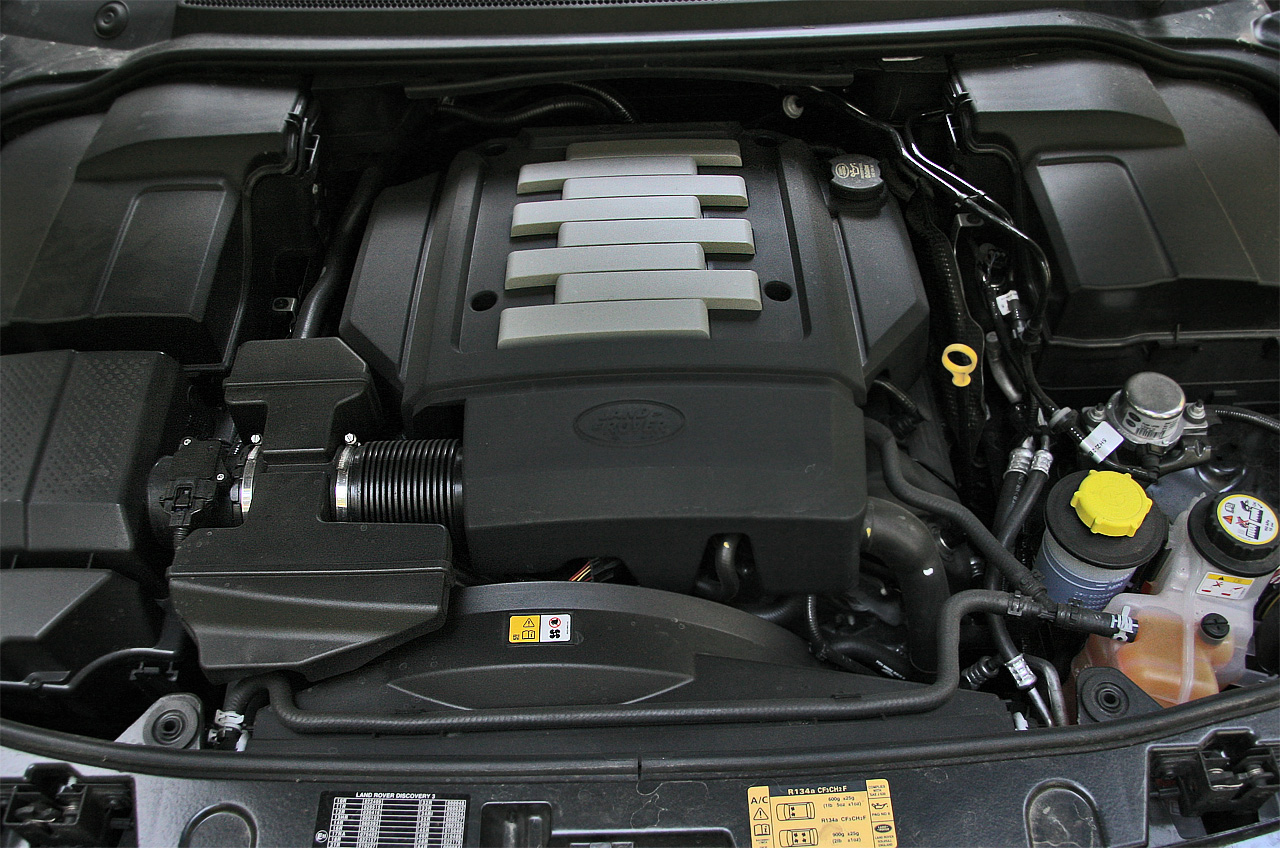 |
| The mighty gasoline V8 produces 300 hp and 427 Nm of torque at 4000 rpm. The claimed acceleration to "hundred" in 8.6 seconds is quite justified by the Disco. |
However, during overtaking, the potential of 300 horses is ruined by the automatic transmission, which noticeably delays downshifting, causing precious seconds to be lost. Otherwise, the transmission shifts smoothly, without jerks or jolts. The appetite of the 4.4-liter engine is like a champion sausage eater: in a calm pace outside the city, the computer showed about 17 liters per hundred. As soon as you press the pedal, the needle of the 82-liter tank rushes to zero with frightening speed, and ominous 25 l/100 km appear on the screen.
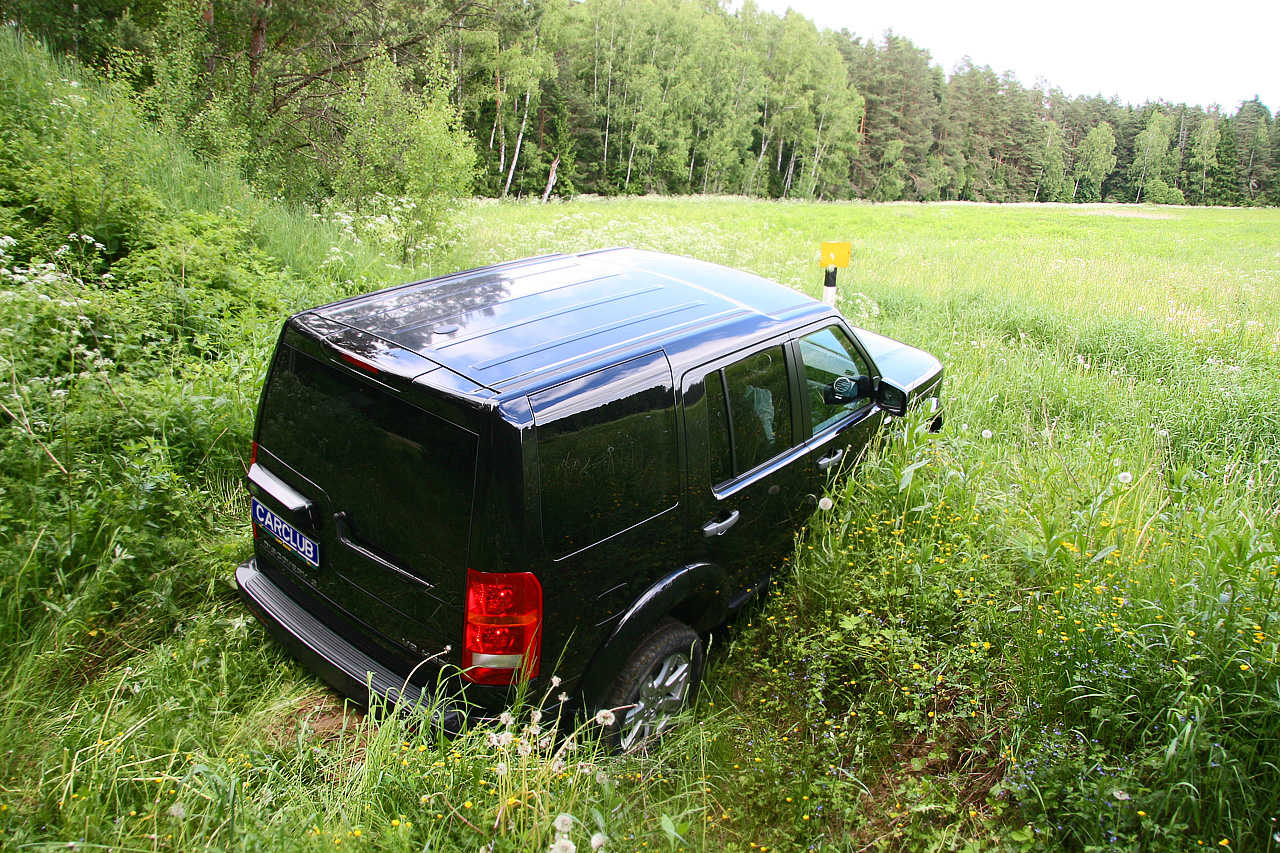 |
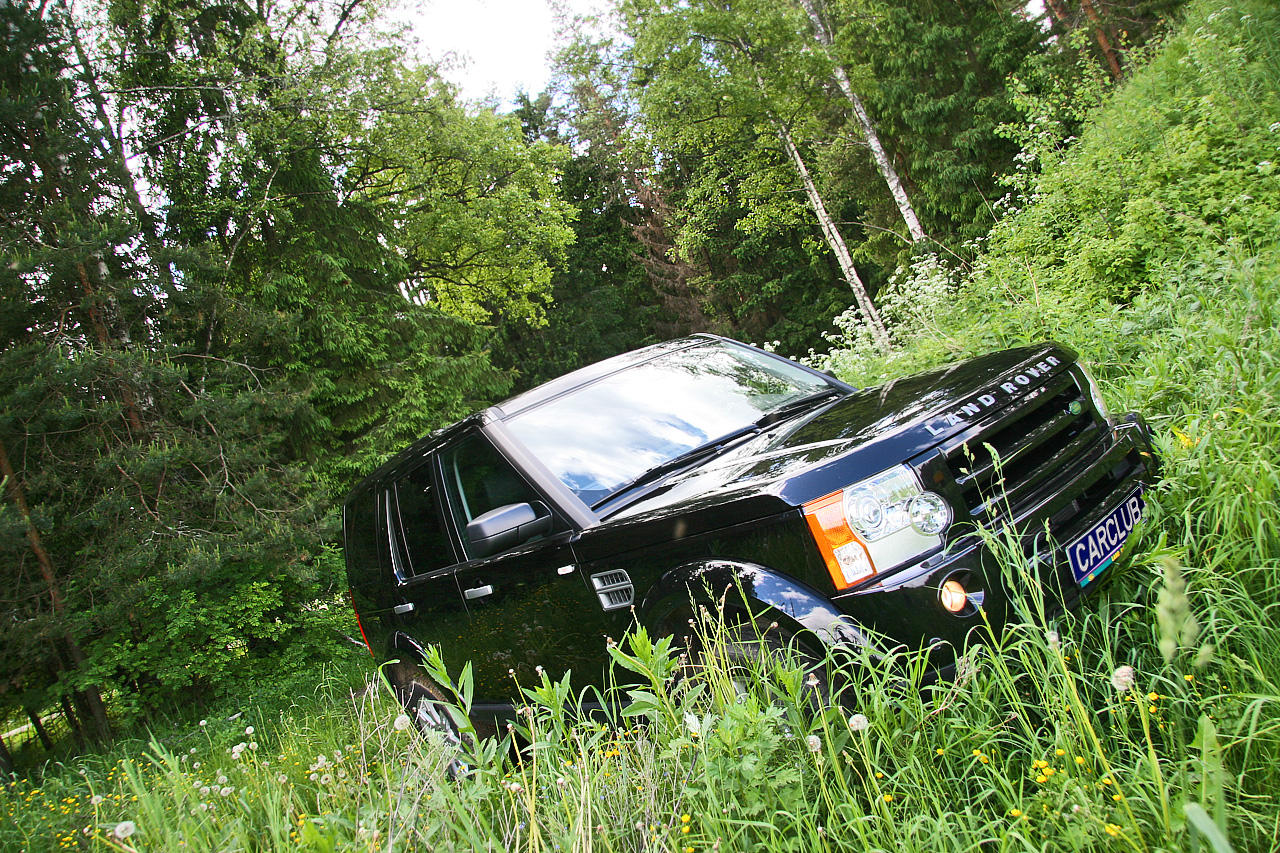
| Unfortunately, we never found a muddy rut in the almost 30-degree heat, but the "Disco" easily overcame a deep ditch, creaking with its locks. And on loose sand, the Land Rover did not let us down. |
As an alternative to the gasoline monster, a 2.7-liter 190-horsepower diesel is offered. Of course, 190 hp for 2.5 tons of mass is not much, but 445 Nm at 1900 rpm endow the Land Rover Discovery with quite decent dynamic performance.
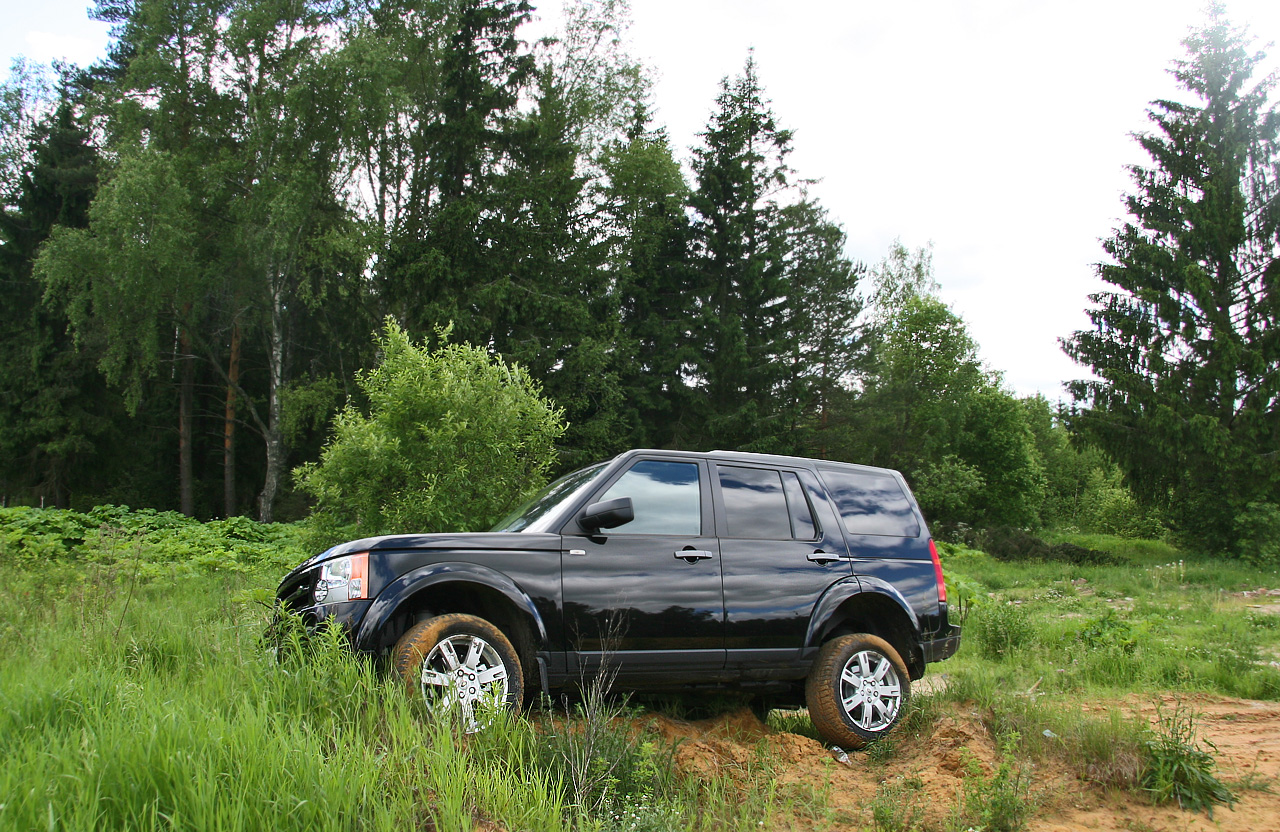 |
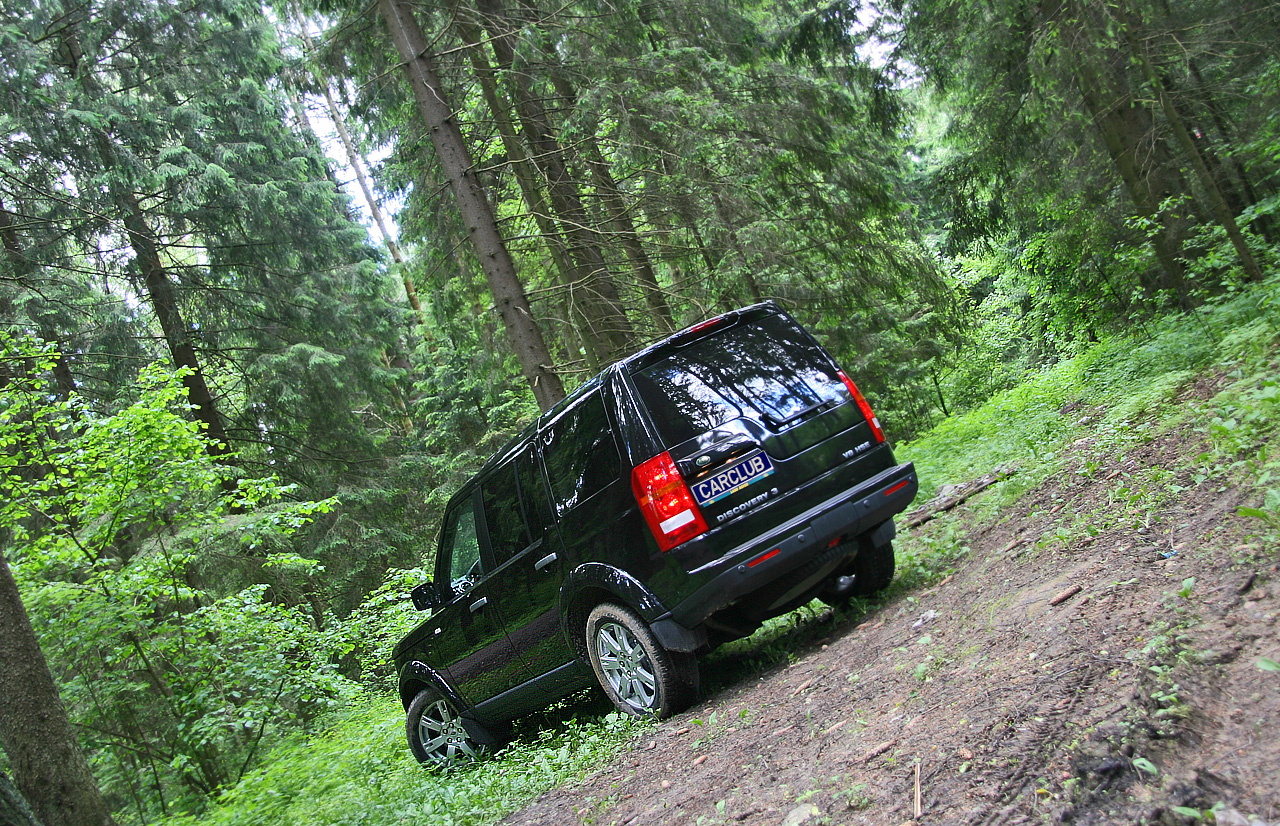
| With the agility of a climber, the Discovery 3 climbs impressive slopes, and the descent assist system carefully brakes the wheels, not allowing the heavy SUV to nose-dive into the ground with its plastic body kit. |
On the highway, the Discovery delights with truly royal smoothness. Combined with proper sound insulation, this makes the car an ideal companion for a long trip: joints and minor asphalt defects seem to disappear, and more serious bumps are swallowed by the suspension with a decent margin of travel. The steering here has pleasant feedback and a pronounced "zero" zone, so changing lanes at speed is easy and precise, without constant corrections.
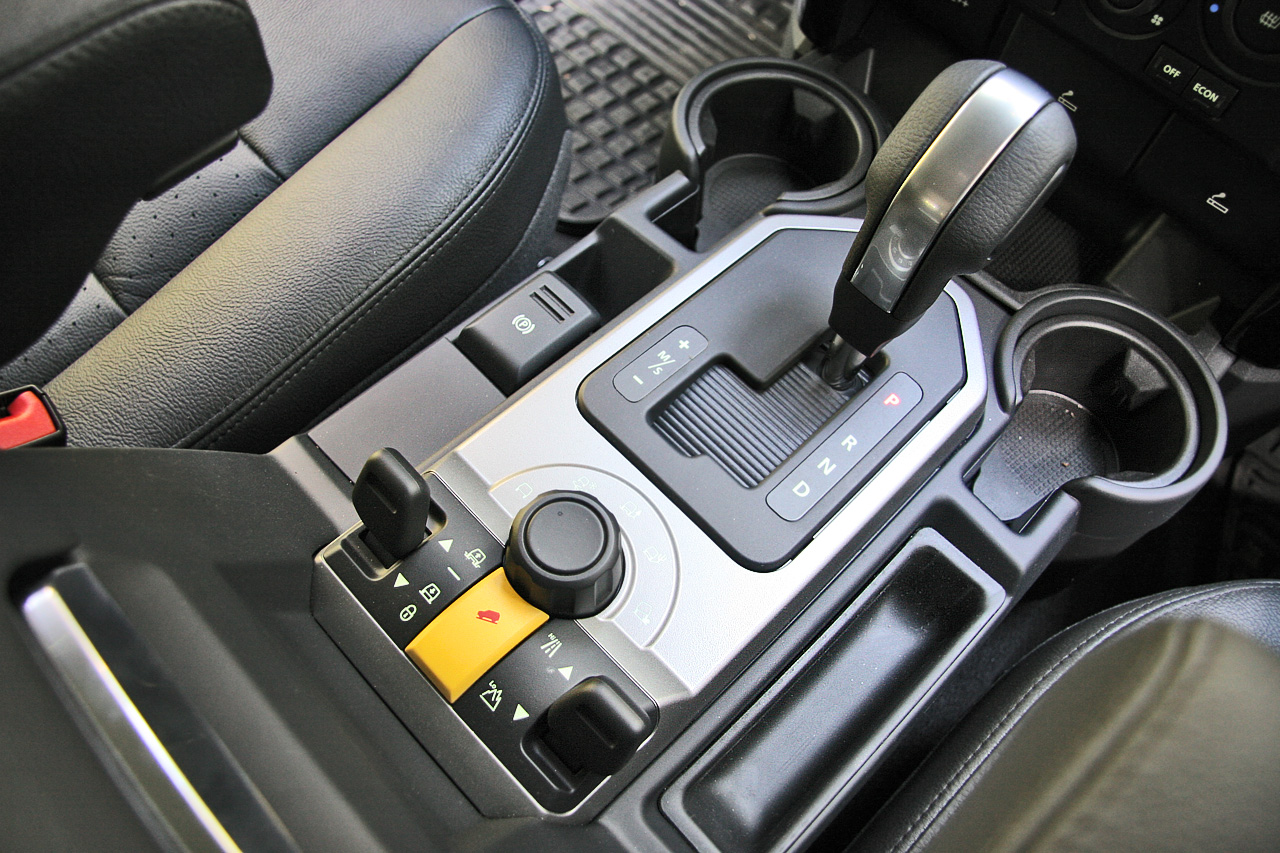 |
| The Terrain Response system is responsible for off-road capability in the Land Rover, which is implemented as a pair of switches, a rotary knob, and a large yellow button for the hill descent control system. |
On dirt roads, the British SUV feels no worse than on asphalt. The fully independent suspension works to its full potential. During sharp maneuvers, electronic stability control immediately kicks in, gently reducing throttle and braking the necessary wheel.
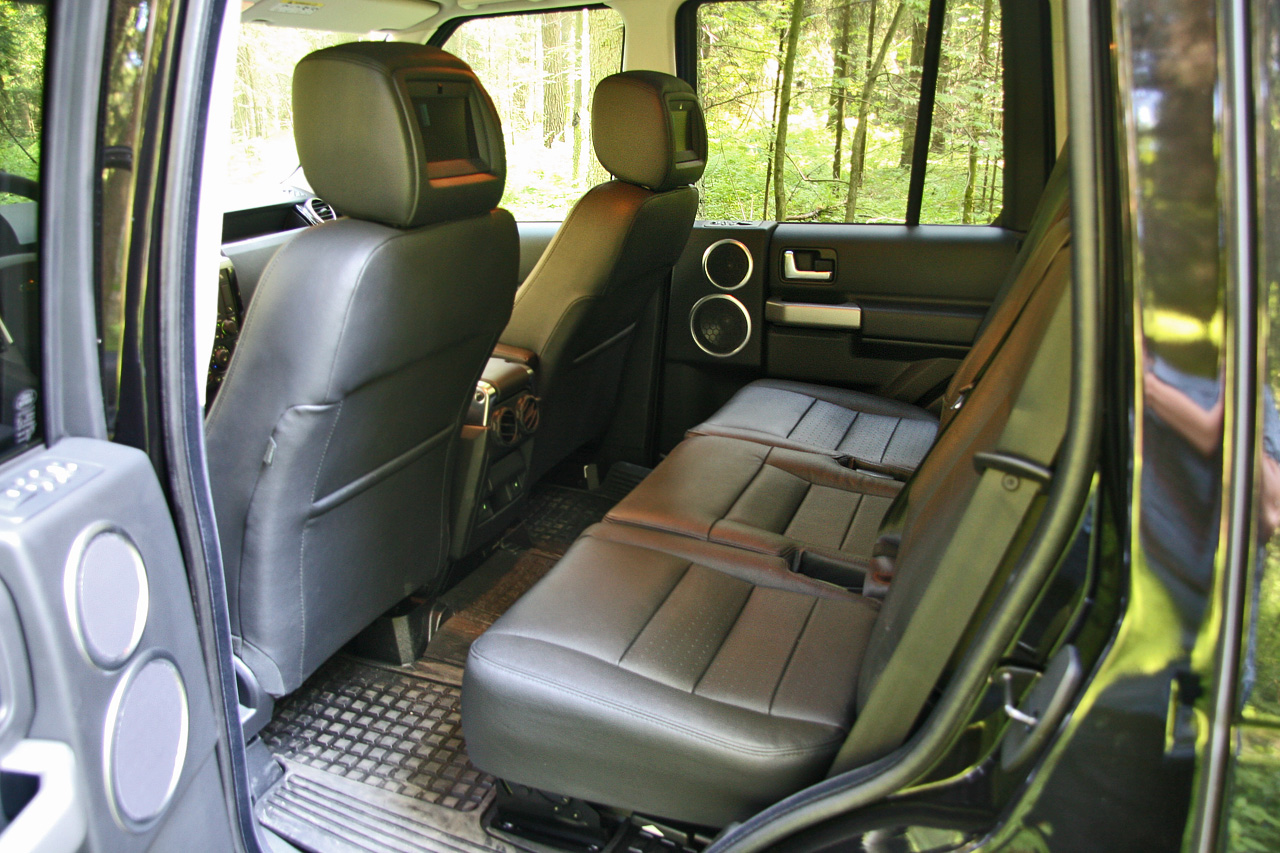 |
| Three tall passengers can easily fit in the back. The high roof, almost vertical seating position, and virtually absent central tunnel allow optimal use of the available space. |
But in corners, the Disco is not as composed as on a straight line. In a turn, the body leans like a yacht during a regatta. Yet, despite the body roll, the car obediently holds the intended line until the limits, when understeer begins to manifest. It is easy to counteract — just briefly press the brake and sharply turn the steering wheel in the direction of the skid.
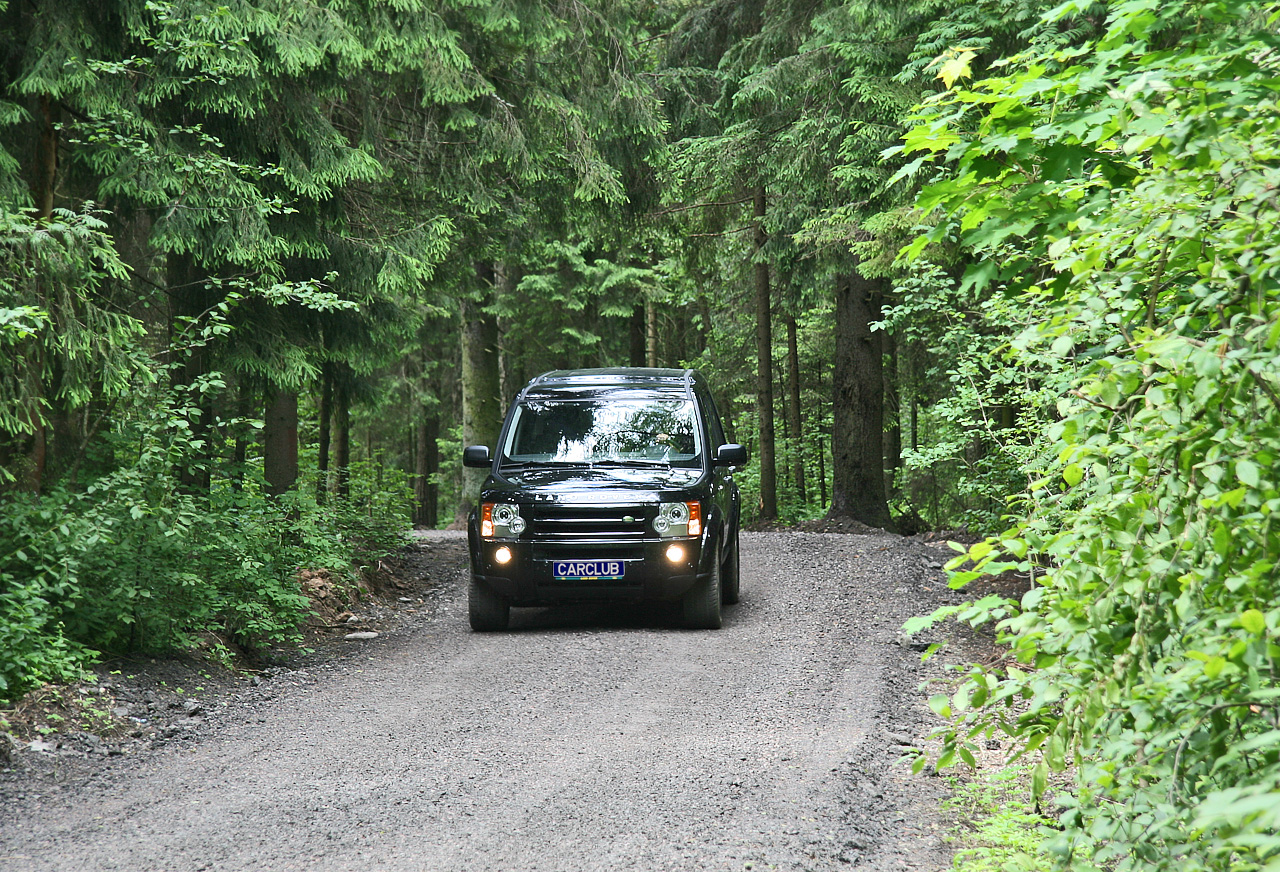 |
| The exterior of the Disco is recognizable a hundred percent. The chiseled cubic proportions, stylish headlight design, and tall silhouette unmistakably distinguish the Land Rover Discovery from the general flow. And the unpainted plastic cladding on the bumpers and wheel arches indicates that it is not afraid to get dirty. |
The off-road arsenal of Land Rover is the Terrain Response system, which is represented by a pair of switches, a rotating dial, and a large yellow button for the descent assist. But the main feature of the Disco is the air suspension, capable of raising ground clearance to 240 mm. Short overhangs give the car decent geometric off-road capability. In addition, the Brit has a self-locking center differential, rear axle lock, and low-range gearing. True, you won't be able to use all this equipment directly — control is entirely given to Terrain Response, which only offers to select the type of surface (grass, gravel, snow, ruts, rocks), and then it decides what to do itself.
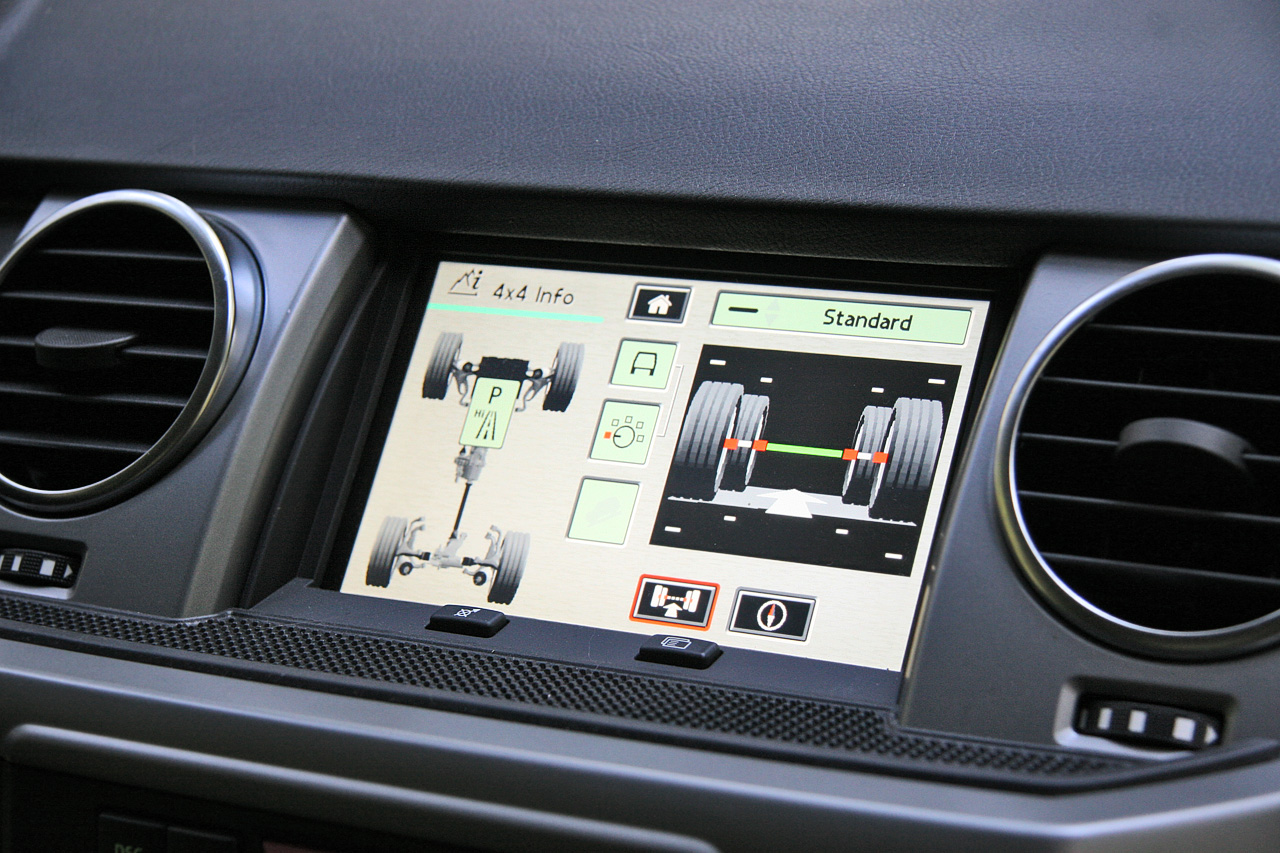 |
| The multifunction display shows the settings of the all-wheel drive system and the steering angle of the wheels - an excellent assistant when driving on "blind" off-road. In addition, the screen displays navigation system readings and a signal from the built-in TV tuner. |
We never found a muddy rut in the almost 30-degree heat, but the Disco easily overcame a deep ditch, creaking with its locks. And on loose sand, the Land Rover did not let us down. With the agility of a climber, the Discovery 3 climbs serious slopes, and the hill descent assist system carefully brakes the wheels, preventing the heavy SUV from nosing into the ground.
 |
It is not surprising that the Disco 3 has long become a familiar sight on city streets. Solid appearance, excellent comfort, spacious interior, and decent off-road talents turn this car into a versatile assistant with which you can confidently go anywhere — to the supermarket, a business meeting, or to the forest for a picnic.
Ruslan Galimov