
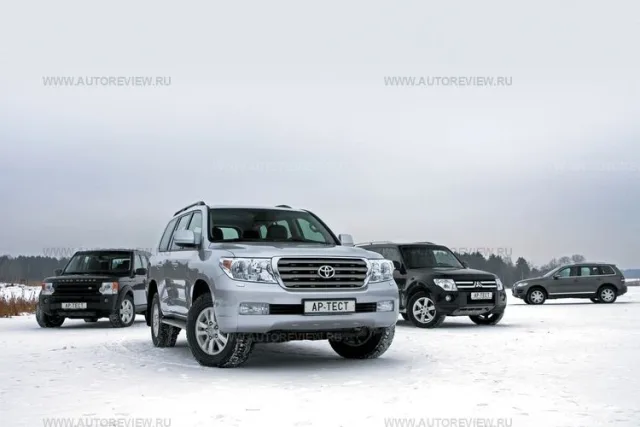
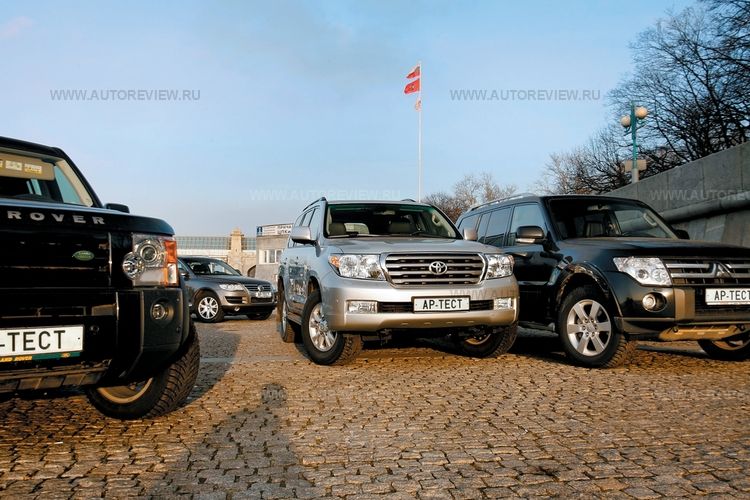
The freshest body-on-frame off-roader Toyota Land Cruiser 200 can crawl over rough terrain at just 1 km/h — this is handled by the Crawl Control system. The updated Volkswagen Touareg 4.2 has no such device, but its top speed is 44 km/h higher. What takes priority — the ability to drive slowly or fast? And can the recognized masters of off-road — Mitsubishi Pajero and Land Rover Discovery — join this debate?
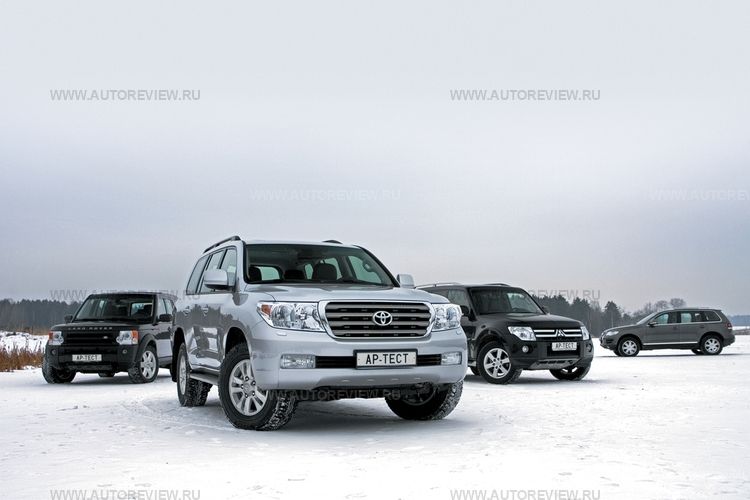
The petrol Discovery with a V-shaped "eight" producing 300 horsepower is our benchmark: it hasn't changed since the previous comparative test (see AR No. 15, 2006). Back then, Land Rover shared first place with the Touareg, but last year Volkswagen carried out a facelift, and now it appears before us with a different "face" and a new 4.2 FSI engine producing 350 horsepower. And the fourth-generation Mitsubishi Pajero hasn't yet been in our comparative tests — a great reason to get acquainted with it and its larger V6 3.8 engine. Even though its 250 "horses" are far from the Volkswagen herd, the Toyota Land Cruiser 200 only slightly surpasses it: 288 horsepower.
| Land Rover Discovery | Mitsubishi Pajero |
 |  |
| Toyota Land Cruiser 200 | Volkswagen Touareg |
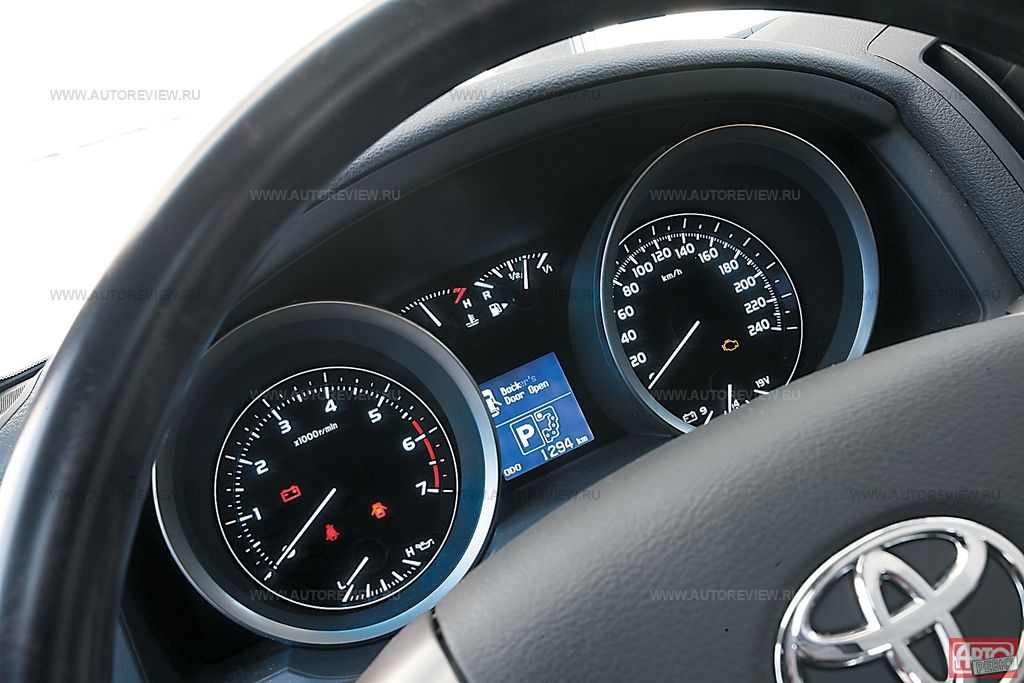 | 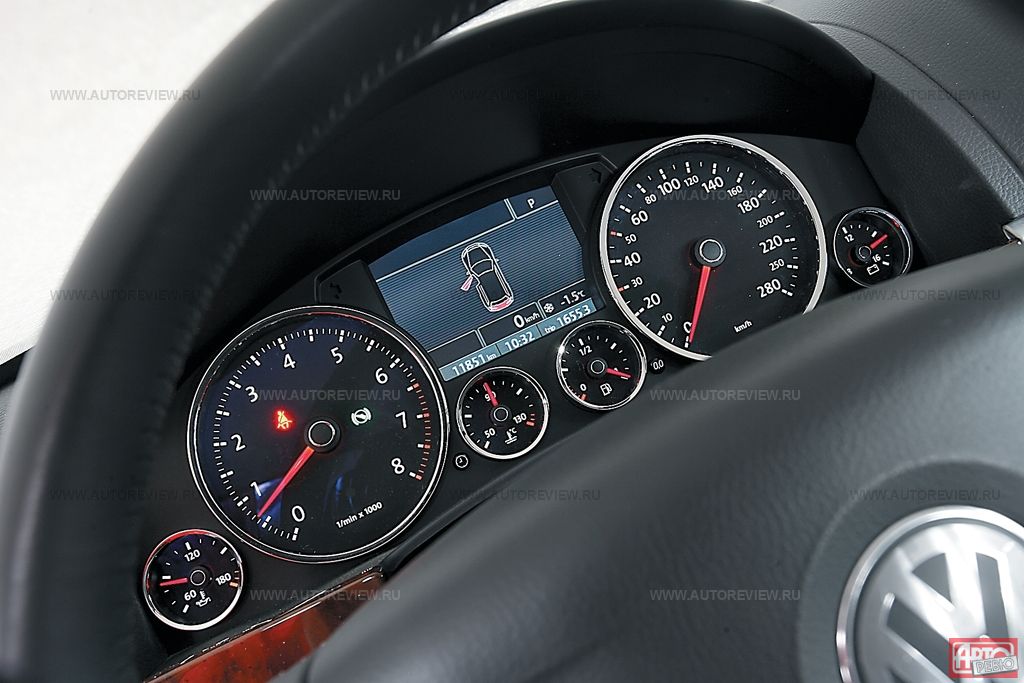 |
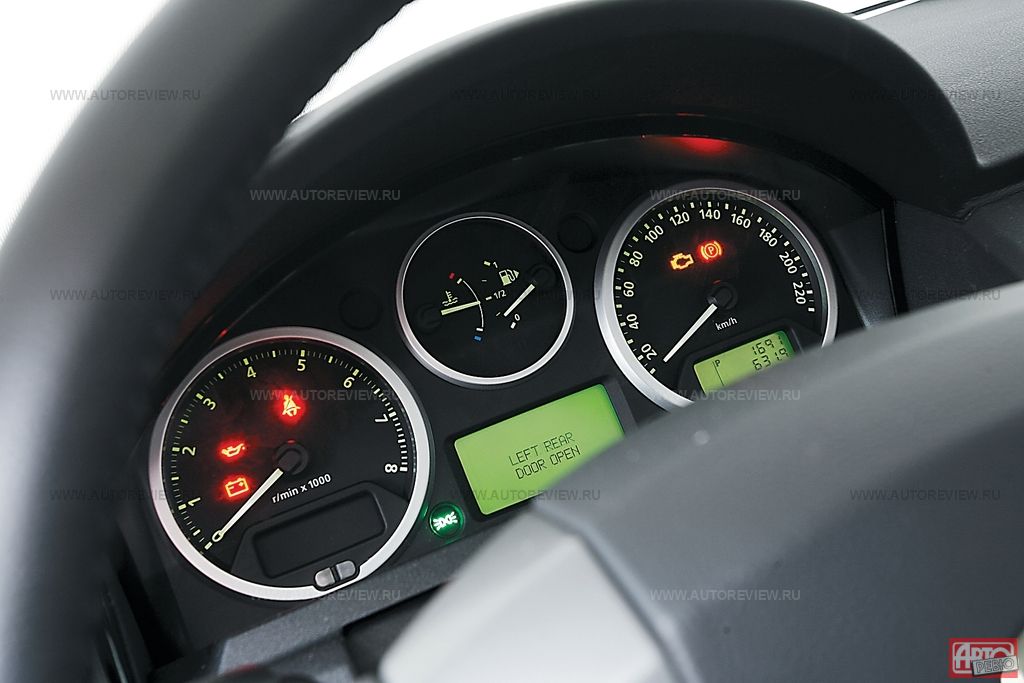
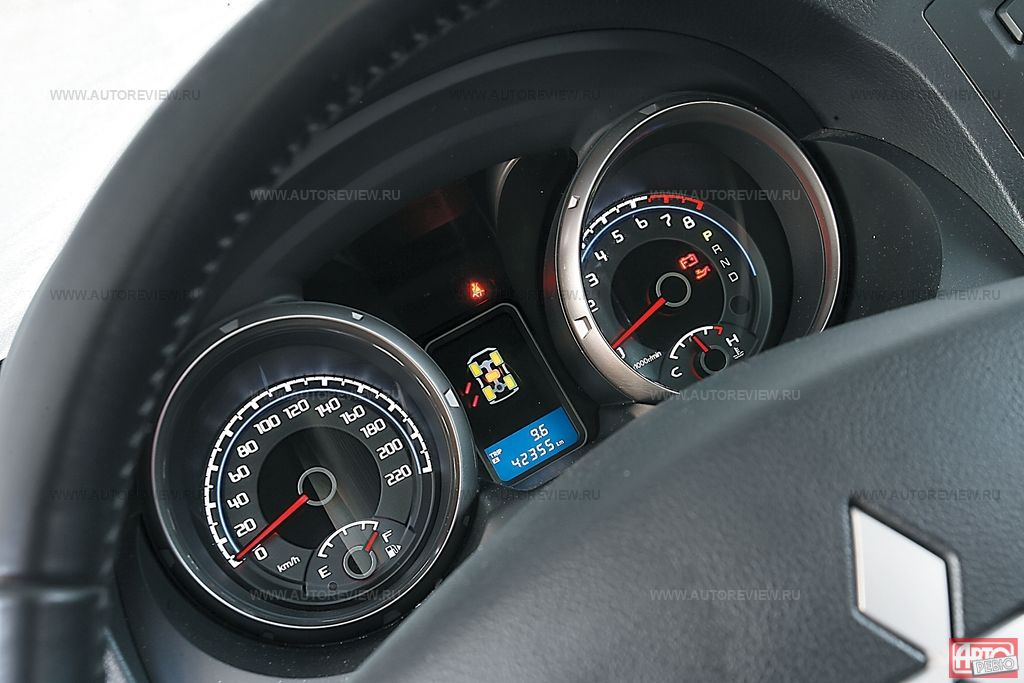
| The optitronic instrument panel of the Toyota not only reads perfectly but also serves as an interior decoration. The Mitsubishi and Volkswagen combinations are simpler but no less clear, which cannot be said about the Discovery's instruments with small numbers pressed against the scale circles | |
The Toyota's appearance…
We thought long and hard and finally decided: starting with this test, we stop giving expert scores for design. After all, evaluating the exterior and interior is a purely personal matter.
But we'll still discuss the appearance!
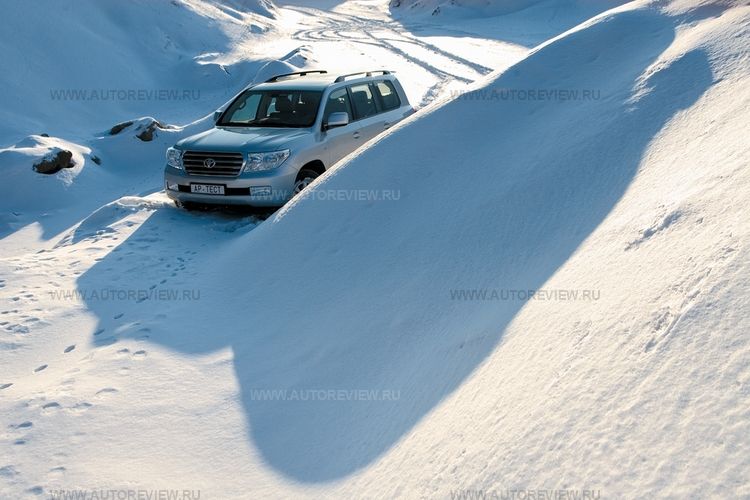
The Land Cruiser 200 has hardly changed on the outside: who will remember in a year that this is a new generation? It still presses with the bulldozer power of its huge radiator grille, and the sagging rear end is hardly any prettier.
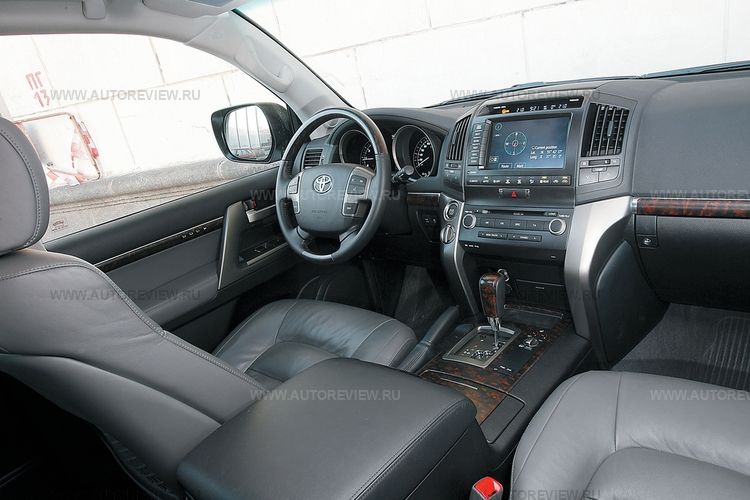
The front seats of the Toyota are separated by a massive tunnel, so there's less space inside than the imposing exterior dimensions promise. The steering wheel is leather-wrapped only on the lower part of the rim, while the upper part is made of slippery "wood-look" plastic
The Mitsubishi Pajero looks more compact and more interesting than the Toyota, although it's only five centimeters shorter. But the Discovery is more beautiful — it's immediately clear who is the patriarch of the all-wheel-drive genre here.
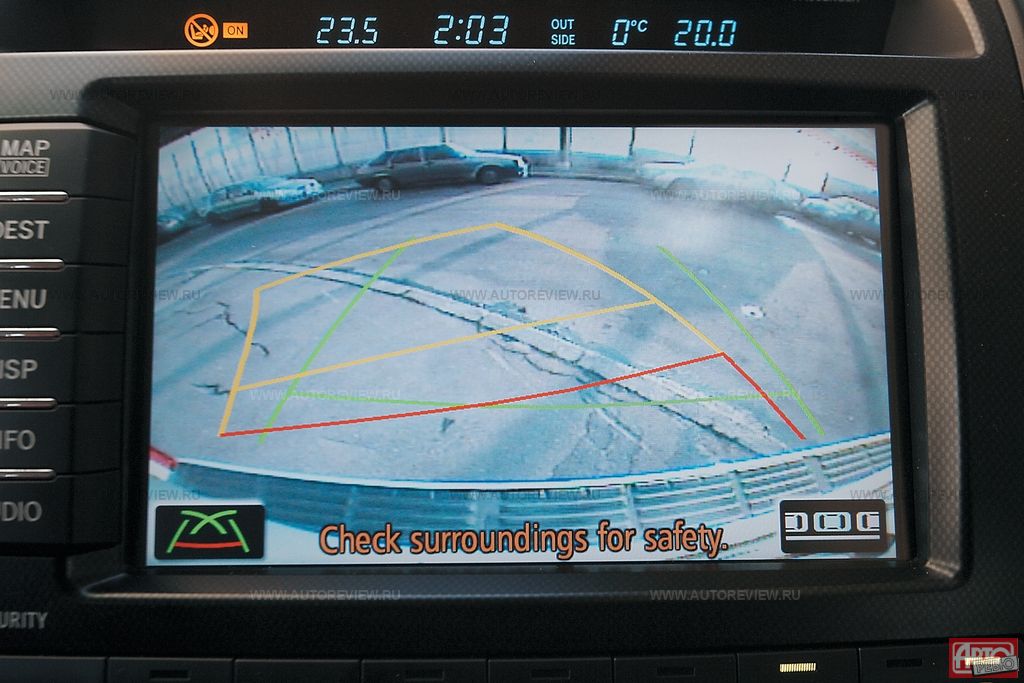 | 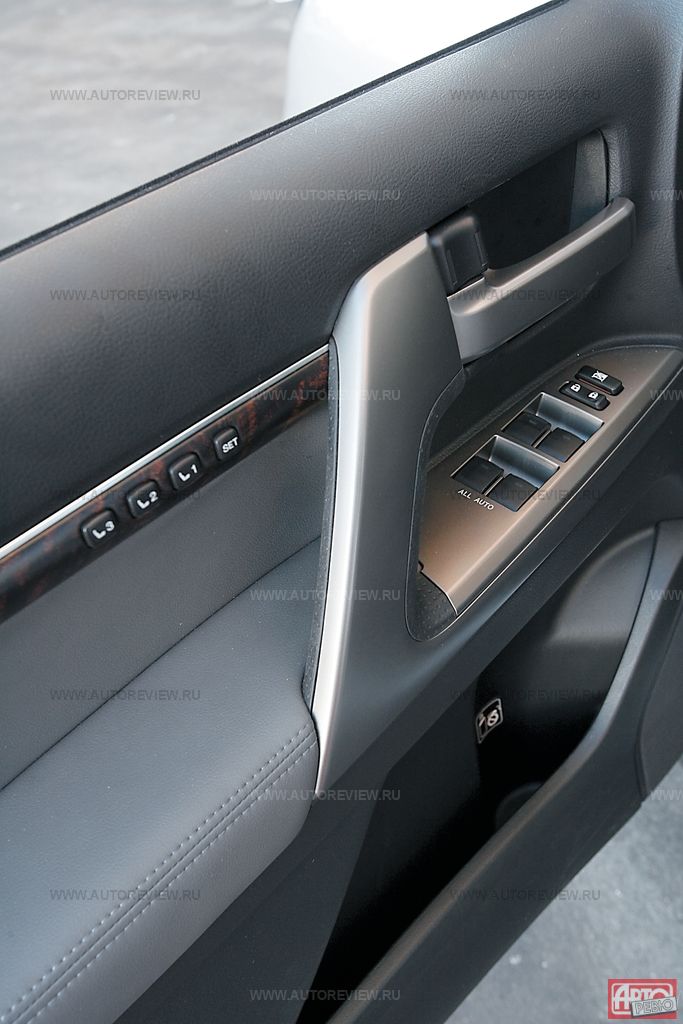 | 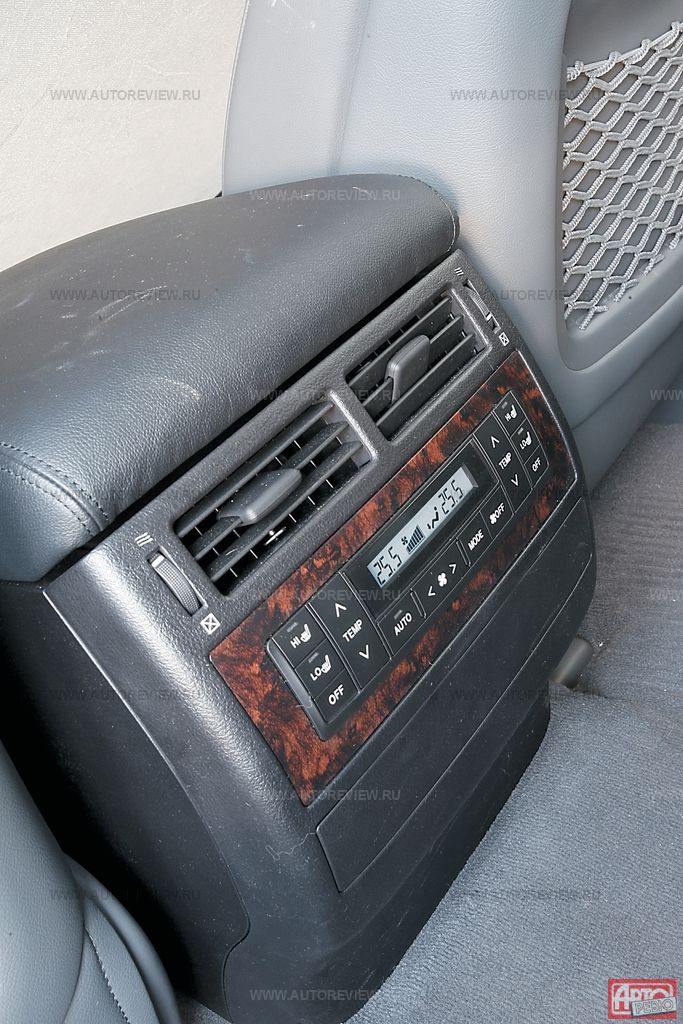 |
| The rear-view camera helps both when parking and off-road | The door handles are huge — truly king size! | Four-zone climate control as standard — only in the Toyota |
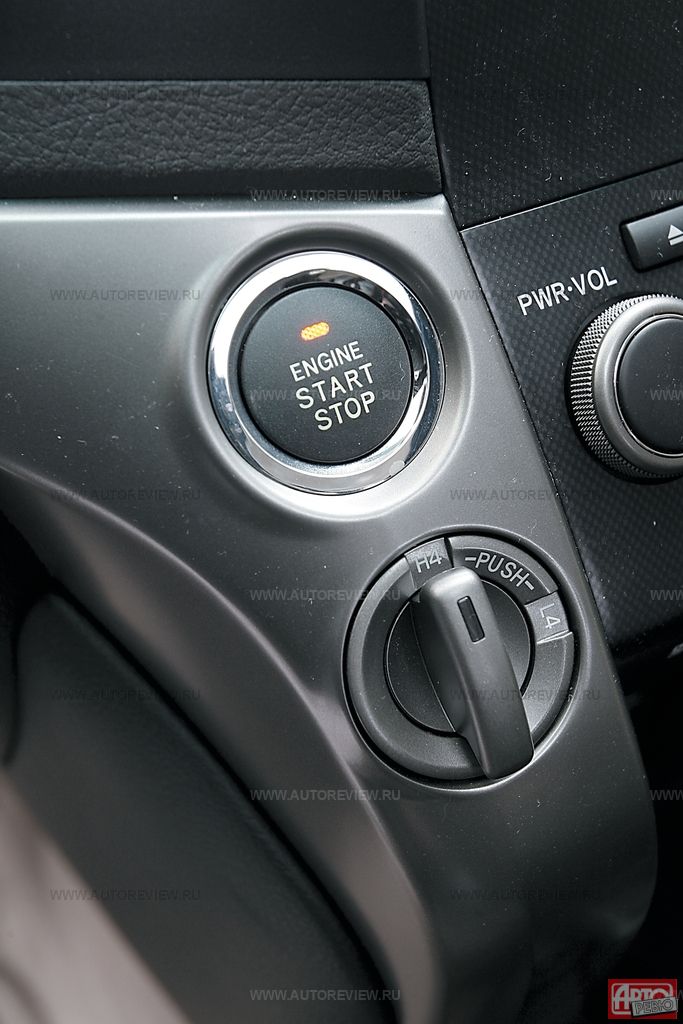 | 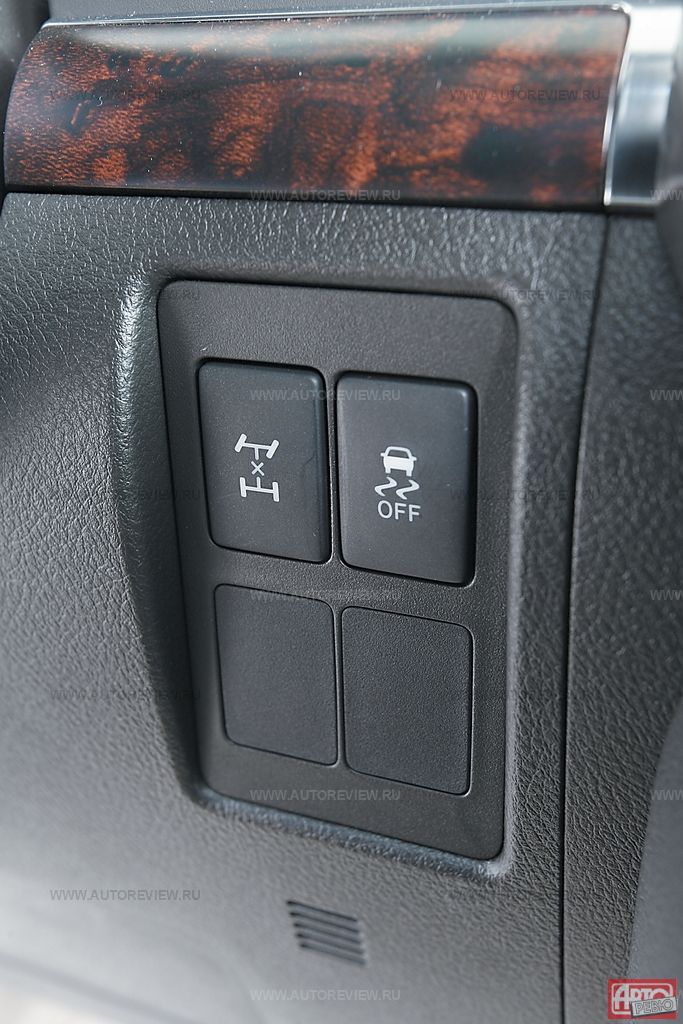 | |
| The engine is started with a button, next to it is a rotary knob for the transfer case. Below them are the buttons for locking the center differential and disabling stability control | ||
And the Volkswagen is a newcomer to the SUV class. On one hand, its low-slung silhouette looks more dynamic and sporty. But it doesn't command the same respect on the road as its rivals — every now and then someone in traffic will cut right in front of its handsome, retouched nose.
Due to the lack of a frame, the floor in the Touareg is lower, and you can choose any seating position — even a low car-like one. The Land Rover is a different case: you sit high like a commander, surveying the expanses of the deliberately rectangular dashboard. In the Mitsubishi Pajero, the seating position is higher. Additionally, the steering column is tilted far forward and adjusts only by angle: here you're no longer a commander but a bus driver. This feeling is reinforced by the forward-tilted footrest for the left foot. And the right foot isn't too comfortable either: the heel sometimes catches on the carpet protrusion.
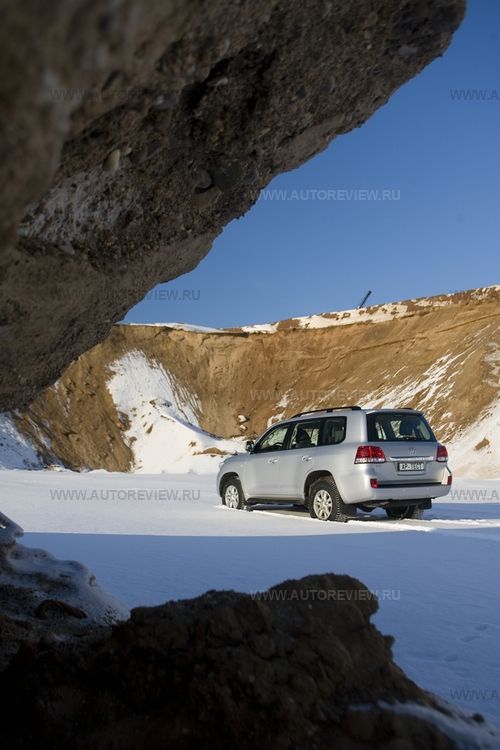
There's something truck-like in the Toyota's ergonomics. The comfortable seat is raised high, the steering wheel is huge. And the interior door handles seem made for the hand of boxer Valuev! The Japanese really respect their audience... As in the Land Rover, there's a touchscreen central display with Russian-language navigation — though clumsy. But why they put some climate control functions on the screen remains a mystery to us.
| Land Rover Discovery | Mitsubishi Pajero |
 |  |
| Toyota Land Cruiser 200 | Volkswagen Touareg |
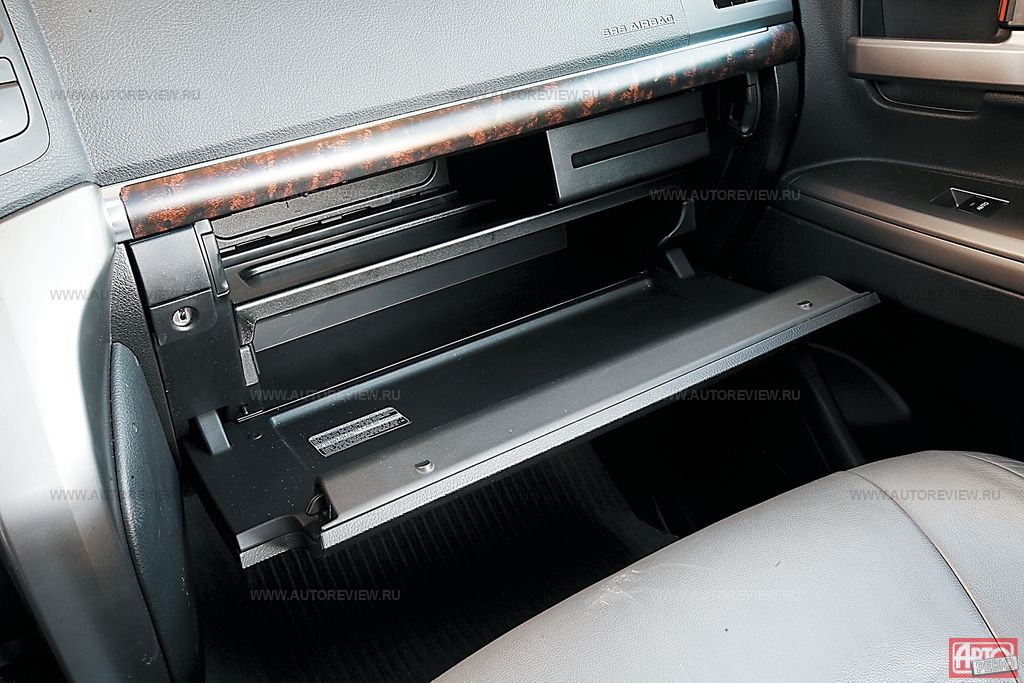 | 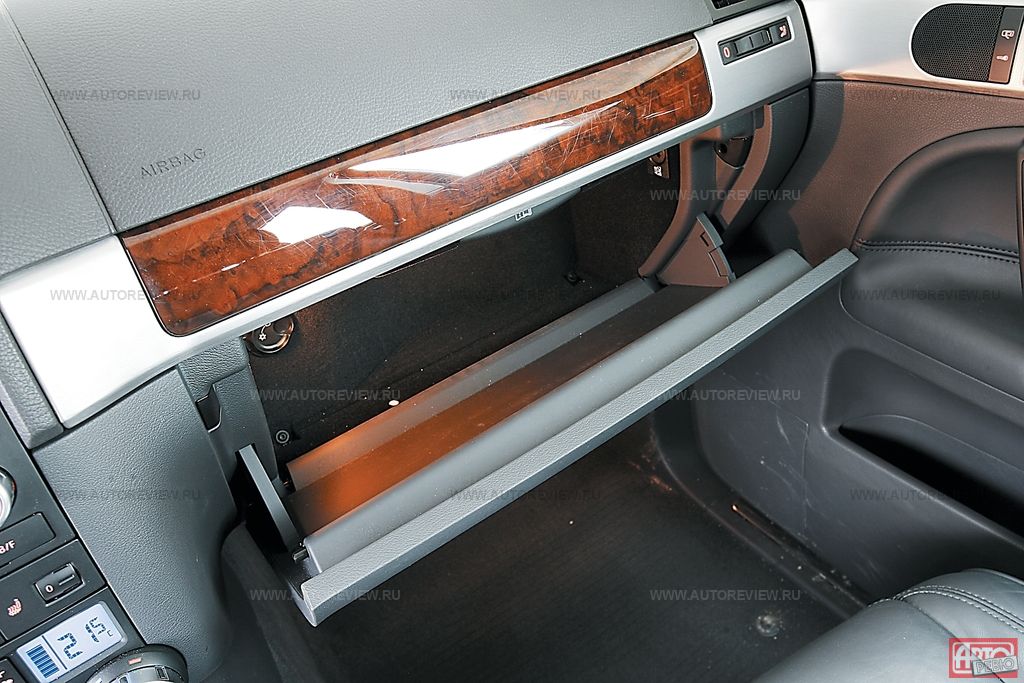 |
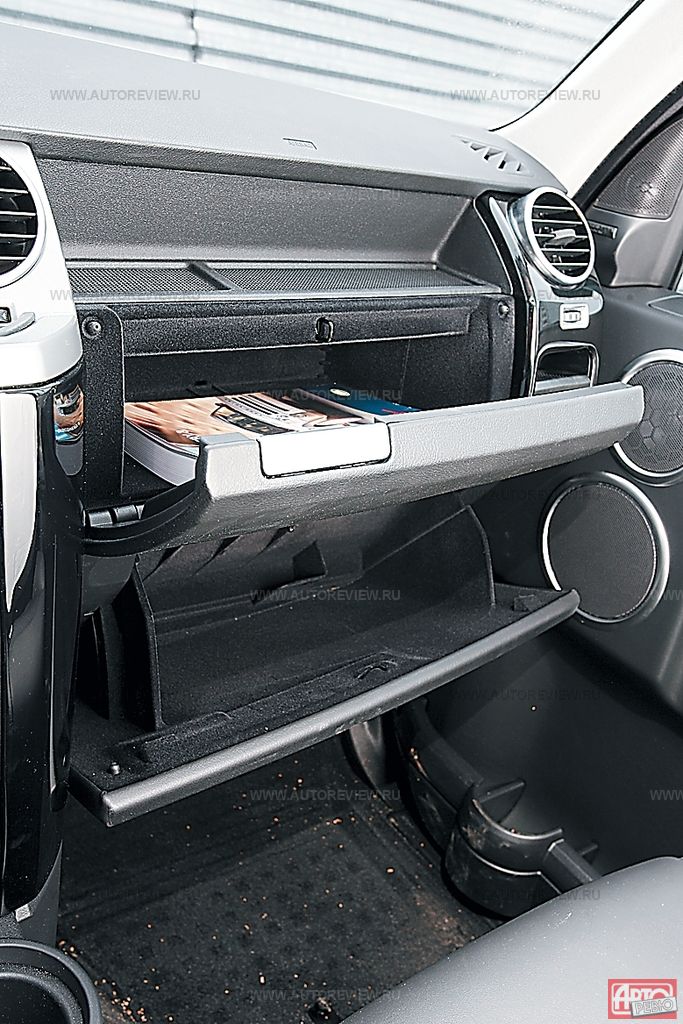
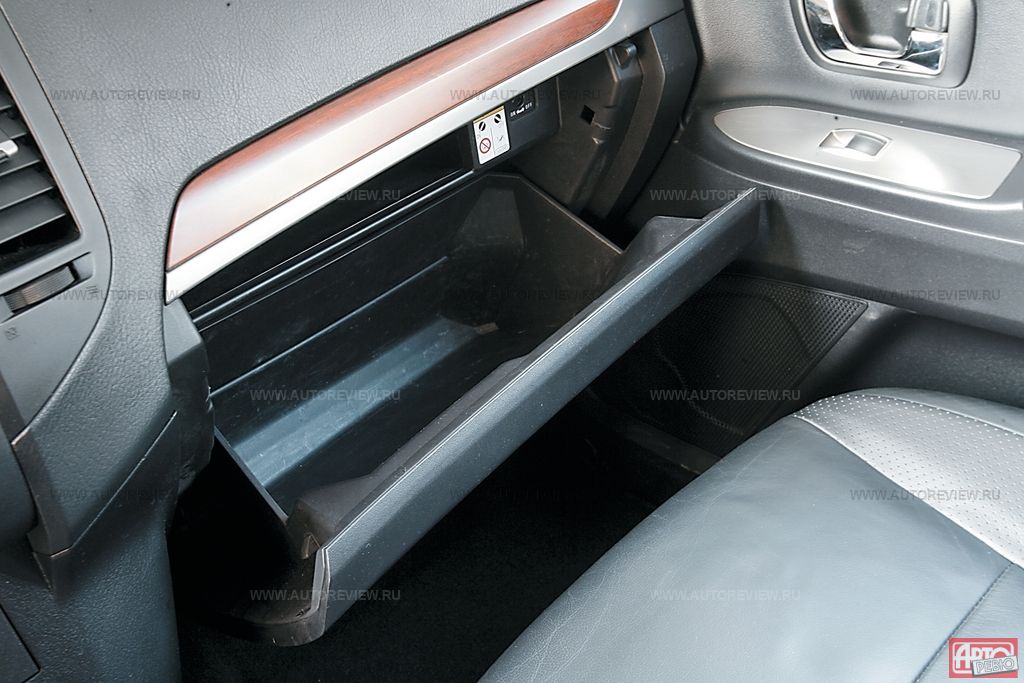
| Big cars — spacious glove boxes! But the Land Rover with its two-story glovebox is the champion | |
On asphalt, the dragon lurking under the Volkswagen's hood until now leaves no chance for rivals — the combination of the V-shaped "eight" and the six-speed automatic is perfectly honed. Want a smooth ride? Please: in D mode you won't notice a single shift, and the engine sound doesn't penetrate the cabin. Feeling spirited? Floor the gas, and the ringing crescendo of the 350-horsepower engine climbs to the limit of 6800 rpm, while the adaptive gearbox adapts to the new driving style and starts holding gears during braking. And in sport mode, it will also downshift, sharpening the already lively responses to the gas pedal.
| Land Rover Discovery | Mitsubishi Pajero |
 |  |
| Toyota Land Cruiser 200 | Volkswagen Touareg |
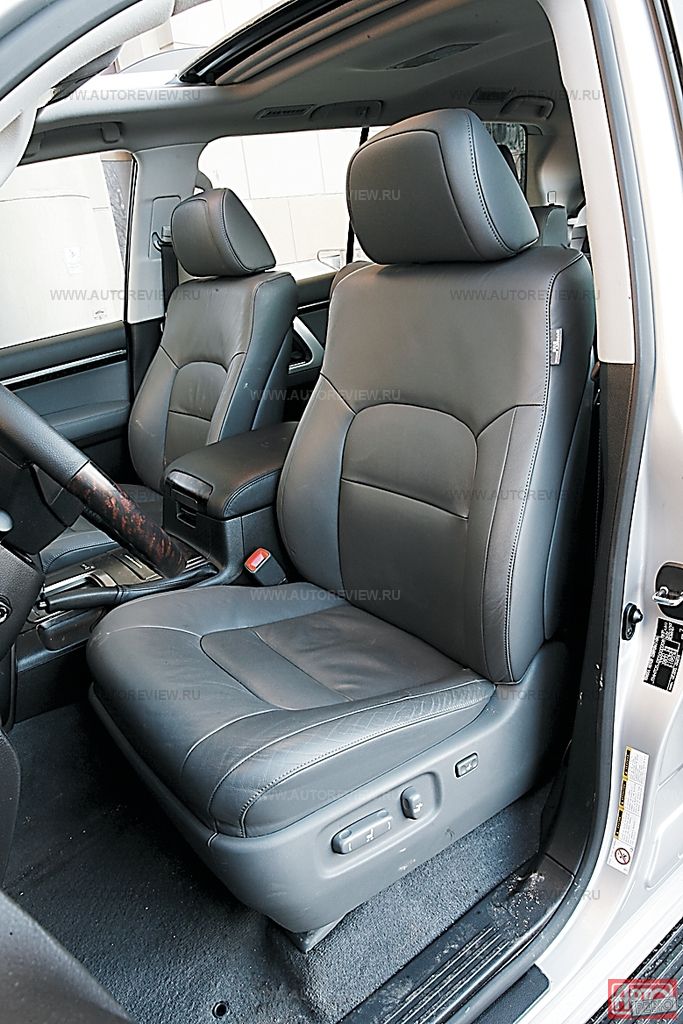 | 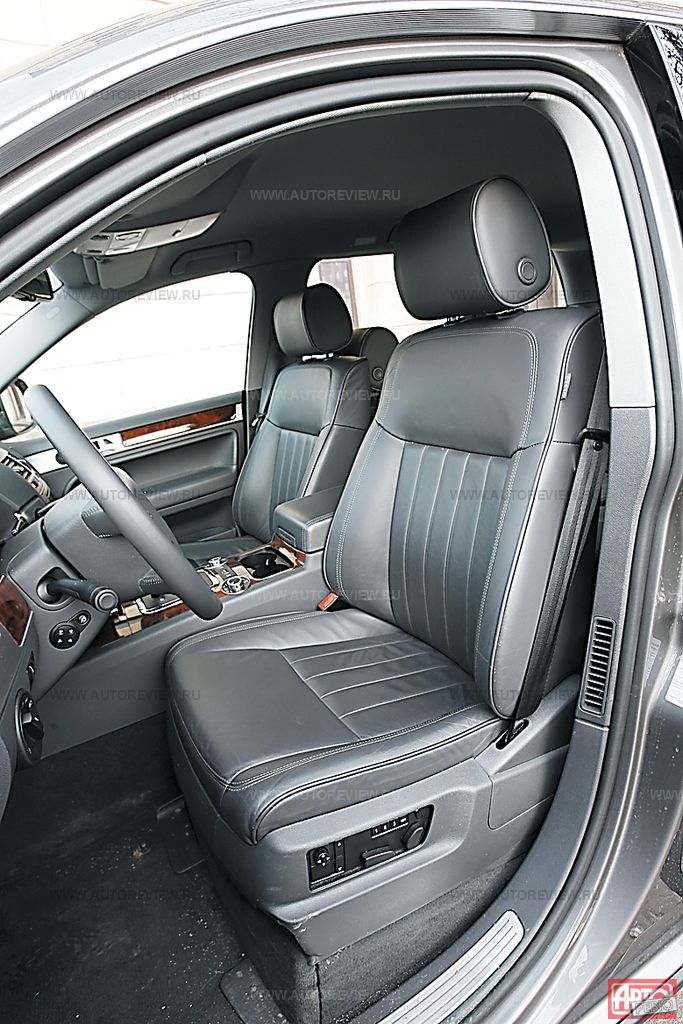 |
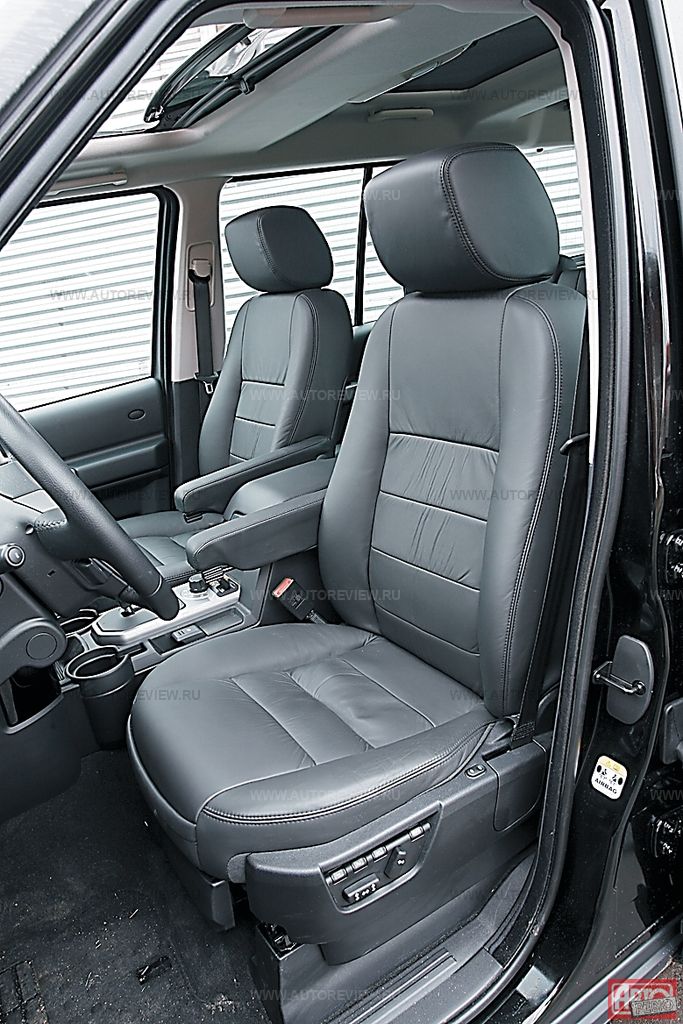
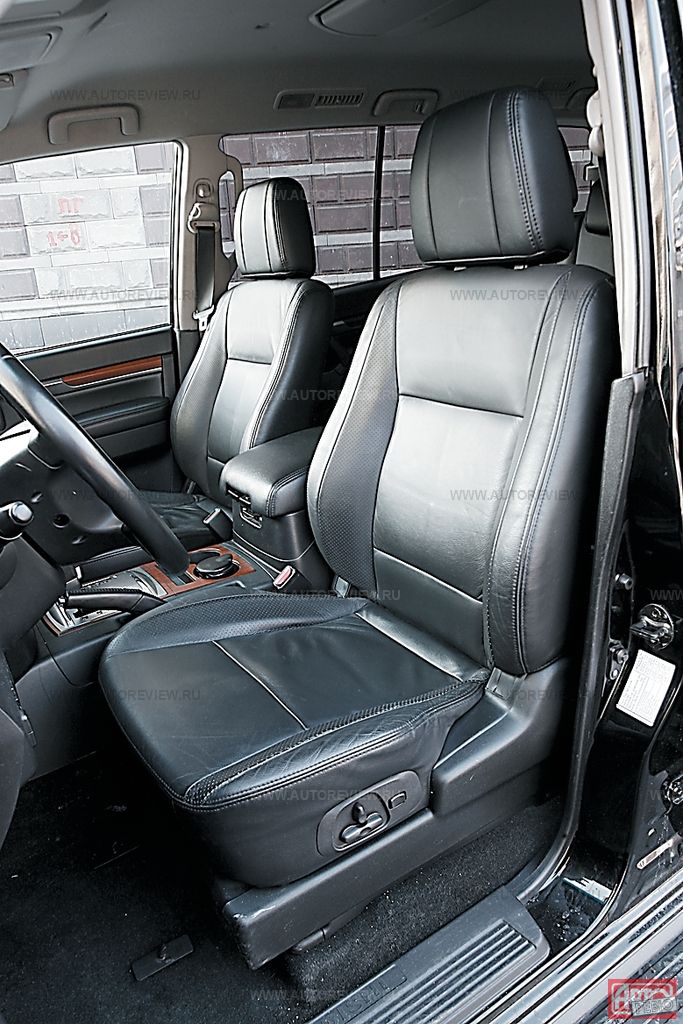
| The Discovery's front seat is the firmest, but the loose lateral support poorly holds the driver off-road. The Pajero's seat is a bit softer, and the most amorphous yet comfortable one is in the Land Cruiser. Well, the most successful seat profile, with lumbar support adjustment, is in the Touareg | |
The Land Rover is only slightly slower, but a distance seems to arise between the driver and the car. The "automatic" is a bit less responsive — also six-speed, but slightly thoughtful when downshifting. The accelerator drive is more damped, and the desire to race the Discovery is evoked only by the fighting voice of the engine, noticeable against the background of the absence of other noises.
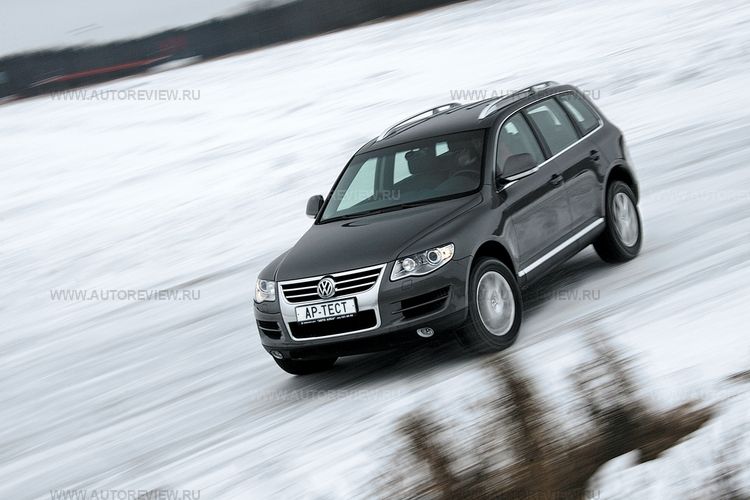
Asphalt triumph: why the Touareg proved strongest in this quartet
Acceleration in a Volkswagen is a real celebration; its automatic transmission is the most intuitive and adequate of all, and the handling is simply delightful. The Touareg has literally collected every award that can be won on smooth pavement.
The Land Cruiser 200 behaves even more quietly and imperturbably. Up to a hundred kilometers per hour, it is unlikely to yield to competitors in pace, but beyond that, the fervor noticeably fades. Its transmission has one fewer gear and is completely devoid of a sporty streak — along with it, the sharpness in working with thrust disappears: predicting acceleration is not easy. Although a Sport mode is declared, even in it the gearbox does not engine-brake and does not always understand the driver's intentions.
Land Rover Discovery Mitsubishi Pajero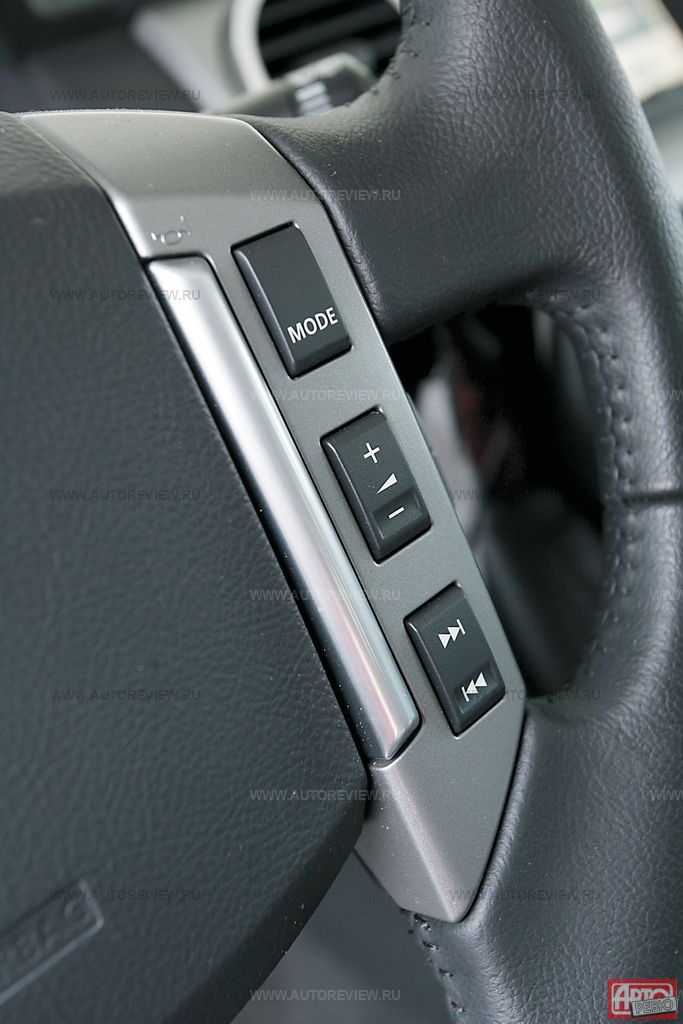
 Toyota Land Cruiser 200 Volkswagen Touareg
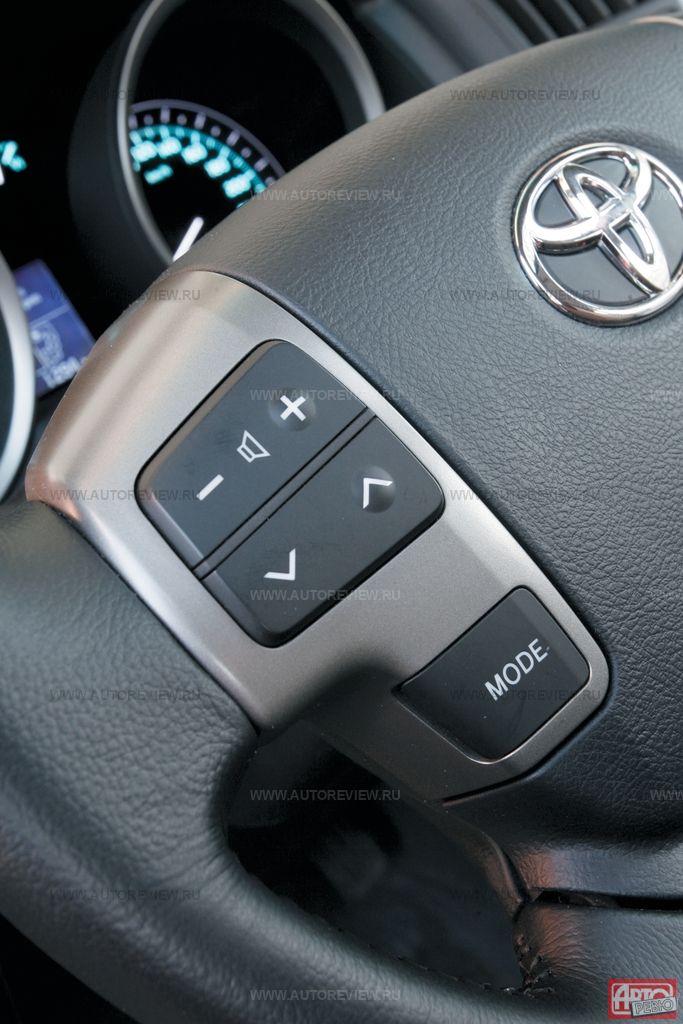
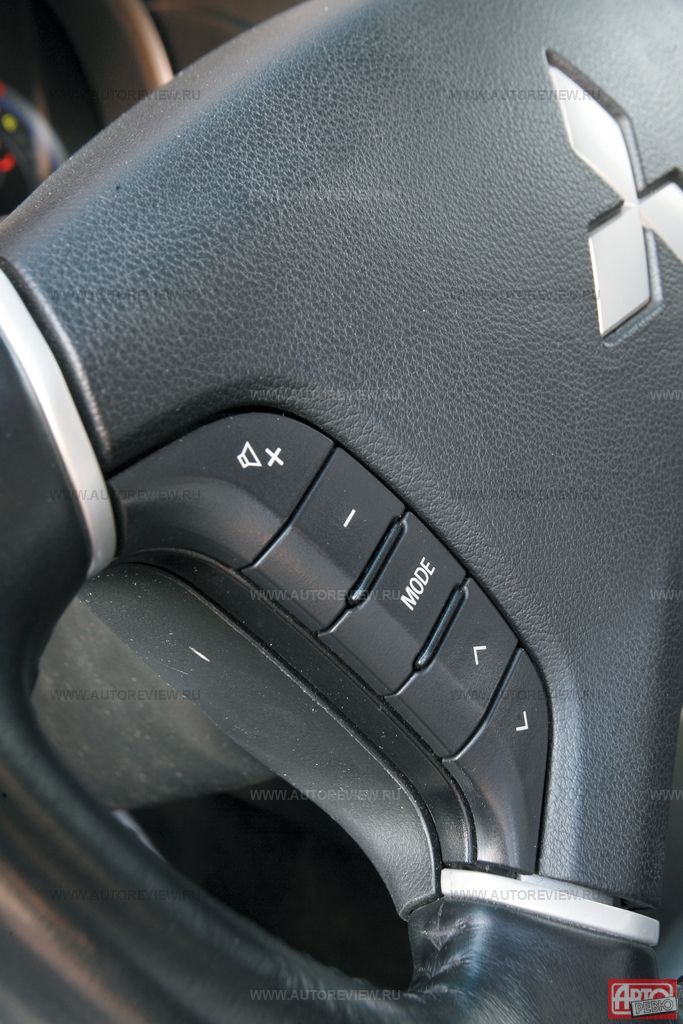
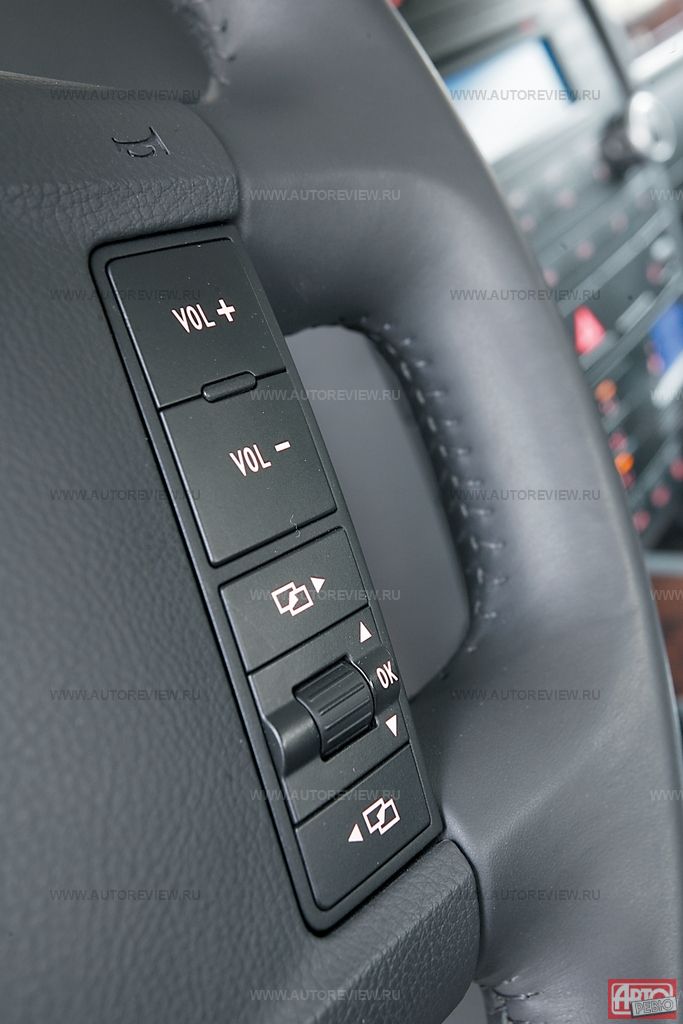 All four SUVs have huge music control buttons on the steering wheel: you can change tracks or turn up the volume even on a bumpy dirt road. However, only the Volkswagen Touareg offers a heated steering wheel for an extra charge, activated by a small hidden key on the side of the hub
The Mitsubishi Pajero's engine is the most modest in power, but that's only half the problem. Much more unpleasant is the "thoughtful" automatic: it has no sport mode and always "hesitates" when downshifting, making it difficult to accurately calculate an overtake. Not sure — don't go! Better to roll along calmly and listen to the annoying wind whistle that originates somewhere at the bottom of the windshield...
Land Rover Discovery Mitsubishi Pajero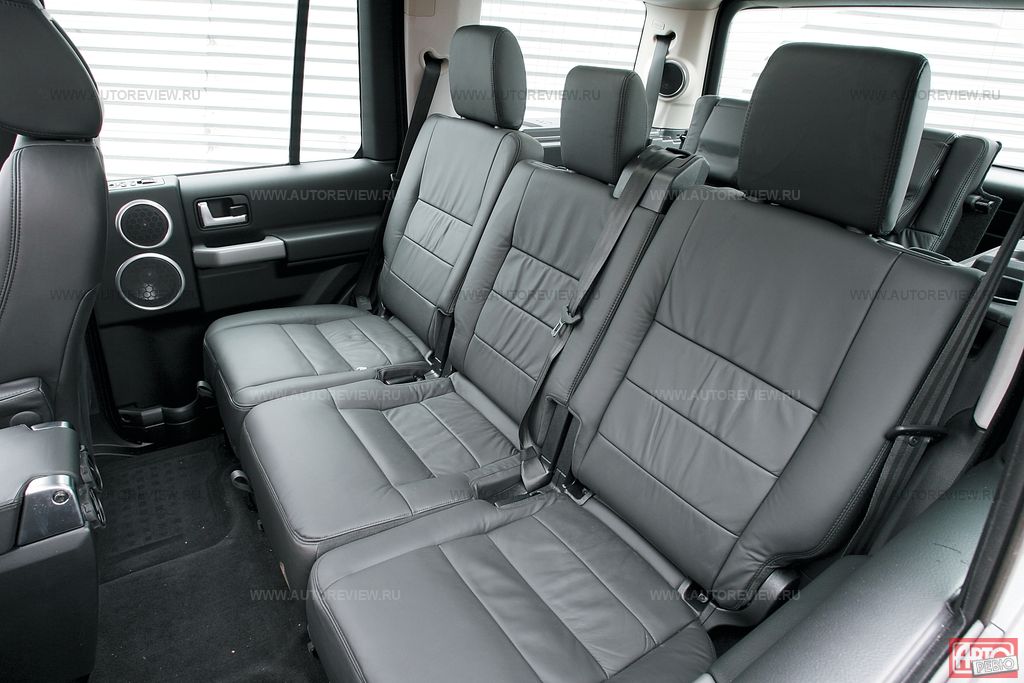
 Toyota Land Cruiser 200 Volkswagen Touareg
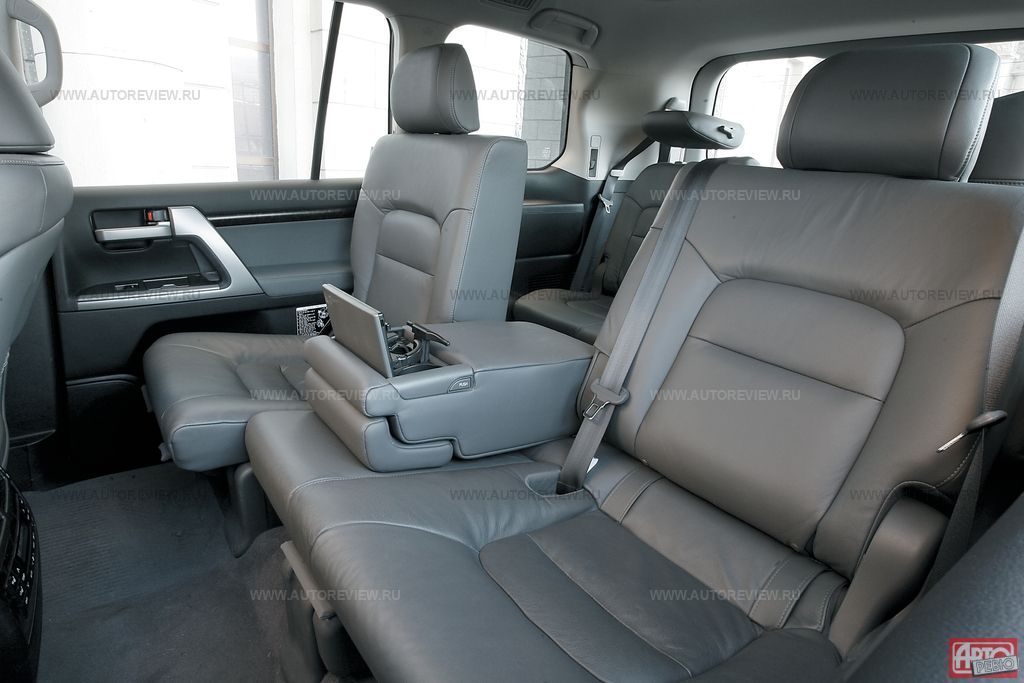
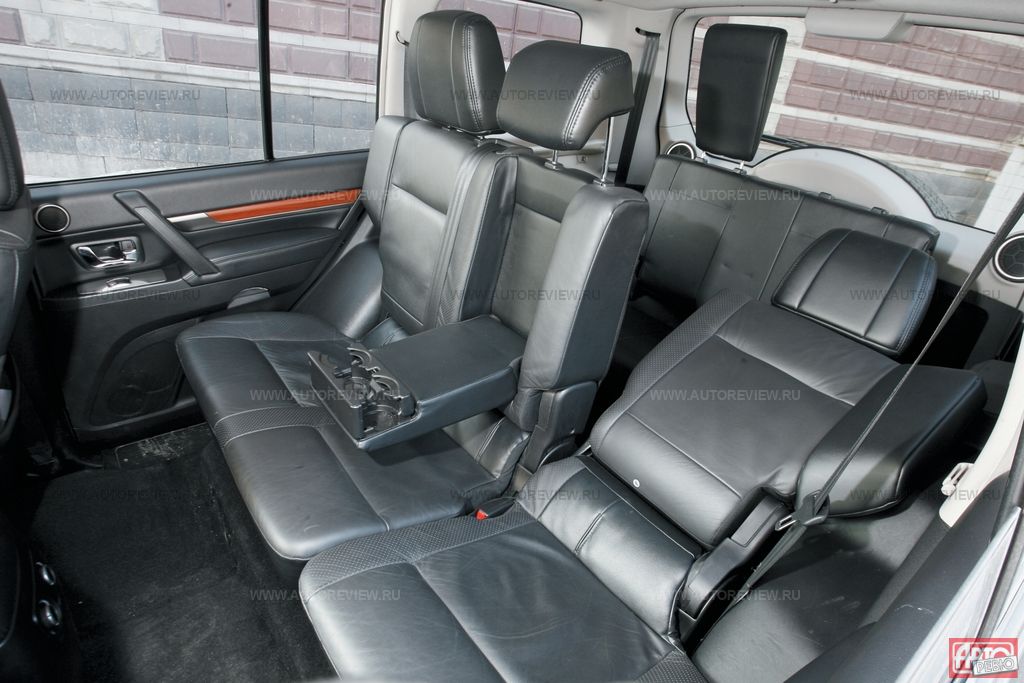
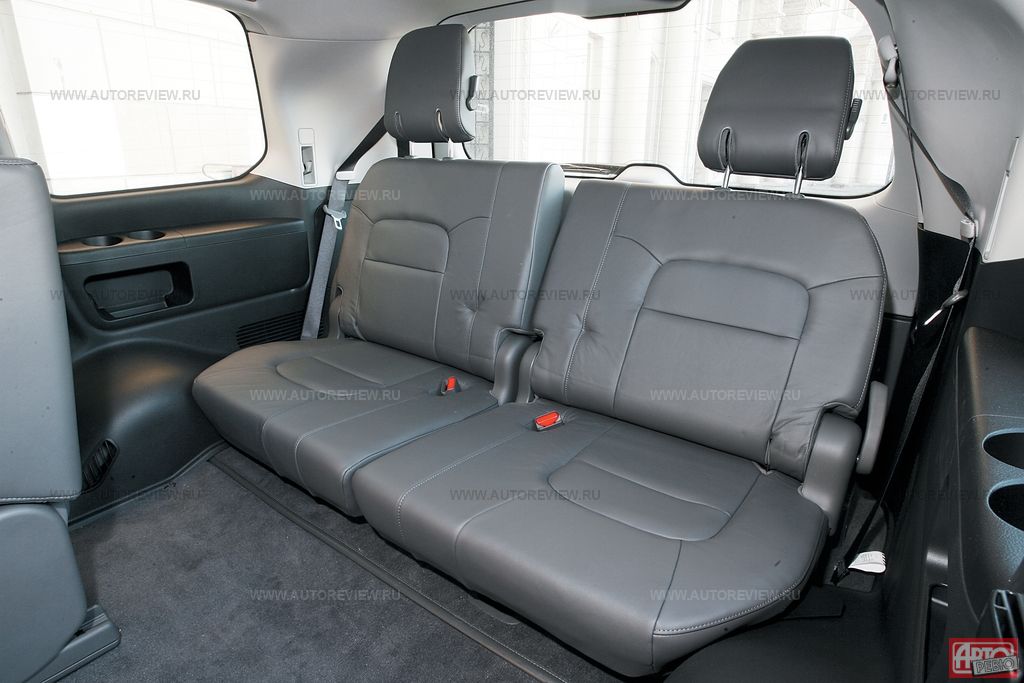
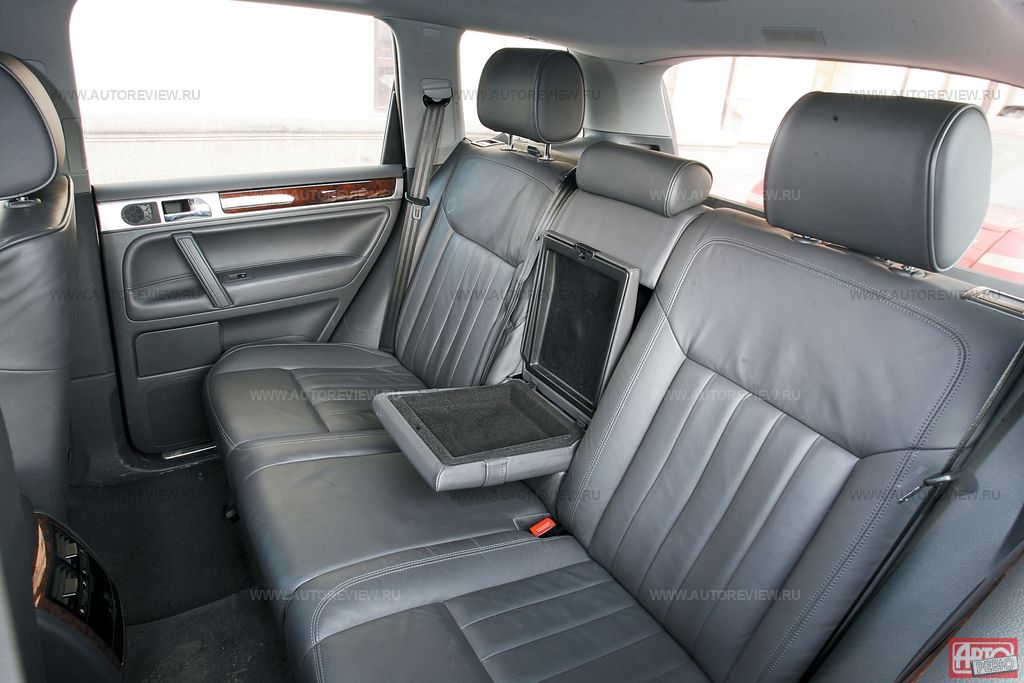 The middle row of seats in the Toyota resembles the rear sofa of a business sedan in comfort: the profile is correct, there is plenty of space, the transmission tunnel barely interferes, the seats move forward and backward, and the backrests adjust their angle. In the Pajero, the backrests also fold, but that doesn't save it from being the most cramped of the four
The Pajero's handling is mediocre. The small "bagel" steering wheel and stiff suspension hint at driving pleasure, but there is neither speed nor precision in the responses. The Mitsubishi holds a straight line decently, but as soon as you turn the wheel slightly, the effort on it treacherously disappears. In corners and lane changes, the car first noticeably rolls, then the rear axle actively rotates. You can get used to this temperament and even find excitement in it, since the stability control engages late and allows you to "wag the tail." But you won't be able to relax at speed behind the wheel of the Pajero.
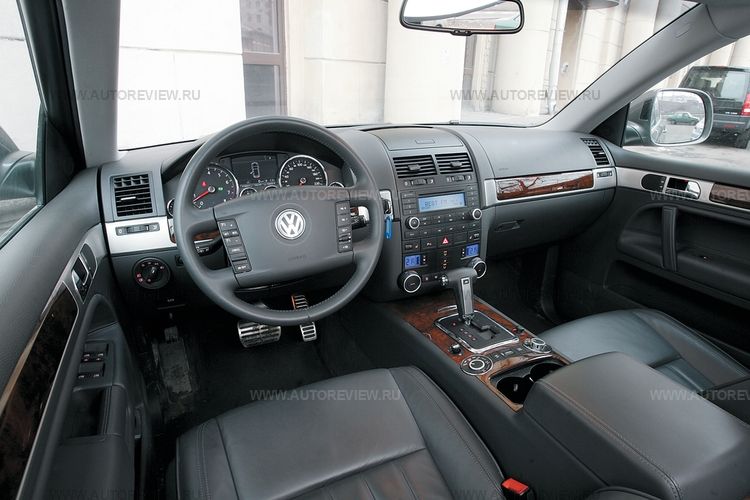
The Volkswagen's interior ergonomics are closest to a passenger car. True, the windshield pillar is raked like in a car, which limits the door opening
But the Land Cruiser 200 — yes, it will! It lives up to its name one hundred percent: "cruising" works even at speeds near two hundred! True, the Toyota does not favor curves. Especially sharp ones — there you have to turn the wheel very actively, and the already sparse feedback disappears completely. Passing the "moose test" in the Toyota is the hardest of all: both the "cottony" steering and pronounced understeer get in the way. However, the stability control successfully suppresses the Cruiser's main problem in corners — front axle drift.
Land Rover Discovery Mitsubishi Pajero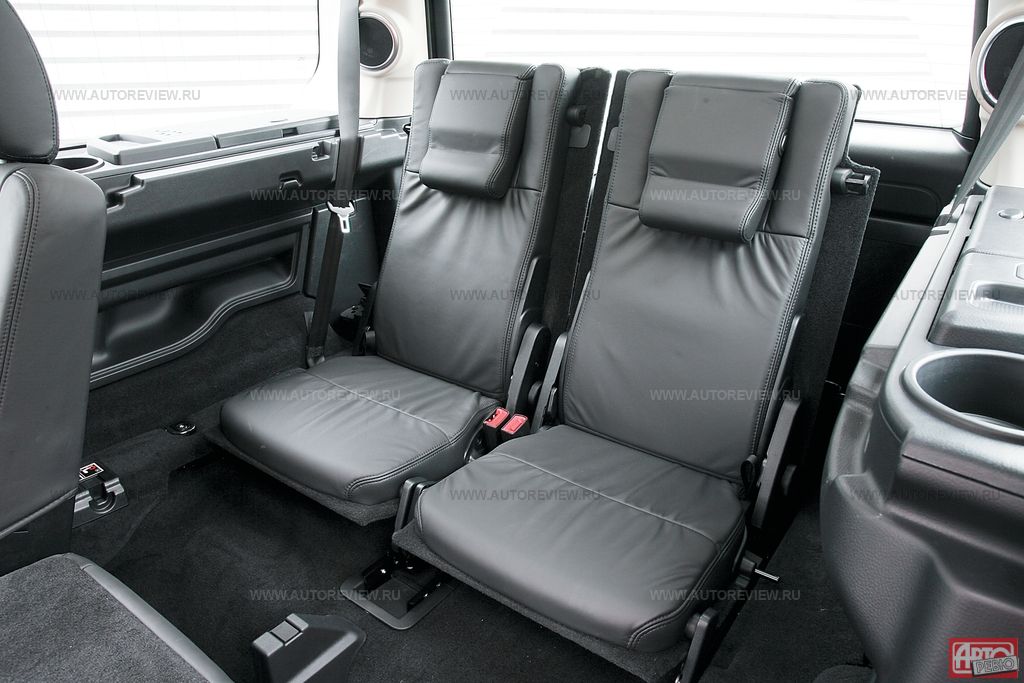
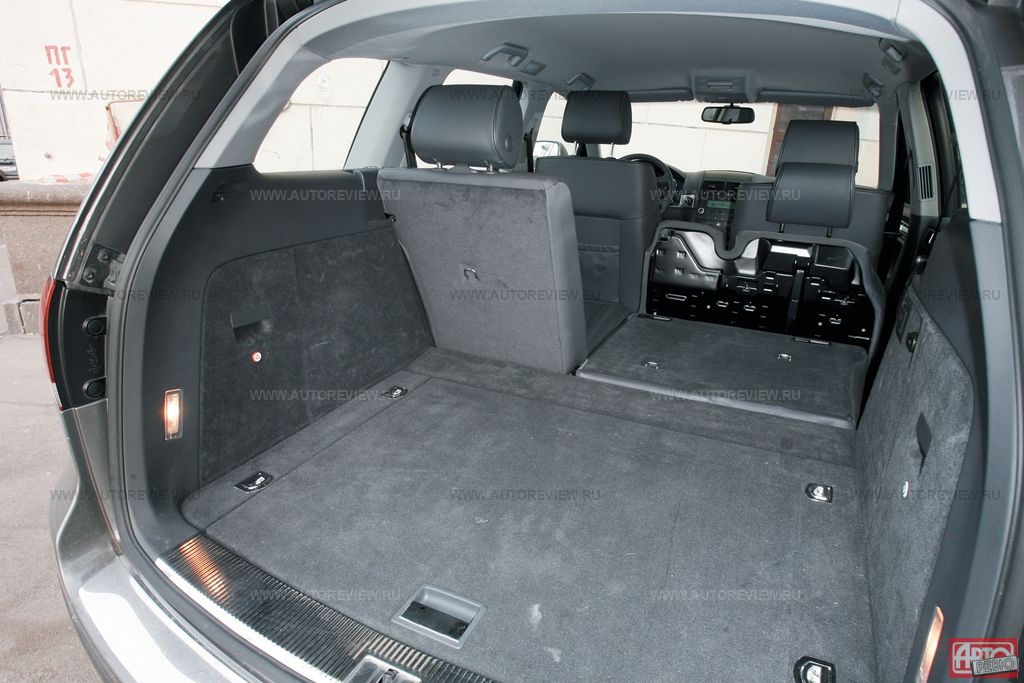
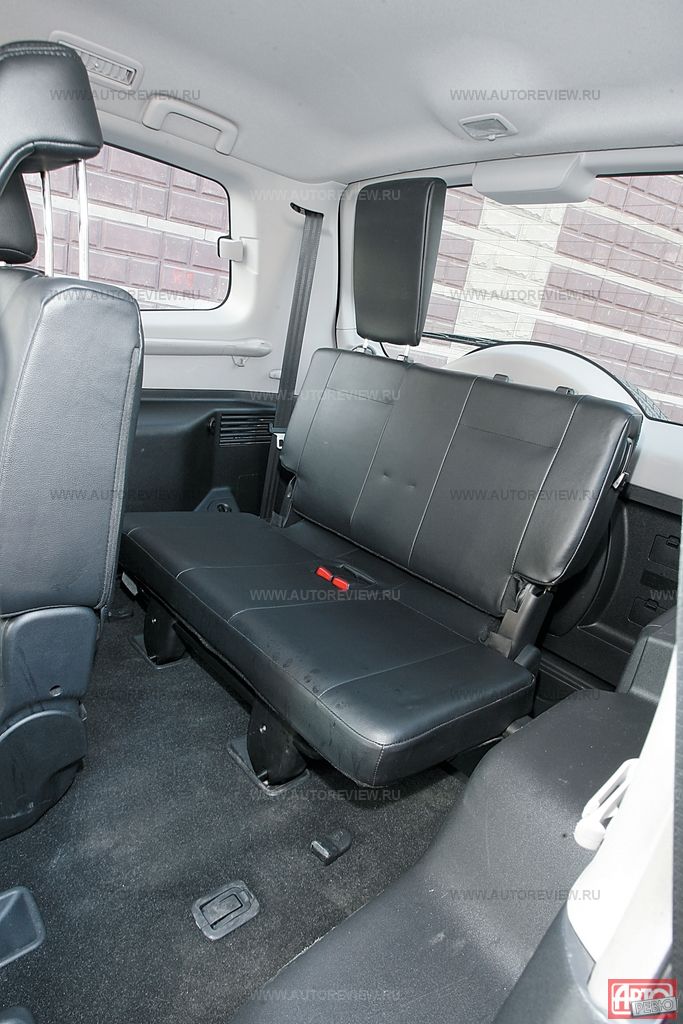 Toyota Land Cruiser 200 Real "adult" seats in the trunk — only in the Discovery. In the Toyota and Mitsubishi, you won't go far in the third row: legs are cramped, and the seating position is almost on the floor. The Pajero also has the most illogical folding scheme for the "cargo" seat, which the Touareg lacks entirely
The Discovery in the same corners leans like the Titanic, but manages to maintain clarity and unambiguity of reactions. However, on a straight line, the Land Rover's steering wheel turns out to be even too sensitive: a slight movement — and the car already changes trajectory. Such sharpness keeps your hands tense no less than in the Pajero.
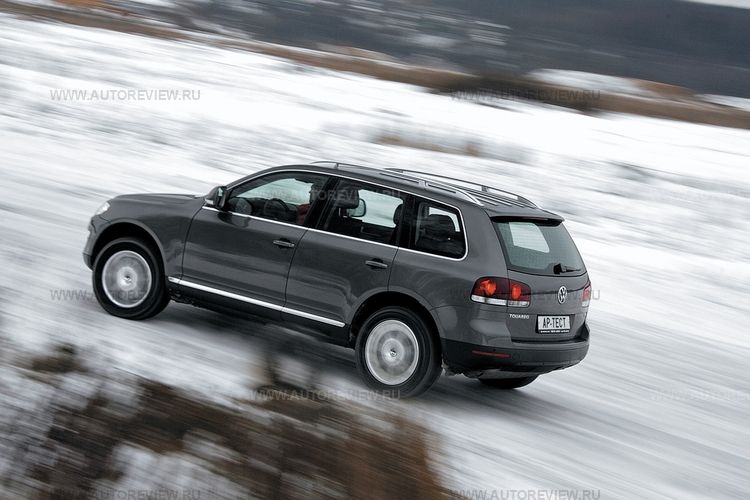
The Touareg with air suspension offers three damper modes — Comfort, Sport, and Auto (the latter is best suited for everyday driving)
But the true king of asphalt is the Touareg. On a straight line, in a curve, on pavement waves — it is always under control: responsive to the limit, but not exhausting with unnecessary nervousness. The steering wheel is a model of feedback, body roll is minimal, especially in the sport mode of the electronic dampers. And if you switch the drum on the tunnel from Auto to Comfort, the rolls become slightly more noticeable, the reactions to the steering wheel have a slight delay, but contact with the car is not lost.
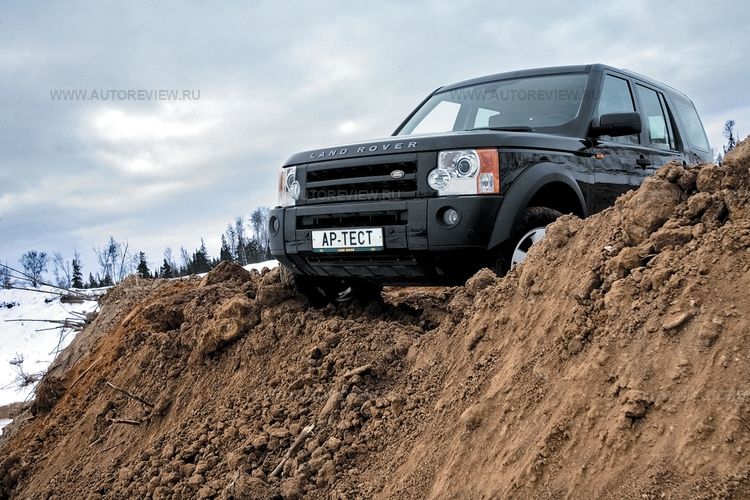
One thing is disappointing: in terms of ride smoothness, the agile Volkswagen yields to both "Lands" — even with air suspension and three modes. The Touareg handles large bumps somewhat roughly, sometimes with a hollow thud. But the Land Rover, also on air suspension, seems not to notice the same bumps — it is indifferent to joints and asphalt waves...
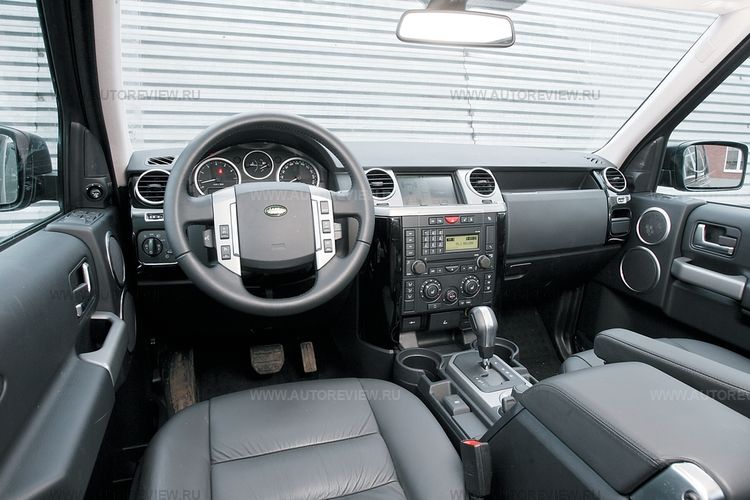
The Discovery's interior is a combination of quality, style, and a hint of off-road capability. Only Land Rover displays a "cartoonish" picture of the transmission and air suspension operation on the central screen
Both "Japanese" models sit on coil spring suspensions. But while the Land Cruiser 200 is almost as smooth as the Touareg — it shakes on large bumps and transmits small jolts even on smooth asphalt — the Pajero is noticeably stiffer on any surface.
Land Rover Discovery Mitsubishi Pajero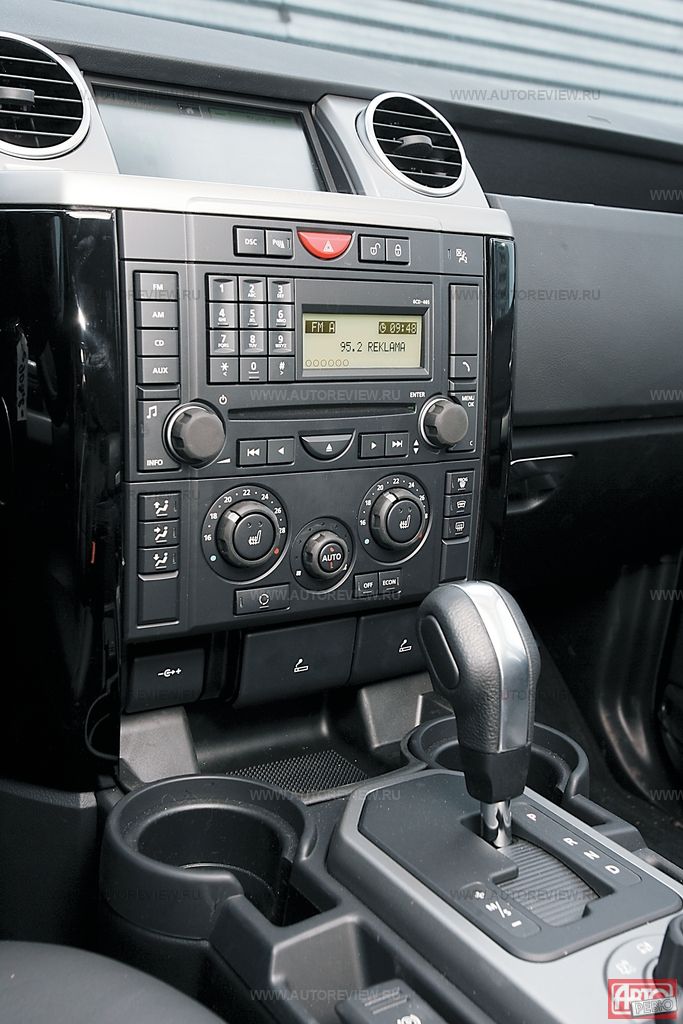
 Toyota Land Cruiser 200 Volkswagen Touareg
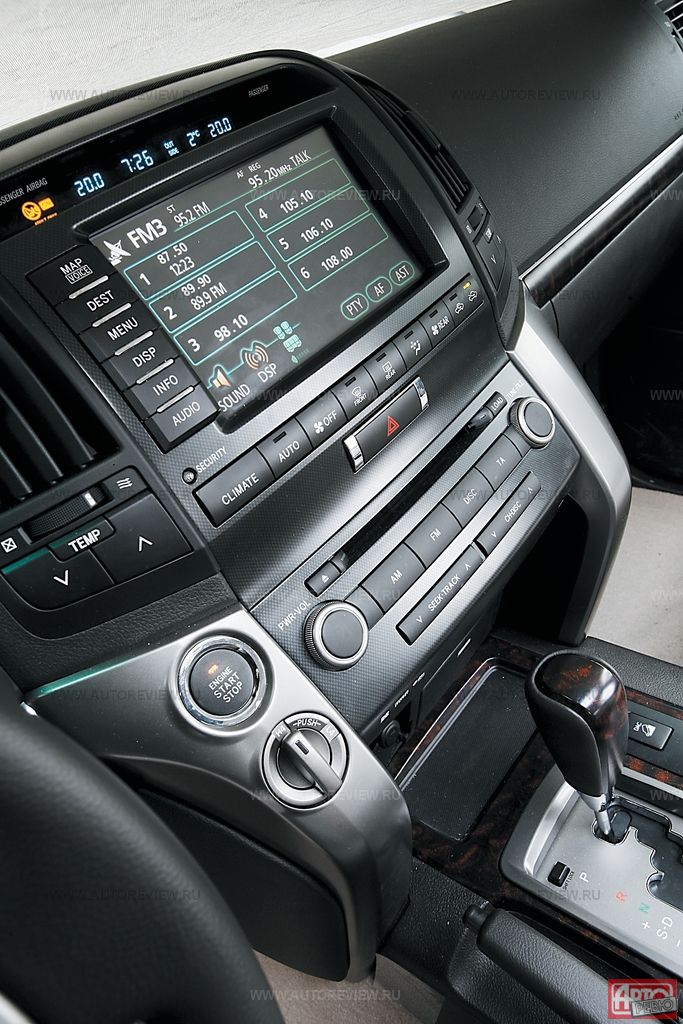
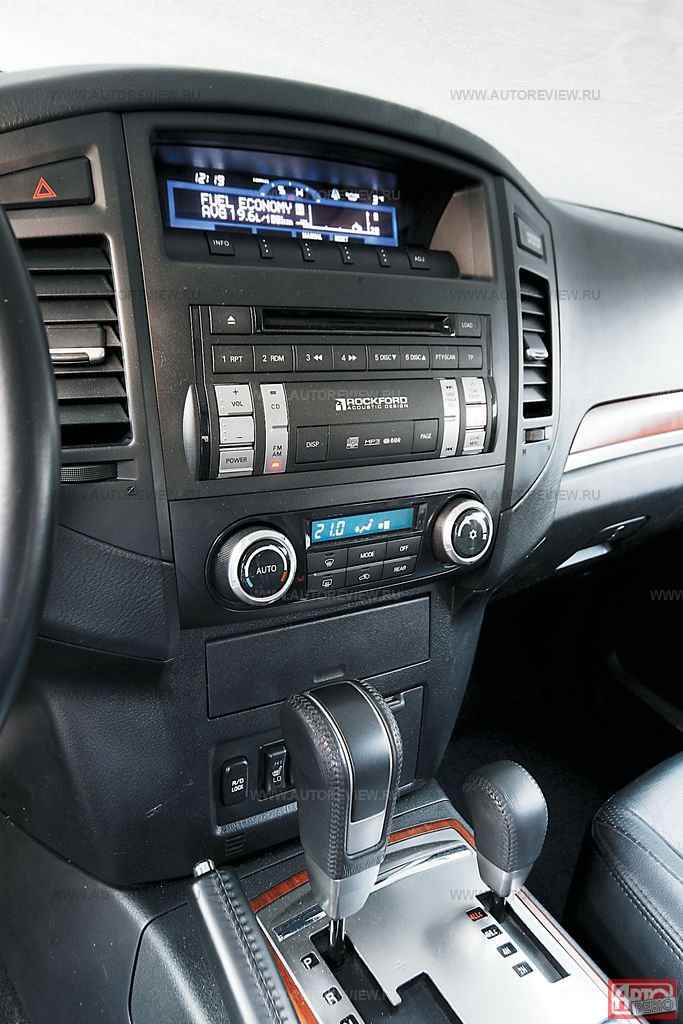
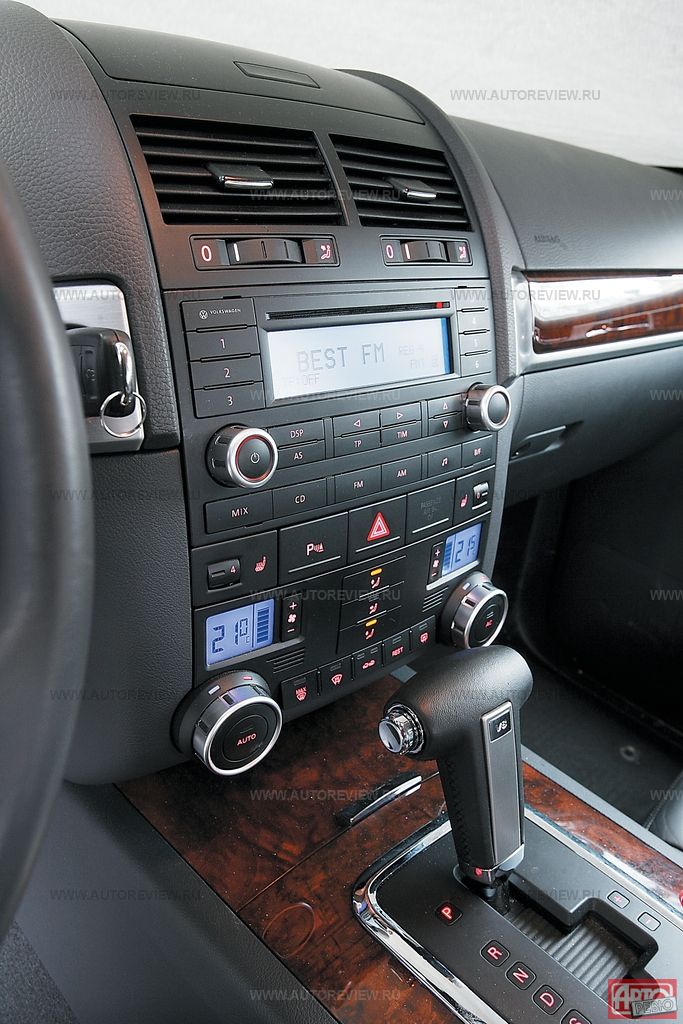 The most convenient front climate control is in the Touareg: the driver and passenger separately adjust both temperature and airflow strength. The Toyota's dual-zone unit is complex to manage — fan speed changes only via the touchscreen. The Discovery's climate control has no display at all, and the Mitsubishi's is simple single-zone and noisy: the fan is audible already at the second of eight speeds
In short, the Disco or Land Cruiser will travel fastest on a dirt road. But what if the country road ends in a washout? And what if further there are ravines, plowed fields, and snow virgin lands?
When off-road conditions become truly tough, the Land Cruiser 200 driver only needs to perform a couple of simple operations. First, stop, then turn the dial and press the button to engage low range and lock the center differential. Then, another button activates the Crawl Control system, after which you can safely take your feet off the pedals. The system's name translates from English as "to crawl," and this fully reflects the essence: the electronics themselves drive the car at speeds of 1, 3, or 5 km/h, depending on the selected mode. It doesn't matter where the vehicle is headed — uphill, downhill, over rocks, or through mud. The Toyota will persistently move forward, clicking the brakes and redistributing torque. The driver's only task is to steer. Amazingly simple and reliable for off-road conditions. Crawl Control also works in reverse, and the car can be maneuvered while looking at the rearview camera screen — very convenient for backing up along your own tracks. On a steep icy incline, even an experienced driver is unlikely to do better than Toyota's "crawl cruise control." And no training is required, unlike with the Terrain Response system in the Land Rover Discovery. In the Disco, everything seems even simpler: four modes with pictures — snow, sand, rocks, and ruts. But there are nuances. For example, the "sand" mode should only be engaged on dry sand: on a wet beach, an overly sharp throttle response can play a nasty trick, and the car might suddenly jump into the water. And the highest level of air suspension cannot be manually engaged: the additional 70 millimeters of ground clearance will only appear when the computer itself realizes the vehicle has already bottomed out. If the driver hasn't released the throttle in time and has dug the wheels in, it's already too late.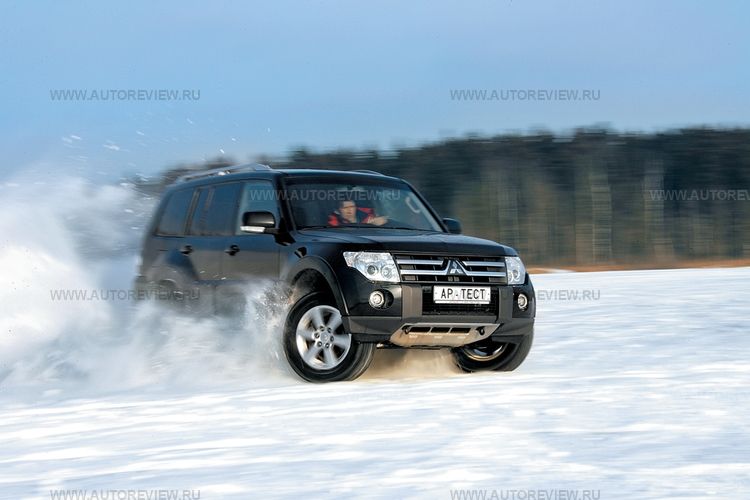
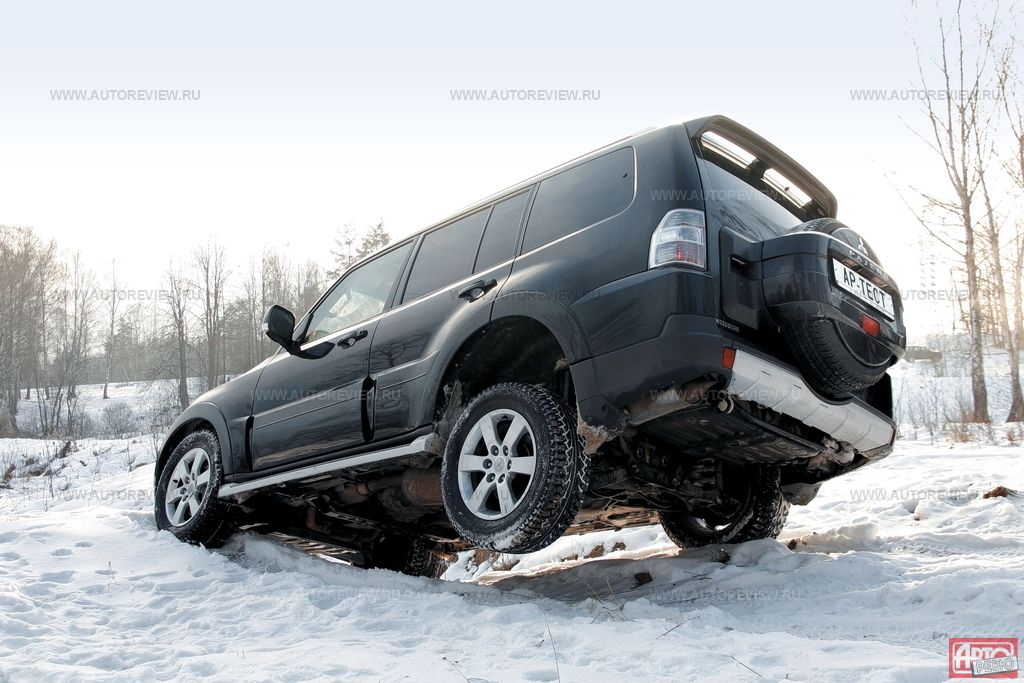
The stiff suspension, small "donut" spare, and tendency to oversteer in the Pajero promise plenty of fun. But the less powerful engine compared to rivals and damped throttle response steal confidence in handling The traction control system in the Discovery absolutely must be turned off: sometimes it strangles the engine so aggressively that the car simply freezes on an incline or in mud. On the other hand, the Land Rover's strong point is its short overhangs and maximum ground clearance in the raised suspension position: it went where the Toyota scraped its underbody protection, the Volkswagen barely moved on its belly, and the Mitsubishi gave up altogether. However, the Toyota has the longest suspension travel, which partially compensates for the lack of a rear differential lock. In the end, the Land Cruiser scored three points more than the Land Rover for off-road capability: the brilliant simplicity of Crawl Control combined with long-travel suspension proved more valuable than the slightly better geometric clearance and rear lock of the Disco, which suffers from the complex and not always effective Terrain Response.
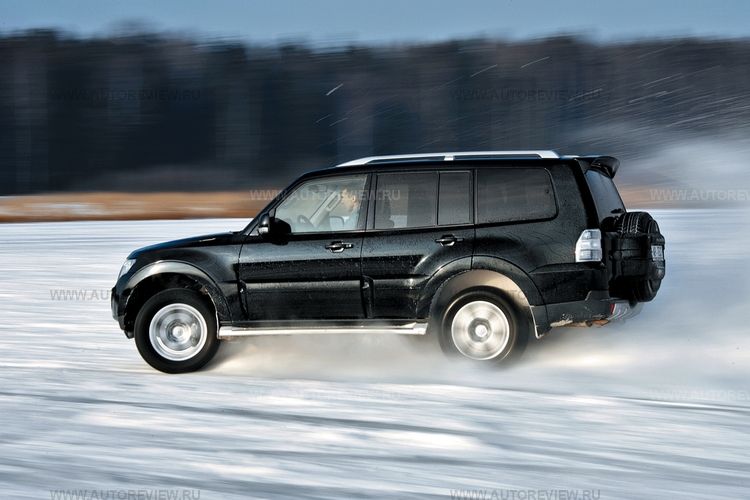
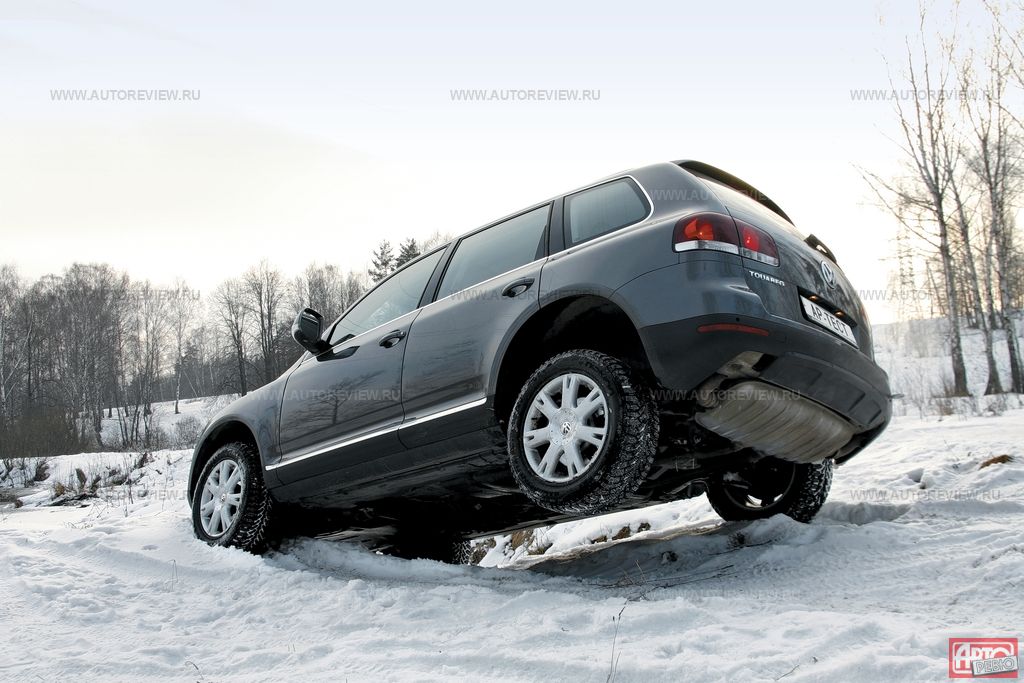
In the Pajero, the fifth door opens not upward like the other three, but sideways — and to the right, the "wrong" side And what about Mitsubishi and Volkswagen? The Touareg's air suspension can be raised manually to maximum, but it can't reach the Discovery's level, and rebound travel almost disappears — on large potholes the car responds with a loud "thud." However, in off-road capability, the Volkswagen doesn't lag far behind the two "Lands": it has a center and rear differential lock, as well as a hill descent assist system. Everything is tuned impeccably, except that the overly sensitive throttle pedal off-road leads to jerks when the driver's foot involuntarily trembles over bumps. Land Rover Discovery Toyota Land Cruiser 200
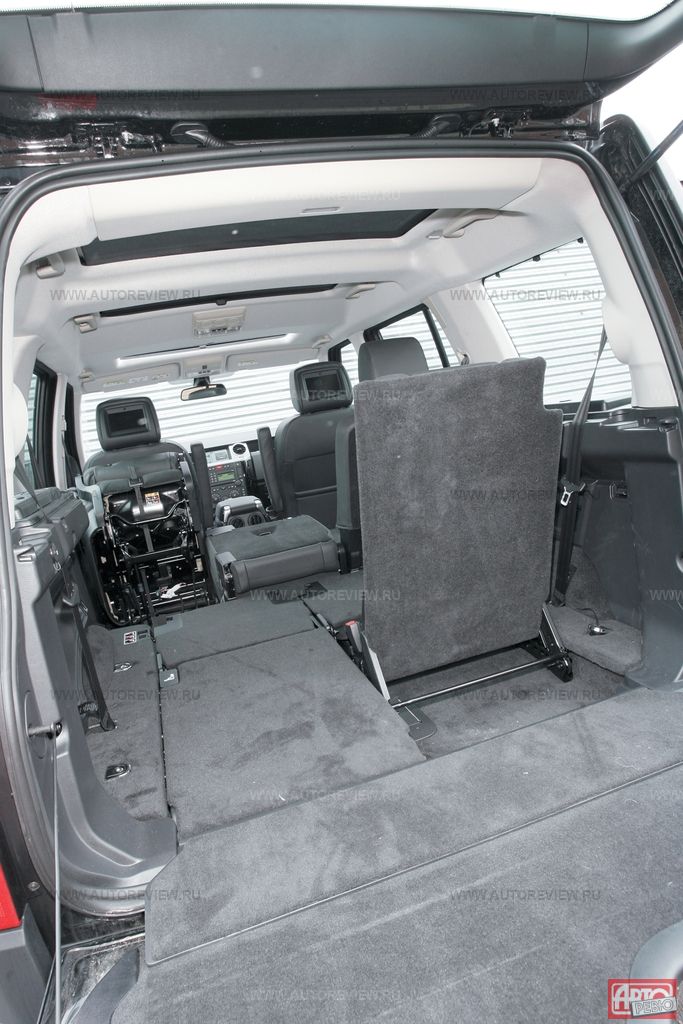
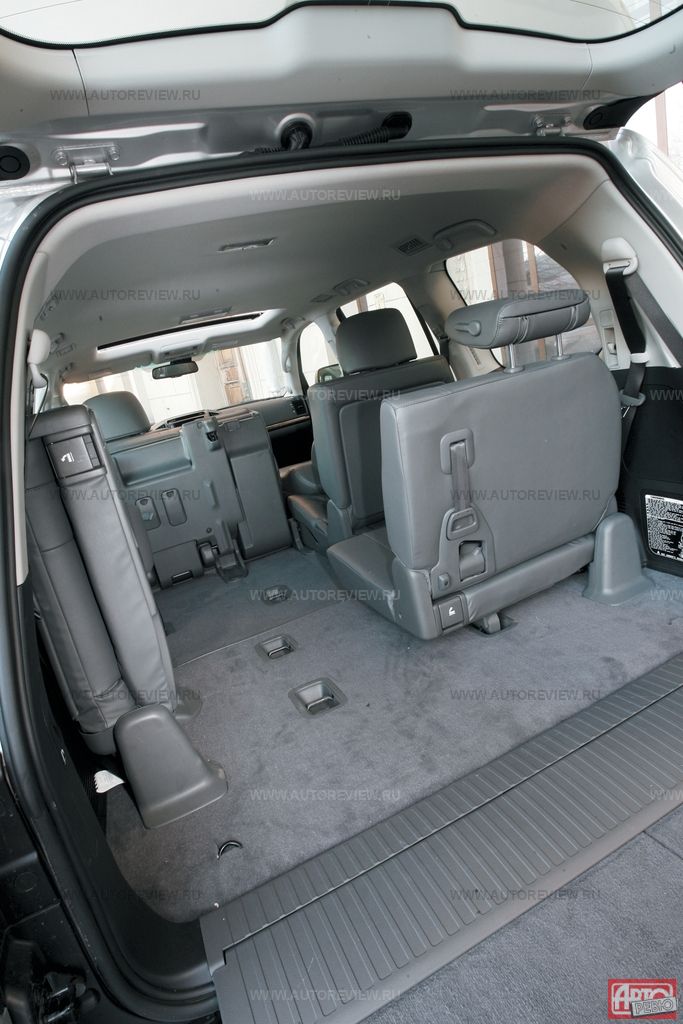 Mitsubishi Pajero
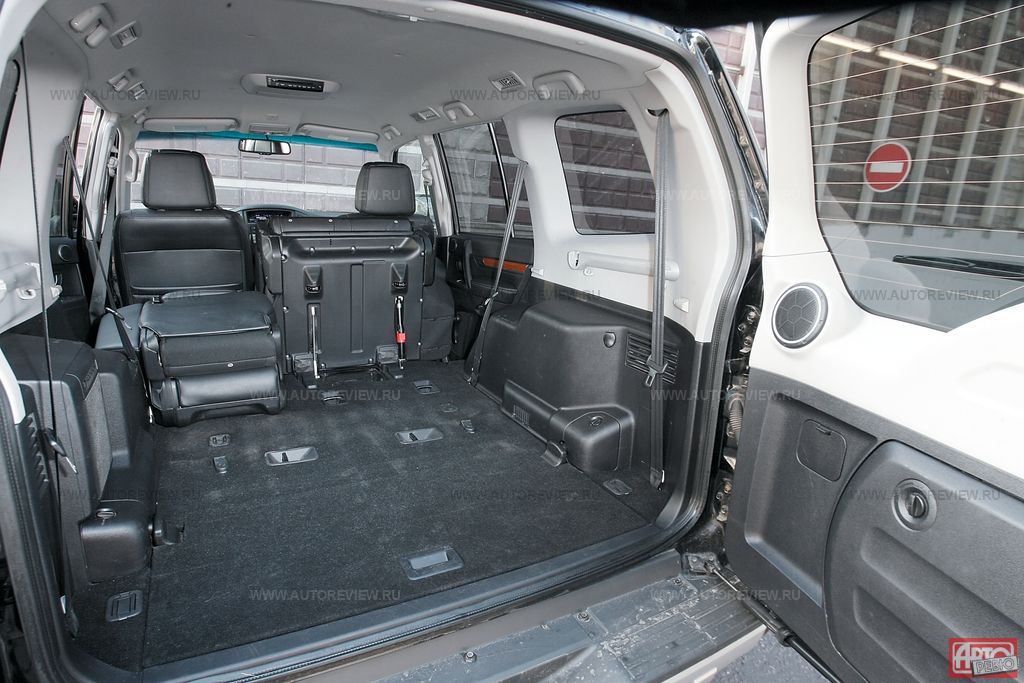
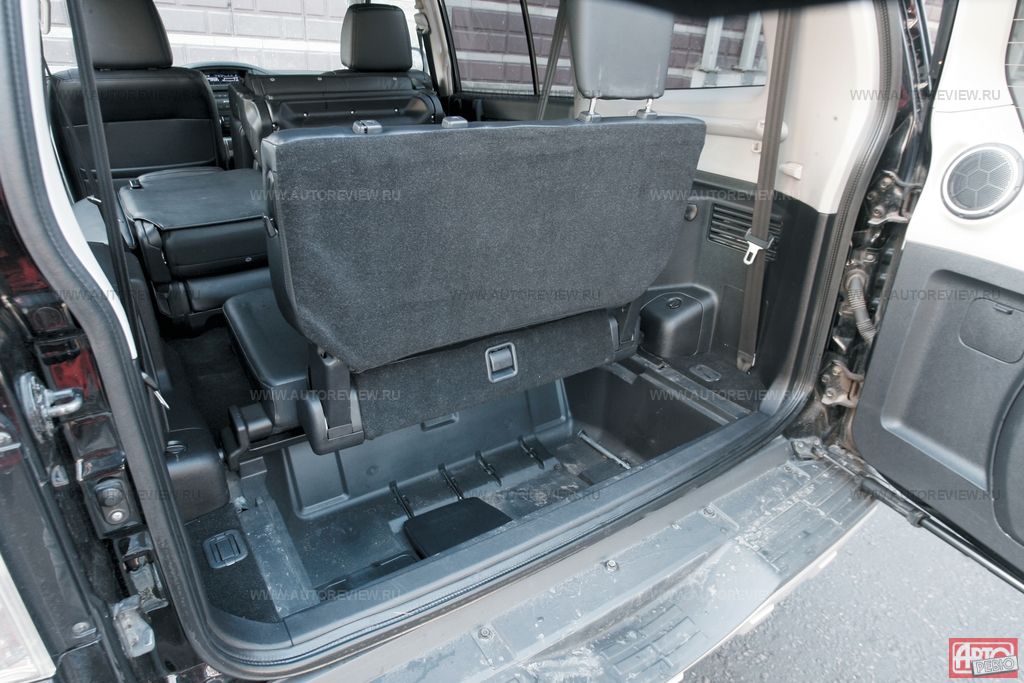 Volkswagen Touareg The most convenient trunk is in the Touareg: folded third-row seats don't take up space, the loading height is minimal, and the rear window opens separately. The cargo areas of the Toyota and Land Rover are nearly equal in volume, but the Land Cruiser disappoints with a huge loading height: 865 millimeters — like a pickup truck!
 Mitsubishi Pajero, alas, takes last place. It loses primarily in geometric off-road capability, which is limited by the body side steps. But if the mud or snow is shallow, low range and a full set of locks do their job: the Pajero, bouncing merrily over bumps, confidently moves forward. The main thing is to be ready for descents. The hill descent assist engages with a delay — only after the car has already picked up speed, and the driver's heart has skipped a beat.
In short, for serious off-roading, we would choose the Land Cruiser or Land Rover. However, for not-so-serious terrain — dirt roads and graders — also, due to good ride comfort. But the Disco is still "smoother" and behaves better on asphalt. In addition, the Land Rover is also cheaper.
And the Toyota remains a Toyota: in terms of the combination of price and equipment richness, it has no equal in the quartet. The Volkswagen Touareg, even without a rearview camera and four-zone climate control, is more expensive. Moreover, the "German" is a five-seater. However, we would be most pleased for those willing to pay $91,800 for the eight-cylinder Touareg — the Volkswagen performs excellently on asphalt, but won't let you down on serious off-road either. If only it had a softer suspension…
However, the Mitsubishi Pajero's ride comfort is even worse. The Pajero also slightly loses in handling, off-road capability, and equipment… But it's $16,400 cheaper than the Discovery. So the Pajero is the choice of pragmatists who aren't afraid of bouncing over bumps and are ready for oversteer in corners.
Mitsubishi Pajero, alas, takes last place. It loses primarily in geometric off-road capability, which is limited by the body side steps. But if the mud or snow is shallow, low range and a full set of locks do their job: the Pajero, bouncing merrily over bumps, confidently moves forward. The main thing is to be ready for descents. The hill descent assist engages with a delay — only after the car has already picked up speed, and the driver's heart has skipped a beat.
In short, for serious off-roading, we would choose the Land Cruiser or Land Rover. However, for not-so-serious terrain — dirt roads and graders — also, due to good ride comfort. But the Disco is still "smoother" and behaves better on asphalt. In addition, the Land Rover is also cheaper.
And the Toyota remains a Toyota: in terms of the combination of price and equipment richness, it has no equal in the quartet. The Volkswagen Touareg, even without a rearview camera and four-zone climate control, is more expensive. Moreover, the "German" is a five-seater. However, we would be most pleased for those willing to pay $91,800 for the eight-cylinder Touareg — the Volkswagen performs excellently on asphalt, but won't let you down on serious off-road either. If only it had a softer suspension…
However, the Mitsubishi Pajero's ride comfort is even worse. The Pajero also slightly loses in handling, off-road capability, and equipment… But it's $16,400 cheaper than the Discovery. So the Pajero is the choice of pragmatists who aren't afraid of bouncing over bumps and are ready for oversteer in corners.
Autoreview readers' forecast
Before the test, we asked visitors on www.autoreview.ru which car they would prefer. The votes were distributed as follows: Volkswagen Touareg 36.08%Toyota Land Cruiser 200 35.07%
Land Rover Discovery 18.33%
Mitsubishi Pajero 10.52% A total of 18,644 people voted.
Autoreview expert ratings
Autoreview expert ratings Evaluated parameters Max. score Vehicles Comments Land Rover Discovery Mitsubishi Pajero Toyota Land Cruiser 200 Volkswagen Touareg Ergonomics 190 154 148 158 161 In the Volkswagen, both the seating position and the placement of secondary controls are more convenient. But unlike the Toyota, it has no rearview camera Driver's workplace 100 81 75 79 88 Visibility 90 73 73 79 73 Dynamics 400 336 316 339 348 The king of asphalt is the Touareg. But off-road, it yields to both the Land Cruiser and — slightly — the Discovery. The Pajero loses to everyone in both handling and off-road capability. Brakes are good in all cars, but the Discovery's pedal is less "informative" Acceleration dynamics 100 81 75 79 88 Braking dynamics 110 94 99 99 99 Handling 100 84 78 81 88 Off-road capability 90 77 64 80 73 Ride comfort 210 175 152 177 169 The Toyota on coil springs proved more comfortable on dirt roads than the "air-suspended" Land Rover! True, on asphalt the picture is the opposite Ride smoothness, vibration protection 80 69 57 63 63 Acoustic comfort 70 58 53 64 58 Climate control 60 48 42 50 48 Interior comfort 200 162 148 159 159 The Land Rover is the most convenient car for seven, and the Toyota for five passengers. The Touareg has no third row at all, but that's why it has the most practical trunk Passenger seats 80 65 57 66 64 Trunk 70 56 55 54 60 Interior transformation 50 41 36 39 35 Total score 1000 827 764 833 837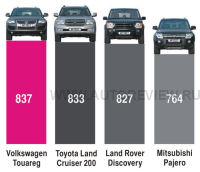
Continuity
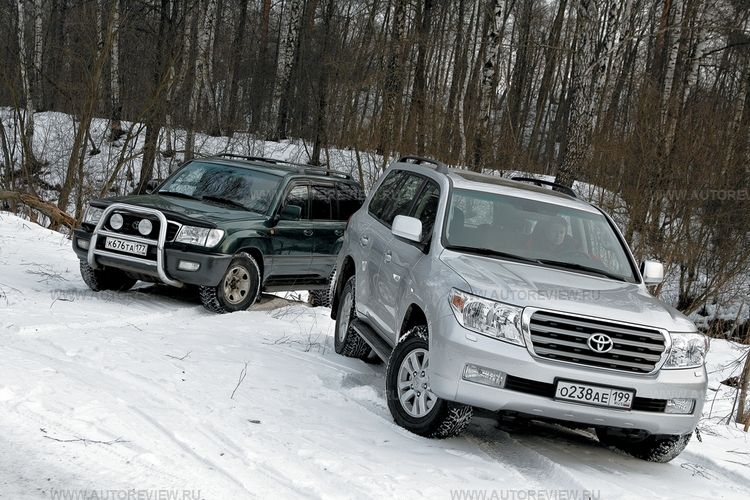
What do the Land Cruiser 100 and Land Cruiser 200 have in common, and what are the differences? To answer this question, we arranged a kind of duel between two generations of the same model.
The external resemblance is striking — it's as if both cars came from the hands of the same master. True, they didn't skimp on materials for the "two-hundred": it's six centimeters longer, and the wheel arches and rear have become more massive. In the interiors of both cars, wide central tunnels dominate. The driver's seating is similar, but the "old-timer" has weaker ergonomics: there's a lack of steering column and seatback tilt adjustments. And its instrument panel is just a set of six dials, while in the new model it's a true interior decoration.
In acceleration, the "hundred" barely yields: it starts just as briskly. But on the move, the Land Cruiser 100 responds to the gas pedal without the pause typical of almost all modern cars, including the Land Cruiser 200. The four-speed automatic works in the spirit of today's "five-speeds": shifts aren't quick, but they are soft and smooth. Instead of a manual mode, the previous-generation car only offers "overdrive" off and limiting gears to first or second.
But the brakes of the Land Cruiser 100 inspire less confidence. Even accounting for the age of the test vehicle, the pedal confuses with a large free travel, and during hard braking on uneven surfaces, the car pulls toward the more grippy section. The "two-hundred" isn't perfect in this regard either, but it behaves noticeably calmer.
Handling in both Toyotas is similar. On a straight line, they hold course equally confidently, but on bumps, the rear starts to wander due to the dependent suspension. During lane changes, both Cruisers lean noticeably. The light steering near center and increasing effort when turning are also common traits, although the Land Cruiser 200's wheel is heavier, effort builds more intensely, and you have to turn less.
The suspensions are tuned in the same vein — with an eye on dirt roads. Both swallow large bumps well, but the "two-hundred" has higher energy capacity. On asphalt, though, both cars shake in a truck-like manner.
If the Land Cruiser 200 relies heavily on electronics off-road, the "hundred's" transmission is a model of military simplicity. The driver must figure out when to engage low range with a stiff lever and when to lock the center and rear differentials. Yes, in first gear of low range, you can crawl down almost any hill without touching the brakes. But when low range is engaged, ABS is disabled. If you need to brake, the wheels lock, and 2.5 tons of iron become uncontrollable.
On the "two-hundred," however, it's often enough to press one button — the Crawl Control system. And even if the driver accidentally yanks the transfer case lever at speeds above 5 km/h, the car only warns with a sound signal, suggesting you consult the manual. A true foolproof system!
In general, though, the characters of both cars coincide. Each Land Cruiser is a hereditary off-roader that's also well adapted to asphalt. But the Land Cruiser 200 is newer and more advanced in almost every way. And, of course, more expensive.
Through the Eyes of Racers
Mitsubishi Pajero and Toyota Land Cruiser are frequent guests in the "production" classes of rally-raid championships, including Russian ones. Why do racers prefer these models? To find out firsthand, we invited two experienced drivers to the off-road part of the tests.
 Dmitry Feklichev
Podium finisher in stages of the Russian Rally-Raid Championship and Cup in 2000–2006.
Drives a Toyota Carina 2
In the Touareg, I couldn't shake the feeling that I was driving a passenger car — there's no urge to leave the road. The seating is excellent, the suspension is quite comfortable, but you constantly scrape the underbody on the crest of ruts. In short, it's a city dweller.
In the Discovery, I initially felt comfortable — you sit high and see far. But to figure out all its off-road modes, one day is clearly not enough. The Terrain Response system reminded me of fancy cameras: people buy them for a bunch of features, but end up shooting on "auto." Plus, the throttle control feels vague... In short, the Land Rover never became familiar to me.
The Land Cruiser 200 behaves predictably and is especially good at low speeds. The slower you crawl through a swamp, the farther you'll go, and the electronics allow the car to literally crawl on its own. But still, the heavy and large Toyota is a stayer, an expedition vehicle with a huge safety margin.
And the Pajero is a typical sprinter: it starts briskly and, on its stiff suspension, leaves everyone behind. I like that it has no intrusive electronics, and I'm willing to forgive the noise and modest comfort. The rear lock and lower weight allow me to put the Pajero on par with the Cruiser. And second place can be shared by Volkswagen and Land Rover.
 Alexey Elyshev

Russian Rally-Raid Champion in 1999 and 2000.
Drives an Opel Monterey
The Volkswagen Touareg is simple and understandable, and its off-road capability is higher than one might assume from its "passenger-car" looks. True, off-road, the driver has to raise the seat to see the hood. The transmission control is logical, and I like that Volkswagen's electronics aren't intrusive — I choose the suspension and transmission modes myself.
The Land Rover Discovery, frankly, disappointed me. I can't find the right combination of modes for myself — the Terrain Response system decides on its own how to manage the locks. What surprises me most is the traction control electronics, which sometimes strangle the engine to a complete stop! So, the electronic brain constantly stands between me and the car. But why? There's enough power, visibility is excellent, no complaints about the body geometry, yet there's zero driving excitement. It feels like this SUV was made for a driver who doesn't understand anything at all.
The Toyota Land Cruiser 200 is a torquey machine with huge suspension travel. I really liked Crawl Control — I didn't even feel the urge to interfere with its work. But due to its large mass, the car is clearly reluctant to turn: at speed, you have to turn the wheel in advance, before entering the corner. With my aggressive driving style, that doesn't fit at all.
The Mitsubishi Pajero is a completely different story! Among all four participants, it's the most agile and understandable. The suspension is a bit stiff, but that's exactly what's needed: most bumps can be taken on the fly, literally jumping over them. Moreover, you can feel that the Pajero has the highest specific power of all. In a word, it's the most exciting off-roader on rough terrain, which is why Mitsubishi becomes the leader of my ranking.
In second place is the equally understandable Volkswagen. The Toyota is a bit heavy for most Russian routes: it's best for long expeditions or desert driving. As for the Land Rover, I never managed to understand it. The car always tries to do everything itself — so why does it need me? Let it drive itself.
Safety
Almost all SUVs over $50,000 already come with a solid list of active and passive safety systems in their base versions. But the Mitsubishi Pajero isn't among them — the base modification makes do with just two airbags, ABS, and stability control, while side airbags and curtains appear only in the Instyle trim. The Land Rover Discovery and Volkswagen Touareg have six airbags in all versions, and the Toyota Land Cruiser 200 additionally offers knee airbags for front passengers!
Independent crash tests were conducted on only two of the four cars. The Land Rover Discovery received four out of five stars: complaints arose about hazardous elements of the front panel — the steering column adjustment mechanism and the glove box lid. The Volkswagen Touareg earned the maximum five stars, but experts also criticized it for a potentially dangerous front panel. Both SUVs passed side impact tests flawlessly. Child passenger protection in the Touareg and Discovery is equally good — four out of five stars. However, for pedestrian safety, both cars received only one star out of four.
Mitsubishi Pajero and Toyota Land Cruiser 200 have not yet undergone independent crash tests.
Land Rover Discovery* ★★★★☆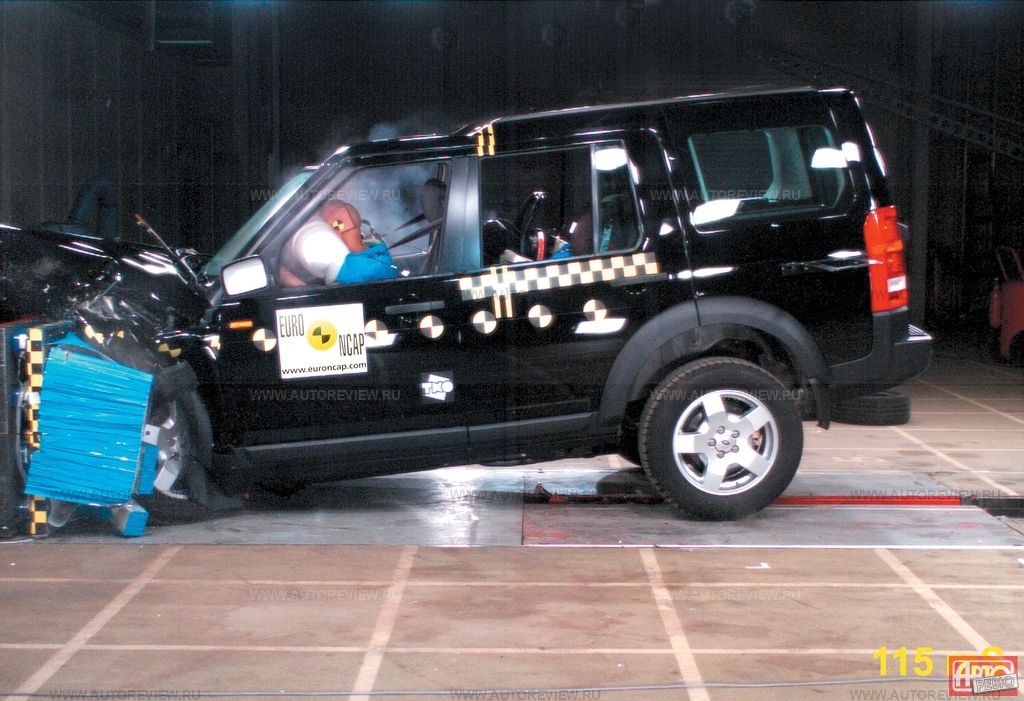 Overall rating 31 points Frontal crash test 11 (69%) Side crash tests 18 (100%) SBR** 2 Child occupant protection 39 (80%) Pedestrian protection 8 (22%) Kerb weight 2637 kg * Tests were conducted according to EuroNCAP methodology ** Availability of seatbelt reminder system
Volkswagen Touareg* ★★★★★
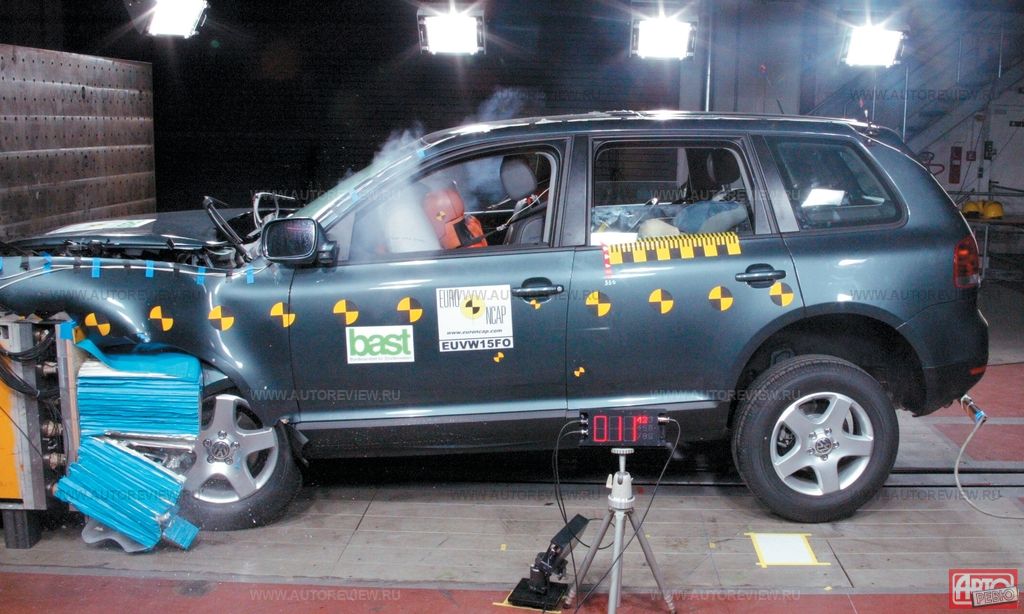 Overall rating 34 points Frontal crash test 14 (88%) Side crash tests 18 (100%) SBR** 2 Child occupant protection 39 (80%) Pedestrian protection 7 (19%) Kerb weight 2254 kg * Tests were conducted according to EuroNCAP methodology ** Availability of seatbelt reminder system
Visibility
From the driver's seat, visibility is good in all four cars, but there are nuances. In the Volkswagen Touareg, the heavily raked front pillars noticeably obstruct the view — they create extra interference when looking around. The Land Rover Discovery is simpler in this regard: its pillars are more upright and not as thick, so the picture before your eyes is cleaner.
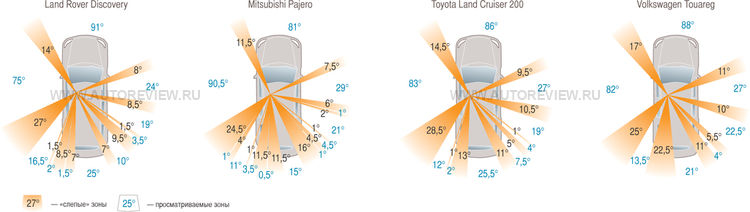
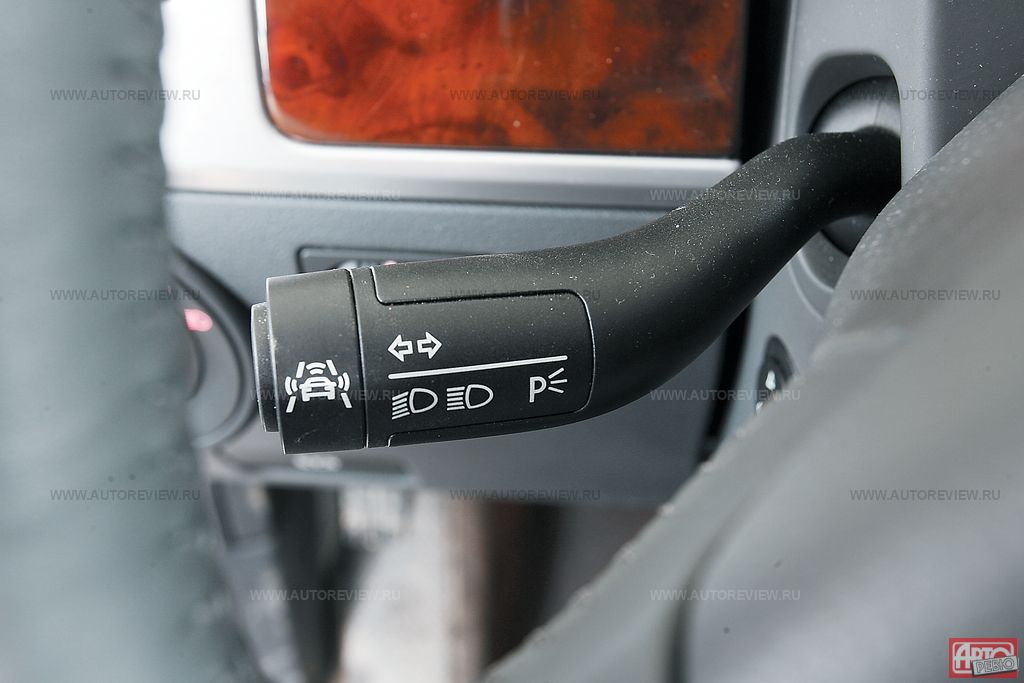
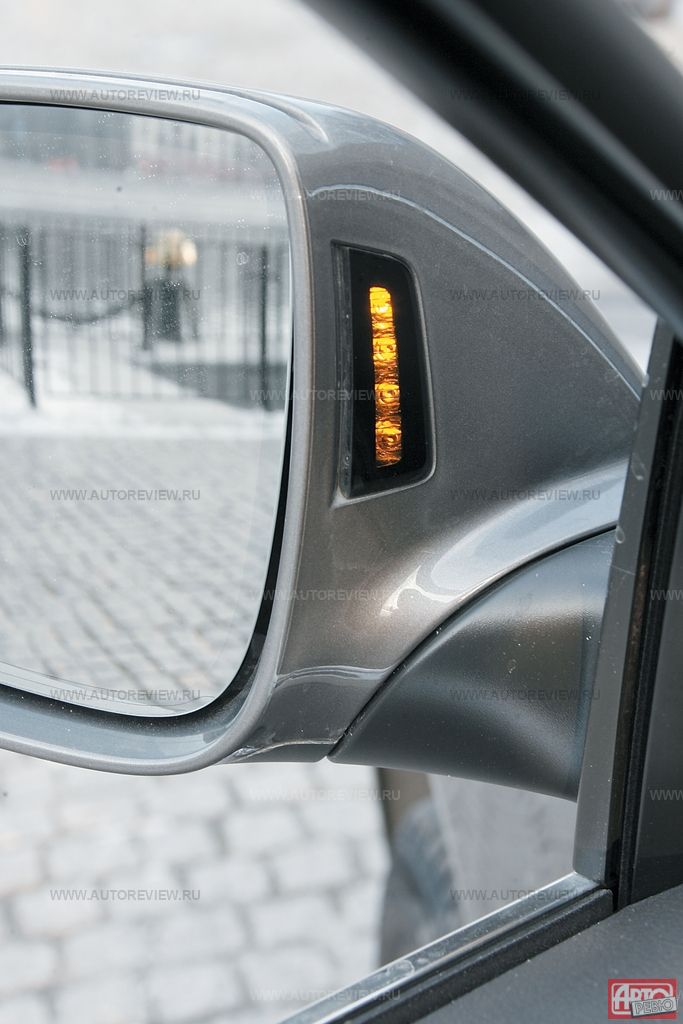 For 20 thousand rubles, the Touareg offers radar-based blind spot monitoring
Specifications Parameters Vehicles Land Rover Discovery Mitsubishi Pajero Toyota Land Cruiser 200 Volkswagen Touareg Body type 5-door wagon 5-door wagon 5-door wagon 5-door wagon Number of seats 5 (7)* 7 7 5 Luggage volume, l 280—2558** 215—1790** 259—1267** 555—1570** Kerb weight, kg 2704 2215 2550 2332 Gross weight, kg 3230 2910 3300 3000 Engine petrol, with distributed injection petrol, with direct injection Location front, longitudinal front, longitudinal front, longitudinal front, longitudinal Number and arrangement of cylinders 8, V-shaped 6, V-shaped 8, V-shaped 8, V-shaped Displacement, cm³ 4394 3828 4664 4163 Cylinder bore/piston stroke, mm 88.0/90.3 95.0/90.0 94.0/84.0 84.5/92.8 Compression ratio 10.5:1 9.8:1 10.0:1 12.5:1 Number of valves 32 24 32 32 Max. power, hp/kW/rpm 300/221/5500 250/184/6000 288/212/5400 350/257/6800 Max. torque, Nm/rpm 425/4000 329/2750 445/3400 440/3500 Gearbox automatic, 6-speed automatic, 5-speed automatic, 5-speed automatic, 6-speed Gear ratios I 4.17 3.79 3.52 4.15 II 2.34 2.06 2.04 2.37 III 1.52 1.42 1.40 1.56 IV 1.14 1.00 1.00 1.16 V 0.87 0.73 0.72 0.86 VI 0.69 — — 0.69 reverse 3.40 3.87 3.22 3.39 final drive 3.73 4.30 4.10 4.30 low range 2.93 1.90 2.62 2.70 Drive permanent all-wheel, with electronically controlled center differential pluggable all-wheel, with asymmetric center differential permanent all-wheel, with Torsen center differential permanent all-wheel, with symmetric center differential Front suspension independent, air, on double wishbones independent, spring, on double wishbones independent, spring, on double wishbones independent, air, on double wishbones Rear suspension independent, air, on double wishbones independent, spring, multi-link dependent, spring, on longitudinal arms, with Panhard rod independent, air, on double wishbones Front brakes disc, ventilated disc, ventilated disc, ventilated disc, ventilated Rear brakes disc, ventilated disc, ventilated disc, ventilated disc Tires 255/55 R19 265/65 R17 285/65 R17 255/55 R18 Maximum speed, km/h 195 200 200 244 Acceleration time 0—100 km/h, s 8.6 10.8 9.2 7.5 Fuel consumption, l/100 km urban cycle 20.9 17.7 19.0 19.7 extra-urban cycle 11.6 11.2 11.7 10.7 combined cycle 15.0 13.5 14.4 13.8 Fuel tank capacity, l 86 90 93 100 Fuel petrol AI-95 petrol AI-95 petrol AI-95 petrol AI-95—98 * With additional seats ** With folded second and third row seats
Off-road capability
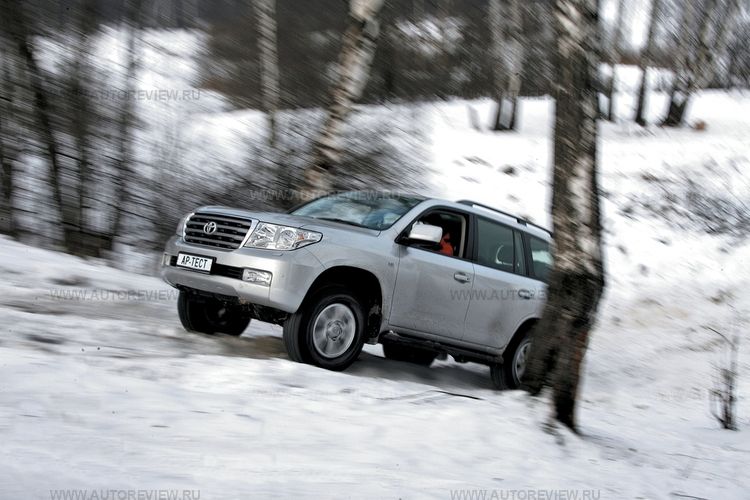
The most complex all-wheel drive system is in the Land Rover Discovery. Its transmission has center and rear differential locks, but in versions with air suspension, the driver does not control them directly. All locks are managed by the Terrain Response electronics, which has five programmed modes. The computer itself selects the air suspension height, prompts when to engage low range, adjusts the locking algorithm, and recalibrates the throttle response, ABS, and traction control. It also manages the hill descent assist, whose speed can be adjusted using cruise control buttons. The low range (2.93:1) here is the most traction-oriented among all test participants, and it can be engaged on the move, up to 40 km/h. When the transfer case is in low range, a hint about the front wheel position appears on the display. The declared ground clearance in Off Road mode is 250 mm, but if the vehicle bottoms out, the electronics will raise the body by another 70 mm. The air intake is hidden in the right fender at a height of 915 mm and is protected from oncoming water.
Land Rover Discovery Mitsubishi Pajero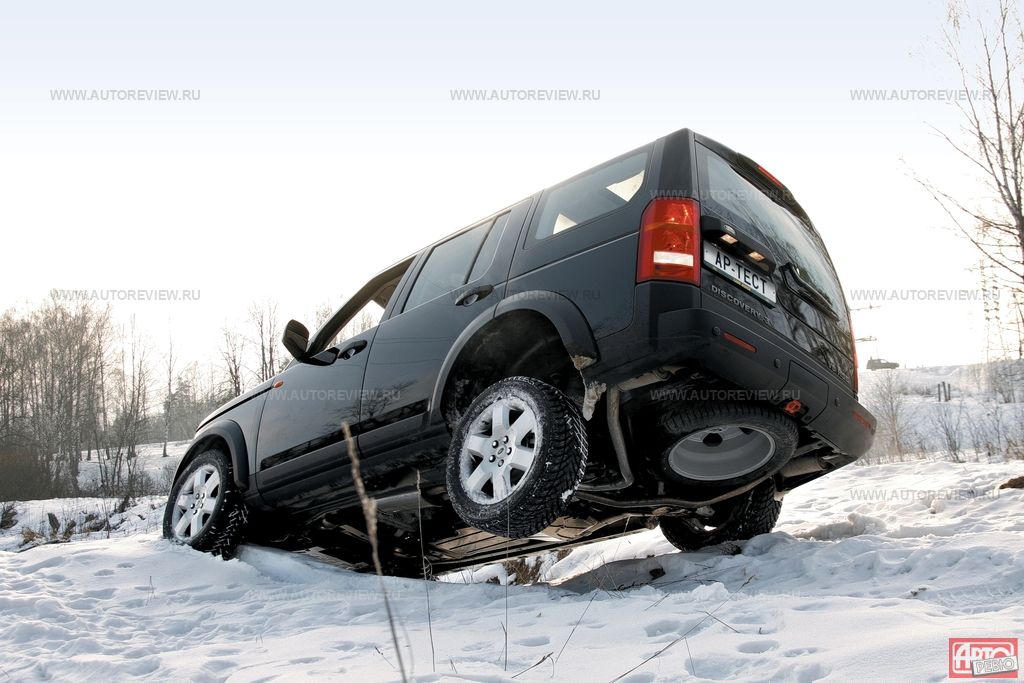
 Toyota Land Cruiser 200 Volkswagen Touareg
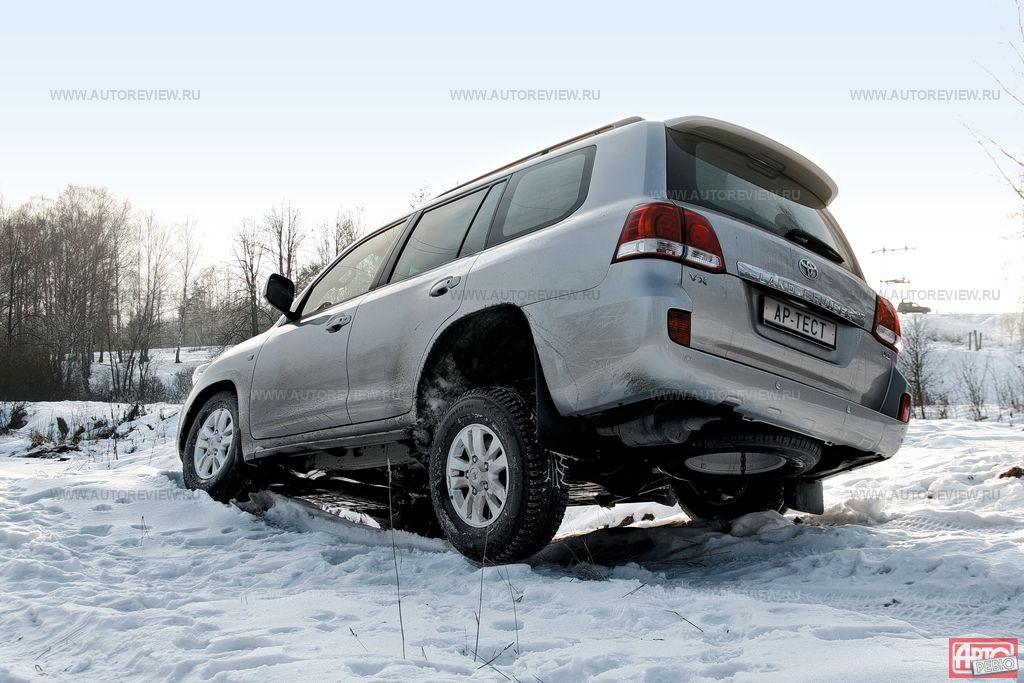
 When diagonally suspended, the Toyota stands out with its huge suspension travel — thanks to the unique KDSS hydraulic system, which automatically "releases" the stabilizers when driving off-road (when axles cross). But as soon as contact of one wheel with the ground is lost, the Land Cruiser can stop — unlike the other three, it has no rear lock
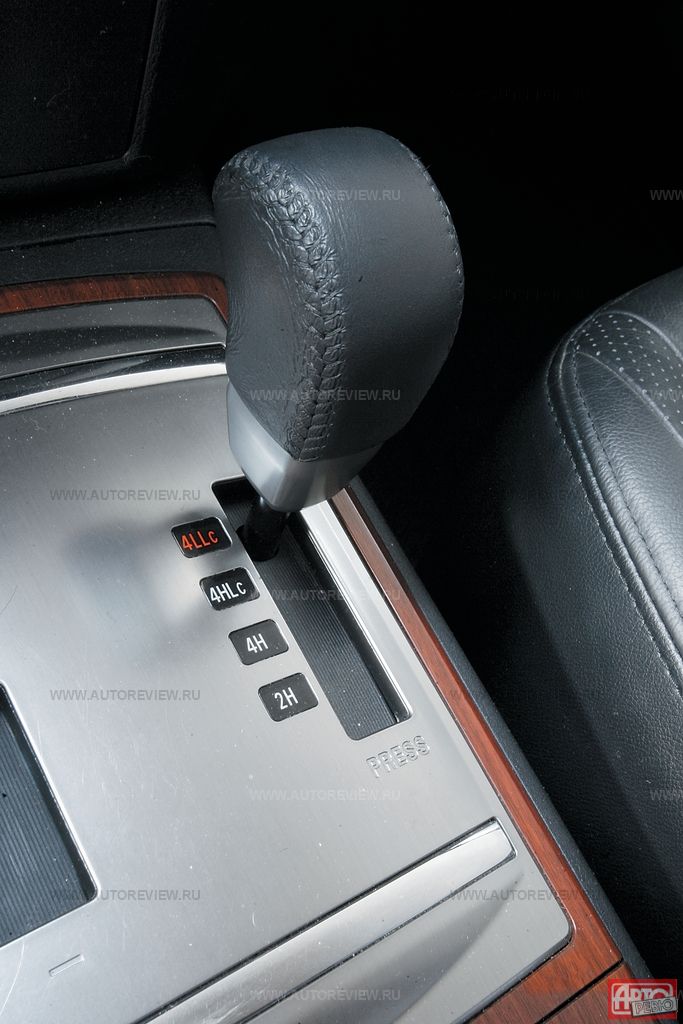
The Mitsubishi Pajero rides on the proven SuperSelect transmission, which in the third generation was taught to work together with the stability control system. The Pajero is the only car in the test where the drive to the front axle can be disengaged. In the "permanent all-wheel drive" mode, torque is distributed between the axles in a 33:67 ratio. Torque distribution to the wheels is monitored by the center viscous coupling and the electronic M-ASTC system, which includes MATC traction control that brakes spinning wheels. It can operate in one of two modes depending on the gear selected in the transfer case. When low range is engaged with a low gear ratio of 1.90:1 (this can only be done when stopped), the center differential is forcibly locked. The rear axle can be "locked" with a button — the system is standard on all Russian Pajeros. When speed exceeds 12 km/h, the differential "releases" automatically. The MEBAC hill descent assist system engages in low range and first or reverse gear, and when the brake pedal is not pressed. Ground clearance, according to the manufacturer, is 225 millimeters. The intake opening of the engine's air intake is located high, a meter from the road, but is routed to the front edge of the hood.
Land Rover Discovery Mitsubishi Pajero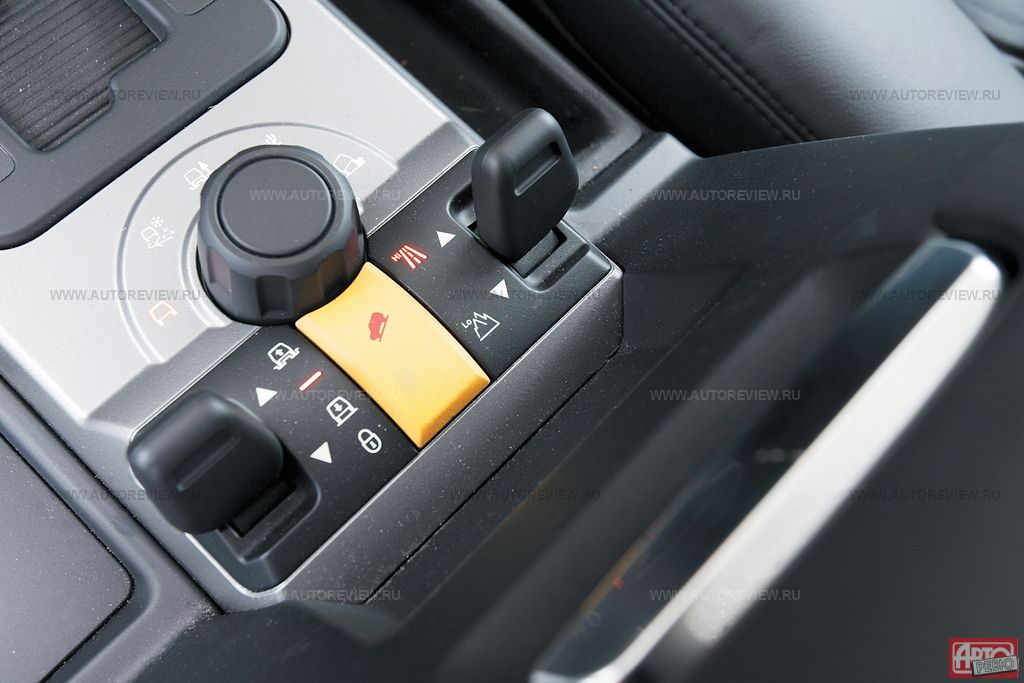
 Toyota Land Cruiser 200 Volkswagen Touareg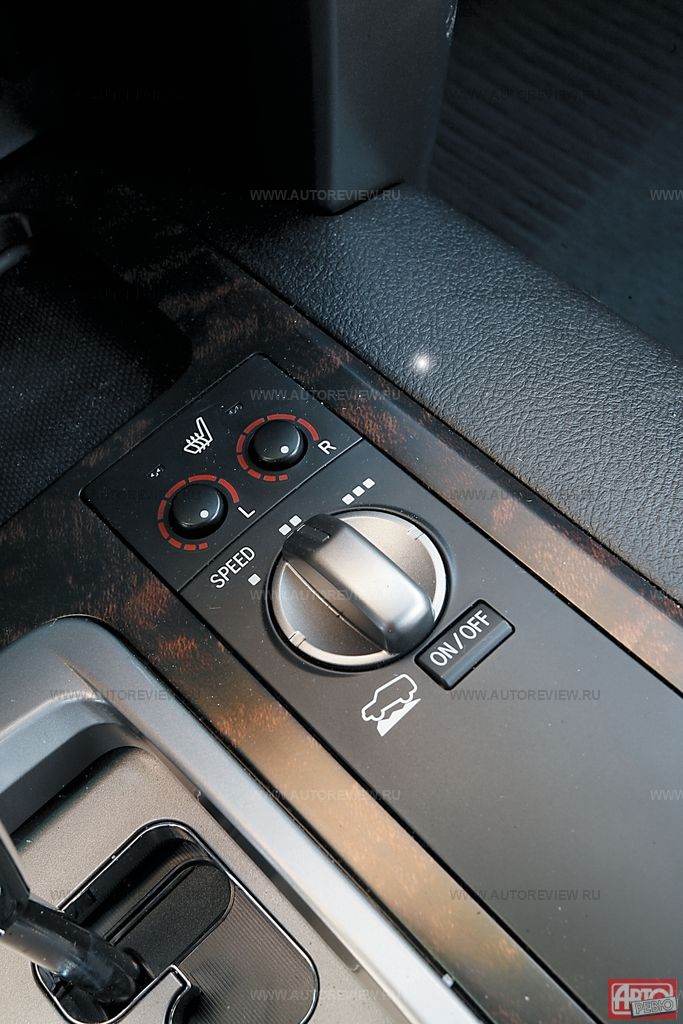
 The Terrain Response system on the Discovery changes a host of vehicle settings, but the driver must still engage low range with the right "paddle" — albeit on the electronics' cue. The yellow button activates the Hill Descent Control (HDC) system, while the left "paddle" controls the air suspension height. The Pajero's transmission control is much simpler — a lever sequentially engages four-wheel drive, center differential lock, and low range. The rear lock is activated by a separate button.
On the Toyota, the center differential lock is engaged via a button. The photo shows the Crawl Control switch with a three-position knob for selecting minimum speed (on the console).
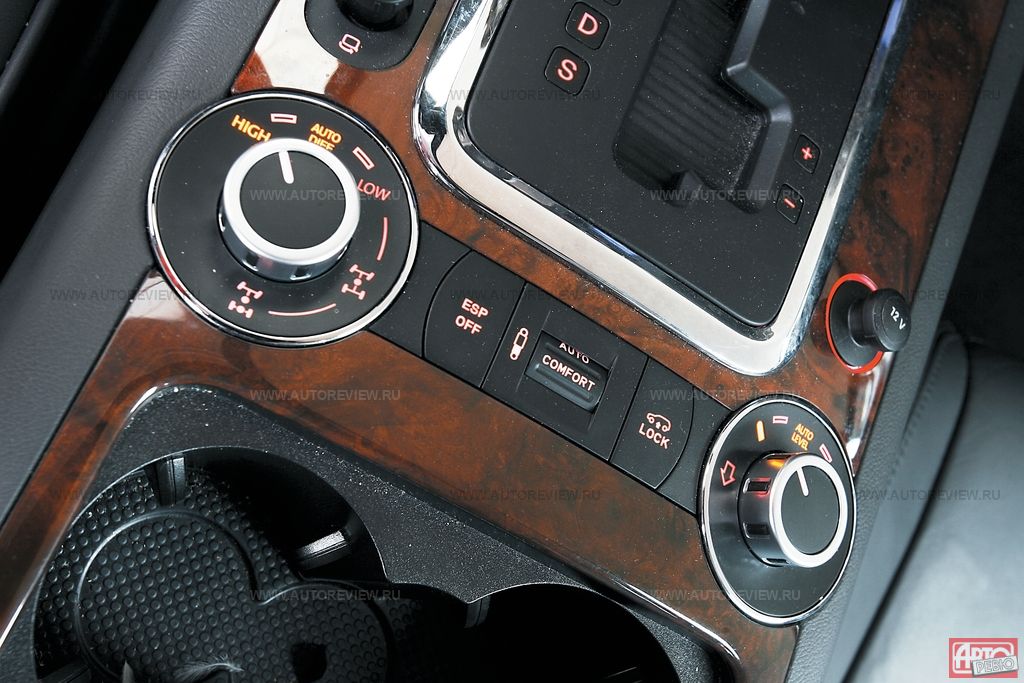
The right "dial" on the Touareg controls the air suspension height, while the left one controls the transmission. First, low range is engaged, then both locks are engaged sequentially.
Toyota Land Cruiser 200 is a vehicle with permanent all-wheel drive, where the center differential uses a Torsen limited-slip mechanism. Under normal conditions, 60% of torque goes to the rear axle. When the road ends, the driver can lock the center differential with a button. There are no wheel-to-wheel locks here — instead, electronics work by braking the spinning wheel. The low range in the transfer case has a ratio of 2.62:1, and to engage it with the rotary knob, you need to reduce speed to 5 km/h and shift the transmission to neutral. The Crawl Control system, which allows the vehicle to crawl at minimum speed, is standard only on petrol versions, and it works in conjunction with the HAC assistant, which prevents rollback when starting on a hill. The Land Cruiser 200 has a ground clearance of 225 mm, and the engine air intake is hidden under the right fender at a height of 960 mm from the ground.
Land Rover Discovery Land Rover Discovery Land Rover Discovery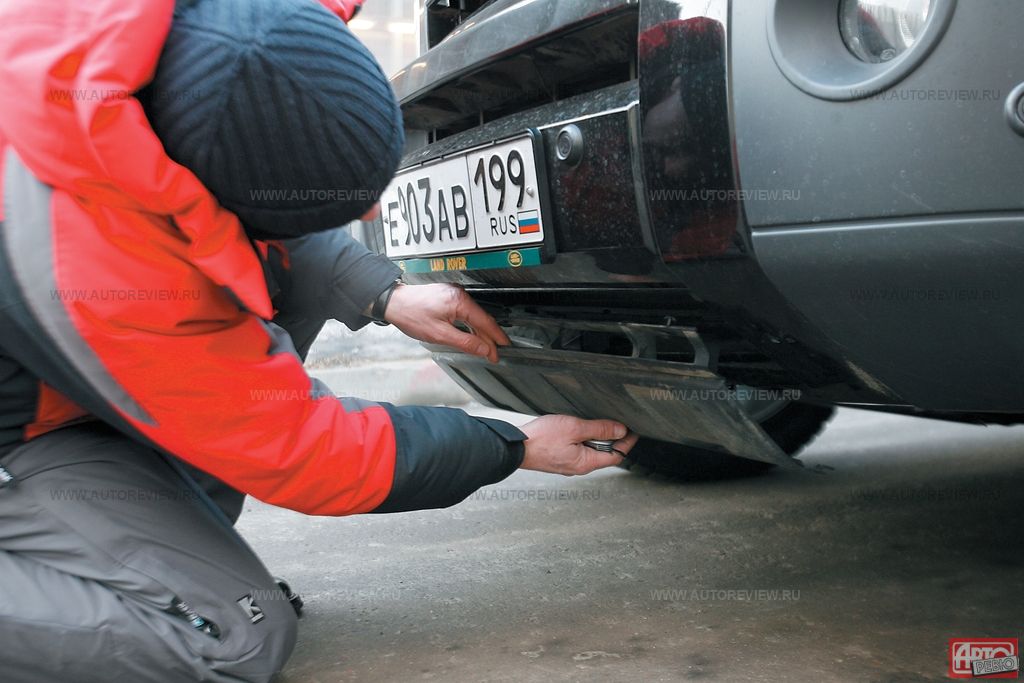
 Volkswagen Touareg Mitsubishi Pajero Mitsubishi Pajero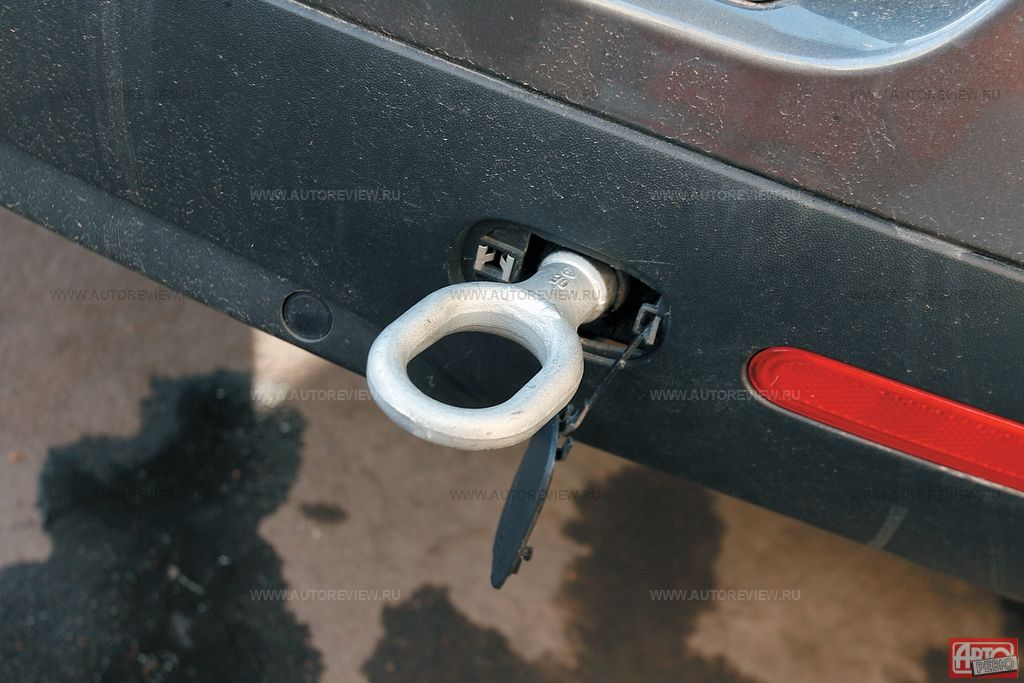
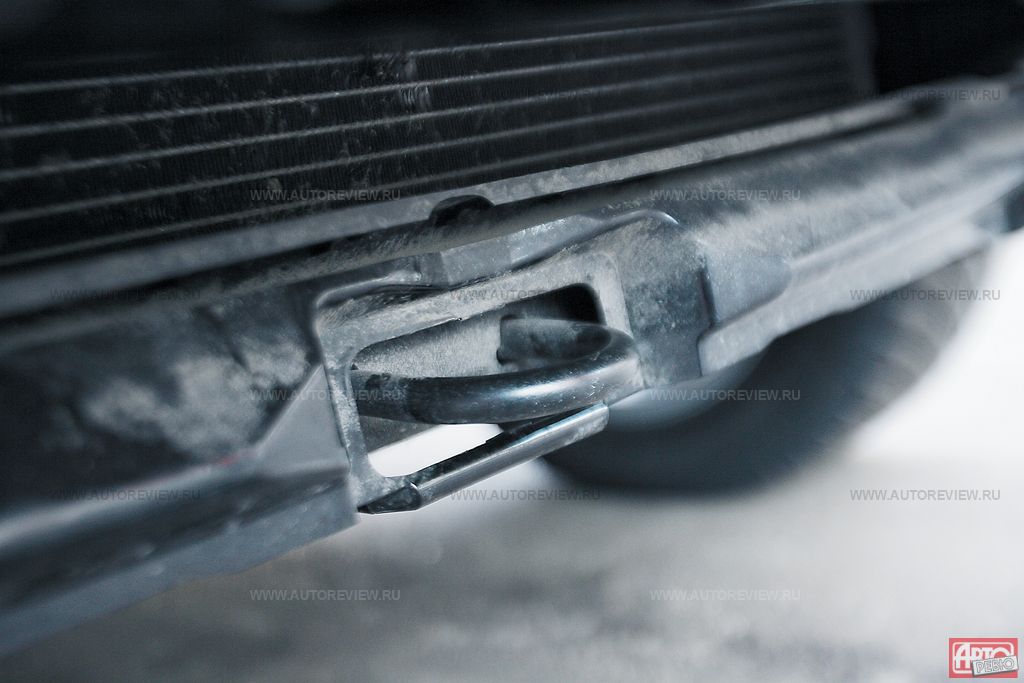
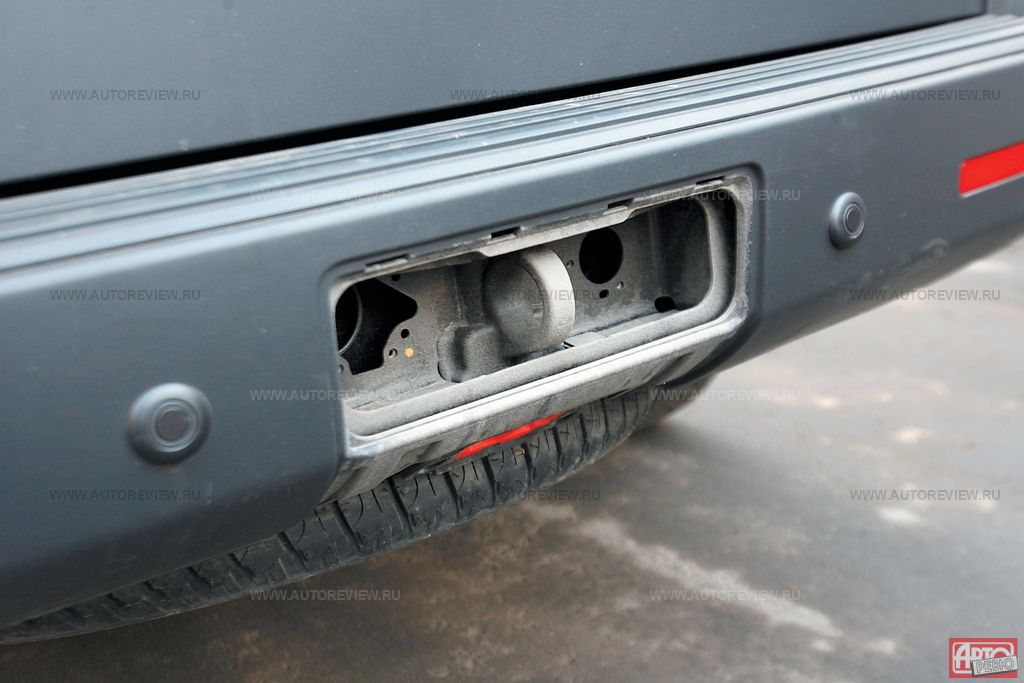
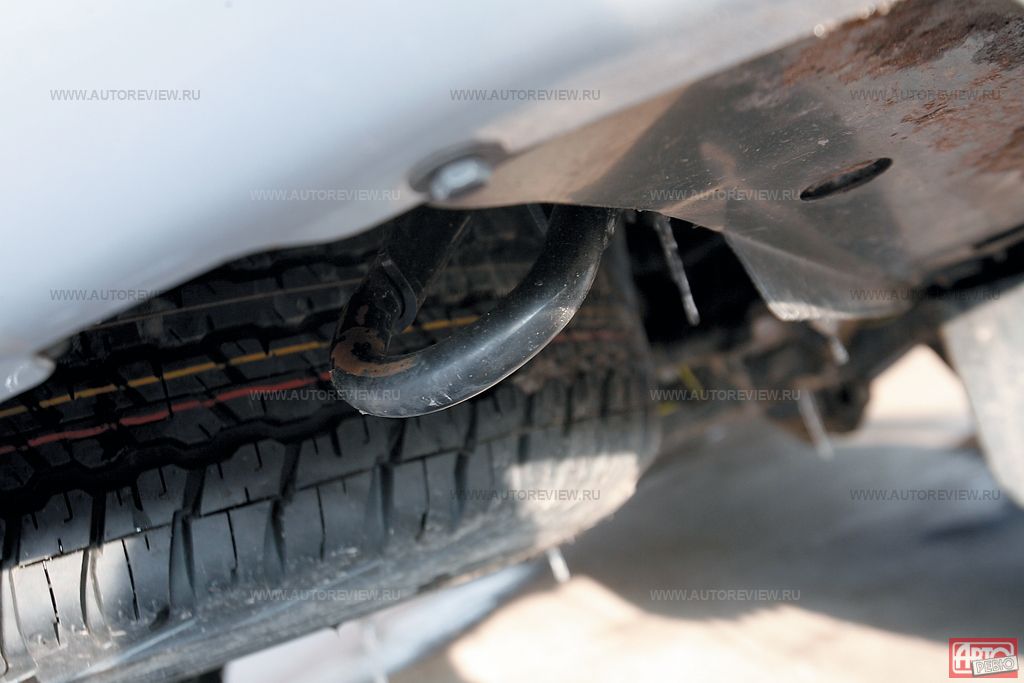
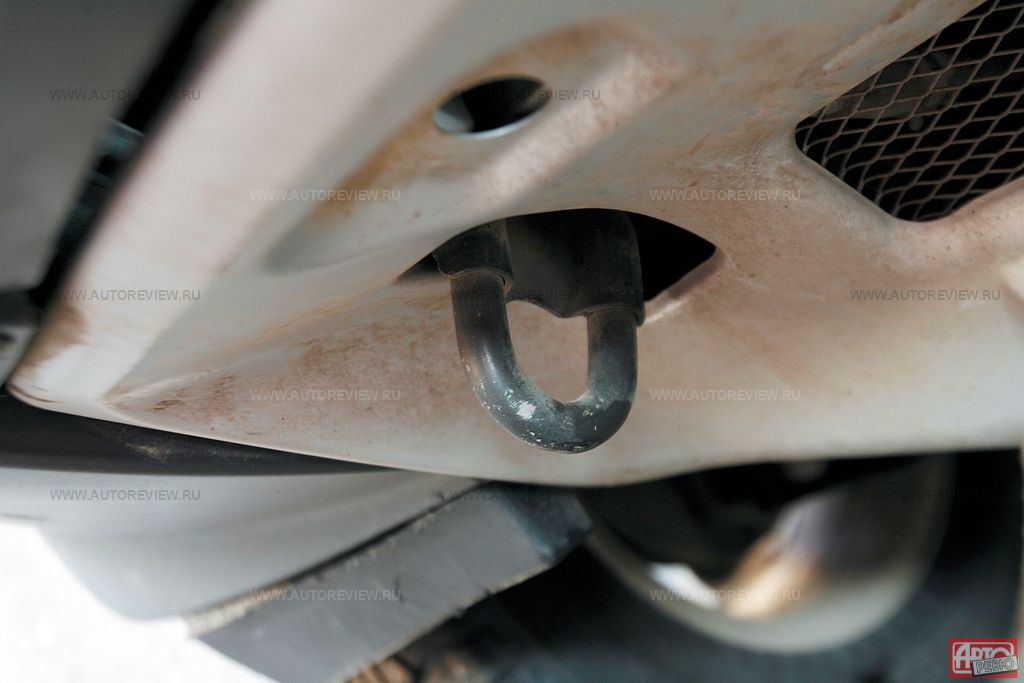 It's known: the tougher the off-roader, the farther you have to go for a tractor. But you need to prepare for its arrival — attach a tow rope. The largest tow hooks are on the Toyota; on the Mitsubishi they are only slightly less convenient. On the Volkswagen, both front and rear have screw-in "car-style" eyes: they are located high, but they are unlikely to withstand lateral force. Both tow hooks on the Land Rover are covered with decorative caps, and the front one should preferably be removed before tackling the gullies — it is located low and extremely inconveniently. Toyota Land Cruiser 200 Toyota Land Cruiser 200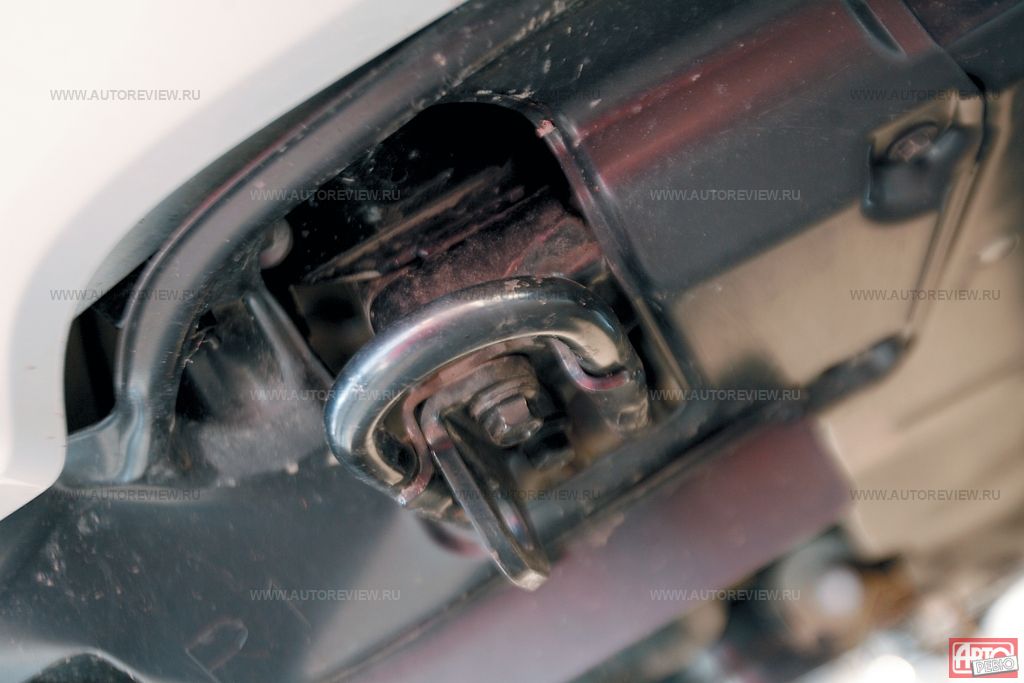
Volkswagen Touareg is equipped with an electronically controlled multi-plate clutch integrated into a symmetrical center differential with a 50:50 split. The rear differential with lock is an option costing 25 thousand rubles. Both locks operate electronically, but the driver can also engage them manually. There is also a hill-hold system and a hill descent assistant that maintains a speed of 6–7 km/h. The low range of the Touareg's transfer case is 2.66:1, the second-best result after the Discovery. The Germans are, as always, meticulous: the on-board computer display shows not only the direction of the front wheels' turn but also the angle in degrees, and the gear number is displayed even in "drive" mode. Ground clearance in Off Road mode is 240 mm, but it can be manually increased by another 60 mm. The Touareg's air intake has an unusual shape — it is made in the form of trays under the hood, with the lower edge at a height of 850 mm.
What's the price?
The five-seat Land Rover Discovery in the base S trim is a 2.7-liter turbodiesel with 190 hp and a manual gearbox. The base already includes six airbags, stability control, dual-zone climate, heated seats for all, and an audio system with a CD changer. The price of such a vehicle is 1 million 420 thousand rubles ($57,260*), and a third row of seats will add 51 thousand rubles to the bill. The SE version with automatic transmission, air suspension, Terrain Response system, and rear parking sensors costs 1 million 550 thousand rubles ($62,500). The top HSE trim with diesel includes a leather interior, electric front seats, sunroof, bi-xenon, light and rain sensors, front parking sensors, and a Harman Kardon audio system with active subwoofer. The minimum price is 1 million 750 thousand rubles ($70,570). The petrol version with a V8 (4.4 L, 300 hp) is available only in HSE and costs from 1 million 880 thousand rubles ($75,810). Options include a transparent roof over the rear rows (39 thousand), navigation (103 thousand), and a DVD system for rear passengers (82 thousand rubles). Ready-made cars are available at dealers, but ordering will require a three-month wait.
Warranty — three years or 100,000 km. Land Rover is sold by 29 dealers in 17 Russian cities.
The five-door Mitsubishi Pajero with a 3.2 turbodiesel (165 hp) and manual transmission in the Intense trim starts at 1,339,730 rubles ($54,020). For the automatic, you'll pay an extra 47,170 rubles, and the version with a petrol V6 3.8 (250 hp) is priced at 1,473,730 rubles ($59,420). Equipment includes two airbags, stability control, dual-zone climate, a separate air conditioner for rear passengers, CD/MP3 stereo, heated front seats, and xenon headlights. The Instyle trim adds six airbags, leather, electric front seat adjustments, and a sunroof. Prices are 1,507,500 rubles ($60,790) for diesel and 1,587,900 rubles ($64,030) for petrol. The Ultimate version includes a Rockford Acoustic audio system, CD changer, and DVD with screen for rear passengers — minimum 1,561,100 rubles ($62,960) for diesel and 1,634,530 rubles ($65,910) for the petrol version. For 81,470 rubles, you can add a rear-view camera and a DVD player with screen for front occupants. A fully equipped Pajero 3.8 will cost 1 million 716 thousand rubles ($69,200). Vehicles are available at dealers; orders will wait four months.
Warranty — three years or 100,000 km. Mitsubishi is represented by 97 dealers in 67 Russian cities.
Toyota Land Cruiser 200 is a single but very rich trim: eight airbags, stability control, leather, four-zone climate, heated seats for the first and second rows, electric front seats, DVD changer, light and rain sensors, sunroof, and navigation. The petrol engine 4.7 L (288 hp) — 2 million 200 thousand rubles ($88,710), turbodiesel 4.5 L (235 hp) — 2 million 212 thousand rubles ($89,200). However, the queue for the Land Cruiser 200 has stretched to two years, although some dealers promise the car in 14 months.
Warranty — three years or 100,000 km. Toyota is sold by 57 dealers in 40 Russian cities.
The base Volkswagen Touareg with a five-cylinder 2.5-liter turbodiesel (174 hp) and automatic transmission costs from 1,419,270 rubles ($57,230) — about the same as the entry-level Discovery. For the version with a three-liter turbodiesel with 225 hp, you'll pay at least 1,636,080 rubles ($65,970), and the petrol Touareg with a 3.6 FSI engine producing 280 hp is priced at 1,771,440 rubles ($71,430). All three trims include only six airbags, stability control, dual-zone climate control, heated front seats, and a CD stereo. The petrol "eight" 4.2 FSI (350 hp) is available only in a richer trim: leather interior, electric front seats, adaptive bi-xenon headlights, light and rain sensors. Such a vehicle costs from 2,276,210 rubles ($91,780) — 560 thousand rubles more than the most fully equipped Mitsubishi Pajero. Option surcharges are also substantial: rear-view camera — 25,820 rubles, DVD system for rear passengers — 61,200 rubles, navigation — 79,150 rubles, air suspension — 85,830 rubles. Such cars are rarely in stock, and orders will have to wait up to five months.
Warranty — two years without mileage limit. The Volkswagen dealer network has 61 locations in 38 Russian cities.
*Dollar exchange rate — 24.8 rubles.
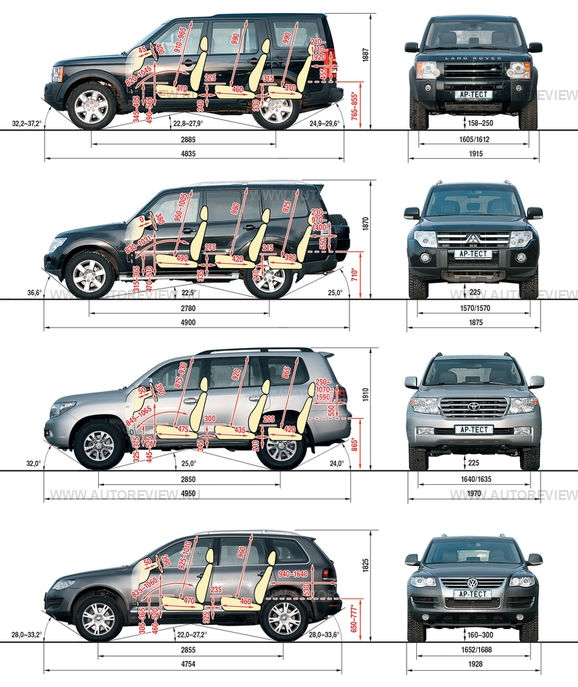
Black marks manufacturer data, red — results of Autoreview measurements
* Loading height

What are the alternatives?
The cheapest way to get a powerful gasoline engine, an automatic transmission, and rich equipment in a body-on-frame SUV is the Chevrolet TrailBlazer (4.2 L, 295 hp) of Kaliningrad assembly, which has been produced since 2001. The base version costs 1,041,400 rubles ($41,990*). Under normal conditions, torque goes only to the rear axle, and the front axle is connected by an electronically controlled multi-disc clutch that can be locked manually, plus there is a low range. More details in AR No. 11, 2002 and AR No. 7, 2004.
Orders for the new generation Chevrolet Tahoe (5.3 L, 325 hp) are already being accepted, with prices starting from 1,746,700 rubles ($70,430). In more expensive trims, there is a third row of seats. All-wheel drive transmission with a clutch in the front wheel drive — like the younger brother. The first cars will appear in April.
Ford Explorer debuted in 2002, and three years later underwent a major modernization. Russian prices for the seven-seat SUV start from 1 million 268 thousand rubles ($51,130) for the version with V6 4.0 (210 hp) and from 1 million 514 thousand rubles ($61,050) for the version with V8 4.6 (292 hp). The Control Trac transmission is arranged the same as in Chevrolet, but there is no pure rear-wheel drive mode here.
Chevrolet Trail Blazer Jeep Grand Cherokee Hummer 3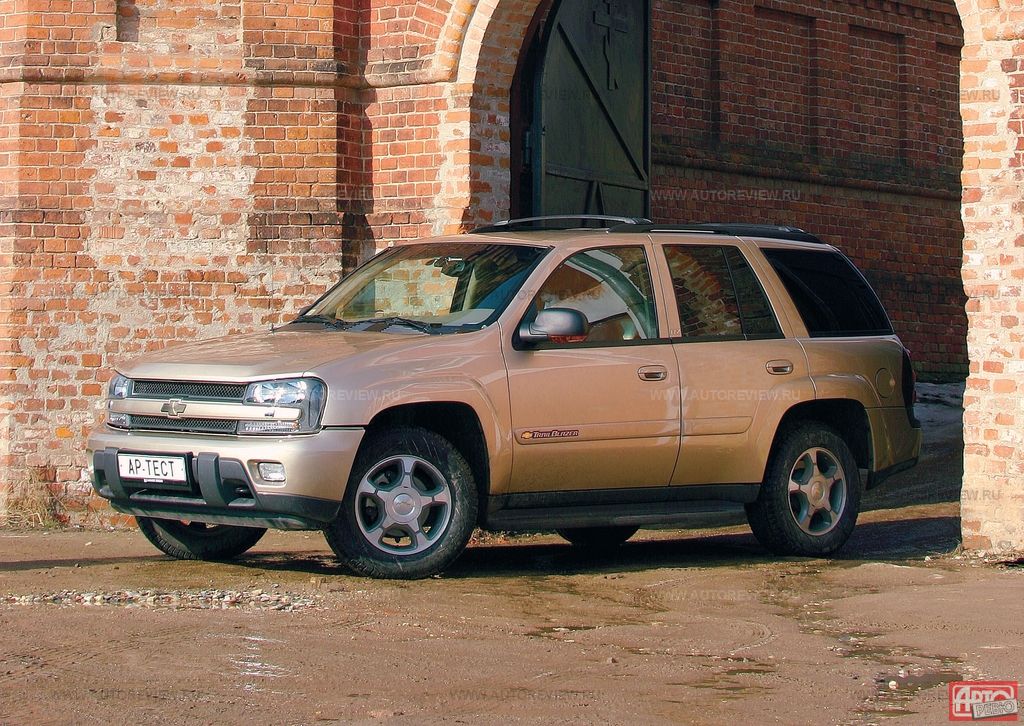
 Chevrolet Tahoe Jeep Commander Toyota Land Cruiser Prado
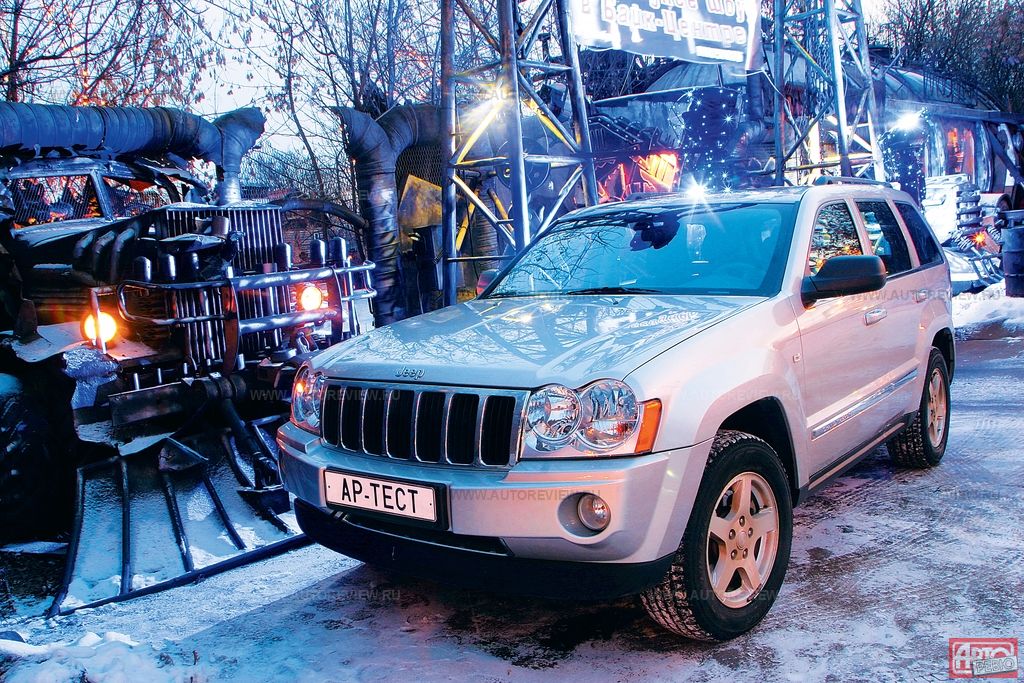
Jeep Grand Cherokee of the third generation appeared at the end of 2004. The version with V6 3.7 (204 hp) costs 1,325,450 rubles ($53,450) and is equipped with Quadra Trac II transmission with permanent all-wheel drive and a reduction gear. The modification with V8 4.7 (231 hp) — 1,697,850 rubles ($68,460), and Grand Cherokee 5.7 Hemi (326 hp) — 2,097,200 rubles ($84,560). The eight-cylinder versions get a more advanced Quadra Drive II transmission with three self-locking differentials. Grand Cherokee is good both on asphalt and off-road. Details in AR No. 1, 2006.
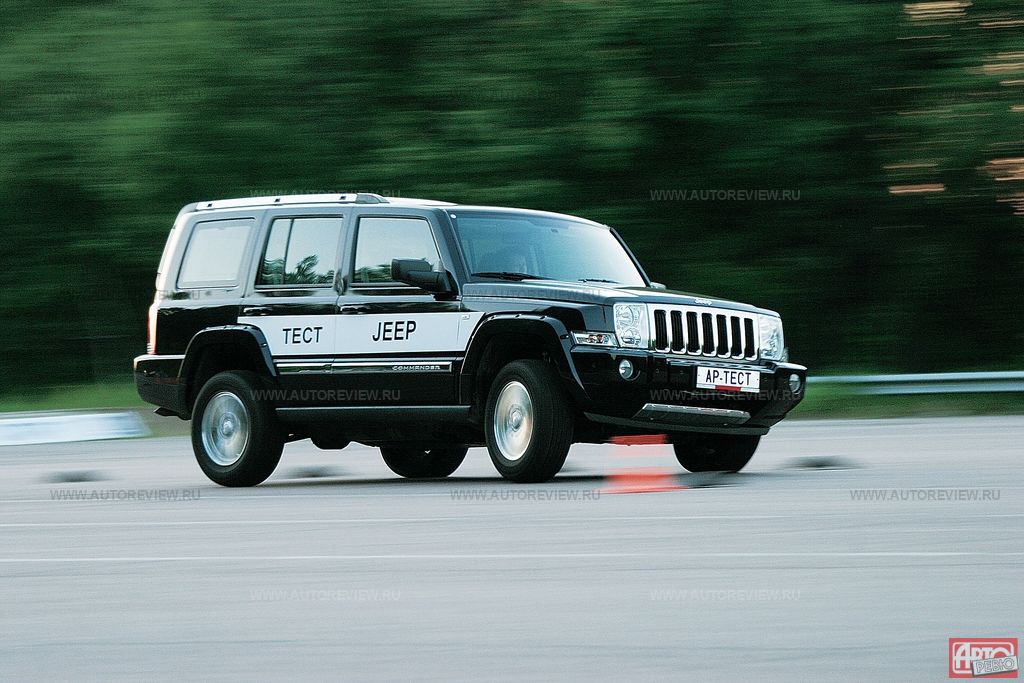
The seven-seat Jeep Commander is built on the Grand Cherokee platform and has been produced since 2005, but it failed to repeat the success of its predecessor — production will be discontinued in 2010. In Russia, Commander 4.7 (231 hp) is sold for 1,697,850 rubles ($68,460), and the version with the 5.7 engine (326 hp) costs even less than the similar Grand Cherokee — 2,070,250 rubles ($83,480). All gasoline Commanders are equipped with Quadra Drive II transmission. Off-road capability is from the Grand Cherokee, but on-road behavior is worse. Details in AR No. 15, 2006.
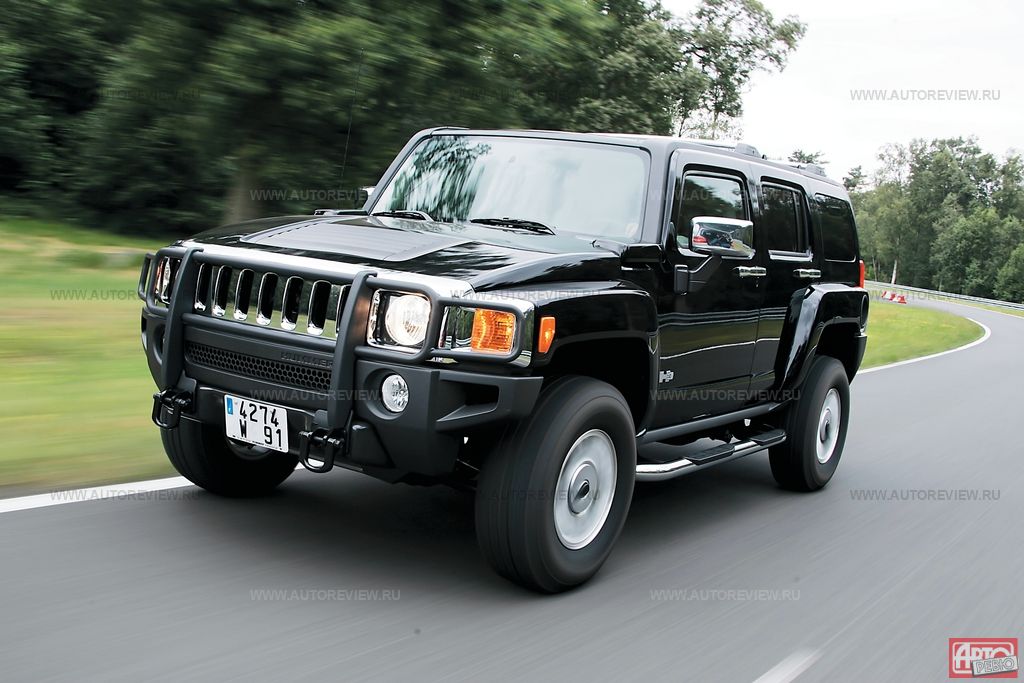
Hummer H3 (3.7 L, 244 hp) has been produced since 2005, and for Russia it is assembled at the Kaliningrad Avtotor. Prices for the version with automatic transmission start from 1,429,500 rubles ($57,640). Permanent all-wheel drive is supplemented by rigid locks of the center and rear inter-wheel differentials and a reduction gear. Details in AR No. 15, 2005.
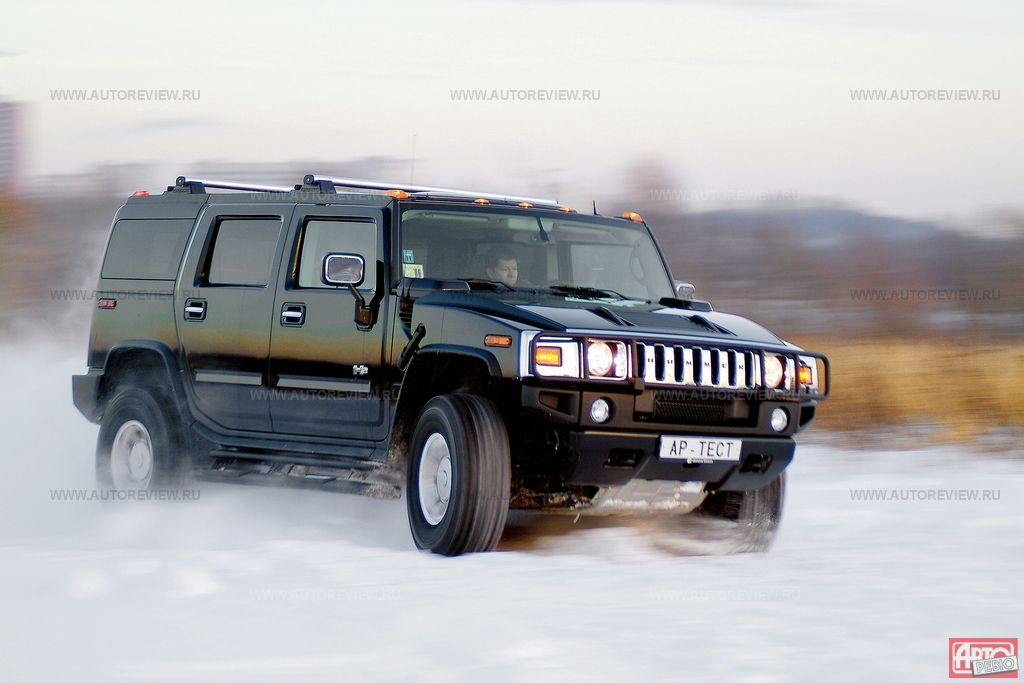
The "older" Hummer H2 (6.0 L, 325 hp) appeared in 2002 and is based on the platform of the previous generation Chevrolet Tahoe SUV. Since 2004, the "second" Hummer has also been assembled at Avtotor. The base trim costs 2,347,700 rubles ($94,670), and in more expensive ones there is a third row of seats and rear air suspension. All-wheel drive transmission — like the younger brother. Hummer H2 is good in comfort and off-road capability, but the impression is spoiled by the uncomfortable interior and cheap plastic of the interior. Details in AR No. 24, 2003 and AR No. 24, 2004.
Ford Explorer Hummer 2 Nissan Patrol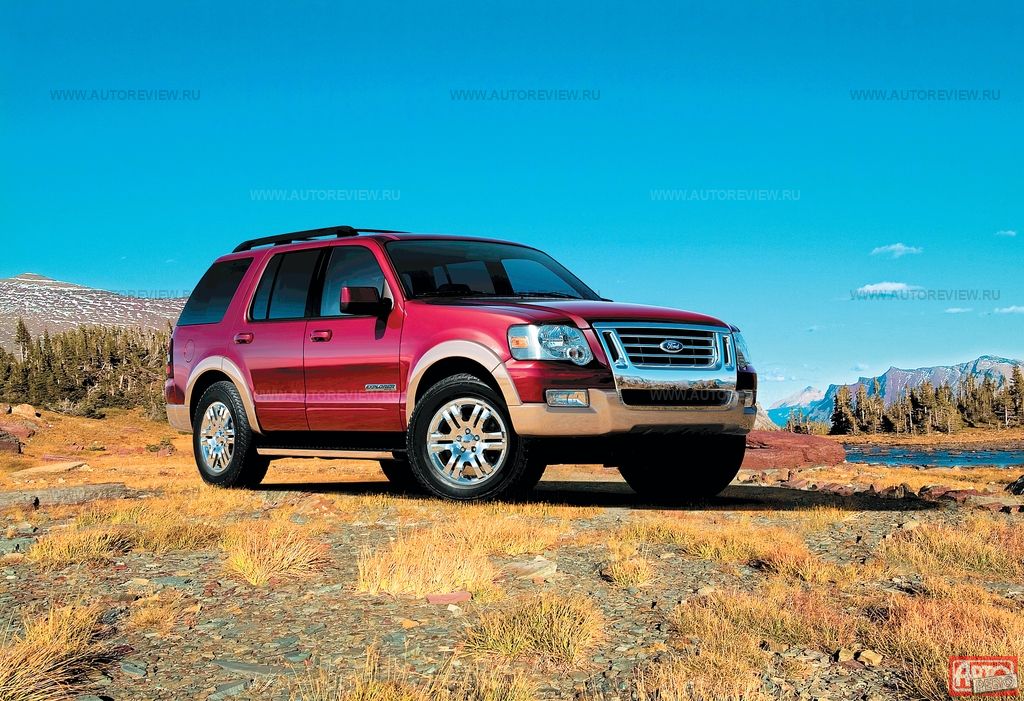
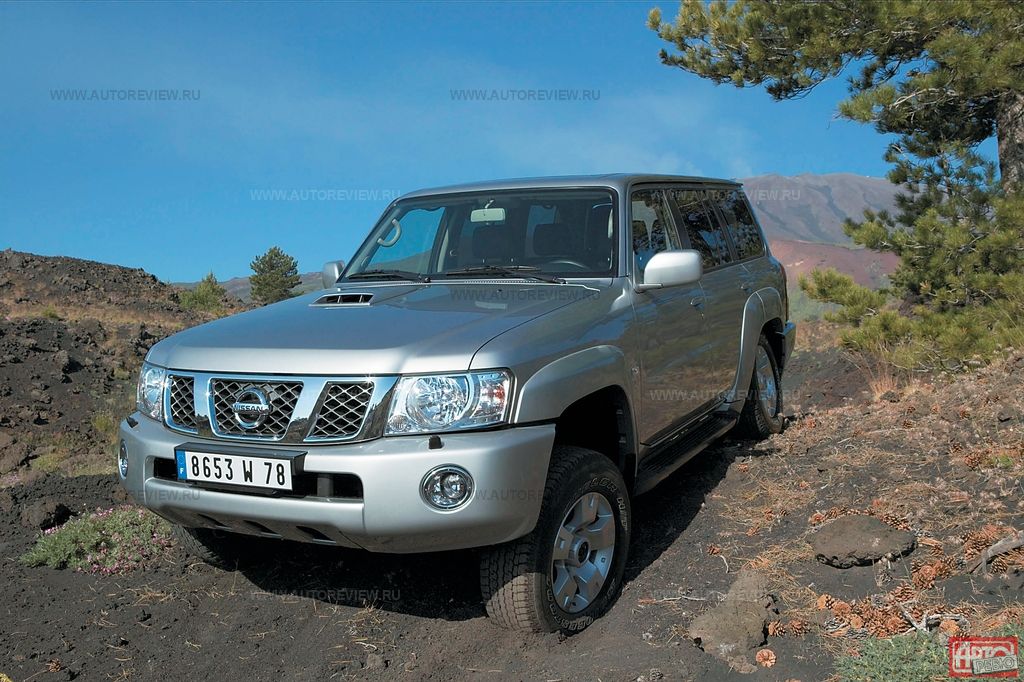
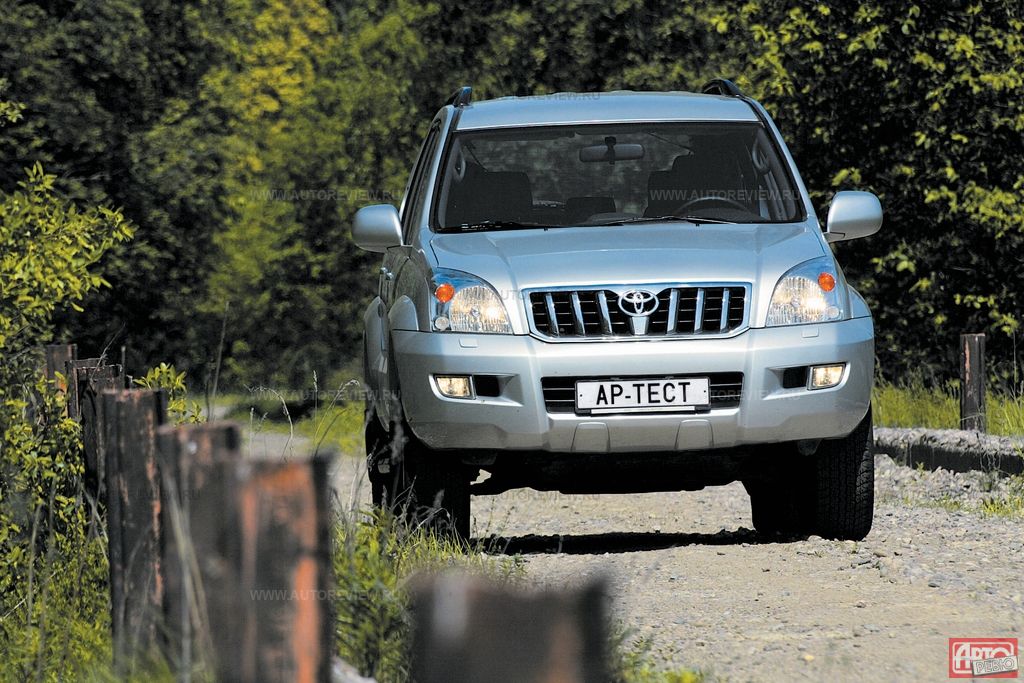
Toyota Land Cruiser Prado (4.0 L, 249 hp) has been produced since 2002, and recently updated cars with darkened headlights, a different grille, and a multifunctional steering wheel went on sale. Prices start from 1,448,500 rubles ($58,410), and modernized cars are more expensive by 7,500–16,000 rubles depending on the trim. Permanent all-wheel drive — with an asymmetric self-locking center differential Torsen, which can also be locked manually, and a reduction gear. The car pleases with good road manners and excellent off-road capability. Details in AR No. 12, 2003.
The veteran Nissan Patrol debuted in 1997 and has since undergone only one modernization in 2003. The modification with an inline gasoline "six" (4.8 L, 245 hp) costs 1 million 721 thousand rubles ($69,400). The all-wheel drive transmission is outdated, with a rigidly connected front axle, rear self-locking differential, and reduction gear. Nissan Patrol has good off-road capability, but on asphalt it behaves not in the best way. Details in AR No. 17, 2000.
* Dollar exchange rate — 24.8 rubles.