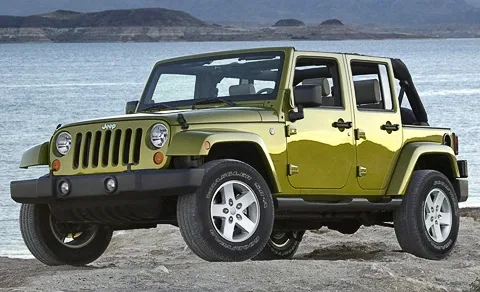
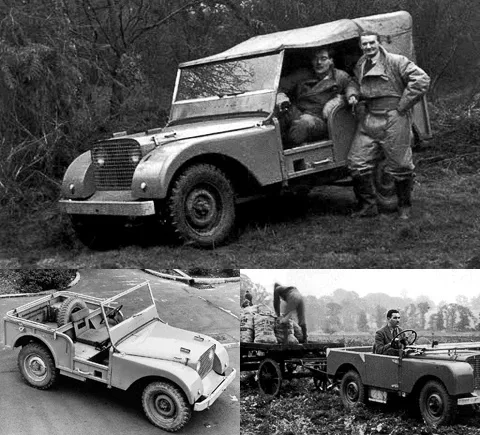
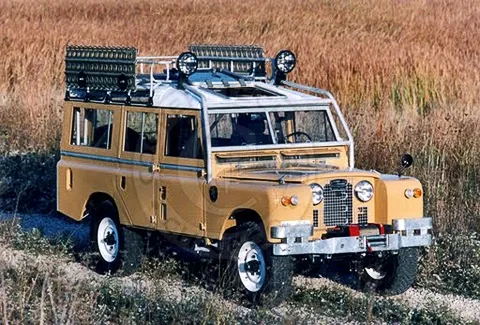
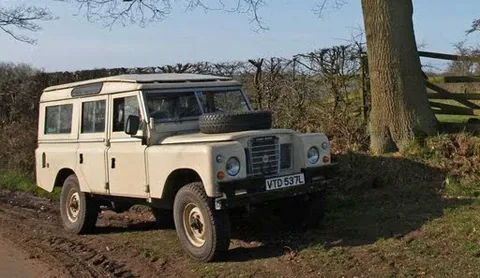
Only this doesn't make them any less interesting to us. The names of these cars are written in golden letters in the history of the automotive industry. These are true SUVs that have preserved the spirit of an era when only one thing was required from such vehicles: to pull like an ox and climb like a cat. And the words "ergonomics," "fuel efficiency," and "emissions" had not yet become an industrial mantra. For us, such a test is a rare chance to immerse ourselves for a few days in a world of mechanisms free from marketing. And in a world of men not spoiled by metrosexuality.
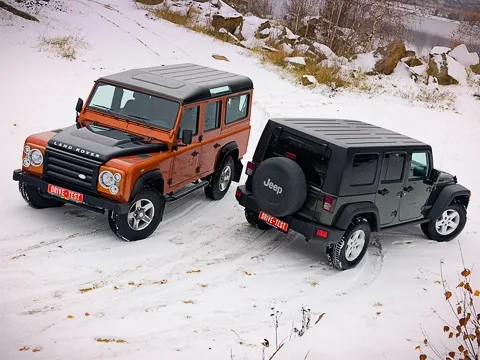
Even though the Jeep Wrangler is a new build, and the "American" is shorter than the Defender, we still call this test the "Jeep test" among ourselves. From a historical perspective, there's no question who is the legitimate heir and who is the bastard. The Wrangler's face has seven signature grille slots, and the driver looks at the road through a narrow windshield slit... And yet, the Jeep feels like a militaristic stylization, while the taller and wider Defender 110 looks more noble and practical. Even in the fashionable "fire" trim Fire & Ice.
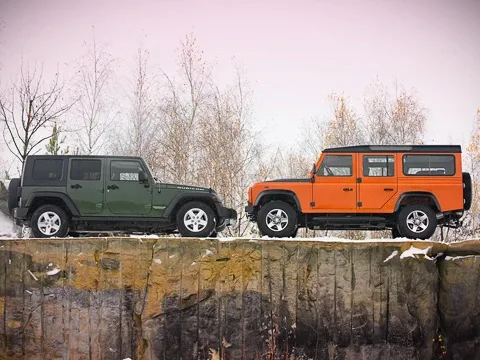
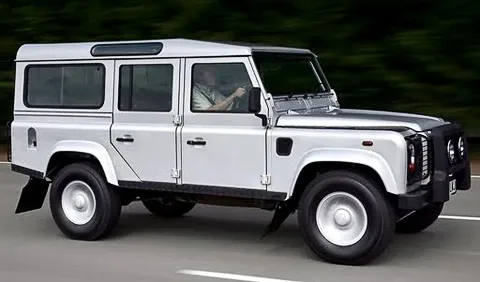
In any configuration, the Defender dominates. After all, it is 196 mm taller than the Wrangler. However, the Jeep is 112 mm longer, and its wheelbase is 2974 mm versus 2794 mm for the "Brit." The Wrangler is also heavier than the aluminum Defender. The hump on the Land Rover's hood, which seems not to close properly, is a side effect of installing the Ford Duratorq diesel engine. And the spare tire has been moved to the tailgate for safety reasons.
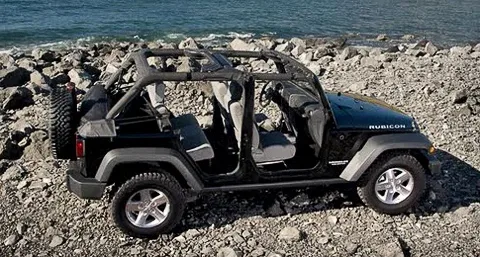
A feature of our Wrangler is a wheelbase stretched by 523 mm and a pair of additional rear doors. Maybe it's not very purebred, but it's convenient. Now passengers don't have to jump over the side—each has their own personal entrance and decent legroom. Additionally, you can completely remove the Wrangler's roof, while the shell of the five-door Land Rover has fully hardened over the course of evolution. However, the transformable body doesn't hold heat well, and the heater, which blasts hot air at front passengers, doesn't save the rear ones from the cold. Our Wrangler also lacks heated seats.

In a one-two-three count, the closed Wrangler turns into a targa. The removable roof sections are secured with clamping clips and "wing" bolts. But to turn the Rubicon into a convertible, you'll have to work at it. We didn't dare do it in field conditions. The folding canvas roof is stored in the trunk, limiting its useful volume. You can remove the obstruction after dismantling the hard top.
Getting into the driver's seat of the Rubicon is not easy. The threshold is more than half a meter above the ground. Climbing into the Defender is even higher, but unlike the "Brit," the Jeep has no side steps, so stepping into the cabin without soiling your trousers works only half the time. Additionally, the roll cage wrapped in soft covers forces you to bend your head more. The doors are hazardous in their own way in both cars: in the Wrangler due to fabric door checks, in the Defender due to the lack of intermediate stops. But the door opening in the Rubicon is a couple of centimeters wider, and the cabin compared to the Defender's interior is like a pocket PC versus a paper notebook.
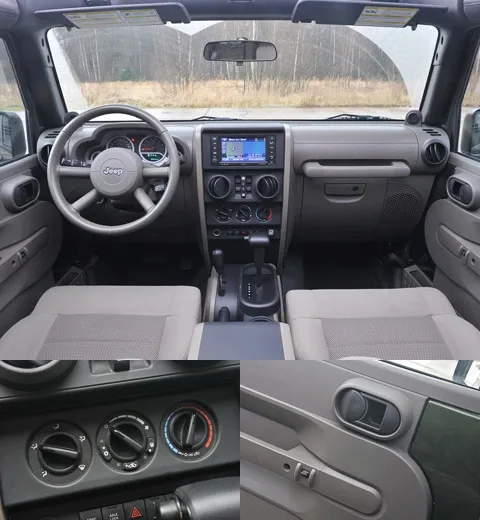
The interior quality of the Wrangler is higher, but dried mud on the "ribbed" plastic washes off reluctantly. In addition, the "dresser" of the center console with a negative tilt moves the climate control unit away from the driver. By the way, we didn't like it. The buttons are small, and the airflow intensity dial (in the center) has almost no feedback. You have to choose ventilation modes by eye.
The seating position in the Jeep is quite civilian, while the Land Rover driver, sitting a meter above the ground on a thin cushion, has to keep their back rally-style vertical. The seat travel range in the "American" is almost twice as large. The steering column adjusts for tilt, and the pedal assembly is where it should be. In the Defender, the steering wheel is not adjustable and, along with the pedals, is significantly shifted to the left relative to the seat.
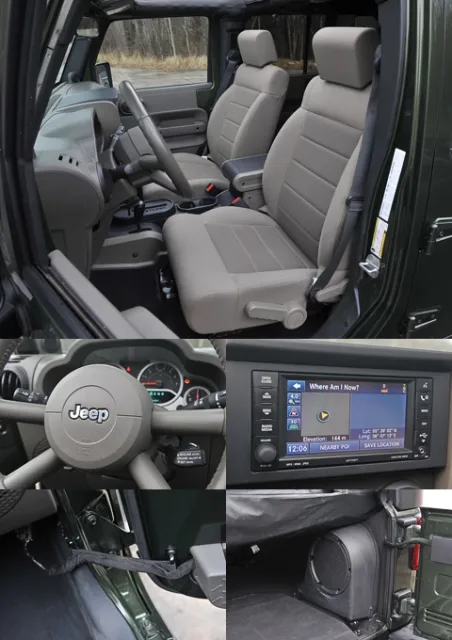
Slender drivers find it uncomfortable to sit in the Jeep's flat seat. The side bolsters are underdeveloped, and the distance between them suggests a stout build. An advanced audio system with a subwoofer, navigation, cruise control, and... fabric door checks. Maybe someone's heart is warmed by the Jeep's fragmentary directness, but not ours. We're for harmony, and that's exactly what's lacking in the "American's" interior.
We attribute to the Wrangler's drawbacks the overly vertical steering wheel (you have to turn the wheel with your arms bent sharply at the elbows), adjusting the mirror reflective elements "from the street," and the "blind" climate control unit with small buttons. The overloaded multifunction stalk controlling headlights, interior illumination, instrument panel backlighting, and fog lights is inconvenient. However, the Jeep turned out to have an advanced multimedia system with navigation, a hard drive, six speakers, and a subwoofer. It has four electric windows, central locking, cruise control, and, most importantly, four airbags for the driver and passenger.
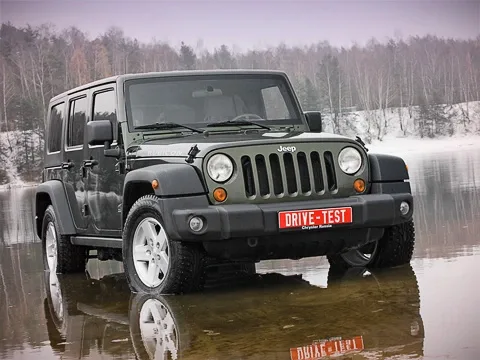
Seven vertical slots on the front, round headlights, and wheels placed at the corners of the body—the creators of the Wrangler drew inspiration from the legendary Willys MB of 1941. And yet, this Jeep is a product of the belligerent and suspicious Bush-era America that survived September 11.
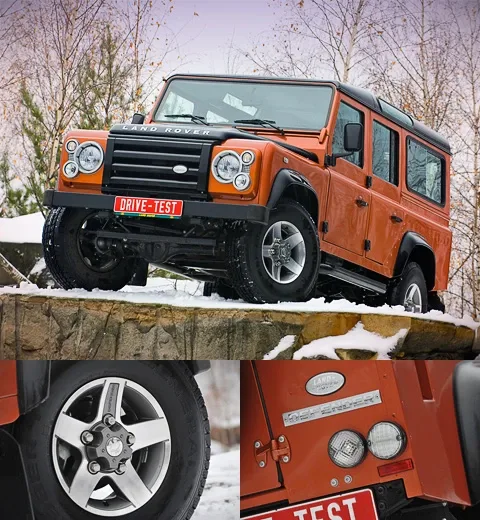
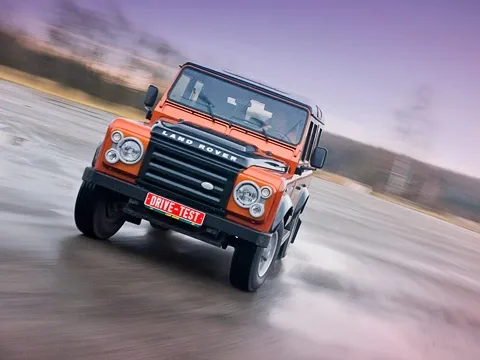
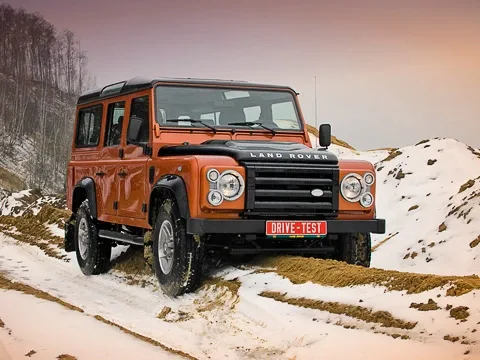
The alarming fiery-red color, the plastic muzzle of the front end, and polished aluminum wheels are distinctive features of the Fire & Ice version. Additionally, limited Defenders have different front and rear lights. The headlights have clear lenses, and at the rear, instead of primitive "lanterns," there are LED lights.
The Defender, despite the promising bulge in the center of the steering wheel, still has no airbags. You have to drive with your elbow on the windowsill, and there's nowhere to put your left foot off the clutch pedal. After a couple of hours on the road, your back and neck start to ache. But the huge steering wheel with a pleasant-to-touch rim feels like a woman's breast—you don't want to let it go. And otherwise, the Landy's ergonomics are decent: the instruments are perfectly readable, the gear lever on a thin stalk pleases with a rough knob and short throws, allowing even fifth and sixth gears to be engaged with half a hand...
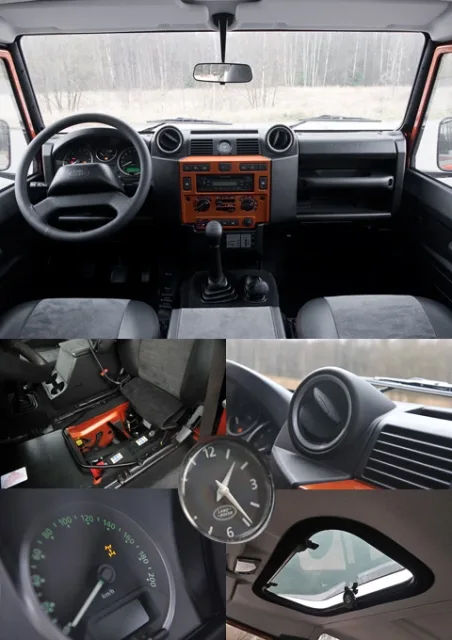
During the 2006 modernization, they tried to instill the Defender's interior with the brand's style. It turned out strained. Especially amusing are the round ventilation deflectors borrowed from the previous-generation Ford Fiesta subcompact. In the Defender converted to left-hand drive, the right passenger has more room. But the handbrake, which bothered the British driver's left foot, ended up on the right. The heater temperature control is reversed. The diagonal seating with sharply bent knees is due to the steering column and pedal assembly shifted to the left and the small seat travel. We advise potential Defender buyers to pay attention to the anniversary SVX version, which has more comfortable Recaro sports seats. The seat cushion is mounted on an aluminum box containing the battery and tools. It's a rare case where the hard plastic of the dashboard and gaps between panels don't bother us. Utilitarianism. But for the lack of airbags, no discounts are allowed. Even given its retirement age.
The weather, at first glance, favors the Wrangler, which was already fitted with winter studded tires Nokian Hakka 5 (265/70 R17)—Moscow, as if on order, was covered with the first snow. Some "on summer tires" have already celebrated Tin Man's Day. And the Jeep, despite the mushy brake pedal and deep nose dives, confidently stops at traffic lights where treacherous ice glistens. But acceleration is hard for the Rubicon—the accelerator drive is too sensitive. At the slightest touch of the pedal, the wheels spin, despite all the efforts of the traction control.
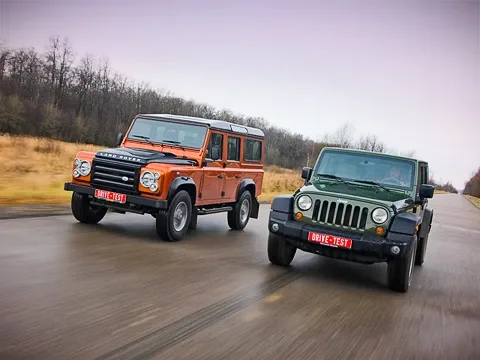
The Rubicon's engine—a V-shaped "six" 3.8—produces 199 hp and 315 N•m. Not much for a body-on-frame vehicle weighing almost 1900 kg, but enough to drive the yellow triangle in the instrument cluster crazy. You have to manually engage the front axle, fortunately, you can move the transfer case selector to 4H on the go. But on hard surfaces, it's not recommended to overuse four-wheel drive: the transmission is subjected to increased loads. The permissible speed is no more than 88 km/h. And fuel consumption increases. And the Rubicon's appetite already varies from 18 to 20 liters per 100 km.
When starting without wheelspin, the acceleration dynamics don't take your breath away, but they don't cause much complaint either. The engine pulls confidently from the bottom, steadily hauls at mid-range revs, and only slightly livens up near the top. However, the response to pressing the gas pedal becomes so sluggish with increasing speed that the car simply doesn't notice a quarter of the accelerator travel. Even the engine sound doesn't change. At the conductor's stand here is an outdated four-speed automatic transmission that decides to shift only after a substantial press on the gas. In city traffic and during highway overtaking, such transmission deafness starts to irritate.
Your impressions of the Jeep's behavior directly depend on the speed you're traveling. Drive at a leisurely pace, and the sluggish automatic barely gets in the way. But add some gas, and the connection with the car starts to melt before your eyes. It's not just about transmission delays. The steering and suspension are also not ready for a fast pace.
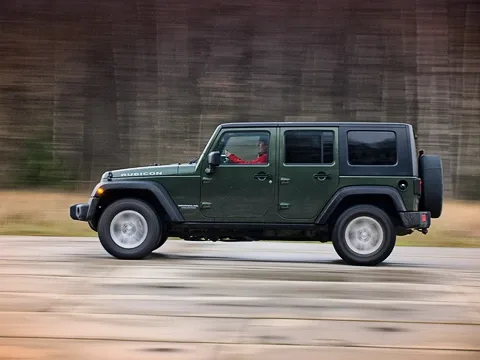
Your impressions of the Jeep's driving manners directly depend on the chosen speed. Drive calmly, and the thoughtful nature of the automatic barely interferes. But as soon as you speed up, the connection with the car melts before your eyes. It's not just about transmission delays. The steering and suspension are equally unable to maintain a fast pace.
On standard road tires, the Defender glides over packed ice like an iron over silk. The anti-lock braking system engages earlier than you'd like, tapping out Morse code on the pedal, only lengthening an already considerable stopping distance. But acceleration is no problem. Press the pedal, and you get exactly that from the 2.4-liter turbodiesel four-cylinder. Power is modest—just 122 horsepower—but torque is 360 N·m. So when starting off, you can skip the gas pedal altogether. Release the clutch, and you move on torque alone. The six-speed manual, which initially seems like overkill, works perfectly. In top gear, the diesel confidently pulls from 50 km/h, and by 2000 rpm there's a constant reserve of torque under the pedal that helps save fuel. How much can you save? The Defender has no trip computer, but our measurements showed fuel consumption of about 12 liters per 100 km. Not bad at all for two bricks stacked on top of each other.
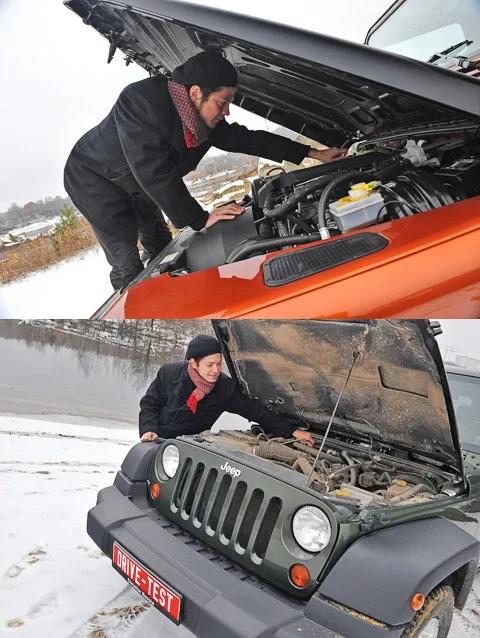
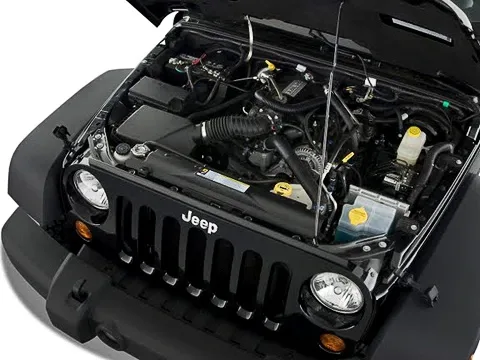
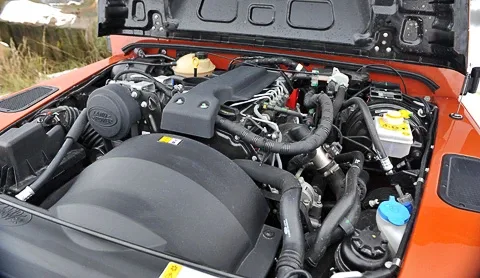
Task: pull out the oil dipstick without getting dirty. Either wipe the front fender with your sleeve, or climb onto the bumper. But otherwise, access to the engines of both SUVs is quite normal.
Moreover, being more economical doesn't mean slower. The Duratorq diesel, which Land Rover received in 2007 from Ford's commercial vehicle lineup, rushes so briskly that the more powerful and faster-on-paper Wrangler Rubicon can only keep up with the Defender at full throttle. But the Defender is very noisy: diesel roar hits your ears, controls vibrate, and the aluminum body creaks on gravel like an old sailing ship. And when the car wash rinsed old mud from the wheel arches, sand started rustling in them with renewed vigor. The Rubicon is noticeably quieter. However, in the large mirrors of both vehicles, airflow starts to rage near 100 km/h. For the Jeep, it's a "wind in the pines," but for the Landy, it's a fierce blizzard.
Besides the romantic whistle and engine growl, there's nothing else to listen to in the Defender. The stock stereo with speakers scattered haphazardly around the cabin will delight with its dull sound only fans of the band Death in June. Or something equally bleak and dreary. In the Jeep, good old rock sounds best, but only quietly—otherwise, the body-on-frame construction starts to resonate. By the way, on the hard drive, we found an international selection of songs about Che Guevara. Soon we were imagining severed hands neatly packed in a transparent bag. And it's hidden in a wooden box that rattles in the trunk...
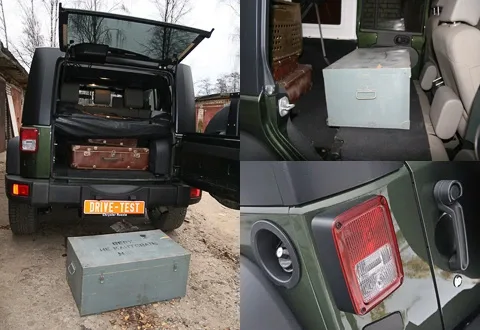
- Entry to the Jeep's trunk is blocked by the canvas roof roll. You can only remove it by unscrewing a number of bolts and taking off the hardtop. However, given the complexity of this operation, we loaded the box through the rear door after folding the second-row seats.
- Without the "barrier" and subwoofer, loading things into the Jeep is easier thanks to a wider door opening (1040 x 920 mm) and a lower loading height than the Land Rover's (760 mm).
Although our cargo area is already empty—all our gear is stowed in the Defender. It's just that the Wrangler's suspension accompanies every pothole on the asphalt with a characteristic rumble. On rough roads, the Jeep feels loose: despite the stiffness of the springs, road disturbances translate into repeated body oscillations. Rock-ing. Potholes respond with vibrations from unsprung masses. You won't forget about the pair of solid axles even if you try.
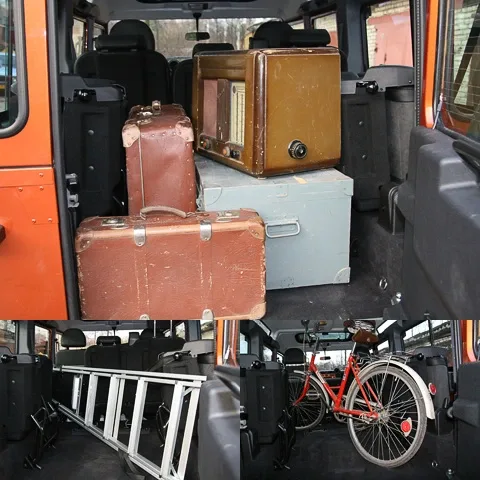
- The Land Rover's trunk volume is roughly 800 liters if you skip the third-row seats and carry only five passengers. However, loading cargo is a bit heavy—the loading height is 80 cm.
- Cargo must be no wider than 680 mm to fit between the folded third-row seats of the Land Rover. In the five-seat configuration, the trunk width is 910 mm.
- The ladder means minus three passengers. To fit a bicycle, we had to sacrifice the entire second row. And you still won't get a flat floor—the seat mounts and plastic trim get in the way.
For a long trip, we choose the Land Rover without hesitation. Its suspension is also on the stiff side, but it lets you ignore the road surface altogether. It doesn't notice small imperfections, and large potholes are absorbed by the high-profile tires, letting only an echo of vertical oscillations into the cabin.
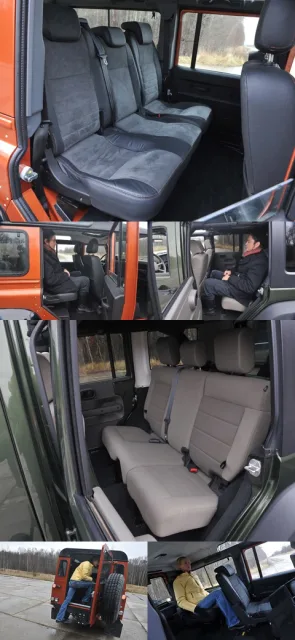
- The rear door openings on both SUVs are narrower than the front ones, which isn't particularly inconvenient. There's enough legroom in the back, but the seatbacks don't recline.
- Passengers reach the rear row through the fifth door, which is 1120 mm high and 730 mm wide. The fifth door handle is a miraculously preserved classic Land Rover trigger.
The Defender's heavy steering may not be as communicative as in more modern Land Rovers, but there's enough feedback for the driver to understand what's happening with the steered wheels. The car responds to steering inputs without delay. In sharp corners, the Defender leans heavily, pushing its nose wide. This is due to both the vehicle's mass and the symmetry of the permanent all-wheel drive.
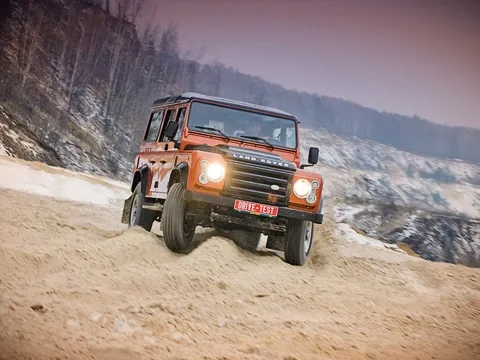
In slippery corners, the Defender plows with its nose. Adding or lifting off the throttle doesn't change things; you have to brake.
The Jeep can happily sweep its tail in corners like a rear-wheel-drive car, but it loses outright to the Landy on asphalt—you have to steer the Wrangler with an American-style dead steering wheel with no "center" at all. The car responds to steering inputs with a delay. But responses sharpen as the suspension "takes up slack" in a corner. Unpleasant. Can the "American" redeem itself off-road?
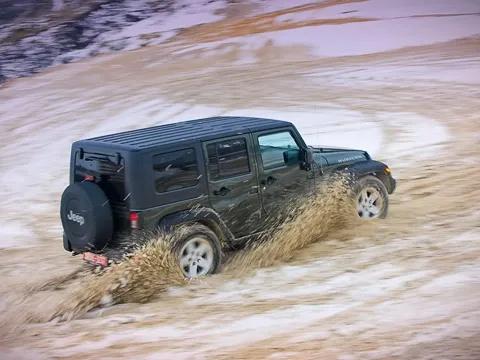
Even with the front axle engaged, the Rubicon has rear-wheel-drive manners. It's harder to control, but there's more silly fun.
At first glance, nothing can overshadow the aura of British classic from Solihull. The standard Defender's geometric off-road capability is the envy of lifted UAZs. The transmission has a low-range gear and a center differential lock. The traction control system plays the role of wheel locks to the best of its ability, selectively applying the brakes. When stuck, the Land Rover can even rock itself out, roaring and chattering the ABS...
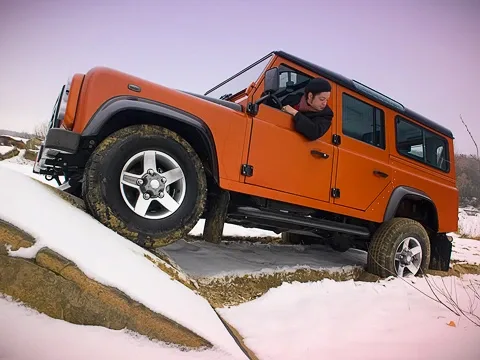
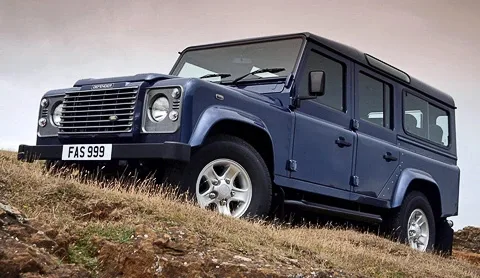
The driver's seat offset to the left isn't an ergonomic oversight but a design find! Leaning out the window, it's easier to monitor the vehicle's position on rough terrain. Thanks to short overhangs (649 mm front and 1196 mm rear) and an impressive 314 mm of ground clearance, the Defender's approach angle is 47 degrees and departure angle is 27.
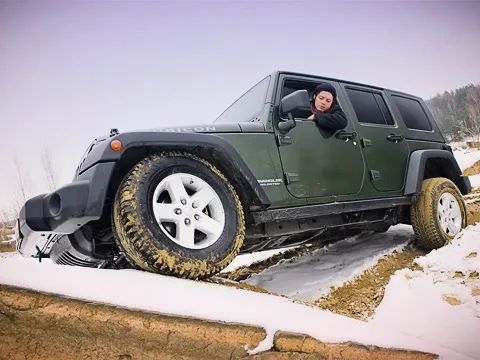
On the Jeep, that peeking trick won't work—the window is far, the fender is wide, and the side mirror blocks the view. And the steering wheel provides no feedback. Geometric off-road figures are "skewed backward": the Wrangler Unlimited (front overhang 804 mm, rear 1000 mm) can climb a 38.4-degree incline and descend a 31.4-degree slope.
The Jeep's geometry is more modest, and instead of a center differential lock, it uses a forced rigid coupling between the axles. However, both wheel differentials lock, making the drivetrain fully locked. There's also a low range, and a trump card up its sleeve — an inconspicuous button that disconnects the front stabilizer. Thanks to increased axle articulation angles, the Wrangler can avoid wheel lift, thus keeping all four tires in contact with the surface longer. Moreover, the tires here are more grippy. With this setup and a longer wheelbase, the Jeep easily won the first test against the Defender. The Wrangler confidently crawls up the artificial rocky incline, while the Landy, with low range engaged and center locked, alternately braking wheels, digs deeper into the dirt.
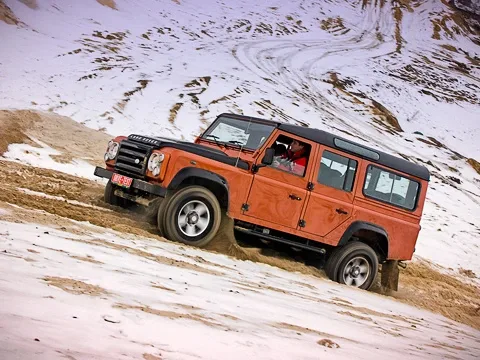
Businesslike spinning in the sand at the top of the slope, Sir Defender dug out the boards we had placed under the wheels. Only after that did the Def manage to ascend the throne.
Next — assault on the sandy incline! The Defender's main problem is its overly short first gear. You can't take the tricky section from a standstill: not enough acceleration. And in second, there's not enough traction. In low range, the road tires immediately dig in. We couldn't do without outside help and homemade sand tracks. But the Jeep climbed to the top, albeit not on the first attempt, but on its own. Here, its sluggish automatic even turned out to be an advantage.
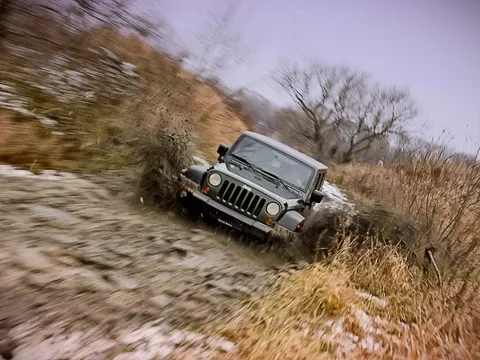
And only on muddy dirt roads — complete equality. Where tire differences don't matter, both SUVs maneuver equally deftly between trees, tackle ascents and descents, and ford water obstacles. True, the Jeep, passing through a huge puddle, scared us by enveloping itself in a cloud of steam — the windows even fogged up. The Land Rover didn't do that.
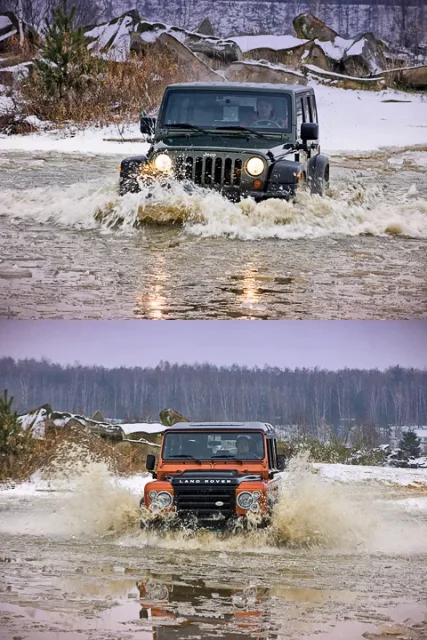
Both vehicles are equipped with high-mounted air intakes with water separators. The maximum wading depth is roughly the same: 48 cm for the Jeep and "up to half a meter" for the Landy. But the Wrangler is recommended to move slowly and solemnly along the bottom — at a speed of 8 km/h.
What's the bottom line? Our favorite is the Defender, the first Land Rover in the history of DRIVE tests. It will appeal to those who need an unpretentious off-roader capable of existing autonomously for long periods far from civilization. The Landy won us over not so much with its off-road capability, but with the almost forgotten feeling of a car in today's world. This "death's head" is more alive than all the living. Sympathy grows with every turn of the steering wheel, with every interaction with the manual gearbox, which, as sixty years ago, forces the driver to work not only with hands but also with the head. The clumsy-looking Defender turned out to be more understandable and composed on asphalt. It has a seven-seat (no exaggeration) cabin and a restrained, dare we say, gentlemanly appearance. True, for all these advantages, you'll have to pay with noise, vibrations in the controls, and the absence of the usual comforts of civilization.
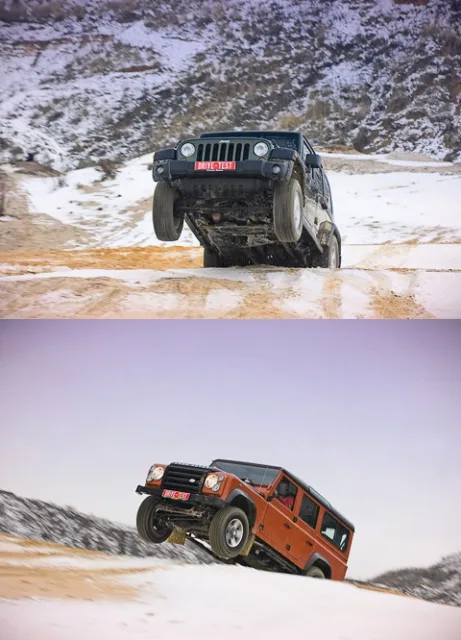
"Born to crawl, can't fly?" Not at all! Both the Wrangler and the Defender feel great in the air. But there are nuances. The "American" soars into the air a good meter and a half. The "Briton" flies low, like a battle axe, with a strong nose-down attitude. In both cases, the landing isn't exactly soft, but the suspension has enough energy capacity.
Jeep Wrangler Unlimited — a more rational and versatile choice. The "American" tries to keep up with the times, it's a very capable off-roader, yet doesn't demand sacrifices to the off-road gods. Thanks to its stylish design, the Jeep won't get lost in an office parking lot, and the automatic will ease life in traffic jams. Additionally, the Wrangler also comes in diesel. But the flabby suspension and colorless handling on asphalt spoiled our impression. It's up to you to decide whether the off-road victory and the conditional comfort advantage are worth the 500,000 rubles that the Jeep costs more than the Land Rover. We're sure of one thing: if Chrysler buries the Wrangler in favor of Fiat, fewer tears will be shed in our editorial office than in the case of the Defender's untimely demise.
Specifications
| Model | Land Rover Defender 110 | Jeep Wrangler Unlimited |
| Body |
| Body type | five-door wagon | five-door convertible |
| Number of doors/seats | 5/7 | 5/5 |
| Length, mm | 4639 | 4751 |
| Width, mm | 1992 | 1877 |
| Height, mm | 2021 | 1825 |
| Wheelbase, mm | 2794 | 2947 |
| Track front/rear, mm | 1486/1486 | 1572/1572 |
| Curb weight, kg | 1884 | 1895 |
| Gross weight, kg | 3050 | 2450 |
| Trunk volume, l | | 498 (934.5) |
| Engine |
| Type | turbodiesel | gasoline |
| Location | front, longitudinal | front, longitudinal |
| Number and arrangement of cylinders | 4, in-line | 6, V-shaped |
| Number of valves | 16 | 12 |
| Displacement, cm3 | 2401 | 3778 |
| Max power, hp/rpm | 122/3500 | 199/5000 |
| Max torque, N•m/rpm | 360/2000 | 315/4000 |
| Transmission |
| Gearbox | manual, six-speed | automatic, four-speed |
| Drive | permanent all-wheel | part-time all-wheel |
| Chassis |
| Front suspension | dependent, coil spring, on longitudinal arms with Panhard rod and anti-roll bar | dependent, coil spring, on longitudinal arms with Panhard rod and anti-roll bar |
| Rear suspension | dependent, coil spring, on longitudinal arms and with anti-roll bar | dependent, coil spring, on longitudinal arms and with anti-roll bar |
| Front brakes | disc, ventilated | disc, ventilated |
| Rear brakes | disc, ventilated | disc |
| Tires | 235/85 R16 | 265/70 R17 |
| Ground clearance, mm | 314 | 259.1 |
| Performance characteristics |
| Maximum speed, km/h | 130 | 176 |
| Acceleration 0-100 km/h, s | 15.8 | 10.6 |
| Fuel consumption, l/100 km |
| — urban cycle | 13.5 | 16.7 |
| — suburban cycle | 9.5 | 9.0 |
| — combined cycle | 11.0 | 11.9 |
| Emission standard | Euro-4 | Euro-4 |
| Fuel tank capacity, l | 75 | 85.17 |
| Fuel | diesel | AI-95 |
Trim levels
| Base trim | Land Rover Defender 110 | Jeep Wrangler Unlimited |
| Front airbags | - | + |
| Side airbags | - | + |
| Rear airbags | - | - |
| ABS | + | + |
| Dynamic stability control | - | + |
| Traction control | + | + |
| Fog lights | + | + |
| Rear wiper | + | + |
| Heated windshield | + | - |
| Automatic transmission | - | + |
| On-board computer | - | + |
| Cruise control | - | + |
| Air conditioning | + | + |
| Tilt-adjustable steering column | - | + |
| Height-adjustable front seats | - | + |
| Heated front seats | + | - |
| Sunroof | + | - |
| Immobilizer | + | - |
| Leather interior | + | - |
| Alloy wheels | + | + |
| Base price | 1,255,000 | 1,577,247 |
| Defender Fire&Ice trim | 1,315,000 |
|
Jeep Wrangler Unlimited and Land Rover Defender 110 — two veterans that are still assembled from metal and mounted on a sturdy frame. Both are true legends, but with completely different approaches to life.
Wrangler is a construction set for adults. It can be disassembled to the base, even removing the doors. The body is steel, mounted on a steel frame, and the fenders are plastic.
Under the hood is a gasoline V-shaped "six" with a displacement of 3.8 liters. This is an overhead-valve naturally aspirated engine with multipoint injection, which produces a modest 199 hp, but the maximum torque of 315 N•m is achieved already at 4000 rpm.
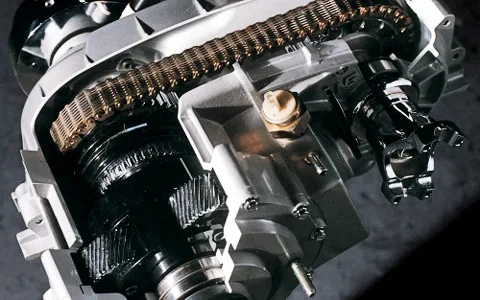
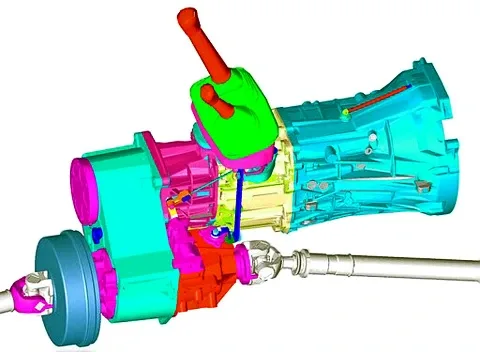
The Rubicon version is equipped with a special Rock-Trac transfer case with a low range of 4:1. In regular Wranglers with the Command-Trac transfer case, this figure is more modest — only 2.72:1.
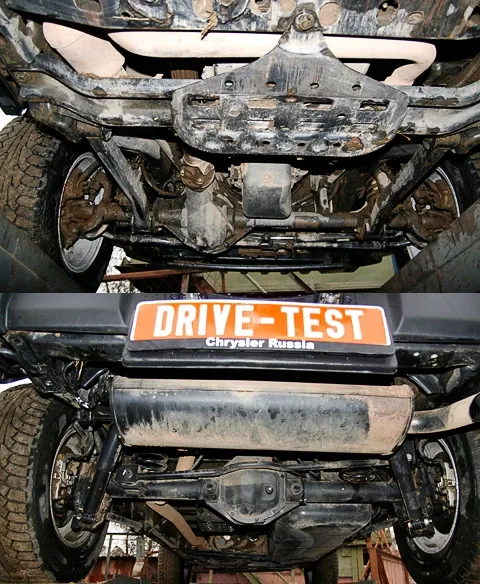
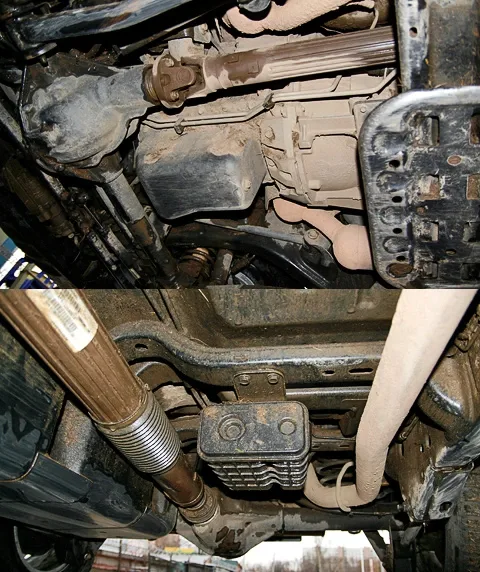
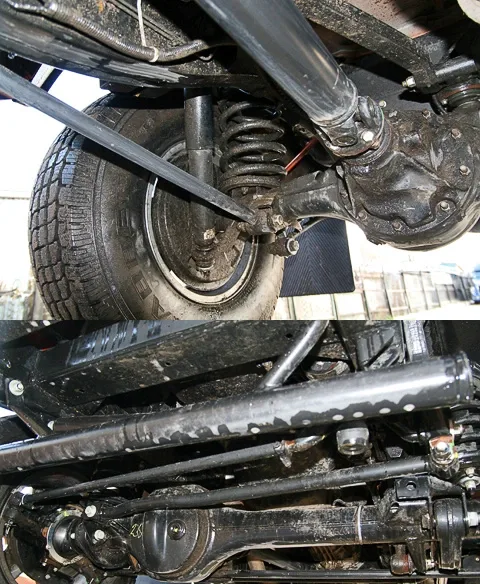
The signature solid axles Dana 44 are held on four longitudinal arms and springs.
From below, the Jeep is protected by steel sheets. But in front — light plastic protection, and the oil pan is not covered at all, although it is reliably hidden inside the frame. For those who worry, you can install metal protection. But the fuel vapor absorber remains defenseless.
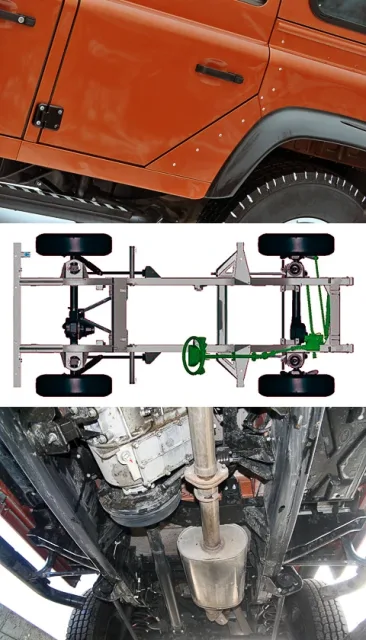
The Defender 110 has an aluminum body, partially riveted, on a steel frame. The frame of the current generation has become 20% stiffer than its predecessors and reliably covers all vulnerable components of the SUV.
The suspension is dependent spring, with new longitudinal arms. A "right-hand" Panhard rod is installed in front. The axles are solid, and the steering rods are covered by a transverse tube.
Under the steel hood of the Defender is a "commercial" Ford Duratorq turbodiesel. It has a cast-iron block, common rail fuel system, and a Honeywell Garrett turbocharger with variable geometry. The 2.4-liter engine develops 122 hp, and the maximum 360 newton-meters are available already at 2000 rpm.
The two-speed transfer case of the Defender has gear ratios of 1.211 in high range and 3.269 in low range.
History of long Jeeps
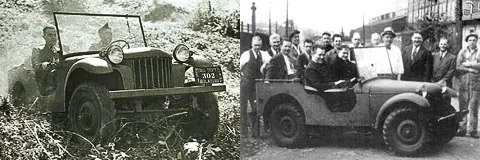
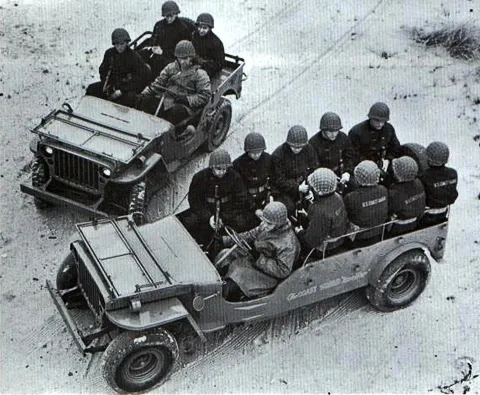
At the beginning of World War II, the American military announced a competition for a light reconnaissance all-wheel-drive vehicle for infantry. It had to travel at least 80 km/h, ford 30-centimeter water, and carry 270 kg of cargo. Wheelbase — 2032 mm, ground clearance — 160 mm, weight — only 585 kg. Only three companies responded: American Bantam, Ford Motor, and Willys-Overland. The smallest of them — Bantam — met the allotted 49 days thanks to engineer Karl Probst. The Bantam Blitz Buggy presented in September 1940 satisfied the military in everything except weight — it was more than specified in the technical requirements.
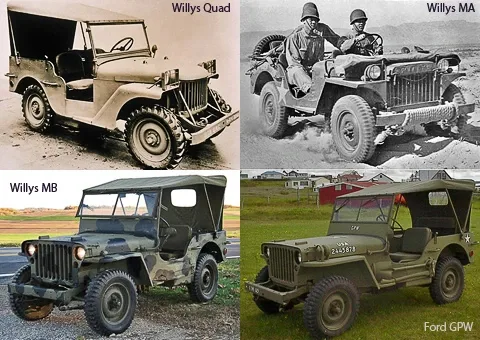
After 75 days, Willys-Overland presented its sample, using stolen Bantam drawings. The military chose the Willys prototype with the Go-Devil engine — the small Bantam company could not ensure large-scale production. The Willys MA went into production, and then the upgraded MB was launched. Ford was also brought in for production. Production began in December 1941. A total of 361,349 Willys MB and 277,896 Ford GPW SUVs were produced, which were almost indistinguishable from each other.
In the army, the new vehicle was nicknamed Jeep. There are several versions of the origin of this word. According to one — jeeps were called recruits back in World War I. According to another — in honor of the comic character about sailor Popeye, Eugene the Jeep, who had supernatural abilities. According to a third — from the abbreviation GP (General Purpose — general-purpose vehicle). Either way, the name Jeep became a common noun for all SUVs.
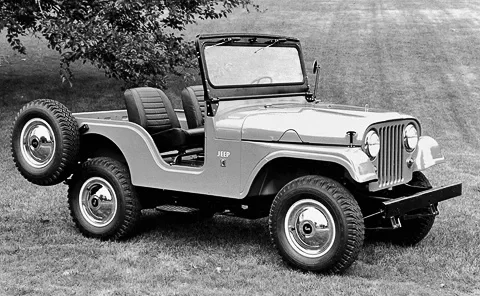
In 1944, when the war was coming to an end, SUVs began to be "demobilized." Fire departments were the first to accept them. In 1945, production of the civilian version CJ-2 (Civilian Jeep) started. Until 1966, under this brand, mostly ascetic and cramped vehicles without doors and roof were produced. Steel doors and automatic transmission as options appeared only in 1976 on the CJ-7 model.
But work on improving comfort and capacity did not stop. Even during the war, cramped off-road vehicles were lengthened by their own efforts, using parts from damaged vehicles.
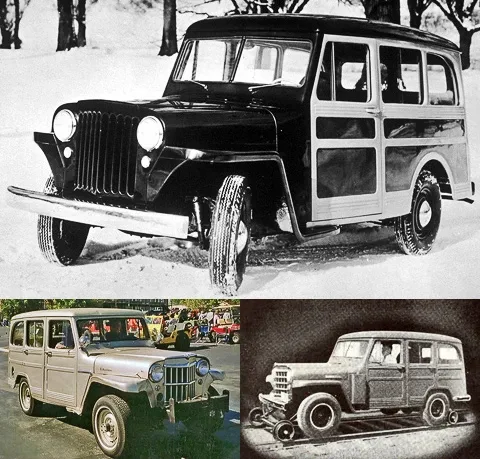
From 1946 to 1965, the Jeep Station Wagon was produced with a closed three-door body and an extended wheelbase of 104.5 inches (2654 mm). And from 1949 to 1962, a certain number of vehicles with closed four-door (with one passenger door) and five-door bodies were produced, both all-wheel-drive and single-drive. Some of them had devices for moving on railways. Engines — gasoline "fours" and inline "sixes."
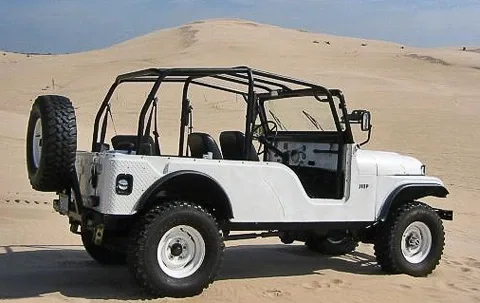
From 1956 to 1981, more than 50 thousand CJ-6 models were produced with a wheelbase extended by 20 inches (to 101 inches, or 2565 mm). Since 1965, vehicles were equipped with V6 and V8 engines.
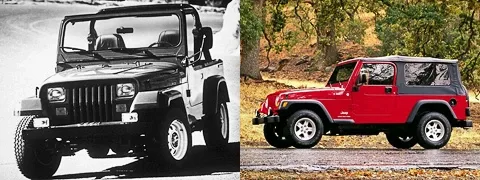
In 1986, the Jeep YJ (left), the successor to the CJ, received the name Wrangler (Cowboy). The next generation of long Jeeps appeared only in 2004, when the Jeep brand was already owned by the DaimlerChrysler alliance. The Wrangler KJ version (right) (debuted in 1996) with a base stretched by 254 mm was called Unlimited. A year earlier, the extreme off-road version Rubicon appeared, named after the famous off-road route in America. By the way, the name Rubicon was also borne by the Jeep concept shown in 1989.
In 2006, a new generation of Wrangler with the index KJ was presented. In the lineup, besides the short-wheelbase vehicle, a long-wheelbase four-door appeared for the first time.
History of long Land Rovers
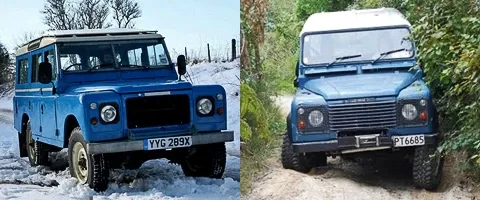
Now let's look at the Defender 110. Its history also begins with military vehicles, but it developed differently. Land Rover has always focused on practicality and endurance, not comfort. The Defender 110 is a workhorse that is still used in the army, on farms, and in expeditions around the world. It does not try to be a universal vehicle, it just does its job.
When designing the first Land Rover, the Wilks brothers took the army Willys as a basis. Early prototypes of the British off-road vehicle without military purpose repeated its wheelbase of 80 inches (2032 mm) and appearance. The 1948 production version with a 1.6 gasoline engine, presented in Amsterdam, stood out with an angular aluminum body on a steel frame and headlights pressed to the center. Agricultural equipment could be connected to the power take-off shaft, which allowed the vehicle to be classified in a preferential category and sold for only 450 pounds.
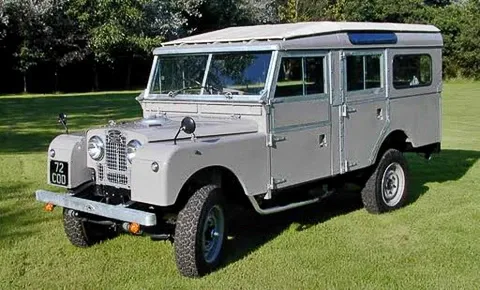
The success of Spartan and cramped SUVs among buyers prompted Rover to create new versions. In 1954, an extended Land Rover with a wheelbase of 107 inches (2718 mm) and a closed five-door station wagon body for ten seats appeared. Two years later, in Solihull, they mastered the production of an even longer modification — with a wheelbase of 109 inches (2769 mm). These vehicles received a two-liter gasoline engine, and the complex and short-lived permanent drive with an overrunning clutch gave way to a simple scheme with a rigidly connected front end and hubs.
Starting from 1957, a two-liter diesel was installed for an extra charge. Models of the second series, production of which started in 1958, were equipped with a 2.25 gasoline engine, and since 1961 — with a new diesel of the same displacement. In 1966, a 2.6 gasoline engine appeared in the list of options.
In export versions of 1968, for safety reasons, the headlights moved to the fenders — such vehicles were called bug eye, that is, "bug eye." Two years later, all Land Rovers received new optics. Long-wheelbase vehicles of the third series (1971–1979) acquired a different radiator grille, a reinforced rear axle, and a fully synchronized gearbox.
The Stage 1 series (1979–1985) with a petrol V8 3.5, four-speed manual gearbox and permanent all-wheel drive (left in the photo) debuted in 1979. Due to the large engine, the radiator grille had to be aligned with the front wings. In 1983, production of a new generation of classic Land Rovers began: first the long-wheelbase 110 (2794 mm) with coil springs instead of leaf springs, and a year later the short-wheelbase 90 (2360 mm).
The classic Land Rover got the name Defender in 1990, when the company belonged to British Aerospace. The 'Defender' differed from the unnamed Land Rover 110 and 90 mainly by more modern door handles. However, neither the 'Def' nor the arrival of Discovery and Range Rover saved the company from being sold first to BMW (1994) and then to Ford (2000).
The current generation of the Defender was shown in 2006. The Ford people tried to refresh the veteran's appearance: a front panel in the spirit of the Discovery 3 appeared, comfortable seats, and passengers were turned to face the direction of travel.
Behind the scenes
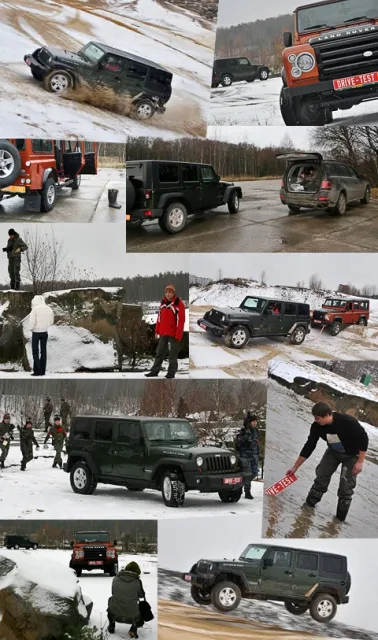
During the test, we saw an incredible amount of mud, snow and sand fountains. We had to fight off paintballers and retrieve torn-off license plates from murky water. Due to the whims of the weather, the cars had to be washed more often than tested. Photographer Nesterov, for the sake of a good shot, showed miracles of agility, climbing rocks and hangar roofs. We never doubted the Defender from the first minute - this car knows how to convince even from a distance. But the Jeep showed itself to be two-faced, sometimes disappointing, sometimes delighting. But for the dashing jumps, special thanks to the 'American'!