
I have a special attitude towards Land Rover Defender cars. It was on this very car that I once studied the design of military off-road vehicles back at NAMI, and it also became the subject of my first article in "Autoreview." It also gave me my first scolding from the editor-in-chief: fourteen years ago, during a test in Krylatskoye, we drowned a short-wheelbase diesel Defender. That was my baptism of fire. Since then, this car has become a kind of talisman for me, and I was very worried that, having arrived in England for the presentation of the new-generation "Defender," I would see an electromechanical toy styled to look like the classic...
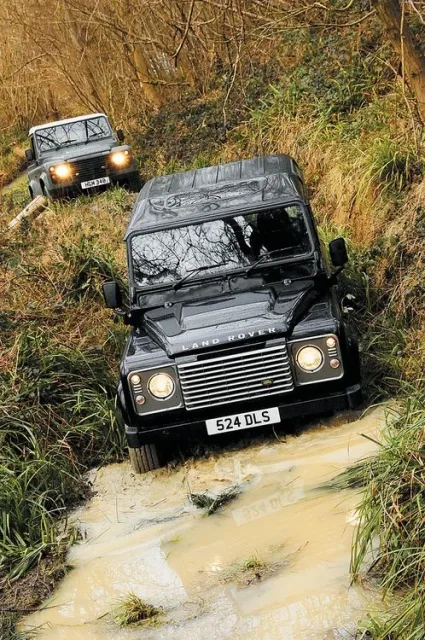
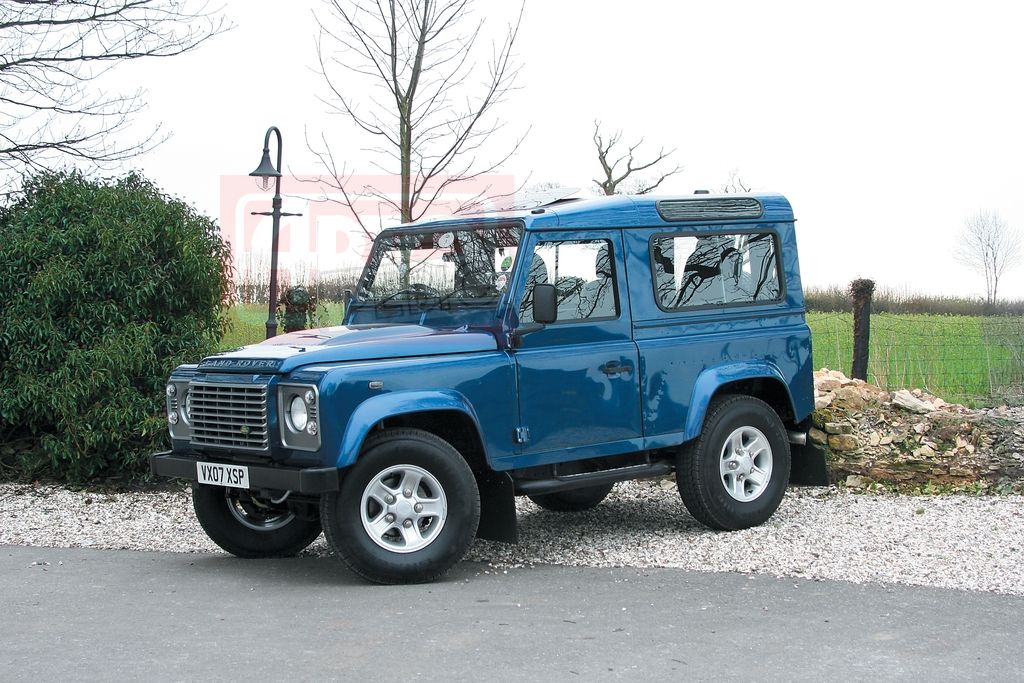
The real Defender is alive! To rejuvenate the old good Landy, factory specialists listened to the wishes of owners of classic "Land Rovers" and, of course, analyzed the vast operating experience of four-wheel-drive vehicles from Solihull. Therefore, it is not surprising that the appearance of the 2007 model year Defender has changed minimally: only an air intake grille on the right fender was added, and the new hood lost the bracket for the spare wheel.
I open the door, squeeze into the driver's seat — and a wave of nostalgia washes over me: the old man Defender is recognizable in every detail. When you slam the door, it habitually hits your elbow with the trim, the metal box under the seat forces you to stretch your legs, and the "crutch" parking brake constantly tries to hit your left shin. Yes, yes, exactly the left one, because we were given English cars with right-hand drive, and before the start we were reminded that on local roads it is customary to drive on the "correct" side.
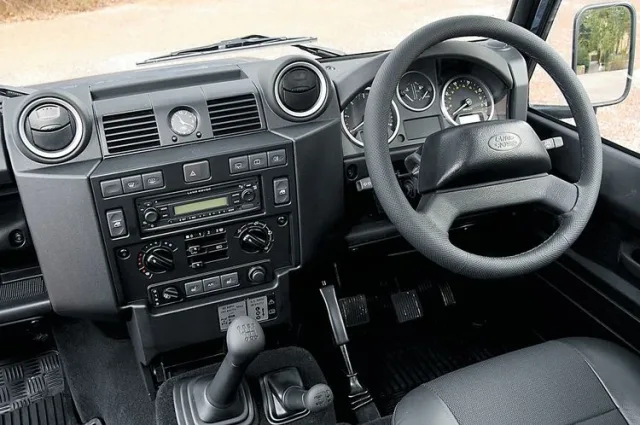
The front panel is styled after the Discovery 3. It turned out stylish, ergonomic, and functional. For transmission control, as before, there are two levers
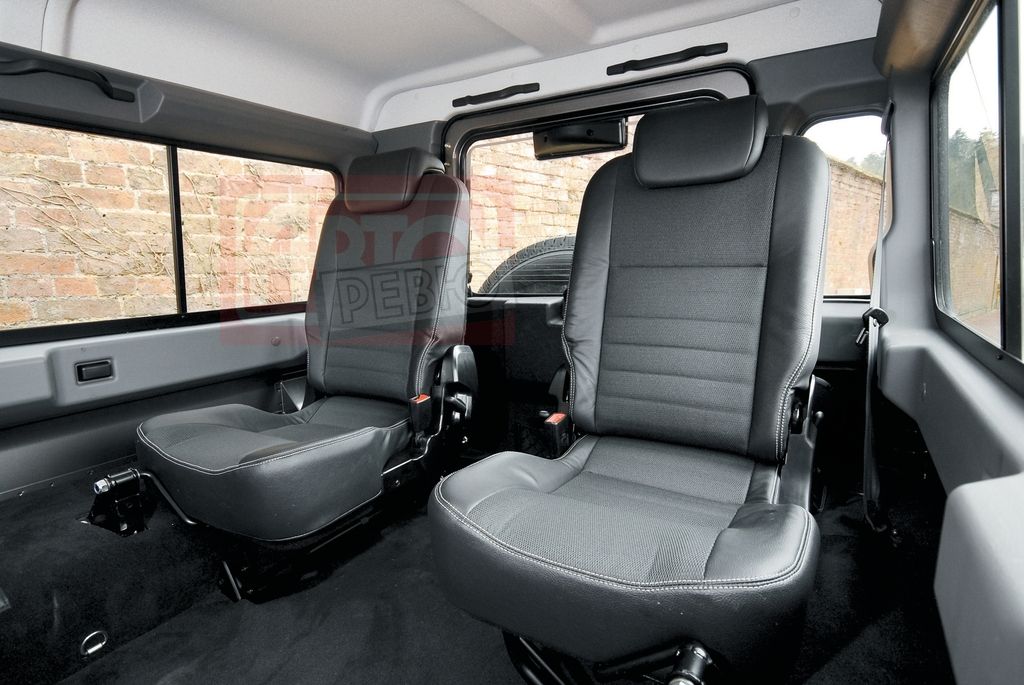
On "continental" (left-hand drive) cars, another familiar problem for owners of previous Defenders and Discoverys will likely appear — the too "left" positioning of the clutch pedal. But what may please is that the "chairs" have become better: the profile is more comfortable, lateral support is noticeably pronounced, and the transformable seats now have a spring mechanism that makes folding them easier.
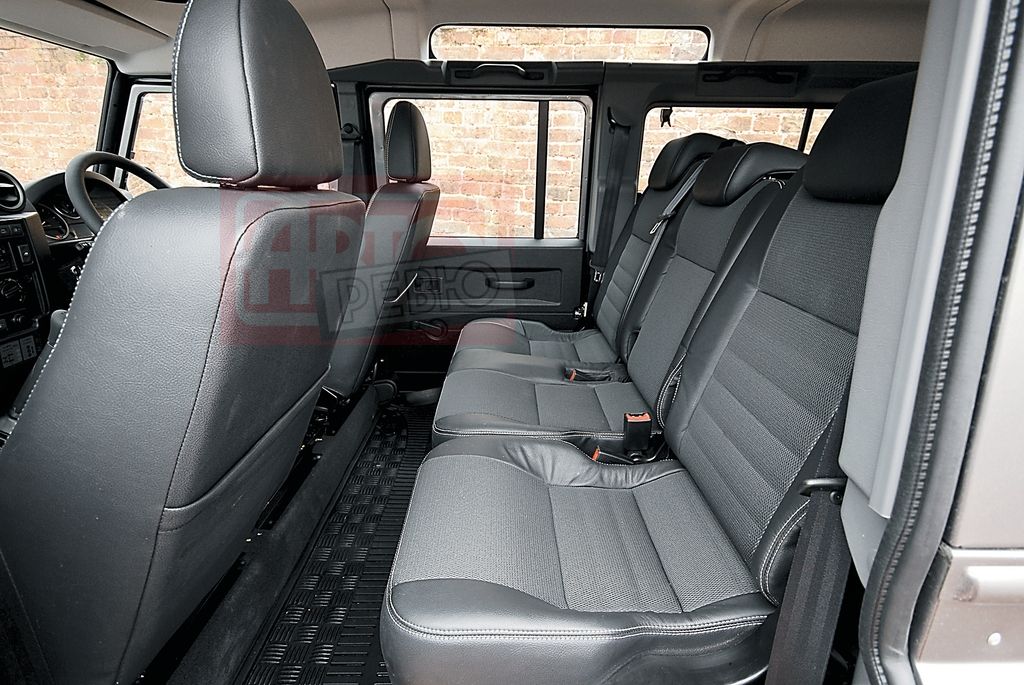
The short-wheelbase Defender 90 has finally gotten rid of the longitudinal benches (previously they could be ordered): now there are two full-fledged folding seats in the rear, installed facing forward and arranged amphitheater-style — slightly higher than the front ones. But the main attraction of the interior is the front panel in the style of the Discovery 3. In front of your eyes is a modern monoblock with well-readable instruments (previously there was a "military" shield) and a digital odometer window. There is no trip computer. Opposite the front passenger is a sturdy horizontal grab handle for both hands, a convenient shelf for small items, and a horizontal surface where you can place a navigator's tablet, GPS navigator, or control panels for additional equipment. The center console has also "blossomed": ventilation deflectors, additional equipment control buttons, a climate control unit, and a CD player are assembled into a single vertical pillar crowned with a stylish chronometer. And how pleasant it is to find to the left of the steering wheel the archaic headlight switch in the form of a three-position toggle! Click — parking lights. Click — low beam. Like on a military radio station, and how much delight...
 |
 |
 |
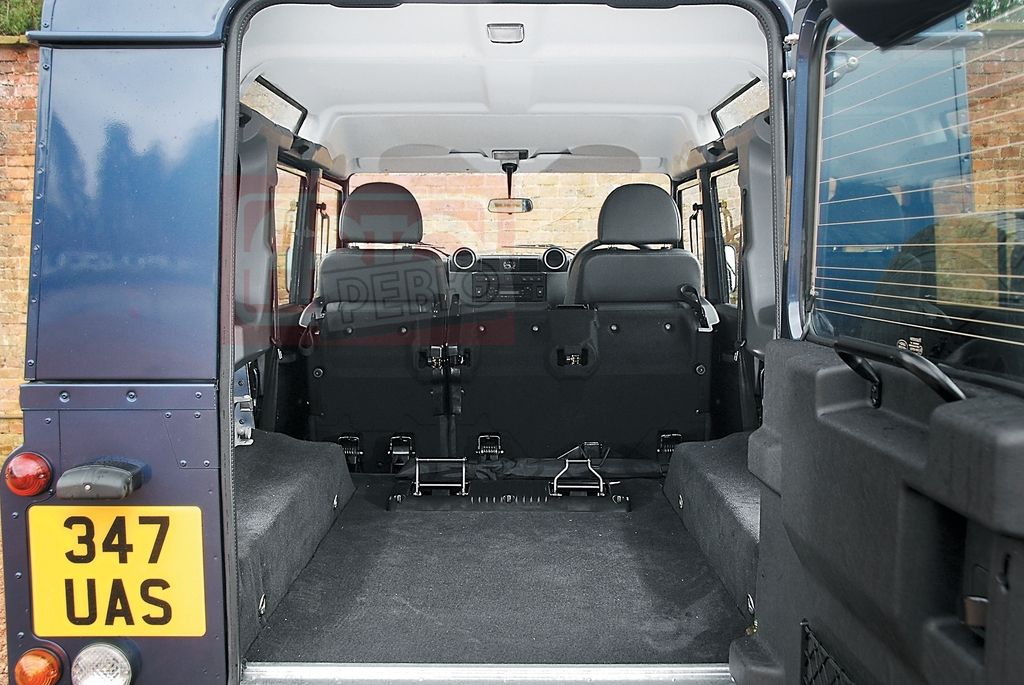
| With the transformation of the interior, everything is great with the new Defender. Problems may only arise with loading — the rear door is still narrow |
There are minimal layout changes in the 110 model... |
...but the short-wheelbase version of the Defender received new second-row seats, turned to face forward and equipped with three-point seat belts |
The direct-flow air dampers that turned the Defender's cabin into a wind tunnel are no longer there. Instead, there is a modern climate control system with air conditioning that warms the cabin much faster in cold weather and cools it in summer. The new heater blows great, not only forward and backward, but also onto the side windows. And the windshield, in addition, received an electric heating "web" — a real salvation for regions with cold and humid climates.
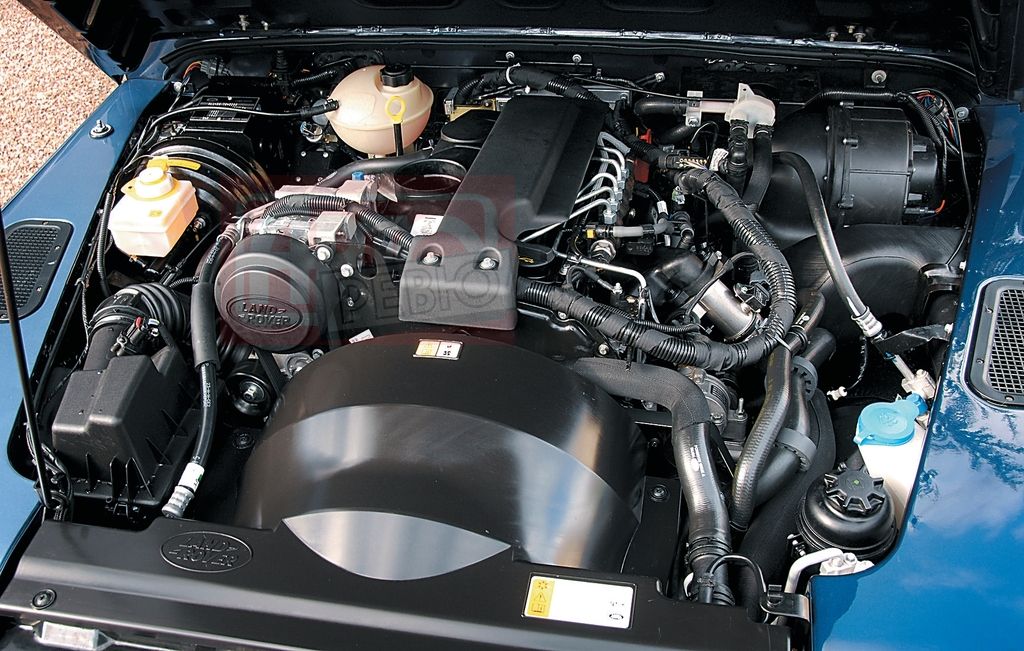
Open the hood? In the engine compartment hides the main update of 2007 — a Ford DuraTorq family turbodiesel with a displacement of 2.4 liters (122 hp) with common rail system. The peak of 360 Nm is reached already at 2000 rpm, and 90% of maximum torque the engine develops in the range from 1750 to 3000 rpm, that is, in the most "efficient" sector of the tachometer scale. Ford DuraTorq turbodiesels belong to the so-called commercial line and are intended mainly for use on light trucks with a payload of up to two tons — they have been used there for about ten years. Cast iron cylinder block with developed stiffening ribs, forged connecting rods, forged fully supported crankshaft with induction-hardened journals, chain drive timing, and a Honeywell-Garrett supercharger with variable geometry guide vane — in short, a gentleman's set of any modern compression-ignition engine. And the highlight is the highest resource reserve. The environmental performance of the Ford DuraTorq engine varies depending on the specific specification and fuel system settings, which correlate with fuel quality in a particular region, and a new "cyclone" type air cleaner protects the engine from abrasive "poison," trapping large dust particles before the air filter.
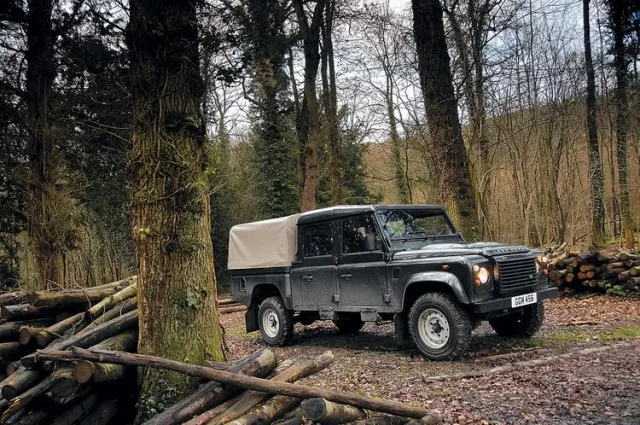
Here he is, the country style icon — Land Rover Crew Cab Pick Up 130! However, in the city, such a car will also attract attention — country style is still in fashion. Since 2007, Land Rover pickups will be officially sold in Russia. Only on the shorter "one-ten" chassis
The transmission scheme of the new Defender remains the same — permanent all-wheel drive with locking center differential and a reduction gear, but thanks to the new six-speed gearbox, the total range of gear ratios has noticeably expanded: by 32% "down" and by 34% "up." On the one hand, this provided the car with a lower stable ("crawling") speed off-road, on the other hand, it increased fuel efficiency when driving in top gear on paved roads. The synchronizers of the first and second gears on the new gearbox are triple, third and fourth — double, for fifth, sixth, and reverse — single. In addition, the Defender received a new clutch with an increased diameter disc, reinforced cardan drives and constant velocity joints, springs and shock absorbers with changed characteristics, longer anti-roll bars, new steering settings... In short, from all over the world a thread — and a new Defender.
Before the trip to England, I took a ride in the "one-ten" of the previous generation, which my institute friend has been "roughing up" in the forests of the Tver region for the third year, but cherishes and cares for at the official service. So, the new car has become noticeably more composed (the new Defender performs lane changes at high speed with less roll), faster (the comfortable speed has increased by at least 20 km/h), and quieter — the acoustic environment in the cabin has approached the "passenger car" level. On the Birmingham—Stratford highway, it was not at all scary to pull into the fast right lane, change lanes, and overtake in dense traffic. True, a couple of times I "messed up" with the gear lever, but I attribute these mistakes only to the lack of skill in shifting with the left hand.
 |
 |
| The main update is the Ford "commercial" line DuraTorq turbodiesel |
The short-wheelbase version has its own charm: Defender 90 is a car for egoists |
About ten years ago, I secretly made a copy of Tom Sheppard's legendary book on off-road driving in a Land Rover and, looking at the pictures, imagined what the famous test track near Solihull looked like. Artificial ditches, specially dug pits, calibrated obstacles... But reality turned out to be much more mundane! After wandering a bit through the surrounding fields, we turned into the woods and hit the most ordinary tractor rut. The Defender rocked slowly from side to side, tackling this rut. Uphill, downhill, uphill again. On a steep section, I engage the center differential lock. When I need to carefully squeeze between trees, I unlock the center differential. Silence on the radio; the marshals monitoring the route remain unperturbed, even the pheasants in the bushes pay no attention to the vehicles crawling through the mud. Absolute relaxation. The only thing that slightly bothers me is the traction control system, which helps the Defender when the wheels unload. As soon as a tire starts to slip on the clay, the "ratchet" instantly transfers torque to the wheel where the tread can still get grip. Following the signs in the forest, we conquered a long, soggy climb and ended up on a small plateau, the only descent from which resembled a hill for reckless teenagers.
— Just don't press the gas and don't brake!
How fortunate that the spare wheel was removed from the Defender's hood — at least you can see where we're falling... The car, uncontrollable, rolled down the slippery clay like an iron across an ironing board, ignoring steering inputs and trying to turn sideways across the slope. The speed was only about twenty kilometers per hour, but the feeling of completely losing control of the vehicle was frightening. Hitting branches with the left mirror, we miraculously squeezed between the trees, and at the bottom we hit the ground with the bumper so hard that I reflexively squeezed my eyes shut, expecting an airbag to deploy. The fears were in vain: the 2007 Defender still has no airbags. Why? The British claim it's due to special operating conditions: supposedly, when hitting trees or the ground, the "pyrotechnics" would deploy uselessly. Such cases do happen, but I think this explanation is just a "cover story."
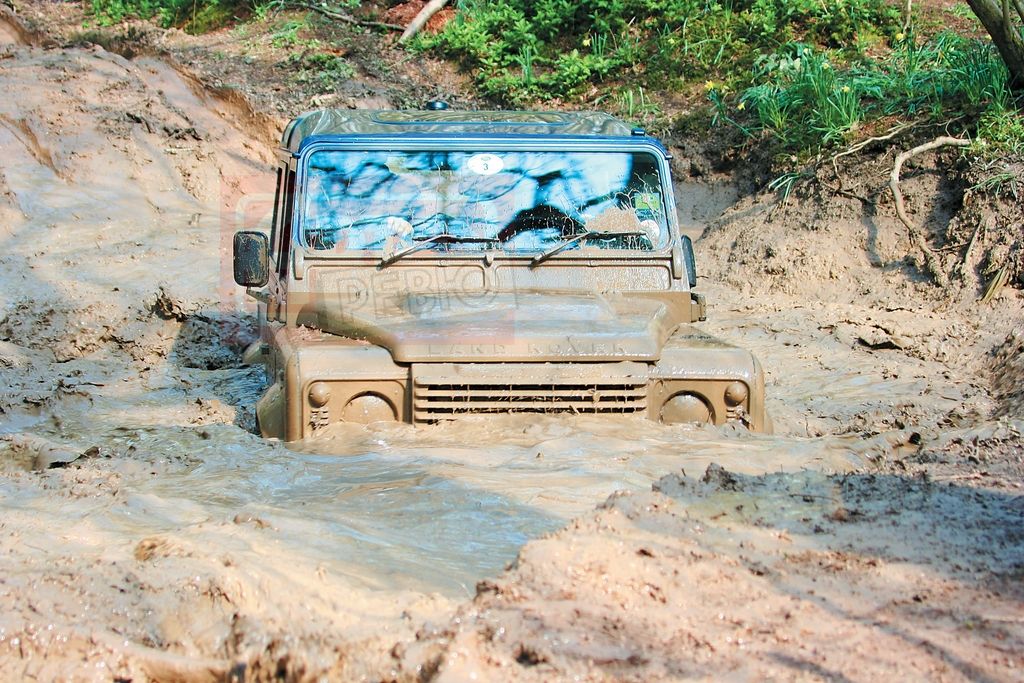 | 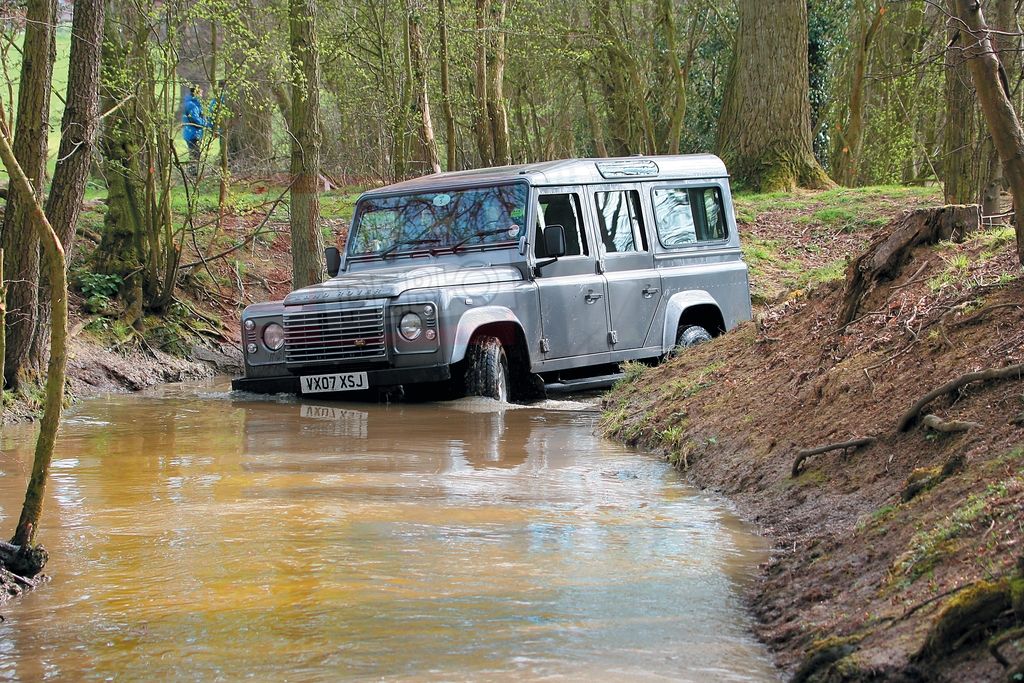 | 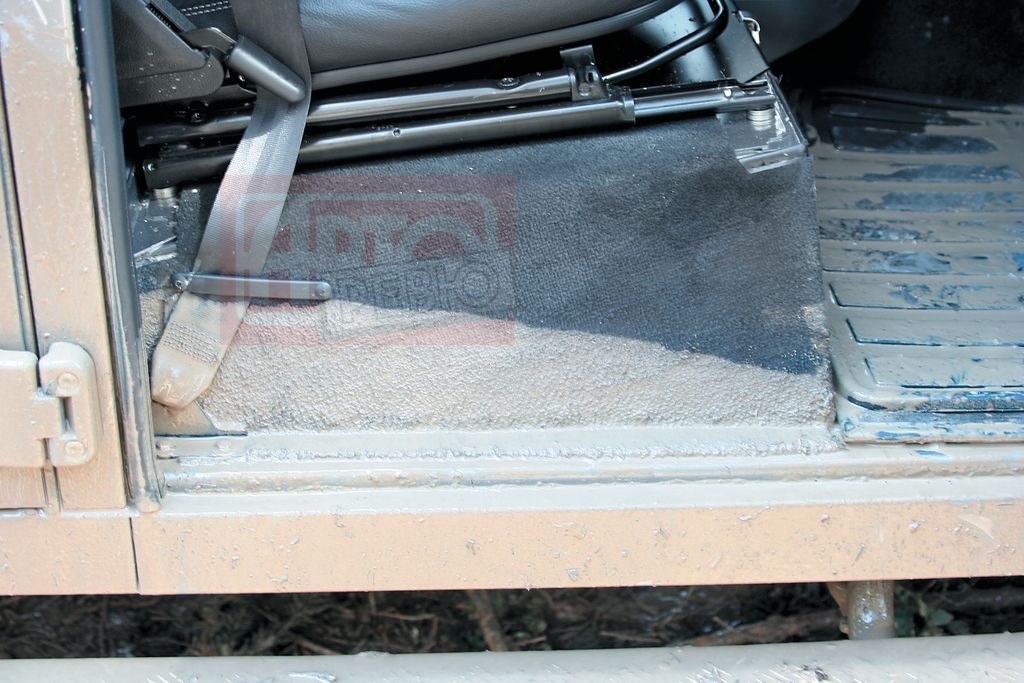 |
| In consistency, the English mud resembled yogurt or oatmeal heavily diluted with milk | Actually, driving along riverbeds is punished in Europe. Where are the environmentalists looking... | The door seal gave up surprisingly quickly. But it didn't come to fatal flooding of the cabin |
The marshals standing along the route got into the spirit, and I was hit by deja vu: it seemed the Defender was taking revenge for being drowned fourteen years ago. Like, it's your fault, you "newbies." Look what I can do!
— Please engage second gear and the lock. Under no circumstances release the gas pedal and watch my signals!
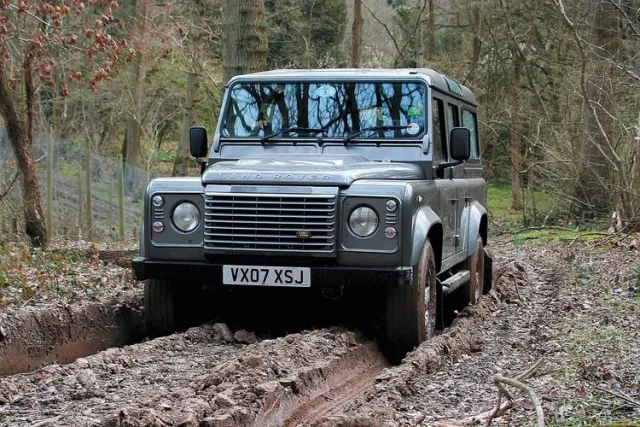
A long climb, slippery clay, ruts... In such conditions, the traction control system comes in handy
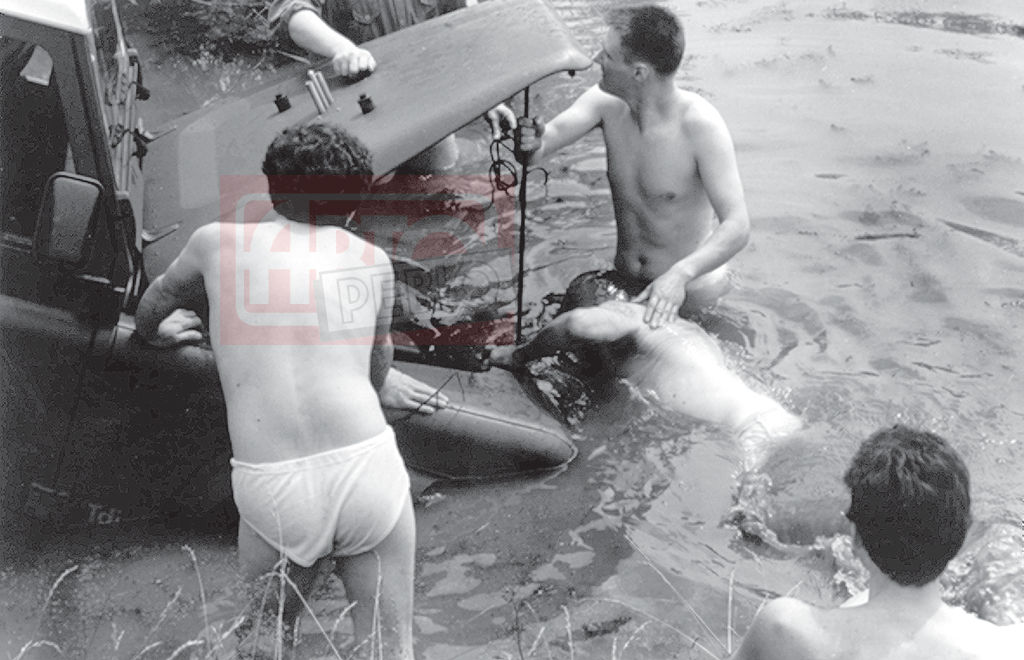 |
| 1993. Krylatskoye. Rowing canal. On the left — Mikhail Podorozhansky, on the right — Oleg Rastegaev, and in the center the author of these lines is dunking Alexander Divakov so he can reach the tow hook and attach the cable. How young we were! Now we'd take a mobile phone, call a tow truck... |
The pit turned out to be deep. Very deep. Perhaps even deeper than the one in Krylatskoye... And nothing is visible: the wave of mud raised by the impact with the water covered the entire vehicle. To understand why we didn't sink and how we got out onto the almost vertical wall, I stopped, opened the door, waited for the dirty water to drain from the cabin (the door seal gave up surprisingly quickly this time), and, taking the camera, walked to the deadly spot. The German crew driving behind us repeated our jump into the water, splashing the photographers with mud and making a fatal mistake — the Germans forgot to close the sunroof! Take a look at the cover of this issue of Autoreview. The new Land Rover Defender gets out of such situations only thanks to short overhangs and the traction control system: the main thing is to seal all doors and not be afraid. But also don't get carried away: we plan the trajectory, choose what to grab onto when exiting — and full throttle! The higher the RPM of the spinning wheels, the more effectively the traction control "ratchet" works, especially if the brake pads have a reserve of friction material. By the way, since 2007, additional return springs have been installed in the brake calipers of the Land Rover Defender, which ensure faster and more reliable retraction of the brake pads from the discs — this reduces wear of the friction pairs off-road.
The 2007 Land Rover Defender lineup includes 14 modifications with three wheelbase sizes: 90, 110, and 130 inches. Only the 90 and 110 versions will be supplied to Russia, with a preliminary price range of $31,900 to $35,500 for the Defender 90 and $34,900 to $39,570 for the Defender 110. The final specification will be announced after certification tests, but it is already known that the Defender 110 Crew Cab Pick Up cargo-passenger model will also be officially sold in Russia, which in price and dimensions falls exactly between "standard" pickups (Mazda BT-50, Mitsubishi L200, Ford Ranger) and "large" ones like the Nissan Navara, while being the only utilitarian truck on the market with a 4x4 wheel arrangement and permanent all-wheel drive with a differential link between the axles. In my opinion, this is the most stylish Defender — just look at the canvas top!
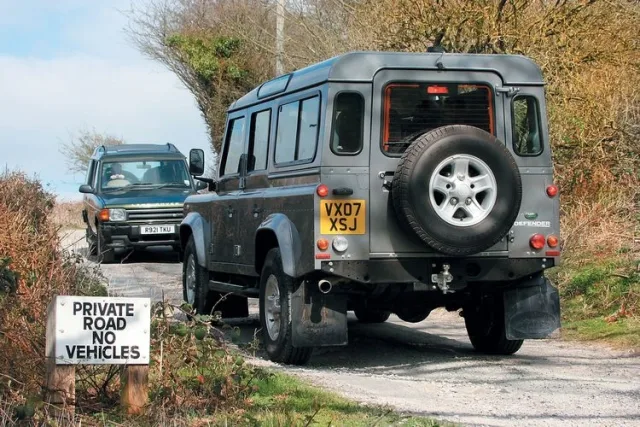
| Specifications | ||
| Parameters | Vehicle | |
| Land Rover Defender | ||
| Modification | 90 | 110 |
| Number of seats | 4 | 7 |
| Dimensions, mm | ||
| length | 3894 | 4639 |
| width | 1790 | 1790 |
| height* | 2021 | 2021 |
| Wheelbase, mm | 2360 | 2794 |
| Ground clearance, mm* | 314 | 314 |
| Track front/rear, mm | 1486/1486 | 1486/1486 |
| Fording depth, mm | 500 | 500 |
| Turning circle, m* | 6.67 | 7.18 |
| Climbable gradient, deg. | 45 | 45 |
| Approach angle, deg.* | 49 | 49 |
| Ramp angle, deg.* | 147 | 150 |
| Departure angle, deg.* | 47 | 35 |
| Side slope angle, deg. | 35 | 35 |
| Curb weight, kg | 1705 | 1884 |
| Gross weight, kg | 2400 | 3050 |
| Engine | turbodiesel | turbodiesel |
| Location | longitudinal | longitudinal |
| Number of cylinders | 4 | 4 |
| Number of valves | 16 | 16 |
| Displacement, cc | 2401 | 2401 |
| Cylinder bore/piston stroke, mm | 89.9/94.6 | 89.9/94.6 |
| Compression ratio | 17.5:1 | 17.5:1 |
| Max power, hp/kW/rpm | 122/90/3500 | 122/90/3500 |
| Max torque, Nm/rpm | 360/2000 | 360/2000 |
| Gearbox | manual, 6-speed | |
| Drive | permanent all-wheel, with center differential lock and low-range gear | |
| Maximum speed, km/h | 130 | 130 |
| Acceleration time 0-100 km/h, s | 15.8 | 15.8 |
| Trailer weight, kg | ||
| with brakes | 3500 | 3500 |
| without brakes | 750 | 750 |
| Fuel consumption, l/100 km* | ||
| urban cycle | 12.5 | 13.5 |
| extra-urban cycle | 8.6 | 9.5 |
| combined cycle | 10.0 | 11.0 |
| Fuel tank capacity, l | 60 | 75 |
| * With 235/7.50 tires | ||