
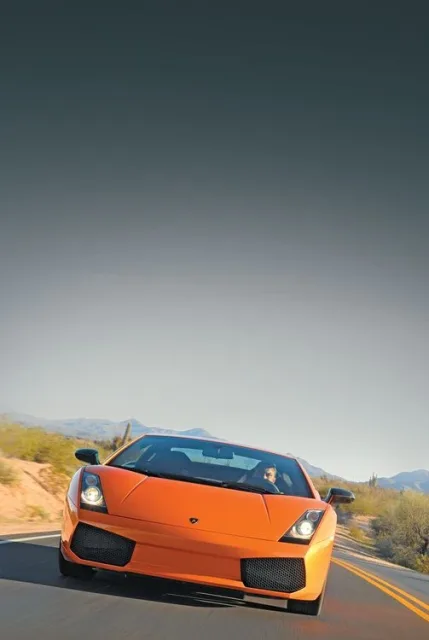
Imagine for a second that you are a passionate southerner, raised under the scorching Italian sun, who from a young age raced like crazy in your father's Fiat along narrow, winding country roads. Recall how Adriano Celentano's voice sounds. Now try to say with feeling: Lamborghini Gallardo Superleggera.
No, not like that. Not "Lamborghini", not "Gallardo", and not "Superleggera". But exactly like this: "Lamborghini Gallardo Superleggera". And the stressed vowels must be melodiously drawn out — you are a southerner, after all. So let's try again: "Lamborghini Gallardo Superleggera".
Beautiful? And believe me, very fast.
— Porsche? And what is Porsche? — Manfred Fitzgerald asks me with barely concealed irritation. — Do you clearly understand why all these countless versions of the Porsche 911 are needed? All these Carreras, Turbos, GT2, GT3, RS…
Manfred Fitzgerald holds an unusual position at Lamborghini: he simultaneously heads both marketing and… design. Yes, a marketer stands at the head of Lamborghini's stylists! After Luc Donckerwolke, who created the style of the Murcielago and Gallardo, left the company, five designers remained in Sant'Agata, and they work under the leadership of a man who is not a designer.
An unconventional approach…
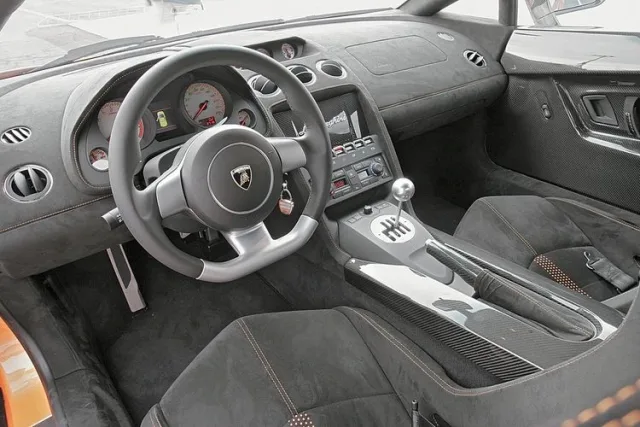
In the Superleggera's cockpit, almost no plastic remains — everywhere it's either carbon fiber (even the handbrake handle is made of it) or soft Alcantara. But the relative crampedness inside the Gallardo hasn't gone away
Mentioning Porsche in a conversation with Fitzgerald was almost inevitable. We were discussing who the Superleggera, meaning "super light", is intended for. And when it comes to lightweight sports cars, the Porsche 911 in GT versions is an icon. It's the main "combat weapon" of fast drivers on the Nürburgring Nordschleife. Look at supercar internet forums, ask who is faster on the Nordschleife among production cars — and the Porsche 911 GT2 or GT3 RS will invariably be at the very top. Only far more powerful monsters can surpass them: Pagani Zonda, Koenigsegg CCR, Mercedes SLR, Lamborghini Murcielago… But the Gallardo is slower.
But now there is the Gallardo Superleggera.
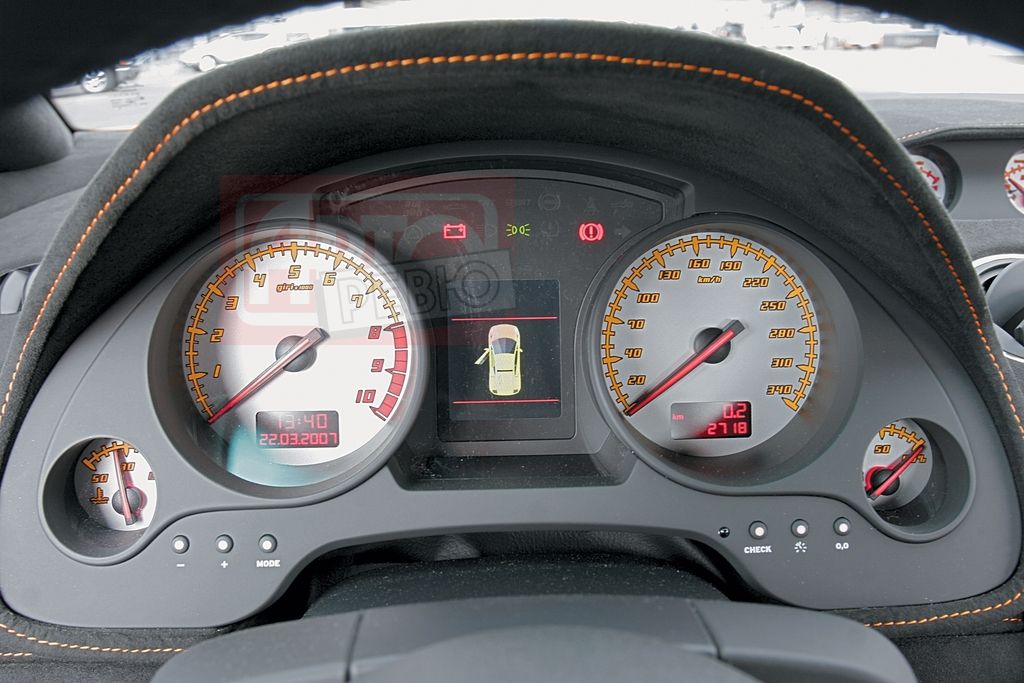 | 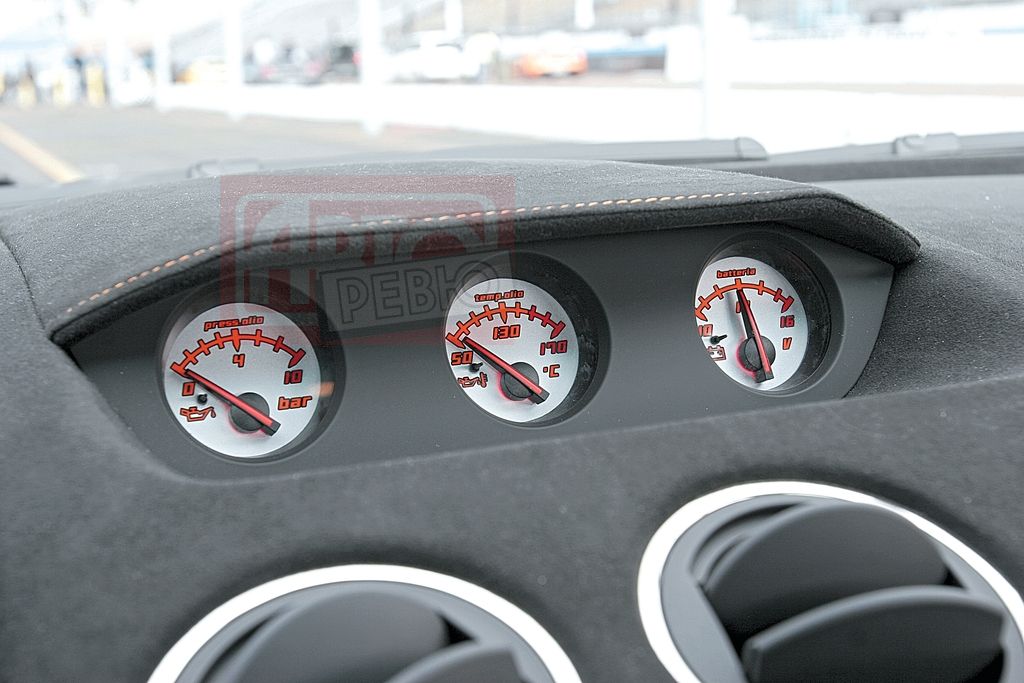 | 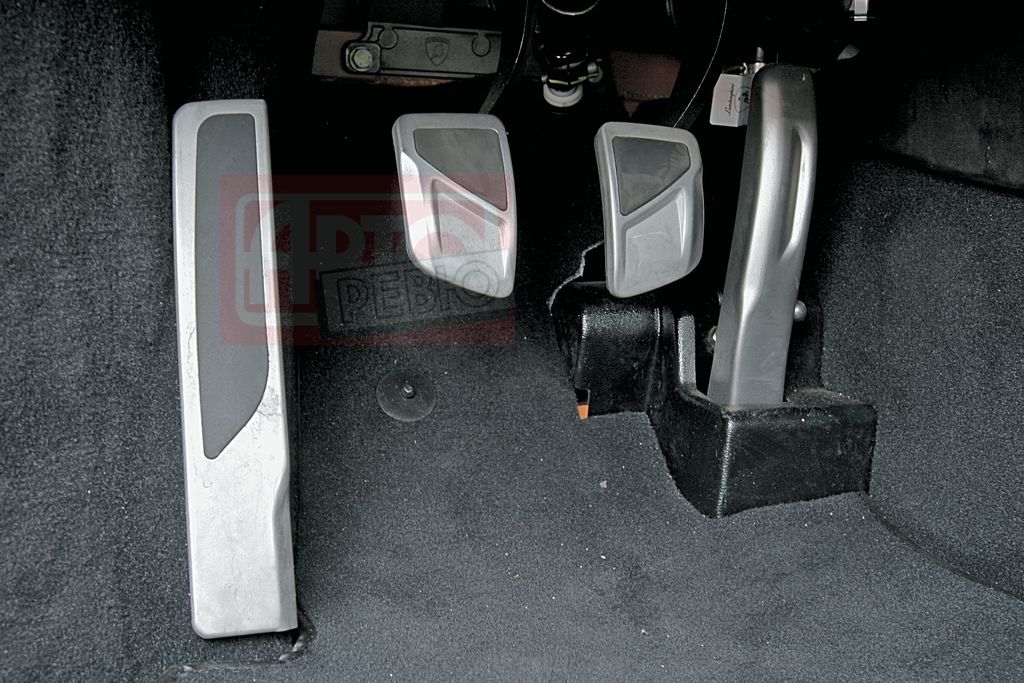 |
| The instruments are the shame of the Gallardo: primitive and unreadable | The additional gauges are also more like props: who needs to know the voltage in the network? | The pedal box is a bit cramped, and the footrest on the left forces you to bend your leg too much |
In its concept, the Superleggera resembles the Mercedes SLR McLaren 722, which I drove quite recently. The principle is the same: make the supercar even lighter and even more powerful to get even more hurricane-like dynamics. True, the creators of the SLR 722 Edition mainly sacrificed sound insulation, which saved only 44 kg.
And Lamborghini followed the same path, but went further. Everything possible is carbon fiber: the engine cover, rear diffuser, door panels, tunnel trim in the cabin, mirror housings, and even the seat shells. All the rear glazing, including the transparent insert through which the engine is visible, is made of thin polycarbonate. The wheels, front hubs, and drive shafts are lightweight, and the wheel bolts are titanium. The engine is 11.8 kg lighter, the transmission 17.5 kg lighter, the exterior carbon fiber parts saved 17 kg, and the interior lightened the car by a full 46 kg… In total — an impressive 100 kg!
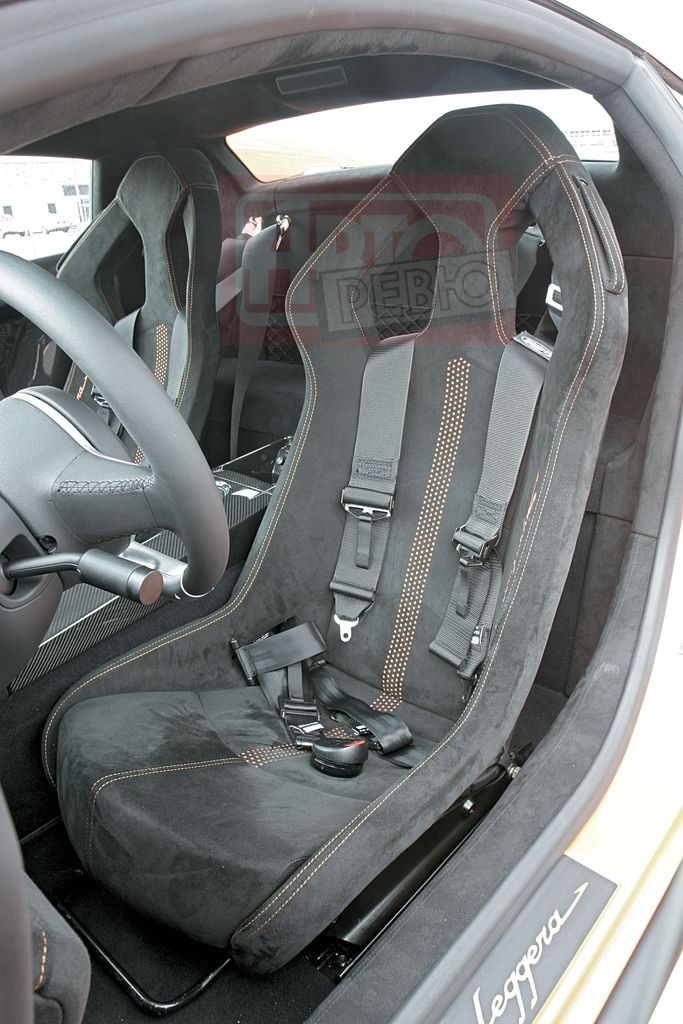 | 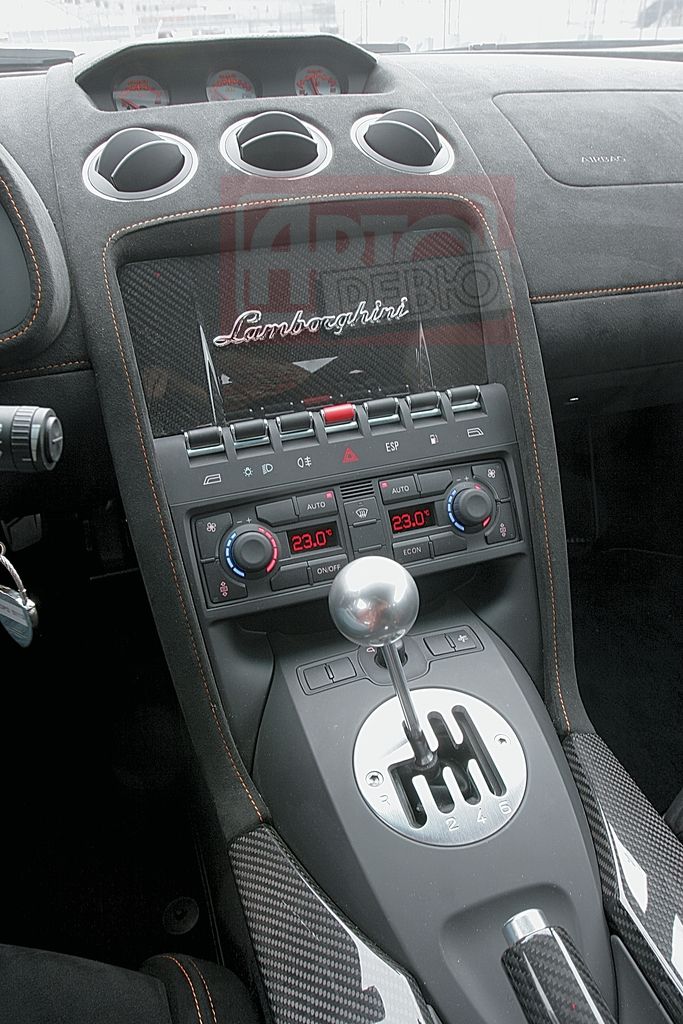 | 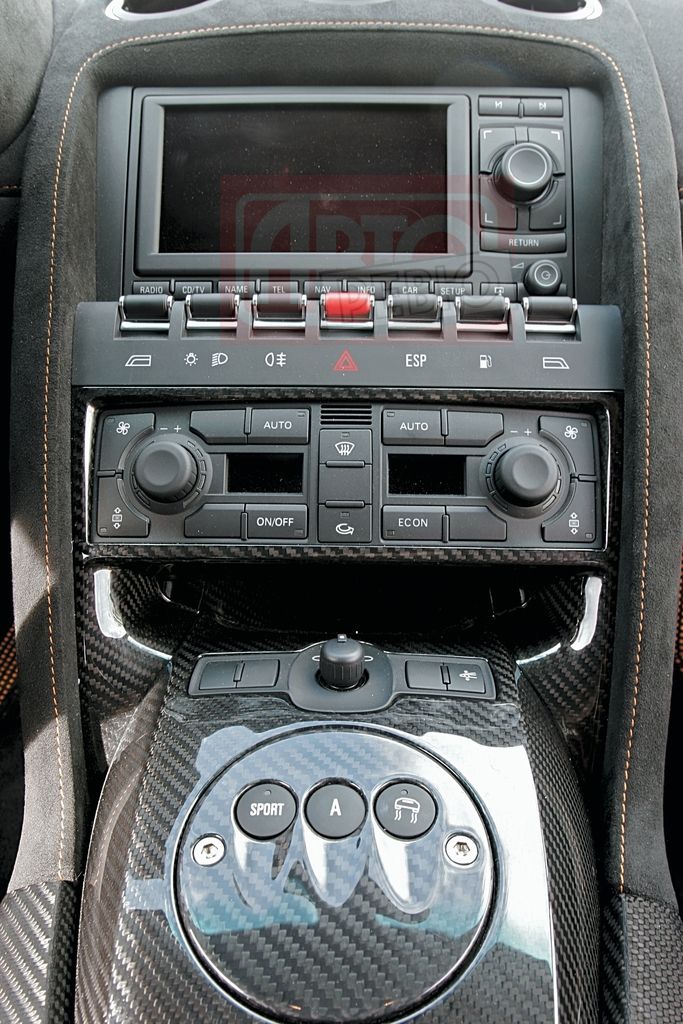 |
| The one-piece carbon fiber "bucket" is optionally complemented with four-point belts: sport! | The interior of the car with a "manual": a wonderful or terrible (every other time) gear lever surround | In the Gallardo with the e-gear "robot", instead of a lever there are mode buttons: gears are changed only from the steering wheel |
Moreover, theoretically the Superleggera could have been even "superlegger-er": if you abandon the front-wheel drive components, you could shed 56 kg right away. Why not make the fastest Gallardo purely rear-wheel drive? But Lamborghini people respond to this provocation with a decisive "no". They say, our cars are only all-wheel drive!
They are generally very categorical. Will Lamborghini ever have turbocharging? Never! Their motto? Lamborghini — uncompromising, extreme, Italian cars!
And it is precisely the Gallardo Superleggera that is the uncompromising peak of Italian extremism. The powerful five-liter V10 engine, thanks to light factory tuning, produces 530 horsepower, 10 hp more. The mass is only 1330 kg. True, the cunning Italians indicate the "dry" mass of their cars with empty tanks. And the Gallardo coupe's tank holds 90 liters of gasoline. So the real curb weight according to DIN standards is about 1.4 tons.
And now, as I sit in the orange Superleggera, it is even heavier — by my modest 65 kg, acting as a gasket between the steering wheel and the Spartan carbon fiber seat. And ahead is a winding road inside the "superspeedway" oval of the American Phoenix International Raceway track, on the outskirts of Phoenix, Arizona.
The Gallardo's seat begs to be called Procrustean. The "bucket" is a bit stiff and not optimal in profile — the lower back lacks support. There's a bit too little room for the legs, which you feel even in the passenger seat — the Murcielago, which is 30 centimeters longer, is noticeably more spacious inside. Design? If in the regular Gallardo cheap plastic catches your eye everywhere, then in the "super light" interior, even the primitive instrument panel is lost against the background of all-conquering carbon fiber. The glossy shine of carbon is everywhere here. Even the door handles are leather loops, "reinforced" with a real carbon fiber overlay. And the optional four-point belts, simple and harsh as the truth of life, add "seriousness" — they are attached with carabiners to sturdy lugs screwed into the bulkhead of the engine compartment behind the occupants' backs.
Outside, the roar of the Gallardo's engine sounds loud — sharp, pushy, and unintelligent. But inside the Superleggera it's quieter — this is not the booming Mercedes SLR 722; sound insulation is in order here. And if you carefully pull away and, "smoothly pedaling", roll along the pit lane following the leading Italian ace in a Murcielago, the Superleggera seems quite peaceful and comfortable. A bit of gas — and the engine, with a noble, satiated-soft purr, immediately responds with powerful thrust. And when the Murcielago ahead picks up speed, diving into the first turn of the track, I floor the pedal and… Here it is!
Having passed the "low" and "mid" ranges with the usual supercar pressure, the engine reaches the "high" range — and I feel as if I'm in a racing hydroplane. With its nose raised, the Superleggera breathes down the leader's neck — it accelerates no slower than its older 640-horsepower brother! The concentration of thrust and engine sound grows exponentially — avalanche-like!
And suddenly, at the very crest of the wave, the engine chokes, the thrust is cut off completely — and the Gallardo begins to shake in a terrible, literally epileptic fit. What a rev limiter…
The gear lever is a masterpiece. A metal ball on a long metal rod that moves through the slots of a metal "comb" and produces "tasty" metallic sounds — especially when you shove third after second. Clack! Dry, like a rifle bolt.
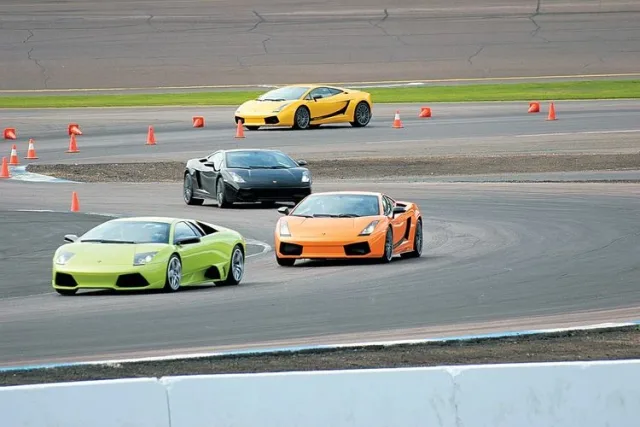
The instructor in the more powerful Murcielago cannot break away from the Superleggera: on a winding track, they are faster!
And if you do everything right — almost wait until the cherished eight thousand, catch the engine right at the threshold of the limiter's epilepsy, dance a pas de deux on the gas and clutch pedals, and simultaneously with a lightning-fast throw shove the lever into the right slot — then the feeling you experience is close to orgasmic. Furious thrust–clack–thrust–clack–thrust… And you're already breathing down the leader's neck.
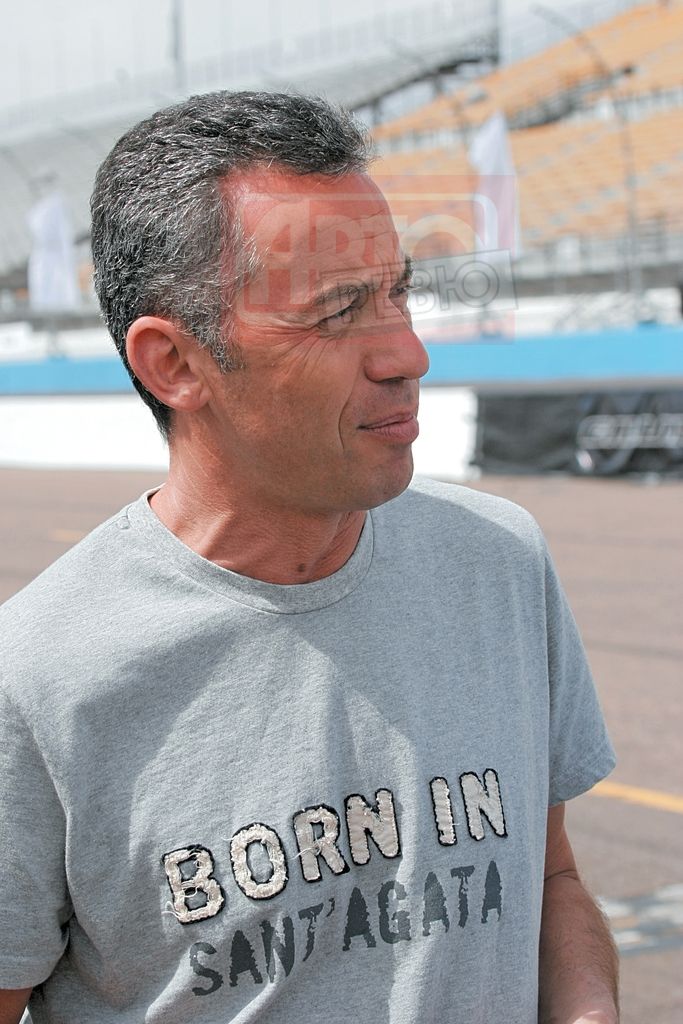 |
| Lamborghini's chief engineer Maurizio Reggiani: "Diesels? Turbocharging? Hybrids? Never: only naturally aspirated engines!" |
But here's the trouble — I missed gears literally every other time! And all because of that overlay with slots for the lever. It especially interferes with downshifts. Braked before the turn, pressed the clutch, pulled the lever out of third, now a bit left — and toward me. But it doesn't go, it hits the metal of the notorious "comb"! As a result, the Murcielago ahead is already accelerating — it's as if the wind is blowing it away from you. And you're coasting with the clutch pressed and frantically, like a complete novice, jerking the lever. Ugh, how ugly…
Probably, this is the Italian approach — when failure is followed by success? If you're unlucky, then to the fullest, and if it works out, then to the fullest too?
With the robotic e-gear gearbox on the Gallardo, it's easier to manage — Magneti Marelli's electro-hydraulics shift the gears of the same six-speed Graziano manual. But you won't find a selector on the center tunnel at all — only paddle shifters, and they're not on the steering wheel but on the column. The Gallardo has another feature — the steering wheel is quite "empty" in reactions (almost three turns of the wheel from lock to lock). So even in smooth corners, I sometimes found myself in an awkward position: to accelerate further on the arc, you need to shift when the wheels are turned about ninety degrees. And for that, you inevitably take one hand off the wheel — and reach for the right paddle "up." Nothing terrible, if the Superleggera weren't flying with cannon-like acceleration past a hundred right next to a concrete wall. And if I didn't notice that beyond the apex, on the outside of the arc, there's a fence — which doesn't look like paper either. One wrong turn — and the car is thrown outward, and there...
Moreover, from the "manual" you at least get a thrill — albeit not always. But with the "robot" — only anger from jerks and not the most nimble shifts. Similar gearboxes on the BMW M5/M6 work much quicker. Not to mention the Ferrari 599 GTB's transmission, which I consider the best "robot" on the planet.
And you know what Lamborghini's chief engineer Maurizio Reggiani replied to these complaints?
— Yes, the Ferrari 599's robot shifts smoother. But where's the feeling of sport there?
Feeling, then. They say we could also tune the e-gear more delicately, but then the Gallardo wouldn't seem so crazy to the buyer!
And in some ways, Reggiani is right.
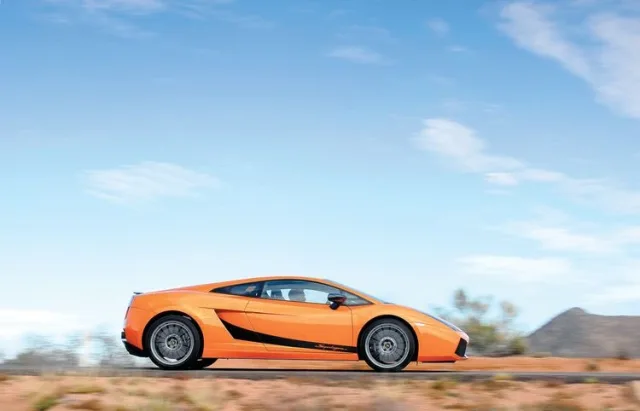
The fact is that the Gallardo is surprisingly docile and safe at high speed. So docile that you can safely add artificial "stiffness" to its character — since it's such an Italian extreme machine.
The brakes are carbon-ceramic: on the track, not the slightest sign of fatigue. Deceleration is brutal. You press the pedal — and the Superleggera presses its wedge-shaped nose into the asphalt, and ABS balances on the edge of rolling and sliding, extracting all possible grip from the huge tires.
The chassis is incredibly "sticky." Excellent stability on the straight, moderate tendency to understeer. And what about oversteer under such crazy traction? It happens. You rush a bit, open the throttle fully right on the arc — and the Superleggera immediately twitches nervously, ready to send the rear axle into a slide.
But then all-wheel drive intervenes! True, it's "not entirely honest" — the viscous coupling engages the front wheels only partially and with a noticeable delay after the rear wheels start to spin. But if you don't lift off the gas, the oversteer turns into a four-wheel drift — the front will pull you out.
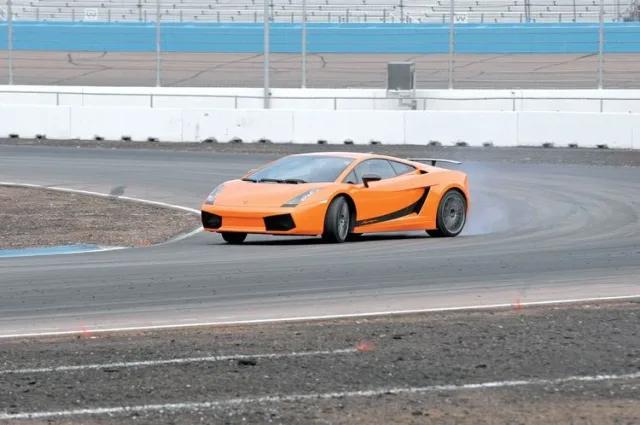
There's an excess of traction, but the chassis is so "grippy" that oversteer on dry asphalt with ESP off can only be provoked by a sharp and full throttle press in a corner. And even then, a moment later the front drive's viscous coupling will "freeze" — and the Gallardo will pull itself out of the slide
But driving the Gallardo sideways on asphalt, even wet, is not an easy task. Fierce traction, grippy tires, and an "inconsistent" all-wheel drive with a lagging viscous coupling instead of a center differential — not the best set for a rally style.
No, all-wheel drive here is needed for something else — to accelerate flat-out with stability control off without issues. The same Mercedes SLR McLaren 722, for example, is almost incapable of that. And with the ultra-light Gallardo, even a housewife can handle acceleration without ESP. And with the stability system on... ESP works flawlessly — any attempt at oversteer is cut off instantly. And understeer is also not a problem. You hold the arc of the banked track in Phoenix, stupidly flooring the pedal, and the yellow ESP triangle on the dash blinks non-stop — the electronics hold the car, not letting it drift outward to the concrete wall. I wonder how many NASCAR cars have been wrecked against it?
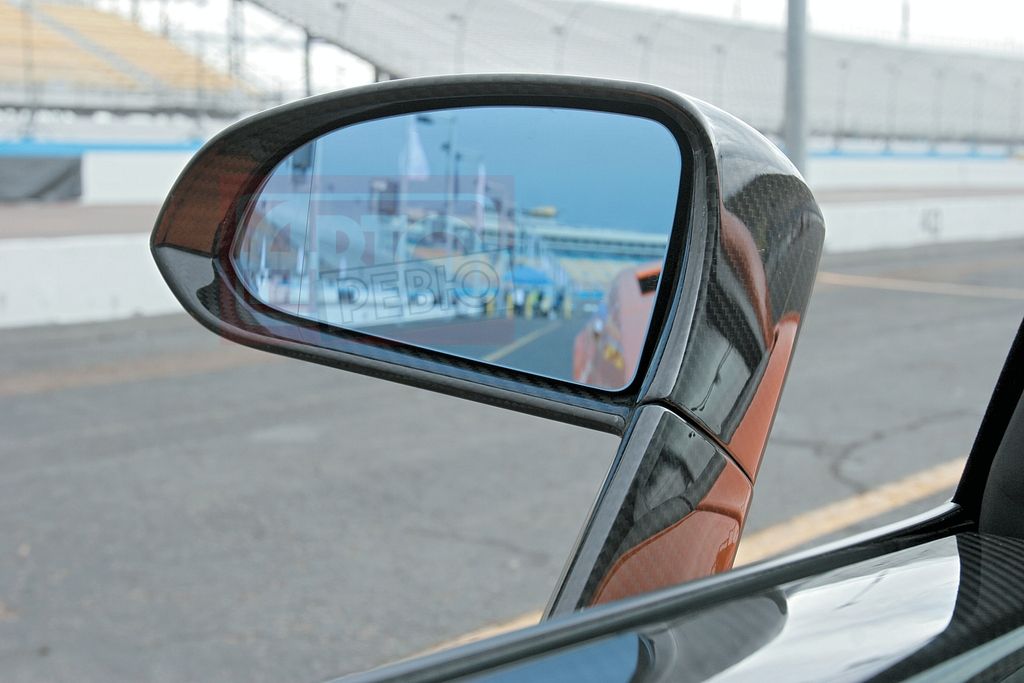 | 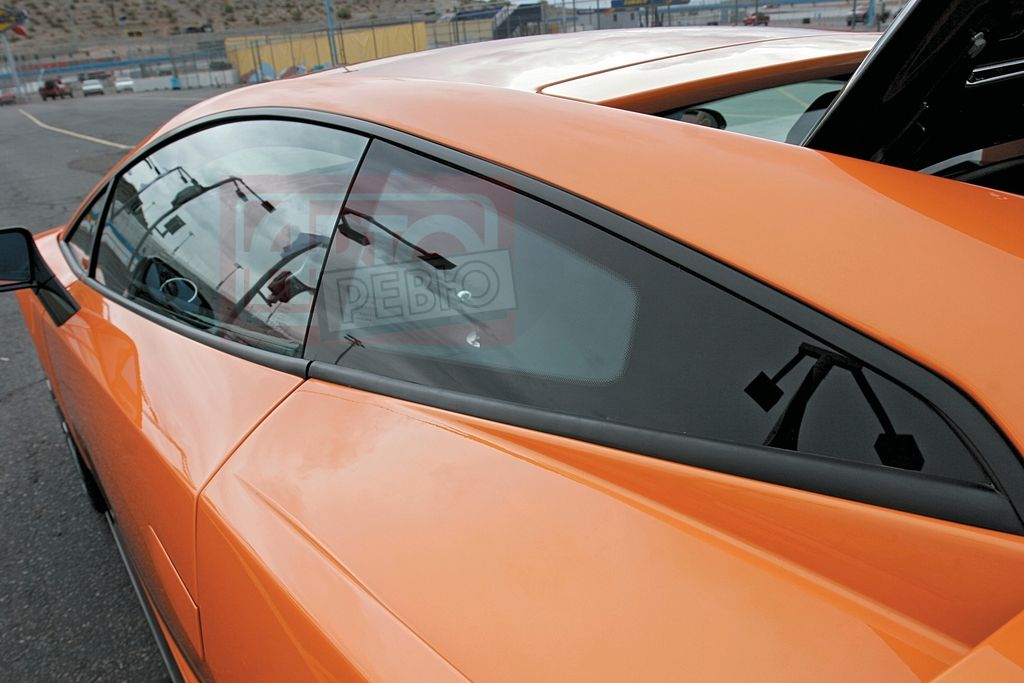 | 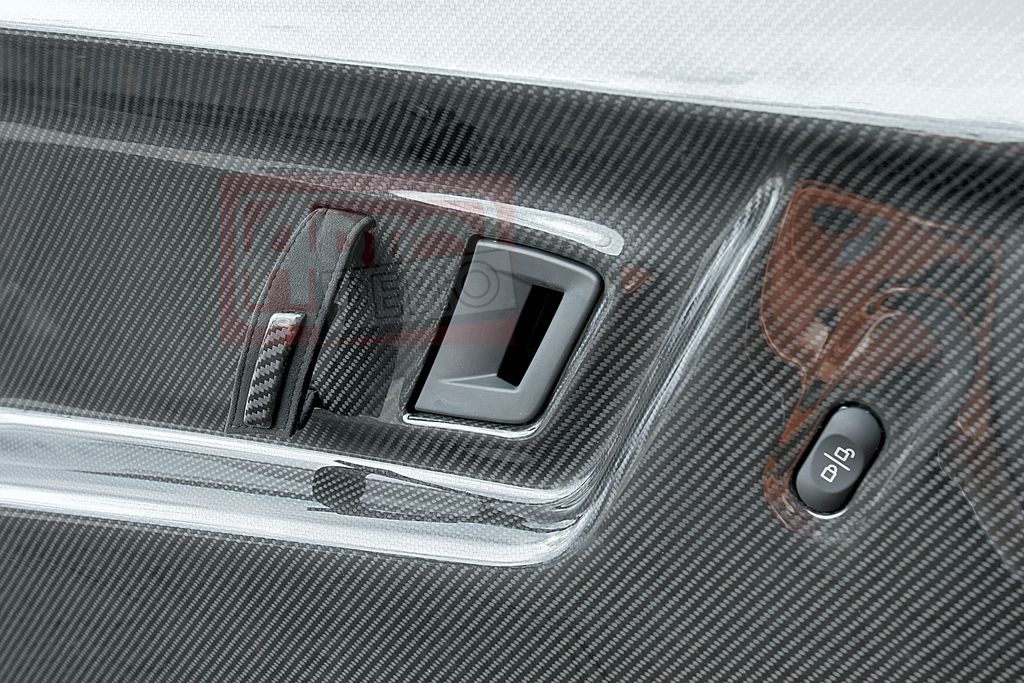 |
| Mirror housings are made of carbon fiber | Rear "triangles" are polycarbonate | Carbon everywhere — even on the door handle loop |
I was also pleased with the decent ride comfort. Not on the track — on regular roads. You know what they're like in America — a seam at a joint spreads into a crack. But the Superleggera barely notices them! Not a trace of that oscillographic detail with which the already mentioned Mercedes SLR McLaren 722 shakes passengers on the slightest bumps. And both cars have Koni FSD dampers, which were tuned by the same...
— Chris de Bruyn? — Reggiani smiles. — Yes, an excellent specialist, we have a lot in common: we used to put Koni on all our cars. But now we've switched to Bilstein. Why? For Lamborghini, reliability is now the main thing, and Koni leaked too often. But on Bilstein, the Superleggera is good too, isn't it?
The comfort is good — that's a fact. But the handling in normal modes is not very good: the steering is too insensitive near the center. On the race track, this isn't noticeable. However, on a regular road, the Gallardo constantly deviates slightly from course, and the "viscous" and rather heavy steering wheel seems not connected to the car. There's almost no reaction to small corrections! So at low speed, you drive like a truck driver from old Soviet films — constantly twitching the wheel a few degrees left and right.
And here again, you involuntarily remember Porsche.
These cars literally breathe what the English call the beautiful word refinement — fine-tuning of everything. Every Porsche (at least with a flat engine) is wonderful both on the track and off it. You drive slowly — and still enjoy it.
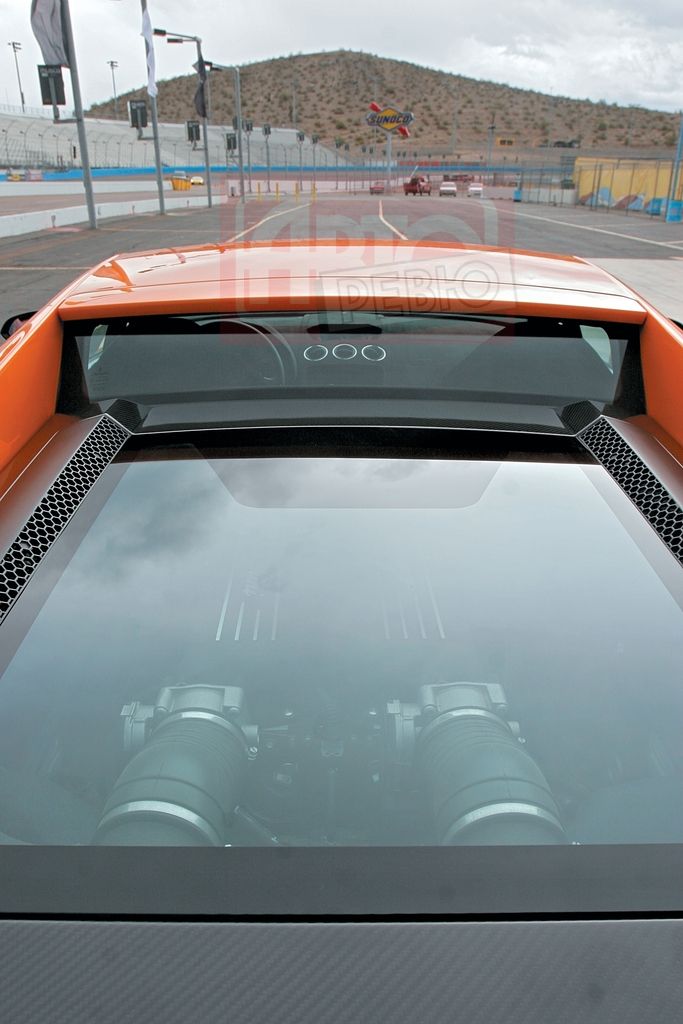 | 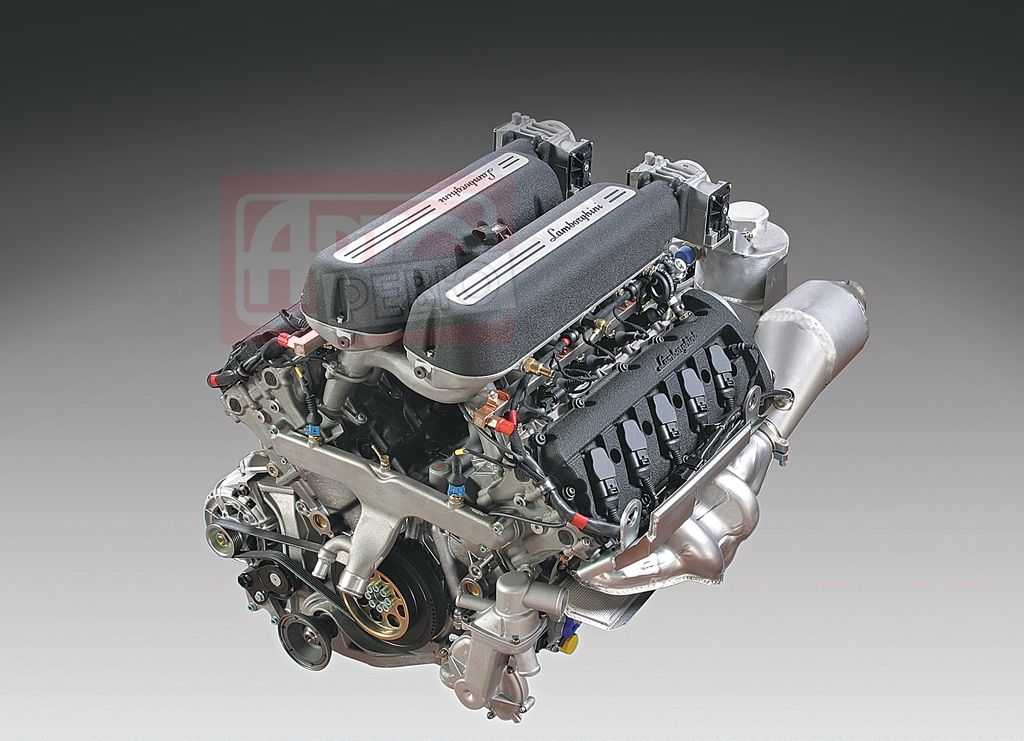 | 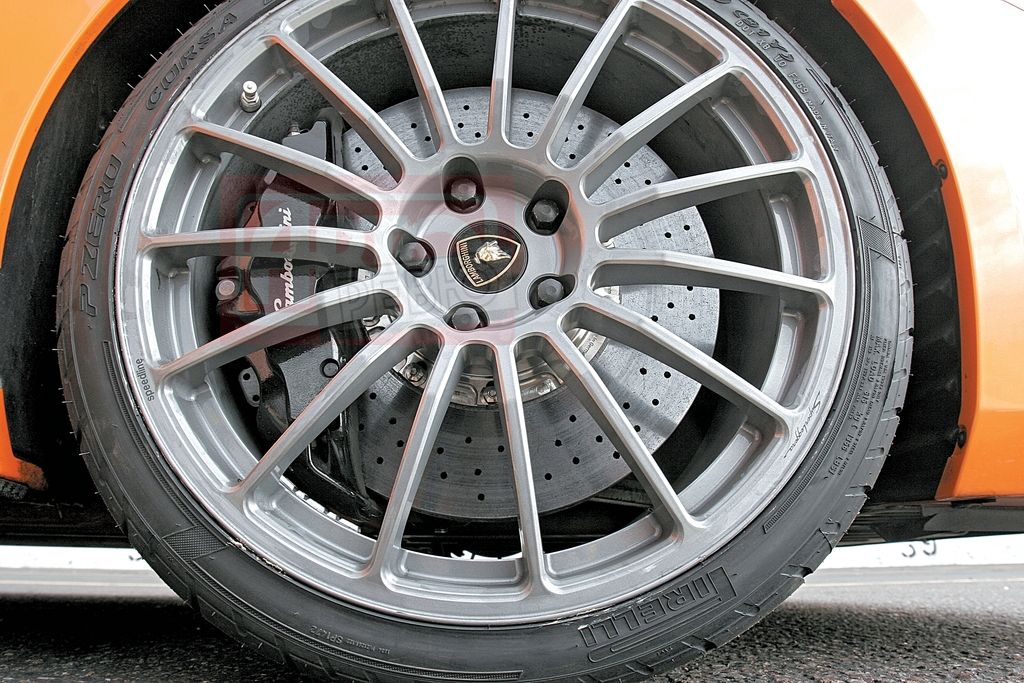 |
| Both the engine compartment window and the rear glass are all thin polycarbonate | The five-liter V10 in the Superleggera version is 10 hp more powerful thanks to chip tuning and refined intake and exhaust. The exhaust is lightweight, with a thin-steel muffler | Forged wheels, titanium bolts, carbon-ceramic brake discs... |
But Lamborghini is completely different. On the track — yes, it's an event. And now that the Superleggera has appeared, it can loudly declare itself on the Nordschleife. Look at the overall rating of "production" supercars that I tried to build based on power-to-weight ratio, that is, the ratio of maximum power to a ton of official curb weight. An interesting picture! If you don't count exotic cars like one-off builds (Pagani Zonda F, Koenigsegg CCX, or Bristol Fighter T), if you discard the monstrously expensive Bugatti Veyron and the discontinued Ferrari Enzo and Porsche Carrera GT, if you don't include the crazy Caterham and Irmscher microcars without a hint of comfort, then... It turns out that the Gallardo Superleggera coupe has 379 horsepower per ton of curb weight. Only the Mercedes SLR in the 722 version and the newest Dodge Viper with a 612-horsepower engine from 2007 (which isn't on sale yet) are cooler. And all the others yield to the Superleggera. Both the regular SLR, and the most powerful Ferrari 599 GTB, and the mid-engined Ferrari F430... And, by the way, the "big brother" Murcielago LP 640.
The latter fact, the people at Lamborghini would prefer not to advertise. After all, it disrupts the hierarchy of their model lineup! That's why on the track in Phoenix, the fastest journalists so confidently stayed on the tail of the instructors in the Murcielago...
Moreover, the Superleggera is not only one of the most powerful and lightest production cars in the world. It's also all-wheel drive, with separate "climate" control, and a stability system. A bunch of advantages!
But ask me: would you, Golovanov, want to drive such a Lamborghini every day? And I'll answer — no! At least in Moscow. Or in America.
In Germany — perhaps yes. You get up early in the morning — and you floor it on the empty autobahn without limits, tearing through the dawn haze like a bullet and scaring lonely Golfs. And on big holidays, you can also head to the Nordschleife.
In Italy or Portugal — also yes. You get up early in the morning — and you floor it on an empty mountain road.
Gas–brake–apex–gas–brake–apex...
Then the Gallardo Superleggera will live up to the brand's slogan — an uncompromising, extreme, Italian car.
Sitting behind the wheel of this car in a traffic jam and driving by the rules — that's just deadly boredom! There won't be any thrill from measured driving like in a Porsche — there's no that very "refinement."
Buying such a car in Moscow in today's reality makes sense only for two groups of people. The first is a reckless person who doesn't care about anything. He leaves a nightclub, tears along the Third Ring Road, then an empty Leninsky Prospekt, which he drives at full throttle, and the Bolshoy Kamenny Bridge... When patrol cars block the road near Manege, he doesn't even think about getting out of the car. On his face is a smug grin, in his hands a wad of cash.
Such fellows should be shot down in childhood, with a slingshot.
The second category is simply a rich idler, a collector. Moreover, it doesn't matter what gender or age — a Gallardo, even in the most extreme version, can be driven calmly in traffic jams.
At Lamborghini, they perfectly understand that their main audience is precisely the second category. And that the main thing in their cars is not power per kilogram of weight or lap time at the Nordschleife, but price, status, and limited production run. It is this that turns Lamborghini into a luxury item, just like tourbillon watches or diamond necklaces. "We are a luxury brand and intend to expand our business," says elegant Stephan Winkelmann, president of Lamborghini. "We will grow through adjacent areas. And we will always produce fewer cars than the market demands to remain exclusive."
What "business development in breadth" means, I think, doesn't need explanation: soon we will see more jackets, watches, bags, computers, and phones with the Lamborghini logo. Following Ferrari's example.
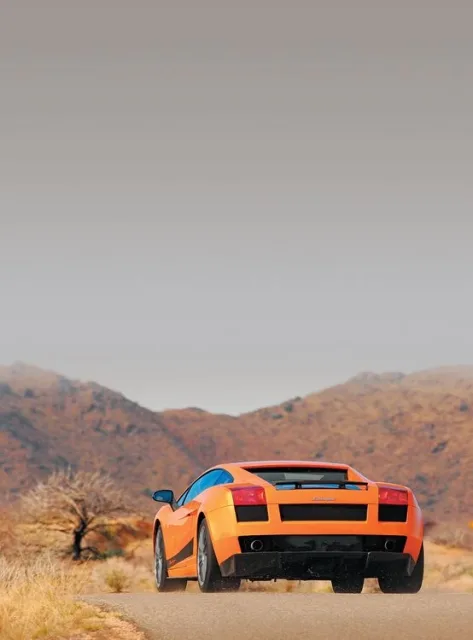
As for exclusivity and demand, last year just over two thousand cars were assembled in Sant'Agata. The year ended with a profit of 18 million euros: the half a billion that Volkswagen invested in buying and developing the unprofitable Italian firm has already paid off and begun to yield small dividends. And if you suddenly want to order a Gallardo in the Superleggera version, and the Russian price of 253 thousand euros seems like a trifle to you (in America it's "only" $220 thousand), then... Capitalists of all countries, forgive me: all 350 Superleggeras planned for 2007 have already been sold out. As Sharikov from "Heart of a Dog" said, "Get in line, you bastards, get in line!" Even if you have all the platinum cards in the world.
For the Superleggera in Russia to truly benefit those who deserve it, I see an obvious solution. Russian supercar dealers need to unite, build a race track, and make track days fashionable. Then sales will grow, and the tuning business will revive...
And, by the way, there will be fewer reckless drivers on the roads. Because when you find yourself behind the wheel of such a serious car as the Lamborghini Gallardo Superleggera on a race track, you understand: to the force of traction, you need to add another force — the force of intellect.
| Comparative table of specific power-to-weight ratio of production supercars | ||||
| Car | Engine (displacement, configuration, forced induction) | Power, hp | Curb weight, kg | Specific power, hp/t |
| Mercedes-Benz SLR McLaren 722 | 5.4 V8, supercharger | 650 | 1650 | 394 |
| Dodge Viper SRT-10 | 8.4 V10 | 612 | 1560 | 392 |
| Lamborghini Gallardo Superleggera | 5.0 V10 | 530 | 1400* | 379 |
| Mercedes-Benz SLR McLaren | 5.4 V8, supercharger | 626 | 1695 | 369 |
| Ferrari 599 GTB | 6.0 V12 | 620 | 1690 | 367 |
| Chevrolet Corvette Z06 | 7.0 V8 | 512 | 1420 | 361 |
| Lamborghini Murcielago LP 640 | 6.5 V12 | 640 | 1830* | 350 |
| Lamborghini Gallardo | 5.0 V10 | 520 | 1500* | 347 |
| Ferrari F430 | 4.3 V8 | 490 | 1450 | 338 |
| Porsche 911 Turbo | 3.6 B6**, turbocharged | 480 | 1585 | 303 |
| Porsche 911 GT3 RS | 3.6 B6** | 415 | 1375 | 302 |
| Mercedes-Benz SL 65 AMG | 6.0 V12, turbocharged | 612 | 2045 | 299 |
| BMW M6 | 5.0 V10 | 507 | 1710 | 296 |
| Bentley Continental GT | 6.0 W12, turbocharged | 560 | 2385 | 235 |
| * With full fuel tank | ||||
| ** B — "boxer", flat engine | ||||
| Specifications | |
| Parameters | Car |
| Lamborghini Gallardo Superleggera | |
| Engine | petrol, with distributed injection |
| Location | longitudinal in the middle |
| Number and arrangement of cylinders | V10 |
| Number of valves | 40 |
| Displacement, cm3 | 4961 |
| Cylinder bore/piston stroke, mm | 82.5/92.8 |
| Compression ratio | 11.0:1 |
| Max power, hp/kW/rpm | 530/390/8000 |
| Max torque, Nm/rpm | 510/4250 |
| Drive | all-wheel drive, with viscous coupling in front wheel drive |
| Transmission | manual, 6-speed |
| Gear ratios | |
| I | 3.31 |
| II | 2.05 |
| III | 1.46 |
| IV | 1.14 |
| V | 0.94 |
| VI | 0.78 |
| reverse | 2.81 |
| final drive | 3.08 |
| Front suspension | spring, on double wishbones |
| Rear suspension | spring, on double wishbones |
| Brakes | disc, ventilated, diameter 365 mm front and 335 mm rear |
| Tires | 235/35 ZR19 front and 295/30 ZR19 rear |
| Dry weight, kg | 1330 |
| Curb weight*, kg | 1400 |
| Maximum speed, km/h | 315 |
| Acceleration time 0—100 km/h, s | 3.8 |
| Fuel consumption, l/100 km | |
| urban cycle | 24.8 |
| extra-urban cycle | 12.4 |
| combined cycle | 17.0 |
| Fuel | petrol AI-98 |
| Fuel tank capacity, l | 90 |
| * With full tank (according to Autoreview calculations) | |