
About the Lada brand
Russia founded in 1967 Model range
General Information
"VAZ" (Volga Automobile Plant) is a Russian enterprise that produces passenger cars under the brands "Zhiguli", "Lada" and "Niva" (off-road). The headquarters is located in Tolyatti (Samara region).
Corporate History
Construction of the plant began in 1967. Deputy Minister of the Automotive Industry of the USSR V.N. Polyakov was appointed general director of the plant under construction, and V.S. Solovyov was the chief designer. The first stage of the plant, designed for 220 thousand cars per year, started operating in 1971.
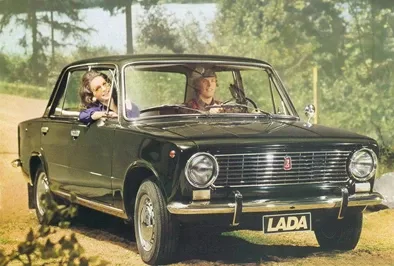
The subcompact "VAZ-2101" was based on the "Fiat-124". Its 4-cylinder engine developed 60 hp, and the maximum speed was 140 km/h. "Zhiguli" was conceived as an inexpensive people's car to saturate the Soviet market, but designers and engineers faced many problems. The idea of affordability for the average buyer was immediately abandoned — with each new model, the price increased noticeably. Nevertheless, the product did not sit on shelves: at the end of the 1970s, "Zhiguli" with a station wagon body appeared.
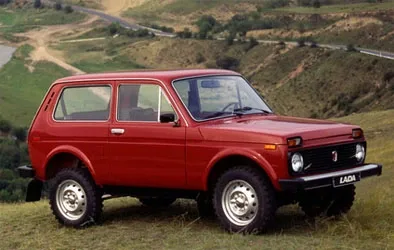
In 1977, a new all-wheel drive model "Niva" — VAZ-2121 was released.
Improvement of "Zhiguli", and then the export version "Lada" in the 1980s, did not stop. During the Soviet period, production of nine models was mastered. The most popular, besides the first, were the sixth and the front-wheel drive ninth. The "six" is still produced, and since 1997 it has been gradually replaced by the "ten".
VAZ-2102 — a 5-door classic station wagon of the first family with a rear door opening upward, was produced from 1972 to 1986. It gained a reputation as the "best friend" of the Soviet summer resident, which then passed to its successor — VAZ-2104.
In 1972, AvtoVAZ launched a more powerful version of "Zhiguli" — VAZ-2103. It was perceived as a new, more powerful and comfortable model, and for most — more prestigious and expensive. It was a "Lux" modification, corresponding to the FIAT 124 Speciale of 1968, the design of which was reworked similarly to the transformation of the base FIAT 124 into VAZ-2101. Its production was provided for by an agreement with the FIAT concern.
In 1976, production of the VAZ-2106 model was mastered in Tolyatti, reworked for domestic conditions from the FIAT 124 Speciale of 1972. No one expected that it would become the most popular and mass-produced product of the plant.
The all-terrain vehicle "Niva" (VAZ 2121/2123/21213/2131) caused a sensation on the world market in the late 1970s — early 1980s. At the same time, on the domestic market, it experienced sales difficulties, despite the eternal shortage of passenger cars in the USSR. In 1980, VAZ-2121 received a gold medal at the 53rd Poznan International Fair.
Just as the "six" was once considered more prestigious than VAZ-2103, so VAZ-2107 ("seven"), produced since 1982, was an exclusive compared to the "five".
The wedge-shaped "Samara" (3-door hatchback), introduced at the end of 1984, was a landmark event for both the plant and car enthusiasts. The VAZ-2108 Lada Samara model marked the beginning of mass production of front-wheel drive passenger cars in the country.
In 1987, the VAZ team received the "Golden Mercury" award for the third time for their contribution to the development of production and international cooperation.
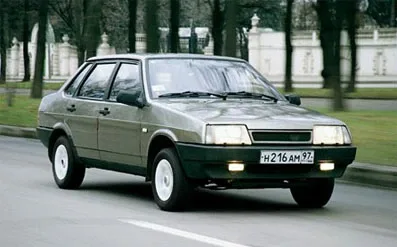
VAZ-2109 Sputnik/Lada Samara, sold since 1987, unlike the "eight", was considered a more "solid" family car due to its five doors and less expressive appearance. The VAZ-21099 Sputnik/Samara Forma model is essentially a "nine" with a 4-door sedan body.
In 1989, the foreign trade association "AvtoLada" received the international prize "Trade Leaders Club" for achieving leading positions in trade and contributing to the economy of African countries.
After the collapse of the USSR, AvtoVAZ, like other industrial giants, experienced a protracted crisis and restructuring. By the mid-1990s, the enterprise turned the situation around and began to increase production.
The subcompact VAZ-11113 "Oka" remains the cheapest domestic passenger car. It was predicted to become a people's car and was planned to be produced at the industrial complex in Yelabuga. In the mid-1990s, assembly of the "Oka" was finally transferred to the SeAZ plants (which became part of AvtoVAZ) and KamAZ.
At the 1994 Paris Motor Show, the family of "tenth" cars — VAZ-2110 was first presented. Since 1998, assembly of 5-door VAZ-2111 — the first front-wheel drive station wagons from VAZ — has been expanding.
In 1995, the 16-millionth car was assembled.
At the exhibition "Technologies from Russia" in Rome (1996), VAZ presented a rotary-piston engine for light aircraft. In the SKP, the 250th production car VAZ-2110 was assembled.
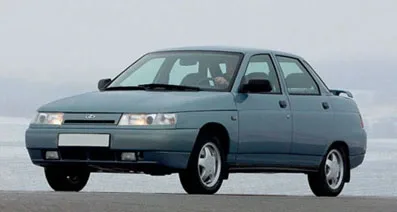
In 1997, at the Moscow Motor Show, models 2120, 2129, the long-wheelbase "Niva" — 2329, 2131 and the sports 21107 were shown.
In 1998, the new model 2111 came off the assembly line, and cars of the "tenth" family began to be equipped with 16-valve engines. In the same year, the VAZ-2120 "Nadezhda" was released — an all-wheel drive seven-seat minivan with a sliding right rear door.
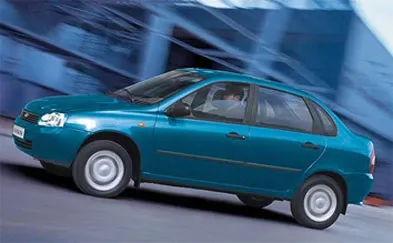
In 2004, the first copy of VAZ-2113 — a three-door hatchback — came off the main assembly line. Serial production of the "tenth" family with 8- and 16-valve engines of 1.6 liters began. In the same year, the company introduced the "Lada Kalina" model.
In 2005, sales of Lada Kalina began through the official dealer network of AvtoVAZ.
VAZ in Ukraine
In 1995, with the participation of capital from OJSC "AvtoVAZ", CJSC "UkrAvtoVAZ" was founded. The company is known on the Ukrainian market as the main supplier of LADA cars and original spare parts for them.
In 2004, at the Zaporozhye Automobile Plant, together with the Lutsk Automobile Plant, production of the "Samara 21093" and "Samara 21099" models began from car kits supplied from Tolyatti.