
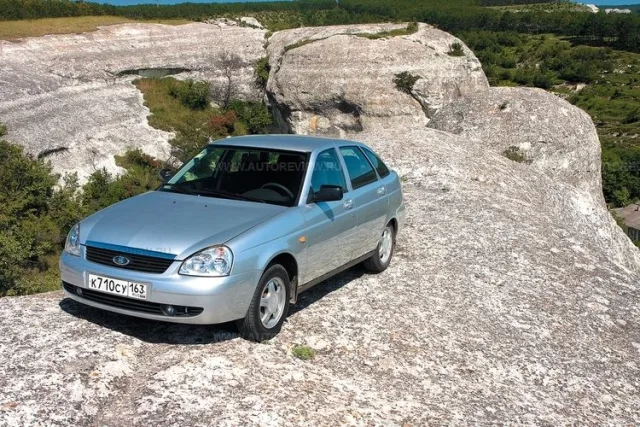
I touch the air conditioning button with my finger, and just a couple of seconds later, a saving coolness blows from the vents. Another press, and the recirculation mode cuts off the suffocating smoke of the old truck crawling ahead. I glance at the price list: 326,425 rubles... A budget "foreign car"? Not at all — it's the top "Superlux" version of the domestic hatchback Lada Priora: climate control, a pair of airbags, ABS, and parking sensors.
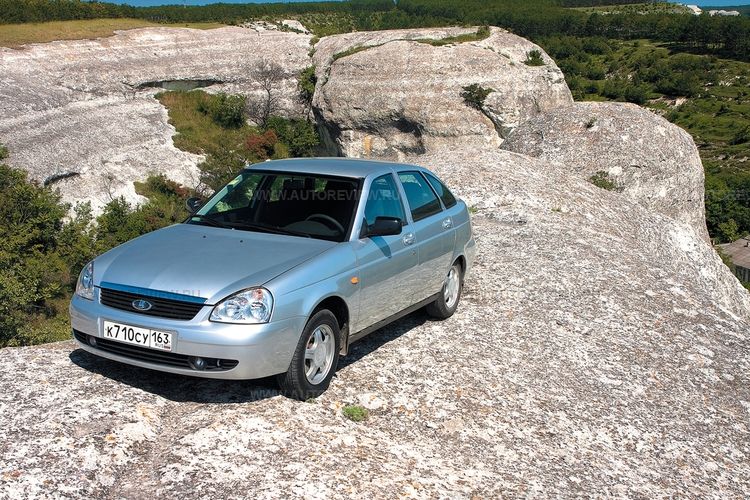
Two companies worked on creating the climate equipment for the Priora: the Taiwanese branch of Panasonic and the Korean Halla Climate Control. Both received a "turnkey" order: the radiator, the entire refrigeration part — compressor, condenser, receiver, evaporator — plus air ducts, control panel, and other piping were designed from scratch. Visually, one system can be distinguished from the other only by the shape of the compressor.
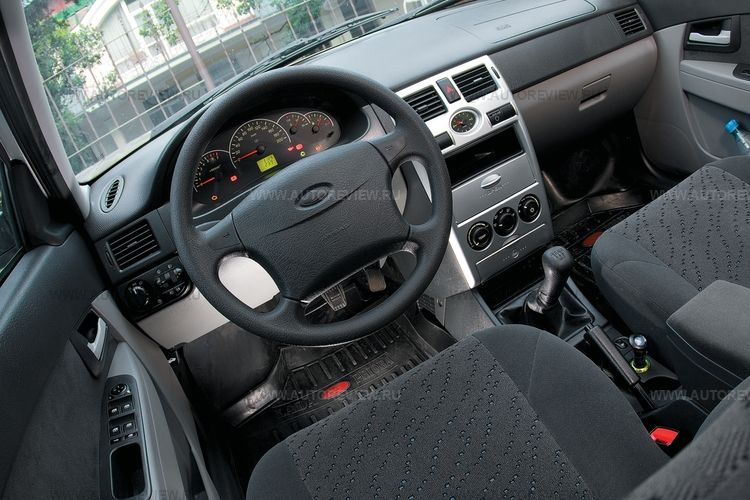
The interior is like that of the Priora sedan. There's no factory radio, although all cars have "audio preparation." AvtoVAZ is currently choosing a supplier: a built-in audio system will appear in 2009, but only as an option
It's funny that the Togliatti residents decided to launch both options into production at once. Cars with VIS-Halla units (the Koreans were helped by the local company VIS) go for export, while both modifications can be found domestically. The factory explains: this way they hedge their bets — if supplies of one type fail, they can always switch to the other. The characteristics and prices of the systems are comparable. The logic is clear: for the same reason, foreign automakers install tires of different brands. But with modest production volumes, the decision looks debatable: why create a double stock of spare parts, retrain staff, and cause extra hassle for dealers and owners?
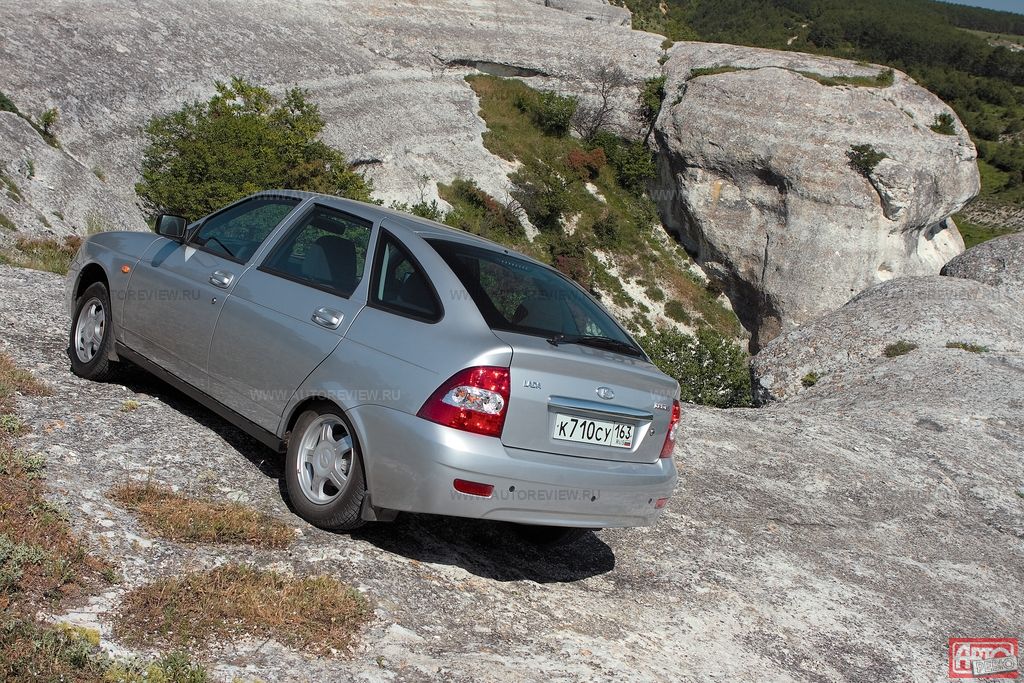
The hatchback presentation was held on the Crimean serpentines, where the thermometer column reached thirty degrees. So we never turned off the air conditioner — our example had the VIS-Halla unit. Especially since it's not just a cooler, but almost climate control: the system maintains the set temperature itself. It was also pleasantly surprising that the engine almost doesn't lose power when the compressor is on. The old Sanden units on the "tens" took about 7 kW from the engine, while the new one takes only 2.8–3 kW. Fuel consumption, of course, increased, but it's tolerable: factory measurements indicate an increase of 1.2–1.3 l/100 km.
 |
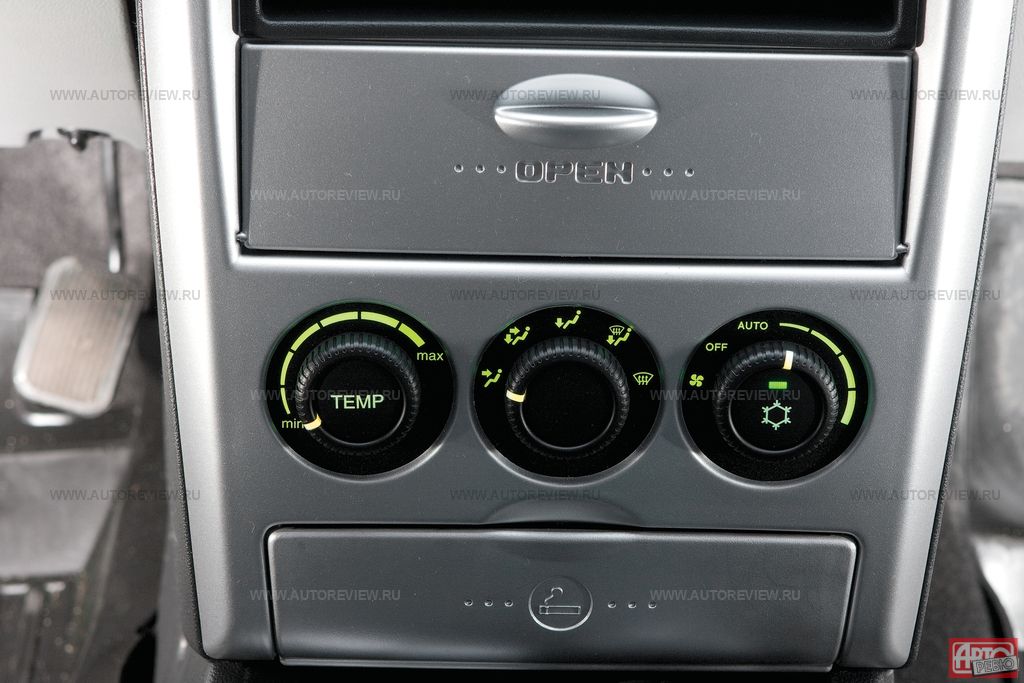 |
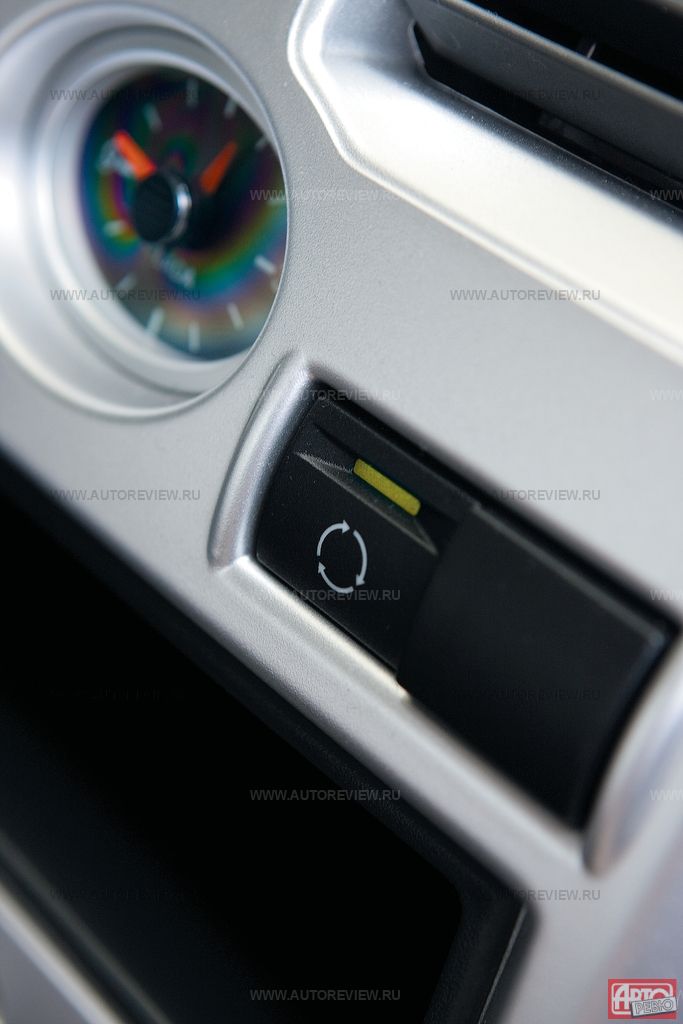
| It's gratifying that the VAZ workers brought back air recirculation — it was absent on early Prioras | The version with air conditioning has fresh climate control knobs with good effort and clear detents. The air conditioner is activated by pressing the center of the right knob. The weak point is the tiny and dim indicator light: you can only see it at dusk or on a cloudy day. The Auto mode maintains the set temperature — such a "lightweight" climate control. What exact temperature? You'll have to guess: the left knob has no scale |
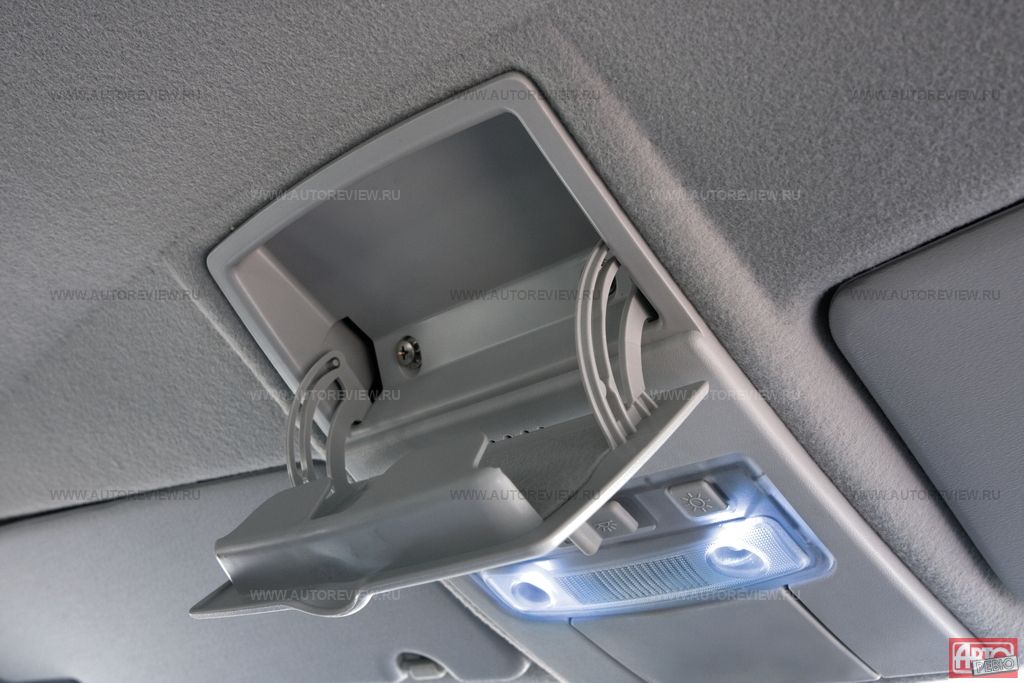 |
 |
| The sunglasses holder built into the ceiling will only fit elegant glasses with thin temples | The optional rear parking sensors work decently. Later, the Priora will be equipped with automatic headlights and wipers |
As for the ABS, which works in conjunction with the new nine-inch vacuum booster, it's also without complaints! We got cars from the pilot batch with experimental settings of the anti-lock "brains." And even on such a "pilot," the system intervenes in time. Only the brake pedal, which stands like a "stake," upset me — it's hard to precisely dose the force when you're not used to it.
Otherwise, the hatchback on the move almost repeats the sedan (see AR No. 8, 2007). The 98-horsepower engine is enough even for active driving in the mountains, the car holds confidently on the straight, and enters corners calmly. But the main trump card is the energy-intensive, mistake-forgiving suspension: even on broken Crimean roads, you don't have to weave zigzags. Ideal for our realities! However, I'd like the steering mechanism with electric power steering to be stiffer, with a "shorter" rack, so you don't have to turn the wheel at every bend of the serpentine — and it would be priceless.
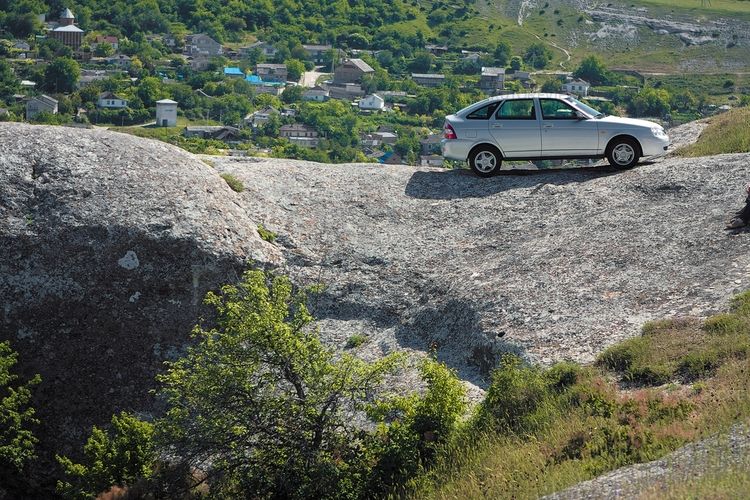
At first, the factory produced the Priora in the intermediate Phase I body, whose power structure was almost no different from the "ten." But since February, the gradual introduction of reinforced bodies has begun: for example, new floor panels went into production on June 16. The full transition to Phase II is promised by August, when the VAZ-2112 hatchback leaves the assembly line. This means that all Prioras, regardless of trim level, will receive reinforced middle pillars, doors, engine compartment shield, and floor. Plus a standard driver's airbag (the second is an option), pretensioners with force limiters, and a trauma-safe front panel. And even though the Priora, contrary to the designers' expectations, didn't reach four EuroNCAP "stars," it should have three solid "stars" (AR No. 15, 2007). Isn't it time to put the Priora on par with foreign cars?
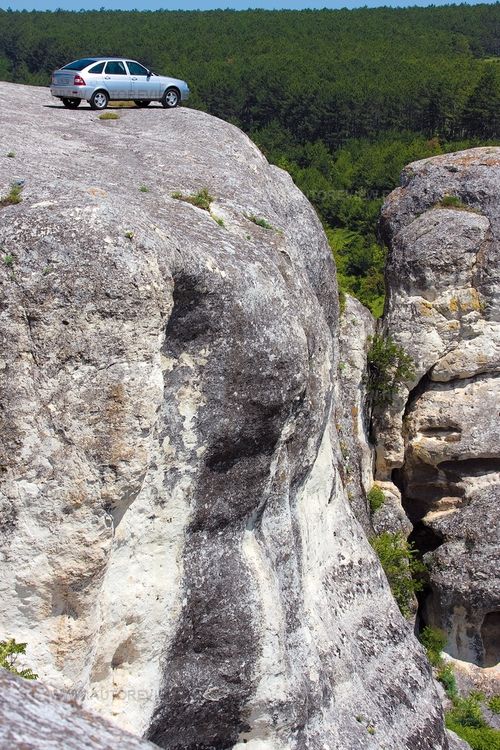
It's time, of course. But such a comparison (if we don't take "Chinese" cars into account) would rather highlight a few weak points of the Priora. And the reason is the old VAZ habit of refining the car "to perfection" already during production. For example, the tailgate has no interior handle, although space for it is provided — a penny part will appear only closer to autumn. The gearshift mechanism still works vaguely, and vibrations at high revs haven't gone away...
The chief designer of the Priora, Valery Kozenkov, knows about these ailments but only throws up his hands:
— We modernized the shift mechanism, but we delayed choosing the optimal variant: ergonomic schemes poorly damped vibrations, and vice versa. We planned to install the new mechanism already in July, but it won't be before September. Now we're working on the powertrain mounts to reduce vibrations on the body — especially at revs and under load. When the new mounts go into production, I can't say yet.
 |
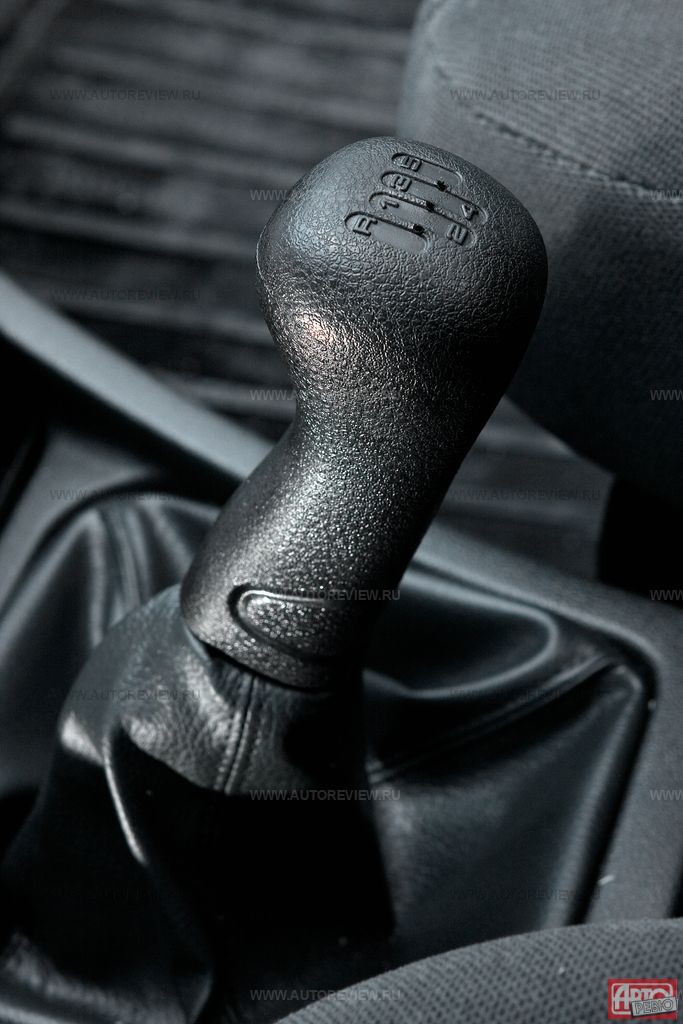 |
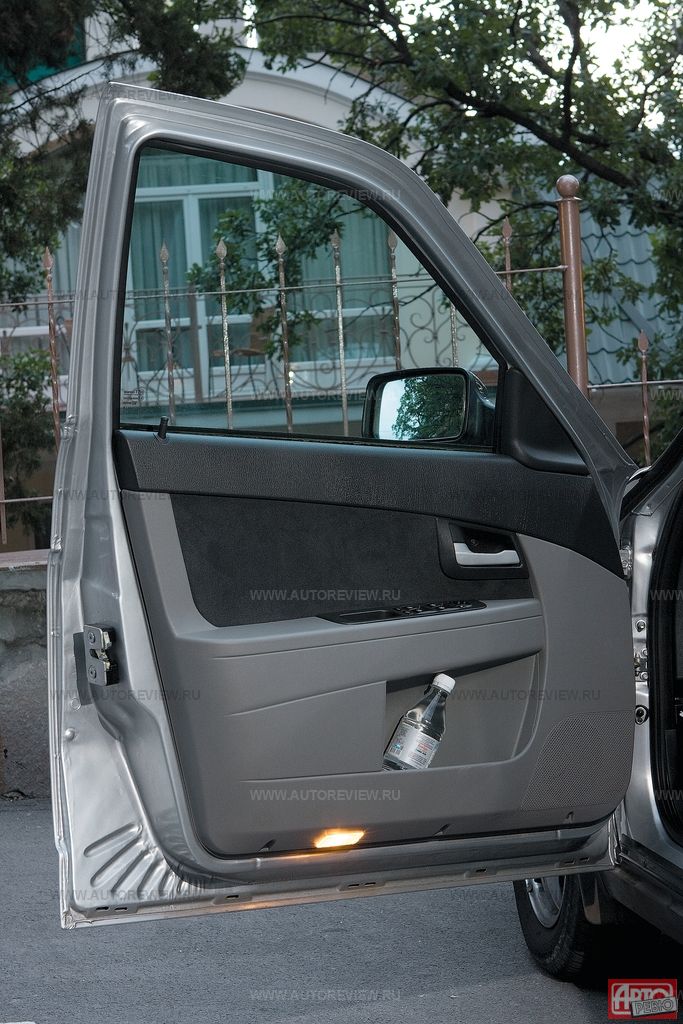
| Lighting lamps in the doors are a sign of expensive versions. It's a pity that the door pockets are too narrow: a 0.33 l bottle fits only if you squeeze it | One of the main problems of the Priora is the vague gearshift mechanism inherited from the "ten." Chief designer Valery Kozenkov promises a new mechanism from September — with clearer shifts and less vibration |
 |
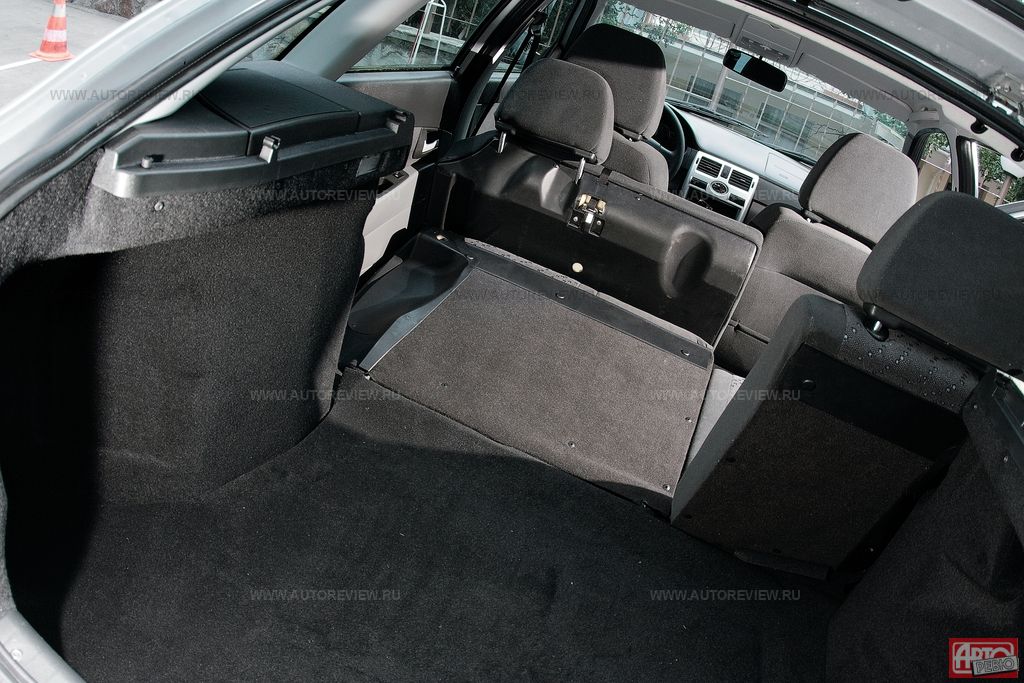 |
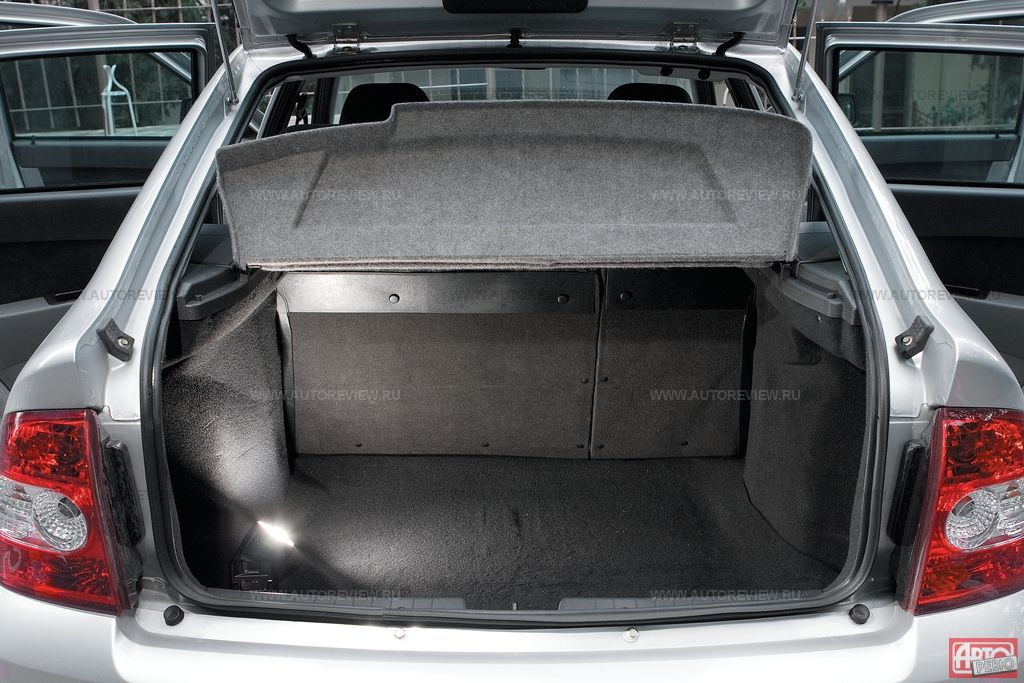
| The molded trunk shelf is made of good plastic, but it lacks the usual strings for hatchbacks that lift the shelf when opening the door | Folding the rear row is inconvenient: you have to press the tiny "triggers" with all your might. The designers promise to fix this too |
But there are things that can no longer be fixed. For example, the front door windows don't lower completely — a couple of centimeters remain visible outside. The reason is in the modified middle pillars and reinforced door construction. The hood is now devoid of gas struts, which worked well on the "ten": you have to lift it the old-fashioned way and look for a prop. The pockets in the front doors are so narrow that even a small 0.33 l water bottle will only fit if it's crushed. And my compact sunglasses don't fit in the sunglasses holder under the ceiling at all...
So what's next?
 |
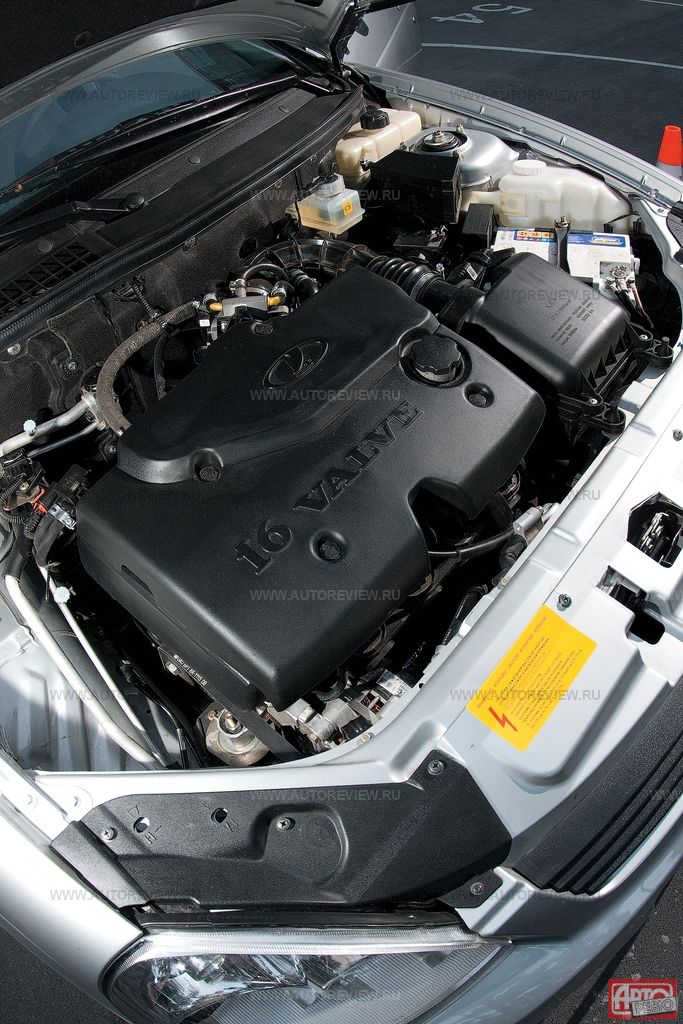 |
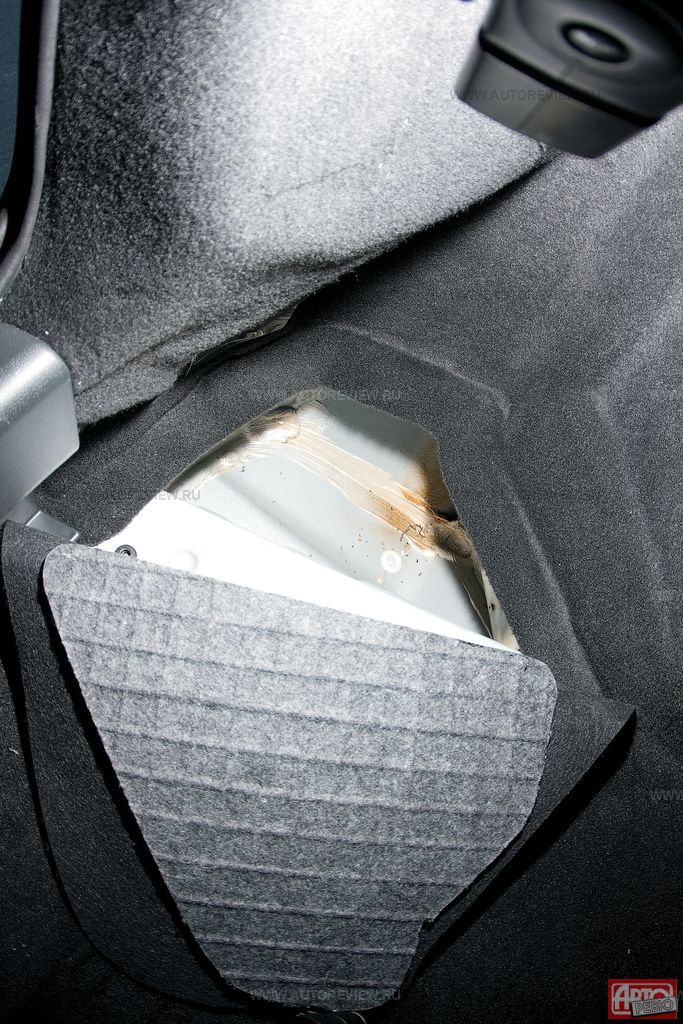
| The idea of using the side niches under the floor for storing small items is not bad. But these hideaways have no upholstery, and the soft mat covering them turned out to be too unreliable: if you put a liter jar of jam on it, it will simply fall through | Under the hood everything is familiar, except for a different gasket of the cooling pipes and a new radiator with a pair of fans. By the way, Priora became the first domestic production car with multiplex wiring, which made it possible to reduce the number of wires and should increase the reliability of electronics |
Hatchbacks based on the "tenth" family, model 2112, will be produced in parallel with Priora until September. But the 2111 station wagon will leave the assembly line in January-February — that's when the Priora station wagon will be launched into production. A little later, we should expect a "charged" version of Priora (modeled after Kalina Sport). A three-door hatchback is also planned, but such cars will be assembled manually, using a bypass technology. In addition, plans include a Priora with an automatic transmission. What exactly this "automatic" will be, VAZ employees are keeping secret for now.
| Specifications | |
| Parameters | Vehicle |
| Lada Priora | |
| Body type | five-door hatchback |
| Dimensions, mm | |
| length | 4210 |
| width | 1680 |
| height | 1420 |
| wheelbase | 2492 |
| track front/rear | 1410/1380 |
| ground clearance | 165 |
| Number of seats | 5 |
| Trunk volume, l | 400 |
| Curb weight, kg | 1088 |
| Gross weight, kg | 1563 |
| Engine | petrol, with distributed injection |
| Location | front, transverse |
| Number and arrangement of cylinders | 4, in-line |
| Displacement, cc | 1596 |
| Number of valves | 16 |
| Max. power, hp/kW/rpm | 98/72/5600 |
| Max. torque, Nm/rpm | 145/4000 |
| Gearbox | manual, 5-speed |
| Front suspension | independent, spring, McPherson |
| Rear suspension | semi-independent, spring |
| Front brakes | disc, ventilated |
| Rear brakes | drum |
| Tires | Kama Euro-236 185/65 R14 |
| Maximum speed, km/h | 183 |
| Acceleration time 0-100 km/h, s | 11.5 |
| Average fuel consumption, l/100 km | 7.2 |
| Fuel tank capacity, l | 43 |
| Fuel | petrol AI-95 |
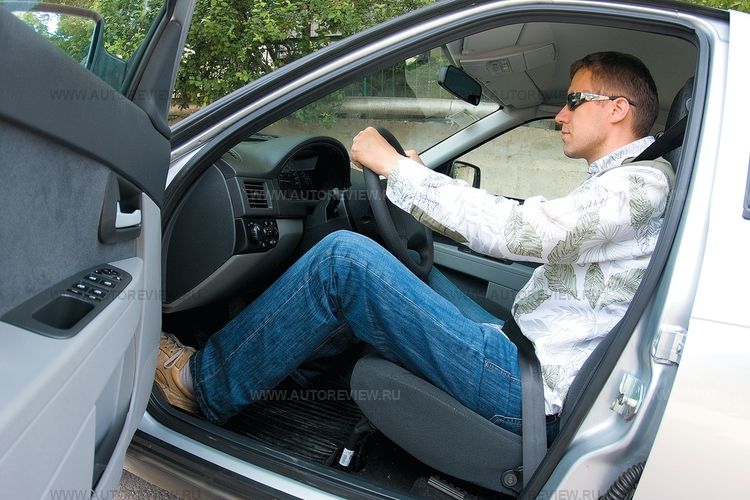
The main complaint about the front seats is the small range of longitudinal adjustment. A driver 185 cm tall has to sit with strongly bent legs, and knees almost touch the front panel
Where does the cold come from?
Lada Priora family cars are equipped with climate systems from two manufacturers. One was developed by Panasonic Taiwan Co. Ltd., the other by the South Korean company Halla Climate Control Corp.
Both systems include original (developed specifically for Priora) components:
— refrigeration machine (compressor with bracket, condenser, receiver and evaporator, which is part of the heater);
— heater (housing with flaps, electric fan, additional resistor, gear motor for flap drive, electric vacuum drive units for recirculation control flaps, radiator with hoses, new filter element, seals, wires);
— control system (controller, cabin air temperature sensor, outside temperature sensor, air temperature sensor behind the evaporator, pressure sensor, thermostatic expansion valve);
— cooling system module (radiator, electric fans, shrouds and hoses).
Climate systems are largely similar: they use a compressor-type refrigeration machine. The compressor drive is belt-driven, from the engine crankshaft pulley.
The refrigerant is ozone-safe R-134A. The heating, ventilation and air conditioning unit with built-in evaporator is attached to the body at the same points as the elements of the standard heater. All ventilation and heating channels in the front panel are preserved (as in the base car).
Due to the additional heat load, a more efficient brazed aluminum radiator with low-noise fans is used.
| Main differences between climate systems | ||
| Differences | Panasonic | Halla |
| Compressor | Vane, rotary, displacement — 120 cc | Axial, five-piston, with swash plate, displacement — 160 cc |
| Condenser mounting method | Condenser with receiver and additional fan is attached directly to the body | Condenser with receiver and two paired electric fans are mounted on the cooling system radiator |
| Charge volume | 450 g | 550 g |
| Air distributor in cabin | standard | original, with gear motor |
| System supplier | Moscow representative office of Toyota Tsusho Corp. | ZAO Vazinterservice (Tolyatti) |
| Production | The entire kit is produced abroad | Plastic parts included in the heater, as well as hoses of heating and cooling systems, are produced in Russia |
Safety system diagram of Priora in "luxury" version
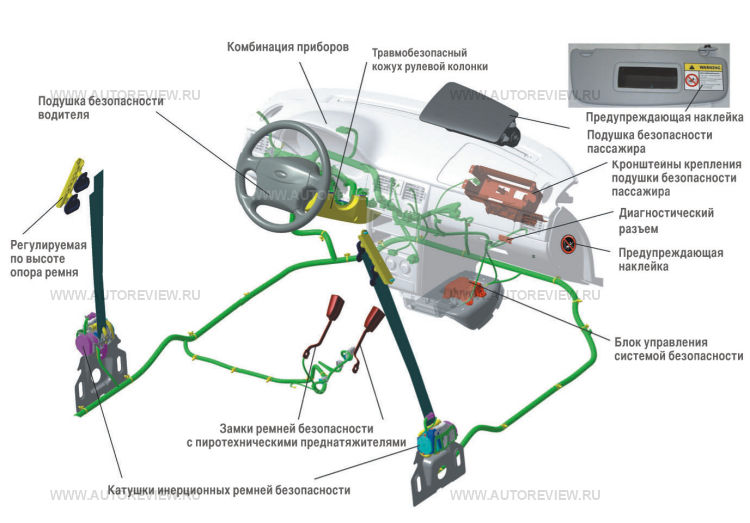
All Prioras — starting from the base Standard trim — are equipped with a driver's airbag. Cars in the Norma trim differ only in the presence of "comfort" options (mirror in the passenger sun visor, armrest between front seats, glove box lighting, etc.). But on Prioras in the Lux version — two airbags, as well as front seat belts with pyrotechnic pretensioners
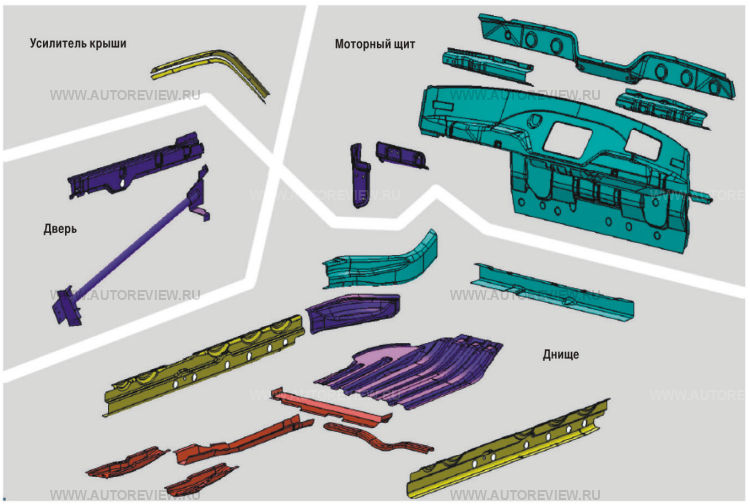
Since August of this year, all Prioras should be produced with reinforced bodies (the so-called Phase II). They differ from the "intermediate" bodies (Phase I) by new elements of the engine shield forming a rigid box structure, additional roof reinforcement, inclined safety bars in the doors, ten floor reinforcements and a high-strength "double floor"