
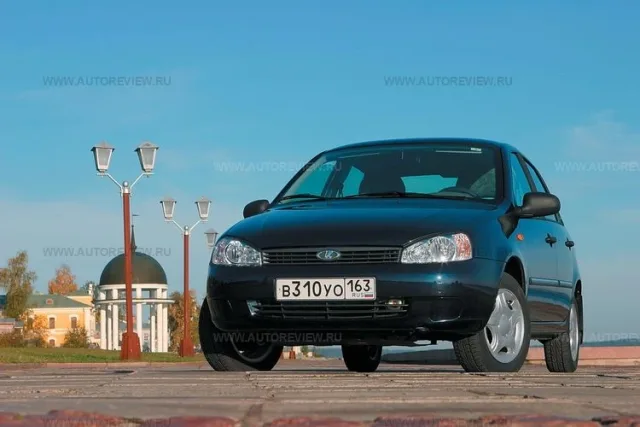
We really wanted to put the domestic Kalina, equipped with a new 1.4-liter engine, anti-lock braking system, and a pair of airbags, next to the Chinese hatchback FAW Vita. After all, very soon such a set will become standard for the Lux version, and they also promise air conditioning! But to get acquainted with the updated Kalina, we had to travel all the way to Karelia.
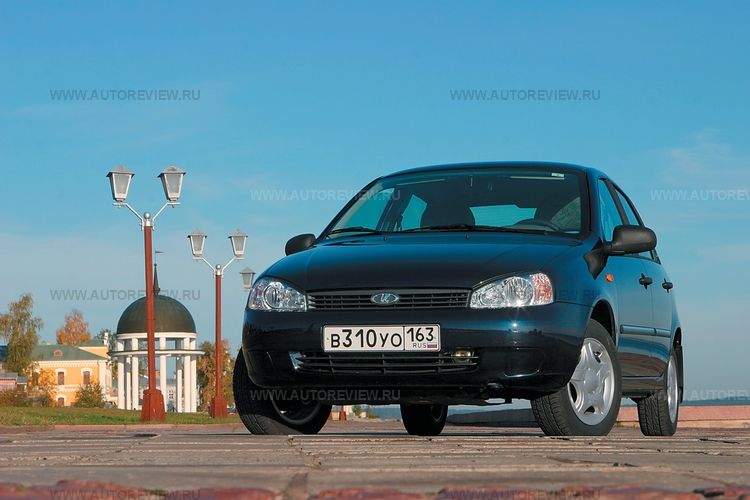
In noisy and affluent Moscow, foreign cars have long ceased to surprise anyone. But a thousand kilometers from the capital, even a Renault Logan or Chery Amulet is a rarity. Therefore, Karelian motorists curiously examine the brand-new dark blue Kalinas — both hatchbacks and sedans. The local AvtoVAZ dealer looks at them with hope. Demand for other models of the brand has either long been established or, as in the case of the Niva or Priora, is artificially limited from above — in Petrozavodsk, people queue up for the Priora! But the Kalina gives dealers a modest but stable sales growth — especially in new trims.
The main premiere is a sixteen-valve engine with a displacement of 1.4 liters, which was put into production in mid-summer. Its key difference from previous VAZ engines of the "tenth" family is the connecting rod and piston group from Federal Mogul. Compared to the parts of the 1.6-liter sixteen-valve engine, it is 40% lighter. Lightweight pistons, elongated connecting rods, steel gaskets for the cylinder head and intake manifold — all this should make the engine stiffer, more durable, and more economical due to lower mechanical losses. The camshaft and pump drive was created together with Gates: the new belt is tensioned automatically, and its service life is claimed to be up to 200 thousand kilometers!
 |
 |
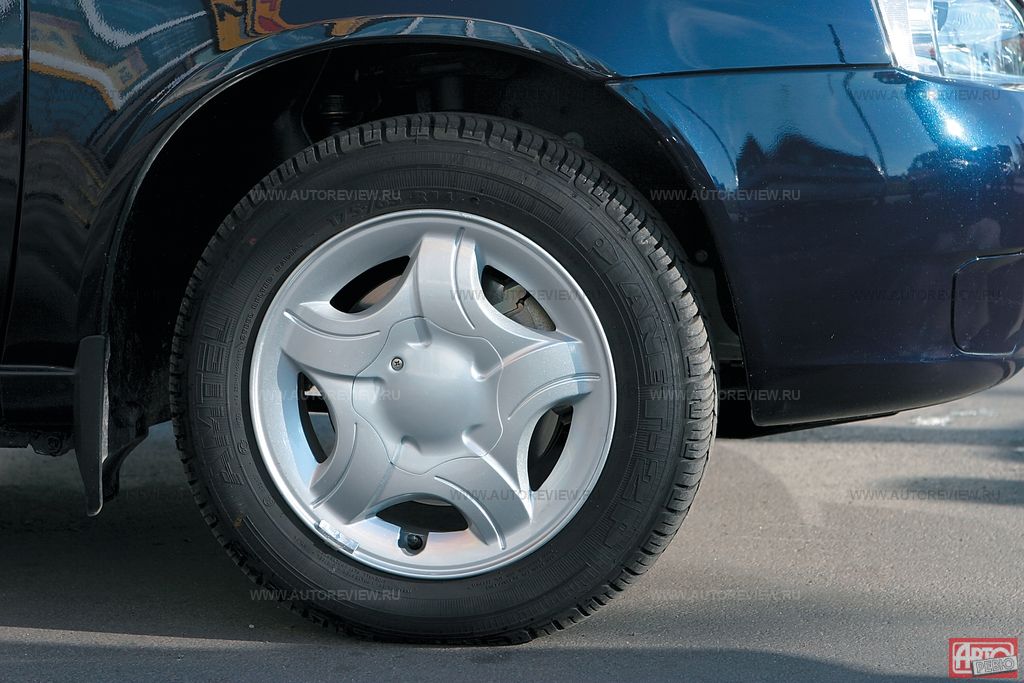 |
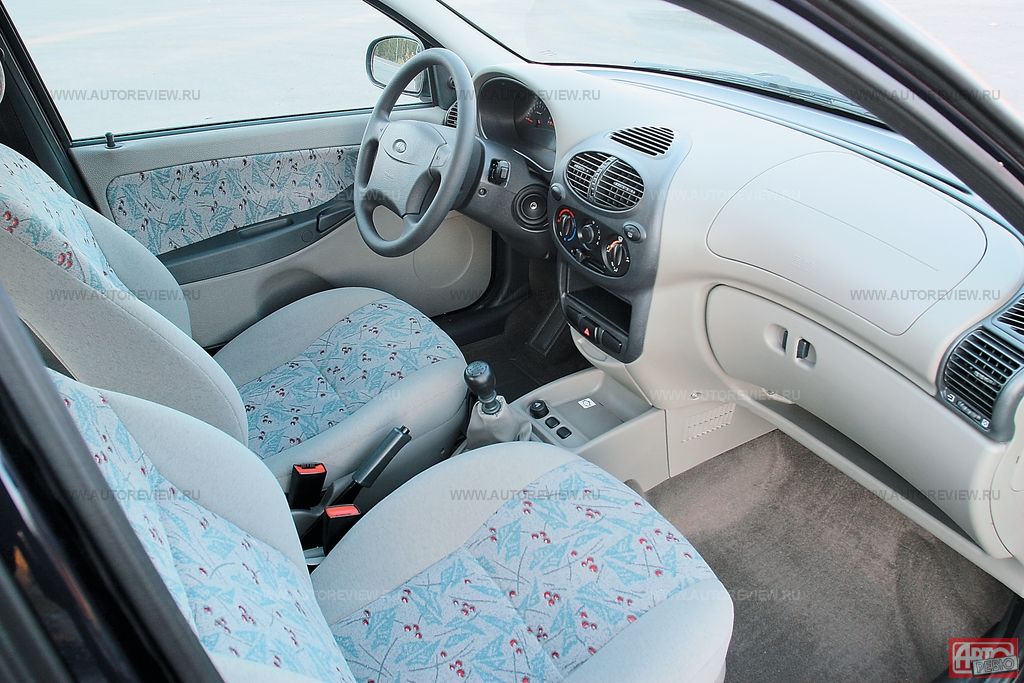
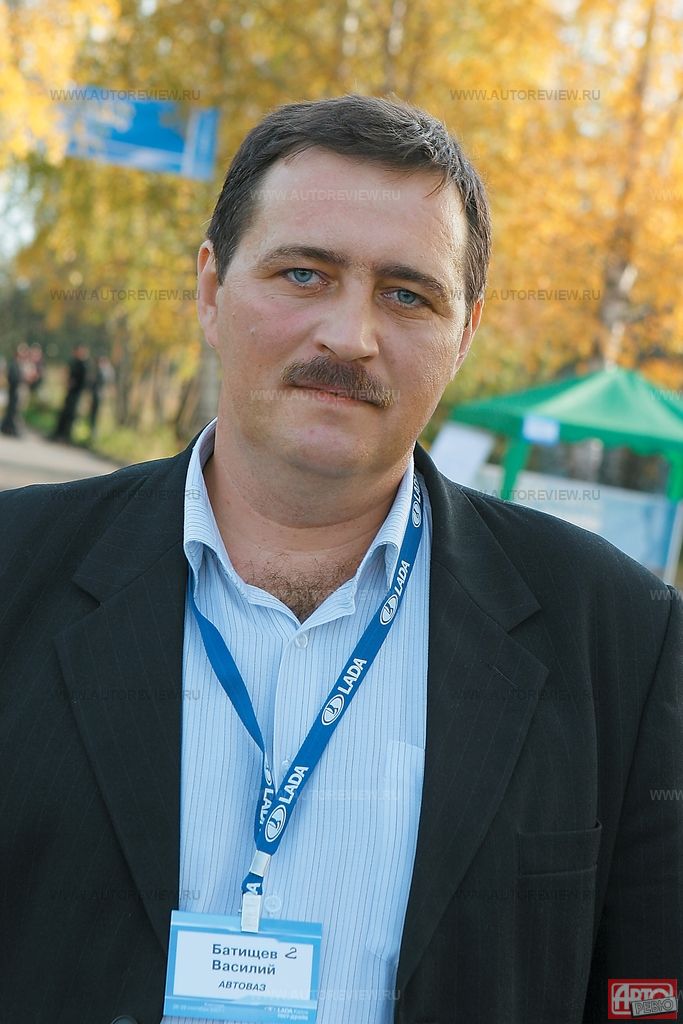
| In "luxury" Kalinas, the seats and door cards are upholstered in velour, and in place of the shelf in front of the passenger there is now an airbag. In 2008, the top version will be equipped with air conditioning | Vasily Batishchev, chief designer of the Kalina: "The 1.4 engine is more powerful, more economical, and more reliable than the old one" | 14-inch alloy wheels look massive. The bolts are covered with plastic caps to protect them from dirt |
On paper, the advantages of the 1.4-liter Kalina are obvious: the new engine is 9 hp more powerful than the previous 1.6-liter eight-valve engine, and the average fuel consumption is 1.1 l/100 km less. Moreover, the 1.4 engine immediately meets Euro-3 standards and is easier to tune for Euro-4.
But what about in practice?
You immediately notice that the 1.4 engine runs quieter, especially at high revs. And its character is clearly high-revving. The old eight-valve engine is useless to rev above 5000 rpm — acceleration fades.
But the 1.6-liter unit is clearly more torquey — there's no denying that. The new little engine, no matter how much the VAZ engineers experimented with the combustion chamber shape and valve timing, lacks torque at low revs. Therefore, the driver of the Kalina 1.4 will have to shift gears more often. In the city, this is not annoying, but on the highway, you need to keep an eye on the tachometer and not be lazy to downshift before overtaking or on a long climb, maybe even two gears.
This engine could use a shorter transmission...
— Currently, all Kalinas are fitted with the same gearboxes, — says chief designer Vasily Batishchev. — But already in spring, we plan to install a final drive ratio of 3.9 instead of the current 3.7 for the 1.4 engine...
 |
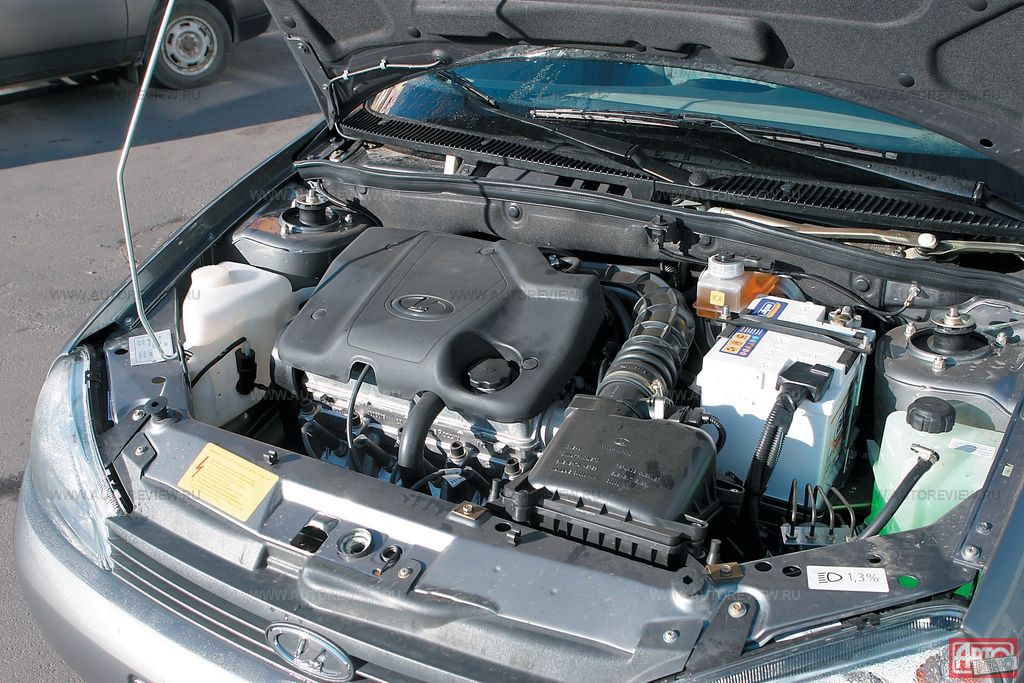 |
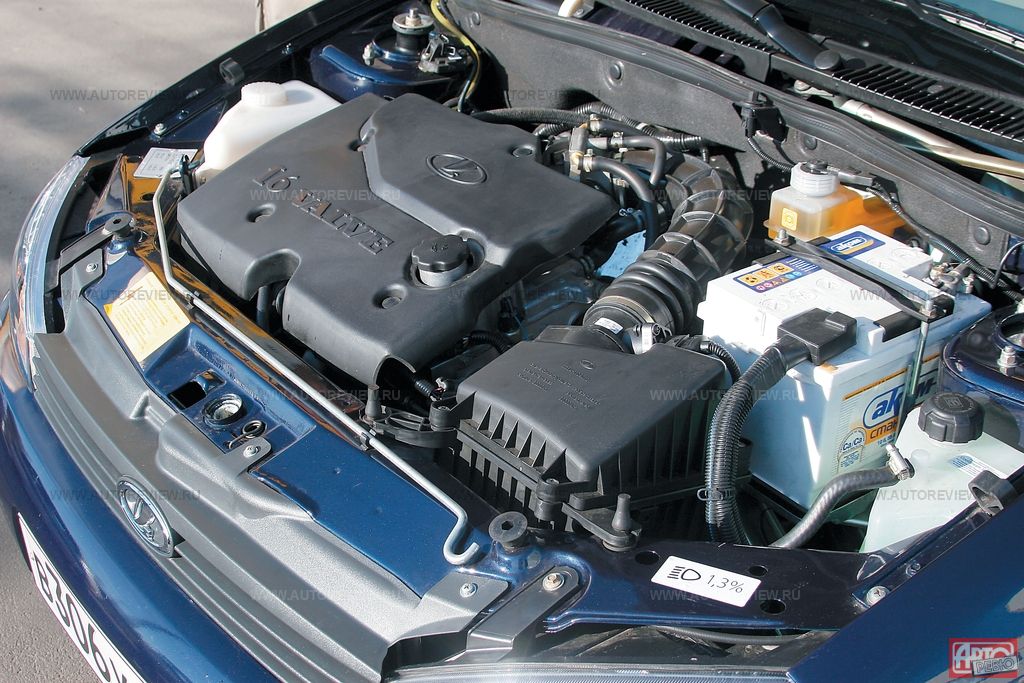
| The VAZ-11194 1.4 engine (left) has a peak torque 10 Nm higher than the 1.6-liter eight-valve engine (right). But the latter, due to the extra 200 "cubes", pulls better from low revs | |
True, a "shorter" transmission will add agility, but will partially eat up the fuel economy advantage.
However, the buyer has a choice — out of 130 thousand Kalinas planned for next year, only 60 thousand, and only in expensive versions, will get the new 1.4-liter engine. The rest will have the previous 1.6-liter eight-valve engine. It is noisier, more vibration-prone, and thirstier, but more torquey.
By the way, for those who like to go faster, the depths of the VAZ research and technical center are already preparing the "Kalina Sport" with a 1.6-liter sixteen-valve engine from the Priora, more powerful front brakes and rear disc brakes, a "short" steering rack (3.1 turns from lock to lock), retuned suspension, and a sport body kit. If that's not enough, wait for the extreme "Kalina R2"...
And the Kalina is also the second Russian production passenger car with an anti-lock braking system! The first was the UAZ Patriot.
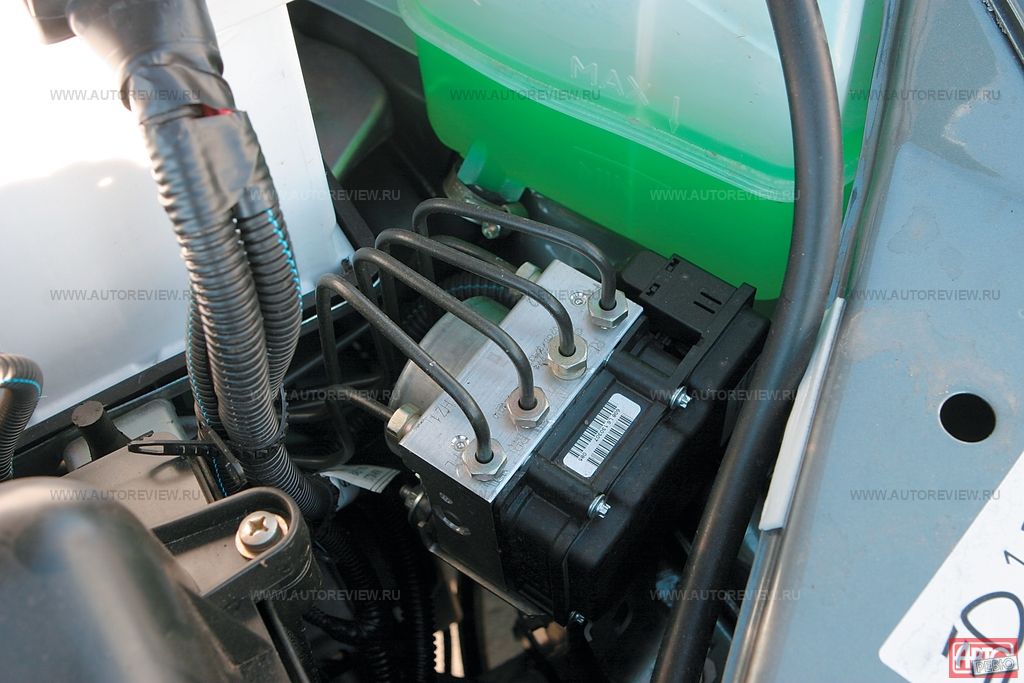
The four-channel Bosch ABS (wheel sensors and the main unit are supplied from Germany) is planned to be installed on about half of all Kalinas regardless of the engine. The front steering knuckles were modified for the sensors, and the rear brake shields and pads were modified. The mechanical brake force regulator, the so-called "wizard", was removed — its functions were transferred to the ABS.
 |
 | |
| Autoliv engineers helped VAZ adapt airbags for the Kalina | The ABS main unit is located behind the left headlight |
The Kalina with ABS surprised with a stiff pedal: to press it to the point of system activation on dry asphalt, you need to apply noticeable force. But the electronics intervene quite late, allowing the tires to work at the limit of grip. Even when braking on mixed surfaces, the car holds a straight line. But the soft suspension spoils everything. During hard braking, the Kalina dives heavily, and on uneven asphalt, the wheels lose contact with the road, and deceleration drops. And it is difficult to maneuver around an obstacle while braking (which is, in fact, the main point of ABS) — the already low steering sensitivity becomes completely "none" at that moment.
Another new feature is two airbags and seat belts with pretensioners and force limiters. In this form, Kalinas have been exported since the end of last year, and now they have appeared in Russia as well. The airbags and belts are made in Estonia, at the Norma enterprise, which once provided belts for the entire Soviet automotive industry, and now is part of Autoliv. By the way, side airbags are already being developed for the Kalina. And a facelift is planned for 2009, the main goal of which is to improve pedestrian protection. For this, the Kalina will get a new hood, headlights, radiator grille, and front fenders. A little later, the rear will also be touched up to match the new front...
And the nearest plans are new trims. In addition to the budget "Standard" (without power steering) and the familiar "Norma", they have already started producing the "Norma+" version (or "Semi-Lux", as sellers call it) — with alloy wheels, moldings, black door pillars, two airbags, and "velvet" upholstery. Recommended prices are 262 thousand rubles for the sedan and 265,745 rubles for the hatchback. Cars with the 1.4 engine are 5,671 rubles more expensive. The "Kalina Lux" is on the way, which will add ABS, fog lights, rear electric windows, heated front seats, electric mirrors, and air conditioning.
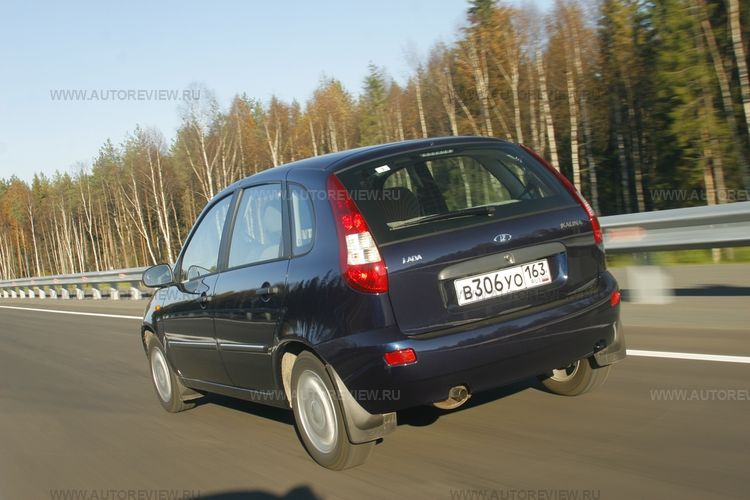
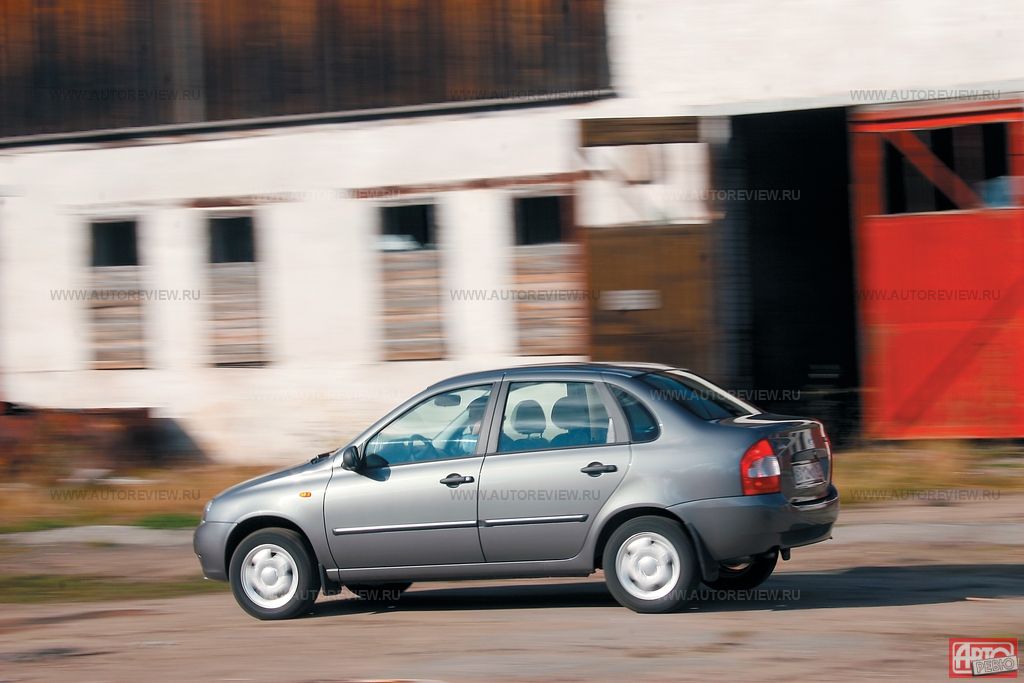
The "Norma+" version (or "Semi-Lux") can be recognized by its alloy wheels, moldings, and blackened roof pillars. The "Kalina Lux" will appear later — the first cars will roll off the assembly line in November
That's the "Kalina bridge" from old VAZ times to new ones. Several engines to choose from, modern options like ABS, air conditioning, airbags... Everything like competitors. Including prices. Are they justified? Let's see: comparative tests are just around the corner.
| Specifications | |||
| Parameters | Vehicle | ||
| Lada Kalina | |||
| Modification | 1.4 16V | 1.6 8V | |
| Body type | sedan (hatchback) | sedan (hatchback) | |
| Number of seats | 5 | 5 | |
| Dimensions, mm | length | 4040 (3850) | 4040 (3850) |
| width | 1700 | 1700 | |
| height | 1500 | 1500 | |
| wheelbase | 2470 | 2470 | |
| track front/rear | 1430/1410 | 1430/1410 | |
| Trunk volume, l | 400 (235) | 400 (235) | |
| Curb weight, kg | 1080 (1050) | 1080 (1050) | |
| Gross weight, kg | 1555 (1525) | 1555 (1525) | |
| Engine | petrol, with distributed injection | ||
| Location | front, transverse | front, transverse | |
| Number and arrangement of cylinders | 4, in-line | 4, in-line | |
| Displacement, cm³ | 1390 | 1596 | |
| Cylinder bore/piston stroke, mm | 76.5/75.6 | 82.0/75.6 | |
| Compression ratio | 10.8:1 | 10.0:1 | |
| Number of valves | 16 | 8 | |
| Maximum power, hp/kW/rpm | 90/66/5600 | 81/59.5/5200 | |
| Maximum torque, Nm/rpm | 130/4000 | 120/4200—4800 | |
| Gearbox | manual, 5-speed | ||
| Gear ratios | I | 3.63 | 3.63 |
| II | 1.95 | 1.95 | |
| III | 1.36 | 1.36 | |
| IV | 0.94 | 0.94 | |
| V | 0.78 | 0.78 | |
| reverse | 3.50 | 3.50 | |
| final drive | 3.70 | 3.70 | |
| Drive | front-wheel drive | front-wheel drive | |
| Front suspension | independent, coil spring, McPherson | ||
| Rear suspension | semi-independent, coil spring | ||
| Front brakes | disc, ventilated | ||
| Rear brakes | drum | drum | |
| Tires | 175/70 R13, 175/65 R14, 185/60 R14 | ||
| Maximum speed, km/h | 162 | 167 | |
| Acceleration time, 0–100 km/h, s | 13.3 | 12.5 | |
| Fuel consumption in combined cycle, l/100 km | 6.7 | 7.8 | |
| Fuel tank capacity, l | 50 | 50 | |
| Fuel | petrol AI-95 | petrol AI-95 | |