KIA Sorento
Sorento new
Powertrain — 2.2 L, diesel
Peak power —
197 hp/3800 rpm
Maximum torque — 436 Nm/1800-2500 rpm
Top speed (km/h) — 190
0-100 km/h sprint — 10 sec
Fuel consumption:
combined cycle — 7.4 L/100 km
6-speed automatic transmission
all-wheel drive
Curb weight — 1905 kg
Length — 4685 mm
Width — 1885 mm
Height — 1710 (1745 with roof rails)
Ground clearance — 184 mm
Tires 235/60 R18
Equipment:
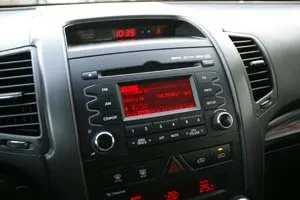
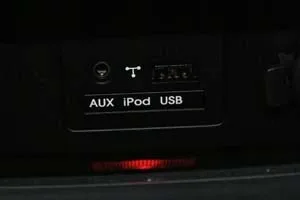
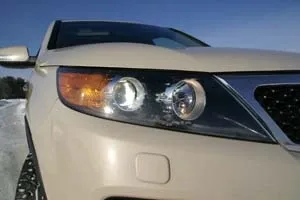
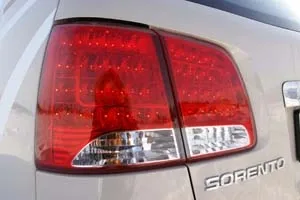
leather interior, dual-zone climate control with ionizer, remote central locking + alarm + Smart Key, 4 power windows, heated wiper rest zone, power driver's seat, cruise control, multifunction steering wheel, radio + CD (MP3), AUX + USB + iPod cable, 7 speakers + subwoofer, rearview camera, ABS, ESP, DBS. Rain sensor, 6 airbags + rollover sensor, alloy wheels, fog lights, power-folding mirrors, xenon, LED taillights.
Maintenance intervals:
15,000 km
Service 1 — $321 (2,565 UAH)
Service 2 — $473 (3,781 UAH)
Service 3 — $321 (2,565 UAH)
Service 4 — $507 (4,051 UAH)
Service 5 — $321 (2,565 UAH)
Service 6 — $676 (5,400 UAH)
Service 7 — $321 (2,565 UAH)
Warranty — 5 years or 150,000 km.
Price at time of test
$48,229 (385,830 UAH)
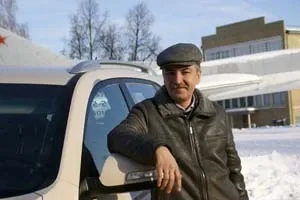
Vadim Sadykov, «Avtoclub-Kazan»
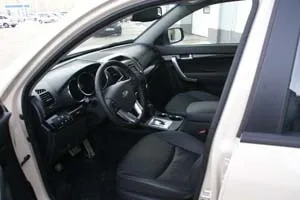
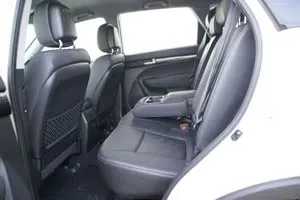
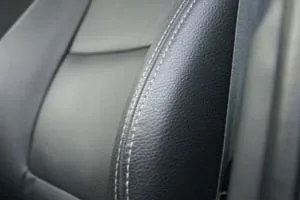
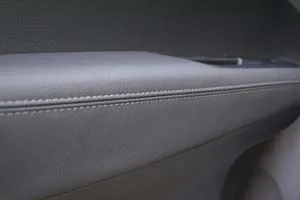
It's been a long time since I felt so good in the front passenger seat. Alfred, as usual, took the driver's seat first, and I just enjoyed the comfort. Legroom, a comfortable armrest, an anatomical seat — everything is top-notch. It even seemed that the lateral support here is more pronounced than in the driver's seat. And on top of that — no shaking, no drafts, excellent visibility. Speaking of which: the mirrors are so huge that from the passenger seat you can see almost as much as the driver. But as soon as we turned off the music, annoying tire noise started to penetrate the cabin. It's clearly audible that the source is from the rear. It seems the plastic liner in the wheel arch is to blame, under which, apparently, there is no sound insulation. But it's not a disaster — either turn up the music, or add soundproofing yourself; it won't take much time or money. The gray plastic inserts on the dashboard look expensive and appropriate. I was pleased that they abandoned the cheap «wood-look» — instead, a noble gray shade. And the leather on the seats is solid: even stitching, soft, with perforation. It's not hot in it in summer, and heating will help in winter. True, rear passengers don't have heating.
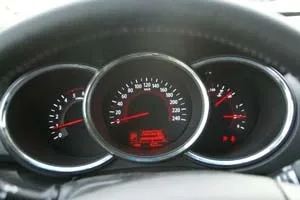
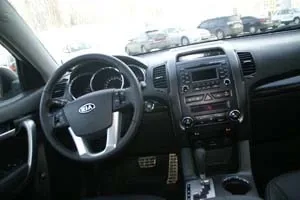
Although this is easy to fix — at a dealer or authorized service, installation won't be expensive. The heating element itself is sewn into the cushion, and the control button is placed at the rear on the console.
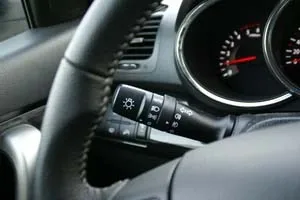
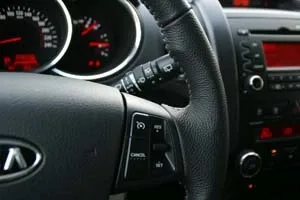
Getting behind the wheel, I got a new dose of positivity: everything is at hand, the buttons are intuitive, no need to get used to. The steering wheel is informative, the «zero» is clearly felt. The 2.2-liter diesel with 197 horsepower allows confident acceleration in any situation. I really liked this ease of acceleration. But in the city, it's more pleasant to drive without rushing: a solid car, a solid driving style. Sometimes you overtake some overly slow «pensioner» — and again smooth movement. True, on potholes and bumps, the rear axle shook considerably, even to the point of bottoming out. Usually Alfred and I test all the seats in the cabin, but this time there was no desire to sit in the back row.
The ice pad with cones revealed other characteristics. It turned out that turning the steering wheel quickly is quite heavy. When Oleg Shatov pointed this out, I was surprised: after all, it's only 3 turns from lock to lock, and in the city the steering seemed light. I tried it myself — yes, a great workout for the arms. The stability control system, as expected, is tuned for maximum safety. But I didn't expect the ESP to harshly cut off any attempts to enter a turn. With stability control off, it became more fun, but the crossover behaves almost like a rear-wheel-drive car. Pulling it back onto the trajectory using the usual method for front-wheel-drive cars (throttle) doesn't work: the steering is turned, but the car goes straight. However, drifting on the pad is a pleasure. In short, I'll repeat: the habits of a typical rear-wheel-drive car.
On the highway, there was also something to share. First, I noticed that the automatic is extremely reluctant to engage sixth gear. Then I tried my favorite trick: overtaking a truck going 80-90 km/h. The overtake was always quick and safe, no complaints. But with a sharp press on the gas, a rattling sound came from under the hood. Something similar was on the 1.4 turbo Tiguan. Directional stability didn't let us down, but I wouldn't risk a long trip in the back row: the reaction is too harsh even to small bumps.
Every car has flaws and characteristics. In this case, a good balance was found: a large crossover at an affordable price, lively and economical. If a bit more comfort were added for rear passengers (sound insulation, ride smoothness), the car would be simply excellent.
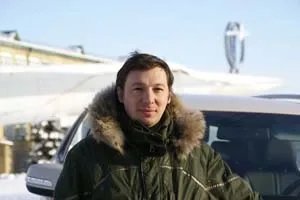
Alfred Mardanov, «Avtoclub-Kazan»
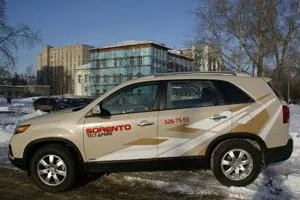
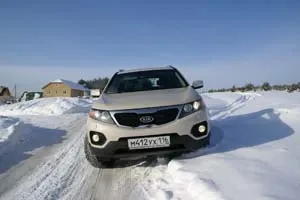
I remember my feelings from the presentation of the new Sorento in our city. Has the crisis really loosened its grip (for many it became truly deadly) and, as they say, the ice has broken — a little more, and it will become easier? This car was destined to be the first swallow in difficult crisis times, to revive the tradition of lavish presentations with a buffet. The enthusiasm of the official dealer was justified — the car promised to be promising and looked intriguing. I said «looked» as if it weren't actually so; to check this, test drives exist. With the Sorento, we begin this new 2010 year, and let there be some symbolism in this. So, we got the diesel version with a 6-speed automatic. The engine power is an impressive 197 horses and 436 Nm at 1800-2500 rpm. The swift, dynamic design pleases the eye. It seems KIA is not unsuccessfully searching for its corporate style in the exterior of new models.
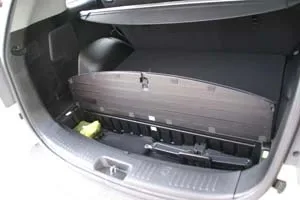
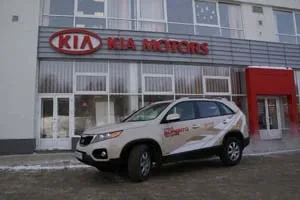
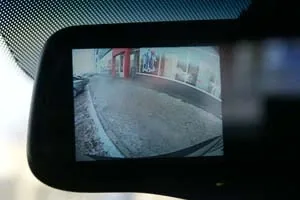
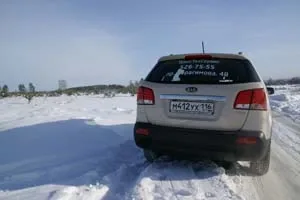
And this is not surprising, because it was «drawn» by the same hand as Audi and Volkswagen. The dimensions are visually slightly «concealed» — in fact, the car is much larger than it seems. No wonder the options list includes a «third row of seats». The lean, pumped-up look won't leave anyone indifferent. The similarity of the hood line and headlights with the sensational Cerato is not accidental — apparently, this is the moment of crystallization of its own style. The Sorento didn't disappoint in the interior either. The quality of upholstery materials and plastic is decent, a beautiful instrument panel and the so-called «beard». There's no overload of buttons, everything is easy to read and understand. A rarity in modern cars stuffed with systems. The electric seat adjusts well to my average height, and the mirrors can be left alone altogether — they are so big that even the passenger sees the entire road situation. I try to park near the dealership for a mini photo shoot and happily note the work of the rearview camera, which transmits the image to the rearview mirror. Convenient for visual perception. This time our schedule and route will be a bit different from the usual. We won't go straight to the race track, but will circle around the city a bit. And we won't have an off-road section either — we just don't have time, and it's a bit scary. The new Sorento can't boast the off-road qualities of the previous one, which had a frame, rear axle, and low range.
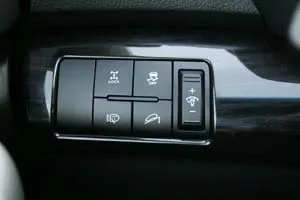
The second generation of this model received an automatic multi-disc clutch responsible for connecting the rear axle, plus the possibility of forced locking, when traction is distributed between the axles strictly equally — 50:50. Actually, that's where the off-road arsenal ends, not counting the increased ground clearance and descent assist. It looks modest, but for a car built without a frame, this is quite enough. The conclusion is obvious: we have a 100% crossover, and there are more and more of them every year, and they become wider, longer, and taller. And who said that's a minus? Personally, as a city dweller, this approach completely suits me. All these off-road attributes would most likely be useful for towing a boat or jet ski and launching them into the water, but I'm not threatened with such a prospect yet.
From the very first meters, you notice how the diesel works. Outside, the engine is clearly audible, but inside the cabin, the sound only creeps in when the revs go past medium. If you sharply press the gas, a ringing sound appears, which immediately disappears. But the tire hum doesn't go away — it followed us the whole trip. I wish the sound insulation were better; from my own experience, I know that if noise is heard in the first row, it will be even louder in the second. I, by the way, never made it to the second row — the somewhat stiff suspension got in the way. With German pedantry, it transmitted every bump into the cabin, and only at speeds over 70 km/h did it start to swallow them. It's interesting why KIA decided to make the car with an eye on handling? Although we'll still check that on the ice slalom, if we get the chance. Probably, it would have been more logical to give it American laid-backness with European density. But at high speeds, the car holds the road perfectly, and apparently, that's what all the suspension tuning was for.
Next, I decided to definitely try the cruise control. Even here, there are sections where it could be useful. It turns on simply — with buttons on the steering wheel. The speed is set to the one you're currently driving, but adjusting it with that little lever turned out to be slow and tedious. It's much easier to turn off the cruise, accelerate or slow down, and then turn it back on. I'll also note the climate control. As soon as you increase the set temperature a bit, a real storm rises inside the system, with noise exceeding all expected decibels. Air is distributed evenly throughout the cabin, but it feels like the system is struggling, and an additional "heater" like Webasto would have been quite useful. However, once the engine warmed up, the climate calmed down and easily maintained the desired temperature.
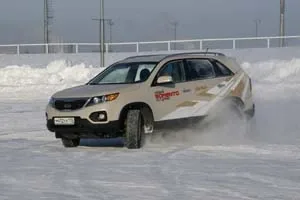
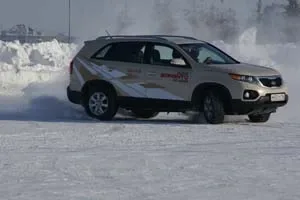
At the hippodrome, an ice area with cones set up for a staggered slalom awaited us — great, just what we need! After waiting a bit for the students of the high driving skills school to finish their exercises, we also try to navigate the course. I immediately turn off ESP and go ahead. Strange: the car easily goes sideways and slides, adding gas should straighten the trajectory, but instead the drift becomes even stronger.
There's nothing left but, for the thrill, to turn the steering wheel in the opposite direction and give it gas — the Sorento beautifully circles around its axis. The behavior is as if the rear axle is the driving one. After forced locking of the axles, the car began to behave like a true all-wheel drive with precise and predictable reactions, though the heaviness of the steering wheel hasn't gone anywhere. It's sharp (only three turns from lock to lock), but very heavy, so it's not suitable for active steering. There it is, the clash of opposites: the composed, dense character of the suspension and the sharp but heavy steering wheel. But the most important thing in this car is hidden under the hood — it's the diesel. It's good. As is the automatic transmission. The car starts easily, takes first gear almost without hesitation, and then on, and on, and on. Overtaking on the highway, even on a slight incline, doesn't cause any negative emotions: you understand that you manage to get back into your lane right away, the acceleration is assertive and dynamic.
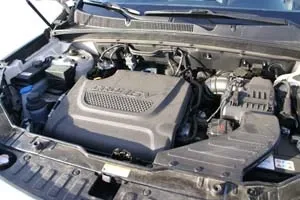
The modern aluminum engine with common rail of the latest, third generation, piezoelectric injectors, and a variable geometry turbo not only copes excellently with its tasks but also promises to be economical. We, unfortunately, forgot to reset the fuel consumption readings, so we'll take the official figures on faith. This is also aided by the low drag coefficient — 0.38 versus the previous 0.425. In this car, it's a rare case where the appearance fully matches the character. The interior is up-to-date, the car is dynamic both outside and in motion, and for this, it's devoid of purely off-road attributes like a frame and low-range gearbox, which no one will particularly regret.