
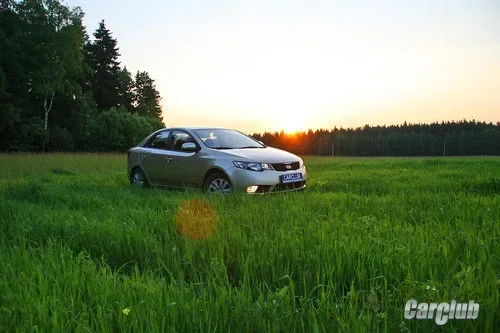
 The Kia Cerato sedan is built on a completely new platform, but up front it has a suspension that is structurally similar to the one familiar from the cee'd model.Comments (14)
Today it is fashionable to start any material with a mention of the crisis, but despite all the financial turmoil, the Korean brand Kia is not slowing down its expansion in Russia and Europe. And this is not a spontaneous push, but a well-thought-out strategy. First, the Kia cee'd hatchback went into battle — it was this model that set the new design direction for the brand. Then came the official representative office's entry into the Russian market, which coincided with the debut of two models at once: the Kia Cerato sedan and the compact crossover Kia Soul, which we have already covered.
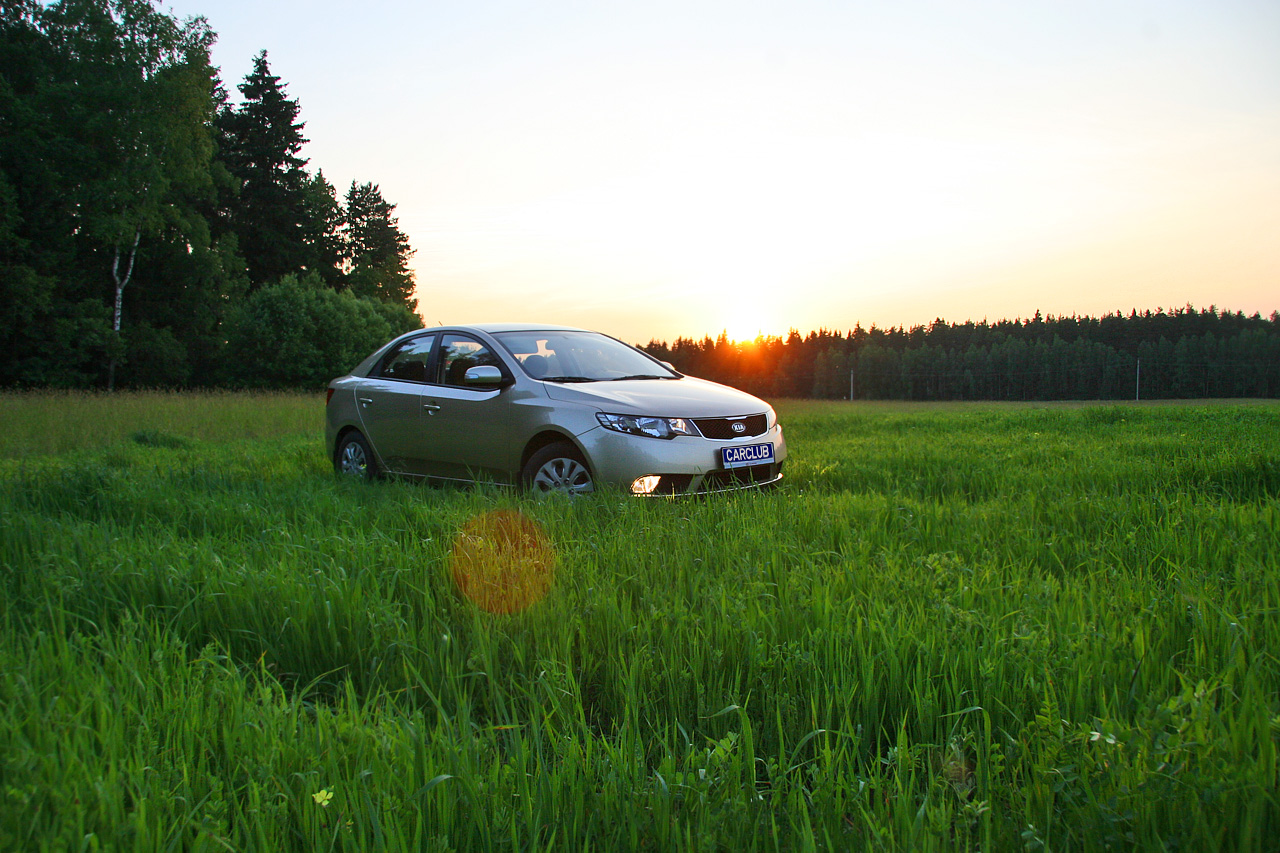 |
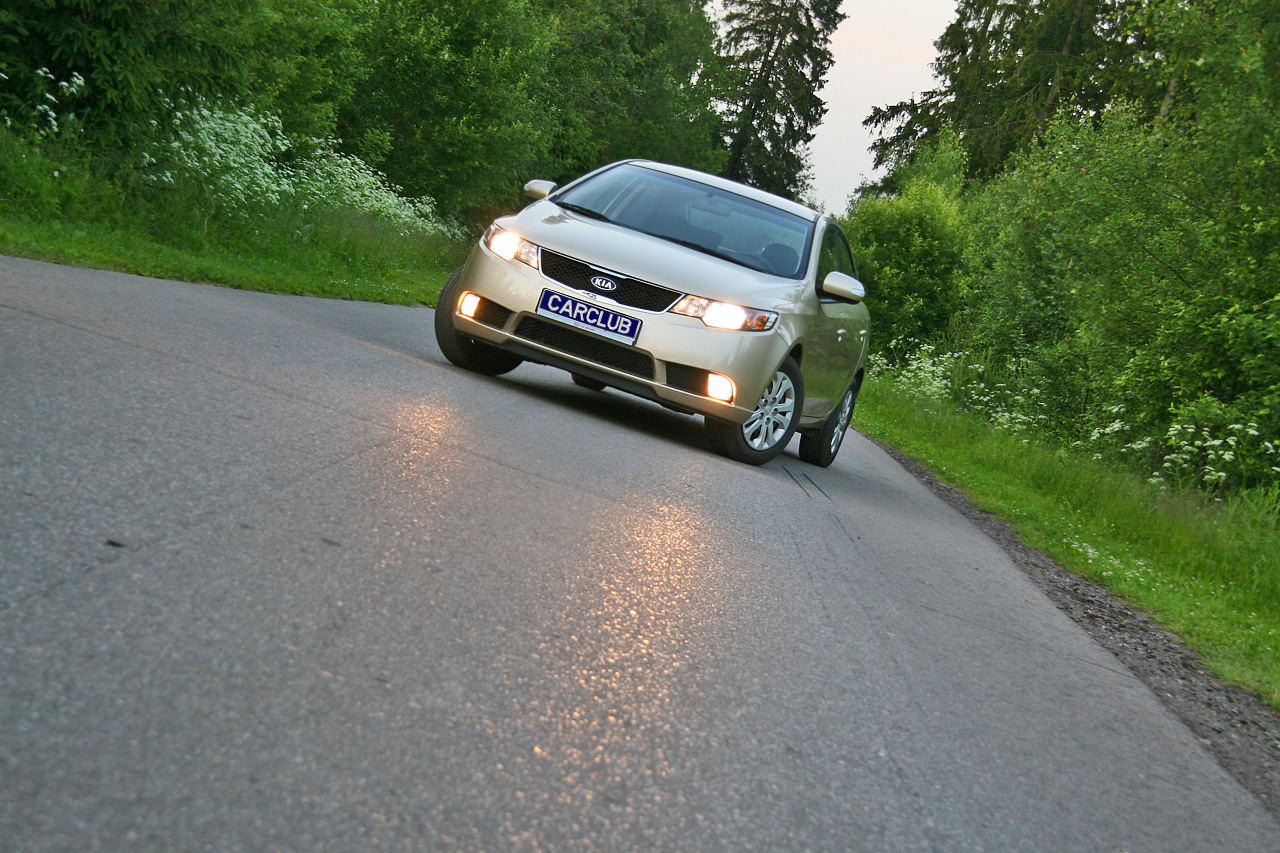
| The new model looks well-proportioned. Aggressive headlights up front, an intricate radiator grille, a bumper with fog lights spread across the corners and a wide air intake — all this speaks of the hand of a German specialist. |
All three cars were created with the direct involvement of Peter Schreyer, a German who previously worked on the Audi TT, Audi A6 and Volkswagen Golf IV.
With the Kia cee'd, everything is clear: the stylish five-door hatchback and its three-door version, the procee'd, have long been a familiar sight on our roads. But what is the new Cerato sedan, sales of which started in Russia in April? That is exactly what we need to find out — we got a 1.6-liter Cerato with a five-speed manual gearbox for testing.
 |
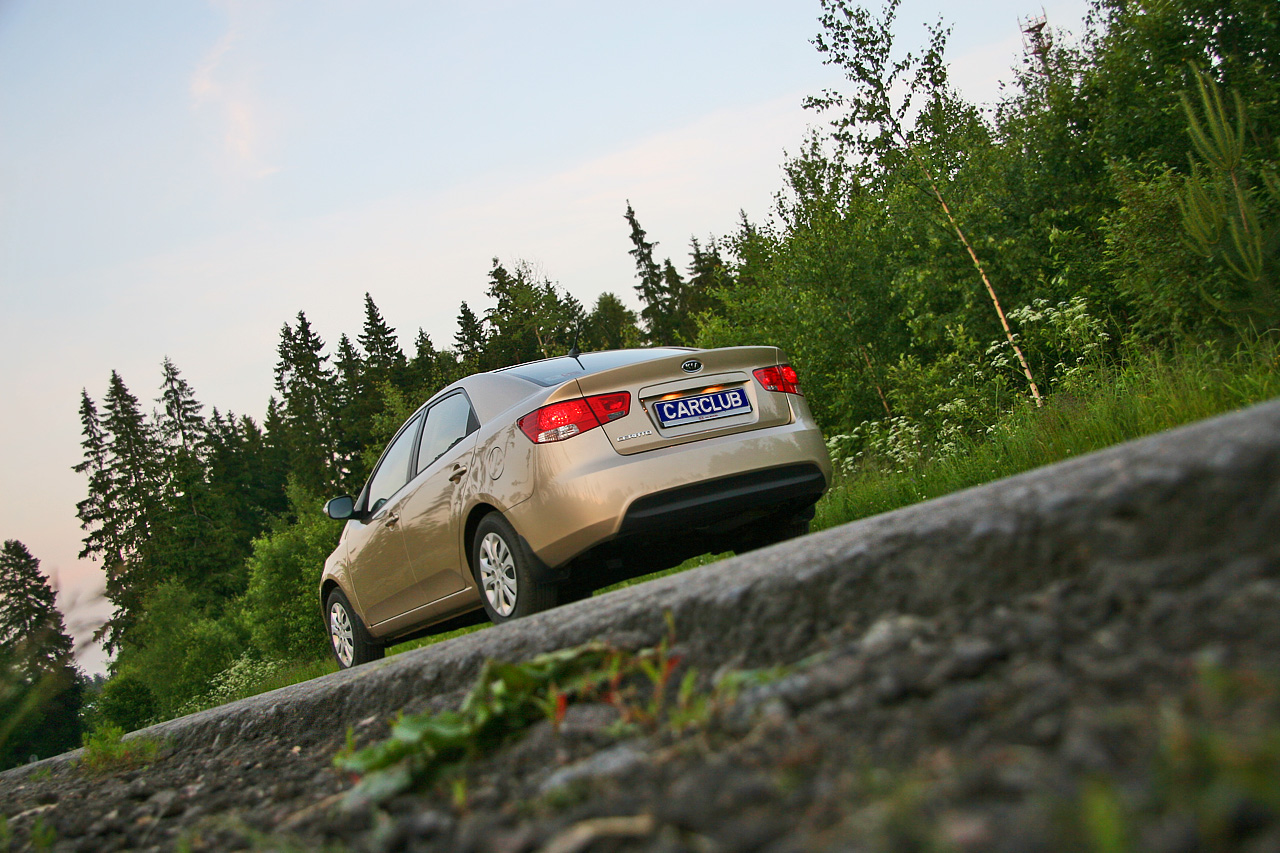
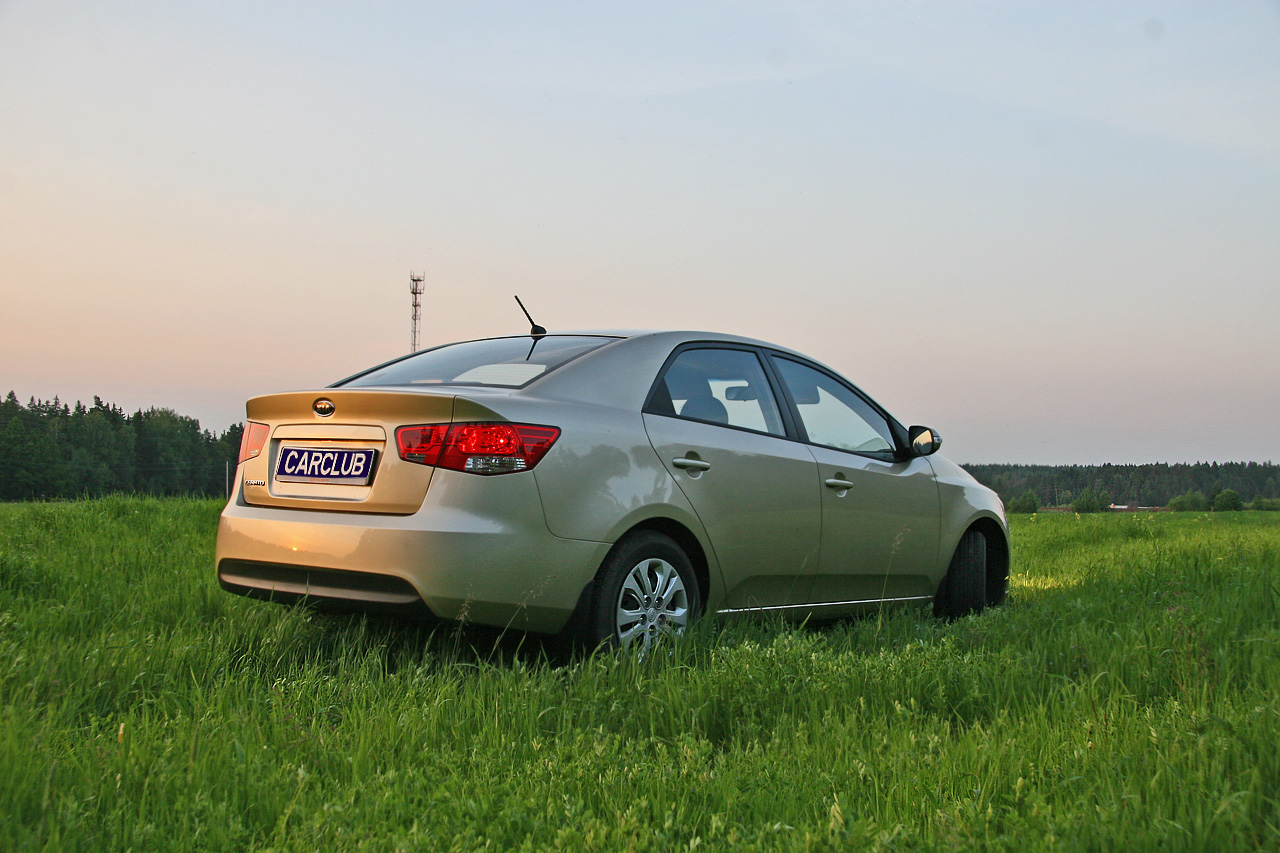
| The rear looks calmer, but no worse for it: neat taillights successfully complete the muscular profile of the sedan. |
The exterior turned out well-proportioned. Predatory headlights, an intricate radiator grille, a front bumper with widely spaced fog lights and a large air intake — you can feel the touch of a German designer. The rear looks more modest, but no less attractive: neat taillights nicely close off the sculpted silhouette. Japanese competitors should be worried — in terms of beauty, the new Cerato can compete with any of them.
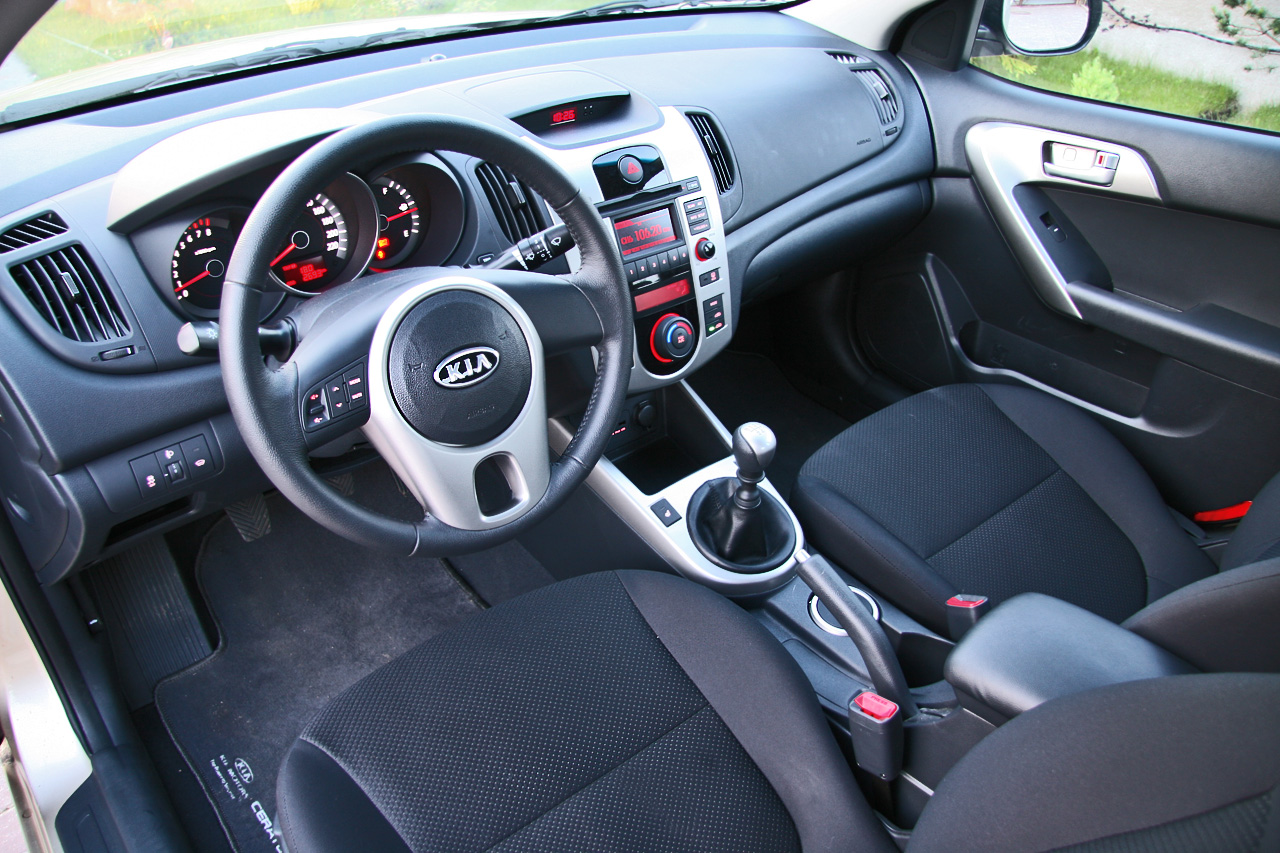 |
| The interior is a bit plain, but enlivened by metal-look inserts, and the main decoration is the instrument panel with three deep pods and scarlet needles, as if locked inside the dials. The leather steering wheel is pleasant to the touch and adjusts in two planes. The front seats are well profiled, but they clearly lack lateral support. |
The interior is without frills, but it is adorned with metallized inserts and an eye-catching instrument cluster — three deep "wells" in which red needles sit as if imprisoned. The build quality pleased: gaps are even, panels are fitted neatly. True, on uneven surfaces the abundance of hard plastic makes itself felt, and a barely noticeable creak comes from somewhere in the front panel. The leather-wrapped steering wheel is comfortable and adjusts in two directions. The front seats have a decent profile, but there is clearly not enough lateral support. For me, who prefers to sit lower, there was also not enough height adjustment range.
 |
| The Cerato has a new platform, but the front suspension repeats the cee'd layout. At the rear, everything is simpler: instead of the "cee'd-style" multi-link, there is a regular torsion beam. |
In the back, two passengers of average build will fit without difficulty. If the occupants are larger, their knees will start pressing into the backs of the front seats. A third person has nothing to do here, especially since the Cerato does not provide a headrest for the central position. However, there is a convenient armrest with cupholders. When I opened the trunk, it immediately became clear what they saved on: a full 415 liters of volume, plus the rear seat back folds in parts. Very practical.
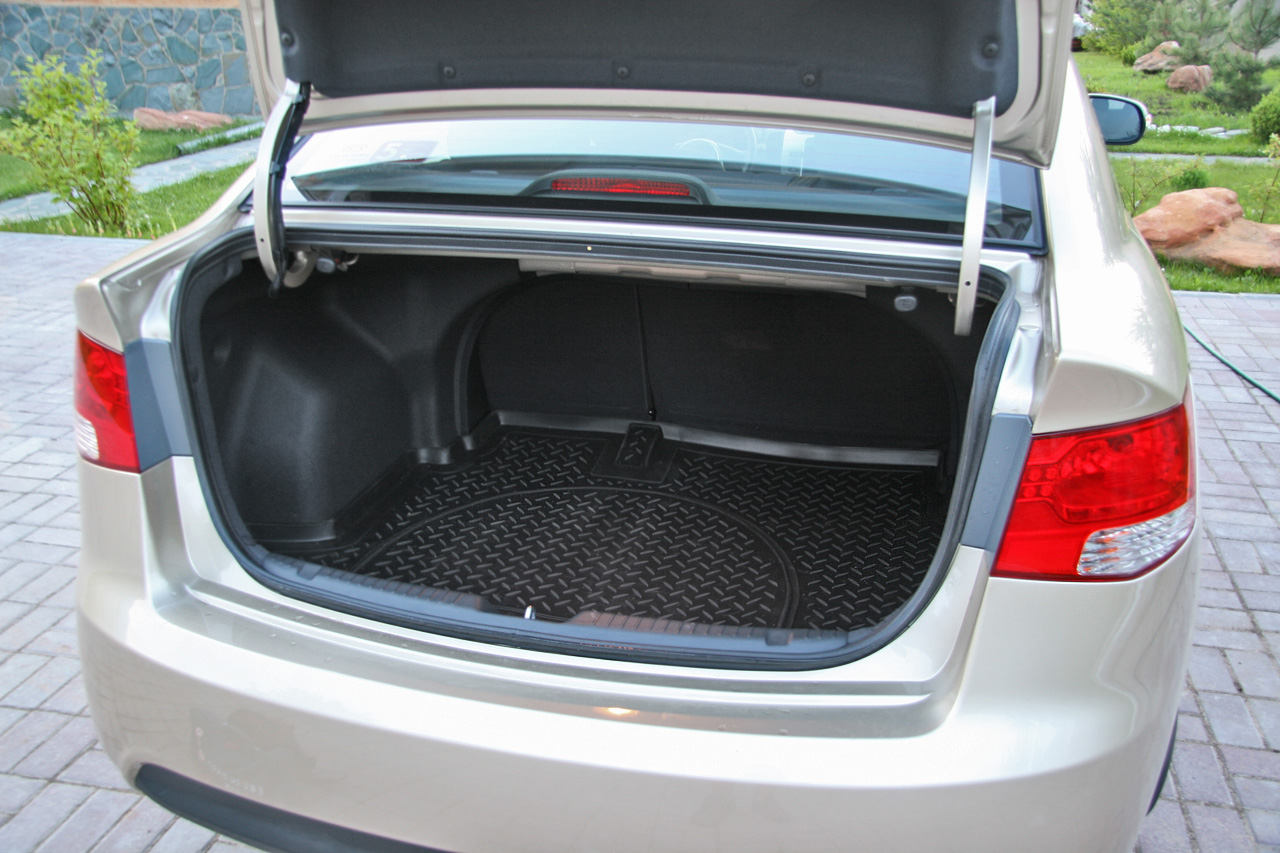 |
| Having opened the trunk, I understood what the space was sacrificed for. 415 liters of space and a rear seat back that folds in parts — excellent practicality. |
The sedan's platform is completely fresh, but up front there is a suspension similar to that of the cee'd. At the rear, the design is simpler: instead of the multi-link, as in the "cee'd", there is a sturdy transverse beam. That's the economy! After all, the new model was created primarily for the markets of North America, Russia and Eastern Europe, where sedans are traditionally held in high regard. And in Western Europe, the main bet is placed on the cee'd, so the sedan has nothing to do there.
 |
| Russian buyers will be offered little: one engine, two gearboxes and two trim levels. However, the base "Comfort" version already includes a trip computer, a pair of airbags, ABS, an audio system with IPOD and USB inputs, air conditioning, power windows, power mirrors and a front armrest. The price of such a Cerato is 559 thousand rubles. |
Under the hood of the test Cerato is a 1.6-liter engine with 126 hp, paired with a five-speed manual. At the bottom, 156 Nm of torque is not enough, but as the revs rise, the engine comes alive and drives noticeably more briskly. On the highway, a sixth gear is sorely missed: already at 120 km/h the engine hums tiresomely, the tachometer needle approaches 4,000 rpm, and the hand itself reaches for the lever. The gearbox itself does not work perfectly clearly, and the clutch pedal could be more informative.
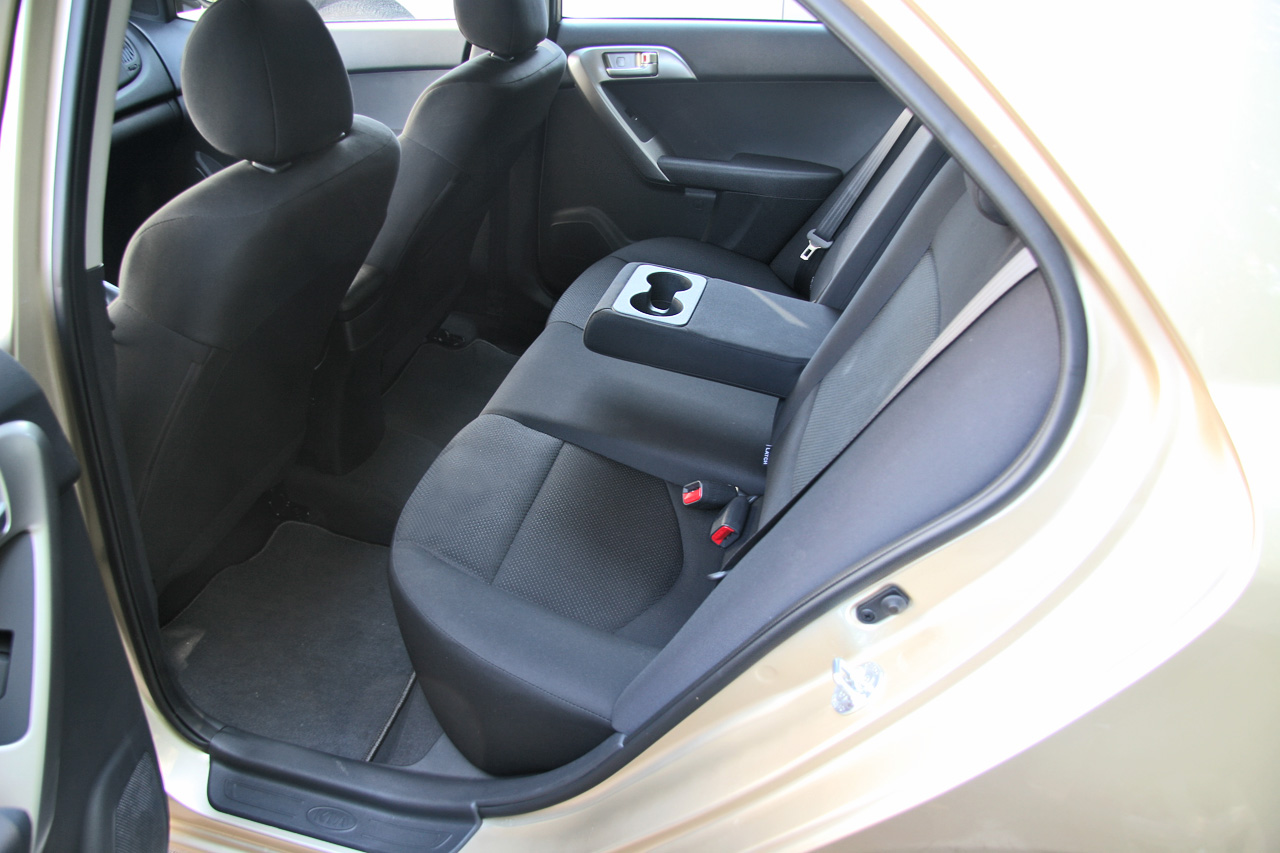 |
| In the back, there is enough space only for a couple of passengers of average build. If people are larger, their knees will press against the backs of the front seats. Three people definitely will not fit here, and the Cerato does not have a central headrest. |
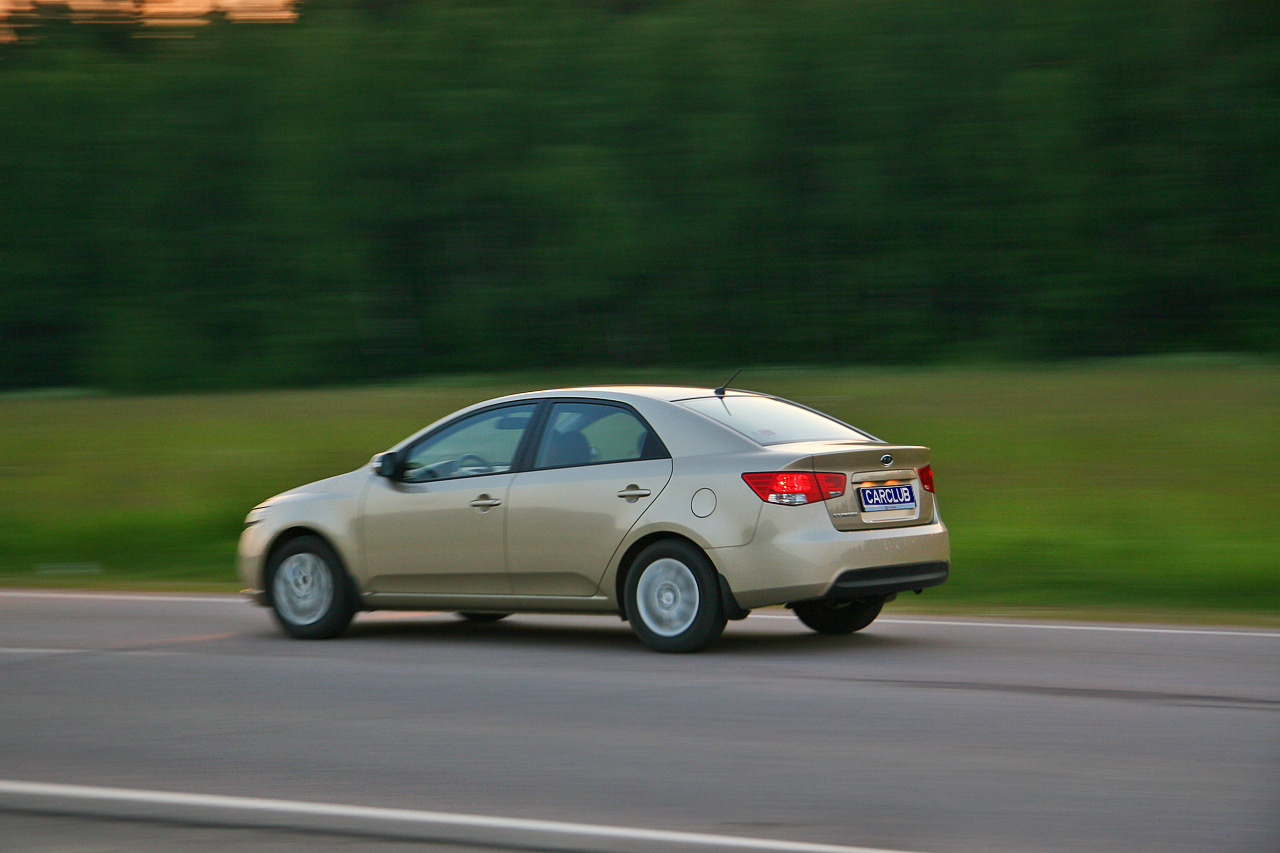
But the handling pleased. The Korean sedan confidently holds a straight line, and in corners, some owners of multi-link rear suspensions would envy it. However, body roll has not gone away, and the somewhat stiff suspension is too sensitive to bumps. But I liked the power steering: a clear center and a distinct reactive force directly provoke faster driving. The brakes are not bad, but the pedal is overly responsive, and at first I kept "nodding" the nose.
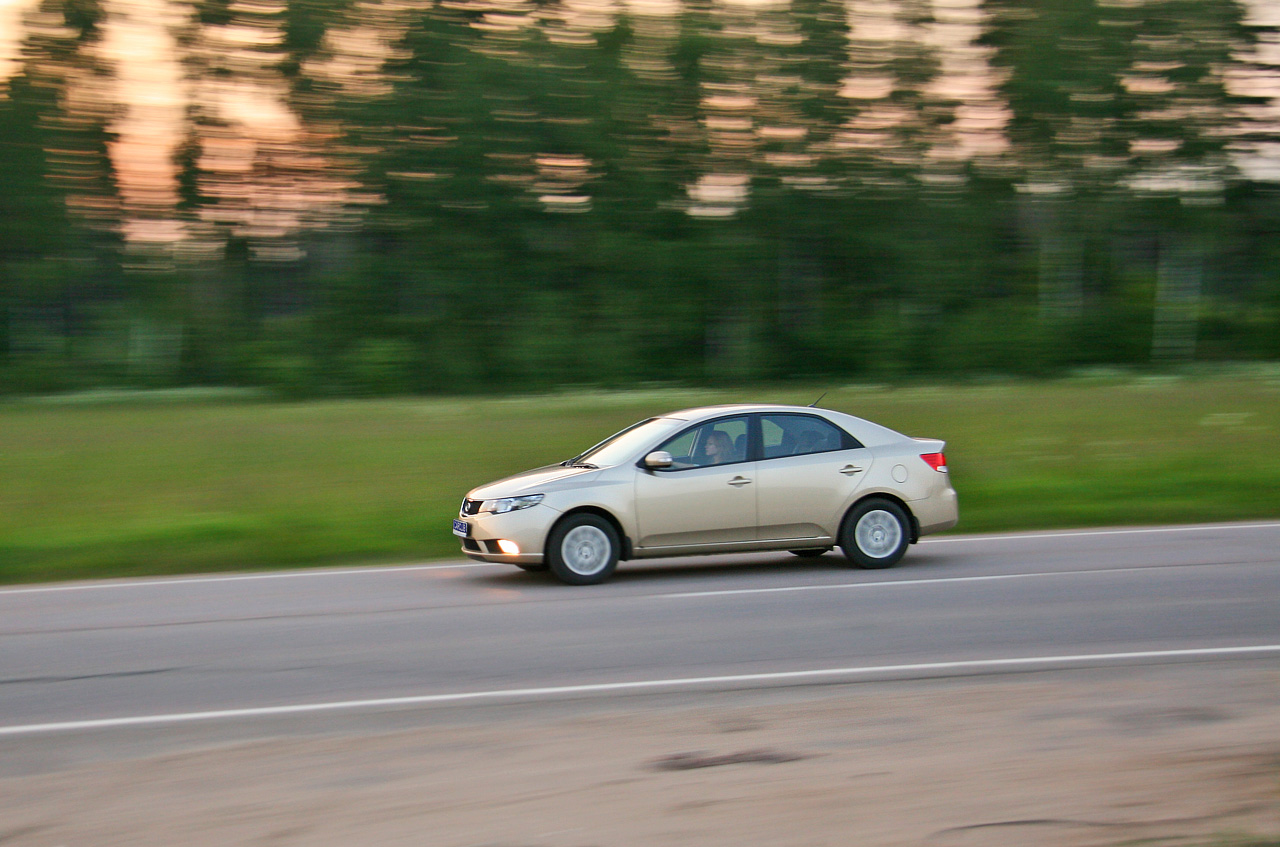 |
| The test Kia Cerato had a 1.6-liter engine with 126 hp and a manual gearbox with five gears. At low revs, 156 Nm of torque is not enough, but as the revs rise, the engine comes alive and drives much more cheerfully. |
The choice for Russian buyers is modest: one engine, two transmissions and only two trim options. But even in the base "Comfort" there is a trip computer, two airbags, ABS, an audio system with IPOD and USB outputs, air conditioning, power windows, power mirrors and a front armrest. This version of the Kia Cerato costs 559 thousand rubles.
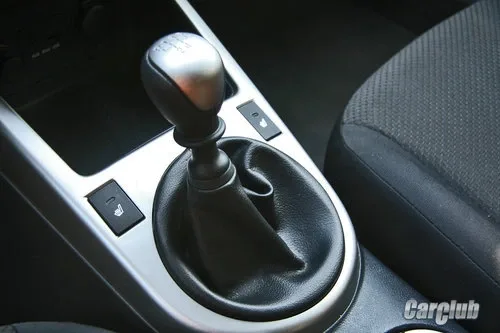
The gearbox does not work perfectly — shifts are not always precise, and the clutch pedal does not provide enough feedback.
The "Lux" version will cost 599 thousand rubles. For this money, the buyer gets ESP, a steering column with reach adjustment, automatic headlights, fog lights, climate control, side airbags and curtain airbags, as well as heated seats and wiper zone. If you want an automatic gearbox, you will have to pay an additional 40 thousand.
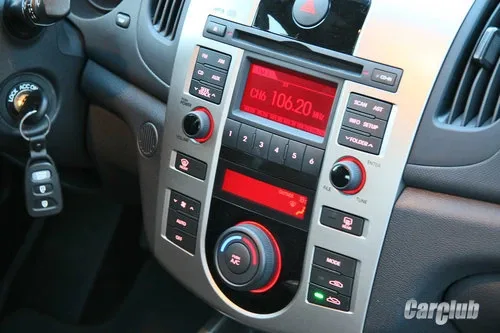
The build quality pleased: gaps are even everywhere, panels are fitted neatly. But on uneven surfaces, the abundance of hard plastic makes itself felt — a barely noticeable creak is sometimes heard inside the front panel.
Ruslan Galimov