
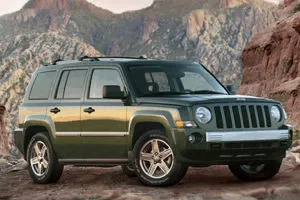
 For those who were not satisfied with the too "friendly" look of the Jeep Compass, and the Commander and Cherokee seemed too large, Jeep offered the Liberty model for the Russian market. Comments
 Jeep is a division of the American concern Chrysler, which specializes in the production of vehicles with enhanced off-road capability. The brand's fame was brought by the Willys company, which created the legendary army jeep of World War II — it was this model that allowed Willys to go down in history as one of the greatest automakers. Since then, Jeep vehicles have been firmly associated with outstanding off-road qualities, a rugged character, and a unique style.
Modern realities of the automotive industry force manufacturers to seek fresh solutions. Rising fuel prices, the demand for compact cars, and the development of new markets dictate their own conditions that all players must reckon with. In addition, to reduce costs, engineers are forced to create entire model lines on a single platform, maximizing their unification.
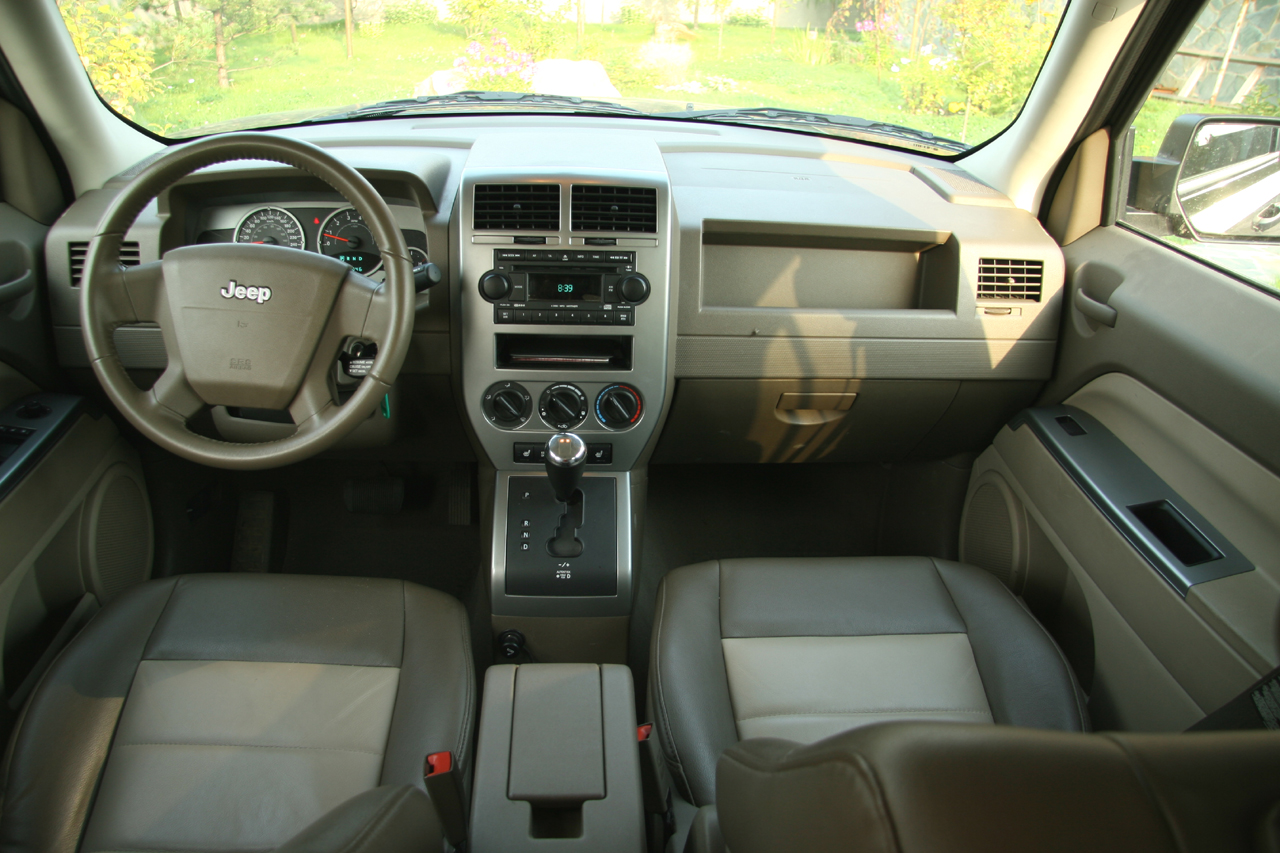 |
| The angular front panel and hard plastic coexist with decent ergonomics |
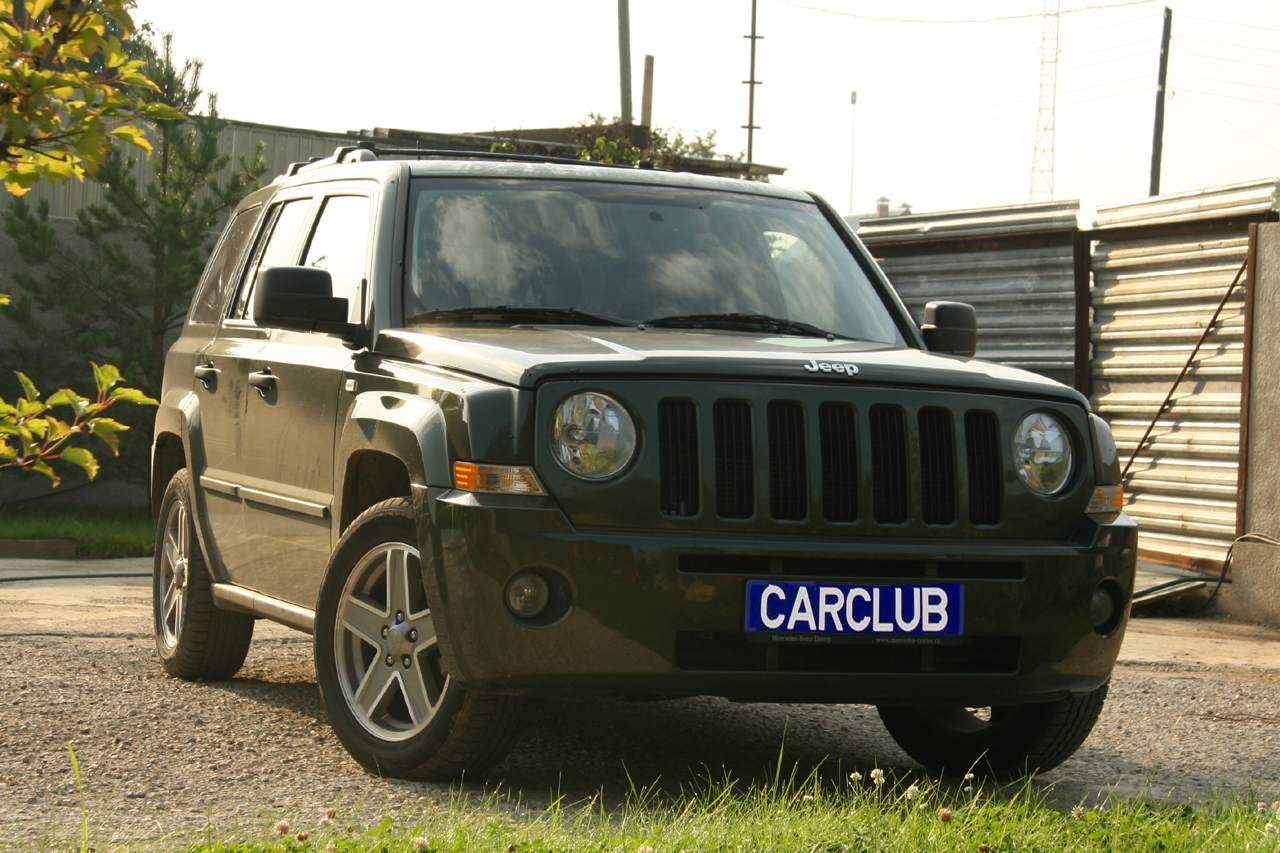 |
| The exterior unmistakably reveals a Jeep vehicle |
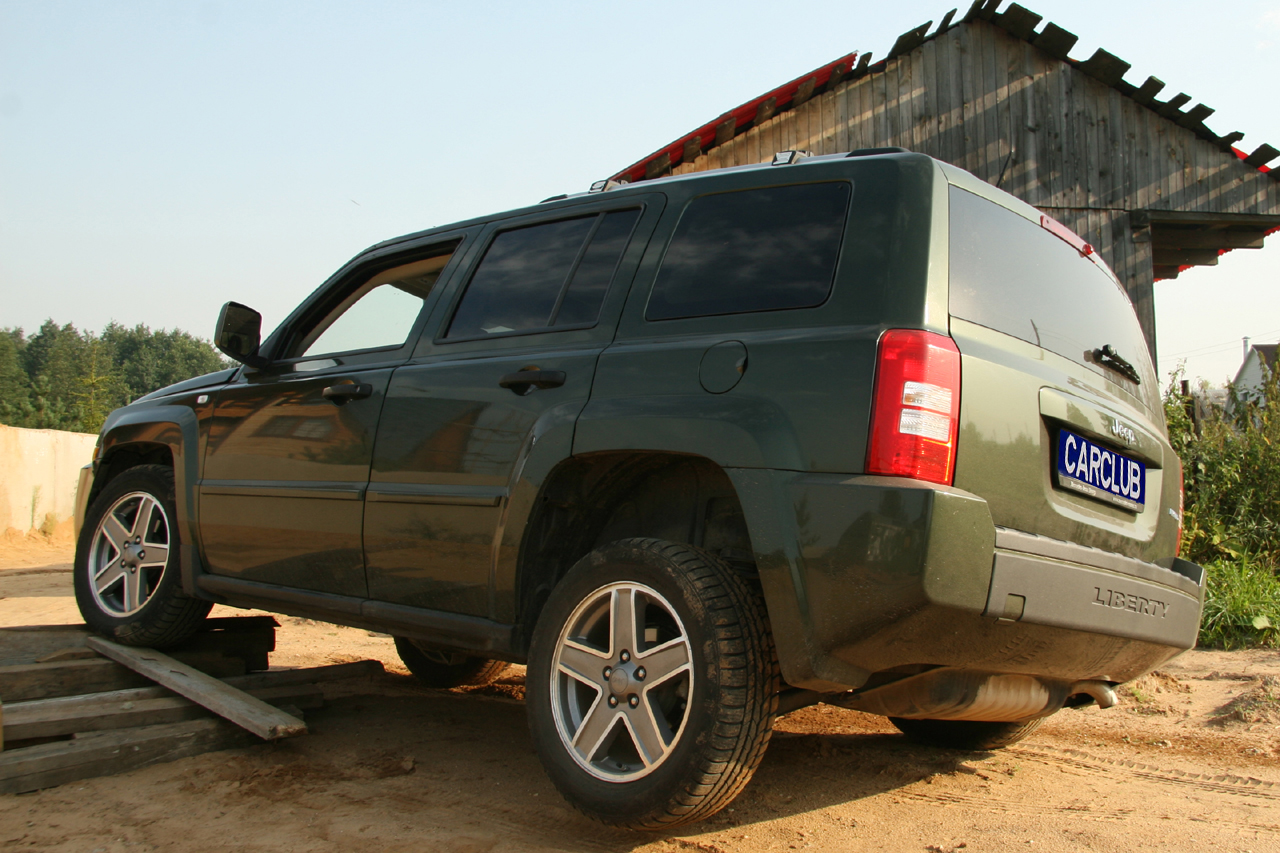
For those who were not impressed by the "good-natured" appearance of the Jeep Compass, and the Commander and Cherokee seem too large, Jeep brought the Liberty to Russia. In its homeland, North America, the model bears the proud name Patriot, but when exported to Russia, for quite obvious reasons, the name was changed to the equally proud Liberty. In terms of technical content, the Liberty is practically a twin brother of the Compass model, but the character of these cars on the road is completely different.
In the Jeep model hierarchy, the Liberty occupies a step higher than the Compass. In terms of positioning, the Compass is aimed at a younger audience, while the typical Liberty buyer is a specialist with average income aged 23 to 43, regardless of whether they are single or married. That is why the Liberty's appearance turned out to be more masculine and brutal.
 |
 |
For the Russian market, the Jeep Liberty is supplied with a 2.0-liter diesel engine producing 140 hp paired with a 6-speed manual gearbox, as well as a gasoline engine with a displacement of 2.4 liters producing 170 hp, which can work with a 5-speed manual or a continuously variable transmission CVT II. We received a gasoline version with a CVT and an almost maximum package of additional equipment for testing.
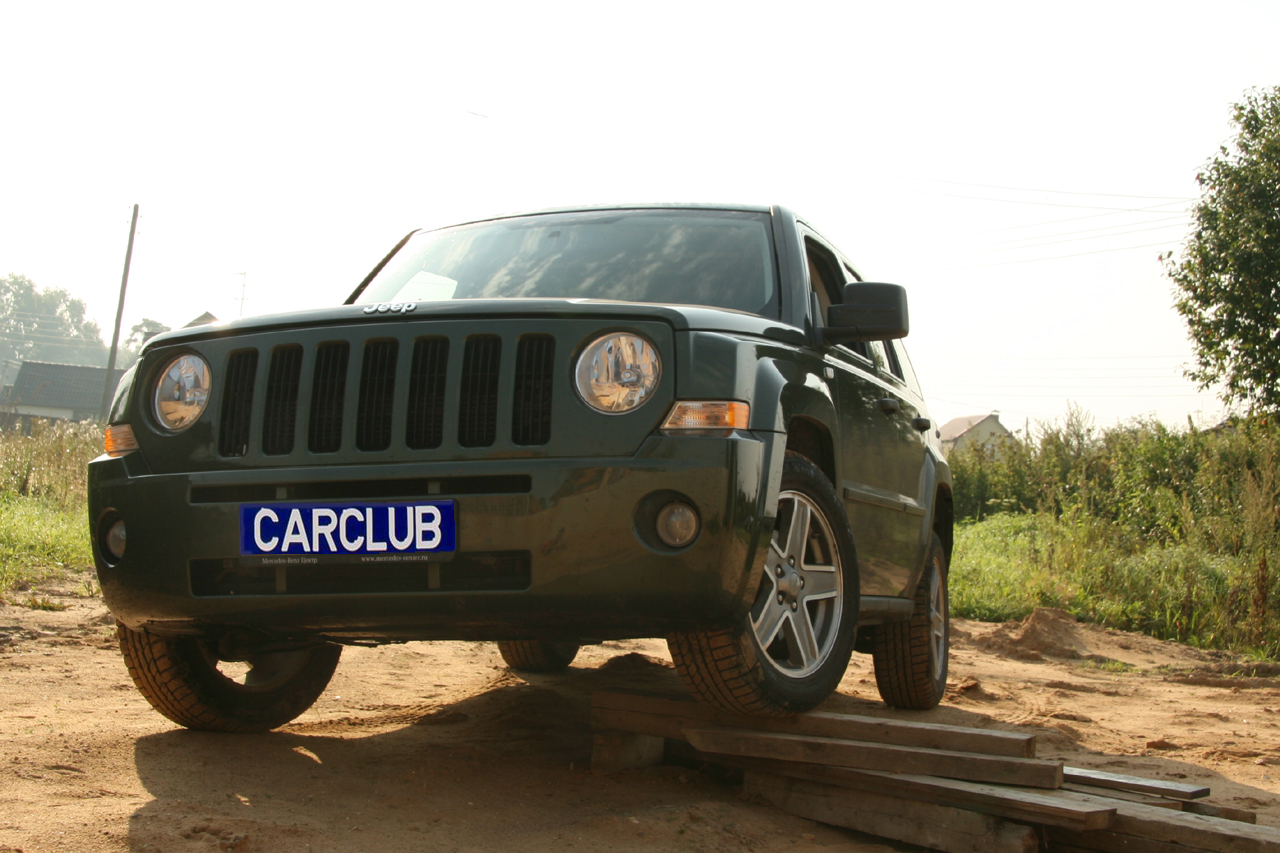
Exterior, as already noted, is quite brutal so that it unmistakably reveals a "Jeep," but at the same time, the car is compact enough not to experience inconvenience on narrow city streets. Recognizability is ensured by the signature radiator grille with seven slots, trapezoidal wheel arches, as on all other models of the brand, and round headlights. Overall, the Liberty's appearance, despite all its originality, will not appeal to everyone — the "chopped" design typical of Jeep does not always withstand competition with more elegant Japanese classmates. However, in city traffic, the Jeep Liberty will always stand out, and it is simply impossible to confuse it with anyone else except the Compass.
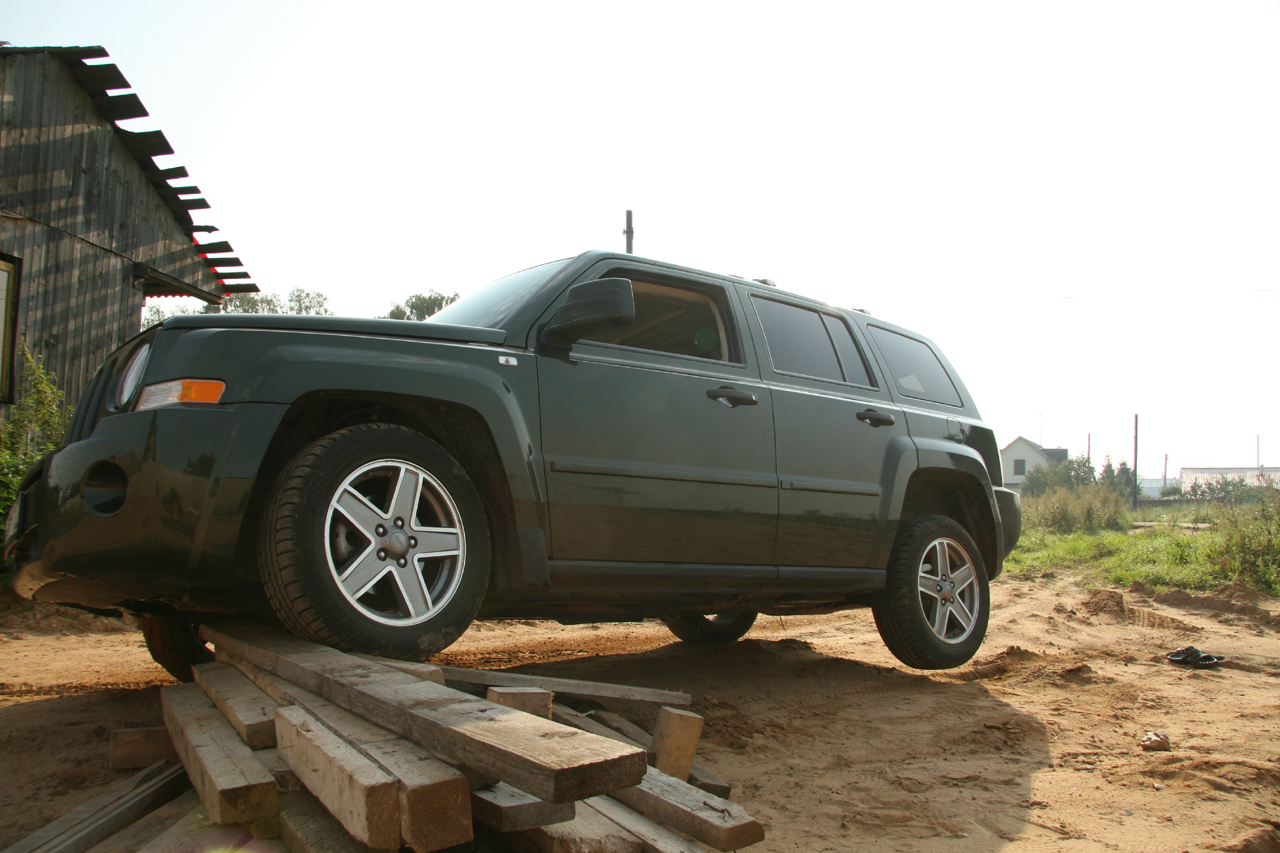 |
| All-wheel drive and center differential lock give the Liberty decent off-road capabilities |
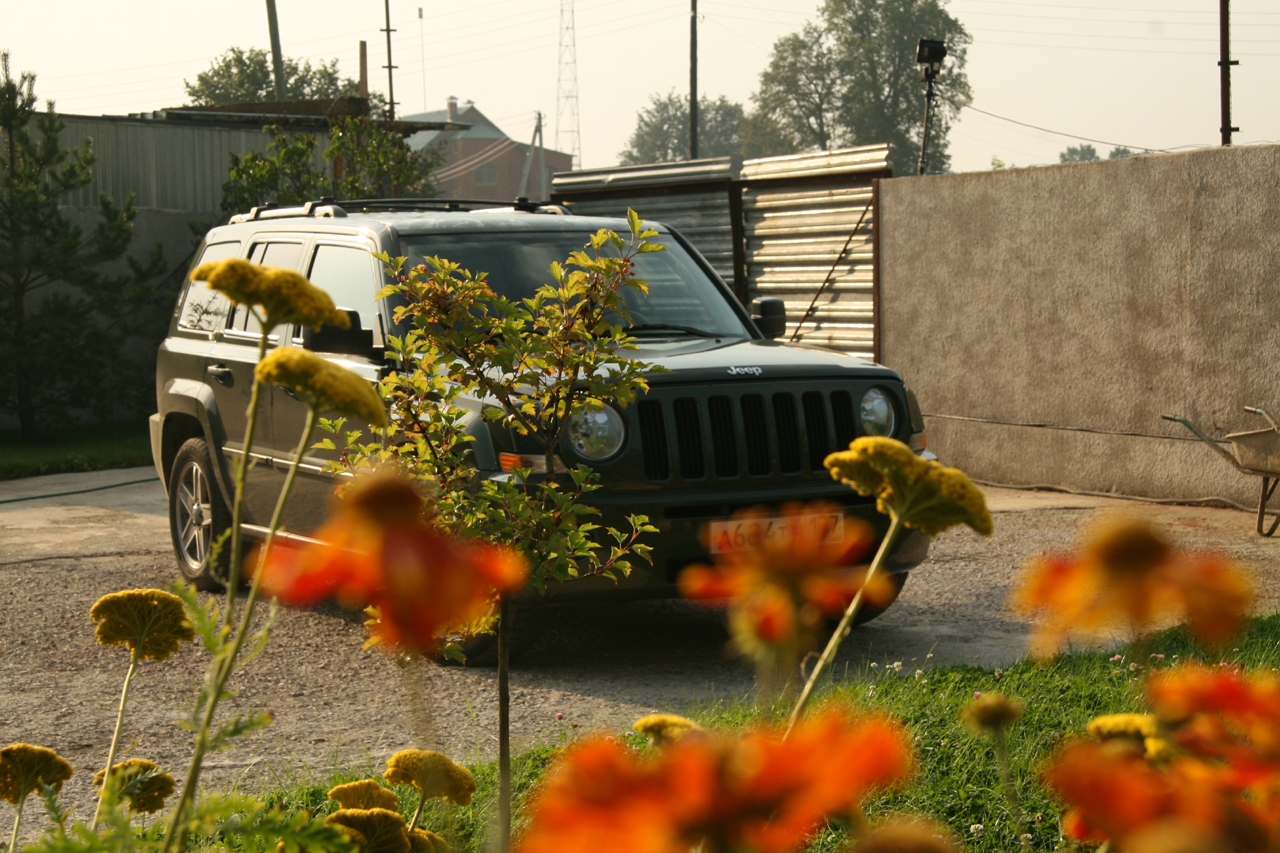 |
| Recognizability on the road is created by the signature radiator grille and round headlights |
Inside the Jeep Liberty, you feel quite cozy. The high front panel, angular shapes, rough hard plastic — all this leaves no doubt that you are in a Jeep vehicle. Ergonomics are in order. The ranges of seat adjustments are quite sufficient. Although the steering column is not adjustable for height, finding a comfortable seating position is not difficult. However, the instrument panel disappoints with too small markings on the speedometer and tachometer. In the back, tall passengers will be frankly cramped, and the rear seat itself does not have a comfortable profile. However, the backrest is adjustable for angle. Trunk holds 652 liters, and if you fold the rear seat, the useful volume grows to 1,535 liters.
The convenient center armrest slides forward and backward. Its lid has a niche for a mobile phone or mp3 player. As an additional option, the test Jeep Liberty was equipped with a decent audio system Boston Acoustics Premium Sound Group with an amplifier, eight speakers, and a subwoofer, which sounds quite worthy. An interesting "feature" of this system is two pivot-and-fold speakers built into the tailgate — useful for outdoor enthusiasts.
 |
| The Jeep Liberty pleasantly surprised with almost car-like handling on asphalt |
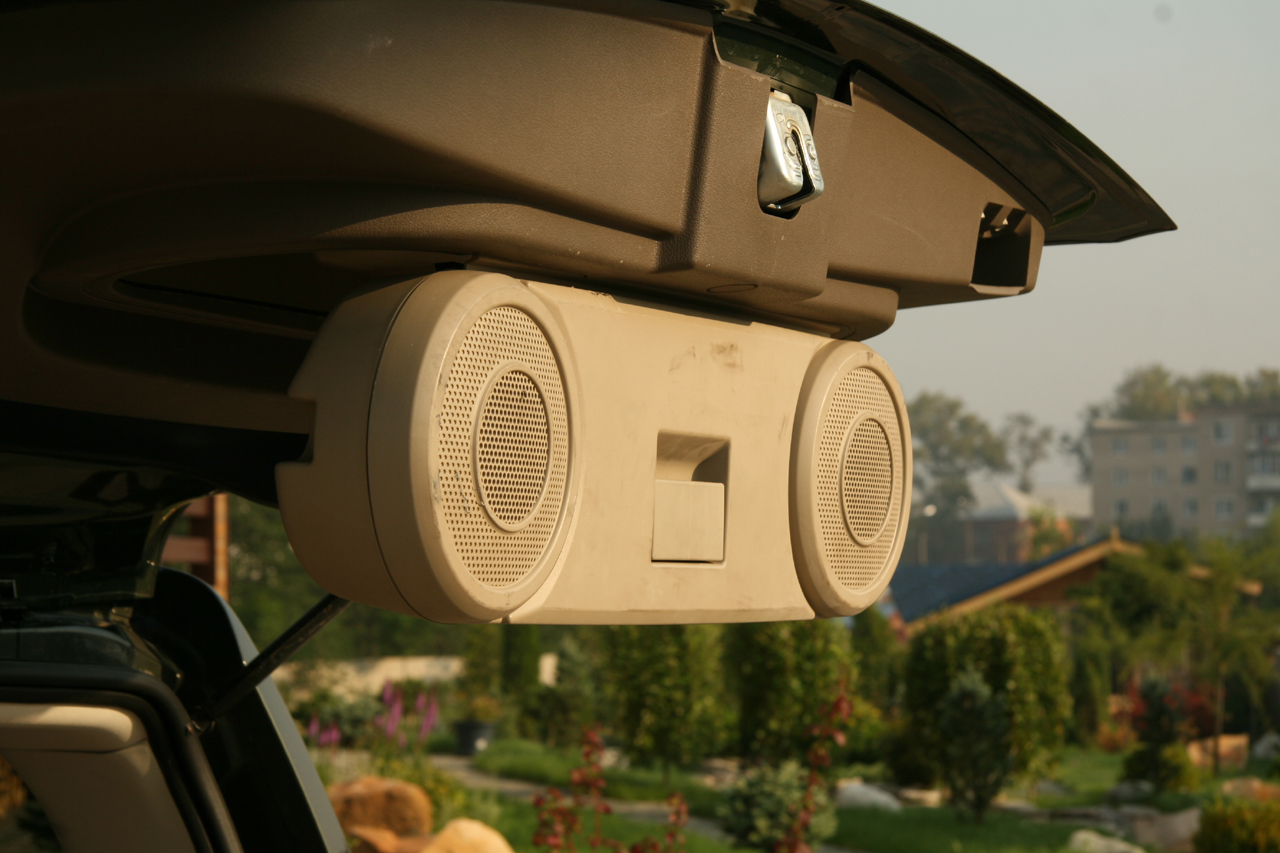 |
| Two pivot-and-fold speakers are built into the tailgate for outdoor enthusiasts |
Jeep Liberty has permanent all-wheel drive with electronic torque distribution Freedom Drive I and a center differential lock function. This transmission works as follows: under normal conditions on asphalt, the Liberty behaves like a standard front-wheel-drive vehicle. The only difference is that about 10% of the torque is still sent to the rear axle. If there is the slightest wheel slip on a slippery road or wet dirt road, the system automatically transfers up to 60% of the torque to the rear axle.
If you want to give the Liberty a more serious off-road test, you can forcibly engage the rear wheels — just pull the T-shaped handle on the center tunnel between the front seats, and the torque will be distributed in a 50/50 ratio between the axles, and if necessary, the share of torque on the rear axle can increase to 60%.
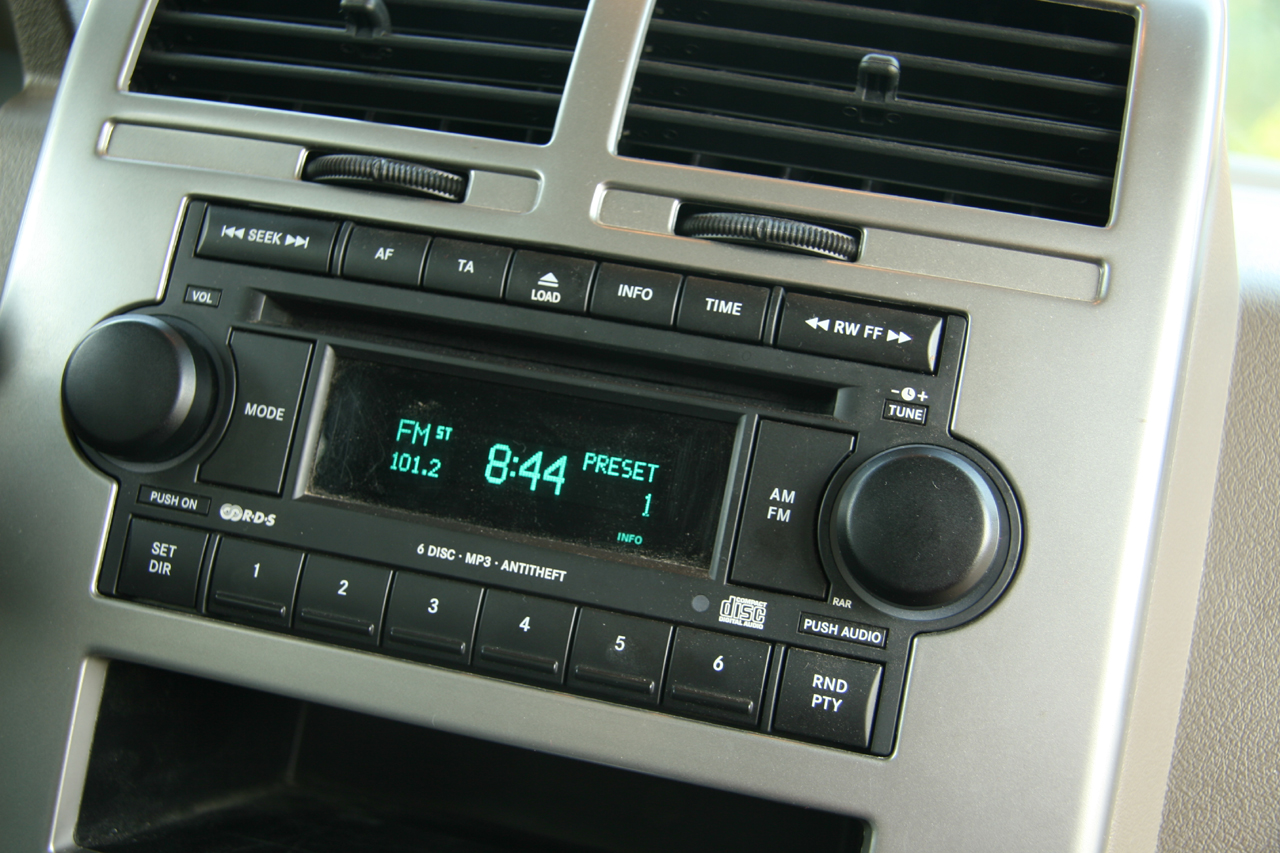 |
| The Boston Acoustics Premium Sound Group audio system is equipped with an amplifier, eight speakers, and a subwoofer |
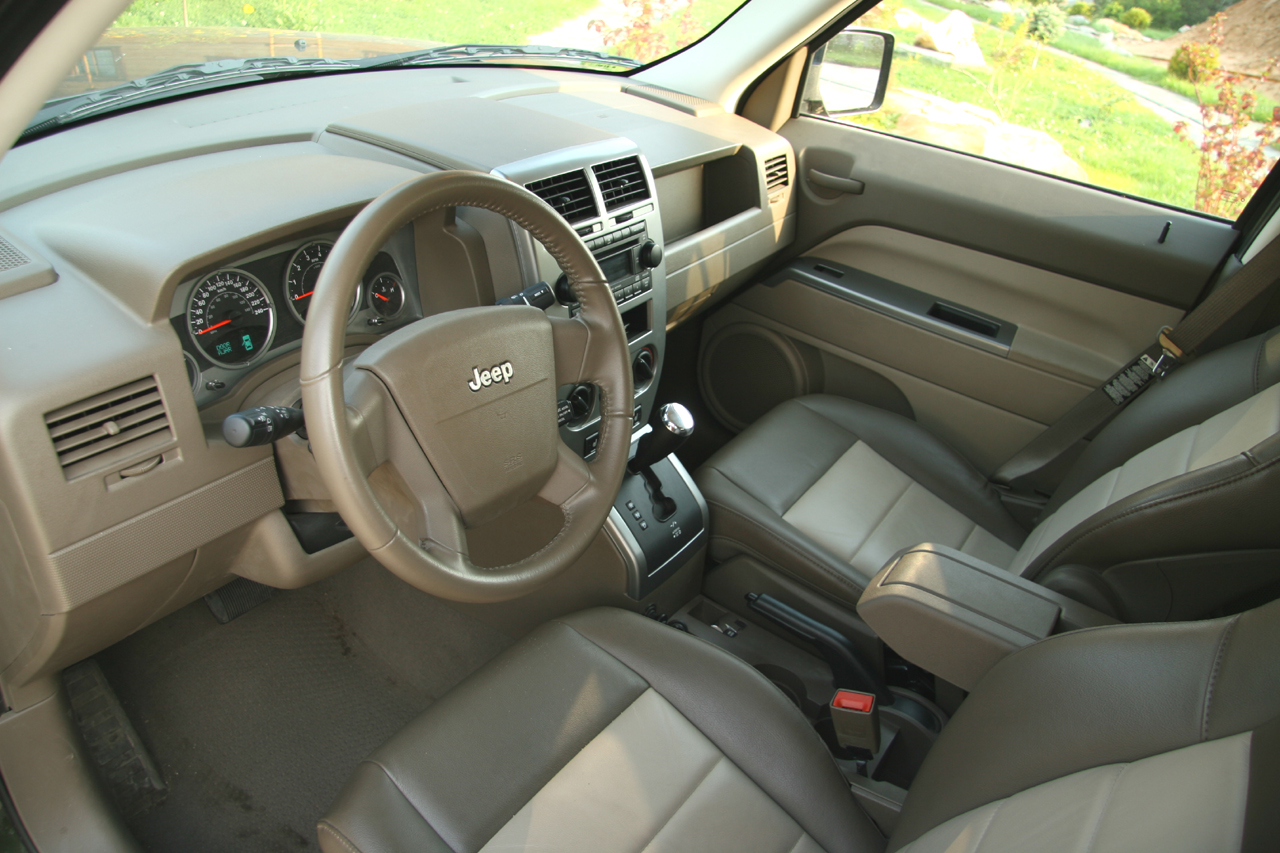 |
| The front seats have a decent profile |
The all-wheel-drive system has proven itself exceptionally well. On ordinary civilian "tires," the Liberty confidently drives on a road wet after rain. However, geometric off-road capability is limited by the rather low front bumper — on serious bumps, you need to be careful with it, otherwise there is a risk of losing it. In addition, during diagonal wheel hanging, the Freedom Drive I is slightly delayed in engaging the rear axle, so some obstacles have to be taken with momentum.
On asphalt, the Liberty presented a pleasant surprise. This compact but real SUV behaves almost like a passenger car. In corners, the body rolls quite moderately, and on the highway, the car pleases with smoothness and quietness in the cabin. The credit for this goes to the fully independent suspension: McPherson struts in front and a multi-link design in the rear.
The combination of the 2.4-liter engine and the CVT works smoothly, providing decent dynamics. The only nuance is a noticeable pause in response to pressing the gas pedal at low revs, so be more careful when overtaking on the highway. The CVT is equipped with the Auto Stick function, which allows manual shifting of six virtual gears — this will come in handy when driving off-road.
The base price of the Jeep Liberty with the 2.4-liter engine and manual transmission starts at 830,000 rubles. For this money, the buyer gets a car with serious off-road potential, distinctive looks, and pleasant car-like manners. Of course, the Liberty is unlikely to compete on equal terms with the Japanese leaders of the crossover segment, but among brand enthusiasts who value the true qualities of Jeep vehicles, it will definitely find its buyers.
Ruslan Galimov