
Alexander DIVAKOV, Yuri VETROV Photos by Mikhail KRYUKOV
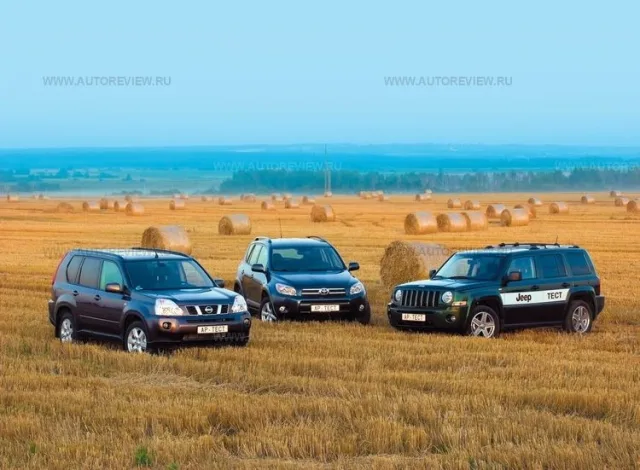
Usually in our trips to the test site from Moscow, the flagship position is occupied by the editorial Chevrolet Aveo packed with equipment. But this time a whole line formed behind it: Jeep Liberty 2.4, a fresh Nissan X-Trail 2.5 (both with CVTs) and a Toyota RAV4 2.4 with a classic automatic. Moreover, the Jeep closely followed the Aveo. It followed, but... barely kept up.
Is the Liberty really that much heavier than its Japanese rivals? Or will it, as befits a true Jeep, take revenge on light off-road?
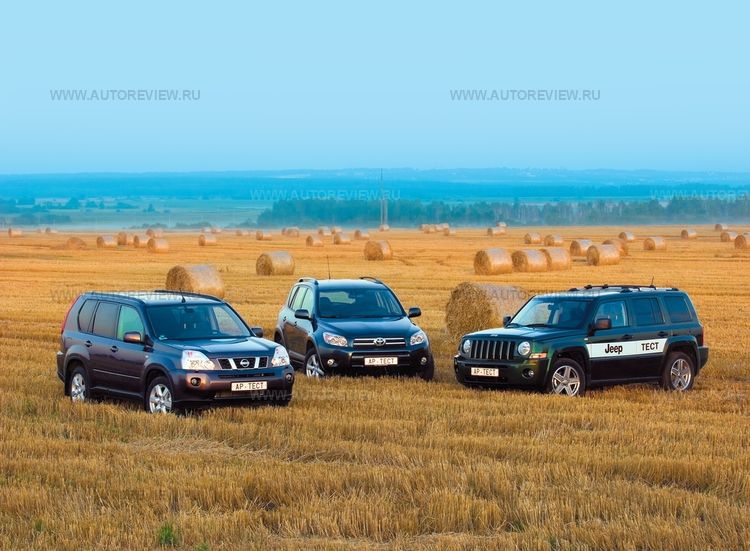
Here it's worth clarifying: Jeep Liberty is a name exclusively for our market. In the rest of the world, it is known as the Jeep Patriot and shares a platform with the Jeep Compass and Dodge Caliber. But since Russia already has its own Patriot — from UAZ — for us, the Patriot was renamed Liberty, limited to changing badges and the rear bumper (AR No. 12, 2007).
Did this reshuffle pay off? Can the Patriot/Liberty compete here with the Toyota RAV4 and the new Nissan X-Trail?
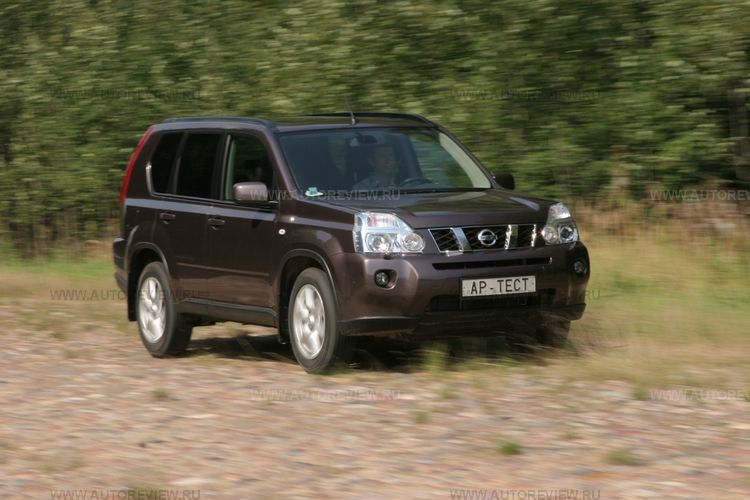
The new X-Trail looks a lot like its predecessor on the outside, but that's just camouflage. Under the familiar brutal shapes hides a different platform and a completely different interior. A soft but well-profiled seat, decent plastic, a neat steering wheel, classic instruments with an orange trip computer window, an understandable "music center" and a convenient CVT selector... This is a Nissan Qashqai! More precisely, unified instruments and controls, but integrated into an angular interior. Everything is convenient, high-quality and well thought out.
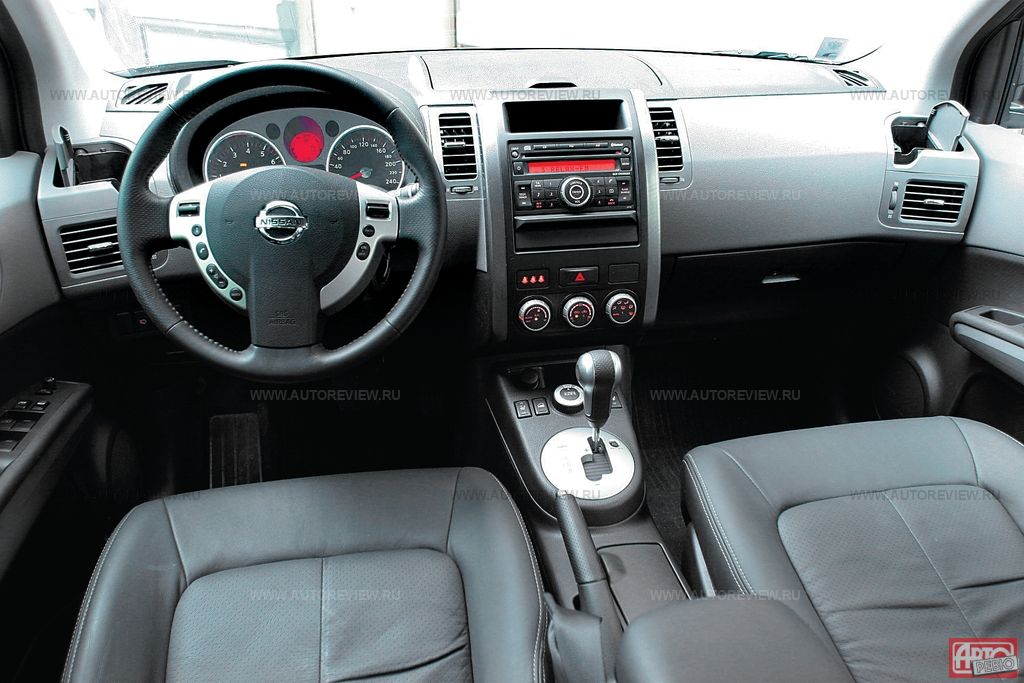 | 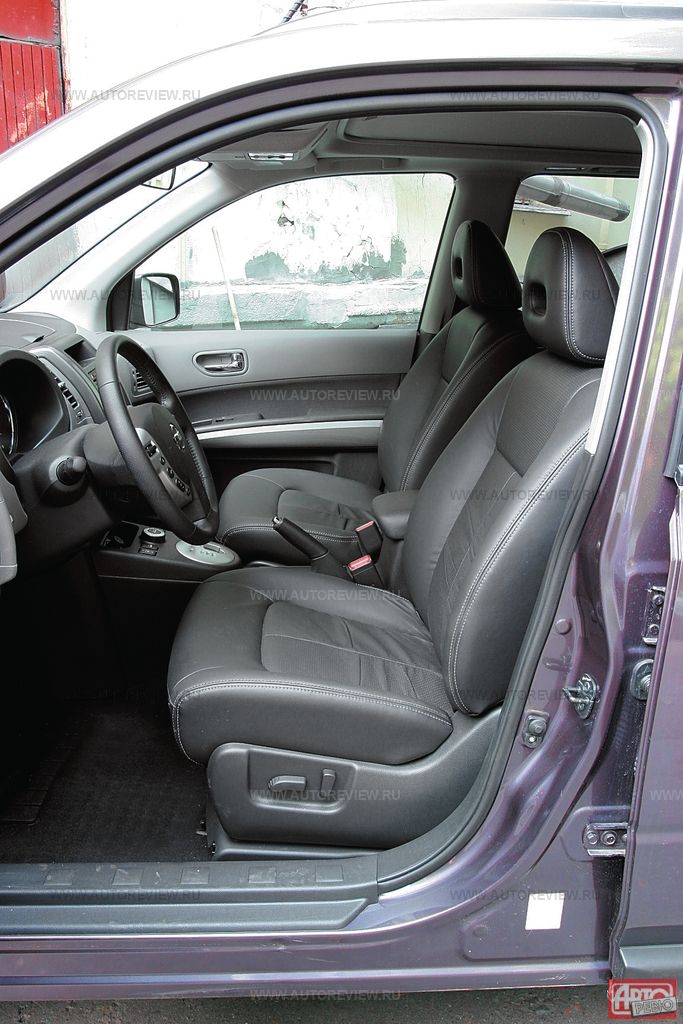 | 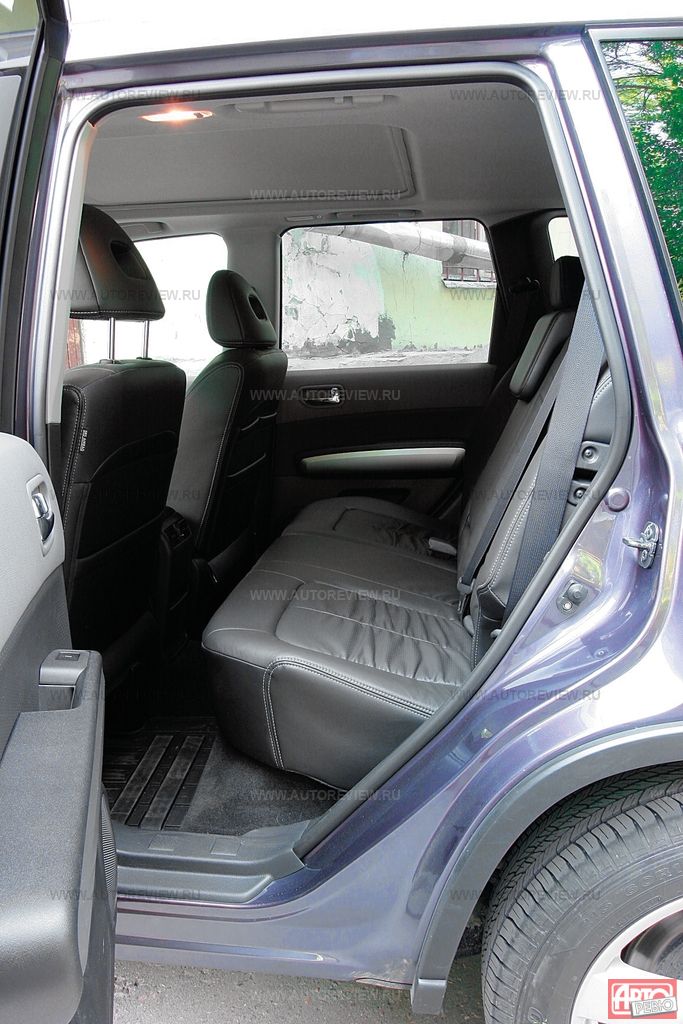 |
| The X-Trail differs from the Qashqai in its angular interior, cooled cup holders in the corners of the front panel and three convenient climate control knobs | The profile of the "non-sporty" leather seat is comfortable | The rear seat of the Nissan is cozy and spacious |
The Jeep also exudes brutality. A real colonel! Chiseled sides, trapezoidal wheel arches, narrow window slits. It's just a pity that the surprised and good-natured face looks more like our microcar "Mishka".
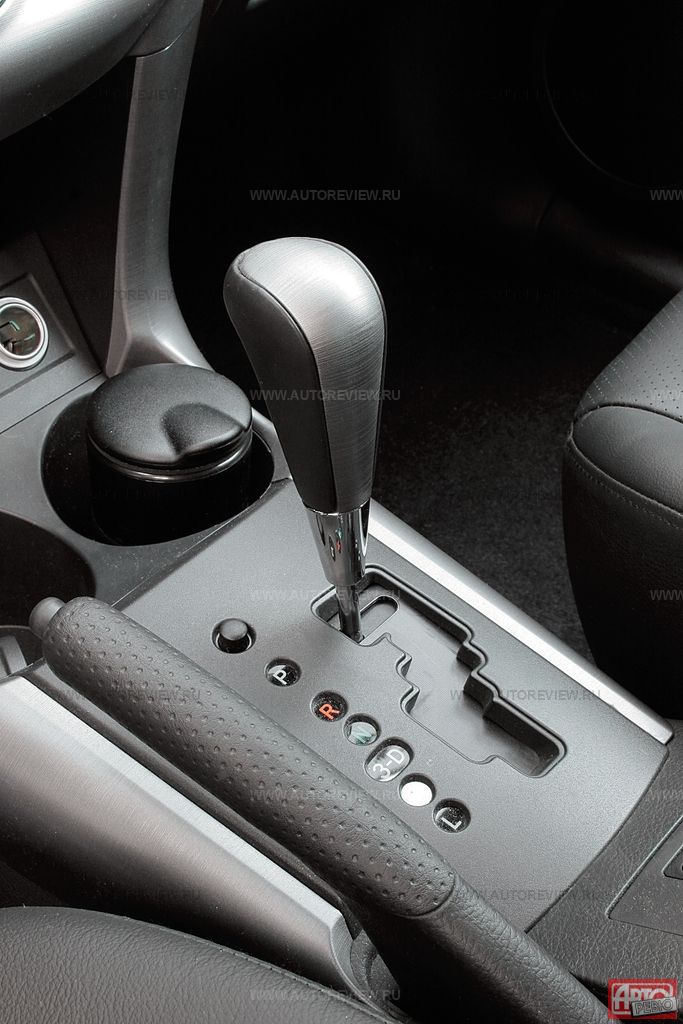
You plop down into the flat and slippery leather seat of the Jeep and... Deja vu again: where have we seen this before? Dodge Caliber 2.0! The same massive angular block of the front panel made of hollow and creaky plastic, the same unpleasant-to-the-touch stiff "spouts" of the climate control, the same inclined transmission selector, the same microscopic steering wheel adjustment travel. Differences: a comfortable leather donut instead of polyurethane, flat leather seats instead of fabric, a stylish T-shaped button for locking the rear wheel coupling and a useless recess in the panel opposite the passenger. And instead of the Caliber's impressive instruments with white dials — a nondescript, poorly readable black combination with additional markings in miles.
| Jeep Liberty | Nissan X-Trail | Toyota RAV4 |
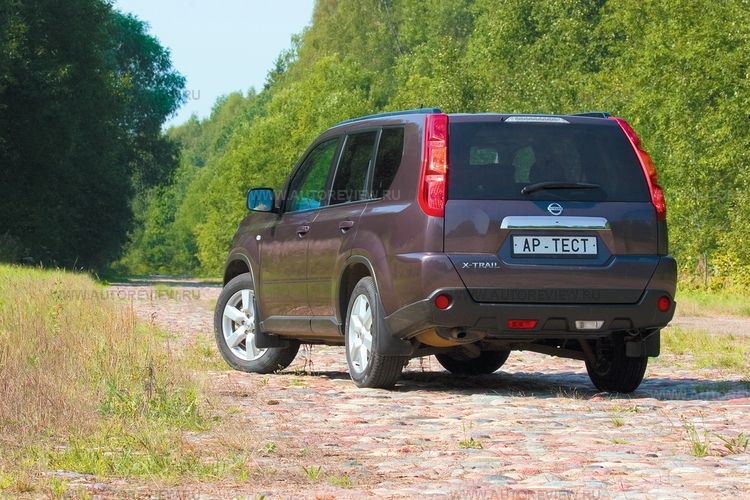
| The beautiful optitron scales of the Toyota cannot be compared with the simple circles in the Nissan and the nondescript instruments of the Jeep. Readability is at its best. The X-Trail disappoints with the murky "fisheye" of the trip computer, and the Liberty with its overloaded speedometer | ||
The Toyota is a completely different matter. Yes, its appearance is already a bit tiresome — a faceless rounded "ladies'" crossover. But what an interior!
The cheerful design of the two-story front panel and the "boomerangs" on the door trim more than compensates for the lack of a sense of quality: the plastic here is hard. But the ergonomics are beyond praise: the best seats (with perforated leather upholstery) and the best seating geometry in our trio for drivers of any height. The original buttons for controlling the dual-zone climate control are always at hand, the steering wheel is good, the optitron instruments are impressive and read at a glance. Beautiful!
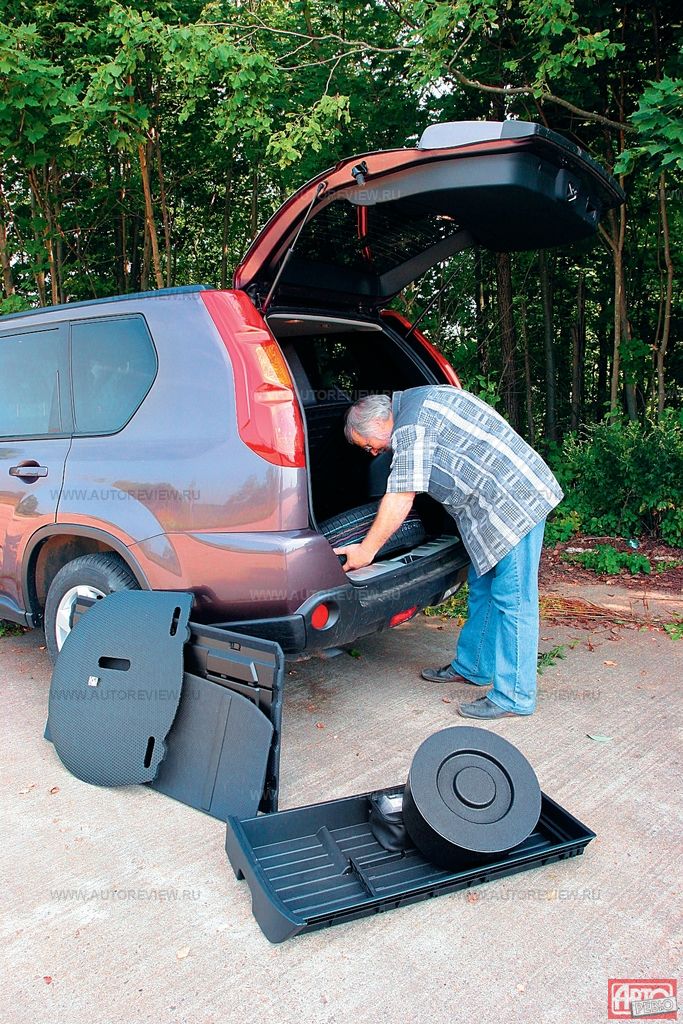 | 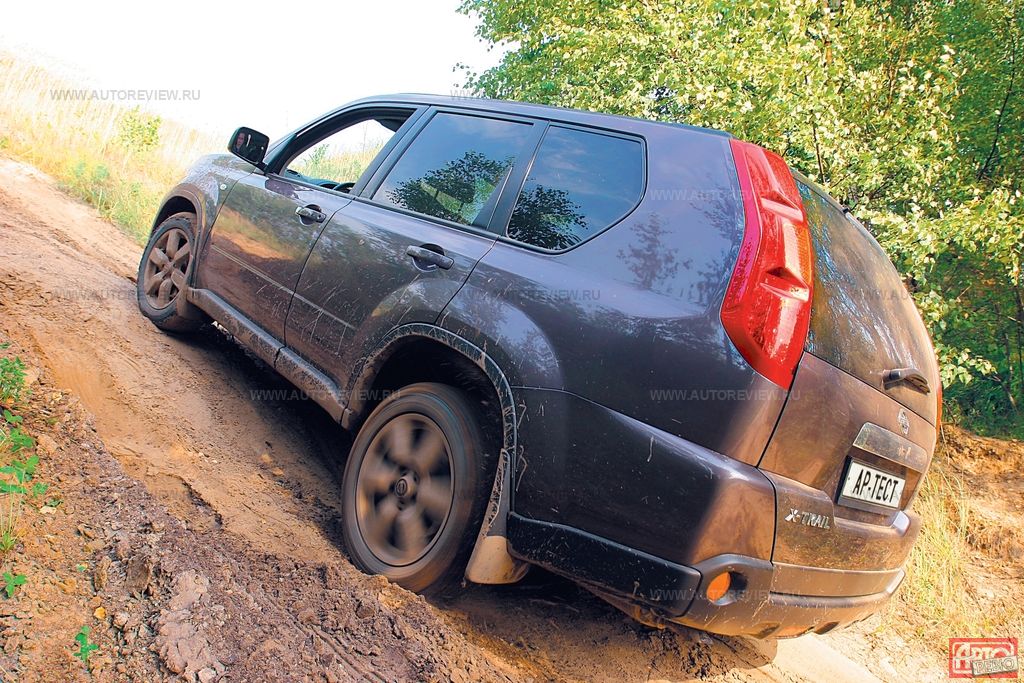 |
| But you'll have to sweat to change a wheel on the Nissan: you need to unload all the elements of the "double" floor and prop up the hard shelf with your head — no hinges are provided for fixing it | The X-Trail is good off-road — thanks to the rigidly lockable coupling in 4WD Lock mode (up to 30 km/h) |
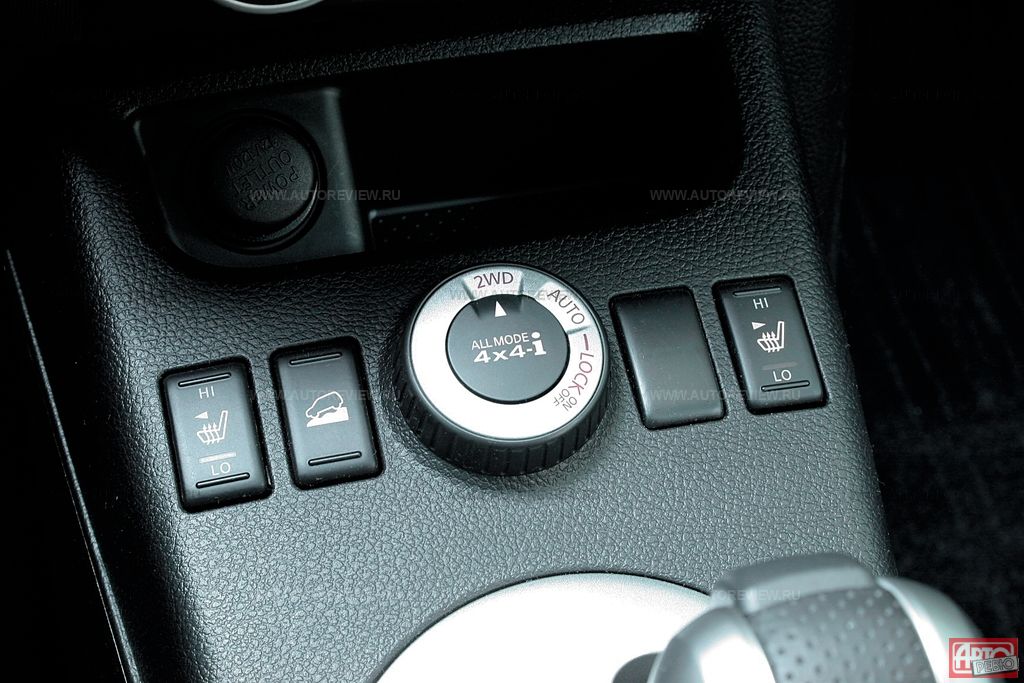 | 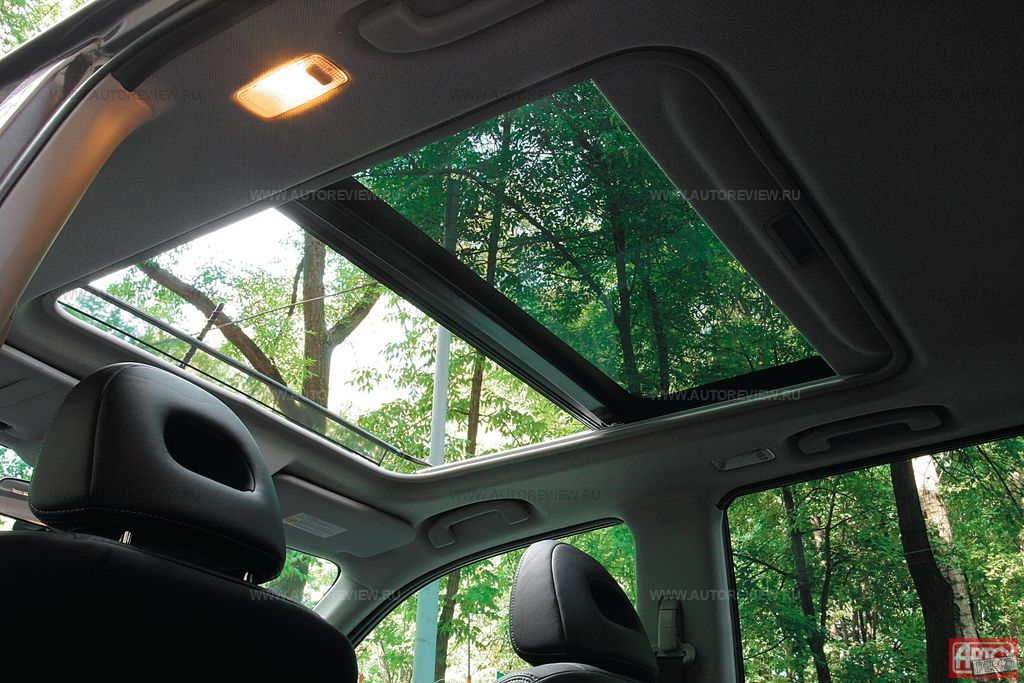 |
| The off-road potential is activated by a knob on the center tunnel | The X-Trail with the 2.5 engine already comes standard with a panoramic sunroof |
Moreover, the Toyota is also the most comfortable for rear passengers. Easy entry and exit, a solid amount of space and a good sofa that can be slid forward to increase trunk volume. The X-Trail is slightly worse: it's a bit tighter for three, and the seat is less comfortable. And the Jeep... Only a gymnast can quickly get to the middle of its flat sofa with a short cushion — the inhospitably thick door with a small opening angle and cup holders placed right on the center tunnel get in the way. Sitting here is also no treat: your shins press against the hard back of the front seat. Uncomfortable.
We decided to evaluate the trunks in a non-standard way, trying to stuff two mountain bikes with 26-inch wheels into them, preferably without disassembly. After all, what are such crossovers for, if not for romantic trips together for active recreation?
| Jeep Liberty | Nissan X-Trail | Toyota RAV4 |
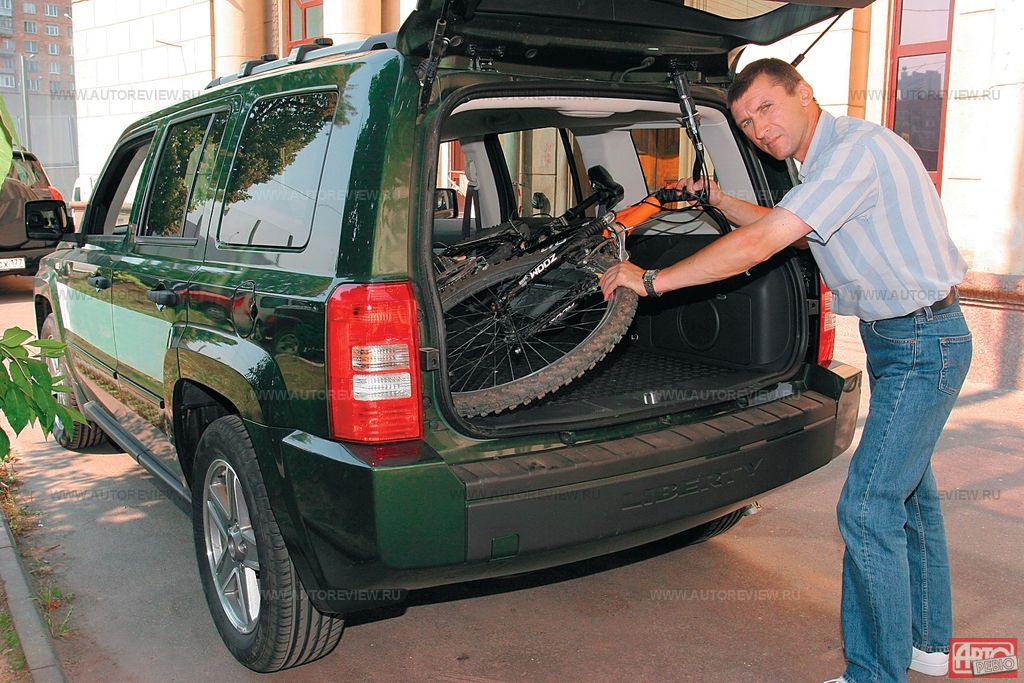 | 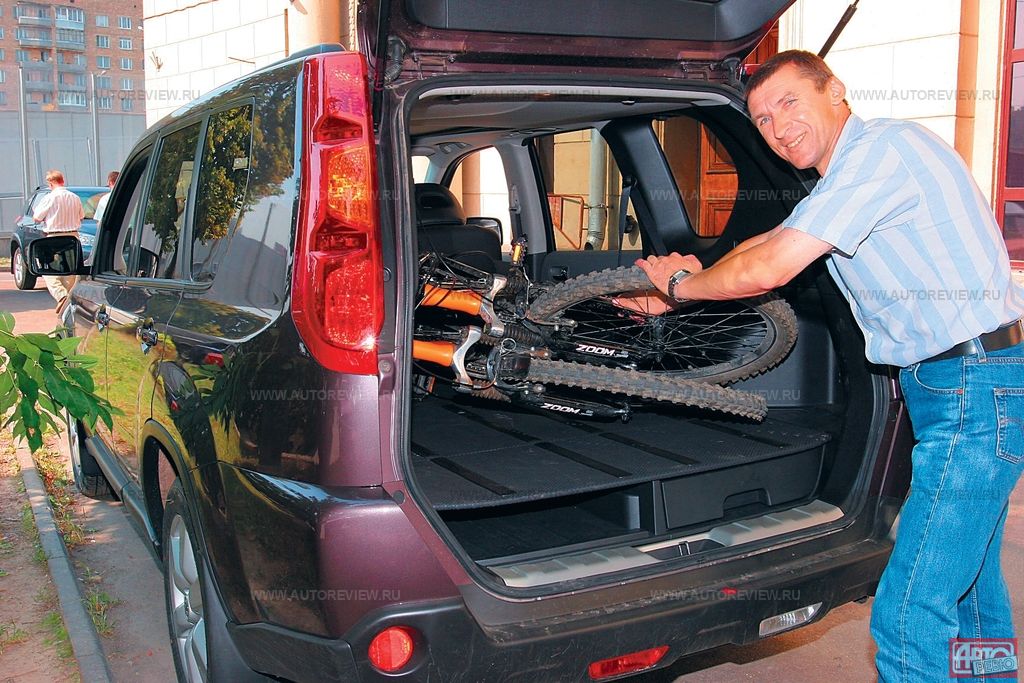 | 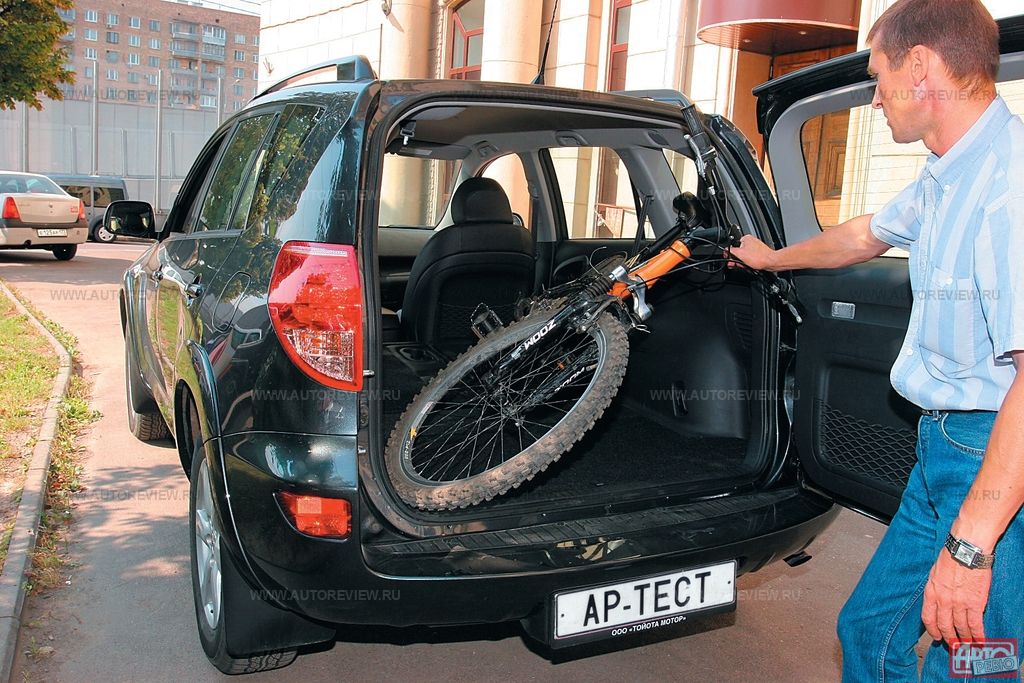 |
| Even one bicycle doesn't fit through the narrow opening of the Liberty. In the RAV4, it only fits diagonally. And only the X-Trail can carry two assembled bicycles | ||
Two bicycles without removing the front wheels will only fit in the X-Trail — it has the most spacious trunk. But loading will require some effort: the Nissan's bumper is high, and transformation is difficult — you have to pull out the headrests, then fold down the seat cushions first, then the backrests... Not like the Toyota! The seats with recessed headrests fold down in one motion — literally in a second, and the loading height is the lowest. Twenty seconds — voila! But only one assembled bicycle fits here — diagonally. However, the RAV4's trunk is higher, neater, and has a cargo net — the competitors don't offer such luxury.
But in the Jeep, despite the luxurious transformation (even the front seat easily folds down to form a flat surface), a two-wheeled friend in assembled form doesn't fit — the tiny trunk opening, squeezed in width and height, gets in the way. Plus the highest loading height and the inhospitability of the fifth door — even a person 170 cm tall risks hitting their forehead on its sharp edge.
Loaded the bicycles? Let's head to nature!
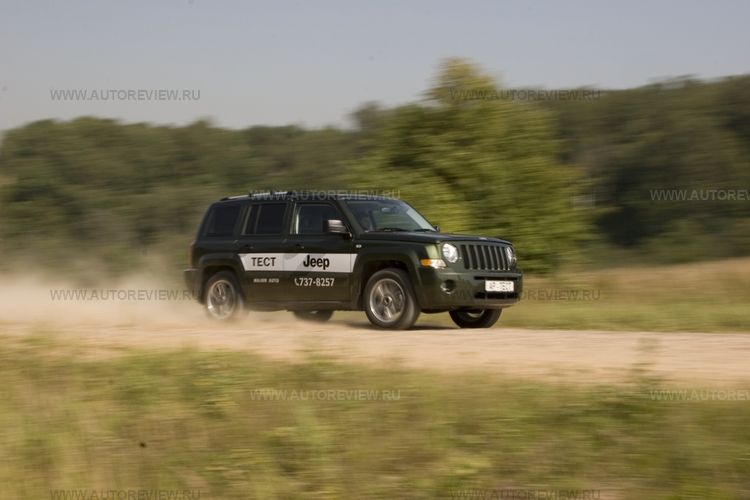
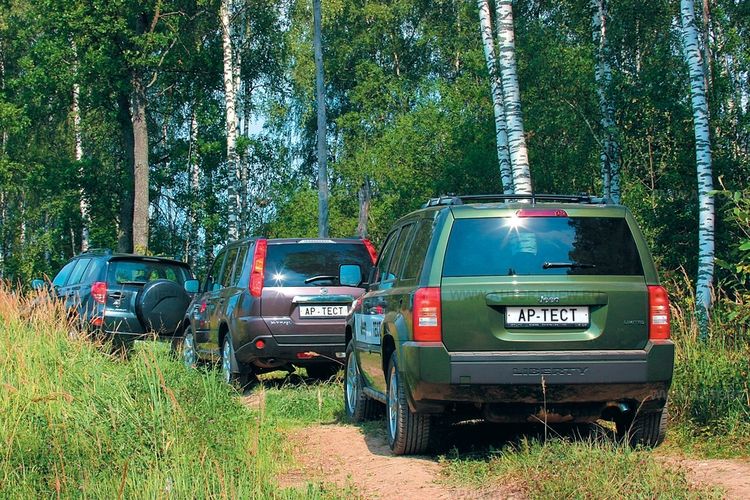
The Jeep dashes along the dirt road with the crunch of the stability system — the tendency to skid on gravel is high
The fastest in the trio is the Nissan X-Trail with its 169-horsepower 2.5-liter engine. True, the CVT and the damped accelerator pedal drive still smear the feeling of dynamics — you can't always predict when the X-Trail will finally "fire".
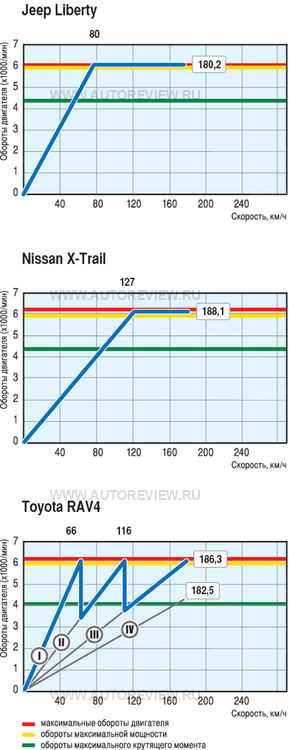
The Toyota RAV4 with a 170-horsepower four-cylinder 2.4-liter engine, according to the acceleration dynamics we measured, is in second place. But how briskly (but not sharply!) it responds to pressing the gas pedal, how predictably, quickly and smoothly the "automatic" works! Therefore, the ratings for acceleration dynamics of both Japanese cars are equal.
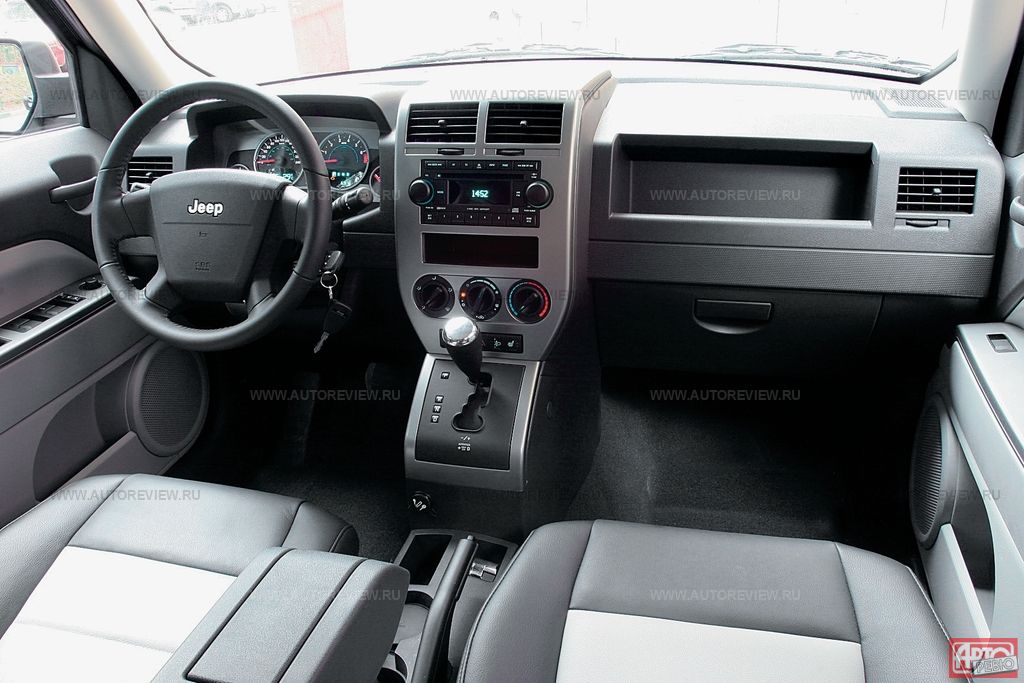 | 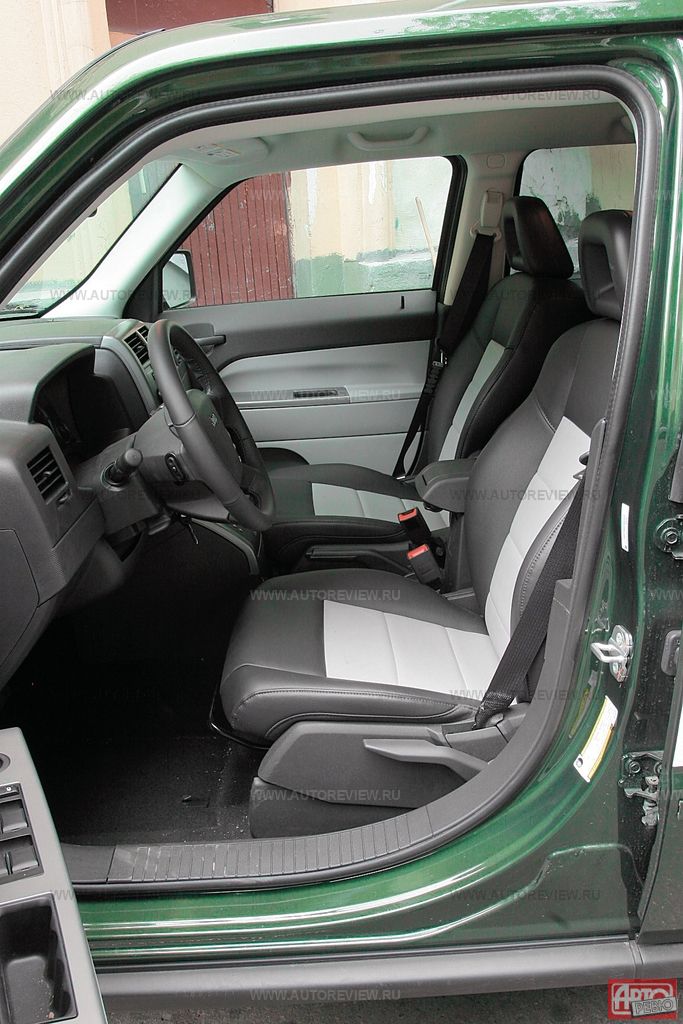 | 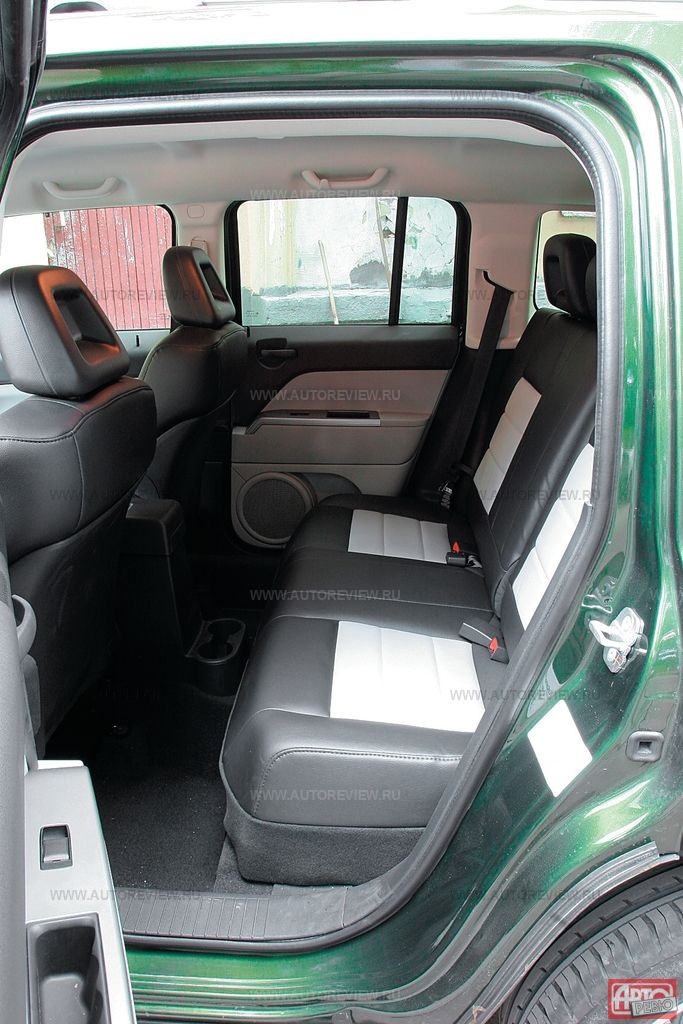 |
| A rough-hewn block of poorly fitted, easy-to-clean plastic won't let you forget Liberty's American origins | Jeep will please moderately plump people with the absence of pronounced side bolsters and the anatomical shape of the seat | Not a sofa, but a flat leather bench for two. Liberty is not distinguished by spaciousness or coziness |
But Jeep...
Even on the way to the test site, Liberty began to lose ground — not to rivals, but to a loaded Aveo with 94 horsepower. X-Trail and RAV4 launch as if their soles are on fire, hinting at wheelspin, while the Jeep, even with the pedal floored, crawls like a sleepy turtle. While Liberty's CVT spins the engine up to 6000 rpm with an unpleasant whine, Toyota pulls ahead by a second, and Nissan by two! Moreover, X-Trail revs its engine to the limit of 6200 rpm only by 125 km/h, whereas Jeep needs just 85 km/h to reach the same revs.
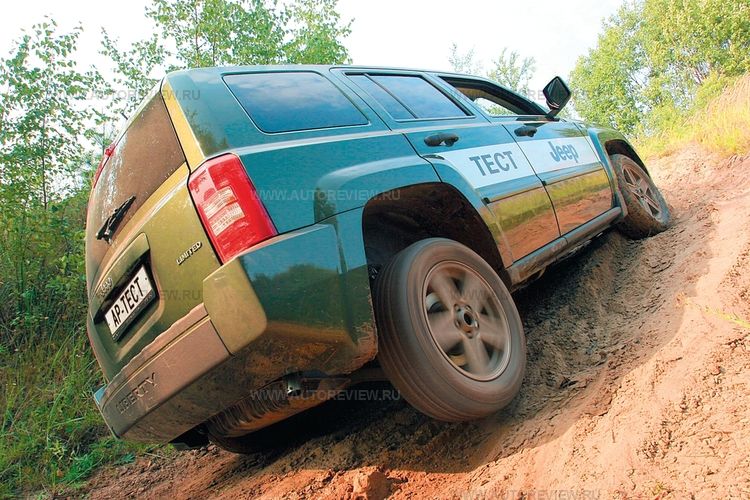
In difficult situations, Jeep simply won't move — the electronics "choke" the engine to protect the CVT
Maybe Liberty's engine is too weak? Not at all — it even beats the others by two horsepower. And weight? That's a miss too: Toyota is 32 kg heavier, and Nissan is a full 88 kg heavier.
But this sluggishness can backfire when overtaking. The gas pedal has a long travel, as if made of rubber, transmitting the command to the fuel system with a couple of seconds' delay, and the CVT engages even later — the engine screams when it's already time to hit the brakes. So for confident overtaking, it's worth switching in advance to the quasi-manual mode with fixed gears.
| Jeep Liberty | Nissan X-Trail | Toyota RAV4 |
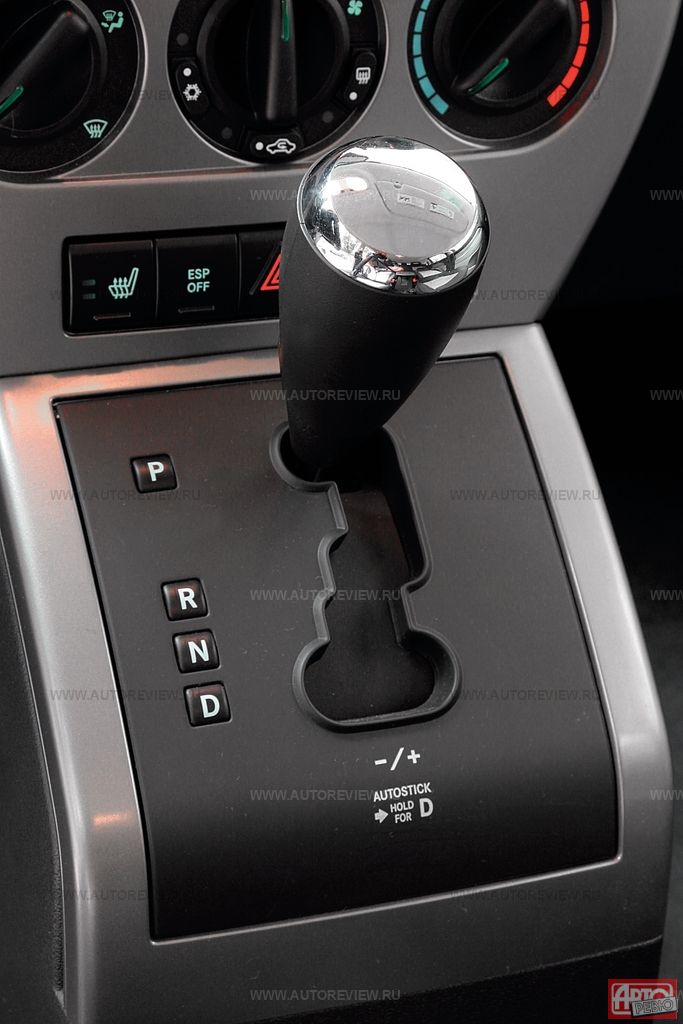 |  | |
| Toyota's automatic pleases with predictability. But the Jatco CVT on Nissan and Jeep smears the powerful thrust. On Liberty — completely: Jeep loses the start even to Zhiguli | ||
Jeep's brakes are no gift either. With light pressure, the pedal feels firm, but press harder — it sinks deeper and deeper. During emergency braking, the driver panics: the pedal is almost on the floor! And the crude low-frequency ABS also pounds the foot unpleasantly.
X-Trail conceded three meters to Jeep when stopping from 150 km/h, but the Nissan driver fully controls the deceleration process. Toyota, however, out-braked everyone: seven meters advantage in stopping distance, and excellent pedal feel. Simply superb brakes!
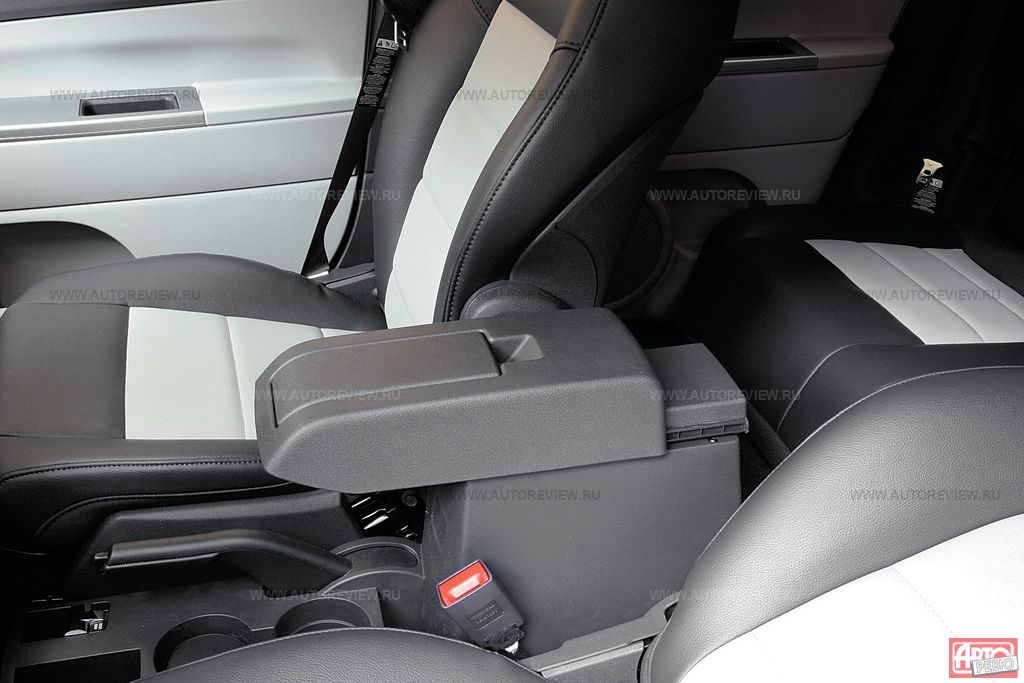 | |
| The stylish T-shaped key activates a stiffer mode for engaging drive to the rear axle, but does not fully lock the clutch | The armrest made of "ringing" plastic is adjustable |
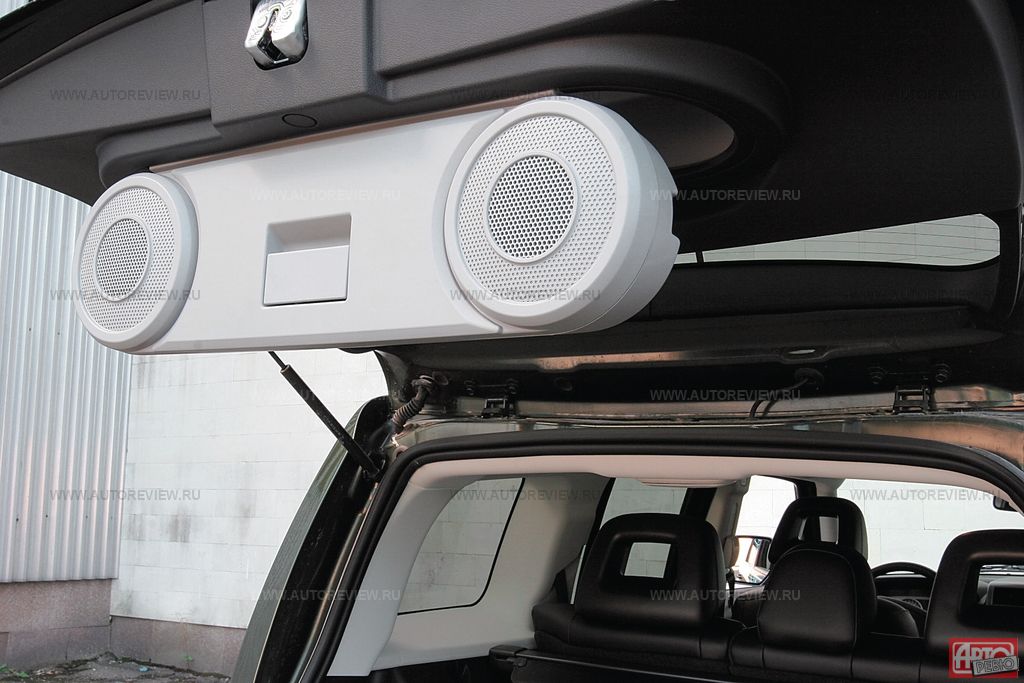 | |
| The cupholders interfere with the legs of the third rear passenger | The fold-down boom box is available on all "small" crossovers from Jeep and Dodge |
On the highway, Nissan and Jeep behave similarly — both set you up for calm, measured driving. Lethargic responses to steering inputs, frightening body roll during sharp wheel movements... In city traffic, though, no problems — both X-Trail and Liberty are surprisingly nimble. But in sharp maneuvers, Nissan behaves more understandably and composedly — the steering here is more informative. In sharp corners, mild understeer smoothly transitions into a gentle oversteer that pulls the car into the arc and helps hold the line. The sluggish stability system stays silent while the driver himself corrects the slide with the wheel.
But speeding along a winding road in a Liberty is frankly terrifying!
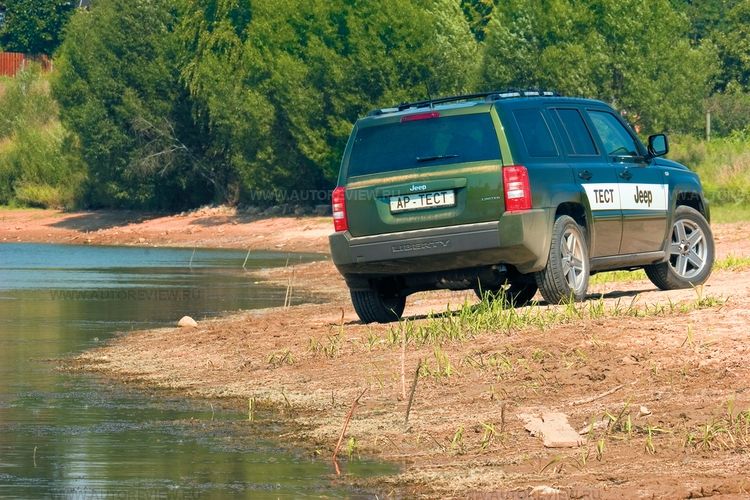
If you misjudge the speed at the entry, Jeep tips onto its side and drifts outward in obvious understeer. The steering is "cottony," with no feedback. On the arc, the car rocks diagonally, and Liberty bounces outward in time with the suspension's oscillations. But the "stability control" here is ruthless — ESP literally freezes the car at the slightest hint of correcting a slide!
So slow & easy, as the Americans say — "slower and easier" behind the wheel of a Jeep.
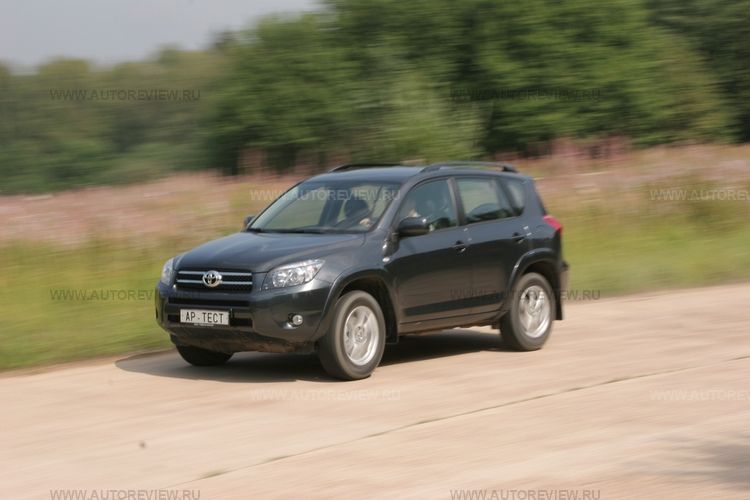
Toyota has the most car-like manners
Toyota is a completely different story: light, obedient, and predictable. It reacts more sharply to steering inputs, and bumps on a straight road? No problem! Thanks to clear reactive action at the wheel, even a recent driving school graduate can easily hold the Toyota. And the chassis is simply a song! Entering an arc is easier than in some hatchback, with high grip levels. All lateral forces are right in your hands: control over the car is superb. And if you exceed the speed — the advanced "integral" VSC stability system will come to the rescue — it will quell both understeer and oversteer on its own, without waiting for driver input. True, VSC cannot be switched off — unlike the systems on Nissan and Jeep.
And what about comfort?
| Jeep Liberty | Nissan X-Trail | Toyota RAV4 |
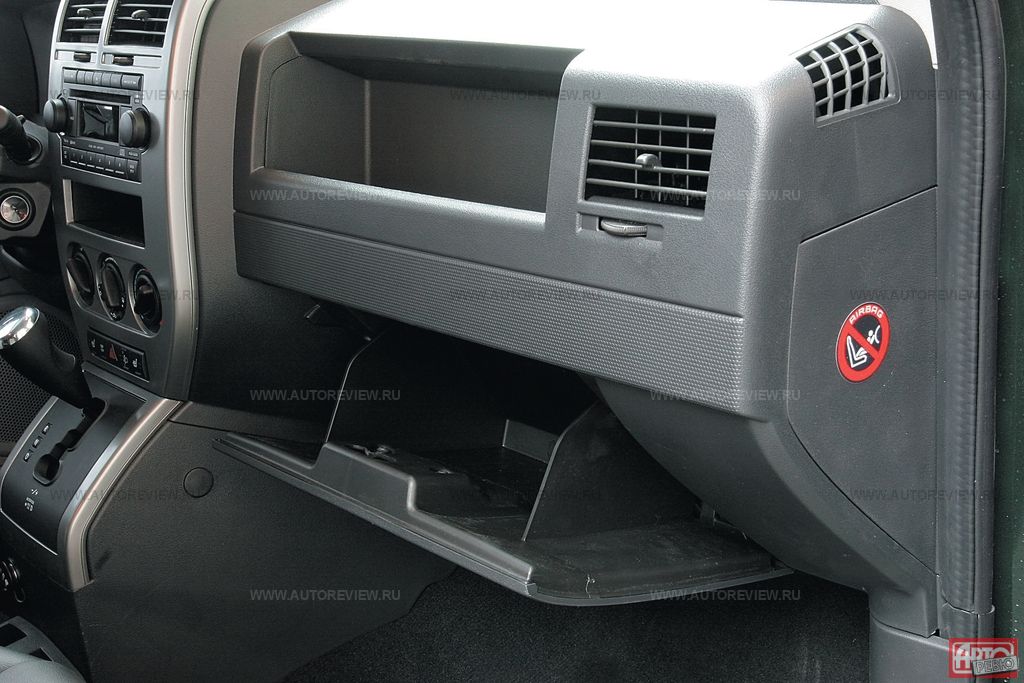 | 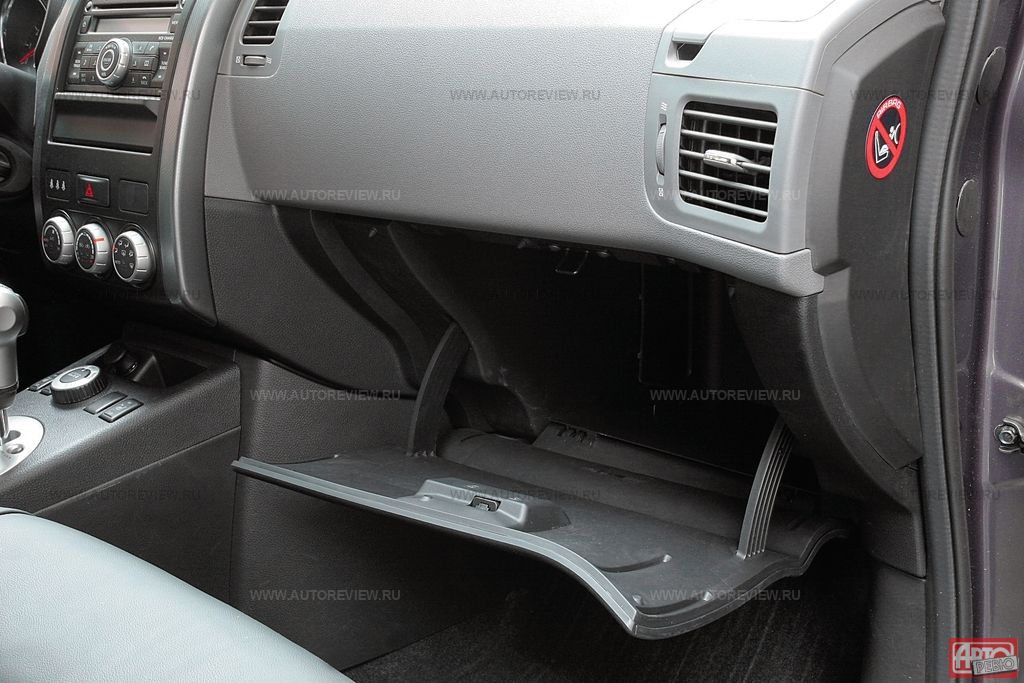 | 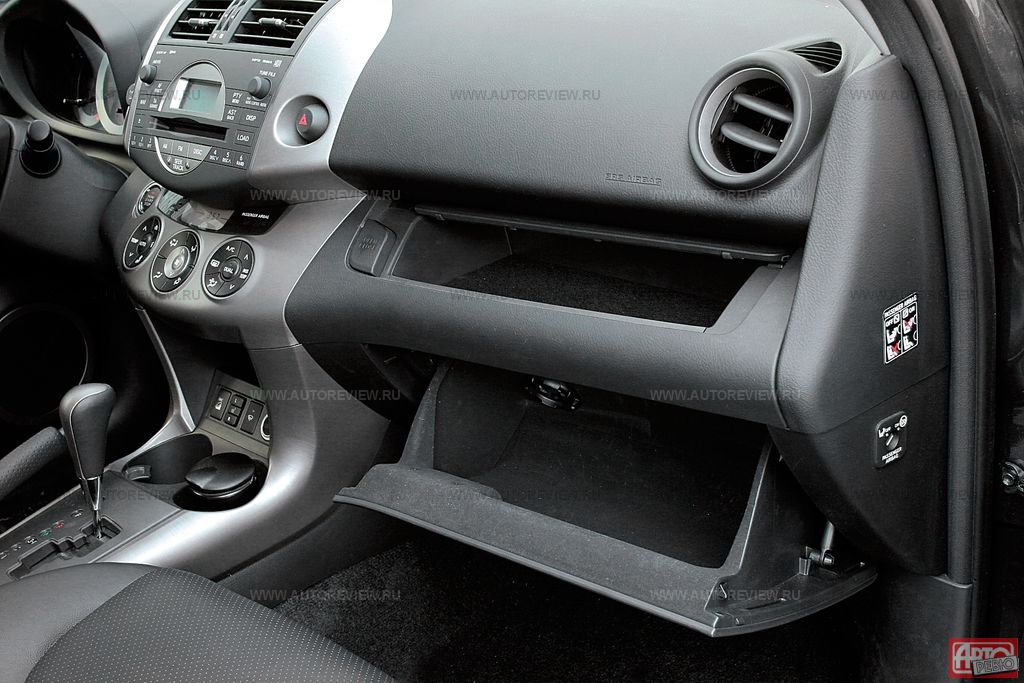 |
| One spacious glovebox in Nissan is better than a small one combined with an impractical recess in Jeep and two small compartments in Toyota | ||
Toyota is also the quietest car in our trio. The engine is almost inaudible against the dreary howl of Nissan and especially Jeep. Tires barely rustle, the suspension is silent. In such silence, already at 90 km/h, a barely perceptible whistle of air flowing around the mirrors becomes audible. Besides the engine, in Nissan the tires take the lead, and in Liberty — the thumping and clattering suspension.
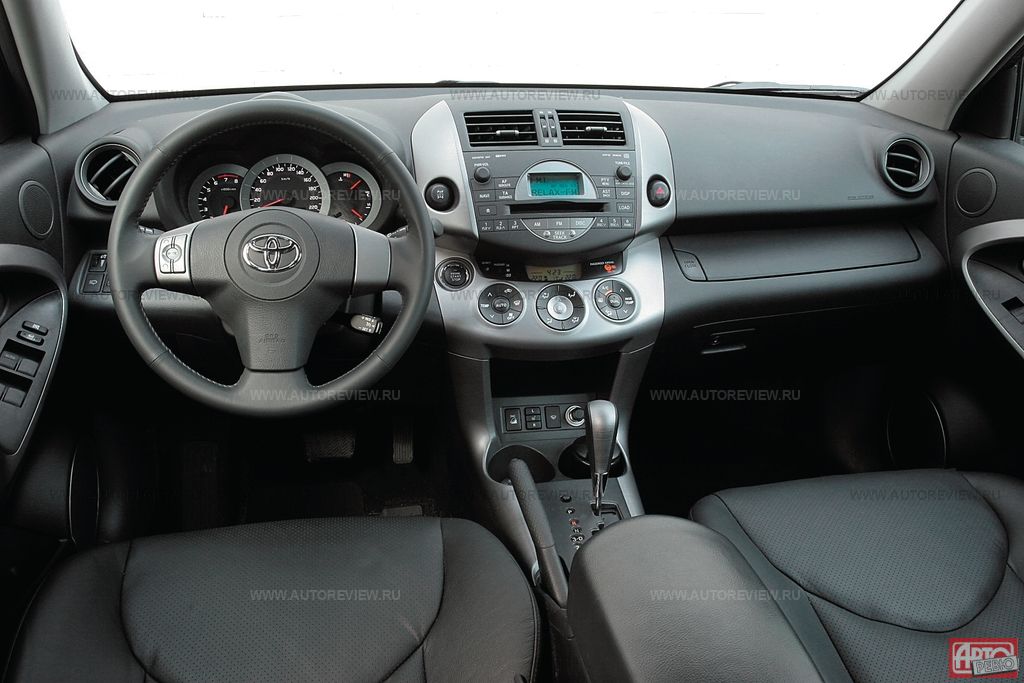 | 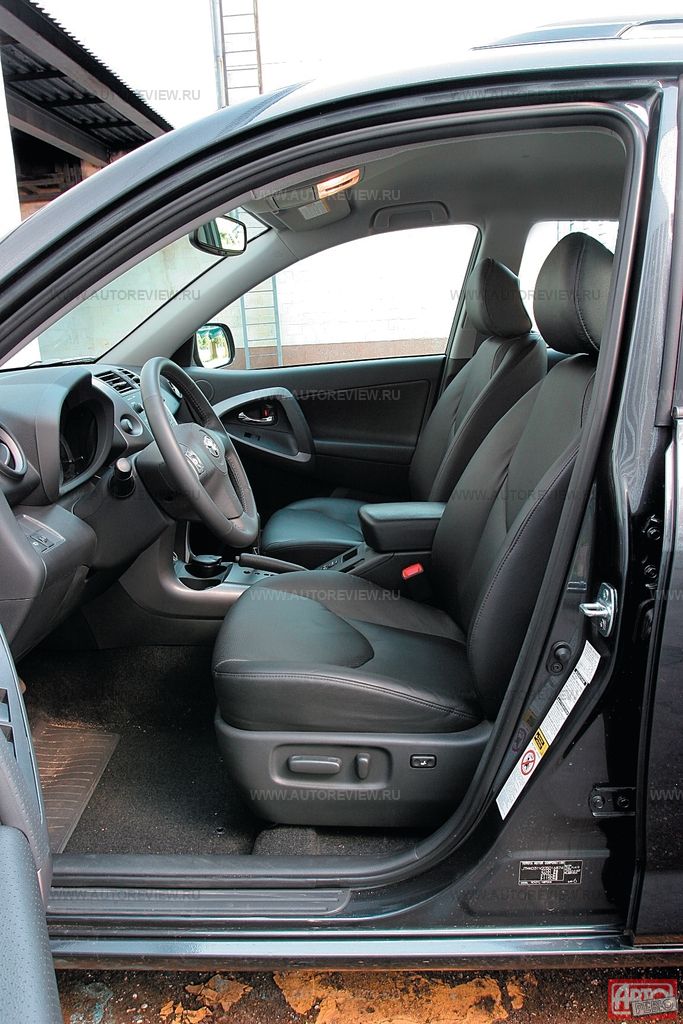 | 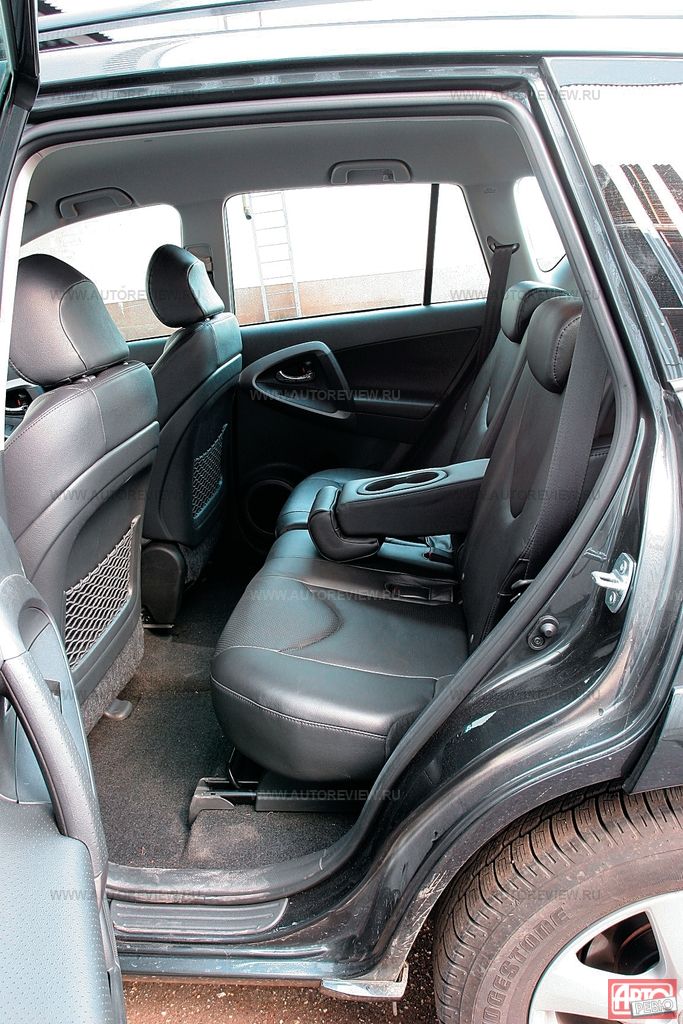 |
| In RAV4, style and precise panel fit compensate for the hardness of the plastic | The contoured seats of perforated leather hold you firmly in corners | Rear passengers have plenty of room |
Toyota's suspension is quiet but stiff: for the delightful handling, you'll pay with shaking both on waves of smooth asphalt and on broken dirt roads. Small and medium bumps are especially annoying, transmitted to the seats with doubled effort. But Liberty and X-Trail barely notice them! And they don't follow the road profile as diligently. Passengers might only complain about excessive lateral rocking in Nissan and vibration of unsprung masses in Jeep.
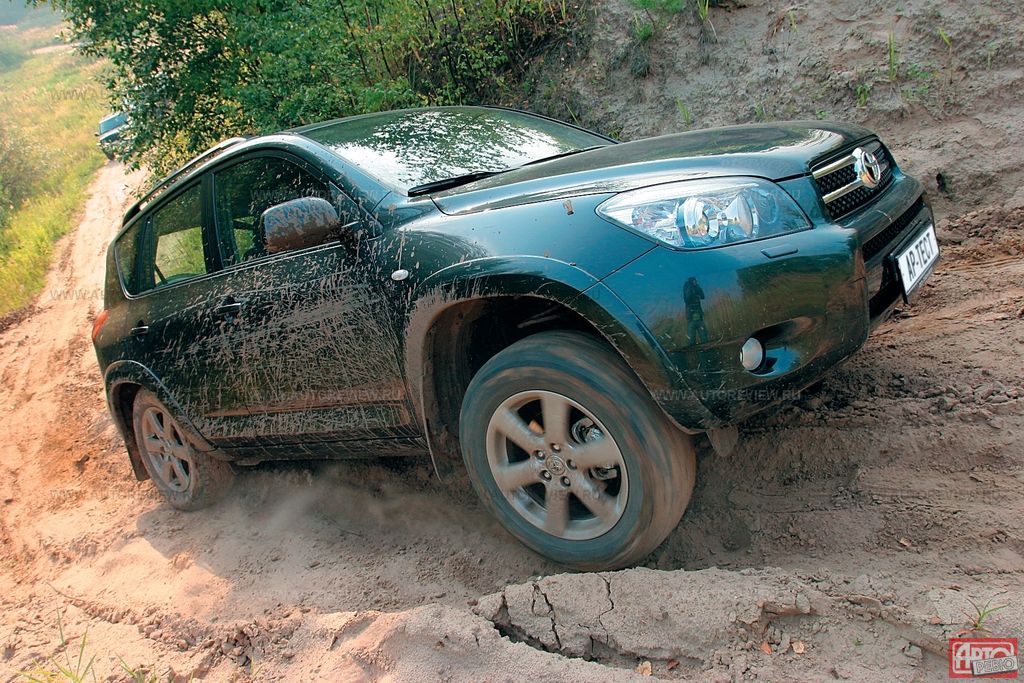 | 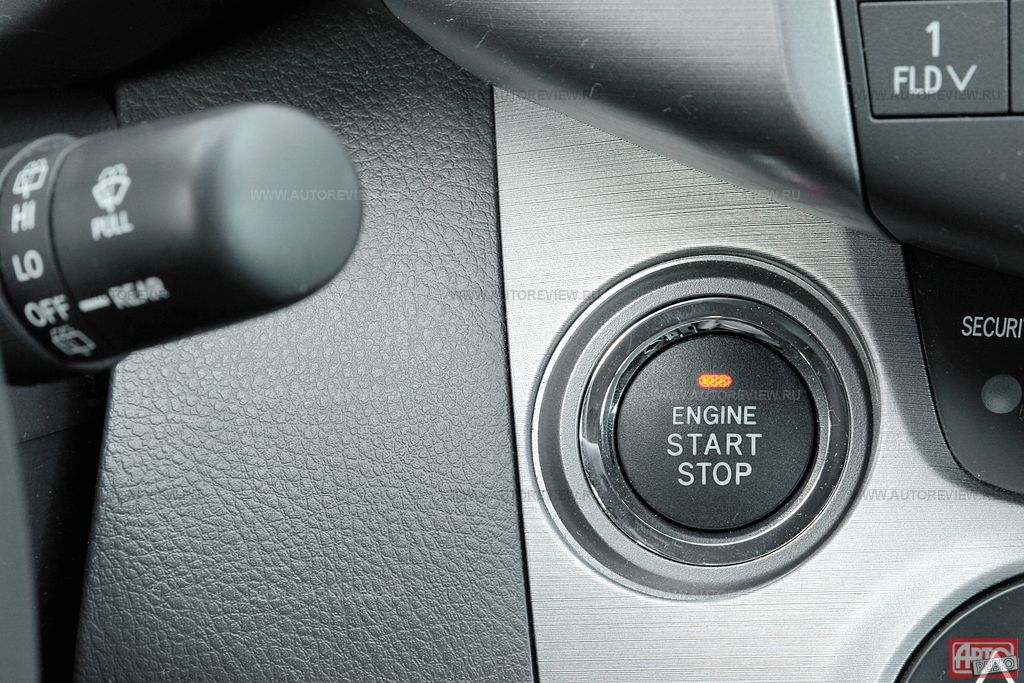 |
| Toyota can tackle very serious off-road, risking losing flimsy plastic parts under the floor | Push-button start — on all RAV4s with a 2.4-liter engine |
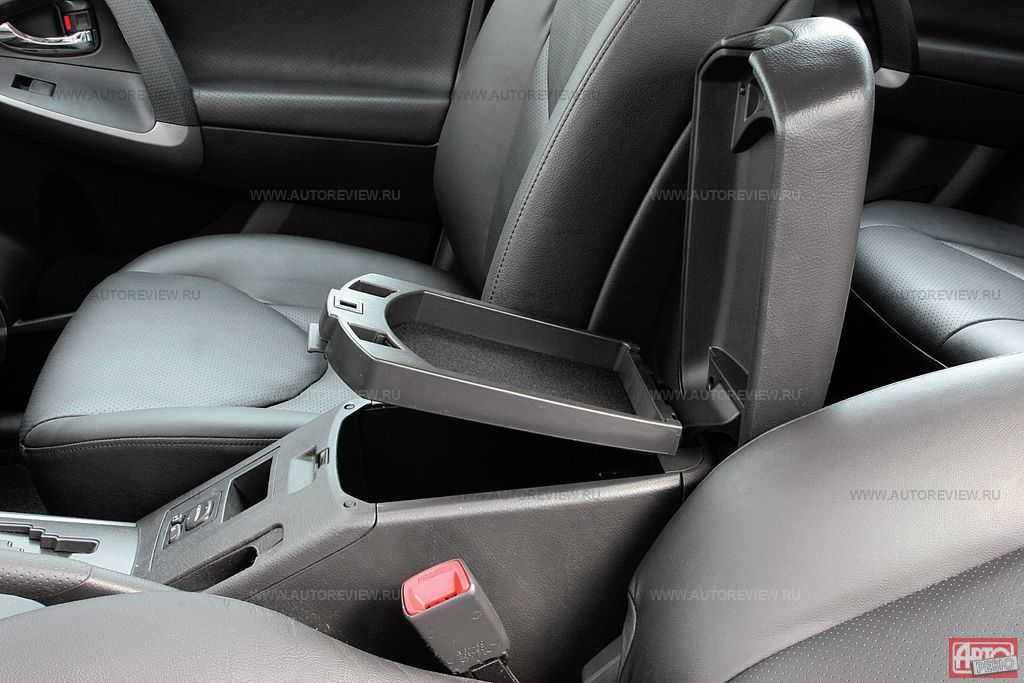 | |
| Toyota's glasses holder and lights — almost like Nissan's | The box has a double bottom |
The character of the suspensions is especially evident on dirt roads. The Liberty calmly cruises even at a hundred kilometers per hour, while the X-Trail only occasionally transmits jolts from large stones and potholes to the body. The RAV4, however, shakes your soul — there's no desire to go faster than fifty kilometers per hour at all. At the same time, handling on dirt remains predictable for both Toyota and Nissan, but the Jeep constantly tries to slide its rear end into oversteer on corners, and only the stability control system prevents it from doing so.
But when we drove onto real off-road terrain... This is where the Jeep should show its stuff!
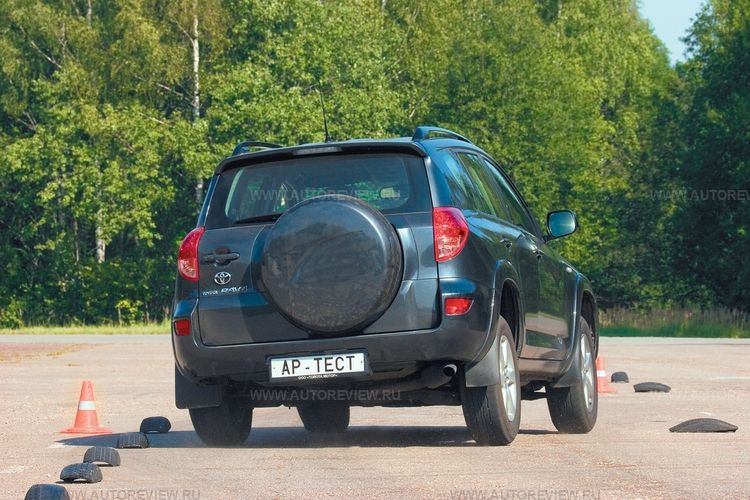
Electronic stability control on the RAV4 delicately handles both understeer and oversteer
Off the asphalt, the Nissan holds its own most confidently. Large suspension travel and impressive energy capacity allow you to build up decent speed before a difficult section, and the forced locking of the center coupling (4WD Lock mode) helps on sandy slopes where even a Volkswagen Touareg got stuck. True, the hill descent assist works somewhat roughly and allows the car to accelerate to too high a speed — on steep descents it can get genuinely scary.
| Jeep Liberty | Nissan X-Trail | Toyota RAV4 |
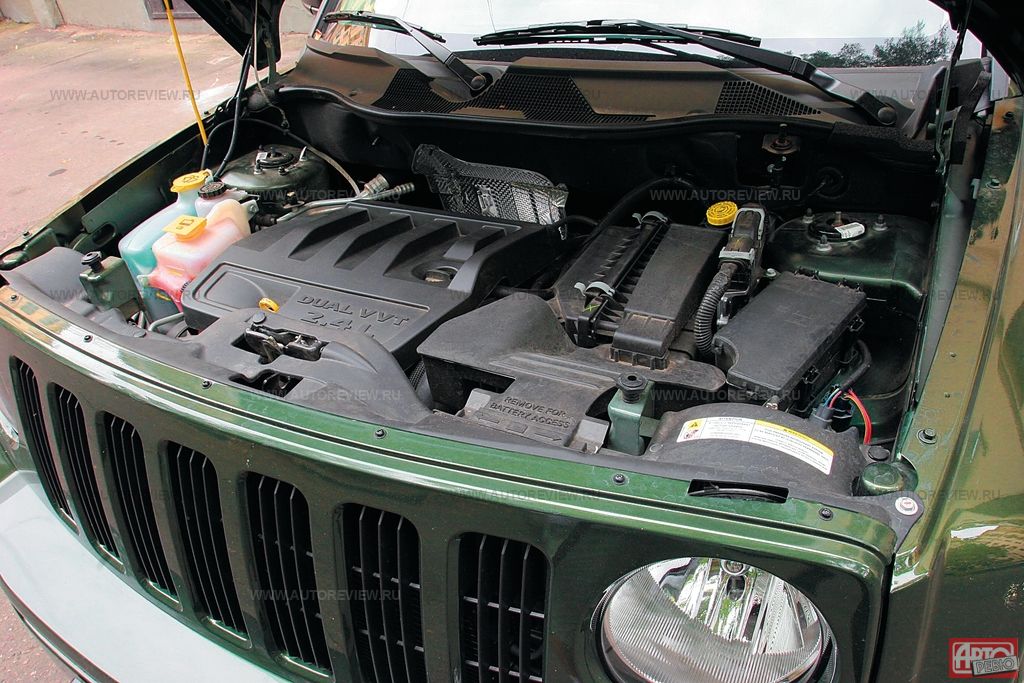 | 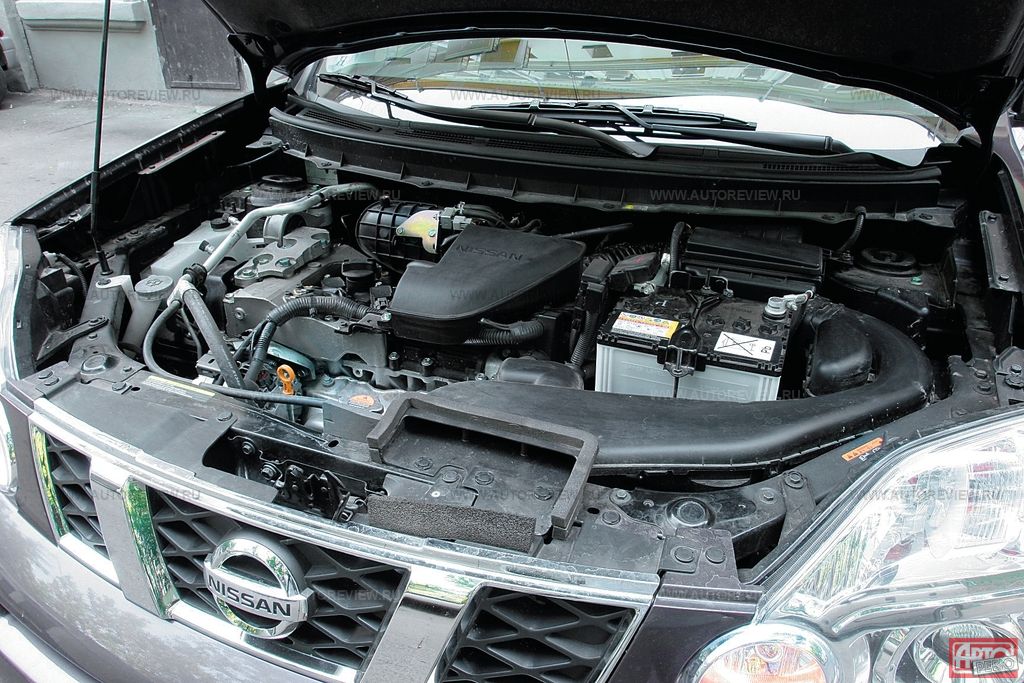 | 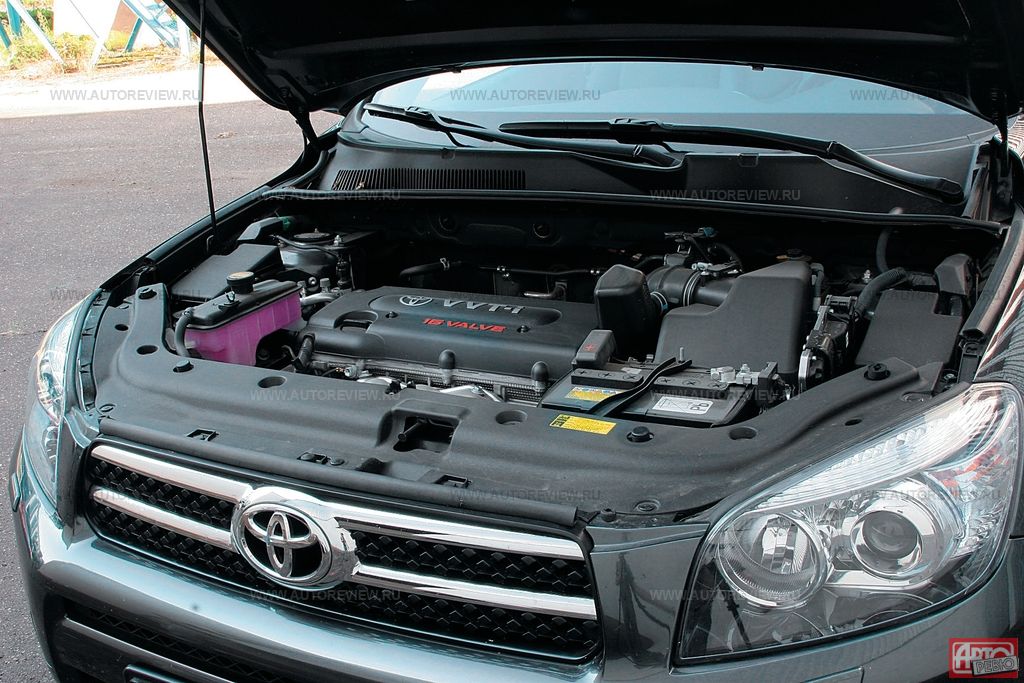 |
| The power spread of the three engines does not exceed three horsepower | ||
The Jeep, however, lacks both energy capacity and suspension travel on rough terrain — it's impossible to accelerate before a serious obstacle. Geometric off-road capability also lets it down: the long rear overhang with a muffler sticking out across it gets in the way. But the main brake off-road is the CVT. If the Liberty stops in a difficult spot, it won't be able to get out on its own even with the rear-wheel drive coupling lock engaged — the electronics hold the revs at 2000 rpm, protecting the CVT from overload. The wheels don't spin — the transmission simply overheats.
| Jeep Liberty | Nissan X-Trail | Toyota RAV4 |
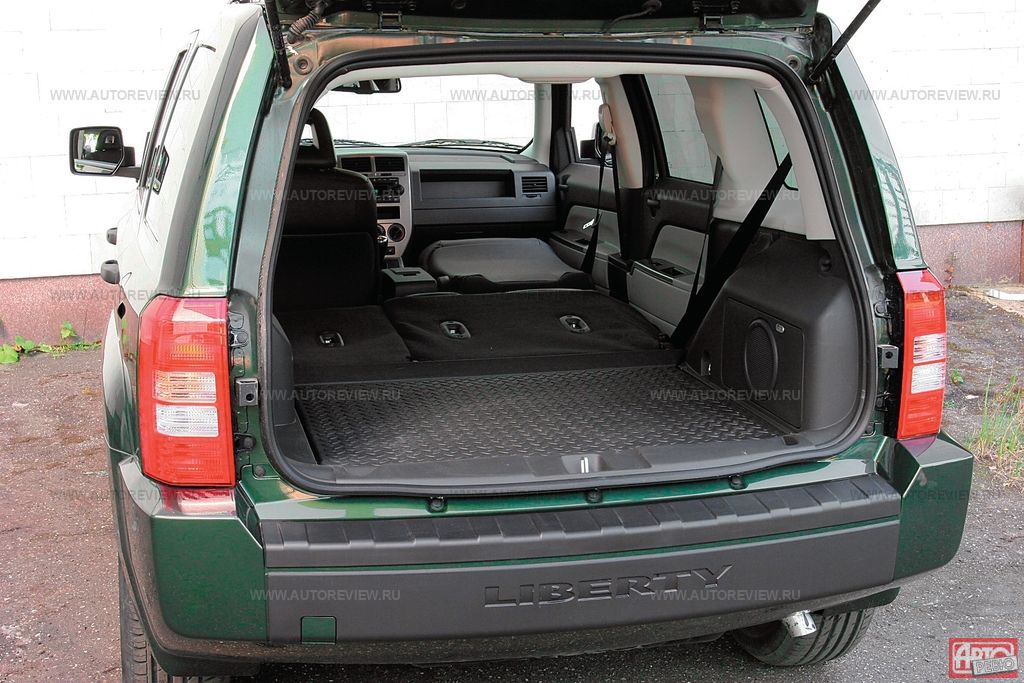 | 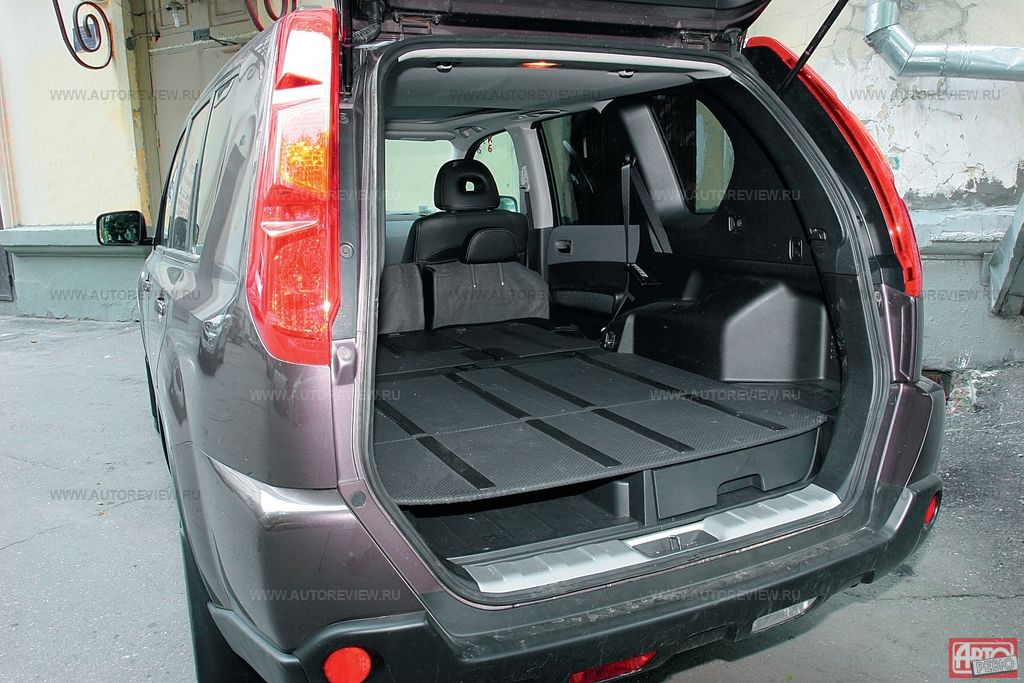 | 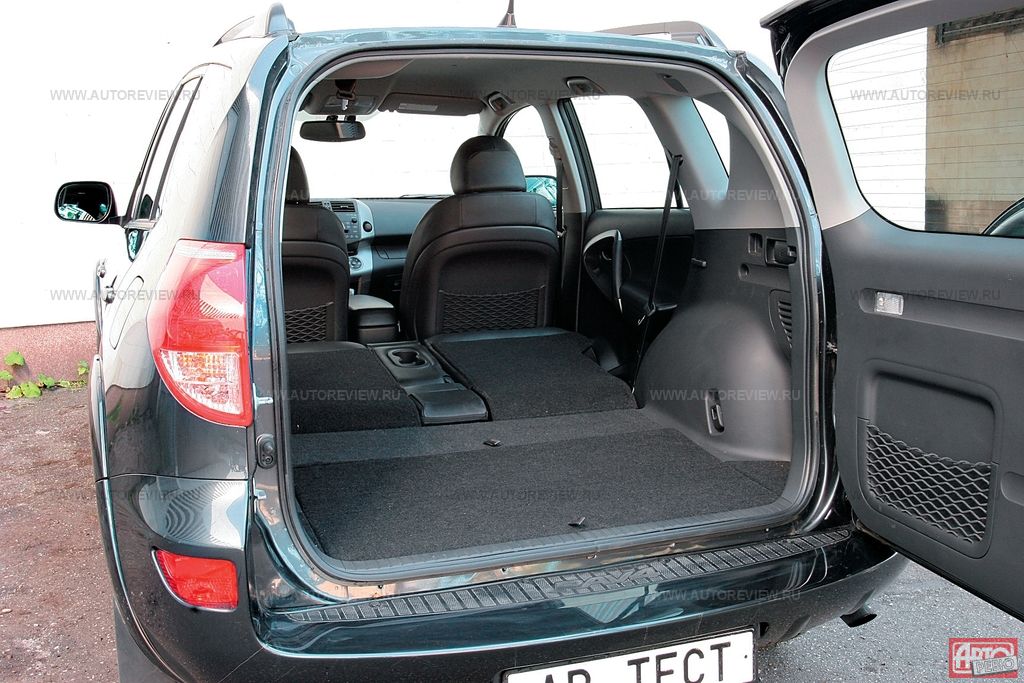 |
| The most convenient trunk is in the RAV4. The X-Trail pleases with a sliding tray under the double floor but disappoints with a high loading height. The Jeep is good only in terms of transformation — even the front seat folds down | ||
And what about Toyota? It easily goes where the Jeep hopelessly bogs down. An incline? A rut? A washout? Loose sand? The main thing is not to lift off the throttle and to choose the trajectory wisely. And don't overdo it. In a stuck car, within a couple of minutes while the wheels dig into the ground, both the coupling and the "automatic" manage to overheat.
The verdict is this: the Jeep Liberty (aka Patriot) can lay claim to the proud name of Jeep only thanks to its brutal looks. Off-road, even light off-road, it's better not to take it — it'll get stuck. And its main trump card is the price, just $34,580.
The Nissan X-Trail with a 2.5-liter engine costs over four thousand dollars more. But it's like the ideal spouse. A great helper around the house: it'll haul a mountain of stuff to the dacha and deliver the family to their vacation spot in comfort. But it's very bland. However, this is more than compensated by a reasonable price with rich equipment.
Yet the leader remained unassailable. And sales statistics confirm this once again: the Toyota RAV4, despite the highest price, with 10,704 cars sold in six months, even beats the much more affordable Nissan Qashqai and Hyundai Tucson.
Autoreview Readers' Forecast
Before this test, we asked visitors to the website www.autoreview.ru: "Which of the cars in the next Autoreview test would you prefer?"
The votes were distributed as follows:
Nissan X-Trail 48.49%
Toyota RAV4 44.99%
Jeep Liberty 6.52%
A total of 12,340 people voted
| Autoreview Expert Ratings | ||||
| Parameters Assessed | Max Score | Vehicles | ||
| Jeep Liberty | Nissan X-Trail | Toyota RAV4 | ||
| Design | 160 | 125 | 125 | 135 |
| Exterior | 80 | 65 | 60 | 65 |
| Interior | 80 | 60 | 65 | 70 |
| Ergonomics | 160 | 110 | 120 | 130 |
| Driver's workspace | 80 | 55 | 60 | 65 |
| Visibility | 80 | 55 | 60 | 65 |
| Dynamics | 260 | 195 | 215 | 225 |
| Acceleration dynamics | 80 | 55 | 65 | 65 |
| Braking dynamics | 100 | 80 | 85 | 90 |
| Handling | 80 | 60 | 65 | 70 |
| Off-road | 70 | 45 | 55 | 40 |
| Dirt roads | 30 | 25 | 20 | 15 |
| Off-road capability | 40 | 20 | 35 | 25 |
| Ride comfort | 180 | 130 | 140 | 145 |
| Ride smoothness, vibration protection | 70 | 55 | 55 | 50 |
| Acoustic comfort | 60 | 40 | 45 | 50 |
| Climate control | 50 | 35 | 40 | 45 |
| Cabin comfort | 170 | 120 | 130 | 145 |
| Rear seats | 70 | 50 | 55 | 60 |
| Trunk | 60 | 35 | 45 | 50 |
| Cabin transformation | 40 | 35 | 30 | 35 |
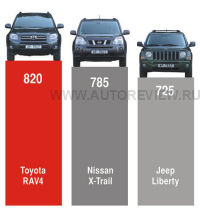
| Total score | 1000 | 725 | 785 | 820 |
"Moose Test"
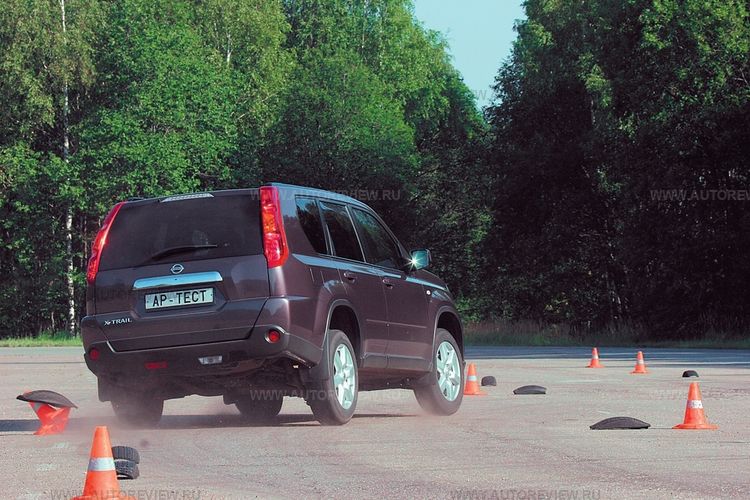
Tests simulating avoidance of a suddenly appearing obstacle were, as usual, conducted in two stages. First, five drivers, already familiar with the cars in normal driving modes, tried to avoid the "moose" on the first and only attempt, and then an expert in a series of runs determined the maximum speed for performing the maneuver. Due to the high center of mass, the speed for single runs for crossovers compared to passenger cars is reduced from 65 to 60 km/h, and the test includes an element of surprise in the form of traffic lights. At a strictly defined moment, they indicate the direction of avoidance — right or left.
The safest for "moose" and ordinary drivers turned out to be the Jeep Liberty. Not a single cone knocked down! The Jeep responds well to sharp steering input, darts out onto the imaginary oncoming lane, and then... Then the strictest stability control system kicks in. It practically stops the car from 60 km/h! So even the most novice driver can successfully return the Liberty to its lane after avoiding an unexpected obstacle at that speed. But the same ESP greatly complicated the expert's task. At high speeds, the system so zealously protected the Jeep from skids, accompanied by a jerky increase in steering effort, that making the Liberty return from the oncoming lane was extremely difficult. The tester was literally exhausted, and the achieved maximum speed was only 70.2 km/h.
The Nissan X-Trail managed to pass the "moose test" with only two out of five virtual "moose." The main complaint is the steering wheel with insufficient sensitivity to turns: it has to be turned at too large angles, and there is not enough feedback. The situation was aggravated by the stability control system, which allowed the car to slide noticeably. The expert had the same difficulties: first, the X-Trail entered the turn reluctantly, and then it "hung" in deep drifts for a long time. Moreover, it was necessary to fight the yaw without the help of ESP — the electronics did not intervene, only braking the car. The only thing that pleased was that the steering wheel did not "grab." The highest speed at which the maneuver was performed was 73.2 km/h.
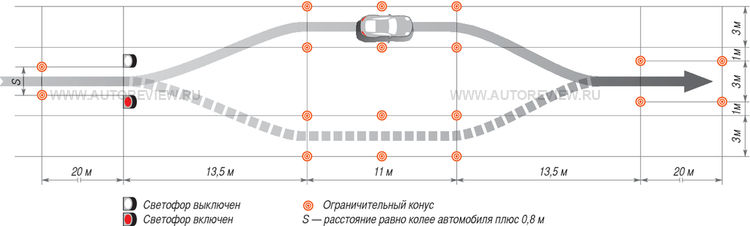
A completely different matter — Toyota! The RAV4 in the tester's hands obediently and accurately follows the steering wheel, which pleases with a small but understandable reactive effort. The stability control system flawlessly extinguishes both understeer and oversteer. Ideal! Moreover, the maximum speed here is the highest — 77.1 km/h. However, at a speed of 60 km/h, three "volunteers" failed the task. All of them complained about unexpectedly sluggish reactions of the car during the maneuver. After all, in normal modes, the RAV4 responds to steering wheel turns very lively.
| "Moose test" on the first attempt at a speed of 60 km/h | |
| Car | Maneuver completed |
| Jeep Liberty | 5 out of 5 drivers |
| Nissan X-Trail | 2 out of 5 drivers |
| Toyota RAV4 | 2 out of 5 drivers |
| Maximum speed of the "moose test," km/h | |
| Car | Speed |
| Jeep Liberty | 70.2 |
| Nissan X-Trail | 73.2 |
| Toyota RAV4 | 77.1 |
Safety
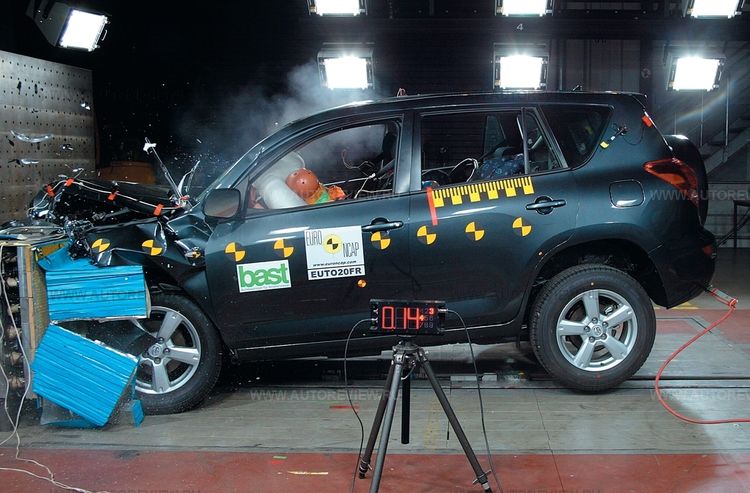
Toyota RAV4
In the basic configuration, all three cars have ABS, stability control, seat belts with pretensioners and force limiters, as well as Isofix mounts for child seats. However, only buyers of the Jeep Liberty will have to pay an additional 375 euros ($528) for side airbags. The Jeep equipped with them (known as the Patriot on the American market) passed tests according to the methodology of the American National Highway Traffic Safety Administration (NHTSA) and showed decent results — four stars for driver protection in a frontal impact and five stars in the other three categories, which gives an overall five-star rating. This, by the way, is noticeably better than the related crossover Jeep Compass, which earned only one "five."
Unlike the Liberty, the Nissan X-Trail is already equipped with six airbags "in the base," and the Toyota RAV4 — in addition, also with a "knee" airbag for the driver. But in the EuroNCAP crash test, it did not show its effectiveness — the dummy pierced the airbag and hit its knees on the front panel. This reduced the frontal collision score and did not allow the Toyota to get five stars, despite 100% safety in a side impact: only one point was missing. Protection of child passengers is recognized as good. But pedestrian safety is rated at three stars out of four — for a tall "crossover" this is an excellent indicator.
The new Nissan X-Trail has not yet undergone independent crash tests.
| Toyota RAV4* | ★★★★☆ |
| Overall rating | 32 points |
| Frontal crash test | 12 (75%) |
| Side crash tests | 18 (100%) |
| SBR** | 2 |
| Child passenger protection | 39 (80%) |
| Pedestrian protection | 21 (58%) |
| Curb weight | 1620 kg |
| * Tests were conducted according to the EuroNCAP methodology | |
| ** Availability of seat belt reminder | |
| Jeep Liberty* | ★★★★★ |
| Driver protection in frontal impact | 4 stars |
| Passenger protection in frontal impact | 5 stars |
| Driver protection in side impact | 5 stars |
| Rear passenger protection in side impact | 5 stars |
| Rollover rating | 4 stars |
| Curb weight | 1758 kg |
| * Tests were conducted according to the NHTSA methodology | |
View from below
To find out what risks await owners of these crossovers off-road, we sent all three cars to an overpass and thoroughly examined their underbodies. What is reliably protected, and what will suffer first on bumps and potholes…
Theoretically, the Jeep is best prepared for off-road. Its ground clearance is the largest, 197 mm. The engine and CVT crankcases are covered by a powerful longitudinal "ski." Brake lines, fuel tank, and exhaust pipe are hidden behind the body's power elements, and there are no plastic screens or mud flaps here at all. Only the bulky muffler barrel hanging in the rear overhang causes concern. On serious off-road, suspension arms can act as an anchor, whose U-shaped profiles are directed downward. And it is better not to hook a cable to the front towing eye, hidden deep, — you can damage the bumper.
The owner of the Nissan with its slightly smaller ground clearance (195 mm) will risk a little more off-road. Brake lines are not sufficiently protected from impacts, the exhaust pipe sags under the rear suspension subframe, and the mounting platforms of the rear shock absorbers are located too low. But the plastic shields in the rear of the body are almost impossible to tear off. To lose the small mud flaps and elastic aerodynamic aprons near the wheels, you need to try very hard. The engine and CVT are covered by subframe elements. There are no problems with towing — the eyes are convenient: a screw-in one at the front, a stationary one at the rear.
But for the Toyota, any off-road extreme is categorically contraindicated. Only the brake lines are reliably protected. The lowest point of the car is the exhaust system. Moreover, along the entire path from the uncovered engine crankcase to the final muffler — only 175 mm to the ground. On slopes and stumps, the RAV4 owner risks denting not only the bulky resonator (on the right) but also the fuel tank (on the left) — both protrude below the sills. In a deep rut, you can catch on the long studs of the rear stabilizer struts, and in less dangerous cases, lose the unreliably fastened plastic shields and aprons. And in no case should you reverse on virgin soil — the front bumper, which scoops up snow like a bulldozer blade, will simply tear off!
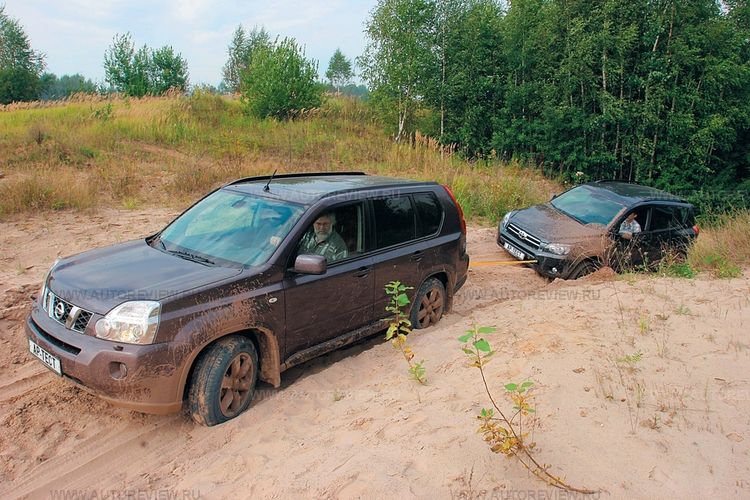
Nissan will pull a stuck Toyota out of places where the Jeep simply cannot reach
Light output
Night photography of cars from one point allows assessing the effectiveness of headlights. The xenon low beam of the Nissan blinds oncoming drivers more than others, but illuminates the road no better than the regular "halogens" on the RAV4: at a distance of 80 meters, a pedestrian standing on the roadside is only half visible. The Jeep Liberty is completely "blind": only the pedestrian's boots are distinguishable. The high beam is good on all cars.
During photography, only the driver was in the cars, the xenon headlight levelers are automatic, the halogen ones are manual, in the zero position
| Jeep Liberty | Nissan X-Trail | Toyota RAV4 |
| Low beam. A pedestrian stands on the roadside 80 m from the car | ||
| High beam. A pedestrian stands in the middle of the road 160 m from the car | ||
| Turning diameter of cars | |||
| Car | Jeep Liberty | Nissan X-Trail | Toyota RAV4 |
| By the track of the outer front wheel, m | 10.76 | 10.55 | 10.28 |
| By the outer front dimension, m | 11.56 | 11.36 | 10.96 |
| Number of steering wheel turns from lock to lock | 2.9 | 3.2 | 2.8 |

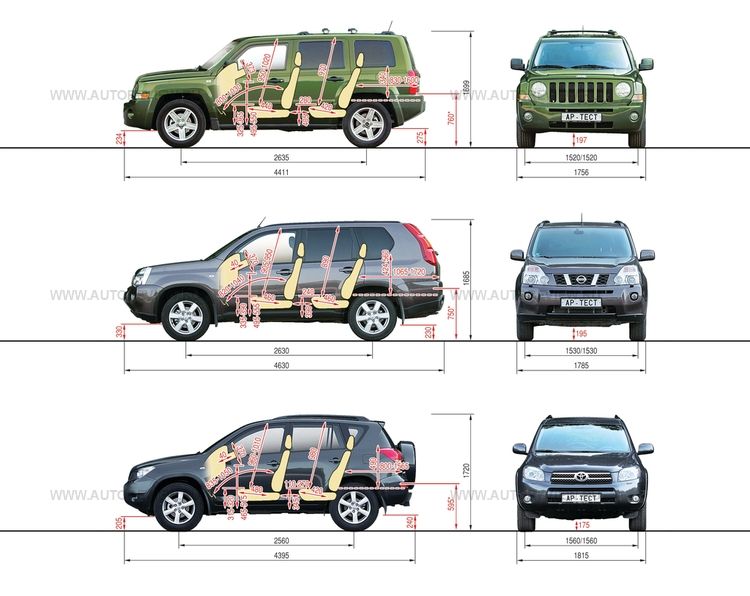
Black indicates manufacturer data, red — the results of Avtoreview measurements
* Loading height
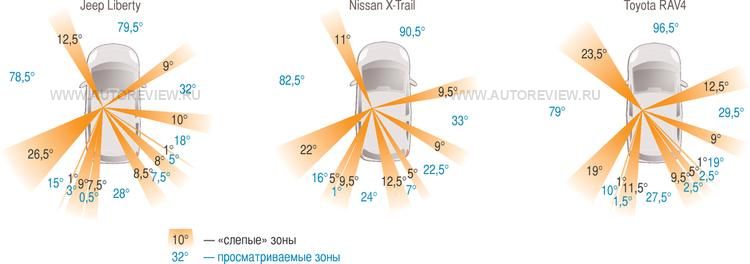
Visibility
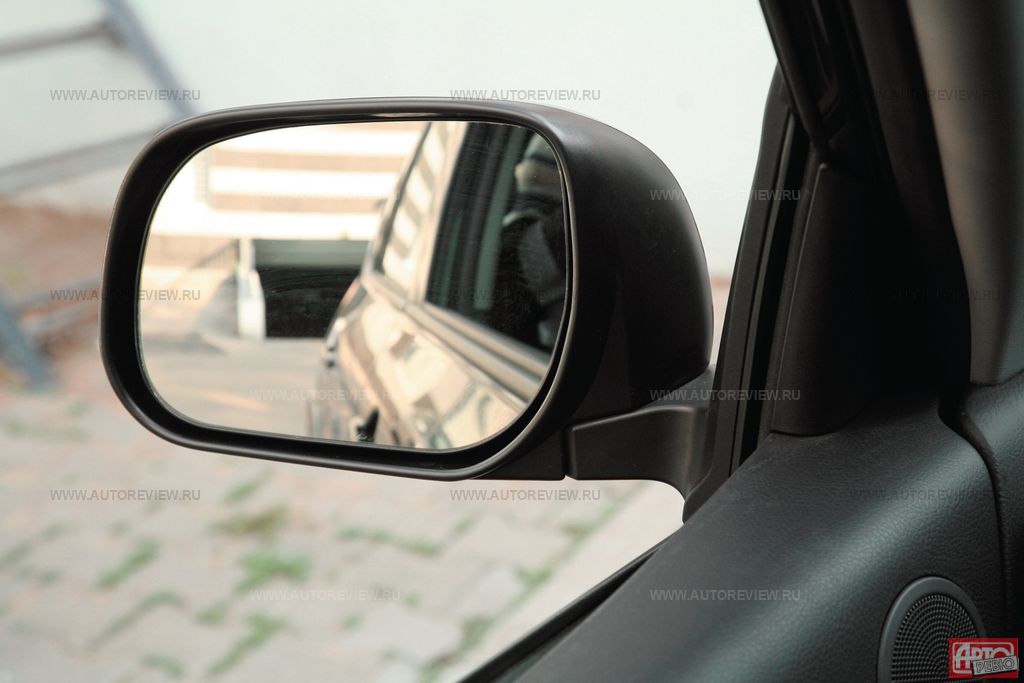
The best visibility is in the Toyota RAV4, despite the thick windshield pillars (viewing angle 268°) — even a short driver will not experience discomfort. The driver's wiper does not reach the pillar by only a couple of centimeters. The small "hump" of the spare tire does not interfere with the view through the large rear window opening. And the mirrors are excellent: large and without distortion.
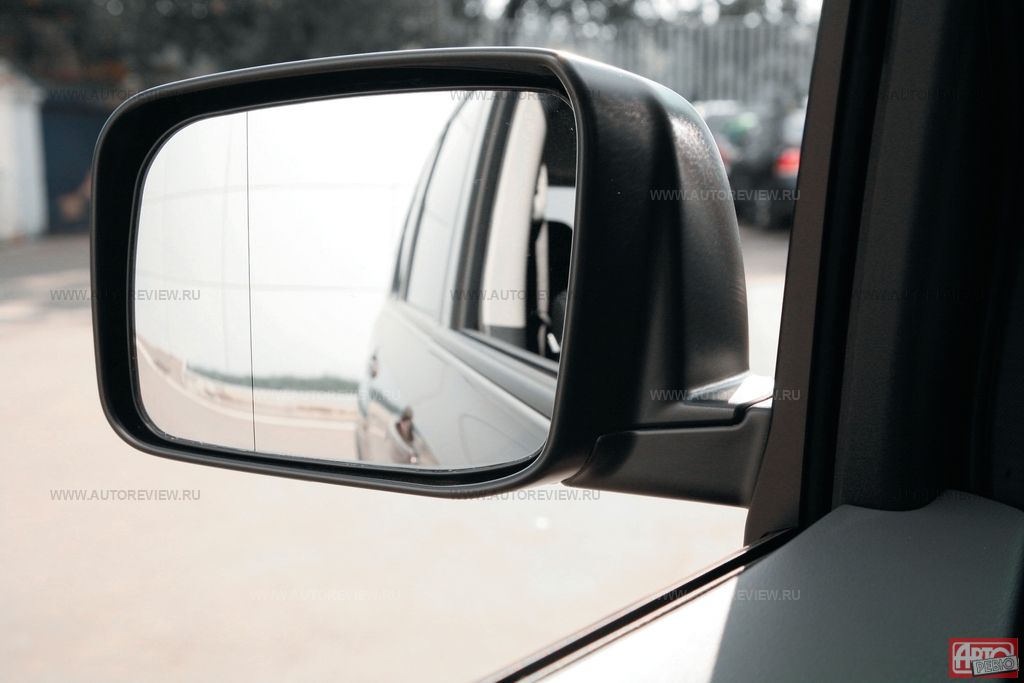
The X-Trail, despite the largest viewing angle of 276.5°, is worse. The large mirrors have distorting sections, the high rear window opening is squeezed from the sides, and the "shortfall" of the driver's wiper is three times greater than that of the RAV4.
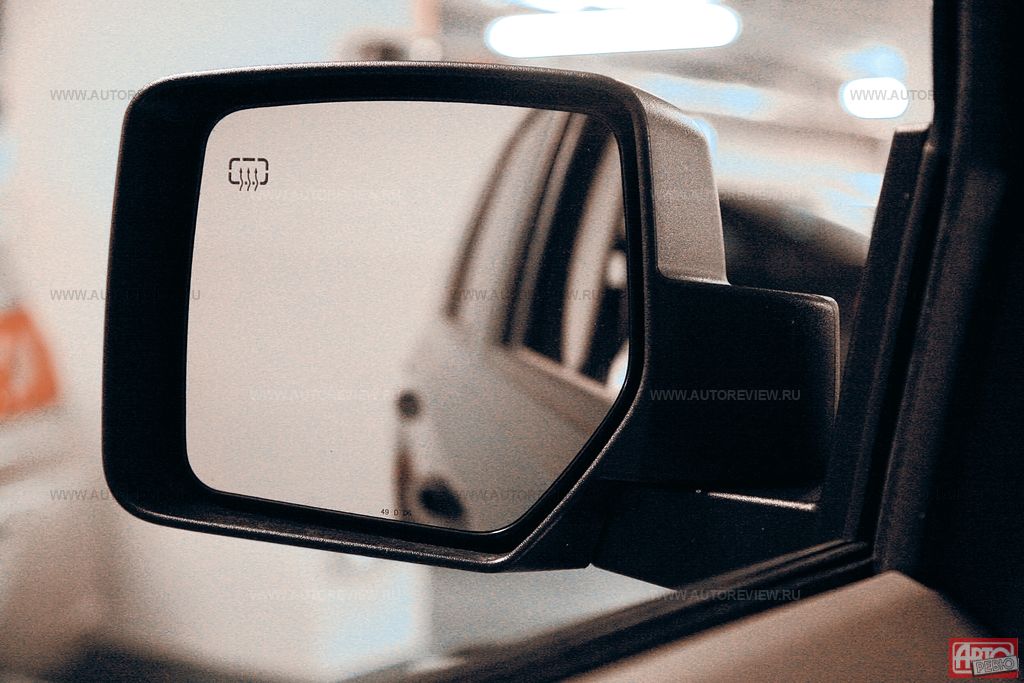
In the Liberty, the total viewing angle is only one degree less than the Toyota's, but the panorama from the driver's seat is a real nightmare. The windshield is mounted low, and the massive front pillars make visibility look like looking through a tank's observation hatch. The rear window is almost completely blocked by a row of headrests. Only the wide side mirrors help out.
| Vehicle | Total viewing angle, deg. | Total blind spot angle, deg. |
| Jeep Liberty | 267.0 | 93.0 |
| Nissan X-Trail | 276.5 | 83.5 |
| Toyota RAV4 | 268.0 | 92.0 |
| Jeep Liberty | Nissan X-Trail | Toyota RAV4 |
 |  |  |
| Specifications | |||
| Parameters | Vehicles | ||
| Jeep Liberty | Nissan X-Trail | Toyota RAV4 | |
| Body type | 5-door wagon | 5-door wagon | 5-door wagon |
| Number of seats | 5 | 5 | 5 |
| Dimensions, mm | |||
| length | 4411 | 4630 | 4395 |
| width | 1756 | 1785 | 1815 |
| height | 1669 | 1685 | 1720 |
| wheelbase | 2635 | 2630 | 2560 |
| track front/rear | 1520/1520 | 1530/1535 | 1560/1560 |
| Trunk volume, l | 652—1535* | 479—1773* | 586—1469* |
| Curb weight, kg | 1570 | 1565 | 1590 |
| Gross weight, kg | 2010 | 2050 | 2110 |
| Engine | petrol, with distributed injection | petrol, with distributed injection | petrol, with distributed injection |
| Location | front, transverse | front, transverse | front, transverse |
| Number and arrangement of cylinders | 4, in-line | 4, in-line | 4, in-line |
| Displacement, cm³ | 2360 | 2488 | 2362 |
| Cylinder bore/piston stroke, mm | 88.0/97.0 | 89.0/100.0 | 88.5/96.0 |
| Compression ratio | 10.5:1 | 9.6:1 | 9.8:1 |
| Number of valves | 16 | 16 | 16 |
| Max power, hp/kW/rpm | 172/129/6000 | 169/124/6000 | 170/125/6000 |
| Max torque, Nm/rpm | 222/4400 | 233/4400 | 224/4000 |
| Transmission | belt-driven CVT | belt-driven CVT | automatic, 4-speed |
| Gear ratio range | 2.35—0.39 | 2.35—0.39 | — |
| Gear ratios | |||
| I | — | — | 3.94 |
| II | — | — | 2.19 |
| III | — | — | 1.41 |
| IV | — | — | 1.02 |
| reverse | 1.76 | 1.75 | 3.14 |
| final drive | 6.12 | 5.80 | 3.08 |
| Drive | all-wheel, with multi-disc clutch in rear wheel drive | all-wheel, with multi-disc clutch in rear wheel drive | all-wheel, with multi-disc clutch in rear wheel drive |
| Front suspension | independent, coil spring, McPherson | independent, coil spring, McPherson | independent, coil spring, McPherson |
| Rear suspension | independent, coil spring, multi-link | independent, coil spring, multi-link | independent, coil spring, double wishbone |
| Front brakes | disc, ventilated | disc, ventilated | disc, ventilated |
| Rear brakes | disc | disc, ventilated | disc |
| Tires | 215/60 R17 | 215/60 R17 | 225/65 R17 |
| Maximum speed, km/h | 185 | 185 | 180 |
| Acceleration time 0—100 km/h, s | 11.3 | 10.3 | 10.6 |
| Fuel consumption, l/100 km | |||
| urban cycle | 11.7 | 12.0 | 12.6 |
| extra-urban cycle | 8.5 | 7.7 | 7.9 |
| combined cycle | 9.7 | 9.3 | 9.6 |
| Fuel tank capacity, l | 51 | 65 | 60 |
| Fuel | petrol AI-95 | petrol AI-95 | petrol AI-95 |
| * With rear seats folded | |||
| Equipment of the cars tested | |||
| Equipment | Cars | ||
| Jeep Liberty | Nissan X-Trail | Toyota RAV4 | |
| Base version price, RUB/$* | 864500/34580* | 967300/38690* | 1102500/44100* |
| Front airbags | + | + | + |
| Front side airbags | – | + | + |
| Driver's knee airbag | – | – | + |
| Curtain airbags | + | + | + |
| ABS | + | + | + |
| Traction control system | + | + | + |
| Electronic stability control | + | + | + |
| Hill descent control | – | + | + |
| Power steering | + | + | + |
| Automatic transmission | O** | O** | + |
| Multifunction steering wheel | O*** | + | + |
| All-wheel drive | + | + | + |
| Adjustable steering column (height) | + | + | + |
| Adjustable steering column (reach) | – | + | + |
| Leather-wrapped steering wheel | O | + | + |
| Heated wiper rest area | – | – | + |
| Power-adjustable driver's seat | – | O | + |
| Power-adjustable front passenger seat | – | O | – |
| Heated front seats | O | + | + |
| Auto-dimming rearview mirror | O | – | + |
| Central locking (remote) | + | + | + |
| Chip key | – | O | + |
| Anti-theft alarm | + | – | – |
| Air conditioning | + | + | + |
| Single-zone climate control | – | + | – |
| Dual-zone climate control | – | – | + |
| Power-adjustable and heated exterior mirrors | + | + | + |
| Power-folding exterior mirrors | – | O | + |
| Power windows | + | + | + |
| Split-folding rear seats | + | + | + |
| Rear seat backrest angle adjustment | + | + | + |
| Rear seat fore-aft adjustment | – | – | + |
| Rear seat armrest | – | + | + |
| CD audio system | + | + | + |
| CD changer | O | + | + |
| Engine start button | – | – | + |
| Light sensor | – | + | + |
| Rain sensor | – | + | + |
| Tire pressure monitoring | O | – | – |
| Trip computer | + | + | + |
| Cruise control | + | + | + |
| Power sunroof | – | + | – |
| Leather upholstery | O | O | + |
| Remote fuel filler flap release | – | – | + |
| Xenon headlights | – | O | – |
| Fog lights | + | + | + |
| Headlight washers | – | + | + |
| Alloy wheels | + | + | + |
| Full-size spare wheel | + | + | + |
| Metallic paint | O | + | O |
| Price of tested car, RUB/$* | 1068175/42727 | 1069480/42780 | 1113000/44520 |
| * At exchange rate of $1 = 25.0 RUB. | |||
| ** CVT | |||
| *** Paddle shifters behind steering wheel | |||
| (+) Included in base version | |||
| (–) Not available in base version | |||
| (O) Options installed on tested cars | |||
| Speedometer accuracy | ||||||||
| Cars | Speedometer reading, km/h | |||||||
| 40 | 60 | 80 | 100 | 120 | 140 | 160 | 180 | |
| True speed, km/h | ||||||||
| Jeep Liberty | 40 | 60 | 80 | 100 | 120 | 140 | 160 | 180 |
| Nissan X-Trail | 38 | 58 | 78 | 98 | 117 | 137 | 157 | 177 |
| Toyota RAV4 | 38 | 58 | 78 | 98 | 118 | 137 | 156 | 176 |
| Some Autoreview measurement results | ||||
| Parameters | Cars | |||
| Jeep Liberty | Nissan X-Trail | Toyota RAV4 | ||
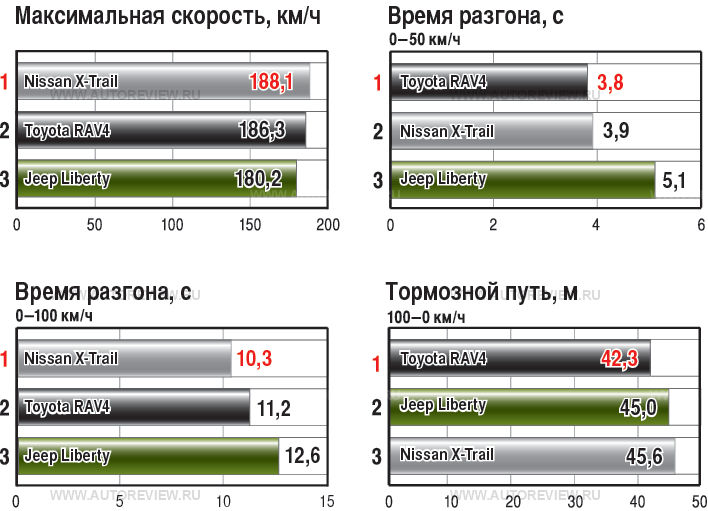
| Maximum speed, km/h | 180.2 | 188.1 | 186.3 | |
| Acceleration time, s | 0–50 km/h | 5.1 | 3.9 | 3.8 |
| 0–100 km/h | 12.6 | 10.3 | 11.2 | |
| 0–150 km/h | 29.2 | 24.6 | 27.9 | |
| over 400 m | 19.0 | 17.5 | 17.8 | |
| over 1000 m | 34.0 | 32.0 | 32.8 | |
| 60–100 km/h (III) | 8.8 | 7.8 | — | |
| 60–100 km/h (IV) | 11.1 | 10.6 | — | |
| 80–120 km/h (V) | 19.7 | 16.4 | — | |
| 80–120 km/h (VI) | 42.5 | 36.2 | — | |
| 60–100 km/h (D) | 7.3 | 6.8 | 7.5 | |
| 80–120 km/h (D) | 9.2 | 8.8 | 8.0 | |
| Coast-down, m | from 50 km/h | 548 | 578 | 655 |
| 130–80 km/h | 895 | 971 | 935 | |
| 160–80 km/h | 1336 | 1441 | 1356 | |
| Braking from 100 km/h | distance, m | 45.0 | 45.6 | 42.3 |
| deceleration, m/s² | 8.6 | 8.5 | 9.1 | |
| Braking from 150 km/h | distance, m | 98.2 | 101.2 | 94.4 |
| deceleration, m/s² | 8.8 | 8.6 | 9.2 | |
What costs how much?
The base Jeep Liberty with a 2.4 petrol engine producing 172 hp and a manual gearbox costs 864,500 rubles ($34,580*). Even the base trim includes four airbags, air conditioning, heated and power-adjustable exterior mirrors, a CD stereo, and fog lights. To get the belt-driven CVT, you'll have to pay an extra 38,500 rubles ($1,540). Among the options are heated front seats along with tire pressure monitoring for 35,000 rubles ($1,400), as well as a CD changer, a Boston Acoustics audio system with nine speakers, and leather upholstery for 113,800 rubles ($4,552), which were installed on our test car. Metallic paint costs an extra 465 euros ($655), a power sunroof is 810 euros ($1,140), and a navigation system will set you back 2,140–2,545 euros ($3,013–3,583). Interestingly, climate control is not offered for the Liberty at all! You can also order a diesel version with a two-liter turbo engine (140 hp) and a six-speed manual, starting at 952,000 rubles ($38,080). However, you'll have to wait up to three months for such a car, while the petrol version will arrive within a month.
The Liberty comes with a two-year warranty with no mileage limit. Jeep's dealer network in Russia comprises 21 locations in 11 cities.
The Nissan X-Trail, even with the two-liter engine (141 hp) and manual, is more expensive — the starting price is 872,980 rubles ($34,920). However, the SE trim already includes six airbags, climate control, heated front seats, a CD changer, and light and rain sensors. For the CVT, you need to pay an extra 41,920 rubles ($1,680). The version with the 2.5-liter engine (169 hp) is priced at 967,300 rubles ($38,690) and includes a panoramic power sunroof and additional spotlights built into the roof rails. For our test, we had the most expensive X-Trail in LE trim with leather upholstery and xenon headlights — its price was 1,069,480 rubles ($42,780). A regular order will be delivered within a month, but the top version will have to wait up to four months.
The X-Trail comes with a three-year warranty or 100,000 km. In Russia, Nissan is sold by 44 dealers in 29 cities.
The Toyota RAV4 is the most expensive participant in this comparison. The base version with a 2.0-liter engine producing 152 horsepower, manual transmission, seven airbags, climate control, CD changer, and heated power mirrors starts at 901,000 rubles, which is equivalent to $36,080. Interestingly, a better-equipped Nissan X-Trail with the same engine displacement turns out to be $1,160 cheaper. For an automatic transmission, you'll have to pay an extra 38,000 rubles ($1,520), and the top-of-the-line Sol version with leather interior, heated front seats, and light and rain sensors will cost another 92,000 rubles more ($3,680). The RAV4 with a 2.4-liter engine (170 hp) and automatic transmission is available exclusively in the Sol trim. It differs from the 2.0-liter versions by its wheels, extended wheel arches, chrome grille, and roof rails. The price of such a car is 1,102,500 rubles ($44,100). You'll have to wait about three months for any of the versions.
The car comes with a warranty of 3 years or 100,000 kilometers. In Russia, Toyota is sold through a network of 47 dealerships located in 32 cities.
* Prices are given at the exchange rate of $1=25.0 rubles.
| Cost of scheduled maintenance with consumables and parts, rubles. | ||||
| Scheduled maintenance | Vehicles | |||
| Jeep Liberty | Nissan X-Trail | Toyota RAV4 | ||
| Cost per standard hour | 1500 | 1350 | 1600 | |
| Mileage, km | 10000 | 8100 | — | 5000 |
| 15000 | — | 5000 | — | |
| 20000 | 8100 | — | 6500 | |
| 30000 | 9200 | 12000 | 6000 | |
| 40000 | 9400 | — | 13800 | |
| 45000 | — | 5000 | — | |
| 50000 | 8100 | — | 5000 | |
| 60000 | 9200 | 18500 | 6500 | |
| 70000 | 8100 | — | 6000 | |
| 75000 | — | 5000 | — | |
| 80000 | 9400 | — | 18000 | |
| 90000 | 9200 | 12000 | 5000 | |
| Total | 78800 | 57500 | 71800 | |
| Approximate prices for original parts at Moscow dealers, rubles. | |||
| Parts | Vehicles | ||
| Jeep Liberty | Nissan X-Trail | Toyota RAV4 | |
| Oil filter | 470 | 310 | 360 |
| Fuel filter | 1800 | — | 5540 |
| Air filter | 760 | 720 | 680 |
| Cabin filter | 810 | 1470 | 650 |
| Spark plug | 210 | 990 | 490 |
| Front brake pads | 4300 | 2270 | 3460 |
| Rear brake pads | 4400 | 1930 | 2250 |
| Front shock absorber | 2830 | 9240 | 4300 |
| Rear shock absorber | 1890 | 9240 | 4300 |
| Front headlight | 7670 | 10100 | 10530 |
| Rear light | 4750 | 5600 | 4180 |
| Front fender | 10910 | 9950 | 7220 |
| Front bumper | 15150 | 13100 | 9830 |
| Hood | 15770 | 14230 | 13270 |
| Windshield | 13310 | 33210 | 10030 |
What else?
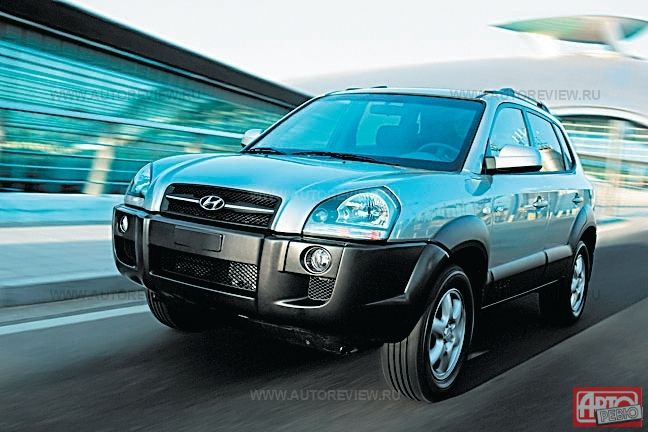
An inexpensive crossover with an automatic transmission is the front-wheel-drive Hyundai Tucson with a 2.0-liter engine (142 hp), which can be bought for 725,900 rubles ($29,036). The all-wheel-drive modification with an electromagnetic clutch with forced locking in the rear axle drive starts at 789,900 rubles ($31,596). Tucson's strengths are good visibility and a spacious interior, but its other qualities are rather mediocre. A detailed review is in AR No. 21, 2004.
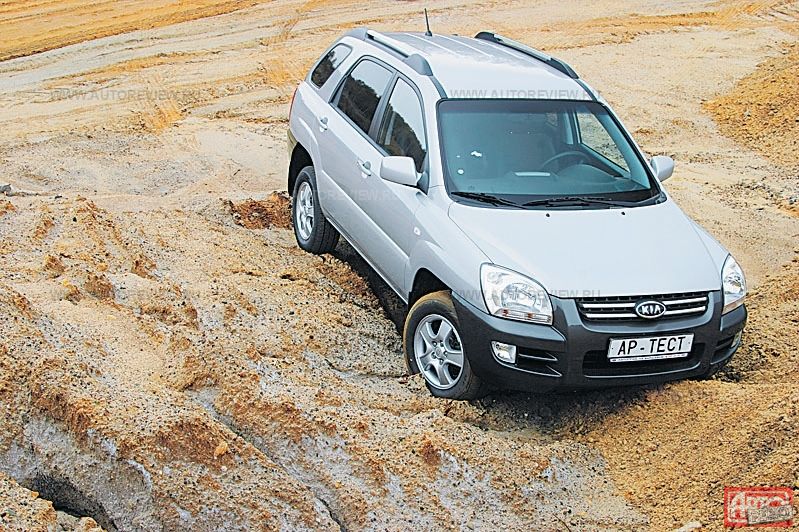
The Kia Sportage is a technical twin of the Hyundai Tucson, but in similar trim levels it is more expensive. Its gasoline 2.0-liter engine works only with a manual transmission. An automatic transmission is available only with the turbodiesel (2.0 L, 112 hp); such a version costs 829,000 rubles ($33,160). Details are in AR No. 22, 2005.
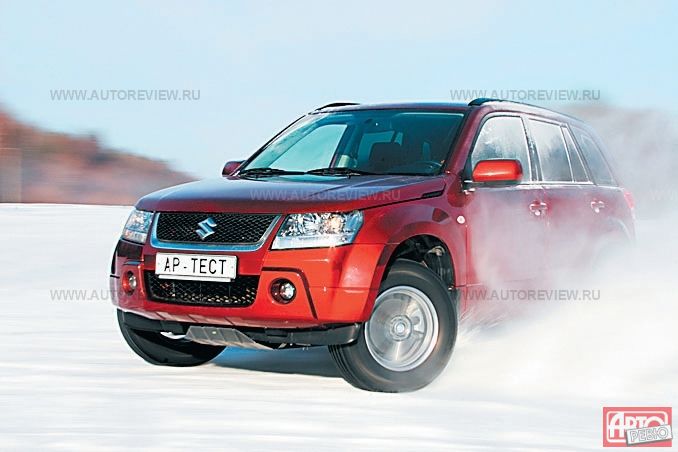
The five-door Suzuki Grand Vitara 2.0 (141 hp) with an automatic transmission sells from 830,000 rubles ($33,200). Off-road, this car feels great thanks to permanent all-wheel drive with a locking center differential and a low-range gear. The interior pleases with quality materials, but the suspension is too soft. Details are in AR No. 7, 2006 and AR No. 22, 2005.
| Hyundai Tucson | Honda CR-V |
 |  |
| Kia Sportage | Chevrolet Captiva |
 |  |
The first-generation Mitsubishi Outlander with a 2.4-liter engine (160 hp) and an automatic transmission starts at 864,300 rubles ($34,572). The drive is permanent all-wheel, with a symmetrical center differential that is locked by a viscous coupling. The Outlander's interior is stylish and functional, but without a stability control system, the car is noticeably prone to oversteer. Details are in AR No. 23, 2006 and AR No. 7, 2006.
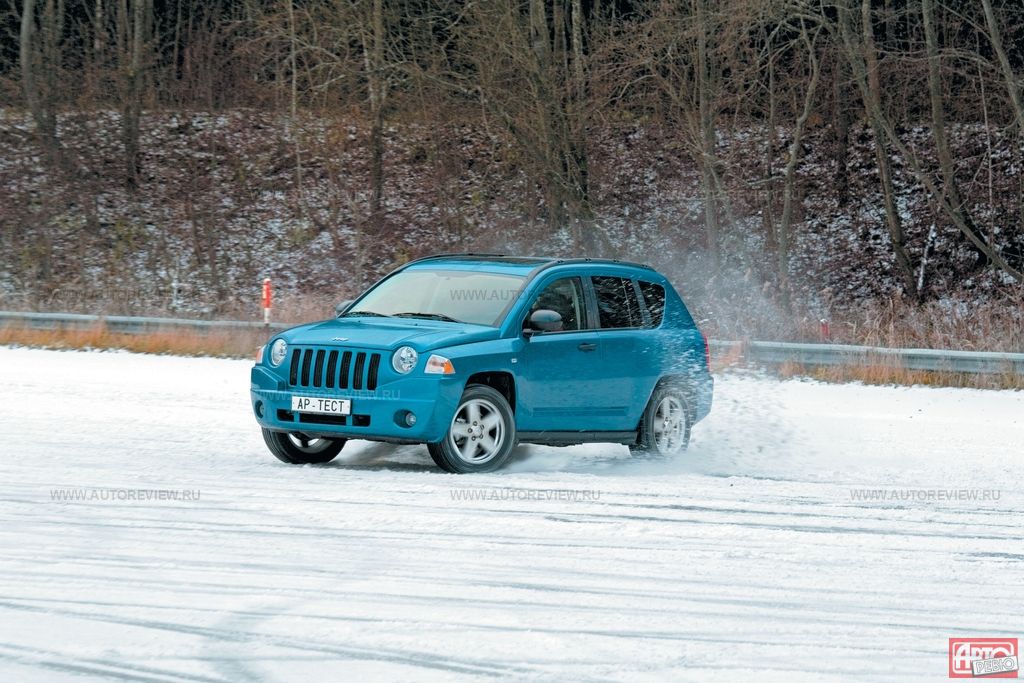
The Jeep Compass is the same as the Liberty: the same 2.4-liter engine (170 hp), the same transmission with a clutch on the rear axle. The price of the version with a CVT also matches — from 903,000 rubles ($36,120). Details are in AR No. 23, 2006.
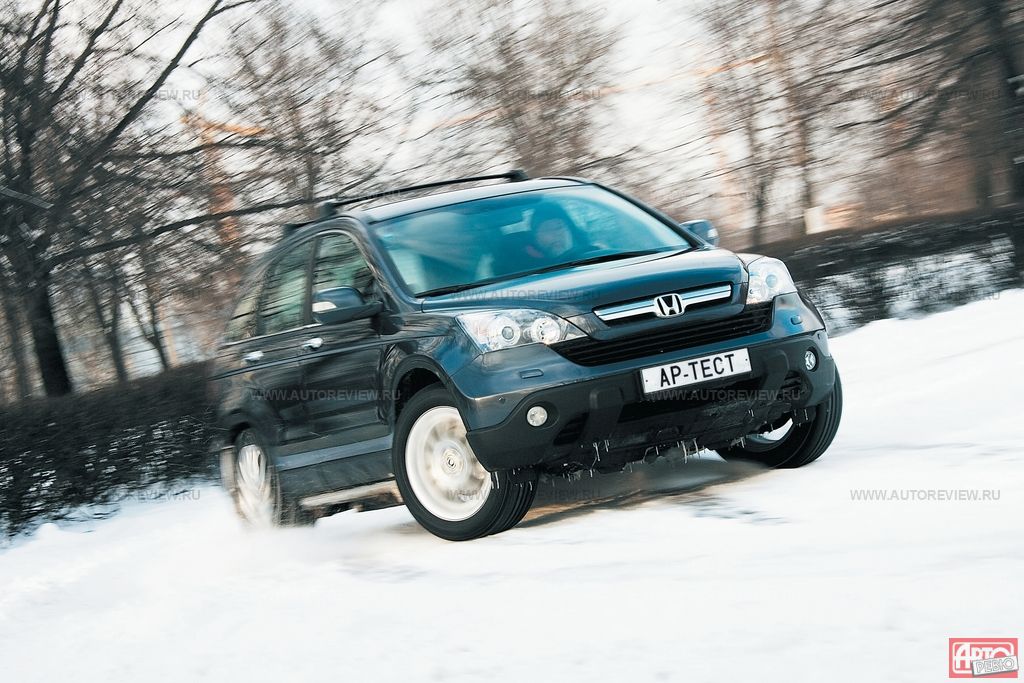
The Honda CR-V is one of the most expensive representatives of the class. The version with a 2.0-liter engine (150 hp) and an automatic transmission will cost at least 938,000 rubles ($37,520). The front wheels are permanently driven; the rear wheels are connected by a multi-disc clutch with hydraulic control. The CR-V stands out for its comfortable driver's seat, comfort, and space in the second row. Details are in AR No. 5, 2007.
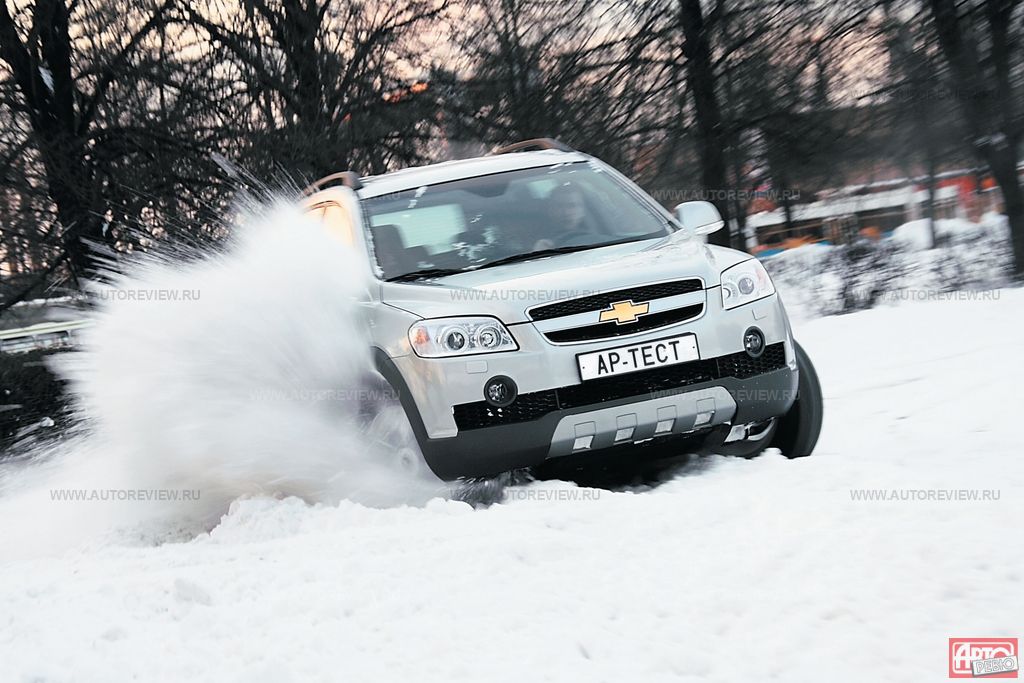
The Chevrolet Captiva with a base four-cylinder engine (2.4 L, 136 hp) and an automatic transmission costs from 916,200 rubles ($36,648). The transmission is typically "crossover": front-wheel drive and a multi-disc clutch for connecting the rear axle. Inside, the Captiva is comfortable and convenient, and for an extra charge, you can order a third row of seats. Details are in AR No. 6, 2007.
| Suzuki Grand Vitara | Opel Antara |
 |  |
| Jeep Compass | Mitsubishi Outlander XL |
 |  |
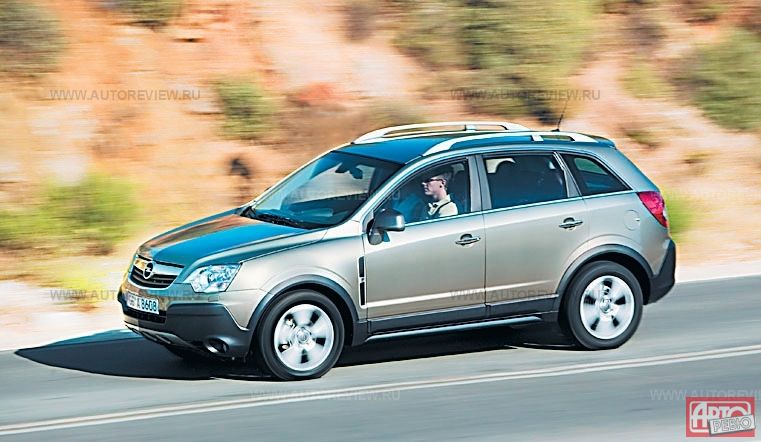
The Opel Antara uses the same units as the Captiva, but differs with a shorter strictly five-seat body, stylish interior, and an expanded set of options. The version with a 2.4-liter engine producing 140 hp and an automatic transmission costs from 937,000 rubles ($37,480).
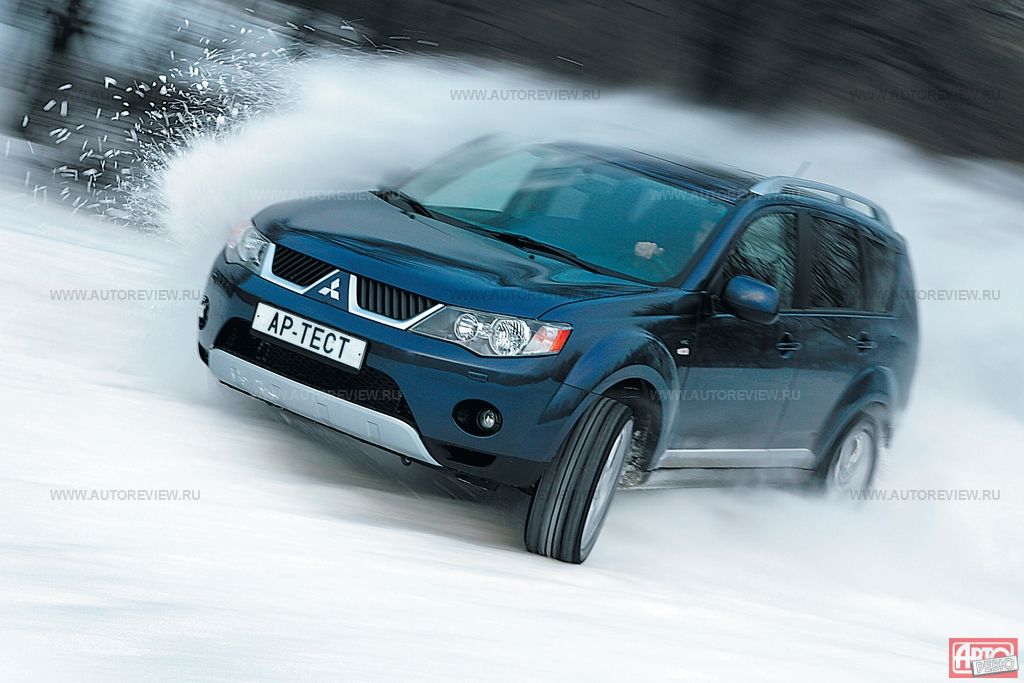
The Mitsubishi Outlander XL 2.4 (170 hp) with a CVT and a multi-disc clutch for driving the rear wheels is priced almost the same — from 937,730 rubles ($37,510). The driving manners and interior of the "big Outlander" have a sporty character. But off asphalt, the possibilities are limited by the hanging full-size spare tire and the clutch's tendency to overheat. Details are in AR No. 6, 2007 and AR No. 17, 2007.
* At the exchange rate of $1=25.0 rubles