
Everything went wrong because of one piece of paper: “I, journalist Sergey Znaemsky, solemnly swear to call the Jeep Patriot exclusively Liberty”…
Wait a minute. Liberty is the American name for our Jeep Cherokee, right? However, in Russia, they will start selling… the Jeep Patriot under the name Liberty. Why such secrecy? And what is this Jeep Patriot, or, excuse me, Liberty, all about?
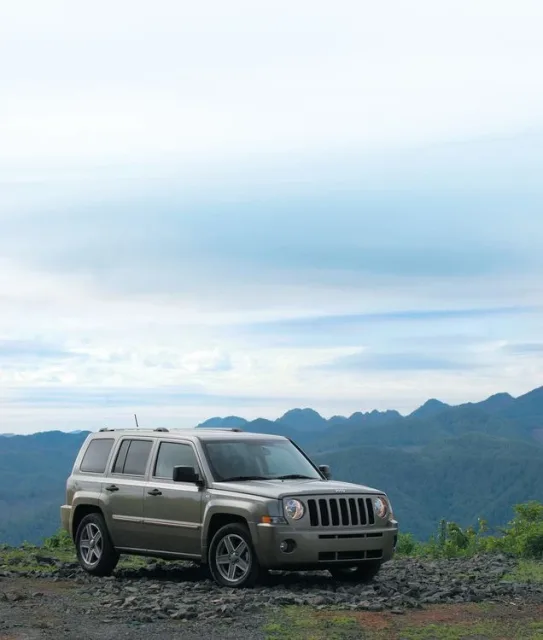
The culprit behind all this naming confusion is UAZ. The Ulyanovsk plant very prudently staked its claim on the “automotive” name Patriot in our country. So prudently that the marketers of the now-defunct DaimlerChrysler concern, when preparing to launch the Jeep Patriot crossover on the European market, didn't even try to fight for the Russian rights to this name. Therefore, worldwide the model is called Patriot, but in Russia — Liberty.
True, the “rebranding” turned out to be quite modest: the Americans simply installed a rear bumper on the Patriot with stamping from the “real” Liberty and replaced the badges. And that's it!
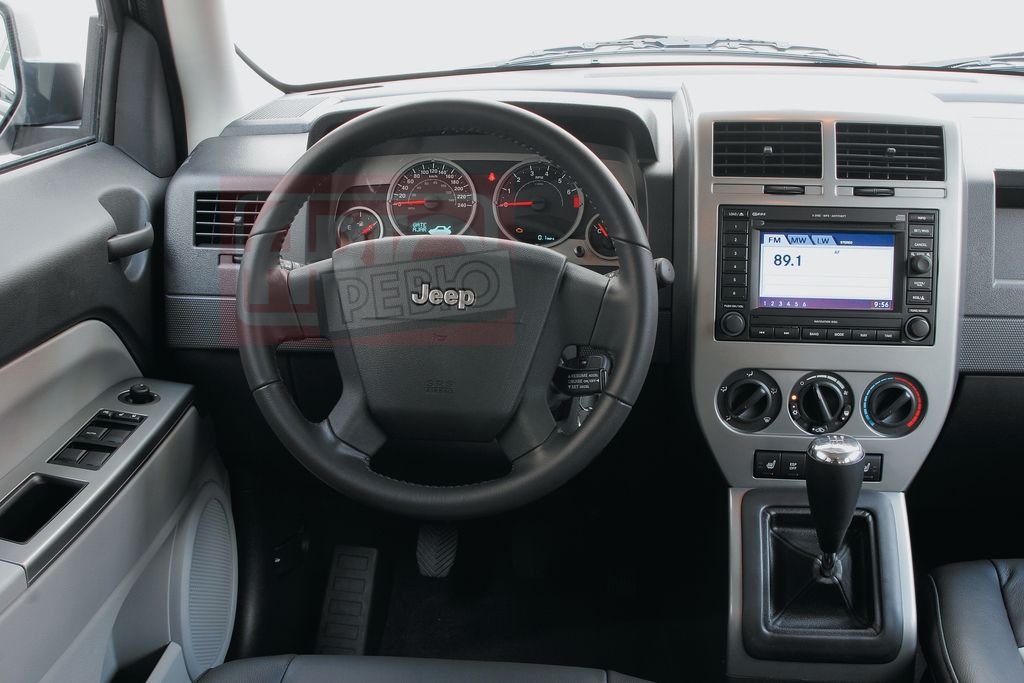 | 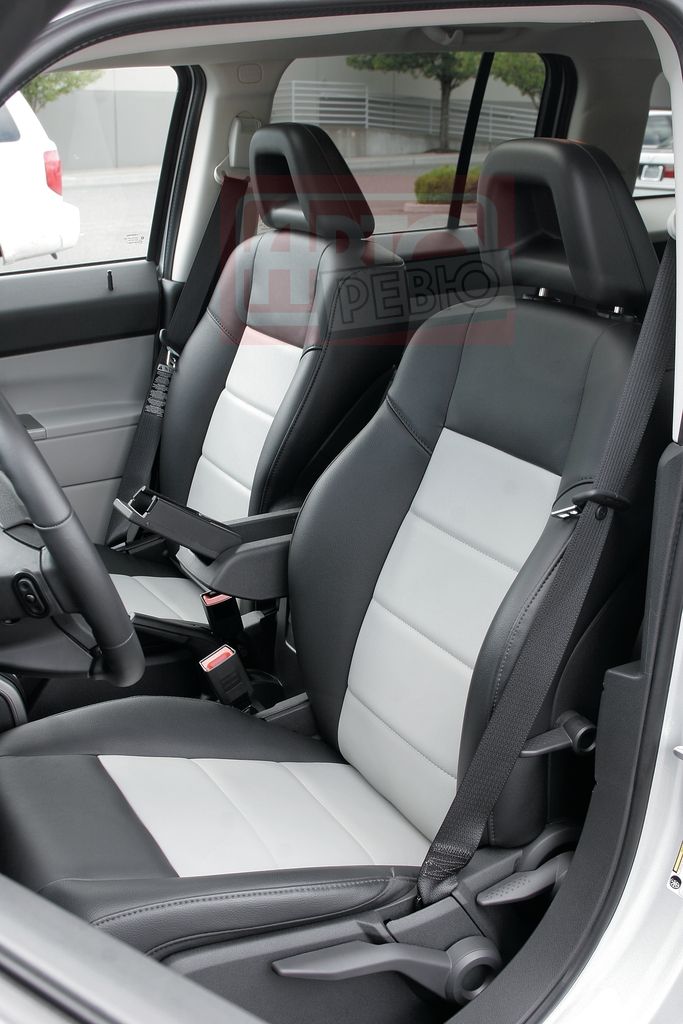 | |
| The interior is styled ruggedly. Ergonomics are generally good, but many small flaws annoy: the steering wheel doesn't adjust for reach, the ventilation deflectors have tiny handles, and the “climate” knobs rotate somehow vaguely… | The chrome coupling lock handle — like on “real” Jeeps | The seats pleased — the profile is “almost German,” and the ranges of the four mechanical adjustments are wide |
In fact, the Jeep Patriot… Oh, I gave a receipt! In short, the car that will be called Jeep Liberty here (and Jeep Patriot for the rest of the world) is based on the same “global” platform as the Jeep Compass and Dodge Caliber. And journalists were shown it in the same place where exactly a year ago Maxim Kadakov first got acquainted with the Compass — on the Pacific coast of the USA, in Oregon.
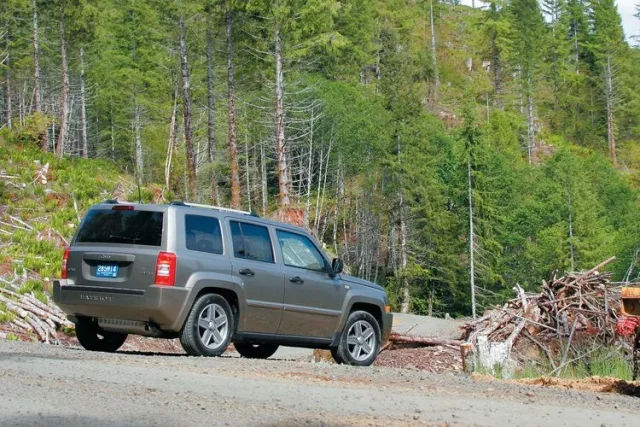
The Patriot (aka “Russian Liberty”) and Compass are 80% unified: they share the same body structure, chassis, engines, and gearboxes. But at the same time, not a single exterior body panel is shared! And if the flashy Compass with the Jeep emblem sometimes looks even comical, the Liberty fully meets expectations. Angular body, chopped wheel arches, almost vertical windshield… A real Jeep?
Almost. Like the Compass, the Patriot/Liberty can also be front-wheel drive! Americans see nothing wrong with that. But for Europe, only the all-wheel-drive Freedom Drive I transmission is provided — with an electronically controlled friction clutch on the rear axle. By the way, exactly the same clutch from the Japanese company JTEKT is also on the Compass, Caliber, and the new Mitsubishi Outlander XL…
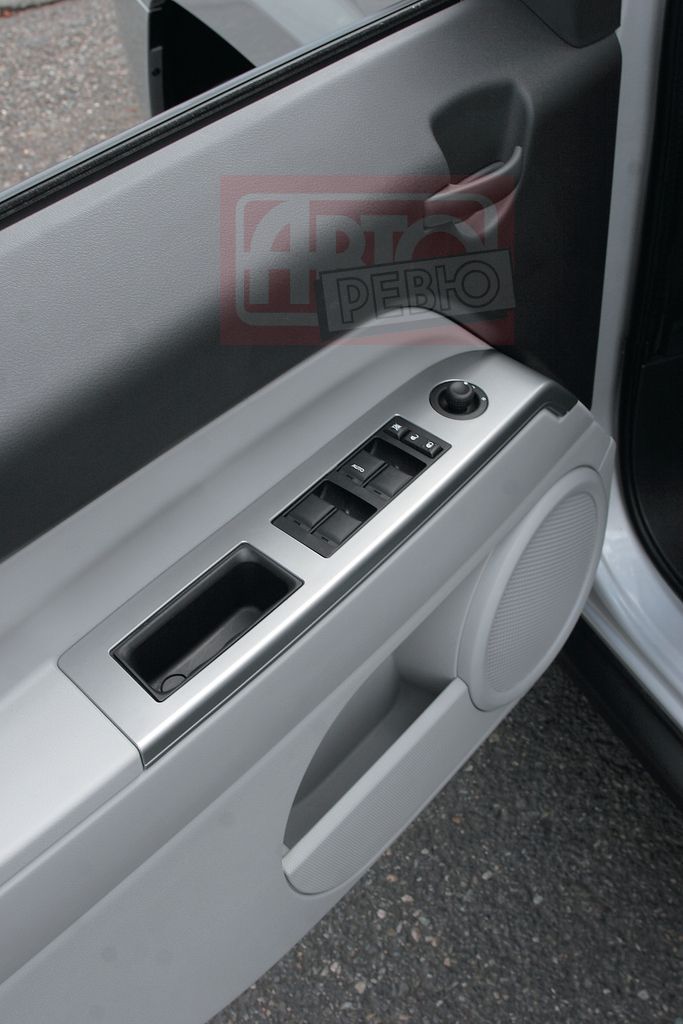 | 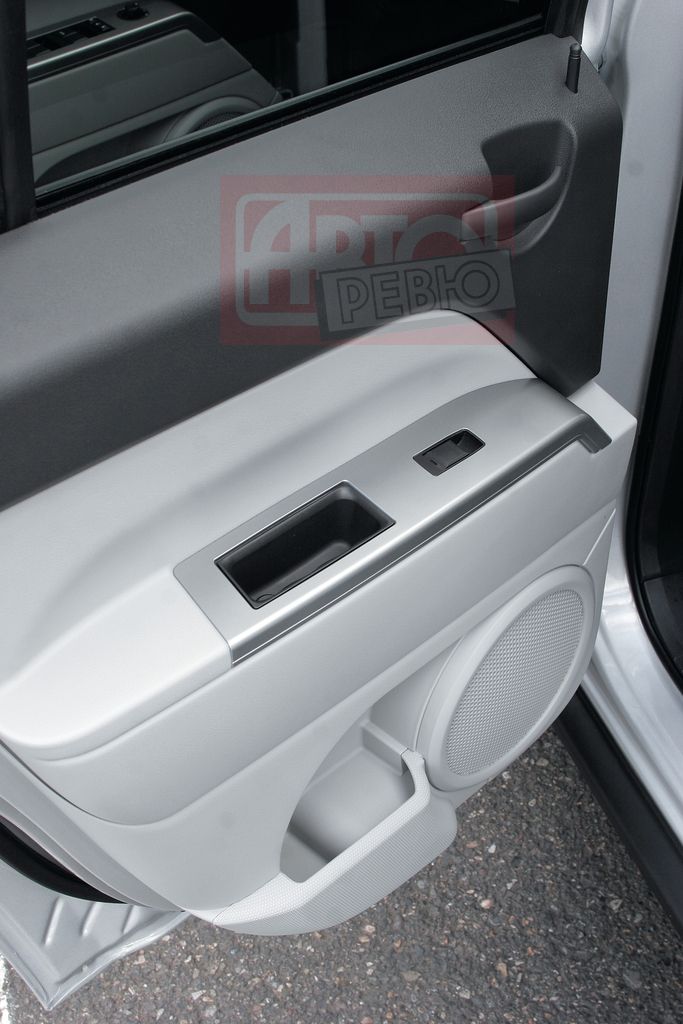 | 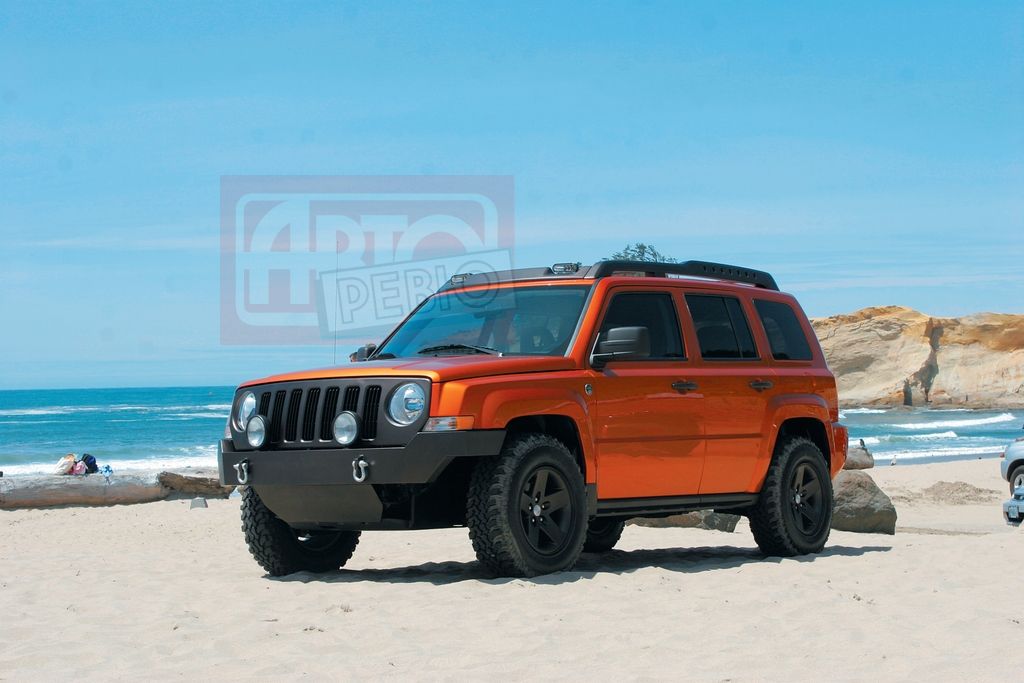 |
| The lock handles are cast from the same rough plastic as the entire interior. There was no room for proper pockets in the wide door panels. But what speakers! | This is a show car for the American tuning exhibition Sema. Few modifications — just wheels and bumpers… | |
Unification! That was the main idea of the joint project of the DaimlerChrysler concern, and the “Russian” Jeep Liberty is one of its results. The base engine for Russia will be a 2.4-liter gasoline “four” World Engine, which the Americans developed together with Hyundai and Mitsubishi. Transmissions — either a five-speed manual or a Jatco belt-driven CVT, already familiar to us from tests of the Caliber and Compass (it's also installed on new Mitsubishi Lancer sedans with two-liter engines). And there's only one alternative to the gasoline engine — a two-liter 140-horsepower Volkswagen turbodiesel with a six-speed manual. And only all-wheel drive.
The diesel Liberty accelerates well — the Volkswagen's three hundred-plus newton-meters confidently push the car forward on any of the six gears. But for the engine's spirited character, you have to pay with constant noise in your ears, vibrations, and frequent shifts: to stay within Oregon's 55 miles per hour (that's 88 km/h in our terms), you need to constantly jump from third to fourth, keeping the revs in a narrow working range. At least the manual shifts clearly.
The gasoline Liberty is a different matter. The 170-horsepower engine can't impress with furious torque, but thanks to phase shifters on intake and exhaust, it pulls well from low revs. And the gear ratios in the gearbox are unusually well chosen: having engaged third gear in the city, I only remembered on the highway that I was driving not a CVT but a five-speed manual.
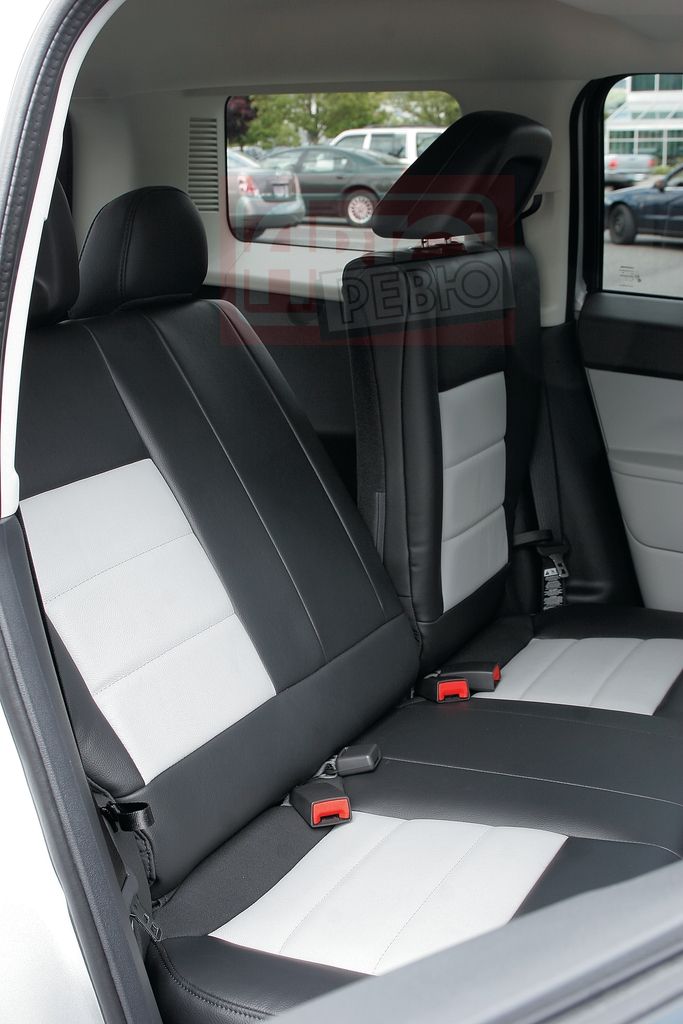 | 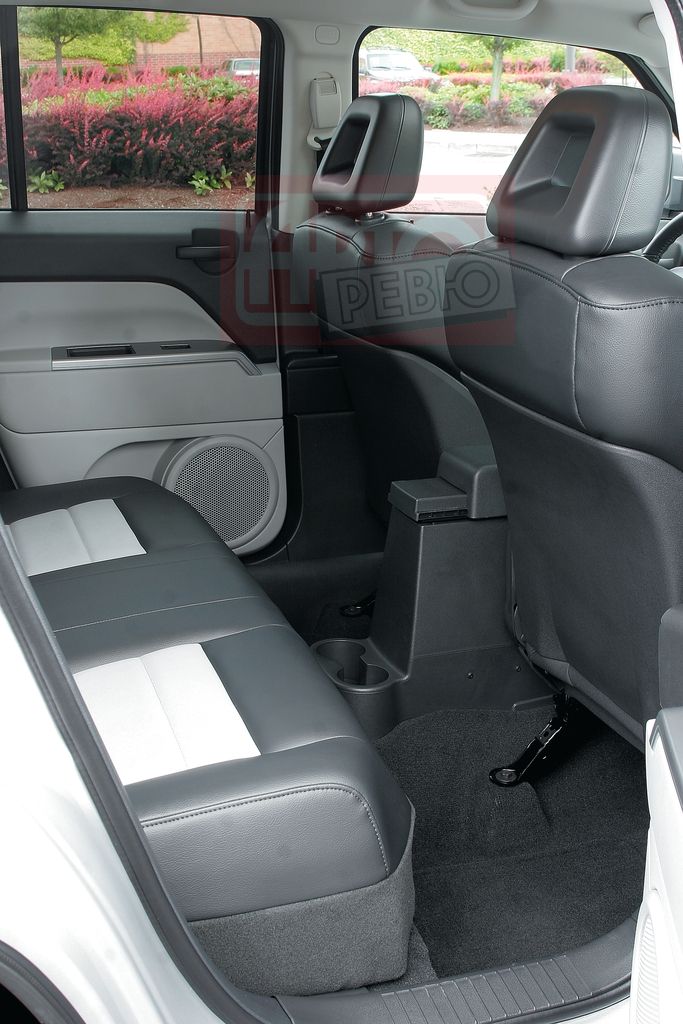 | 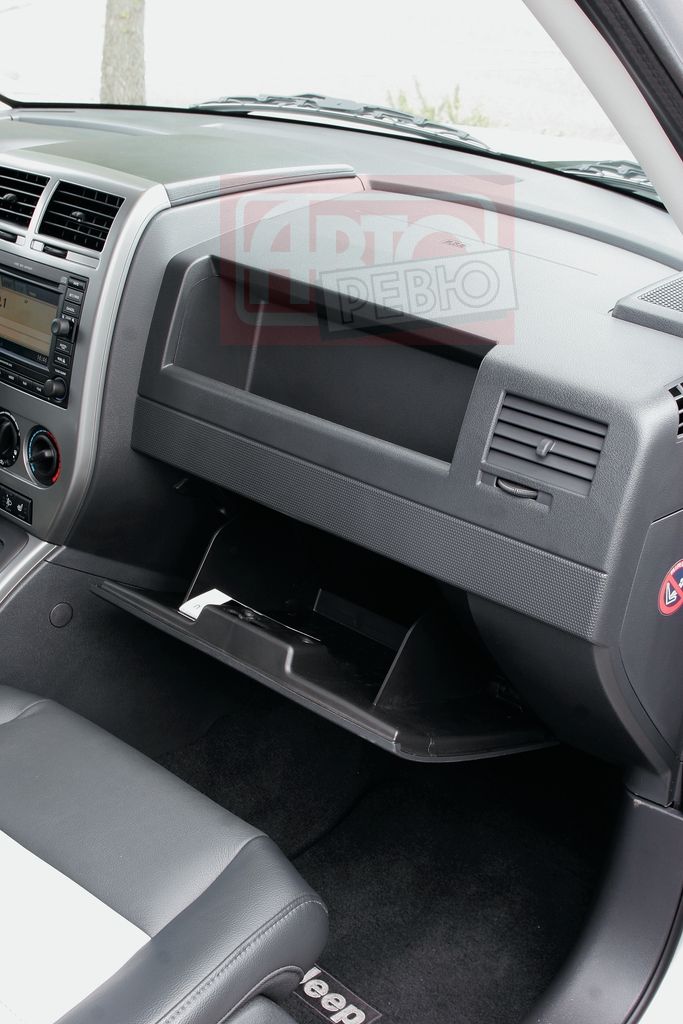 |
| There's enough space on the rear sofa, but the seat itself is simple — flat profile, no armrest. The door opening is a bit narrow, but the high seating position simplifies entry and exit | The shelf in the front panel hardly compensates for the modest glove box volume | |
And the CVT is a thing for those who don't rush. In a calm rhythm, it's convenient. But when you need to accelerate sharply, the tachometer needle flies up, the engine hangs on a tedious high note… And the desired acceleration doesn't come. And there's no confidence in the CVT's actions: it seems the higher the speed, the lazier it moves its pulleys. One joy — manual mode, where six fixed “gears” shift instantly. But still, the Liberty with the CVT is the slowest of the three modifications.
How about handling? Cars for external markets differ from their North American counterparts in different shock absorber settings and stiffer springs. Indeed, the little Jeep confidently holds a straight line, maintains its trajectory well in a long turn, and can even “on the edge” handle a couple of chicanes. But the steering noticeably lacks feedback “at center” and on gentle curves, and the high center of gravity leads to noticeable body roll.
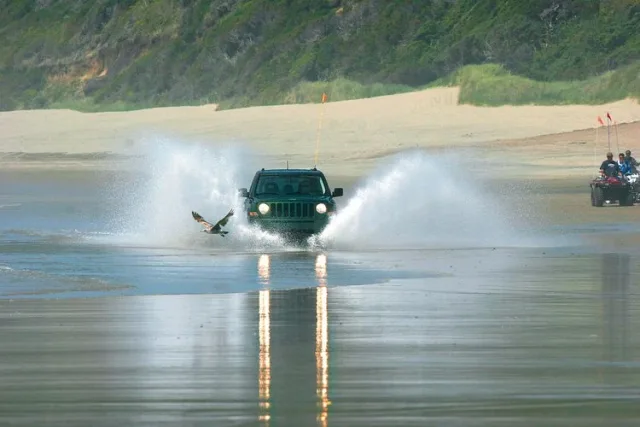
Also, for Europe, Jeeps will be “shod” not with American all-season Goodyear and Firestone tires, but with Continental PremiumContact 2 tires, which the Chrysler folks several times during the presentation called “all-terrain,” that is, off-road. To prove this “all-terrain” nature, the organizers sent the Liberty to a sandy special stage. True, the tire pressure was still slightly reduced.
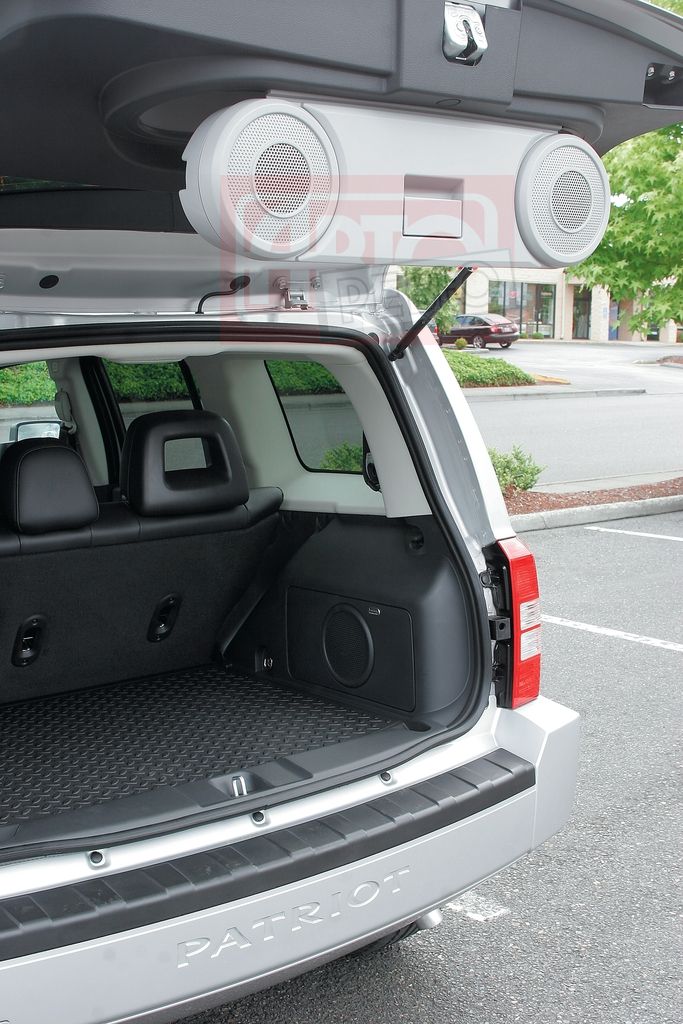 | 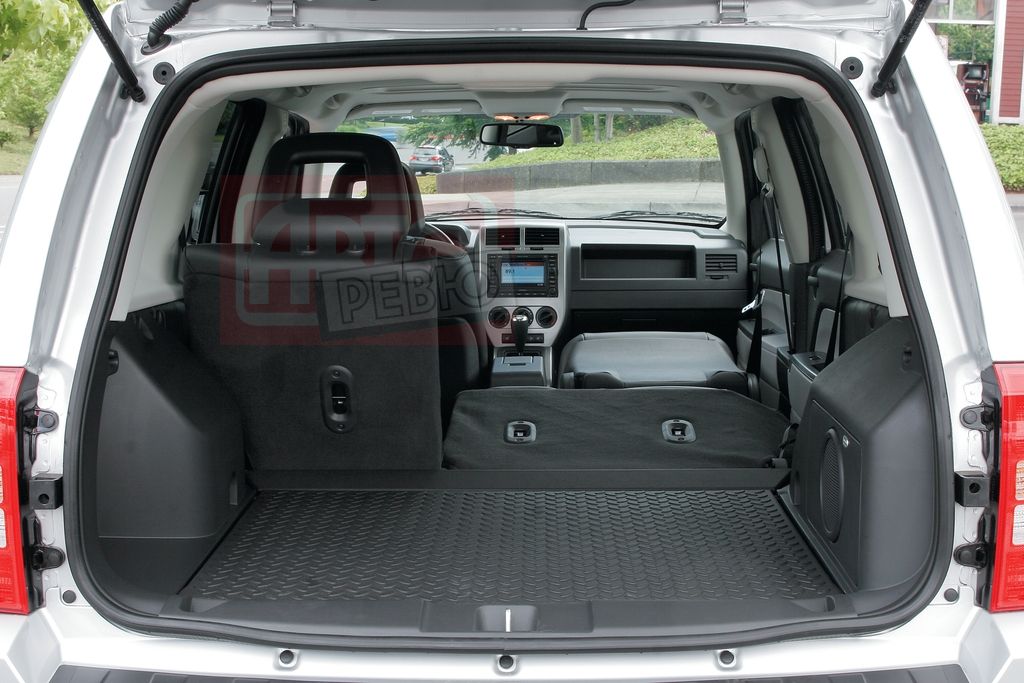 |
| Top-end Boston Acoustics audio system: fold-down speakers in the rear door, subwoofer in the trunk wall | The trunk shape is optimal, and if you fold the sofa and the front passenger seat, the volume can be increased all the way to the front panel |
And the suspension holds impacts on dirt roads! There are four people in the car, speed is about 60 km/h. And I, ignoring the instructor's grumbling, deliberately don't slow down before bumps and sand drifts. The loaded Liberty “bucks” and tosses occupants toward the ceiling, but doesn't allow bottoming out. And at the same time, it stubbornly climbs dunes!
True, the car with the CVT finds such an assault harder: without driver intervention, the gearbox is in no hurry to “downshift.” And after a few laps, warning lights blinked anxiously on the dashboard, the rear wheels stopped “paddling” — and the car dug into the sand in the middle of a climb. Clutch overheating? Not yet, but sensing something wrong, the electronics disabled it just in case.
By pulling the chrome lever on the center tunnel, the clutch can be locked forcibly. But the Liberty remains “rigidly all-wheel-drive” only at speeds up to 40 km/h — after this threshold, the clutch “releases” and returns to automatic mode.
In short, the Jeep Liberty is not an off-roader, despite all-wheel drive and 204 mm of ground clearance. Look at the low “lip” of the front bumper — and you'll immediately understand why our Jeep, besides its own tracks, left a huge piece of plastic underbody in the dunes.
However, in the States, buyers can choose the Patriot with an off-road package that raises ground clearance by 2.5 centimeters and adds shorter final drive ratios. But due to a reduction in top speed, this option is not supplied to Europe, and therefore the Liberty in such a configuration will not come to Russia either.
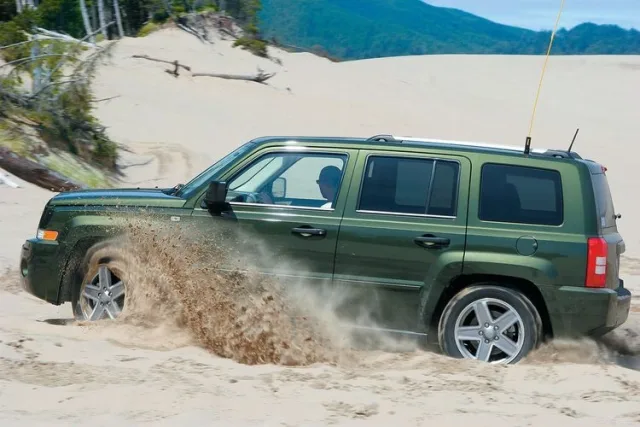
So racing over dunes in the Liberty is not worth it — that's not its element. Its element is urban routine and light weekend trips into nature. But isn't that what the Compass is for? At first glance, they are indeed very close: the interiors are almost identical in space. However, it is the Liberty that seems to me more organic in the role of a city Jeep. Even its plain interior does not disappoint: the rough plastic is easy to wash off dirt, and you won't feel sorry to scratch it with a kayak paddle. The kayak itself will also fit — not only the rear seat folds down, but also the front passenger seat. The base trunk is 652 liters, plus a full-size spare tire.
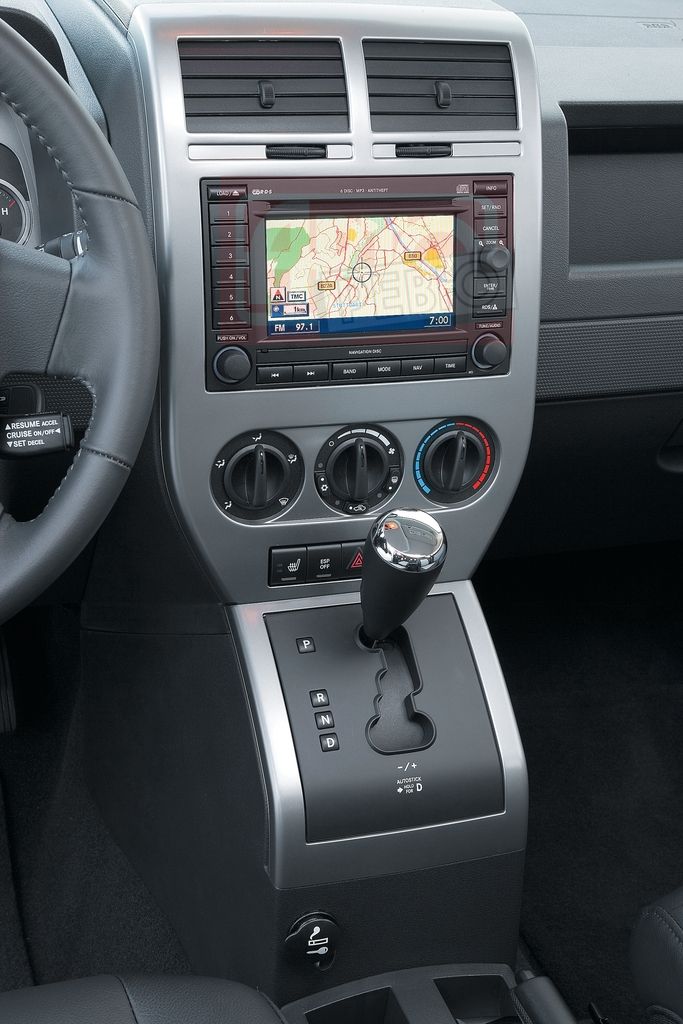 |
| The manual mode of the CVT is engaged by rocking the selector left and right, like in Mercedes |
Among the pleasant little things familiar from other models on the same platform are the Boston Acoustics audio system with a large color screen and a retractable boombox in the tailgate, a removable flashlight in the ceiling, and an iPod compartment in the armrest. But there is still no climate control, and the standard navigation is useless in Russia.
Now about prices. At the start of sales, the Liberty will be available only in the Limited trim: the gasoline version with a manual transmission starts at 24,700 euros, with a CVT — 1,100 euros more. The diesel will cost 27,200 euros. That's expensive. Especially since the price could have been a trump card in the fight against the RAV4 and Tiguan. But in Russia, the Liberty will be about 200 euros more expensive than the Compass. Meanwhile, in America, the situation is the opposite: the base Patriot costs almost a thousand dollars less than the Compass. The irony of fate.
| Specifications | ||
| Parameters | Vehicle | |
| Jeep Liberty | ||
| Modification | 2.4 | 2.0 CRD |
| Body type | wagon | wagon |
| Number of seats | 5 | 5 |
| Trunk volume, l | 652/1535* | 652/1535* |
| Curb weight, kg | 1535 (1570)** | 1610 |
| Gross weight, kg | 2010 | 2010 |
| Engine | gasoline, with distributed injection | diesel, turbocharged |
| Location | front, transverse | front, transverse |
| Number and arrangement of cylinders | 4, in-line | 4, in-line |
| Displacement, cm³ | 2360 | 1968 |
| Cylinder bore/piston stroke, mm | 88.0/97.0 | 81.0/95.5 |
| Compression ratio | 10.5:1 | 18.0:1 |
| Number of valves | 16 | 16 |
| Max power, hp/kW/rpm | 170/125/6000 | 140/103/4000 |
| Max torque, Nm/rpm | 220/4500 | 310/1750—2500 |
| Transmission | manual, 5-speed (CVT) | manual, 6-speed |
| Drive | all-wheel drive, with multi-disc clutch in rear axle drive | all-wheel drive, with multi-disc clutch in rear axle drive |
| Front suspension | independent, coil spring, McPherson | independent, coil spring, McPherson |
| Rear suspension | independent, coil spring, multi-link | independent, coil spring, multi-link |
| Front brakes | disc, ventilated | disc, ventilated |
| Rear brakes | disc | disc |
| Tires | 215/60 R17 | 215/60 R17 |
| Top speed, km/h | 183 (185) | 189 |
| Acceleration 0—100 km/h, s | 10.7 (11.3) | 11.0 |
| Fuel consumption, l/100 km | ||
| urban cycle | 10.7 (11.7) | 8.8 |
| extra-urban cycle | 7.8 (8.5) | 5.5 |
| combined cycle | 8.9 (9.7) | 6.7 |
| Fuel tank capacity, l | 51.1 | 51.1 |
| Fuel | gasoline AI-95 | diesel |
| * With rear seatback folded | ||
| ** Data in parentheses — for version with CVT | ||
Liberty, Patriot, Compass…
It's easy to get lost in Chrysler's naming confusion, so let's try to sort out all the Jeep and Dodge models.
The Dodge Caliber, Jeep Compass, and Jeep Patriot crossovers are based on the global front-wheel-drive GS platform, jointly developed by Mitsubishi and former DaimlerChrysler. They share the base with the Japanese Mitsubishi Lancer, Outlander XL, and Delica: all have a multi-link rear suspension, CVT, and all-wheel drive with a friction clutch on the rear axle. Caliber and Compass have been sold in Russia since last year under their own names, and Patriot since June of this year under the name Liberty. The Caliber here is only front-wheel-drive with 1.8 and 2.0 L engines, while the Jeeps are exclusively all-wheel-drive. Compass and Patriot differ externally and in engines: the Compass has no diesel or the two-liter gasoline unit that is available as an option for the American Patriot. The Russian Liberty is not equipped with such an engine either.
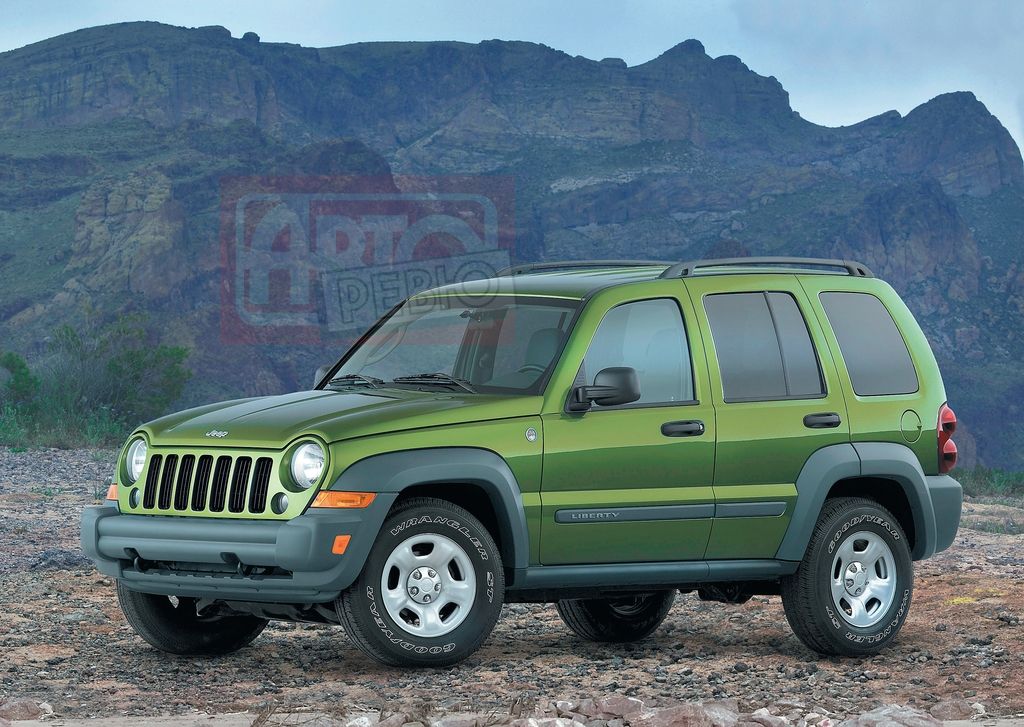 | 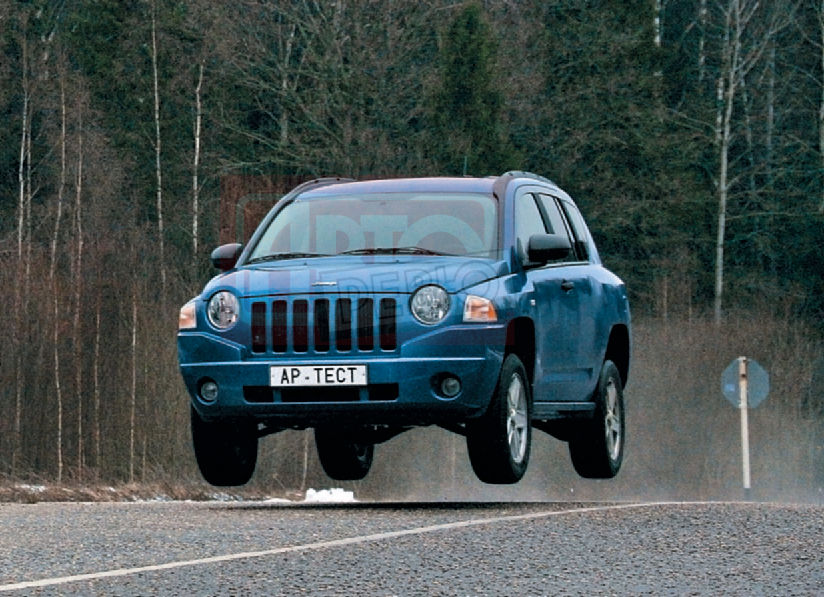 |
| Jeep Cherokee 2007 model year (in America — Jeep Liberty) | Jeep Compass |
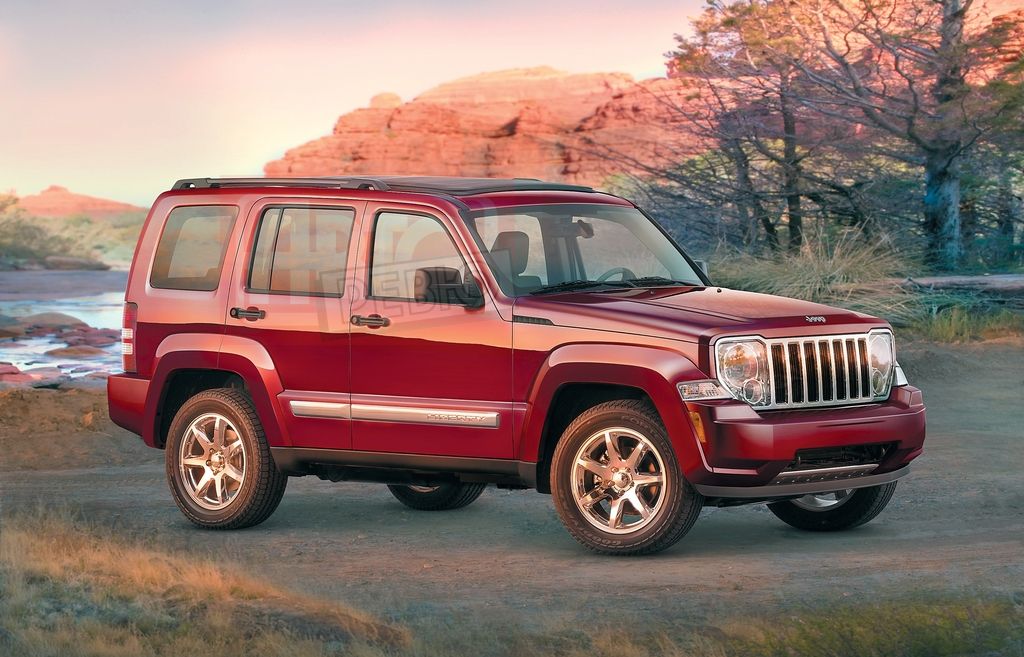 | 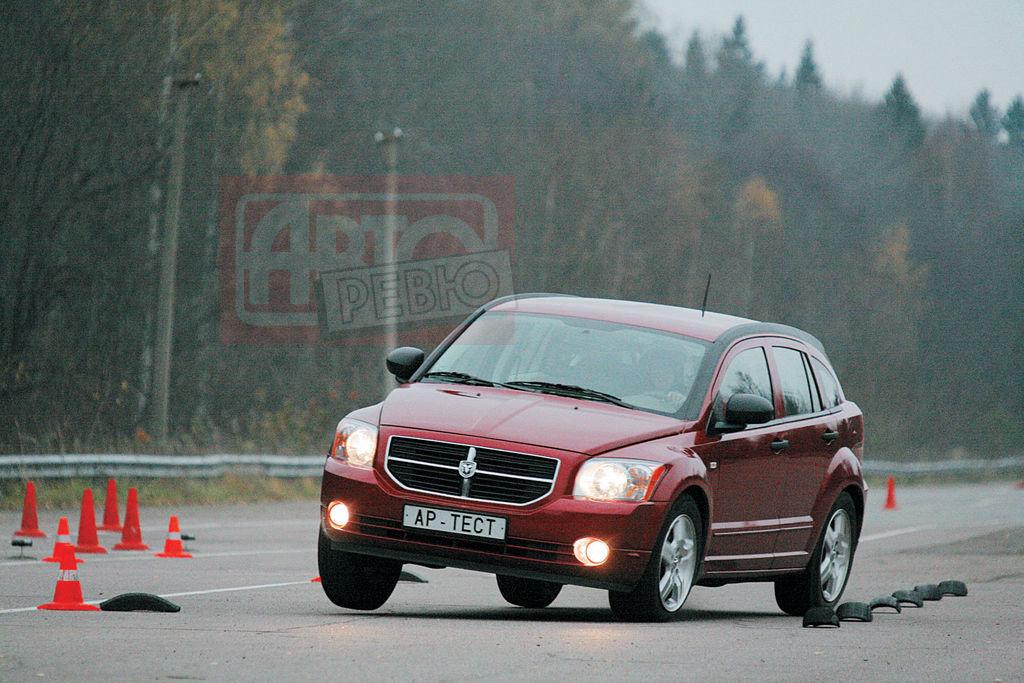 |
| The new Cherokee in America will be sold as Liberty | Dodge Caliber |
And in the States, under the name Liberty, our old acquaintance Jeep Cherokee is sold. This is a completely different car — a full-fledged SUV with honest all-wheel drive, a solid rear axle, and a gasoline "six" 3.7 L (214 hp) or a 2.8 L turbodiesel (163 hp). The Dodge Nitro, which we already have, is built on the extended platform of the current Cherokee/Liberty.
In the spring, a new generation Liberty was shown in New York — with a longer wheelbase, refined suspensions, and fresh design. Sales in America will begin in the fall, and it will reach us in the middle of next year already under the name Cherokee.