
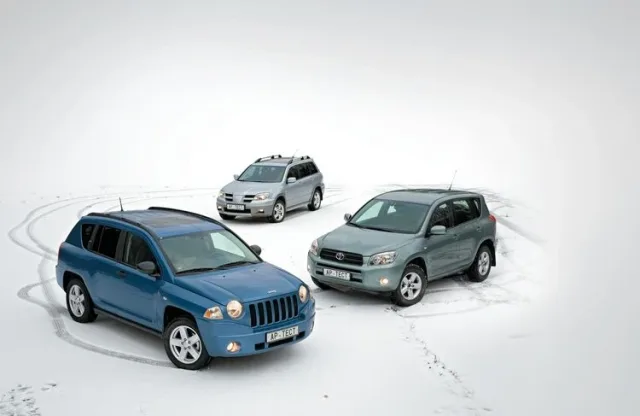
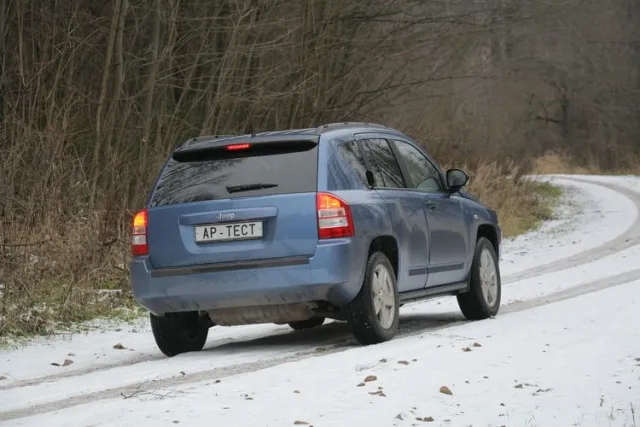
The Compass looks like a hamster that has overeaten again and now painfully regrets it. The swollen wheel arches and rough front bumper give no hint of aggression or elegance. The rear door handles hidden in the pillars Alfa Romeo-style don't add dynamism either. And the headlight-eyes read longing. In person, the Compass is certainly prettier than in photos, but the question remains: why did you overeat so much, Jeep?
Inside, it's more interesting. The angular front panel, assembled as if from separate blocks, references large SUVs, but even more so — the related Dodge Caliber. True, if the Caliber's instruments are recessed into deep wells, here it's a regular panel with dials that, admittedly, aren't very readable. Instead of a double glove box, there's a small "glovebox" and an open shelf. Assembly raises no complaints, but the plastic is quite simple — you realize this every time you grab the door handle or turn the heater knobs. Still, we liked the driver's seat in the Jeep: a comfortable chair, a huge range of longitudinal adjustments. You can sit comfortably, even though the steering wheel only adjusts for height. The seating position is high, almost like in the RAV4. But visibility let us down: headrests constantly loom in the interior mirror, blocking the glass, and massive pillars get in the way at the front.
Alas, the Jeep Compass doesn't like active driving: it rocks, gets off track in corners, and ESP engages with noticeable delay
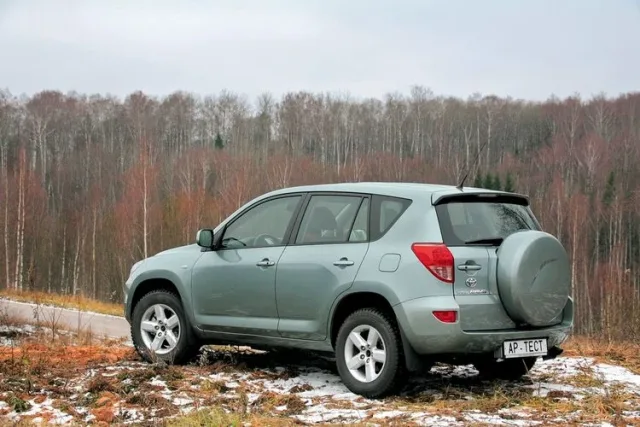
Outside, the Toyota RAV4 looks livelier. This car is also hard to accuse of dystrophy, but its fullness rather adds solidity and respect than pity. Inside, the RAV4 is also good: a two-tier front panel, perfectly readable optitronic instruments. The main thing is that all systems are convenient to use: whether it's the audio system with a six-disc changer or climate control with separate temperature settings for driver and passenger. It's a pity they saved on plastic here too: the flimsy lid of the passenger's upper "glovebox" rattles on bumps. But the Toyota has the most comfortable steering wheel and good seats — except that drivers over 190 cm will be a bit cramped. And there are no complaints about visibility at all.
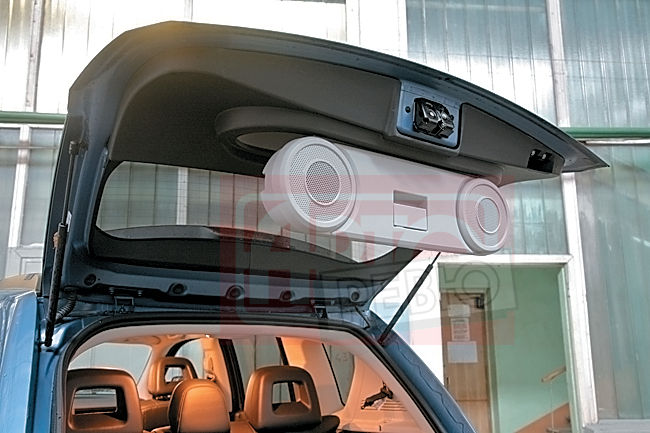 | 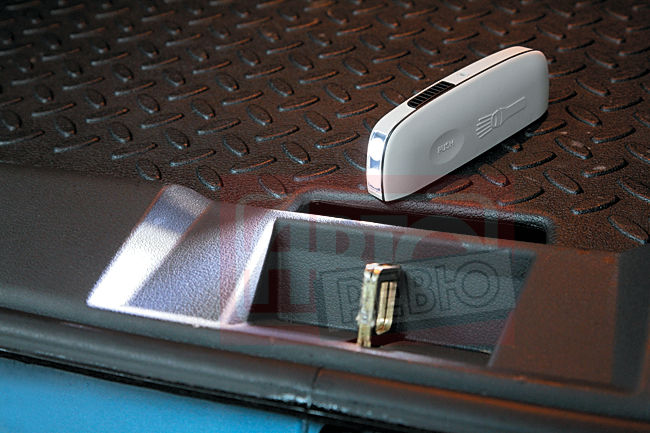 | |
| Folding speakers in the fifth door — like the Caliber's | Dual-mode flashlight — a removable part of the ceiling lamp, in whose housing (on the right) it charges | |
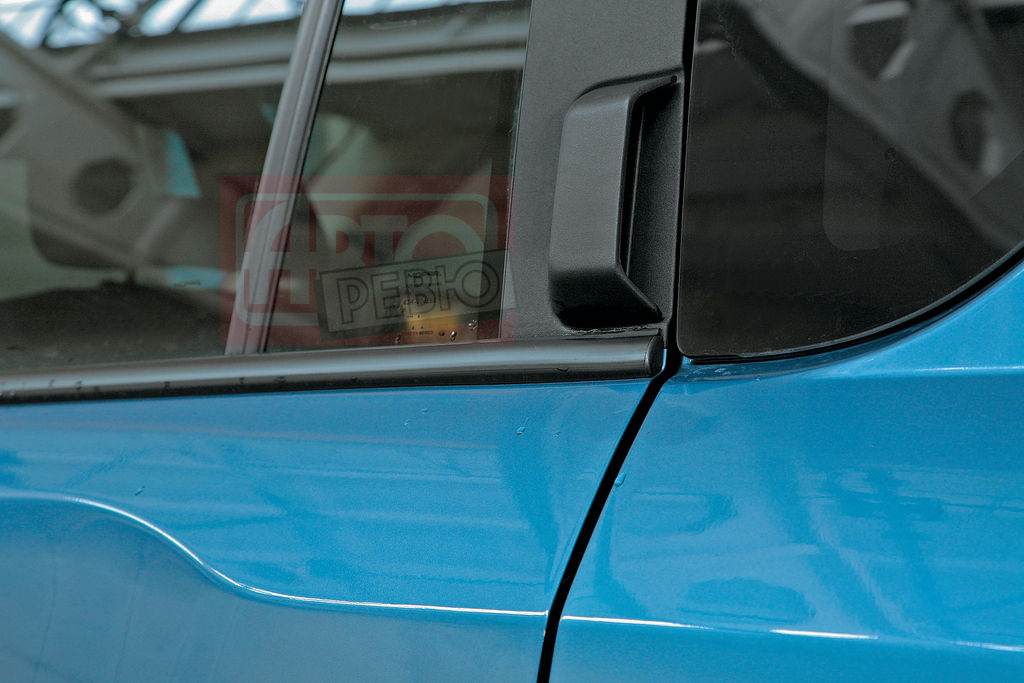 | 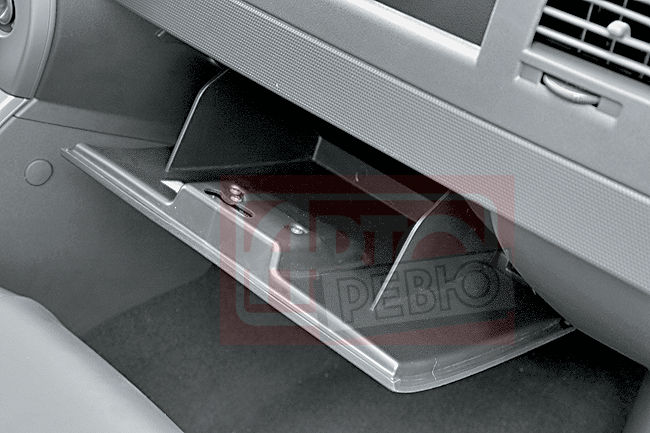 | 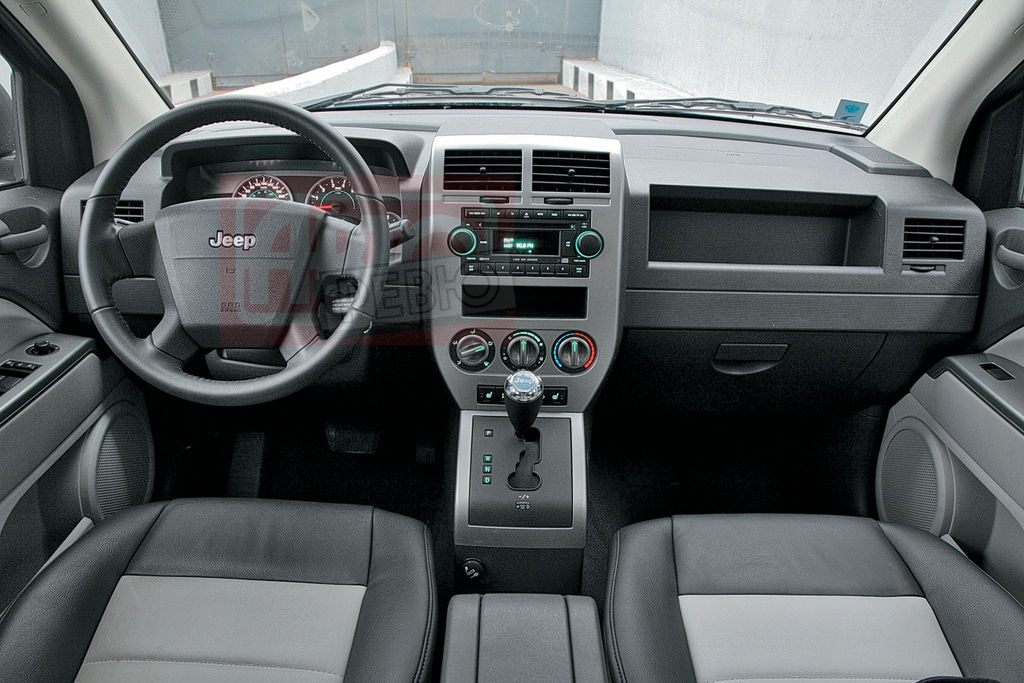 |
| Door handle — Alfa Romeo style | The "glovebox" is a bit narrow | As in the Caliber, the "square" interior is made of simple plastic |
The Mitsubishi Outlander looks more like a regular station wagon than the others, and inside you sit as in a passenger car. Comfortable seats with pronounced lateral support, stylish instruments recessed to the bottom of the wells, simple and clear climate control. Cons: limited range of longitudinal adjustment of the driver's seat (people over 185 cm are already cramped), too massive front pillars that impair visibility, and a traditional Mitsubishi problem — the absence of a standard radio even in the most expensive trim!
The rear seats in all crossovers are similar. Seat backs fold in parts and adjust for angle, but only on the Toyota can parts of the rear sofa be moved to increase the trunk, and only on the Compass does the front passenger seat back fold forward.
| Jeep Compass | Mitsubishi Outlander | Toyota RAV4 |
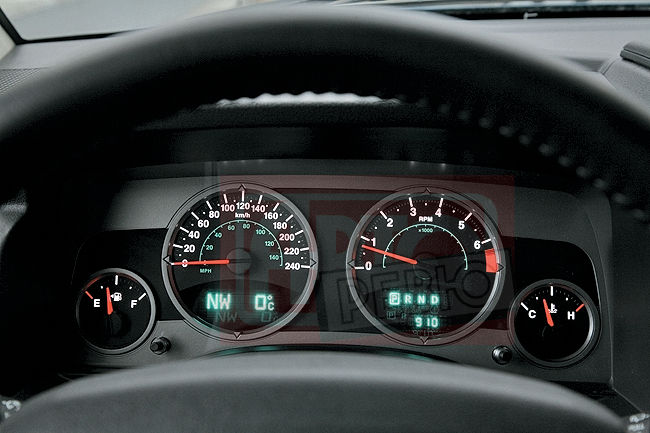 | 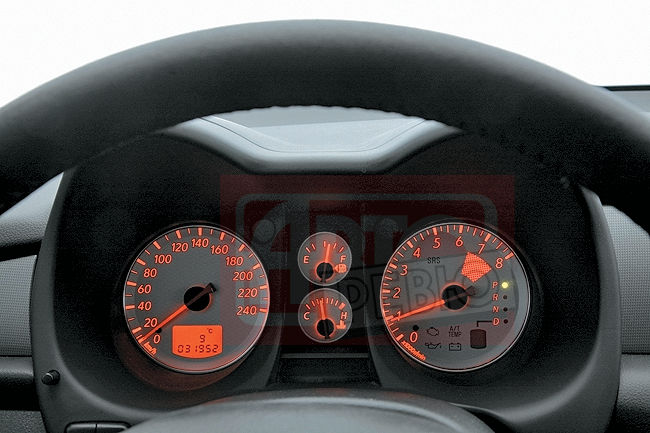 | 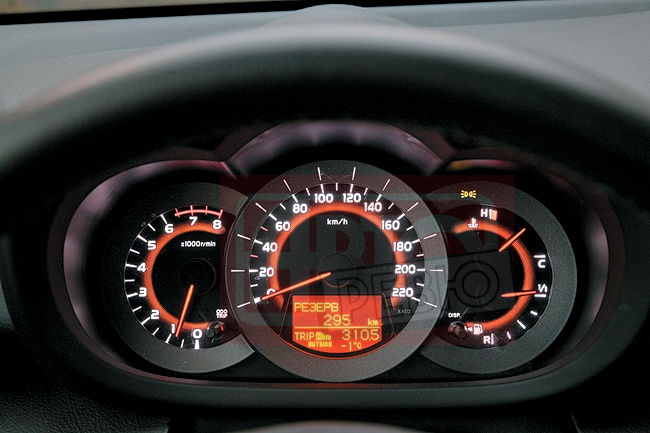 |
| The Compass's dials are simple and not very informative, Mitsubishi's stylish instruments read better, and the most informative are the RAV4's optitronic scales. It's just a pity that the Toyota doesn't have transmission mode indicators | ||
In terms of rear seating comfort, availability of armrests and pockets for small items, the Mitsubishi leads. The RAV4 is also comfortable to sit in, but there's slightly less legroom than in rivals. The Compass has too high a threshold, and the backrest has not the most successful profile and lacks an armrest.
The most spacious trunk is the Compass's — 643 liters. It's also the most "multifunctional": as in the Dodge Caliber, there are folding speakers in the fifth door and a lighting lamp with a removable flashlight. True, it's more convenient to load the RAV4 — it has the lowest loading height, comparable capacity (586 liters), and in the "underground" instead of a "spare tire" there are three separate sections (the "spare tire" itself hangs on the door). The Mitsubishi's trunk is shallow (420 liters), and the threshold is the highest.
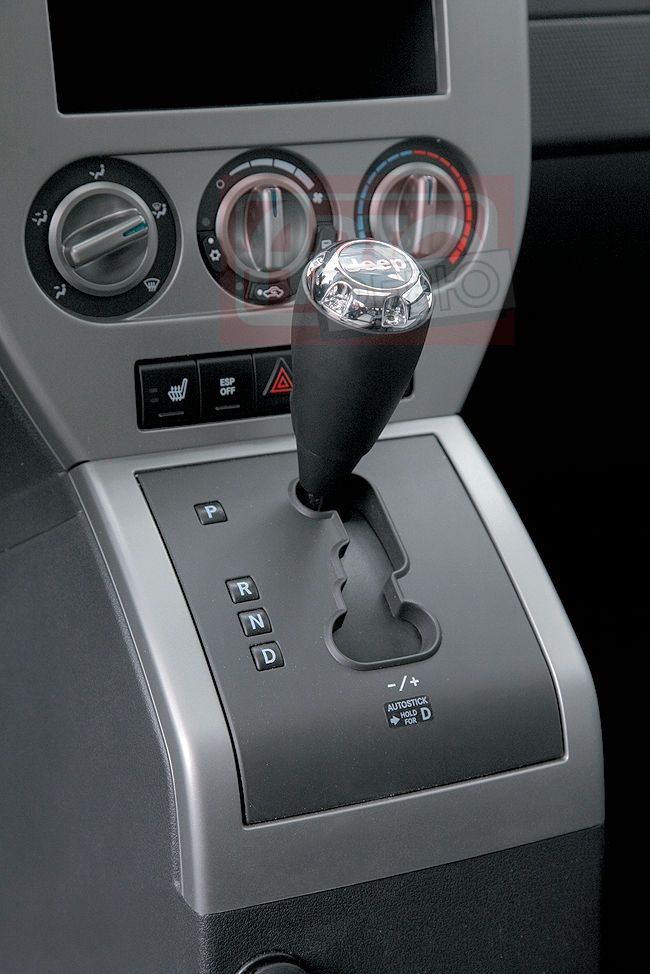 | 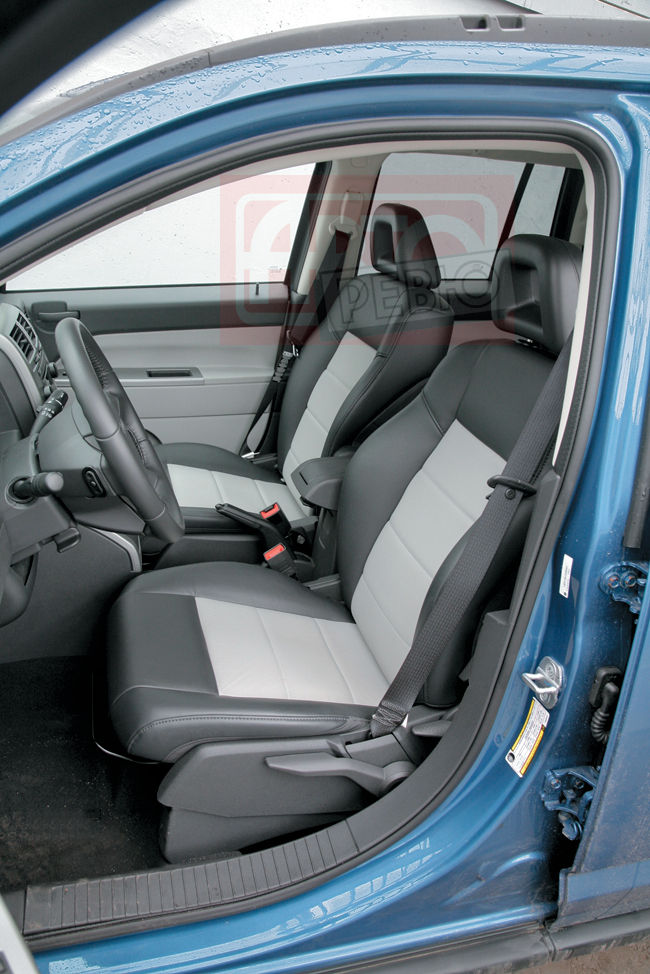 | 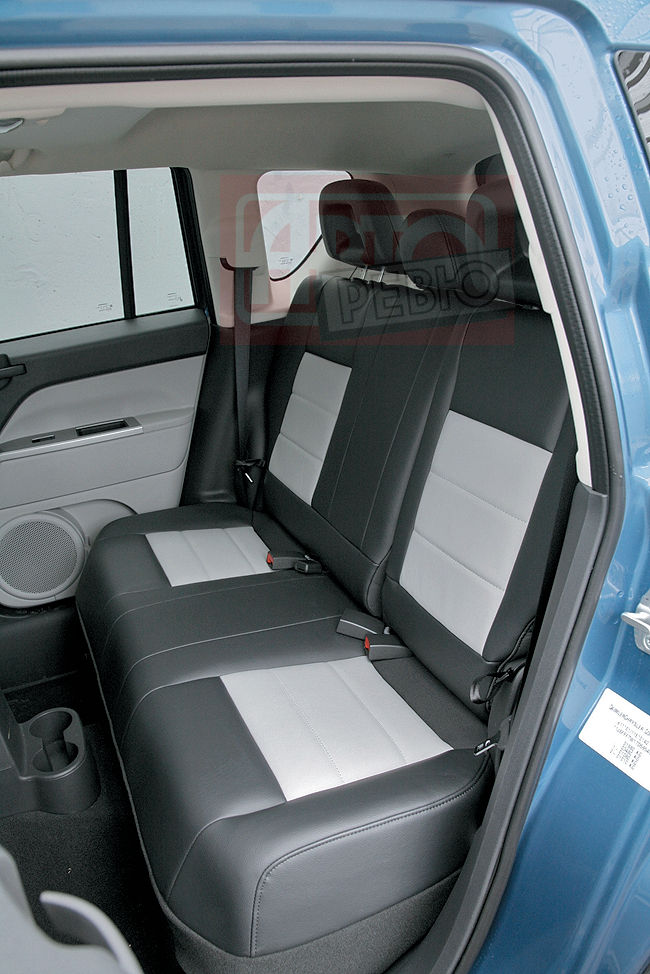 |
| CVT2 variator — with an excellently working manual mode | The Jeep Compass pleased with the most comfortable driver's seat… | …but upset with rear discomfort: high threshold and flat seat without armrest |
And how are things on the road? The forces are almost equal. The most powerful is the Compass: its 2.4-liter engine works in pair with a CVT2 variator (like on the Caliber) and produces 172 hp. Next in terms of rated power is the Outlander with a four-speed "automatic" and sequential mode: 2.4 liters (160 hp). The Toyota RAV4 with a two-liter engine (152 hp) and a four-speed automatic transmission closes the trio.
The weather was capricious — sometimes rain, sometimes snow, but we still carried out acceleration dynamics measurements to understand the balance of power at least within this test. And here's what we got.
The fastest was the Jeep Compass: the tester managed to accelerate it to 179.1 km/h and win half a second over the second-place Mitsubishi in acceleration to 100: 11.5 versus 12.0 s. The Jeep also outperformed rivals in elasticity — the intensity of acceleration in certain speed ranges. But if we talk about sensations, accelerating on the Compass in the "automatic" mode of the variator is less convenient than on other cars: the engine reaches the limit of 6000 rpm at about 80 km/h and "hangs" on one droning note. But the manual mode of the variator, imitating fixed gears, is a completely different matter! In it, the transmission works much faster.
The Mitsubishi Outlander is the most "driver-oriented" car in the trio. But without the stability system, you can't relax
But most of all, we liked accelerating on the Mitsubishi: reactions to changes in fuel supply are always precise, and the "automatic" works quickly, smoothly, and predictably. Plus — an "honest" manual mode that doesn't allow arbitrary shifts either "up" or "down".
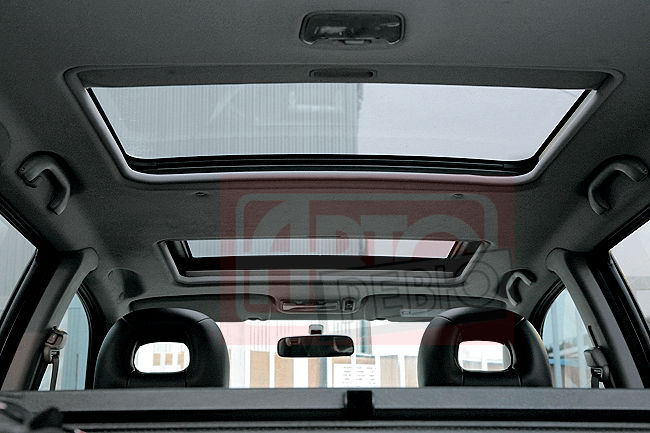 | 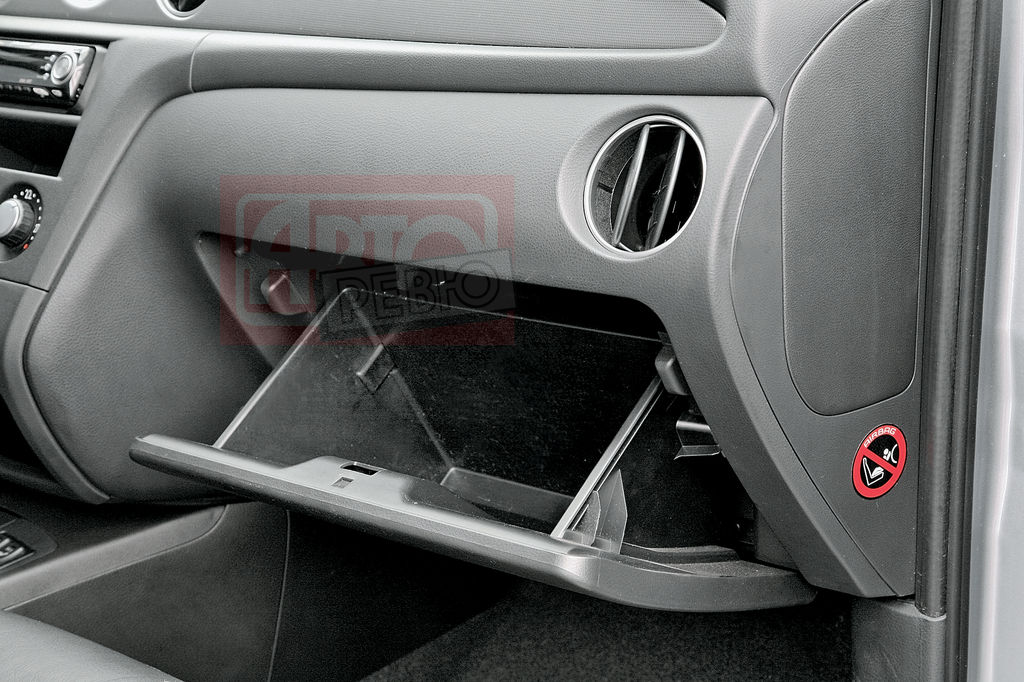 | 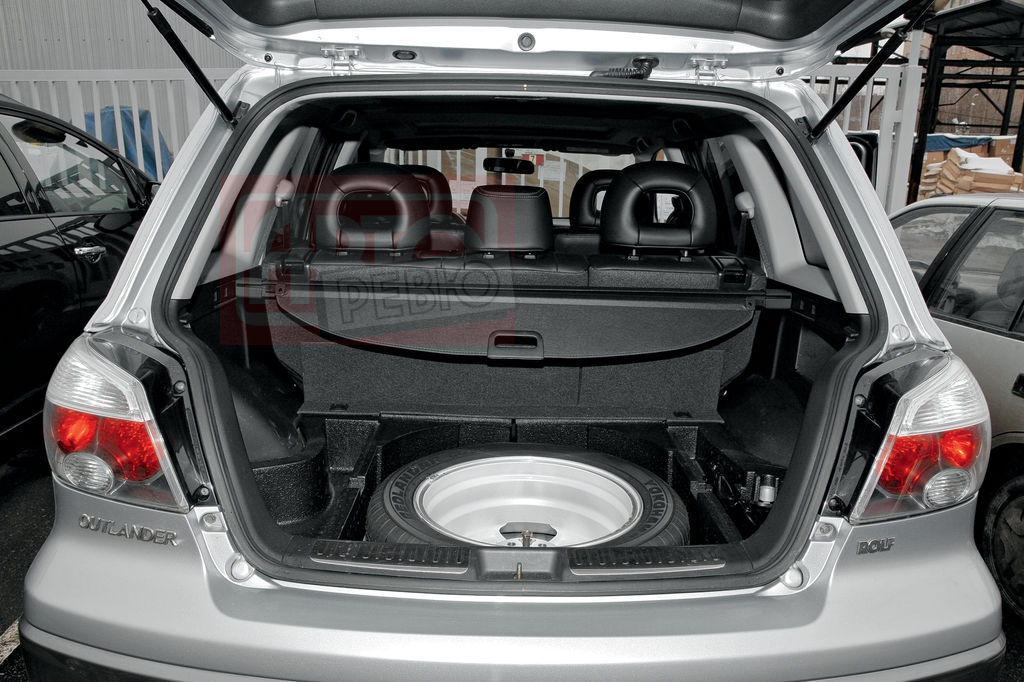 |
| In the top Instyle version — two sunroofs in the roof | One, but spacious "glovebox" | In the "underground" — a full-size "spare tire" |
The RAV4 was left behind not only because of the modest engine, but also because of the outdated "automatic", which sometimes noticeably hesitates. Moreover, the gas pedal here responds with excessive delay, although for calm driving this is not a problem.
But the brakes on the Toyota did not let us down. In this part, we did not take precise measurements (here the difference in tires matters more than during acceleration), but both during normal deceleration on flat asphalt and during hard braking on uneven surfaces, it is very easy to modulate the effort. The other cars also have their brakes in order, only the Outlander engages ABS too early, and the Compass loses braking control precision with repeated pedal applications.
| The rear seats in all cars fold in sections, and in the Toyota they also slide | ||
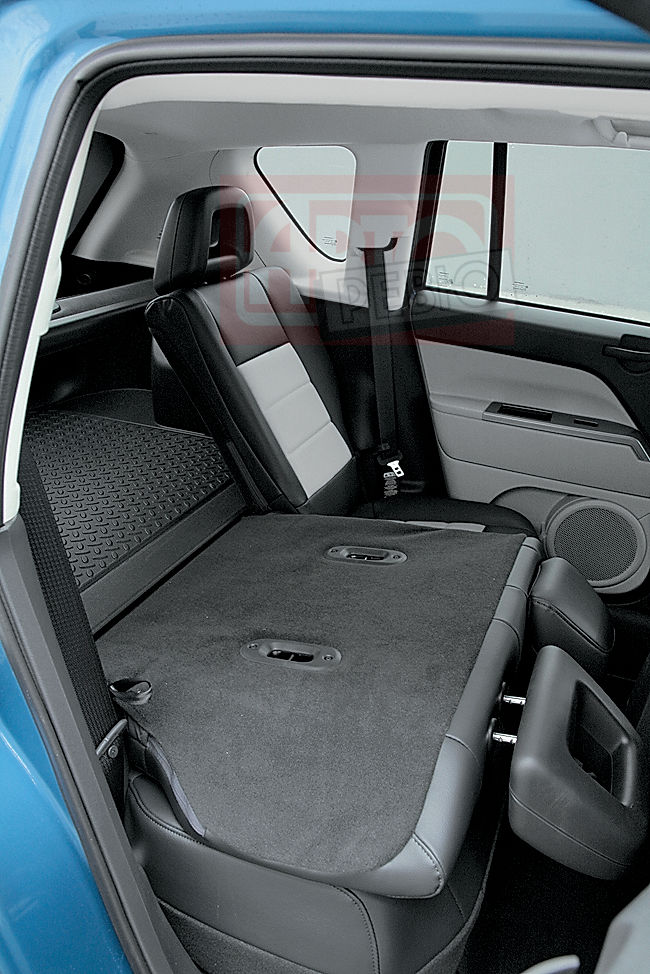 | 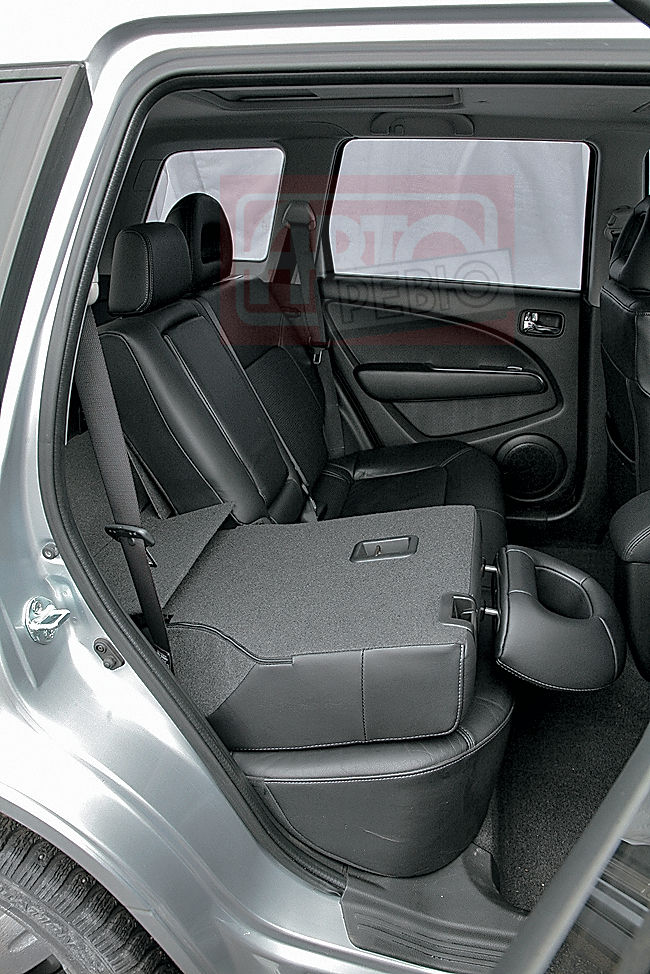 | 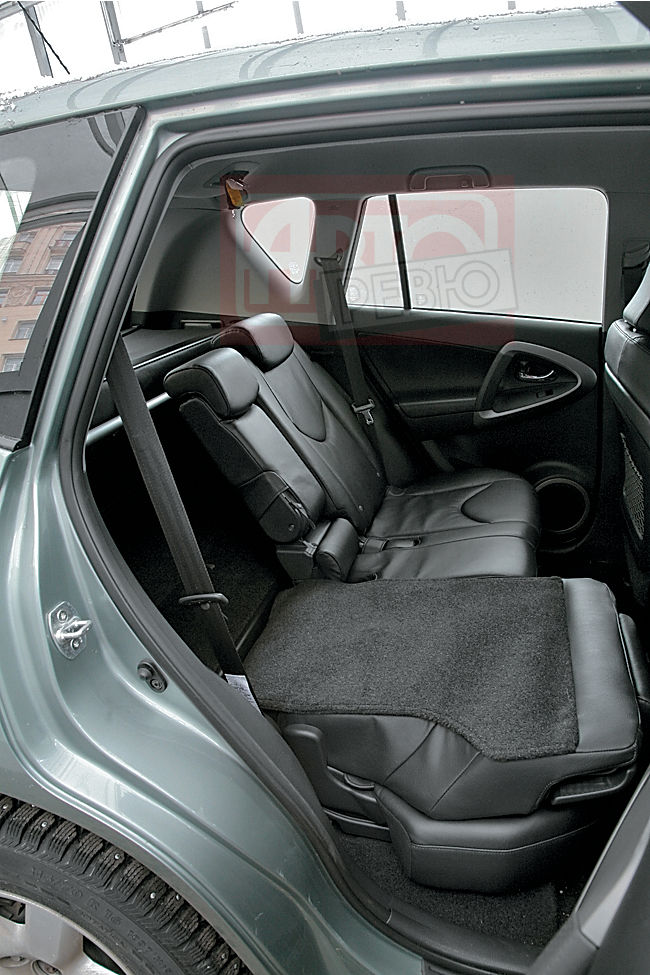 |
| Jeep Compass | Mitsubishi Outlander | Toyota RAV4 |
As for handling, for those who truly enjoy driving, the Mitsubishi Outlander is the undisputed leader here. When changing lanes, the car responds quickly and precisely, largely thanks to the excellent feedback from the steering wheel. In a corner, the Outlander follows the arc accurately, does not wander on bumps, and only shifts slightly if it hits sharp potholes. But there is one serious "but": we have repeatedly noticed its tendency to oversteer during sudden maneuvers. And it has no stability control system at all. This is dangerous.
The Toyota RAV4 is a triumph of modern technology! In addition to the always-on VSC stability control, it has Integrated Active Drive, which coordinates the stability control, all-wheel drive (by engaging and releasing the clutch), and the electric power steering, allowing corners to be taken at the highest possible speed. The electric power steering can also reduce the return force, helping the driver correct an incipient understeer in time. As a result, you can drive at the limit of its capabilities without much effort. But compared to the Mitsubishi, this "smart" Toyota feels more detached: steering responses are not as precise, and on wavy roads the car rocks from side to side and deviates from its course. Less fun—but more safety.
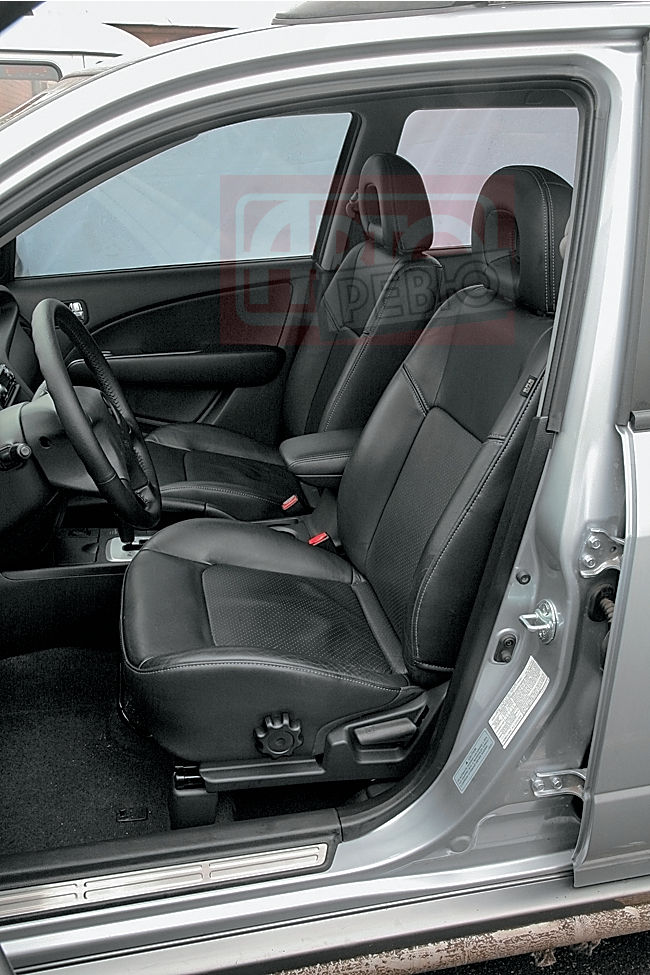 | 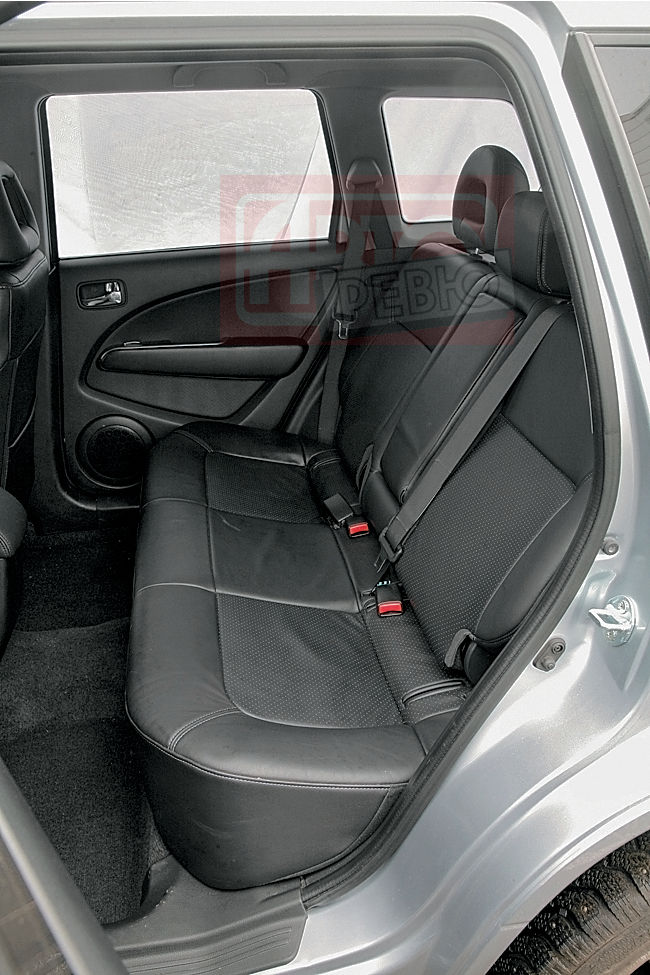 | 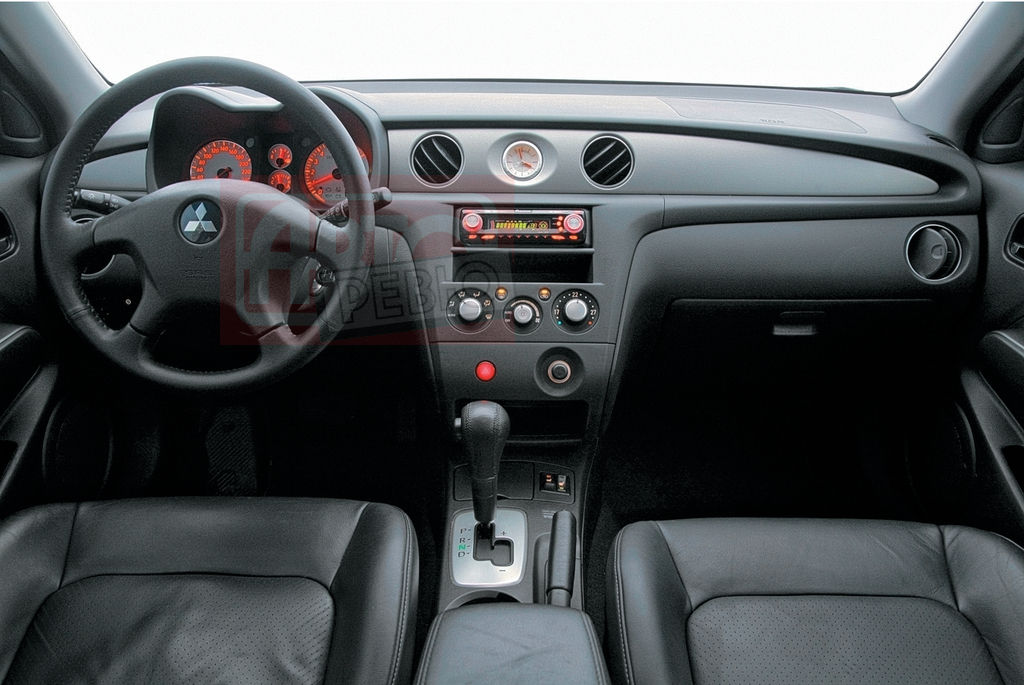 |
| Mitsubishi: hospitable seats with limited longitudinal adjustment range | The rear seats of the Mitsubishi are the most comfortable | Inside, the Outlander is good not for its style but for its functionality—except the steering wheel is a bit large |
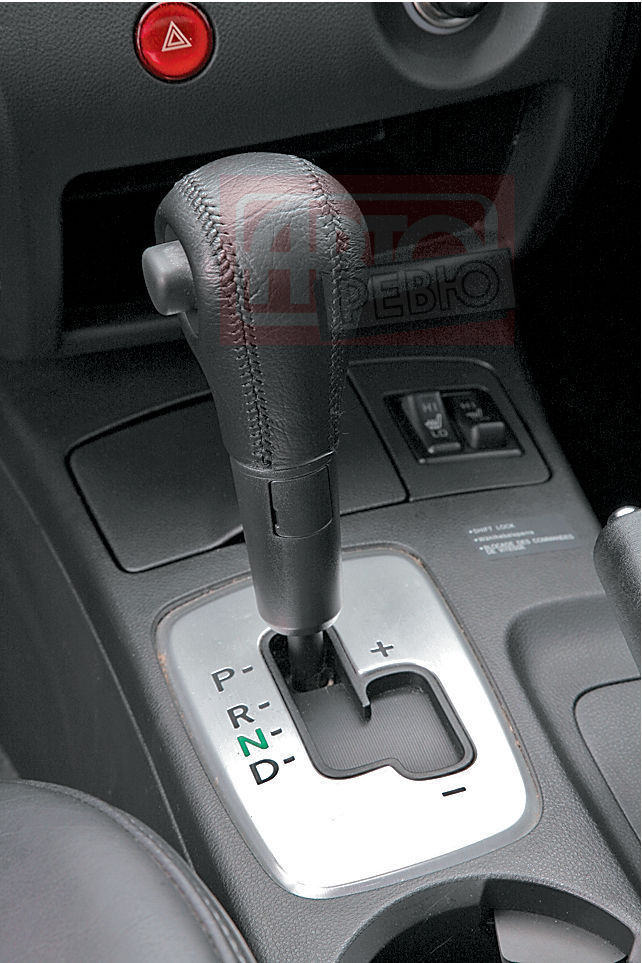 | ||
| The Mitsubishi has a flawless automatic transmission with a true manual mode | The clock is a stylish detail |
The Jeep Compass surpasses the Mitsubishi in only one thing: it has a stability control system. But it works terribly, allowing the car to slide outward with the front axle and being late to intervene during oversteer. For example, in the "moose test," the ESP only activates after the driver has already knocked down several cones. In corners, the Compass rocks the most diagonally, causing it to deviate from the intended line more than the others. And on straight roads, the lack of steering feel around the center is annoying.
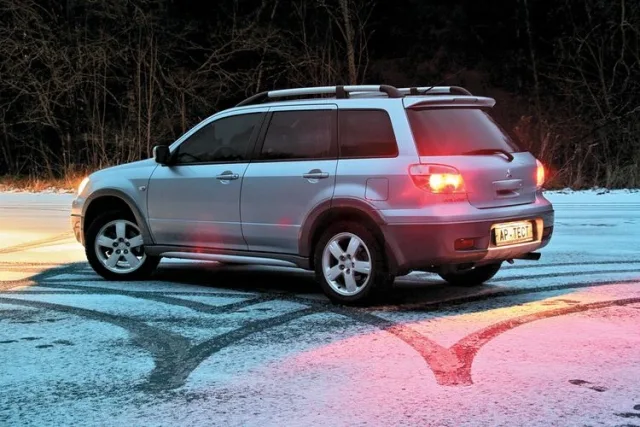
However, in terms of ride comfort, the Jeep Compass is simply the king. It absorbs both small and sharp bumps the softest, and rolls calmly over pavement waves. Moreover, the suspension is so energy-intensive that it easily handles... a jump from a ramp! Look at the photo: the takeoff speed is 105 km/h.
We know that the Outlander can also jump (see AR No. 11, 2003). But its suspension, while swallowing waves without issue, hits very hard on "ribbed" bumps: vibrations even reach the steering wheel and pedals.
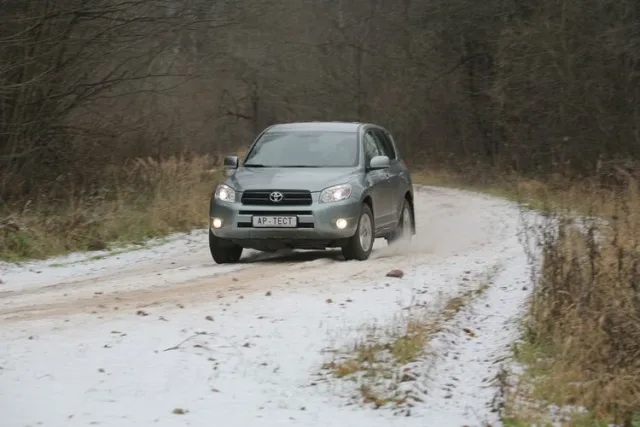
Thanks to the "advanced" stability control system, the Toyota RAV4 is the easiest car to drive, especially on slippery roads
The Toyota, on the other hand, comfortably crosses sharp joints but rocks on waves and transmits unpleasant impacts into the cabin. Additionally, vibration from unsprung masses is often felt.
Inside, the RAV4 and Outlander are significantly quieter than the Compass. In the Toyota, the engine is too intrusive when revved above 4000 rpm, and in the Mitsubishi, hard bumps are loudly transmitted. The Compass loses acoustically due to a monotonously droning engine and poor sound insulation: tires hum, sand drums on the wheel arches, and the suspension makes knocking noises.
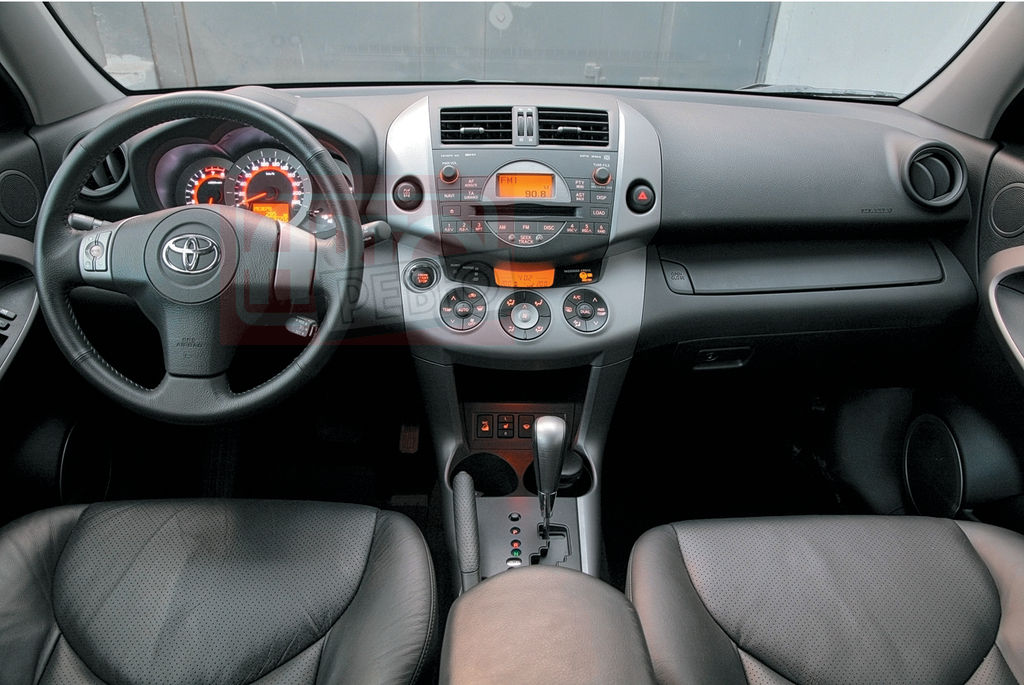 | 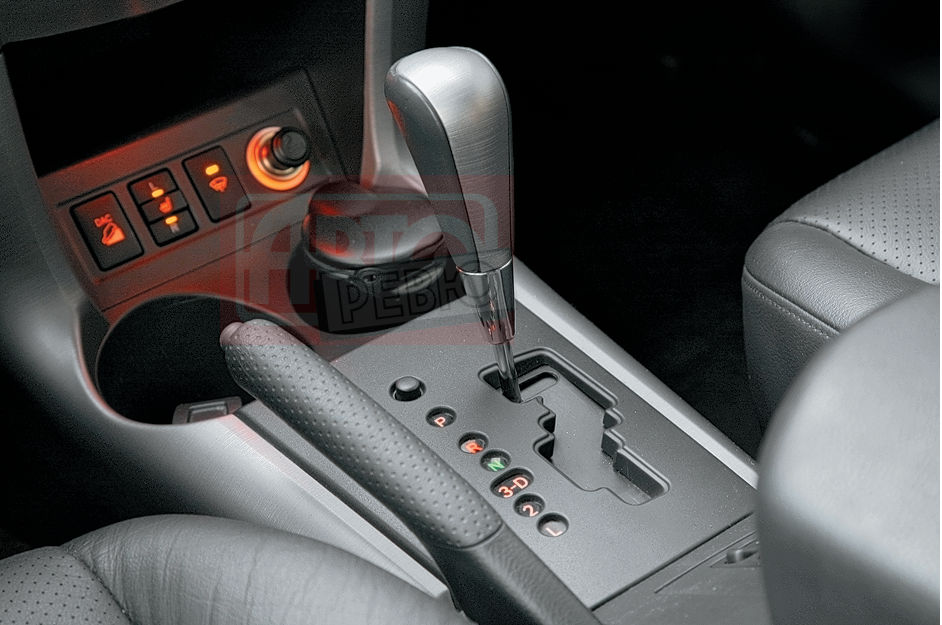 | 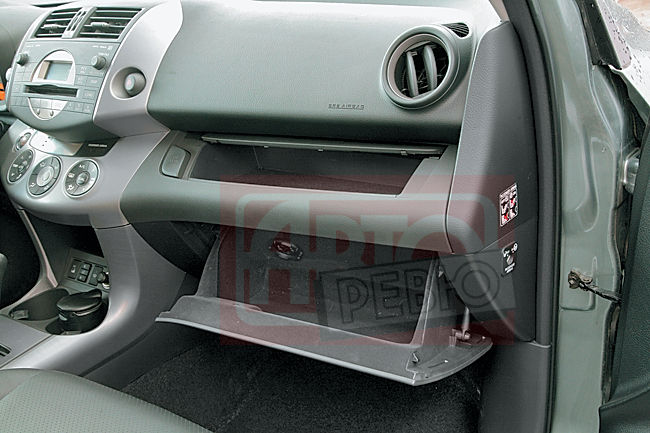 |
| The two-tier front panel is convenient and functional | The four-speed automatic in the RAV4 works smoothly but with some delays | Two glove boxes are convenient. But the flimsy upper lid rattles on bumps |
We did not venture into serious off-road without a real SUV, but we did drive through snowy virgin land. I remember last time (see AR No. 7, 2006), the Outlander with permanent all-wheel drive felt much more confident than the "Ravik" with an electromagnetic clutch on the rear axle. Then the Toyota was let down by the non-defeatable electronics: it braked the spinning wheels at the most inopportune moments and hindered getting out of simple situations, and when we trusted the automatic drive mode, the clutch overheated and shut off.
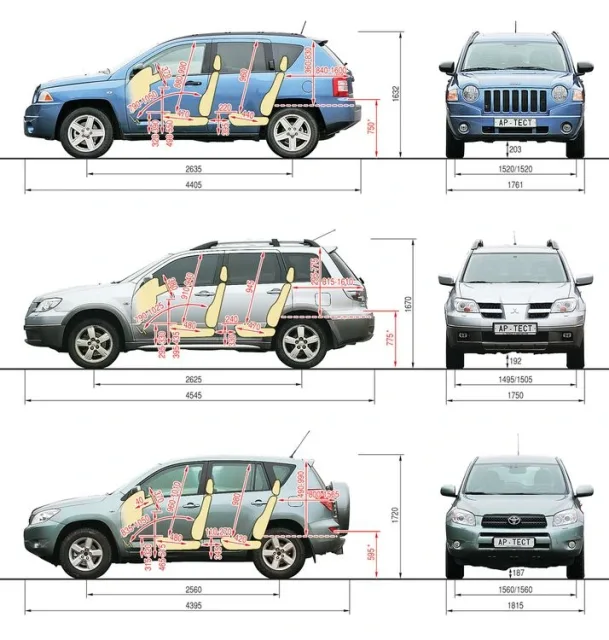
This time there was no extreme, but it seemed to us that the Compass is better prepared for off-road than the RAV4. First, its stability control can be completely turned off. Second, it has the largest ground clearance: 203 mm versus 192 mm for the Mitsubishi and 187 mm for the "Ravik." Third, the Jatco multi-plate clutch (the same as in the Toyota) has its own feature: it locks not only when the front wheels slip but also during sharp throttle application. Plus, the clutch can be locked manually—there is a separate lever for that. The only thing that alarmed us was that after several consecutive sharp starts, a smell of burnt clutch appeared in the cabin.
| Jeep Compass | Mitsubishi Outlander | Toyota RAV4 |
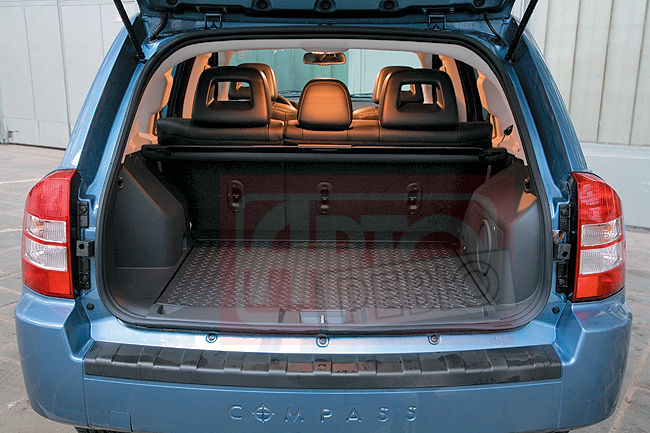 | 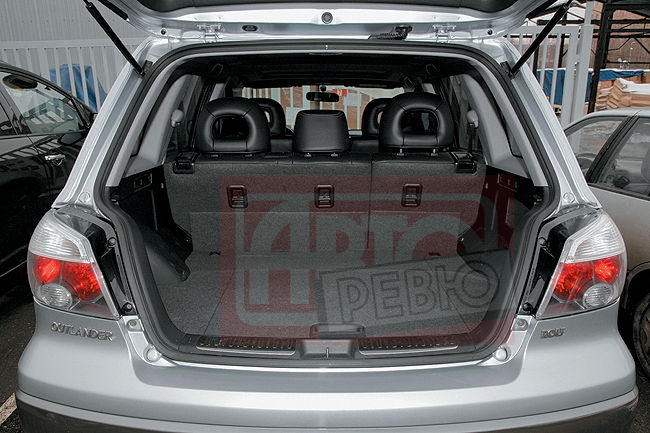 | 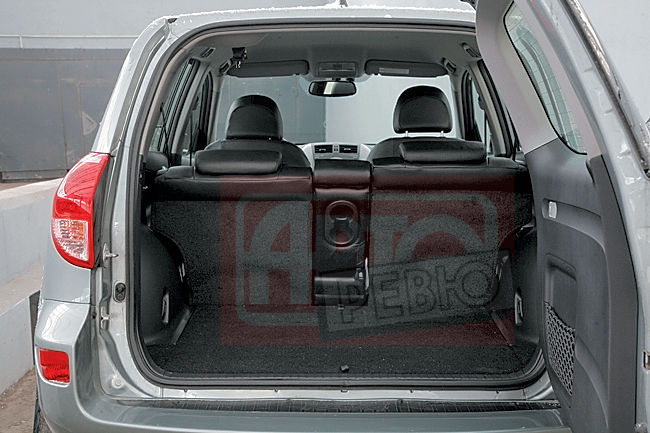 |
| The largest trunk is in the Compass (643 L). The Mitsubishi has the smallest trunk (420 L) and the highest load sill. The RAV4 has a larger compartment (586 L) and is more convenient to load—the rear seatbacks can be folded from the trunk | ||
Based on the sum of expert assessments, the Toyota RAV4 won a confident victory, already the second in our tests. Even though it has not a drop of excitement, in terms of overall comfort and active safety, the RAV4 is beyond competition.
If we talk about what will appeal most to different categories of drivers, the Mitsubishi Outlander is the choice for those who like sharper sensations behind the wheel: its handling is fine-tuned to the smallest detail. Price also plays in favor of this model—the base two-liter version is priced at $27,390.
The Jeep Compass in this comparison managed to clearly outpace competitors in only one thing—how softly it absorbs road irregularities. In all other disciplines, it proved to be either average or even lagging behind. It seems that pricing was also built with this in mind: the base Compass with the same two-liter engine costs $32,620, which is $1,630 more than the Mitsubishi with the 2.4 engine, but $880 less than the base RAV4. No surprises.
What costs how much?
Jeep Compass on the Russian market is offered exclusively with a four-cylinder 2.4-liter engine producing 172 hp. The starting price is $32,620, and for that money you get a car with a five-speed manual. The standard equipment list includes air conditioning, four airbags, a CD player stereo, heated mirrors, and fog lights. A continuously variable transmission (the only automatic option) will cost an extra $1,180. Two option packages are also available. The first, for $1,020, adds heated front seats and cruise control. The second, for $3,700, includes a CD changer, Boston Acoustics audio with six speakers, tire pressure sensors, and leather upholstery. Metallic paint will set you back another $470. You'll have to wait about two months for your ordered car.
The car warranty is two years with no mileage limit. Jeep sales are handled by 16 dealerships located in 10 Russian cities.
Mitsubishi Outlander in the base Invite trim is equipped with a 2.0-liter engine producing 136 hp and a manual transmission. The base price is $27,390, which includes a pair of airbags, air conditioning, audio system preparation, heated front seats, and fog lights. The next step is the Intense version with a 2.4-liter engine (160 hp) for $30,990, which already has climate control and side airbags. For a four-speed automatic, you need to pay an extra $1,260. The Intense+ version sells for $33,190, and it comes only with an automatic transmission; it can be distinguished by sporty exterior decor, similar touches in the cabin, and 17-inch wheels instead of 16-inch ones. In the top Instyle trim, leather upholstery and two sunroofs appear (the rear one is static), and the price rises to $35,690. The range is topped by the Outlander Turbo version for $38,090 — under its hood is a 2.0-liter turbo engine with 202 hp, paired with a manual gearbox. All modifications are available in dealer showrooms, except the Turbo — you'll have to wait about a month for it.
Warranty — 3 years or 100,000 km. Mitsubishi's dealer network includes 85 locations in 62 Russian cities.
Toyota RAV4 is sold here only with a 2.0-liter engine producing 152 hp. The base Luna version with a five-speed manual costs $33,500. It already includes seven airbags, climate control, leather-wrapped steering wheel, heated mirrors, and a CD player with a six-disc changer. The Luna Plus version with a four-speed automatic will cost $1,400 more. The top Sol version, among other things, has cruise control, light and rain sensors, and leather interior trim; the price is $38,400. You'll have to wait at least six months for an ordered car.
Warranty — 3 years or 100,000 km. Toyota sales are handled by 29 dealers in 17 Russian cities.
All-wheel drive: permanent or on-demand?
In the Jeep Compass, a multi-disc clutch with electronic control is responsible for transmitting torque to the rear axle. It can lock either fully or partially when the front wheels start to slip. Additionally, the clutch engages on sharp throttle application to prevent the front wheels from breaking traction due to excess torque — this helps on slippery surfaces and sand. If needed, the clutch can be locked manually — there's a special lever on the center console for that.
The Toyota RAV4 also has an electronically controlled multi-disc clutch that operates automatically and redistributes torque to the rear wheels as needed. The degree of locking depends not only on front wheel slip but also on signals from the stability control system — this achieves optimal torque distribution for maintaining directional stability. Off-road, at speeds up to 25 km/h, the clutch can be locked with the Lock button on the front panel.
But the Mitsubishi Outlander is the only test participant with permanent all-wheel drive. The center differential here is symmetrical, with a viscous coupling lock (locking degree — 10%). No additional transmission modes are provided.
Under impact
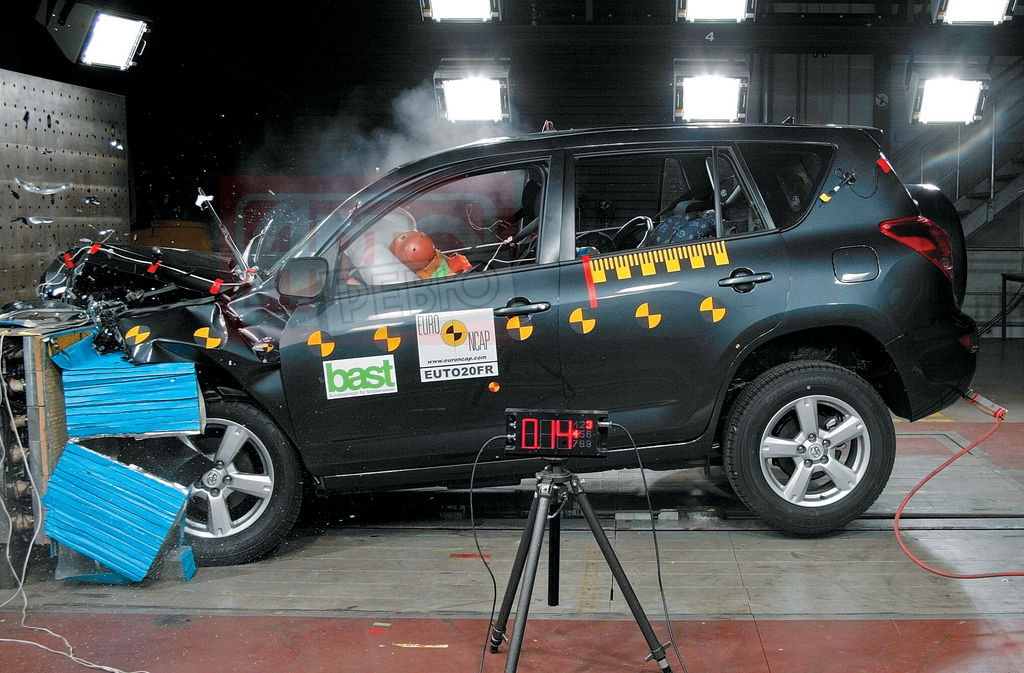 Of the three cars, only the Toyota RAV4 has undergone independent crash tests according to EuroNCAP methodology. And this exam was not without caveats. In a frontal impact, due to a malfunction in the auxiliary impact sensor circuit, the airbags deployed late. Toyota had to make design changes and provide a second vehicle for retesting. This time the airbags worked properly, but the driver's knee airbag failed: the dummy pierced it and hit the dashboard. Nevertheless, the result is quite decent — four stars out of five. Protection for child passengers was also rated well, with a one-and-a-half-year-old child being slightly better protected than a three-year-old. Pedestrian safety — three stars out of four (a higher rating was prevented by the stiff hood edge), which is also very respectable for a crossover.
The Jeep Compass and Mitsubishi Outlander were tested according to the rules of the American National Highway Traffic Safety Administration (NHTSA). Both passed the frontal crash test (impact into a concrete wall at 56 km/h) with a "four." In the side impact, the Compass earned an "excellent," while the Outlander received four stars for rear passenger protection — due to the lack of a side curtain airbag. The Americans also assessed these cars' rollover resistance: Jeep — four stars, Mitsubishi — three out of five.
"Moose test": elimination game
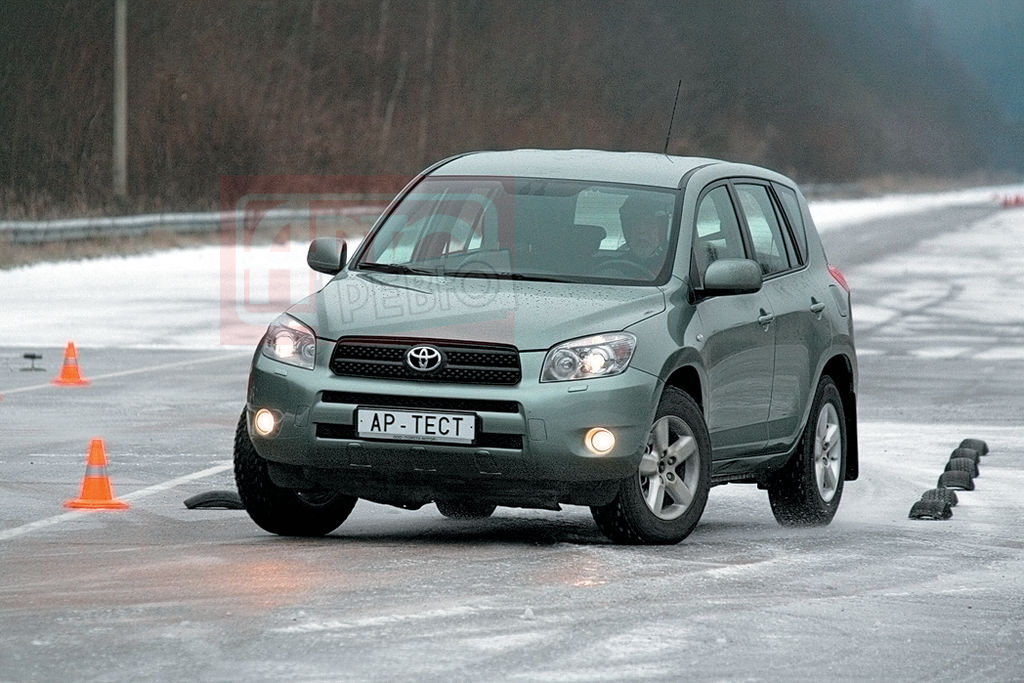 We've never conducted a "moose test" in winter before: the surface is too unstable, and it gets polished literally before your eyes. But this time we decided to take a risk, using a new, specially developed algorithm. The idea is that instead of multiple attempts on each car to find the maximum speed, experts pre-assigned a specific "approach" speed for each run and gave the car one attempt. If the car failed the maneuver, it was eliminated from further competition. The remaining participants continued the competition, but at a different speed, which could be adjusted depending on the surface condition — either up or down. That's how the elimination game turned out.
Here's how it all went.

The first to fail the test was the Outlander: it has no stability control, and even an experienced tester couldn't tame the slides. The second to be eliminated was the Compass — its sluggish stability control system didn't intervene in time. The winner was the RAV4: its "smart" systems not only helped dampen slides but also reduced speed, giving the driver extra moments to make the right decision.
Light output
Night photography of cars from a single point allows assessing headlight effectiveness. The best low beam was found in the Jeep and Mitsubishi — a pedestrian on the roadside is clearly visible from both 65 and 80 meters. Moreover, the Compass's headlights cover a slightly wider area. But the RAV4's low beam disappointed: from 65 meters, a person on the roadside is barely visible, and from 80 meters — indistinguishable. However, the high beam in the Toyota, as well as in the Mitsubishi, is simply excellent. The Jeep Compass's headlights shine slightly worse into the distance.
During photo shooting, only the driver was in the cars, with headlight adjusters in the zero position.
| Jeep Compass | Mitsubishi Outlander | Toyota RAV4 |
| Low beam. Pedestrian standing on the roadside 65 meters from the car | ||
| Low beam. Pedestrian standing on the roadside 80 meters from the car | ||
| High beam. Pedestrian standing in the center 160 meters from the car | ||
Autoreview readers' forecast
Before this comparative test began, we asked visitors to our website www.autoreview.ru to choose a favorite among the three participants.
The votes were distributed as follows:
Toyota RAV4 69.67%
Mitsubishi Outlander 20.79%
Jeep Compass 9.54%
A total of 6,851 people took part in the survey
Acceleration graphs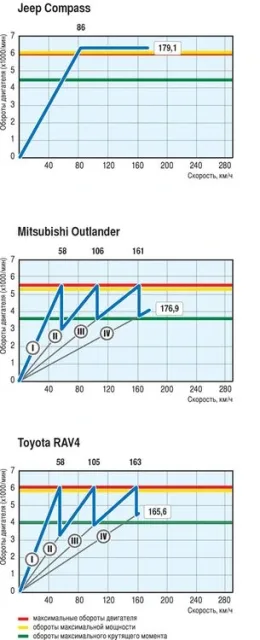 |
Autoreview measurement results
|
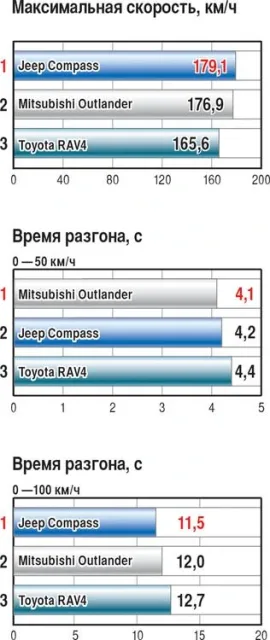
| Some measurement results from Autoreview | ||||
| Parameters | Vehicles | |||
| Jeep Compass | Mitsubishi Outlander | Toyota RAV4 | ||
| Maximum speed, km/h | 179.1 | 176.9 | 165.6 | |
| Acceleration time, s | 0-50 km/h | 4.2 | 4.1 | 4.4 |
| 0-100 km/h | 11.5 | 12.0 | 12.7 | |
| 0-150 km/h | 28.5 | 29.6 | 32.7 | |
| over 400 m | 18.1 | 18.4 | 18.8 | |
| over 1000 m | 33.2 | 33.7 | 34.5 | |
| 60-100 km/h (D) | 6.9 | 7.2 | 8.1 | |
| 80-120 km/h (D) | 8.6 | 9.7 | 10.5 | |
| Coast-down, m | from 50 km/h | 416 | 546 | 542 |
| 130-80 km/h | 800 | 867 | 803 | |
| 160-80 km/h | 1195 | 1316 | - | |
| Expert assessments from Autoreview | ||||
| Assessed parameters | Max. score | Vehicles | ||
| Jeep Compass | Mitsubishi Outlander | Toyota RAV4 | ||
| Design | 160 | 115 | 120 | 135 |
| Exterior | 80 | 55 | 60 | 65 |
| Interior | 80 | 60 | 60 | 70 |
| Ergonomics | 160 | 135 | 135 | 145 |
| Driver's workplace | 80 | 70 | 65 | 70 |
| Visibility | 80 | 65 | 70 | 75 |
| Dynamics | 330 | 255 | 275 | 270 |
| Acceleration dynamics | 80 | 65 | 70 | 65 |
| Braking dynamics | 100 | 85 | 90 | 90 |
| Handling | 80 | 60 | 65 | 70 |
| Off-road capability | 70 | 45 | 50 | 45 |
| Ride comfort | 180 | 135 | 130 | 145 |
| Smoothness, vibration protection | 70 | 60 | 50 | 55 |
| Acoustic comfort | 60 | 40 | 45 | 50 |
| Climate control | 50 | 35 | 35 | 40 |
| Cabin comfort | 170 | 135 | 125 | 140 |
| Passenger seats | 70 | 55 | 60 | 55 |
| Trunk | 60 | 50 | 40 | 50 |
| Cabin transformation | 40 | 30 | 25 | 35 |
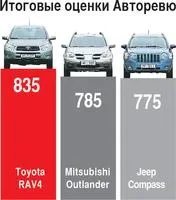
| Total score | 1000 | 775 | 785 | 835 |
| Cost of scheduled maintenance with consumables and parts* | ||||
| Scheduled maintenance | Vehicles | |||
| Jeep Compass | Mitsubishi Outlander | Toyota RAV4 | ||
| Standard hour | 60 | 55 | 60 | |
| Mileage, km | 5000 | 190 | 112 | - |
| 10000 | 280 | - | 162 | |
| 15000 | - | 243 | - | |
| 20000 | 206 | - | 311 | |
| 30000 | 280 | 374 | 162 | |
| 40000 | 206 | - | 608 | |
| 45000 | - | 255 | - | |
| 50000 | 487 | - | 162 | |
| 60000 | 206 | 637 | 311 | |
| 70000 | 280 | - | 162 | |
| 75000 | - | 262 | - | |
| 80000 | 206 | - | 994 | |
| 90000 | 524 | 786 | 162 | |
| Total | 2865 | 2669 | 3034 | |
| * Prices are in US dollars | ||||
| Approximate prices for original spare parts from Moscow dealers* | |||
| Spare parts | Vehicles | ||
| Jeep Compass | Mitsubishi Outlander | Toyota RAV4 | |
| Oil filter | 11 | 14 | 13 |
| Fuel filter | 370*** | 152 | 49 |
| Air filter | 25 | 81 | 24 |
| Spark plug | 4 | 41 | 18 |
| Front brake pads | 119 | 210 | 122 |
| Rear brake pads | 115 | 183 | 79 |
| Front shock absorber | 101 | 203 | 157 |
| Rear shock absorber | 67 | 170 | 157 |
| Front headlight | 281 | 636 | 394 |
| Rear taillight | n/a** | 239 | 156 |
| Front fender | n/a | 309 | 270 |
| Front bumper | 548 | 617 | 368 |
| Hood | n/a | 623 | 497 |
| Windshield | n/a | 493 | 376 |
| * Prices are in US dollars | |||
| ** N/a - not available | |||
| *** Complete with fuel pump | |||
Comparing crossovers with different characters is not an easy task. Each of the participants in this test has their own view of what a car for an active life should be. We took three popular models with petrol engines and automatic transmissions to understand which of them is better suited for the city, and which feels more confident off-road.
Jeep Compass from the very beginning attracts attention with its "off-road" image. It looks as if it is ready for serious adventures, and partly that is true. However, on asphalt its character manifests itself differently. The suspension collects small irregularities, and at speed you can feel that the car was created with an eye on American roads. In corners it rolls, and the steering wheel is not sharp, but on dirt roads and light off-road the Compass feels at home. Its all-wheel drive with a multi-disc clutch works clearly, and geometric cross-country capability pleases: the approach angle is 20.6 degrees, and the departure angle is 32.2. True, you have to pay for this with comfort: on a broken road the cabin shakes, and the noise insulation of the wheel arches leaves much to be desired.
Under the hood of the Compass is a 2.4-liter engine with 172 horsepower, which works in tandem with a CVT. This tandem provides smooth but not too dynamic acceleration: acceleration to 100 km/h takes 11.3 seconds. The CVT imitates the operation of "steps", but still creates a feeling of some thoughtfulness during overtaking. But fuel consumption in the combined cycle is 9.5 liters - a good indicator for such a car.
In the Compass cabin, utilitarian simplicity reigns. Trim materials are hard, but assembled solidly. The front seats are comfortable, but they lack lateral support. In the second row there is enough space, and the backrests of the sofa are adjustable in angle. The trunk volume of 643 liters is one of the most spacious in the test, and with the seats folded it grows to 1719 liters. However, in the base configuration, the Compass is deprived of many options that competitors already have, for example, side airbags and climate control.
Mitsubishi Outlander is the complete opposite of the Compass. It does not try to seem like a "real SUV", but focuses on comfort and handling on asphalt. The suspension here is energy-intensive, but at the same time perfectly swallows small joints and cracks. On the highway, the Outlander stands confidently, and the steering wheel is filled with pleasant effort. In corners it is collected and predictable, although not without rolls. Off-road, its capabilities are more modest than those of the Compass, but for a country road its capabilities are quite enough. Permanent all-wheel drive with a viscous coupling in the center differential works reliably and predictably.
The engine of the Outlander is a 2.4-liter, 160 horsepower. It works in tandem with a four-speed automatic, which, despite its age, acts quite briskly. Acceleration to 100 km/h is 11.2 seconds, which is comparable to the Compass. But fuel consumption in the city upsets: 13.8 liters per hundred - this is the highest indicator in the test. But on the highway, the Outlander is economical - 8 liters.
The Outlander's cabin is a model of functionality. It is spacious, bright, and comfortable. The driver's seating position is correct, and all controls are at hand. Rear passengers get adjustable seatback recline, and the seat itself can fold in a 40:20:40 split. The trunk volume is 420 liters, but it can be increased to 1100 liters if the seats are folded. The base version of the Outlander already includes climate control, heated front seats, and a leather steering wheel, but it lacks traction control and dynamic stability control, which is a serious drawback for a modern car.
The Toyota RAV4 is the "golden mean." It combines the comfort of the Outlander and the Compass's ability for light off-roading. The suspension here is slightly stiffer than the Outlander's, but it handles large bumps well. On the highway, the RAV4 is stable, and the steering is communicative. In corners, it doesn't lean as much as the Compass, but it's not as sharp as the Outlander. The all-wheel drive with a multi-plate clutch works effectively, and thanks to the non-switchable dynamic stability control system, the car remains safe even on slippery surfaces.
Under the RAV4's hood is a two-liter engine producing 152 horsepower. It's not as torquey as its competitors, but it is more economical. Acceleration to 100 km/h takes 12 seconds, which is the most modest figure in the test. However, in the city, the RAV4 feels lively, and on the highway, its capabilities are quite sufficient for confident overtaking. Fuel consumption in the combined cycle is 9 liters.
The RAV4's cabin is a model of ergonomics. Everything is thought out to the smallest detail, the trim materials are pleasant, and the assembly is flawless. The front seats are comfortable, with electric adjustment. The second row is spacious, and the seatbacks are adjustable for recline. The trunk is 586 liters, and with the seats folded, it expands to 1469 liters. The base RAV4 already includes a whole arsenal of safety systems, including side airbags, curtain airbags, and a driver's knee airbag. Also standard are dual-zone climate control, heated windshield, and power-folding mirrors.
As for speedometer accuracy, the Compass leads here, with readings almost matching the actual speed. The Outlander and RAV4 overstate readings, and this is especially noticeable in the Outlander: at 160 km/h on the speedometer, the actual speed is only 149 km/h.
In the end, each of the test participants is good in its own way. The Jeep Compass suits those who often leave the asphalt and are willing to put up with drawbacks for off-road potential. The Mitsubishi Outlander is a choice for those who value comfort and handling on asphalt. And the Toyota RAV4 is a versatile car that handles city commutes, country trips, and light off-roading equally well.