
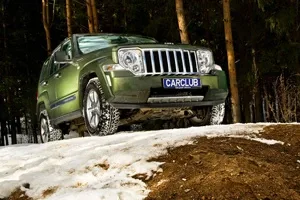
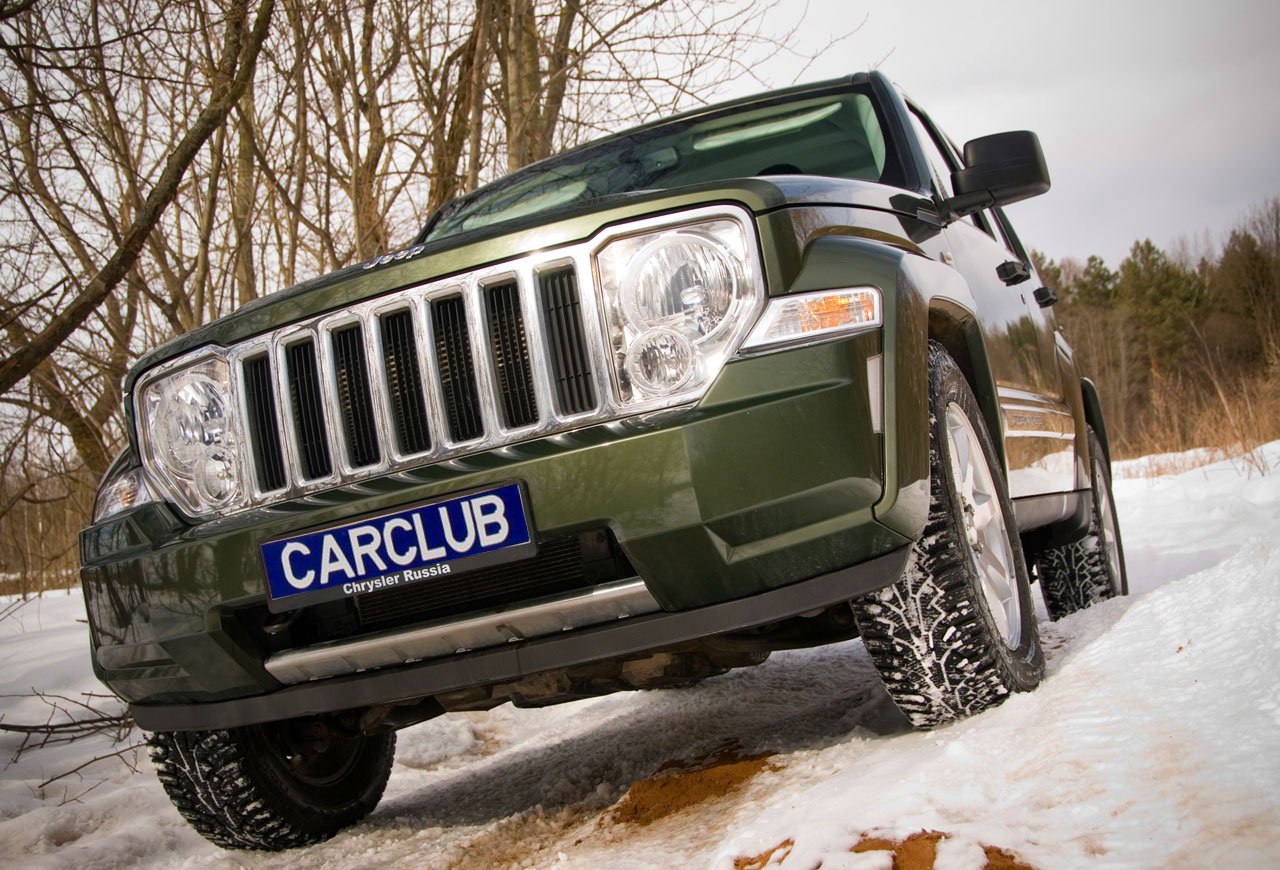
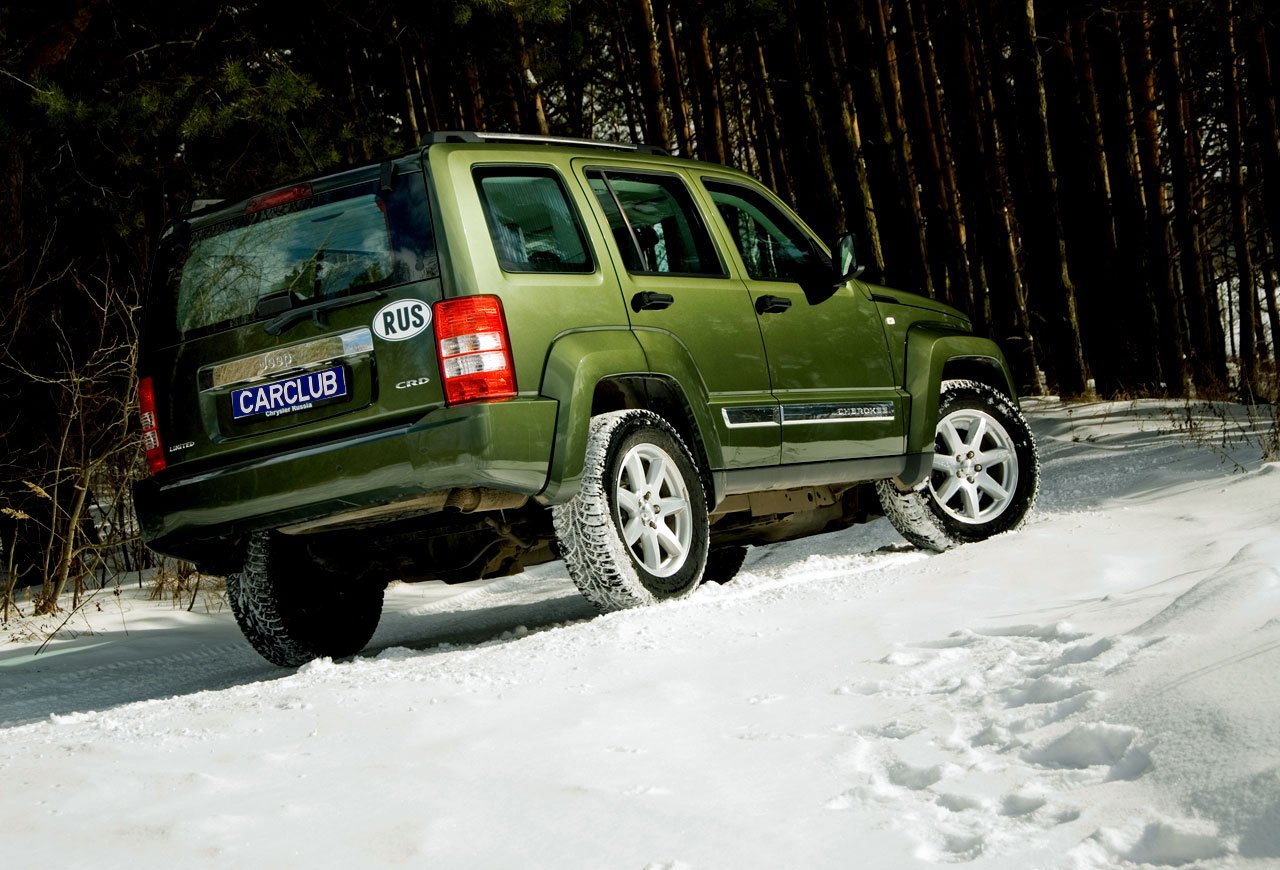
 While working on the new generation of the SUV, Chrysler engineers drew conclusions from previous mistakes — and the 2008 Jeep Cherokee returned to its design roots. The car acquired a chiseled body, the front optics became rectangular instead of round, and the round rear lights gave way to the familiar "bricks."Comments (2)
Jeep Cherokee — just say this name, and even a person far from the world of cars will immediately say: we are talking about the legendary American SUV. Over more than 35 years of the model's existence, the word Cherokee has become a household name. But the previous generation of the "Cherokee" deviated from the canons that had developed for this car over its long history: instead of straight lines, streamlined shapes appeared, the optics became rounded, and although the off-road potential remained high, many fans turned away from the "Wide One," never coming to terms with its controversial appearance.
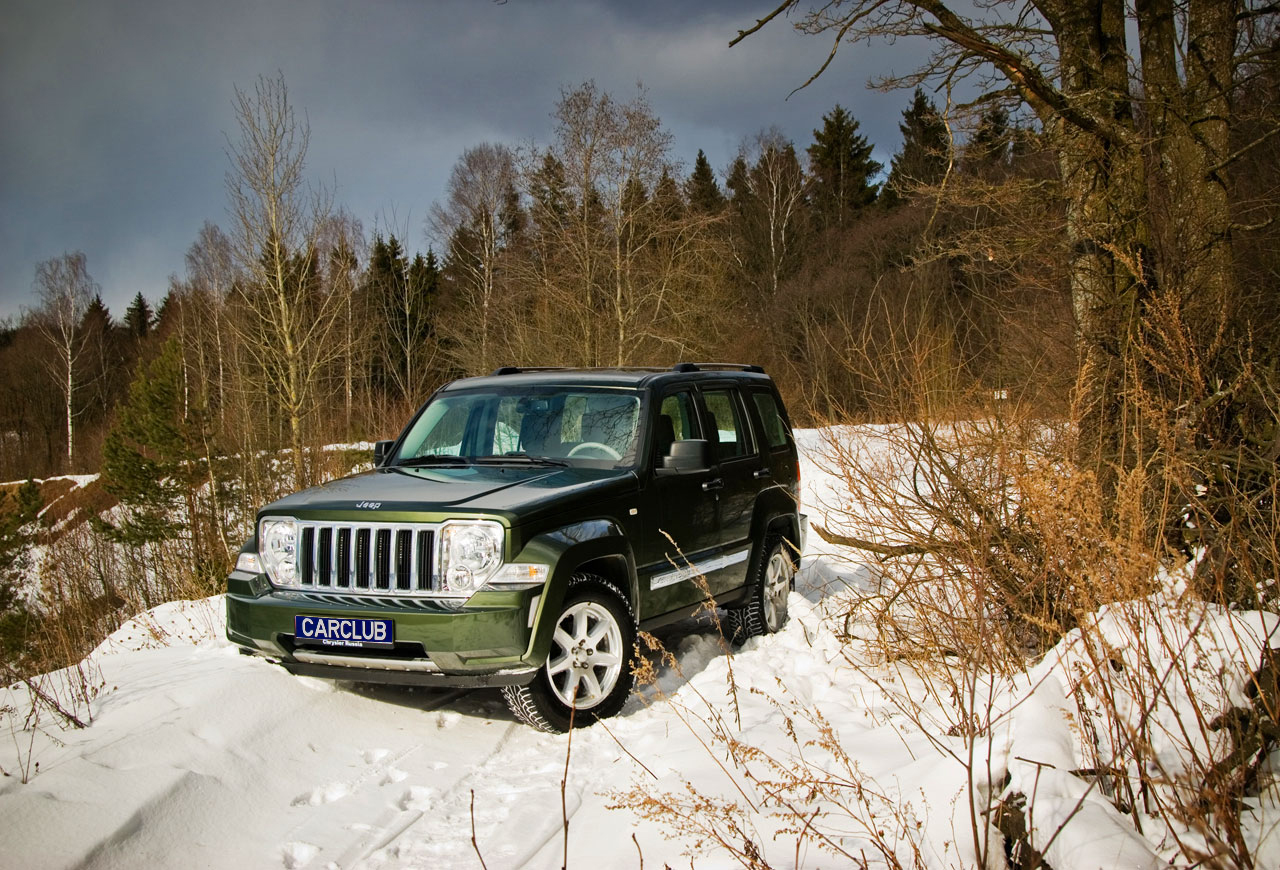 |
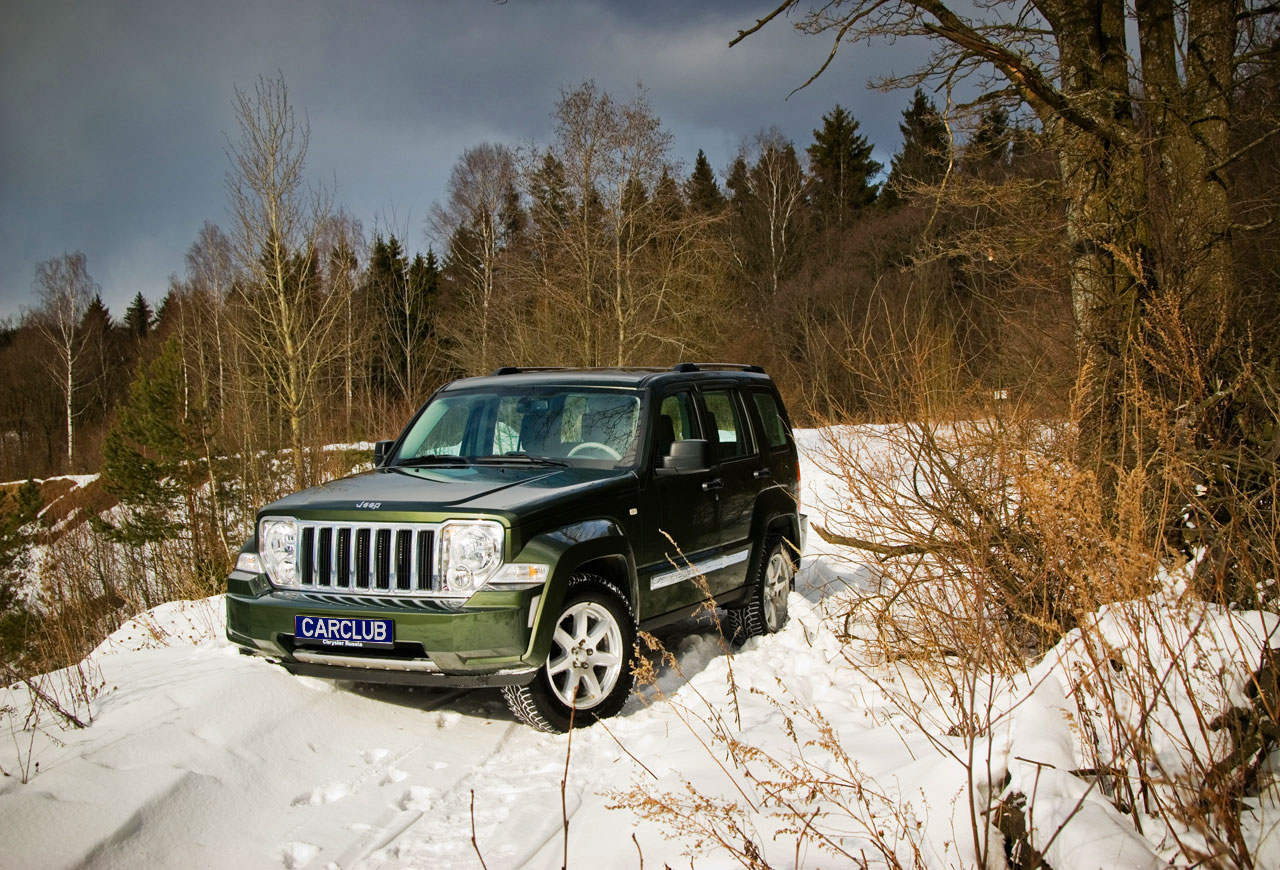
| In its new guise, the "Cherokee" has finally become itself. But unification makes itself known: someone will surely see in it a reduced Jeep Commander , and someone — Dodge Nitro , because Cherokee is built on the same platform. |
Now, in its new guise, Cherokee has found itself. However, unification takes its toll, so some will surely see in the new "Cherokee" a reduced copy of Jeep Commander , while others — Dodge Nitro , with which Cherokee shares not only the platform but also the assembly line at the plant in Toledo, Ohio.
However, the differences between Nitro and Cherokee are immediately apparent: the car with the bull on the hood is made for asphalt, while the "Cherokee" is an off-roader to the core.
 |
| The gasoline engine is paired with a 4-speed automatic, while the gearbox working with the diesel has one more gear. |
Inside, the similarity between Jeep Cherokee and Dodge Nitro continues. Apart from the instrument design (in the "Nitro" they are recessed into three wells), the angular front panel is completely identical in both cars. The plastic, as befits the Jeep brand, is hard everywhere, but the build quality is top-notch — no extra gaps or squeaks on bumps were found. The leather seats cannot boast pronounced lateral support, and the steering wheel adjusts only by tilt angle. Still, finding a comfortable driving position is not difficult. But the lack of a footrest for the left foot was truly disappointing: it seems a trifle, but on a long journey the leg quickly gets tired.
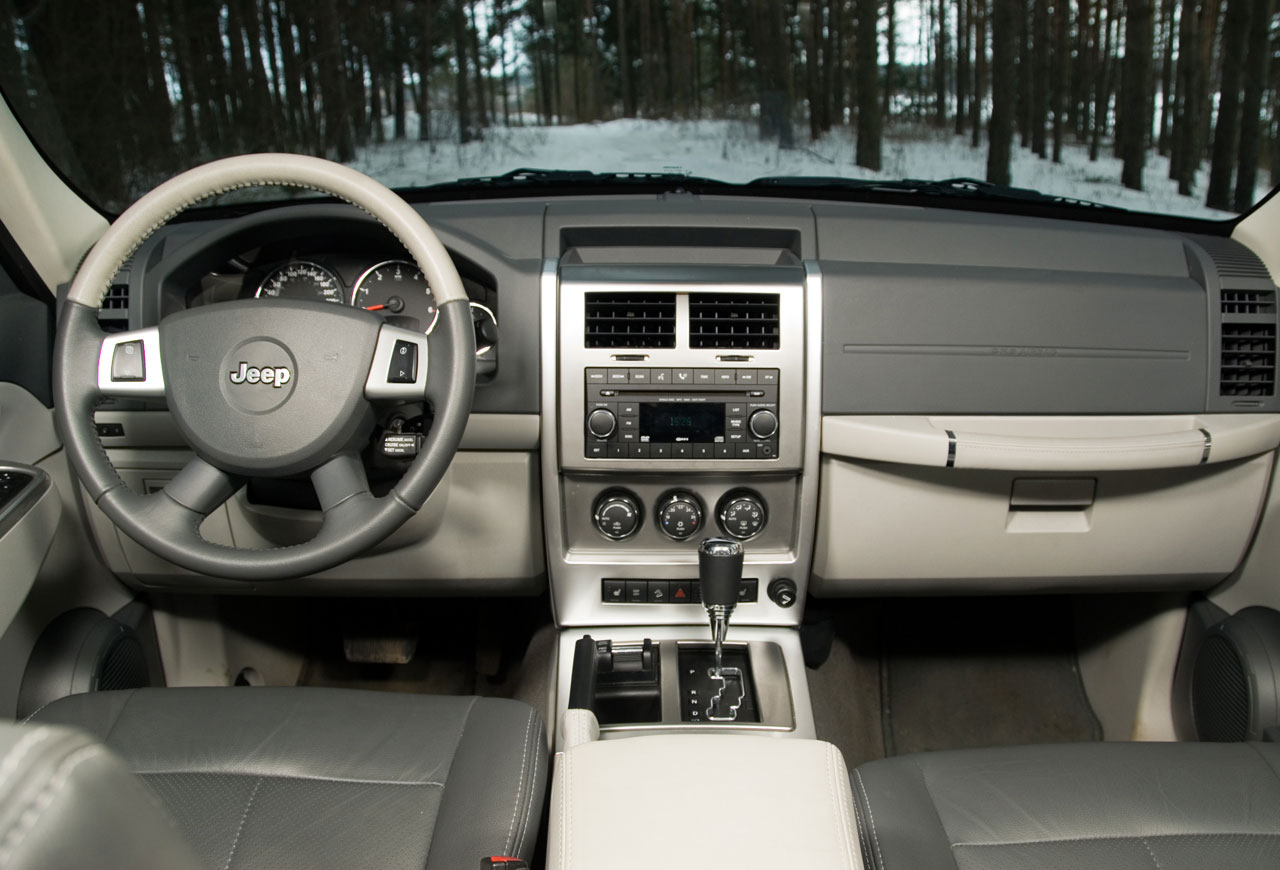 |
| The plastic, as befits the Jeep brand, is hard everywhere, but the assembly is done at a high level – there are no extra gaps or squeaks on bumps. What disappointed was the lack of a footrest for the left foot. |
The equipment of the "Wide One's" interior includes everything necessary: full power accessories, electric drive for front seats (the driver's has memory), audio system, climate control, cruise control, light sensor, and heated seats.
In the back row, there is enough space for three passengers to comfortably endure even a long trip. The fifth door now lifts upward instead of opening sideways as before. If you need to load something small, the rear window can be raised separately.
 |
| In Russia, Jeep Cherokee is sold with a 4-cylinder diesel engine of 2.8 liters and 177 hp, equipped with piezoelectric injectors, as well as with a gasoline V6 3.7 liters, which develops 205 hp and 314 Nm at 4000 rpm. |
In the new generation, the "Cherokee's" spare tire has moved to the floor of the trunk, which increased the loading height by as much as 10 centimeters. The trunk volume is 419 liters. A bit small. If you fold the rear row, you get a flat floor and already 1404 liters of space. And for transporting long items, you can lower the backrest of the right front seat.
On the Russian market, Jeep Cherokee is brought with a 4-cylinder diesel engine of 2.8 liters, which produces 177 hp and is equipped with piezoelectric injectors, and with a gasoline V6 of 3.7 liters with a power of 205 hp and a torque of 314 Nm at 4000 rpm. The gasoline unit works in tandem with a 4-speed automatic, while the transmission paired with the diesel has one more gear.
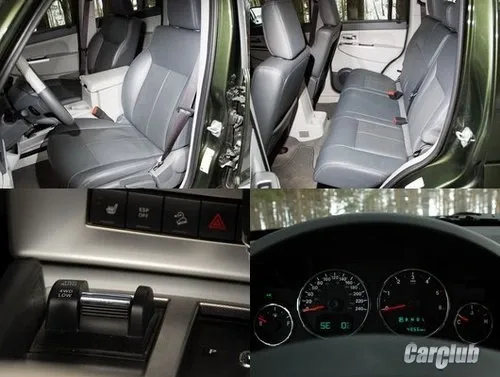 |
| The leather seats do not shine with pronounced lateral support, and the steering column adjusts only by tilt angle. Despite this, finding a comfortable position behind the wheel is not difficult at all. Except for the appearance of the control instruments, the angular front panel of the platform mates Jeep Cherokee and Dodge Nitro is absolutely identical. There is enough space in the back row of seats for three passengers to comfortably endure even a long trip. |
For the test, we took the diesel version of Jeep Cherokee, and there are at least three reasons for that. First, the 2.8-liter diesel develops as much as 460 Nm, available from 2000 rpm — this will be very useful off-road. Second, the diesel is noticeably more economical than the gasoline V6: during the entire test, the consumption of heavy fuel never exceeded 15 liters per 100 km. And third, yielding to the gasoline engine almost 28 hp, the diesel Cherokee accelerates to 100 km/h 0.2 seconds faster!
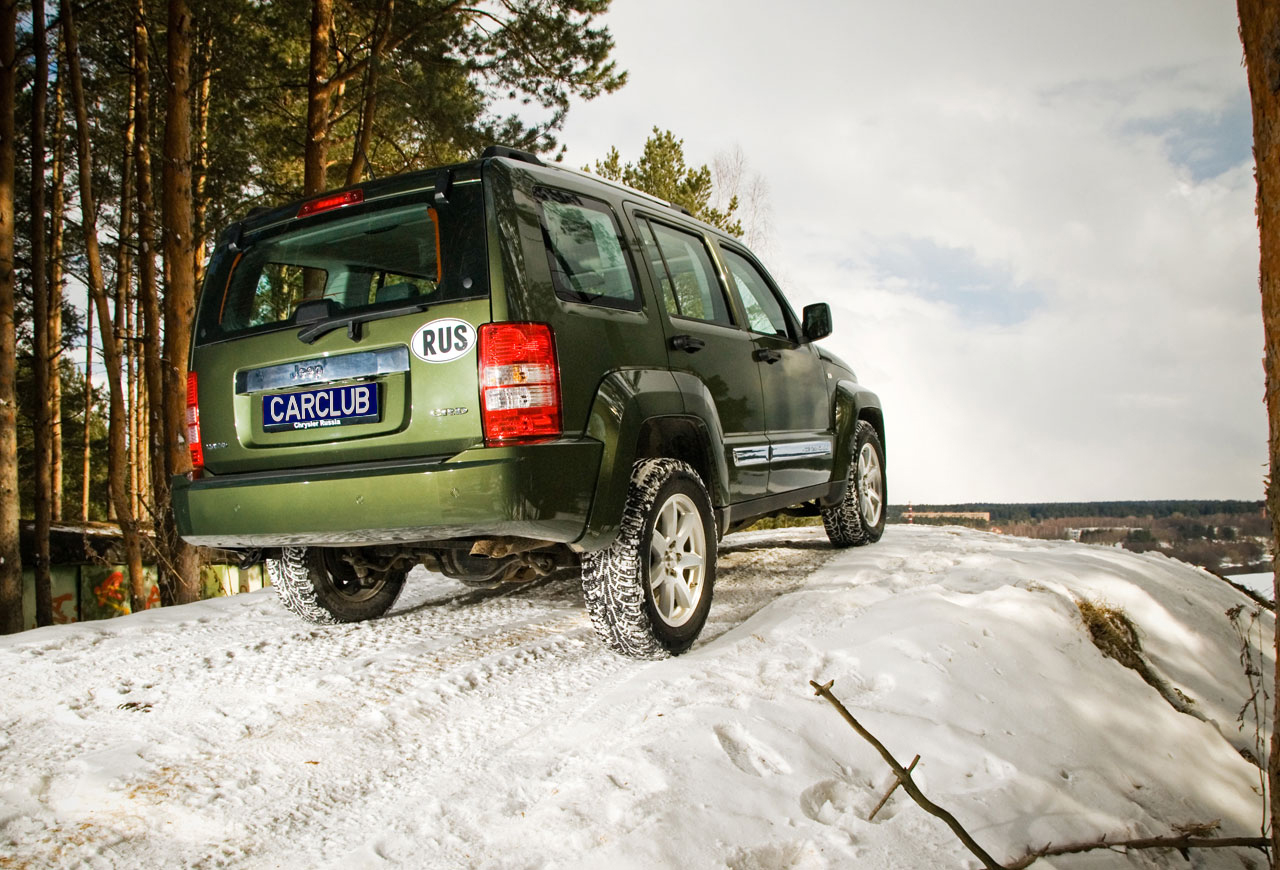 |
| The new five-link rear suspension added rigidity to the SUV and made handling more understandable. |
Compared to its predecessor, the handling of the new Cherokee has become noticeably better. The new five-link rear suspension added rigidity to the SUV, and the behavior on the road became more predictable. As a result, the "Cherokee" confidently holds the straight line even at decent speeds — transverse rocking is practically not felt. Of course, it is far from a passenger car, and the steering wheel does not shine with informativeness, but in corners the heavy SUV passes with very moderate rolls and a decent margin of safety.
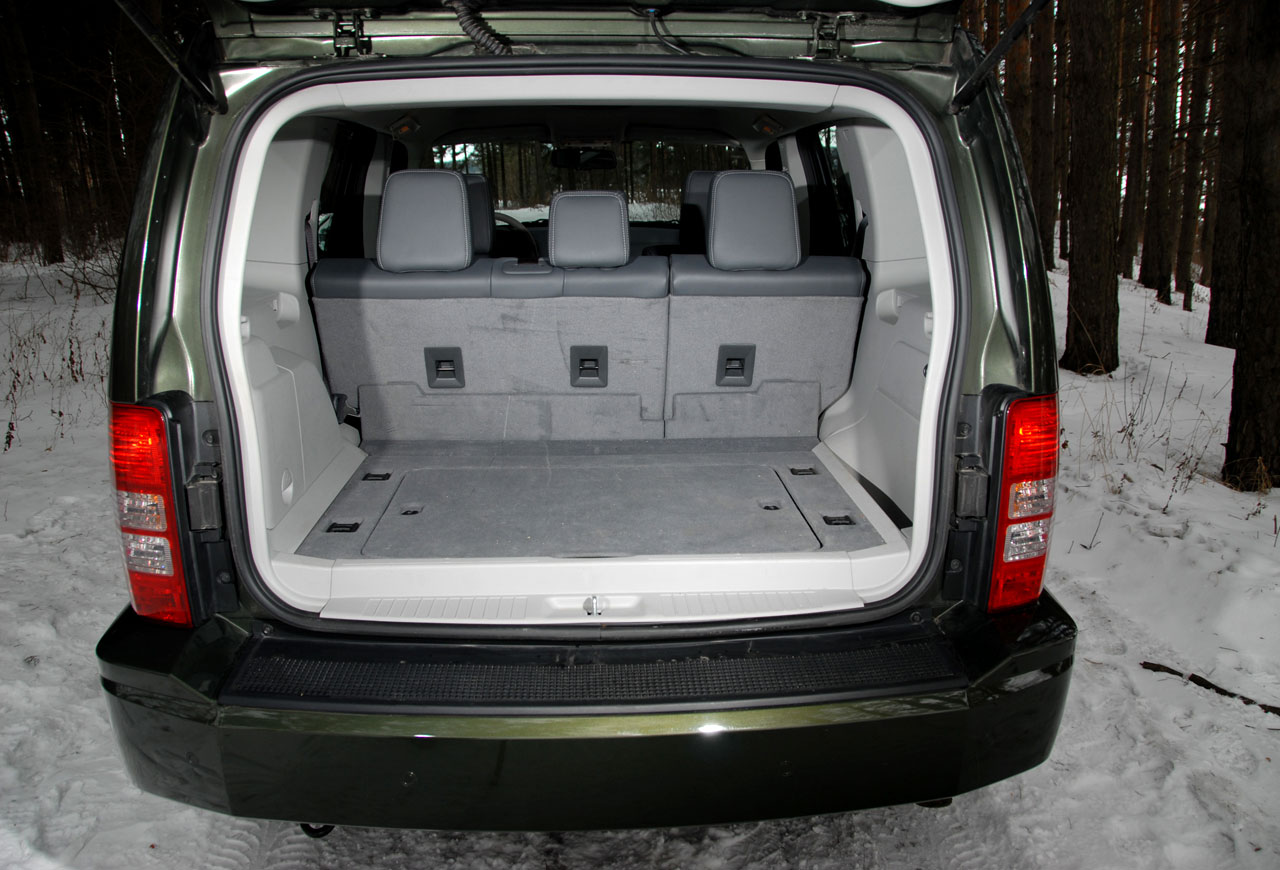 |
| The fifth door now opens upward instead of sideways as in the previous generation. For loading small luggage, the rear window can be opened separately. The spare tire has moved to the floor of the trunk, resulting in an increase in loading height by a good 10 centimeters. The volume of the luggage compartment is 419 liters. Folding the rear row of seats, we get a flat floor and already 1404 liters of free space. |
With ride smoothness, everything is also in order. Small irregularities and joints are passed almost imperceptibly, and on larger road defects it does without harsh impacts. Rocking on waves is minimal. The SUV does not deprive passengers of comfort even on a broken dirt road. Ride smoothness is at a high level. All the road trifles dissolve in the suspension, not bothering the occupants, and on larger potholes a solid margin of travel is felt.
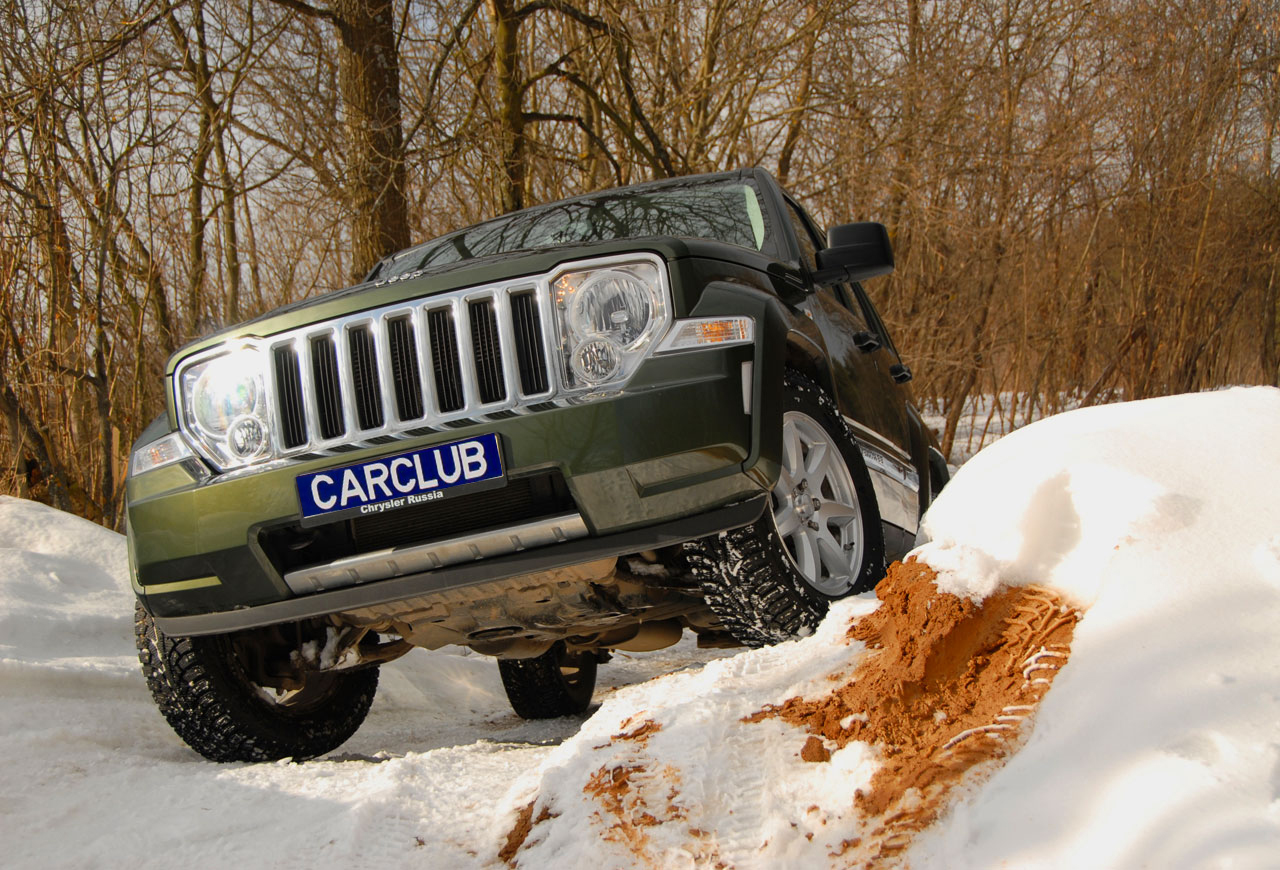 |
| Jeep Cherokee is equipped with the proprietary Selec-Trac II system, which combines the advantages of permanent all-wheel drive with the ability to lock the center differential, low range, and electronic control. |
The all-wheel drive of the new Jeep Cherokee is implemented through the proprietary Selec-Trac II system. It combines the advantages of permanent all-wheel drive with the function of forced locking of the center differential, the ability to engage a low range, and electronic control. Instead of the usual center differential, a multi-disc clutch controlled by electronics works here. In addition, the rear axle has acquired the BLD (Braking Lock Differential) system, which can simulate the operation of a self-locking inter-wheel differential. BLD comes into play when the driver moves the transmission mode switch to the 4WD Lock position — then torque begins to be distributed between the axles forcibly. In addition, there is a 2WD mode, in which the clutch is fully released and the car becomes rear-wheel drive, and a 4WD Auto mode, where the torque between the axles is divided in a base ratio of 42:58, but can be quickly redistributed depending on what is happening under the wheels.
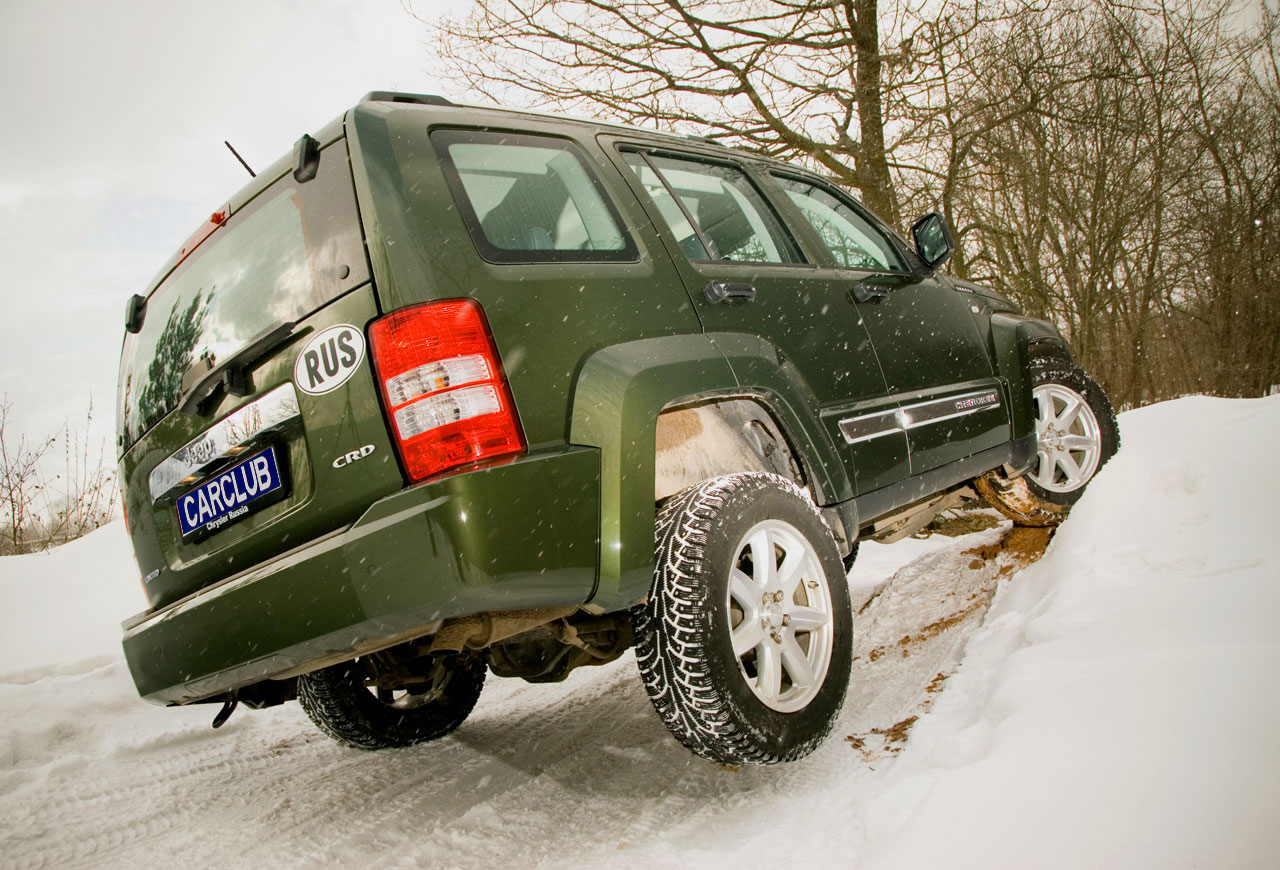 |
| The rear axle has a BLD (Braking Lock Differential) system that can simulate the operation of a self-locking inter-wheel differential. BLD is activated when the all-wheel drive transmission mode switch is moved to the 4WD Lock position. As a result, torque is distributed between the axles forcibly. |
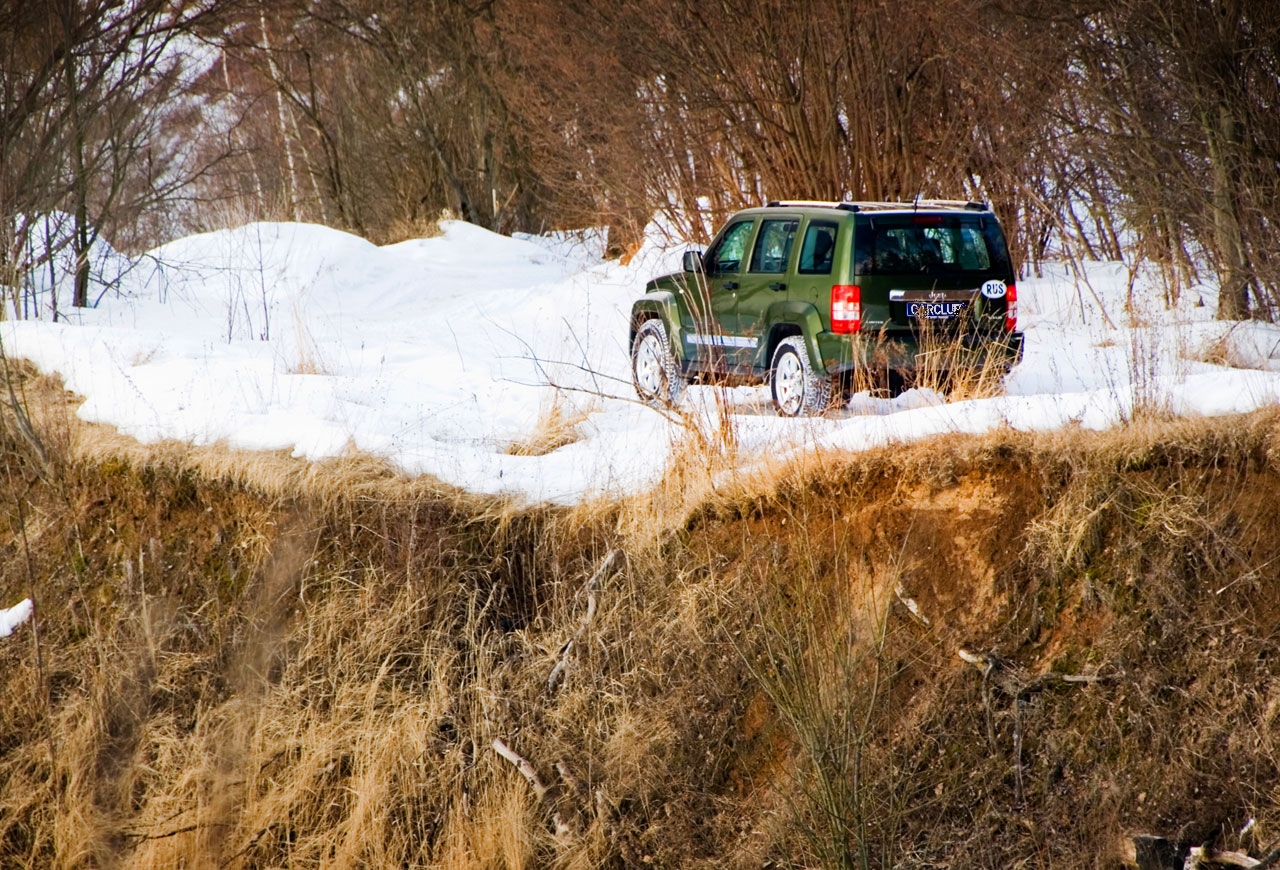
The geometric off-road capability of the updated "Cherokee" is impressive: the approach angle reaches 38 degrees, and the departure angle is 30 degrees. With such parameters, the Jeep Cherokee confidently goes off-road, calmly tolerates diagonal hanging, and does not give up even in deep snow ruts. The only thing missing for complete happiness is more serious tires. If it had them, the "Cherokee" would reveal its potential even brighter.
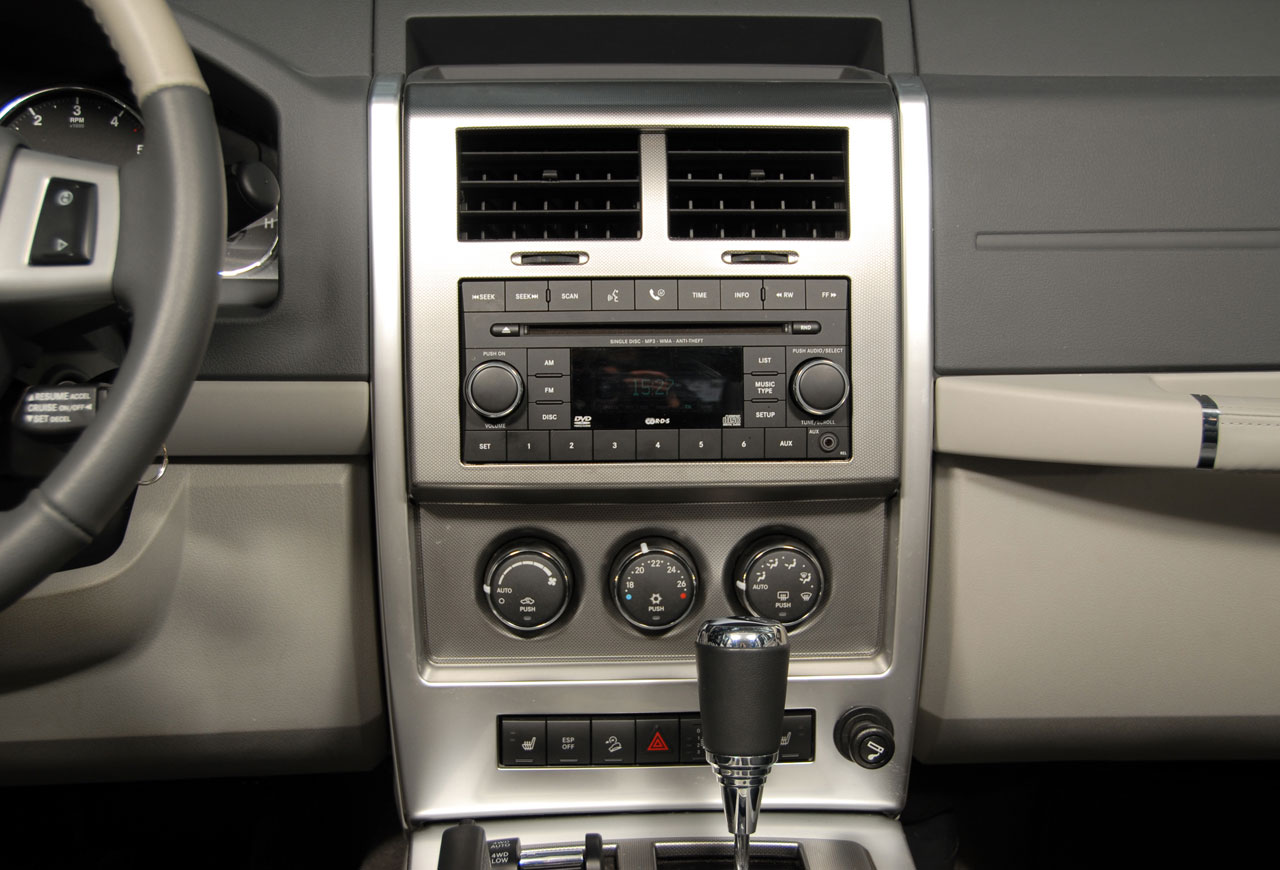 |
| The center console cannot boast of originality, but there are no problems with ergonomics. |
The standard equipment of the new Jeep Cherokee also includes the Hill Descent Control system. It briefly holds pressure in the brake system, preventing the car from rolling back at the moment when the driver releases the brake pedal.
On the Russian market, prices for the Jeep Cherokee do not depend on the engine type — both petrol and diesel versions cost the same. For cars manufactured in 2008, you will have to pay 1,668,000 rubles, while cars of 2009 are valued higher — 1,737,000 rubles.
 |
| The price of the Jeep Cherokee on the Russian market is the same for both petrol and diesel versions. There are cars manufactured in 2008, for which you will have to pay 1,668,000 rubles. "Cherokees" produced in 2009 will cost a little more – 1,737,000 rubles. |
The next generation of the Jeep Cherokee not only returned the features of its legendary ancestor to the exterior, but also retained all the main off-road advantages. At the same time, on regular asphalt, the car began to behave noticeably better than before. If I were a farmer from the outback, I would definitely take a closer look at the new "Cherokee" — perhaps this is one of the most successful offers in its class.
Ruslan Galimov