
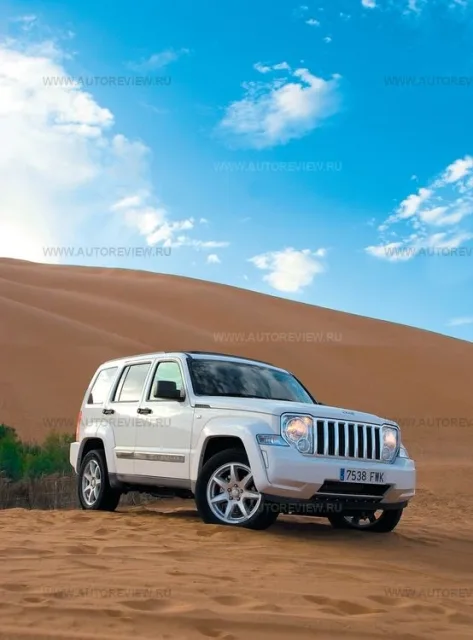
— Push the gas, don't slow down! Don't stop under any circumstances! Push!
The instructor repeated these words over the radio like a spell. But the journalist behind the wheel of the lead Cherokee momentarily eased off the pedal — and the car, losing momentum on the climb, got stuck in the sand. Prayers turned into emotional cursing, and the whole group went to push out the stuck new-generation SUV.
Conquering dunes is a true skill! Especially in these places — near the Moroccan city of Er-Rachidia, where the route of the legendary Paris—Dakar rally runs.
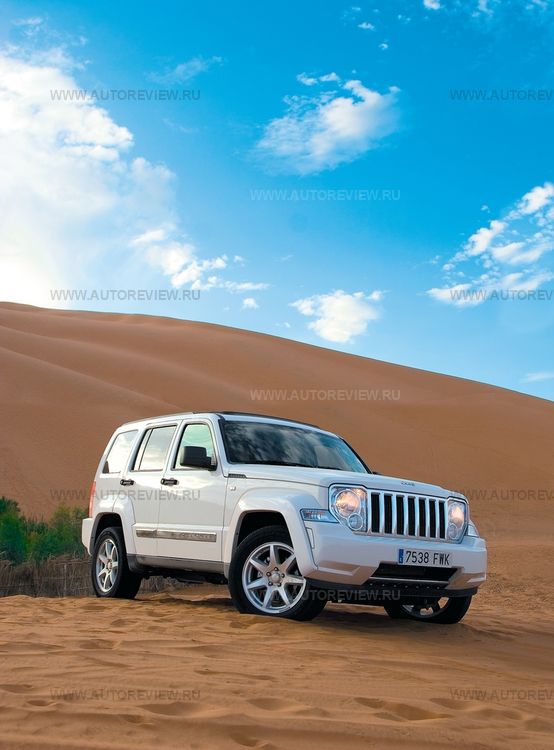
Sand is a capricious element. When storming a dune, you need to accelerate so as to reach the crest at minimal speed, look around at the top, and slide down to the next dune along the gentlest arc. Overdo the gas — you'll get a jump and a corkscrew fall. Underdo it — you'll dig in on the slope. Our route was marked with flags, but what about the racers in the rally? It's no wonder that it's in Morocco that many Dakar drivers undergo training in dune-driving schools — a five-day course on prepared vehicles costs 4500 euros.
How ready is the new Jeep Cherokee for such trials?
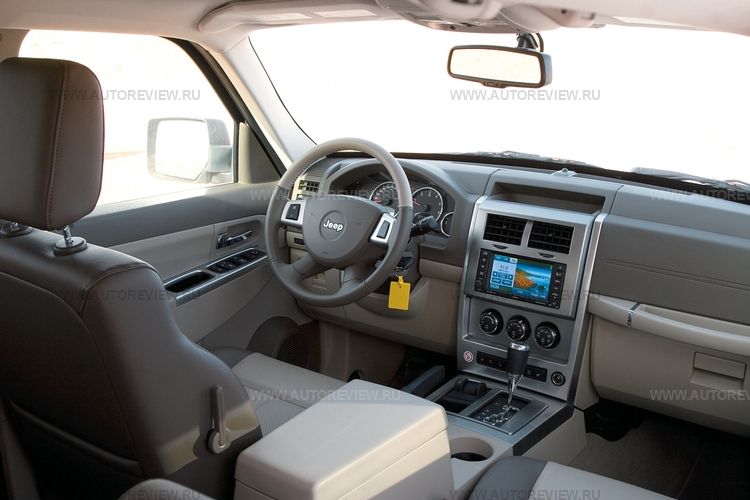
Hard plastic, rough shapes — strong resemblance to the Dodge Nitro
The new model, as before, has a low range, but the Selec-Trac II transfer case has changed. Previously, the expensive Cherokee versions had a center differential; now it's replaced by an electronically controlled multi-plate clutch that engages the front axle. In 2WD mode, the clutch is open, and in 4WD Auto position, it locks only when the rear wheels slip. It engages quickly — on loose sand, the rear wheels don't have time to dig in. But you won't go far across dunes in this mode — there's not enough traction on climbs. So on the sands, we drove in the third mode — 4WD Low. The low range multiplies torque at the wheels almost threefold! By the way, the Cherokee is one of the few "true off-roaders" that has retained a reduction gear. Even the "related" Dodge Nitro (see AR No.8, 2007) lacks such a gear.
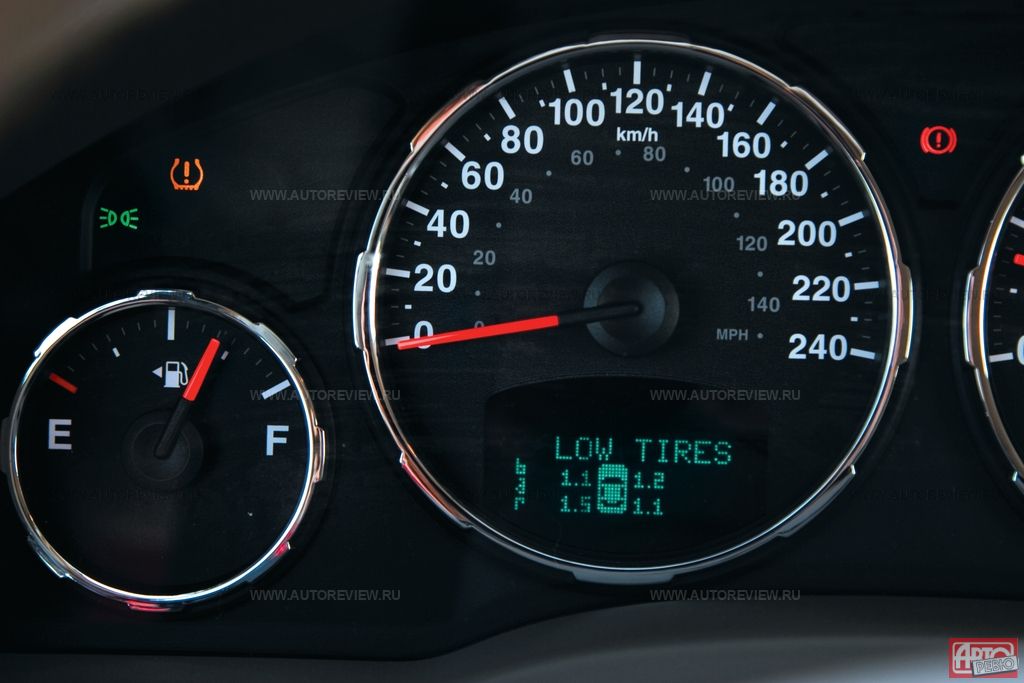 | |
| Driving over dunes costs 20 liters of diesel per hundred. And how much will the gasoline version "consume" then? | Before heading onto the dunes, tire pressure was reduced, and the onboard computer immediately registered it |
Both cars share the same platform and roll off the assembly line at the plant in Toledo (Ohio). But the Jeep is more "off-road" — its wheelbase is seven centimeters shorter. Plus the reduction gear, plus the electronic Hill Descent Control (HDC) system: by braking the wheels, the electronics themselves maintain a minimal stable speed on steep slopes. The speed can be increased by shifting to second or third gear. Also, unlike similar systems in Volkswagen or Land Rover, on a steep descent with HDC engaged, the driver can freely use both the brake pedal and the gas.
Despite the shared platform and similar proportions, the Jeep Cherokee doesn't look as aggressive as the Dodge Nitro. Signature features — "square" wheel arches and seven vertical slots in the faux radiator grille — make the Jeep more "intelligent." And it's still one hundred percent recognizable: from any angle — a real Jeep!
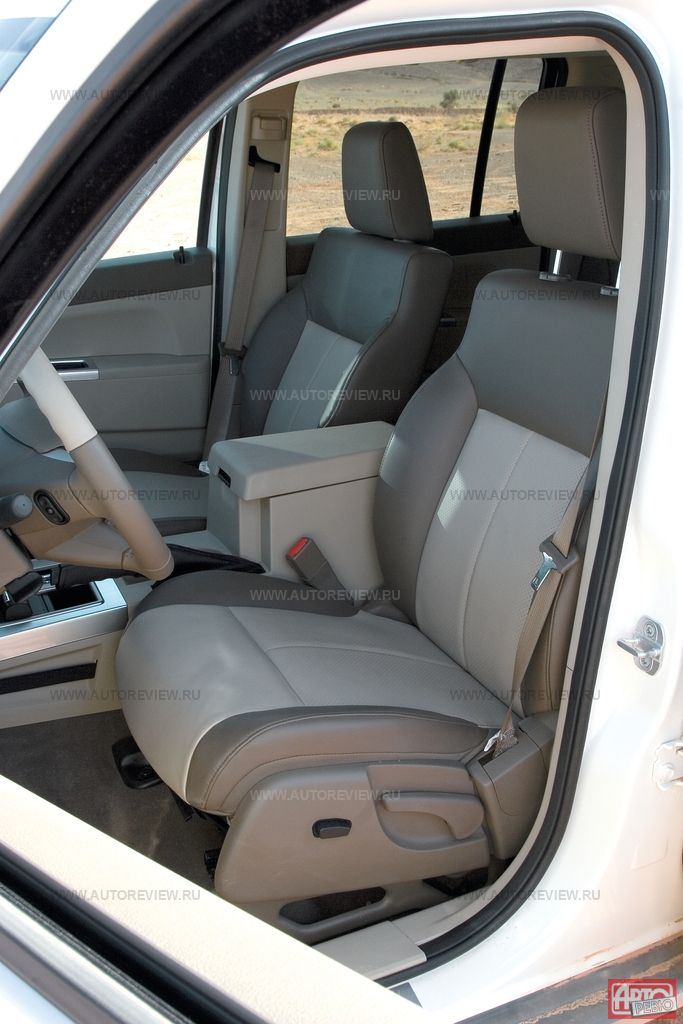 | 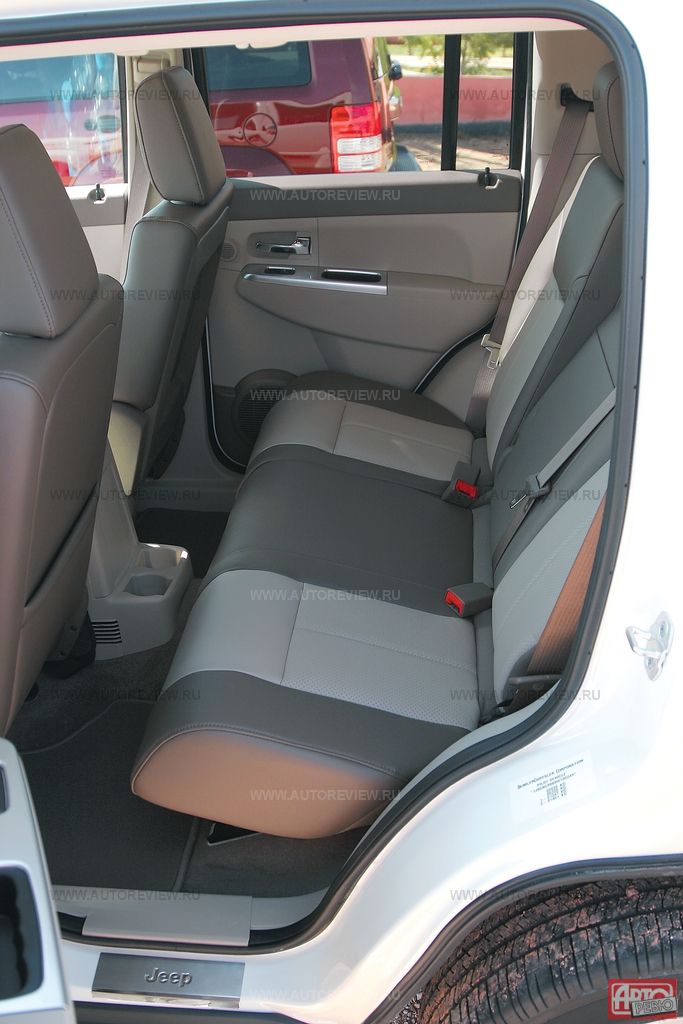 |
| Electric drive adjusts the seat's longitudinal and vertical position, while the backrest angle is changed with a mechanical locking handle | The rear seat backrests are also adjustable for incline |
Inside, the unification is more noticeable — similar seats, steering wheel, central console with a large MyGIG multimedia screen, into which you can load 20 GB of music. Among the significant differences — a "flat" instrument panel with pleasant backlighting and a grab handle for the front passenger: it's convenient to hold onto when the Jeep descends another dune.
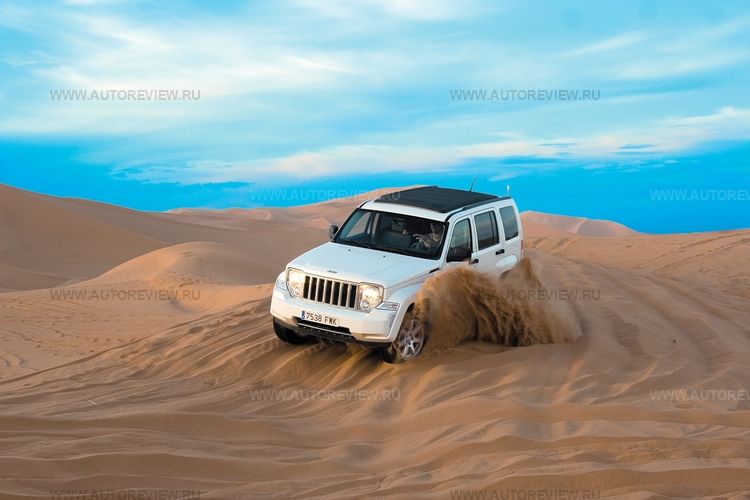
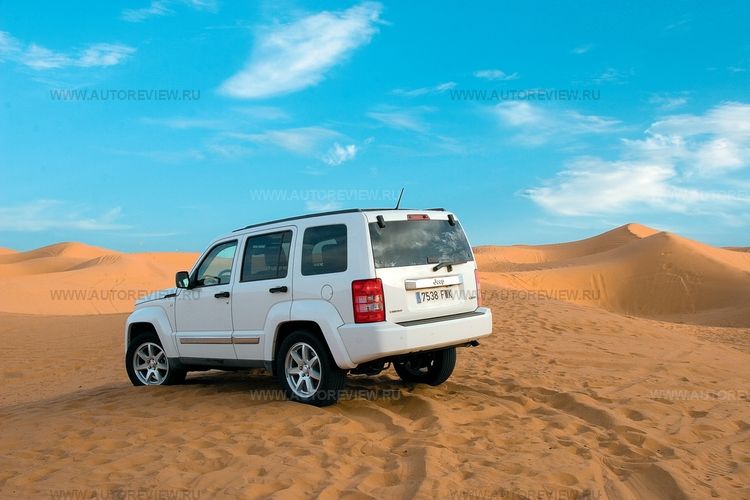
On half-deflated tires, the Jeep very confidently plows through the sands of the Sahara
The new Jeep Cherokee will be supplied to Russia only in the Limited version (climate control, heated seats, rain sensor, parking sensors), and also with the Luxury Leather package — leather upholstery for the steering wheel and seats. True, the interior is still full of hard plastic. But the chopped panel and massive hood before your eyes — classic off-road romance. This is a Jeep, an all-terrain vehicle for real men!
The steering column in the Cherokee is still adjustable only for height, which somewhat limits the choice of seating position. At my height of 190 cm, the seat adjustment ranges were barely enough, and I'd like the steering wheel to be higher or further away. On the rear sofa, there's also not much room: sitting "behind myself," I almost press my knees into the back of the front seat. But worse is something else — you have to squeeze your legs through the narrow opening between the seat cushion and the central pillar. It seems the seven centimeters by which the designers shortened the wheelbase are taking their toll — I don't recall any problems with getting into the rear seats in the Nitro.
The trunk of the new Cherokee has also "lost weight" to 419 liters and risen above the ground by about 10-15 centimeters. The reason is that the spare wheel (a space-saver or full-size, depending on the trim) has moved from the rear door to under the floor. As compensation, the trunk has a large plastic tray under the rigid floor covering — you can throw dirty boots or a tow rope there after off-road exercises. The fifth door on the Cherokee now opens upward, not sideways, as on the previous generation model. And the rear window, as before, can be opened separately.
The route of the Moroccan test — 210 km, of which we drove only 100 km on asphalt. In a convoy.
— Remember, this is Africa! — the organizers scare us. — People are completely different, they have their own ideas about traffic rules!
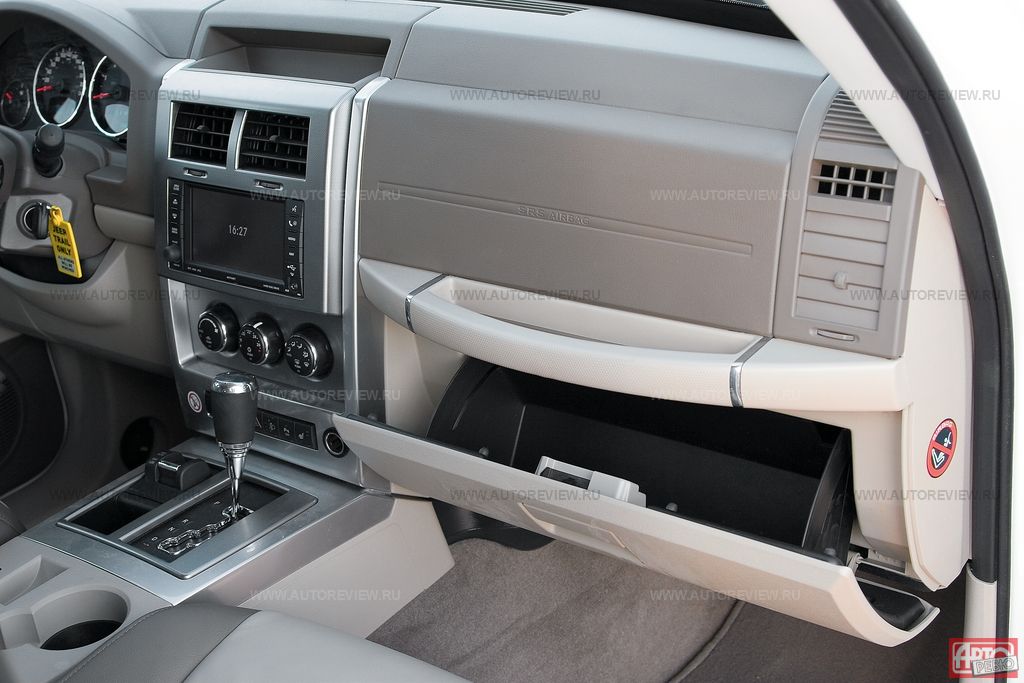 | 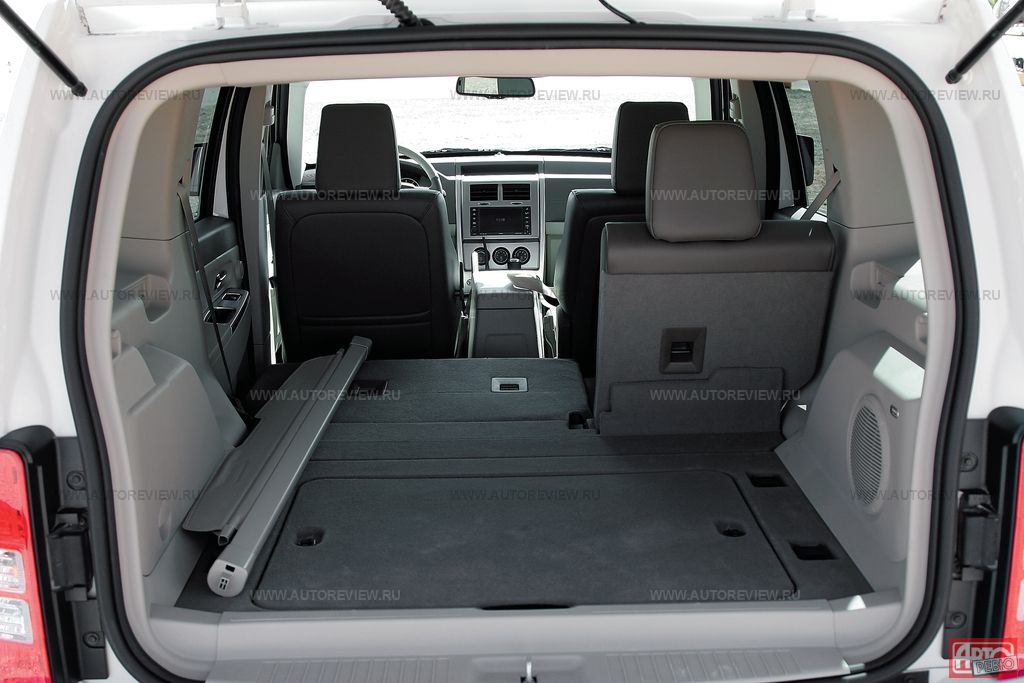 | 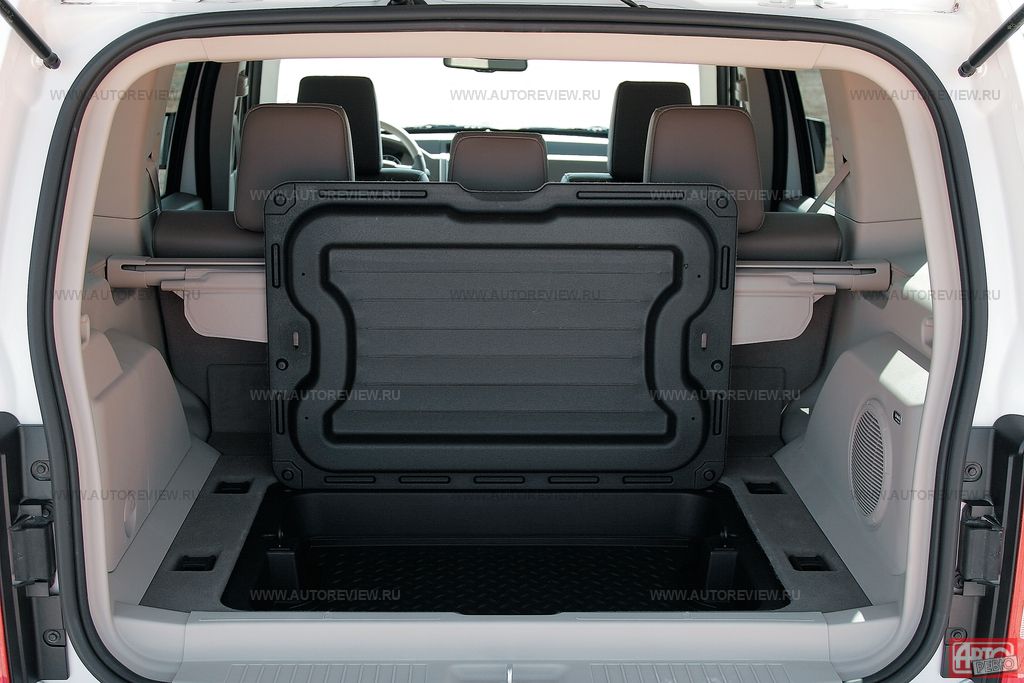 |
| The glove box is a bit small, but the handle above it is just right | By folding the seats in parts, you can get a cargo area of 1404 liters with a flat floor | Under the rigid floor covering — a plastic waterproof tray |
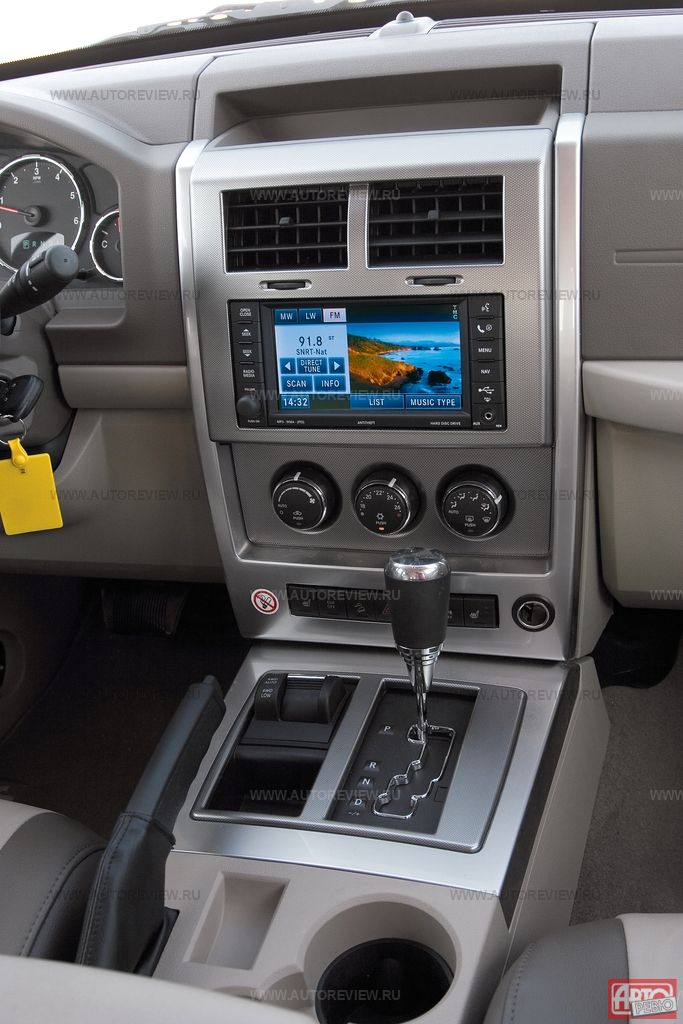 | 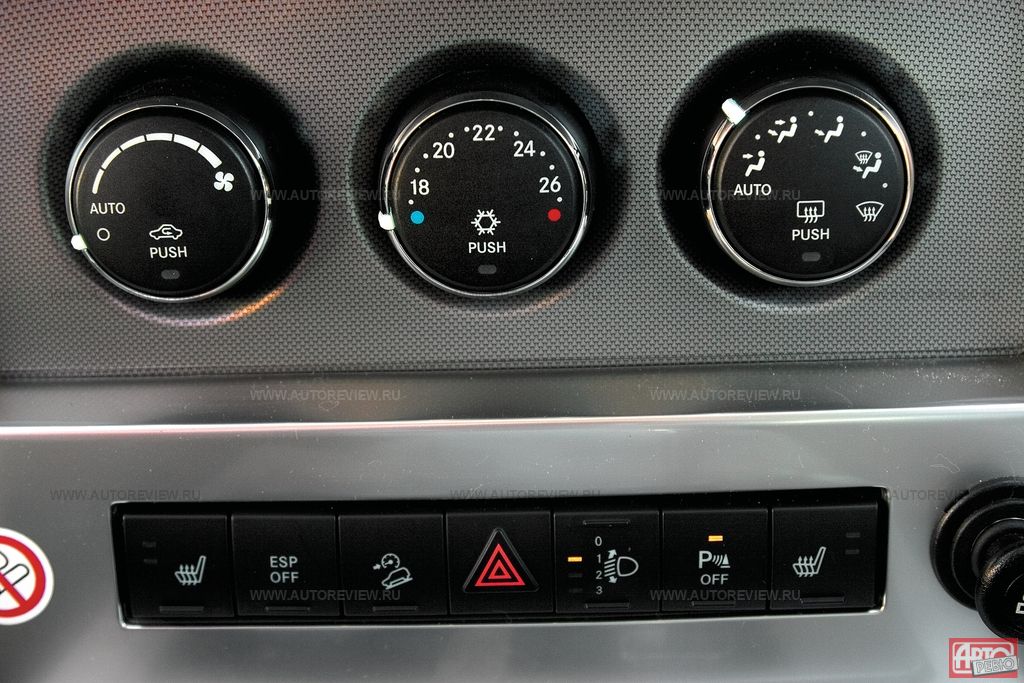 | 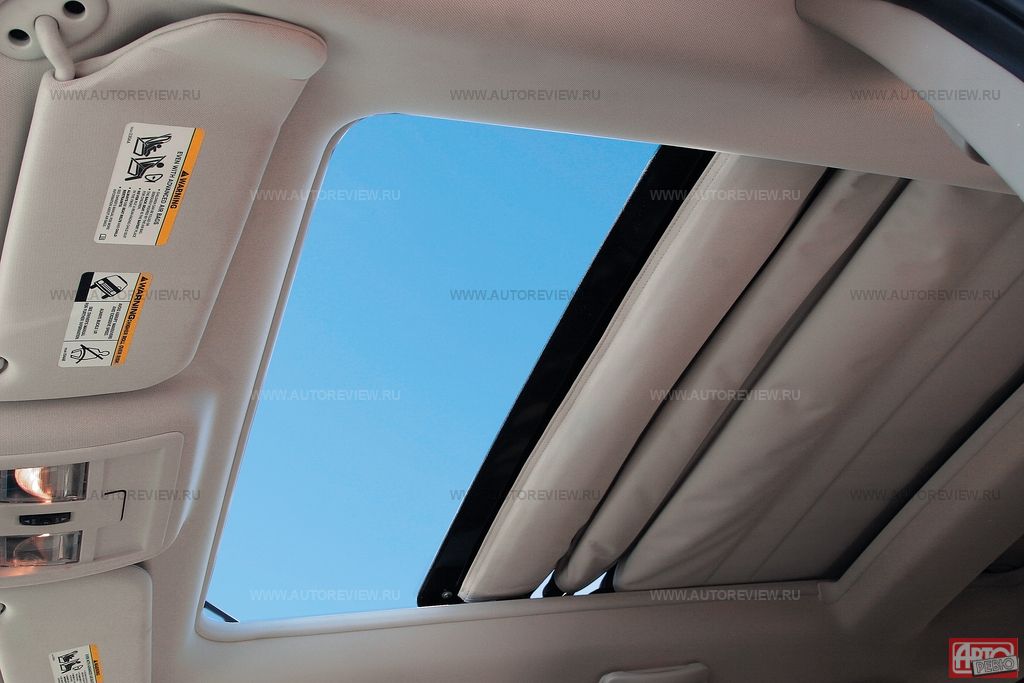 |
| To the left of the "automatic" selector is the transmission mode switch: 4WD Auto mode can be engaged on the move, while the low range can only be engaged when stationary, with the selector in neutral | ESP can be turned off provided the transmission is in one of the all-wheel-drive modes, and HDC (the adjacent button on the right) engages only in low range | As optional equipment, a sliding "cloth" Sky Slider roof is offered |
Indeed, at intersections you first have to let donkeys pass, then cyclists (who, having gotten rich, switched from donkeys to bicycles), and only then move off, after honking at pedestrians. Africa! In addition, I don't have a passport (it was taken at the airport and promised to be returned upon departure), no map. And nearby is the border with restless Algeria, where, they say, foreigners are not treated ceremoniously…
First, I got into the turbodiesel Cherokee 2.8 CRD (177 hp) with a five-speed "automatic" (base versions with a "manual" will no longer be available in Russia). The diesel from the Italian company VM Motori is quite suitable for calm driving and even for "galloping" over dunes in low range — the torque of 460 Nm helps. But on asphalt… Acceleration is sluggish, the working range is narrow — after 4000 rpm, the rate of rev increase drops, and after another 500 rpm, the limiter kicks in. And the new Cherokee is massive: in curb weight — about two tons!
I finally decided to take a gasoline Cherokee for a test — a heavy car simply cannot do without six cylinders. However, the engine's output is modest — 205 hp, and the four-speed automatic transmission works unhurriedly, with long gears. In second gear, the Jeep accelerates to 140 km/h! Up to that mark, it drives briskly, responds willingly to the gas pedal, but then the enthusiasm fades — the speedometer needle crawls more lazily and stalls, never reaching 180 km/h.
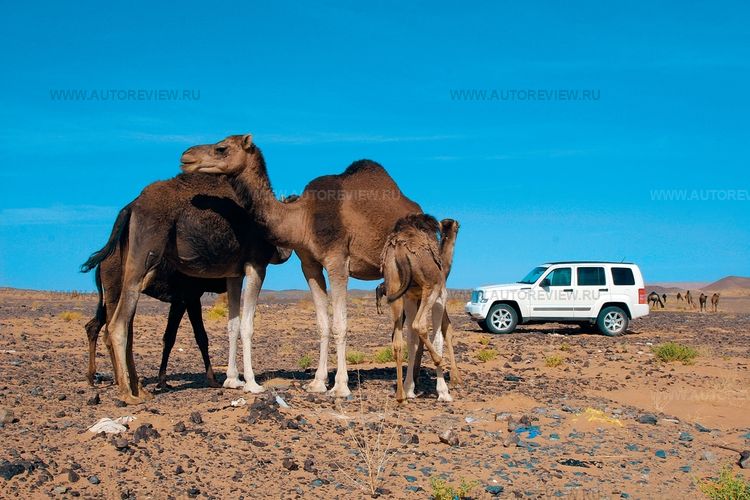
There are no complaints about the brakes, but with a sharp press on the pedal, the car noticeably dives its nose — here, rather, the suspension, tuned for off-road, is to blame. The clumsy Jeep reluctantly obeys the steering wheel, noticeably leans in corners, and on asphalt waves it begins to sway, so the stability system has to constantly intervene. Driving faster than a hundred on a winding road is uncomfortable. The reason is likely in the modified rear suspension design: while the front retains the previous double-wishbone arms, the rear now has a Panhard rod instead of a triangular arm — like on classic VAZ or old Moskvich.
But comfort is at a high level. Provided, of course, that you and your passengers are not prone to seasickness. The Cherokee seems not to notice small joints and potholes, but on waves after 100 km/h it starts to rock like a boat!
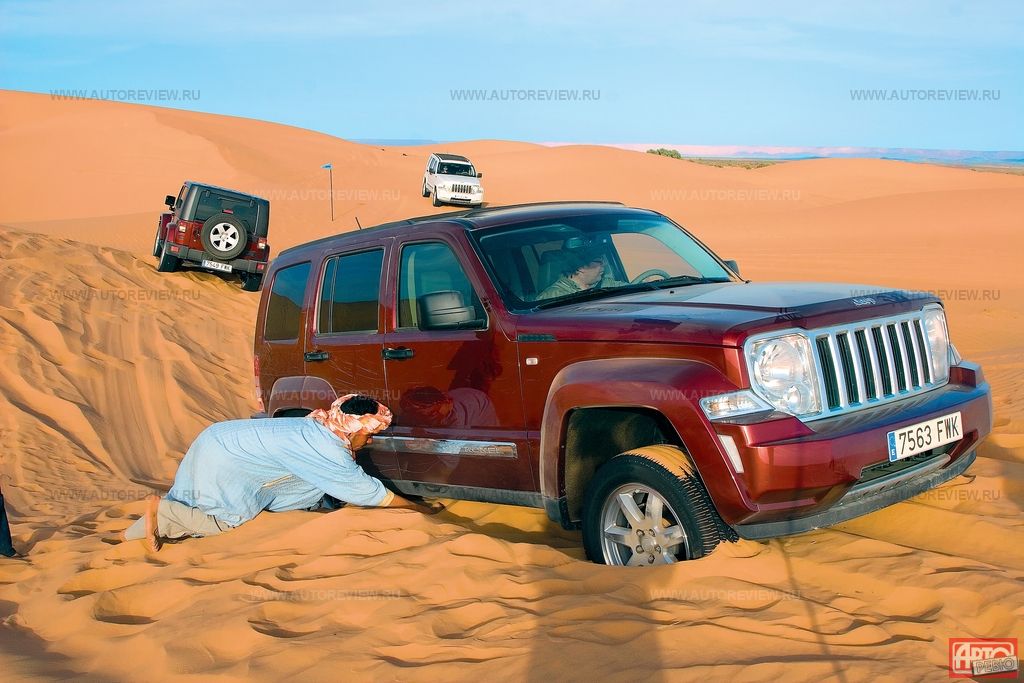 |
| The sand is so fine that the car can be dug out without a shovel |
But on a dirt road, you can keep your speed. I braked slightly before a dried-up stream bed, the suspension softly swallowed the bumps — and the Jeep continues to race along a road strewn with fine gravel. No impacts are transmitted to the steering wheel, even when crossing a rut diagonally. And that very sluggishness that hindered on asphalt turns out to be just right on dirt.
On sand, the Cherokee behaves excellently — it responds obediently to the steering wheel, easily changes trajectory, and gets out of ruts without problems. True, for this, I had to lower the tire pressure from the usual 2.3 to 1.2 bar. The tires, by the way, are universal — Goodyear Eagle RS-A with M+S marking.
No matter how Chrysler Group marketers try to separate Jeep and Dodge into different market niches, the main rival of the new Cherokee in Russia will still be the Dodge Nitro. Of course, the Cherokee will be more expensive — if the top Nitro with a gasoline V6 currently costs about $50,000, then the Jeep Cherokee Limited in similar trim is unlikely to be cheaper than $55,000 (official prices will be announced only next spring, and cars will appear in showrooms no earlier than summer). This is a bit much: the Mitsubishi Outlander XL or Mazda CX-7 with more powerful gasoline engines cost noticeably less. Nor should you count on high demand for diesel modifications. So the Cherokee, as it was a niche product, will remain one. And leadership in sales will be retained by more affordable and more asphalt-friendly Japanese crossovers. Although their path to the Moroccan sands is closed.
| Specifications | ||
| Parameters | Vehicle | |
| Jeep Cherokee | ||
| Modification | 2.8 CRD | 3.7 V6 |
| Body type | 5-door wagon | 5-door wagon |
| Number of seats | 5 | 5 |
| Dimensions, mm | ||
| length | 4493 | 4493 |
| width | 1839 | 1839 |
| height | 1797* | 1797* |
| wheelbase | 2694 | 2694 |
| track front/rear | 1549/1549 | 1549/1549 |
| ground clearance | 189 | 189 |
| Departure/approach angle, deg | 28.2/30 | 28.2/30 |
| Trunk volume, l | 419/1404** | 419/1404** |
| Curb weight, kg | 1980—2090 | 1935—2040 |
| Gross weight, kg | 2520 | 2540 |
| Aerodynamic drag coefficient, Cx | 0.404 | 0.404 |
| Engine | diesel, with direct fuel injection | gasoline, with distributed fuel injection |
| Location | front, longitudinal | front, longitudinal |
| Number and arrangement of cylinders | 4, in-line | 6, V-shaped |
| Displacement, cm³ | 2768 | 3700 |
| Cylinder bore/piston stroke, mm | 94.0/100.0 | 93.0/90.8 |
| Compression ratio | 17.5:1 | 9.7:1 |
| Number of valves | 16 | 12 |
| Max power, hp/kW/rpm | 177/130/3800 | 205/151/5200 |
| Max torque, Nm/rpm | 460/2000 | 314/4000 |
| Transmission | automatic, 5-speed | automatic, 4-speed |
| Drive | all-wheel, with electromagnetic clutch in front-wheel drive and low range | |
| Front suspension | independent, double wishbone, with anti-roll bar | |
| Rear suspension | dependent, coil spring, with Panhard rod | dependent, coil spring, with Panhard rod |
| Front brakes | disc, ventilated | disc, ventilated |
| Rear brakes | disc, ventilated | disc, ventilated |
| Tires | 235/65 R17 (235/60 R18) | 235/65 R17 (235/60 R18) |
| Maximum speed, km/h | 179 | 193 |
| Acceleration time 0—100 km/h, s | 10.5 | 10.7 |
| Fuel consumption, l/100 km | ||
| urban cycle | 12.2 | 16.9 |
| extra-urban cycle | 7.8 | 8.9 |
| combined cycle | 9.4 | 11.7 |
| Fuel tank capacity, l | 70 | 73.8 |
| Fuel | diesel | AI-92 |
| * With roof rails | ||
| ** With rear seats folded | ||
Legend
The first Cherokee appeared in 1974 — that was the name given mid-life to the three-door "sport" version of the Wagoneer SUV, which had been produced since 1963. It received its name, borrowed from an Indian tribe, not without reason, and differed from the original in the shape of its side windows and front-end styling. The base had an inline six-cylinder 4.2, and for an extra charge, you could get a V8 of 5.9 or 6.6 liters. Transmissions were a four-speed manual or a three-speed automatic. The latter worked with the advanced Quadra Trac transmission with permanent all-wheel drive and a self-locking center differential. On the manual, the scheme was simpler: permanent drive to the rear wheels and a pluggable front axle. In 1977, a five-door version was added, and in total, until 1983, 197,338 such Cherokees were built.
The second generation debuted in 1984. This was a completely different Cherokee — more compact, with a unibody and coil-spring front suspension. The engines also became more modest: initially, only an inline four-cylinder 2.5 and a V6 of 2.8 liters were offered, and a year later, a 2.1-liter Renault turbodiesel was added. In 1987, the V6 was replaced by an inline six-cylinder of four liters. After that, the engine lineup hardly changed — except that in 1994, instead of the Renault diesel, they began installing an Italian VM of 2.5 liters. In addition to engines, the buyer chose a three- or five-door body and the type of all-wheel drive — with a center differential (Selec-Trac) or without it (Command Trac). There was also a simplified version with a 4x2 wheel formula.
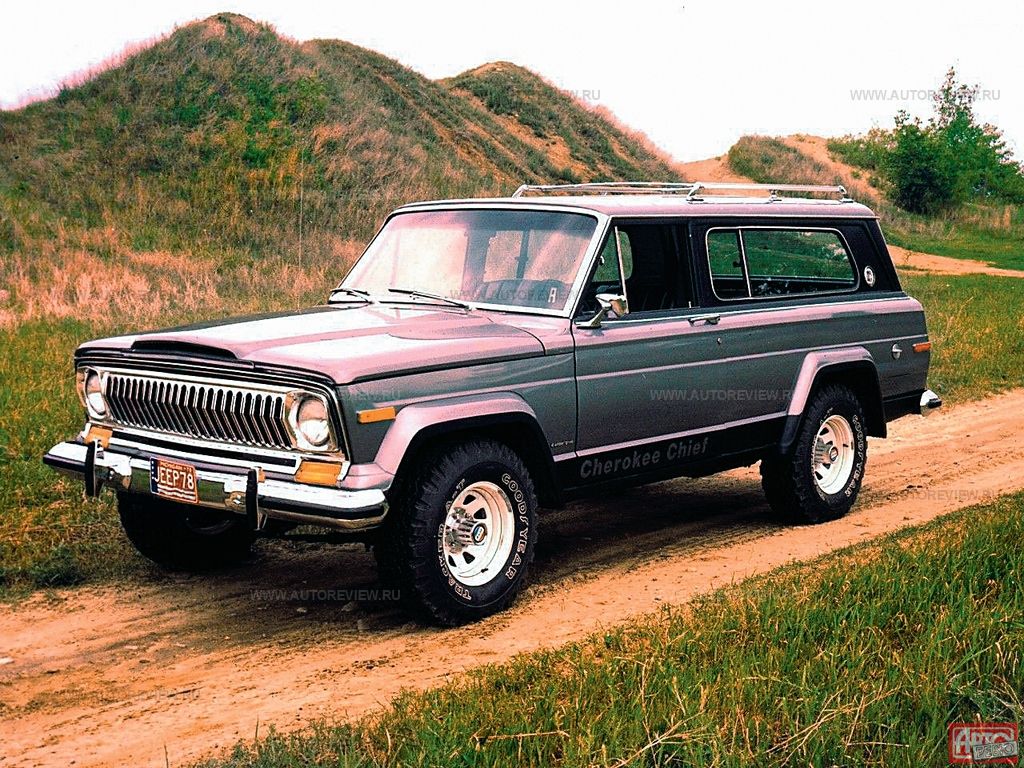 | 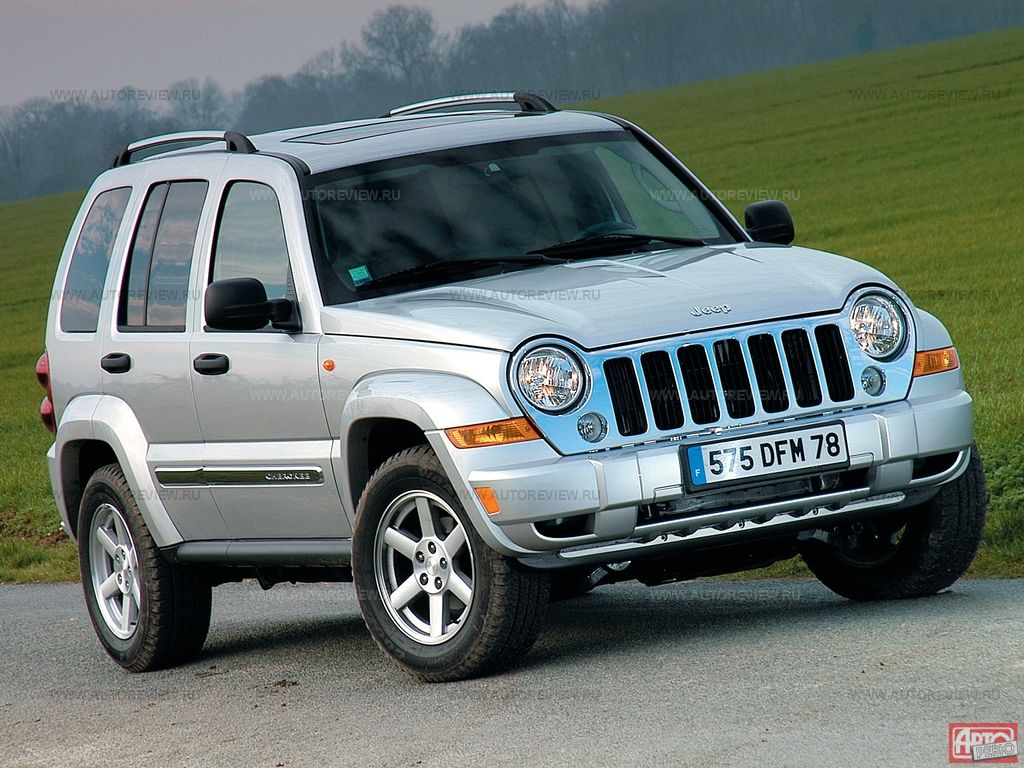 | |
| Jeep Cherokee of the first generation (1974—1983) in Chief trim featured a widened track and enlarged wheel arches | Jeep Cherokee of the second generation (1984—2001) started the fashion for SUV (Sport Utility Vehicle) type cars | Jeep Cherokee of the third generation (2001—2007), although it became like a toy crossover, did not lose the off-road capabilities of its predecessors |
In 1996, the Cherokee underwent its only minor modernization — the interior and exterior were updated. In this form, the car was produced until mid-2001, when American production was stopped. However, the "second" Cherokee is still on the assembly line today — it is assembled in China at the Beijing-Jeep joint venture, created back in 1984. The last restyling happened in 2004: the SUV acquired a different front end and the name Jeep 2500.
The third generation Cherokee was introduced in 2001, and in North America it was sold under the new name Liberty. The car completely changed its appearance and grew slightly in size, with an independent suspension up front and springs finally replacing the outdated leaf springs at the rear. However, the all-wheel-drive transmission remained the same. Engines — an inline four-cylinder 2.4 (147 hp), a V6 3.7 (211 hp), and a four-cylinder VM 2.8 turbodiesel (143 hp), which in autumn 2004 was replaced by a new 2.8-liter unit (163 hp) with common rail system. At the same time, the Cherokee received a slight exterior update, and in this form it has survived to the present day.