
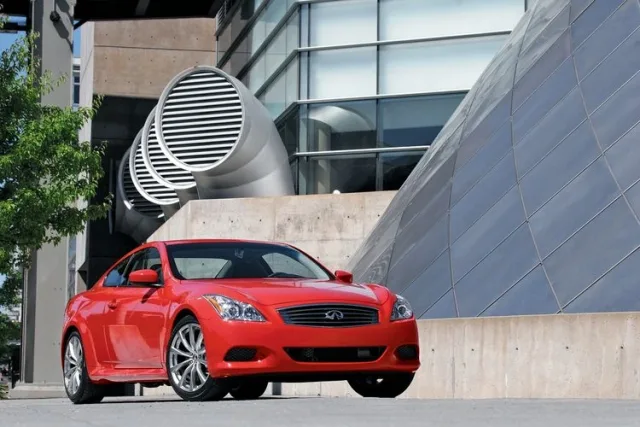
The look — like a drop of liquid metal, frozen in its downward rush. A long hood, a smooth roofline, a falling tail with laconic lights…
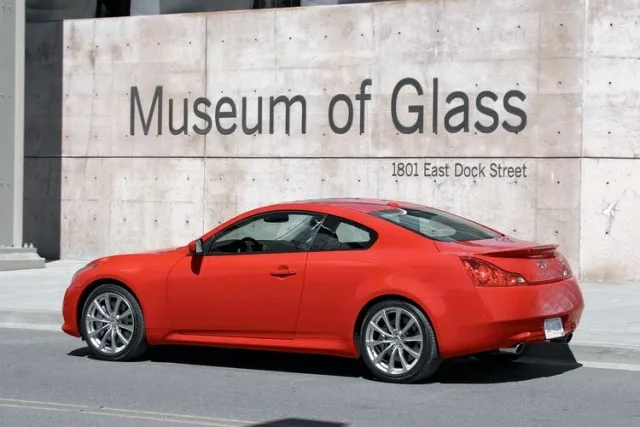
On American and Russian roads, this scarlet car, in which I enter a turn on a country highway of Bainbridge Island, is called the Infiniti G37 Coupe. And at home, in Japan, it is the Nissan Skyline, already in its twelfth generation. A name with history. Can the 330-horsepower coupe live up to it?
— Are you a journalist?
The employee at Atlanta airport looks at me without sympathy and puts my passport in a red cover into a plastic bag — like evidence.
— Let's go to the immigration office…
Do they really know about my attacks on America? Have my ironic notes on the pages of Autoreview about the simplicity of local road manners, my jabs about hamburgers reached… the FBI? The CIA? The White House? And now they will ban me from entering the land of unlimited possibilities?
Yes, I am not a fan of the States. I confess — I love simple pleasures: good food and fast driving on serpentines. And I find it hard to understand how a person with such needs can love a country where you only have to turn the steering wheel at intersections, and crispy chips are even put in tartare.
And the local bureaucracy? In the gray office of the immigration office, it turned out that the border guards were confused by my multi-entry business visa. Journalists, it turns out, are entitled to a different one — a single-entry, special one. Am I a journalist? Then why didn't I get a journalist visa?
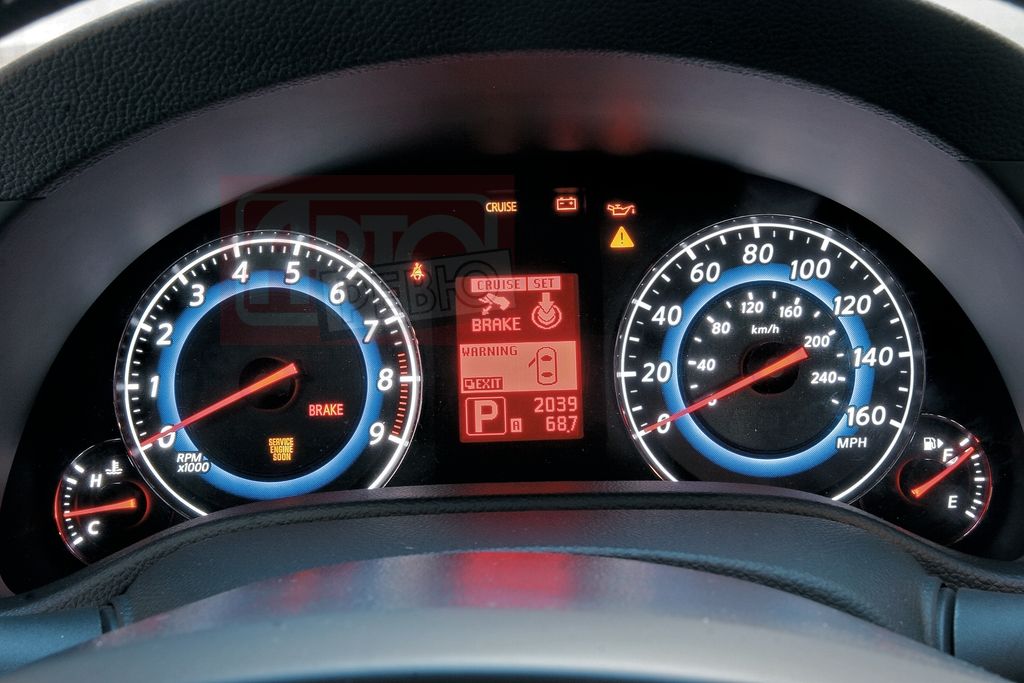 | 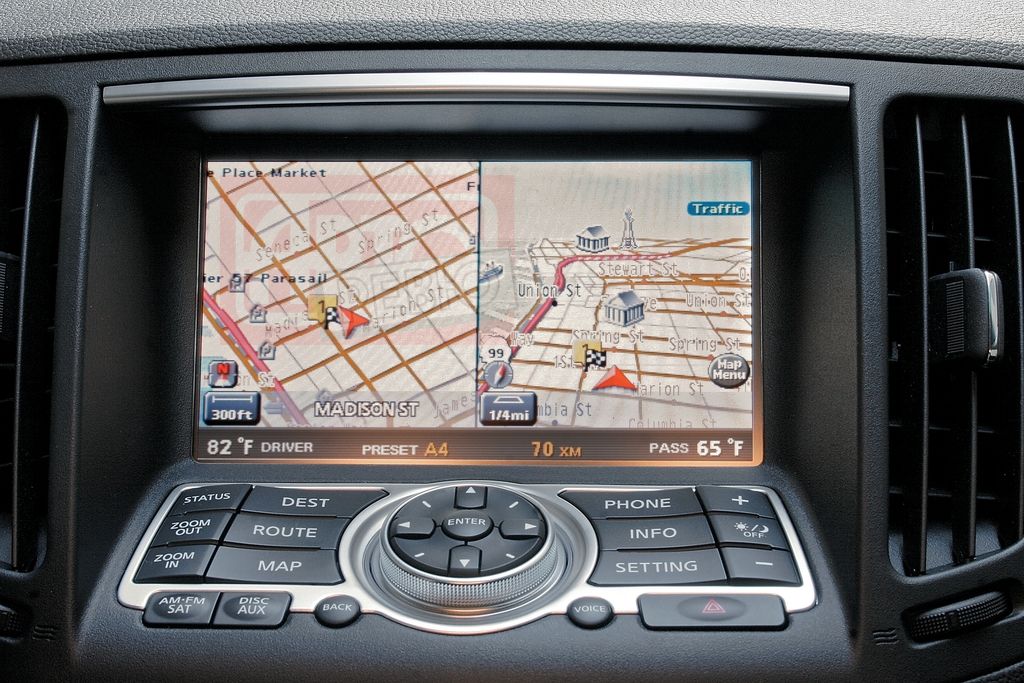 |
| The Infiniti instrument panel — beautiful and clear. Though, I've seen something similar in a Honda… | The controls of the Infiniti are not complicated, but you have to reach for the buttons, and you can't find the hazard light button on the right by touch |
 | |
| Above the key fob slot — buttons for the trunk, the VDC stability control system and adaptive AFS headlights | At the bottom right on the steering wheel — buttons for the radar cruise control, which maintains distance on a calm highway |
They could have turned me away, had I not explained that the purpose of my visit was not journalistic, but testing. After all, I came to test the Infiniti G37 Coupe. And whether I write about it later — that's a secondary question…
Fortunately, the explanation was accepted. Because I would have had to spend half an hour proving I wasn't a camel, and then fly another five hours from Atlanta to the other end of the West Coast — to Seattle, Washington state.
I discovered a different America.
No, no, the food here is fine too — American-style. Chips, chips everywhere. But the roads around Seattle…
Half an hour on the ferry to Bainbridge Island — and it's like we're in the Moscow suburbs. On the sides — familiar mixed forests: spruces, pines, "now a birch, now a rowan, a willow bush over the river." If not for the double yellow line — it would be exactly the Rogachevskoye Highway. Few cars, plenty of turns. And half an hour later, the leader in an Infiniti G35 sedan turns onto some remote path, and I'm in seventh heaven. For the first time in the States, I got a real rally special stage!
As soon as the escort — a local racer hired to lead journalists — realizes I won't fall behind, the drive begins. As a well-coordinated pair, like a fighter squadron, we throw our Infinitis from turn to turn — sometimes even with banked corners. Left, right, unloading the suspension on a crest, landing, braking, catching a slide — and again left, again right…
| The keyless access buttons on the doors — like on Nissans… | …and the fin antenna — like on a BMW? |
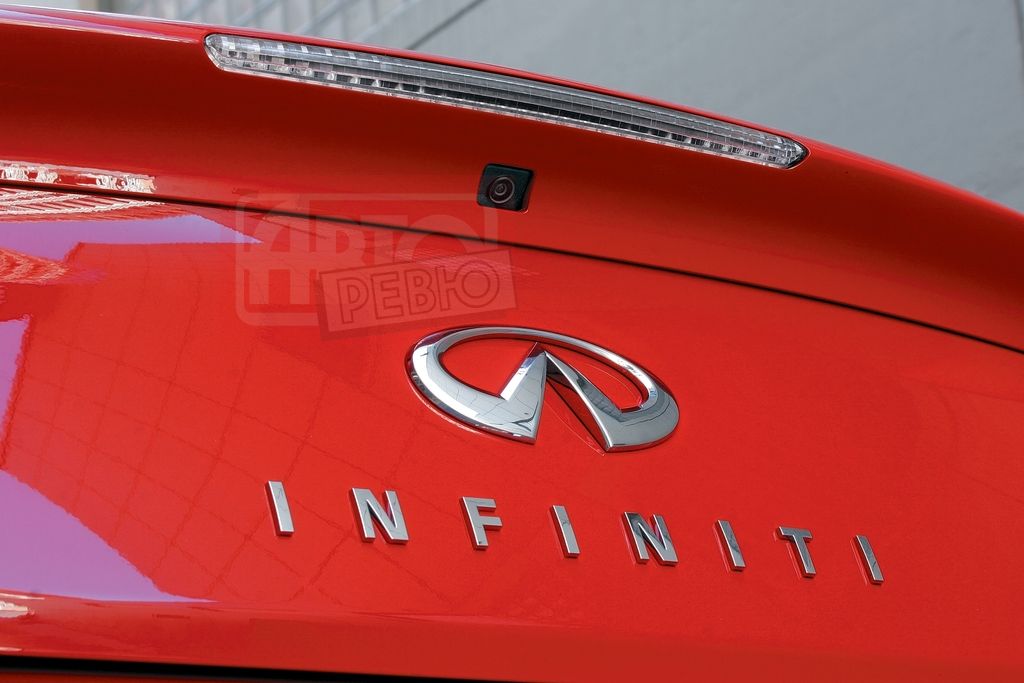 | 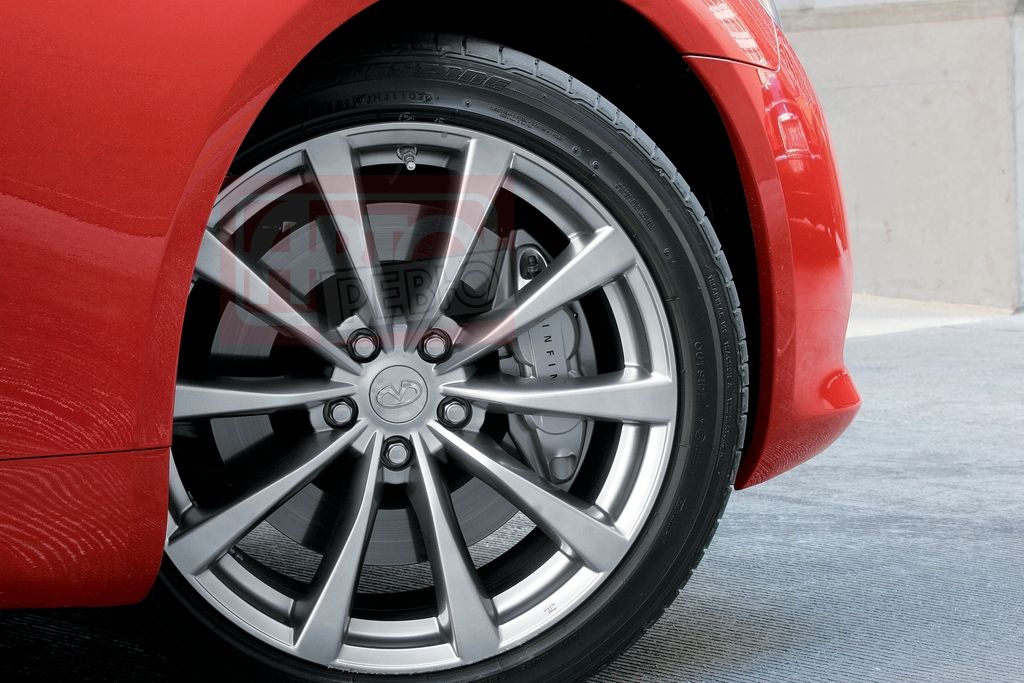 |
| The RearView rear-view camera — an indispensable thing! | The G35S (Sport) version has the most powerful and impressive brakes |
And what else was the Nissan Skyline of the V35 series, aka the Infiniti G, created for? Was it not for this that in the late 90s the Nissan people appointed Katsutoshi Mitsuno, who once led the Le Mans racing program, as the head of the new "Skyline team"? The FM layout, Front Midship, with the engine within the wheelbase. Almost perfect weight distribution. Tricky double-wishbone front suspension and multi-link rear… Fine-tuning at the Nordschleife. And, of course, the fighting engine of the glorious VQ series.
What is all this for, if not for five minutes of pure driver's bliss on a forest road on Bainbridge Island?
The current Infiniti G35 sedans and the newest G37 coupe, for whose presentation I flew to Seattle, are cars of the new V36 series, which recently replaced the previous V35. In essence, this is a deep modernization of the Infiniti G and Skylines of 2000. The concept, the FM platform, the design of the components — all unchanged. But the coupe body is redesigned — it has become 36% stiffer. In the suspension of cars of both generations, there are almost no common parts. And if the Infiniti G35 sedans kept the same engine — the VQ series "six" of 3.5 liters, then the coupe debuts a new unit, the VQ37VHR. The displacement is 200 "cubes" more, power has grown from 306 to 330 hp. The five-speed "automatic" — with an honest manual mode, where the gear selected by the paddle behind the steering wheel is held, and the engine can be revved to the limiter. The drive of the six-speed "manual," which is offered optionally in the States, has been refined. And the picture is completed by a self-locking differential with a viscous coupling — as before, it can be ordered in a number of trims.
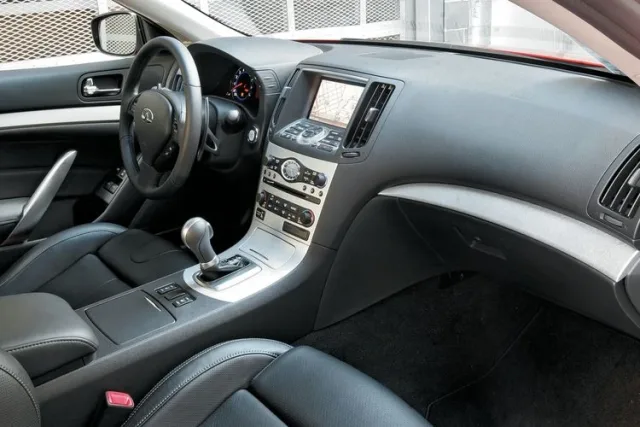
The interiors of the coupe and sedan of the G series are identical. A driver-oriented mood, a comfortable seating position, an instrument panel that adjusts with the steering wheel… The aluminum is beautiful, but the plastic and leather could be better
"Beware, BMW 335i!" — the headlines of foreign articles about the Infiniti G37 scream. Is it really true?
The seating position is good, driver-oriented. The seats are massive but hold you in corners. The clutch on the car with the "manual" is a bit "empty," but it doesn't annoy with its long travel. The short, typically Nissan gear lever shifts clearly — even more pleasant than on BMW "threes." And vibrations are almost conquered — except that the knob tingles slightly at high revs, despite the rubber inserts in the drive.
The "automatic" is also good — it shifts quickly and almost always on time. True, a sport mode is missing, but you can take control yourself by pulling the leather paddles toward the steering wheel.
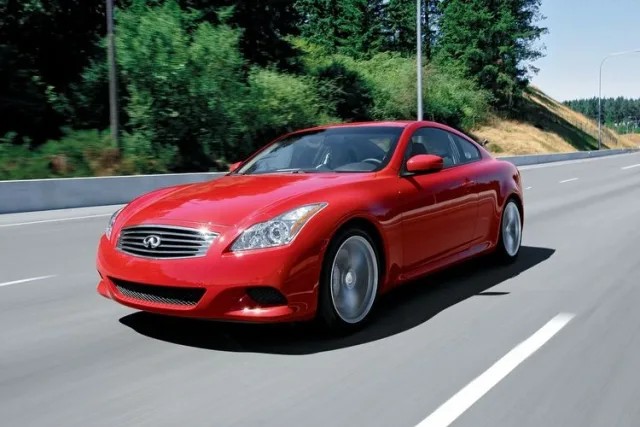
The appearance of the Sport version coupe (and it is these cars that will be supplied to Russia) with a more ornate front bumper appeals rather to Asian aesthetic values than to European ones
The "six" under the long hood sounds muted-piercing — with a hint of BMW. It's a pity the exhaust is completely devoid of bass notes. However, what can you say about the Skyline/Infiniti if even the BMW M3 doesn't rumble these days…
The acceleration is good — assertive and smooth right up to the maximum 7500 rpm, and the torque allows you to easily produce a bluish smoke from under the rear wheels even at medium revs. But to say that the Infiniti G37 is faster than the BMW 335i… No, that's unlikely. I remember very well with what unreal ease the 305-horsepower twin-turbo engine carries the "three." The Nissan engine doesn't have such thrust, especially "down low."
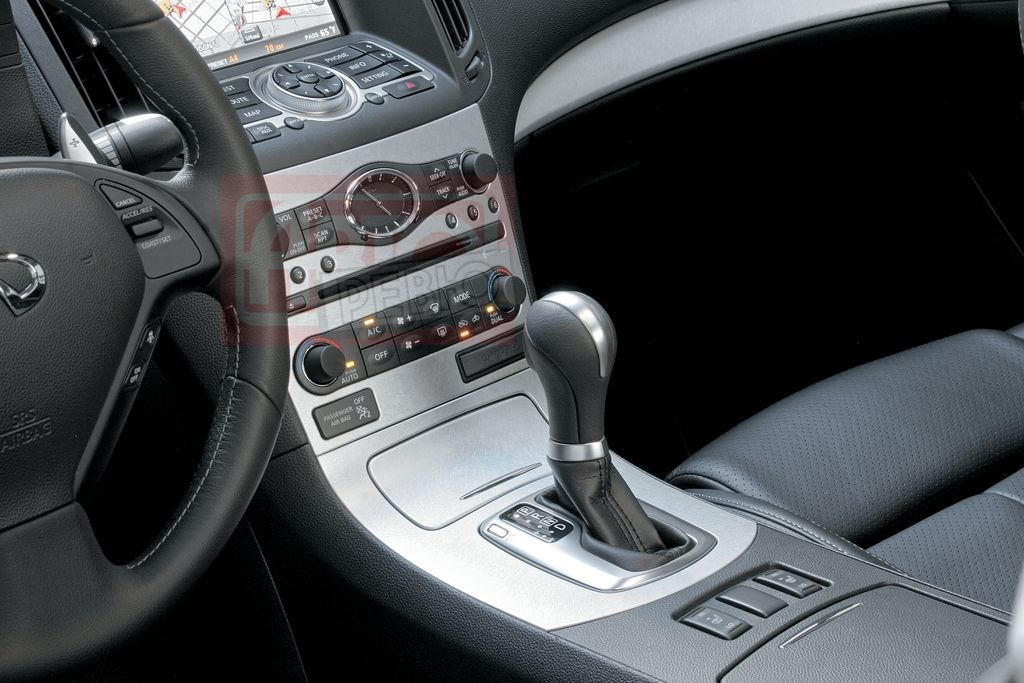 | 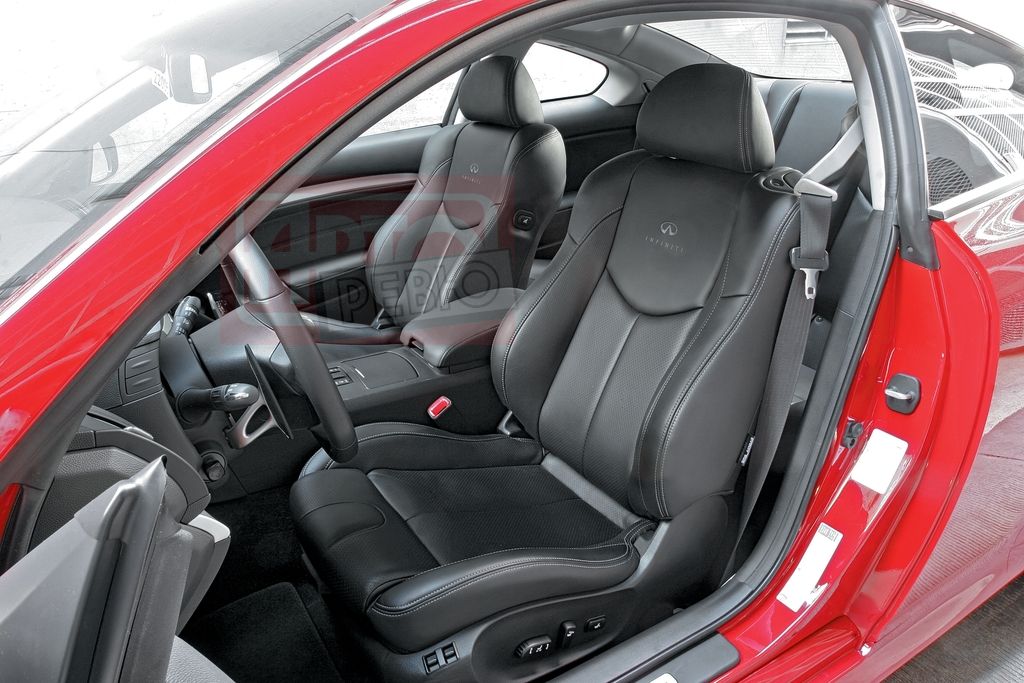 | 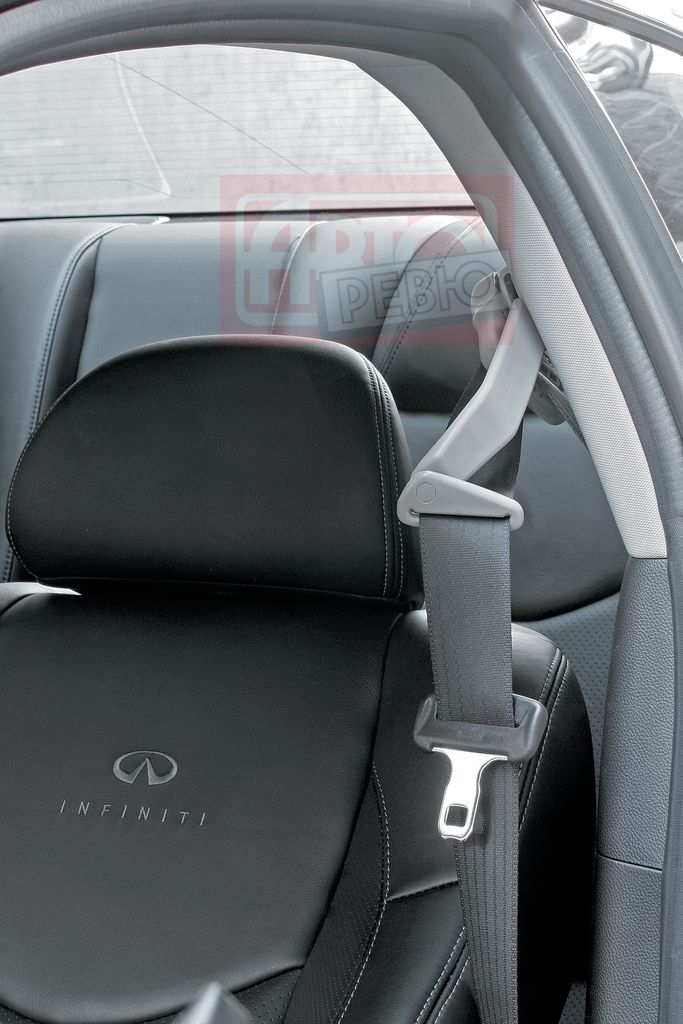 |
| Oval clock, round knobs of the dual-zone climate control, a convenient "automatic" selector and primitive seat heating buttons — this is Infiniti | The seats are wide but comfortable even for my slight build; there is an extendable knee support | On the BMW coupe, seatbelt delivery is automated, on the Infiniti there are only swivel guides |
And I also wondered: did it seem to me that the accelerator is not very informative? Perhaps this is due to the settings of the VVEL system — an analogue of BMW's throttle-less Valvetronic technology, where the mixture supply is regulated by changing the valve lift?
By the way, the fresh VQ37 engine with VVEL is heavier than the previous 3.5-liter unit. And the coupe itself outweighs the sedan: the rear-wheel-drive Infiniti G37 weighs almost as much as the all-wheel-drive G35x.
In terms of handling, the two-door mirrors the sedan — it's a solid, well-assembled car with excellent sporty manners. True, there are a few rough edges: on a forest road, the steering wheel either unexpectedly goes light or suddenly fills with excessive heaviness. You can feel that the suspension kinematics are far from ideal: the Infiniti dives into corners briskly and without resistance, but sometimes this results in a slight tendency to oversteer. But all these nuances don't stop you from enjoying the steering: you feel the car, and that's what matters. And the car holds the road superbly.
It's not quite up to BMW yet. But it's very close.
And that's exactly what the Nissan folks need. If Lexus with its comfort mainly targets cars with the three-pointed star, then Infiniti is specifically aiming at BMW. Especially when it comes to the G series with its Skyline combat heritage. Offering people an alternative to BMW — not so "branded," without the burden of social stereotypes, with a similar set of qualities and at a more attractive price.
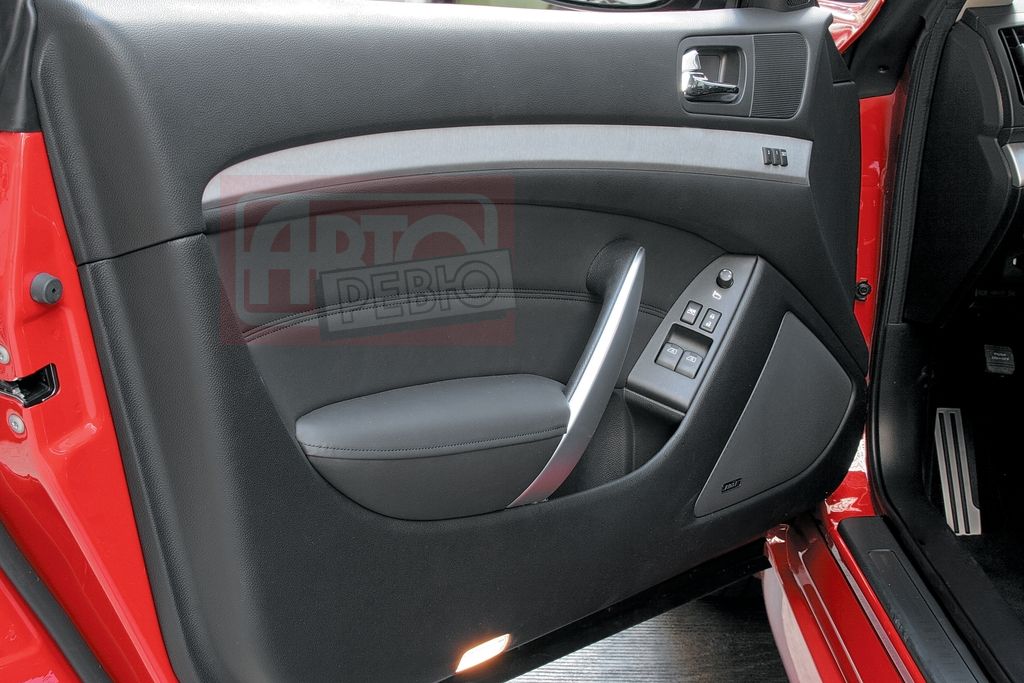 | 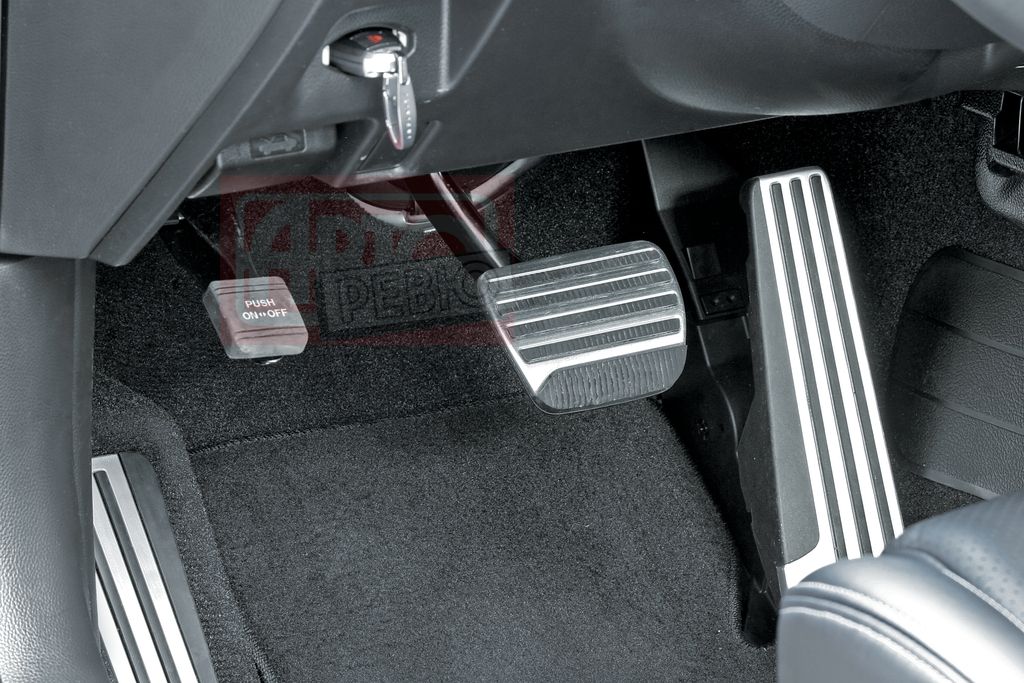 |
| Door panels are surprisingly ergonomic — in the spirit of old Mercedes | The "dead pedal" is a American thing. But the pedal covers emphasize the sporty character |
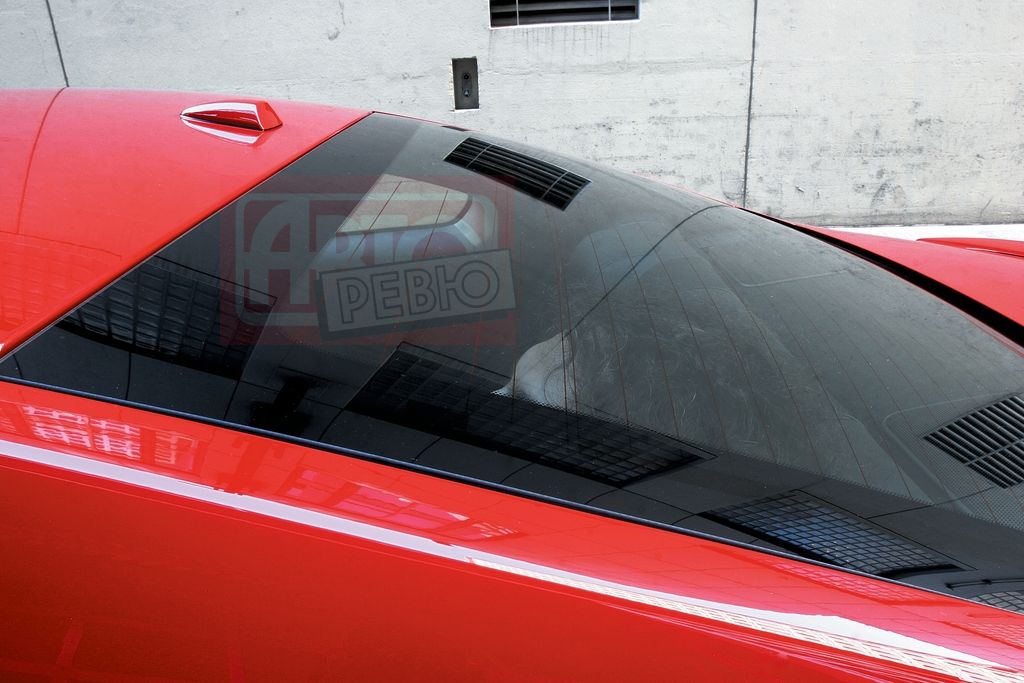 | 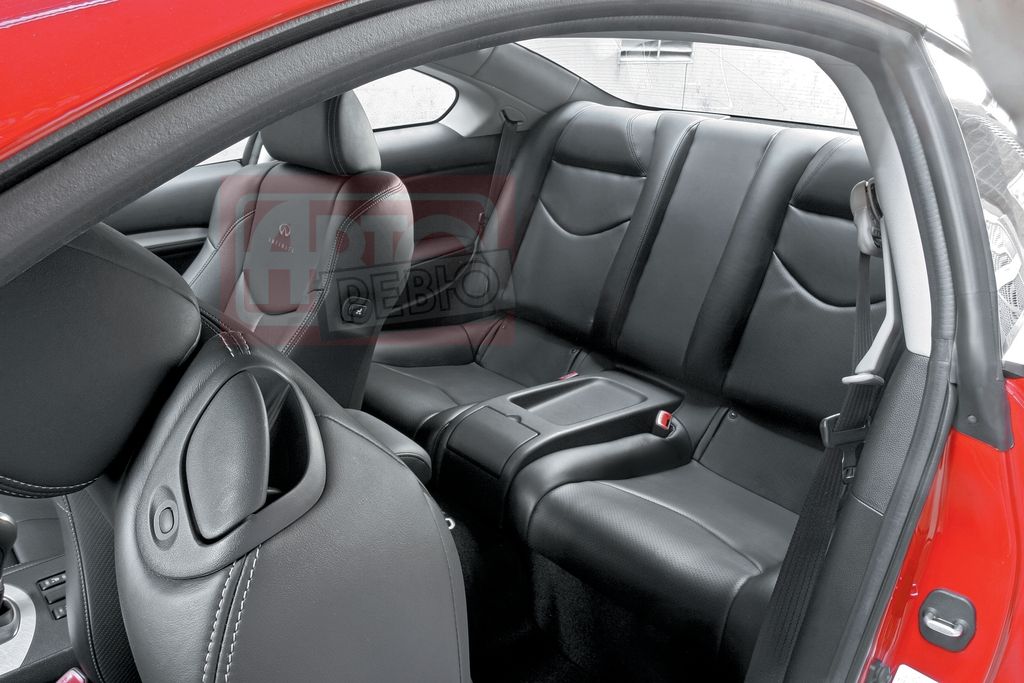 |
| The seat moves forward with a button, but it's cramped in the back. If you sit upright, your head touches the middle of the sloping glass — so hard, so cold… | |
And is it a coincidence that BMW and Infiniti (read: Nissan) share so many technologies? If throttle-less VVEL appeared later than "Valvetronic," then the ATTESA-ETC all-wheel drive came much earlier than BMW's xDrive. And the essence is the same — permanent drive to the rear wheels and a clutch that automatically engages the front. Moreover, the all-wheel-drive transmission will likely later be offered on the G37 coupe — after all, the two-door "3 Series" has Xi versions.
As for active steering systems, the Nissan folks have a trump card — the Infiniti G37 Coupe debuts the world's first fully electronically controlled steering chassis 4WAS (4 Wheel Active Steering). Yes, BMW has had active steering gears AS, integrated into the steering column, for four years. But the Nissan Skyline GTS coupe had a system with the loud name HICAS — High Capacity Actively Controlled Suspension — more than twenty years ago: hydraulics could steer the rear wheels by up to one degree, helping in corners. Then the Nissan folks moved to a sort of rack-and-pinion steering with an electric motor (Super HICAS). In Russia, this system is known as RAS (Rear Active Steering) and is offered only to buyers of large Infiniti M sedans, while in America it can be ordered on G series cars.
And on the Infiniti G37 Coupe, the Nissan folks went further — they combined Super HICAS and the steering gear. For the first time in the world, the 4WAS system's electronics can steer both the front and rear wheels!
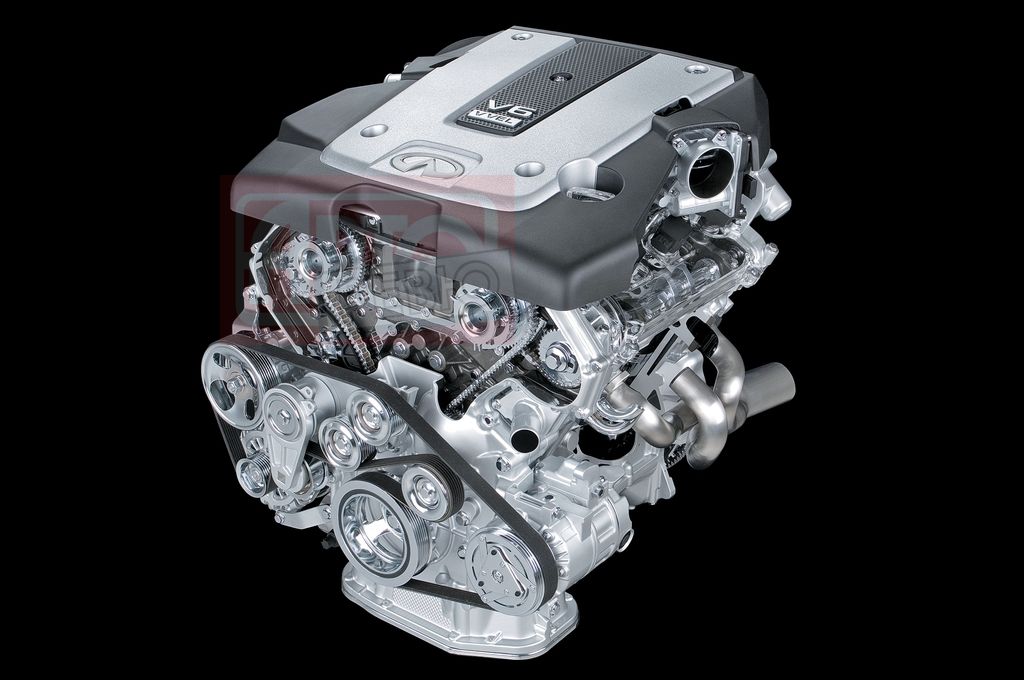 | 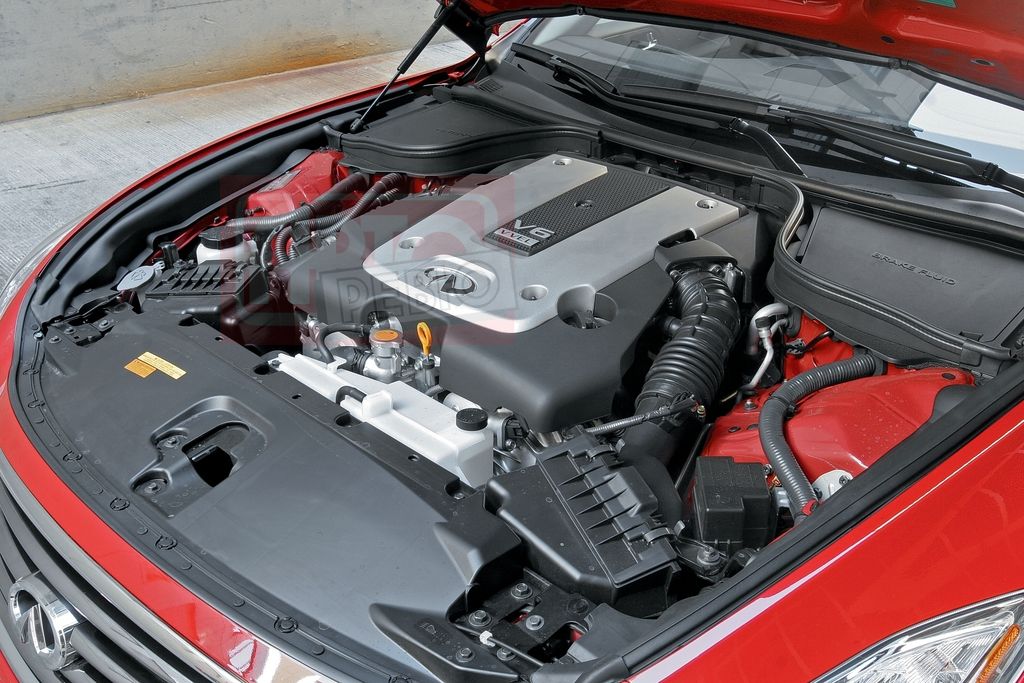 |
| The VQ37VHR engine with a displacement of 3.7 liters and an increased piston stroke of 4.6 mm is 65% unified with the VQ35HR engine of 3.5 liters. The main difference is the VVEL variable valve timing system combined with camshaft phasers. Note the throttle valve — as in BMW engines with Valvetronic, it is used at startup or in an emergency | A characteristic feature of the FM platform — the engine is shifted within the wheelbase |
I drove along that same forest road both in a car with a conventional chassis and in a version with fully active steering. The difference is obvious — the 4WAS system itself turns the car in corners, and the steering wheel has to be turned by smaller angles. But even the regular coupe with a "passive" chassis has no problems with understeer. In addition, the 4WAS electronics are tuned in a soft, moderate manner. If BMW's difference in steering sharpness between regular and "active" cars is 3.0 and 1.8 turns of the wheel from lock to lock, then for Infiniti it's 3.0 and 2.5 turns. Therefore, when switching from one coupe to another, you only feel the increased "friendliness" of the fully active version. Well, if you're driving "flat out" with the VDC stability control system off, then "at the limit" both cars behave almost identically.
By the way, the stability control system on the G37 Coupe was very pleasing — it corrects slides softly and unobtrusively.
In short, the Infiniti G coupe, thanks to its Skyline roots, is undoubtedly a driver's car. Now we just need to wait for spring, when the two-door Infiniti G appears in Russia, and arrange a comparative test against the BMW 335i and Audi A5. And a Mercedes CLK would also fit here, especially if the new model comes out by then.
How do you like that company — BMW, Audi, Mercedes, and Infiniti? Note that Lexus doesn't fit here — the Toyota folks don't have a coupe based on a small sedan. But the Nissan folks do. And with the most powerful engine among six-cylinder analogues. And, perhaps, with the most striking design.
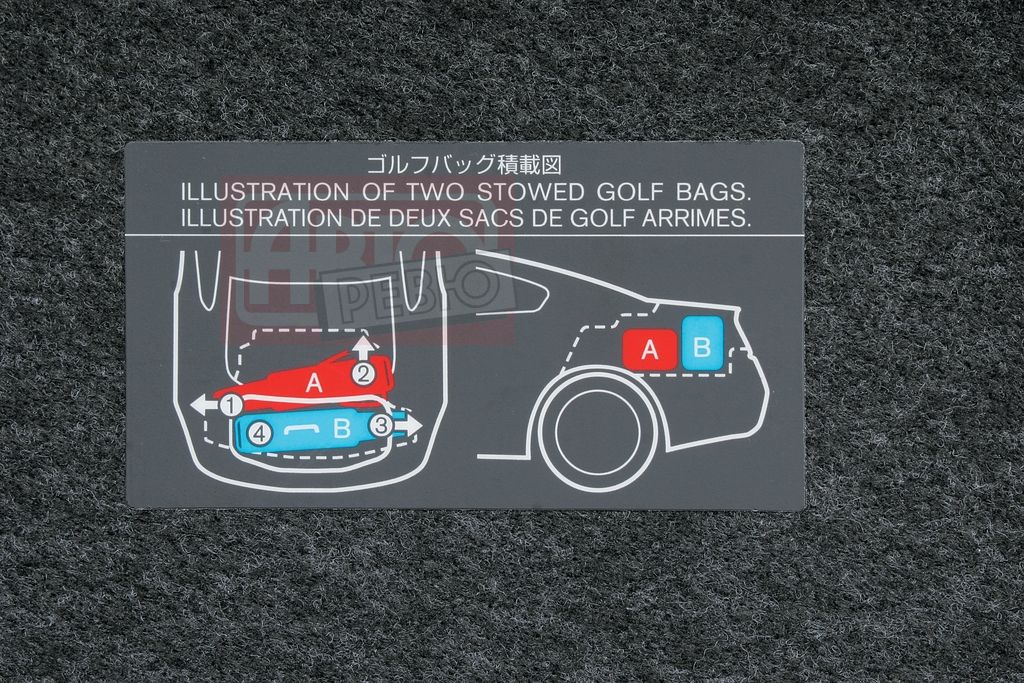 | 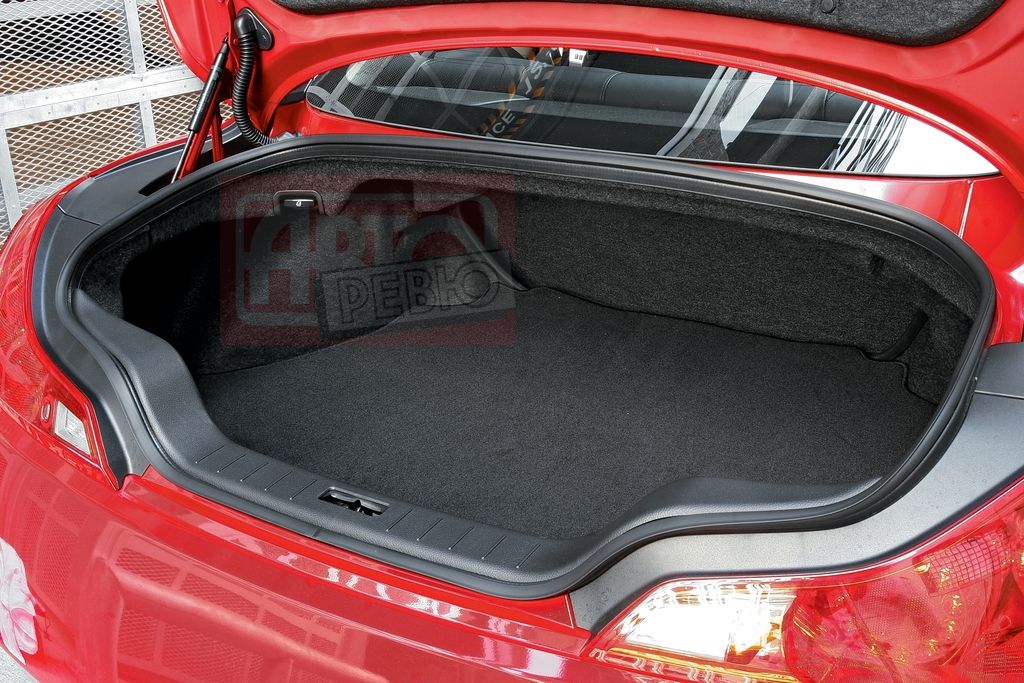 |
| There's an instruction on the trunk lid: without it, fitting two golf bags into the 210-liter compartment is problematic | |
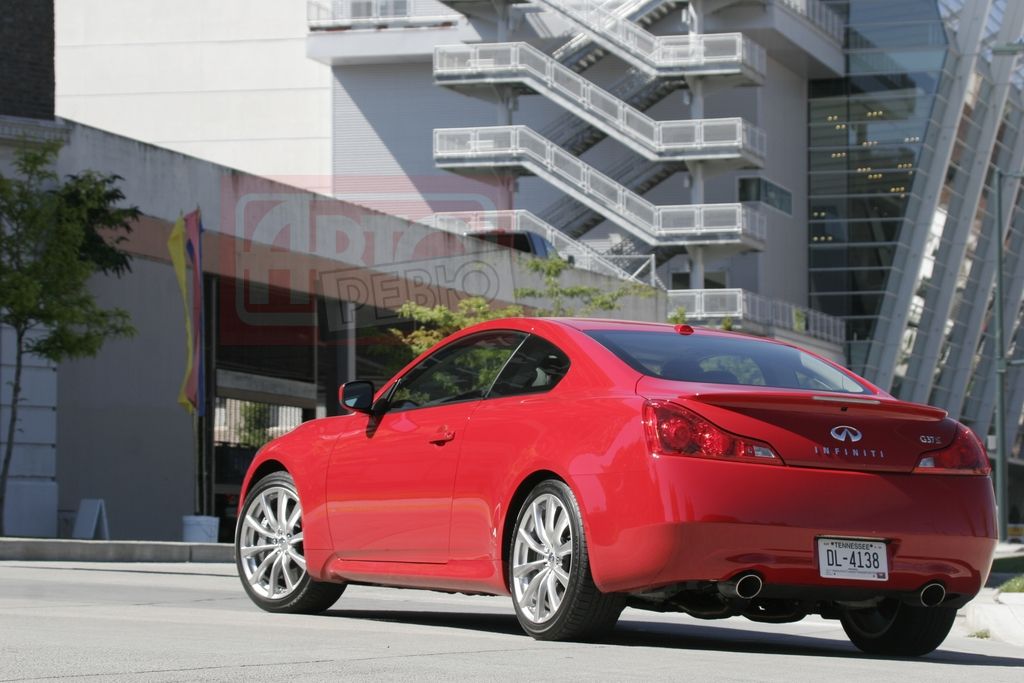
Great and mighty is Shiro Nakamura, the current Nissan chief designer! Over the past seven years, the futuristic wave-like streamlined forms of Infiniti and Skyline V35 series have not aged at all. True, in the new V36 series cars, I see a certain excess: if the previous G35 Coupe was laconic in a Japanese way, the current one already seems ornate. The headlights have spread up and sideways, the openings in the front bumper of the Sport version (and it's these cars that will be supplied to Russia) resemble a mouth twisted in a scream… And the chrome spoiler patch on the trunk lid of regular, "non-sport" cars is getting wider and wider. In vain.
But the interior has remained calm. True, in places it's still a Nissan — due to details like mundane plastic, blue instrument scales in the style of Honda, or the instrument cluster that adjusts with the steering column, like in the platform-sharing Nissan 350Z coupe. But you glance at the oval dial of the analog clock — no, it's still an Infiniti. And what about the trim panels? The wooden panels are genuine rosewood with a warm, lively surface. And the aluminum, matted with a clever technology to imitate Japanese rice paper washi, is a masterpiece.
However, the audio system with Bose acoustics with 11 speakers and a 9.3-gigabyte hard drive disappointed. The Nissan folks call it a "studio on wheels" — they even patented the name Studio on Wheels. But the "studio" doesn't sound great — in many Mazda cars, Bose audio systems play no worse. Not to mention the expensive "music" in BMWs and the Mark&Levinson in Lexuses...
And the climate control? Not only do the Infiniti's set temperature digits appear on the screen only after touching the "climate" knobs. But also the adjustment characteristic is clearly nonlinear — from the vents comes either cold air or immediately too hot.
However, in the States, this is a national feature. If the air conditioner doesn't blast the American in the face with bitter cold, then life is passing by!
— But isn't that the norm in Europe? — Bill Brooks, an American Infiniti manager, is surprised. — What climate control settings are preferred in Russia, European or American? I'll talk to our engineers…
For the Infiniti brand, it's now very important to know the preferences of customers in promising markets. After all, in America, Infiniti's share is not growing as fast as desired — in 2006, sales even dropped from 136,000 cars (in 2004) to 121,000. Of course, the new G37 Coupe will liven up trade now — after all, the previous G35 coupe sold two or three times more briskly than the BMW 3 Series coupe. The new compact crossover Infiniti EX debuts — a preemptive strike against upcoming competitors Audi Q5 and Mercedes GLK. Next year, a new Infiniti FX will come out. Based on the G37 coupe, a convertible will likely appear…
The outstanding ethnologist Lev Gumilev, whose parents were poets Nikolai Gumilev and Anna Akhmatova, gave our language the concept of "passionarity," derived from the Latin passion — "passion." According to his theory, passionarity is the energy inherent in young peoples and tribes, the driving force of conquerors and warriors. While a nation develops and expands its borders, it remains in a state of passionarity. When it enjoys the fruits of victories, an inertial phase sets in. And the decline of an empire is already the phase of obscuration.
Here is Infiniti — a truly passionate brand. Young, daring, full of energy. If this wave of passion doesn't subside prematurely, we may well witness Infiniti's expansion into the markets of China, Eastern Europe, and, of course, Russia. After all, the world needs a real alternative to BMW, doesn't it?
| Specifications | ||
| Parameters | Vehicle | |
| Infiniti G37 Coupe | ||
| Body type | 2-door coupe | |
| Number of seats | 4 | |
| Length, mm | 4651 | |
| Width, mm | 1824 | |
| Height, mm | 1392 | |
| Wheelbase, mm | 2850 | |
| Track front/rear, mm | 1547/1562 | |
| Trunk volume, l | 210 | |
| Curb weight, kg | 1640 (1664)* | |
| Gross weight, kg | 2112 | |
| Engine | petrol, with distributed injection | |
| Location | front, longitudinal | |
| Number and arrangement of cylinders | 6, V-shaped | |
| Displacement, cm³ | 3696 | |
| Cylinder bore/piston stroke, mm | 95.5/86.0 | |
| Compression ratio | 11.0:1 | |
| Number of valves | 24 | |
| Max power, hp/rpm | 330/7000 | |
| Max torque, Nm/rpm | 366/5200 | |
| Transmission | automatic, 5-speed (manual, 6-speed) | |
| Gear ratios | I | 3.84 (3.79) |
| II | 2.35 (2.32) | |
| III | 1.53 (1.62) | |
| IV | 1.00 (1.27) | |
| V | 0.84 (1.00) | |
| VI | — (0.79) | |
| reverse | 2.76 (3.45) | |
| final drive | 3.69 | |
| Drive | rear | |
| Front suspension | independent, coil spring, double wishbone | |
| Rear suspension | independent, coil spring, multi-link | |
| Front brakes | disc, ventilated | |
| Rear brakes | disc, ventilated | |
| Tires | 225/50 R18 (225/45 R19 front, 245/40 R19 rear) | |
| Maximum speed, km/h | n.a.*** | |
| Acceleration 0—100 km/h, s | n.a. | |
| Fuel consumption, l/100 km | urban cycle | 15.7 (16.6)** |
| extra-urban cycle | 11.8 (10.9)** | |
| combined cycle | n.a. | |
| Fuel tank capacity, l | 75.7 | |
| Fuel | petrol AI-95 | |
| * In parentheses — data for Sport version | ||
| ** Converted from US EPA standard (miles per gallon) | ||
| *** N.a. — not available | ||
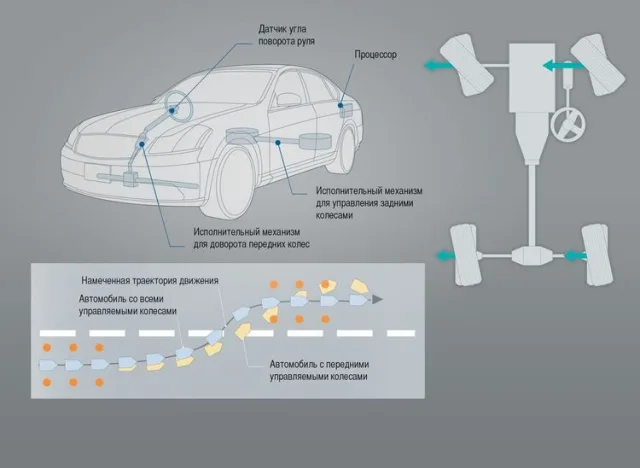 | ||
| The 4WAS system on the Infiniti G37 Coupe is a world premiere: it combines an additional gearbox in the steering column and an electromechanical drive for rear-wheel steering (top left) | This is how Nissan engineers demonstrate the benefit of the 4WAS controlled chassis: a car with steerable rear wheels suffers less from understeer, responds better to the steering wheel at the start of a maneuver, and is more stable in the final phase of the "moose test" (top left) | The electronic control unit of the 4WAS system, checking sensor readings, itself "turns" the steering column, changing the angle of the front wheels, and also controls the rear wheels, which can turn up to one degree — in the same direction as the front ones (right) |
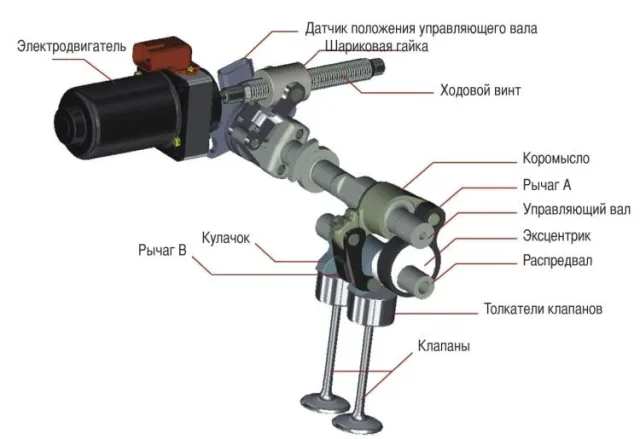
In essence, the VVEL system (Variable Valve Event and Lift) repeats the idea of Valvetronic, which BMW introduced back in 2001. However, Nissan claims that their design is twice as simple — it has half the parts, is 20% lighter, and responds a third faster
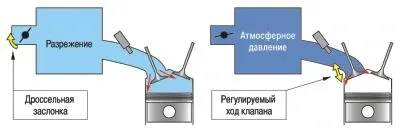 | |
| In a traditional engine, during the intake stroke, the throttle valve creates a vacuum that hinders cylinder filling | In an engine with VVEL, the amount of mixture supplied is determined by the valve lift — there is no vacuum in the intake manifold, meaning less pumping losses and lower fuel consumption |
Igor Vladimirsky
Prince, Skyline… Infiniti G
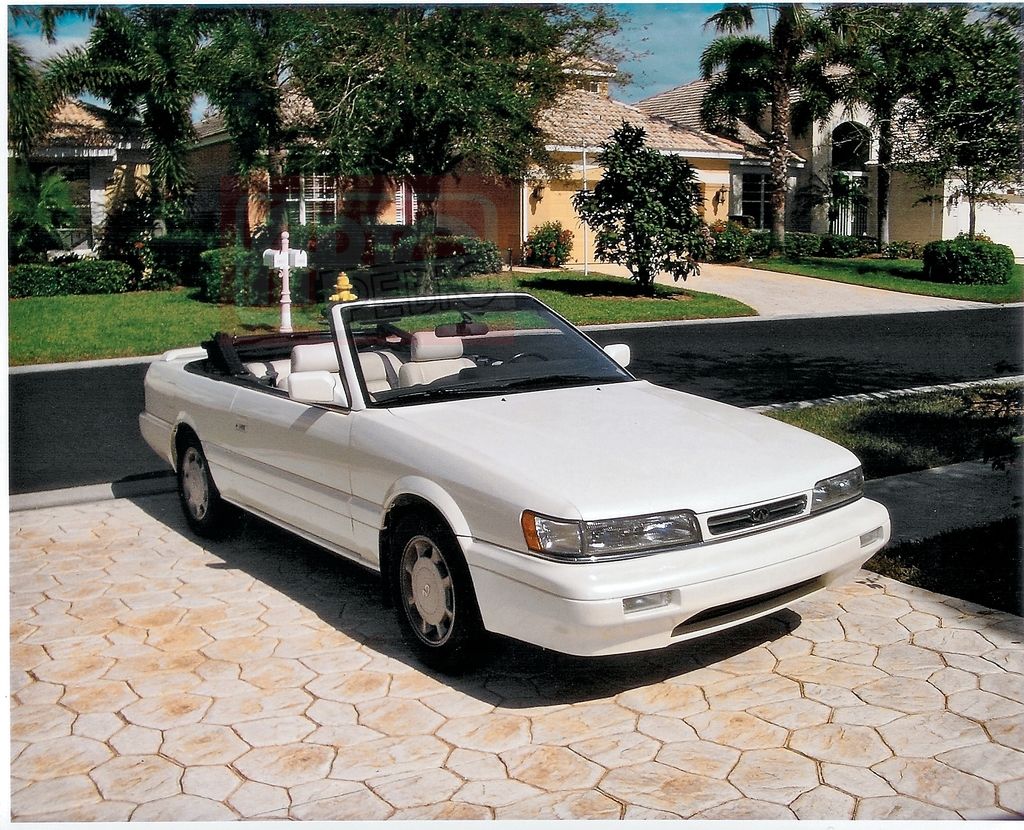
Throughout Infiniti's history, which dates back to 1988, coupes have been rare in this brand. The debut was unsuccessful: in 1990, the two-door Infiniti M30 coupe appeared, essentially a rebadged Nissan Leopard for the Japanese market. Even the arrival of a convertible did not save the model: due to weak demand, production of the M30 was discontinued as early as 1992. Later, in the compact segment, Infiniti offered only front-wheel-drive sedans I30 and I35 — essentially luxuriously trimmed Nissan Maximas, which were not particularly loved even in America. Everything changed when Carlos Ghosn took over Nissan in the late 90s. Then the revival began: the new Nissan Skyline series V35 was designed with an eye on the American market, where it was to become the Infiniti G. And so it happened: in June 2001, the Skyline launched in Japan, and in late 2002, the Infiniti G35 sedan reached dealers in the US.
Americans received the new Infiniti models favorably — the G series sedans and coupes account for about 40% of all brand sales. But in Japan, everything turned out to be more complicated. After all, the Skyline is a true legend for that country…
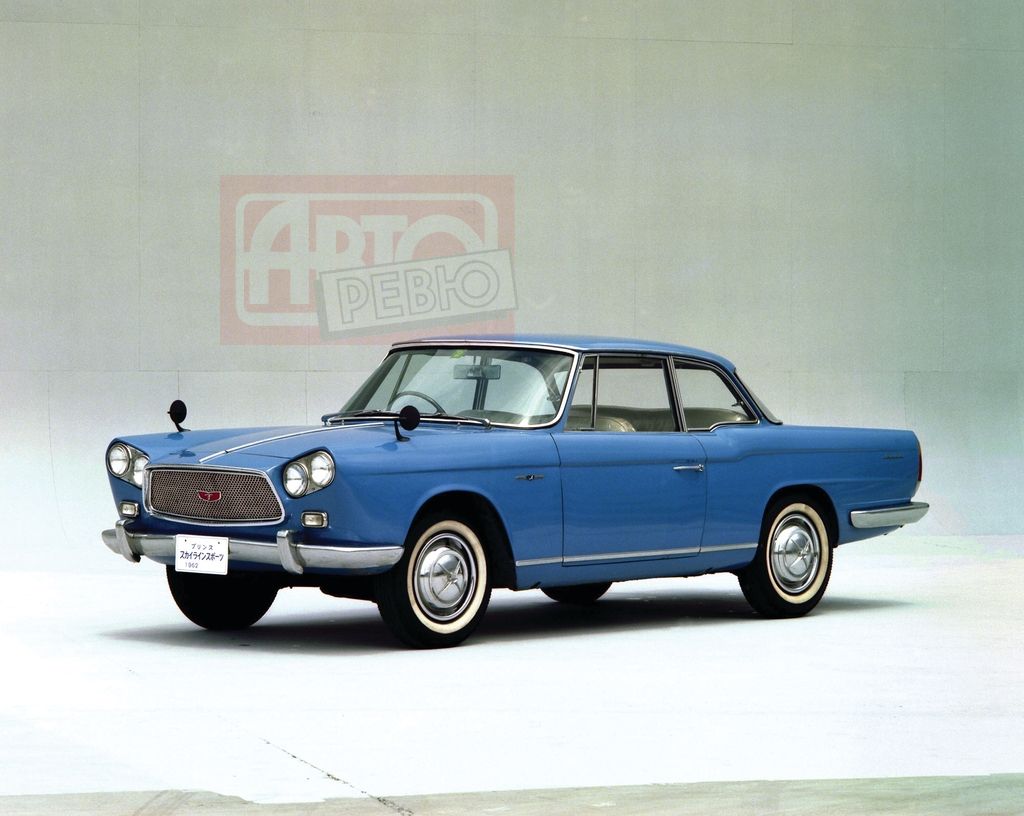 | 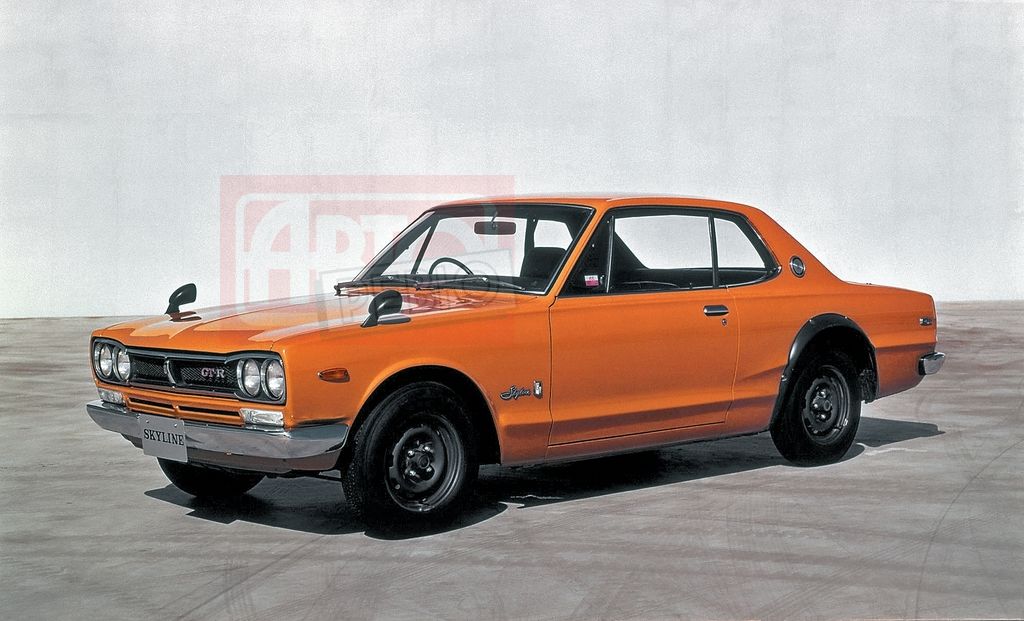 | 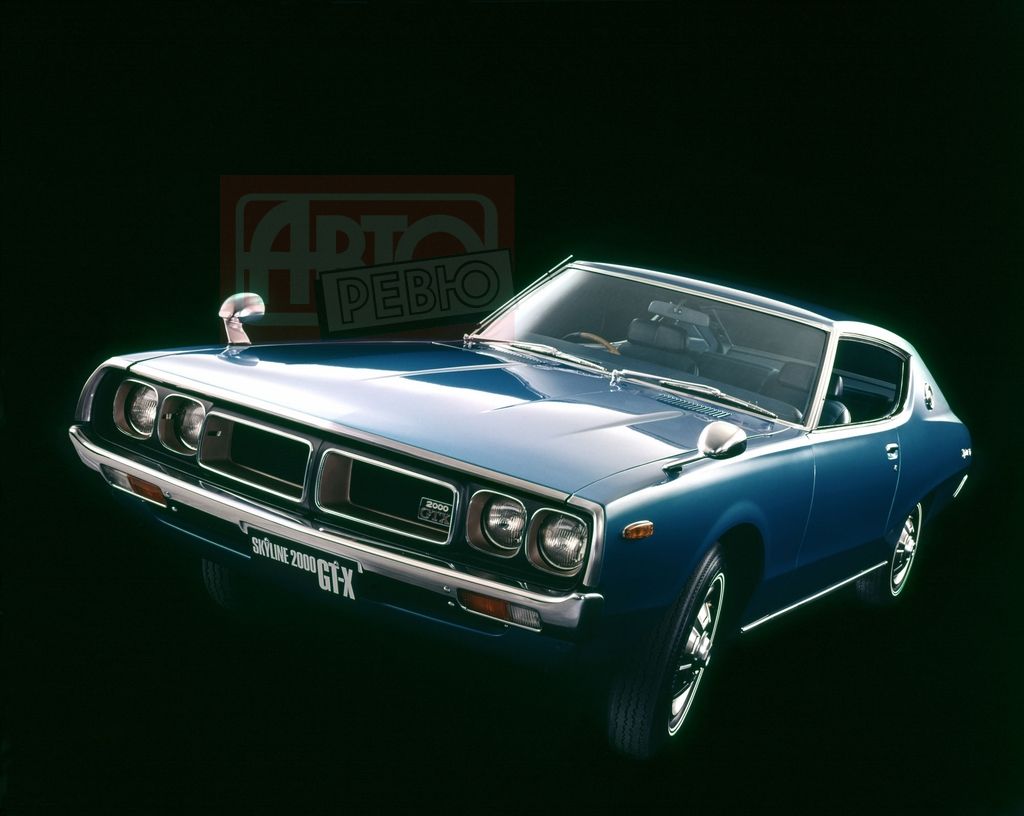 |
| The first Skyline coupe — Prince Skyline Sports of 1960. Its design was worked on by the famous Italian Giovanni Michelotti, under the hood — a 1.9-liter engine with 94 hp from the older Gloria sedan. In two years, only about 60 cars were produced, including convertibles | The name Nissan Skyline GT-R was first heard in 1969, when the third generation (C10) was released — first a sedan, and a year later a two-door coupe. The two-liter inline "six" with two camshafts produced 160 hp. Suspension — fully independent | In the Nissan Skyline coupe of the fourth generation (series C110, 1972—1977), the influence of the American school was again felt, as in the first sedans of the 50s — the car resembled a typical overseas muscle car. Engines — 1.5—2.0 liters with 88—160 hp |
The history began half a century ago at Prince Motor, which was organized after the war on the basis of the Tokyo aircraft factory Tachikawa Aircraft Works. In 1947, they mastered the production of motorized tricycles Tama, and in 1954 switched to full-fledged cars under the Prince brand. The name Skyline first appeared in Japan exactly 50 years ago — in April 1957, a larger and more expensive Prince Skyline with small tail fins, styled after American sedans, was released. At first, Prince cars could not boast of loud successes, but in 1964, the Skyline 2000GT version with a boosted to 165 hp inline two-liter "six" from the older Gloria model debuted at the Japanese Grand Prix and lost only to the Porsche 904. The racing triumph created demand for road-going "hot" versions — with three Weber 40DCOE carburetors, the two-liter six-cylinder engine of the Prince Skyline 2000GT developed 127 hp. And the chassis was advanced for its time — a five-speed gearbox, limited-slip differential, disc brakes with two-piston calipers at the front on the GT-B version…
In the 70s of the last century, Skylines became the main tool for Japanese street racers and drifters. It was in the third generation, in the C10 series, that the world first saw the Skyline GT-R — a car equipped with an inline "six" with 160 horsepower, created on the basis of the engine of the racing car Nissan R380 with a mid-engine layout. It was a real monster among Japanese cars of that time! Interesting fact: in 1966, Nissan, under a state program of industrial consolidation, absorbed Prince Motor, after which the Prince brand disappeared, and Skylines and Glorias became Nissans. Prince's engineering developments are deeply rooted in Nissan's DNA, and even ordinary Skyline versions — sedans, coupes, and station wagons — could boast not only inline "fours" of 1.6–2.0 liters, but also more powerful inline "sixes" of 2.0 and 2.4 liters.
The fifth generation of the Skyline (C211 series) in 1980 was a pioneer: it was the first Japanese production car with a turbocharged engine. The top version of the 2000RS-X coupe received a two-liter four-cylinder with a turbocharger (without an intercooler), producing 205 horsepower. The Skylines also featured Japan's first 16-valve engines (this happened in 1981), and later, electronically controlled shock absorbers. But the real technological peak came with the last series, R32, R33, and R34, produced from 1989 to 2002. There were the ATTESA all-wheel drive system, the HICAS all-wheel steering system, and turbocharged inline six-cylinder engines. In the R31 series (1985–1992), the most powerful versions produced 180–210 hp, and in August 1989, along with the R32 series, the legendary GT-R returned — a top modification with a 2.6-liter six-cylinder, twin turbos, and an intercooler. Factory power was officially limited to 280 hp by Japanese regulations, but after modifications, Skyline engines easily produced 400 or more horsepower. And how many victories did these cars achieve on Japanese racing tracks!
 |
|
| In 1981, the sixth-generation Nissan Skyline (R30) debuted, in which the wedge-shaped silhouette characteristic of all Skylines for the next twenty years is first discernible. Engines — with a displacement of 1.8–2.8 liters and power of 91–205 hp. | The eighth-generation Nissan Skyline (R32) appeared in 1989. The station wagon disappeared from the lineup forever, but the powerful GT-R version returned — these two facts firmly cemented the Skyline's reputation as a driver's car. Engines with a displacement of 1.8–2.6 liters and power of 91–280 hp were offered. |
 |
 |
| The Infiniti M30 coupes and convertibles of the 1990 model year with a three-liter V6 engine producing 162 hp and a four-speed automatic — the first, unsuccessful attempt to bring two-door Infinitis to the American market |
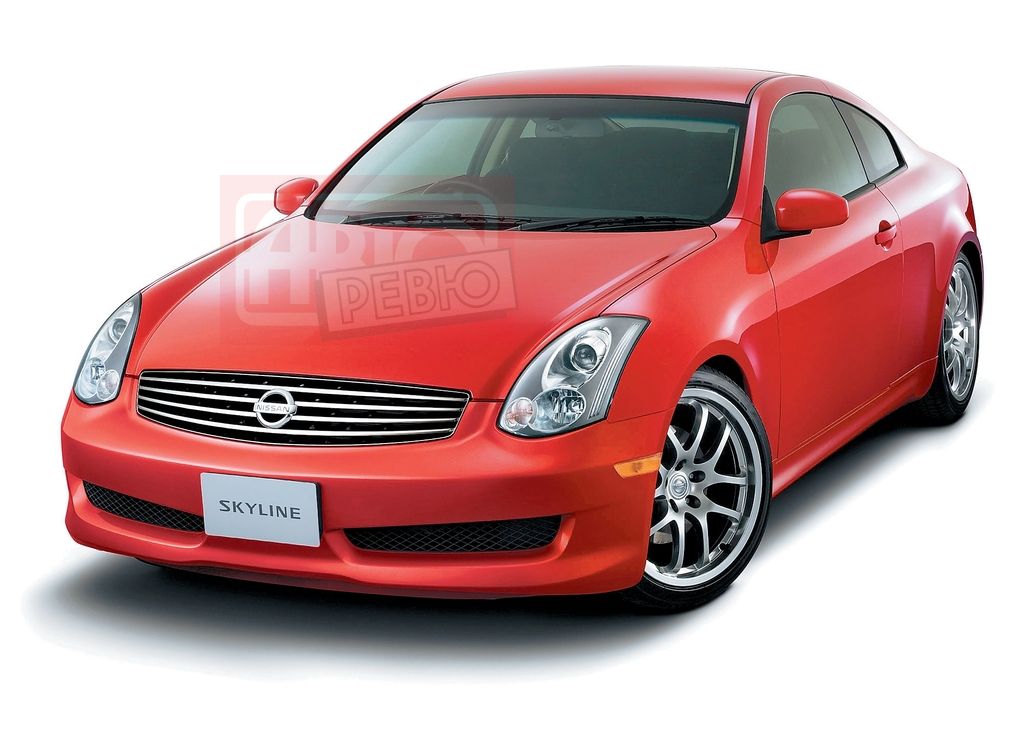
The eleventh-generation Nissan Skyline coupe of the V35 series. The Nissans were equipped with V6 engines of 2.5 liters (215 hp), 3.0 liters (260 hp), or 3.5 liters (280 hp). And the overseas relative Infiniti G35 — only with a V6 3.5 engine producing 260–298 hp. |
In Japan, over the years, a stable image of the Skyline as a true muscle car has developed: large, powerful, with a supercharged inline six-cylinder and mandatory round rear lights — the model's calling card since 1963. Tuners and street racers literally worshipped these cars. But despite all the racing glory, sales of the legend left much to be desired — by the end of the 90s, they fell the more, the louder the victories on the tracks were. That is why the eleventh generation, the V35 series, which debuted in 2001, differed so radically from its predecessors. Instead of chiseled edges, elegant smooth lines by Shiro Nakamura appeared, the wheelbase noticeably grew (although the overall length even decreased slightly), and instead of the inline six-cylinder of the legendary RB series, a V-shaped engine of the VQ series settled under the hood. It was a completely different car!
Japanese tuners ignored the new model, calling it "not at all what is needed." But mass sales, on the contrary, sharply went up! What can we say about the Americans — for them, it was not a Nissan at all, but an Infiniti: a spectacular, well-equipped car of a luxury brand with a sporty character. By the way, back in the 70s, the Skyline had export "twins" — for example, in Australia, the most powerful versions were sold as Datsun 240K/280K (sedans) and 240C/280C (coupes).
Now the sedans and coupes of the V35 series have given way to the new V36 generation — with redesigned bodies, suspensions, and a completely new 3.7-liter engine, which first appeared on the G37 Coupe two-door. And even the Japanese have already come to terms with the fact that inline six-cylinders on Skylines are a thing of the past…
But we will definitely still see round rear lights and twin-turbocharging on a Nissan — there is just over a month left before the release of the supercar with the legendary GT-R index.