
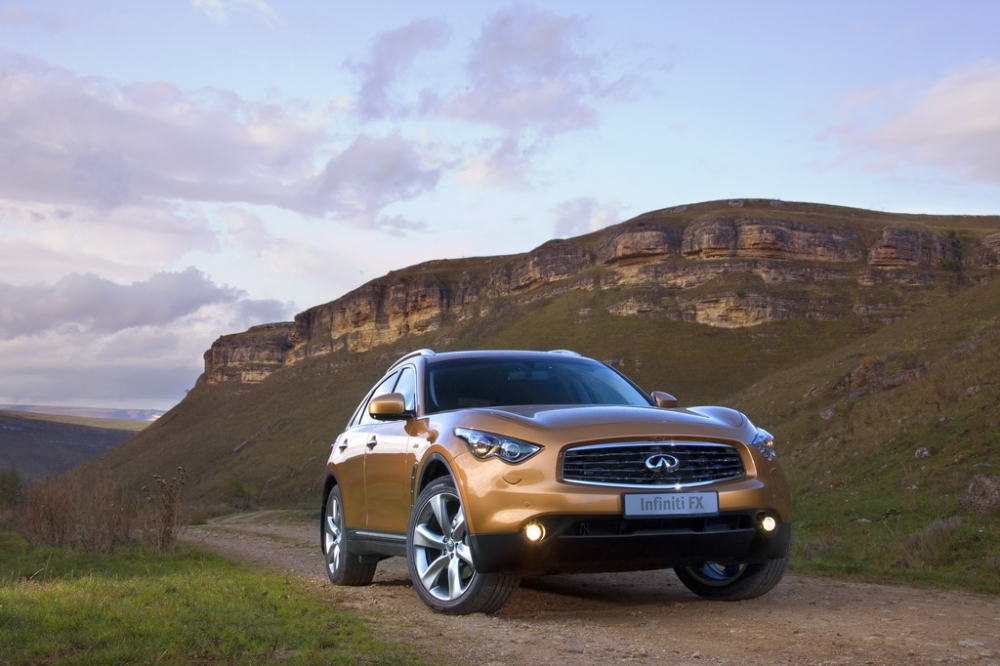
 These are exactly the associations the exterior of the new Infiniti FX evokes in me. The previous FX, although known as a black sheep among luxury crossovers due to its unconventional looks, still featured precise and strict lines. The hood line, straight as an arrow, flowed into an equally flat windowsill line parallel to the ground. The wheel arches were restrained for such a large car. The headlights were almost a perfect parallelogram. The chrome grille had flat horizontal slats. The bumpers naturally and unobtrusively continued the streamlined body. These are exactly the associations the exterior of the new Infiniti FX evokes in me. The previous FX, although known as a black sheep among luxury crossovers due to its unconventional looks, still featured precise and strict lines. The hood line, straight as an arrow, flowed into an equally flat windowsill line parallel to the ground. The wheel arches were restrained for such a large car. The headlights were almost a perfect parallelogram. The chrome grille had flat horizontal slats. The bumpers naturally and unobtrusively continued the streamlined body. |
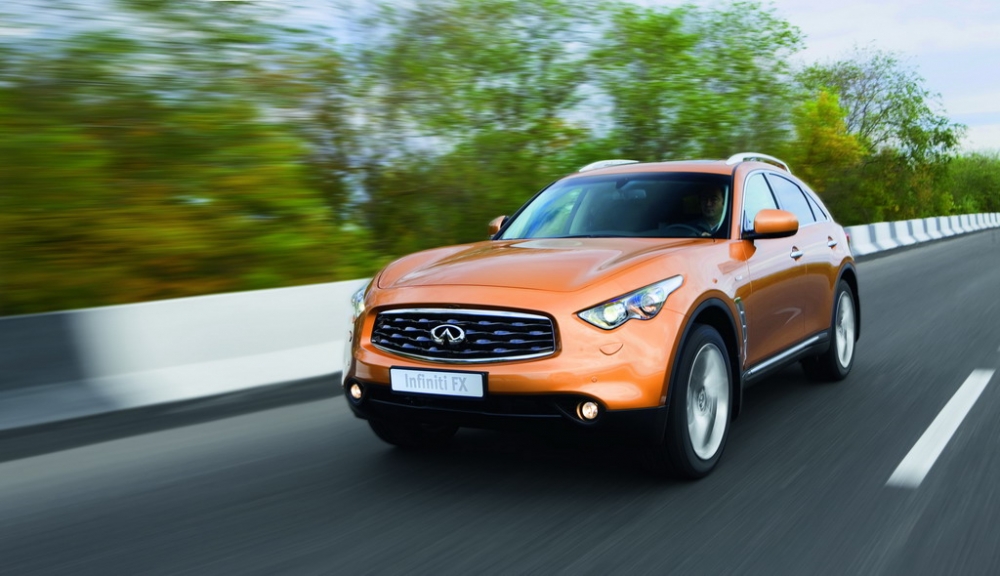
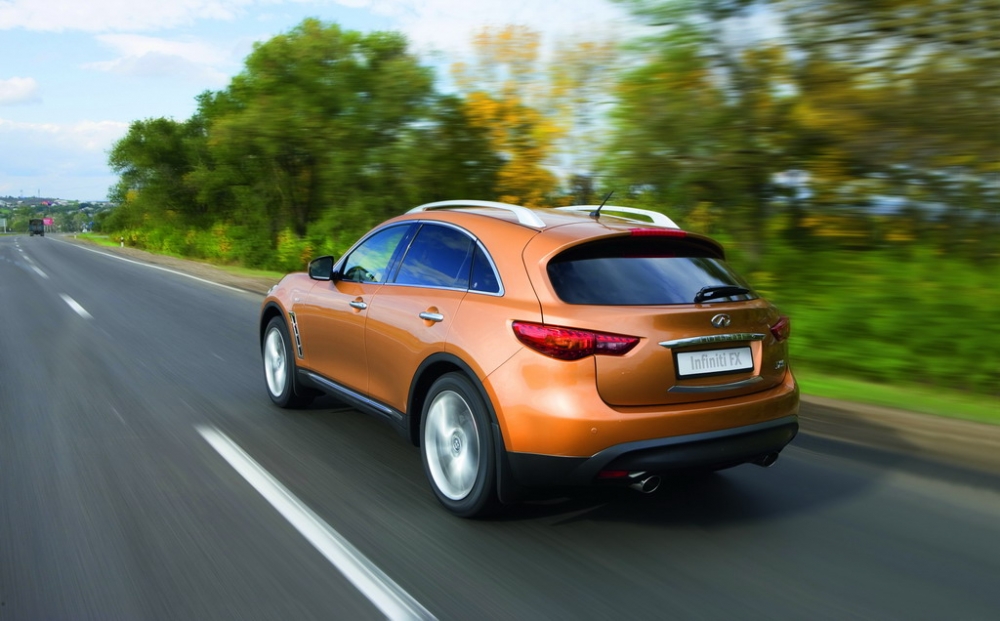
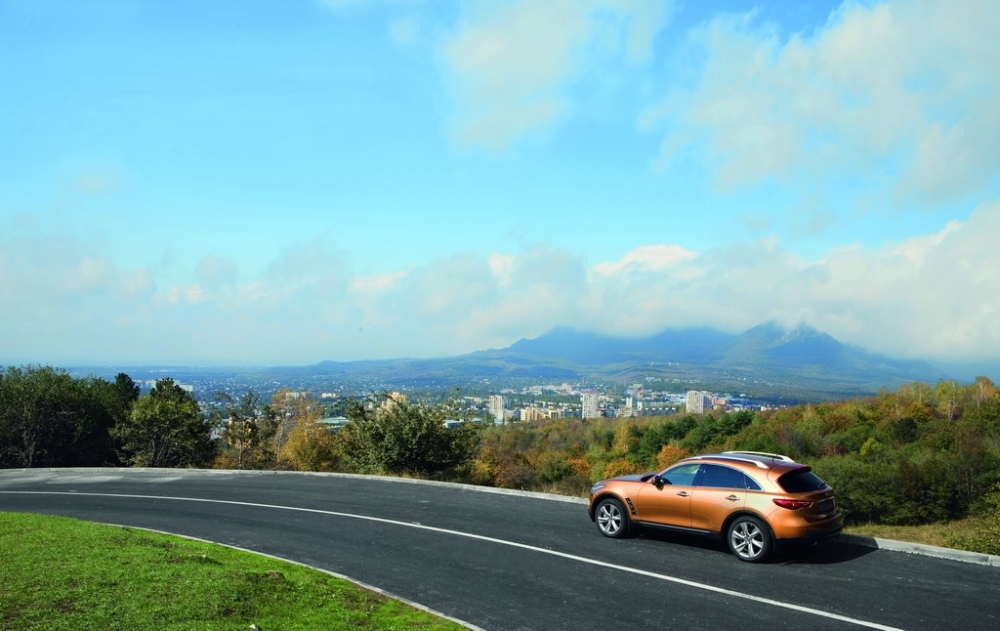 When creating the new generation, the designers clearly decided to add some flair. "Wow wow" – and the front fenders swelled in the signature catamaran style. "Wow wow" – and the beltline got a barely noticeable rise towards the rear. "Wow wow" – and the wheel arches became noticeably more rounded. The front ones so much that the metal "skin" on them burst, forming aerodynamic diffusers designed to reduce lift on the front axle at high speeds. "Wow wow" – and the grille slats twisted whimsically around their axis, and the grille itself flipped over. "Wow wow" – and the taillights, like ink blots, spread across the body. The use of the effect did not spoil the FX. It remained unmistakably recognizable. When creating the new generation, the designers clearly decided to add some flair. "Wow wow" – and the front fenders swelled in the signature catamaran style. "Wow wow" – and the beltline got a barely noticeable rise towards the rear. "Wow wow" – and the wheel arches became noticeably more rounded. The front ones so much that the metal "skin" on them burst, forming aerodynamic diffusers designed to reduce lift on the front axle at high speeds. "Wow wow" – and the grille slats twisted whimsically around their axis, and the grille itself flipped over. "Wow wow" – and the taillights, like ink blots, spread across the body. The use of the effect did not spoil the FX. It remained unmistakably recognizable. |
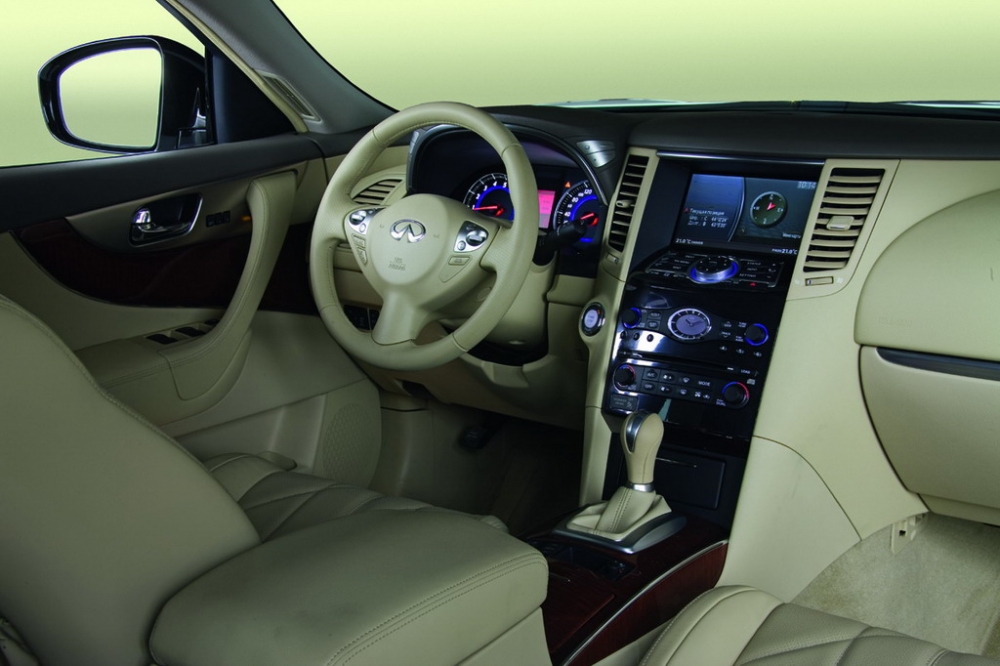
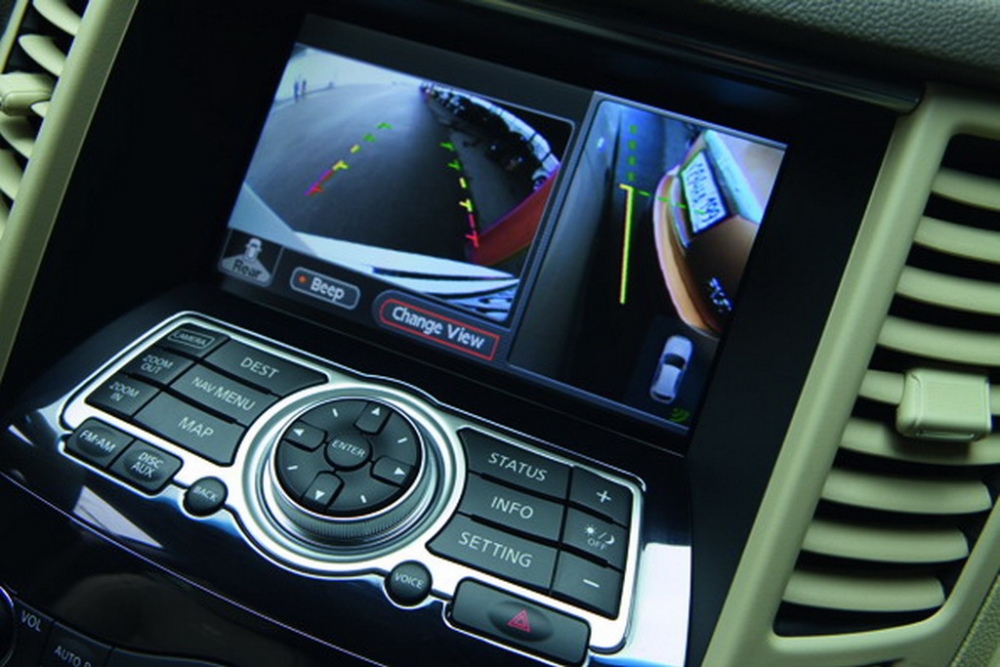
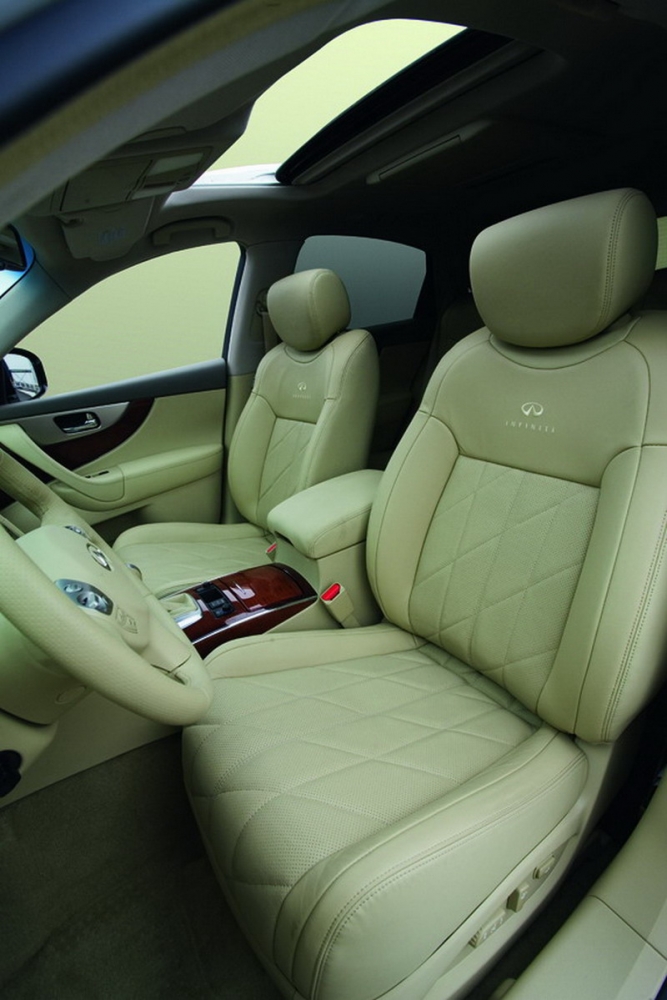
 In the cabin, there is even more "wow wow". The interior has changed almost completely. The Murano steering wheel with sharp edges, which was on the previous generation FX, gave way to an elegant, plump, but also three-spoke steering wheel. The Fine Vision instrument panel and center console are executed in a single corporate style of modern Infiniti. Pleasant little things have appeared: a color multimedia screen with optional navigation, adaptive cruise control, and a Welcome Lighting system that illuminates the car when the owner approaches with a chip key in their pocket, and when they sit inside, it begins to invitingly pulse the engine start button. But the most chic thing is the new ventilated seats. Perhaps for the first time, I appreciate seats not for their comfort and ability to hold the body in corners, but for their appearance. This diagonal stitching is eye-catching. Well, overall, they are quite comfortable seats. The vertical adjustment range (I want to sit lower) and lateral support seemed insufficient – after all, the FX is positioned as a sports crossover. In the cabin, there is even more "wow wow". The interior has changed almost completely. The Murano steering wheel with sharp edges, which was on the previous generation FX, gave way to an elegant, plump, but also three-spoke steering wheel. The Fine Vision instrument panel and center console are executed in a single corporate style of modern Infiniti. Pleasant little things have appeared: a color multimedia screen with optional navigation, adaptive cruise control, and a Welcome Lighting system that illuminates the car when the owner approaches with a chip key in their pocket, and when they sit inside, it begins to invitingly pulse the engine start button. But the most chic thing is the new ventilated seats. Perhaps for the first time, I appreciate seats not for their comfort and ability to hold the body in corners, but for their appearance. This diagonal stitching is eye-catching. Well, overall, they are quite comfortable seats. The vertical adjustment range (I want to sit lower) and lateral support seemed insufficient – after all, the FX is positioned as a sports crossover. |
 But the main thing is under the hood. The Japanese again press the cherished pedal, and the volume of the V-shaped "eight" increases from 4.5 liters on the previous FX to 5 liters on the new one. But the excellent "round" output figures (400 hp and 500 Nm) are achieved not only due to additional "cubes", but also thanks to the proprietary VVEL valve lift control system, familiar to us from the G37 coupe. By the way, when accelerating to 100 km/h, the FX turns out to be faster than the G37 – 5.8 seconds versus 6.0. That's a crossover for you! Although, what's strange about that? It's not for nothing that the FX is considered the flagship of the Infiniti model range (it's the FX, not the QX, despite its larger dimensions – so say the company representatives themselves). The flagship also provides about a third of the brand's sales in Russia. But the main thing is under the hood. The Japanese again press the cherished pedal, and the volume of the V-shaped "eight" increases from 4.5 liters on the previous FX to 5 liters on the new one. But the excellent "round" output figures (400 hp and 500 Nm) are achieved not only due to additional "cubes", but also thanks to the proprietary VVEL valve lift control system, familiar to us from the G37 coupe. By the way, when accelerating to 100 km/h, the FX turns out to be faster than the G37 – 5.8 seconds versus 6.0. That's a crossover for you! Although, what's strange about that? It's not for nothing that the FX is considered the flagship of the Infiniti model range (it's the FX, not the QX, despite its larger dimensions – so say the company representatives themselves). The flagship also provides about a third of the brand's sales in Russia. |
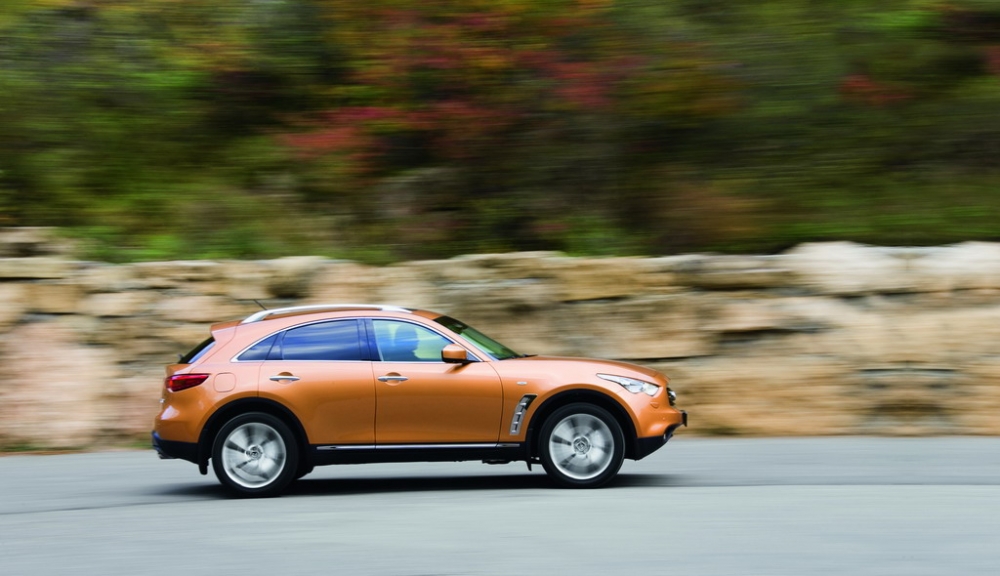 In practice, the 5-liter Infiniti engine "pulls" in any situation. You press the gas, and this time simply – "wow!" – the crossover rushes forward, leaving behind only the sound of the tuned exhaust. I wanted to say "black stripes on the asphalt", but I can't: the ATTESA E-TS all-wheel drive system distributes torque equally between the axles at launch and prevents wheel spin. In normal driving conditions, the FX is rear-wheel drive. But even despite the front axle engaging on slippery surfaces, the Infiniti retains its rear-wheel-drive character. In practice, the 5-liter Infiniti engine "pulls" in any situation. You press the gas, and this time simply – "wow!" – the crossover rushes forward, leaving behind only the sound of the tuned exhaust. I wanted to say "black stripes on the asphalt", but I can't: the ATTESA E-TS all-wheel drive system distributes torque equally between the axles at launch and prevents wheel spin. In normal driving conditions, the FX is rear-wheel drive. But even despite the front axle engaging on slippery surfaces, the Infiniti retains its rear-wheel-drive character. |
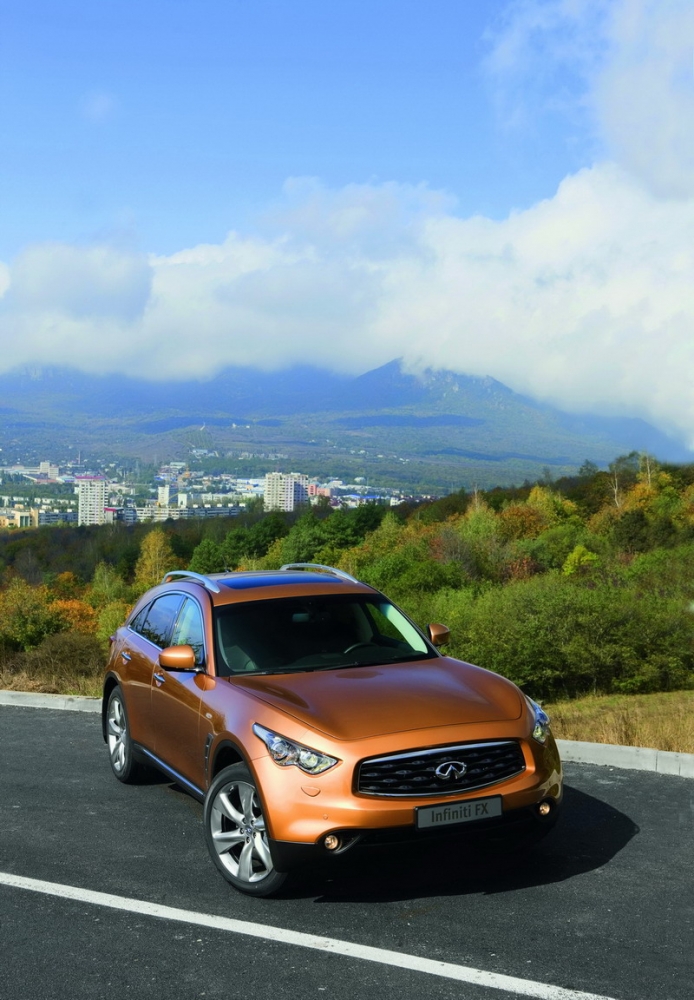 On dirt roads, with the stability control system turned off, the FX easily breaks into a drift when adding gas. And driving in a slide on the FX is interesting and convenient, not least because the seven-speed automatic (this is also "wow wow" – the previous one had only five gears) has an honest manual mode: gears do not shift up when reaching maximum rpm – this is typical for almost all Infiniti cars. There are no complaints about the gearbox operation in civilian modes either. For Russia, the gear ratios are shortened compared to the "American" version, and the final drive has a better cooling system. The automatic adapts easily to driving style, especially in Sport mode. Gear changes occur quickly and at the right moment, although more noticeably than in regular Drive. When engine braking, the gearbox holds the gear exactly as long as necessary. Regarding the engine and automatic, the "sport" prefix seems quite justified. Traction control here is indeed one of the most convenient among its premium crossover brethren. And what about the suspension? Does it meet "sporty" demands? Optionally, for the FX50 version, an electronic suspension stiffness control system CDC is offered, which in Auto mode itself controls the balance between comfort and handling, and in Sport position stiffens the shock absorbers. But still, with or without CDC, the FX is a fairly stiff car for its class. Although even such settings allow lateral rocking at high speeds. Perhaps only the steering does not meet the sporty ideology. The effort level on the steering wheel and feedback are low. And it's a pity, because the FX is the only SUV that can steer in corners, thanks to the RAS (Rear Active Steer) system, which uses an electric motor to turn the rear wheels by up to one degree. On dirt roads, with the stability control system turned off, the FX easily breaks into a drift when adding gas. And driving in a slide on the FX is interesting and convenient, not least because the seven-speed automatic (this is also "wow wow" – the previous one had only five gears) has an honest manual mode: gears do not shift up when reaching maximum rpm – this is typical for almost all Infiniti cars. There are no complaints about the gearbox operation in civilian modes either. For Russia, the gear ratios are shortened compared to the "American" version, and the final drive has a better cooling system. The automatic adapts easily to driving style, especially in Sport mode. Gear changes occur quickly and at the right moment, although more noticeably than in regular Drive. When engine braking, the gearbox holds the gear exactly as long as necessary. Regarding the engine and automatic, the "sport" prefix seems quite justified. Traction control here is indeed one of the most convenient among its premium crossover brethren. And what about the suspension? Does it meet "sporty" demands? Optionally, for the FX50 version, an electronic suspension stiffness control system CDC is offered, which in Auto mode itself controls the balance between comfort and handling, and in Sport position stiffens the shock absorbers. But still, with or without CDC, the FX is a fairly stiff car for its class. Although even such settings allow lateral rocking at high speeds. Perhaps only the steering does not meet the sporty ideology. The effort level on the steering wheel and feedback are low. And it's a pity, because the FX is the only SUV that can steer in corners, thanks to the RAS (Rear Active Steer) system, which uses an electric motor to turn the rear wheels by up to one degree. |
 A few words should be said about the "younger" engine – 3.5 liters. Here the "wow wow" pedal was not pressed all the way. Although the power of this power unit has increased by 27 hp compared to the FX35 of the previous generation and reached 307 hp, in modifications for Europe this engine is also equipped with a variable valve timing system on the intake, which adds another 13 hp. In Russia, such an engine will appear in a year. But even the 307-horsepower V6 accelerates the two-ton crossover well. In a sprint to "hundreds", the FX35 loses to the five-liter by just over a second. But after 130-150 km/h, the difference becomes noticeable. Yes, and do not forget about fuel consumption. If on the FX35 you can fit into 15 liters per 100 km, then the "fifty" will easily swallow all 20. Although, probably, potential buyers of such cars care little about this; much more interesting for them is the number 50 on the tailgate. A few words should be said about the "younger" engine – 3.5 liters. Here the "wow wow" pedal was not pressed all the way. Although the power of this power unit has increased by 27 hp compared to the FX35 of the previous generation and reached 307 hp, in modifications for Europe this engine is also equipped with a variable valve timing system on the intake, which adds another 13 hp. In Russia, such an engine will appear in a year. But even the 307-horsepower V6 accelerates the two-ton crossover well. In a sprint to "hundreds", the FX35 loses to the five-liter by just over a second. But after 130-150 km/h, the difference becomes noticeable. Yes, and do not forget about fuel consumption. If on the FX35 you can fit into 15 liters per 100 km, then the "fifty" will easily swallow all 20. Although, probably, potential buyers of such cars care little about this; much more interesting for them is the number 50 on the tailgate. |
 "Wow wow" only slightly distorts the sound; it's the so-called tonal effect. The melody remains the same. The new FX follows exactly this path. They added a bit here, changed a bit there. The essence is preserved – it is still the most original luxury crossover with powerful engines and sharp handling. And the thousands of people who will buy this Infiniti in the future may not even know what "wow wow" is... "Wow wow" only slightly distorts the sound; it's the so-called tonal effect. The melody remains the same. The new FX follows exactly this path. They added a bit here, changed a bit there. The essence is preserved – it is still the most original luxury crossover with powerful engines and sharp handling. And the thousands of people who will buy this Infiniti in the future may not even know what "wow wow" is... |
 |
 |
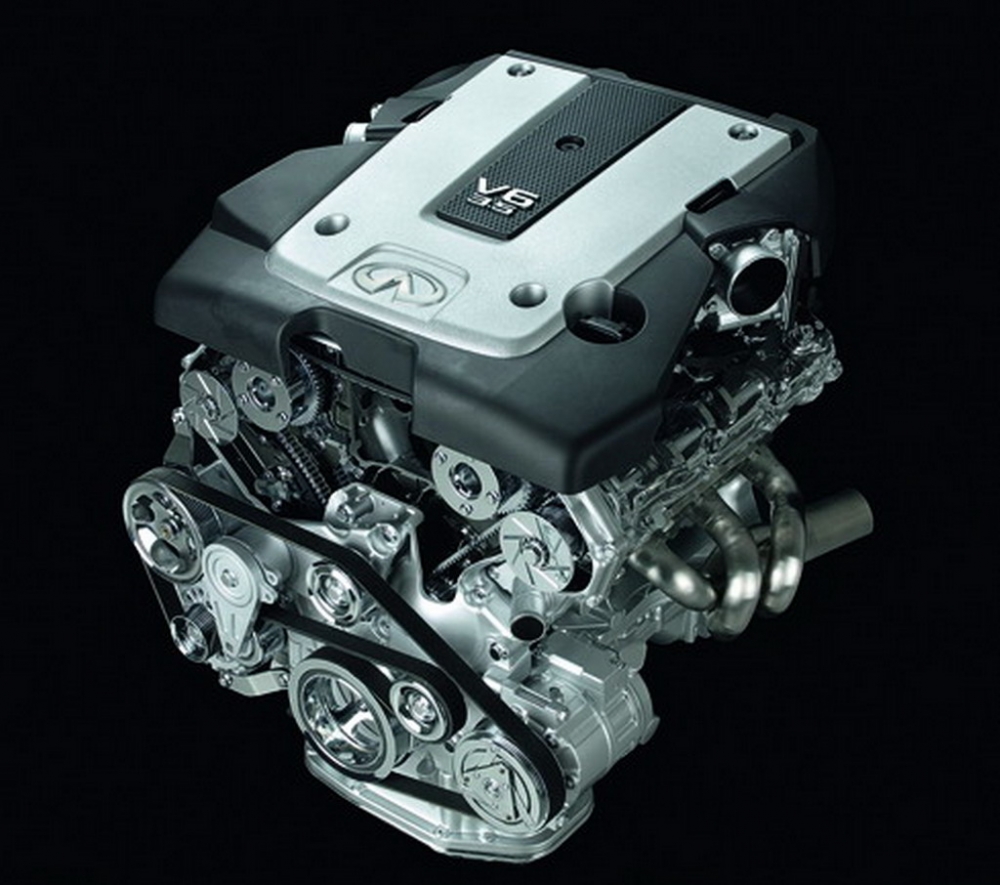 FOR YOUR INFORMATION FOR YOUR INFORMATIONEngines V6 VQ35DE The 3.5-liter "six", proven on the G34 and EX35 models, in the version for the FX develops 307 hp and 355 Nm. With such characteristics, this engine provides the new FX35 with dynamics comparable to the FX45 of the previous generation. The 24-valve engine with two overhead camshafts, aluminum block and heads uses a continuously variable valve timing system (CVTCS), a symmetrical intake system, a silent timing chain, microfinished main journals and cam lobes, as well as lightweight alloy pistons with titanium coating. |
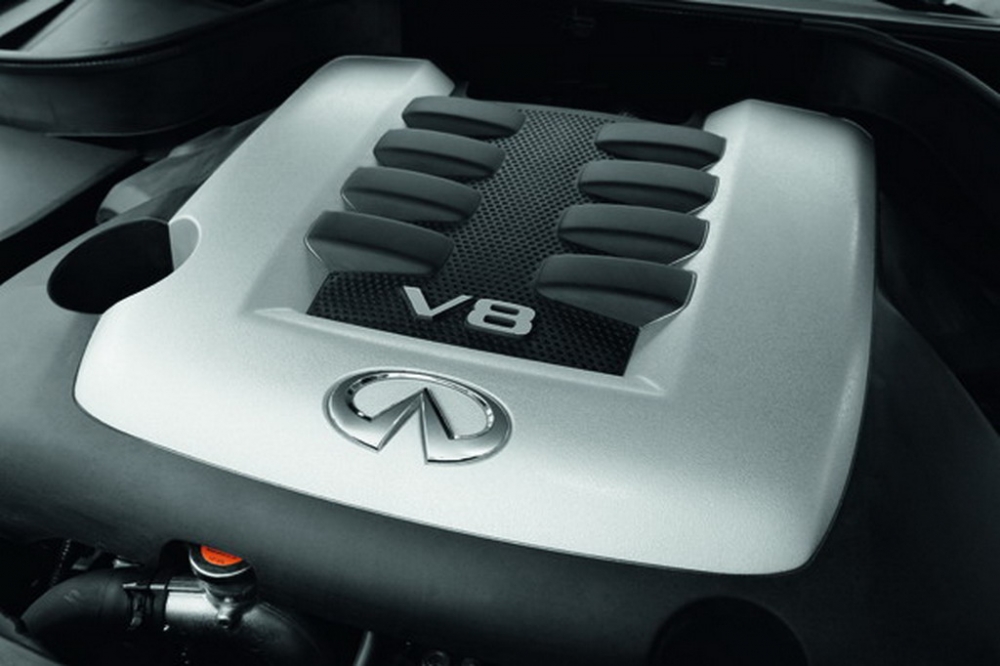 V8 VK50VE V8 VK50VEEight-cylinder engine with a volume of 5.0 liters. Develops 400 hp and 500 Nm of torque. Equipped with the VVEL valve lift control system and continuously variable valve timing. Aluminum block, titanium valves, chain drive. Provides acceleration to 100 km/h in 5.8 seconds. Average fuel consumption in the combined cycle is about 20 liters per 100 km. |
The "wow-wow" effect
Those who play guitar are well familiar with the "wah-wah" effect. The guitarist presses a special pedal, and the previously linear sound stretches, becoming similar to a frog's croak. Experienced music lovers will, of course, recall Geezer Butler's bass in the legendary N.I.B. by Black Sabbath, and those who are younger are surely "digging" Tom Morello from Rage Against The Machine.

Test drive photos
Comments
No comments yet. Say the first word.