

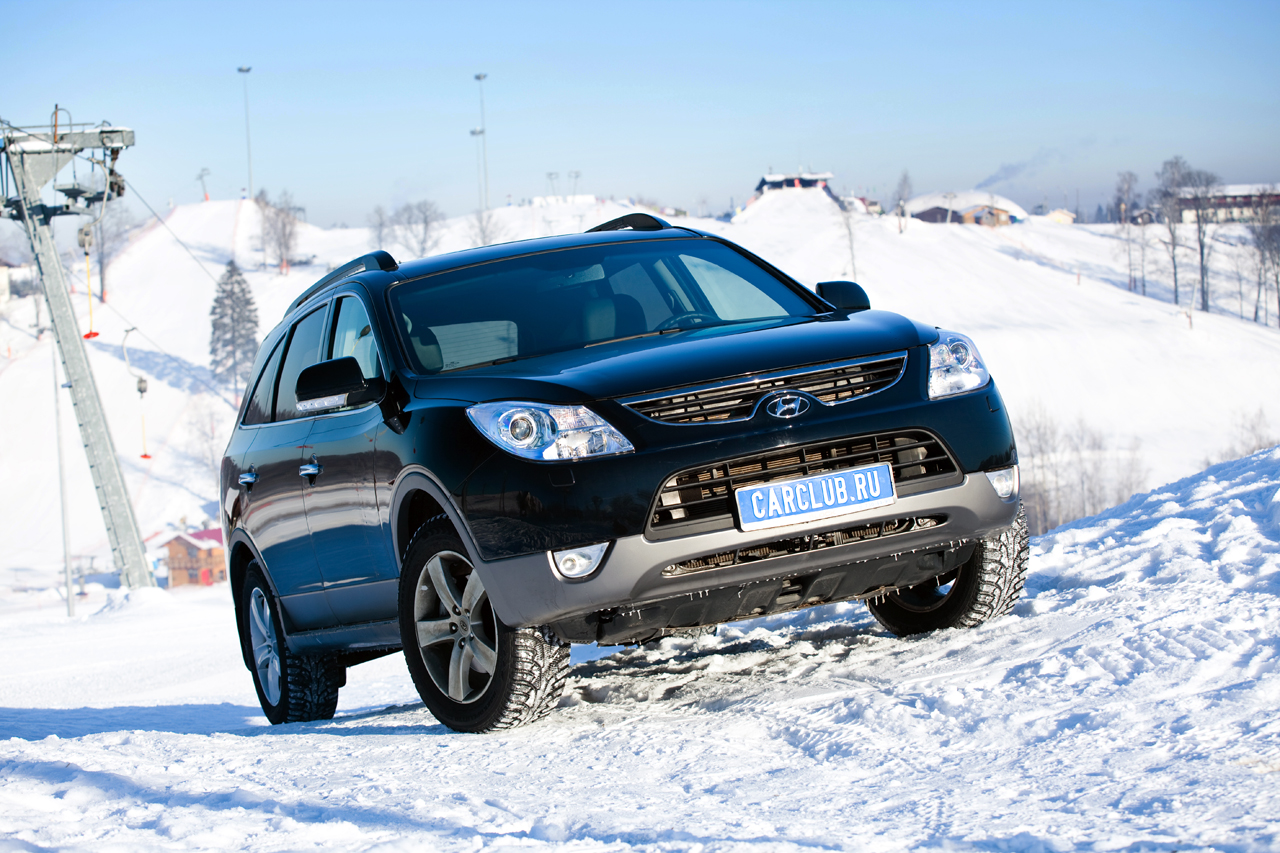
 Personal acquaintance with the ix55 finally erases all previous notions about reputation and price categories. Comments
 First, Hyundai calmly and methodically worked on budget models, which quickly became popular with buyers for their low price and decent quality. Having gained experience and confidence, the Koreans confidently moved into a higher segment. Old inexpensive cars remained at factories in countries where demand for them persists — for example, at the Russian TagAZ — while the brand itself meanwhile introduced Genesis and Grandeur, fresh generations of Santa Fe and Sonata, updated its mid-price lineup under the new i index, and quietly crossed the 2,000,000 ruble mark.
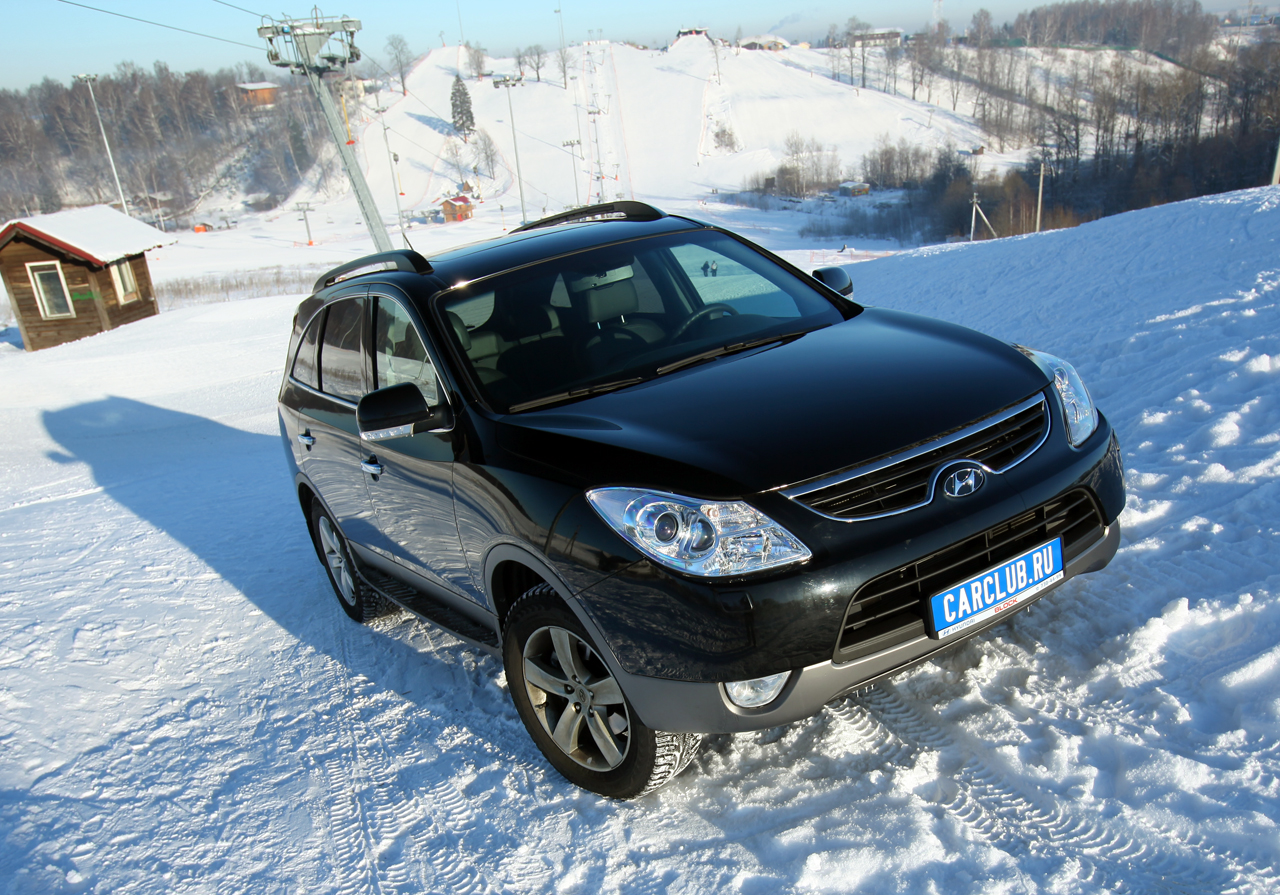 |
| The new large crossover boldly aims for the luxury niche |
Stepping over the established image is not easy, but the new seven-seat Hyundai SUV with the ix55 index speaks for itself. The first thing that bothers is the price: from 1,799,900 rubles for a Korean crossover! Then doubts are raised by the declared list of rivals — the Japanese Honda Pilot, Mazda CX-9 and Subaru Tribeca.

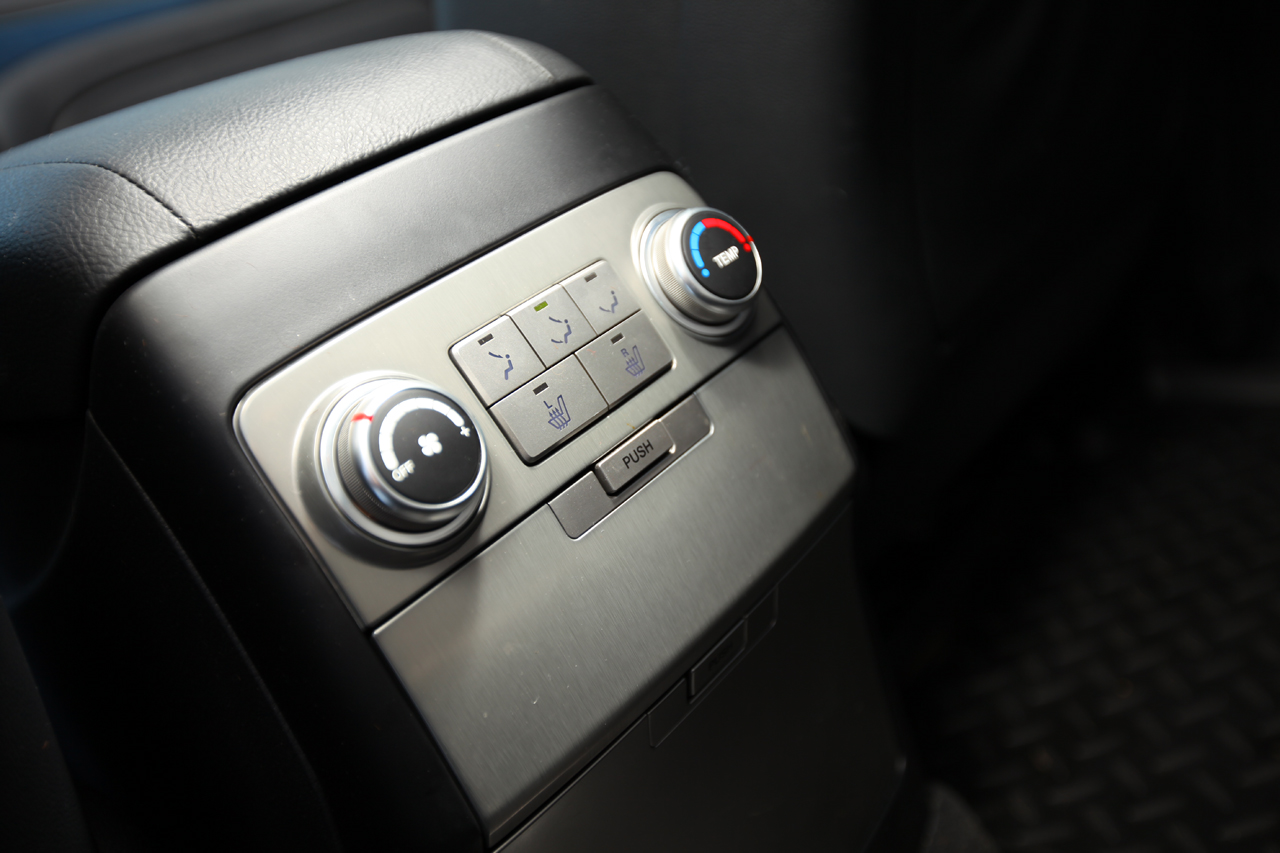
However, when you start studying the list of equipment, the complaints gradually lose their validity: here you have electric adjustments of the steering column for reach and height, electric drive of the driver's seat with ten adjustment directions, plus similar adjustment for the passenger seat, heating of the front seats and second row, electric folding of mirrors, keyless access, dual-zone climate control, control of heating and ventilation from the rear seats, deflectors for the feet of third-row passengers, electric sunroof, automatic tailgate and remote fuel tank release, cruise control, stability control system, rain sensor, auto-dimming mirrors — both interior and side, adjustment of tilt and longitudinal position of second-row seatbacks, parking sensors, sunroof and much more.
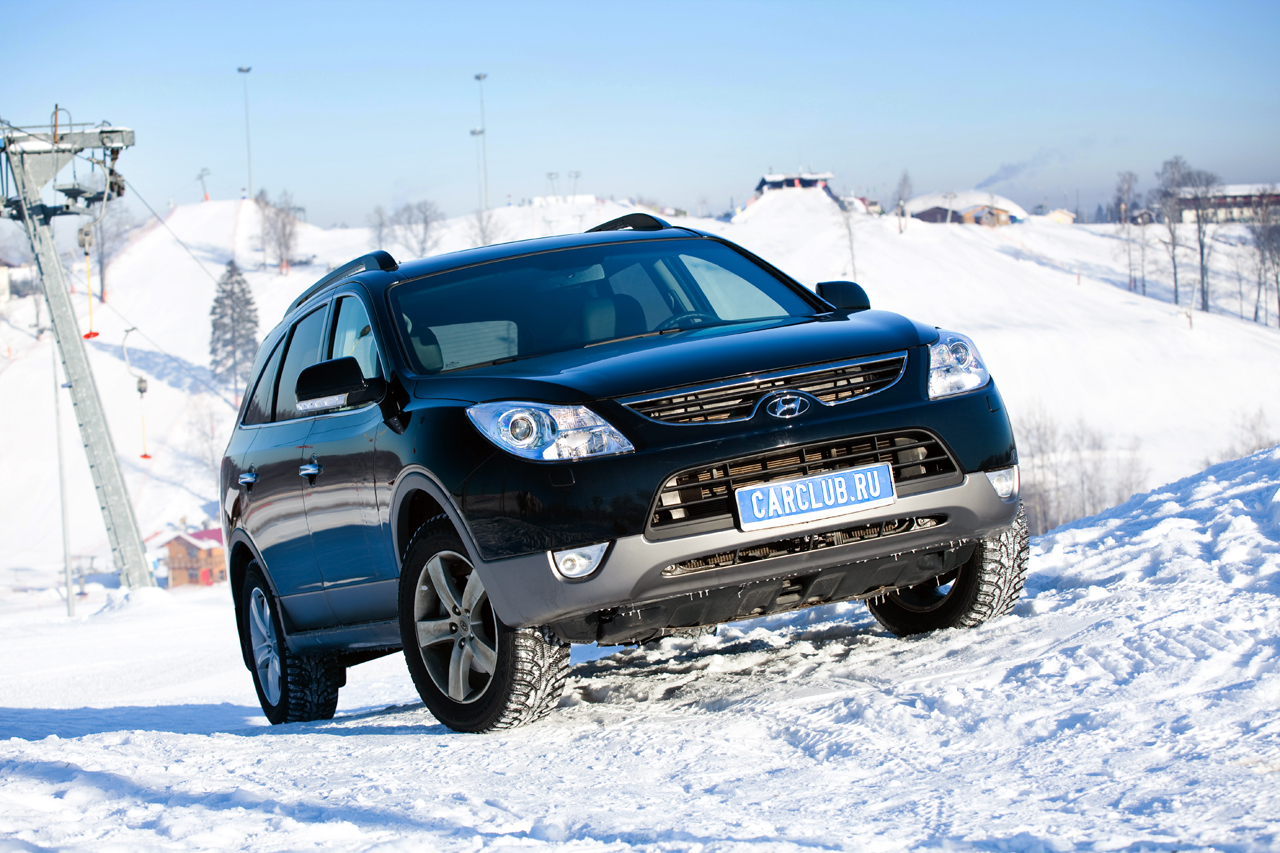 |
| Huge and a bit rough in an American way, like the Honda Pilot, intricate in an Asian way, like the Subaru Tribeca, and sporty, fit, like the CX-9 — the designers managed to combine the massiveness of the body with the dynamism of the lines. |
Personal acquaintance with the ix55 finally makes you forget about reputations and price niches.
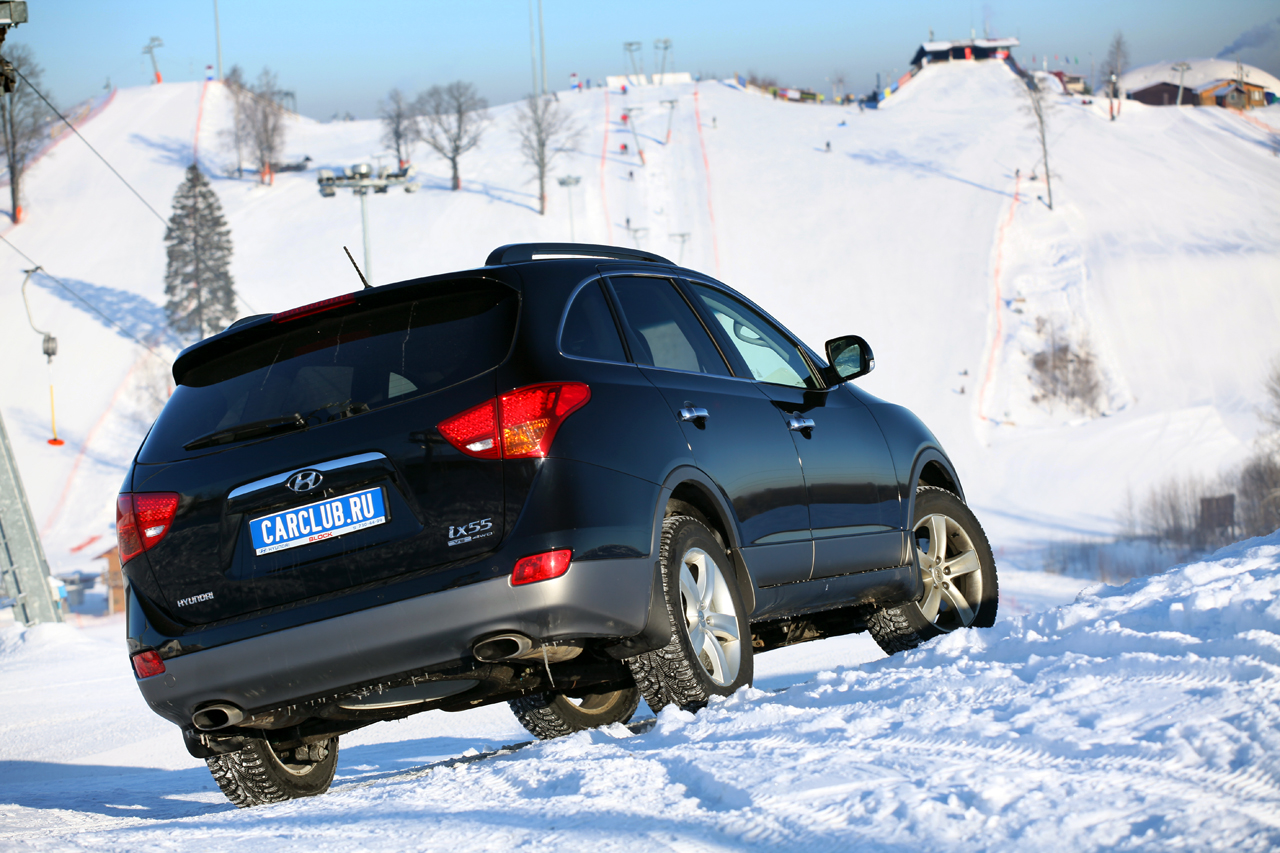
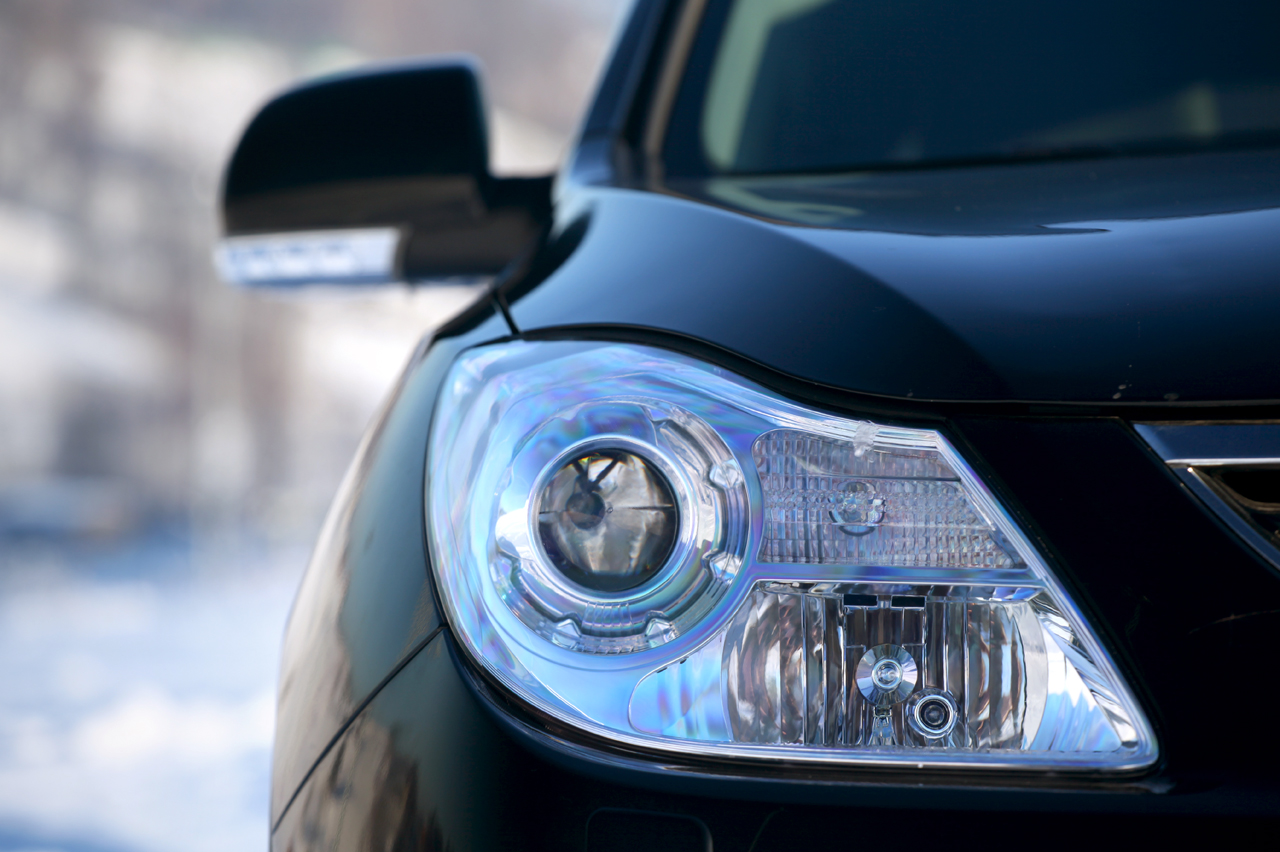
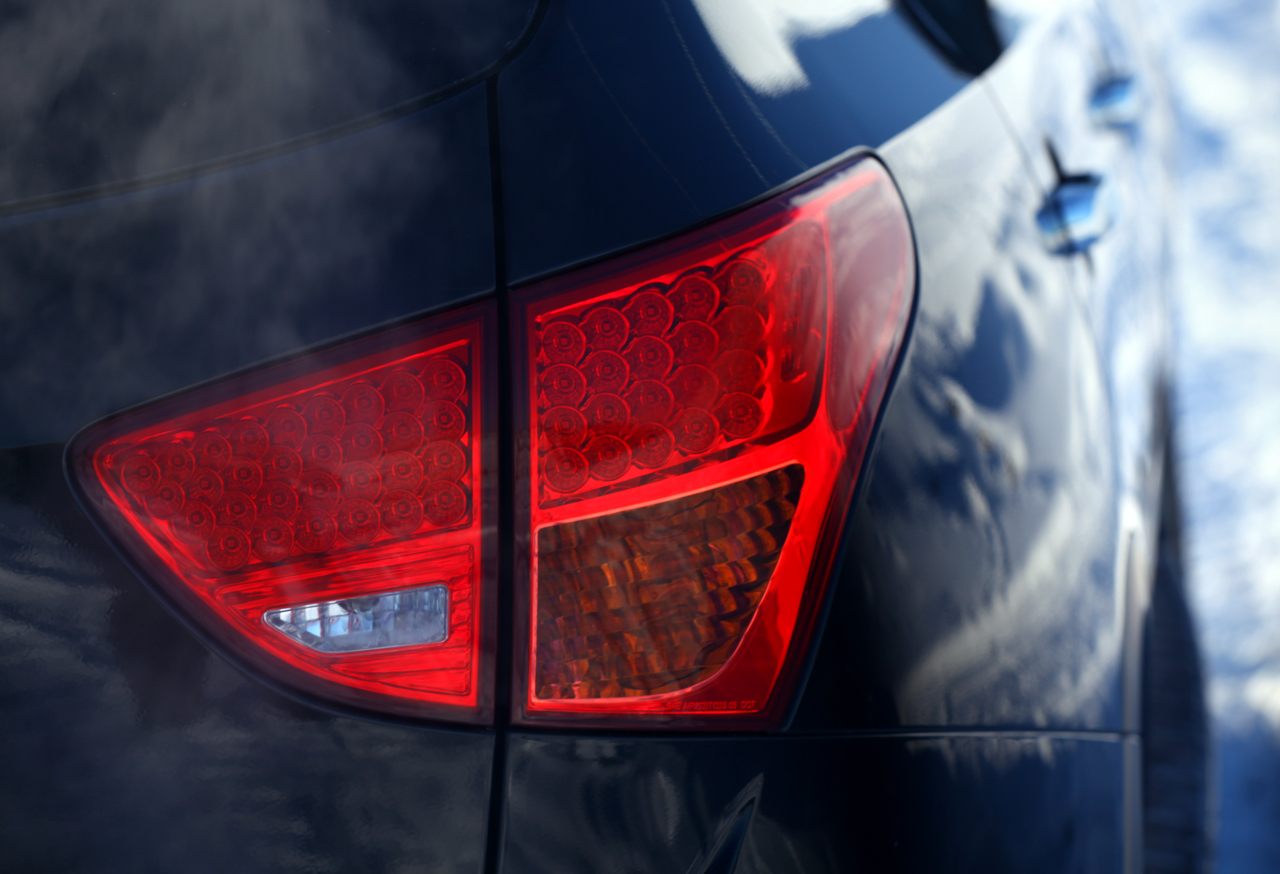
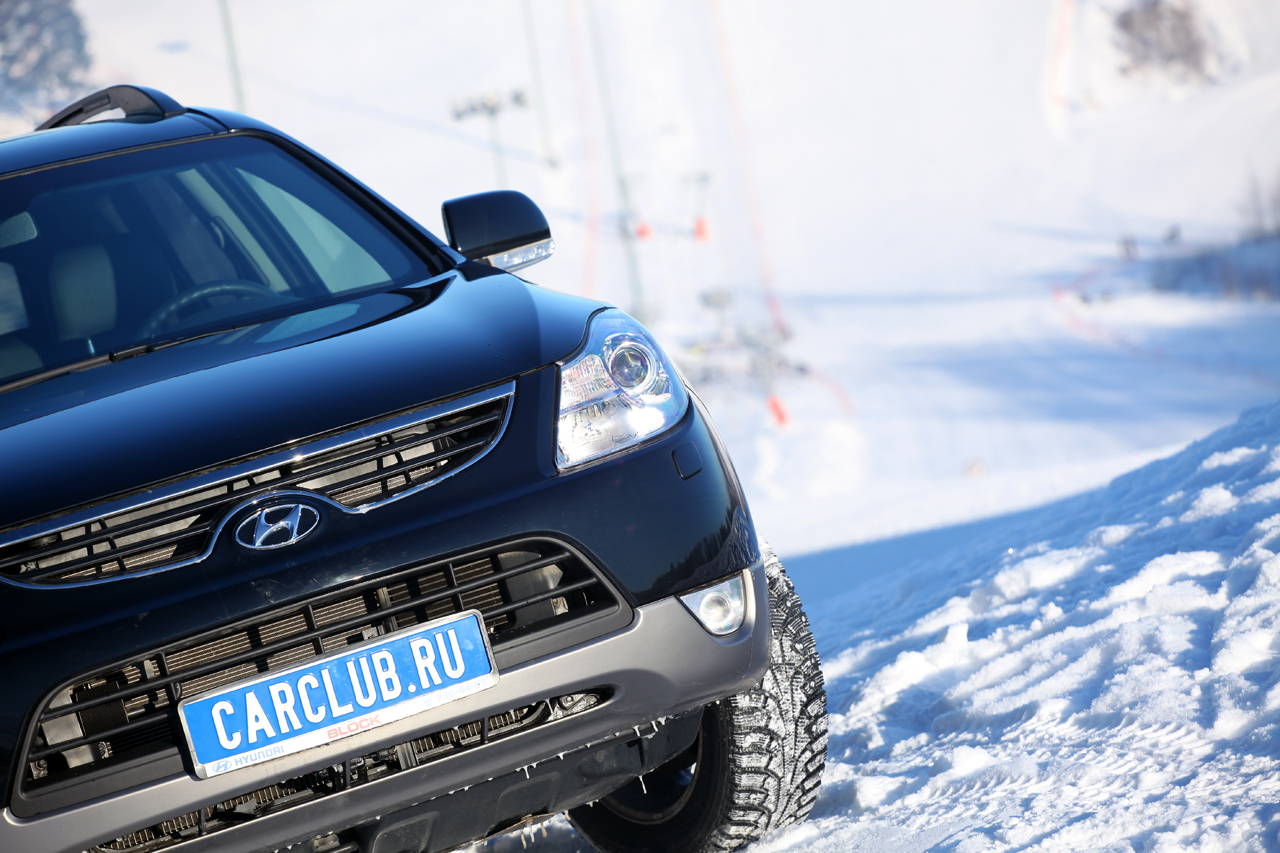
Huge and rough in an American way, like the Honda Pilot, intricate in an Asian way, like the Subaru Tribeca, sporty and fit, like the CX-9, and at the same time stylish and integral — in profile the "I-X" echoes the Lexus RX, and the rear references the Audi Q7. The designers managed to combine the massiveness of the body and the dynamism of the lines.
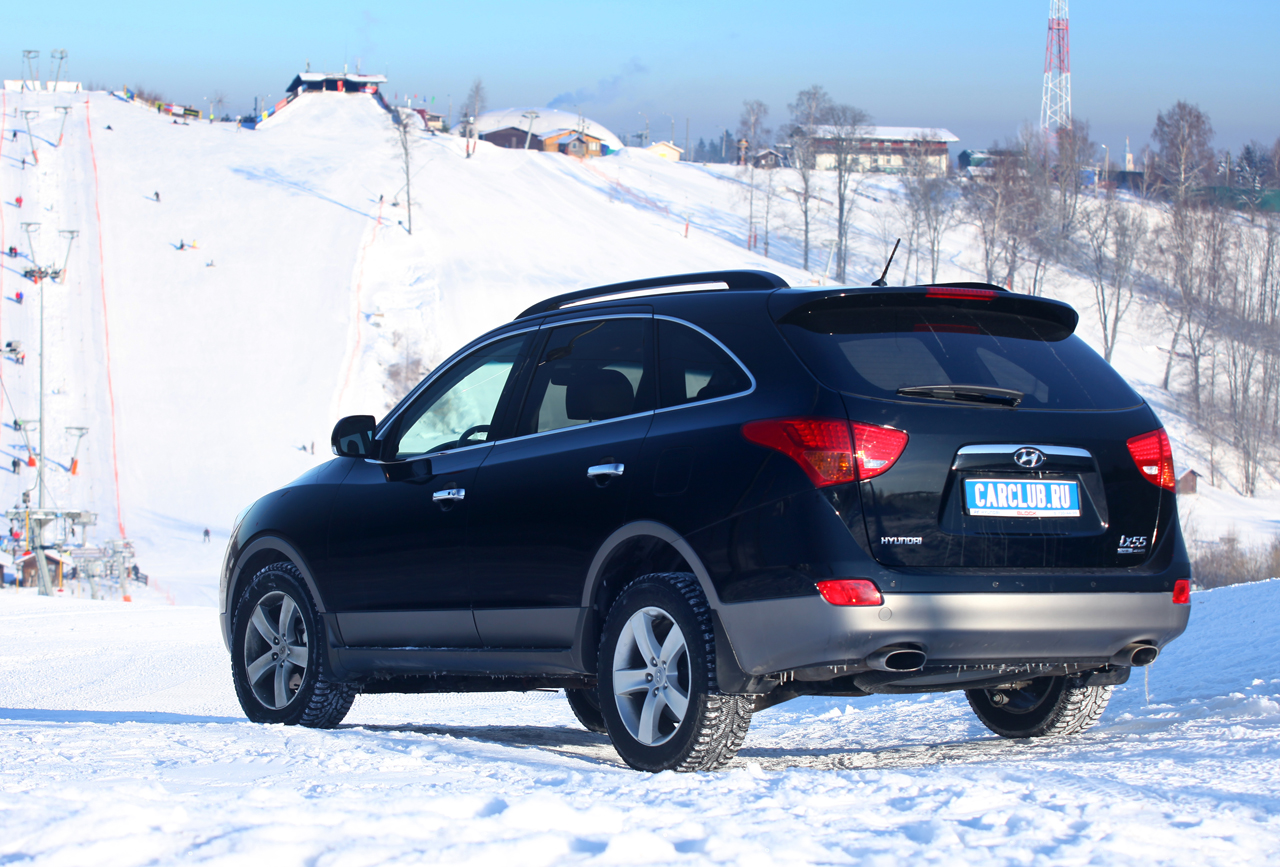 |
| In profile the ix55 resembles the Lexus RX, and from the rear it looks like the Audi Q7. |
The interior of the "fifty-fifth" is liked immediately — literally from the threshold: the thresholds are illuminated with an unusual red light, and when "parking" is engaged, soft lighting highlights the mirror niche and the foot area. True, the thresholds themselves are not very convenient and hinder getting in.
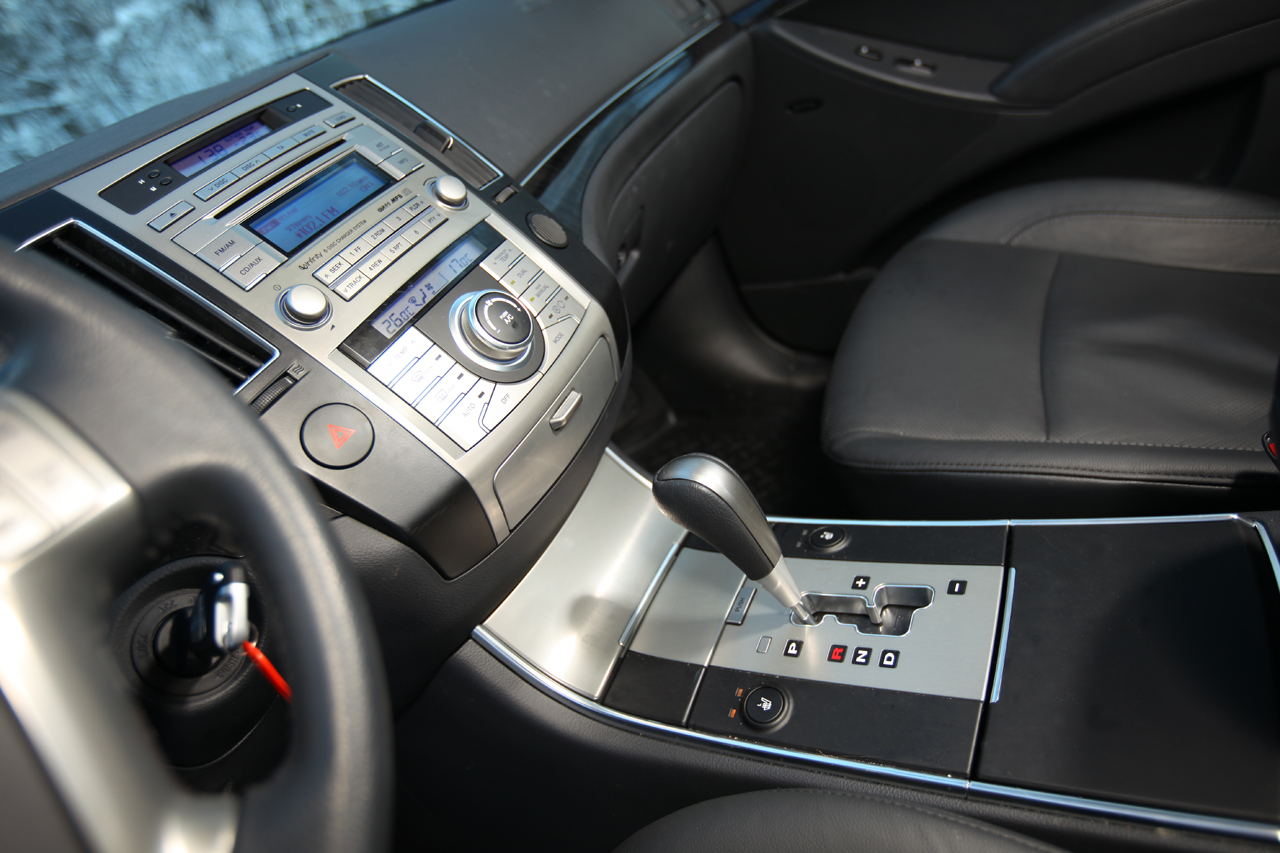
The layout of the central console and the abundance of cup holders reveal the American origin of the model: the console looks like a tower, on the upper tier of which there is a clock, a floor below — the stereo, and on the first one lives climate control with many button-balconies. True, a full-color display would look more appropriate here. The luxury trim has an Infiniti audio system with excellent sound. A pleasant detail of the stereo is the correct display of Russian tags, not meaningless symbols.
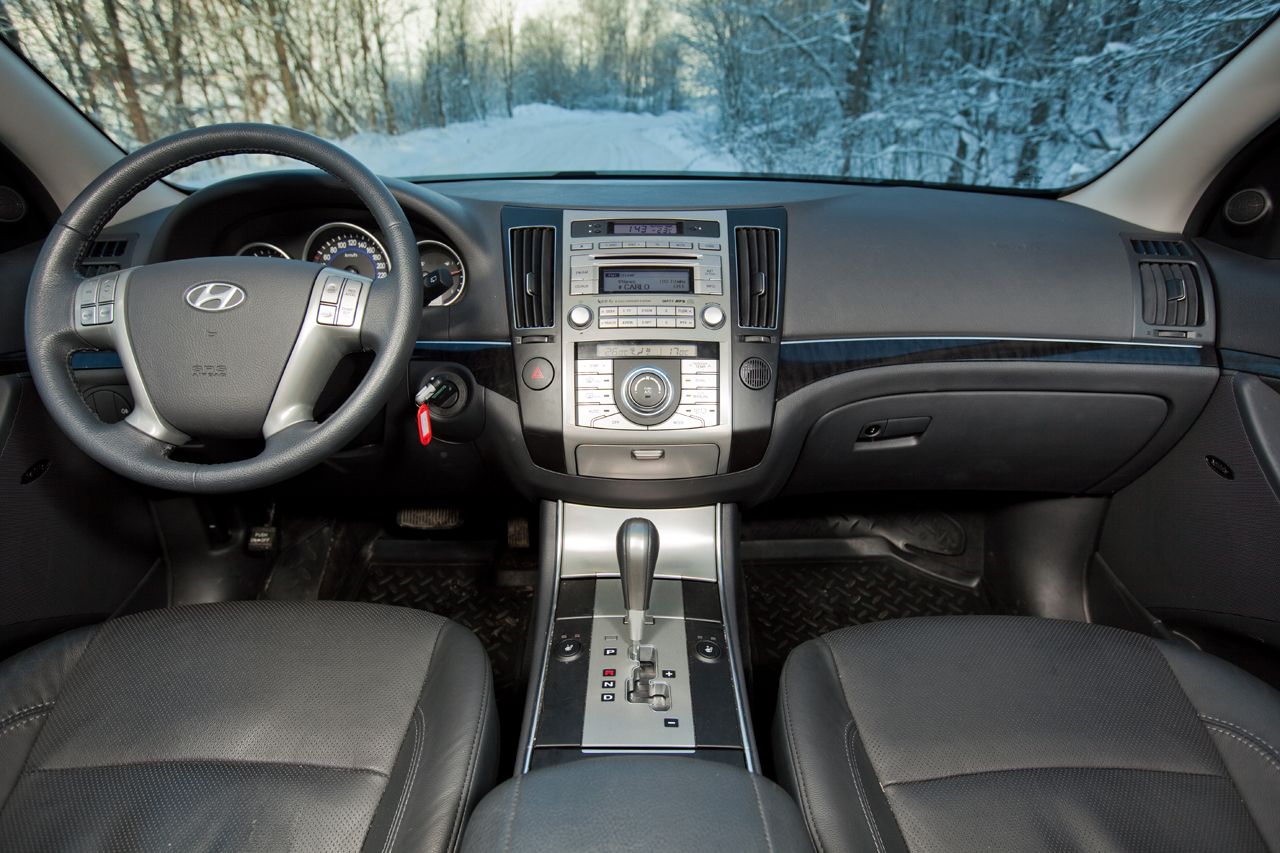 |
| The architecture of the central console and the many cup holders remind that the car was originally developed for the American market. The quality of the interior trim reaches for Europe: pleasant to the touch leather, plastic alternates hard and soft surfaces and inserts of artificial wood. |
 |
 |
 |
 |
The handbrake in the ix55 is foot-operated, so between the seats there is a flat surface, under the lid of which you can hide a bunch of things from prying eyes that gradually clutter the cabin. In the armrest there is a spacious cooled box. But the glove box is modest in size.
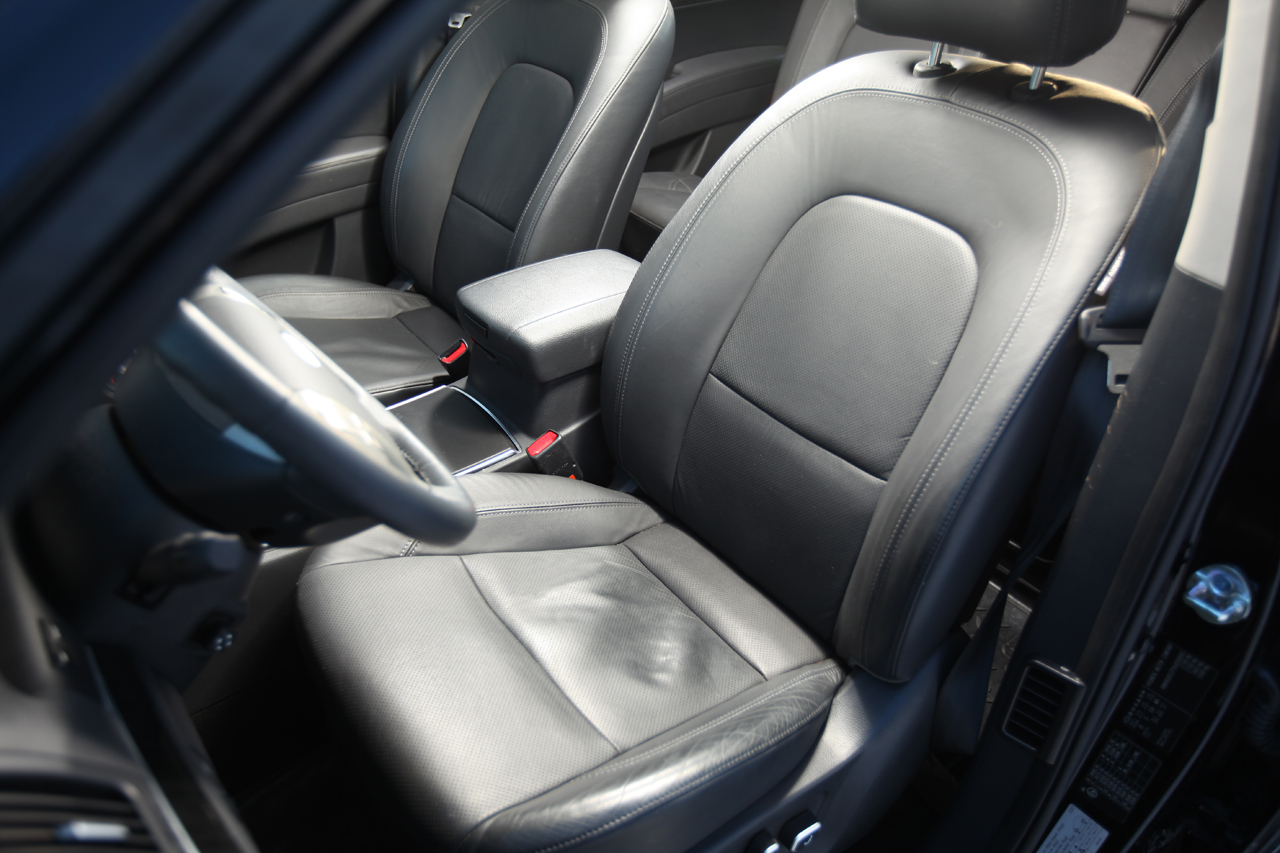
At the same time, the quality of the interior trim reaches for Europe: pleasant to the touch leather, plastic alternates hard and soft surfaces, inserts of artificial wood. The futuristic glow of the blue dot lighting can be turned off if desired. And do not forget to turn it off when leaving the car — the lamp does not turn off automatically when the engine stops. Among the inconspicuous little things that quickly become necessary are an additional sliding section of the sun visor, as well as dimming side mirrors that save from blinding.
 |
 |
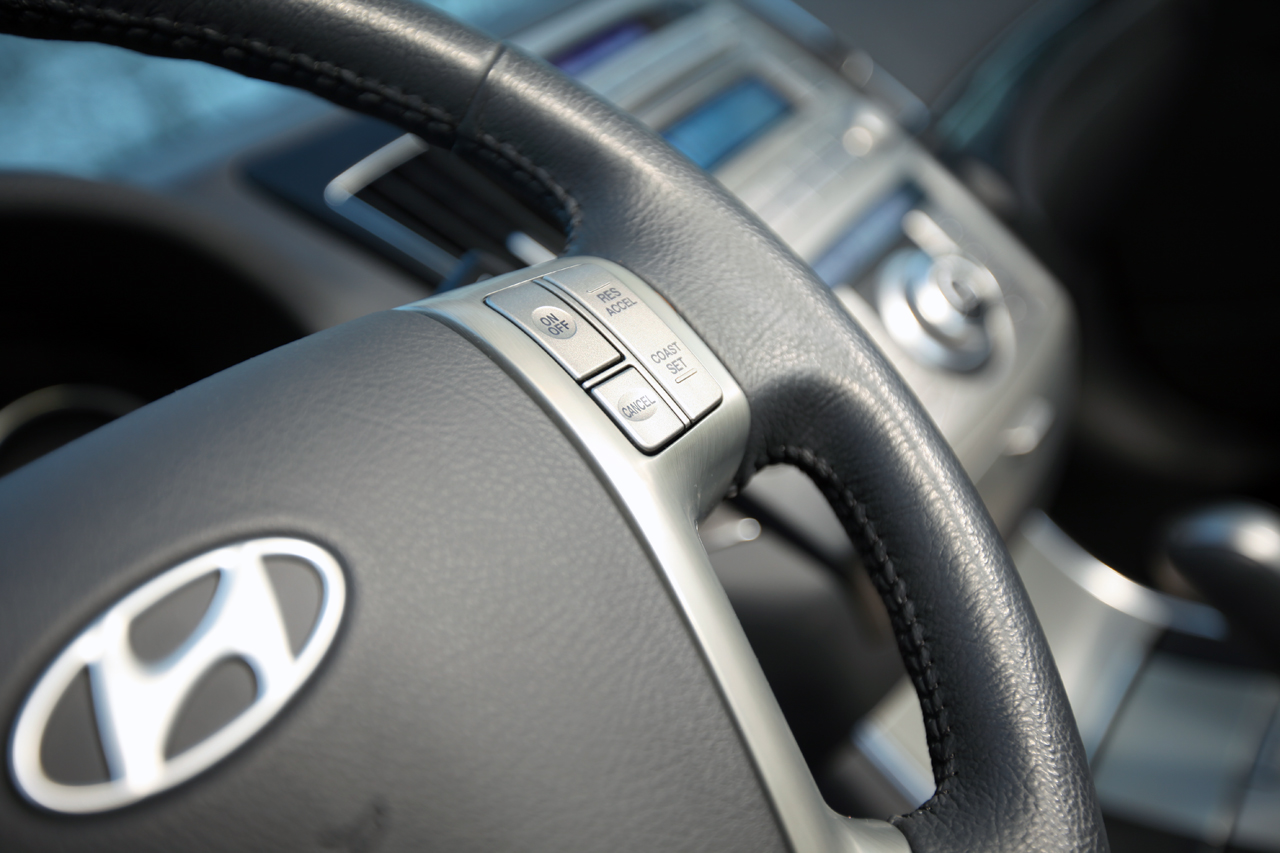
The driver's seat can be adjusted both for a person of one and a half meters tall and for a two-meter basketball player, and then both settings can be fixed using the memory function. The steering wheel is also conveniently adjustable over a wide range, the only small quibble is that in the highest position it resembles a bus steering wheel in terms of tilt angle. When the engine stops, the steering wheel moves away and rises, making it easier to get out of the car, and when the engine starts, it automatically returns to the set position.
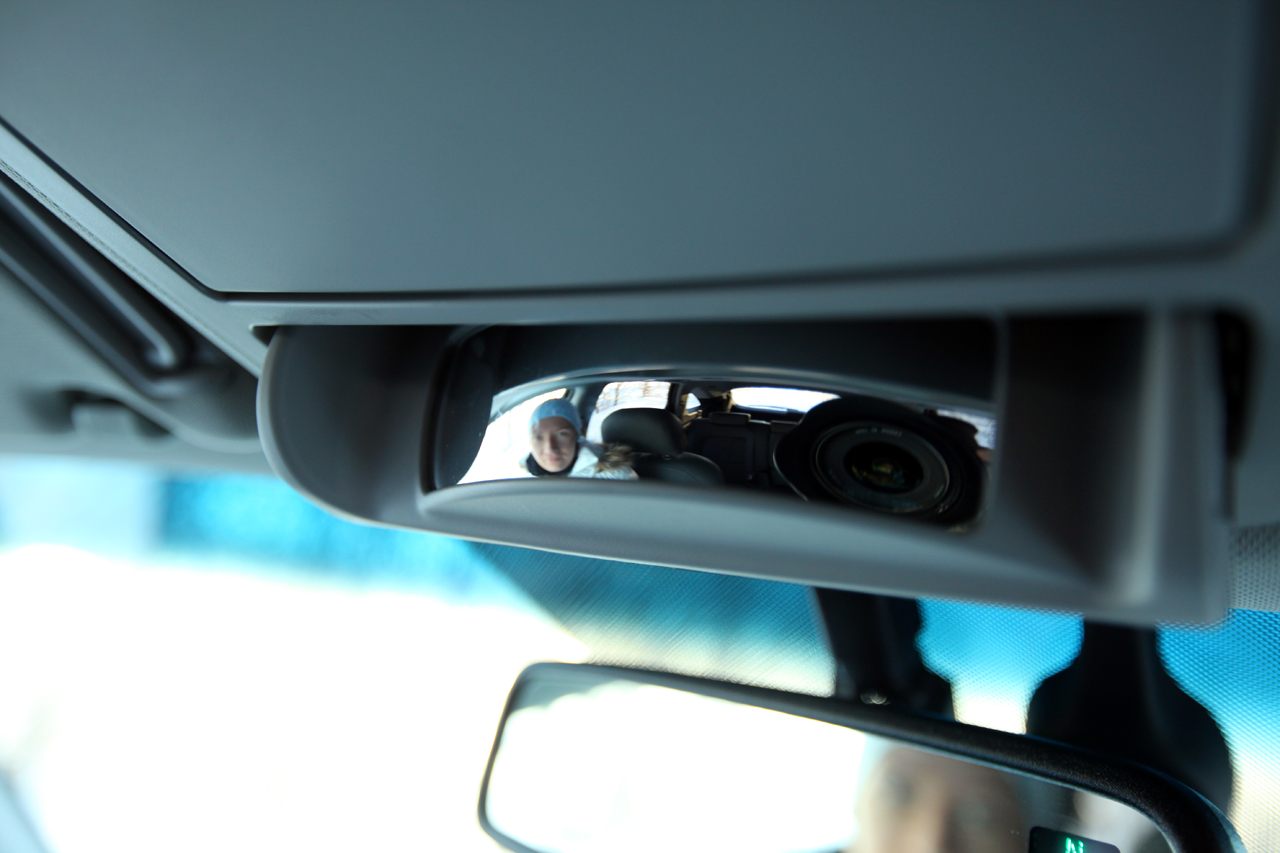
The rear row is quite spacious, the climate system deflectors are originally located on the ceiling. Also on the sides, separate reading lamps are carefully installed. The seatbacks are adjustable for tilt, and the seats themselves longitudinally. The third row, like in the "Pilot", cannot be called particularly comfortable, but it can quite accommodate two small-sized passengers for a short march, whereas in most similar cars the third row of seats is usually nominal.
 |
 |
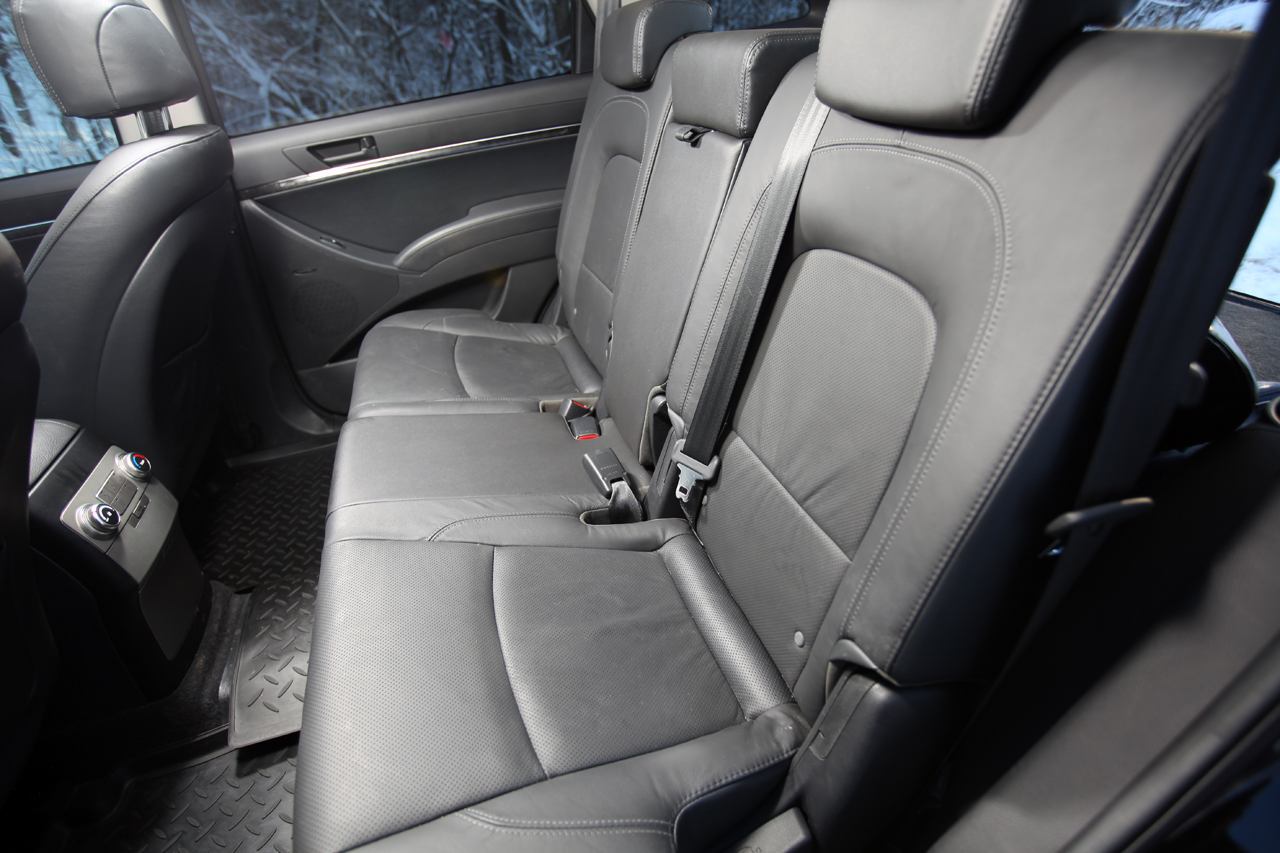 |
| The rear seatbacks are adjustable for tilt |
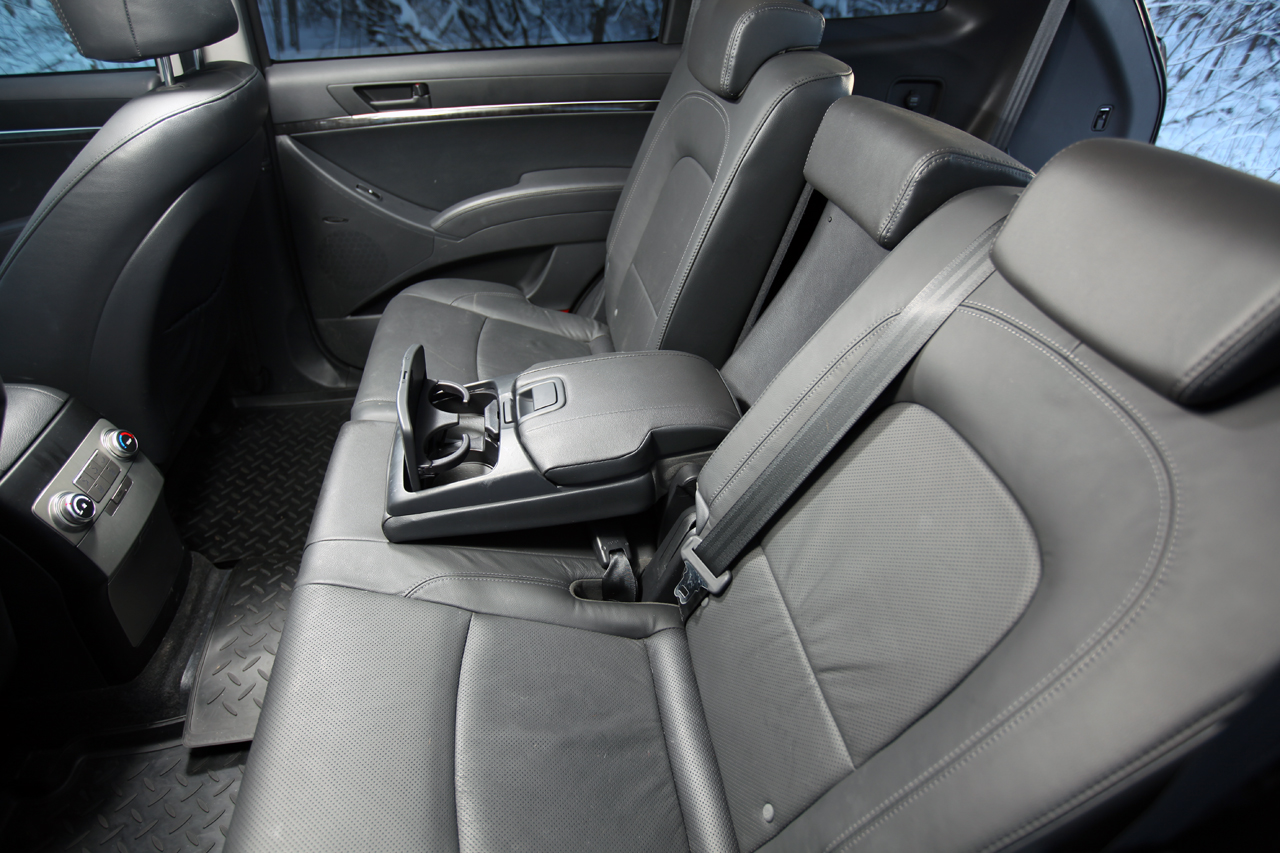 |
| The seats themselves adjust longitudinally, opening access to the third row |
As befits a five-meter crossover, the luggage compartment here is huge: in normal condition — 1,130 liters, with the rear rows folded — 2,460 liters, and if all seven passengers are in place — 184 liters remain. The tailgate is equipped with a power drive.
On the move, the new Korean crossover reveals itself from the best side. It managed to combine a high seating position and large ground clearance with the smoothness and confidence characteristic of a passenger sedan on asphalt.
The ix55 is based on the Santa Fe platform, extended by 10 cm: McPherson struts at the front, multi-link construction at the rear. The car glides along the road, ignoring even exaggerated speed bumps, while holding its course excellently and not frightening with body roll in corners. The steering wheel deserves special mention: comfortable, with three turns from lock to lock and clear feedback. You get used to the car quickly — within a few minutes you feel at home.
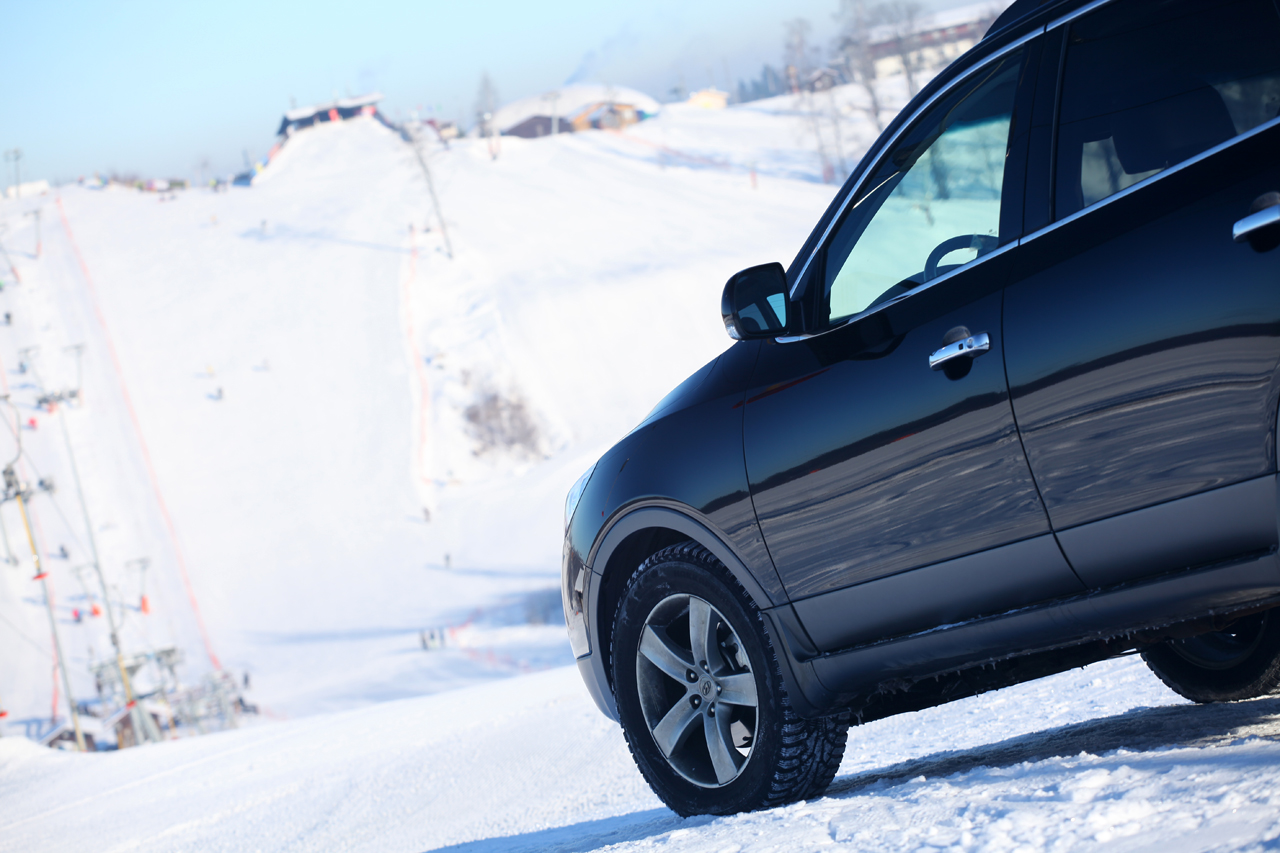
Under the hood of the "i-X 55" there can be two engines: a 3.0-liter diesel with 240 hp or a 3.8-liter gasoline V6 with 264 hp. We got the gasoline version. It's clear that 264 "horses" won't let you get bored, and Hyundai confirms this: even with environmental restrictions in mind, the car responds lively to the gas — both from a standstill and during overtaking. A significant role here is played by the successful six-speed automatic transmission Aisin with a gear force control module — it shifts quickly and smoothly. Despite almost sedan-like maneuverability and good visibility, you won't dart between lanes in this crossover — the dimensions make themselves known. ESP works flawlessly both in sharp turns and when starting on snowy slush hiding packed ice underneath.
 |
 |
Fuel consumption on the highway pleased — up to 11 liters per hundred, but in the city the appetite jumps to not-so-pleasant 20–25 liters. The current winter, which seems to deliberately test all cars, also revealed a weak point: the engine and cabin take too long to warm up. After half an hour of driving in an unthawed cabin, you'll curse everything in the world. With the diesel, I suspect, the situation is even worse.
Sound insulation is at a good level — the engine is practically inaudible. But with increasing speed, the plastic starts to creak, and on our example, with loud music, the driver's audio speaker rattled distinctly.
Unlike, say, the Honda Pilot, there is no rear-view camera here — only parking sensors. For such a beast in a cramped city, a camera would be much more convenient. However, the small turning radius (5.6 meters) noticeably makes life easier.
Despite the loud word "all-road vehicle" and impressive appearance, the ix55 is primarily a large urban crossover. All-wheel drive with a Haldex coupling independently redistributes torque between the axles, and in top trims there is a system for automatically maintaining the level of the rear of the body. There is also a 4WD Lock. Ground clearance of 205 mm, approach angle of 35.5 degrees, and ramp angle of 17.9 degrees allow you to easily conquer city snowdrifts and venture onto light off-road, but the car is clearly not designed for serious off-road excursions — diagonal wheel hanging is not its native element.
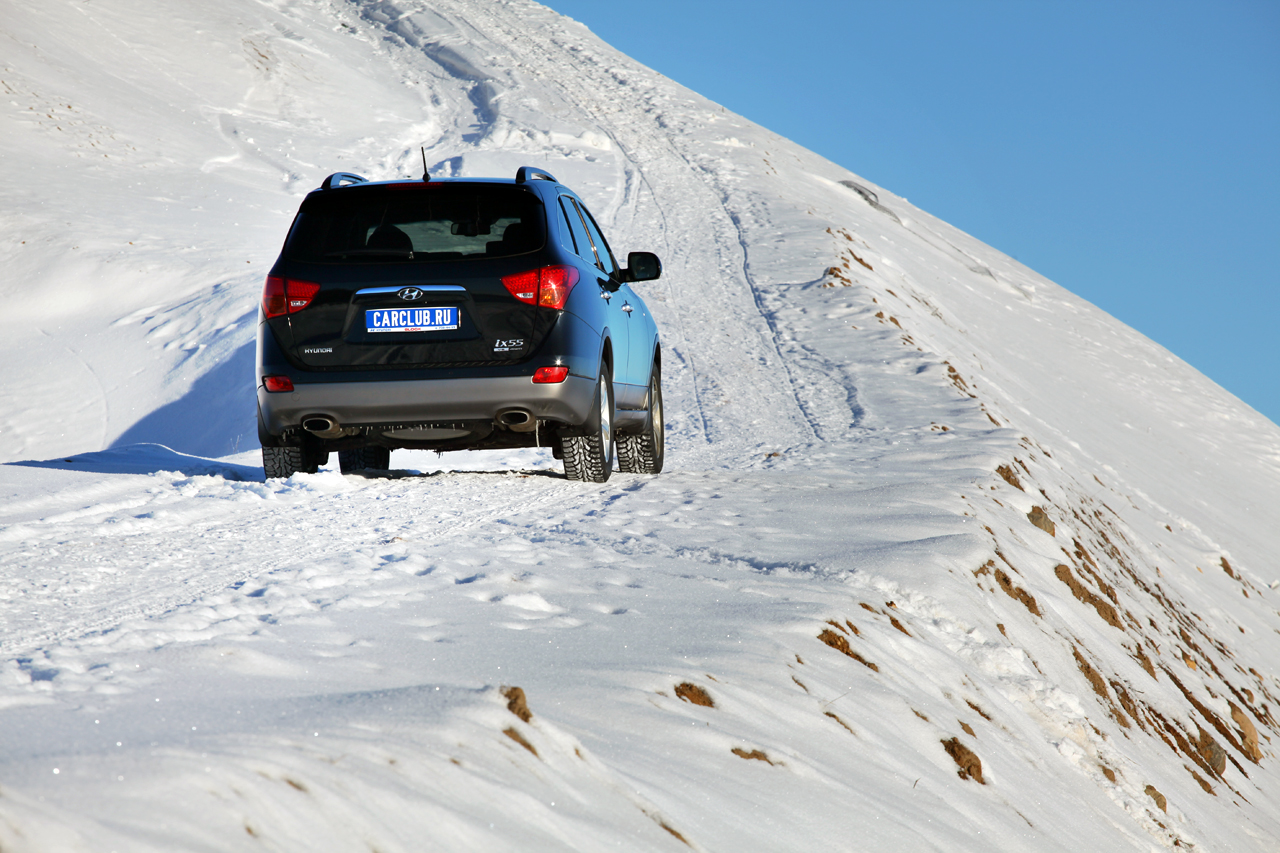 |
| Despite the loud marketing definition "all-road vehicle" and impressive appearance, the ix55 is still a large crossover. All-wheel drive, 4WD Lock, ground clearance of 205 mm will allow you to easily conquer city snowdrifts and light off-road, but it's unreasonable to venture into trophy raids in the "i-X", diagonal wheel hanging is clearly not the crossover's strong point. |
Did Hyundai manage to create luxury in the crossover segment? Quite so. The ix55 is an attractive, stylish, and solid car with off-road ambitions, yet comfortable and spirited like a good sedan. The Koreans did not skimp on interior trim, although minor flaws like noisy plastic and a creaking speaker slightly spoil the overall impression of the build. And most importantly — the car truly feels expensive and luxurious, not just trying to look that way. Despite the drawbacks, after a personal acquaintance, the price of 1,814,900 rubles for the Luxury trim that we had for the test no longer seems inflated. The diesel version in the same trim costs slightly less — 1,799,900 rubles.
Svetlana Aleeva