
According to the Russian office, in January 2010, the i30 took third place in sales, yielding only to the leaders — Hyundai Tucson and Getz, but outselling the popular Elantra.
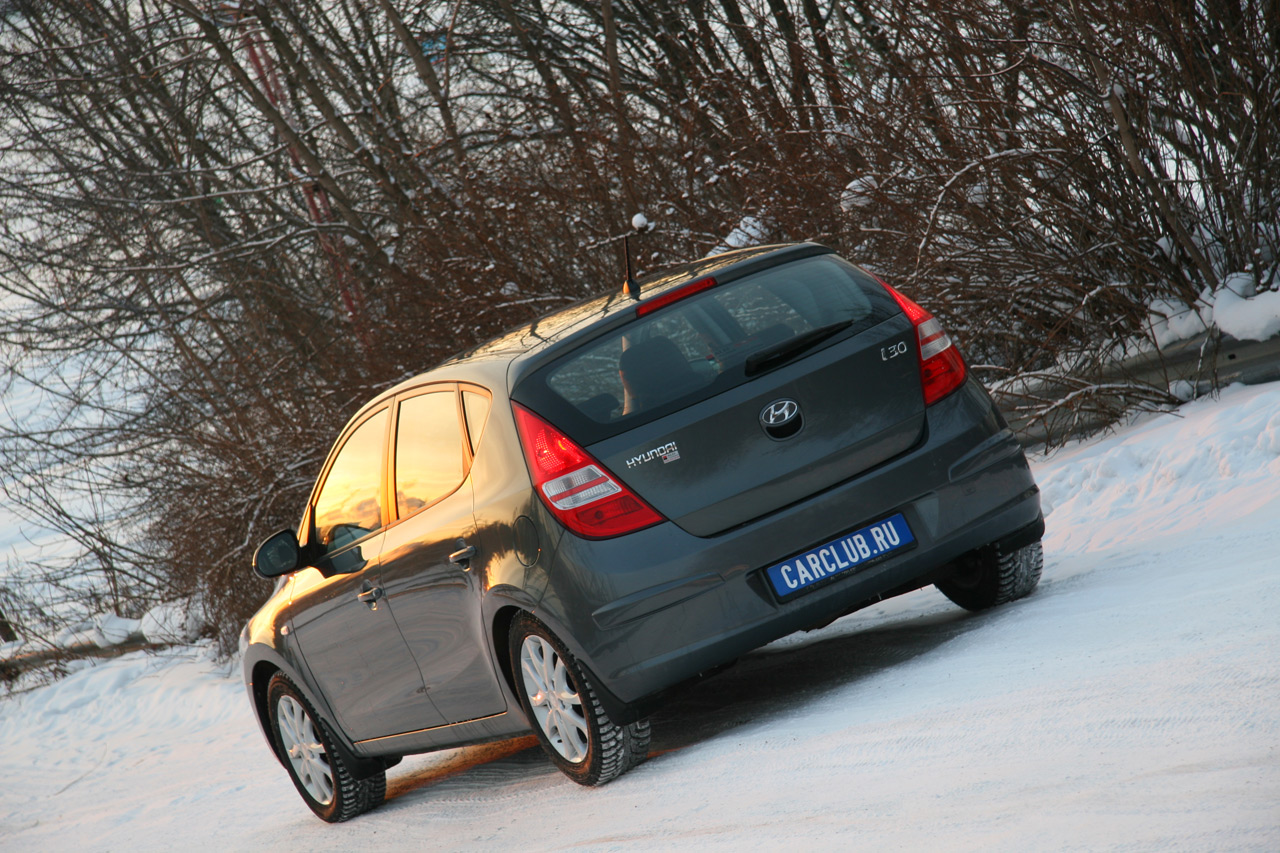
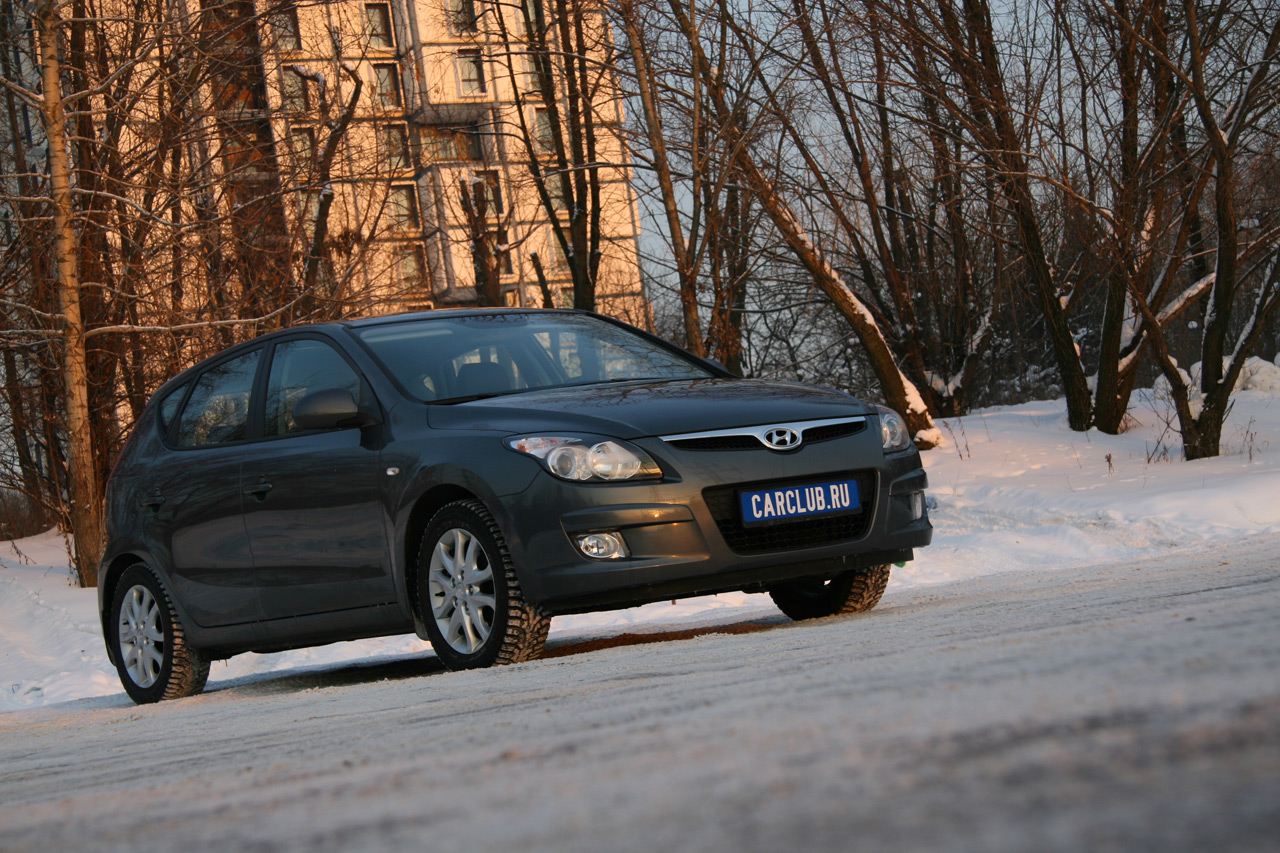
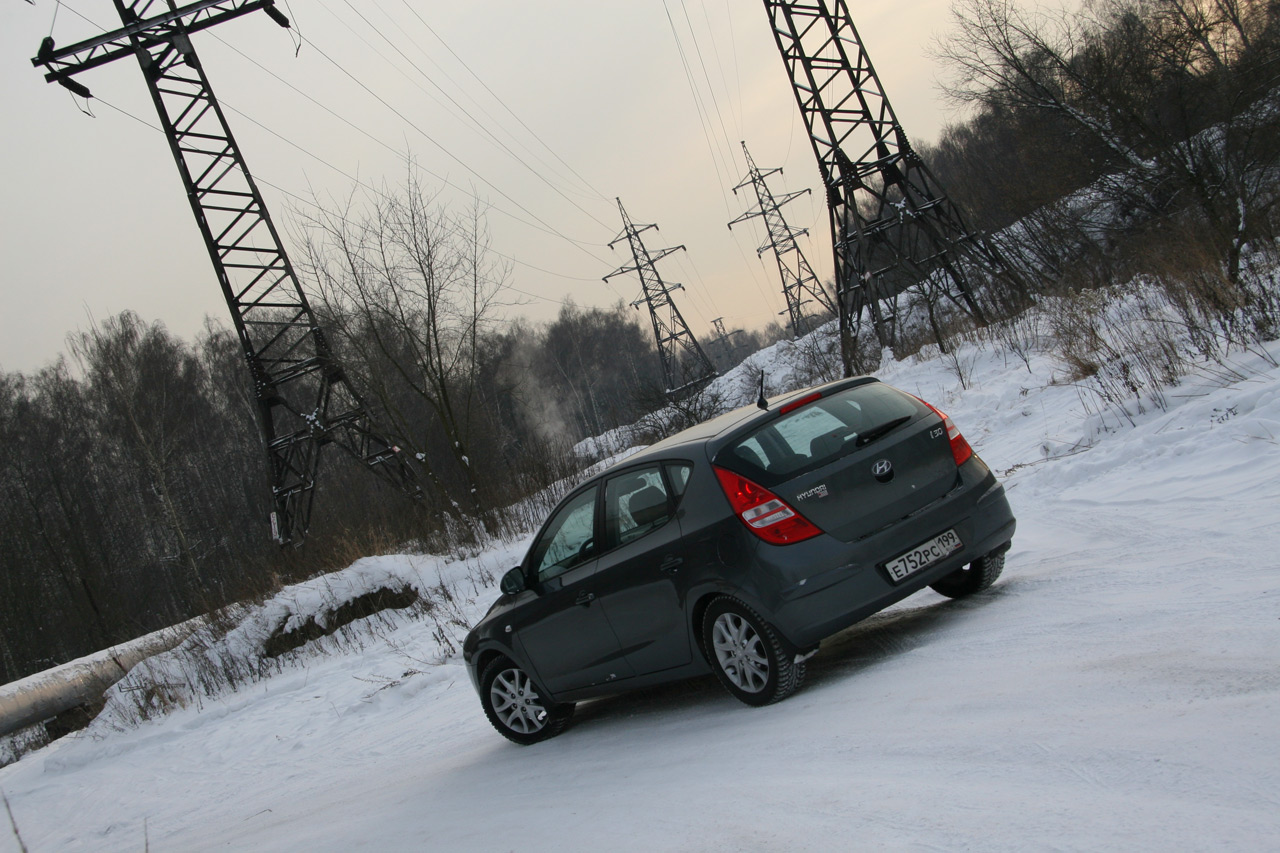
The exterior of the "i30" is the work of the brand's European design center, and it was created with an eye on the tastes of Old World buyers. The dynamic appearance features typically "Asian" slanting headlights, embossed side stampings, and red triangular taillights.
 |
| "Hyundai folks" developed the i30 specifically for the European market. The hatchback also took root in Russia: in January 2010, it yielded in sales only to the bestsellers of the Korean manufacturer's lineup - the Getz hatchback and the Tucson crossover. |
The appearance lacks the sporty aggression inherent in the related Kia cee'd, with which the i30 shares the platform and technology. The difference is that in Russia, the Hyundai i30 is supplied only with 1.4- and 1.6-liter engines and only in a five-door body, while the cee'd is available in three variants, two of which — the three-door pro_cee'd and the cee'd_sw wagon — can be equipped with a 2.0-liter unit producing 143 hp.
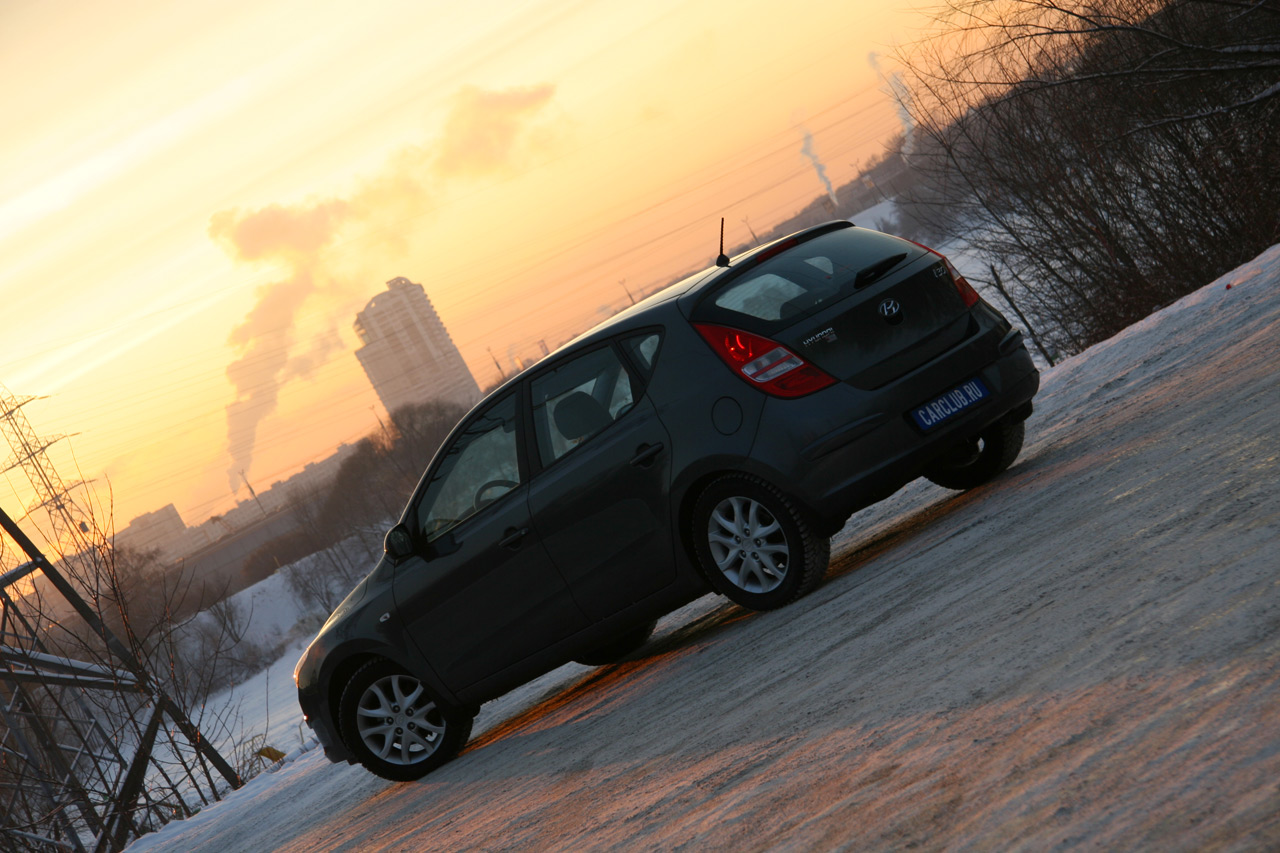 |
| Upon closer inspection, the similarity of the platform-sharing Kia cee'd and Hyundai i30 is evident. You just need to disregard the details. |
The interior of the Hyundai i30 is a typical Korean. Simple plastic, garish instrument lighting, and rough leather on the steering wheel coexist with decent ergonomics. The seating position is high, and the leather seats have a good profile and lateral support. In the back, there's a bit of a shortage of space — tall passengers will press their knees into the front seatbacks.
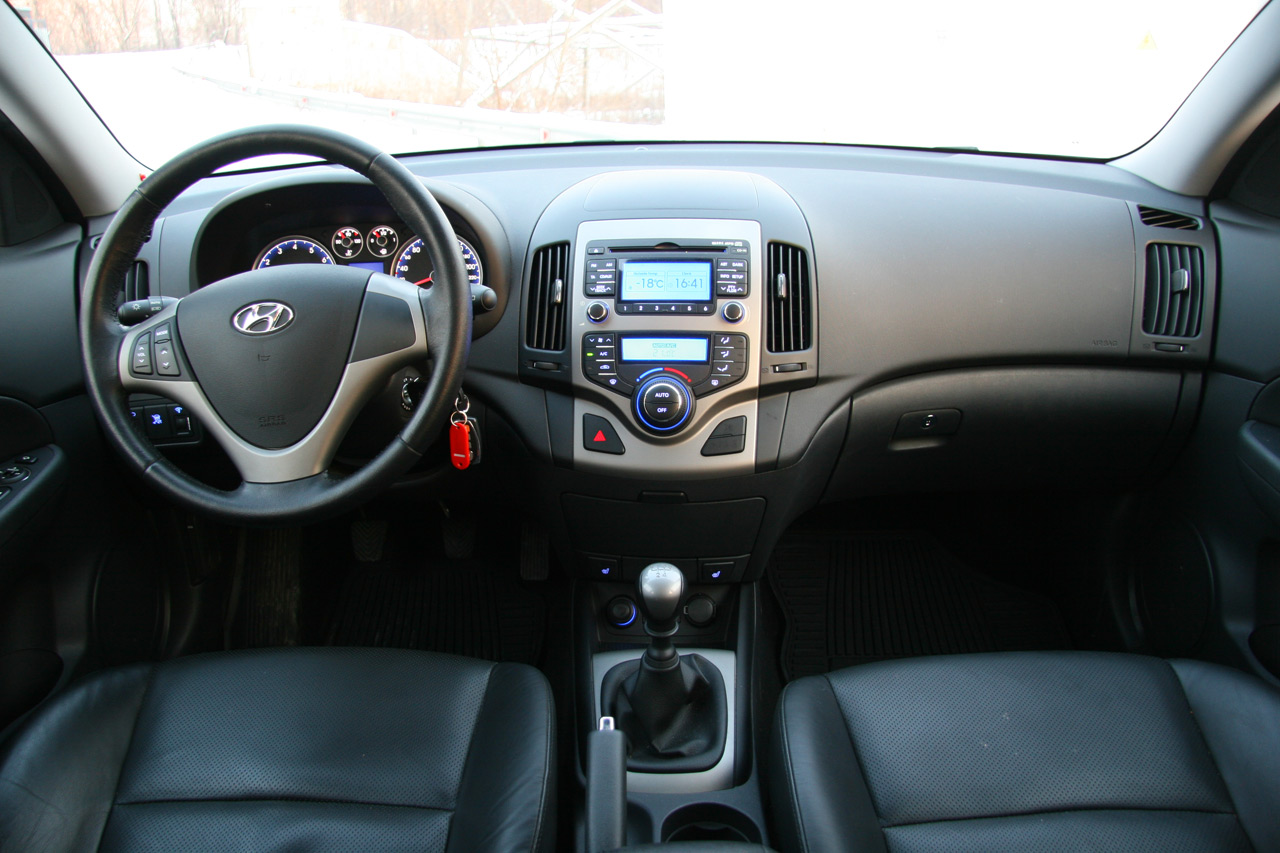 |
| The i30's interior is made of simple plastic, but assembly and ergonomics are top-notch. The list of options for the top Style trim even includes leather upholstery. The vertical air vents and an oasis of buttons on the central console unequivocally remind of the "Ceed". |
As in the "Ceed", in the center of the i30's front panel there is an "oasis" of buttons and knobs responsible for the audio system and climate. The audio system can connect external devices via AUX and read data from USB flash drives.
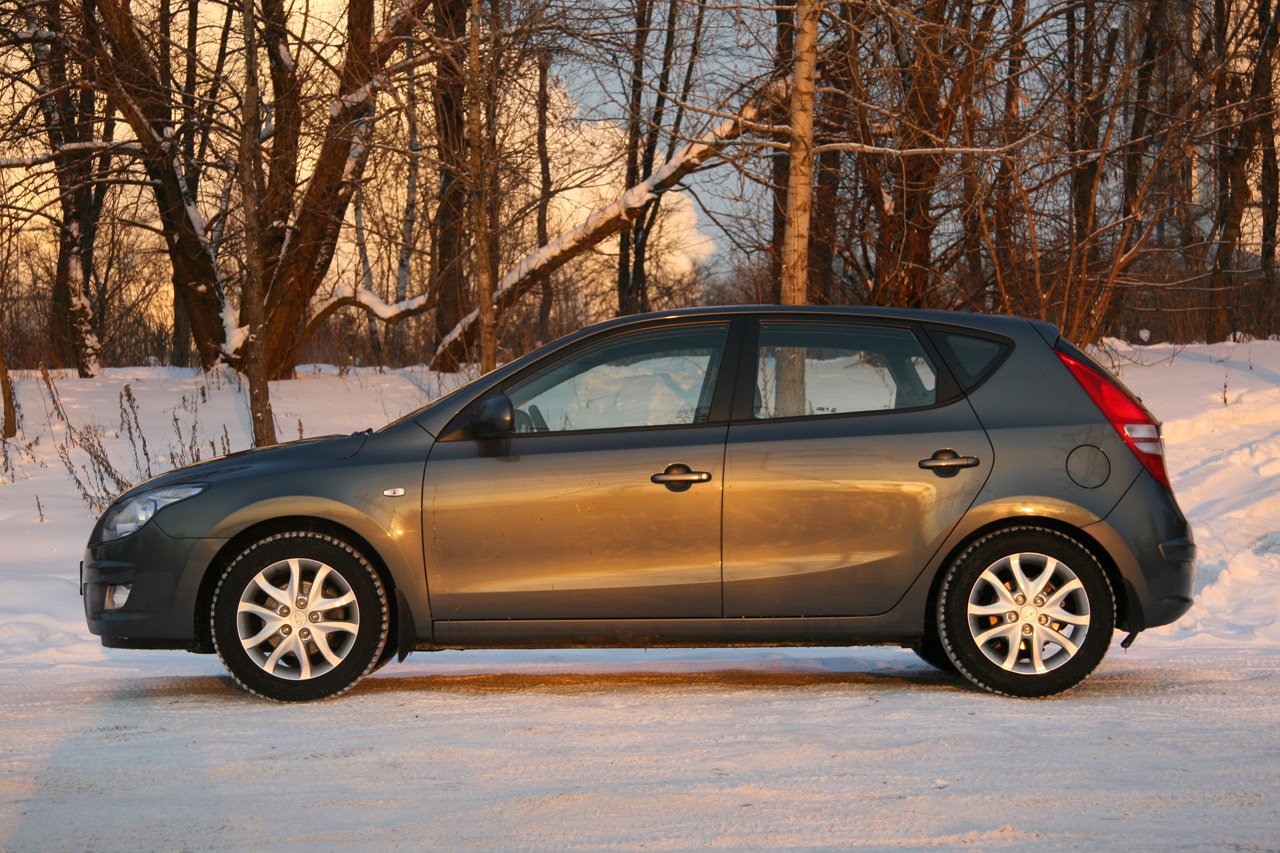 |
| The dynamic silhouette of the Korean with slanting headlights, muscular stampings on the sides, and large rear lights is a win-win option. |
Trunk volume is far from a leader in its class — only 340 liters. By folding the rear seat, split in a 60:40 ratio, it can be increased to 1250 liters.
For the test, we got the most equipped Style version with a 1.6-liter engine producing 122 hp and a five-speed manual transmission. As an alternative to the "manual", a rather outdated 4-speed "automatic" is offered, for which you need to pay an extra 50,000 rubles.
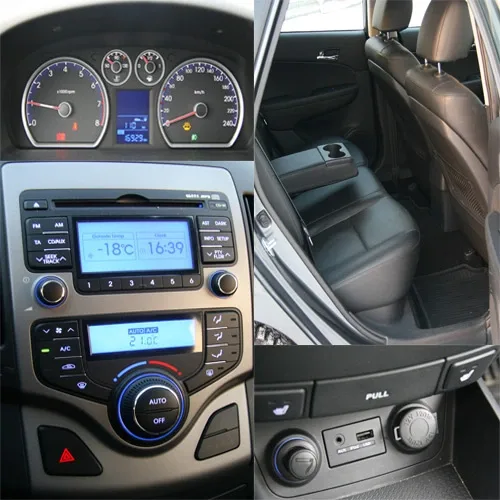 |
| The simple instrument panel is quite informative. The audio system understands MP3 format, also accepts USB flash drives, and can connect to external devices via AUX. The rear bench can't be called cramped, but tall passengers will be uncomfortable there. |
The engine surprisingly briskly accelerates the hatchback to 120 km/h, after which the pace of acceleration noticeably drops. Due to the overly sensitive gas pedal and completely uninformative clutch, it's almost impossible to pull away without wheelspin on studded tires. In addition, the cottony gearshift lever lacks precision and good selectivity.
 |
| On the Russian market, the price of the Hyundai i30 in a far from bare-bones trim starts from 533,900 rubles. |
Despite this, thanks to well-chosen gear ratios in the gearbox, the i30 demonstrated a rather lively character. The main thing is not to let the tachometer needle drop below 3,000 rpm. The hatchback obediently follows the steering wheel, which has a clear center position and good feedback. I recall that the little Hyundai i20 pleasantly surprised us with a similar character during a comparative test with the VW Polo.
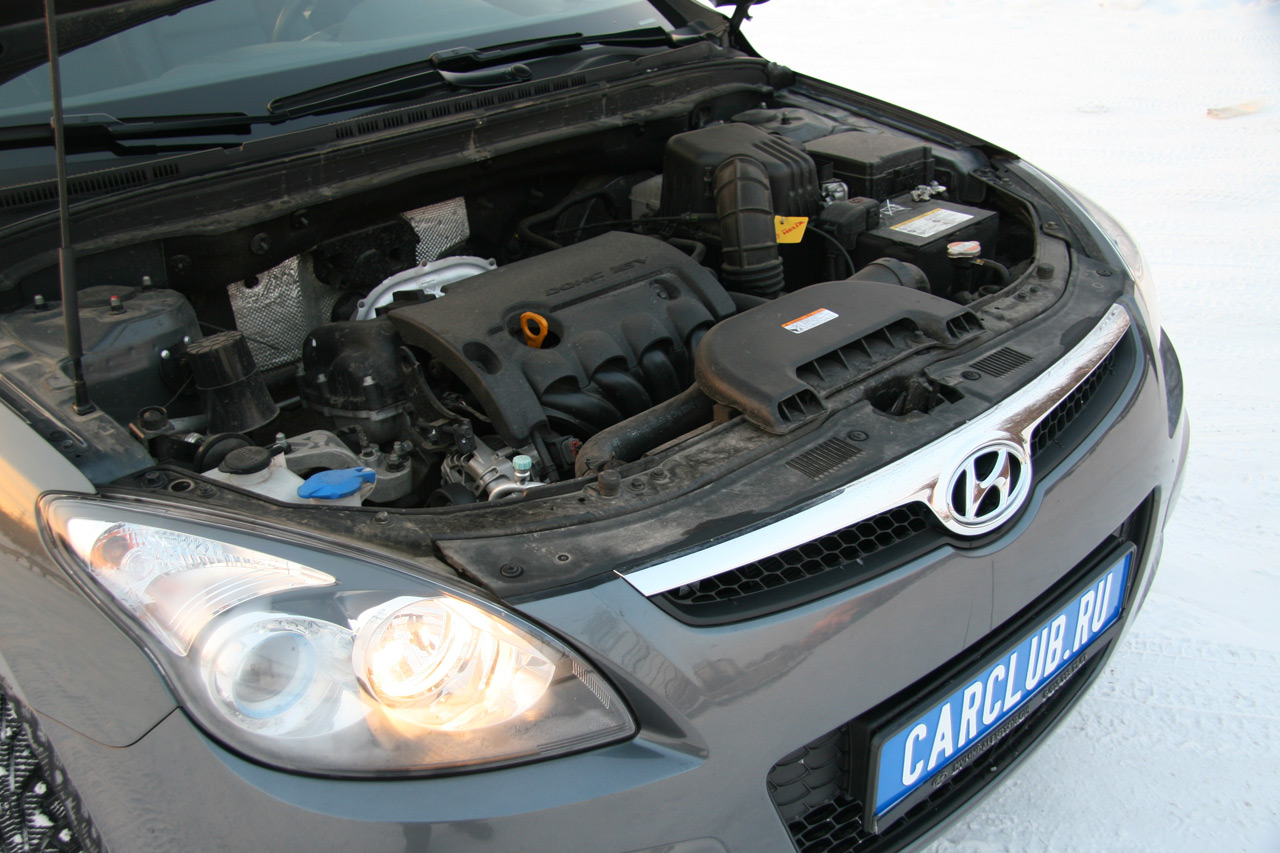 |
| The 1.6-liter engine comes alive after 3,000 rpm and stays lively until the rev limiter. The gear ratios in the 5-speed manual are well chosen. But the impression is spoiled by the completely uninformative clutch and the cottony gearshift lever. In addition, for fuel economy, the manual clearly lacks a 6th gear. |
Striving to please demanding Europeans, ride smoothness and comfort were sacrificed for good handling and minimal body roll in corners. Even on soft winter tires, all the potholes and irregularities are transmitted to the Hyundai body in detail. Larger bumps are accompanied by dull thuds. It's not far from a suspension breakdown.
 |
| Even in the base version, the Hyundai i30 is equipped with 6 airbags, ABS, and air conditioning. |
The brakes are good: a clear pedal effort is combined with good efficiency, and in case of wheel lockup, ABS intervenes correctly. In addition, the top trim also has a stability control system that immediately activates if the car begins to slide sideways.
In Russia, the price of the Hyundai i30 with a 1.4-liter engine and manual transmission starts from 533,900 rubles. However, even in the base Classic trim, everything necessary is present, including 6 airbags, heated seats, air conditioning, ABS, an audio system with steering wheel controls, and a power package.
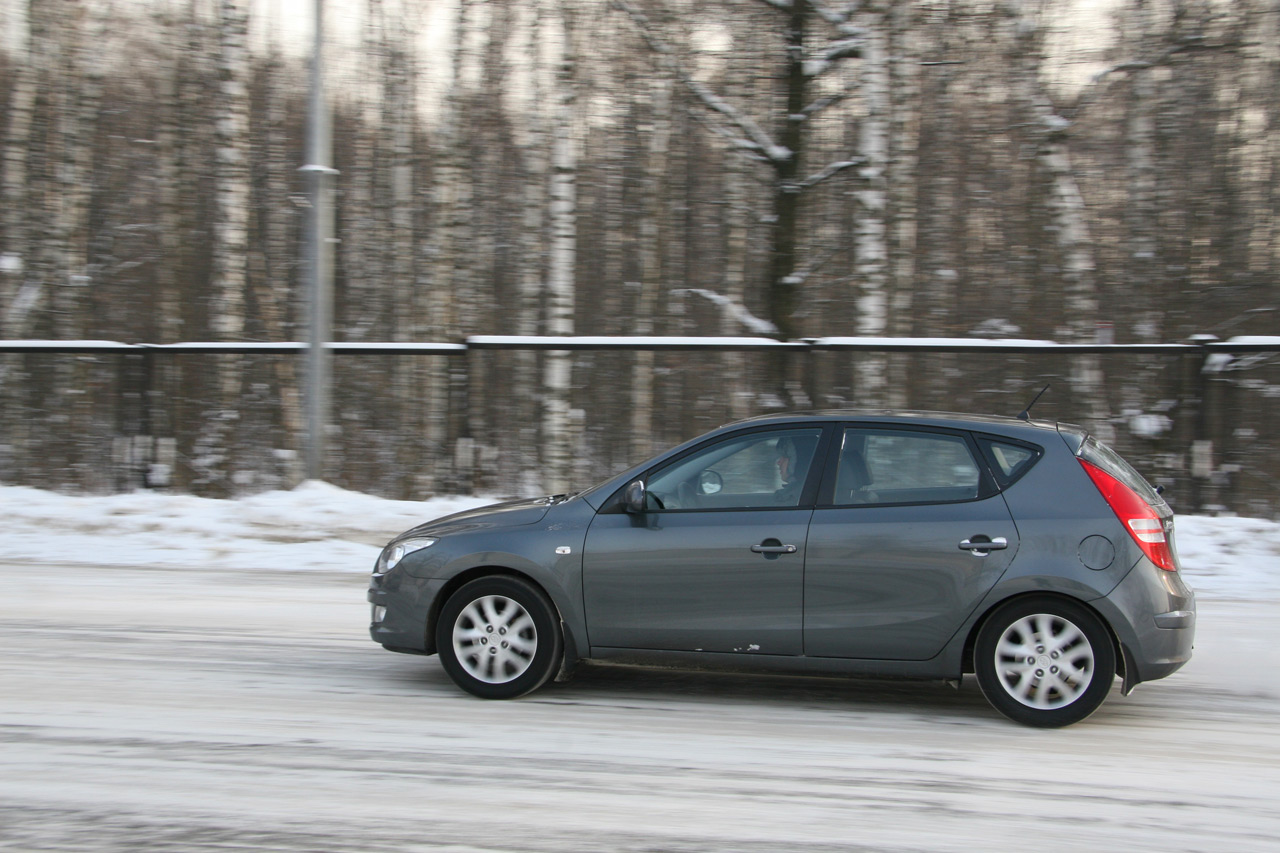 |
| On the road, the Hyundai i30 shows a daring character. The sensitive gas pedal, stiff suspension, and precise steering allow the Korean hatchback to fight on equal terms with more eminent competitors. |
The Comfort trim offers steering wheel adjustment in two planes, two-level front seat heating, rear power windows, climate control, an armrest, a cooled glove box, an onboard computer, a rain sensor, leather trim on the steering wheel and gearshift lever, as well as fog lights and alloy wheels. For this version, you'll have to pay $20,585 (164,673 UAH). The surcharge for the 1.6-liter engine will eat another 30,000 rubles.
 |
The top Style trim is offered only with the 1.6-liter engine and features the ESP stability control system and leather interior. The cost of this version is 669,900 rubles. In addition, a discount is currently available on all modifications of the Hyundai i30, which, depending on the equipment level, ranges from 30 to 60 thousand rubles.
Ruslan Galimov.