
Hyundai Getz. Korean bestseller
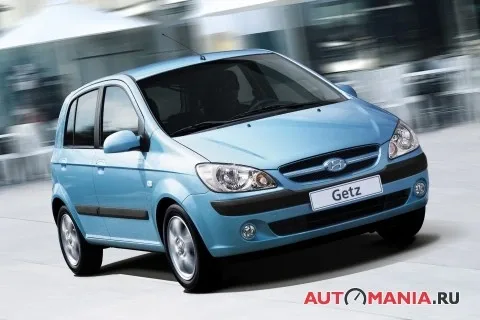
Hardly anyone would argue that Hyundai Getz has won the hearts of our motorists. This is evident both from how often these cars are seen on the streets and from sales statistics — since its debut, the Korean model has consistently stayed in the top ten leaders. The secret of success is simple: attractive looks, decent build quality, and, most importantly, a quite democratic price tag. And what else does a domestic buyer, who for the most part is not ready to shell out fabulous sums for a car, need?..
True, this year it will not be easy for the "little one" to repeat its past successes: constant strikes at factories in South Korea, supply disruptions, and increasingly active, updated competitors — all this does not have the best effect on sales volumes. But it is too early to write it off: after the update, which was more like a light facelift, the Getz is back in action and continues its hunt for the class leader — the Renault Logan. It is unlikely to regain its former glory, but it is quite capable of getting on the nerves of its rivals.
During its production run, more than half a million units of the model have been sold worldwide, of which 50 thousand found their owners in Russia. Given such statistics, it is not surprising that when creating the second-generation Getz, Hyundai engineers did not reinvent the wheel and followed a proven path, preserving the recognizable style. Nevertheless, the differences between the old and new car are immediately noticeable: a more expressive hood, redesigned bumpers, different front and rear lighting. Otherwise, the car remains the same — it is still the same compact and charming "little one" with a balanced design that does not look outdated even today. If we compare the versions with each other, the three-door looks noticeably more interesting than the five-door. The large doors visually made the body lower and more compact, adding even a touch of aggression. And although there are more sporty notes in the appearance, the model has not lost its charm: before us is still the same tall "microvan-like" body with a short hood, a heavily raked windshield, and an almost vertical rear, the same clear headlights and funny rear lights. Only now there are two doors.
In the cabin of the Korean, you experience similar feelings: it seems both nice and high-quality, but somehow toy-like. Although this is already a matter of taste, so let's move on to the facts. For someone familiar with cars of this class, and especially with the first-generation Getz, the interior will seem painfully familiar. Both the front panel with characteristic shelves on the sides, and the massive, as if borrowed from an SUV, center console, where everything the driver needs is present, and the simple but perfectly readable instrument cluster. However, while preserving the overall concept, the Koreans still thoroughly worked on the details. The first thing that catches the eye is the trim materials: if they have not become softer, they have definitely visually improved. The steering wheel has acquired a new central part and perforated leather trim, the place of the coolant temperature scale on the updated instrument panel has been taken by a blue-red warning lamp, an additional compartment for small items has appeared under the center console, and the glove box has received lighting. The console itself and the door armrests are now decorated with "aluminum-look" overlays, the fog light buttons have moved to the steering column, and their place has been taken by an electronic clock and a large hazard warning button.
As for the functionality of the cabin, everything here is quite predictable. Korean cars, unlike German ones, have never been famous for unconditional comfort. The Getz inherited from its "relatives" a limited range of steering column adjustment, and you also sometimes want to push the seat further back. The seats themselves will also cause inconvenience, especially for tall passengers: their shapes are quite average, the cushions and backrests are a bit short, and the lateral support is not impressive. But on the plus side, you can note the well-thought-out ergonomics of the driver's seat, high seating position, excellent visibility, a cabin that is quite spacious for its class, and a roomy trunk. Moreover, the target audience of the Getz is mainly women, who will feel comfortable behind the wheel without any problems. They did not forget about the rear passengers either. I got a three-door version for the test, which is clearly designed for two — a third person will not fit here even theoretically. But a couple of riders will be quite comfortable, though, provided that the front seats are not pushed all the way back, otherwise there will simply be no room for legs. By the way, thanks to the tall body and wide door openings, the three-door is devoid of the typical problem for such cars — the difficulty of getting into the rear row. Of course, it cannot be compared with the five-door version, but it will not cause much suffering to passengers either.
But what is really inconvenient is the process of transforming the four-seat hatchback into a two-seat van: to unlock both parts of the split rear seatback, you can reach through the tailgate, but to fully fold the cabin, you will have to climb into the trunk almost headfirst. However, on the back side of the seatback, there are a couple of hooks where you can hang a handbag or a shopping bag — for a city car, this is very handy.
For the Russian market, this hatchback is offered with three petrol engines: 1.1 L (66 hp), 1.4 L (97 hp), and 1.6 L (106 hp). The youngest unit, due to its modest dynamic capabilities, comes only with a 5-speed manual, while the other two can be paired with either a manual or an automatic gearbox. The hero of this material was the most expensive three-door Getz with a 1.6-liter engine and a 4-speed automatic, which is currently not supplied to Russia for a number of reasons. But since there is practically no difference in driving qualities between the three- and five-door versions, we will make do with this example.
Given the sporty character of the three-door, a manual version would have been more interesting. But this one also turned out to be quite decent. For a hatchback weighing just over a ton, a 106-horsepower engine is quite enough. It provides smooth and fairly brisk acceleration (with a sharp start, the automatic allows the engine to rev up to 5500 rpm). At the same time, the car readily responds to pressing the gas pedal. The only thing that spoils the impression is the noticeable jerks when shifting gears. However, almost all "automated" classmates sin with this.
On the road, the Getz also behaves in an average way, but quite worthily. The car obeys the steering wheel perfectly. The light and sharp steering wheel is convenient in city traffic and when parking. However, the electric power steering settings are ideal only for the city: at speeds above 100 km/h, excessive sharpness begins to tire. The suspension (McPherson at the front and a semi-independent beam at the rear) also pleased. The hatchback confidently holds the road, clearly tracing the trajectory, equally predictable on asphalt and on snowy rolled snow — in the latter case, you just need to be more careful with the steering wheel when braking. Body rolls are almost absent, which allows you to take sharp turns at a decent speed. It is pleasant that the car is absolutely indifferent to the quality of the road surface: the moderately stiff suspension confidently swallows any irregularities, and only on a fine "washboard" do noticeable vibrations appear in the cabin. In general, the Getz is a typical city hatchback, attractive on the outside and very good in handling, which, in fact, ensured its popularity.
As for prices, the most affordable version now is the three-door with a 1.1-liter engine, airbag, immobilizer, central locking, fog lights, and the "Russian package" — it will cost 286,900 rubles. The maximally equipped Getz with a 1.6-liter engine, automatic transmission, and all possible options is priced at 438,900 rubles, which is comparable to the cost of a base Mitsubishi Lancer of the new generation. But here, as they say, to each his own.
Technical characteristics:
Hyundai Getz is a compact car that has already managed to gain popularity in our market thanks to a successful combination of price and practicality. I spent several days behind the wheel of this car, and now I will share my impressions of the trip.
Appearance and dimensions
I will immediately note that the dimensions of the Getz are modest: length — 3825 mm, width — 1665 mm, height — 1490 mm. The wheelbase is 2455 mm, and the weight is only 1050 kg. Such a car is easy to maneuver in city traffic and park on narrow streets. The design, of course, cannot be called outstanding, but it does not look frankly weak either — the car has a recognizable silhouette that does not get boring over time.
Interior and trunk
Inside, the Getz greets you with a simple but functional interior. The trim materials are hard plastic, but it is assembled solidly, without squeaks. The seating position is comfortable, visibility is good thanks to large mirrors and thin pillars. As for the trunk, in the standard position its volume is 255 liters, and with the rear seats folded down it increases to 975 liters — for this class, this is a decent indicator.
Engine and dynamics
Under the hood of my test car was a petrol engine with a displacement of 1599 cc, producing 106 horsepower at 5800 rpm and a torque of 144 Nm at 3200 rpm. This unit is perfect for the city: acceleration to 100 km/h takes 11.9 seconds, and the maximum speed is 170 km/h. Of course, on the highway, overtaking requires some planning, but in the city rhythm, the engine feels confident, especially if you do not be lazy to shift gears in time.
Fuel consumption
The average fuel consumption during the test was about 7 liters per 100 km — this is pleasantly surprising, especially considering that I did not try to save and often drove with the air conditioning on. For such a car, this is an excellent indicator that makes operation economically profitable.
Ride quality
The suspension of the Getz is tuned for comfort — it softly absorbs small bumps and asphalt joints. However, on large potholes and speed bumps, it could be firmer: impacts are felt and transmitted to the body. The steering is quite informative, but at high speeds there is a lack of feedback — the car slightly "floats" on a straight line, requiring steering corrections.
Price and trim levels
At the time of the test, the price of the Hyundai Getz ranged from 286,900 to 438,900 rubles depending on the trim level. For this money, the buyer gets a reliable, economical, and practical car that is perfect for daily city driving. It is not a car for racing or a status toy — it is an honest workhorse that will not let you down.
If you need an inexpensive, reliable, and economical city car, the Getz is one of the best options in its class. It does not shine with technology or design, but it performs its functions flawlessly.