
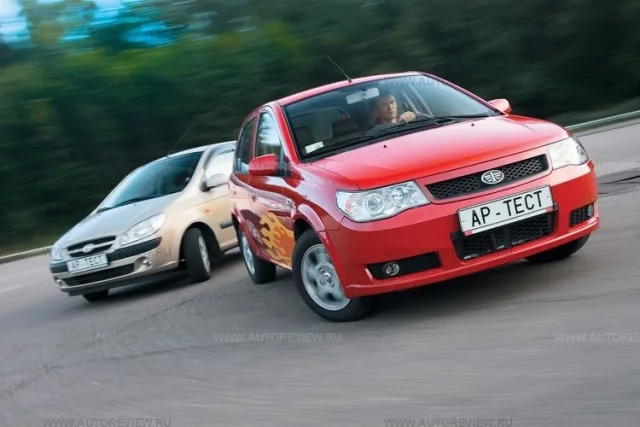
"Enjoy life! All inclusive" — reads the advertising slogan of the Chinese hatchback FAW Vita. The slogan, it must be admitted, is apt: after all, vita in Latin means "life." And for 324,750 rubles ($12,990) this life indeed includes a lot of useful things: air conditioning, full power package, radio, alloy wheels... Italians would call it dolce Vita, that is, "sweet life"! But is it as sweet compared to one of the class leaders — the Korean hatchback Hyundai Getz?
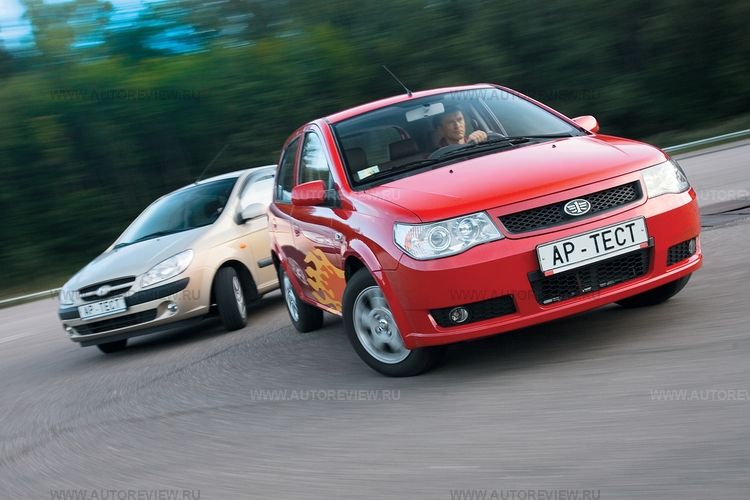
Under the hood of the Chinese "life" is the only available engine with a displacement of 1.3 liters (93 hp), paired with a manual transmission. The Hyundai Getz offers a much wider choice: three- and five-door versions, "manual" or "automatic," three engines to choose from... However, in a comparable trim, the Vita turns out to be $1,650 cheaper than the Getz 1.4 (97 hp): $12,990 versus $14,640.
Cheaper — that's a fact. But is it sweeter to the taste?
| FAW Vita | Hyundai Getz |
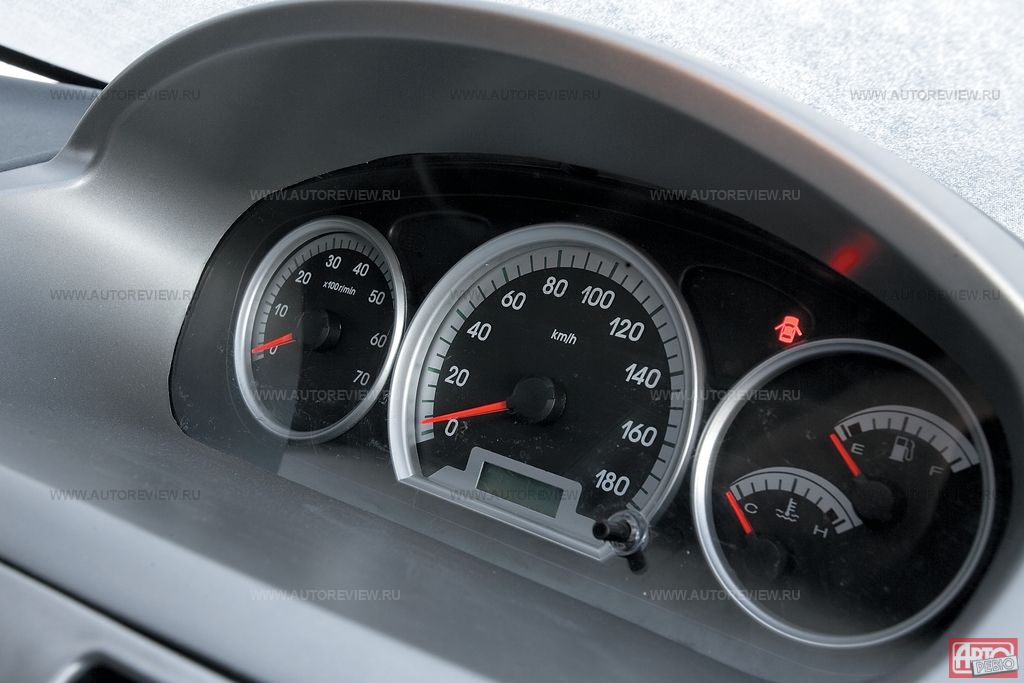 | 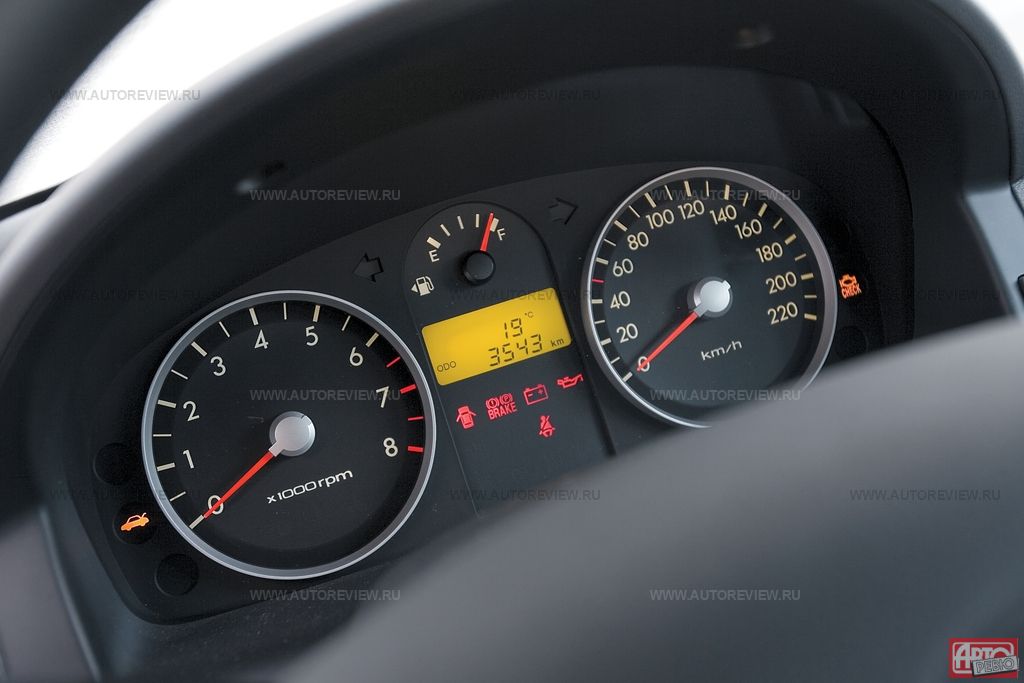 |
| The Vita's instruments look attractive and would read well if not for the glaring glass. In the Getz, the dial readings are visible without problems, however, as in the "pre-restyling" version, there is no coolant temperature gauge | |
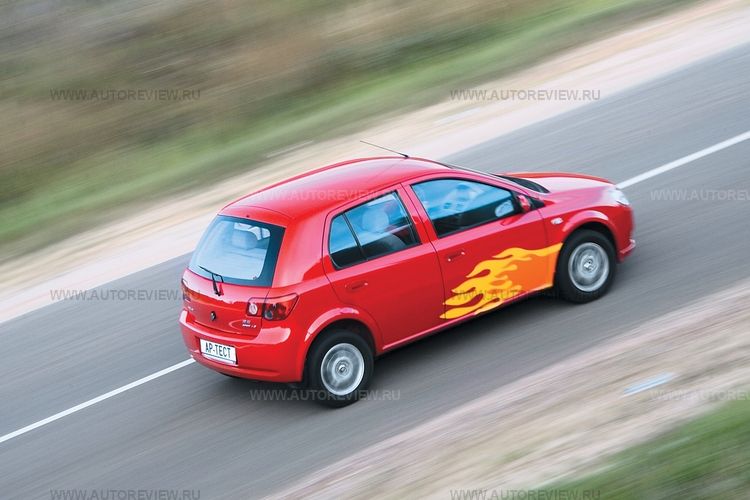
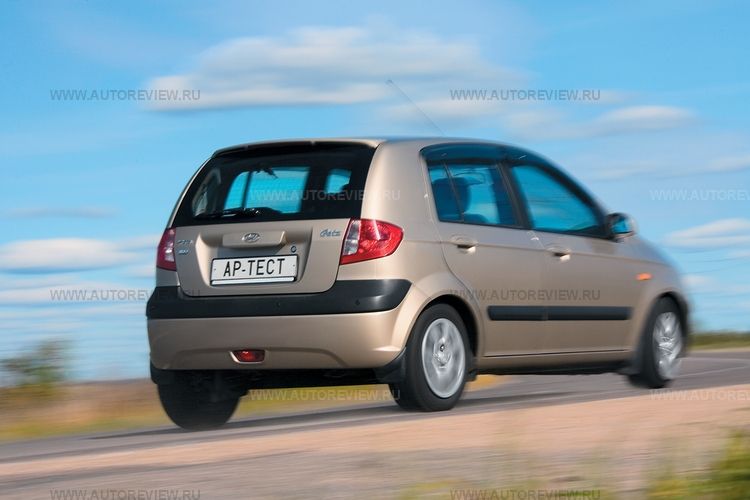
The Vita's exterior is successful — strict and concise. Curved lower edges of the headlights and taillights, LED rings around the low-beam lenses — and no hints of the previous-generation Toyota Yaris, whose platform underlies the car. Perhaps, we have one of the most attractive "Chinese" cars!
However, the Hyundai Getz also looks good, although over five years it has become quite familiar.
In the Getz's interior, it's not so much the simple design that appeals, but the neat assembly and quality materials. The front panel is hard, but looks pleasant, all handles and levers work clearly. The only disappointment is the smell of "plastic."
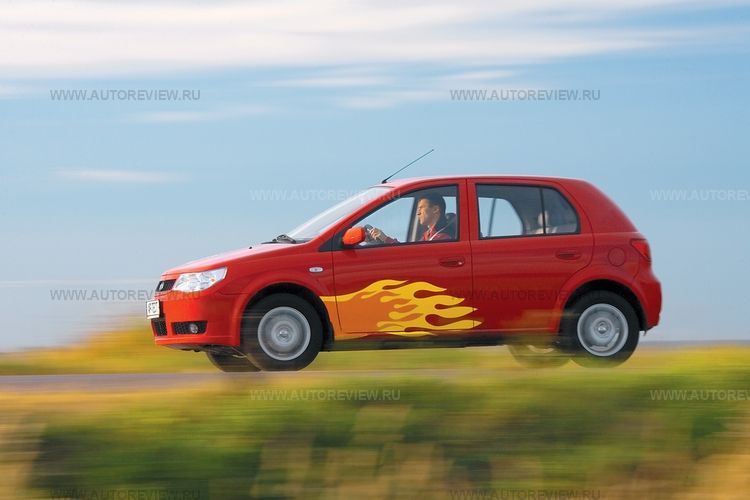
The FAW Vita is noisier than the Getz and reacts more harshly to bumps, but it almost doesn't notice the road waves that bother the Korean hatchback
The FAW Vita is a completely different story. The panel here is soft both to the touch and visually, but this doesn't save it from a dull impression. Looking at the bright instruments in the center is inconvenient and useless — they are hidden by a heavily glaring glass. The door trim is slippery leatherette combined with uneven plastic "windowsills." The glove box lid is crooked, the deflectors are flimsy, and their "silvered" sliders jam when adjusting the airflow direction. The only plus is that the phenolic smell here is weaker than in the Getz.
The Vita's headrests are glued and stitched as if done hastily and unskillfully
The driving position in both hatchbacks is high, urban, and generally comfortable. The Hyundai Getz pleases with wide adjustment ranges of the optimally firm seat, but the seat belts here, unlike the Chinese ones, are not height-adjustable. The Vita's seat is a bit more hospitable: firm, with a soft top layer that, along with more pronounced lateral support, holds the driver well. However, moving the seat is only possible with effort — the adjustment bracket requires a strong pull, and the rails "bite."
Rear passengers feel uncomfortable in both cars: the backrests of the sofas have a non-optimal shape, and the shoulders of the occupants remain without support. The angle-adjustable backrest in the Getz doesn't solve the problem, but in the Vita it's even less comfortable to sit. Especially three abreast: it's cramped in the shoulders, and heads hit the ceiling.
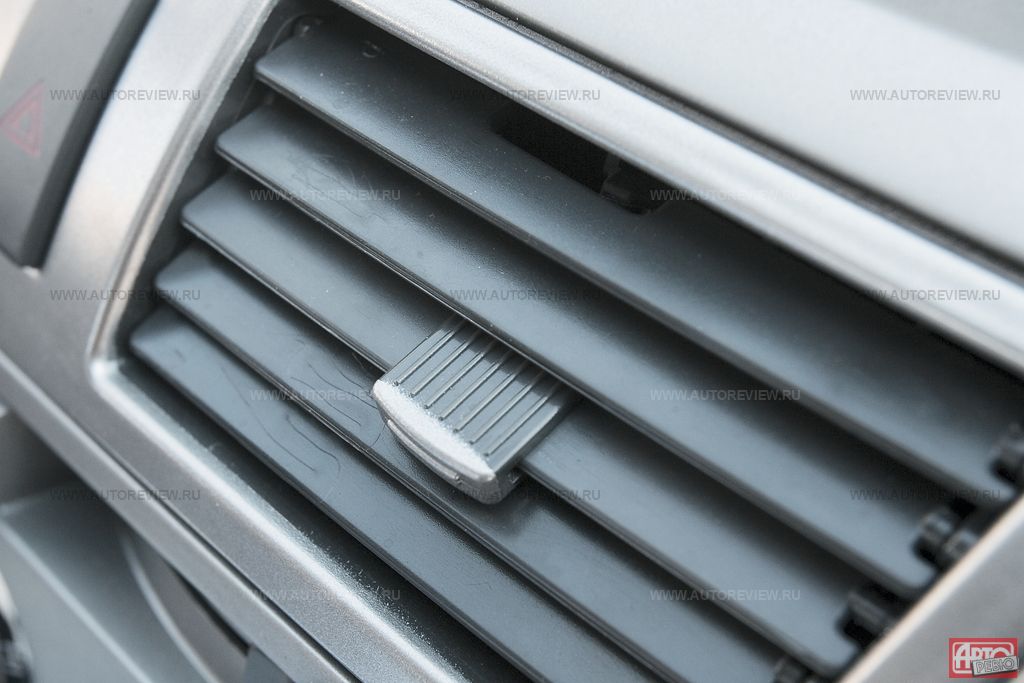 | ||
| The cover of the vanity mirror is soft, with a magnetic latch | The "silvered" sliders jam on the flimsy louvers of the air deflectors | The Vita's headrests are glued and stitched in a hasty, unskilled manner |
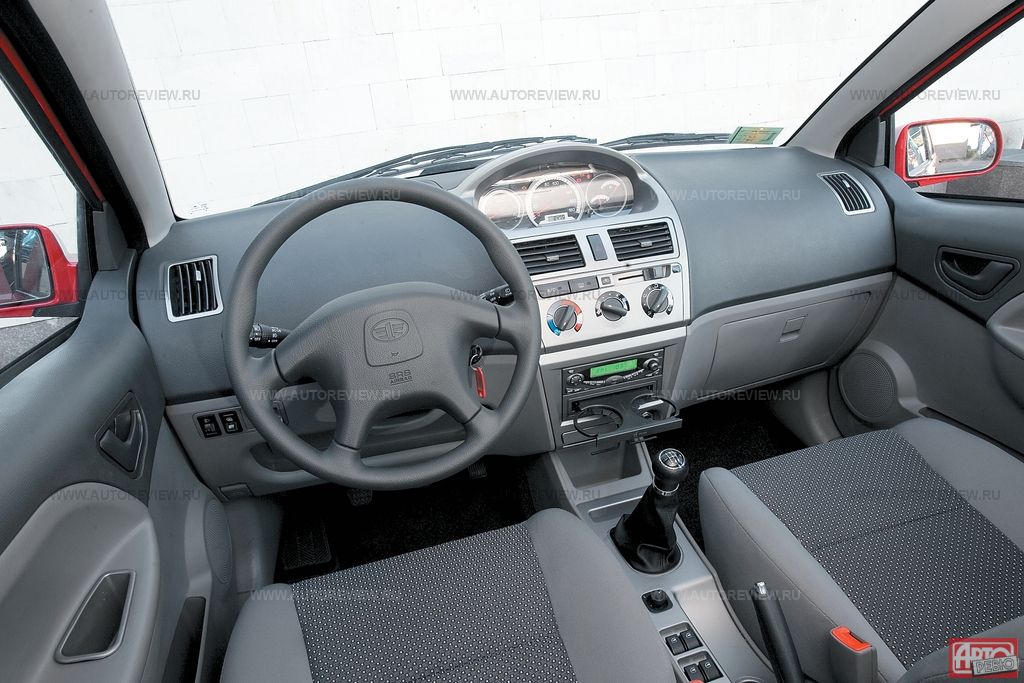 | 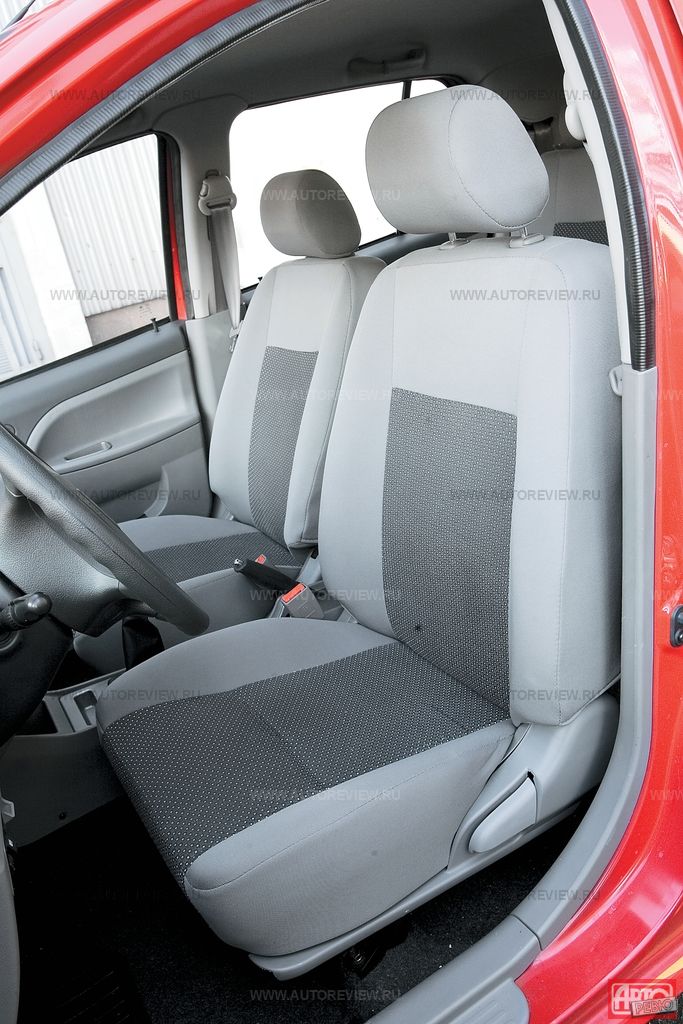 | 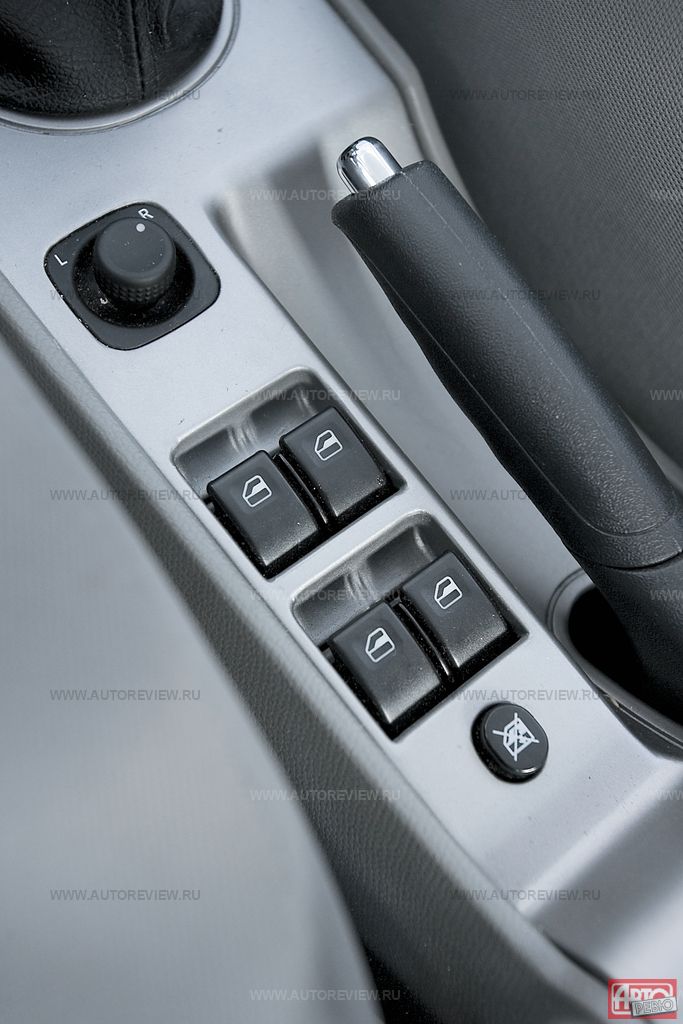 |
| The "center-instrument" front panel is in the spirit of the previous-generation Toyota Yaris prototype hatchback. However, the materials and assembly are dull | The Vita's seat is more hospitable than the Korean one due to more pronounced lateral support and better friction properties of the upholstery. But it moves along the rails with difficulty | The FAW Vita has not one, like the Getz, but four power windows with "Auto" mode and even closes the windows itself when the ignition is turned off |
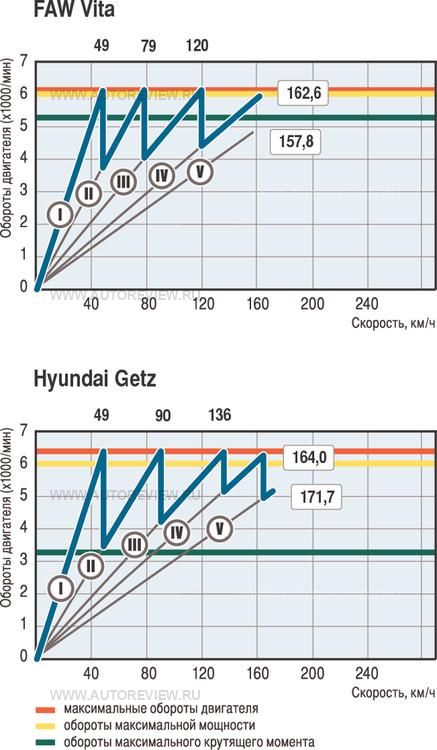
The Getz accelerates to 100 km/h in 12.8 seconds — 2.2 seconds faster than the "Chinese" car with similar power. And how much more pleasant it happens... The even character of the moderately noisy engine, the precise gearbox drive, logically selected gears (second spins up to 90 km/h, third up to 136 km/h). The Getz's accelerator, damped in a wide inactive zone (up to 3,500 rpm), seems ultra-sensitive against the background of the wooden Chinese one. After all, in the Vita you can calmly tap the gas pedal — and not get any response!
At the "bottom," the Chinese engine pulls sluggishly. By mid-range revs it wakes up, but every shift still tears the Vita's acceleration pace into pieces. Even the shorter transmission doesn't help (second gear up to 79 km/h, third up to 120 km/h): the Vita still can't catch up with the Getz. The engine meanwhile squeals, booms, and whistles simultaneously, like orchestra musicians who have lost their conductor, and on the "limiter" it convulses. Out of frustration, no doubt.
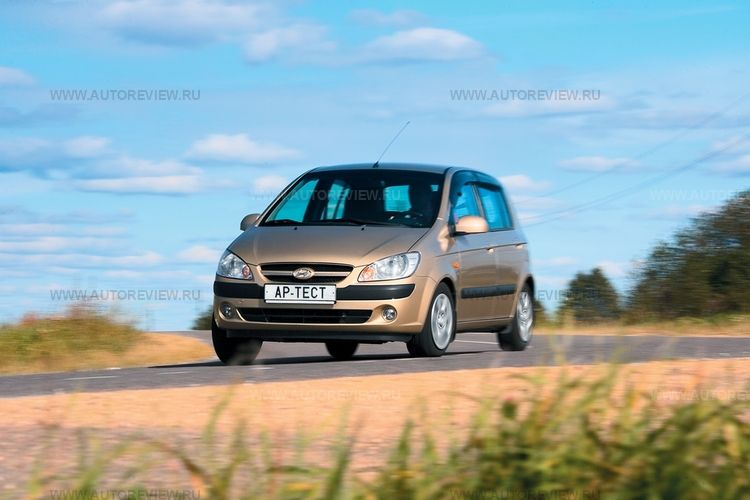
The Hyundai Getz handles without spark, but calmly and reliably
And the brakes? In normal modes, everything is fine, but during emergency braking from 100 km/h, the Vita needs 53.9 meters versus 43.6 meters for the Getz! Moreover, we never managed to "push" the pedal to trigger the ABS or at least to lock the wheels!
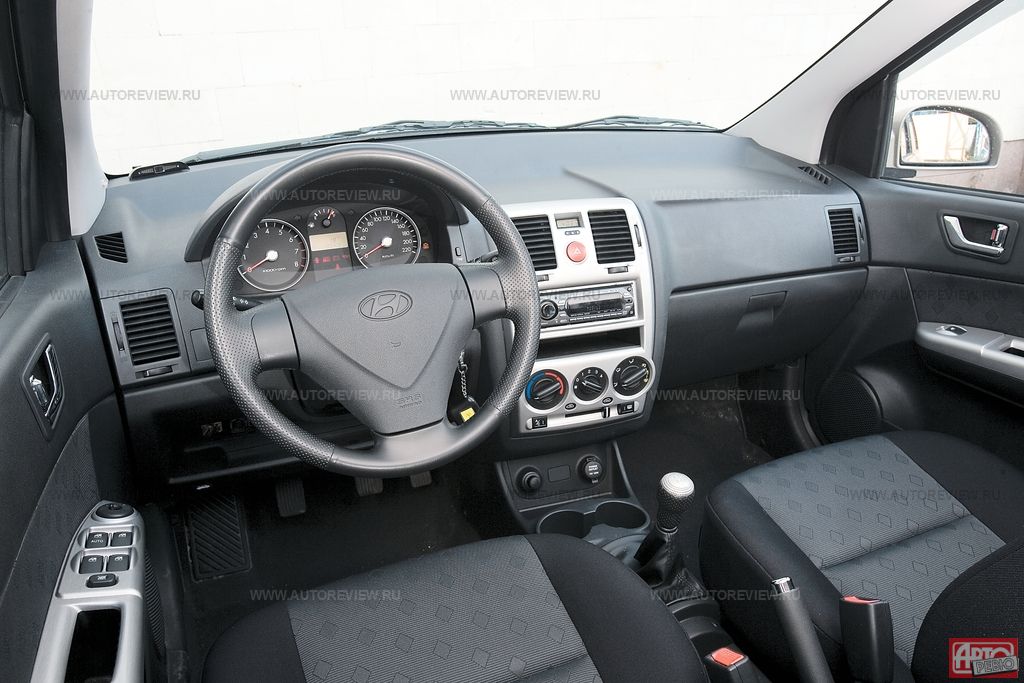 | 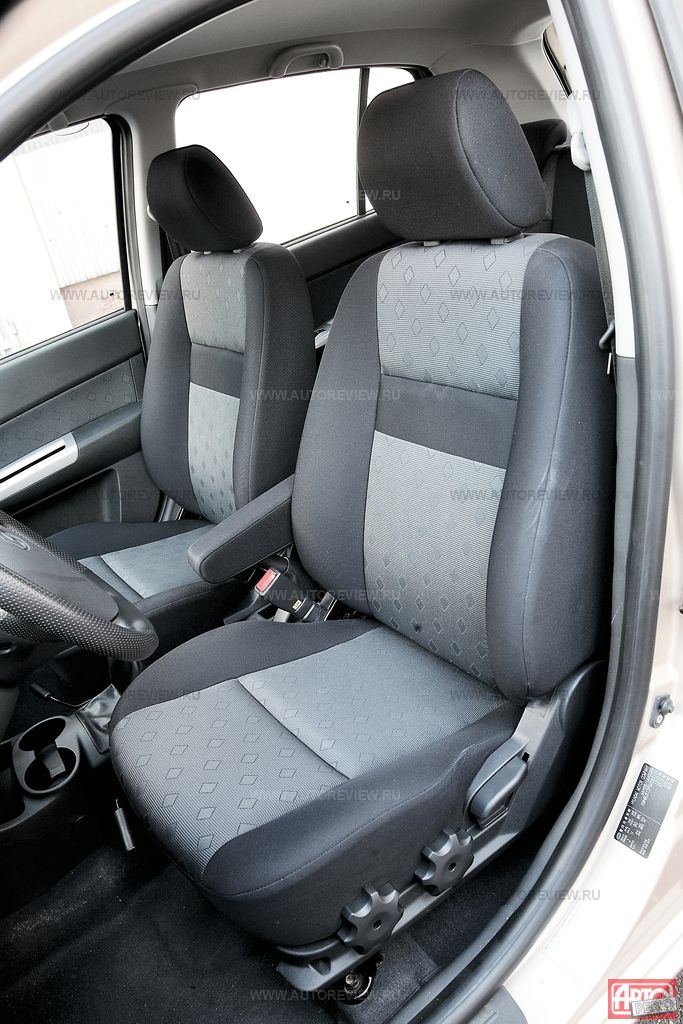 |
| The Getz's interior is simple and neat | The Getz's seat pleases with good adjustment ranges, but lateral support could be better, and the sagging armrest (a feature of the top GLS version) is uncomfortable. Another minus — the seat belts, unlike the Chinese ones, are not height-adjustable |
The Getz provides reliable and confident deceleration. And stable: on the third consecutive braking from 100 km/h, the pedal, though "hardened," did not reduce efficiency. But the Vita under the same conditions rolled another three meters further: the braking distance is like that of a "UAZ"!
The Vita holds a straight line well and even pleases with decent steering feedback. But the responses to turns of the thin steering wheel are inaccurate, blurred, sensitivity is low — the wheel has to be turned at large angles. In addition, in tense uneven turns, impacts with loud knocks come to the wheel, as if the steering column mounts have loosened. The delayed reactions are especially noticeable during alternating "steering" — the car manages to drift slightly outward. And when lifting off the gas, the Vita readily dives into the turn and firmly clings to the trajectory, but if it slips, it sharply goes into a skid. Keep your ears open!
| FAW Vita | Hyundai Getz |
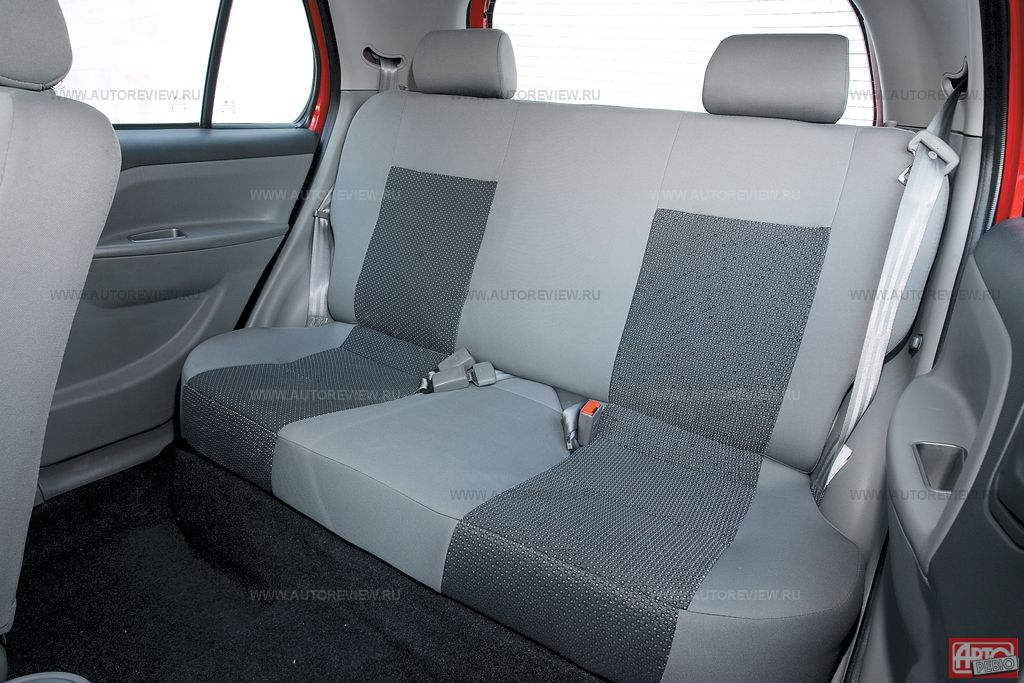 | 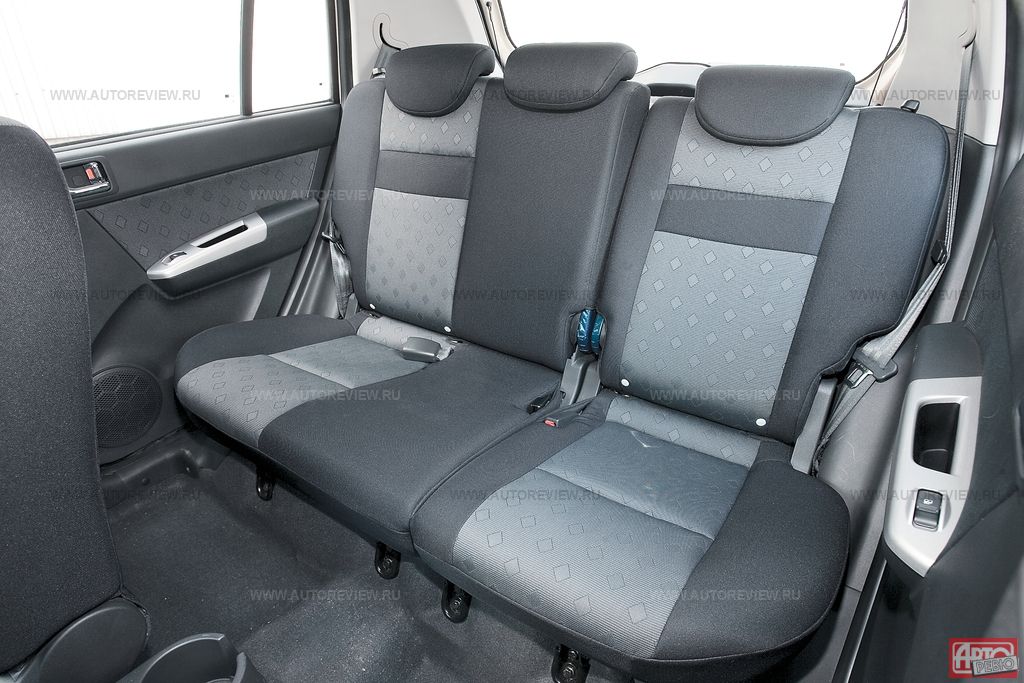 |
| Rear passengers are deprived of full comfort in both cars, but the Getz is still preferable: here it's a bit more spacious, and the seat backrest is adjustable in angle. Among the conveniences: on the Getz's central tunnel there's a "cup holder" for a 1.5-liter bottle and pockets in the backs of the front seats, while in the Vita there's only an ashtray on the tunnel | |
The Getz is also far from flawless, but its behavior on the road is more balanced and predictable. Like the Vita, it holds a straight line confidently — the only thing is that on uneven surfaces you constantly have to correct the steering. The Getz's responses are smooth and precise, but the steering wheel is not as informative. If you add gas, the Getz leans less in corners than the Vita, but instead it simply slides off the trajectory with its front wheels — the Kumho Power Star 758 tires, when leaning over, barely grip the asphalt. Of course, vivid emotions are lacking, but everything happens calmly and reliably.
The Hyundai's suspension is soft. On short waves of the road surface, the Getz rocks like a boat (seasickness is not far off!), but all serious bumps are smoothed out, and the Korean seems not to notice small seams and cracks at all. The Chinese car is the complete opposite! Its stiff suspension does not let the body rock, but it counts every little thing on the asphalt and constantly transmits impacts into the cabin — sometimes with loud knocks. The Chinese hatchback is generally noisier: tires hum louder, wind howls, and the engine works louder during acceleration. At idle, vibrations come from the engine, and the intake system seems clogged.
| FAW Vita | Hyundai Getz | |
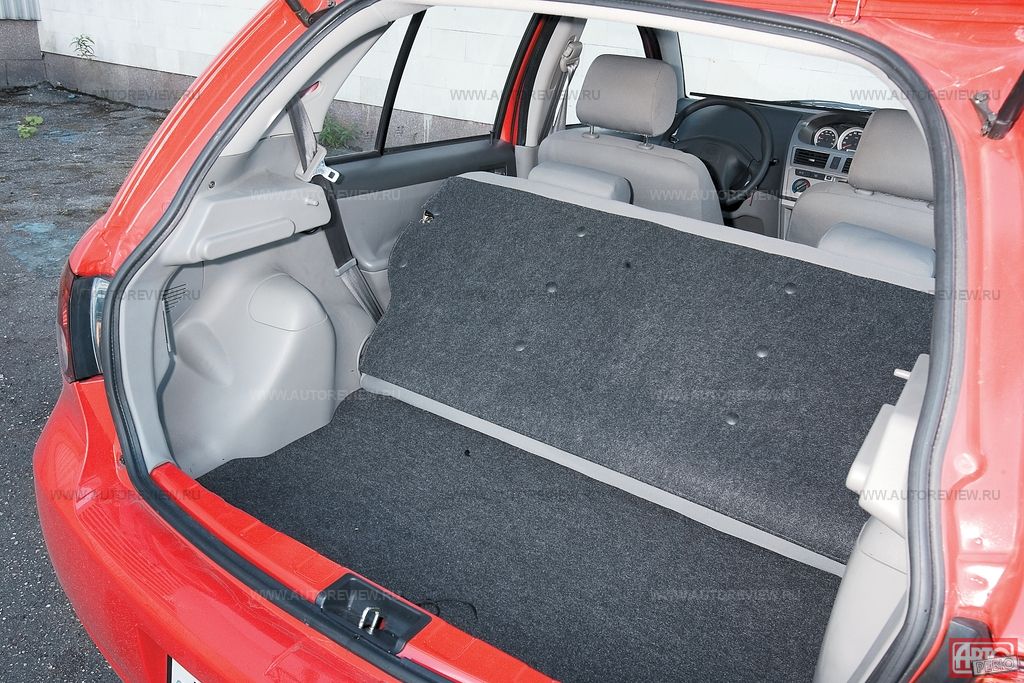 | 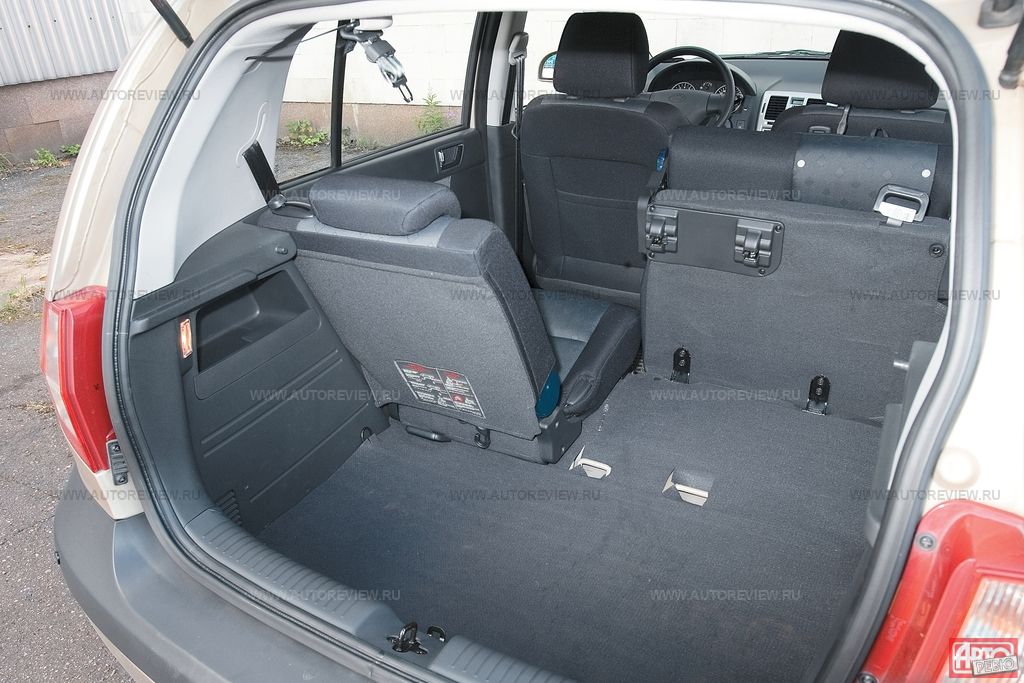 | |
| To fold the rear seat backrest of the Vita, you need to pull a couple of levers on the sides. The upholstery has already torn... | The Getz's interior transforms more simply and conveniently: in the Vita, only the backrest folds, and entirely, and only with the doors open — otherwise its edges press against the door armrests (in the photo). The trunks are equal in volume, but the Hyundai has a more regular cargo area shape and better trim. And the Vita's trunk lid slams shut with the sound of breaking glass | |
Of course, the Hyundai Getz is not a candy either. But it is a balanced car, where all consumer properties match the price. An unremarkable but harmonious appearance, a simple yet cozy interior. Decent driving characteristics, reliable brakes — and the best price-to-power ratio in its class. It is no surprise that the Getz is our bestseller among compact hatchbacks: in eight months of this year, 13,868 cars were sold versus 10,309 for the Opel Corsa, which takes second place.
| FAW Vita | Hyundai Getz |
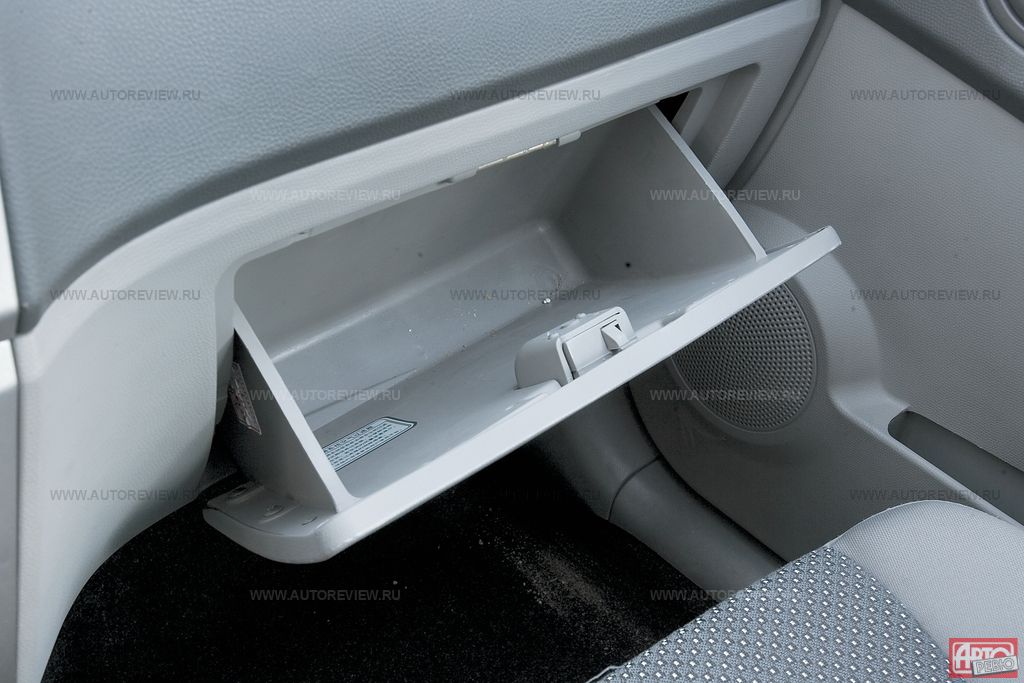 | 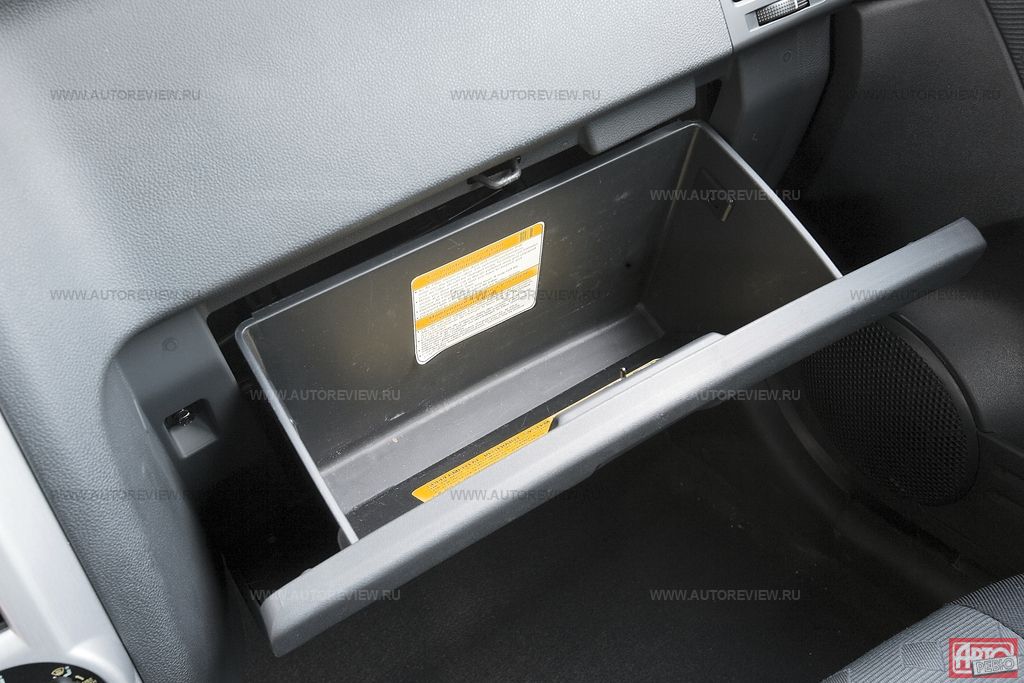 |
| Glove boxes — for an A4 sheet folded in half | |
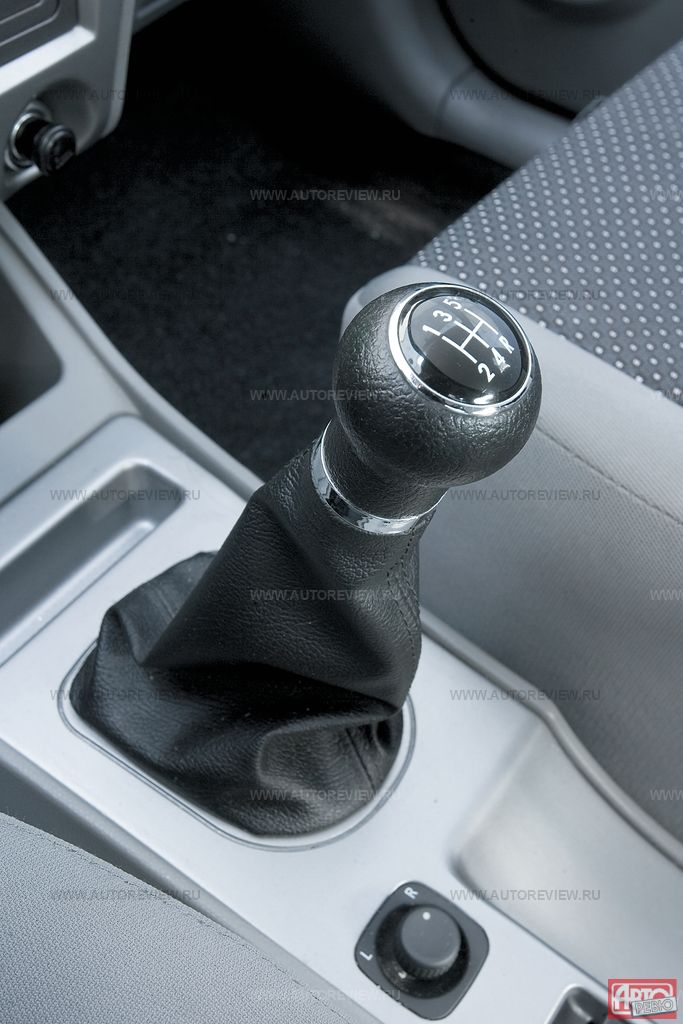 | |
| The only complaint about the Getz's gearshift mechanism is the somewhat long lever travel. In the Vita, gears engage clearly but asymmetrically (fifth almost coincides with third), and reverse — every other time | |
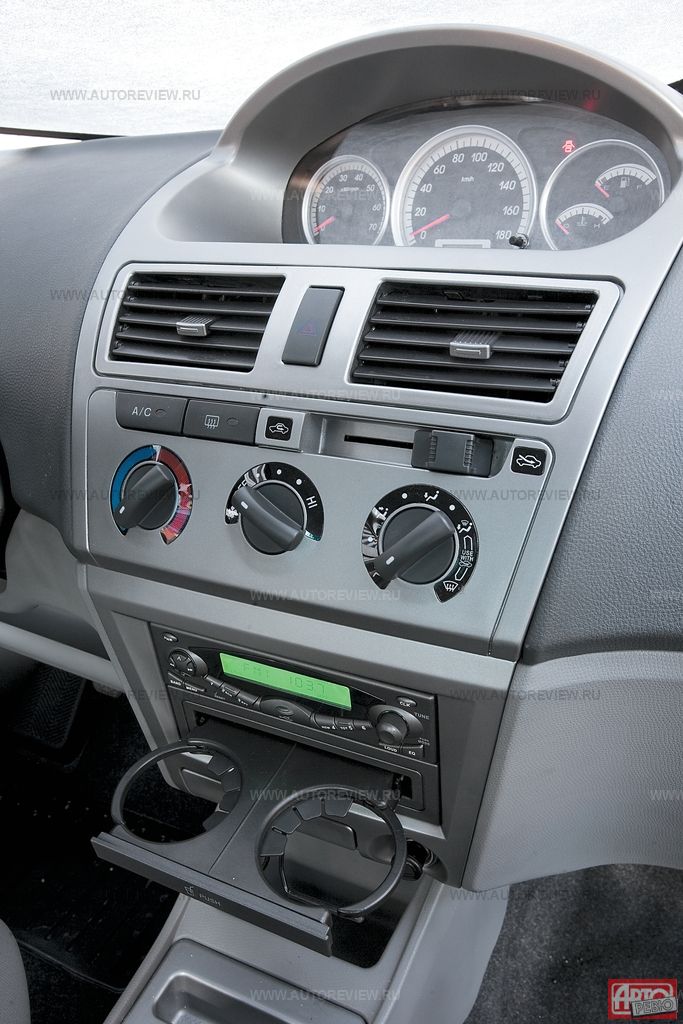 | 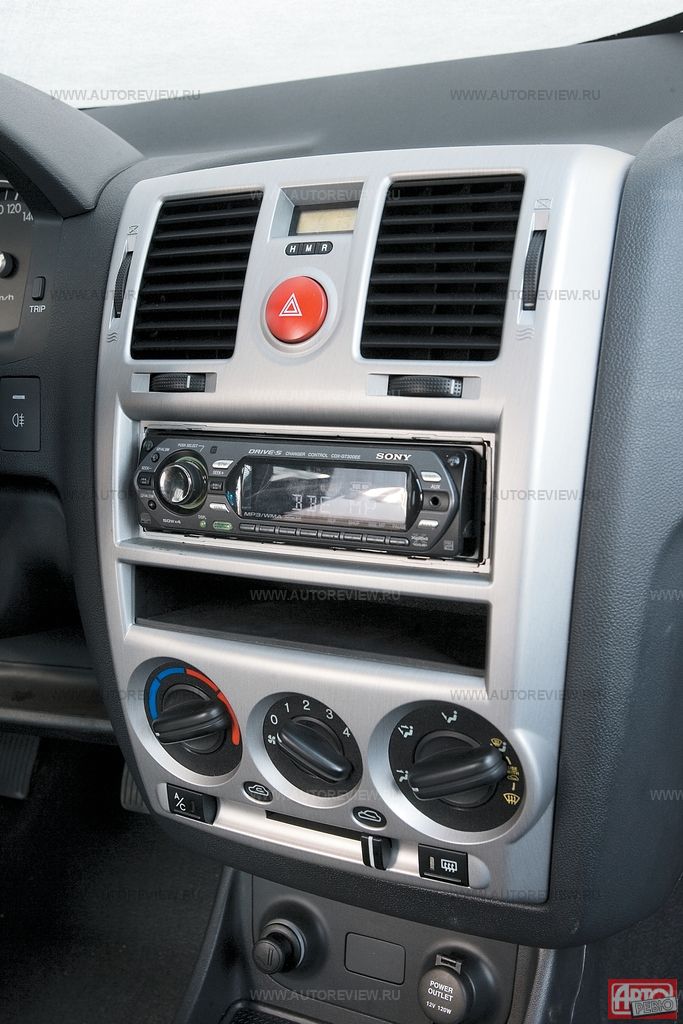 |
| The Getz's climate control knobs turn better, but the Vita's are more conveniently located. The stereo in the Getz is dealer-installed, while the Vita has a factory one with a USB port in the center. Only the Vita has cupholders on the center console, but they, like the ashtray, extend with great difficulty — as if to say, don't drink and don't smoke! | |
Is the FAW Vita a competitor to the Getz?
Absolutely, yes. After all, in some aspects (for example, in driver's seat comfort and suspension wave capacity), the Vita surpassed the Getz. And most importantly, the Chinese "life" truly has "all inclusive" at a lower price. Alloy wheels, CD receiver, electric mirrors. True, the ABS on the Chinese car practically does not work. And in an emergency, an extra 10 meters of braking distance can decide the question of life and death — especially for the occupants of a car that has never undergone independent crash tests.
| FAW Vita | Hyundai Getz |
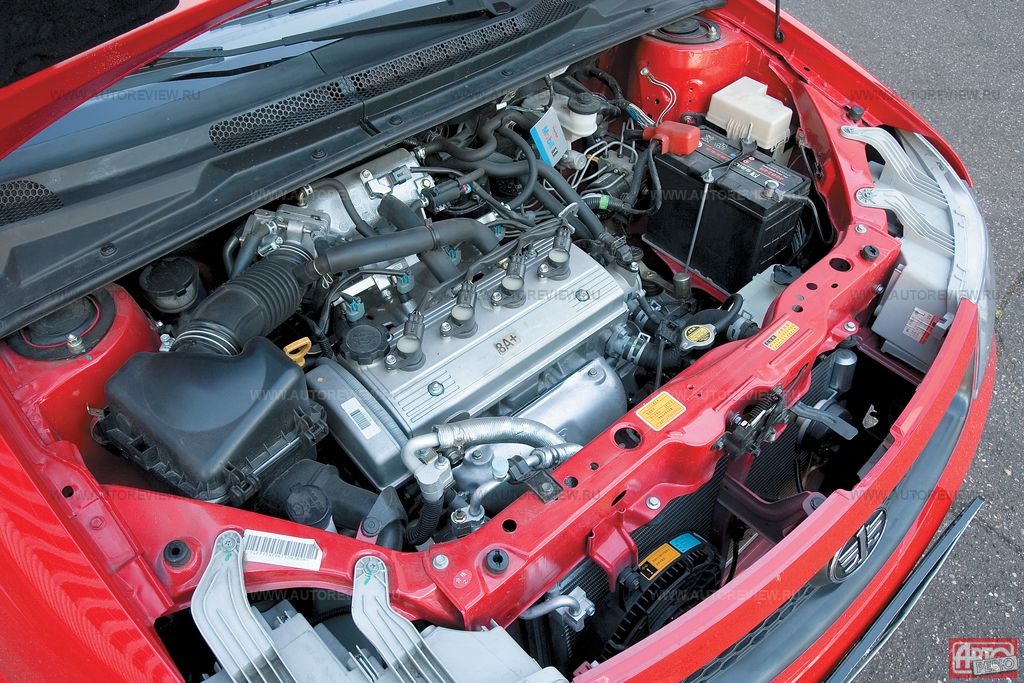 | 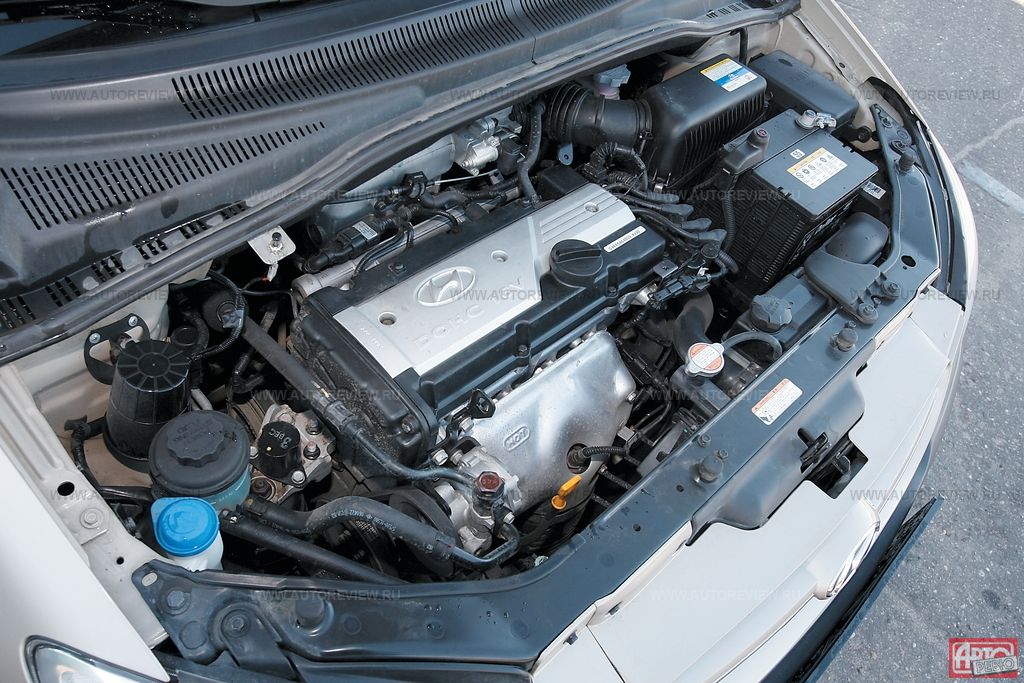 |
| The Vita's engine (1.3 L, 93 hp) has Toyota lineage, but even paired with a "shorter" transmission than the Getz's (1.4 L, 97 hp), it does not allow keeping up with the Korean hatchback | |
Add to this the poorly assembled interior, noisy engine, and shaking on uneven surfaces. And it becomes clear that the Vita is far from "dolce" for the Chinese — there is no sweetness at all. If only the Vita cost $10,000 and were more carefully assembled from better materials... Maybe this will happen next year, when the Vita starts being produced at the Serpukhov Automobile Plant?
Light Output
Night photography of cars from the same point gives an idea of the effectiveness of the headlights. Both hatchbacks have regular halogen headlights. The best low beam is from the Vita: a pedestrian standing 80 meters away on the roadside is illuminated slightly brighter than with the Getz's headlights. High beam is equally long-range on both cars: the Getz's light beam is wider, and the Vita's... prettier?
| FAW Vita | Hyundai Getz |
| Low beam. A pedestrian stands on the roadside 80 meters from the car | |
| High beam. A pedestrian stands in the center 160 meters from the car | |
The Worse, the Better?
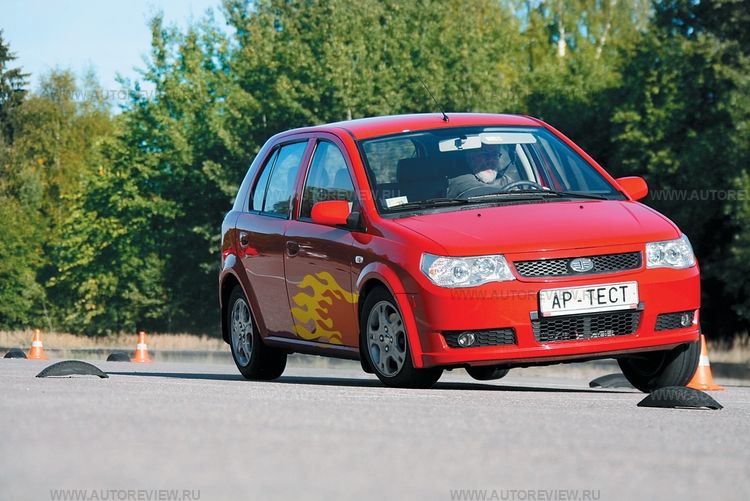
The FAW Vita in the "moose test" is faster and more predictable than the Getz, shod with too-soft tires
We conducted the tests simulating an avoidance maneuver around a suddenly appearing obstacle in two stages. First, five drivers, already familiar with the hatchbacks in normal driving modes, tried to avoid the "moose" with the first and only attempt at a speed of 65 km/h. Moreover, the direction of avoidance (right or left) was set at the last moment by a traffic light. Then the tester, in a series of runs, sought the maximum speed for performing the maneuver.
We have more than once encountered the fact that a car with worse handling turns out to be more predictable in "one-off" runs. So now, the Getz, with its decent sensitivity in normal modes, unexpectedly reduced it in an emergency situation. And the Vita showed greater reaction delays even in normal modes, and the driver was ready to fight them — as a result, three hits out of five versus two on the Getz.
The tester on the Getz also showed a far from record speed — 71.4 km/h. Too-strong slides interfered, to combat which the steering wheel had to be turned with noticeable lead and at very large angles. The car hung in a drift for a long time, knocking down cones. We are sure that a large share of the blame lies with the overly soft stock Kumho tires.
The maximum speed of the FAW Vita hatchback is 73.5 km/h. Less stretched slide phases helped to beat the Getz. But the rolls were so great that it seemed a light breeze would be enough to lift two wheels off the road.
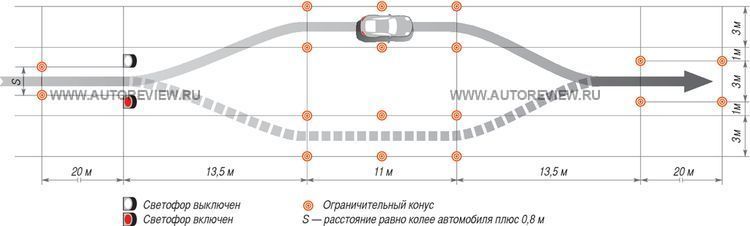
| "Moose test" with the first attempt at a speed of 65 km/h | |
| Cars | Maneuver completed |
| FAW Vita | 3 drivers out of 5 |
| Hyundai Getz | 2 drivers out of 5 |
| Maximum speed of performing the "moose test", km/h | |
| Cars | Speed |
| FAW Vita | 73.5 |
| Hyundai Getz | 71.4 |
Visibility
| FAW Vita | Hyundai Getz |
Forward visibility on the Chinese car is slightly better — the front pillars are not as massive as the Getz's, and the mirror brackets are thinner. The mirrors themselves are also of a more convenient shape. But the view into the Vita's interior mirror is blocked by headrests sticking out at the corners, while in the Getz they are recessed
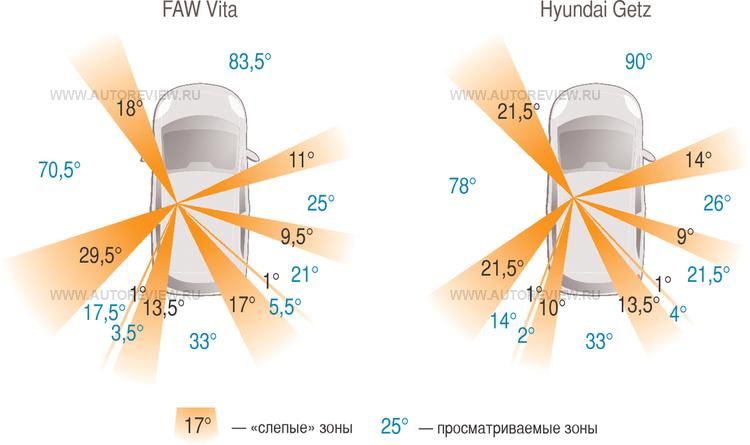
Autoreview measurement results

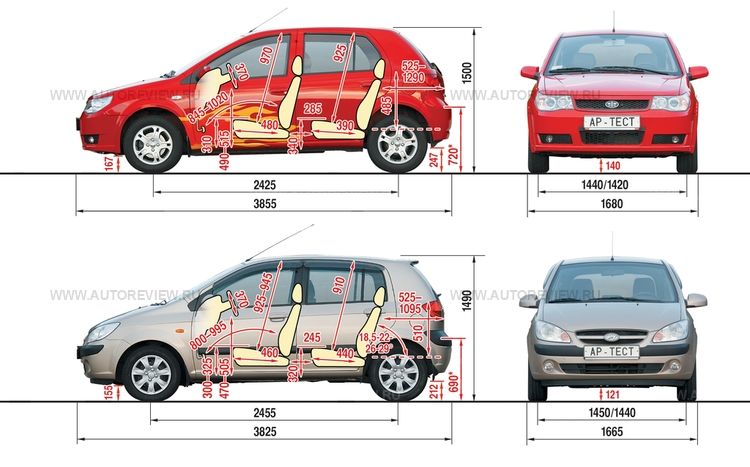
Black indicates manufacturer data, red indicates Autoreview measurement results
* Loading height
| Turning diameter of cars | |||
| Car | FAW Vita | Hyundai Getz | |
| By the track of the outer front wheel, m | 10.28 | 10.13 | |
| By the outer front dimension, m | 10.87 | 10.76 | |
| Number of steering wheel turns from lock to lock | 3 | 3 | |
Are they safe?
 |
| Hyundai Getz (2004) |
The base Hyundai Getz has only a driver's airbag and seatbelt pretensioners among safety systems. To get a passenger airbag, ABS, and EBD system, you'll have to shell out for more equipped modifications. The Chinese hatchback is more generous in this regard: ABS, EBD, and one airbag are already included in the initial configuration, but you can't order a passenger airbag for extra money — such an option simply doesn't exist.
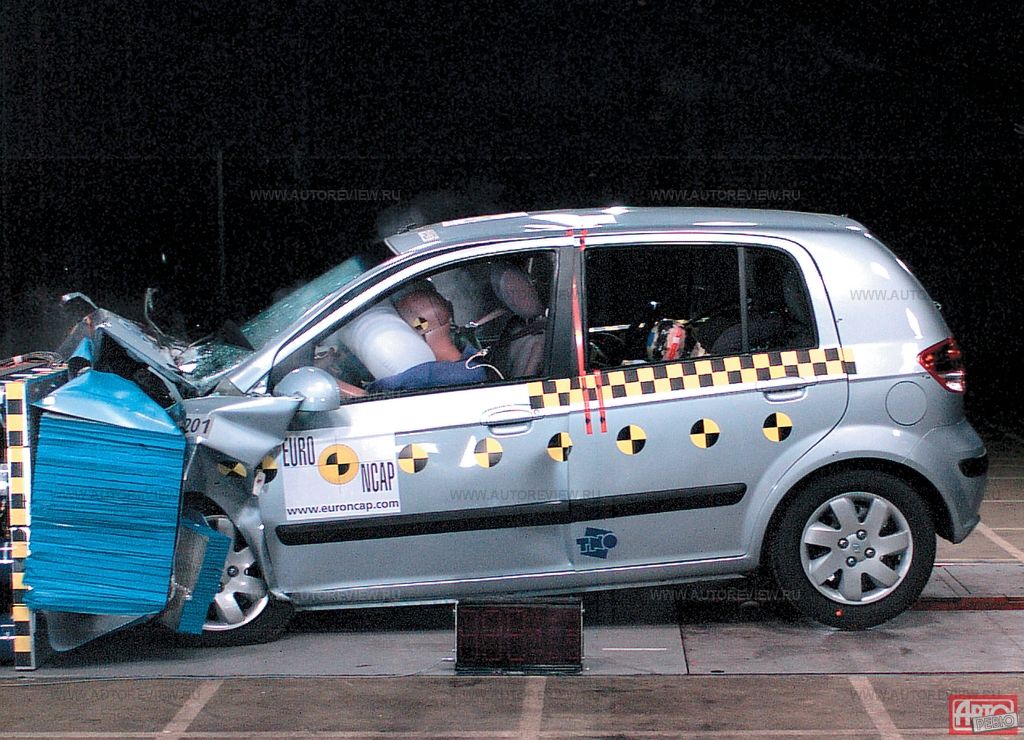
The Getz underwent independent EuroNCAP crash tests back in 2004, in its pre-restyling form. The result is quite decent: four stars out of five. True, experts also noted drawbacks — the seatbelts created excessive load, and the dashboard turned out to be injury-prone. The side impact test was also passed successfully, but there is a nuance: the car that participated in the test had side airbags, which are not available on versions for Russia. However, the protection of child passengers pleased — again four stars out of five. But the Getz is not too friendly to pedestrians: only one star out of four possible.
Regarding the passive safety of the FAW Vita, we only know that it passed the mandatory Chinese certification test — a frontal impact against a wall at a speed of 48±2 km/h. No independent tests have been conducted yet.
| Hyundai Getz* | ★★★★☆ |
| Overall rating | 25 points |
| Frontal crash test | 10 (63%) |
| Side crash tests | 14 (78%) |
| SBR** | 1 |
| Child passenger protection | 37 (76%) |
| Pedestrian protection | 5 (14%) |
| Curb weight | 1072 kg |
| * Tests were conducted according to EuroNCAP methodology | |
| ** Presence of seatbelt reminder | |
What's the price?
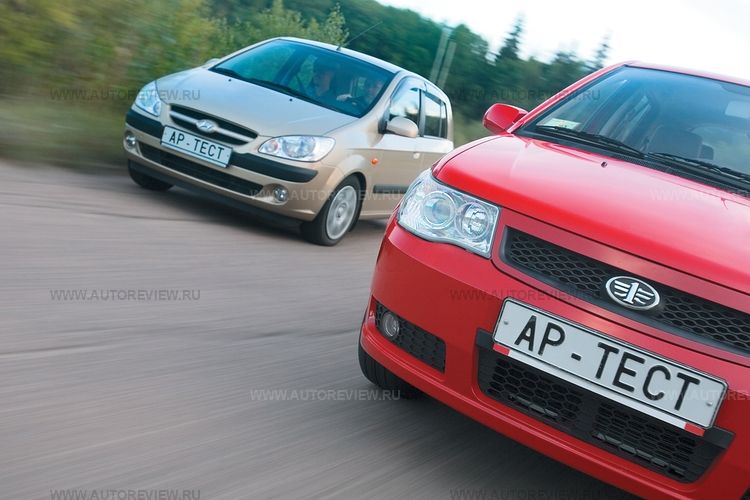
The FAW Vita with a 1.3-liter engine (93 hp) is available only in one, but quite well-equipped version. It includes a driver's airbag, ABS, EBD, air conditioning, power steering, four power windows (they even close automatically when the ignition is turned off), heated power mirrors, central locking, a radio with USB, fog lights, alloy wheels, and metallic paint. The price is 324,750 rubles ($12,990*). Cars are already available at dealers, and by the end of autumn, Vita 1.5 sedans (102 hp) are expected.
Warranty — 3 years or 100,000 km. FAW's sales network in Russia covers 24 dealers in 18 cities.
The base Hyundai Getz 1.4 (97 hp) costs 327,900 rubles ($13,120), that is, only 3,350 rubles ($135) more expensive than the Vita, although it is much more poorly equipped: airbag, power steering, power windows, central locking, and audio preparation. Air conditioning appears in the version for 354,900 rubles ($14,200), and ABS with EBD — for 365,900 rubles ($14,640). I got the top Getz 1.4 in GLS trim — with rear disc brakes, leather steering wheel and gear knob, fog lights, onboard computer, and "metal" inserts in the interior. This one costs 384,900 rubles ($15,400). For an automatic transmission, they ask another 16 thousand rubles ($640). In addition to the 1.4, the five-door hatchback can be equipped with 1.1 (66 hp) and 1.6 (106 hp) engines — prices are 302,900 rubles ($12,120) and 411,900 rubles ($16,480), respectively. And the most affordable Getz is a three-door with a 1.1 engine for 286,900 rubles ($11,480). True, dealers only have versions with 1.4 in stock; others will have to wait up to two months.
Warranty — 3 years or 100,000 km. Hyundai has 80 dealers in 49 cities in Russia.
* At the exchange rate of $1=25.0 rubles.
| Approximate prices for original spare parts at Moscow dealers, RUB. | ||
| Parts | Cars | |
| FAW Vita | Hyundai Getz | |
| Oil filter | 180 | 176 |
| Fuel filter | 360 | 1500 |
| Air filter | 380 | 400 |
| Cabin filter | 1200 | 1800 |
| Spark plug | 158 | 125 |
| Front brake pads | 1544 | 2440 |
| Rear brake pads | 1544 | 1560 |
| Front shock absorber | 2511 | 2500 |
| Rear shock absorber | 1849 | 2300 |
| Front headlight | 5889 | 5500 |
| Rear light | 2123 | 3000 |
| Front fender | 1942 | 3500 |
| Front bumper | 3152 | 6550 |
| Hood | 7961 | 6400 |
| Windshield | 3473 | 7600 |
| Cost of scheduled maintenance with consumables and parts, RUB. | |||
| Scheduled service | Cars | ||
| FAW Vita | Hyundai Getz | ||
| Cost of standard hour | 690 | 1150 | |
| Mileage, km | 1000 | 1830 | — |
| 7500 | — | 4600 | |
| 10000 | 2350 | — | |
| 15000 | — | 8500 | |
| 20000 | 3120 | — | |
| 30000 | 2850 | 9220 | |
| 40000 | 7160 | — | |
| 45000 | — | 9300 | |
| 50000 | n/a* | — | |
| 60000 | n/a | 18000 | |
| 70000 | n/a | — | |
| 75000 | — | 8000 | |
| 80000 | n/a | — | |
| 90000 | n/a | 9300 | |
| Total | 17310** | 66920 | |
| * N/a — no data | |||
| ** Up to 40 thousand km inclusive | |||
What else?
The closest competitor in price to the Chinese Vita is the Lada Kalina with a 1.6 8-valve engine (81 hp), which is sold for 236 thousand rubles ($9440*). The new 1.4 16-valve engine (89 hp) is so far installed only on the Lux version (two airbags, power steering, front electric windows, central locking, alloy wheels) for 271400 rubles ($10860). The Kalina has a spacious interior and good driver ergonomics, but build quality leaves much to be desired. Details are in this issue of Autoreview and in AR No. 18, 2006.
The Chevrolet Aveo hatchback starts at 281400 rubles ($11260). For this money you get a car with a 1.2 engine (72 hp), one airbag, front electric windows and a CD/mp3 player. The version with a 1.4 engine (94 hp) and air conditioning starts at 360200 rubles ($14410). The Aveo stands out with a stylish and high-quality interior and spacious front seats. Details are in AR No. 8, 2005. The restyled Aveo will appear in Russia no earlier than next summer.
The Chinese Hafei Simbo (a licensed copy of the Mitsubishi Mirage Dingo) with a 1.3-liter engine (85 hp) in the base trim is sold for 283900 rubles ($11360). However, the only equipment is power steering. The version with air conditioning, front electric windows and a cassette player will cost 306600 rubles ($12260), and with ABS and a driver airbag — 342900 rubles ($13720). There is also a Simbo 1.6 (101 hp) — 373600 rubles ($14940) with a manual and 445900 rubles ($17840) with an automatic.
| Lada Kalina | Chevrolet Aveo |
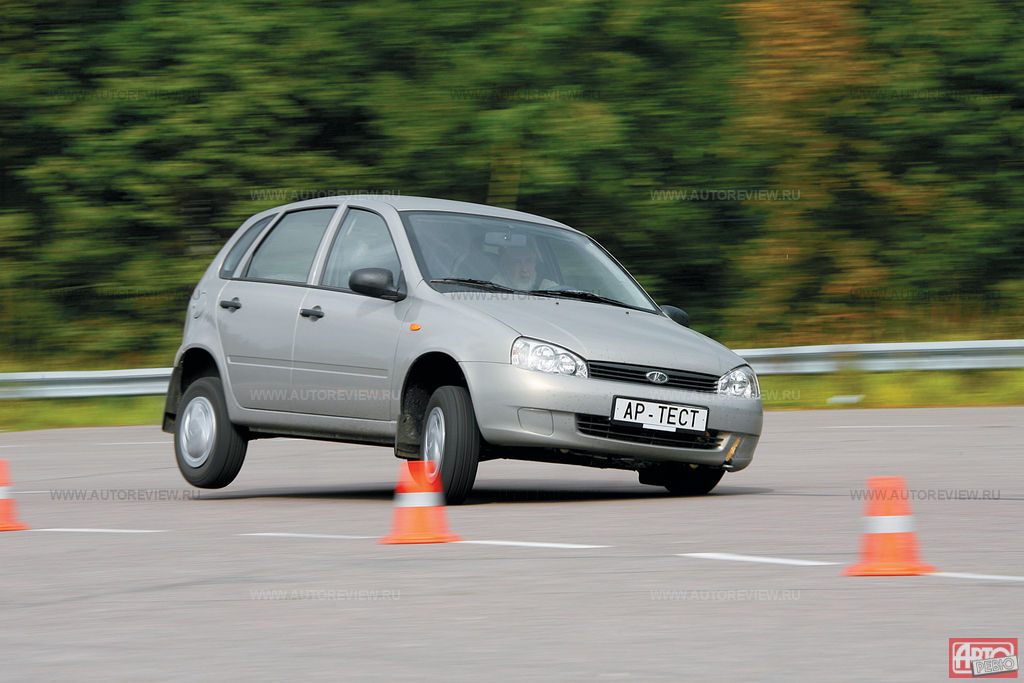 | 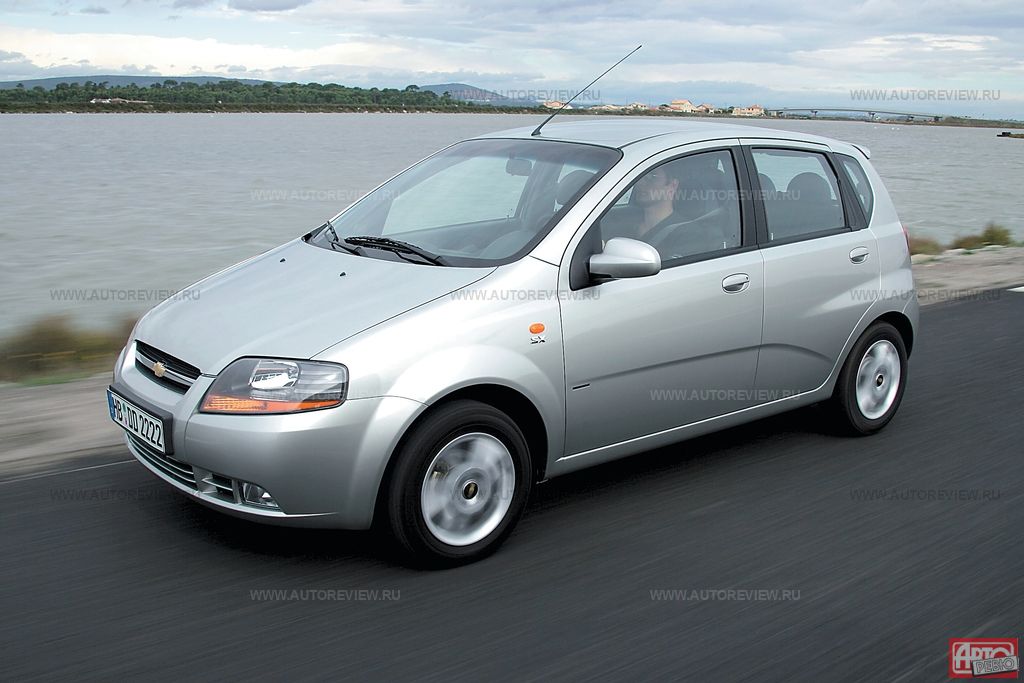 |
| Hafei Simbo | Ford Fiesta |
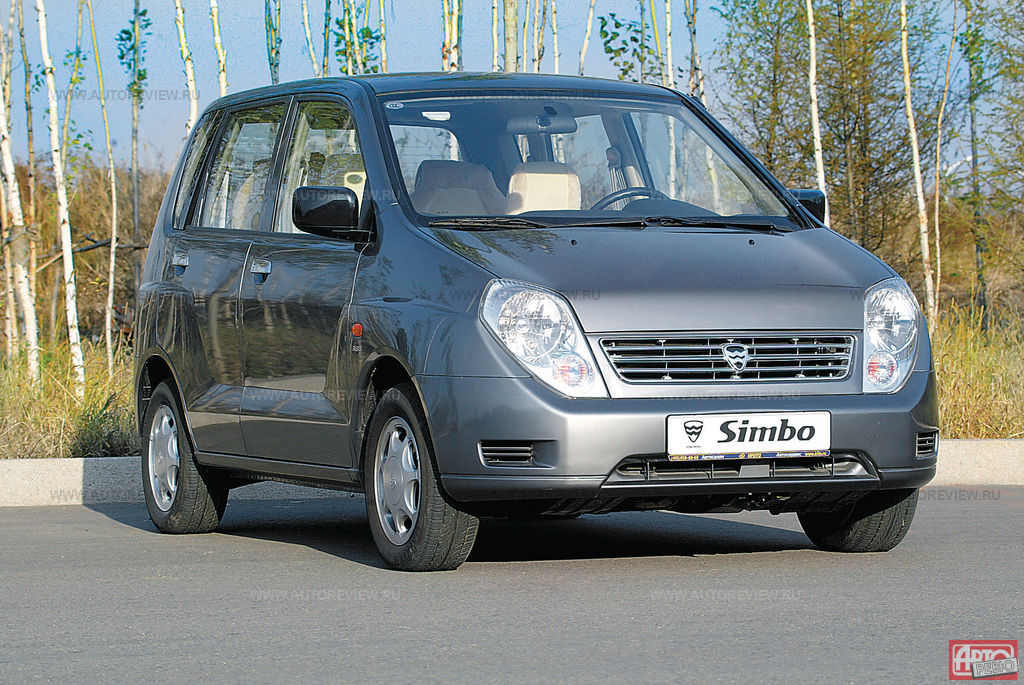 | 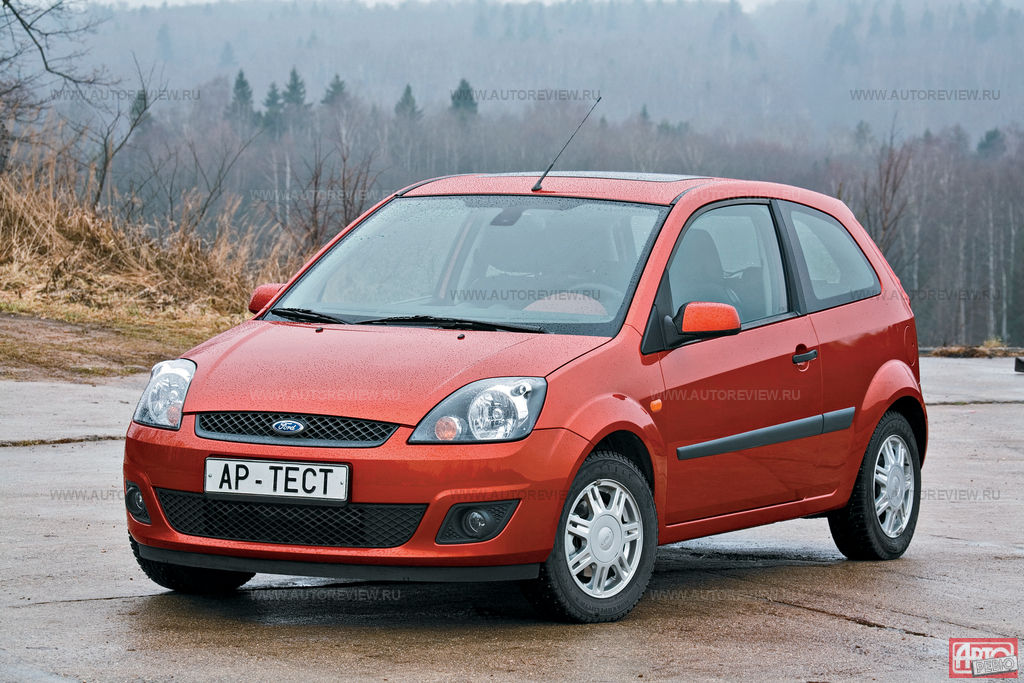 |
For the base version of the Ford Fiesta in a three-door body with a 1.3 engine (70 hp), they ask 320 thousand rubles ($12800). The base includes one airbag and power steering. If you need a five-door Comfort modification with a 1.4 engine (80 hp), be prepared to pay at least 356 thousand rubles ($14240) — for this money you get front electric windows and central locking. The car is nimble, handles excellently, ergonomics are exemplary, but the rear row is quite uncomfortable. Full report is in AR No. 1, 2007.
The three-door Opel Corsa starts at 324 thousand rubles ($12960); for a five-door body you will have to pay an extra 10 thousand rubles ($400). The base Essentia trim is a 1.0-liter engine with 60 hp, a pair of airbags, ABS, power steering and central locking. With a 1.2 engine (80 hp) the price jumps to 374 thousand rubles ($14960), and with a 1.4 unit (90 hp) — to 389 thousand rubles ($15560). The Corsa pleases with a striking interior and decent space on the rear bench. Details are in AR No. 1, 2007.
The Citroen C3 in X trim with a 1.1 engine (61 hp) is priced at 332500 rubles ($13300). Equipment includes two airbags, power steering, front electric windows and central locking. For the version with a 1.4 engine (75 hp) you will have to pay at least 379750 rubles ($15190). This French "bun" has an unusual interior, but ergonomics are debatable, and the seats are frankly uncomfortable. Details are in AR No. 8, 2006.
The new Skoda Fabia in the base Classic trim (without air conditioning) costs 339 thousand rubles ($13560). Under the hood is a 1.2 engine (69 hp), and the only equipment is one airbag and power steering. A similar car with a 1.4 engine (86 hp) will cost 369 thousand rubles ($14760). The Skoda's interior is stylish and solid, and there is so much room in the back that some cars in a higher class would envy. Read in AR No. 3, 2007.
The Peugeot 206 hatchback is not giving up: the three-door version with a 1.4 engine (75 hp) costs from 354 thousand rubles ($14160), for the five-door they ask 10 thousand rubles ($400) more. The base includes two airbags, power steering, heated electric mirrors and central locking. The car's age does not prevent it from offering the driver and front passenger a comfortable seating position, but the rear will be a bit cramped. Details are in AR No. 7, 2003.
| Opel Corsa | Citroen C3 |
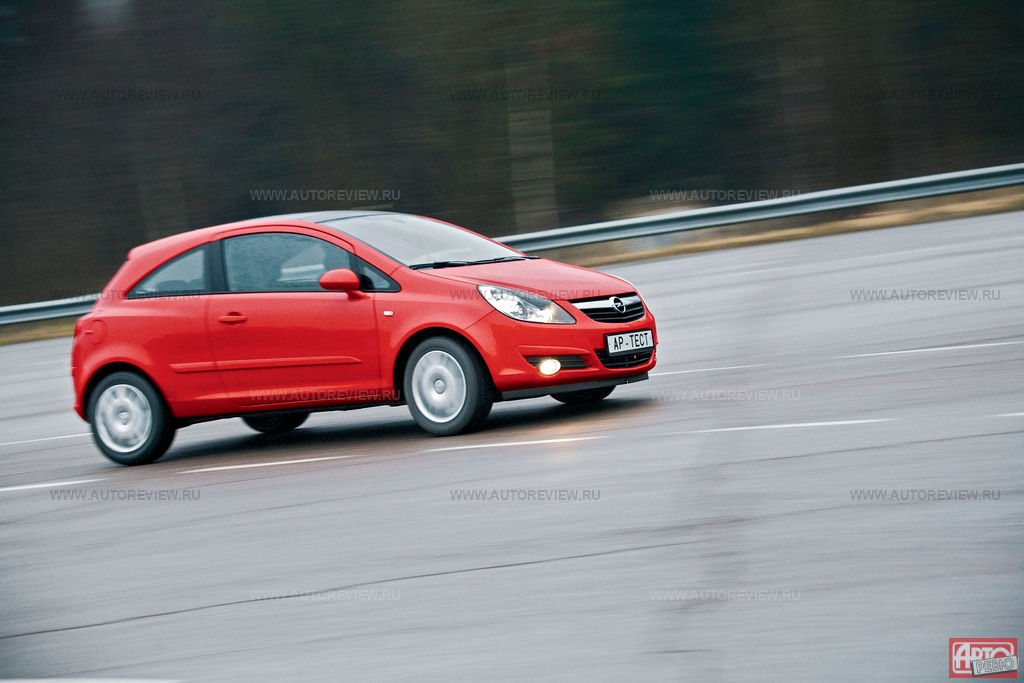 | 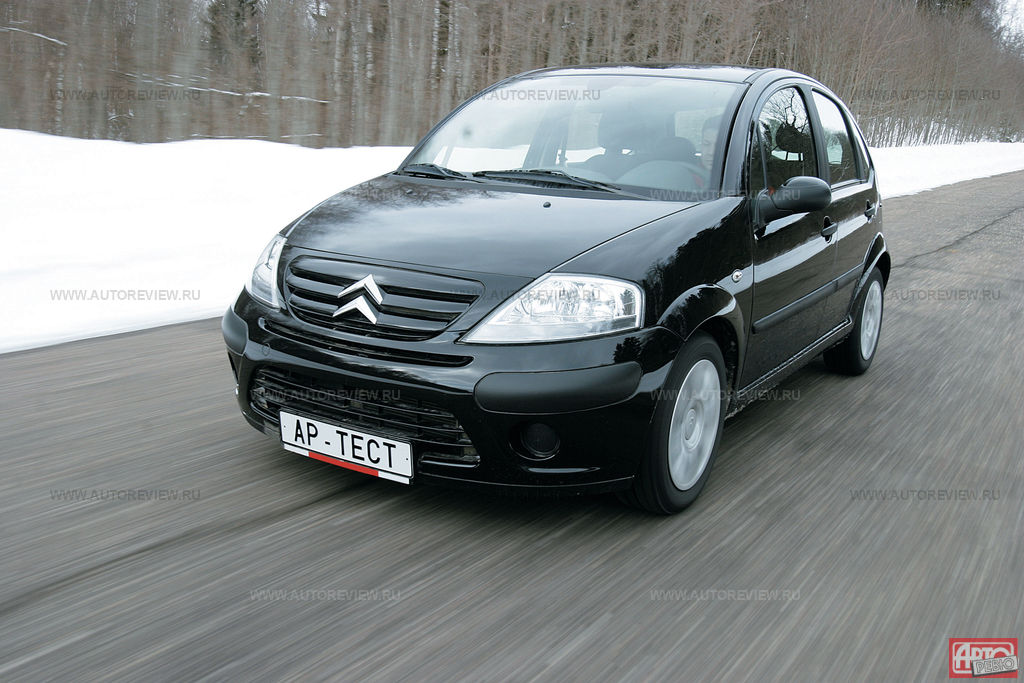 |
| Skoda Fabia | Peugeot 206 |
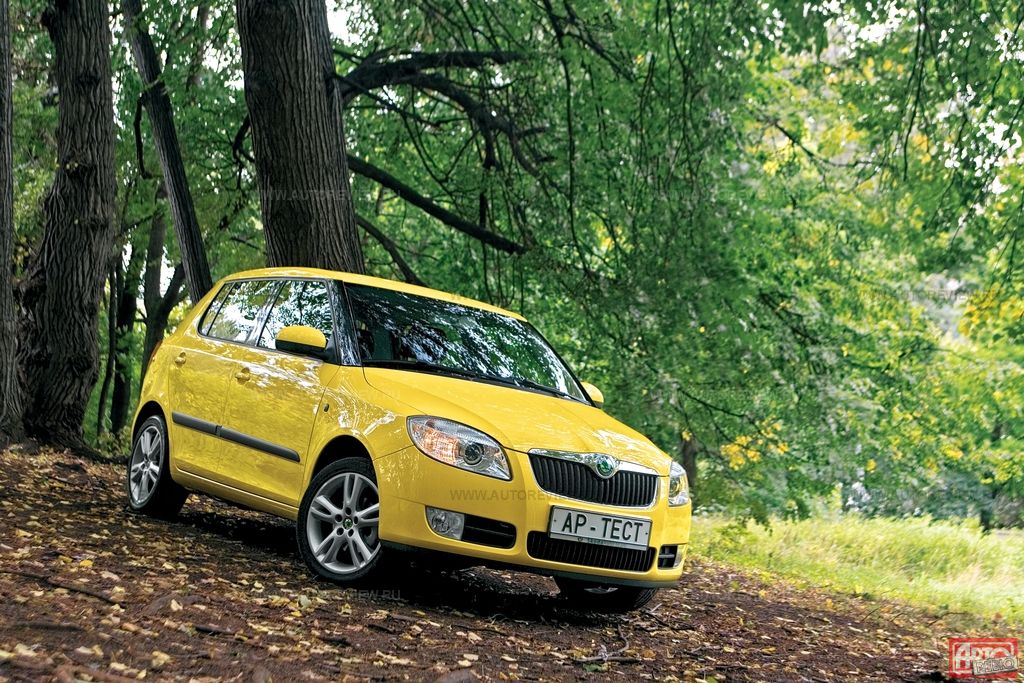 | 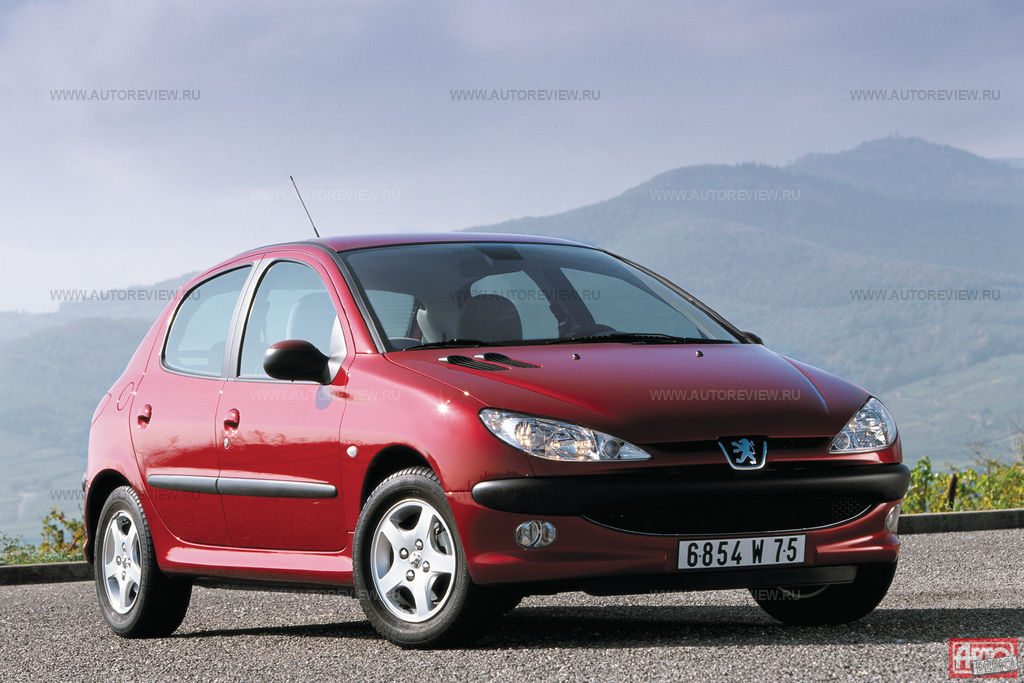 |
The Volkswagen Polo starts at 356620 rubles ($14270). For this money — a three-door hatchback with a 1.2 engine (60 hp), two airbags and power steering. The surcharge for the five-door version is 12750 rubles ($510), and for a more powerful 12-valve 1.2 engine (69 hp) — 8160 rubles ($326). The Polo stands out with a strict, well-assembled interior, impeccable ergonomics and a spacious rear bench. Details are in AR No. 21, 2005.
Also on the market are the Fiat Grande Punto, Nissan Micra, Peugeot 207, Renault Clio and Suzuki Swift hatchbacks, but even in base trims they cost more than 370 thousand rubles — that is about $1800 more expensive than the FAW Vita.
* At the exchange rate of $1=25.0 RUB.
Vita-min of growth?
Igor VLADIMIRSKYThe history of FAW (First Automotive Works — "first automobile plant") dates back to 1953, when Soviet ZIS-150 trucks began to be assembled here under license. Today, the basis of FAW production is formed by joint ventures with such giants as Volkswagen, Audi, Toyota, Daihatsu and Mazda. However, only its own models are exported.
The FAW Vita model is produced at the facilities of the Tianjin division. Automobile production has existed here since 1968, but the first passenger car rolled off the assembly line only 18 years later — it was a licensed Daihatsu Charade hatchback from 1983 with a three-cylinder liter engine. Initially, engines were supplied from Japan, but a year later their own engine production was opened. The car was sold under the Xiali brand and was in great demand among taxi drivers. In 1990, production of the 1987 model year Charade began, and a year later a sedan appeared — both versions are still produced today.
In July 2000, after lengthy negotiations, an agreement on joint production was signed with Toyota. Already in December of the same year, assembly of the Xiali 2000 started — in fact, a copy of the Toyota Platz sedan.
At the end of 2002, production of Toyota Yaris hatchbacks began, which were sold as Xiali Vizi. Two years later, the Xiali N3 model was released — a deeply modernized version of the Daihatsu Charade.
FAW Vita, which debuted at the Shanghai Auto Show in 2005, is built on the platform of the previous generation Toyota Yaris. The engines are also based on units from the Yaris. However, there is no talk of plagiarism: many components bear the Toyota logo. Chinese engineers claim that most components have been modernized, and the development of the car took $37.5 million — a modest sum by global standards. On the domestic market, the Vita is sold as the Xiali Weizhi in hatchback and sedan body styles. Like previous models, the Xiali Weizhi has become a favorite among local taxi drivers — at first, there were even queues for them.
The Tianjin FAW division plans to invest three billion yuan ($400 million) over the next three years in creating new models and increase annual output to 400,000 Xiali cars. As for Russia, this year they expect to sell 3,500 FAW Vita cars in hatchback and sedan body styles (the latter should appear in late autumn). For next year, the plan is already 15,000 "vitamins," with assembly to be organized at the Serpukhov Automobile Plant (SeAZ) — production start is scheduled for January. In addition, sales of FAW Besturn mid-size sedans are expected to start in December. At the beginning of next year, the FAW Jinn II minicar will be released, and in April — the Hongqi HQ3 luxury sedan. By the end of 2008, a total of eight new models are planned to be introduced to the Russian market.