

Genesis Price: not specified. On sale: from Q4 2008
Turning familiar oatmeal into an exquisite porridge is no easy task. It seems that is exactly what South Korean engineers were doing when they created the new luxury sub-brand Genesis.
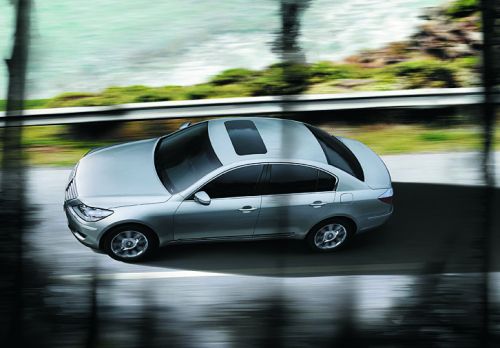
2009 Genesis
© Photo: Hyundai
No Korean manufacturer has yet managed to compete on equal footing with Europeans and Japanese. What arguments has Hyundai prepared? At the heart of Genesis lies a new rear-wheel-drive platform designed to significantly improve dynamic characteristics. Buyers will be offered three petrol engines with displacements of 3.3, 3.8, and 4.6 liters. However, the top-end Tau V8 with 375 hp is not yet available in Russia, so we get acquainted with the 3.8-liter V6 DOHC, producing about 290 hp.
The impressions from the new model resemble a visit to the doctor: first an examination, then blood pressure and pulse measurement, and before making a diagnosis — tests. Let's start with a visual inspection. The black body of the Genesis looks solid and imposing. True, some details evoke associations with other models. Personally, the rear lights reminded me of the Mondeo, although colleagues disagreed with me. Perhaps it just seemed so.
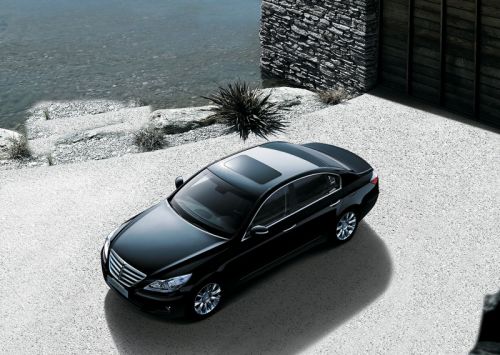
2009 Genesis
© Photo: Hyundai
The first driving tests took place on the oval track of Hyundai's factory test site near Seoul. You immediately notice the excellent sound insulation characteristic of cars of this level. You can talk in the cabin almost in a whisper. However, the steering could be more precise — the sharp response like the Germans have is missing here. This is a minus. But we should not forget that the Koreans are only at the beginning of their journey in producing elite cars. Every beginning is hard.
The main trump card of the Genesis is ride smoothness, which provides comfort for both driver and passengers. The credit goes to the EAS air suspension, available as an option. The body can rise by 30 mm, increasing ground clearance for bad roads. True, in this mode you can drive only up to 70 km/h. At a speed of 120 km/h, the car automatically lowers by 15 mm to improve aerodynamics. The reaction to changing road conditions takes less than five seconds, while many competitors, according to Korean engineers, take 30–60 seconds.
2009 Genesis
© Photo: Hyundai
The Genesis is equipped with powerful HID xenon headlights with a more intense light output and low energy consumption. The optics do not blind oncoming drivers and, moreover, automatically turn in the direction of the maneuver. Ahead of the Genesis lies a difficult fate. After all, most buyers of Mercedes and BMW pay not so much for technical characteristics as for the image and feeling of self-importance, for which no money is spared.
Glue instead of welding
2009 Genesis
© Photo: Hyundai
Driving
The car handles well, but the steering is too "vague". Feedback is almost absent.
Interior
The debutant's interior will satisfy even the most demanding. Both the design and the quality of materials are pleasing.
Comfort
The Genesis delights with excellent ride smoothness — an essential attribute of the premium class.
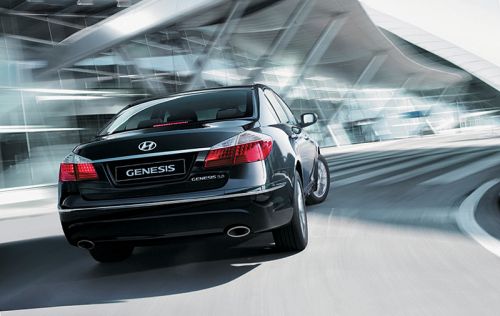
2009 Genesis
© Photo: Hyundai
Advantages and disadvantages
+ Good dynamics, comfortable suspension.
- "Empty" steering, low top speed.
Specifications
Make and model - Genesis
Dimensions - 4975x1863x1480 mm
Engine - petrol, 3778 cm3, 290 hp/rpm
Transmission - automatic, 6-speed
Dynamics - max 210 km/h; 7 s to 100 km/h
Competitors - Chrysler 300C, Pontiac G8
Our opinion
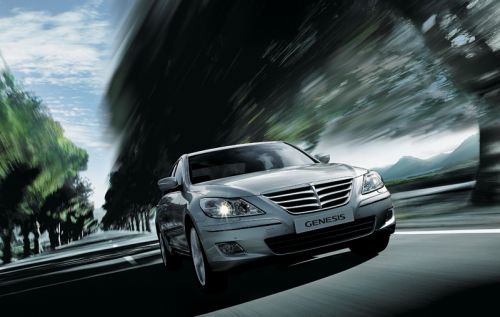
2009 Genesis
© Photo: Hyundai
July 8, 2008
Author: Stanislav Pavlov
© 5 Koleso
© 5 Koleso