
 Comments
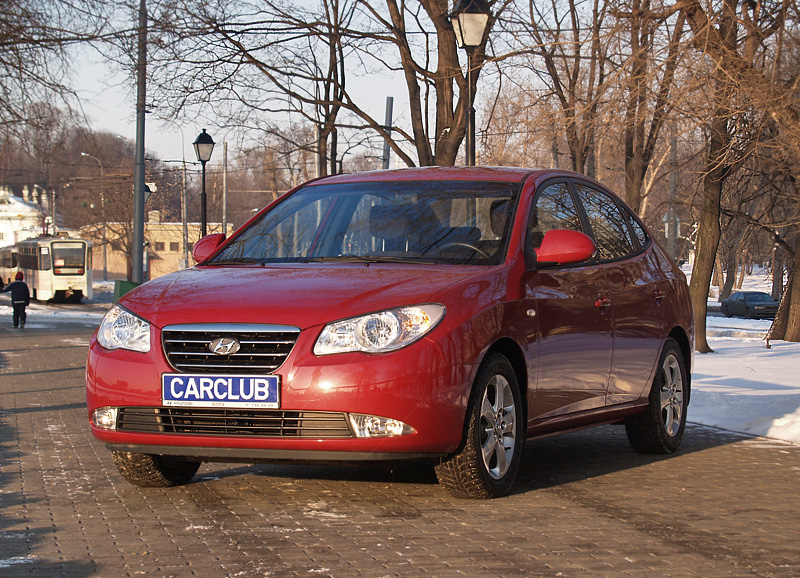
  The fresh Hyundai Elantra was first shown to Russians last autumn at the Moscow Auto Show, but the sedan reached dealers only by December. The key difference of the new generation from its predecessor is that the previous car was created with an eye on the European market, while the current one is primarily aimed at the American buyer. In addition, the hatchback disappeared from the lineup, and no replacement is planned yet.
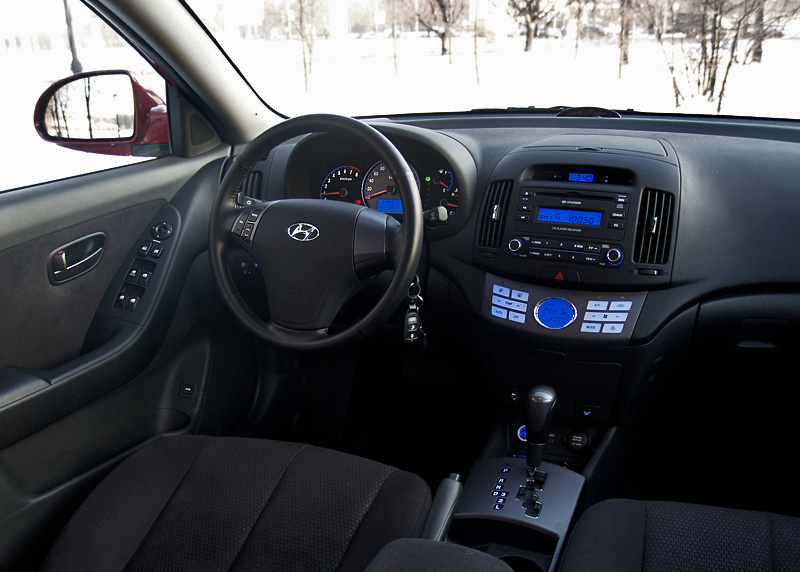
When I tested the previous generation Elantra four years ago, its interior literally killed me. Four different shades of green backlighting coexisted on the front panel — my eyes got tired, and the interior looked as if the owner had hung cheap clocks and other electronics from a stall on the car. Since then, Hyundai has made a huge step forward and, thanks to aggressive pricing, has won back a decent chunk of the American market. In the US, the new Elantra with a two-liter engine starts at $13,395, and the version with an automatic transmission is exactly a thousand more. The focus on the States, where customer demands largely coincide with Korean ones, largely determined both the engineering and design solutions of Hyundai.
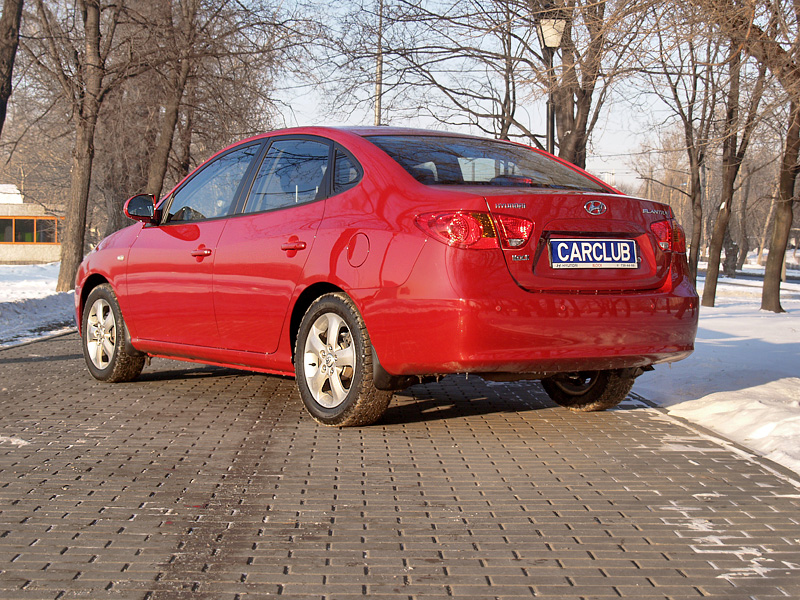
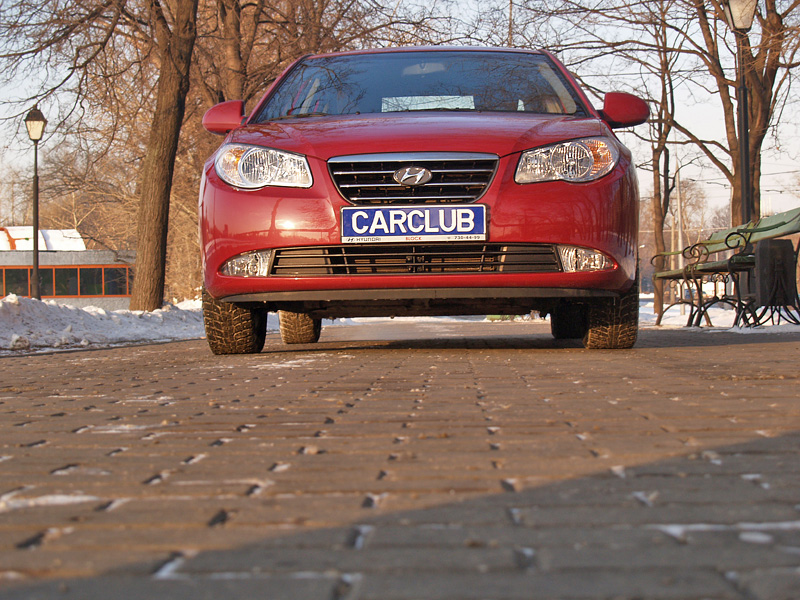
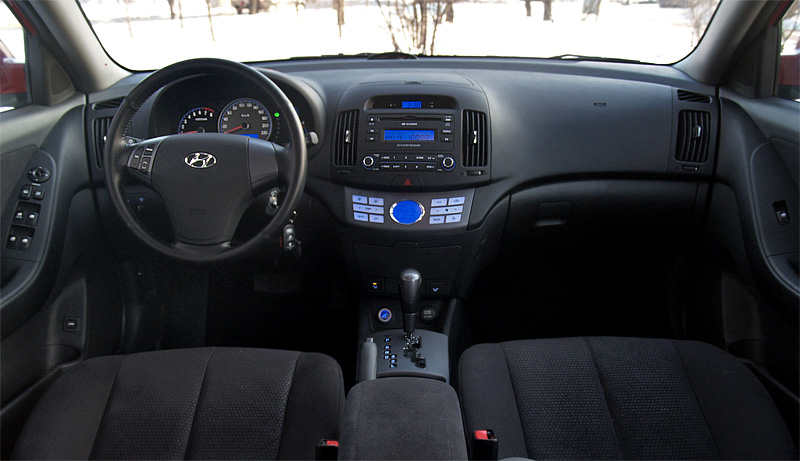
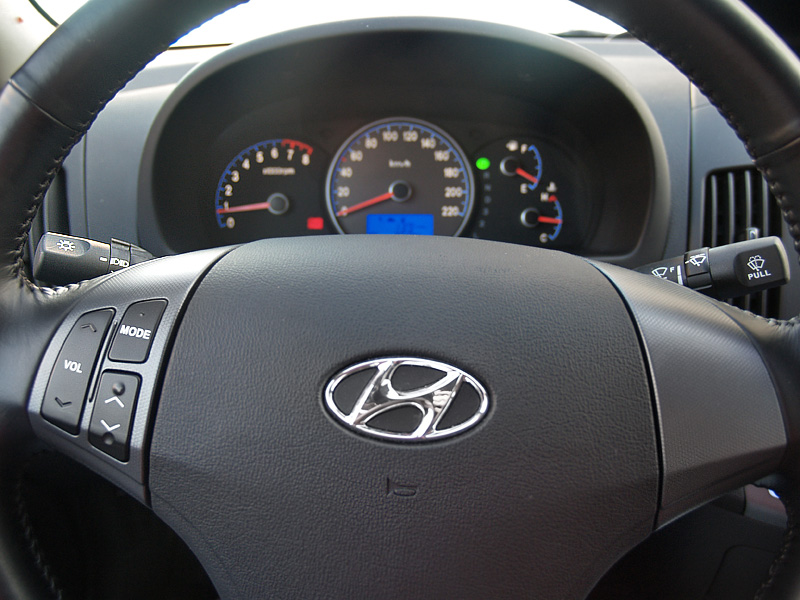
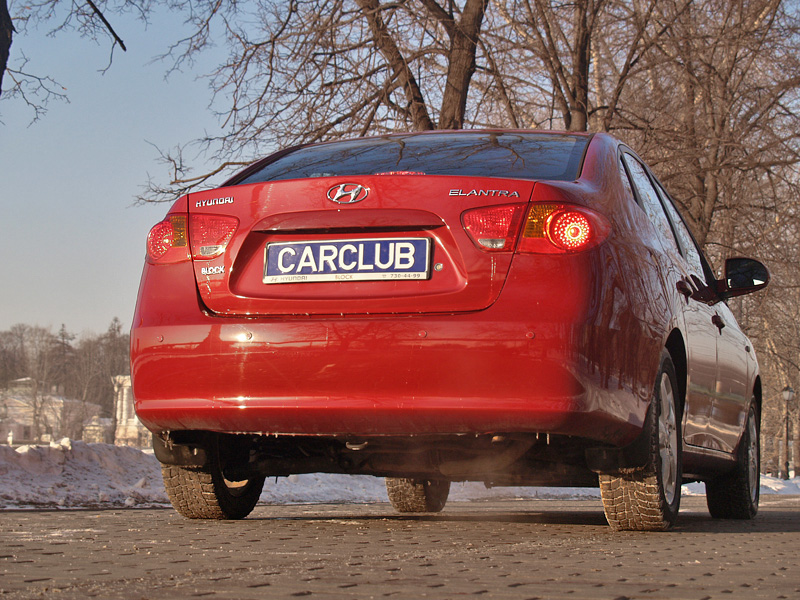
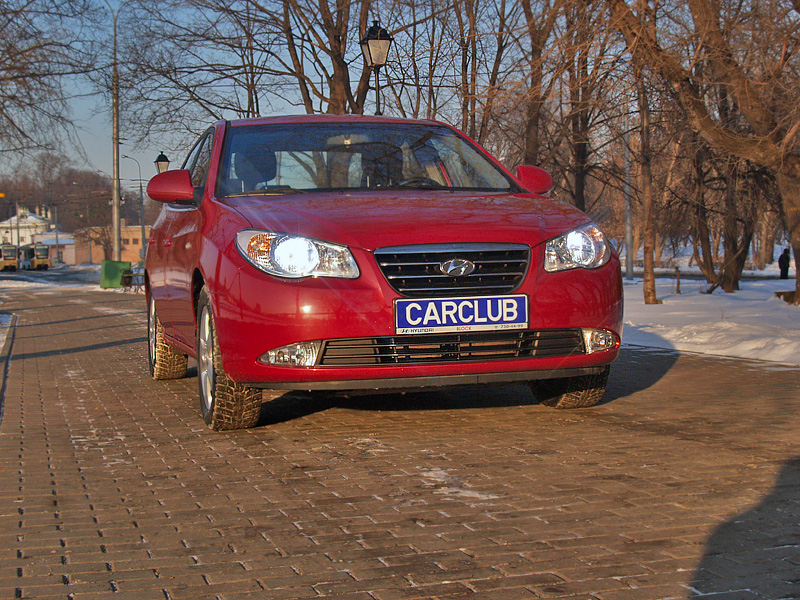
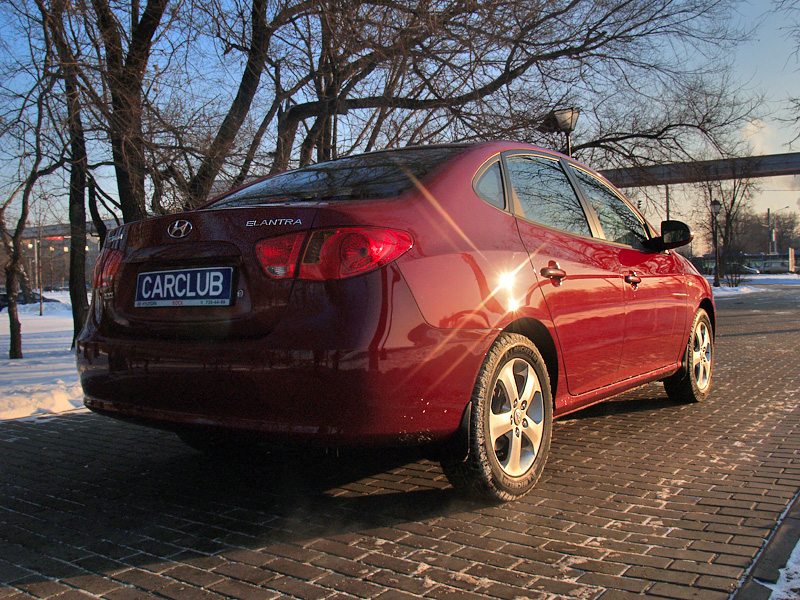
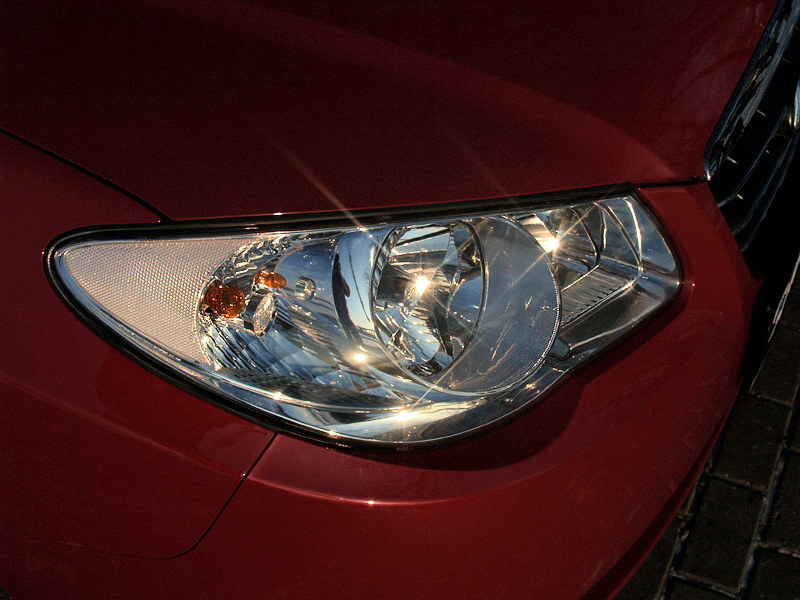
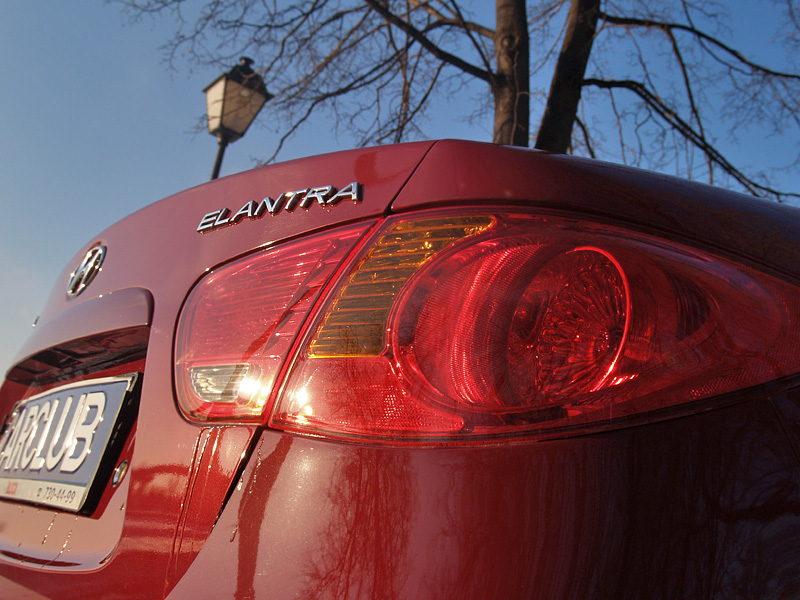
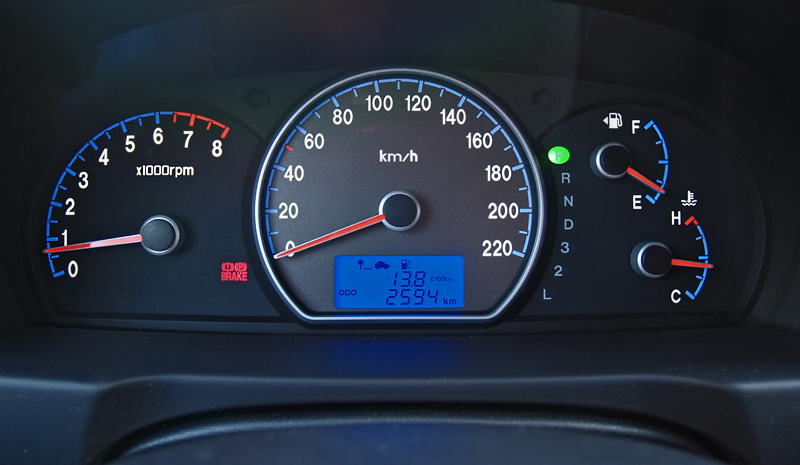
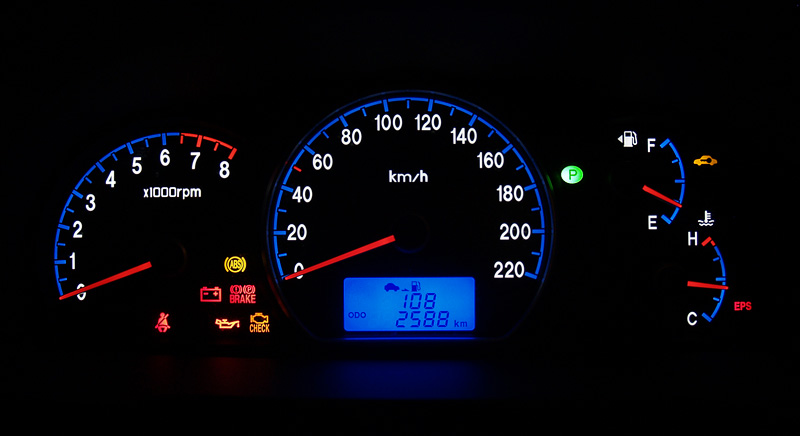
The exterior of the new Elantra is made in the spirit of biodesign — the car seems larger and more presentable than it actually is. True, the front bumper, which barely protrudes beyond the radiator grille, looks somewhat chopped off. But the complex headlights in the spirit of Volkswagen , the oval radiator grille, and the wavy side line with powerful bulges over the wheel arches find their continuation in the interior. The convex center console, reminiscent of the solutions of the Subaru Tribeca SUV, is divided into two blocks — audio system and climate control, and massive bulges on the doors add a sense of solidity to the cabin. But the three separate displays on the console — clock, stereo, and climate — have not gone away, and due to the purple backlighting, reading information from them is inconvenient; you have to squint. The instrument panel even glows in four different colors — purple, white, red, and green, which resembles a Christmas tree more than part of a car. Although the readings themselves are easy to read thanks to large numbers and big scales.
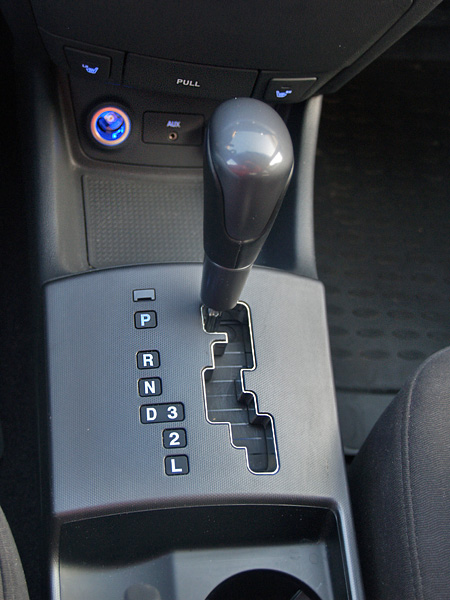
 The speedometer is optimistically marked up to 220 km/h, although the sedan's official top speed is only 183 km/h. The 1.5-liter engine is boosted to 122 hp — perhaps it's hard to immediately recall more powerful naturally aspirated engines of this size, except for the legendary Honda VTEC with its 160 "horses". In practice, paired with a 4-speed automatic, the Elantra did not turn out to be nimble — in the city it can compete on equal terms only with Ladas and classmates with similar engines.
On the highway, the lack of gears and modest displacement make themselves felt even more, although if you don't try to be heroic and are careful with overtaking, the sedan gradually reaches all 180 km/h on the speedometer.
The previous test of the Elantra was also memorable because in a snowfall the car stood on standard summer tires, and the handling was frankly "straight-line". Before every turn, my hand reached for the handbrake, just to somehow cope with understeer. The new Elantra was shod with excellent French Michelin X-ice North tires and proved to be exemplary obedient — the sedan confidently enters even the tightest corners. If you overdo the speed, the car smoothly slides outward, but tries to hold the arc until the last moment. You can get real driving pleasure from it, especially since the handling is not stifled by electronics (our car in maximum trim for $22,290 is equipped only with ABS, while ESP and traction control are only available on the version with the two-liter engine). The only thing missing for complete happiness is an informative steering wheel with a shorter gear ratio. More than three turns from lock to lock is already too much for a modern car.
 On straight roads, which are the majority in America, the Hyundai flies like an arrow. The streamlined body calmly withstands side gusts of wind, and the chassis on fairly wide 205/55 R16 tires easily digests ruts. The thoughtful aerodynamics also make themselves felt in the almost complete absence of wind noise. But the engine and tires sing so much that you can't tell who is soloing — together they create a fine cacophony. You have to raise your voice or turn up the stereo after 120 km/h, and over 150 km/h it's better to just silently look around and not try to talk. Perhaps that's why the optimal cruising mode is from 100 to 120 km/h. In this range, the cabin is quiet enough, the engine's appetite is minimal (about 7.5 liters per hundred), and you can hold the steering wheel with one finger, enjoying the scenery and family idyll.
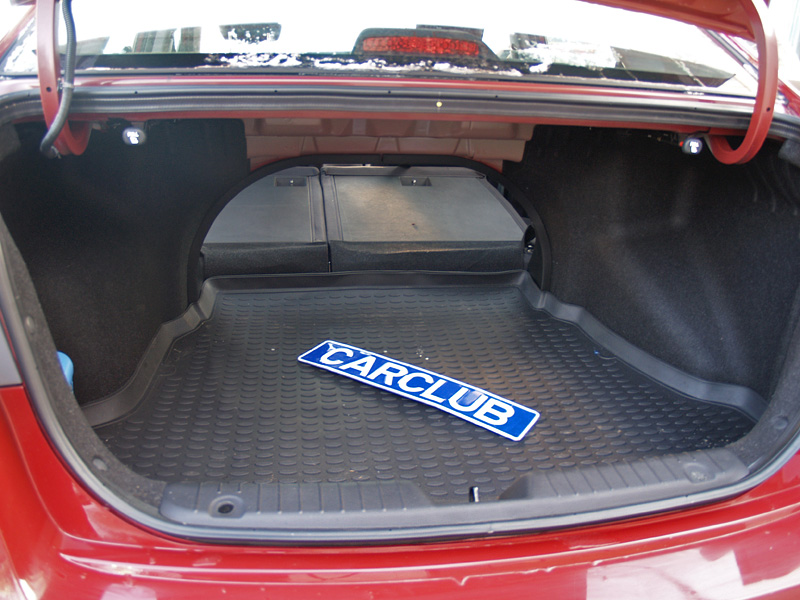
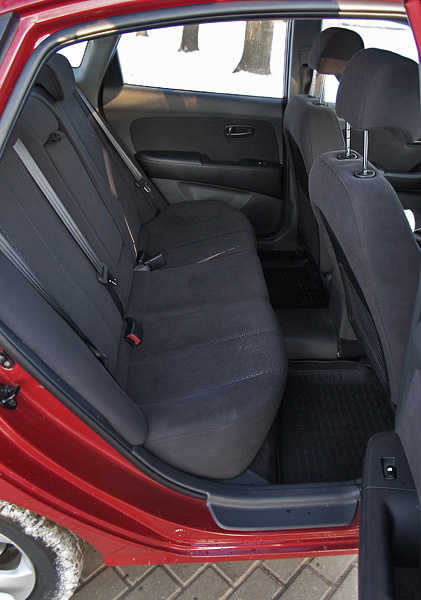
On the rear sofa, a child will sit comfortably in a child seat in the center, and on either side of him, grandma and grandpa can recline. To them, the Elantra will surely remind them of the good old Volga. The spacious trunk can easily accommodate a snow scooter and a bunch of bags. The only nitpicks are the narrow opening and the lack of a handle on the inside of the lid. And another common feature with the Volga: transporting long items in the Hyundai is practically impossible. The rear seatbacks fold in parts, but the floor has a high hump, and the opening itself is small. So for skis or a snowboard, you'll have to buy a roof rack anyway.
The previous Elantra was usually bought with the head, not the heart. Alas, the new Elantra has not advanced in this sense, and perhaps even taken a step back — dealer appetites have noticeably grown. The tested version is priced at $22,290 (at an exchange rate of 26.90 rubles per unit), that is, exactly 600 thousand rubles.
 If you need a large family car for trips out of town, it's wiser to look at the Taganrog Sonata . For the same money (596,700 rubles), it offers a more powerful 133-horsepower two-liter engine, is noticeably more spacious in the cabin, and has a similar set of options. And as for the outdated appearance — well, the new Elantra clearly doesn't reach the ideal either…
Those looking for a family car for the city and infrequent long trips should pay attention to compact vans, for example, Hyundai Matrix. With modest external dimensions, it offers a more comfortable and spacious interior with wide transformation possibilities. Moreover, even with a 1.8-liter engine (123 hp) and an automatic, it's cheaper — $19,490 or 524 thousand rubles, and the design by Pininfarina still looks attractive.
The base price of the Hyundai Elantra at $17,790 is also not particularly pleasing: despite a decent list of equipment (air conditioning, power windows, ABS, two airbags, and heated seats), it is more expensive than many Japanese classmates, which, moreover, are not so much inferior to the Hyundai in terms of interior space. The top Elantra with a two-liter 143-horsepower engine and an automatic costs $24,890.

Text: Leonid Pavlov. Photo by the author.