
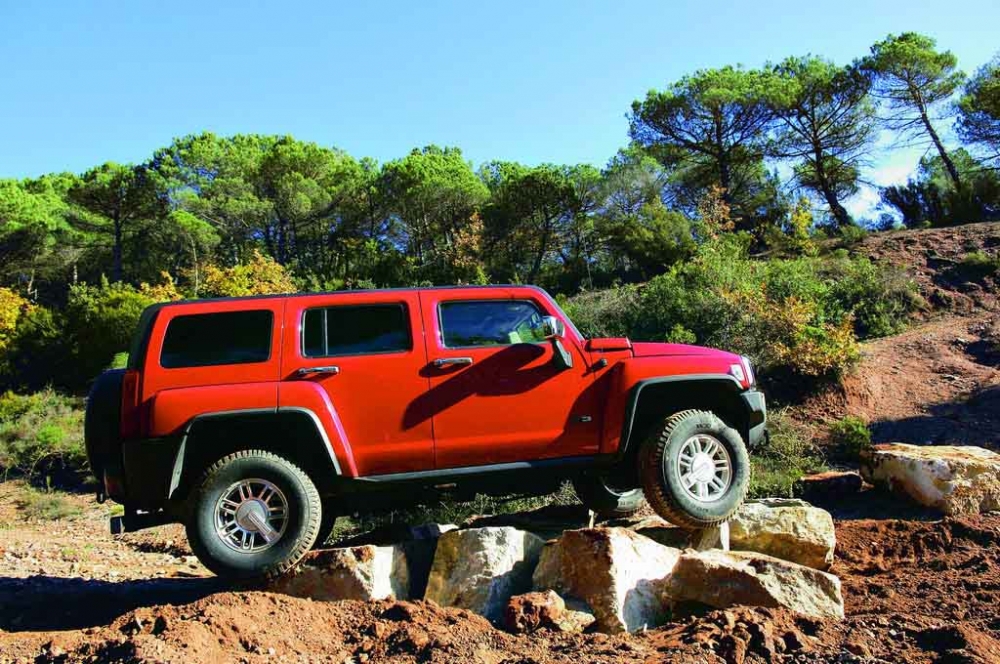
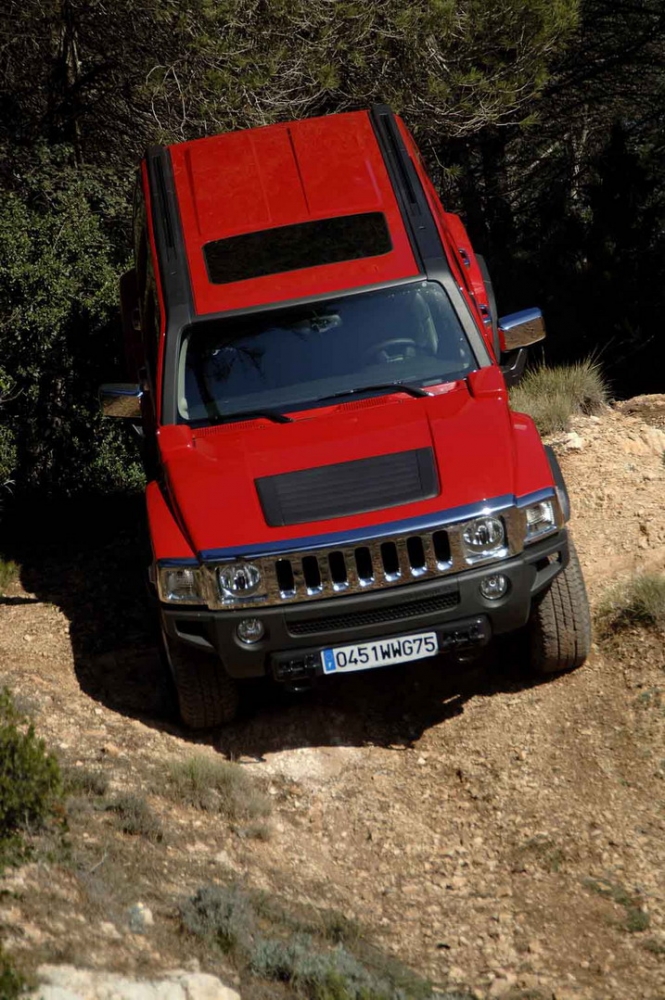
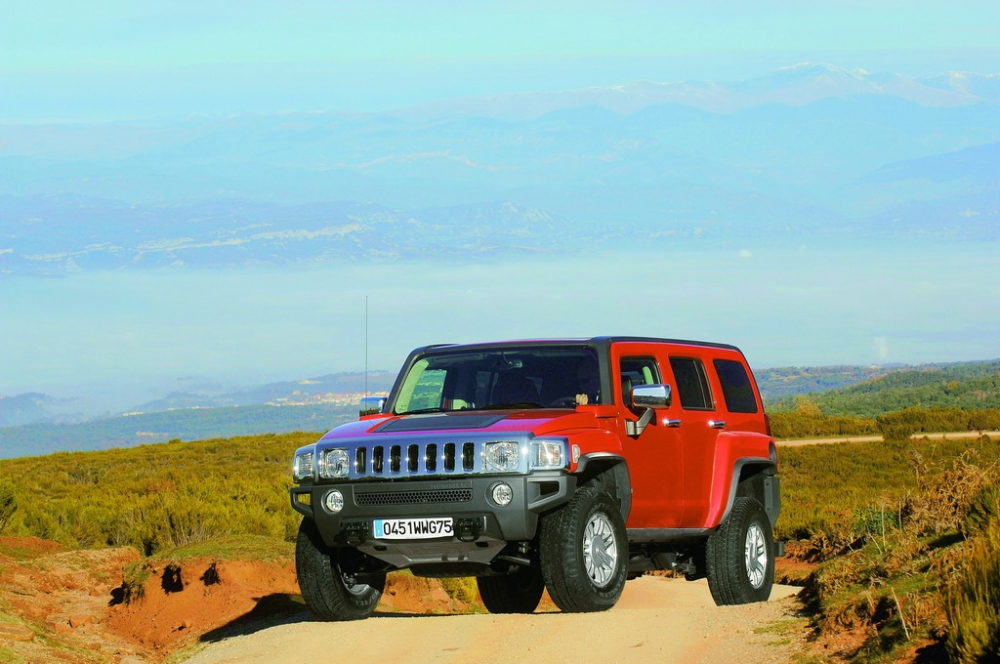
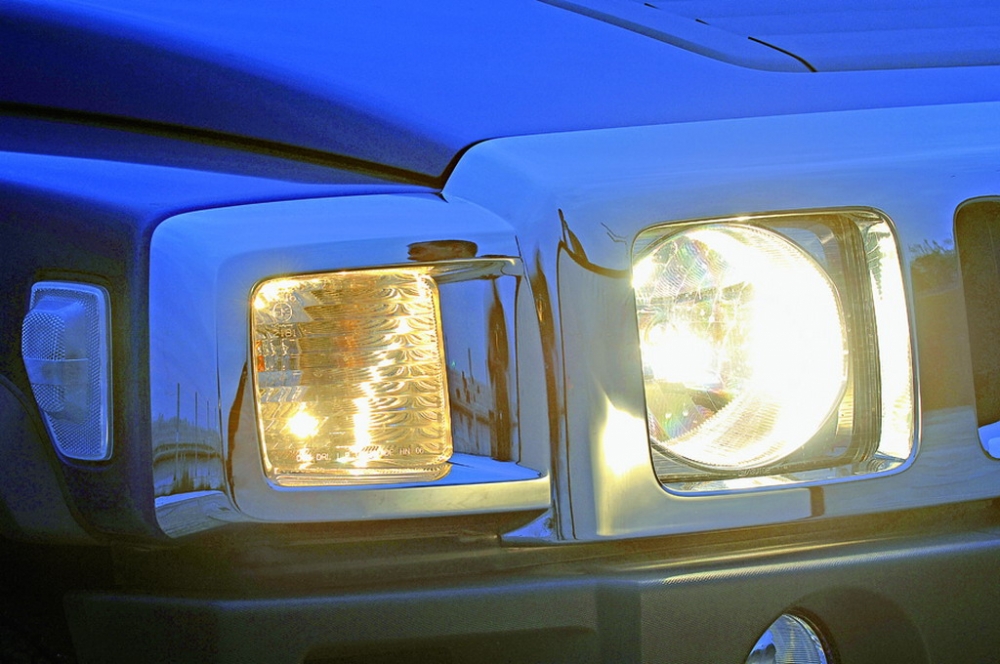
 Not everyone will find ten out of ten. Externally, the car remains the same — the optional LED strip on the roof, integrated into the roof rails instead of the traditional "light bar," transparent sections of the rear turn signals, and slightly different mirror housings — these are all trifles that do not change the appearance. Before us is the same body-on-frame "bulldog" with round, slightly bulging headlights, a flattened nose, and expressive flared wheel arches. Journalists gathered at the presentation, looking at the massive front end, made jokes about pedestrian safety levels — like, "minus three stars." And indeed, God forbid such a vehicle runs someone over! Not everyone will find ten out of ten. Externally, the car remains the same — the optional LED strip on the roof, integrated into the roof rails instead of the traditional "light bar," transparent sections of the rear turn signals, and slightly different mirror housings — these are all trifles that do not change the appearance. Before us is the same body-on-frame "bulldog" with round, slightly bulging headlights, a flattened nose, and expressive flared wheel arches. Journalists gathered at the presentation, looking at the massive front end, made jokes about pedestrian safety levels — like, "minus three stars." And indeed, God forbid such a vehicle runs someone over! |
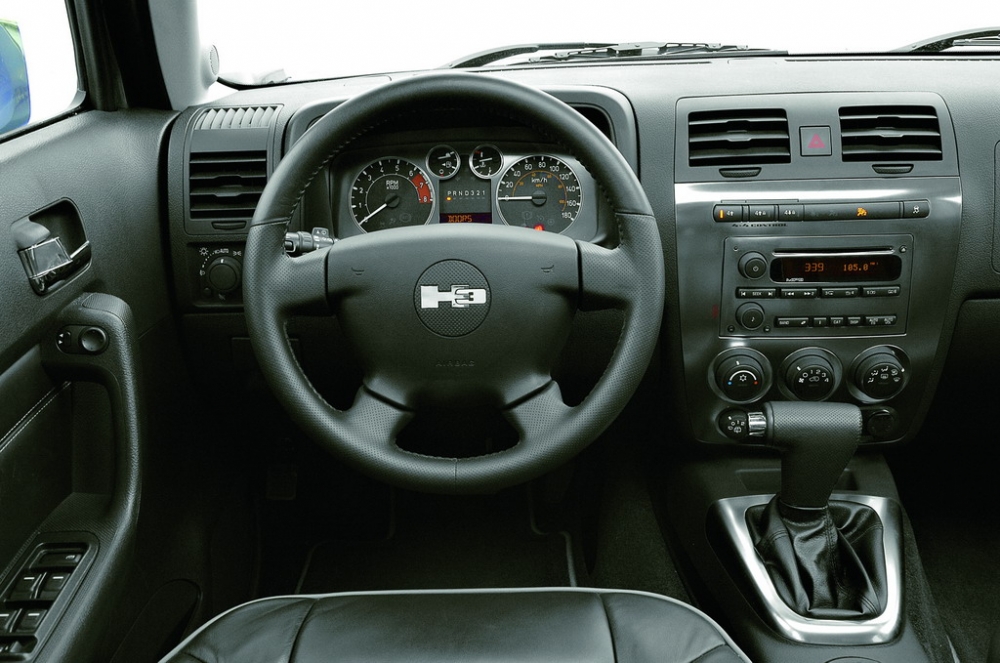 The interior has also not undergone changes. Simple, unpretentious, sometimes angular — matching the exterior, it is finished in a typically American spirit, with a claim to luxury. But only a claim: the quality of plastics and panel fit clearly do not reach European standards, especially in poor trim levels. Despite the fact that the H3 is not a small car (4742 mm in length, 1897 mm in width, and 1872 mm in height), its interior cannot be called spacious. You constantly catch yourself thinking that space is used irrationally. In the back, three people are already cramped shoulder-to-shoulder, and a person above average height has to literally press their head into the ceiling. Even if you lower the driver's seat all the way down, the steering wheel will still have to be raised to the limit — otherwise, it will lie right on your knees. The "ergonomic wonders" are complemented by shapeless front seats, an uncomfortable convex platform under the left foot, and a single steering column stalk made "Mercedes-style." Really, they would have done better to borrow something truly useful! The interior has also not undergone changes. Simple, unpretentious, sometimes angular — matching the exterior, it is finished in a typically American spirit, with a claim to luxury. But only a claim: the quality of plastics and panel fit clearly do not reach European standards, especially in poor trim levels. Despite the fact that the H3 is not a small car (4742 mm in length, 1897 mm in width, and 1872 mm in height), its interior cannot be called spacious. You constantly catch yourself thinking that space is used irrationally. In the back, three people are already cramped shoulder-to-shoulder, and a person above average height has to literally press their head into the ceiling. Even if you lower the driver's seat all the way down, the steering wheel will still have to be raised to the limit — otherwise, it will lie right on your knees. The "ergonomic wonders" are complemented by shapeless front seats, an uncomfortable convex platform under the left foot, and a single steering column stalk made "Mercedes-style." Really, they would have done better to borrow something truly useful! |
 The main changes are hidden under the hood. And first of all — the engine. Although calling it new is a stretch, rather — modernized. The inline five-cylinder GM Vortec with two camshafts and balance shafts has grown in displacement by 0.2 liters, becoming 3.7 liters. In addition, a new design phase shifter (the so-called vane type), an enlarged catalyst, and a VVT variable valve timing system on the exhaust appeared. Thanks to this, the torque shelf has noticeably expanded (peak 327 Nm is available at 4600 rpm). Power has also increased — by 22 hp, to 242 hp at 5600 rpm. Another new feature is the option to order a five-speed manual transmission from Aisin. Previously, a manual gearbox was not offered for Hummers at all (as it turned out, in vain, but more on that later). Standardly, the H3 is equipped with an automatic — the four-speed veteran HydraMatic. It has also been slightly refined: now new Dexron IV oil is poured in, and the service life is promised at 200,000 miles. The HydraMatic is a gearbox as honored, reliable, and indestructible as it is unhurried in its shifts. Both transmissions work in conjunction with a two-speed Borg Warner transfer case with a low range (4:1), and locks for the center and rear differentials (from Eaton). This entire off-road arsenal is available already in the base version. Combined with a body-on-frame construction, huge ground clearance (231 mm), and a brutal suspension (torsion bar double wishbone front, solid axle on leaf springs rear), this undoubtedly makes the H3 one of the most off-road capable vehicles on the planet. Which we were to verify on the track in Drakino. The main changes are hidden under the hood. And first of all — the engine. Although calling it new is a stretch, rather — modernized. The inline five-cylinder GM Vortec with two camshafts and balance shafts has grown in displacement by 0.2 liters, becoming 3.7 liters. In addition, a new design phase shifter (the so-called vane type), an enlarged catalyst, and a VVT variable valve timing system on the exhaust appeared. Thanks to this, the torque shelf has noticeably expanded (peak 327 Nm is available at 4600 rpm). Power has also increased — by 22 hp, to 242 hp at 5600 rpm. Another new feature is the option to order a five-speed manual transmission from Aisin. Previously, a manual gearbox was not offered for Hummers at all (as it turned out, in vain, but more on that later). Standardly, the H3 is equipped with an automatic — the four-speed veteran HydraMatic. It has also been slightly refined: now new Dexron IV oil is poured in, and the service life is promised at 200,000 miles. The HydraMatic is a gearbox as honored, reliable, and indestructible as it is unhurried in its shifts. Both transmissions work in conjunction with a two-speed Borg Warner transfer case with a low range (4:1), and locks for the center and rear differentials (from Eaton). This entire off-road arsenal is available already in the base version. Combined with a body-on-frame construction, huge ground clearance (231 mm), and a brutal suspension (torsion bar double wishbone front, solid axle on leaf springs rear), this undoubtedly makes the H3 one of the most off-road capable vehicles on the planet. Which we were to verify on the track in Drakino. |
 For the test, we were given four updated Hummer H3s in different trim levels: from the most modest with a manual transmission and fabric interior to the maximally equipped one — with an automatic, sunroof, chrome side steps, and leather interior. Nearby, the "big brother" — the Hummer H2 — was parked, which was taken for comparison. Let me remind you that the H2 also has a low range and locks for both differentials. Plus — a more powerful engine (6 liters, 315 hp), minus — a larger wheelbase and a weight of nearly 3400 kg. It was behind the wheel of the H2 that I found myself on the first run. The track in Drakino is continuous bumps and obstacles. There are also high-speed sections where the Hummer accelerated to almost 80 km/h. And a couple of asphalt sections allowed us to assess how good the car is where it will likely be operated 90% of the time. For the test, we were given four updated Hummer H3s in different trim levels: from the most modest with a manual transmission and fabric interior to the maximally equipped one — with an automatic, sunroof, chrome side steps, and leather interior. Nearby, the "big brother" — the Hummer H2 — was parked, which was taken for comparison. Let me remind you that the H2 also has a low range and locks for both differentials. Plus — a more powerful engine (6 liters, 315 hp), minus — a larger wheelbase and a weight of nearly 3400 kg. It was behind the wheel of the H2 that I found myself on the first run. The track in Drakino is continuous bumps and obstacles. There are also high-speed sections where the Hummer accelerated to almost 80 km/h. And a couple of asphalt sections allowed us to assess how good the car is where it will likely be operated 90% of the time. |
 Compared to the H2, the younger Hummer feels rougher and stiffer. This is logical: a lower class, shorter wheelbase, less weight. The car constantly tries to give the crew a good shake, although against the background of the Wrangler or Defender, it is just a cradle. But it is noticeably easier to drive: the H2 is "heavy athletics," while the H3 is more like "gymnastics." The younger one briskly fords gullies, bounces over bumps, flies along a forest road, responding quite adequately to pressing the gas pedal and turning the steering wheel. On asphalt, of course, dynamics are lacking, and the steering wheel is empty and uninformative (almost four turns from lock to lock), but for off-road — that's what you need. In addition, the electronic gas pedal and the settings of the StabiliTrac system (which includes ABS, traction control TC, anti-slip regulation TSC, electronic brake-force distribution DRP, and the vehicle stability enhancement system VSES) have a variable characteristic that changes depending on the selected transmission mode. Compared to the H2, the younger Hummer feels rougher and stiffer. This is logical: a lower class, shorter wheelbase, less weight. The car constantly tries to give the crew a good shake, although against the background of the Wrangler or Defender, it is just a cradle. But it is noticeably easier to drive: the H2 is "heavy athletics," while the H3 is more like "gymnastics." The younger one briskly fords gullies, bounces over bumps, flies along a forest road, responding quite adequately to pressing the gas pedal and turning the steering wheel. On asphalt, of course, dynamics are lacking, and the steering wheel is empty and uninformative (almost four turns from lock to lock), but for off-road — that's what you need. In addition, the electronic gas pedal and the settings of the StabiliTrac system (which includes ABS, traction control TC, anti-slip regulation TSC, electronic brake-force distribution DRP, and the vehicle stability enhancement system VSES) have a variable characteristic that changes depending on the selected transmission mode. |
 The accelerator becomes even more viscous and thoughtful when you engage the low range and locks. A total of four modes are provided, selected by buttons on the front panel. The first is "asphalt," 4Hi. Here, torque is distributed in a 40:60 ratio in favor of the rear axle, and the differentials are free. The second — 4Hi Lock — locks the center differential, and torque is divided equally between the axles. The 4 Low Lock mode additionally engages the low range and allows locking the rear differential. In this case, the traction control system works only on the front axle. And finally, the "service" mode Neutral. It is activated by simultaneously pressing two buttons — 4Hi and 4 Low Lock. The transfer case is then completely disconnected, and the H3 can be towed without the risk of damaging the transmission. All that remains is to find a suitable tow truck for such a beast. The accelerator becomes even more viscous and thoughtful when you engage the low range and locks. A total of four modes are provided, selected by buttons on the front panel. The first is "asphalt," 4Hi. Here, torque is distributed in a 40:60 ratio in favor of the rear axle, and the differentials are free. The second — 4Hi Lock — locks the center differential, and torque is divided equally between the axles. The 4 Low Lock mode additionally engages the low range and allows locking the rear differential. In this case, the traction control system works only on the front axle. And finally, the "service" mode Neutral. It is activated by simultaneously pressing two buttons — 4Hi and 4 Low Lock. The transfer case is then completely disconnected, and the H3 can be towed without the risk of damaging the transmission. All that remains is to find a suitable tow truck for such a beast. |
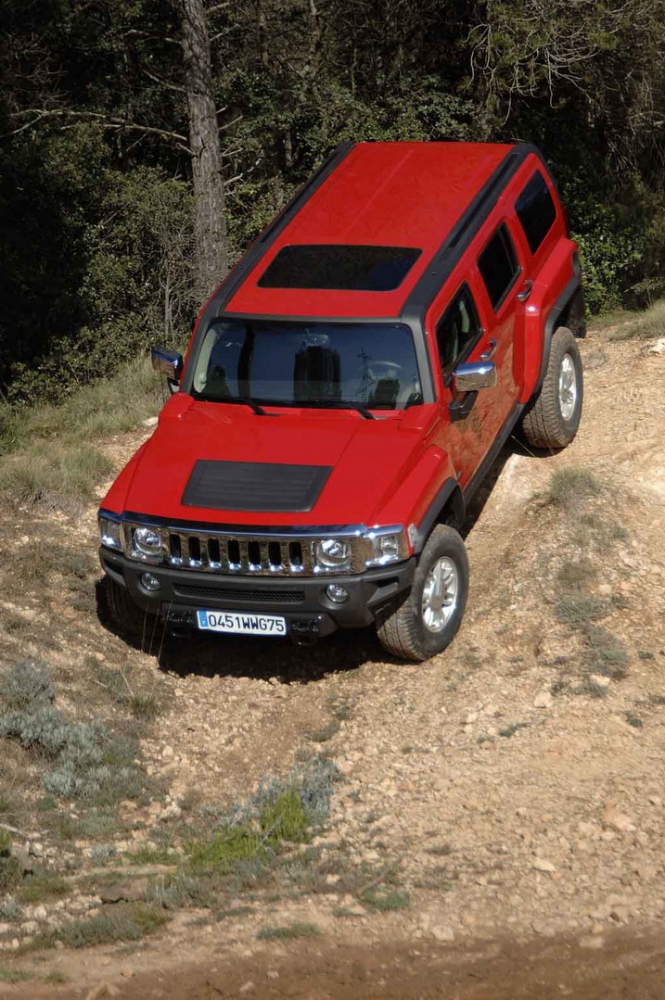 At the cliff by the Oka River, perhaps the most serious test awaited us. It was possible to hang the Hummer diagonally (sometimes the rear wheel lifted off the ground by about seventy centimeters!), descend to the very water, and then crawl back up. The H3, largely thanks to its phenomenal geometric off-road capability, performed real miracles on this descent. After such exercises, the ford and a run through shallow water with fountains of spray from under the wheels seemed like mere child's play. After lunch, another interesting moment awaited me. No, it's not about how deftly the Hummer towed a Yak-52 aircraft on a "trailer." I was waiting for the only yellow H3 with a manual transmission at the event. Moreover, a downpour had just begun — ideal conditions for a real off-road experience! I note that with all locks engaged and the low range, the gear ratio on first gear of the manual transmission is gigantic — 68.9! This means the H3 can crawl at a minimal speed, which in difficult conditions is a huge advantage. This lap around the Drakino track gave me more emotions than all the previous ones combined. The H3 with a "stick" and in the simplest trim is a truly honest off-roader, without the despised by "jeepers" pretensions like leather and an "automatic." The manual transformed the car — responses to the gas pedal became instantaneous, shifts were crisp, and handling noticeably more convenient, acceleration more assertive. With what pleasure I drove the H3 through forest potholes already filled with rainwater! The car floats on wide tires, sometimes helping itself with the underbody (it is almost entirely covered with protection), and, slightly losing speed and raising two-meter waves, smoothly exits onto the opposite "bank" of the puddle. Fantastic sensations! Well, after all the "tests" conducted, we can safely say: the new Hummer H3 is a worthy rival in off-road capability to both the Defender, the Wrangler, the Land Cruiser, and our "UAZ." But on asphalt... Given all the above, I feel a bit sorry for those who are going to use this Hummer in the city. Although it is known that such H3 owners are the vast majority. At the cliff by the Oka River, perhaps the most serious test awaited us. It was possible to hang the Hummer diagonally (sometimes the rear wheel lifted off the ground by about seventy centimeters!), descend to the very water, and then crawl back up. The H3, largely thanks to its phenomenal geometric off-road capability, performed real miracles on this descent. After such exercises, the ford and a run through shallow water with fountains of spray from under the wheels seemed like mere child's play. After lunch, another interesting moment awaited me. No, it's not about how deftly the Hummer towed a Yak-52 aircraft on a "trailer." I was waiting for the only yellow H3 with a manual transmission at the event. Moreover, a downpour had just begun — ideal conditions for a real off-road experience! I note that with all locks engaged and the low range, the gear ratio on first gear of the manual transmission is gigantic — 68.9! This means the H3 can crawl at a minimal speed, which in difficult conditions is a huge advantage. This lap around the Drakino track gave me more emotions than all the previous ones combined. The H3 with a "stick" and in the simplest trim is a truly honest off-roader, without the despised by "jeepers" pretensions like leather and an "automatic." The manual transformed the car — responses to the gas pedal became instantaneous, shifts were crisp, and handling noticeably more convenient, acceleration more assertive. With what pleasure I drove the H3 through forest potholes already filled with rainwater! The car floats on wide tires, sometimes helping itself with the underbody (it is almost entirely covered with protection), and, slightly losing speed and raising two-meter waves, smoothly exits onto the opposite "bank" of the puddle. Fantastic sensations! Well, after all the "tests" conducted, we can safely say: the new Hummer H3 is a worthy rival in off-road capability to both the Defender, the Wrangler, the Land Cruiser, and our "UAZ." But on asphalt... Given all the above, I feel a bit sorry for those who are going to use this Hummer in the city. Although it is known that such H3 owners are the vast majority.PRICES AND TRIM LEVELS Prices for the Hummer H3 start at $53,910 for a car with a manual transmission in the base version Base. When ordering such a car with an "automatic," you additionally get an audio system with a 6-disc changer, roof rails, and side steps, and the price rises to $57,120. The Adventure version for $62,940 includes leather seats, a cargo area cover, chrome roof rails, door handles and mirror housings, as well as power-retractable side steps, roof lights, and a trailer towing kit. The top Luxury trim will cost $67,150 and adds a panoramic sunroof, tubular chrome side steps, and a chrome fuel filler door cover. |
The city did not accept
Find ten differences! Under such a slogan, the presentation of the updated Hummer H3 could well have taken place, which the General Motors representative office organized in early July on an off-road track in the village of Drakino near Serpukhov.
Test drive photos
Comments
No comments yet. Say the first word.