
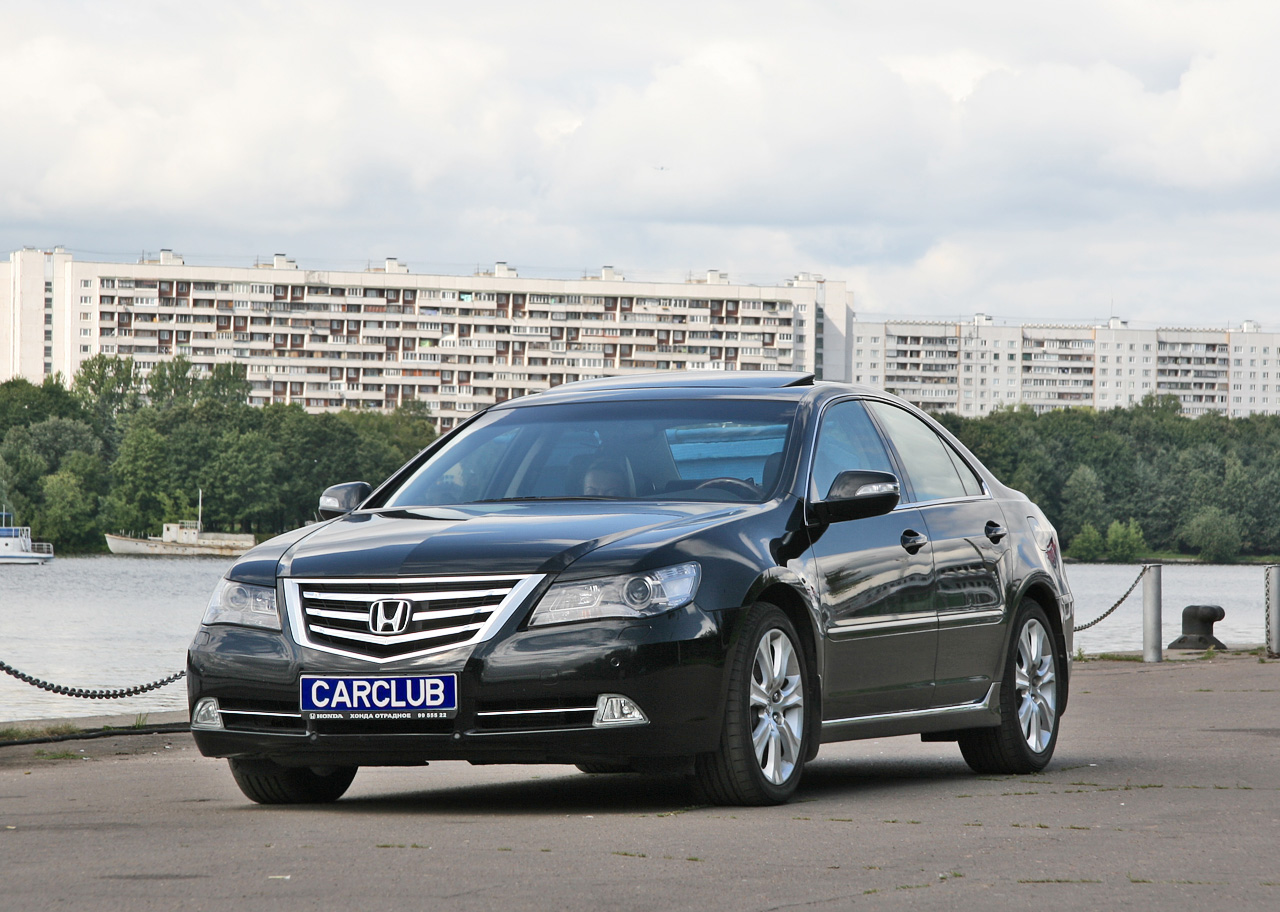
 A year ago at the 2008 Moscow Auto Show, Honda showed an updated version of its flagship sedan, the Honda Legend.Comments (1)
As expected, there was no revolution, but even the modest improvements that the Legend received clearly benefited it as a representative car.
 |
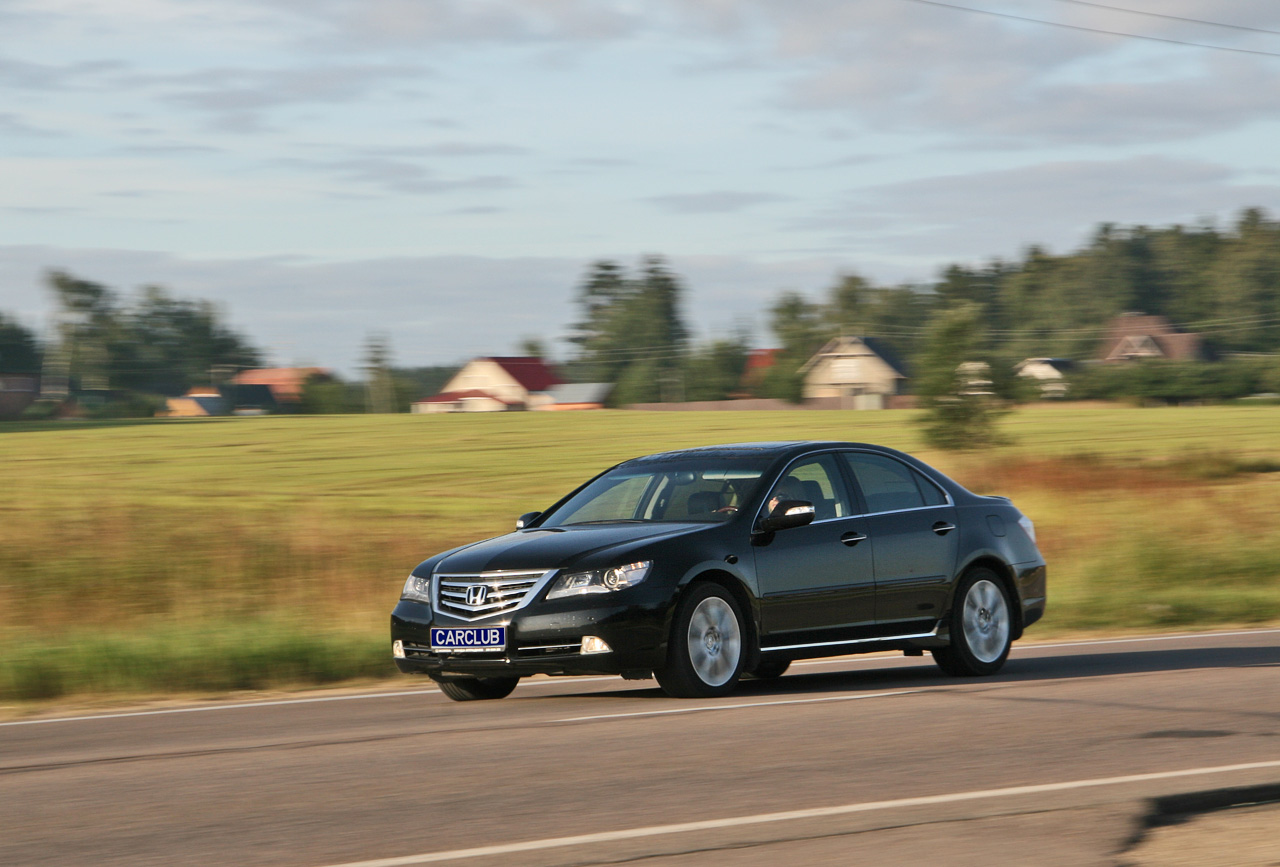
| The restyled Legend has not lost its excellent ride smoothness, and handling has become a bit sharper – the large sedan behaves clearly and safely. |
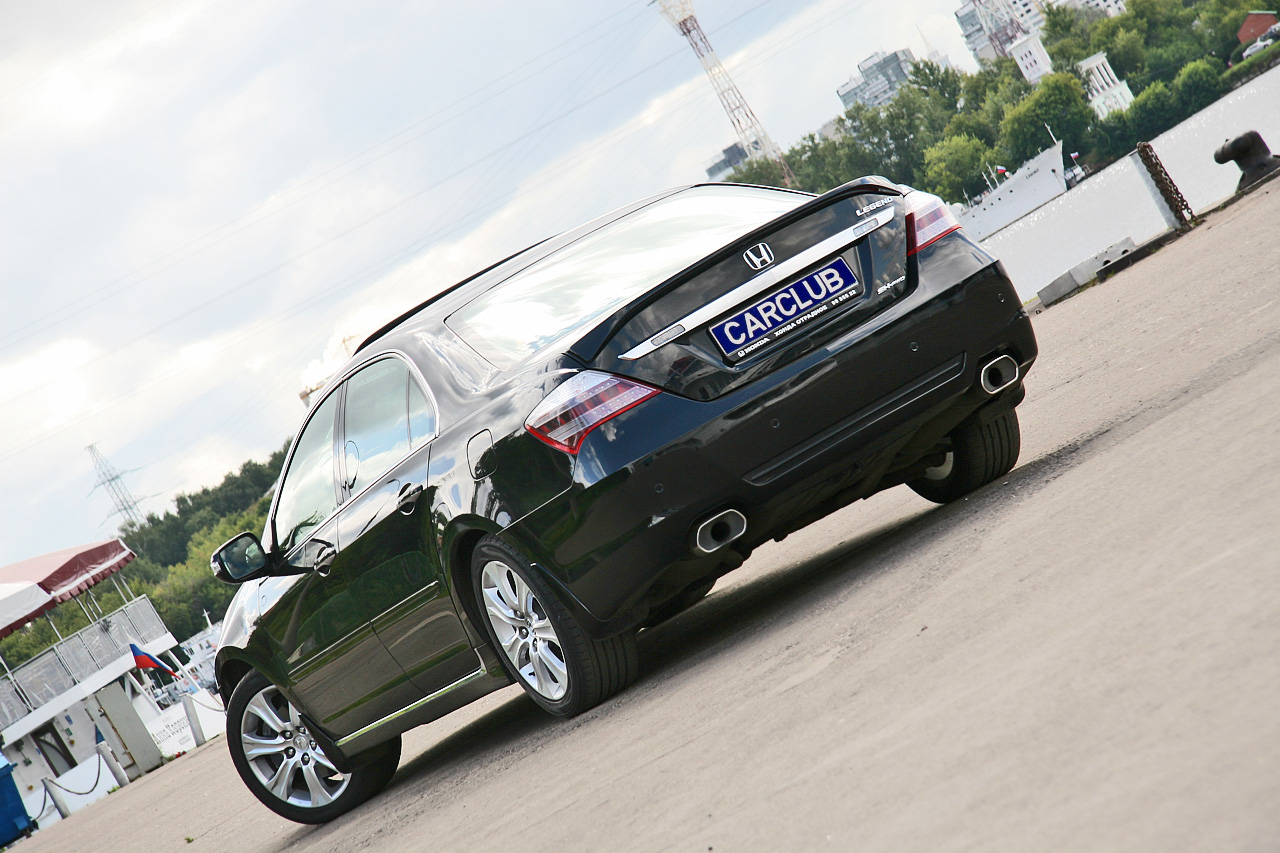
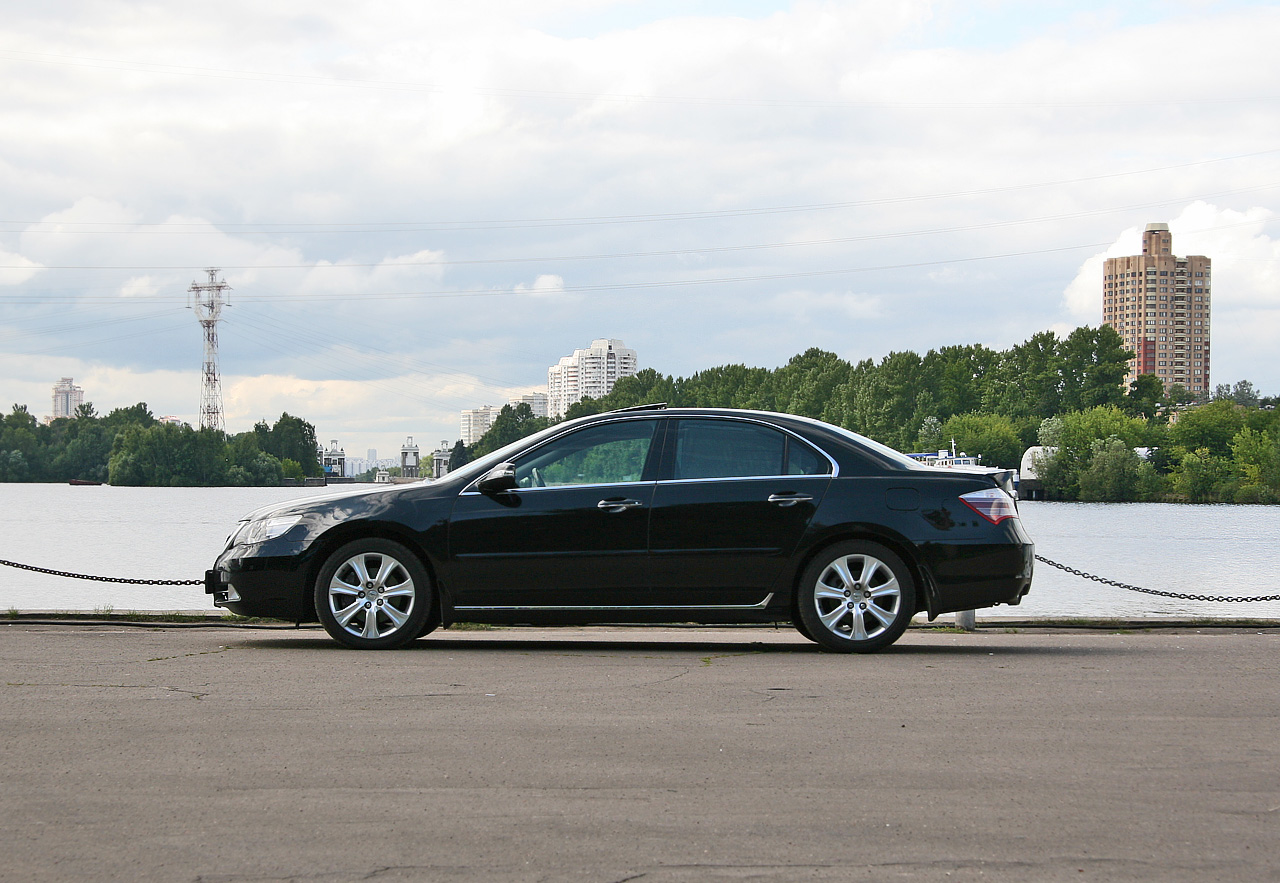
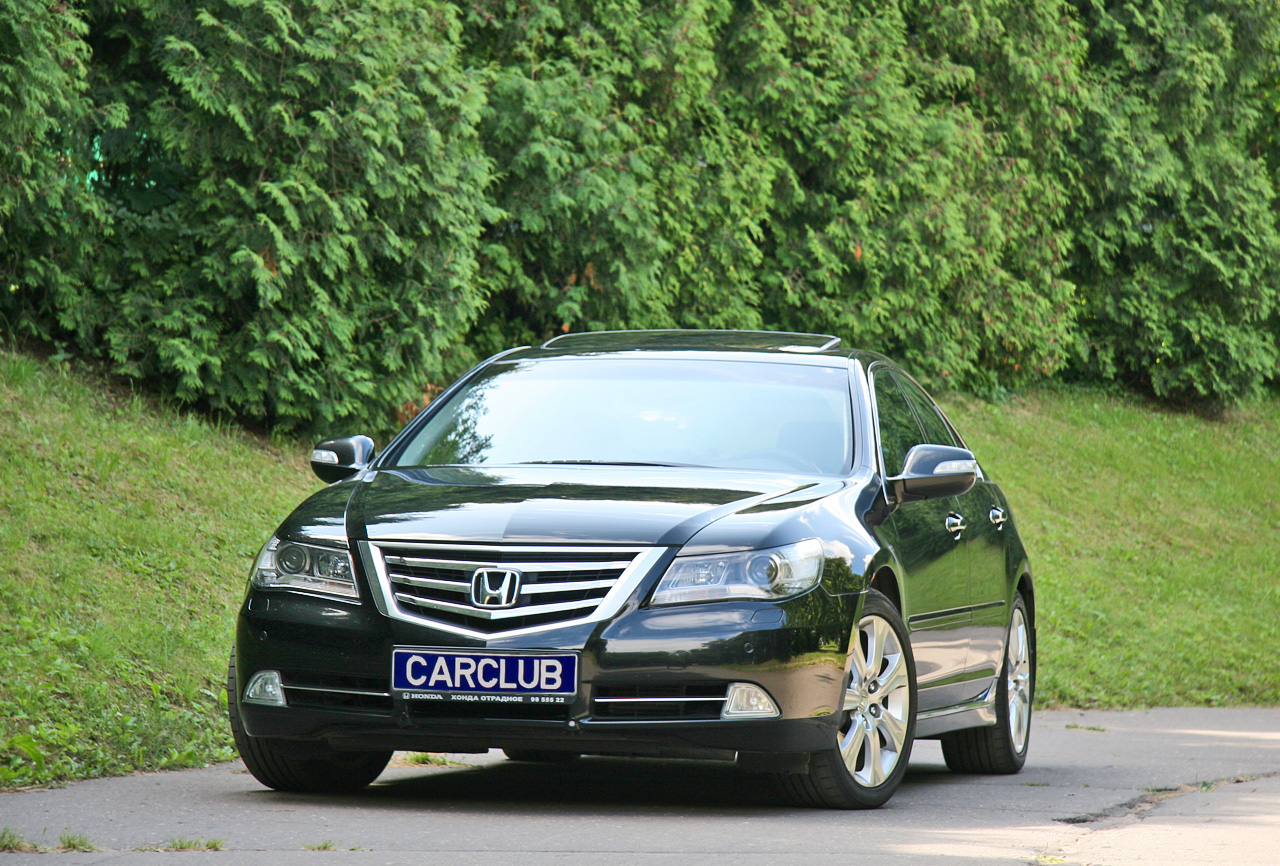
The black sedan looks solid and imposing. You can go to negotiations in it, or show off in front of ladies. You won't miss! After the update, the exterior gained more aggressive headlights, different bumpers, a different chrome grille, and new taillights. Thanks to such simple plastic surgery, the Legend has noticeably become younger, more relevant, and more presentable.
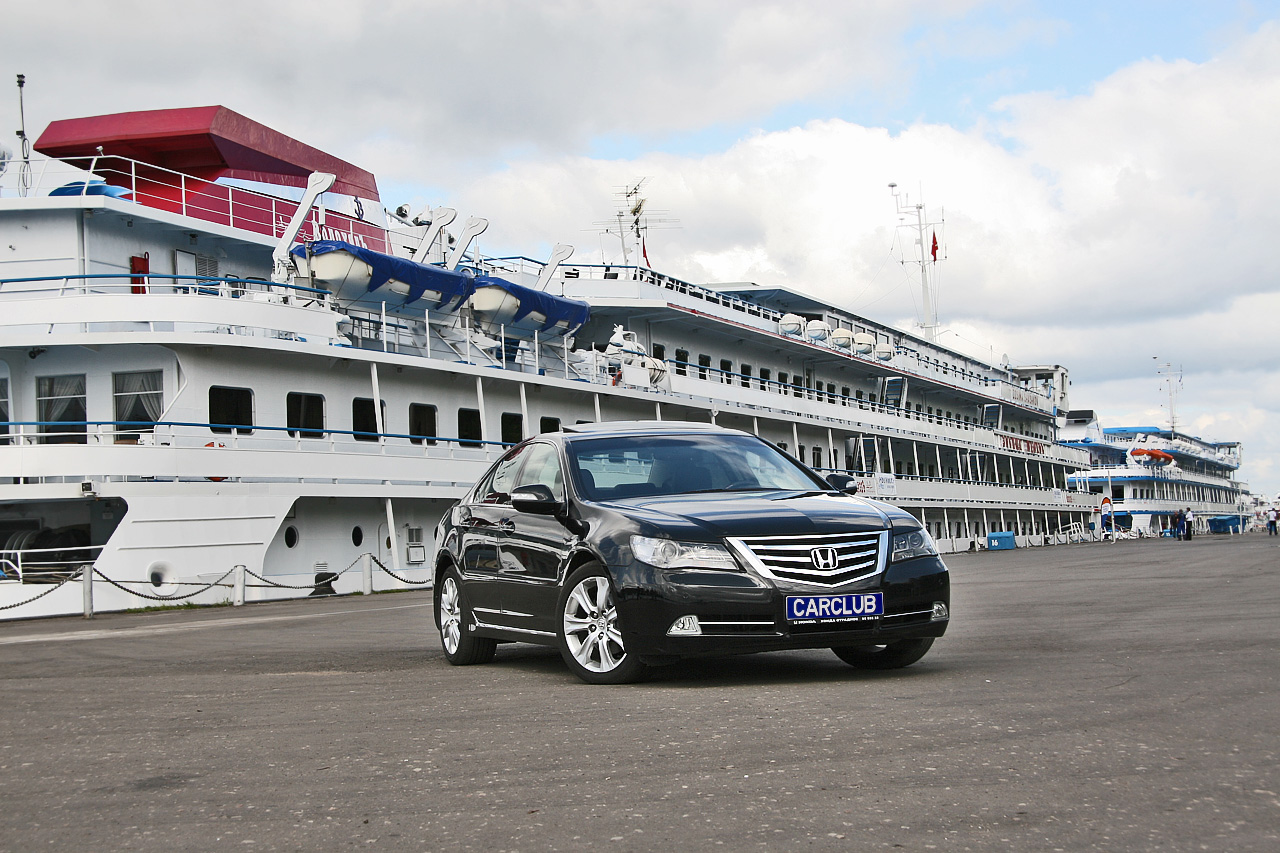 |
| The updated Honda Legend has freshened up, becoming more solid and representative. |
In the interior, they worked on more readable labels for the climate system buttons. Plus, engineers added a bit more space for rear passengers. The updated Honda Legend now has heated not only front seats but also the rear bench. And the front passenger seat, like the driver's seat, is now electrically adjustable in eight directions, so the front passenger will have no trouble getting comfortable.
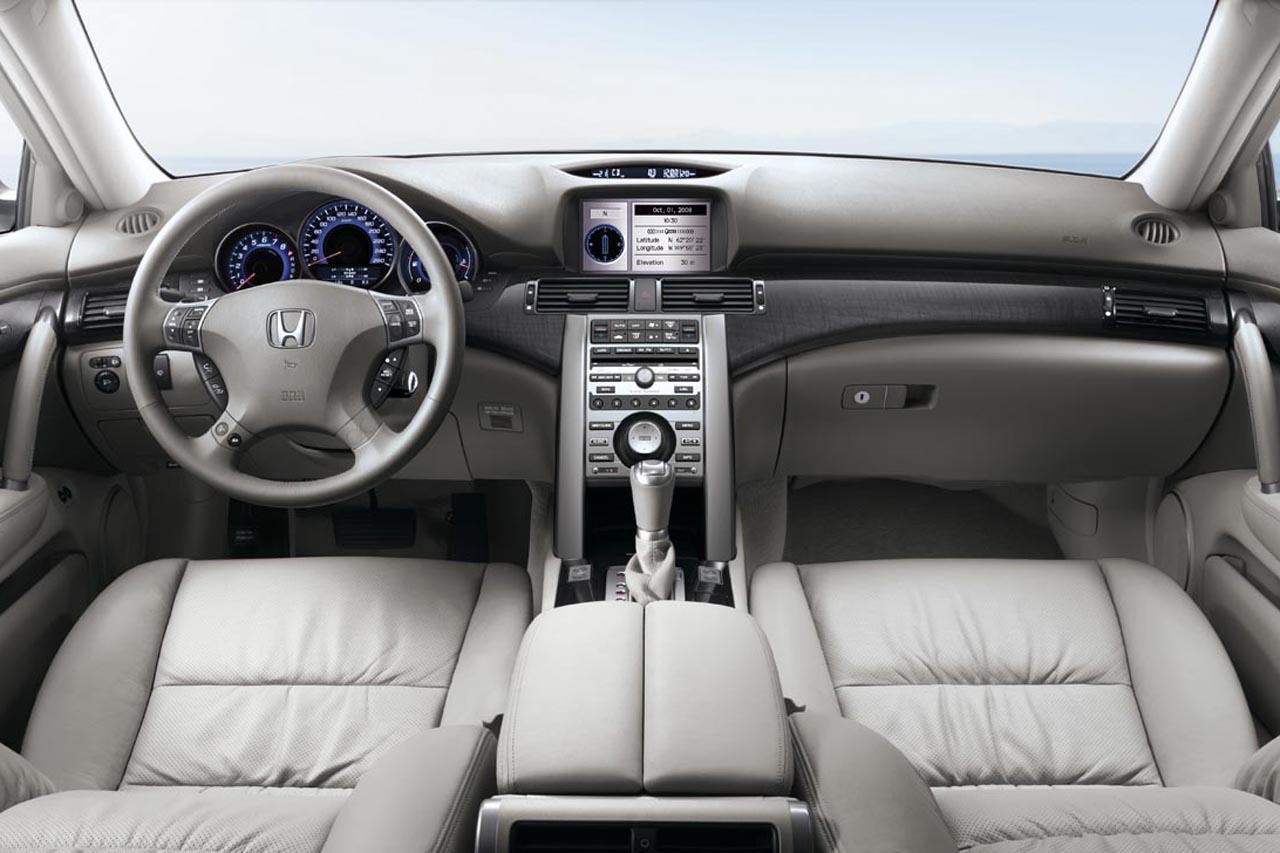 |
| The interior design has hardly changed. Assembly is top-notch, but some materials could be better. The "wood-look" plastic inserts are an excess for a car aiming for the premium class. |
The trim materials, apart from the overly "plastic" wood-look inserts, are quite decent, but honestly, the Honda's interior does not reach the level of German premium models it inevitably has to compete with. But the Legend's conveniences cannot be taken away. The well-sculpted rear bench literally hints that it would be nice to have a personal chauffeur and spend time on the road comfortably in the back row.
 |
| The engine and transmission settings are clearly aimed at comfort, not sharp driving sensations. |
Finally, the climate control unit has a separate button for selecting airflow direction. Previously, you had to dig into the depths of the electronic menu. Otherwise, the center console is still overloaded with small buttons, and you can only use them by touch after a long habit.
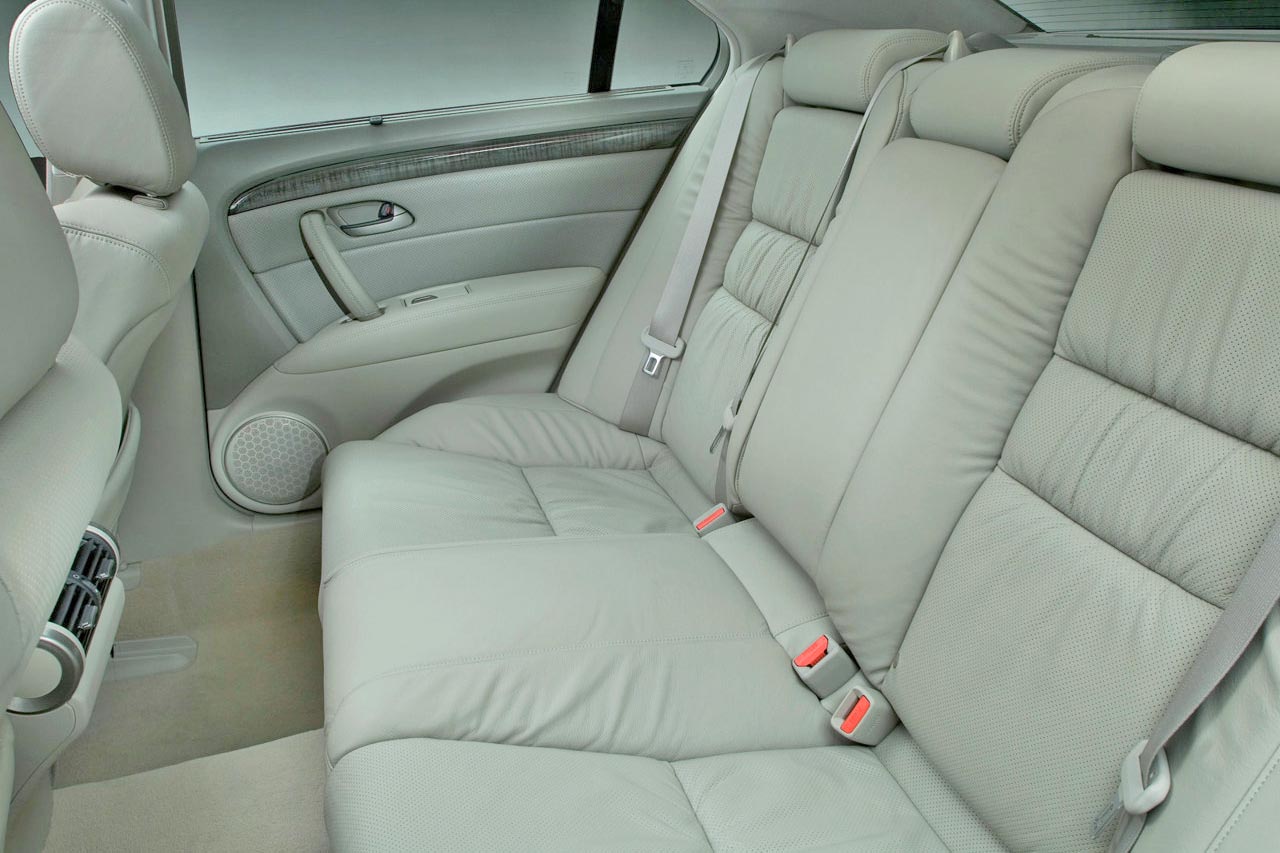 |
| In the back of the Legend, it is as comfortable as in the front. Passengers have a well-profiled bench with a convenient armrest, air vents, and seat heating that appeared after the restyling. |
The most important change of the updated Honda Legend is a new 3.7-liter engine. Although the displacement grew by only 0.2 liters and the power remained the same – 295 horsepower – the manufacturer promises that acceleration to 100 km/h has decreased by 0.2 seconds. This was achieved thanks to increased peak torque, which is now 371 Nm. You won't feel such an increase by touch, of course, but it's nice to know. The five-speed automatic with manual mode remains the same. The manual mode here, by the way, is real: at maximum rpm, the gearbox will not shift up by itself without the driver's command. If it ain't broke, don't fix it. Even in normal automatic mode, the automatic transmission proved to be prompt and smooth.
 |
| The new 3.7-liter engine retains 295 hp but adds 20 Nm of torque. The engine with the proprietary VTEC system accelerates the heavy sedan to 100 km/h in 7.1 seconds. But the acceleration cannot be called hurricane-like. |
Due to the large curb weight of 1868 kg, the Legend's acceleration feels too sedate and leisurely. Although in reality it matches the claimed 7.1 seconds to 100 km/h. The engine and transmission settings clearly show a focus on comfort rather than brisk driving notes.
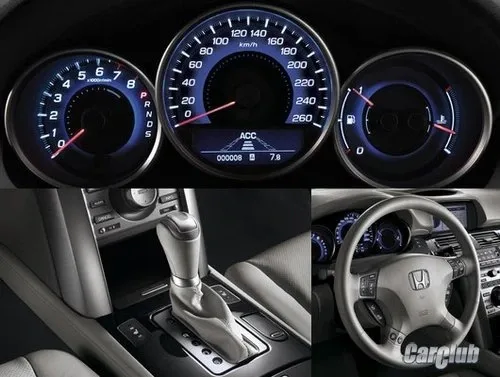 |
| The instrument panel is perfectly readable and has a pleasant, albeit not modern, blue backlight. The steering wheel carried over to the updated Honda Legend unchanged. The five-speed automatic works quickly and smoothly. |
The suspension of the updated Honda Legend received reinforced springs, larger-diameter anti-roll bars, and stiffer subframe bushings. In addition, new 18-inch alloy wheels appeared instead of the previous 17-inch ones. Despite all this, the Legend has not lost its excellent ride smoothness, and handling has become a bit sharper – the large sedan behaves intuitively and safely. Add to this excellent sound insulation, where passengers are completely cut off from external noise, and it turns out that in terms of comfort and ride smoothness, I would compare the Legend with the Mercedes E-Class. Comfort above all! Yes, there is lateral rocking, there are body rolls in corners, but behind the wheel of the Honda Legend you constantly feel full control and safety. Thanks to the SH-AWD (Super Handling All-Wheel Drive) all-wheel drive system.
 |
| The suspension of the updated Honda Legend received reinforced springs, larger-diameter anti-roll bars, and stiffer subframe bushings. |
The SH-AWD transmission is, without a doubt, the main trump card of the Honda Legend. The driveshaft to the rear wheels is equipped with a planetary gearbox, on the sides of which there are two pairs of direct-acting electromagnetic clutches. Depending on the road situation, engaging and disengaging these clutches can change the torque distribution between the front and rear axles. In addition, the clutches can independently redistribute torque and deliver up to 100% of the rear axle torque to one wheel. In fact, the Legend can be front-wheel drive, all-wheel drive, and even with drive to three wheels!
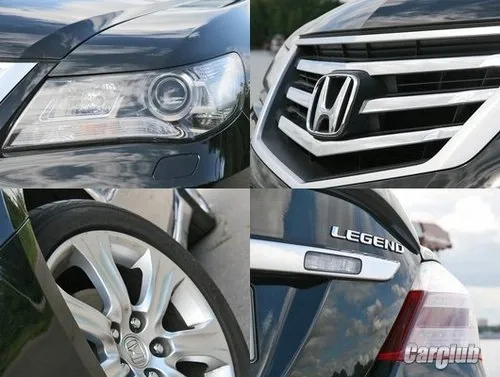 |
| During the restyling, the Honda Legend acquired new front optics, modified bumpers, a large chrome grille, different taillights, and 18-inch alloy wheels instead of the previous 17-inch ones. |
For example, in a left turn, the electronics tighten the right clutch, causing the right rear wheel to receive more torque and turn the car into the corner. To visually verify the operation of the all-wheel drive transmission, the SH-AWD operating diagram can be displayed on the instrument panel screen. But much more important is the feeling that the car itself helps to turn into a steep bend. And in the Legend, this feeling is present.
Let's complete the picture with an active noise suppression system and a hood that rises with pyrotechnic actuators to soften the impact in a collision with a pedestrian. Honda's flagship is literally packed with electronics. But if the versions brought to us are equipped only "up to the neck," then the "Japanese" Honda Legend generally drown in technologies – there is the LKAS (Lane-Keeping Assist System), which uses a special video camera to keep the car in its lane, and climate control with "brains" that checks with navigation and directs more cool air to the side where the sun shines.
 |
| In Russia, the Honda Legend is offered in a single fixed trim. The price is 2,168,000 rubles. |
In our market, the Honda Legend is sold only in top trim, though without navigation — Honda never adapted it for Russian roads. The price of the Legend is $73,179 (585,428 UAH). German rivals with similar engines and equipment cost a bit more, but they noticeably win in interior finish quality. Moreover, German cars have obvious prestige and respectability. But you can't feel the complex tech features of the Honda by touch — they are hidden deep in the design and exist only on paper. It turns out that the Honda Legend is more of a demonstration of the power and technological progress of the Japanese brand, which has its own narrow circle of fans, but nothing more.
How the SH-AWD transmission works:
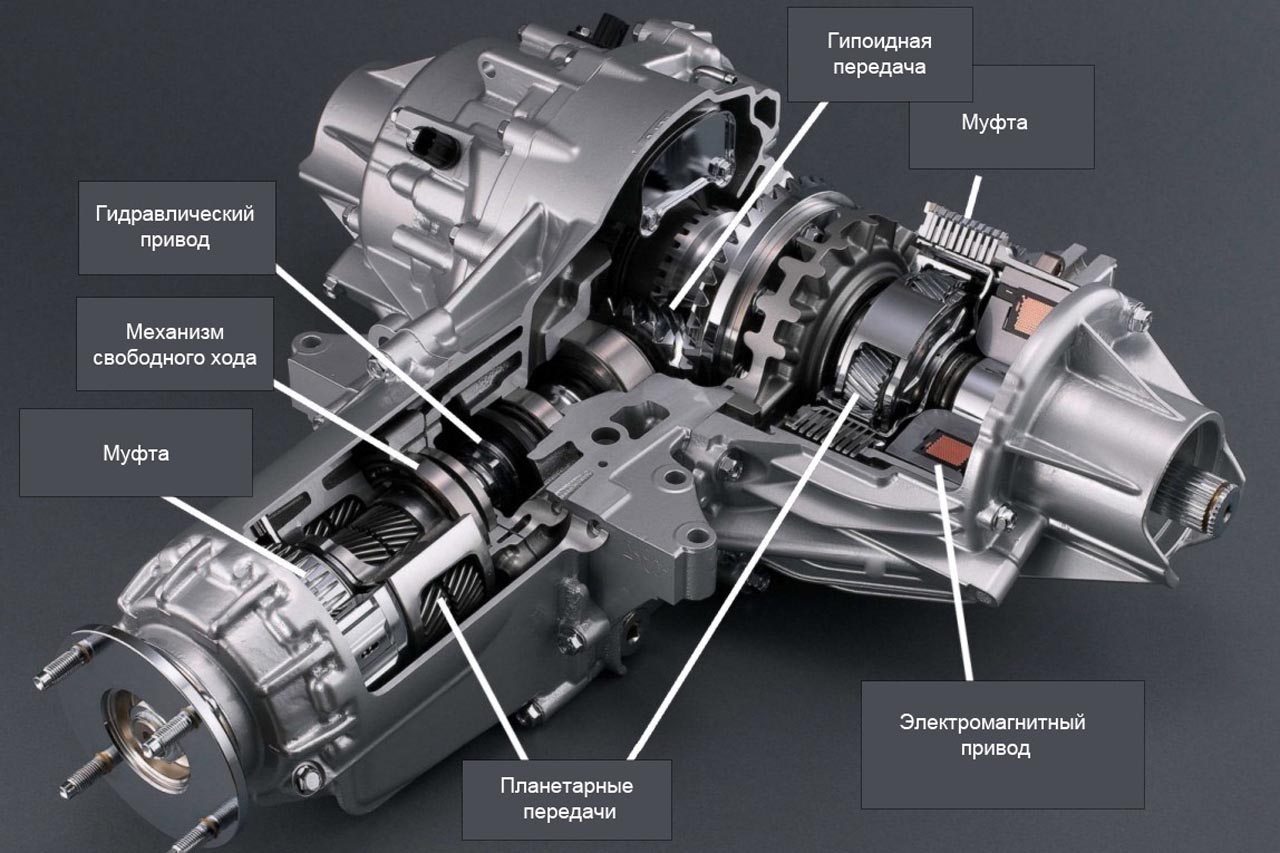 |
| The SH-AWD transmission is essentially a conventional front-wheel-drive unit from which power is taken to drive the rear wheels. The force is taken from the front axle and, through a block with a gearbox, goes to a torque transfer device that is bolted directly to it. This device is connected to a lightweight composite driveshaft reinforced with carbon fiber, and it transmits power to the rear drive unit. The rear unit resembles a planetary gearbox: on command from the electronic control unit, it switches from direct drive to overdrive. Inside are three sets of planetary gears with clutches. Torque passes through the first set (the acceleration device), then to a hypoid gear that turns the flow at a 90° angle and drives the rear half-shafts. On either side of the hypoid gear are direct-acting electromagnetic clutches. Their job is to deliver torque to each rear wheel individually. Thanks to these clutches, the distribution of traction between the front and rear axles can be varied: depending on the situation, from 30 to 70% of the engine's power goes to the rear wheels. But the clutches can do more — they can split torque between the rear wheels. In some situations, up to 100% of the torque going to the rear axle can be delivered to a single wheel. |
Ruslan Galimov