
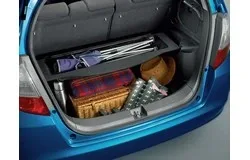
The second-generation Jazz has grown 5.5 cm longer, and almost all of that extra length was used to increase the wheelbase, which means more interior space. The design remains the same: the fuel tank is still hidden under the front seats so as not to take up useful space in the trunk. The rear seats can now be removed entirely — for example, to load a TV or a large dog for a trip to the countryside. Because the tank doesn't take up space in the back, the cargo area was used to the fullest: it's now two-tiered and resembles a small wardrobe. The body was also refined: the front pillars were moved 12 cm forward, again for the sake of interior space. However, this came at the cost of adding glass in the triangle between the pillar and the mirror — otherwise visibility would have suffered significantly. The panoramic glass roof deserves special mention — it's definitely worth the extra cost. It doesn't open, but it provides an incredible sense of air and freedom, especially valuable in a small car that navigates the urban jungle every day. And when you head out of town for the weekend, you can literally reach out and touch the sky.
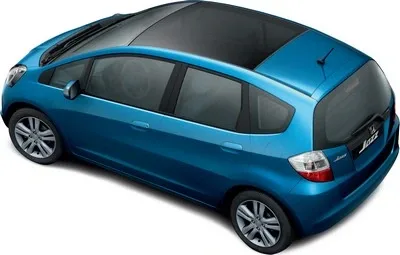
CALM AND RELIABLE
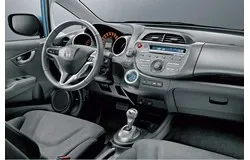
The driver's seat is no problem: it's easy to adjust to your liking, especially since the steering column now adjusts for reach as well. The steering wheel itself is a joy: small, with a thick rim, very comfortable. You look at it and immediately want to grab it firmly and dash forward. But don't expect sporty driving. Even with the 100-hp engine, the car doesn't encourage fast driving. The gear ratios of the five-speed manual were clearly chosen not for top speed but for fuel economy. The engine, like the first generation, is equipped with variable valve timing, but it's now 17 hp more powerful. It runs quietly and smoothly, without any harsh revving. The instrument panel has a hint — an arrow that suggests shifting to a higher gear. This way, the car itself looks after the owner's wallet, helping save fuel. And its character matches: no sharp movements or pedal-to-the-metal — you drive at a measured, calm pace and even start to respect other road users. But if you suddenly want to squeeze everything out of the Jazz, it won't let you down or back off.
The biggest revelation is the car's behavior on the road. The changes are radical, and all for the better. Previously, when avoiding a sudden obstacle, the old generation could catch the driver off guard: the steering was "woolly" and imprecise. The new model's steering precision isn't perfect either, but the progress is obvious. The car now enters corners without the previous understeer, and body roll is noticeably reduced — and for that, we should thank the refined rear suspension.
The Jazz is a friendly and cheerful car. It's made for city dwellers who spend their weekdays in endless traffic jams. And on Friday evening, you can head to a concert, lift your spirits — and, of course, it will be jazzy.
IN CORPORATE STYLE
In the interior design, the new Jazz continues the familiar Honda theme — futuristic, almost cosmic. The main design feature is a small window on the climate control unit, located to the right of the steering wheel
 |  |
Manufacturer's data
ENGINE
1339 cm3, 4 cylinders, petrol
100 hp at 6000 rpm,
114 Nm at 4900 rpm
TRANSMISSION
Manual, 5 speeds
DIMENSIONS (mm)
length – 3900
width – 1700
height – 1520
DYNAMICS
top speed – 177 km/h
0-100 km/h – 12.6 s
SALES IN RUSSIA
since spring 2009