
Over a decade of rivalry between the Honda CR-V and Toyota RAV4, they have met in our comparative tests more than once. However, truly "head-to-head" comparisons of same-generation cars happened only twice: in 1998, when the first CR-V went on sale in our market, and five years later, when the second generation arrived. So far, the score favors Honda — a win and a draw. But the RAV4 is used to blazing the trail first: the third generation of the "Rafik" came out a year earlier than the updated CR-V. Did Honda manage to use this head start?
Both cars are equipped with two-liter gasoline engines and automatic transmissions.
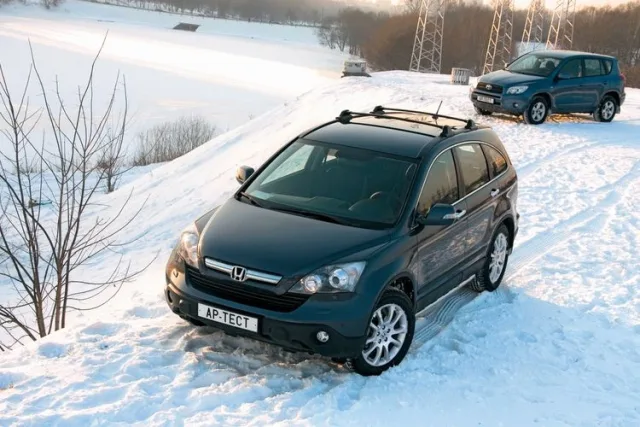
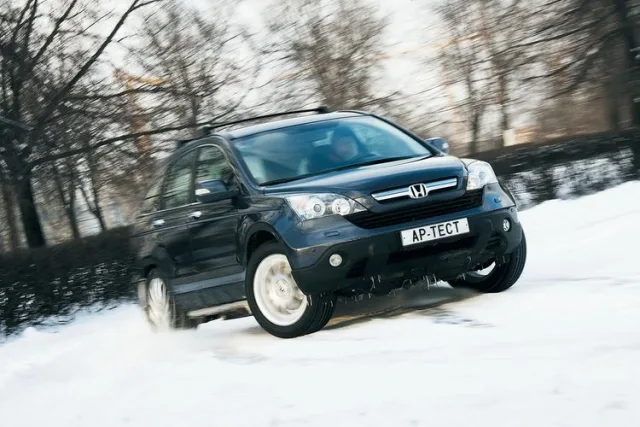
While the rounded RAV4 still retains a distant resemblance to its predecessor, the CR-V has transformed radically. Where did the former simplicity go — now the car flaunts aggressive styling. The massive bumper seems to prop up the headlights, and under the overhanging "beak" of the hood stretches a predatory air intake. That's the front. From the side, the aggression softens, and from the rear it disappears altogether — from this angle, the newcomer resembles the peace-loving minivan Stream.
The interior has been completely redesigned. The "American" gear lever has disappeared from the dashboard, and the handbrake, disguised as an armrest, has vanished from the center console. Now the handbrake is L-shaped but still sits between the seats, and the gear selector has moved to a protrusion on the console. There are now two glove boxes, as in the RAV4. Among the interesting design moves in the Honda, the door handles shaped like connecting rods stand out. But the mesh in the steering wheel spoke is an acquired taste.
The Toyota's cabin looks no worse — it's simply different: with a plump two-tier panel and boomerang-shaped handles on the doors. But the plastic of some parts, say the glove box lids, is rougher than the competitor's.
The driver's seat in both cars is organized excellently: the steering wheel adjusts in two planes, the seats have good profiles and firmness, and the Honda's also boasts more pronounced lateral support.
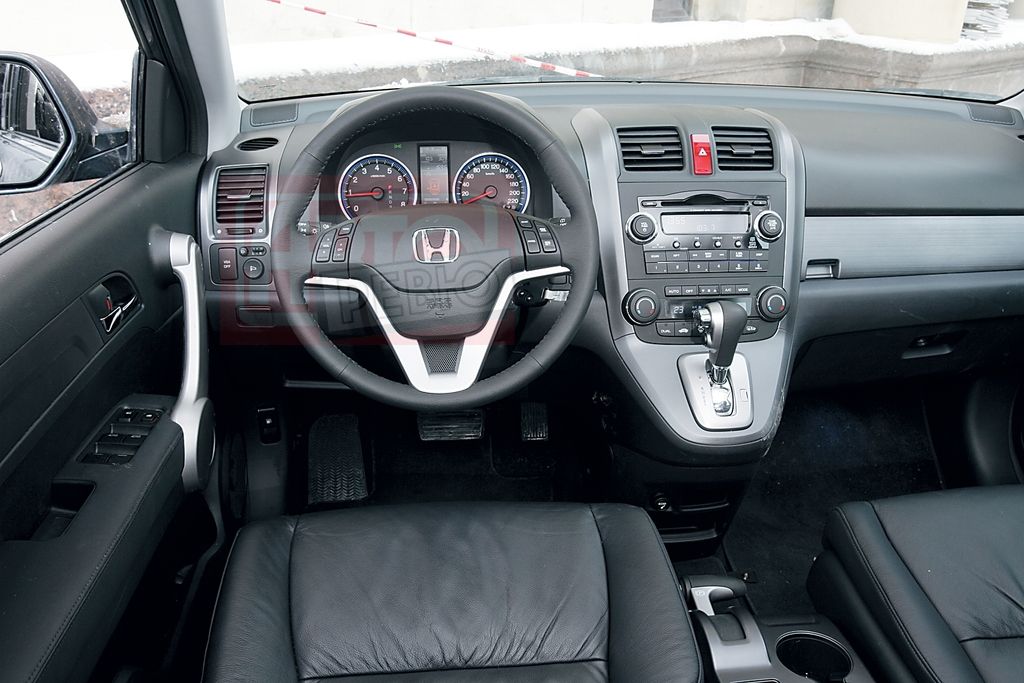 | 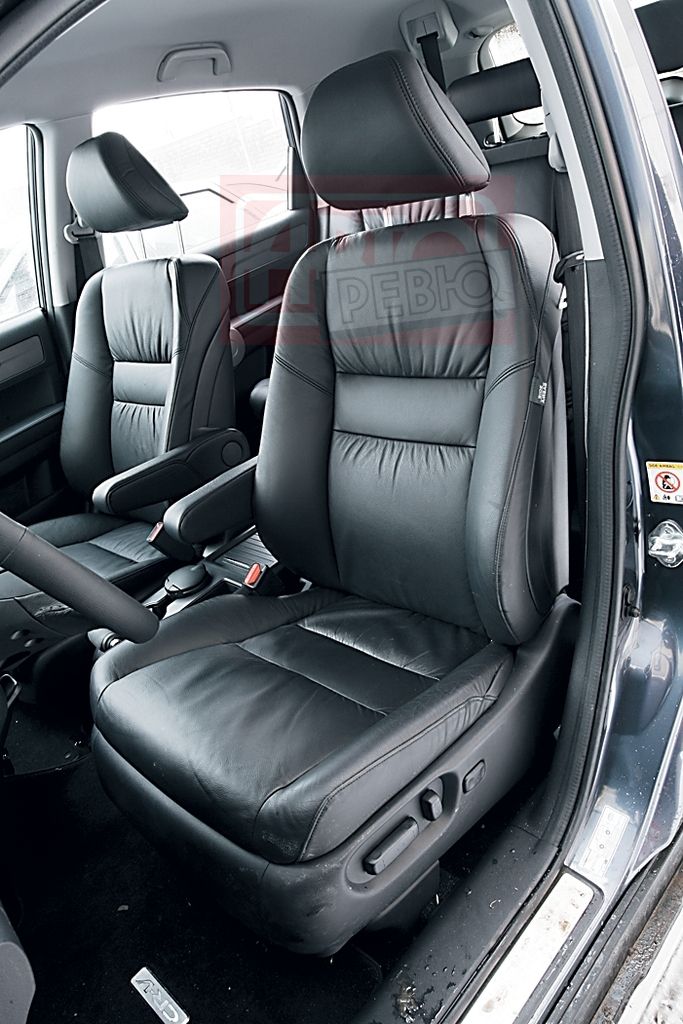 | 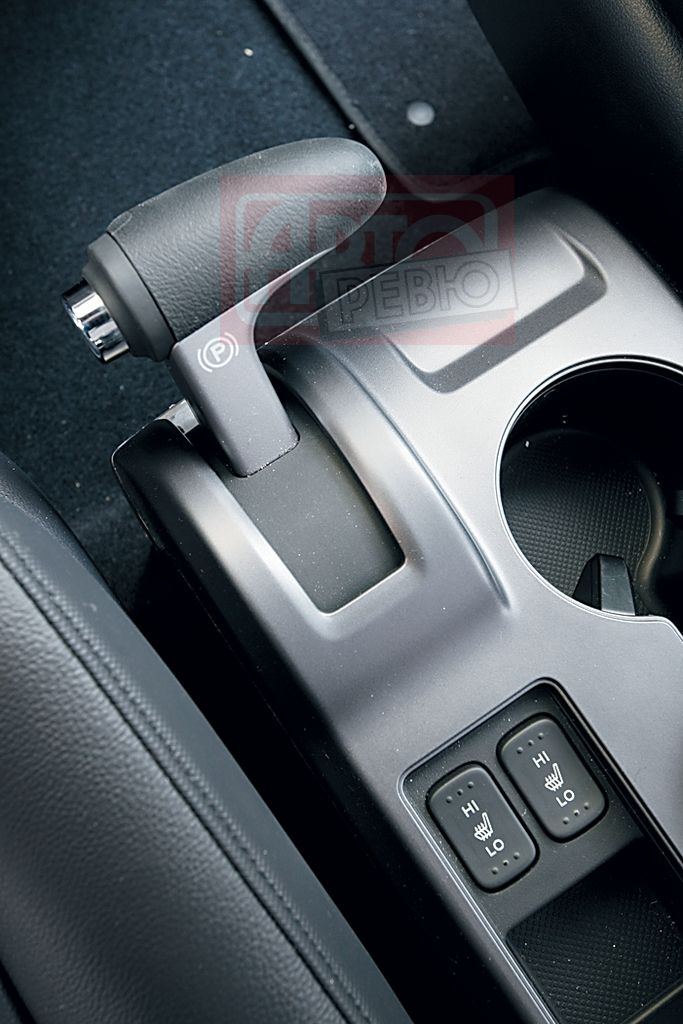 |
| The Honda's interior is fresh and thoughtful: connecting-rod handles, an automatic transmission joystick, and mesh in the steering wheel | The CR-V's seats are more comfortable than the Toyota's thanks to developed lateral support | The L-shaped "handbrake" sits on the tunnel |
The tiny automatic transmission lever in the Honda moves along a straight slot with short but precise strokes. The selector in the Toyota is also precise, but unlike the Honda, it doesn't show the selected mode.
Managing the climate (dual-zone in both cars) is easier in the Toyota: airflow direction changes with a single press. In the Honda, you have to press the Mode key several times. Stylish but inconvenient. Temperature adjustment is organized equally well — with dials in the CR-V and rocker switches in the RAV4. The result: the driver is slightly more comfortable in the Honda. And rear passengers? Also in the CR-V!
| Honda CR-V | Toyota RAV4 |
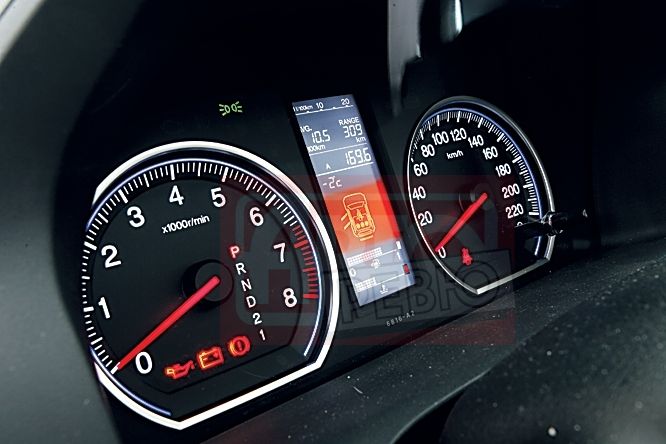 | 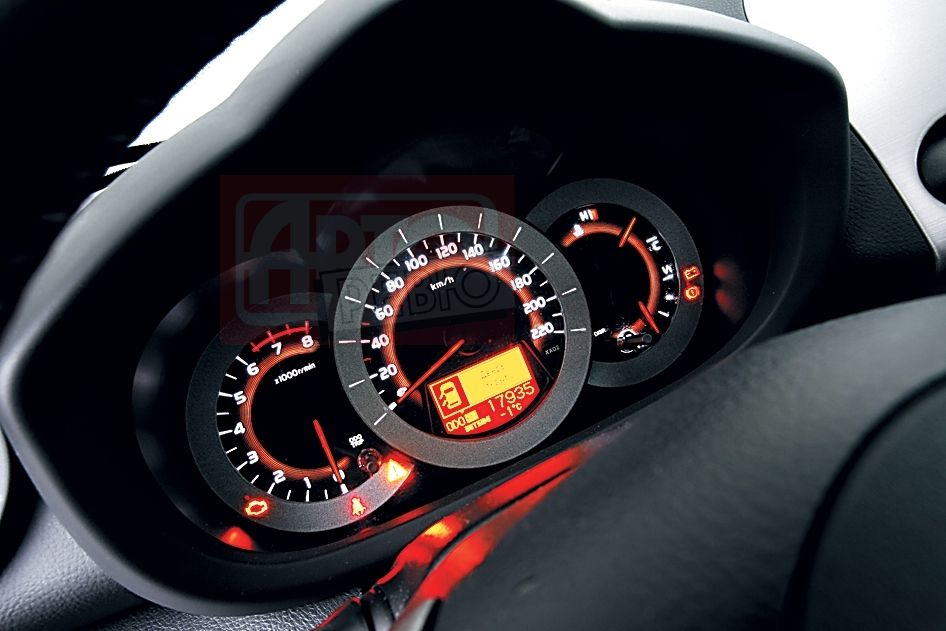 |
| Both instrument clusters are pleasing to the eye, but the Honda's shows the automatic transmission operating modes | |
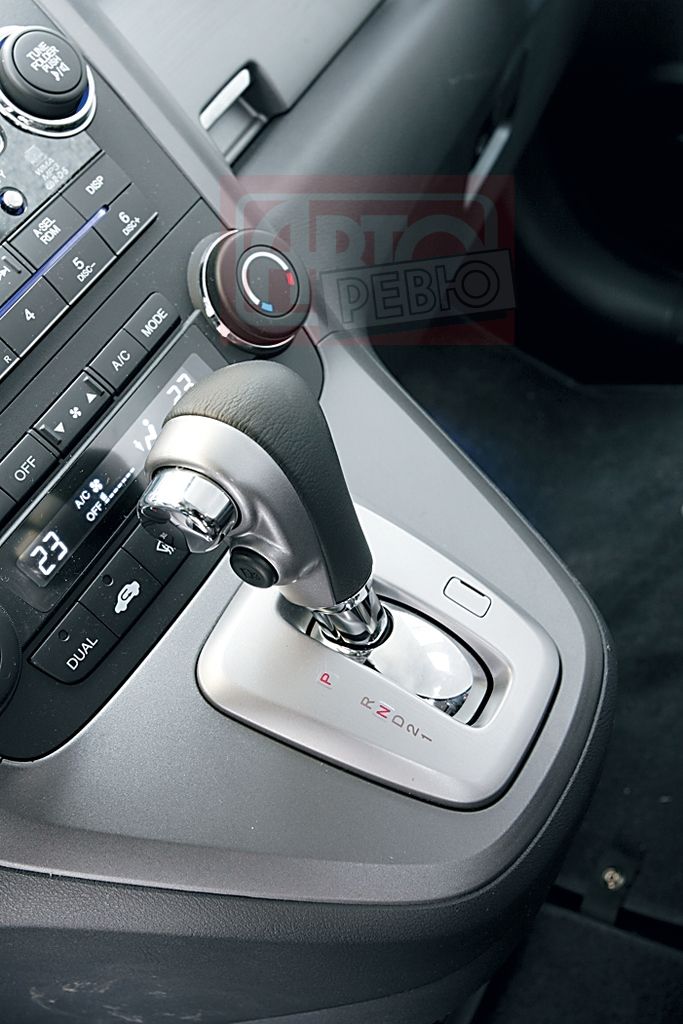 | 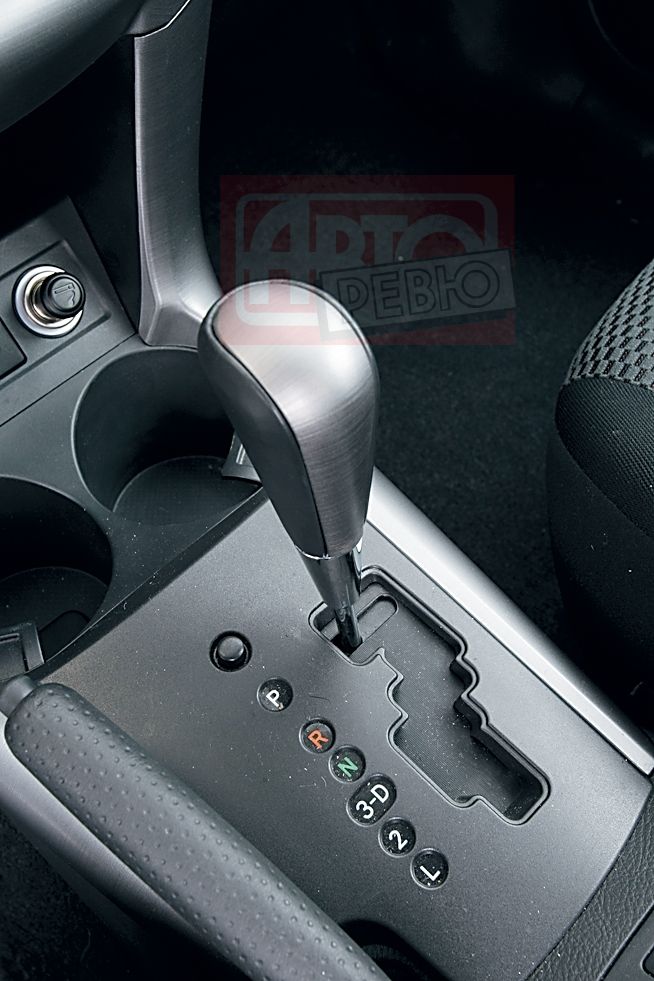 |
| The CR-V's five-speed gearbox pleases with precise short selector strokes, but in terms of shift speed and adequacy, it yields to the RAV4's old four-speed | |
Let's start with the fact that it's easier to get into the Honda — the door opens wider. And once settled in the back row, we realized that sitting here is also more comfortable: the backrest is more anatomical, the cushion is at an optimal height and doesn't raise your knees like in the Toyota. There's also more space in the CR-V — in the knees and especially in the feet. The halves of the rear sofa, like the competitor's, slide and adjust for recline. However, three people are a bit cramped in the Honda — the Toyota wins in capacity.
The RAV4 is also better as a "little truck": the rear sections fold in one motion, forming a flat floor. Moreover, they can be folded from both the cabin and the trunk, where there are special handles. In the Honda, the transformation is more complicated — pulling the straps is less convenient, and the folded backrest stands vertically behind the front seats. In terms of volume and convenience, the trunks are similar. The removable shelf in the CR-V allows organizing two tiers, while in the "Rafik" there's a pull-out mesh and boxes under the floor. Inconveniences: the Honda's trunk door doesn't lift high — people over 180 cm will have to bend down; the Toyota has a lower loading height, but the often-dirty rear bumper protrudes more.
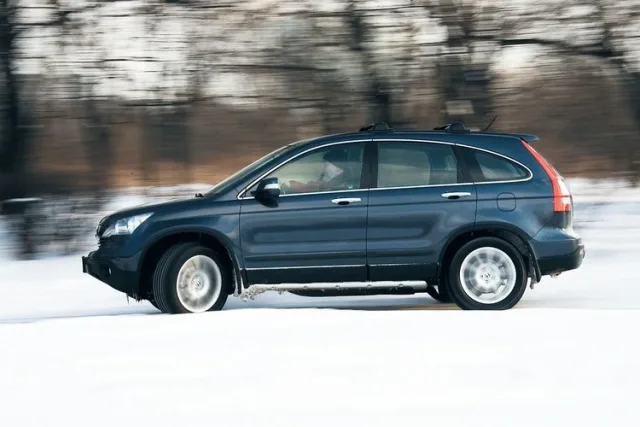
The Honda responds sluggishly to steering inputs, enters sharp turns reluctantly — with a clear understeer when exceeding speed at the entry
The rivals' power is almost equal: 150 hp for the Honda and 152 for the Toyota. But while the RAV4 is content with the old four-speed, the CR-V has a fresh five-speed gearbox.
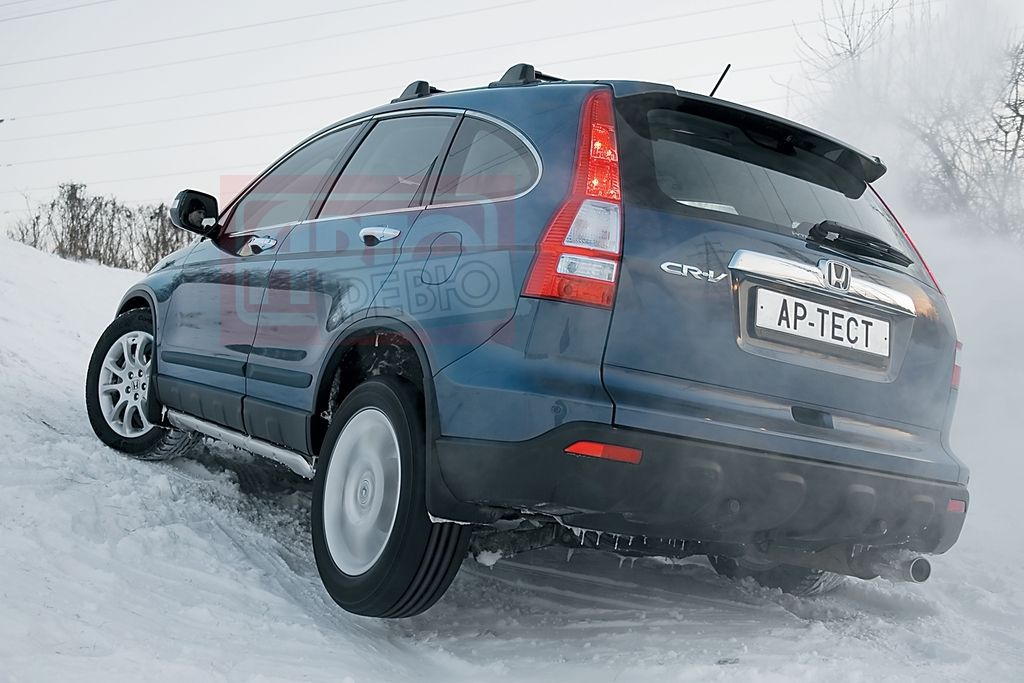 | 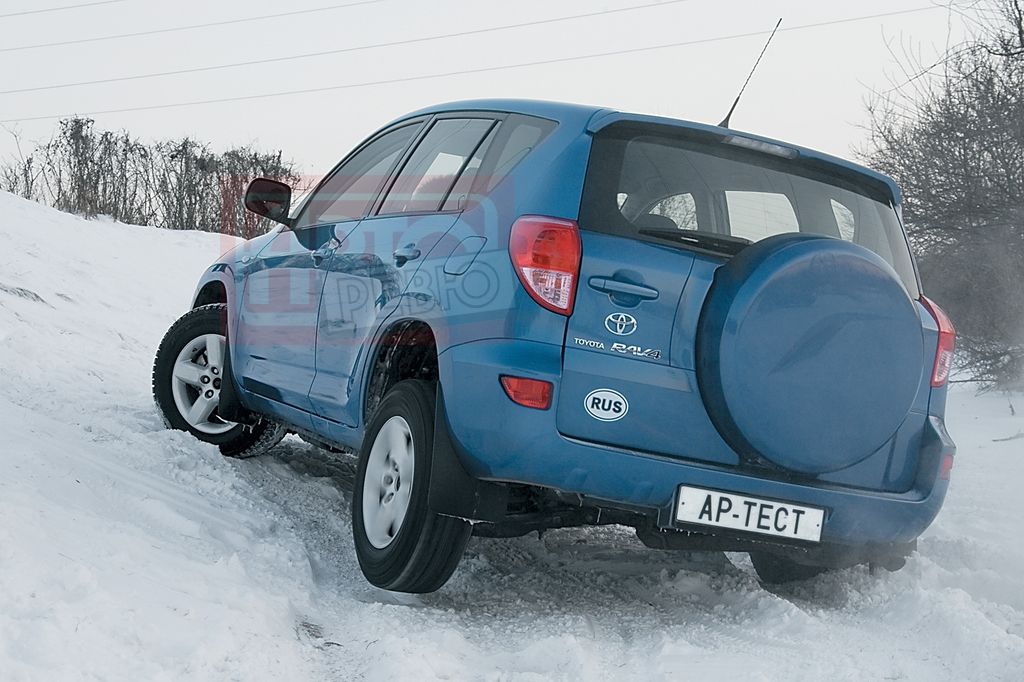 |
| In terms of geometric off-road capability, the cars are close, but the Honda's electronics are tuned cruder — you need to handle the gas more carefully | On light off-road, the Toyota's advantage is provided by the Integrated Active Drive system |
The Honda accelerates briskly: the i-VTEC engine rumbles quietly and revs up to 6500 rpm, and the gearbox shifts smoothly and quickly. But that's with "pedal to the floor." In city traffic, dosing the thrust is hindered by the automatic transmission's thoughtfulness and the overly damped gas pedal. The acceleration comes out "jerky." Shifting the gearbox into modes 1, 2, or Overdrive (the latter prevents shifting above third) can save the situation. But it doesn't cure the accelerator's sluggishness.
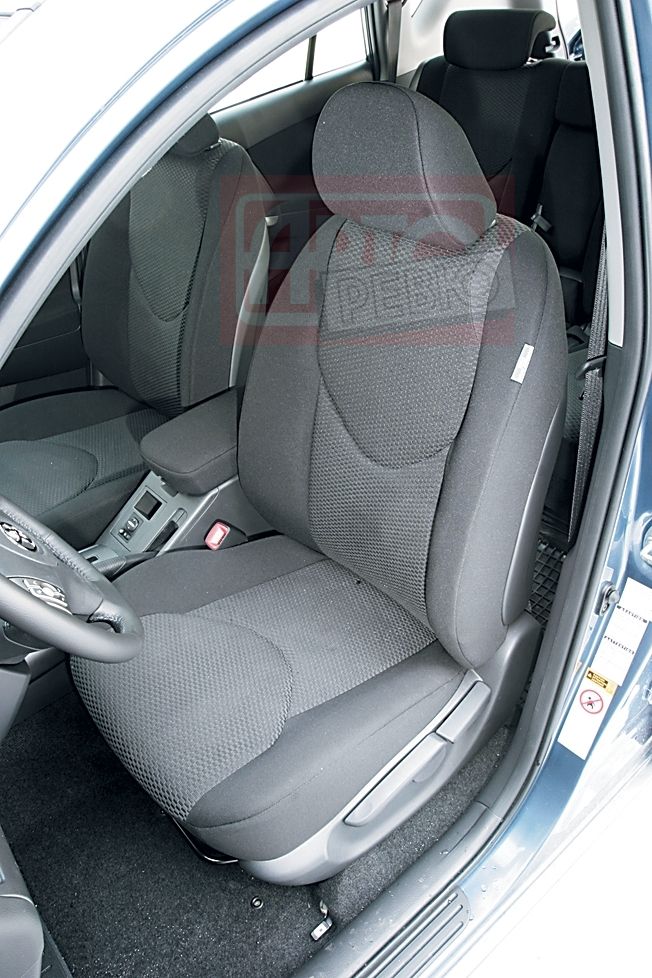 | 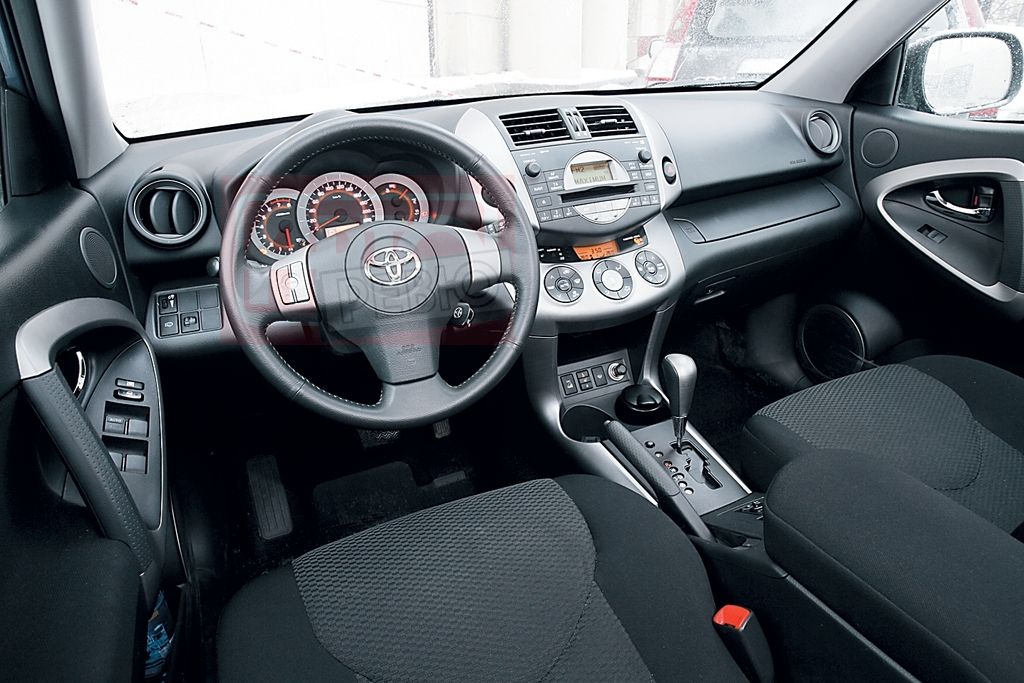 |
| The RAV4's seats are good, but the Honda's are still more comfortable | The RAV4's interior is no worse than the Honda's |
Against this background, the RAV4 is liveliness itself. The VVT-i engine willingly revs to 6300 rpm, and the old gearbox shifts faster and more predictably. Throttle responses are livelier. In short, controlling the "Rafik's" acceleration is simpler and more pleasant.
And the brakes? Here we side with the Toyota: the informative pedal allows precise dosing of deceleration. The Honda is also not bad, but in normal modes, deceleration builds up slower than the pedal effort increases, which goes deeper and deeper — this causes uncertainty. However, during emergency braking, there are no complaints: the ABS activates promptly and effectively.
The body of the new Honda CR-V has become noticeably stiffer — the manufacturer claims an 85 percent increase in this indicator. The suspension was tightened, the steering sharpened... Maybe now it's a driver's car?
Not so. The Honda's reactions to steering inputs are sluggish, and this is especially noticeable during sharp maneuvers at high speed. The body rolls seem small, but they build up illogically — faster than the lateral force grows, which amplifies the car's response to the steering wheel and threatens a slide into a skid. Add to this the artificial and uninformative feedback at the wheel — and you get the complete opposite of a "driver's" car. The Honda enters sharp turns reluctantly, and if you exceed the speed at the entry, the front wheels immediately slip into understeer. Little hope for the VSA stability system: it can only fight skids.
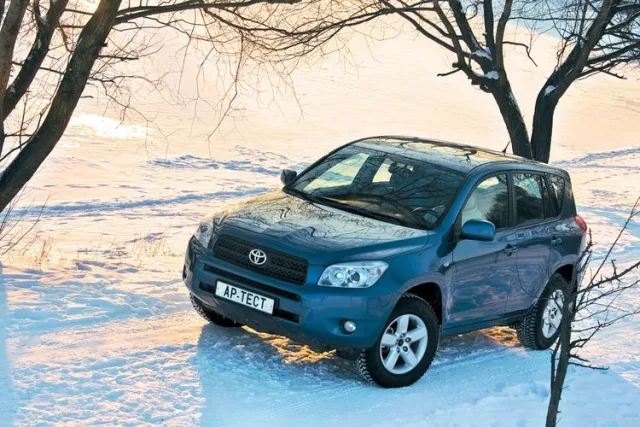
Some of this vagueness in reactions can be attributed to winter tires. But they didn't stop the Toyota! In that very corner where the CR-V helplessly slides its front end outward, the RAV4 only slightly increases its radius. The Toyota's chassis is excellently tuned: the car precisely follows the steering wheel, only slightly swaying on the waves. Steering sensitivity and feedback are all top-notch. And if the driver overdoes the gas in a sharp turn, the Integrated Active Drive system itself distributes torque to the wheels to ensure the car confidently follows the arc—without understeer or oversteer. The IAD system manages the non-switchable stability control, all-wheel drive—by varying the clutch engagement—and the electric power steering. Even on mixed surfaces where snow gives way to ice and asphalt, the Toyota doesn't dart sideways but follows the trajectory precisely. The pinnacle of reliability and convenience! And a well-deserved victory in the "Dynamics" category.
| Honda CR-V | Toyota RAV4 |
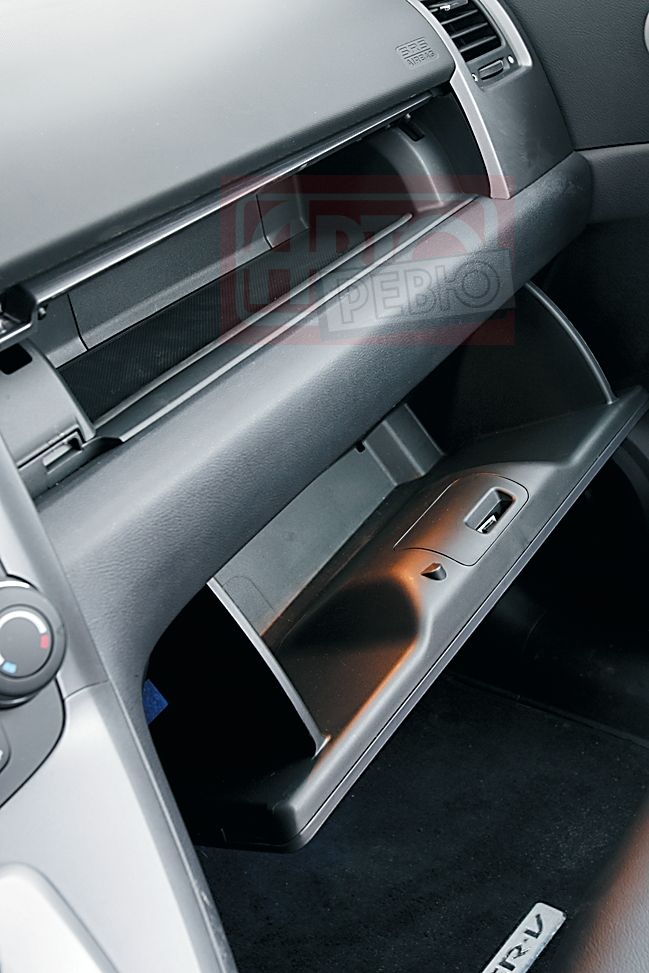 | 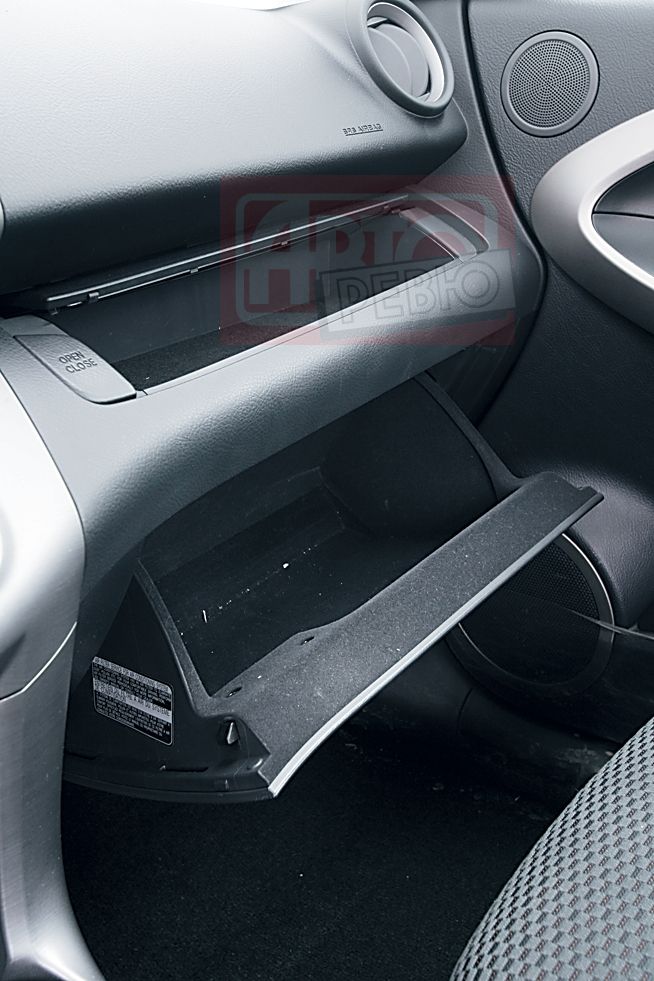 |
| The "glove compartments" of both cars are very similar | |
However, Honda wins on comfort. Its ride smoothness is excellent: the car confidently absorbs surface waves without excessive pitching, barely notices small cracks and potholes, and only on serious bumps does it noticeably jolt passengers. The RAV4's suspension also prevents pitching, but it tracks the road profile much more meticulously—causing the car to sway from side to side. Worse: in the Toyota's cabin, harsh irregularities are felt more strongly, and large potholes respond with resonant thuds, sometimes accompanied by vibrations from unsprung masses.
In terms of acoustic comfort, both cars raise no complaints, but here too Honda is ahead—its engine is quieter.
| Honda CR-V | Toyota RAV4 |
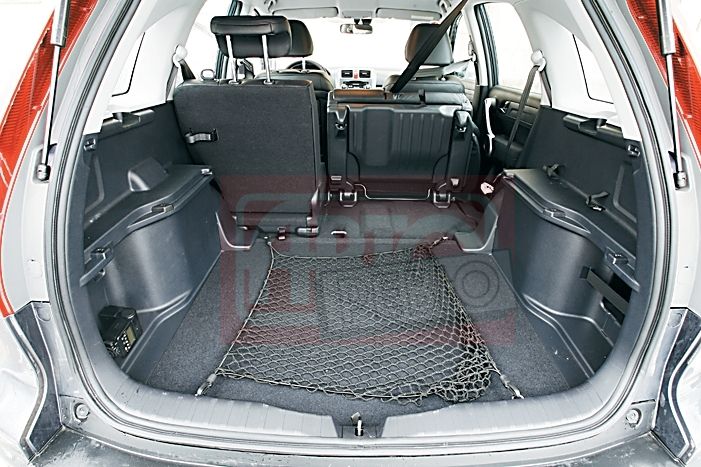 | |
| The best "transformer" is the Toyota RAV4: the rear seats fold flat even from the trunk. In the Honda, you have to pull inconvenient straps, and the folded rear seats "steal" space behind the front seatbacks | |
Now for the most interesting part—a quick off-road competition. We drove out into an open field and started plowing through virgin snow. The RAV4 is unrivaled! The electromagnetic clutch engages the rear axle almost instantly, not allowing the front wheels to spin more than half a turn. And the clutch can also be locked manually. Several times, when the all-wheel drive was in automatic mode, we deliberately buried the Toyota: well, it wouldn't go further... But just press the 4WD Lock button—and the car would get out of the snow trap as if nothing had happened.
| Honda CR-V | Toyota RAV4 |
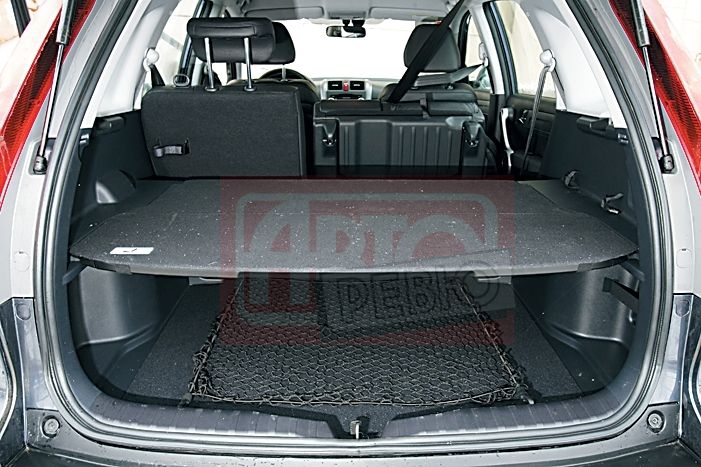 | |
| The Honda's trunk feature is a rigid shelf that helps pack items more neatly. Meanwhile, the Toyota's cargo area has an "underfloor" for small items | |
Such tricks won't work with the Honda: the multi-plate clutch, although equipped with a ball "section" to speed up torque transfer to the rear wheels, still locks too slowly. The rear wheels only start working after a second of front-wheel spin and often simply don't have time to help—the front end has already managed to dig in.
In a parallel start up a snowy hill, the Honda with stability control on hopelessly lags behind the RAV4. The Toyota goes strictly along the set course, while the CR-V desperately grinds its brakes and constantly tries to slip out of the ruts—either with the rear axle or the front. With the stability system off, the Honda becomes more agile, but the off-road flair is already lost.
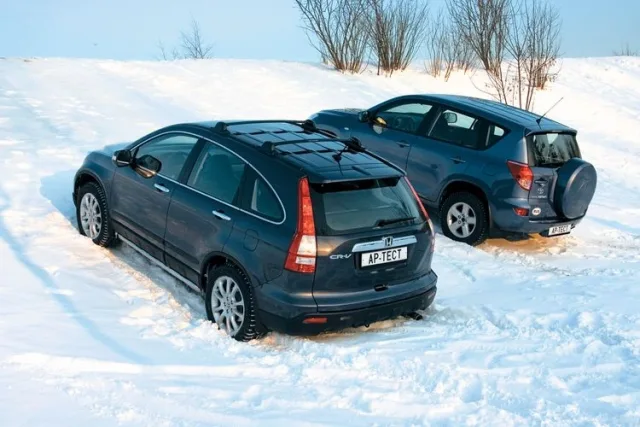
On virgin snow, the Toyota RAV4 with its non-switchable but very "smart" stability control system feels much more confident—the "Rafik" confidently plows through ruts, and in difficult situations you can use the forced locking of the electromagnetic clutch. The Honda CR-V's hydraulically controlled center clutch lacks a manual lock function, and in automatic mode it engages too late—the front end manages to "dig in"
Let's sum up the expert assessments... A rare case for our tests: a draw! The Honda CR-V surpassed the RAV4 in driver's seat ergonomics, comfort, and rear passenger convenience. But it lost in all driving disciplines. And what matters more to you? We'll only note that if you take a car with a manual transmission, the Honda will be slightly cheaper—we're talking about base trims. And with an automatic, the Toyota is more affordable: $35,700 versus $36,800.
| Specifications | ||
| Parameters | Vehicles | |
| Honda CR-V | Toyota RAV4 | |
| Body type | 5-door wagon | 5-door wagon |
| Number of seats | 5 | 5 |
| Trunk volume, L | 556—955* | 586—1469* |
| Curb weight, kg | 1533 | 1505 |
| Gross weight, kg | 2080 | 2110 |
| Engine | gasoline, with distributed injection | |
| Location | front, transverse | front, transverse |
| Number and arrangement of cylinders | 4, in-line | 4, in-line |
| Displacement, cm³ | 1997 | 1998 |
| Cylinder bore/piston stroke, mm | 81.0/96.9 | 86.0/86.0 |
| Compression ratio | 10.5:1 | 9.8:1 |
| Number of valves | 16 | 16 |
| Max power, hp/kW/rpm | 150/110/6200 | 152/112/6000 |
| Max torque, Nm/rpm | 192/4200 | 194/4000 |
| Transmission | automatic, 5-speed | automatic, 4-speed |
| Gear ratios | ||
| I | 2.79 | 3.94 |
| II | 1.68 | 2.19 |
| III | 1.13 | 1.41 |
| IV | 0.77 | 1.02 |
| V | 0.59 | — |
| Reverse | 2.00 | 3.14 |
| Final drive | 4.50 | 3.29 |
| Drive | all-wheel, with multi-plate clutch in rear wheel drive | |
| Front suspension | independent, spring, McPherson | |
| Rear suspension | independent, spring, multi-link | independent, spring, double wishbone |
| Front brakes | disc, ventilated | disc, ventilated |
| Rear brakes | disc | disc |
| Tires | 225/65 R17 | 225/65 R17 |
| Maximum speed, km/h | 177 | 175 |
| Acceleration 0—100 km/h, s | 12.2 | 12.0 |
| Fuel consumption, L/100 km | ||
| Urban cycle | 10.9 | 11.6 |
| Extra-urban cycle | 6.7 | 7.4 |
| Combined cycle | 8.2 | 9.0 |
| Fuel tank capacity, L | 58 | 60 |
| Fuel | gasoline AI-95 | gasoline AI-95 |
| * With rear seats folded (in the Honda—up to window level, in the Toyota—up to the roof) | ||
Both crossovers at their time passed European EuroNCAP crash tests with a "four-star" result. For the Toyota, technical difficulties arose on the path to five stars: during the first frontal impact, the airbags deployed with a delay due to a sensor circuit failure, forcing them to crash another car. After the modifications, the main airbags worked properly, but the driver still broke through the knee airbag and touched the panel.
The Honda CR-V missed the maximum rating by just one point for the frontal impact (12 out of 16)—experts considered the front panel dangerous for the knees and thighs of front occupants. Both cars withstood side impacts flawlessly. Child protection is also in perfect order, and the RAV4 additionally received three out of four stars for pedestrian safety.
The American NHTSA methodology involves a crash into a concrete wall at 56 km/h with 100% overlap—unlike the European 64 km/h into a deformable barrier with 40% overlap. The side impact overseas is simulated by a trolley hitting at 62 km/h at an oblique angle, whereas in Europe it's a direct impact at 52 km/h. Under both programs, the CR-V showed excellent results, but the RAV4 in the frontal test protected the front passenger only with a "four," although it still received the final five stars. The rollover probability in both cases is rated at four stars out of five.
What's the price?
Honda CR-V is available on the Russian market exclusively with a two-liter gasoline engine producing 150 horsepower. The base Comfort trim, which includes six airbags, air conditioning, full power accessories, stability control, heated front seats and mirrors, as well as a CD stereo, with a six-speed manual transmission is priced at $33,800. The Elegance version at $35,800 adds dual-zone climate control, cruise control, light and rain sensors, leather-wrapped steering wheel, alloy wheels, and fog lights. For the five-speed automatic, you will have to pay an additional thousand dollars. The flagship Executive trim boasts a leather interior, power-adjustable front seats, parking sensors, xenon headlights, and a CD changer at a price of $39,500. Most dealerships accept rubles at the Central Bank exchange rate on the day of payment, and only some sellers add one percent to it. A ordered car will have to wait from four to five months.
Warranty obligations are three years or one hundred thousand kilometers. Honda is sold by 26 dealers operating in fourteen Russian cities.
Toyota RAV4 is also offered only with a two-liter engine producing 152 horsepower. The starting point is $34,250 for the Luna version with a five-speed manual. Standard equipment includes seven airbags, dual-zone climate control, power accessories, heated mirrors, leather steering wheel, stability control, and a stereo with CD changer. The four-speed automatic in the Sol Plus trim will require an additional payment of $1,450. The top modification Sol for $39,250 differs in leather upholstery and also includes cruise control and light and rain sensors. Dealers work at the Central Bank rate, although some add one percent — then the maximum RAV4 version will cost $39,640. Waiting for an ordered car will stretch for at least six months.
Warranty is three years or 100,000 kilometers. Toyota's sales network covers 32 dealers in eighteen Russian cities.
What else?
The most affordable compact crossover on our market remains the Kia Sportage: the front-wheel-drive version with a two-liter engine (142 hp) costs $27,470. The all-wheel-drive modification is at least $1,200 more expensive, but an automatic is not available for it — it is combined only with a 2.7-liter gasoline engine producing 175 hp (from $34,390) or with a 140-horsepower two-liter turbodiesel (from $31,670). Under normal conditions, the car remains front-wheel-drive, and the rear wheels are connected by a clutch automatically when the front wheels slip. The clutch can also be locked manually. In our tests, the Sportage proved to be a balanced car: without a spark in character, but obedient and with excellent ride smoothness. Details are in AR No. 22, 2005.
Hyundai Tucson is a sibling of the Kia Sportage, but exclusively in all-wheel-drive form. Prices start from $28,770 for the Tucson 2.0 with a manual and from $30,210 for the two-liter version with an automatic. The Tucson with a 2.7 engine (173 hp) and automatic transmission costs $33,600, but turbodiesel modifications are not supplied to us. Details are in AR No. 21, 2004.
The first-generation Mitsubishi Outlander with a two-liter engine (136 hp) is available for $28,570. The version with a 2.4 engine (160 hp) and a manual will cost $32,320, and for an automatic you will have to pay an additional $1,300. The drive is permanent all-wheel drive with a symmetrical center differential locked by a viscous coupling. The Outlander has proven itself a worthy "driver's car," and the main driving drawback is an increased tendency to skid due to the lack of stability control. Details are in AR No. 23, 2006, AR No. 7, 2006, and AR No. 22, 2005.
The five-door Suzuki Grand Vitara (2.0 L, 141 hp) with a manual costs $29,900, and already in the base it has climate control. The version with an automatic will cost $32,200. Despite its "crossover" appearance, the car is equipped with a permanent all-wheel-drive transmission with a lockable center and low range, so it feels great off-road. However, the Suzuki's suspension lacks energy intensity — on serious bumps, the body starts to bounce. Details are in AR No. 7, 2006 and AR No. 22, 2005.
The Nissan X-Trail is slightly more expensive than the Suzuki — from $29,990 for the base version with a two-liter engine (140 hp). The modification with an automatic costs $34,050, and prices for the X-Trail 2.5 (165 hp) start from $37,170. Drive to the rear wheels is via an electromagnetic clutch. The strong point of the X-Trail is ride smoothness, and the weak point is large body rolls and low steering precision. Details are in AR No. 7, 2006.
For the Jeep Compass (2.4 L, 172 hp) with a manual, they ask from $32,290. For a belt-driven CVT, you need to pay an additional $1,450–$1,710 (depending on the trim). The principle of operation of the all-wheel-drive transmission is like that of the Nissan X-Trail crossover. The Compass's assets include a soft and energy-intensive suspension. Its liabilities include dull handling. Details are in AR No. 23, 2006.
We started the test drive of the Ford Maverick by studying the price list. The base version with a two-liter engine producing 150 horsepower and a manual transmission is priced at $29,900. If you choose the modification with a 3.0-liter V6 producing 203 horsepower and an automatic transmission, the price rises to $35,900.
The rear axle here is connected via a multi-disc clutch that can be forcibly locked. On the move, the car pleases with a soft suspension, although noticeable body rolls appear in corners. At the same time, at high speed in a straight line, the car stands confidently, and in bends it demonstrates quite predictable behavior.
All details about the behavior of this SUV and its equipment can be found in the material of "Autoreview" No. 20 for 2001.