
Just a few years ago, the Honda Civic Type R was considered a true legend for a whole generation of motorsport fans. Honda's naturally aspirated engines, delivering almost one hundred horsepower per liter of displacement, stirred minds. The insane engine revs not only impressed with their sound but also often led the Civic to victories. In Russia, there was even a Civic Type R monocup where nearly production cars participated, and in the racing version, all 240 horsepower were easily extracted from the two-liter engine.
But in the budget hot hatch segment, the era of turbocharging has arrived, and the 200-horsepower mark is far behind. It seems that power is now only limited by the front wheels' ability to put it down. Against the Type R now play such monsters as the 225-horsepower Ford Focus ST and the Opel Astra OPC, which hides 240 hp under the hood. At the same time, Europeans are also cheaper than the Japanese. The base Ford costs 787,000 rubles, though you'll have to pay extra for the bright orange color and other options. The base Astra OPC will cost at least $31,490, while Honda dealers ask for the less powerful Type R a whole $37,700. Who will emerge victorious?
Realizing the seriousness of such cars, we decided not to limit ourselves to ordinary road tests but arranged a full-fledged track day at the Tushino airfield. Our test pilot was one of the most successful illegal racers, Vasily Saburov. He shared his personal impressions of the cars, which can be seen in motion on video, and also conducted a series of measurements.
Preparing for the test, we tried to select cars with as similar characteristics as possible, but perfect parity was not achieved. The Ford arrived for the test only after getting license plates and had not been broken in, which most affected the brakes. The Opel was shod with almost racing Pirelli PZero tires, which gave a noticeable advantage on the track.
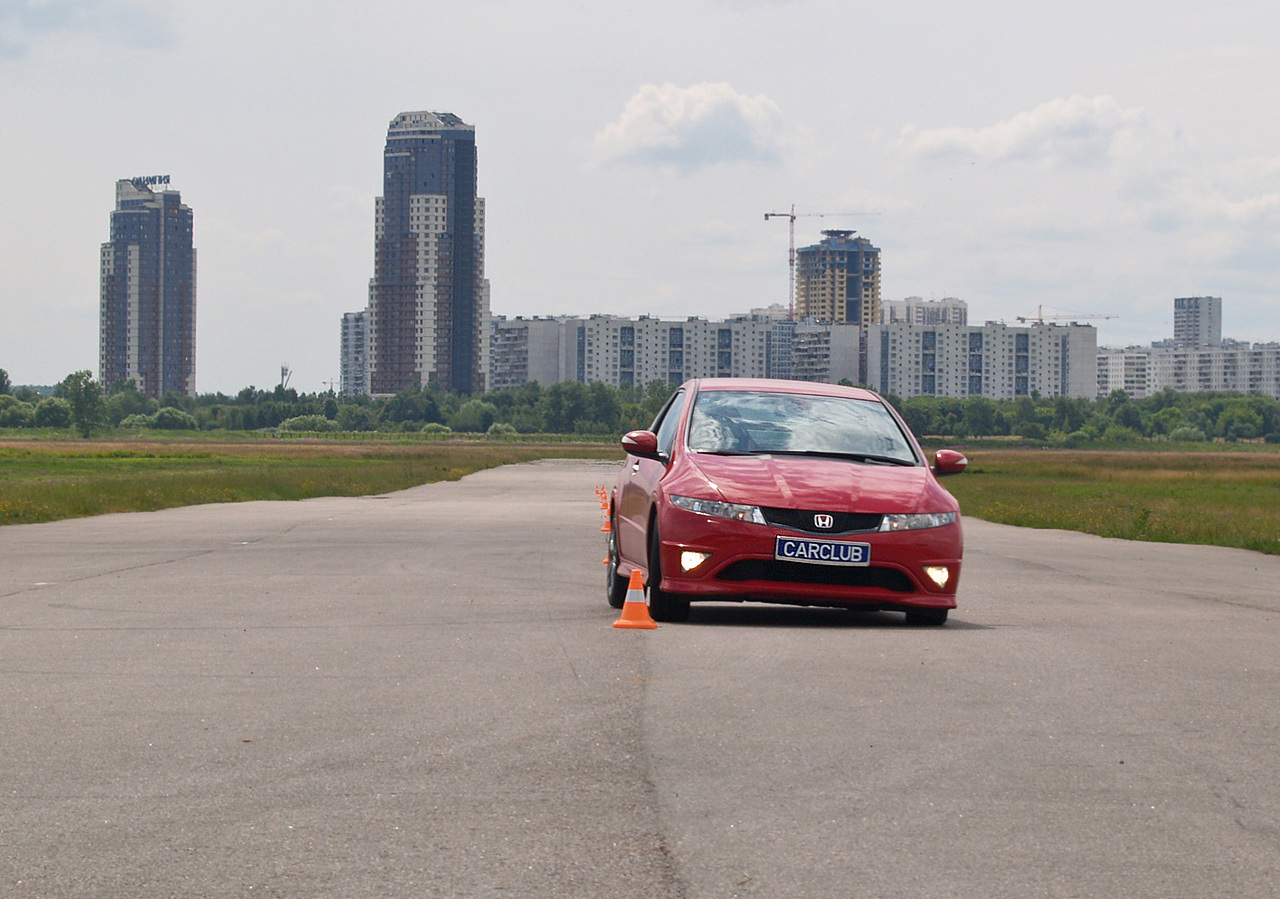
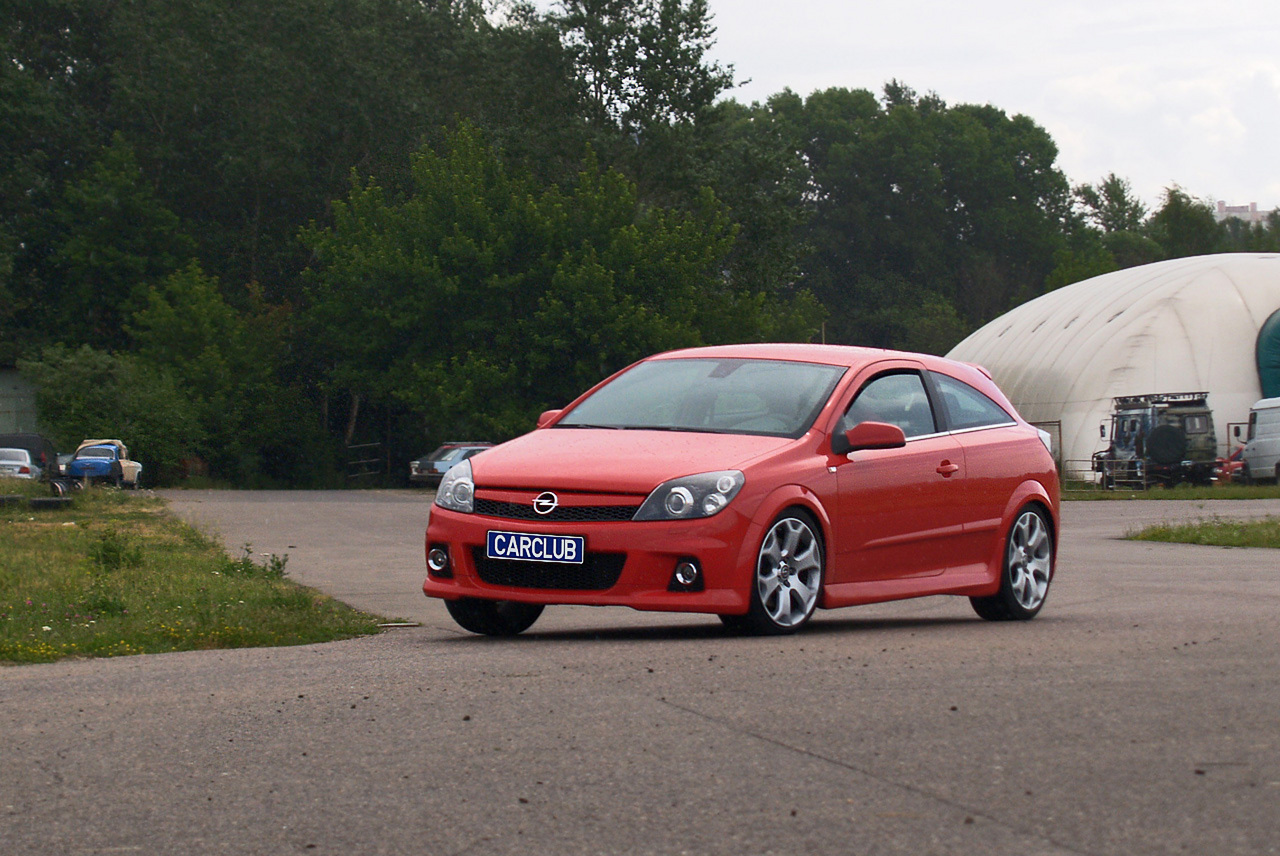
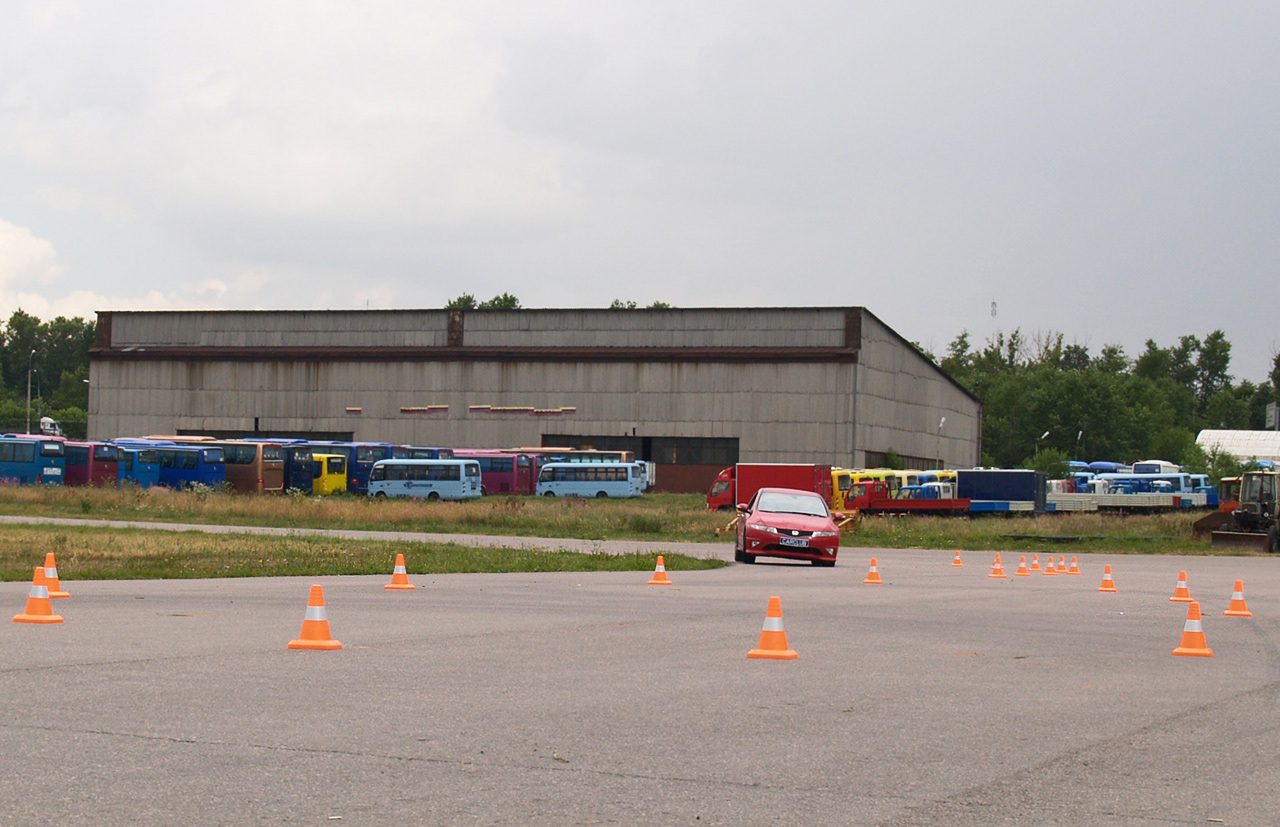
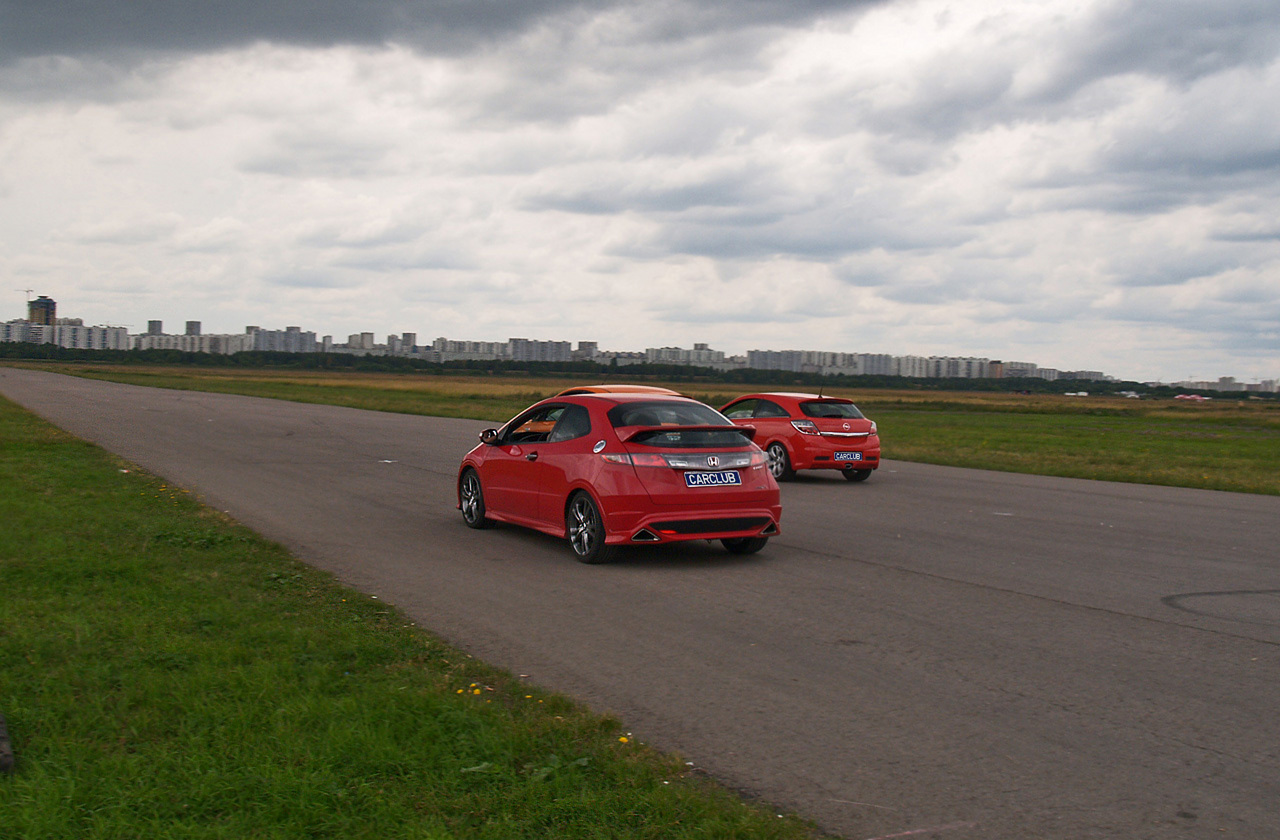
Already in the first corners, the Astra breaks into the lead – the powerful engine and excellent tires do their job. You can brake noticeably later before turns, the main thing is not to overdo the gas on acceleration: a little too much, and the wheels immediately break into wheelspin. In terms of traction, the Honda clearly loses to the turbo rivals. You constantly have to keep the tachometer needle near the red zone, but in corners, the lower weight and sporty chassis allow you to catch up a bit with the competitors. For the Focus, the track turned out to be too difficult a test. Its suspension is the softest among the participants, and the Continental SportContact 2 tires are not too suitable for racing. As a result, you have to brake earlier, and you can't really accelerate in corners.
The classic slalom runs show the cars' capabilities even more clearly. Despite the modest engine, the Honda manages to get around all 10 cones while the rivals only reach the ninth. At the same time, piloting the Type R is much more pleasant – you just have to keep up with turning the steering wheel, and the Honda dives into the corners by itself. The OPC drives much more spectacularly, the car constantly tries to go into a slide, which clearly affects the result – neither the tires nor the powerful engine help. But the ESP system pleased – it doesn't choke the engine as much as others, allowing you to navigate the slalom with a carefully laid cushion. The rivals' electronics are stricter and at any slide or sharp acceleration immediately intervene in the engine's operation, forcing you to turn it off completely. On the soft suspension, the Ford leans out of every corner, and its small lag behind the Astra is explained only by the excellent responsive engine with a large torque reserve. However, the steeper the corner, the more the ST falls behind.
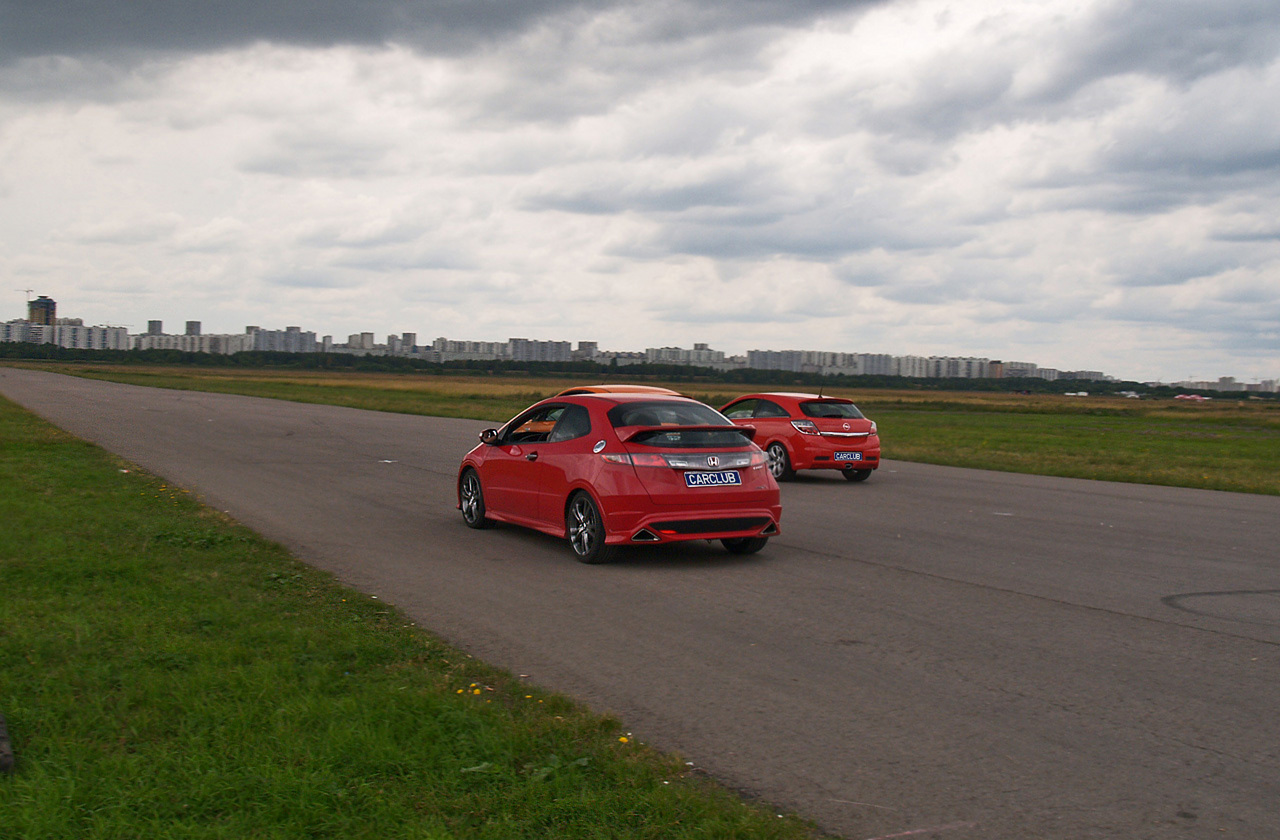
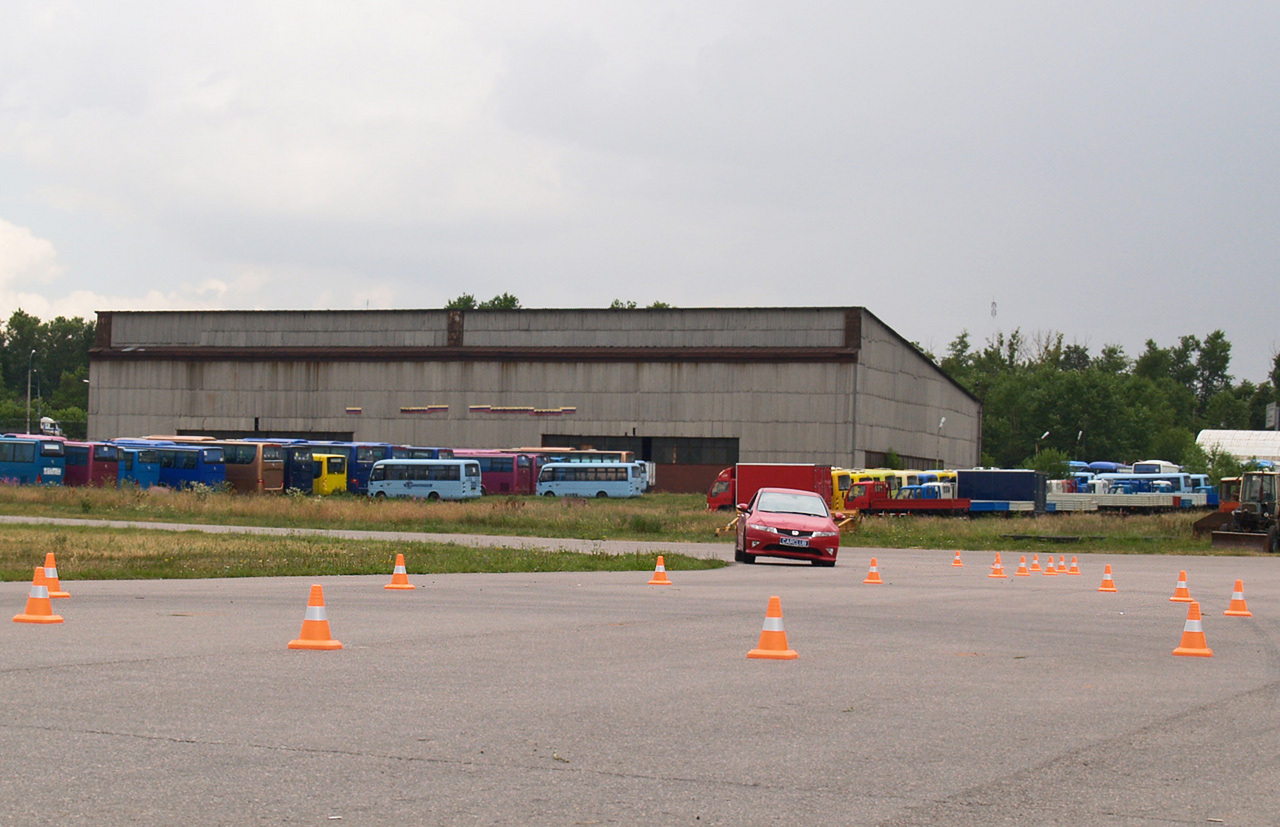
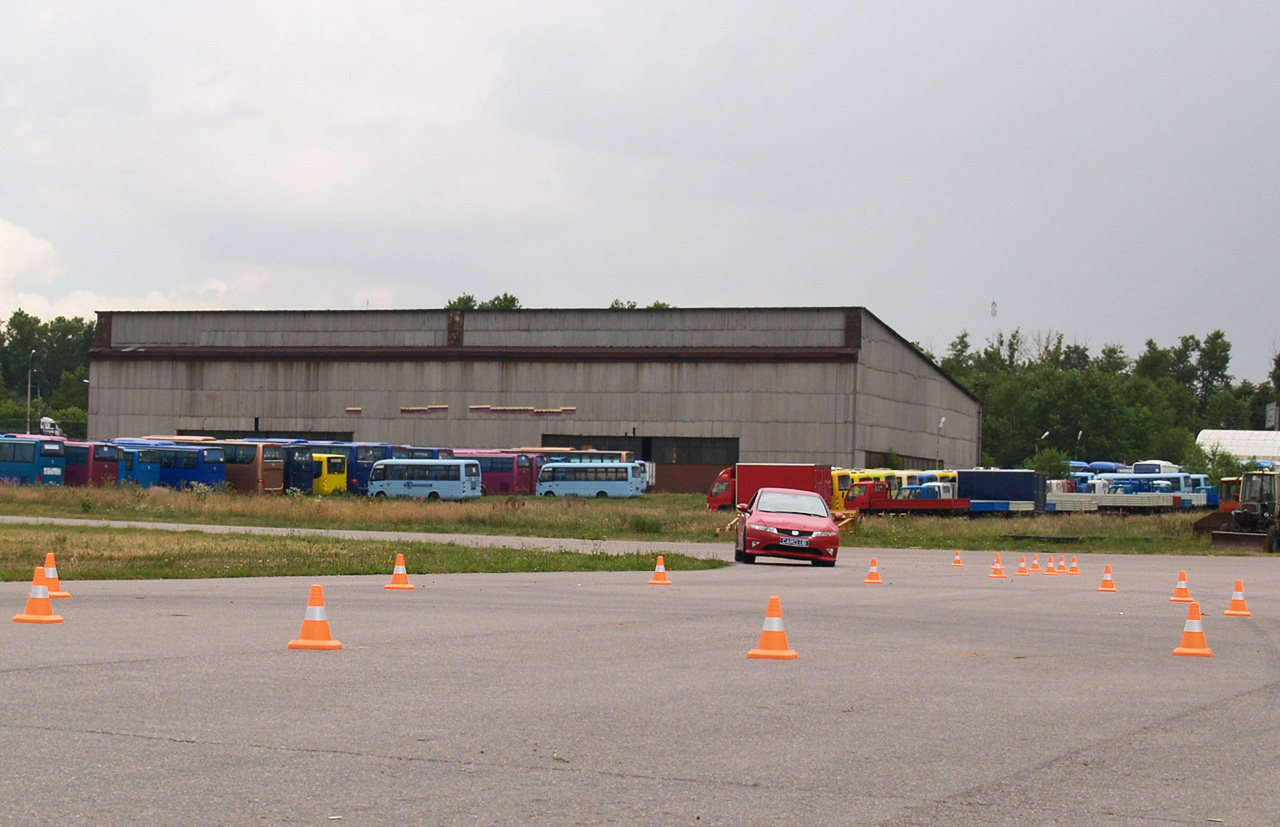
In between tests, jumping from one car to another, you involuntarily think about design. You get out of the classic Focus and choose: get behind the wheel of the arrow-like Type R or the faceted Astra. Our test once again proved that there's no accounting for taste. The Focus ST will appeal to fans of classic style, and if you choose a car not in orange, the hot hatch becomes almost indistinguishable from its more peaceful siblings. The OPC seems to have been hewn with an axe, and it turned out quite successfully – the swift lines add even more dynamics to the fastest car of the test. The Honda is a completely special car: the unusual body proportions resemble a minivan from the front, and a spaceship from the rear.
Leaving the track, we plunged into the usual atmosphere – 5 minutes driving, 10 minutes standing. It's time to look around. The Civic's interior resembles a spaceship. The two-tier instrument panel is complemented by a two-tier rear window, completely devoid of a wiper. Such an original solution is captivating, but from an ergonomics standpoint, the Honda's interior is far from ideal. The engine is started with a button under your left hand – hello, classic Zhiguli! – and the climate control unit and auxiliary keys are scattered absolutely chaotically.
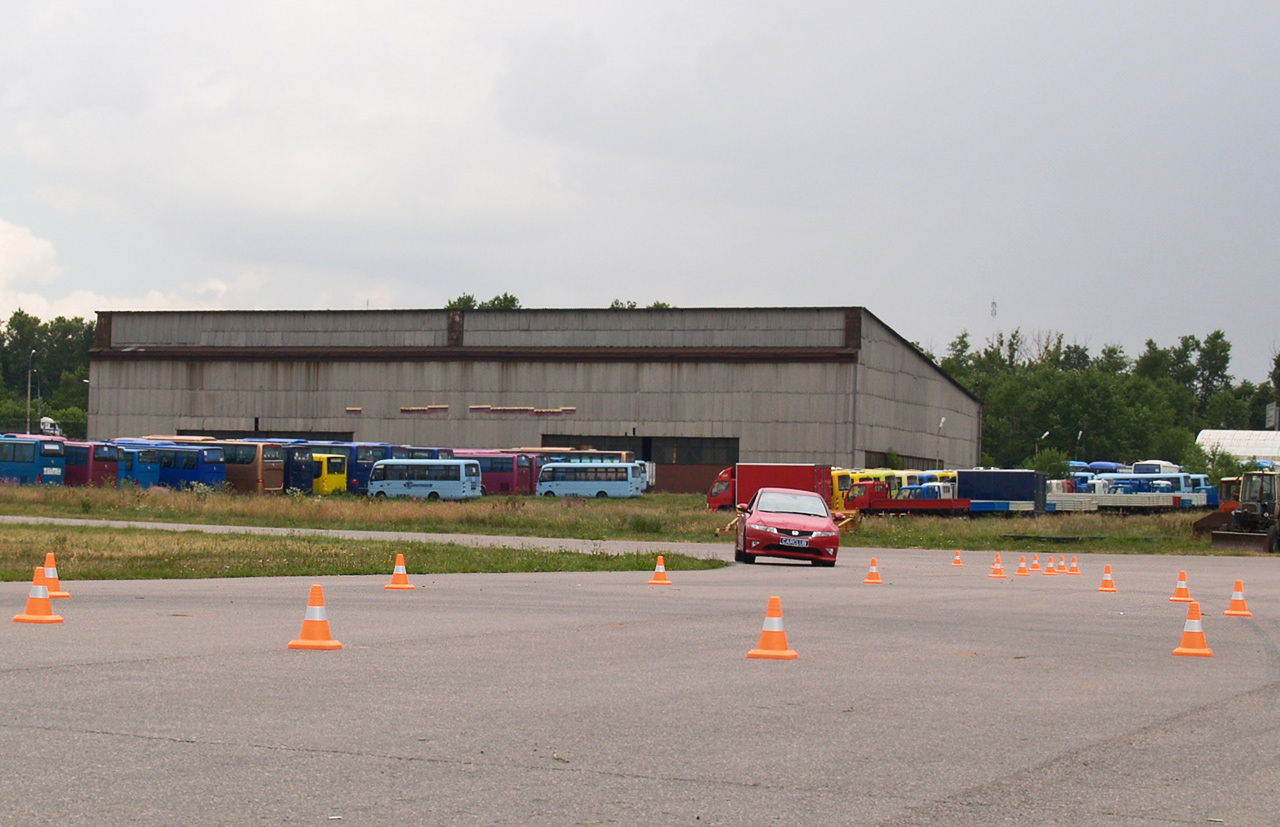
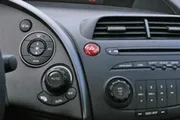

It's good that the steering wheel and gearshift lever in the Civic are in traditional places – they are the best in our trio. Of course, the steering wheels of all three cars have solid feedback and allow precise control. But the Honda is still better. And the stylish aluminum knob deserves to be replicated in all cars on the planet. Special attention deserves the seats – they are almost racing buckets, with a fixed headrest and places for five-point harnesses – it's not entirely clear how they ended up on a production car, but riding in them is incredibly comfortable.
The Focus's interior seems familiar to half the population of our vast country: no joke – it's the best-selling foreign car, with queues not dropping below 6 months. Such kinship both brings together and repels. But even those who have never dealt with Ford products will have no difficulties with the ST. Everything is at hand, but the high seating position, uncharacteristic for sports cars, is slightly annoying – you feel almost like in a minivan. And again, thanks to the Recaro buckets, which firmly hold your body in corners, and their color-matched inserts liven up the gray interior nicely. By the way, the Focus's onboard computer interface is fully Russified, although the ST is assembled in Spain. Before the test, we expected more from the gearshift mechanism. On the previous ST, the Gertrad gearbox's selectivity was exemplary, but now the mechanism is the same as on regular Focuses.
The OPC also hasn't strayed far from the regular Astra – the same visor of central air vents and the excellent Recaro seats already familiar from the Focus. Only the non-latching paddle shifters and the narrow rear window, which is partially compensated by parking sensors, cause complaints.
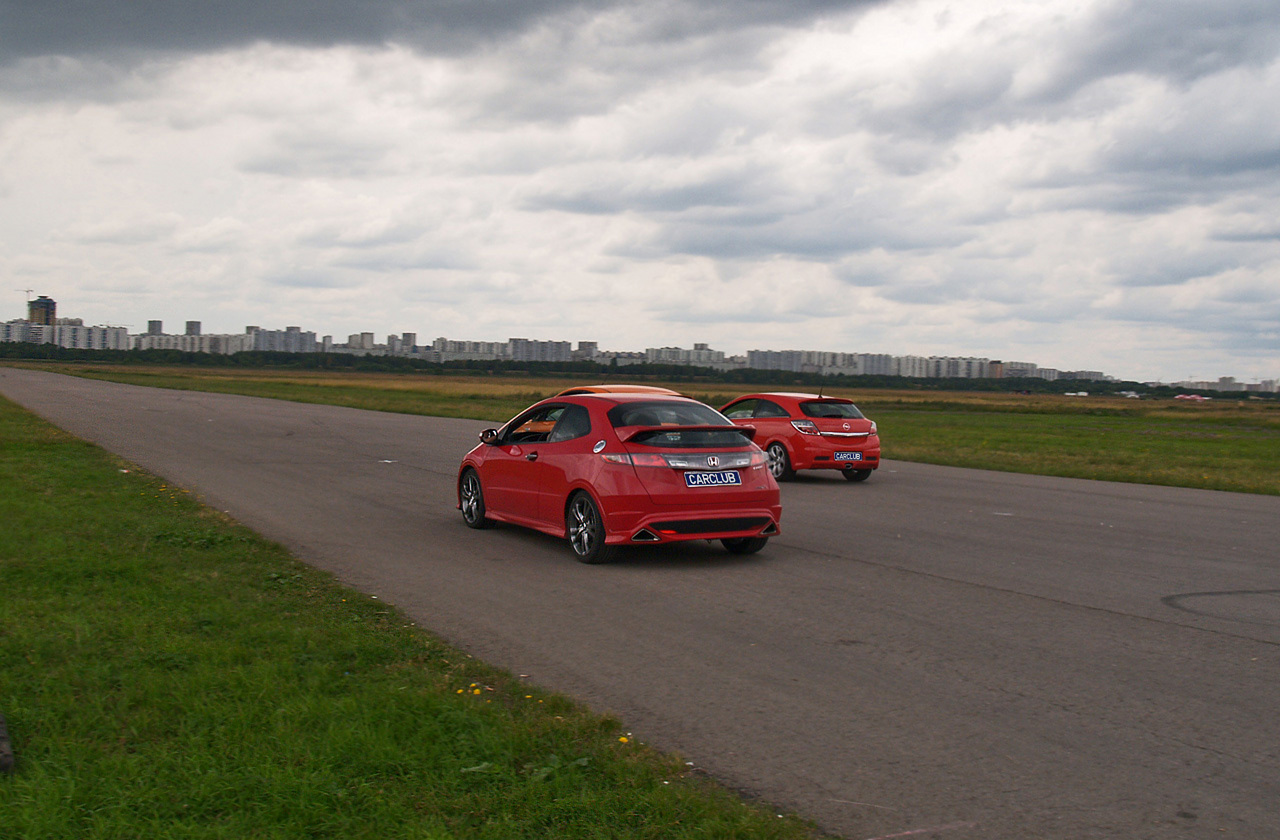
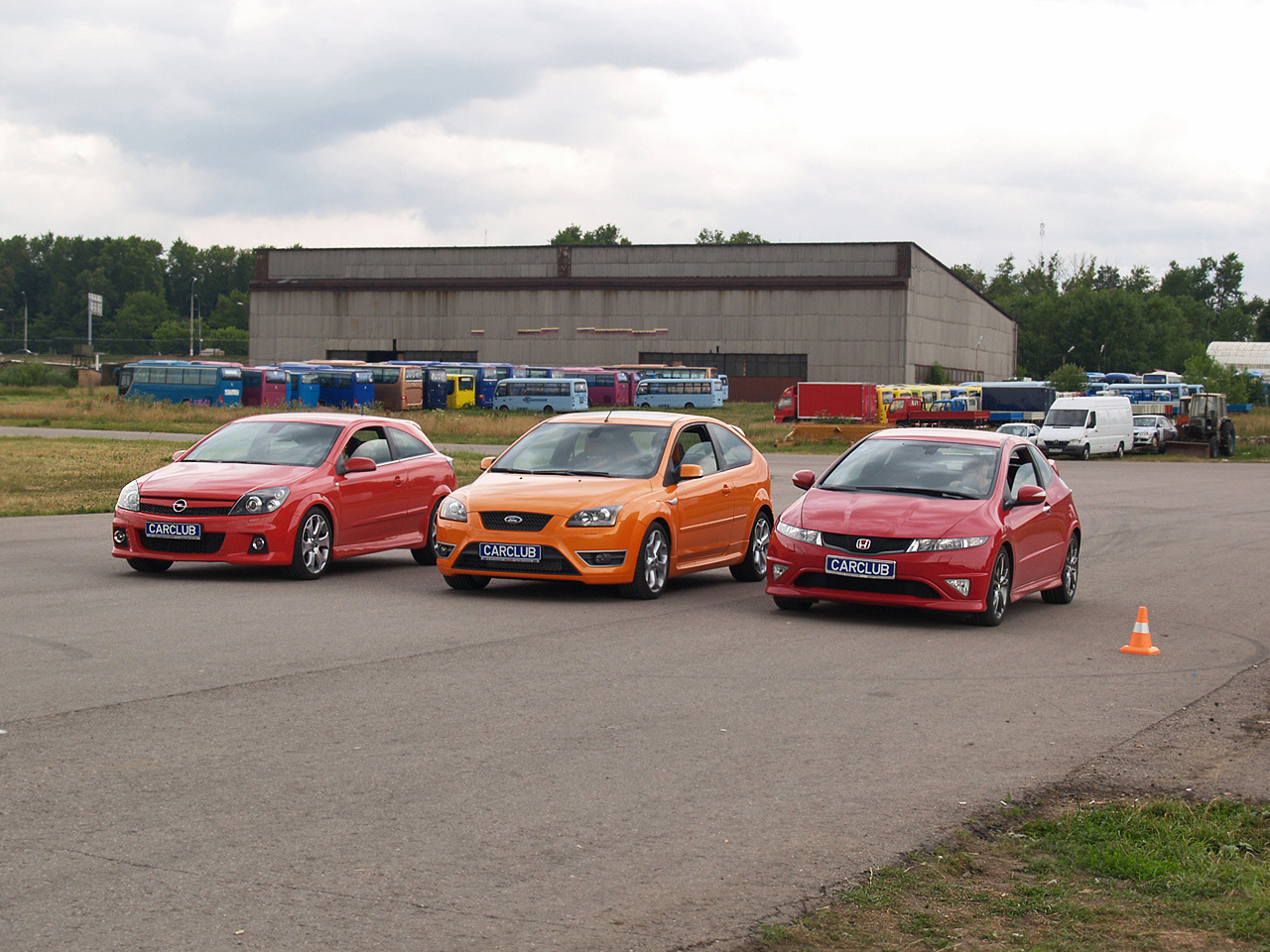
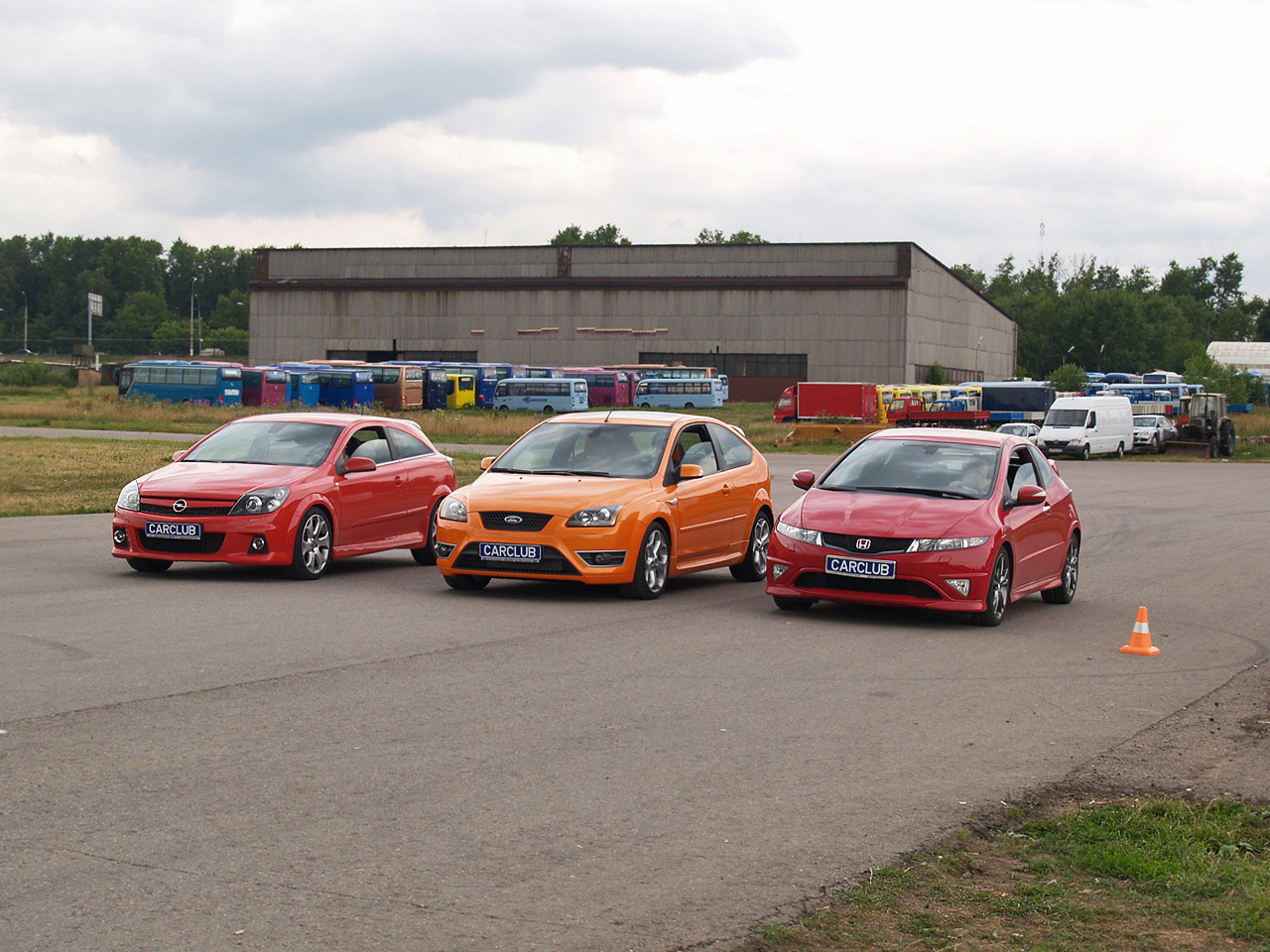
In the world of street racers, for which such hot hatches are actually tailored, the advantage at traffic lights now belongs to turbocharged units. While the Honda owner has to squeeze everything out of the naturally aspirated engine up to the rev limiter to keep up, Opel and Ford drivers enjoy life: their engines deliver 320 Nm already at mid-range revs. Moreover, the wide torque plateau allows skipping gears, adding comfort and reducing acoustic fatigue.
As for sound, it's hard to call it noise, but in terms of acoustic comfort, the Focus leads. Its engine only speaks up during sharp acceleration, and the suspension works almost silently. The Opel with its central exhaust mesmerizes with a muffled hiss. The Type R, like a proper racing projectile, conveys to the driver both the sound of the engine and information about every asphalt joint. Driving over tram tracks echoes throughout the body – pure sportiness.
In terms of practicality, Ford is unrivaled. Its cabin is the most spacious, with plenty of headroom for rear passengers, and the trunk is capacious. The Civic and Astra have similar figures: sitting in the back is uncomfortable, space is limited, and passengers feel squeezed between the cushion and the roof.
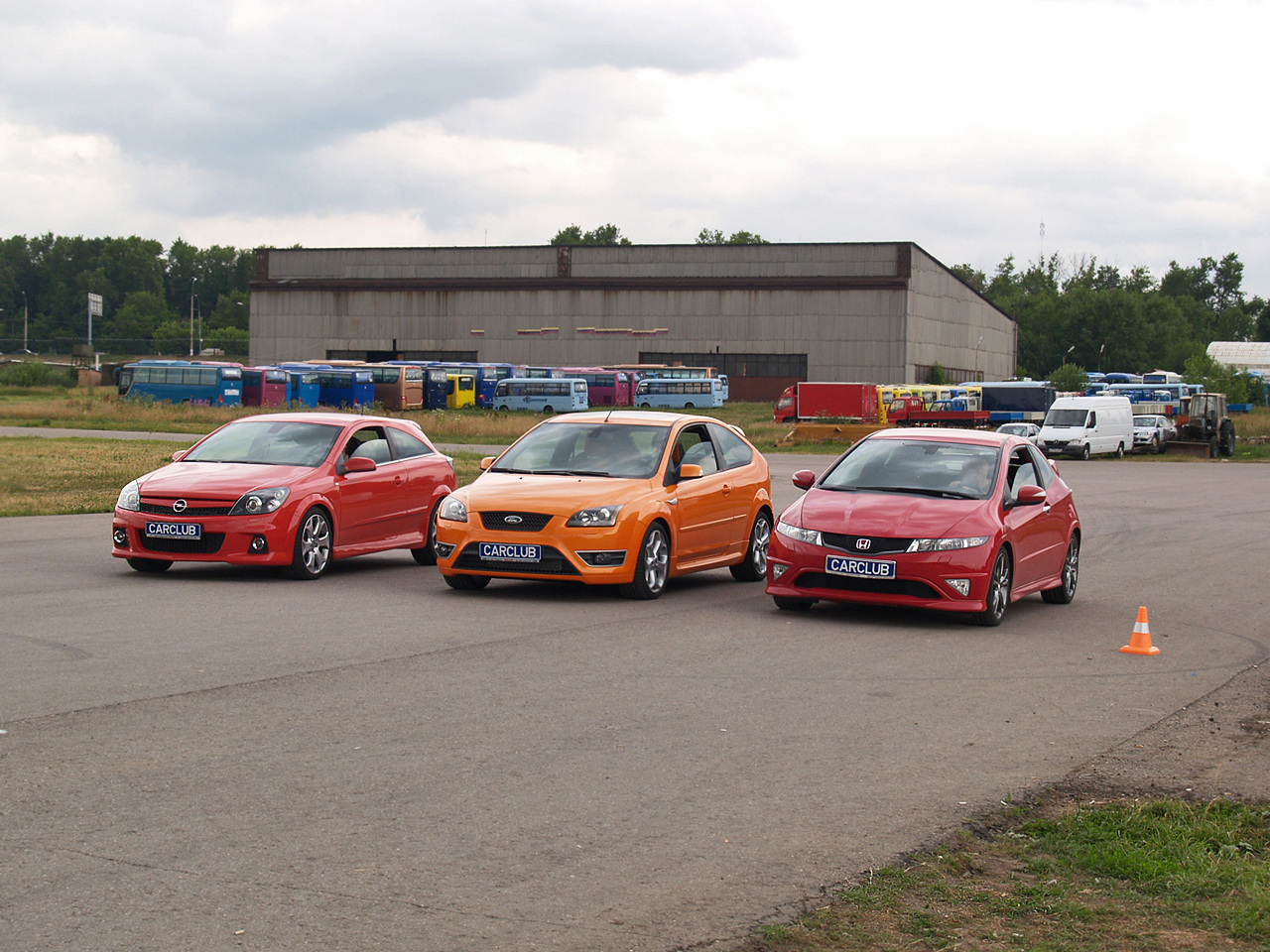
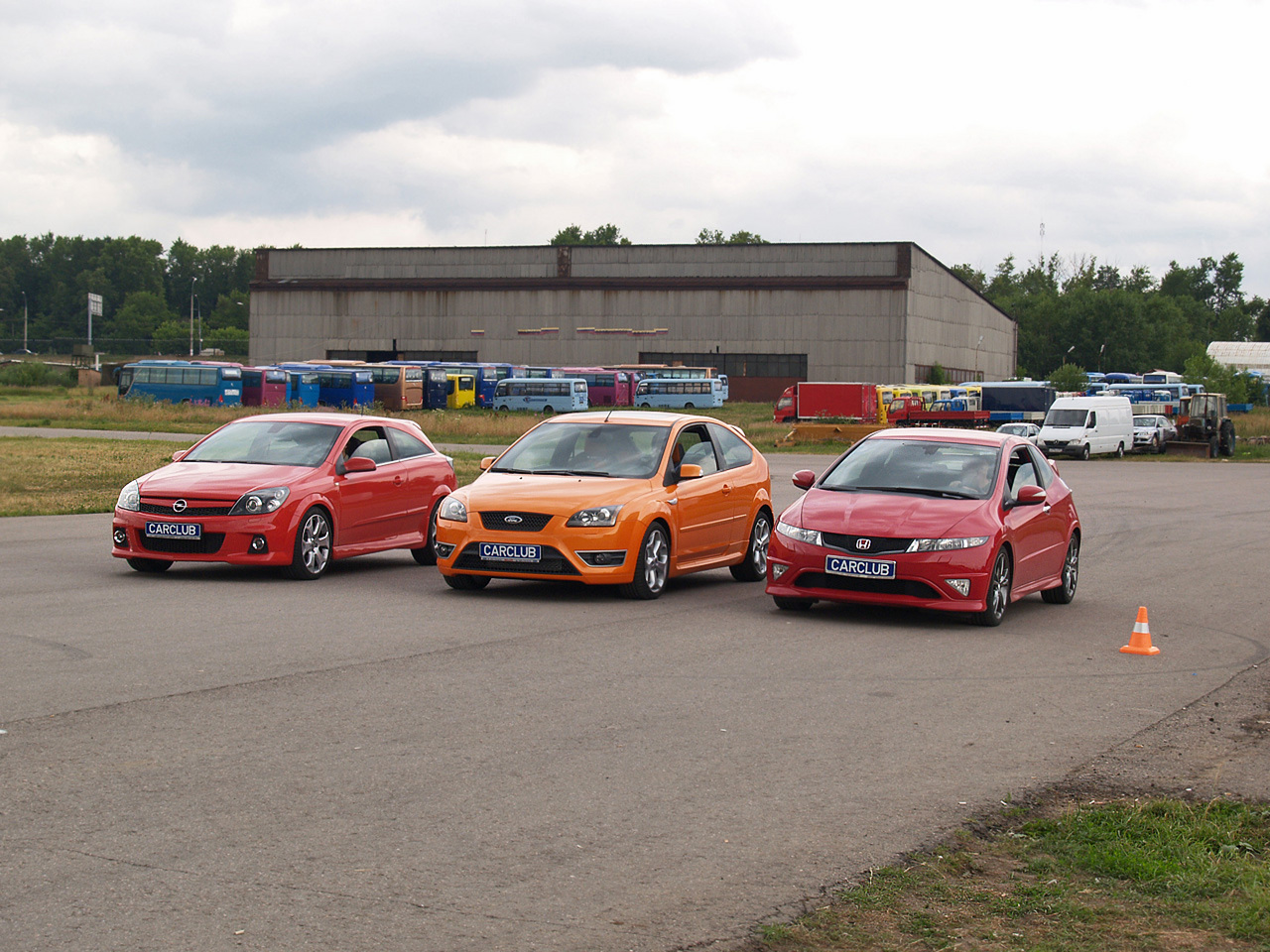
While the cars cool down after the intense test and glare at each other, let's sum up. Victory goes to the Opel Astra. This car is the best compromise between a sporty nature and everyday use. Add the most powerful engine in the trio, and the champion is obvious.
The Honda Civic Type R, despite winning the slalom, excellent chassis, and striking looks, finishes second. The naturally aspirated engine loses to the turbo rivals in characteristics. The Japanese car is built for the track, where its lighter weight and stiff suspension allow it to outpace stronger opponents. But in the city, its engine is tiring: you constantly have to work the gearshift. It's a choice for enthusiasts willing to put up with inconveniences for the sake of emotions.
The Ford Focus ST settles for third place but takes the audience award. It is best balanced for daily use. On the track, it yields to rivals, but in the city, it wins with comfort, a solid cabin, and the strong pull of the 2.5-liter turbo engine, which can easily be tuned to 300 hp. Its character is not as explosive as the Honda's or Opel's, but it honestly earns every penny and suits both long trips and Moscow traffic jams. Additionally, the Focus is the only one of the trio available in a more practical 5-door body.
P.S. Even while preparing the material, we were asked why the most powerful front-wheel-drive hatchback in the world, the Mazda3 MPS, wasn't in the test. Our answer: all quotas for these cars are sold out a year ahead. Why test a car that can't be bought?
Text: Leonid Pavlov.
| Pros | Cons |
| |
| Opel Astra OPC | powerful engine | visibility |
|
| price | interior design |
| |
|
| |||
| Honda Civic Type-R | handling | engine |
|
| design | |||
| stiff suspension | |||
| seats | |||
|
| |||
| Ford Focus ST | Torquey engine | track handling |
|
| Quality interior |
| ||
| Comfortable suspension |
| ||
Technical specifications
| Opel Astra OPC | HondaCivic Type-R | Ford Focus ST | |
| Body type | 3-door hatchback | 3-door hatchback | 3-door hatchback |
| Number of seats | 5 | 5 | 5 |
| Trunk volume, l | 3401070 | 4851352 | 3621245 |
| Curb weight, kg | 1393 | 1301 | 1392 |
| Gross weight, kg | 1860 | 1700 | 1860 |
| Length, mm | |||