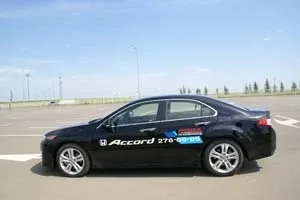
Honda Accord
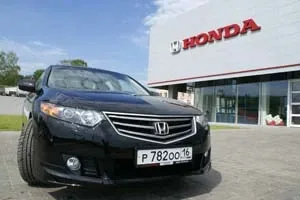
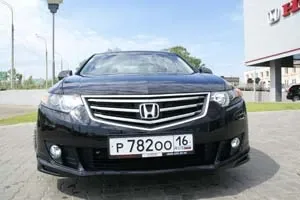
Accord
Engine — 2.4 L
Peak power — 201 hp at 7000 rpm
Maximum torque — 230 Nm at 4200 rpm
Top speed — 227 km/h
Acceleration from standstill to 100 km/h — 9.8 s
Fuel consumption (L/100 km):
in the city — 12
on the highway — 6.6
Transmission — 5-speed automatic
Body length — 4726 mm
Width — 1840 mm
Height — 1440 mm
Curb weight — 1518 kg
Tires 225/50R17
Equipment: dual-zone climate control, ABS+EBD, VSA, 8 airbags, alloy wheels, full electric package, fog lights, leather+fabric upholstery, cooled glove box
Price — $32,536 (260,281 UAH)
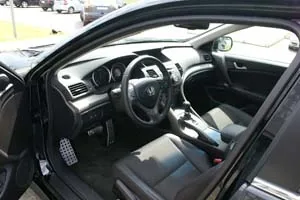
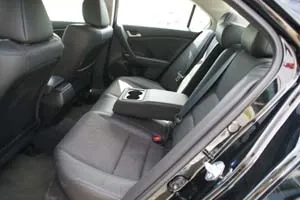
The presentation of the eighth-generation Honda Accord took place on June 17, 2008, at the capital's auto showroom “Honda on Kosmonavtov” (Kosmonavtov St., 71), which is the official representative of the Japanese brand. The new model has noticeably grown in dimensions: it became 50 mm longer, 80 mm wider, but lost 5 mm in height. The latter, by the way, positively affected the center of gravity and reduced the body's sensitivity to side wind gusts. Among other improvements is noticeably improved sound insulation. Inside, it has become more spacious and solid: the trim is made of quality materials, and thoughtful ergonomics make the cabin more functional. The audio system includes several speakers (their number depends on the trim level), radio, and CD player with MP3 support. Safety has also been improved: the body received a reinforced frame that protects passengers in a collision. The equipment list includes a dynamic stability system with anti-slip function and a brake system with force distribution, which increases the effectiveness of emergency braking. The front passenger seat has ISO-FIX mounts for a child seat, and the front passenger airbag can be deactivated with the ignition key to avoid harming a child. The body, welded from ultra-high-strength steel using the latest technology, features high torsional rigidity. To maintain this rigidity during active maneuvering, a strut bar is installed between the shock absorber cups in the engine compartment. It positively affects suspension geometry and handling. Previously, such elements for dynamic cars had to be ordered separately from tuning shops.
Under the hood is the famous i-VTEC system, which regulates valve timing and lift. It makes engines more torquey and economical, and it's no surprise that similar developments are now used by many global manufacturers. Buyers are offered two gasoline engines: a 2.0-liter with 156 hp and a 2.4-liter producing 201 hp. There are no diesel versions — due to the poor quality of diesel fuel in Russia, they are not brought here.
The lineup includes only sedans, and this is logical: it is these body types that are in greatest demand in Russia. But still, it's a pity that the station wagon was abandoned — such cars are very popular in Europe, and perhaps they would also find their fans here.
The appearance of the updated model is an event both for brand fans and for everyone who follows the automotive industry. At the showroom, everyone interested is offered a test drive of the new Accord.
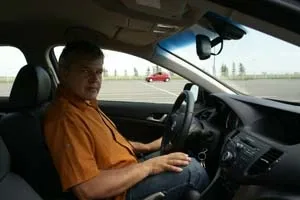
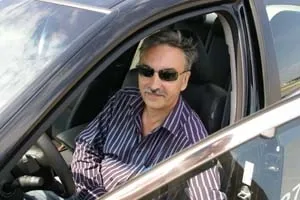
O.Yu. Shatov, Director of the “Kazan School of Higher Driving Skills”
When I was choosing a car for myself, I didn't have to think long — I immediately settled on Honda. The competitors didn't fit: one had a weak engine, another had a high center of gravity, and I wanted driving pleasure. The low-slung, swift Honda with its powerful yet economical engines with variable valve timing was beyond competition. Of course, the budget limited the choice, and within these limits, something fresher could have been fitted. But neither the Renault Logan, nor the Hyundai Accent, nor the Ford Focus with its 1.6-liter engine could compare with a used Honda. Modern engines, strangled by environmental regulations, evoked only melancholy, not driving joy.
It must be admitted that Honda resisted for a long time, but eventually compromised with modern trends. The 2008 Accord's engine is not bad, but only for those unfamiliar with older models. It still pulls from the very bottom, and the signature surge after 4500 rpm hasn't gone anywhere. But the former zest is no longer there. The automatic transmission in “Drive” mode also doesn't contribute to dynamic driving. It's good that you can switch to manual mode at any time — just press the paddle shifter. And the steering wheel of the new Accord is simply magnificent! Maybe it's not as extravagant as the Civic's, but it's still excellent. At speed, it fills with pleasant heaviness, and calling it “empty” wouldn't be right. On the highway, the Honda feels in its element, softly pressing all wheels to the asphalt. However, it's ideal for fast highway driving, but not for emergency maneuvers. In extreme situations, steering precision begins to fail, and body rolls don't match the aggressive-sporty appearance at all. And yet, the Honda is easily controlled even in deep drifts. Oh! If only it had a stiffer suspension and more energy capacity!
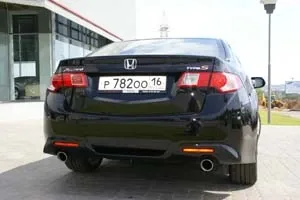
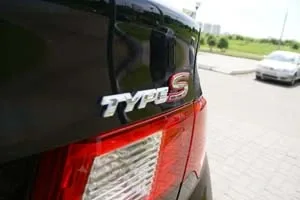
To be honest, the Honda's chassis has never thrilled me. My opinion hasn't changed this time either. For many years, engineers have been trying to make a car both comfortable and sporty, but they can't find a balance between excellent handling and a soft suspension. However, why “can't”? I admit that some might be quite satisfied with this setup. It all depends on what's more important to you. But the red letter “S” on the trunk lid and perforated pedals made of polished steel should at least somewhat match the car's settings.
I don't know if it's worth detailing my impressions of the new model's exterior and interior. Anyone can go to the official Honda dealer's showroom and see everything for themselves. And my colleagues have probably already described it in detail. I value a car for its driving qualities, not the color of the upholstery. By the way, what color was it?
Vadim Sadykov, “Avtoclub-Kazan”.
Calmly, without haste, but it's time for me to look for a D-class car again. So you can imagine my joy when we were offered a ride in the new model — the Accord. The car has become more attractive externally, but, pleasingly, it has retained the brand's style and recognizable features of the previous Accord. The design is successful: a combination of solidity and swiftness. Now let's look inside. Despite the new Accord being wider, three people in the back seat will be cramped. And another nuance: to get out from the back, you have to twist your foot — the middle pillar gets in the way, and it's easy to get dirty on the rear wheel arch. But up front, it's a completely different story. I really liked the quality finish of the dashboard and doors. The interior has a claim to originality but doesn't irritate. The steering wheel and instrument panel are, in my opinion, ideal. Now about the characteristics and trim levels. The previous Accord 2.0 was “bare,” practically “empty.” Compare: now even the base Comfort version has a stability system, heated seats and mirrors, dual-zone climate control, a cooled glove box, and much more. In general, almost everything necessary. Now about the engines. The younger 2.0 is already familiar to us from two (or three) generations of the CR-V. It's good that it has variable valve timing, but it can't be called the newest: 192 Nm at 4100 rpm is a bit lacking (read more about it in the article “Choosing 2.0” on our website).
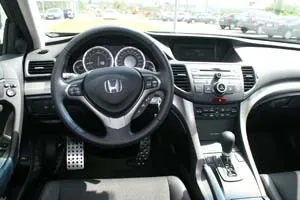
The lineup now includes only one gasoline engine — a 2.4-liter producing 201 hp at 7000 rpm and 230 Nm at 4200 rpm. I was immediately wary of such a “high-revving” setup: output has increased at the top, but this usually means emptiness at the bottom. For comparison: the Volvo S60 with the same displacement develops the same 230 Nm already at 3300 rpm. My fears were confirmed in practice — the car wakes up only after 5000 rpm, starting from a standstill is difficult and accompanied by a dreary sound, and acceleration at low revs is unimpressive. The paddle shifters save the day, and the most effective is shifting down two gears at once. But you have to use them too often — strange for a car with a 5-speed automatic. The gearbox itself works smoothly and quickly.
The automatic transmission algorithms are tuned for fuel economy and measured driving. This, however, combines well with the car's character: maximum comfort and minimum drive. The same trend is visible in the D-class — the new Mazda6 has also become softer and more comfortable. In the regular "civilian" mode, the Accord's handling raises no complaints. The variable-damping shock absorbers help: depending on the surface, different valves are engaged. On smooth asphalt, they are stiffer; on bumps, they are softer. Similar technology was on one of my previous cars. But there is also a significant drawback that we felt on the highway when a wheel suddenly hit a pothole. The impact was very strong because the transition from stiff to soft mode occurs with a delay. As for the price, it is quite reasonable: from 811 to 1000 thousand rubles.
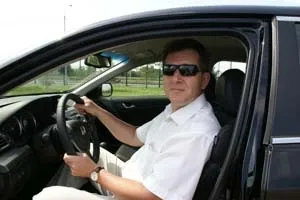
Makhmutov M.A., deputy director of the "Kazan School of Higher Driving Skills"
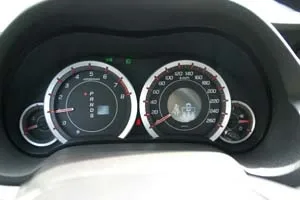
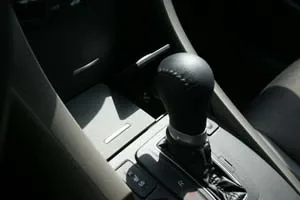
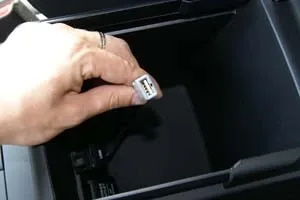
The seventh-generation Accord was my dream in 2004, but the queue for it, especially for the top version, stretched to six months then. I didn't want to wait that long, and this beautiful car never became the second one in my family (after the Toyota Land Cruiser Prado 120). Therefore, getting acquainted with the eighth generation of the "fourth" Honda became especially interesting for me. The test car was to be handed over at the dealership, and while it was being washed, we carefully examined the display model in the showroom of the official dealer — it had everything possible: a sunroof, electric drives for leather seats, USB and iPod connectors in the armrest, and micro-lifts for the small-item lids. It's immediately clear that generational continuity is preserved: the same swift and harmonious profile outside, meticulous interior detailing, and signature Japanese build quality. Looking closely at the instrument panel, I noticed that it is now "almost ordinary" — there is a speedometer and a tachometer, whereas the seventh Accord had "optitronic" blackness that came alive only after the ignition was turned on. The needles look especially unusual — it's unclear how they are attached; they seem to hang in the air. Watching their movement is interesting even from the passenger seat.
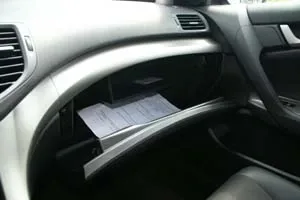
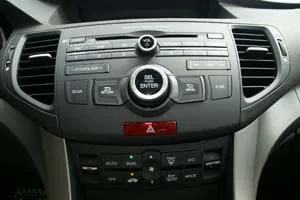
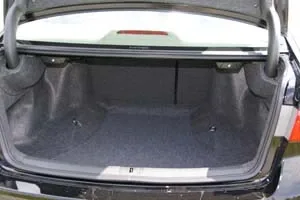
It looks stylish! The quality of materials is top-notch: the plastic on the panel is both soft look and soft touch — soft in appearance and to the touch. I also noticed the two-section glove box, the closed armrest between the seats with a cooling function, and the large color display in the center of the panel. The narrow rear door opening disappointed me: getting in and especially out is uncomfortable — my foot constantly caught either on the front seat or on the plastic trims on the pillar and floor. In dirty weather, soiling your trousers on the sill is almost inevitable. I recall that the seventh Accord also wasn't known for rear space, and following the global trend of increasing interior space, one would expect progress. But if there is any increase, it's almost imperceptible. The trunk pleased with its capacity; in the underfloor there's a "donut" spare tire, but it would have been better if the designers had given those centimeters to the rear passengers, sacrificing volume. However, then it would have been an E-class, and I've been driving such cars for the last six years, not counting crossovers and SUVs.
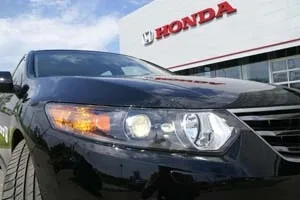
Finally, it was the turn of our test car. It turned out to be in the TYPE-S trim, which implies a sporty character. The interior, of course, is more modest than the demo version: no leather, no electric seat adjustments, no sunroof, and some other little things. But for a "sports car," that's not the main thing, right? The black car looks beautiful, taut, and elegant — it should be racing along smooth asphalt, beautifully taking corners. There, it's in its element. Only the lower spoiler of the front bumper confused me: it's positioned low and protrudes far forward, resembling a plow blade. How will it survive winter on our roads, which aren't always cleared on time, especially in courtyards? It's clear that it's needed for downforce at speed, but that's relevant for smooth highways, of which we don't have many. I remember a friend complaining about his Volvo "eighties": the lower part of its front bumper suffered from proximity to the ground, and overcoming curbs turned into an adventure. Well, we'll see — time will tell.
Now — behind the wheel. I adjust the seat and mirrors, buckle up, start the engine, selector to "D," and off we go. And... the first disappointment — a Honda shouldn't drive like this! By feel, the engine is no more than two liters, but here there are all two point four and more than two hundred horses. Maybe it's the unbroken engine, or maybe my moderate driving style — I didn't rev it above 4500, although the rev limiter on Honda engines is over 7000. But that's how most experienced drivers drive, especially in the city where you can't really rev it — unless you participate in "traffic light" races. And the automatic doesn't like the "pedal to the metal" mode: frequent driving like that leads to accelerated wear of the friction discs. Even moving the selector to "S" didn't change the situation. It seems that the engine and gearbox combination reveals itself best on suburban highways — it's on long distances that the sporty meaning of this trim will show. In the city, it's just a good modern car with a slightly stiff but comfortable suspension, decent handling, a clear steering wheel with variable assist, and a more powerful and economical engine than its predecessor. Perhaps it's no coincidence that four years ago I never became a "Honda owner" — apparently, it wasn't meant to be. That requires an inner sporting charge, but I prefer calm, steady driving, without darting from lane to lane for a couple of dozen meters before a traffic light.
In fairness: my colleagues on a flat surface, using the paddle shifters, made the new Accord drive noticeably more briskly, but that's another story, and other people will tell it...

Alfred Mardanov, "Autoclub-Kazan".
The first thing that catches your eye in this car is its external continuity with its predecessor. Look at the seventh-generation Accord: it still looks quite modern today, even though it spent many years on the assembly line. In the place of some manufacturers, I wouldn't take risks and would follow the example of Nissan with its X-Trail — and now the Accord does the same. The family traits remain almost untouched. The same predatory, squinting gaze, the aggressive grin of the radiator grille, wide flanks under which a muscular body is guessed. The silhouette has acquired chopped, sharp edges, making it even more menacing. The question is whether the car's temperament matches such an appearance.
The first acquaintance with the Accord happened on the lot in front of the dealership, where I had to move the car for shooting. When turning the ignition key, a slight tremor runs through the body, and the engine softly rustles under the hood, ready to pounce. Although the engine displacements resemble the previous ones — 2.0 and 2.4 liters — that's only at first glance. Under the hood of the new Accord is a modern engine that meets strict Euro 5 standards, and it has become 11 horsepower more powerful than the old one. The refined i-VTEC system, reduced exhaust resistance, increased compression ratio, and larger valve diameter — all this has made the new 2.4-liter units more economical. I tip my hat to Honda: they manage to combine the incompatible.
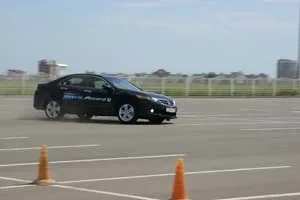
It's a pity only that maximum power is achieved already near the red zone — let's hope this won't spoil the driving impression. A short photo session, and we're on our way: the first point is the area at the hippodrome. This time the test drive was full-fledged, with a moose test and other exercises. I got the impression that the natural understeer can be minimized with proper handling of the car. The switchable VSA stability control system, which is now also included in the base trim, doesn't interfere with the driver, but on the contrary, together with the electric power steering with variable assist, helps even a seasoned pilot. The fact is that the new generation of VSA allowed the Accord to be equipped with the MAEPS adaptive steering system. When control is lost in a corner, it itself creates auxiliary force on the steering wheel, hinting at the correct trajectory. This will appeal to those who don't like cars where electronics dampen any driver initiative, turning him into a passenger.
The first part of the journey, as usual, passed in the back seat, and I couldn't help but notice that there's more space here. True, if a tall passenger sits in front, knees are already a bit cramped. And getting out isn't very convenient: legs catch, the passage is narrow. If they had increased the space at the expense of the deep trunk, it would have been ideal, but as it is — just good. By the way, there are no questions about comfort and sound insulation at all — excellent. As for the engine, much has already been said about it; I'll put it this way: the car drives and drives well, but not as you'd expect from 201 horses. Euro 5 takes its toll, and the car is still brand new — only 200 km old. But the average fuel consumption of 11 liters per hundred over the test is a strong argument.
There was one moment on the bypass road: at the bridge joints, the front axle responded with an unpleasant jolt, and I tried to figure out the cause. The front suspension with double wishbones is like the previous Accord, but with a nuance. Up front, there is now a two-circuit damping system that prevents bottoming out under a sharp increase in load. In other words, a suspension with variable damping. At low speed, the oil flow is restricted, providing sharper sporty handling. But with a sharp increase in wheel travel speed—for example, on bumps—the damper's flow area expands, and the force decreases. Apparently, either the system didn't have time to respond as intended, or it was designed that way. It's a pity I couldn't get onto light off-road for the sake of sporty interest—ideally, on such a surface, the car should become softer. I won't even mention the pleasure the car gives behind the wheel—words can't describe it. But I can scold it for the glaring display in the center of the dashboard.
Overall, I really liked the car. Oddly enough, it retained what the old Accord was valued for, but at the same time added comfort, became more interesting and convenient in the cabin, and became more modern.