
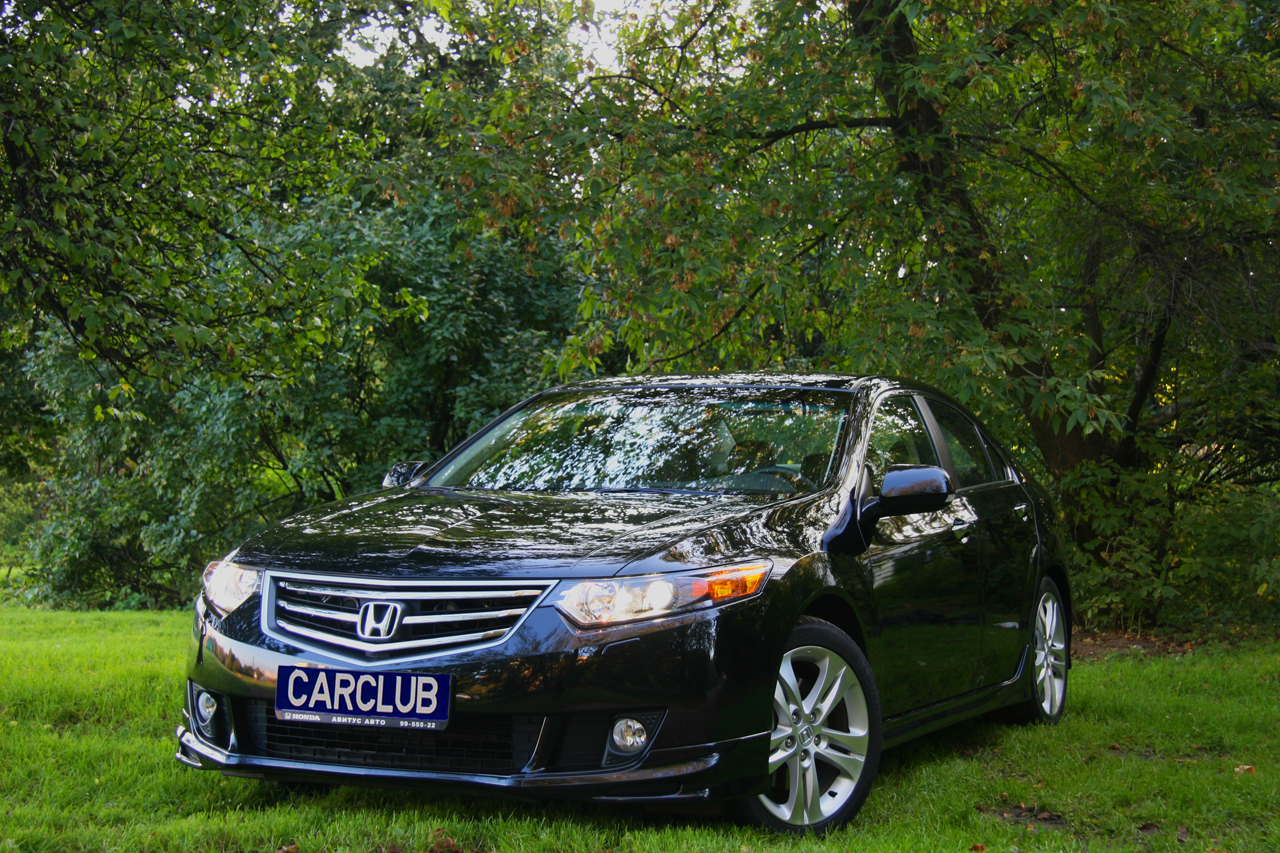
 The world premiere of the new Honda Accord took place at the Geneva International Motor Show. The Russian presentation of the new model was held in May this year, and the first cars reached their owners already in early summer.Comments (1)
The seventh generation Honda Accord, which debuted in autumn 2002, managed to gain a whole army of fans in Russia. The model owed its success to its bold appearance and driver-oriented character. Sales of the "seven" in our country turned out to be higher than in the whole of Europe, except for Britain. And this despite the fact that the manufacturer positioned the car as a family one — in our country it was bought mainly by young people. When the new generation arrived, the previous Accord moved to the secondary market, where it also enjoyed steady demand.
The Geneva Motor Show was the venue for the world premiere of the new Accord. The new model reached Russia in May, and the first owners received the keys already in early summer. The sedan's dimensions have noticeably grown: length increased by 61 mm to 4726 mm, and width added almost 8 centimeters and now stands at 1840 mm. With such dimensions, the Accord has come close to the Japanese business class, where Toyota Camry and Nissan Teana dominate. With the increase in dimensions came a new philosophy — Premium Sport Sedan. Moreover, it is specifically a sedan: the Tourer station wagon is not planned to be supplied to Russia. The previous generation showed that the share of such bodies in our sales did not even reach 10 percent. Our compatriots still choose sedans, and it is unlikely that anything will change in the near future.
 |
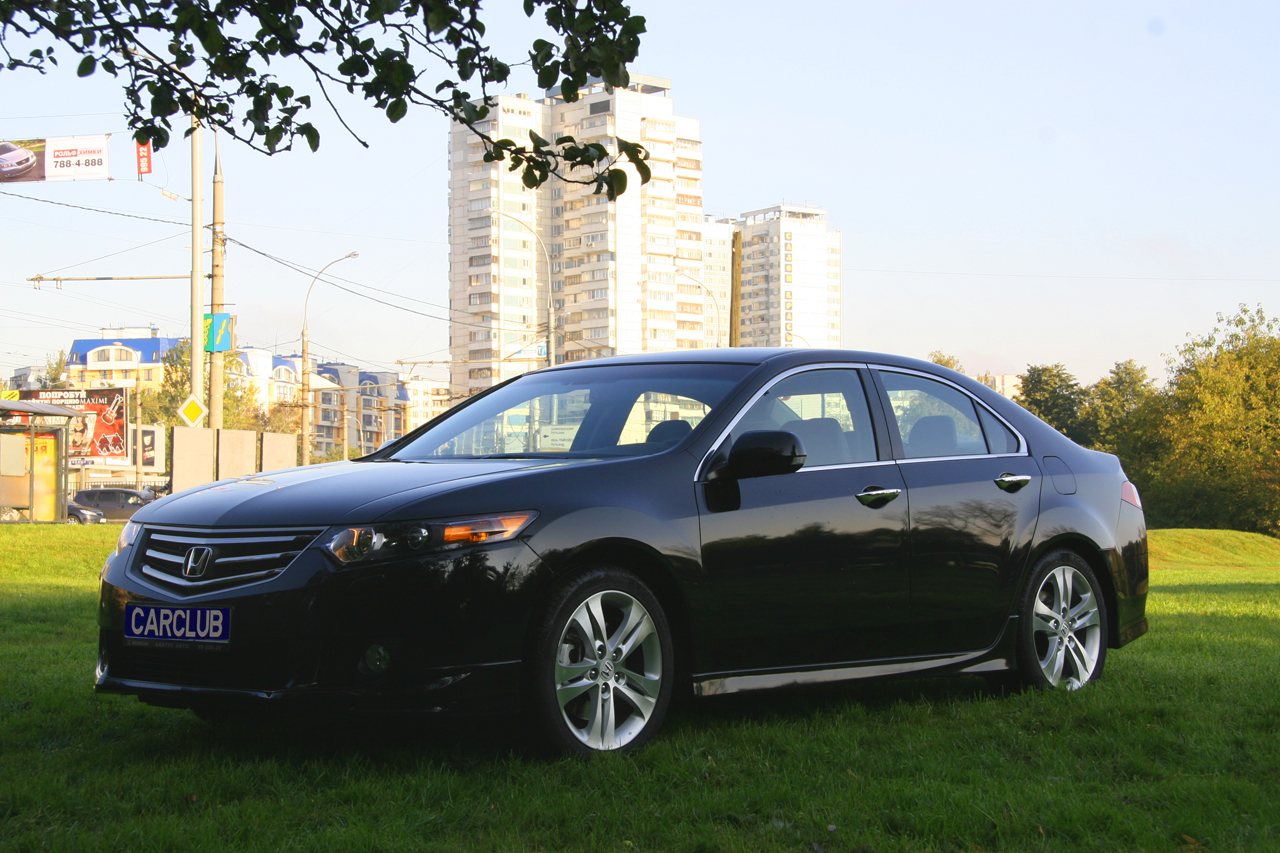
| The appearance of the new "Accord" has become more solid and stately, however.... |
 |
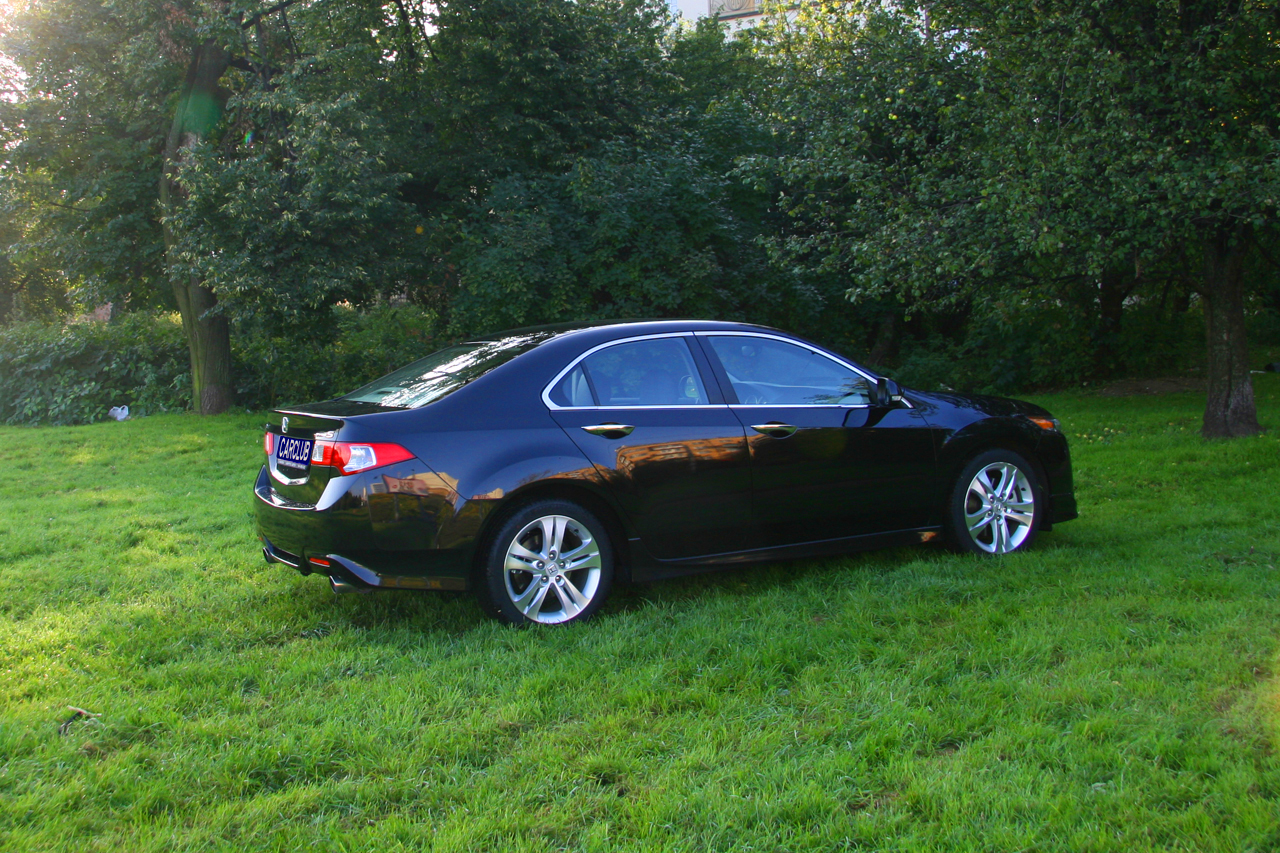
| ...it retained the overall stylistic similarity with the previous generation. |
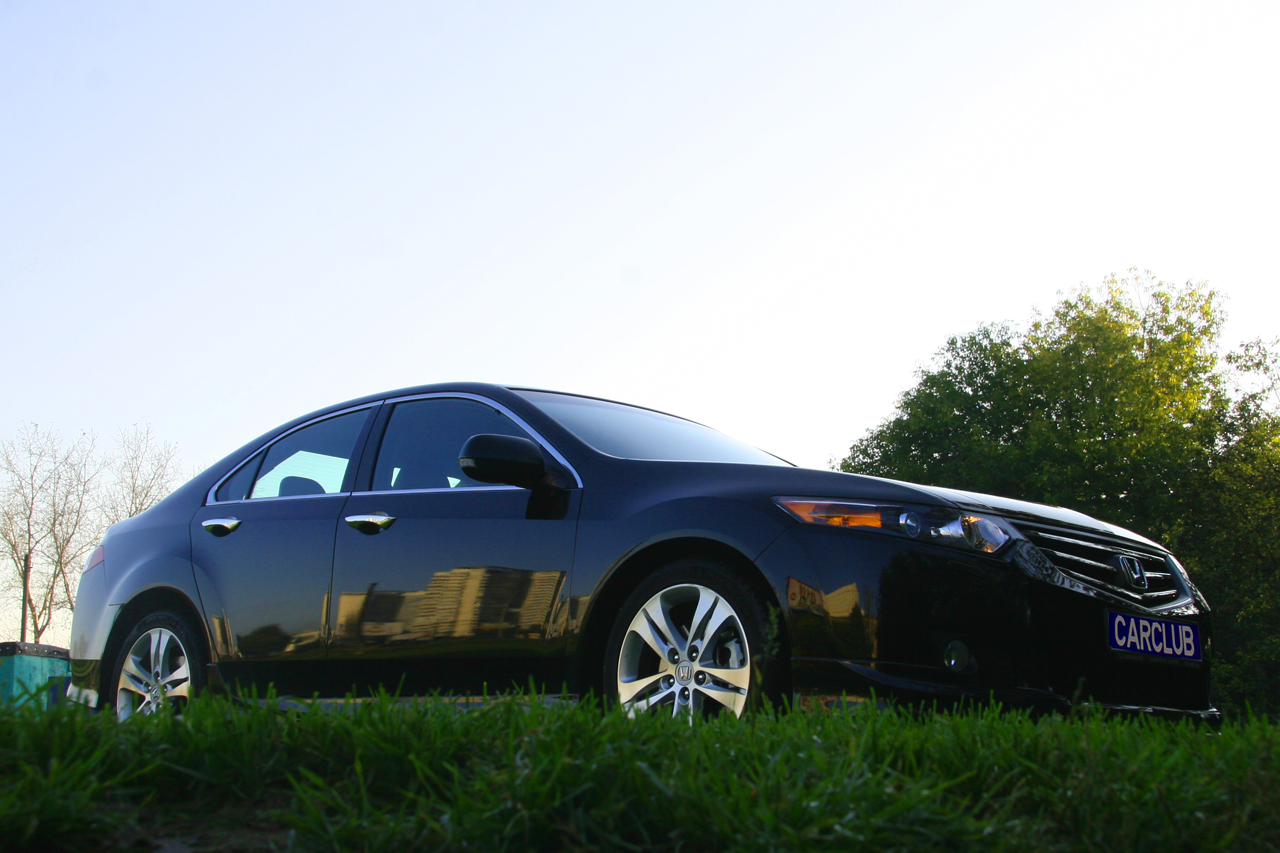
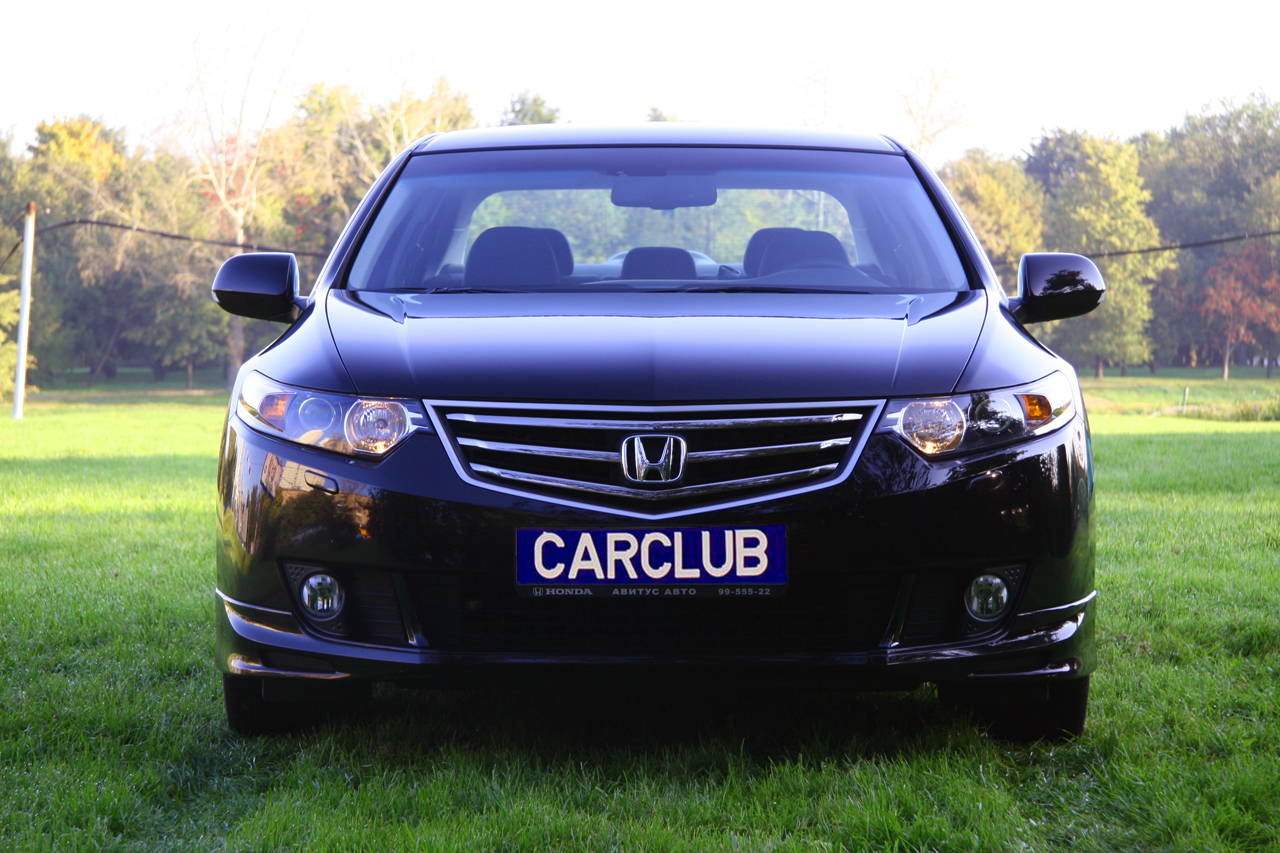
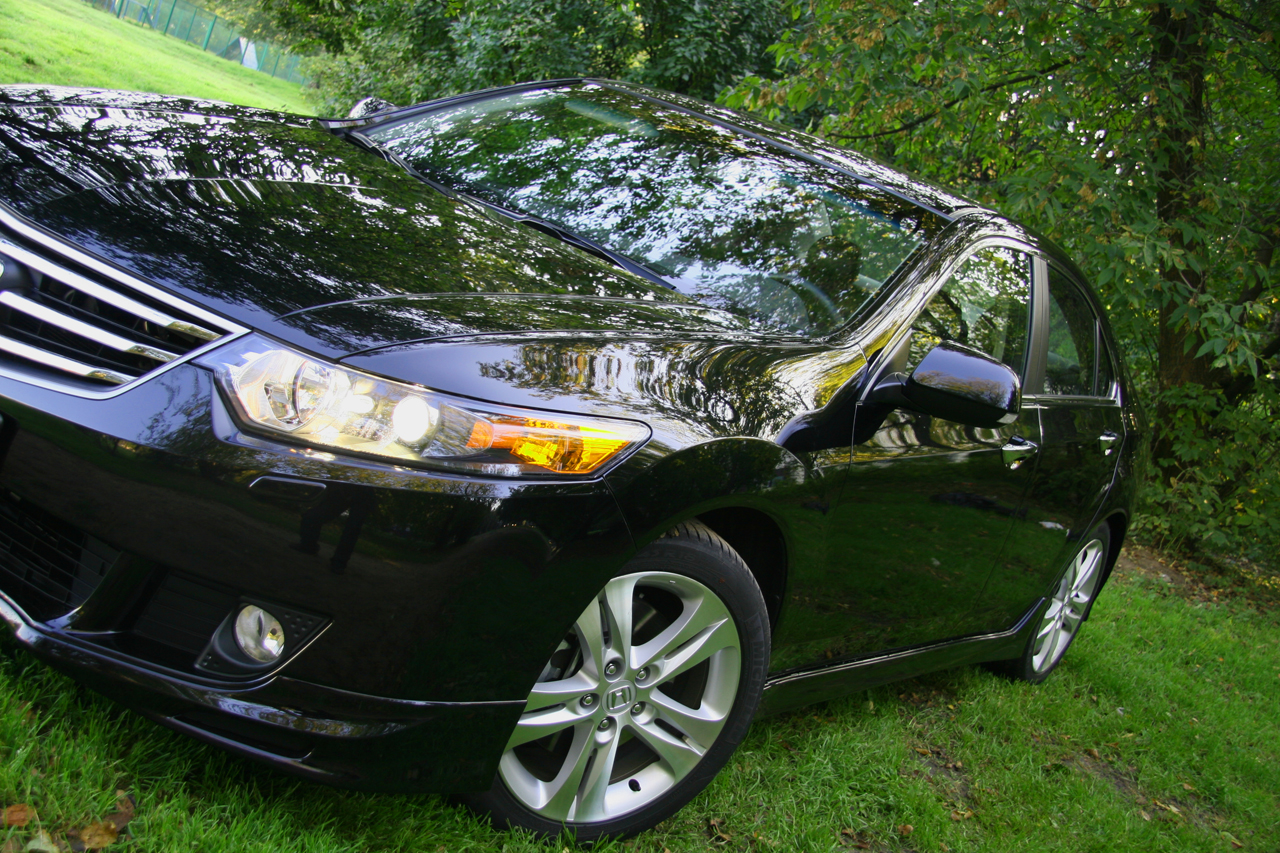
The exterior of the new Accord is easily recognizable by the features of its predecessor, but the car now looks more solid and respectable. The slanting headlights have lost their former aggression, the look has become calmer. The massive front bumper, chrome grille and swollen arches hint: the Accord has moved into a higher weight category. Now its rivals are not the spirited Mazda6, but the sedate Camry and Teana. And given that the word "premiumness" was heard at the presentation time and again, it is not hard to guess that the Honda folks have also set their sights on a piece of the pie of the upper segment of the D-class, which has long been divided among Audi, BMW and Mercedes-Benz.
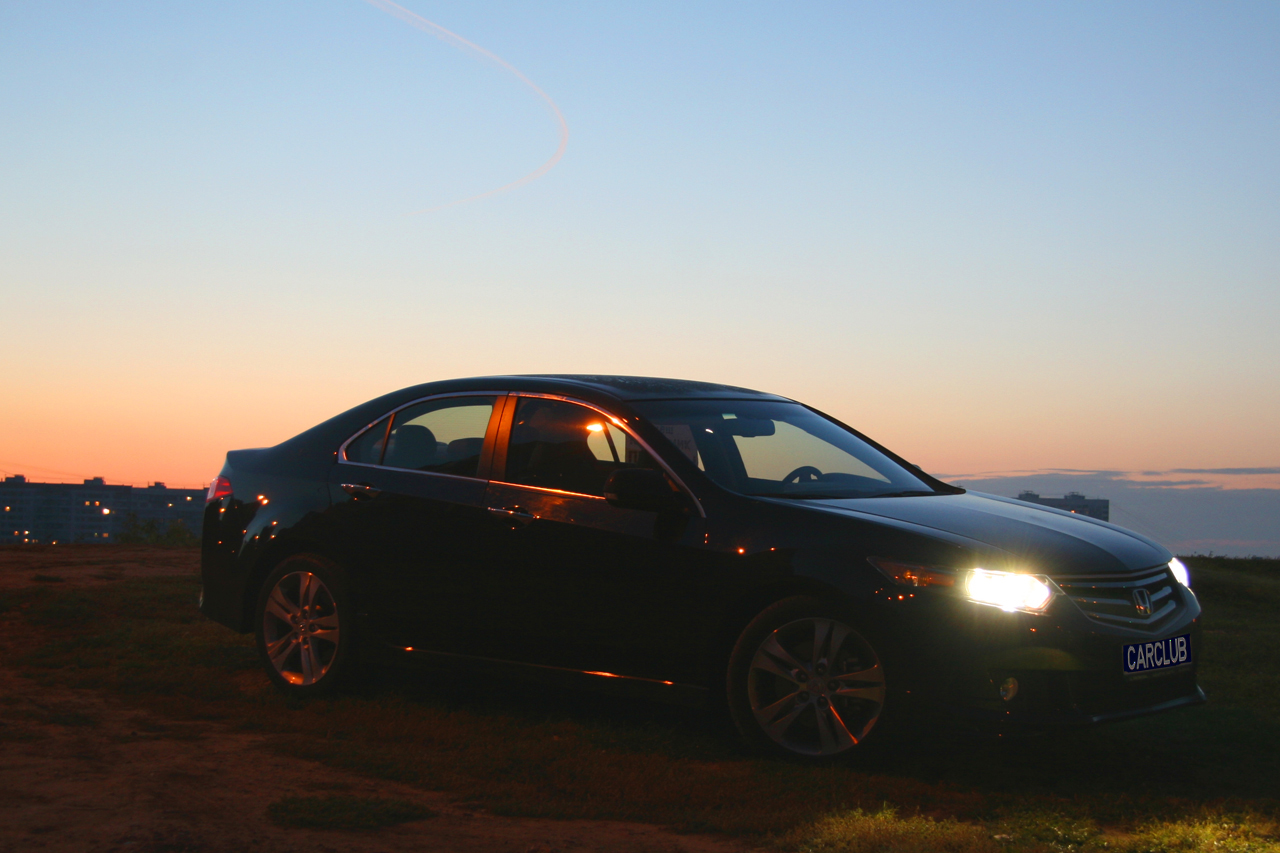
At the same time, the sporting essence has not gone anywhere. The swift silhouette with a strongly raked front pillar, relief sidewalls and pronounced wheel arches reveal the nature of an athlete dressed in a business suit.
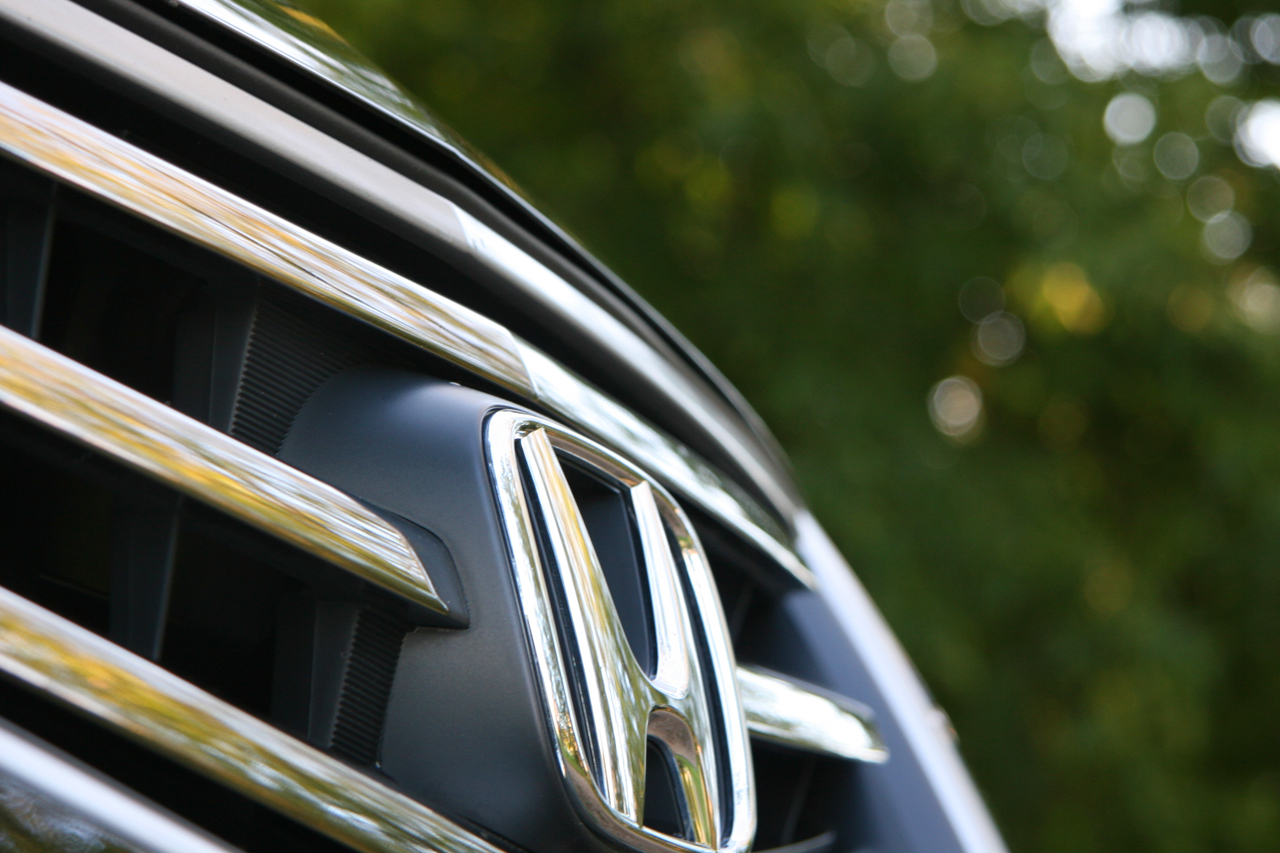 |
| The appearance of the massive radiator grille indicates that the Accord has settled down |
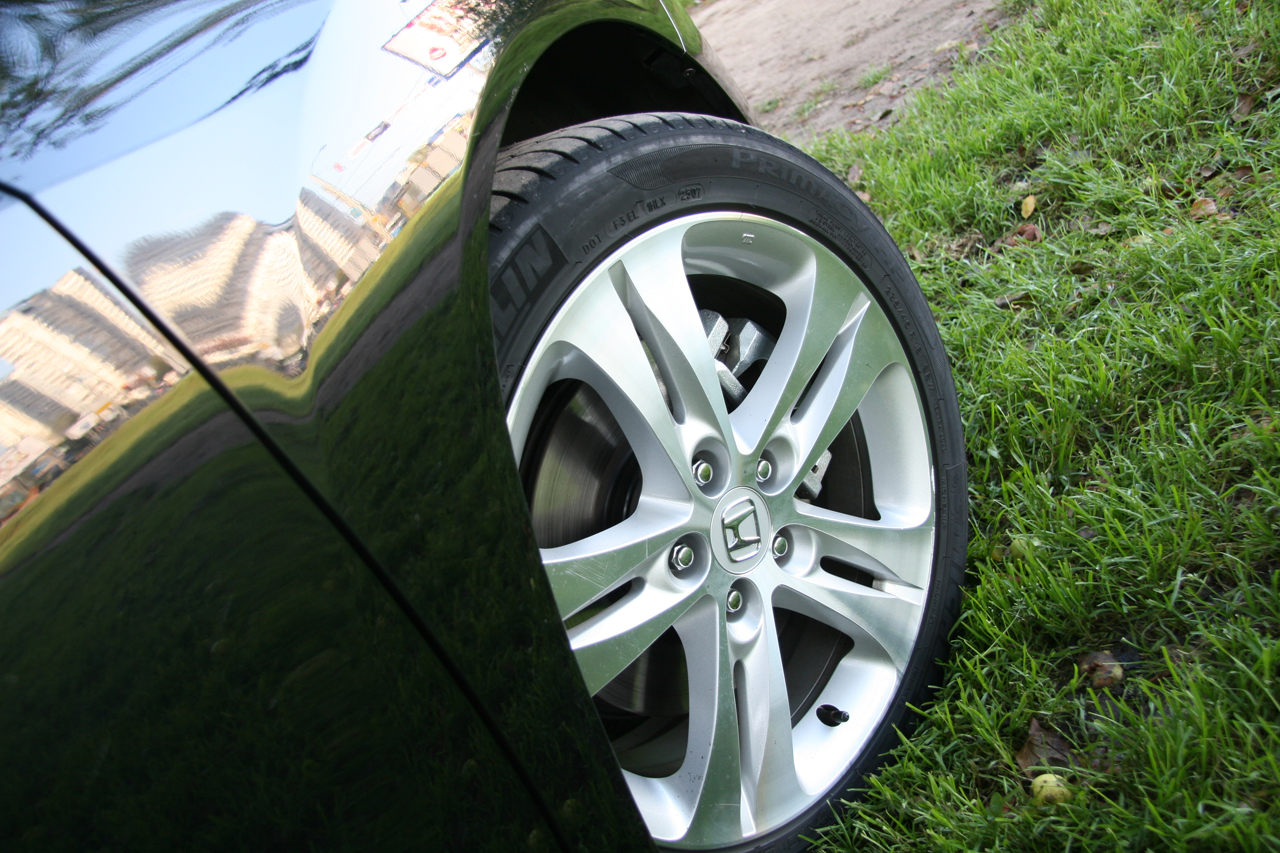 |
| 18-inch wheels are the prerogative of the Type-S trim |
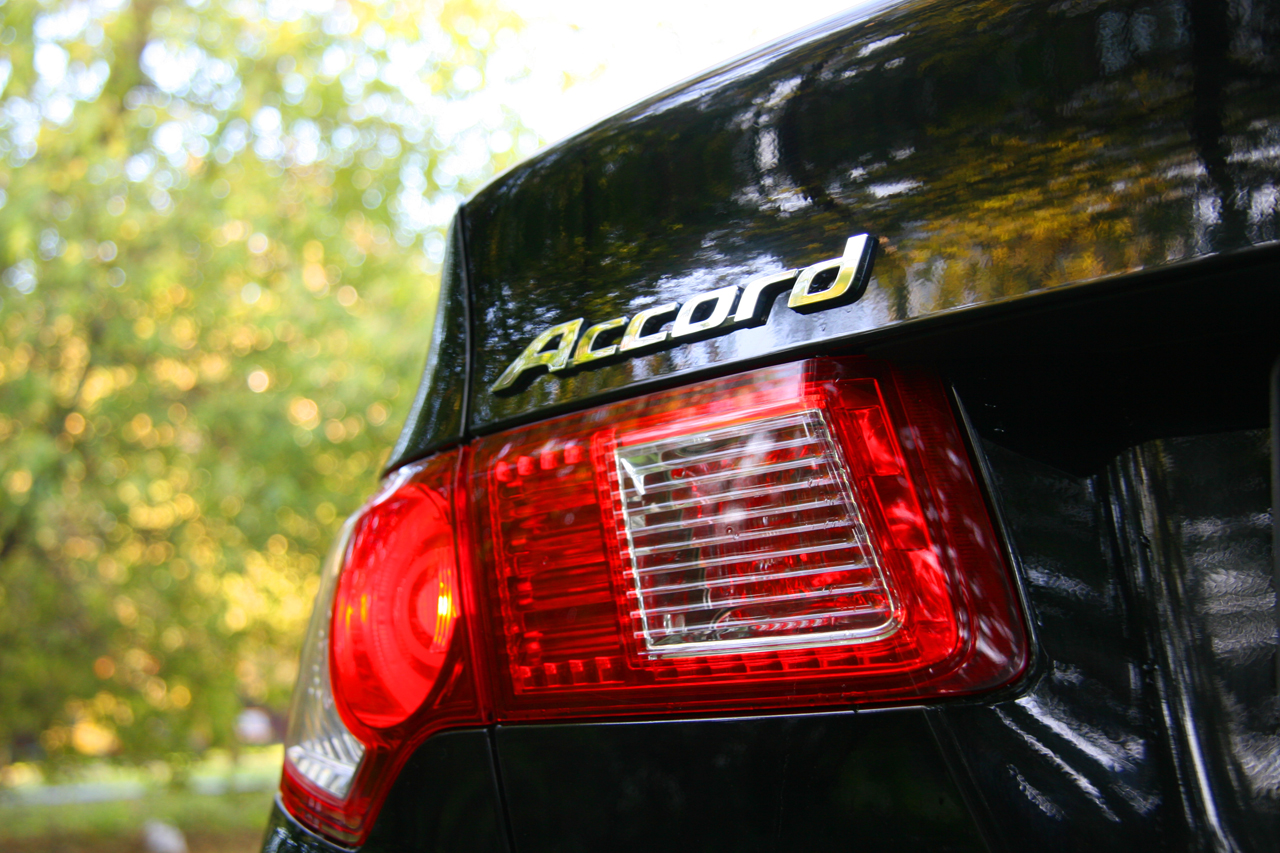 |
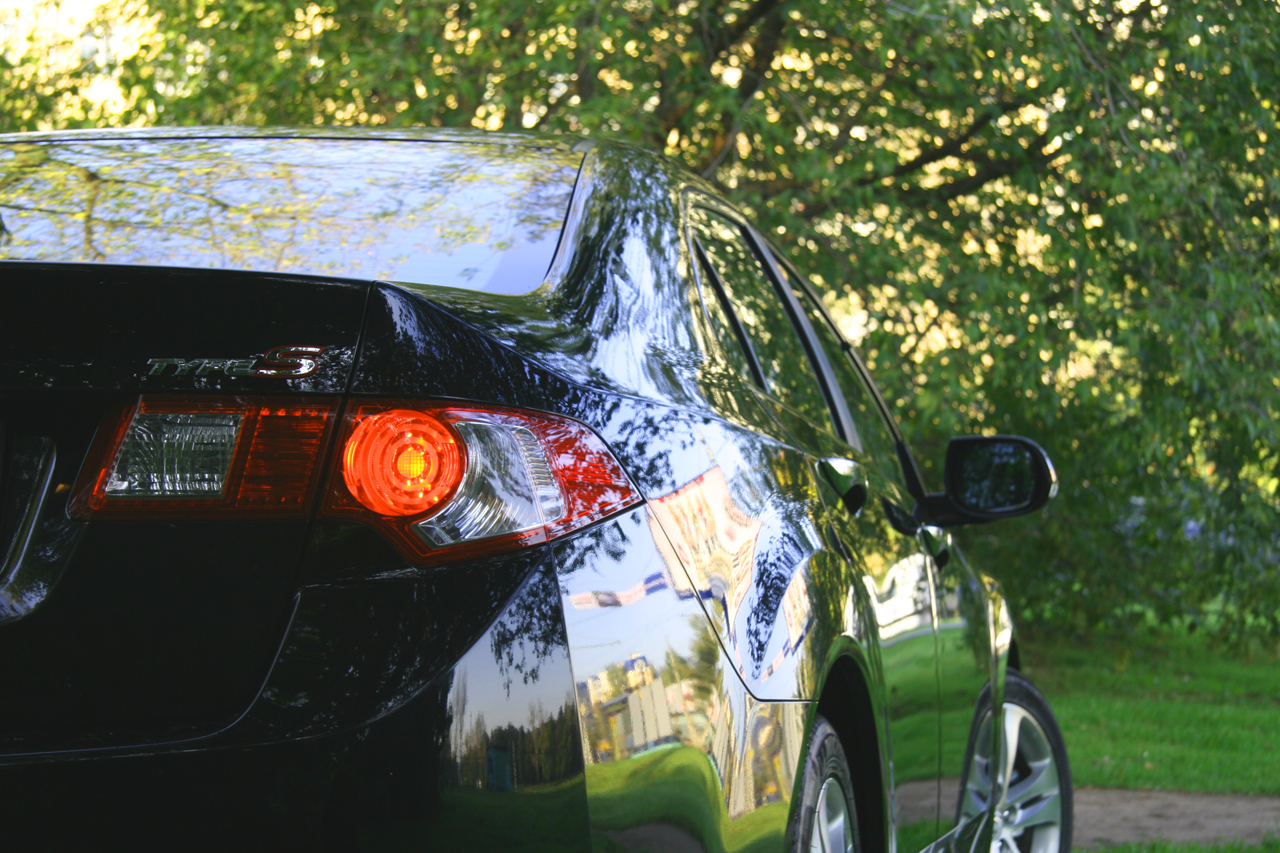
| The rear of the Honda sedan is crowned by new taillights |
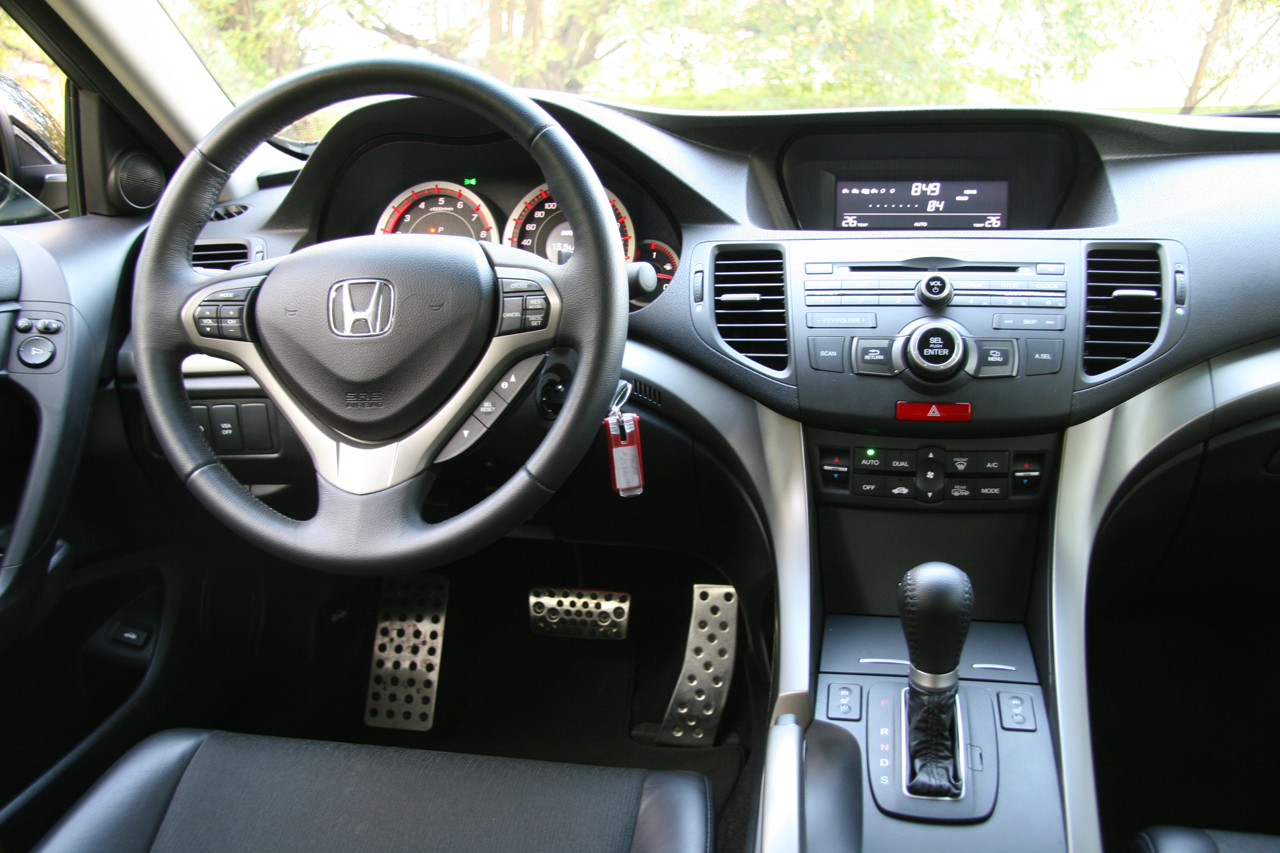
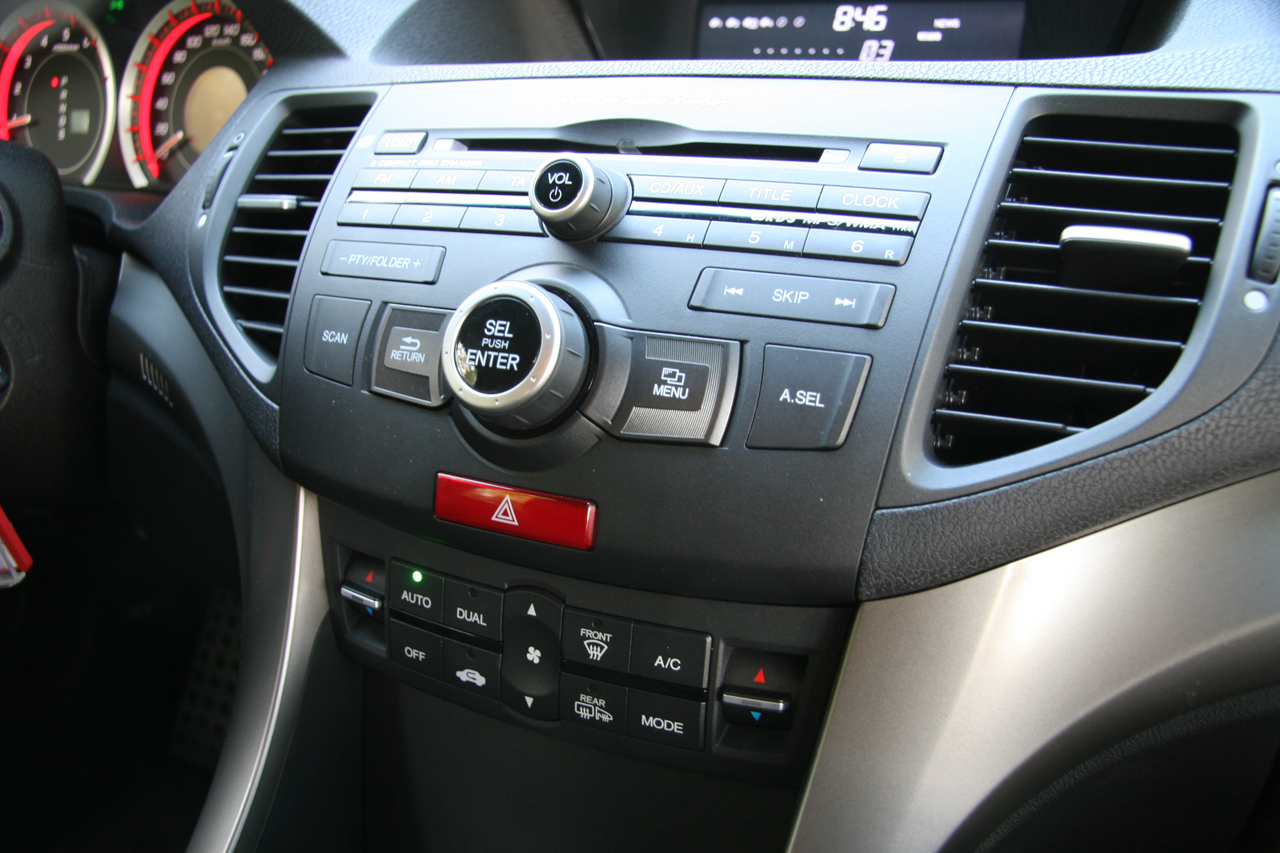
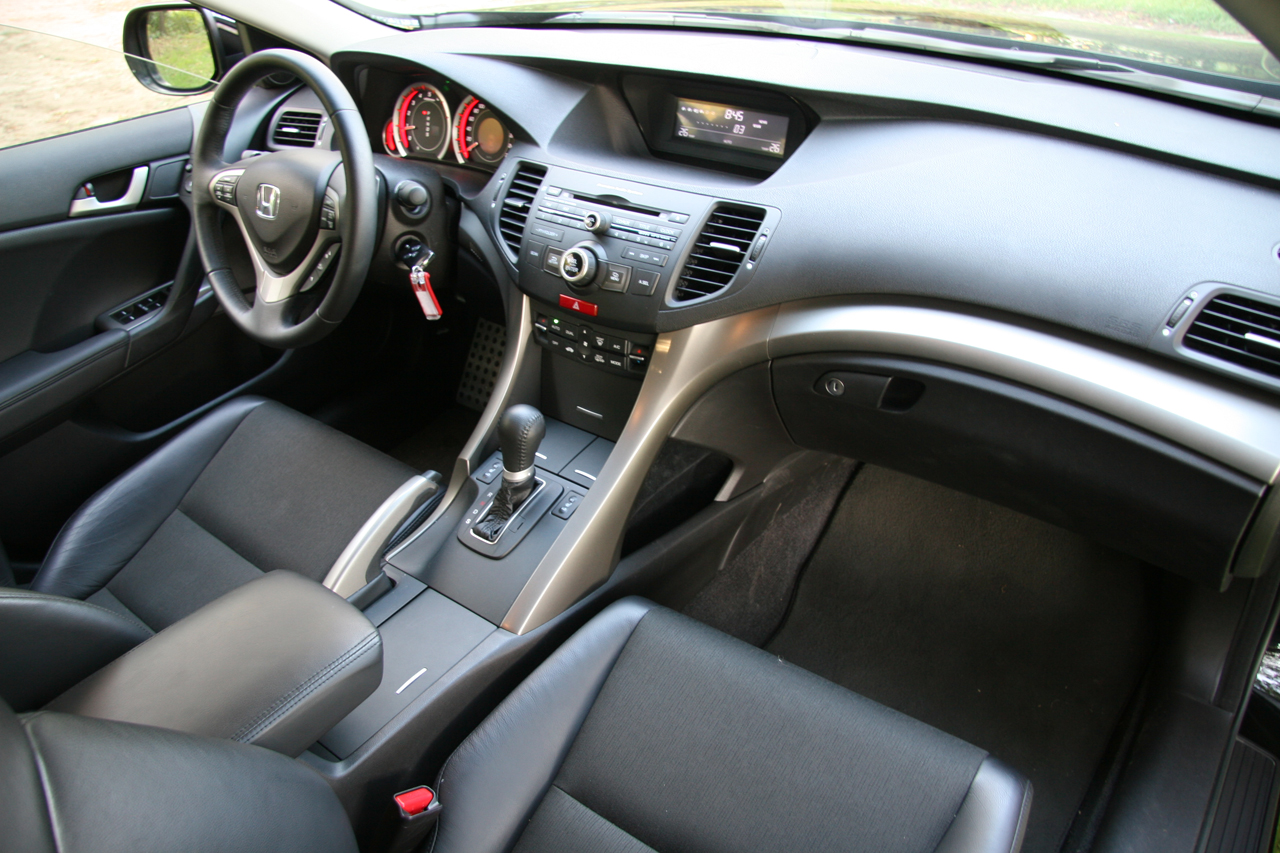
For the test we got an Accord in the Type-S version: a two-liter-plus engine and a five-speed automatic with a sport mode. The interior greets you with an updated design and higher quality trim materials. The front panel looks elegant thanks to the silver edging that smoothly flows onto the center console. The leather steering wheel fits comfortably in the hands and adjusts in two directions. The seats in the Type-S are combined, with a wide range of adjustments, but the cushion could be longer, and the lumbar support protrudes too much even in the minimum position. Otherwise, there are no complaints about ergonomics. On the center console there is a display, below it the audio system unit and a noticeably protruding menu control dial.
The round climate control knobs have given way to buttons, which is no less convenient, and the system itself has become dual-zone. The instrument panel with bright red backlighting (a Type-S feature) pleases both in design and readability. The increased external dimensions have added space inside: up front you feel like you are in a business class. The plastic of the front panel is pleasant to the touch, the seat leather is solid. But getting into the back row is not so easy — the narrow door opening gets in the way. And tall passengers will be cramped: knees will press against the back of the front seat, although there is enough headroom. The trunk has gained 39 liters — now it is 497 liters, and the loading height has decreased by 80 mm. But wide items will be difficult to stuff inside due to the narrow opening. The interior as a whole has become noticeably better — both in design and build quality. With such equipment, the Accord is able to compete on equal terms with the Camry and Teana, but so far it yields to the Germans from the business class.
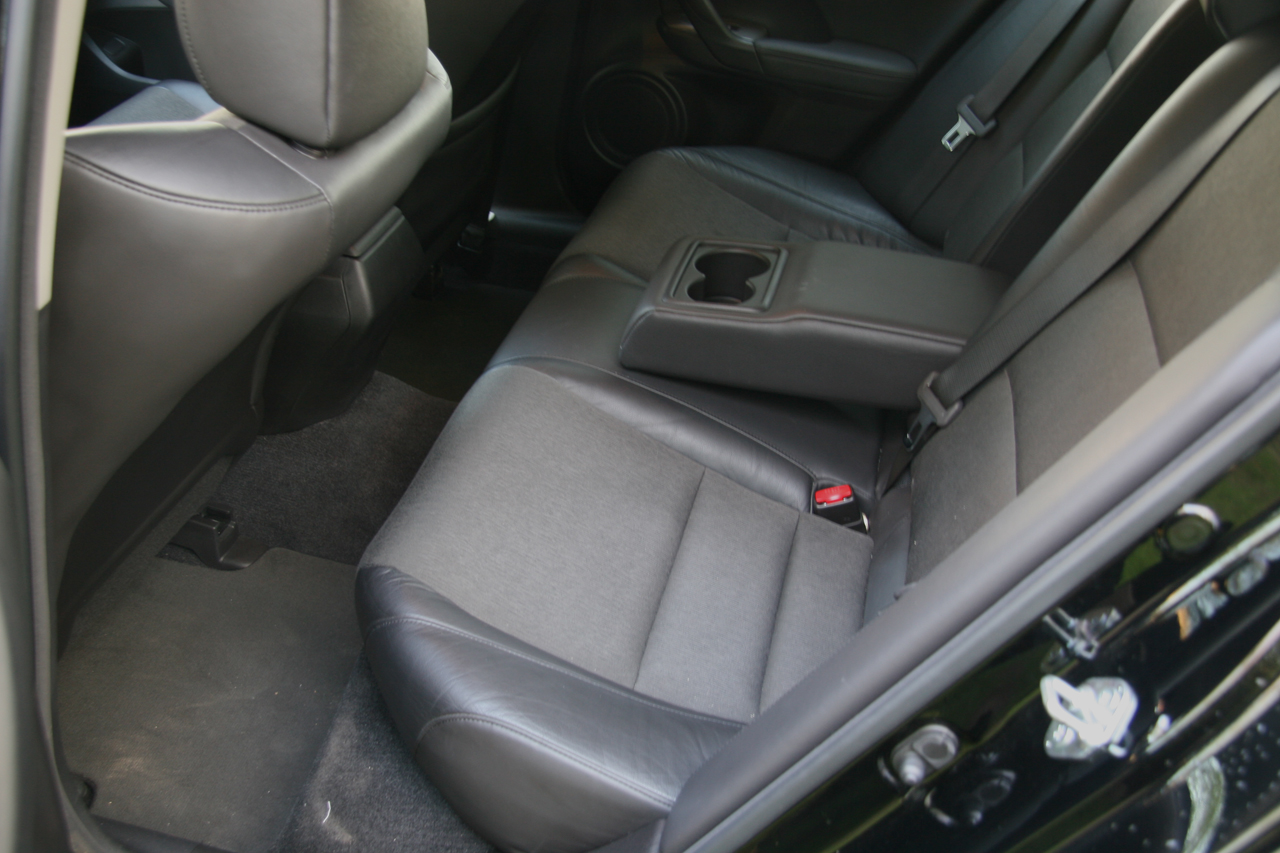 |
| The comfortable rear sofa is well profiled, but there is barely enough space in the back row. |
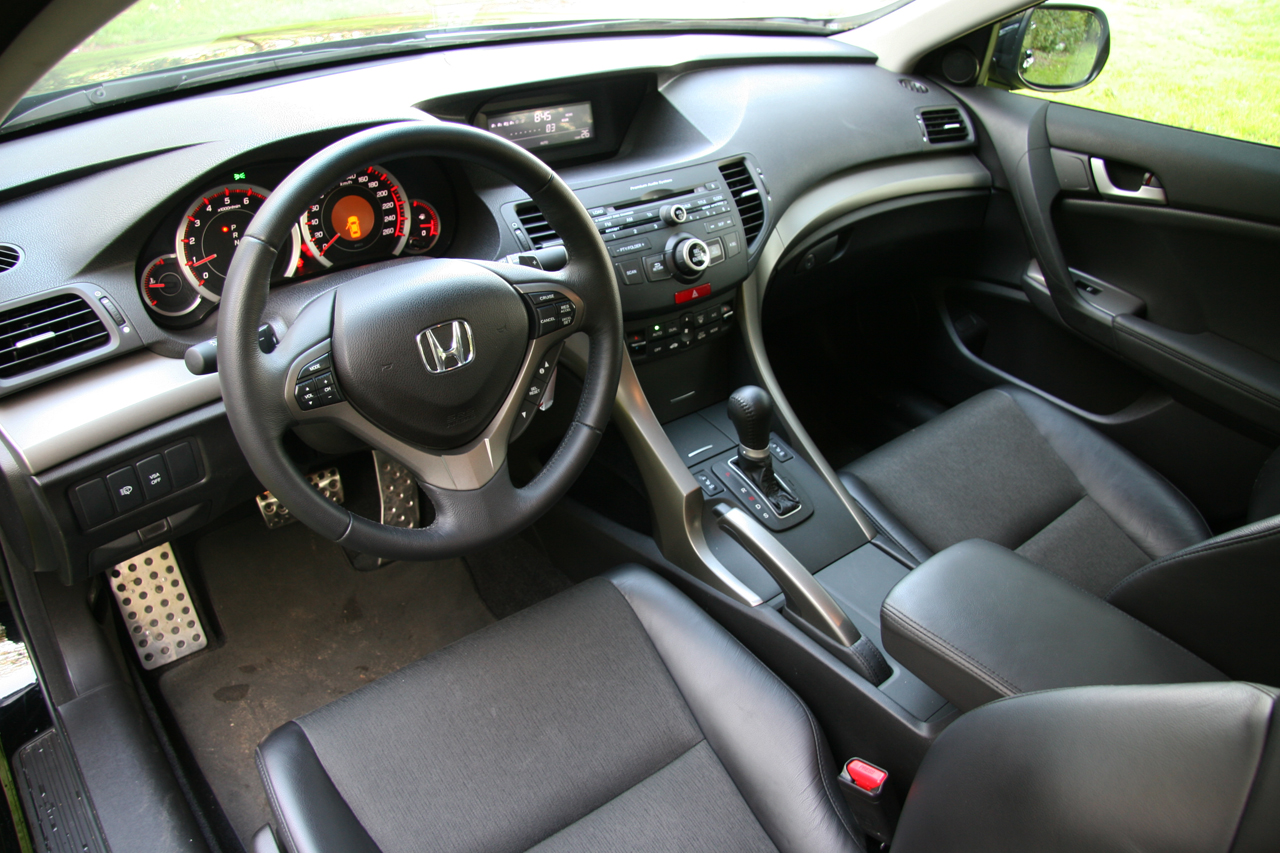 |
| The design has freshened up, the trim materials have improved |
The 2.4-liter engine has become more powerful — now it produces 201 hp at 7000 rpm. The engineers raised the compression ratio, increased the valve diameter, refined the i-VTEC system and reduced exhaust resistance. On paper everything looks great, but how does it feel on the road? Key into the ignition (the Accord still does not have a Start/Stop button or keyless access) — and the engine comes to life. You can tell that the engine is running only by the tachometer: the Honda folks have noticeably improved sound insulation. True, tire noise still seeps into the cabin, but this oversight is smoothed over by an excellent audio system with ten speakers, a subwoofer and an amplifier.
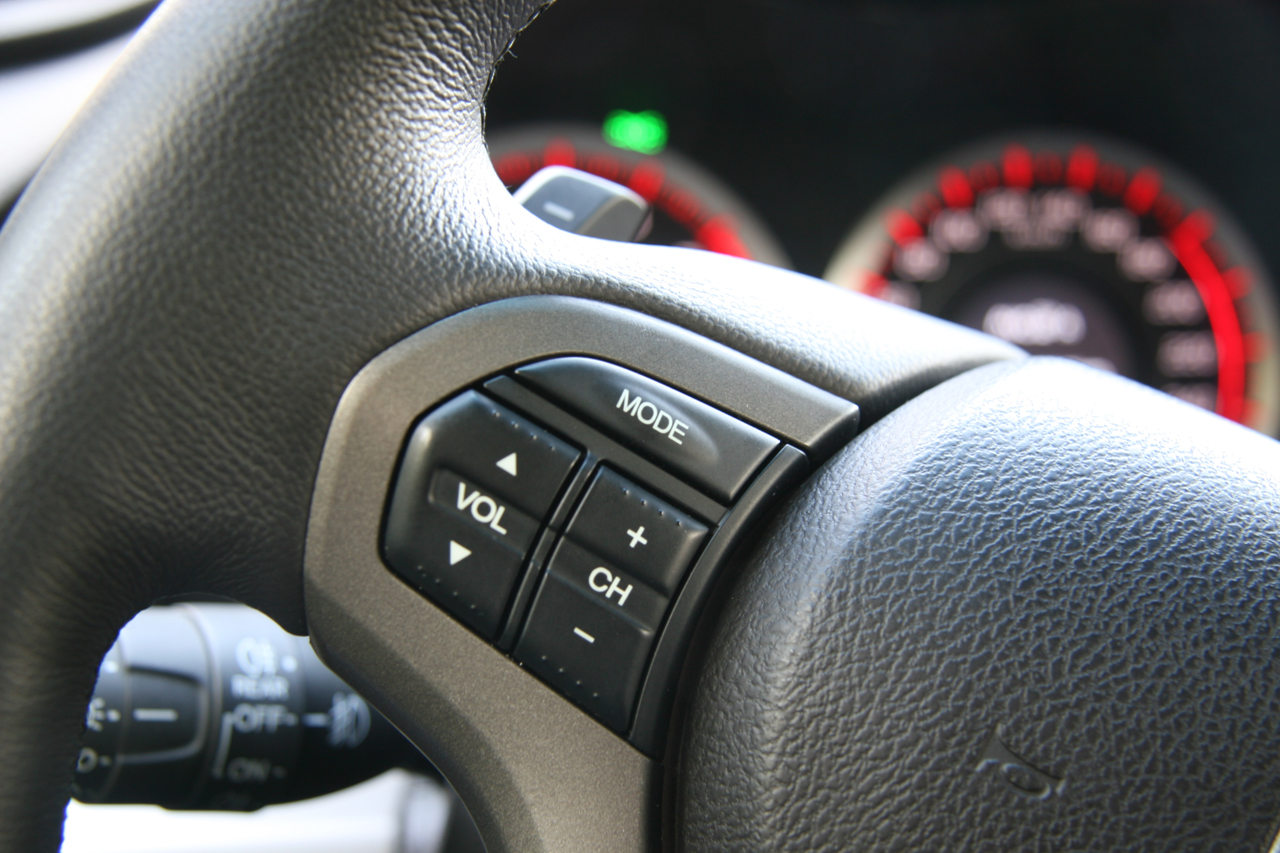
The situation with dynamics is twofold. The car has become heavier by 170 kg, and the increase of 11 hp did not compensate for this, so acceleration to 100 km/h now takes 9.5 seconds. That is the paper version. In reality, the Accord behaves emphatically premium: acceleration is powerful, but without the former fervor — more solidity. The gas pedal with variable effort in kick-down mode allows you to easily dose intense acceleration. The automatic pleases with the clarity and smoothness of shifts. Sport mode with paddle shifters reveals the engine to the full, and the shifters can be used at any moment — whether in Drive or Sport. In sport mode, the gearbox does not skip to a higher gear when reaching the maximum and allows you to rev the engine to the cutoff. One ergonomic miscalculation, familiar from the CR-V, still annoys: the single straight slot of the selector. When moving the lever from Parking, I constantly missed D and hit S.
 |
 |
For those who want a hotter drive, the Type-S version is also available with a six-speed manual gearbox. Cars with a "stick" received the SIL function (Shift Indicator Light) — a light indicator built into the center of the tachometer. The "up" and "down" arrows signal when it is better to shift so that fuel is consumed more economically. As Honda representatives claim, such a system helps save up to 5% of fuel.
Another notable new feature is the adaptive power steering (Motion Adaptive Electric Power Steering). If the car begins to lose stability — for example, in a too-fast corner, on a slippery road, or during hard braking — the system itself adds effort to the steering wheel. In practice, this addition is almost imperceptible: the steering wheel remains completely in the driver's hands. But, judging by the press release, in a critical moment such a hint works at the level of intuition.
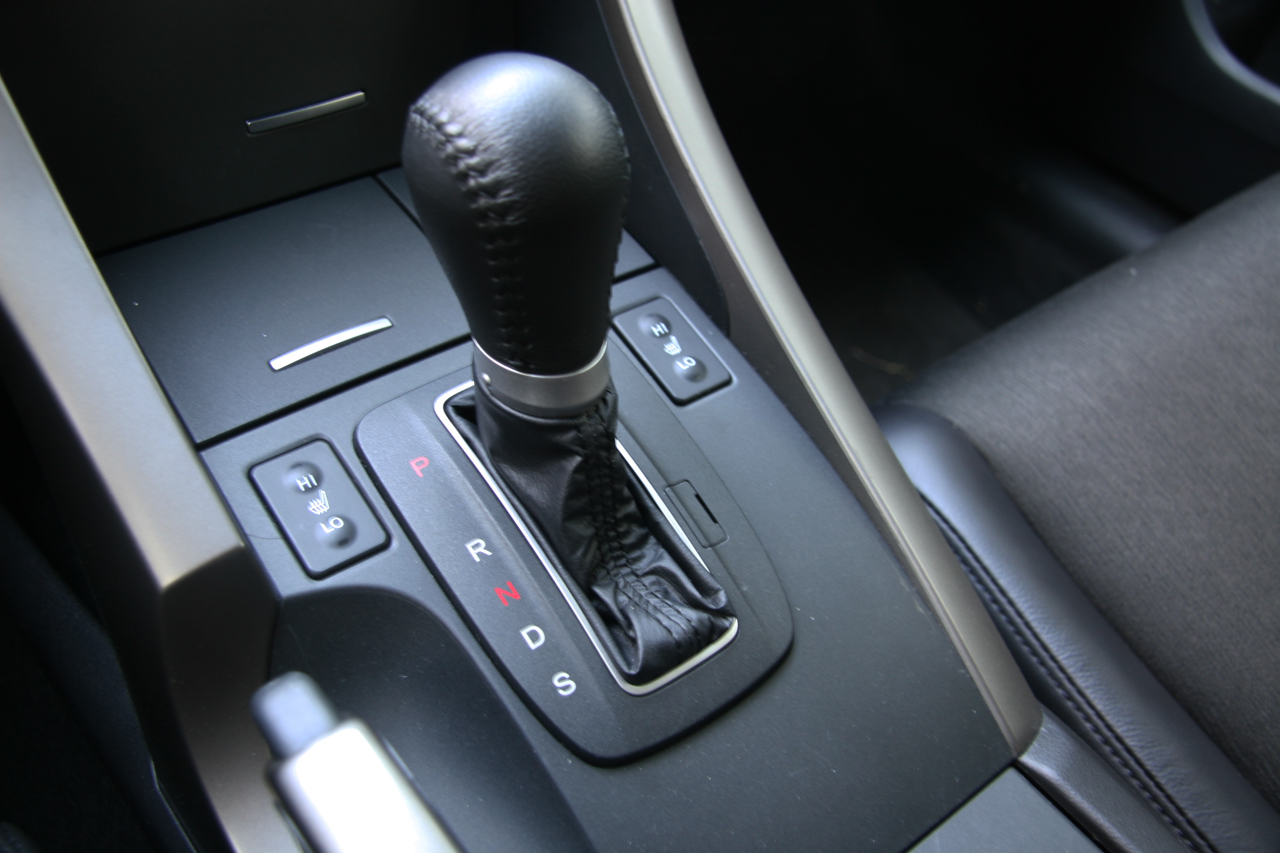 |
| The 5-speed "automatic" is quick especially in sport mode |
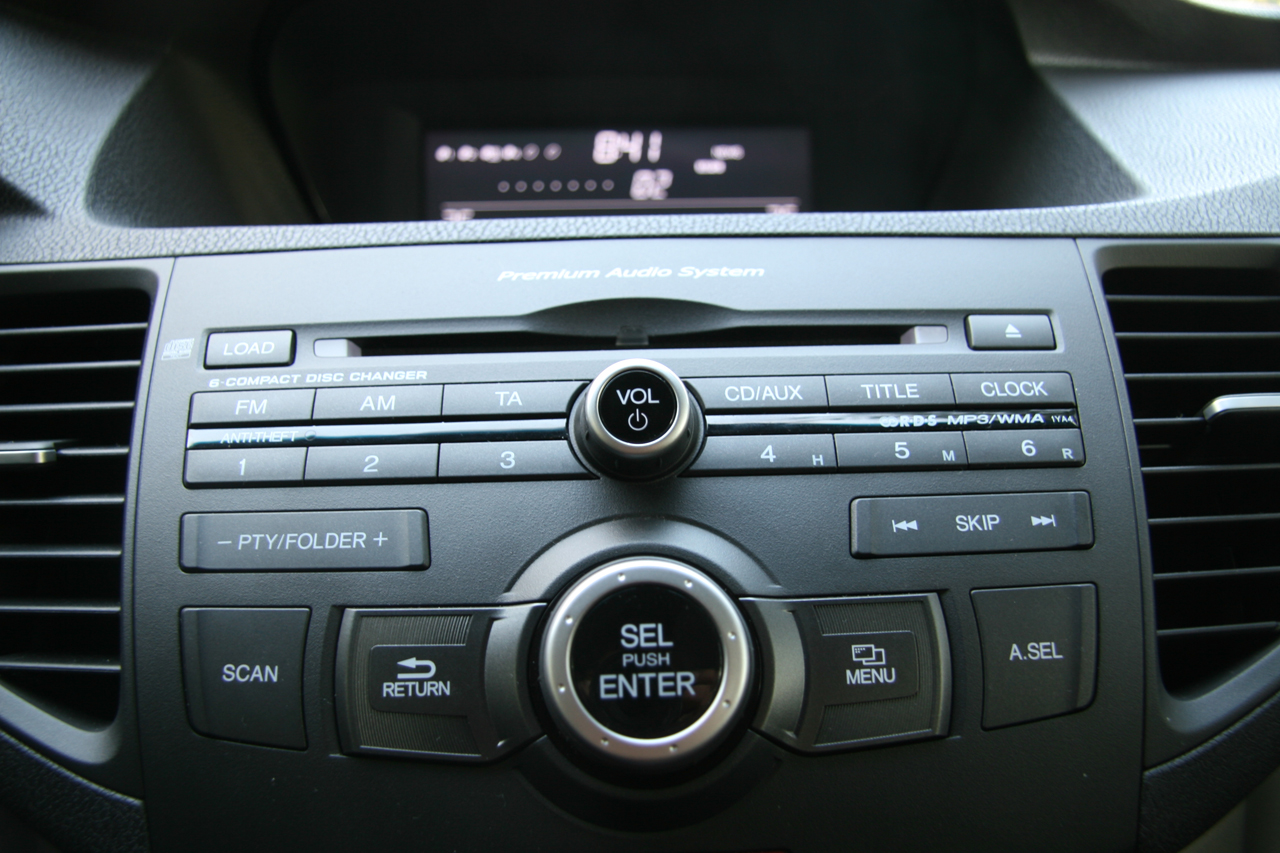 |
| The audio system with 10 speakers demonstrates decent sound quality |
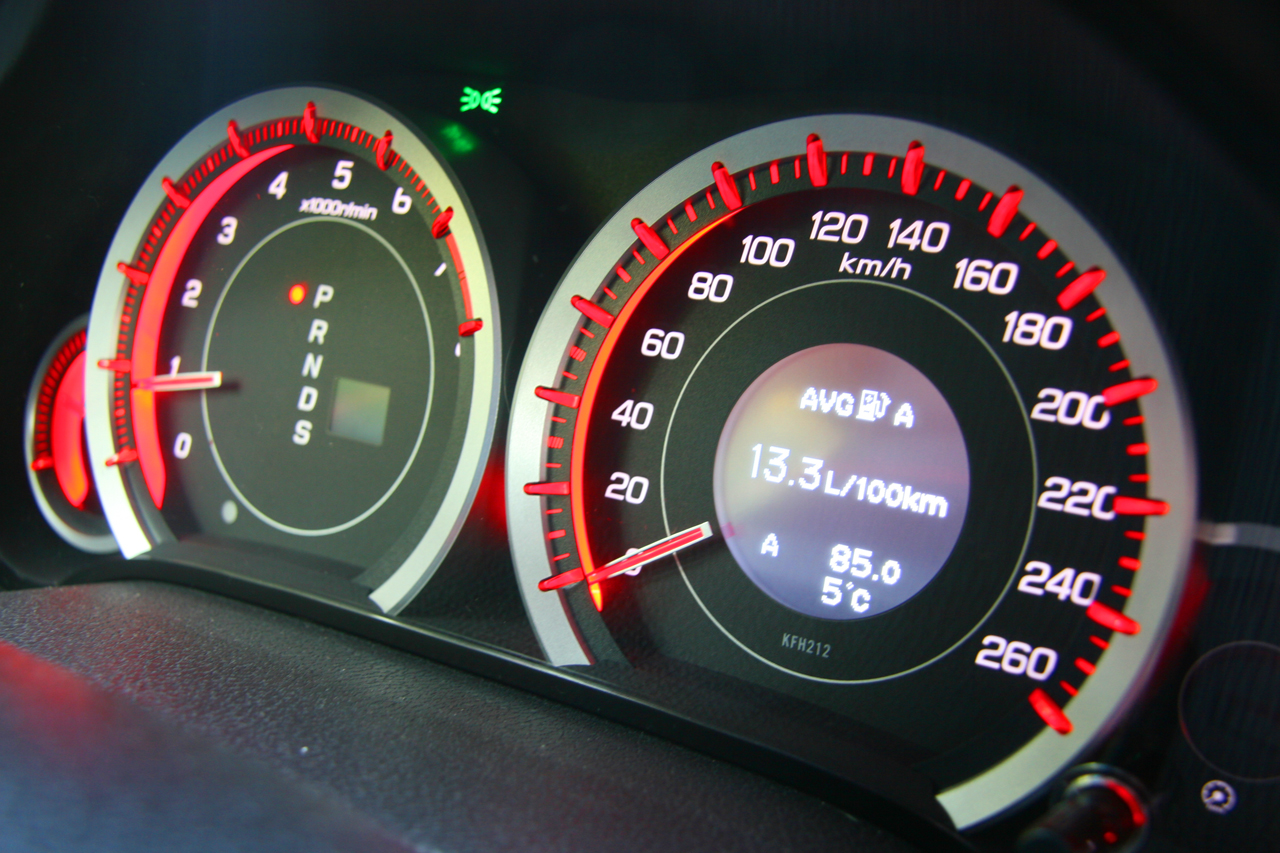 |
| The attractive instrument panel has decent functionality |
On smooth asphalt, the new Accord behaves as composed as its predecessor. The steering effort is precise and logical. The new front double-wishbone suspension together with the rear multi-link, which features variable-damping shock absorbers, confidently keeps the fast sedan in its lane. On straights, the Accord does not wander, transverse body roll is a thing of the past, and it goes through corners as if on rails. But the former zest is gone — that very premium feel, which was much talked about at the Russian presentation of the Honda Accord, makes itself known. The matured sedan no longer encourages spirited driving, offering comfort and composure instead.
As soon as the road gets worse, the suspension starts to thud dully, reactions become nervous, and passengers get shaken up considerably. Apparently, the sporty suspension settings and the 18-inch alloy wheels, which come with the Type-S version, are to blame. Everything is known in comparison, but I haven't had the chance to drive the Accord in other trims yet, so for now I'm ready to attribute the nervous behavior on broken pavement specifically to the Type-S.
 |
 |
And what about prices? After all, entering the premium segment requires serious money. The Honda Accord 2008 has also become more expensive. Russian dealers offer four trims — Comfort and Sport with the two-liter engine, as well as Type-S and Executive with the 2.4-liter engine. The base Comfort version with a manual gearbox, full power accessories, heated front seats, stability control, adaptive power steering, steel wheels, dual-zone climate control, six airbags, and fabric interior costs $27,709 (221,671 UAH). For an additional 51,000 rubles, you can get the Sport trim, which adds 16-inch alloy wheels, fog lights, automatic transmission, leather-wrapped steering wheel, rain and light sensors, and cruise control to the standard set. The Accord Type-S tested here, with an aerodynamic body kit, 18-inch wheels, xenon headlights, manual transmission, combined interior trim, and a ten-speaker audio system, is priced at $32,063 (256,501 UAH). Choosing the manual saves 25,000 rubles. The top-of-the-line Executive with a full leather interior, power-adjustable front seats with memory, front and rear parking sensors, and rear passenger ventilation vents will cost 1,010,000 rubles.
 |
 |
For comparison: the Toyota Camry in base trim, with a more spacious interior but a less powerful engine (2.4 L, 167 hp), costs 790,000 rubles, while the new Nissan Teana in the entry-level Elegance version is slightly more expensive at 838,000 rubles. Against these rivals, the Honda Accord wins in handling but loses in space and comfort.
The evolution of the Accord has succeeded. While maintaining recognizability and a competitive price, Honda's engineers managed to elevate the new model a step higher without losing its excellent road behavior. True, without the former zest...
Ruslan Galimov
 |
 |
 |