
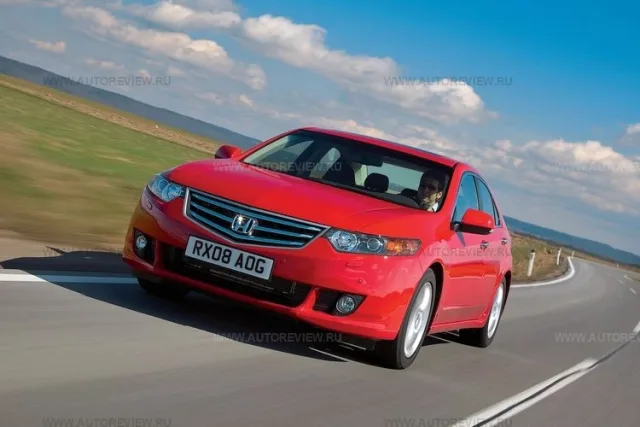
A couple of hours of trying to catch a good shot with a camera is in vain — the new Honda Accord sedan looks good only strictly from the front or strictly from the rear. Step a little to the side, and…
The seventh-generation Accord combined sportiness and solidity. But now, trying to reach premium brands, the Japanese seem to have lost their sense of proportion. And the Accord sounds different.
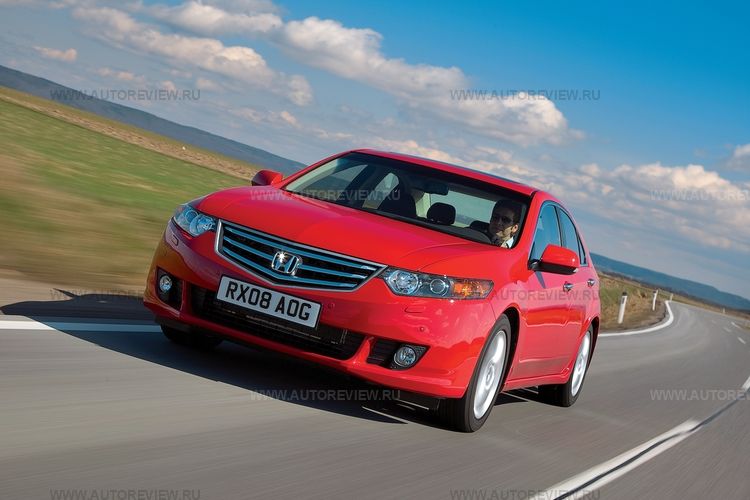
The wheel arches, drawn with a compass, are a reference to the Mercedes S-Class or the new Mazda 6. Sharp edges on the hood and trunk lid. A flashy chrome grille. And intricate broken optics…
And the interior of the eighth-generation Accord has completely broken with the past — inside it resembles a scaled-down Legend with an abundance of silver plastic and a steering wheel from the Civic. Many buttons in the style of Mercedes plus a semblance of Bavarian iDrive — a dubious combination. The steering wheel doesn't move far away, and it inevitably covers part of the instruments. But it's comfortable to sit in leather seats with widely spaced side support bolsters. It's also comfortable to press the floor-mounted gas pedal, shift gears with the precise and light lever of the "manual" or select modes with the straightforward selector of the "automatic". Here the Accord remains the same.
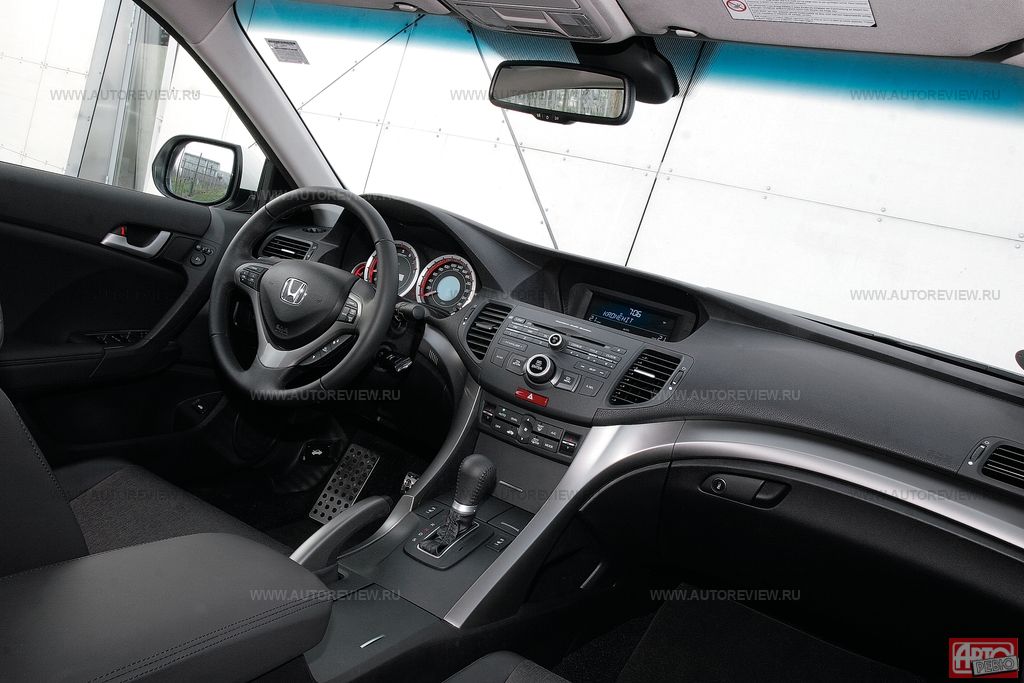 | 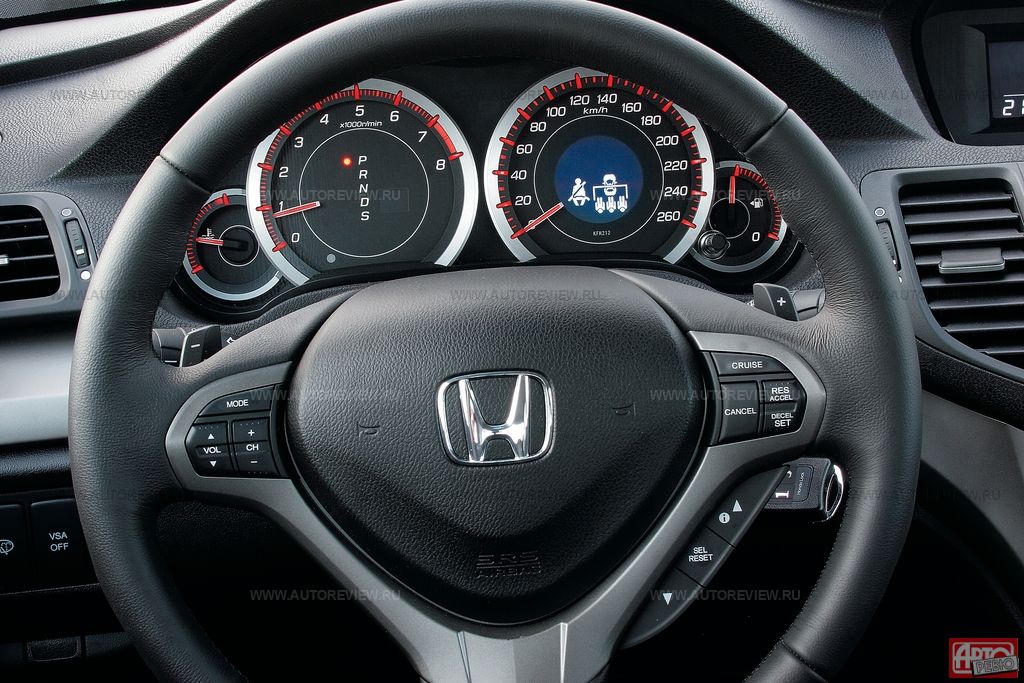 | 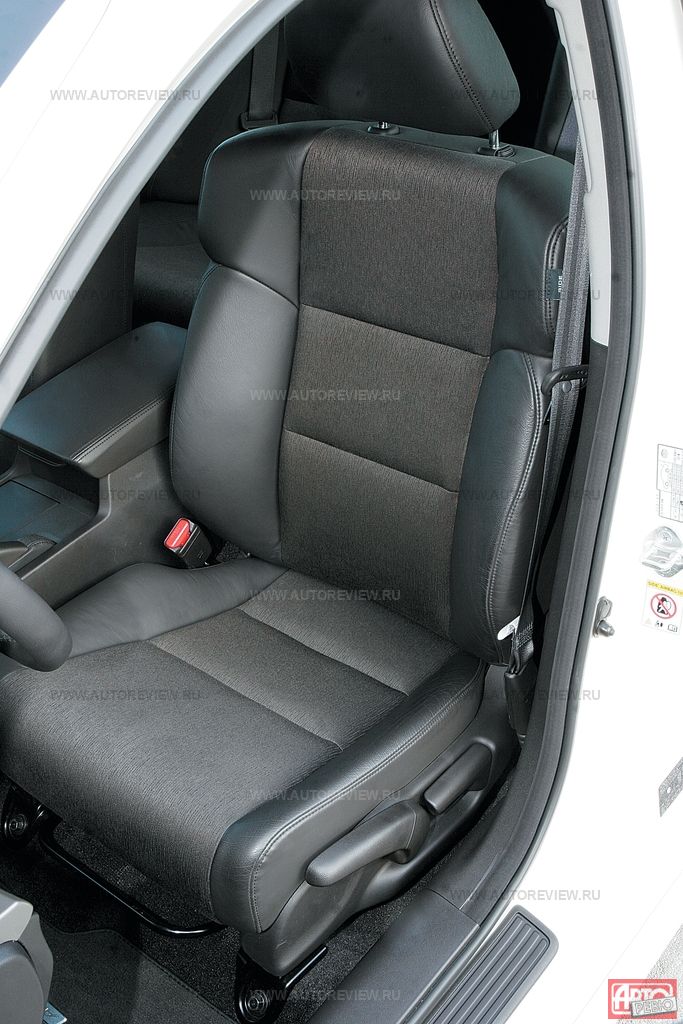 |
| The interior claims solidity, but cheap leather on the steering wheel and smooth plastic of the door handle and "handbrake" spoil the picture | The steering wheel with buttons and paddle shifters covers part of the boring dials, making you miss the optitronic magic of its predecessor. In the center of the speedometer, like in a Mercedes, is the trip computer display, and on the "free field" of the tachometer — the indicator of the "automatic" selector position or gear shift arrows (for the "manual") | The base Comfort version has fabric seats, Executive has leather, and Type-S (pictured) has combined. In all variants, the seat contour is good, but the side support bolsters are set too wide |
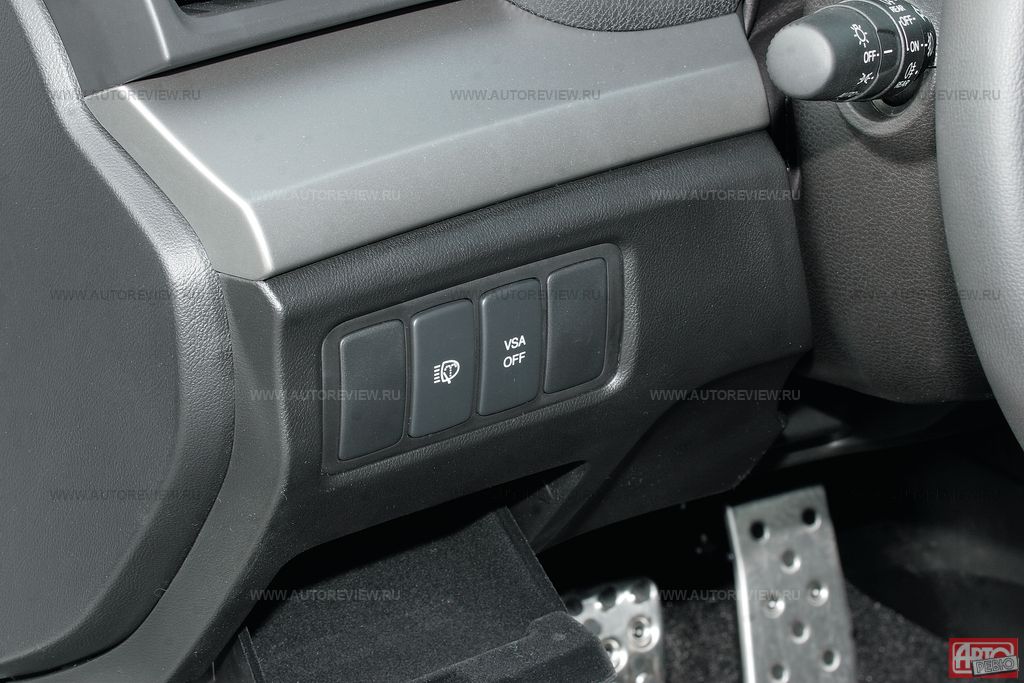 | ||
| The trunk now opens with a button on the driver's door — in a German way | The headlight washer is activated by a separate button to the left of the steering wheel |
The eighth-generation car has stretched by 61 mm in length and gained 80 mm in width. But the curb weight has hardly increased — thanks to the extensive use of ultra-high-strength steel (42% of the body mass). The suspension layout is the same — a double wishbone at the front and a five-link multilink at the rear. Only the angle of the lower arms has changed — theoretically not the best option for handling. The transmission is without innovations: front-wheel drive with a proven six-speed "manual" or a five-speed "automatic".
The new 150-horsepower diesel 2.2 i-DTEC with piezo injectors is not for Russians — the Japanese cite the low cetane number of local fuel and weak demand for diesel sedans in Russia. For us — gasoline engines. The two-liter 156-horsepower has been slightly refined — average consumption has decreased by 0.5 l/100 km. But it is still sluggish at the "bottom" and comes alive only from 4500 to 6500 rpm. The 2.4-liter engine with a compression ratio raised to 11.0:1 (was 10.5:1) produces 201 hp and pulls evenly up to the maximum 7500 rpm. Both units still run on AI-95.
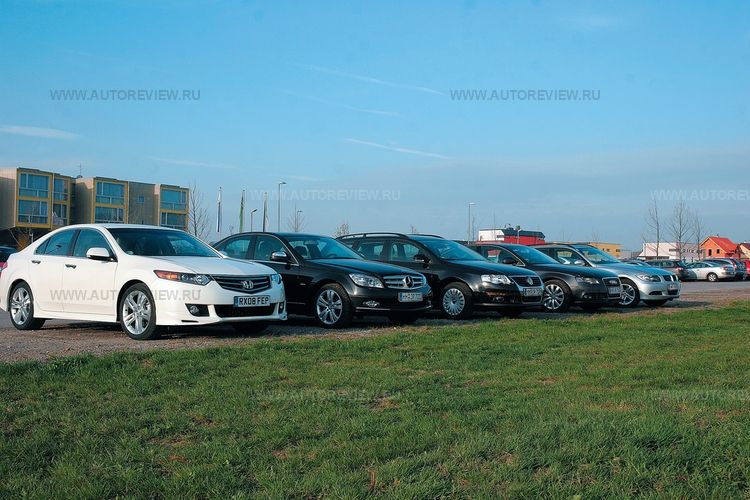
Honda marketers consider the main competitors of the new Accord not the Japanese (Mazda 6, Toyota Avensis), but more expensive German sedans and station wagons of the premium D-class: Audi A4, BMW "three", Mercedes C-class… Won't the Accord turn out to be a white crow among them?
In Russia, by the way, the version with the 2.4 engine is more popular — it accounts for 60% of sold Accords. And the "automatic" instead of the "manual" is chosen by 84% of buyers. The automatic transmission, as before, is good — in Drive mode it shifts logically, smoothly, and imperceptibly. You can also do it manually: the box will upshift itself if a gear engaged via the paddle shifters reaches the rev limiter. Move the selector to Sport — and the "automatic" downshifts one or two gears, shifts faster, and honestly holds the selected gear in manual mode. No adaptive algorithms!
Two points are alarming. When switching from Sport to Drive, it's easy to miss and hit neutral without pressing the lock button. And that's an unexpected loss of traction. And the loss of almost two seconds in acceleration to 100 km/h compared to the "manual" is hardly offset by the saving of 0.2—0.4 liters of fuel in the suburban and combined cycles. For comparison: the BMW 125i Convertible with similar mass and power with an "automatic" loses only 0.6 seconds to the "manual".
What did the new Accord gain thanks to enhanced sound insulation and aerodynamic refinement? At least — good acoustic comfort. Although it's a pity that the battle song of Honda engines has become a quiet colorless hum, and stones hitting the wheel arches sound as loud as before.
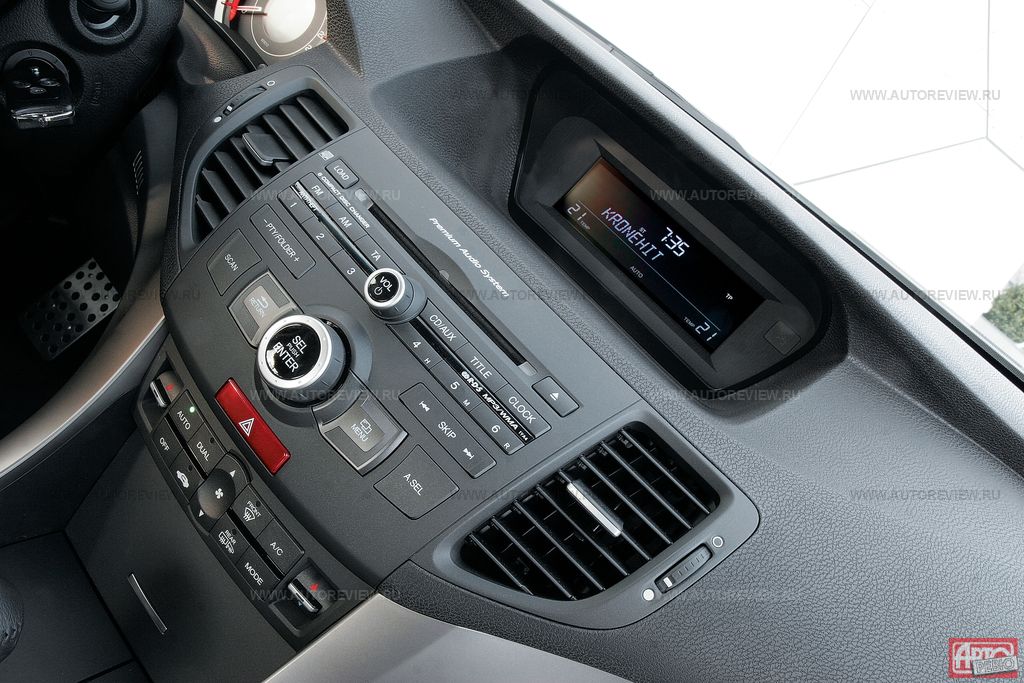 | 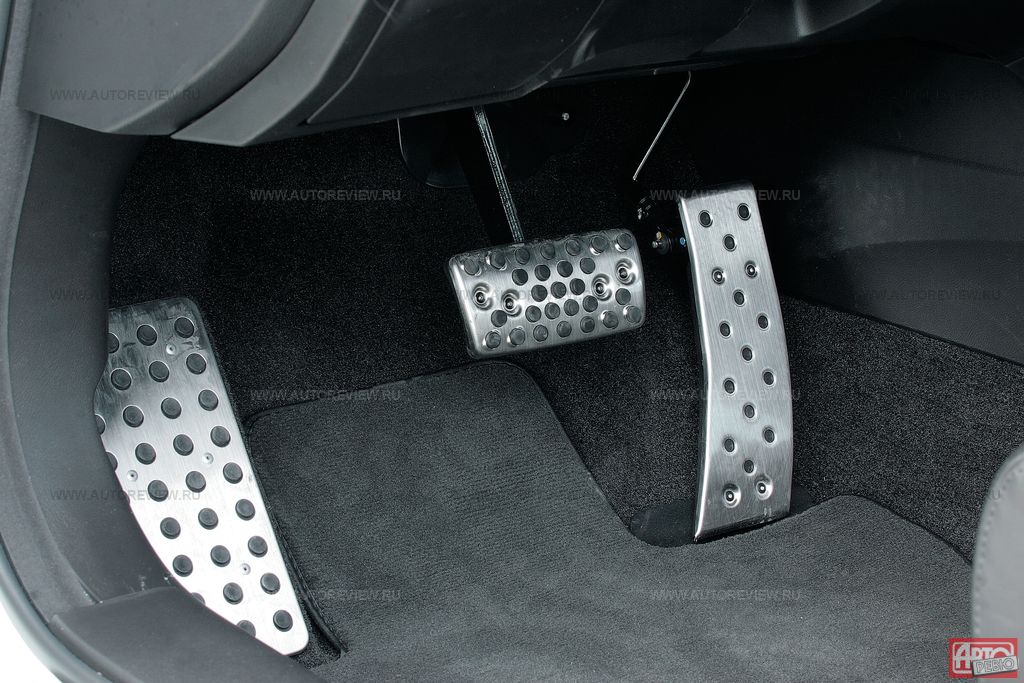 | 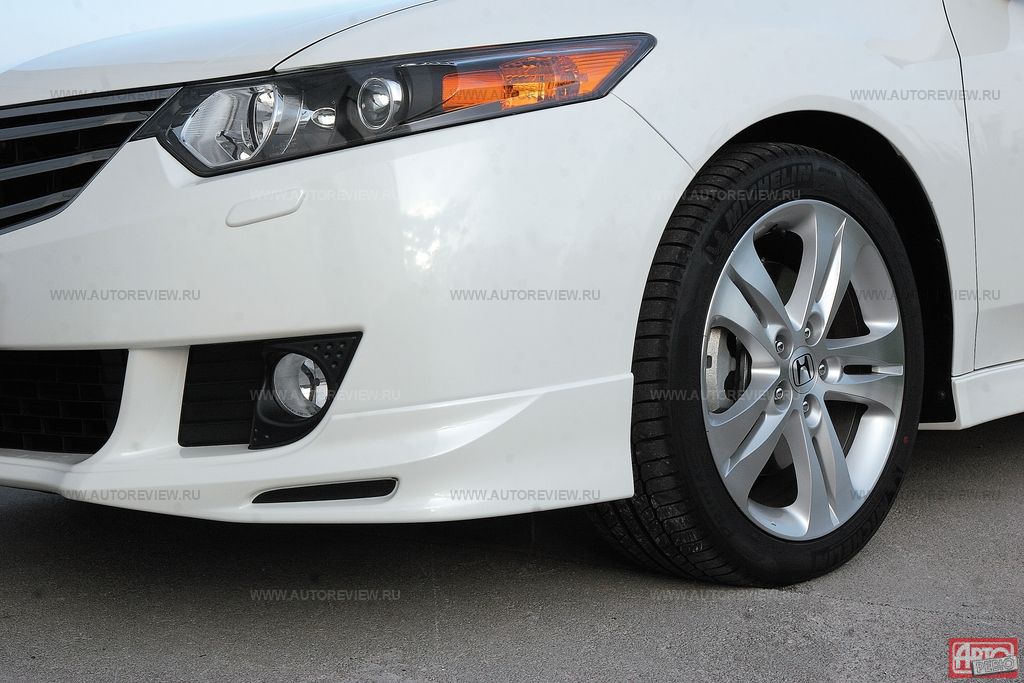 |
| In the Russian version (pictured), the navigation screen is replaced by a truncated display, and the Japanese analogue of iDrive is simplified — the small joystick at the end of the "washer" is replaced by a large button | Aerodynamic body kit, 18-inch wheels, aluminum pedal covers, red instrument lighting, and stiffer shock absorbers — these are all the differences of the Type-S version | |
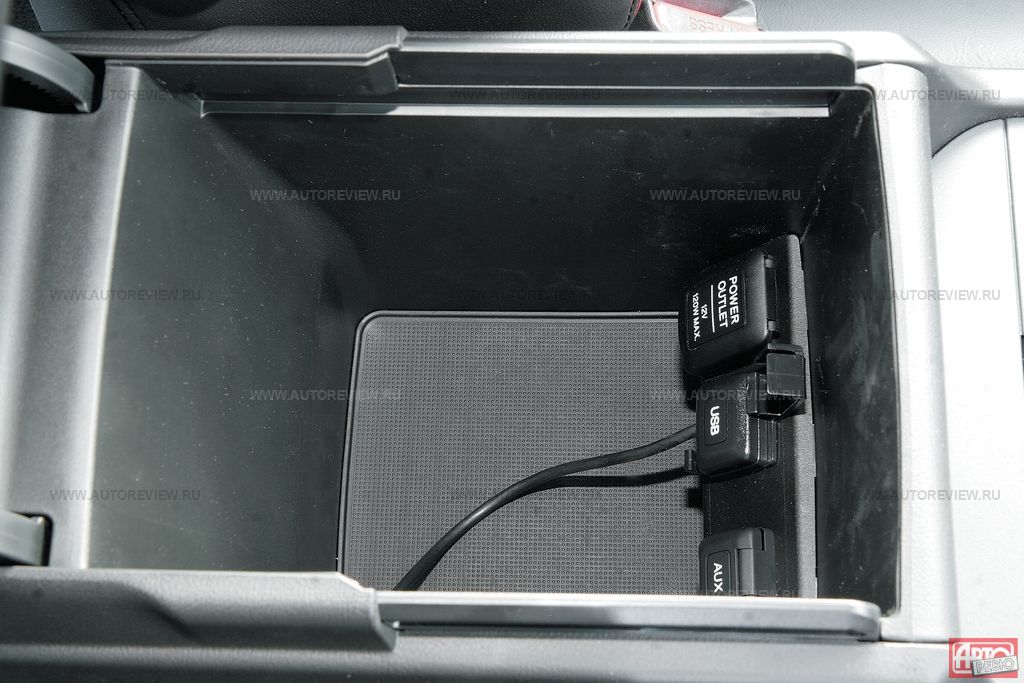 | 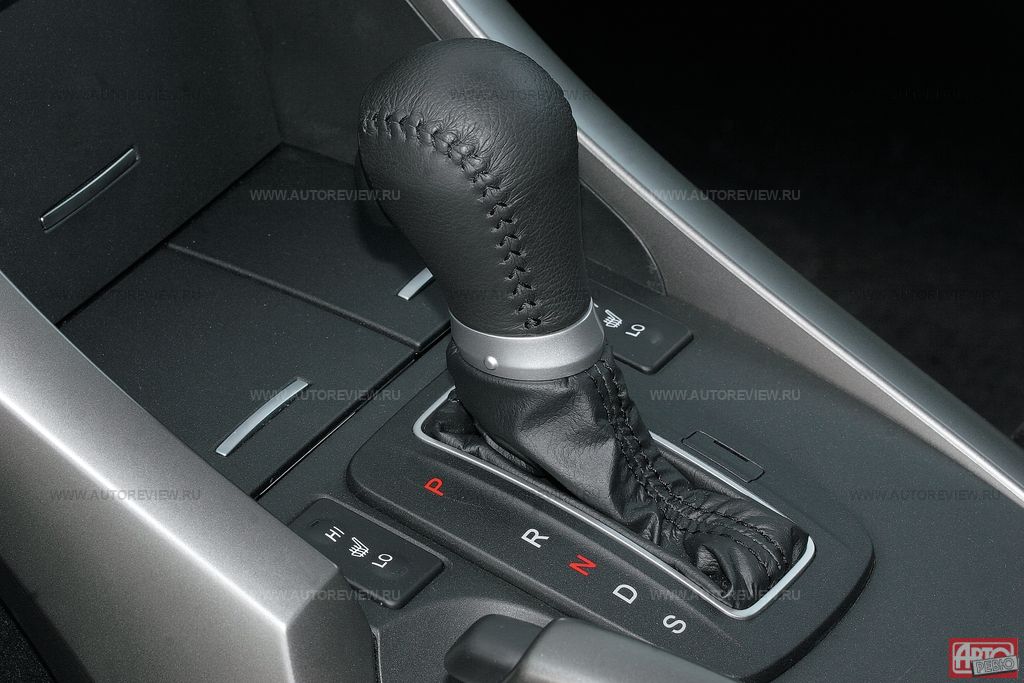 | 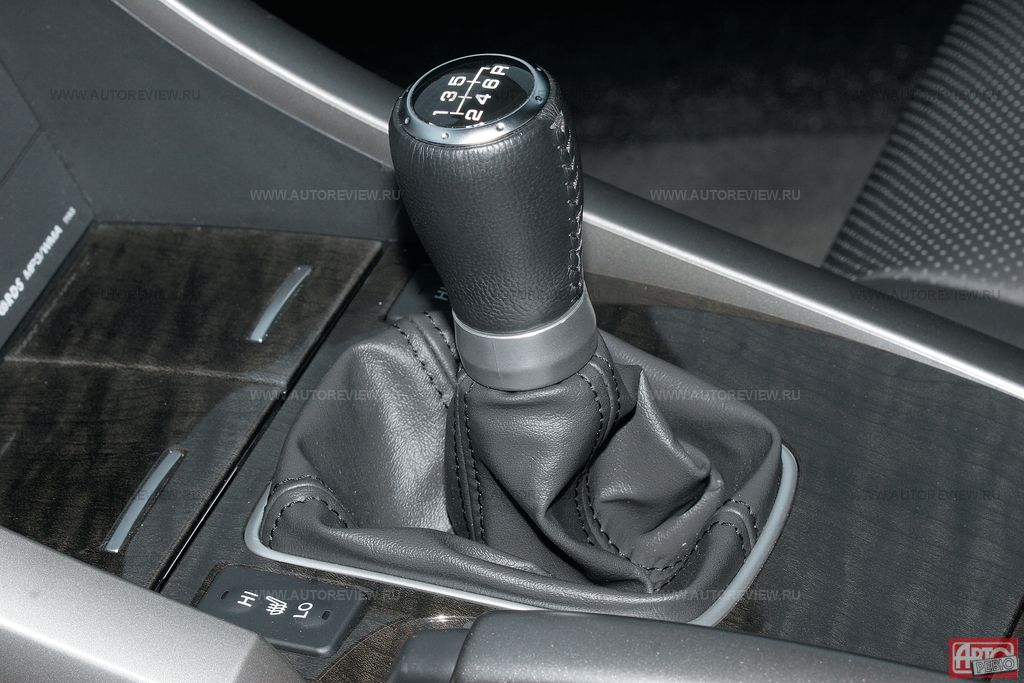 |
| At the bottom of the box between the seats — an audio player connector, USB port, and 12-volt socket | Between the delightfully crisp "manual" (right) and the adequately smooth "automatic" (left), Russians rarely choose — most take Accords with an automatic transmission | |
The suspension is tuned for comfort — thanks to different valves, the shock absorbers absorb impacts from large potholes more softly. But even on the waves of Austrian asphalt, rocking is noticeable. And what will happen on our roads? The suspension travel hasn't changed, so energy intensity may suffer.
The previous Accord was sporty on the go. The new one has a lowered center of mass by 18 mm (due to a different placement of the engine and fuel tank), a track widened by 75 mm, "sharper" steering with an electric power steering instead of hydraulic, and a torsional rigidity increased by a third. Drive?
On Austrian autobahns, the Accord rushes clearly along the trajectory, and any deviation of the "not sharp" steering wheel at small angles (thanks to the variable gear ratio in the "pinion—rack" pair) is accompanied by a clear increase in effort. But I turn onto a narrow mountain road — and the steering wheel develops a "power play": at small steering angles, there is a constant background effort. And the real information comes later — when the wheel is turned more than 100 degrees.
But that's just the beginning: the real issues appeared when the stability control system started to activate.
Today, Honda's VSA (Vehicle Stability Assist) system, similar to Toyota's VDIM, can counteract slides of both axles. In addition, it "prompts" the correct steering direction during understeer or oversteer by changing the amount of effort of the electric power steering. For example, if the car starts to spin into oversteer, the steering wheel itself tends to turn in the direction of the rear wheels' slide — for correction. And if understeer of the front axle begins, then…
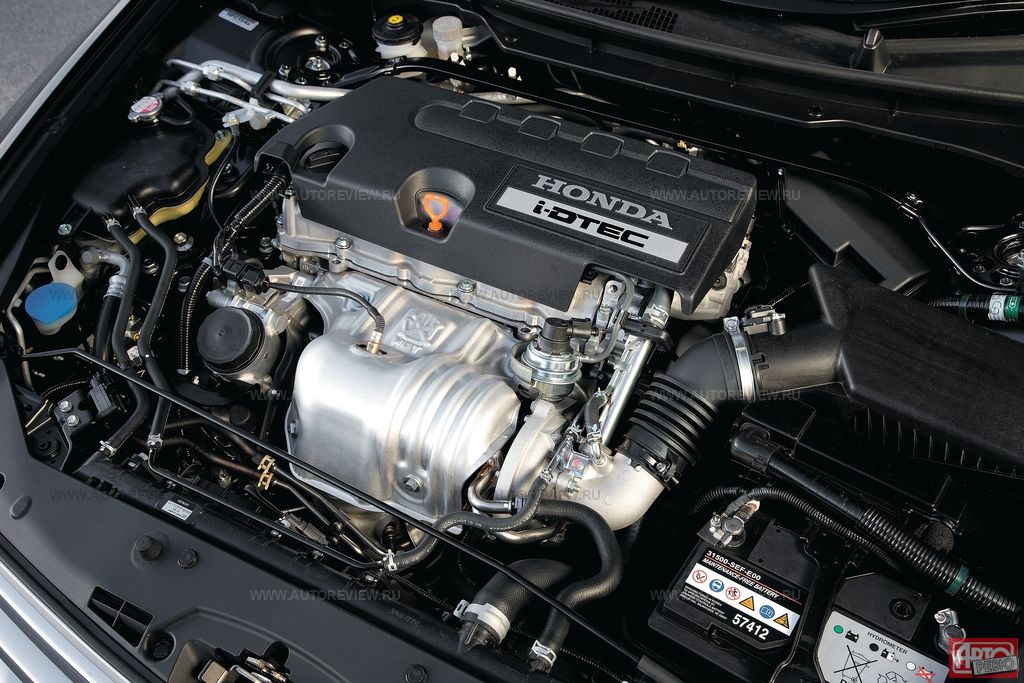 | 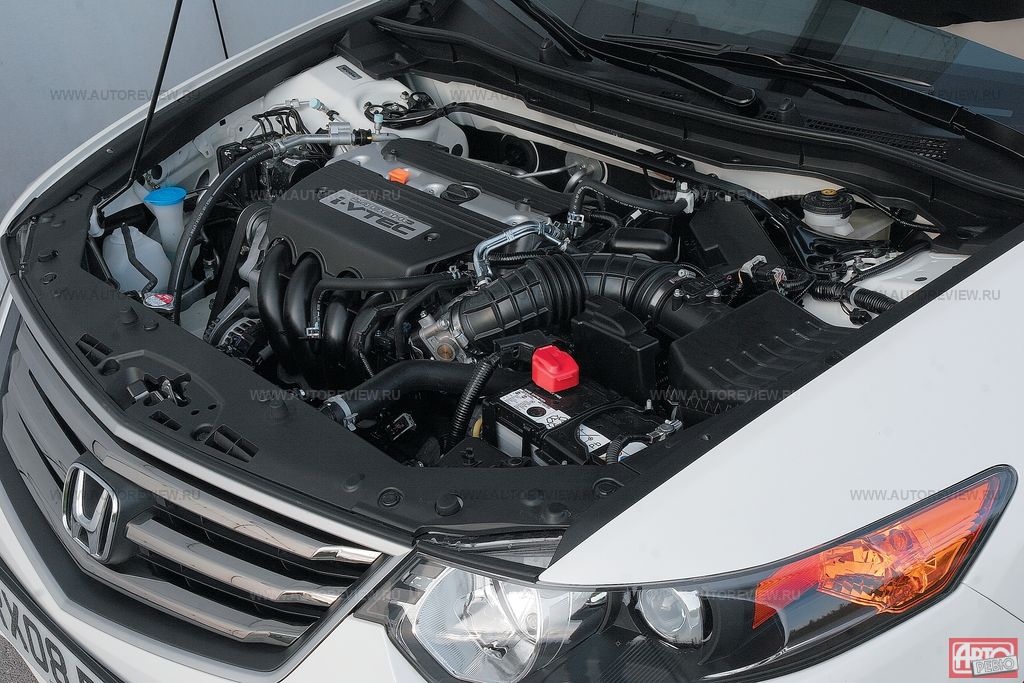 |
| The new 150-horsepower i-DTEC diesel with piezo injectors, developed by Honda itself, will not be supplied to Russia yet | Thanks to a plastic intake manifold with enlarged channels, optimized valve timing, and an increase in compression ratio from 10.5:1 to 11.0:1, the 2.4-liter gasoline engine develops 201 hp and meets Euro-5 standards |
For any experienced driver, the steering wheel "lightening" in a high-speed corner is a sign of beginning understeer. The front wheels' grip on the road deteriorates, the force on the steering wheel drops — and this is a signal that the wheel needs to be returned to neutral, without over-turning.
However, Honda's electronics act the opposite way — they increase the force on the steering wheel! And this is with good intentions: they say, this is a sign that you shouldn't turn the steering wheel further, worsening the understeer. But the "electrified" steering wheel of the Accord becomes heavier so imperceptibly that you perceive it as a sign of increased grip — and instinctively turn the steering wheel further! The understeer intensifies, the stability control system grinds its brakes...
Probably, many drivers who haven't taken emergency driving courses will be helped by such an Accord to avoid understeer. But a trained "driver" will be confused.
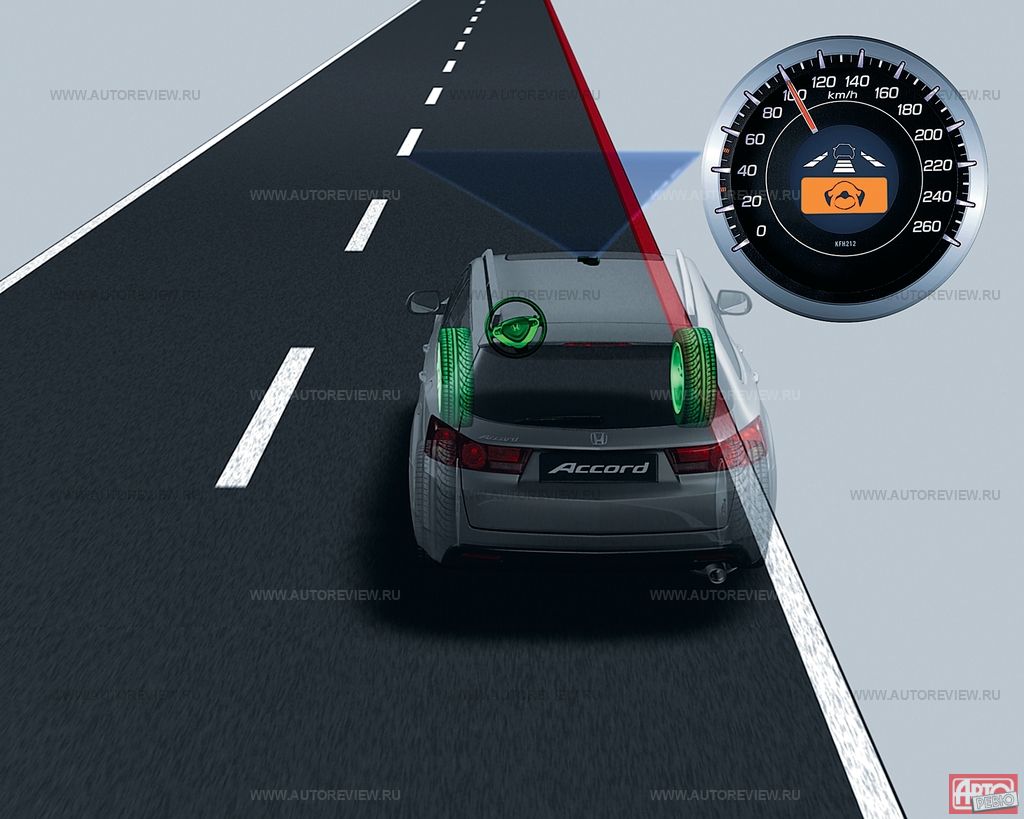 | The electronic lane keeping assist system LKAS appeared on Accords of the previous generation for the Japanese market, and is now available in Europe as well. The system includes a camera for monitoring lane markings, a radar scanning the space in front of the car, and an electric power steering with a coaxial electric motor (that is, located directly on the steering column). As soon as the car, without the turn signal activated, comes close to the lane marking, a force impulse is created on the steering wheel, prompting the driver in the correct direction of correction. The electric power steering was decided to be integrated into the stability control system later, and it seems they did it not very successfully — in extreme modes it disorients the driver |
I'd better drive slowly. Especially since the comfortable suspension is conducive to that...
Maybe the "charged" Accord Type-S is tuned differently? No! Except that ride smoothness has become worse. After all, the Type-S version differs only in "stiffer" shock absorbers, wide and low-profile tires (235/45 R18 versus the standard 225/50 R17 for the 2.4 version), and a light "tuning" body kit... Oh yes, also red illumination of the dials.
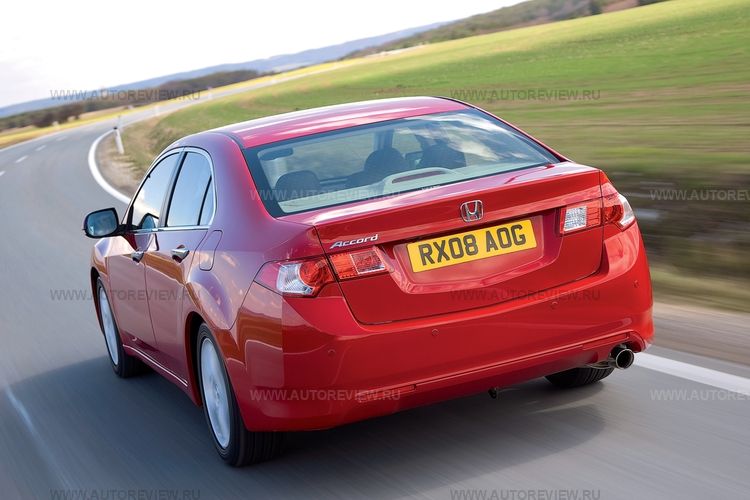
One can only dream of a fighting character, as well as of an all-wheel-drive Accord with the SH-AWD intelligent drive system. People from Honda complain about the high cost — the SH-AWD system would add at least 150 thousand rubles to the retail price. Although even without it, the Accord will become significantly more expensive. Retail prices have not yet been approved, but the new Accord will cost no less than the business sedan Nissan Teana of the "higher" class E! That is, at least 812 thousand rubles for a two-liter car with a manual transmission. And the top Accord 2.4 Executive with leather interior, xenon headlights, and sunroof will cost no less than a million rubles — the average price increase will be 100 thousand rubles.
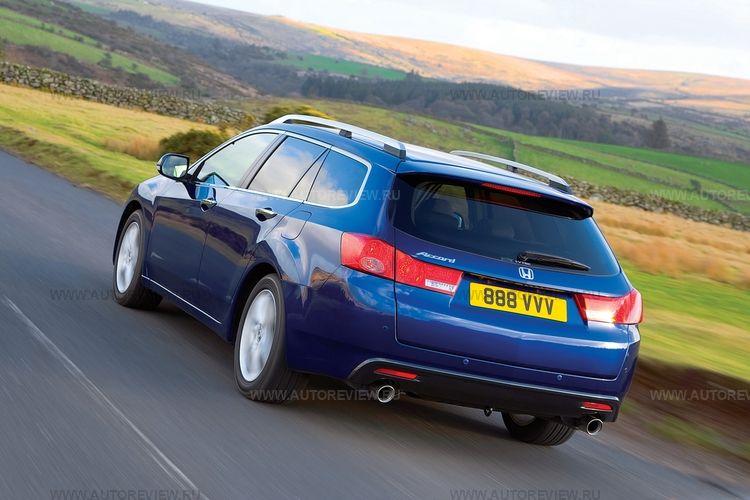
Moreover, the swift Tourer station wagon, adored by the British, cannot be bought here — among the Accords sold in Russia last year, the share of five-door beauties does not exceed 2%. Russian cars will also not have the useful preventive safety systems available to Europeans: adapting the lane keeping assist LKAS, active cruise control, and the "emergency brake" CMBS (see AR No. 23, 2006 and No. 22, 2005) to our legislation is unprofitable. Even the proprietary navigation system will not appear on the Accord for about two more years.
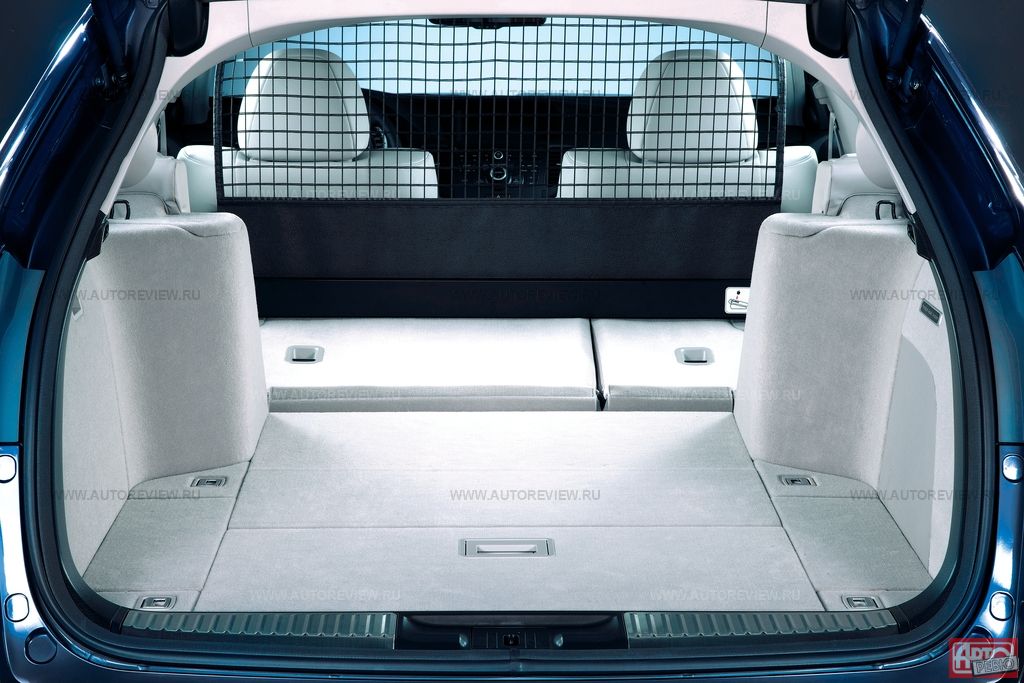 | 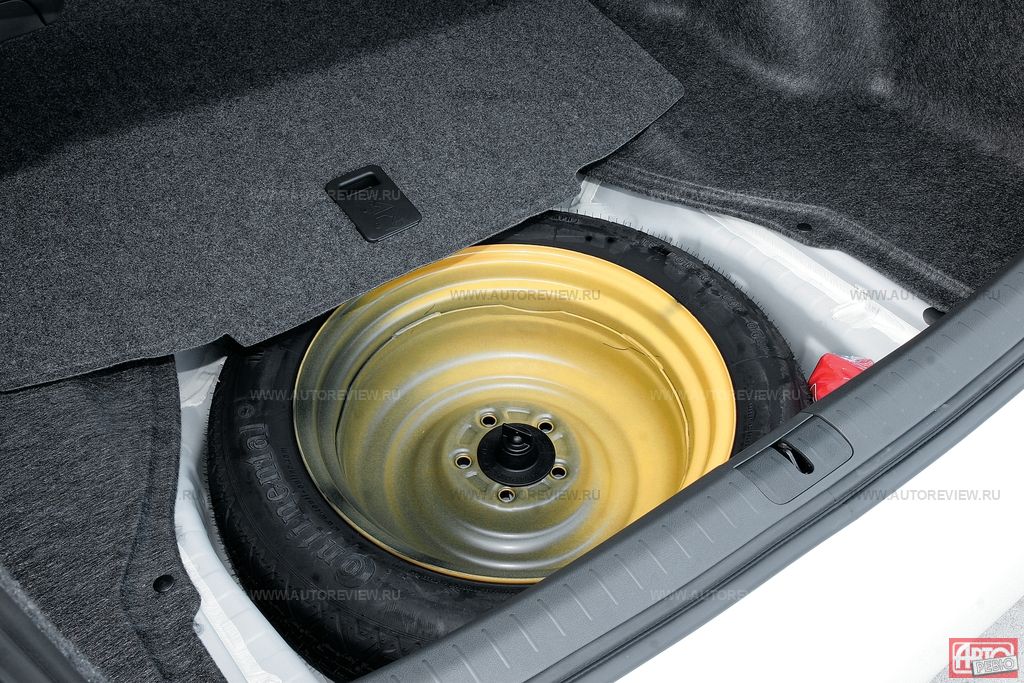 |
| The Honda Accord Tourer station wagon in terms of driving qualities is almost no different from the sedan, but it is more beautiful, not to mention its spaciousness. The trunk has an abundance of underfloor niches and an electric tailgate. But the volume is less than that of the Passat, and the "cups" of the rear suspension struts interfere with placing bulky luggage. In Europe, the Tourer is more popular than the sedan, so it is, as before, produced at the English factory in Swindon (sedans for Europe are imported from Japan). But in Russia, the Honda Accord Tourer will not be sold | The round niche for the space-saver spare wheel was made specifically for Russians. Initially, a rectangular one was planned — for tools, a compressor, and sealant |
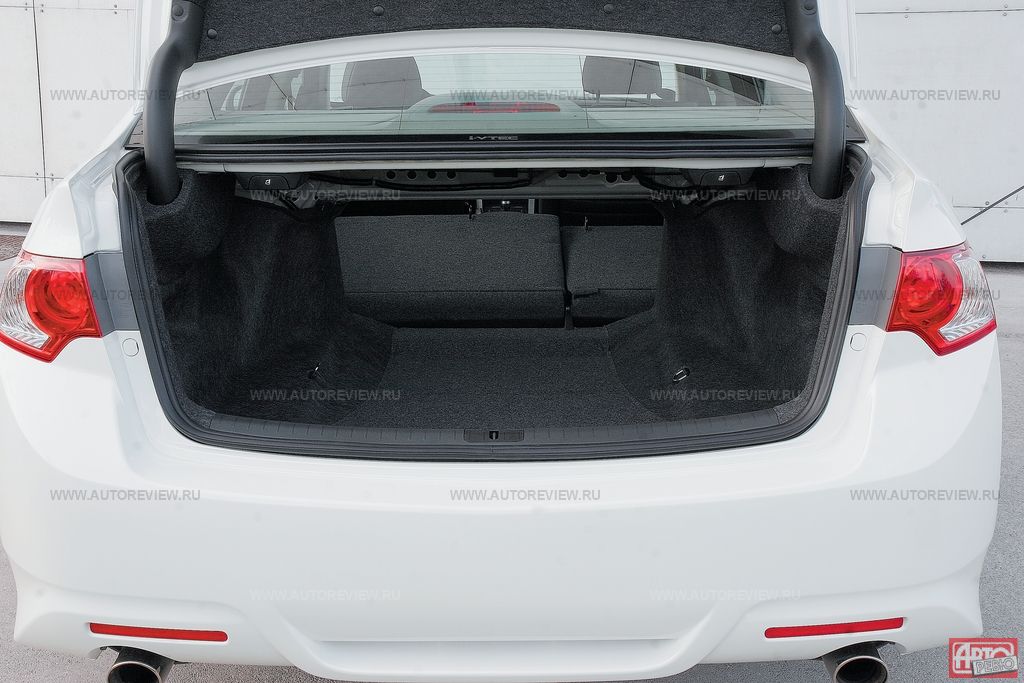 | 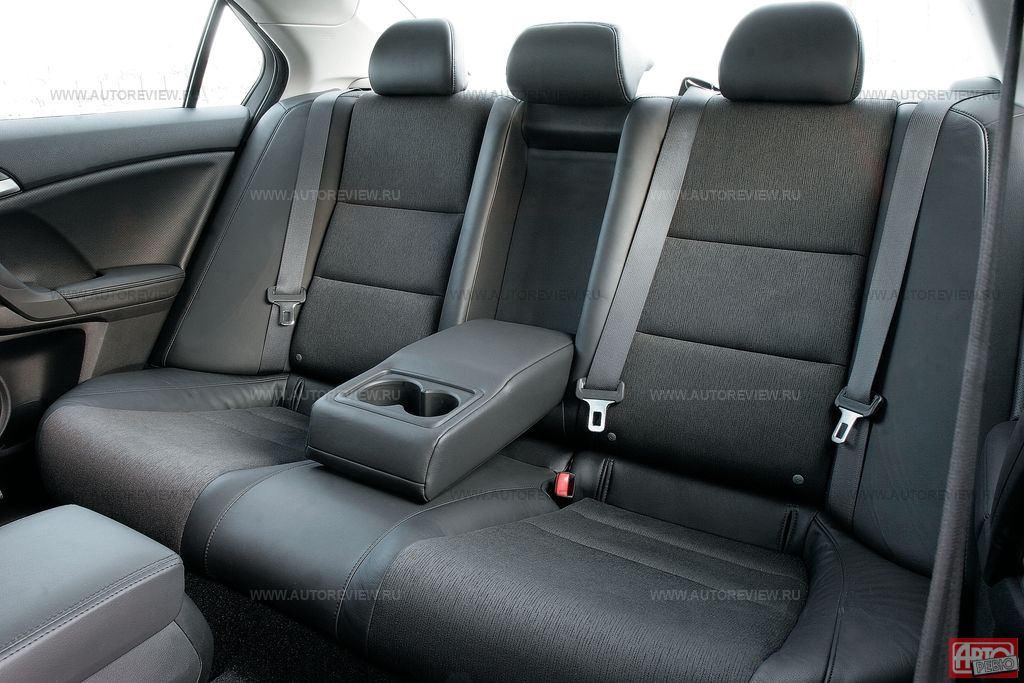 |
| In terms of trunk volume (467 liters), the Accord is inferior to the Passat and Mazda 6. The loading height compared to the predecessor has decreased by 80 mm, but the bumper step is still very high. The floor is uneven, when transforming the rear sofa a narrow opening into the cabin opens, and folding the backrests is inconvenient — they are not spring-loaded, and the latch handles are in the trunk | The width at shoulder level has increased by 65 mm — three people will now be much more spacious. Legroom has increased a little (the wheelbase has lengthened by only 35 mm), and the cup holder in the armrest still has no lid |
What are the Japanese plans to double Accord sales this year based on?
On the fact that the stylish and solid Accord of the previous, seventh generation became Honda's bestseller in our market: last year, Russia surpassed Germany and Japan in sales volumes of this model! Therefore, Honda engineers and designers assure that they created the "eighth" Accord taking into account our, Russian preferences as well.
Maybe that's why it made such a strange impression? At least at first.
| Passport data | ||
| Parameters | Vehicle | |
| Honda Accord | ||
| Modification | 2.0 i-VTEC | 2.4 i-VTEC |
| Body type | 4-door sedan | 4-door sedan |
| Number of seats | 5 | 5 |
| Dimensions, mm | ||
| length | 4726 | 4726 |
| width | 1840 | 1840 |
| height | 1440 | 1440 |
| wheelbase | 2705 | 2705 |
| track front/rear | 1590/1590 | 1590/1590 |
| Trunk volume, l | 467 | 467 |
| Curb weight, kg | 1414 (1443)* | 1484 (1518)* |
| Gross weight, kg | 1935 (1960) | 1995 (2030) |
| Engine | petrol, with distributed fuel injection | |
| Location | front, transverse | front, transverse |
| Number and arrangement of cylinders | 4, in-line | 4, in-line |
| Number of valves | 16 | 16 |
| Displacement, cm³ | 1997 | 2354 |
| Cylinder bore/piston stroke, mm | 81.0/96.9 | 87.0/99.0 |
| Compression ratio | 10.6:1 | 11.0:1 |
| Max power, hp/kW/rpm | 156/115/6300 | 201/148/7000 |
| Max torque, Nm/rpm | 192/4300 | 234/4500 |
| Drive | front-wheel drive | |
| Transmission | 6-speed manual (5-speed automatic) | |
| Front suspension | independent, coil spring, double wishbone | |
| Rear suspension | independent, coil spring, five-link | |
| Front brakes | disc, ventilated | |
| Rear brakes | disc | |
| Tires | 205/60 R16 | 225/50 R17 |
| Maximum speed, km/h | 215 (212) | 227 (227) |
| Acceleration time 0-100 km/h, s | 9.3 (10.7) | 7.8 (9.5) |
| Fuel consumption, l/100 km | ||
| urban cycle | 9.4 (10.2) | 11.9 (12.0) |
| extra-urban cycle | 5.9 (5.9) | 7.0 (6.6) |
| combined cycle | 7.2 (7.5) | 8.8 (8.6) |
| CO₂ emissions, g/km | 170 (178) | 209 (204) |
| Fuel tank capacity, l | 70 | |
| Fuel | petrol AI-95 | |
| * Data in parentheses for version with automatic transmission | ||
Eight Accords
Igor VLADIMIRSKYIt is hard to imagine, but the very first Accord of 1976 was a modest three-door hatchback that was smaller than the current Civic. This front-wheel-drive car had independent McPherson suspensions front and rear, and under the hood it had a carburetor engine with a displacement of 1.6 liters, producing 80 horsepower. A sedan joined the model a year later.
From the first days, the Accord was conceived as a car of increased prestige: basic equipment included a radio receiver, and for an additional fee you could order an automatic transmission with two stages, power steering, and air conditioning. For the US and Japanese markets, where environmental standards were tightening, power units with the original CVCC pre-chamber torch ignition system were offered.
The success of the model was overwhelming — by 1980, production exceeded one million units. To turn the Accord into a truly global car, Honda launched a plant in Ohio in November 1982: thus the second generation became the first Japanese car assembled in America. The 1983 update brought an anti-lock braking system, 12-valve engines, four-speed automatic transmissions, and 1.8 engines received electronic distributed injection PGM-FI. Moreover, it was for the second Accord that the world first offered the Electro Gyrocator navigation system, created jointly with Alpine.
The third generation, which appeared in 1985, stood out with retractable headlights, double wishbone suspensions, and twin-cam engines with a displacement of 1.8 and 2.0 liters. The standard sedan and hatchback were joined by a three-door station wagon Aerodeck, and from 1988 a coupe began to be produced in the States.
In 1989, the model changed generation for the fourth time: the car noticeably grew and abandoned three-door versions. The total circulation crossed the five million mark, and in 1992 the English plant in Swindon joined production.
With the fifth generation, a split began: in Europe, Japan, and the USA, completely different cars are sold under the name Accord, differing not only in appearance but also in dimensions and engine range. The European Accord debuted in 1994, it was assembled in England in sedan and five-door hatchback bodies, and the main novelty was a two-liter engine with the proprietary VTEC variable valve timing system.
The sixth generation in 1998 gave the world a "charged" Type-R version with a naturally aspirated 2.2 engine producing 212 hp, but sales were modest, so the seventh, grown-up Accord lost such a modification (however, the Japanese still got the hot Euro-R). The seventh generation finally shifted the emphasis towards premium: strict appearance, solid interior, quality finishing materials. The fresh Accord moves in the same direction.
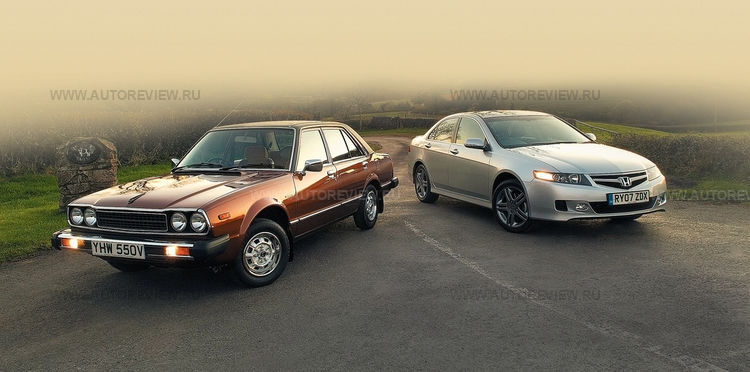
Honda Accord of the first (1976—1981) and seventh (2002—2008) generations. Currently, cars of this model are sold in more than 160 countries worldwide, and over 32 years, more than 15 million Accords have been produced