
Honda Accord. Old Friend
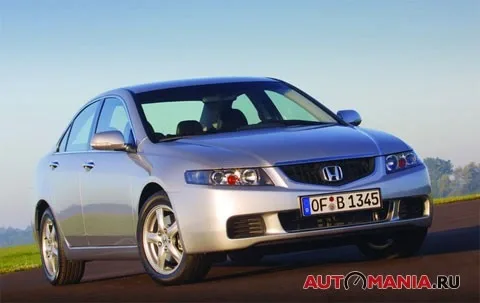
In 2007, Honda considered the Accord's year of triumph on the Russian market — sales of the model were record-breaking. But, if you look closely, the credit here goes more to rivals than to the car itself. Key competitors — Ford Mondeo and Mazda 6 — had already run out of steam by the start of the season, waiting for a generational change, and their new models, naturally, hadn't yet gained momentum. Opel Vectra and Nissan Primera were perceived more as backup options, and their updates were also on the horizon. Citroen C5 failed its annual report, while Peugeot 407 was holding on by a thread. In short, the situation was ideal for the Accord, and the Japanese simply couldn't afford not to take advantage of it. Although a discerning domestic buyer would hardly have fallen for an outright weak machine…
Our hero today is no newcomer to the Russian market: the seventh-generation sedan has been sold here since 2002. During this time, it underwent a light cosmetic update, receiving different bumpers with new fog lights and a chrome strip on the false radiator grille. And in the middle of last year, to nudge the undecided toward a purchase, the Japanese rolled out a Special Edition version. It can be distinguished by a dark chrome grille, tinted headlights, body kit, and exclusive 17-inch wheels. It's clear that Honda followed the well-trodden marketing path: such tricks are needed to stir up interest in a long-familiar car. At the same time, it remained the same good old Accord — with a "muscular" appearance, an abundance of angles and a minimum of roundness, a characteristic squint of the optics, and a swift profile.
Inside, no stylistic revolution occurred. The flaws present in the first version were eliminated during the restyling, so now designers only added carbon fiber inserts — they once again emphasize the sedan's sporty nature, especially in the "limited series." At the same time, the audio system was slightly upgraded: the "non-mass" Accord got 360-watt acoustics and a six-disc changer. But there are still complaints about the updated car. For example, the instrument lighting almost goes blind in bright sunlight, and the front panel is done in a radical black color.
Perhaps the stylists deliberately left these details to hint at Honda's temperament. Ergonomics confirm this. The front seats with an anatomical profile and moderate firmness will suit a driver of any build, especially since the adjustment ranges are decent. The only thing to nitpick is the somewhat short cushions, which don't provide proper thigh support. But it's pleasing that the sedan doesn't pretend to be sporty: the seating position here is exceptionally low, which is rare for modern "Japanese" cars. True, this complicates life for rear passengers. The sofa is clearly designed for two, although three can fit if desired. If the front seats are pushed back, there's no room left for legs in the back. And a passenger 180 cm tall risks, if not hitting their head on the ceiling, then coming dangerously close to it. In short, front occupants will be far more comfortable in this sedan.
There are no complaints about the equipment. After the restyling, the Accord got a trip computer, the absence of which journalists and buyers had previously lamented. The car also gained automatically folding mirrors. The base trim, priced at 724,000 rubles, includes dual-zone climate control, power and heated mirrors, ABS with EBD, eight airbags, an MP3-compatible stereo, and an alarm. Under the hood is a 155-horsepower 2.0-liter engine paired with a five-speed manual. The Sport version from the Special Edition series, with the same engine, automatic transmission, leather steering wheel, cruise control, stability control, and auto-dimming mirror, costs 811,000 rubles. Our test car had the most powerful engine available for "civilian" versions — a 2.4-liter unit paired with a five-speed automatic. For this variant, they ask from 915,000 rubles. And it must be admitted, it's worth the money.
Despite its relatively modest displacement, the Japanese engine delivers a quite respectable 190 hp. It goes fast, briskly, and powerfully. The proprietary i-VTEC system manages valve timing: at high revs, intake valves open earlier; at low revs, later. The result is excellent elasticity and acceptable dynamics. The sedan accelerates to 100 km/h in 9 seconds, with a top speed of 227 km/h. True, the "automatic" slightly spoils the impression: it's noticeably "thoughtful" and doesn't always choose gears logically. The manual mode saves the day — then the gearbox honestly revs the engine almost to the limiter, putting the driver in a fighting mood.
Pleasantly, the Japanese car is well insulated from noise. The engine only starts to make its voice heard after 4000 rpm. The sound of pebbles hitting the wheel arches, the hum of winter tires, and aerodynamic noises are almost inaudible. However, suspension knocks sometimes break through the protection. By the way, the suspension itself in the Accord is remarkably balanced. On one hand, it provides the executive sedan with decent ride comfort and doesn't falter over bridge joints and speed bumps. On the other hand, it's composed and doesn't let the car rock at speed or lean excessively in corners. The latter is especially noticeable in sharp turns.
Overall, the Accord's handling leaves very pleasant impressions. The steering is good: the sedan is stable on straights, provides clear feedback in corners, allowing precise trajectory holding. True, during sharp lane changes, the car tends to wag its "tail," but the stability control gently and imperceptibly reins it in. The brakes also deserve praise — they work very effectively. The pedal is extremely sensitive, so you need to modulate the force carefully, otherwise the driver behind might not react in time, and the ride will cease to be pleasant.
That's about it. After a close acquaintance with the Japanese sedan, it becomes clear: its market success is not a coincidence but a regularity. Especially since the leaders temporarily ceded their positions. But they'll soon return, updated "French" cars will catch up, and then the Accord will have a hard time. However, the Japanese are unlikely to sit idly by, so the main battle is still ahead.
Technical specifications:
| Dimensions: | Honda Accord |
| Length (mm) | 4665 |
| Width (mm) | 1760 |
| Height (mm) | 1445 |
| Wheelbase (mm) | 2670 |
| Weight (kg) | 1480 |
| Trunk volume (l) | n/a |
| Engine displacement (cm3) | 2354 |
| Max power (hp) | 190 at 6800 rpm |
| Max torque (Nm) | 223 at 4500 rpm |
| Top speed | 227 |
| Acceleration 0-100 km/h (s) | 9 |
| Average fuel consumption (l) | 9.4 |
| Price (rub.) | 724,000—915,000 |
Magazine "Autoguide" February 29, 2008 No. 55
Source – AUTOMANIA.RU