Judging by how quickly the number of Chinese cars on our roads is growing, not all motorists are scared by the horrific crash test footage of Chery Amulet and Geely Otaka staged by the editors of "Autoreview" magazine (we ourselves still recall the Amulet without much enthusiasm). However, cars from the Middle Kingdom have an obvious trump card: they are affordable and quickly appear in showrooms. Moreover, the Chinese learn from mistakes and, according to rumors, fix the "childhood diseases" of the previous batch right on the assembly line. Maybe things really are improving? To check this, we very cautiously took the Geely MK for a test — a fairly solid and no longer so budget C-class sedan.
 |
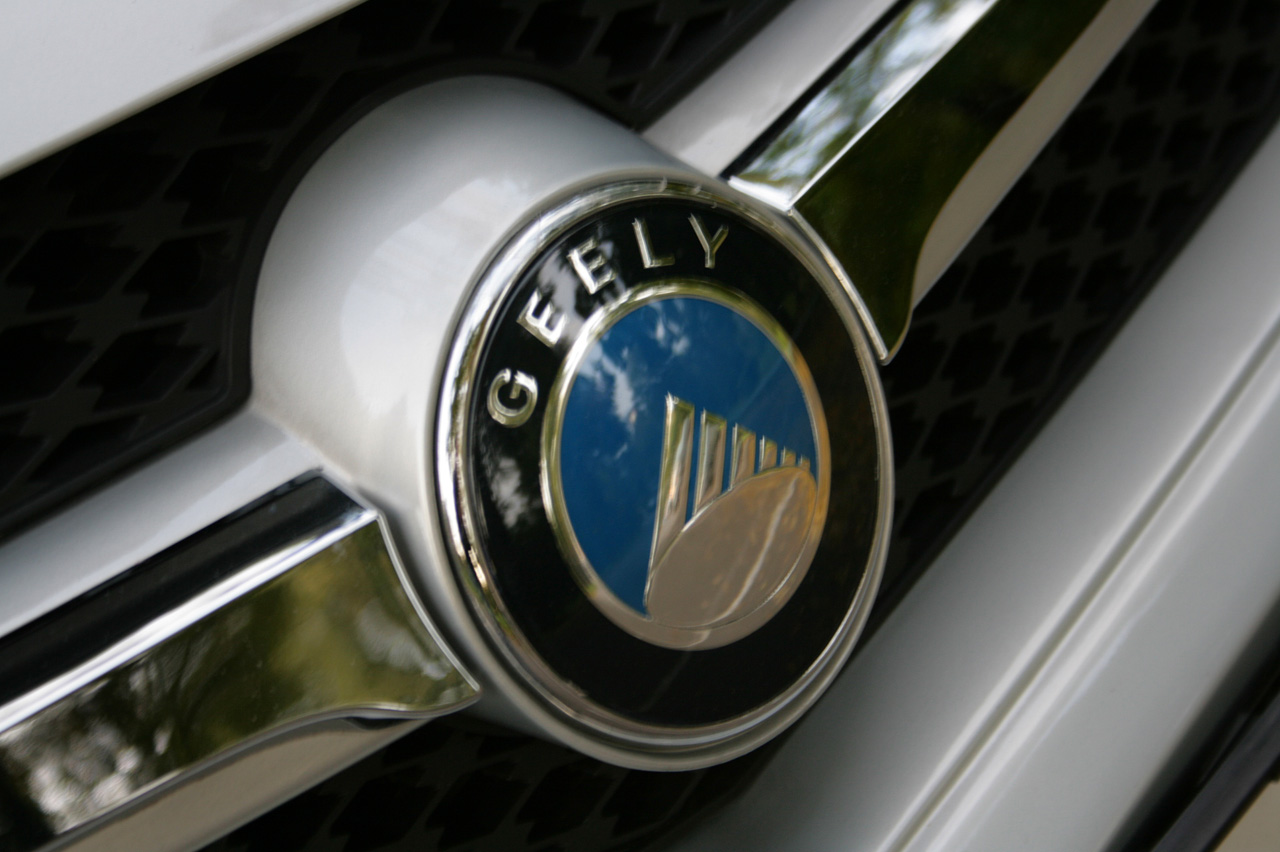
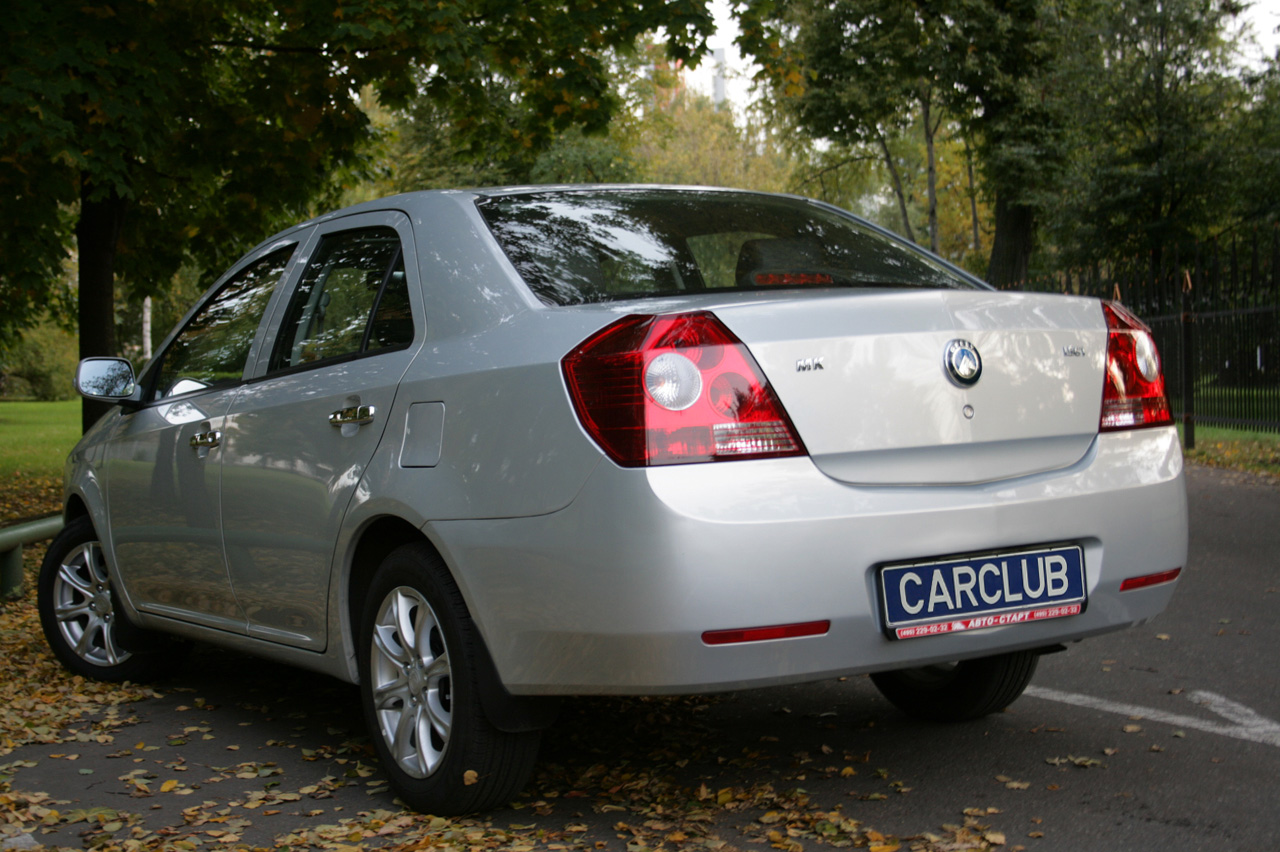
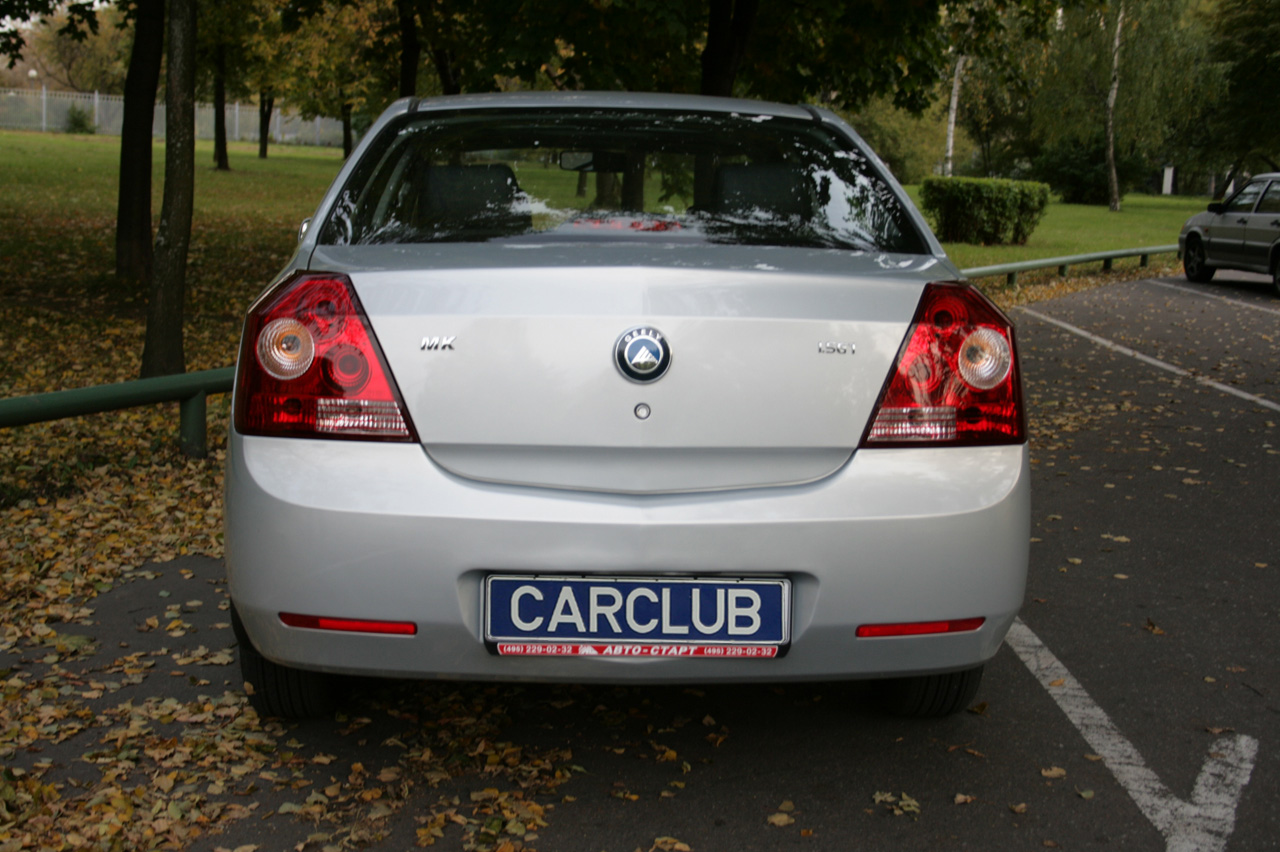
| The Geely logo strongly resembles the Skoda emblem |
Unlike the "Otaka," which opened the Russian market for "Geely" (where prices start from 291,500 rubles), the MK already costs from 319,000 rubles. But we didn't skimp and took the top version: leather interior, sunroof, power windows, power mirrors, and other pleasant options. Such cars cost from 369,000 rubles... And in this price category, Geely has serious rivals, albeit without leather seats. Let's hit the road.
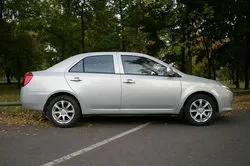 |
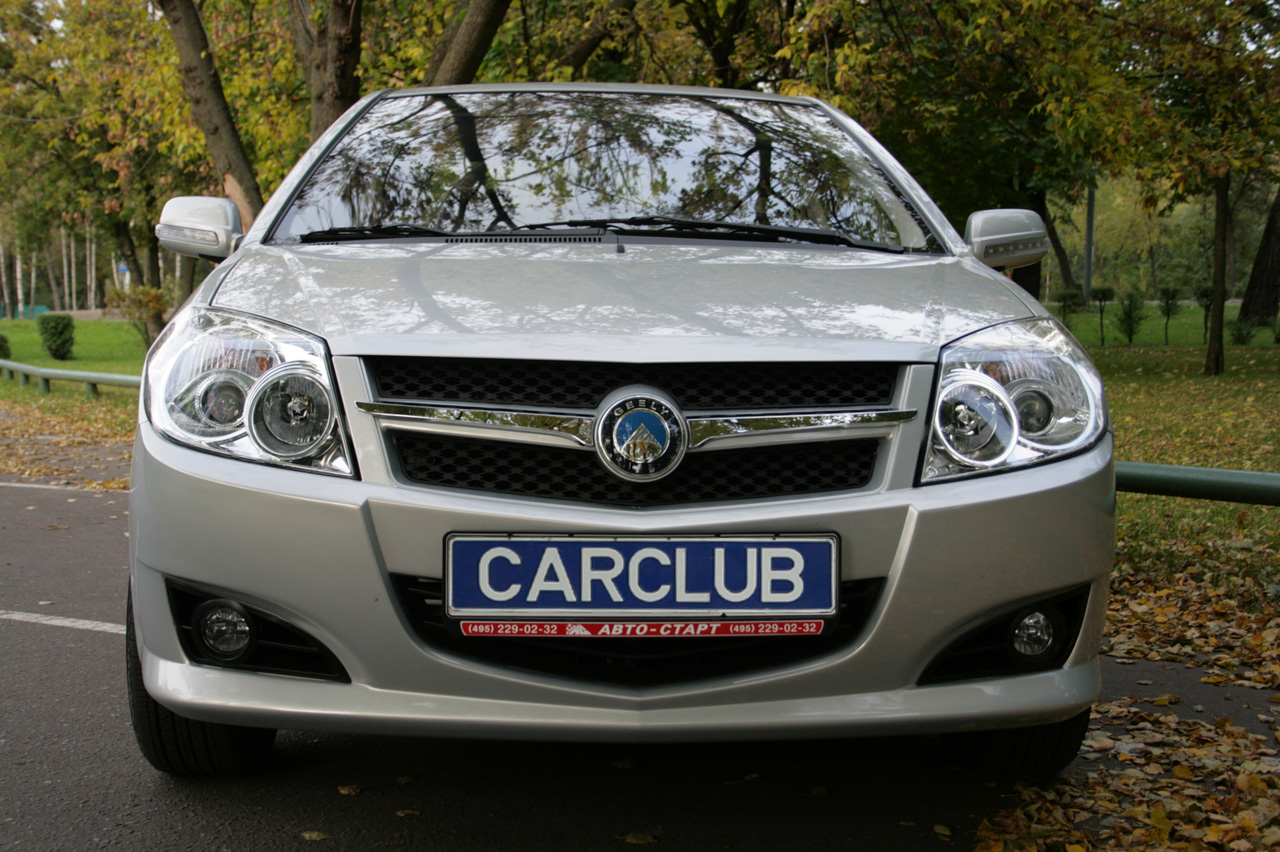
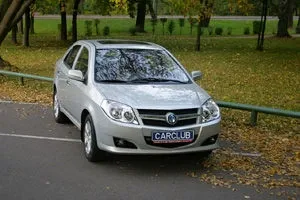
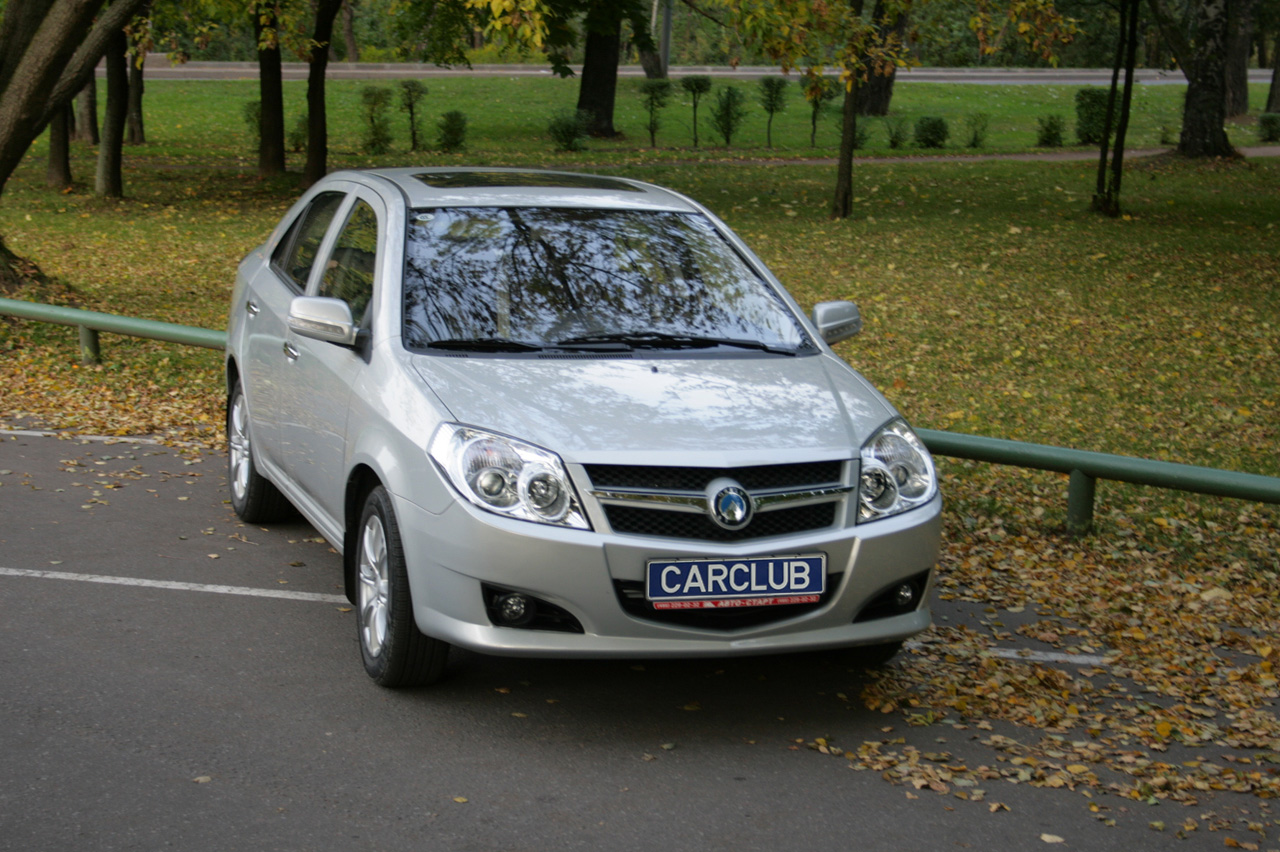
| From the outside, the Geely looks quite decent... |
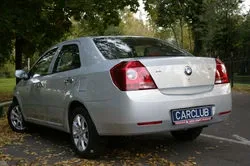 |
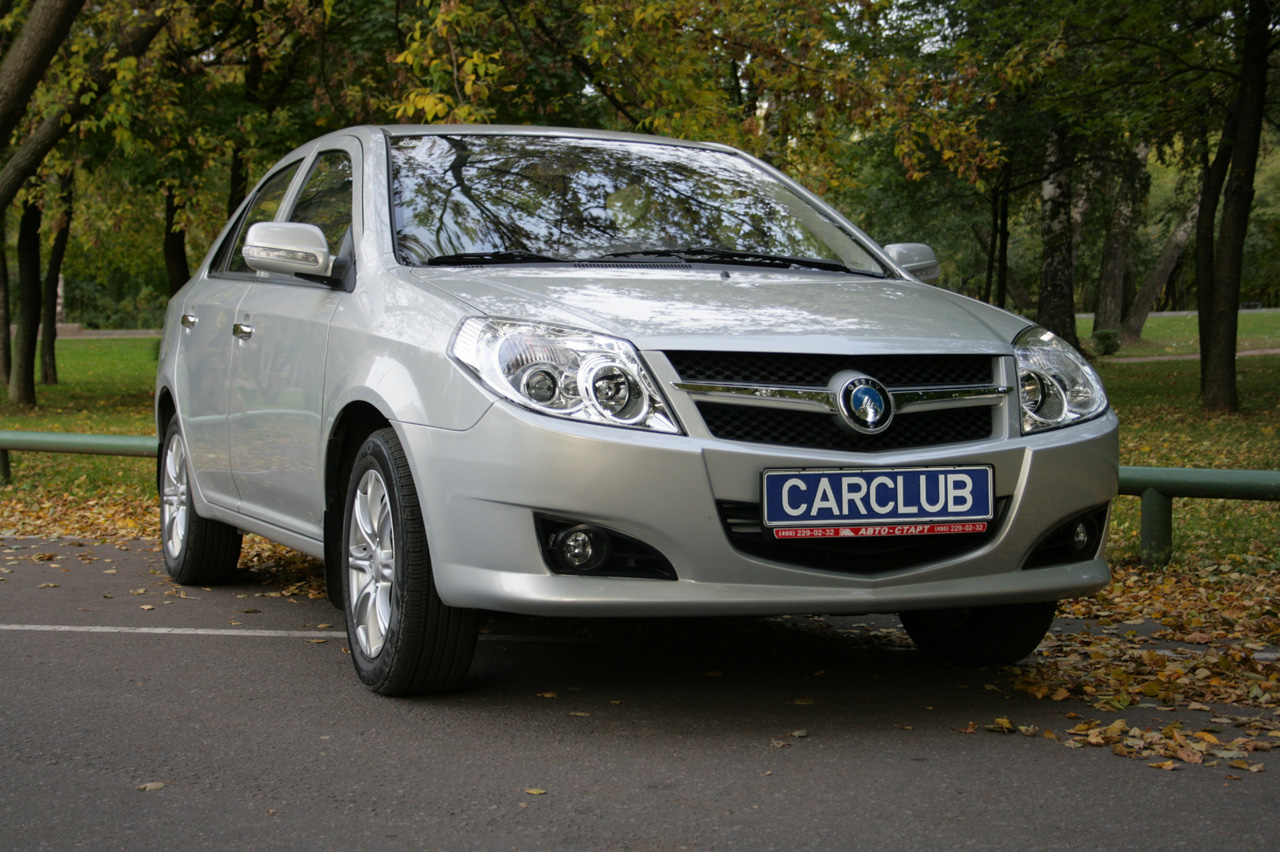
| ...and even impressive |
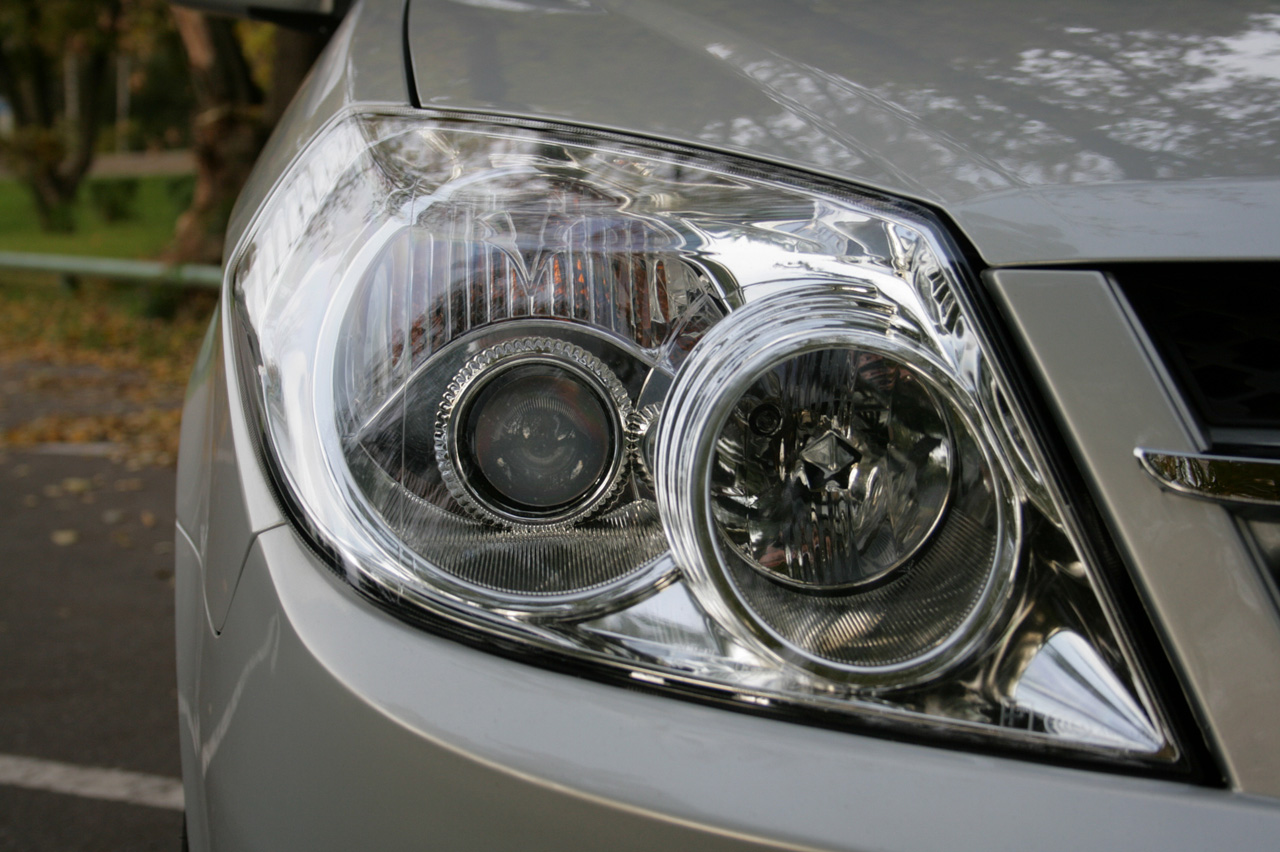
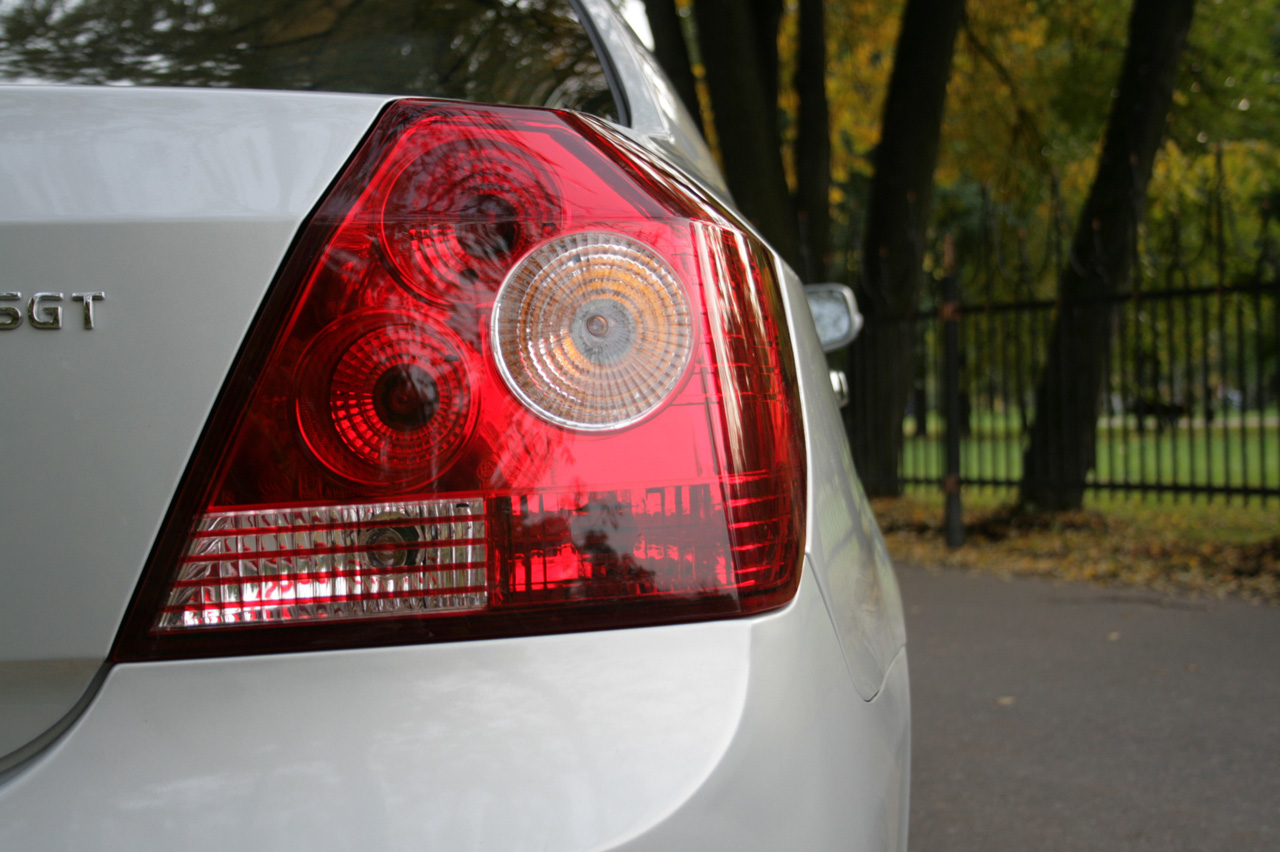
So, the Geely's exterior is quite attractive. You can't say the car is copied from someone or assembled from bits of different "donors" — the Chinese love that sort of thing. No, with the MK, copyright seems to be in order — it's a fairly cohesive, neat car with a slightly sharp but generally familiar design. The sharp edges of the wide headlights are boldly outlined — by the way, many Chinese models have such "wide-open" eyes, as if from anime, apparently out of a spirit of contradiction. There are no terrible gaps in the body — a tidy, solid car. The only thing that bothers me is the emblem, which is suspiciously similar to the Skoda badge.
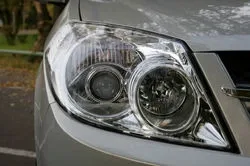 |
| Wide headlights... |
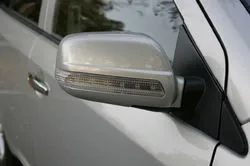 |
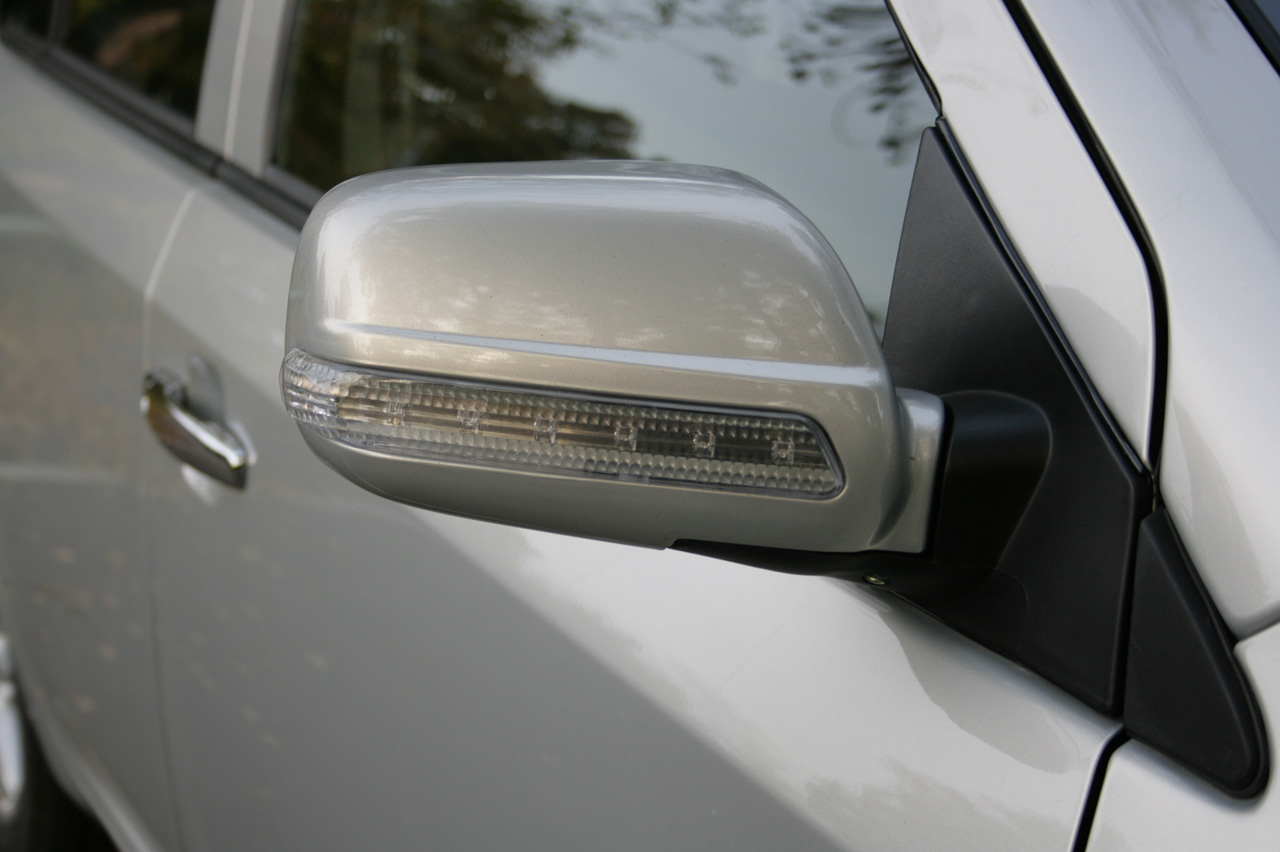
| Mirrors with turn signal repeaters... |
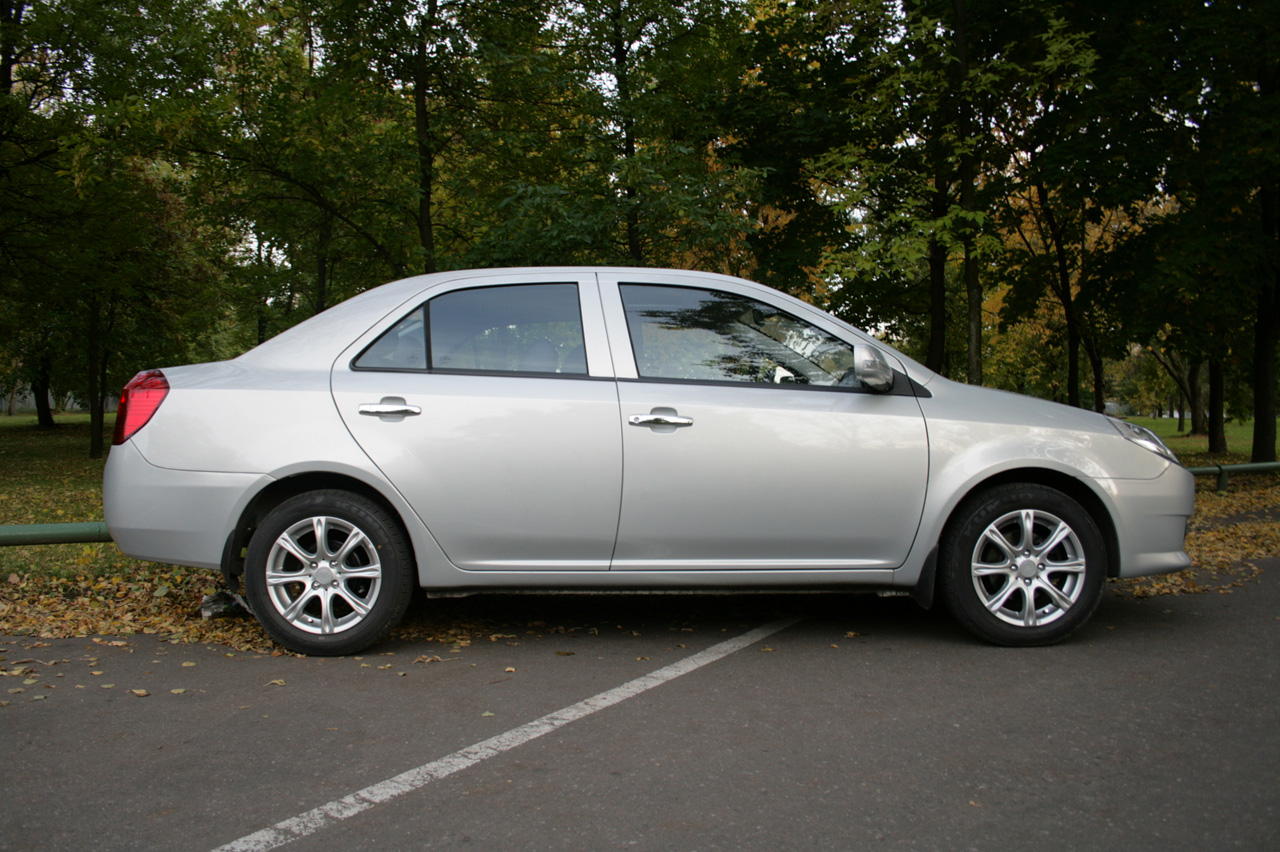
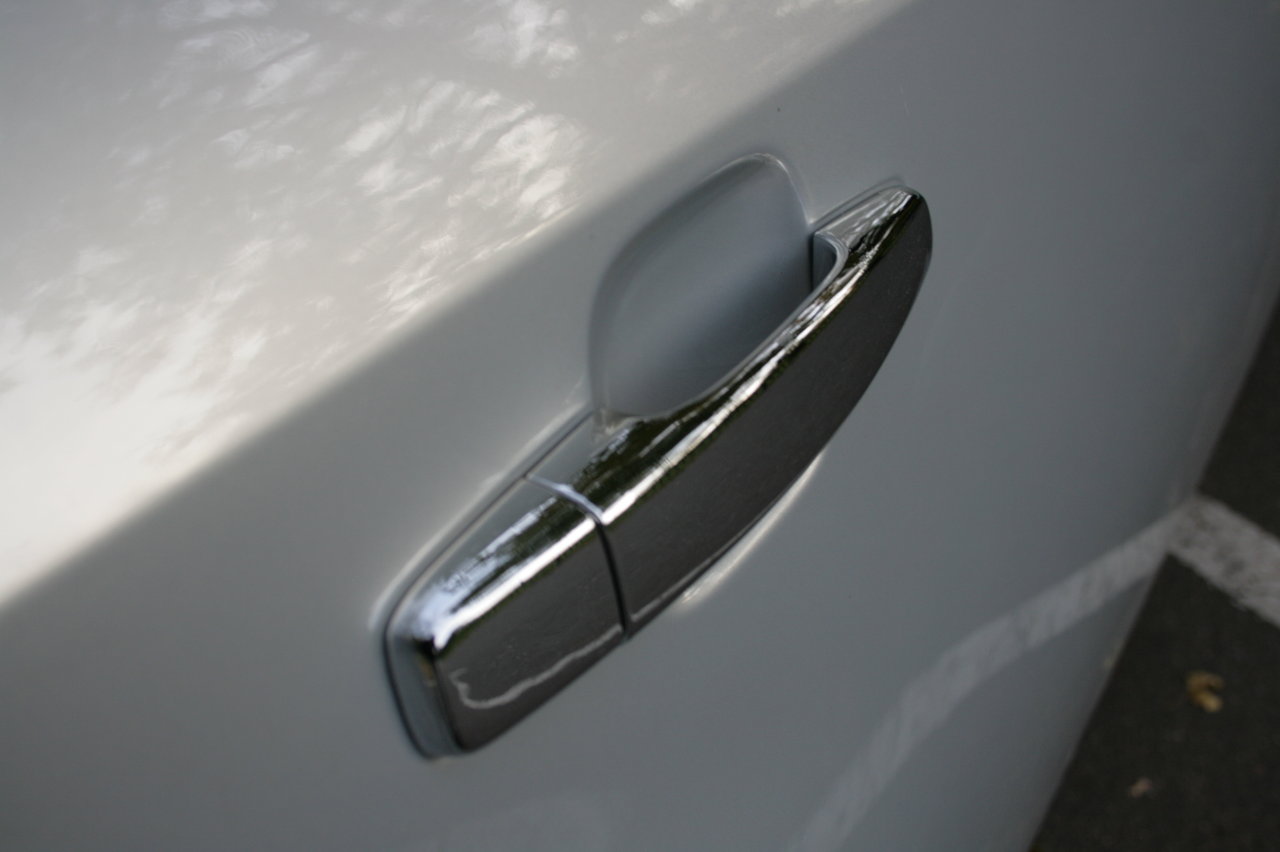
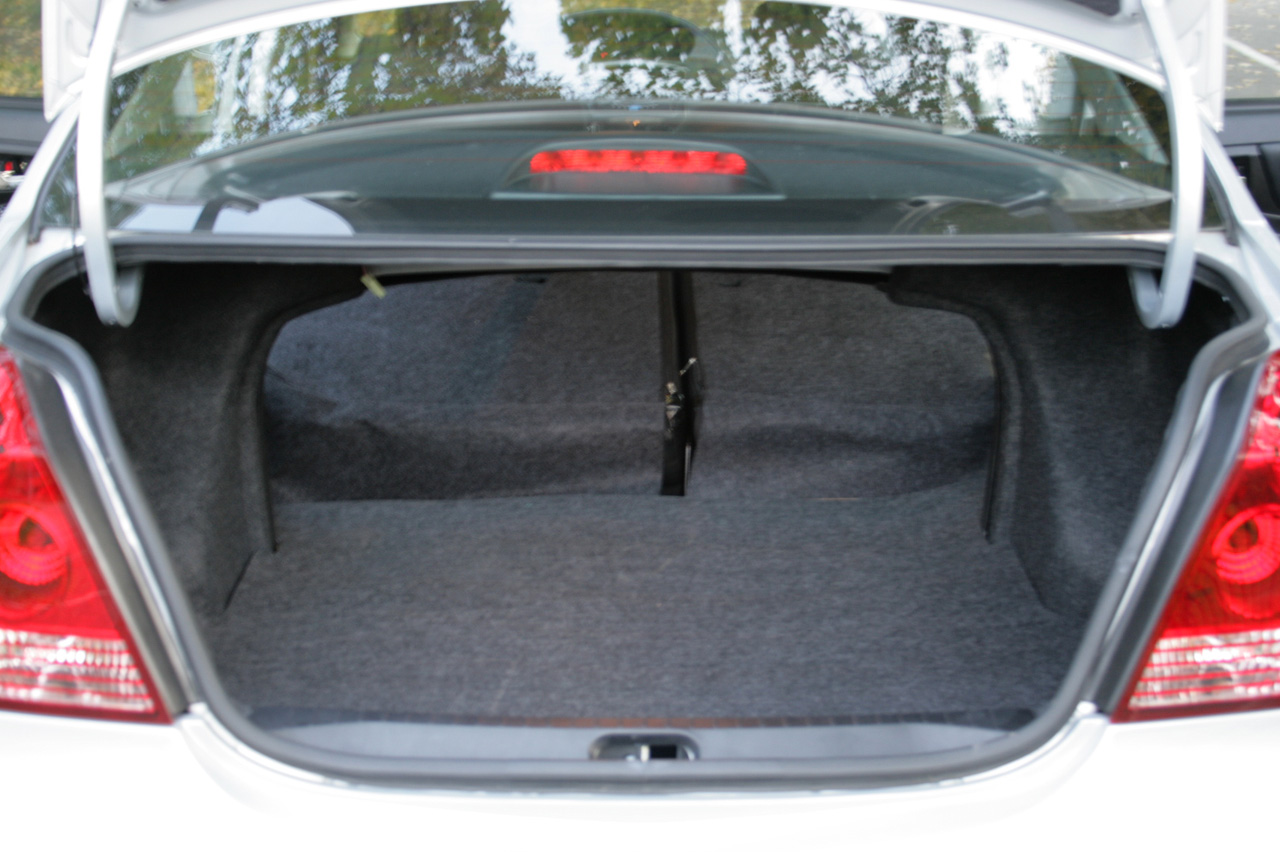
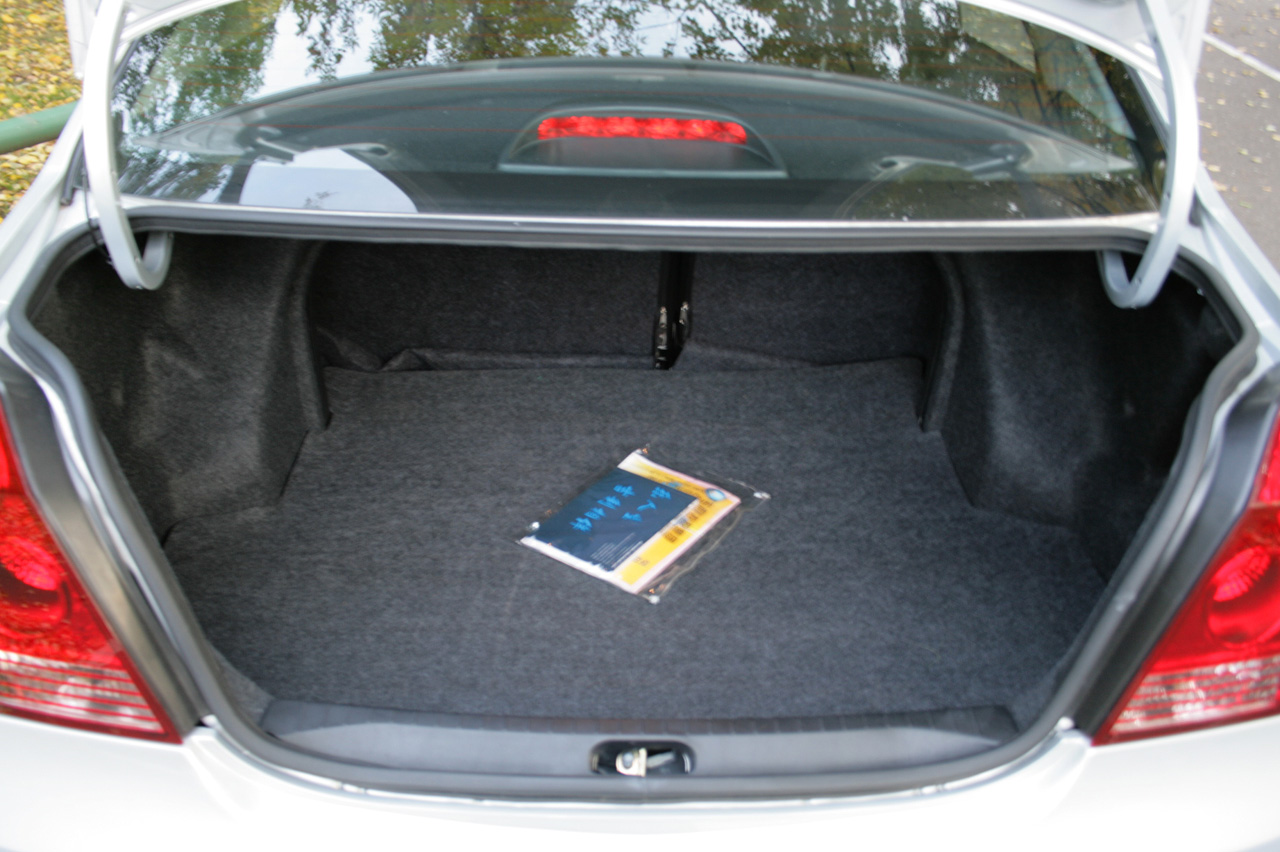
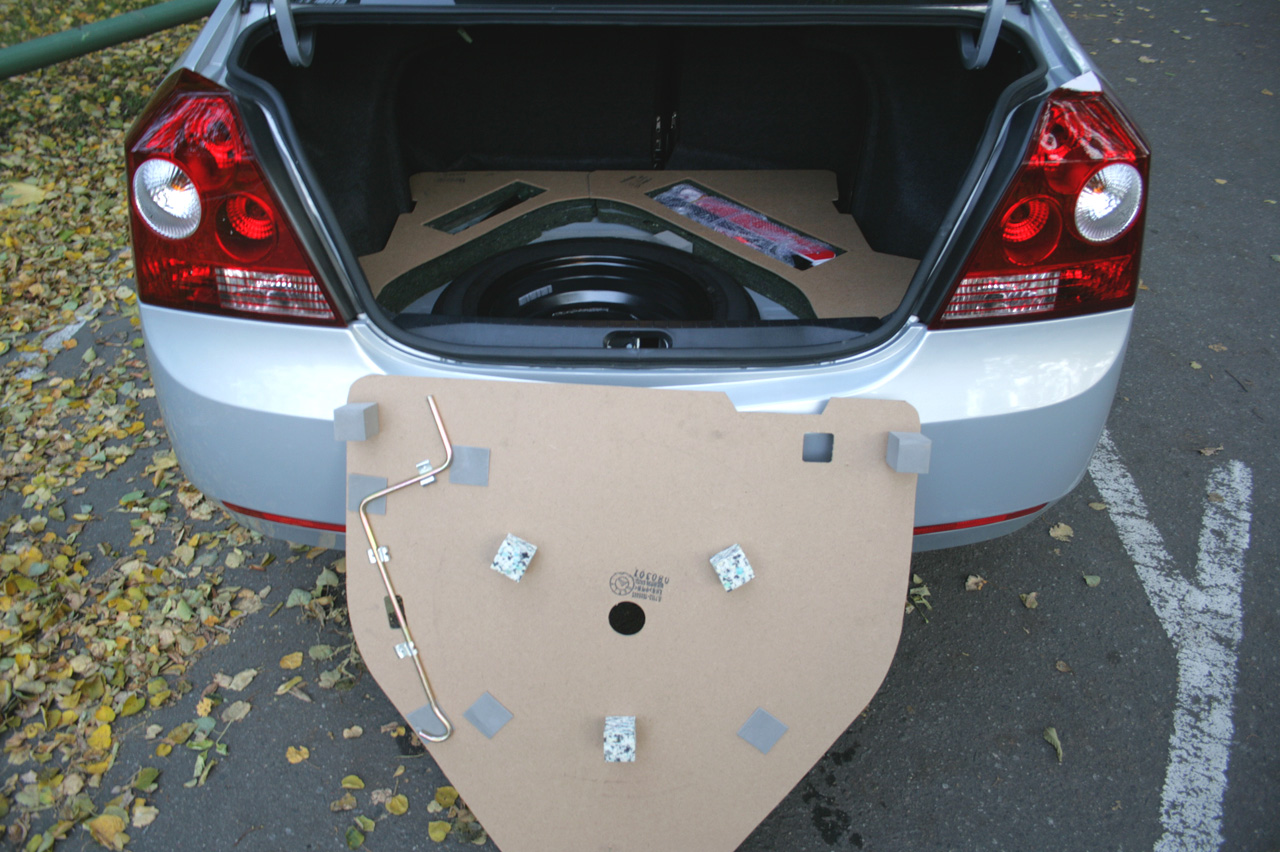
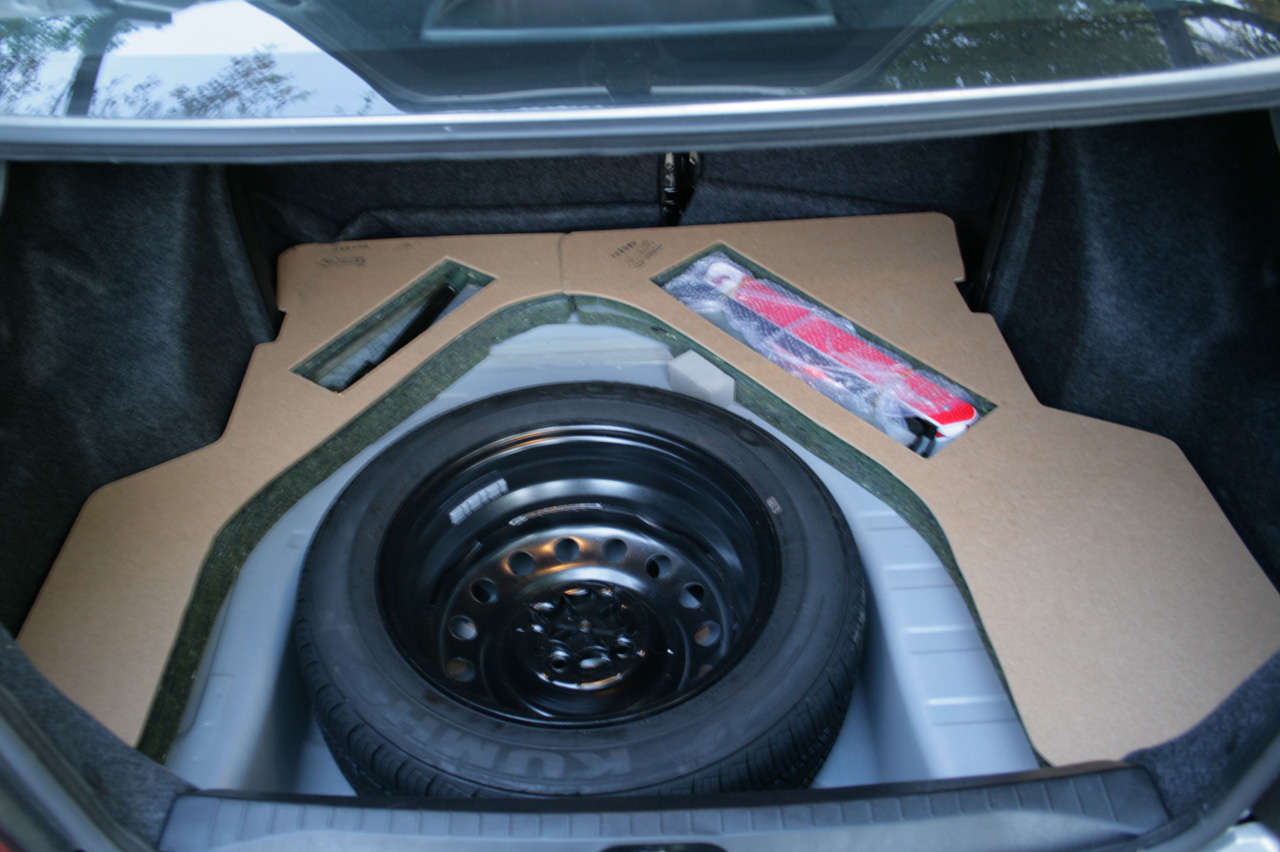
Looking at the sedan's profile, you expect the trunk to be spacious. And it really does please with volume, but with a few "buts." The loading height is a bit high, due to the massive rear lights the loading opening is narrow, and inside the space is eaten up by protruding wheel arches. There is a full-size spare wheel, but it's covered by a sheet of plywood, on top of which lies a thin mat... The rear seat back can be folded, but then a high "step" appears. A whole bunch of caveats. On the plus side, the trunk lid opens with an electric drive. True, to slam it shut, you need not cunning but brute force. The same story with the doors: they only close with a swing, responding with a bang like in the old "classic."
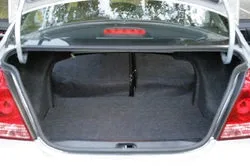 |
| The trunk is spacious... |
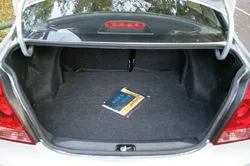 |
| ...but the protruding lights get in the way |
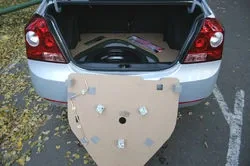 |
| Comes with a full-size spare wheel... |
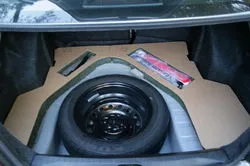 |
| ...but covered with plywood |
You open the door — and the car starts nervously flashing its "hazard lights." A useful thing, especially since it can be turned off: it's one thing when you drop off a passenger at the metro, and quite another when you put on a light show at a gas station or parking lot.
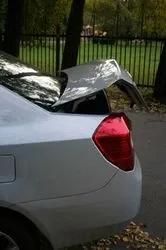 |
| Trunk lid with electric drive |
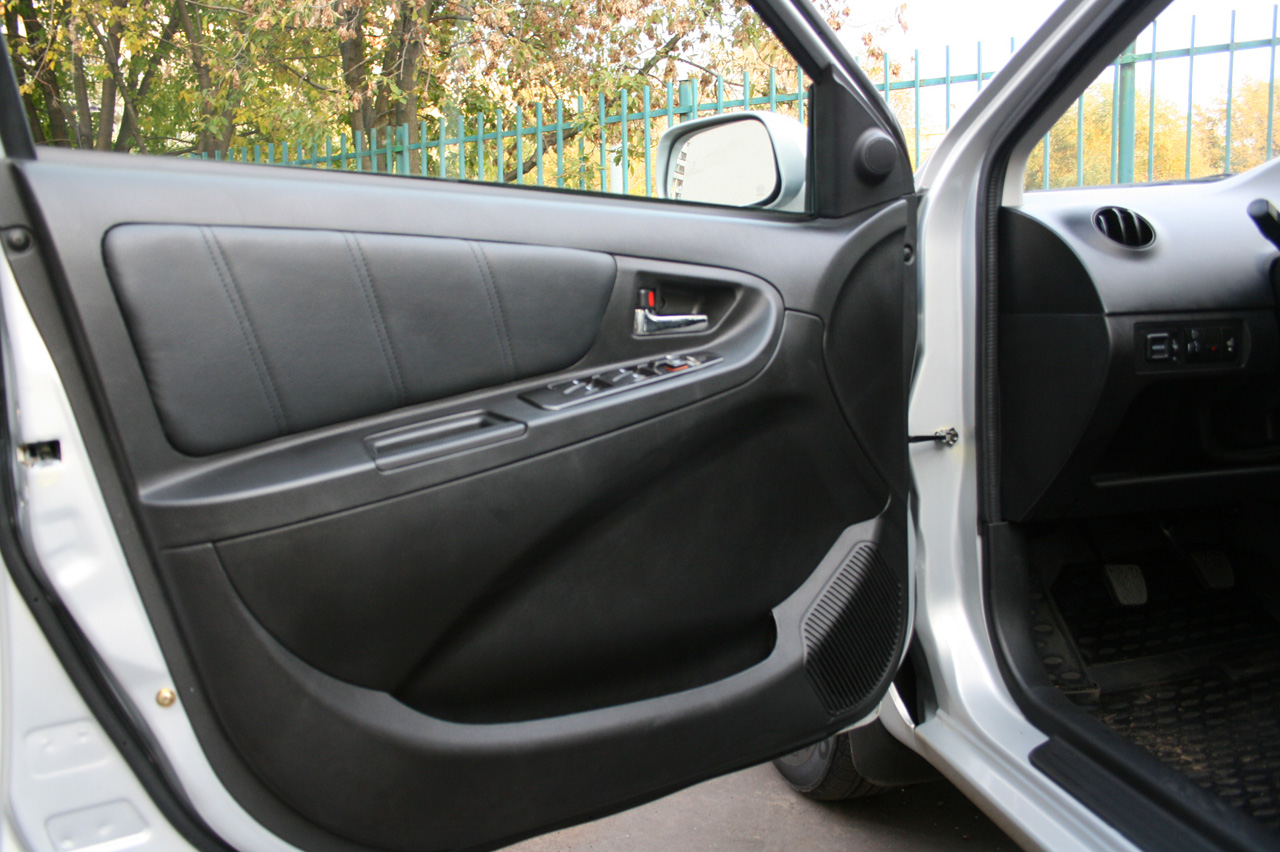
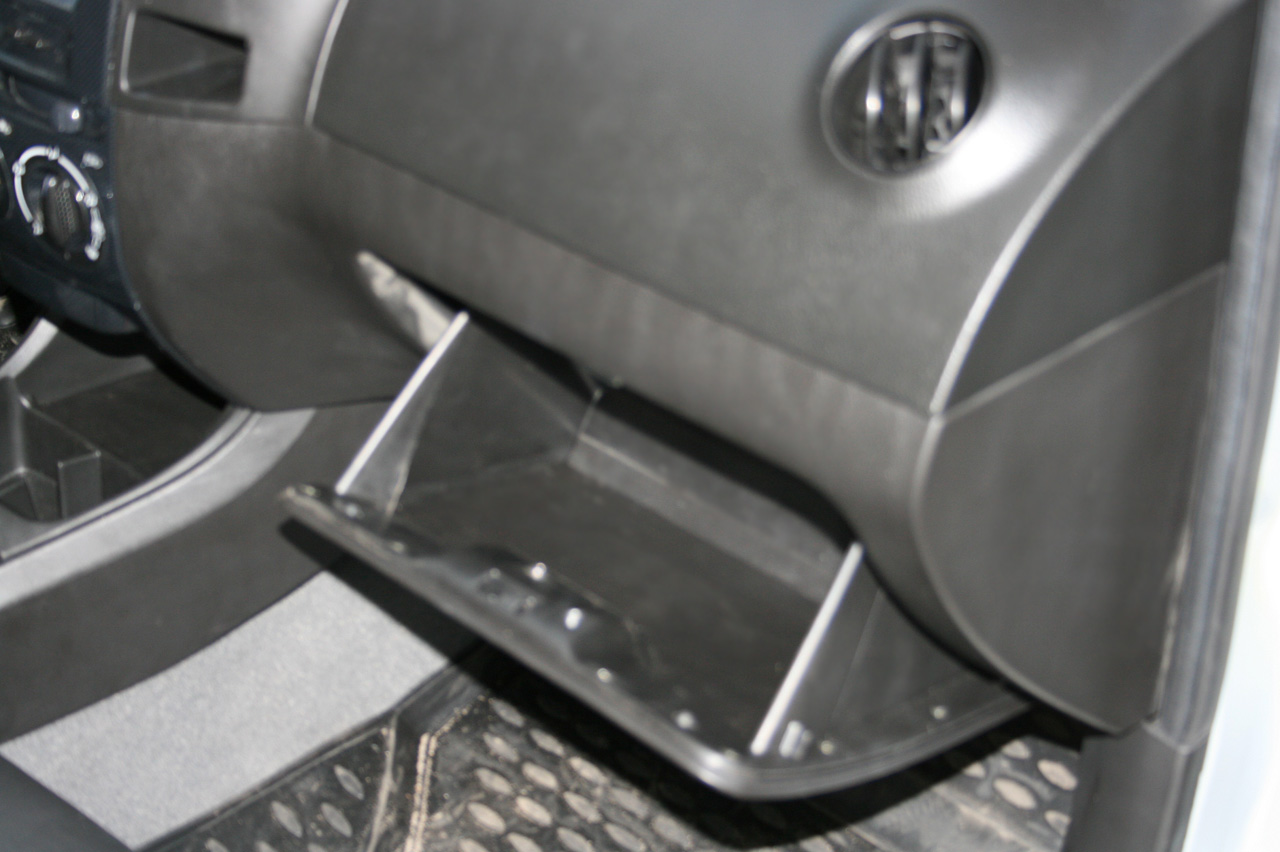
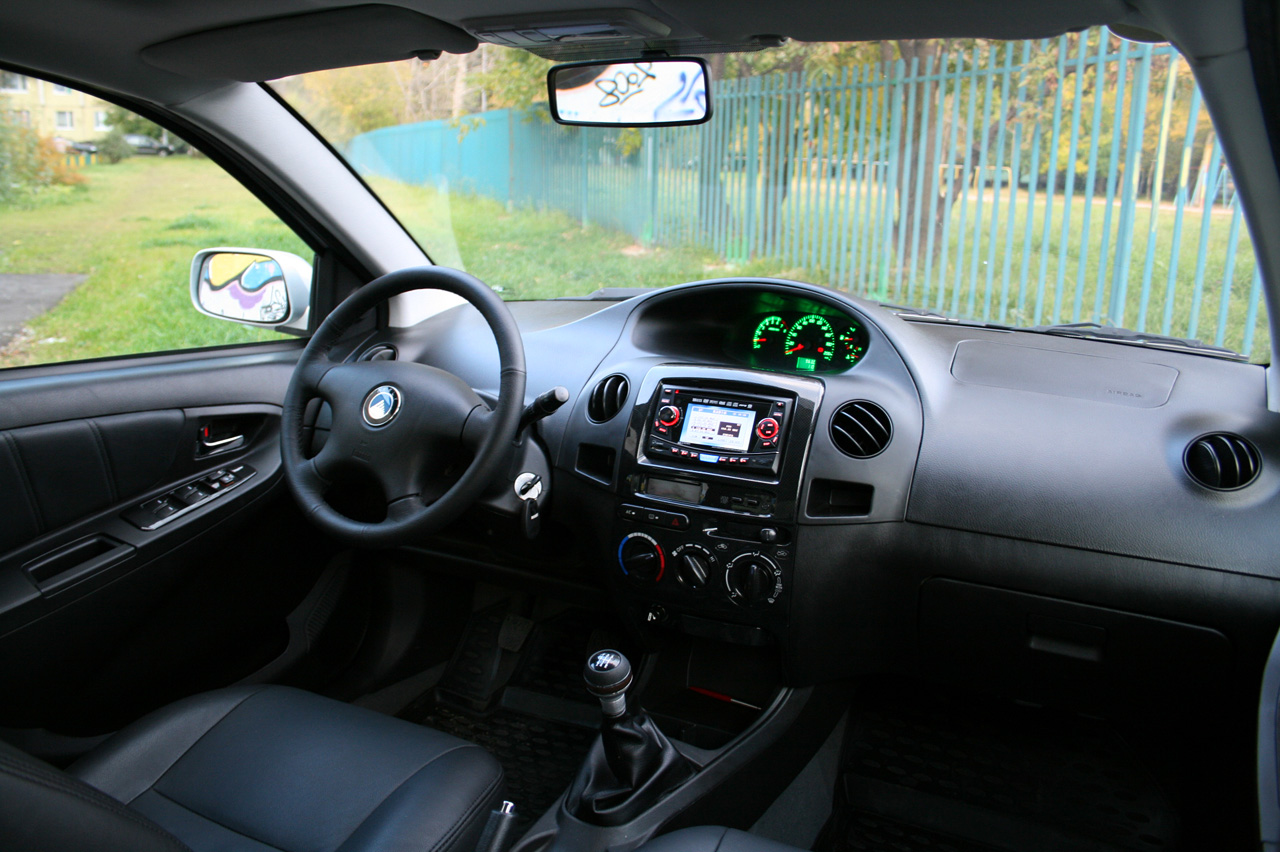
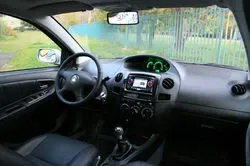
Inside, as stated, there is leather. True, to the touch it feels somewhat "Chinese," not very pleasant, although overall the quality is tolerable. The dashboard plastic is, of course, hard, but it doesn't look scary, and there are no gaps between the parts. And the leather inserts on the doors are even pleasing to the eye. Against their background, the glove box lid disappoints — made of thin plastic that doesn't close on the first try, and the box itself can rather be called a "little box" — it's just too small.
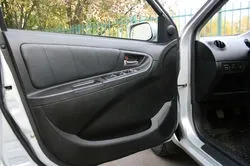 |
| Doors upholstered in leather |
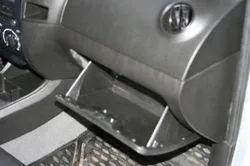 |
| The glove box is very small |
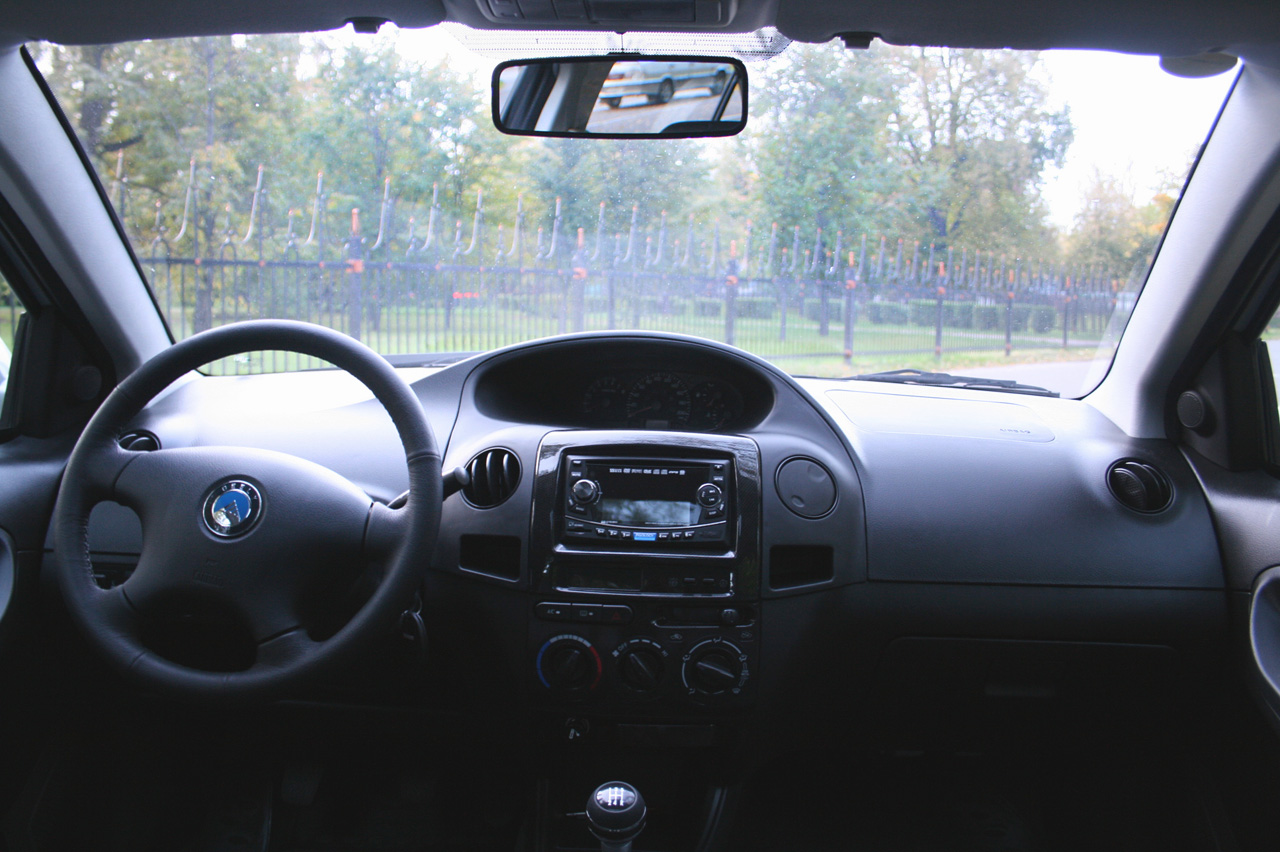
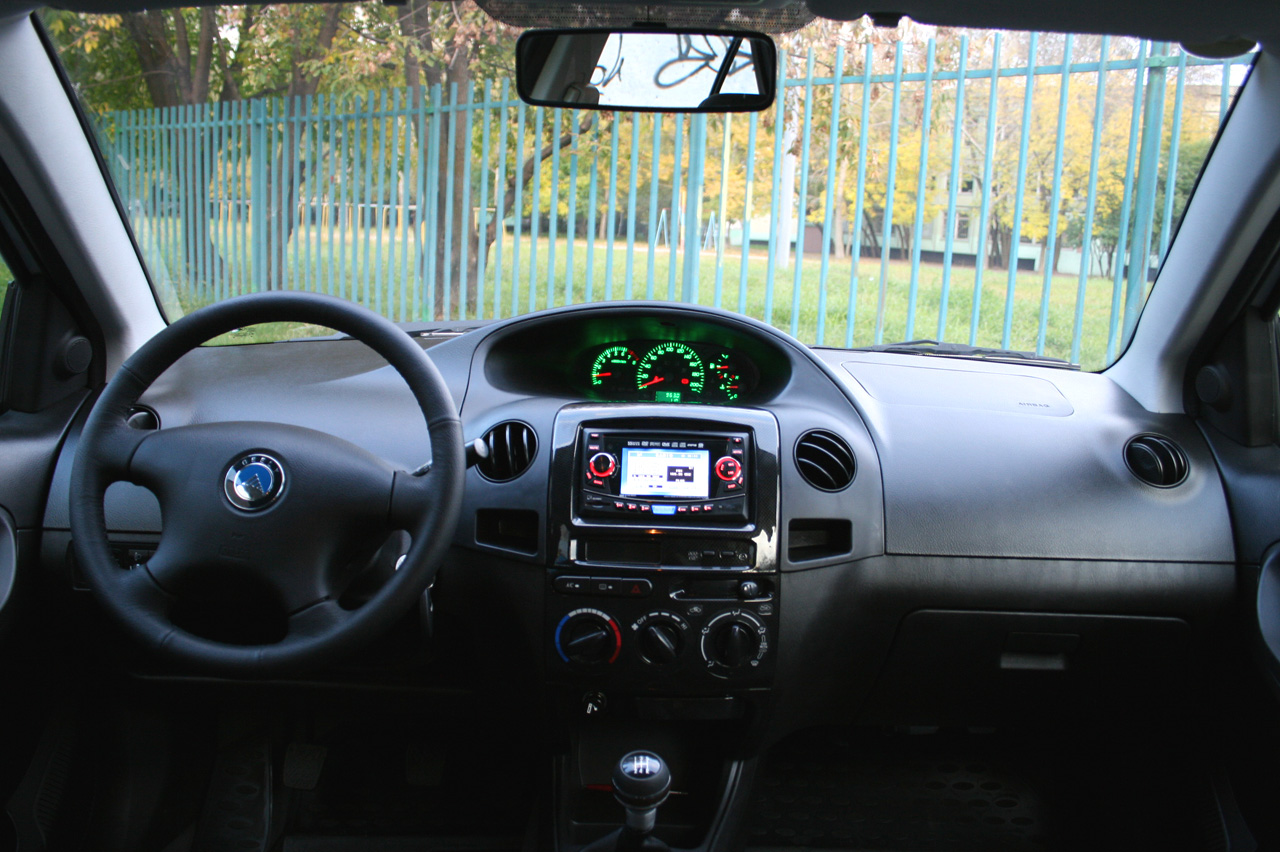
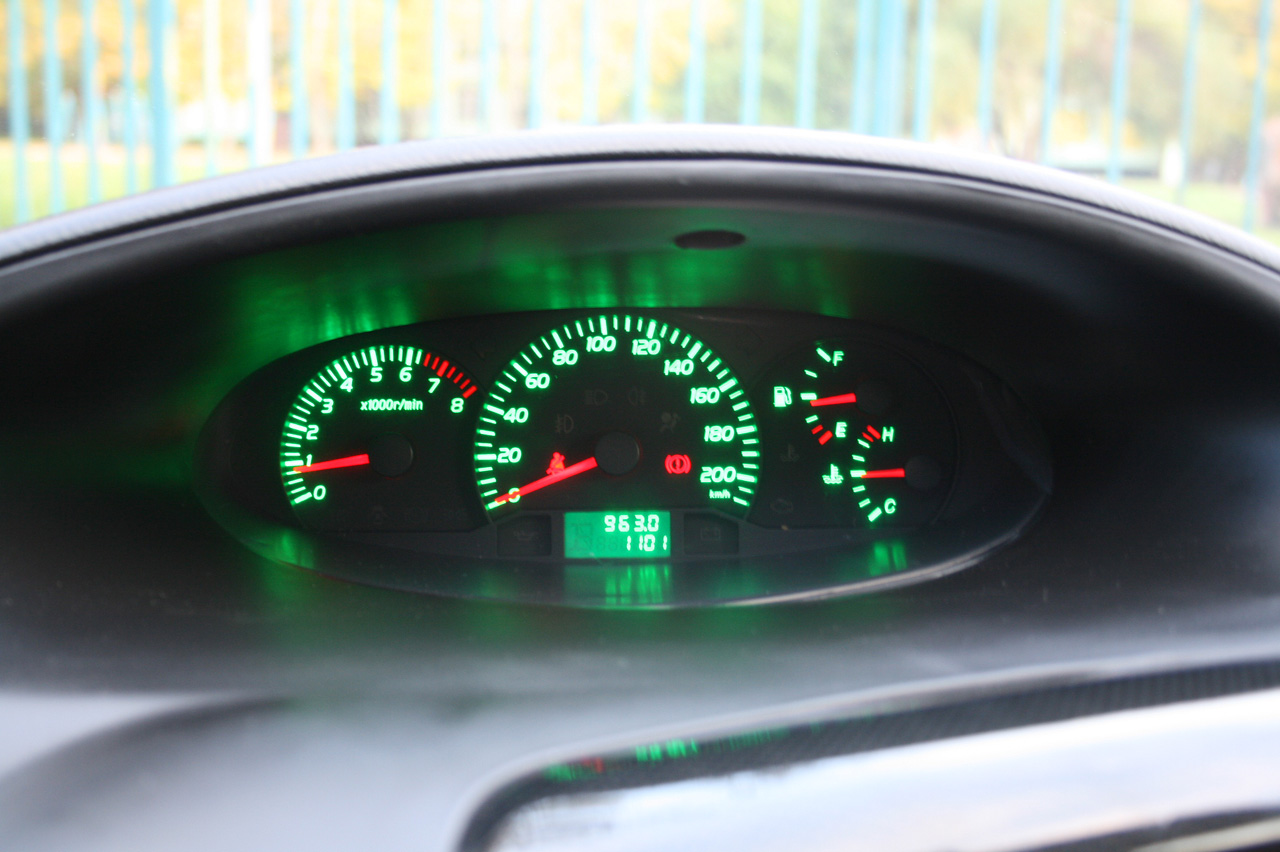
The instrument panel is placed in the center, but slightly turned, so the driver has to take their eyes off the road and glance sideways. The scales themselves with greenish backlighting look simple, but the information is easy to read, and they don't glare in the sun.
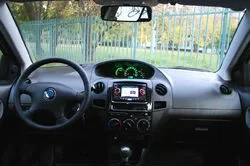 |
| Instruments in the MK are located in the center |
 |
| The plastic is hard, but no gaps are visible |
 |
| The backlight is dull, but the scales and numbers are clearly visible |
In the central part, the Prology multimedia system is on display, which can play CD, MP3, and DVD, as well as connect external drives. True, this option is the dealer's initiative, and in the standard configuration of the car there is only preparation for an audio system. But it is precisely this "Prology" that I had no complaints about during the entire test.
As soon as you sit in the driver's seat, difficulties begin. The first thing you feel is that your head literally touches the ceiling, your knees are higher than the steering wheel, the pedals are located almost at the very floor, and your own hands seem superfluous. Adjusting the steering column height helps a little with your knees, but does not radically solve the problem - the posture is still uncomfortable. But there is a seat heater, and it is exactly a seat, not seats - one button, for the driver's, marked "L", that is, left. It works, by the way, very diligently, the main thing is not to forget to turn it off, otherwise it will become very hot. But the function itself will definitely not be superfluous for our winters.
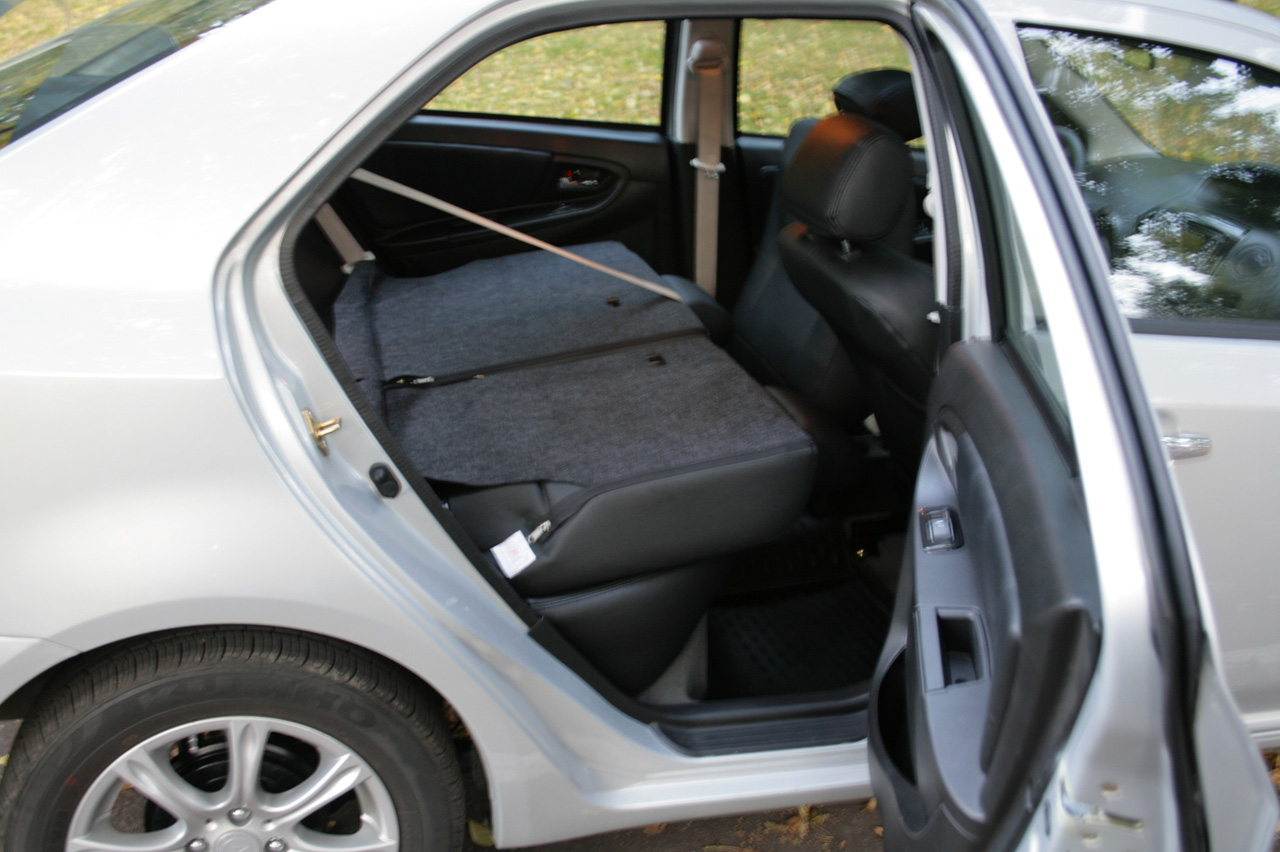
Although the driver should not complain - with its impressive external dimensions, the MK is more cramped inside than one might expect. In the back, two adults will fit comfortably in width, but there will not be enough space for legs, and passengers will hit their heads on the ceiling not figuratively, but in the most direct way, because the roof noticeably lowers towards the rear.
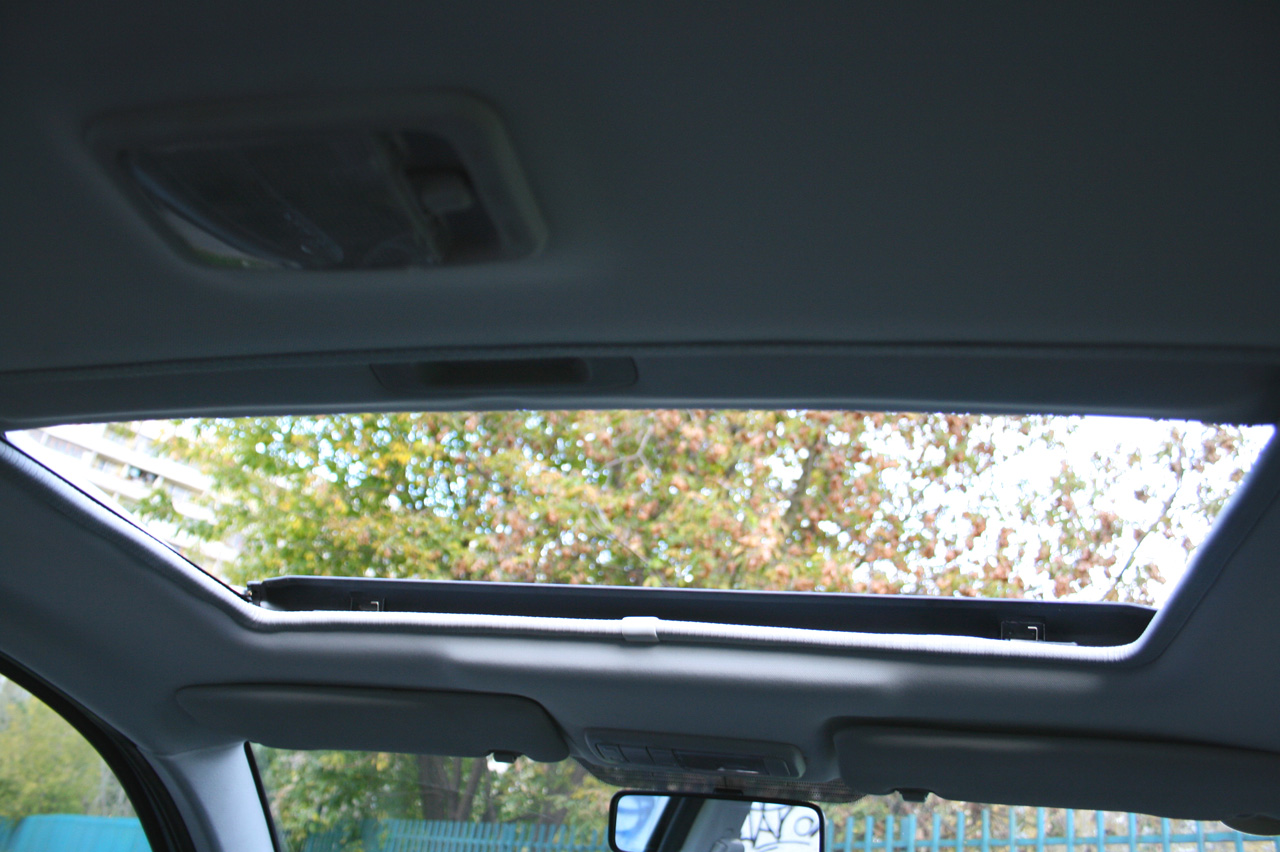
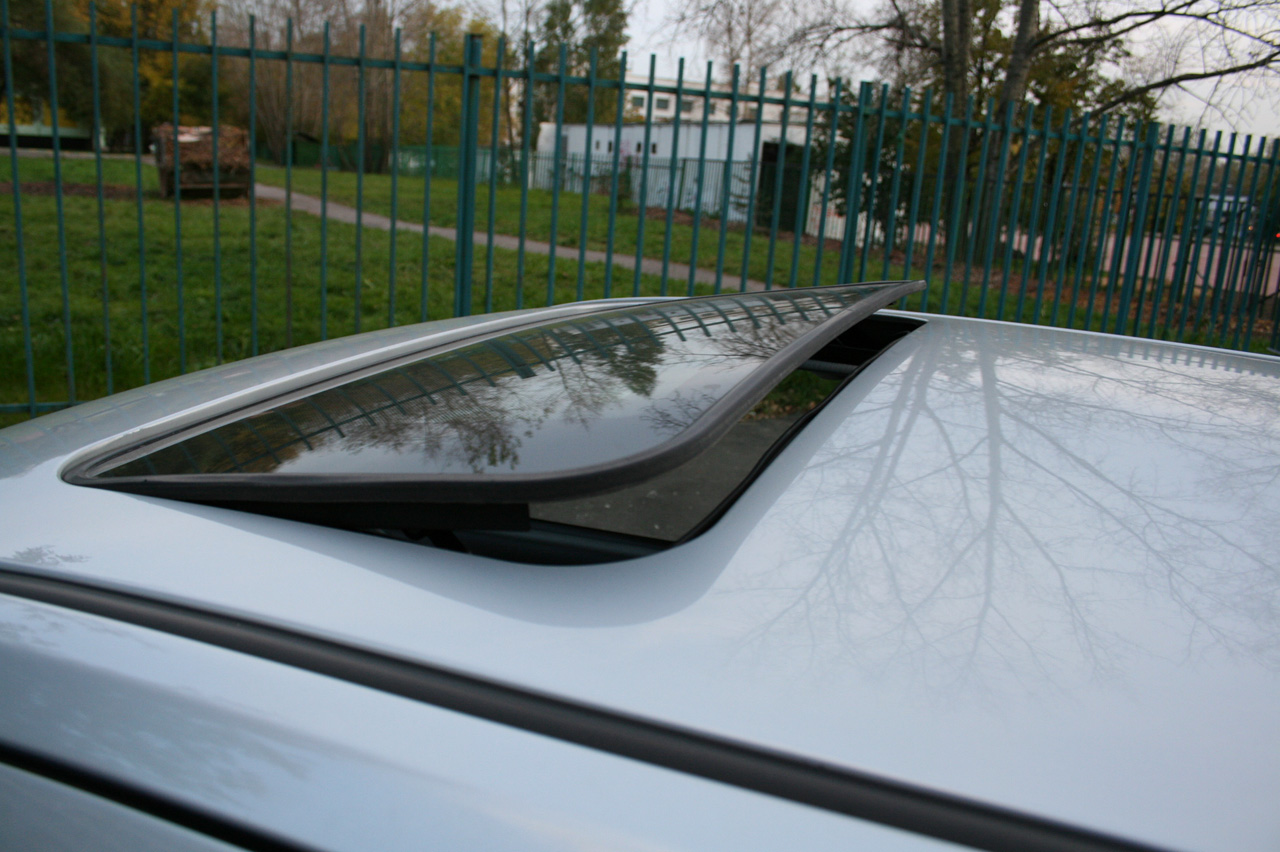
The sunroof is a pleasant and romantic thing; the "Geely" has almost no complaints about it, except that the control buttons sometimes stick, but this is a trifle that can be overlooked.
Overall, the interior leaves a mixed impression. The picture seems to be shaping up well, the interior looks decent, but individual details - the same glove box, sticking buttons, hard and unpleasant-to-the-touch turn signal and wiper stalks, uncomfortable seating, low ceiling, as well as the torn mount of the front passenger sun visor at a small mileage - quickly reveal the true nature of the Chinese C-class. And, of course, that very smell of plastic that haunts not only in the cabin, but also after the trip - even clothes become saturated with it!
Maybe in motion the car will be able to atone for its shortcomings?
Having somehow settled behind the wheel, we get on the road. City noise almost does not penetrate into the cabin, which cannot be said about the engine. After three thousand revolutions, its howl is already impossible to ignore. And the sound of gravel flying along the bottom and arches cannot be drowned out even by music. By the way, about the instruments: at first I even wondered where they had gone, but then I remembered that they are in the center. After about two hours you get used to this arrangement.
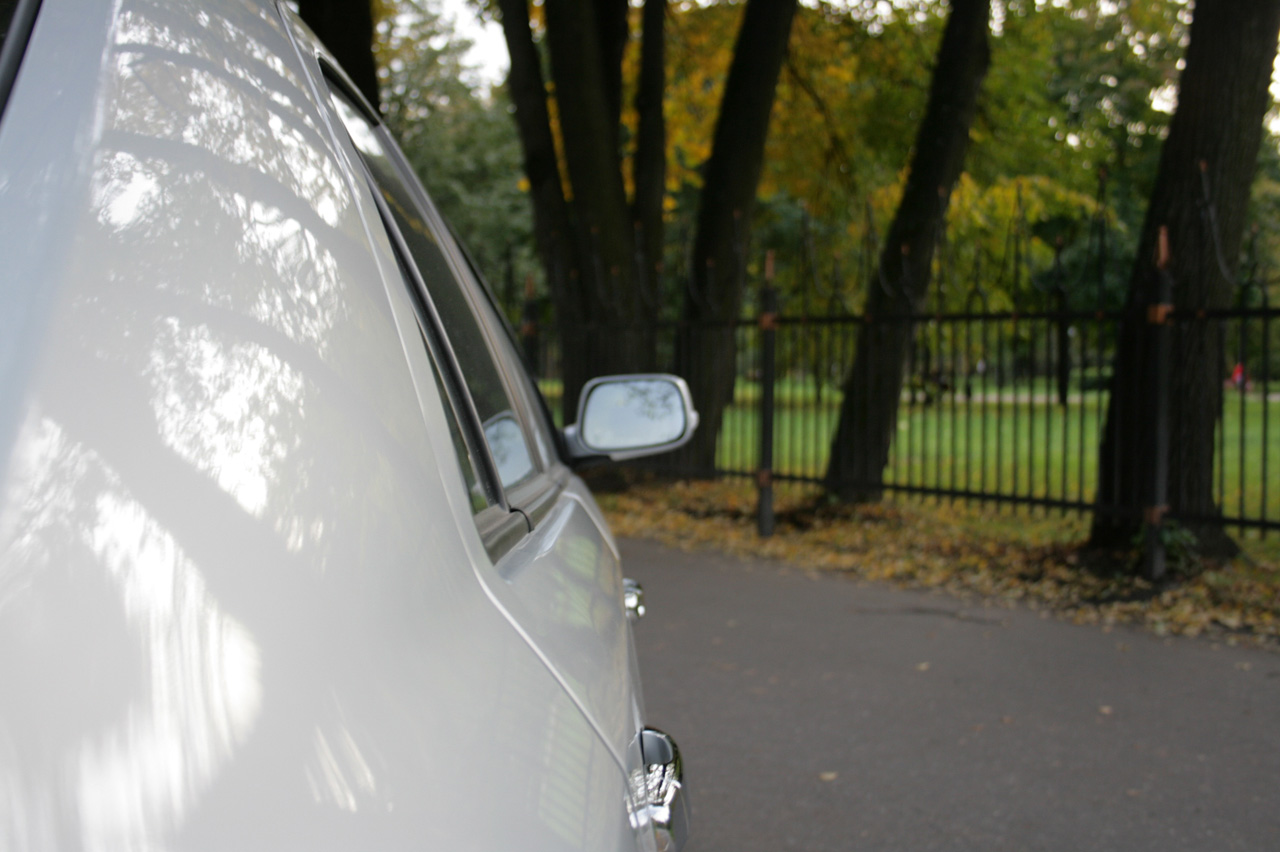
But I never managed to get used to the side mirrors. There is no confidence that you see the entire situation around the car. Moreover, at speed the mirror elements themselves begin to vibrate.
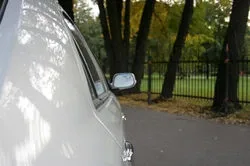 |
| At speed, the mirrors begin to vibrate |
In motion, from somewhere in the depths of the cabin, a ringing chirring begins to be heard, which I would call a "cicada" - "cricket" is too soft a word here.
Under the hood of the test car was a 1.5-liter engine with 94 horsepower. This is the only available engine. You should not expect brisk acceleration from it: when you press the gas, the car reacts with some thoughtfulness, as if there is an "automatic" under the hood, although there is a manual here. And with increasing revs, the situation does not change. But the transmission pleased with well-chosen gear ratios - you have to shift infrequently. The lever travel is short, as is the clutch pedal travel, but the clarity of gear engagement is lacking.
On a straight line, the car holds confidently, the suspension dutifully swallows bumps. But in corners, handling becomes a real problem, and it is not even about strong body roll. The steering wheel with absolutely incomprehensible feedback is frightening: in a turn, the power steering seems to "bite" the steering wheel! And if you release the gas, the rear axle starts to skid, and the car demonstrates oversteer. Pictures from crash tests of the related "Otaka" immediately pop into your head. After such behavior, you want only one thing - to go through turns with maximum caution. And this is perhaps the main drawback of the "Geely".
This car makes you pay attention to things that you usually do not notice. Like in the joke about a head that hurts. Geely seems to offer comfort and even elements of the "sweet life", but in reality a bunch of unpleasant little things crawl out. Mirrors with heating, electric drive and turn signal repeaters, but vibrate at speed. The trunk is large, with an electric lid drive, but loading is hindered by wide lights and an inconvenient opening. There is a full-size spare wheel, but it is hidden under plywood covered with a thin mat. There is a sunroof, but the buttons stick. There is power steering, but the steering wheel locks in turns. There are leather seats, but the wiper and turn signal stalks are hard and unpleasant. The windows are electric, but the doors have to be closed with a swing. Sound insulation from the street is not bad, but the engine howls terribly. And the torn sun visor mount at low mileage and the smell of plastic? And so in everything. If aesthetic shortcomings can still be put up with, then dangerous behavior in maneuvers and uncomfortable seating are already serious drawbacks.
The price of the base version of the Geely MK starts from 319,000 rubles. For this money, the buyer gets power steering, air conditioning, electric drive and heated mirrors, heated driver's seat, fog lights, LED turn signal repeaters in the mirrors, steering wheel tilt adjustment, leather steering wheel trim and a driver's airbag. Not bad. The Comfort trim for 349,000 rubles adds ABS, EBD, a passenger airbag and electric windows on all doors. And the version for 379,000 rubles (not counting the optional Prology) looks even too luxurious: all of the above plus a leather interior and a sunroof. But this is only a list of equipment, and when you understand how it is implemented in practice, you no longer want to pay almost 400,000 rubles. By the way, a similar price range for similar trims with a sunroof, leather and climate control is only available from the Chinese competitor BYD F3.
Our opinion: this money is better spent on an old but proven Hyundai Accent (similar trim for 365,200 rubles, though with one airbag), Renault Logan (from 365,700 rubles for similar equipment), Fiat Albea (389,000 rubles) or Peugeot 206 Sedan (a little over 400,000 rubles). These cars will not have a sunroof, leather and a TV, but they have everything necessary, and most importantly - they do not have those little things that you notice only when "the head hurts".
Svetlana Aleeva

 Geely MK promises passengers comfort and even hints of the "sweet life," but in practice a whole bunch of annoying little things surface. If you can still come to terms with the imperfect exterior, then the frightening behavior on the highway during lane changes and the uncomfortable driving position are already serious grounds for complaints.Comments (55)