VOLGA SIBER
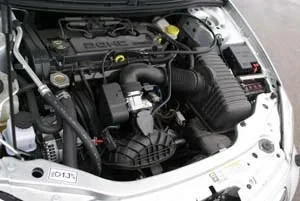
Power unit — 2.4 L
Peak power —
143 hp/5200 rpm
Maximum torque — 210 Nm/4200 rpm
Top speed (km/h) — 195
Sprint 0-100 km/h — 13.4
Fuel consumption (L/100 km):
urban cycle — 13.1
extra-urban — 7.2
combined — 9.4
4-speed automatic transmission with Autostick mode
Overall length — 4844 mm
Width — 1792 mm
Height — 1394 mm
Ground clearance — 140 mm
Curb weight — 1555 kg
Tires 205/60R16
Price — $18,809 (150,471 UAH), starting price — $16,450 (131,598 UAH)
Equipment:
ABS system, Traction Control anti-slip assistant, pair of airbags with staged gas filling, power steering, adjustable steering column, full electric package, auto-dimming mirrors, climate control, leather interior trim, power driver's seat with 10 adjustments, heated front seats, central locking, remote trunk lid release, halogen headlights with delayed shut-off, audio system with 6 speakers and amplifier
Maintenance intervals:
10,000 km
Warranty period 3 years or 100,000 km mileage
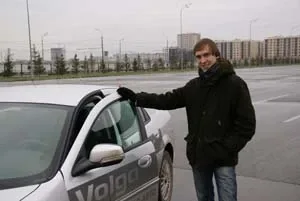
Sergey Khokhlov, Tatarstan car portal Tavto
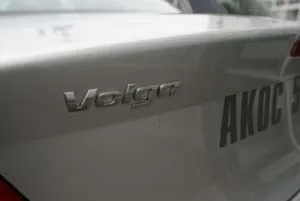
The idea of producing a time-tested American model under a Russian brand is a strong move. True, it will now be called differently: not "Volga", but "Volga Siber".
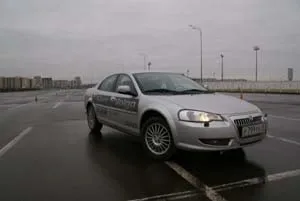
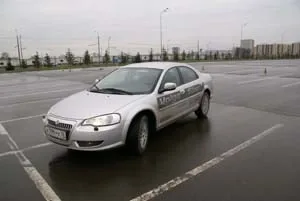
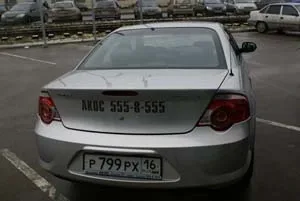
Production is set up in Russia on the same equipment that not long ago produced an identical car under the name Chrysler Sebring. The appearance differs only in details: a new front end with a different bumper, different optics, brand badges and steering wheel.
The start of the test took place behind the wheel of my own car, in the role of a companion. Among the traffic, the "Siber" is easy to recognize by the round sections of the rear lights — a memorable detail. These lights kept slipping out of sight when the car moved ahead and dissolved into traffic.
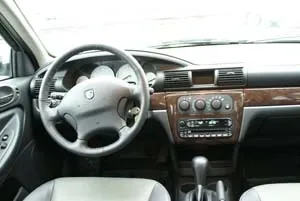
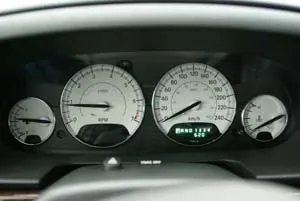
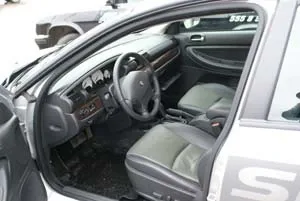
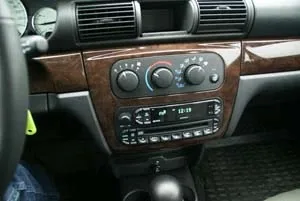
I am used to the Spartan environment of my own car, so the inner world of the "Siber" did not disappoint me at all. Everything is logical and concise. Inside it is spacious and cozy. There is plenty of room for legs in the front, and a decent reserve in the back. Only the many headlight adjustments confused me, and the fact that the central locking unlocks only the driver's door when opened, while the passenger doors have to be opened with the button on the door. Another drawback is that the positions of the automatic transmission selector do not match the labels. Instead of D, it is easy to get into manual mode, and instead of reverse — into neutral.
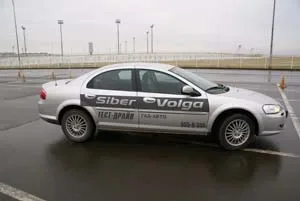
At moderate speeds, the car confidently holds its trajectory, and going through the "slalom" was easy and pleasant. Body roll turned out to be less than I expected. The steering wheel is precise and full of information. I had already decided that the myth about overly soft and wobbly Americans was dispelled, but I was hasty. With more serious acceleration, the "Siber" began to react to my actions differently. The rear axle noticeably swayed on the high-speed "slalom", provoking a slide. True, with the active Traction Control system, it never came to a full drift.
The brakes were a pleasant surprise. Deceleration from high speed is confident and effective. For such a massive car, this is an excellent indicator. The suspension also pleased: moderately soft and elastic, it handles bumps without unnecessary vibrations.
The engine runs somewhat noisily, but it pleases with decent torque. When starting off, it is even ready to spin the rear drive wheels into a slip.
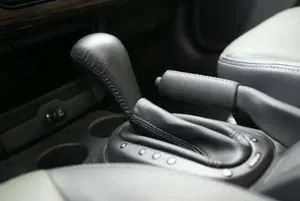
Now about the automatic transmission of the test vehicle. I'll say right away: I am used to a manual and love to fully control the car. Therefore, an automatic is an unusual beast for me. During the test, I failed to make friends with it. It behaves most adequately when starting off — everything is clear and predictable. But in dense traffic, reactions to my commands were unpredictable. Our desires did not coincide: sometimes a lower gear engaged with revving up to 5000 rpm, sometimes the gearbox pulled without shifting. Acceleration dynamics changed from time to time. When overtaking, such indecision is inappropriate. But in a traffic jam, the automatic worked perfectly — as it should.
Summing up, I can say: the "Siber" appealed to me as a comfortable business-class car that is not designed for aggressive driving.
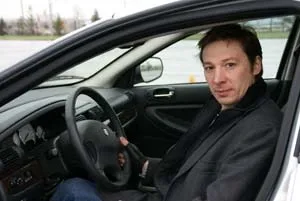
Alfred Mardanov, "Autoclub-Kazan"
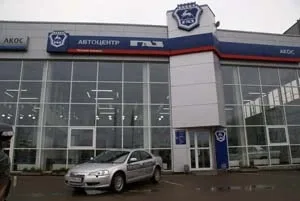
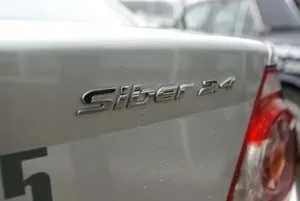
What everyone expected from VAZ, GAZ did — began producing a Western model. Back in 2006, Chrysler sold the rights to the universal platform of the Sebring sedan, as well as a license to produce the Dodge Stratus, which formed the basis of the Siber. The word "Siber" itself is "Siberia", a mighty, romantic and boundless land that haunts Americans. True, the combination in the name turned out to be amusing: both Siberia, and Volga, and GAZ. Okay, let's not nitpick — no one hides that the name was chosen to rhyme with Sebring. Like, so that everyone remembers the origin. And so, the result of this partnership stands in front of the dealership, and the keys are already with me. Compared to the American original, its appearance is changed: different optics, bumpers, radiator grille with the GAZ badge. Inside, honestly, I did not notice any special differences, except that the steering wheel changed the Chrysler emblem to a GAZ one.
And the manufacturer also claims that the suspension is adapted for Russia and the ground clearance is increased. Enough lyrics, it's time to test the car in action. I sit down, look around. It is impossible not to notice the comfortable seating and excellent visibility. But even the electric seat adjustments with good lateral support and lumbar support do not save tall drivers from a lack of headroom. I turn on the ignition — and an unexpectedly loud engine sound bursts into the cabin, shattering the silence. Sound insulation is a bit weak, I thought, and practice confirmed this. I put the selector in "D" and move off, and the car, like a motorboat, lifts its nose and rushes forward with a squeal. Wow! I did not expect such agility from this ship. And for some reason, the automatic holds first gear too long, not shifting. Ah, I understand: I accidentally engaged manual mode, missing "D" — it's easy to miss. Good thing the selected gear is indicated on the dashboard, so you can quickly understand what is happening. From the very first meters, you feel that the suspension has clearly been worked on. Americans do not behave so tightly; they usually sway softly.
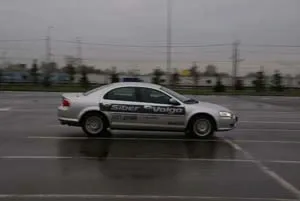
So, the behavior is very interesting, the settings are chosen correctly for such a lively engine. The car is composed, handles bumps perfectly without breakdowns, but it is not stiff, rather elastic. The character of the suspension was revealed by the "slalom". The first run without preparation, I intuitively passed at its maximum speed — about 85 km/h. When lifting off the gas, the car easily returns to the trajectory, but as soon as you add throttle — it drifts. My experience was not enough to cope with such behavior, and in the last two turns I was already entering sideways. There was no point in turning off Traction Control — it is reasonable to do this only on loose surfaces. The steering wheel, solid and filled with effort even at low speeds, suited my taste. As Sergey rightly noted, within reasonable limits the car handles excellently, but you should not cross the line — otherwise it will pull such a trick, oh my! I saw how Sergey "negotiated" with the automatic transmission, but they never found a common language, which is not surprising. The feeling is that a lower gear is constantly engaged, and the car keeps high revs, ready to break loose.
Perhaps it is a matter of the adaptive nature of the automatic gearbox, which has adapted to the driving style, or maybe it is just a feature of the factory settings. But in any case, a fifth gear is called for. If you switch to manual mode, the car becomes a bit more responsive, and, pleasantly, the ability to engine brake appears. There really is something in these Americans, and quite a few mysteries. For example, to turn on the interior light, you have to look for a separate knob located next to the control for low beam and parking lights. At the same time, turning on the parking lights is not reflected on the dashboard in any way — during the day it is completely unclear whether the lights are on or not. A similar situation was, I remember, on a Jeep. And also the halogen headlights go out with a delay, which is a bit disorienting: when leaving the car, you cannot understand whether you forgot to turn off the lights or they just have not gone out yet.
I won't guess how buyers will vote, but in my opinion, it's high time the Volga moved to a new level. Previous attempts with Rover engines didn't fundamentally change the situation. It is at this new level, without a doubt, that the Volga Siber resides. Yes, the brand is not ours, and the model is not new! But tell me, does our auto industry have any other path? Maybe it's time to stop reinventing the wheel and start using proven and tested solutions in order to still climb to the next step.
Otherwise — Game Over.