
Ford Mondeo
New Ford Mondeo
Engine - 2.5 L petrol
Max power - 220 hp/6500 rpm
Max torque - 208 Nm/4000 rpm
Max speed - 245 km/h
Transmission - 6 MT
Fuel consumption:
city - 13.6 L/100 km
highway - 6.8 L/100 km
combined - 9.3 L/100 km
Dimensions
length - 4844 mm
width - 1886 mm
height - 1500 mm
Gross weight - 2185 kg
Tires - 17x6.5J
Acceleration - 7.5 sec.
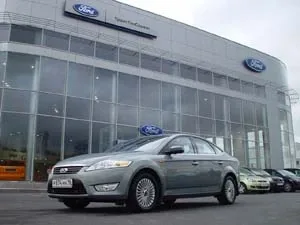
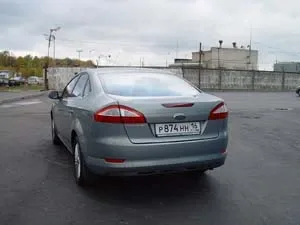
A bit of history
Ford Motor was founded in 1903. At its origins were twelve entrepreneurs from Michigan, with Henry Ford as the main figure, who owned a quarter of the shares and held the positions of vice president and chief engineer. The famous oval logo appeared in 1907, created by the company's British dealers - Perry, Thornton, and Schreiber. In the advertising of those years, this sign was presented as a "hallmark of the highest standard," symbolizing reliability and economy. In 1919, Henry Ford, together with his son Edsel, bought out the shares of the other co-owners and became the sole owners of the business. At that time, Edsel took over the company and led it until his death in 1943, after which his father had to take the reins again. In the spring of 1932, the world saw a V-shaped eight-cylinder engine - Ford was the first to cast a one-piece block for such an engine. Cars with this unit long won the sympathy of practical Americans. By 1934, Ford trucks with an improved engine appeared on farms and in cities. At the same time, the company seriously took up safety: protective glass began to be installed at factories, and they constantly sought ways to reduce the risk for drivers and passengers - concern for people has always remained at the center of the company's policy. In January 1956, Ford Motor became a public company, and now it has about 700 thousand shareholders. In 1964, the Mustang was shown to the public, and in 1970, Ford was the first among mass manufacturers to equip cars with front disc brakes. Then fuel economy became a priority. Designers set themselves the goal of creating leaders in the mid-size and executive classes - thus the Taurus and Mercury Sable appeared. In the 80s, the updated F-series pickup, the new Fiesta, and the Galaxy minivan debuted in Europe. The company saw its main task as constantly improving products and reducing costs. The result was world-class cars.
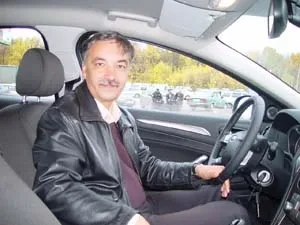
Vadim Sadykov. Driving experience - 10 years
Externally, I really like the new Mondeo. However, the predecessor also looked decent - it's not for nothing that it formed the basis for the design of the second-generation Focus. The only thing that slightly confused me was the recess on the trunk lid: it seems that water and dirt will collect there. But that's the price for aerodynamics. The car has become larger in dimensions and even overtook the Toyota Camry, but it doesn't look bulky, although it doesn't give the impression of a truly solid E-class sedan. The main advantage of the Mondeo, in my opinion, is excellent balance, and in everything, not just the exterior. On the road, it won't attract unnecessary attention, but it won't blend into the faceless gray mass either.
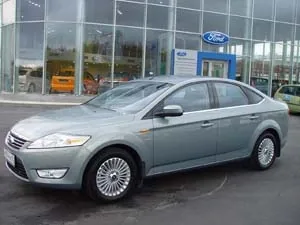
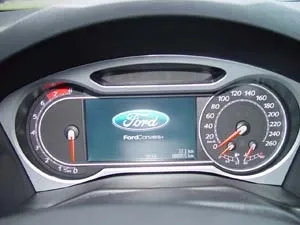
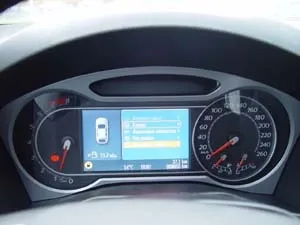
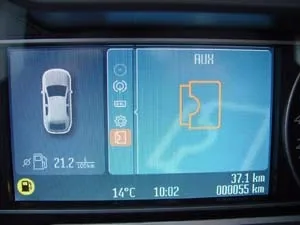
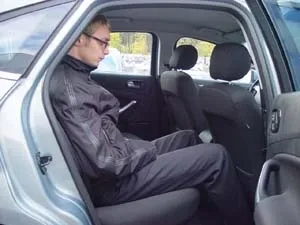
The interior is made solidly and neatly. The most luxurious place is the rear sofa. You don't want to get out of there and move even to the driver's seat. Perhaps I'll reconsider my opinion: there is something from the E-class here after all. For rear passengers, there's even airflow adjustment - a handy thing. I was a bit disappointed by the narrow strip of glass in the rear door. I looked at the door from outside - and sure enough, again a trendy thing, like the Hyundai Elantra: the window, wide at the front, tapers to almost nothing at the rear. But despite this, I repeat: I haven't had such pleasure from a ride in the back seat for a long time. But in the front, I was constantly tormented by one question: everything seems fine, but something is wrong. Maybe it's the Titanium trim with its "metallic" decor? Perhaps I'm wrong, but Titanium is usually chosen by younger buyers, while older ones prefer Ghia with "wood" trim. Or maybe it's the not-so-pretty display that annoys? I can't say for sure. But every time I looked away from the road, I caught myself actively disliking something in the dashboard design. I don't need to say much about the comfort of the front passenger: at first, it seems everything is great, but as soon as you move to the back, you understand what real comfort is.
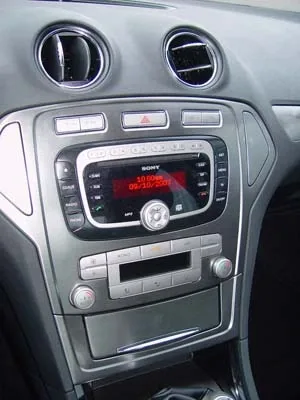
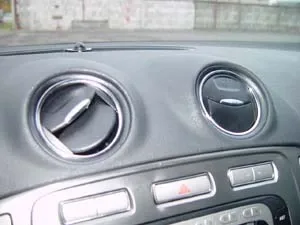
The driver's seat is quite functional: plenty of adjustments for both the seat and the steering wheel. I'll reveal a little secret: from "TTS-Yuzhny" we first went to TTS on Ibragimova for a forgotten OSAGO policy. So I had to drive extremely carefully, following the rules one hundred and fifty percent, to avoid running into the traffic police. And although we have a 2.5 turbo (220 hp) under the hood, I'm even glad that the trip started in such a calm mode. Alfred in the front seat immediately dozed off, lulled by our unhurried driving. And I got great pleasure from driving this ship, which easily and imperceptibly swallowed any potholes and rails. First gear is quite short - it's only needed to get moving. And then, if you drive without haste, you can forget about shifting altogether and move like on an automatic. Now a few words about the engines. But first, about a strange feature of the trims: for each engine, only one gearbox is provided; you can't choose between "manual" and automatic yourself. The youngest in the lineup is the 1.6 with 125 hp and dual variable valve timing. How it's going to haul this hulk weighing one and a half tons is a mystery to me.
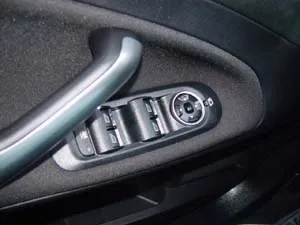
Next comes the old 2.0, which is only paired with a "manual." If you're a fan of speeding and are ready to constantly keep revs above 4500, then this option might suit you. We talked about it in more detail in the article "Choosing 2.0" (you can find it on our website). The next unit is the first one worth seriously considering - the 2.3 paired with a 6-speed automatic. Let me remind you that the Toyota Camry (which seems to be the main competitor of the Mondeo) has only two engines - 2.4 and 3.5 V6. There are also a couple of diesels with excellent traction (peak torque comes at just 2000 rpm!) and modest appetite for diesel fuel. It would be interesting to take a ride in one of those. In our test, we had the flagship engine - the 2.5 turbo, the same one we already tried on the Volvo XC70. And the most pleasant thing: the Mondeo, even in an expensive trim and with the top engine, costs just over a million. A very unexpected and pleasant surprise.
But let's get back to the test itself. After measured and careful driving, we switched to a more aggressive style - and we liked it too. The car always accelerates easily (the maximum torque plateau stretches from 1500 to 4500 rpm). Want to fly, overtaking everyone - please! Want to drive calmly and comfortably, and then quickly and safely pass some "slowpoke" - no problem! Such pickup is especially useful on the highway: we deliberately got behind trucks and then overtook them. Everything happens quickly, confidently, and safely. Another pleasant surprise awaited us in corners - the car holds its line excellently. And this is despite a fairly soft suspension and mediocre tires. By the way, about the tires. Sometimes they behaved strangely even on straight roads. Here I immediately remembered all car manufacturers with an unkind word who put frankly cheap tires on expensive cars. My Bridgestone Turanza ER30, for example, I changed right after the car started hopping sideways in a corner like a frog. The Mondeo has different wheels, but from the same series of economical "disposable" ones. However, the tires have nothing to do with the car itself - even on such tires, handling remains at a high level.
In conclusion - about trims and prices, there's something to discuss. If we discard the clearly non-selling petrol versions 1.6 and 2.0, the picture is as follows. The base Trend trim already includes everything necessary: electric windows and mirrors, dual-zone climate control, ESP (ABS and 7 airbags are already in the base). Price - from 763 thousand rubles (2.0 diesel) to 879 thousand rubles (2.5 turbo). In the popular Ghia version, alloy wheels, heated windshield and nozzles, front seats and mirrors are added. Prices - from 847 to 919 thousand rubles. And the Titanium trim will please with 24-spoke alloy wheels and a color screen on the instrument panel. Prices: 2.0 diesel + "manual" - 803 thousand rubles, 2.3 + automatic - 847 thousand rubles, 2.5 turbo + "manual" - 919 thousand rubles. A great offer, isn't it?
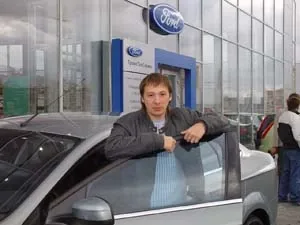
Alfred Mardanov. Driving experience - 12 years
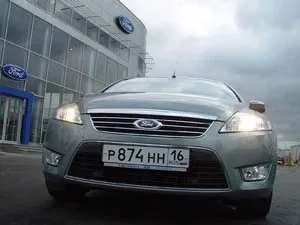
Looking at the new Mondeo, I catch myself thinking: why, exactly, is this a Mondeo and not, say, an S-Mondeo? Almost nothing remains of its predecessor — only the blue oval on the hood and the nameplate. Everything has changed: the platform, the interior, the engine, and the very philosophy of the model. Instead of the proven double-wishbone front suspension familiar from the Mazda6, a McPherson strut is now installed. And the 2.5-liter turbocharged gasoline engine is a real find even for such a large car. What strikes me is something else: the car has completely ignored the European class hierarchy and burst into the E-segment, surpassing the Toyota Camry in dimensions and almost catching up with the Mercedes E-Class. While remaining a family car at heart, it now aims for the business-class territory. The slogan “Ford — Feel the difference” has found real embodiment in the new Mondeo and the concept of “kinetic design.” Even standing still, the car looks like it’s about to take off, like a predator before a leap.
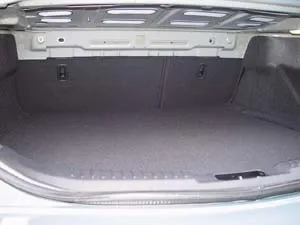
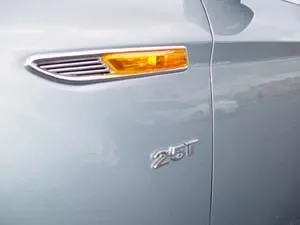
This is exactly the reaction the designers wanted to evoke. You often hear that Ford lacks emotion. Perhaps that’s true for many models, but not here — the new Mondeo is emotional to the limit. The swift profile with expressive lines is mesmerizing: two trapezoids at the front, slanted headlights, a dynamic rear overhang, a high beltline, and a smoothly sloping roof. A beautiful car is a rarity these days when many brands, chasing trends, create who knows what!.. Ford has stayed true to itself in terms of trims: the buyer can assemble the car to their taste — about 380 options in total. Prices start at $23,850 and go up to $38,900, which looks quite competitive. Among the options are adaptive dampers, active cruise control that clearly maintains distance to the car ahead, keyless entry, and other niceties. Unlike the previous top version, a Titanium trim has also appeared. It looks impressive in the cabin, but the glossy metal instantly gets covered with fingerprints, making you want to wipe it.
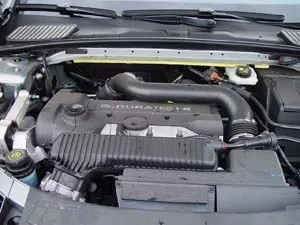
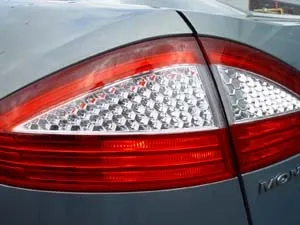
Looking inside, you involuntarily exhale in surprise. The car is truly huge. But my place is still on the rear sofa — I always start getting acquainted with a car from the rear passenger seat. To say that sumo wrestlers could fit here right during a match is probably an understatement. There’s so much freedom that it takes your breath away, and the seats themselves are so comfortable that you feel excellent. You’re tempted to take out a laptop, check the quotes, and command the driver to take you to a restaurant for a business lunch... I’ve gotten carried away! It’s inspired by comfort and silence, though the latter isn’t all smooth. The engine is somewhere far ahead and is completely inaudible, but the asphalt under the wheels is quite close — you can hear the tires slapping over bumps. But these are more like nitpicks: the car is assembled well and feels monolithic.
It literally radiates well-being and prosperity. Even as a passenger, you notice that the car easily crosses the 100 km/h mark, but you don’t feel the speed — only objects quickly flashing by outside the window. And it’s no wonder: the acceleration to 100 km/h per the specs takes just over seven seconds. Dynamics to be envied. Behind the wheel is also interesting: the little screen, or rather, the huge display of the onboard computer built right into the instrument panel, starts to annoy over time. Even the fact that it communicates in pure Russian doesn’t help. I wish Ford would connect the promised navigation soon. It’s pleasant to hold the leather steering wheel with many settings and control buttons. The car follows a given arc clearly, holds the trajectory well, and only at the very end do you get the feeling that the rear is about to break into a slide (apparently due to the tires), but this doesn’t bother you at all. Electronic assistants won’t let you cause trouble. Later, in front of the MUZ-TV camera, I tried to change lanes sharply — it didn’t work. The steering wheel is “stretched”: 2.75 turns from lock to lock, so you can’t throw it into a turn right away. These are the habits of an adult, solid car — it’s not fitting for a first-guild merchant to fuss. I’ll separately note the engine and the 6-speed gearbox. The 220 “horses” confidently pull from the very bottom to the limit. The thrust is smooth and stable. Shifts in sport mode are short and crisp. First gear is only needed for starting, sixth for economical highway driving. But the intermediate gears are so smoothed out that I often caught myself thinking: I don’t understand which gear is engaged — the engine doesn’t growl and pulls equally confidently in third and fifth. Already on the road, I had an association with a shark. It can’t stop; it’s constantly in motion, and this Mondeo also makes you want to drive and drive.
(c) “Autoclub-Kazan”.